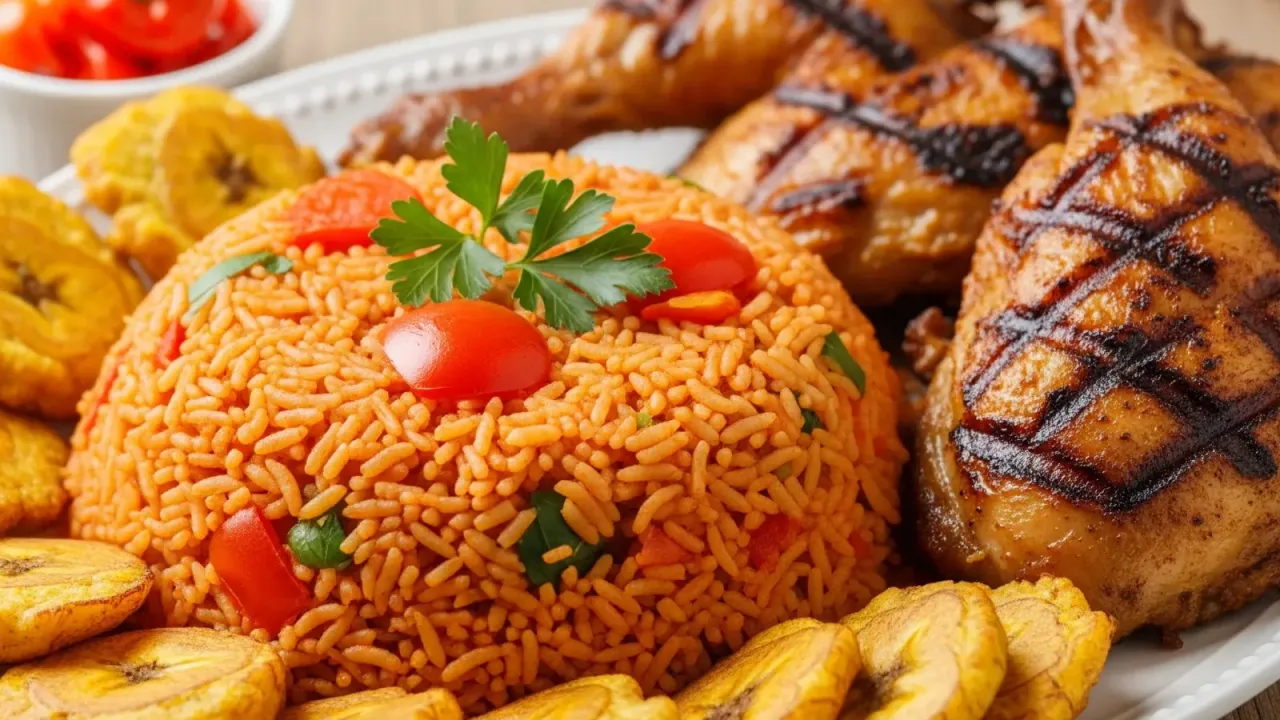
Jollof rice is the crown jewel of West African cuisine, and for good reason. This gloriously rich, tomato-stewed rice dish has captivated millions across the African continent and beyond. With its deep red color, complex spice layers, and legendary smoky bottom crust, jollof rice stands as the undisputed centerpiece of every celebration. Whether you are preparing it for a Lagos-style wedding feast or a simple weeknight dinner, this step-by-step jollof rice recipe delivers bold, authentic flavor every time. This jollof rice recipe works for beginners and seasoned cooks alike.
Prep Time: 20 minutes | Cook Time: 50 minutes | Servings: 6
Difficulty: Medium | Calories: ~410 per serving
What Makes This Jollof Rice Recipe Special?
Jollof rice is not just another rice dish. It is a culinary institution with deep cultural roots across West Africa. Unlike a simple tomato rice, this dish builds on a carefully prepared base of fresh tomatoes, red bell peppers, and fiery Scotch bonnet peppers. These get blended and cooked down into a rich, thick sauce. As a result, the rice steams in this aromatic liquid and soaks up every note of spice, sweetness, and heat.
What truly sets jollof rice apart is the low-and-slow steaming method. Because the pot is sealed tight, the rice cooks in flavorful tomato broth, not plain water. Therefore, each grain soaks up taste from the inside out. Additionally, the smoky bottom layer, called the “party jollof” crust, adds a toasty bite that makes every scoop irresistible.
Every West African country claims its own version. Moreover, the friendly rivalry between Nigeria and Ghana over who makes the best jollof has become one of the internet’s most entertaining culinary debates. This jollof rice recipe draws on the best techniques from both traditions, so you get a version that is rich, smoky, and unforgettable.

Choosing the Right Rice for Jollof Rice
The type of rice you use directly determines the success of your jollof rice recipe. West African cooks are very particular about this, because the wrong variety can turn your dish into a sticky, clumpy mess. Here are your best options.
- Long-grain parboiled rice (best choice): This is the traditional option for jollof rice. Parboiled rice has been partly cooked in the husk. This hardens the starch and stops overcooking. It absorbs the tomato sauce well while staying firm. Brands like Uncle Ben’s converted rice work great.
- Basmati rice (Ghanaian style): Ghanaian jollof often uses basmati rice, which produces a lighter, more aromatic result. However, basmati cooks faster and absorbs less liquid, so reduce the stock by about a quarter cup if substituting.
- Jasmine rice (not recommended): Although jasmine rice is delicious in Asian dishes, it is too soft and sticky for jollof rice. It releases too much starch and produces a mushy, porridge-like texture instead of the distinct, separate grains you need.
Ingredients for Jollof Rice
Pepper Base (Blended):
- 6 large Roma tomatoes, roughly chopped
- 3 red bell peppers, roughly chopped
- 3 large Scotch bonnet peppers (adjust to taste)
- 1 large onion, roughly chopped (for blending)
Main Ingredients:
- 3 cups long-grain parboiled rice, washed and drained
- 1/3 cup tomato paste
- 1/2 cup vegetable oil (or palm oil for traditional flavor)
- 4 cups chicken or vegetable stock, warm
- 1 large onion, thinly sliced
Spices and Seasonings:
- 2 teaspoons curry powder
- 1 teaspoon dried thyme
- 2 teaspoons smoked paprika
- 1 teaspoon garlic powder
- 1 teaspoon ground ginger
- 1 tablespoon white or black pepper
- 2 bay leaves
- 2 seasoning cubes (Maggi or Knorr)
- Salt to taste
Garnish:
- Fresh parsley or cilantro, chopped
Pro tip: The secret to deeply flavorful jollof rice is cooking down the blended tomato-pepper base until the raw smell completely disappears and the oil rises to the surface. This step takes 25 to 30 minutes and should never be rushed. An under-cooked base is the number one cause of sour, watery jollof.
Step-by-Step Instructions
Step 1: Prepare the Pepper Base
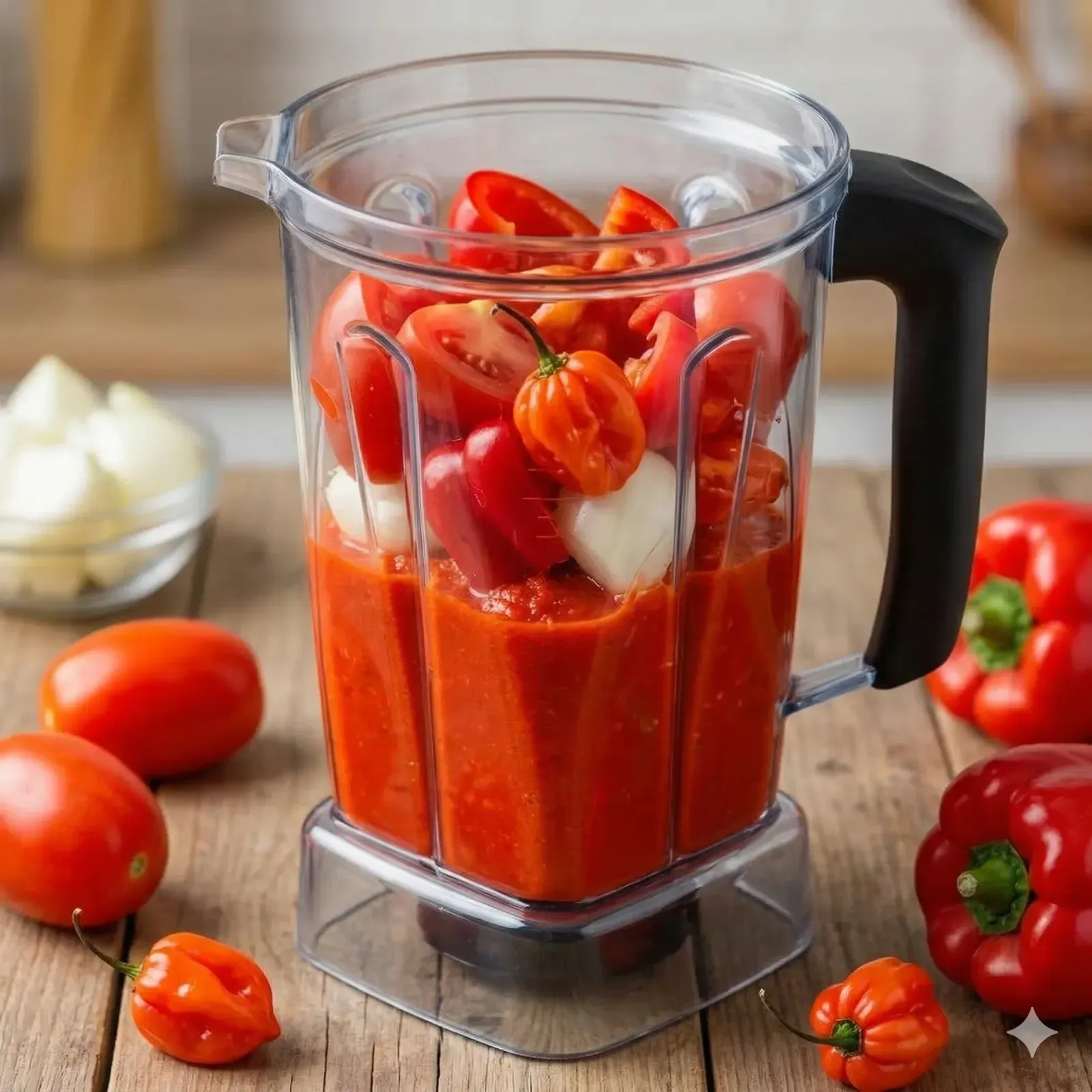
1 Place the Roma tomatoes, red bell peppers, Scotch bonnet peppers, and one roughly chopped onion into a blender. Blend until completely smooth with no visible chunks. You should have about 4 to 5 cups of vibrant red puree. For a milder version, simply remove the seeds from the Scotch bonnets before blending. Alternatively, use just one pepper instead of three.
Step 2: Cook Down the Tomato Base
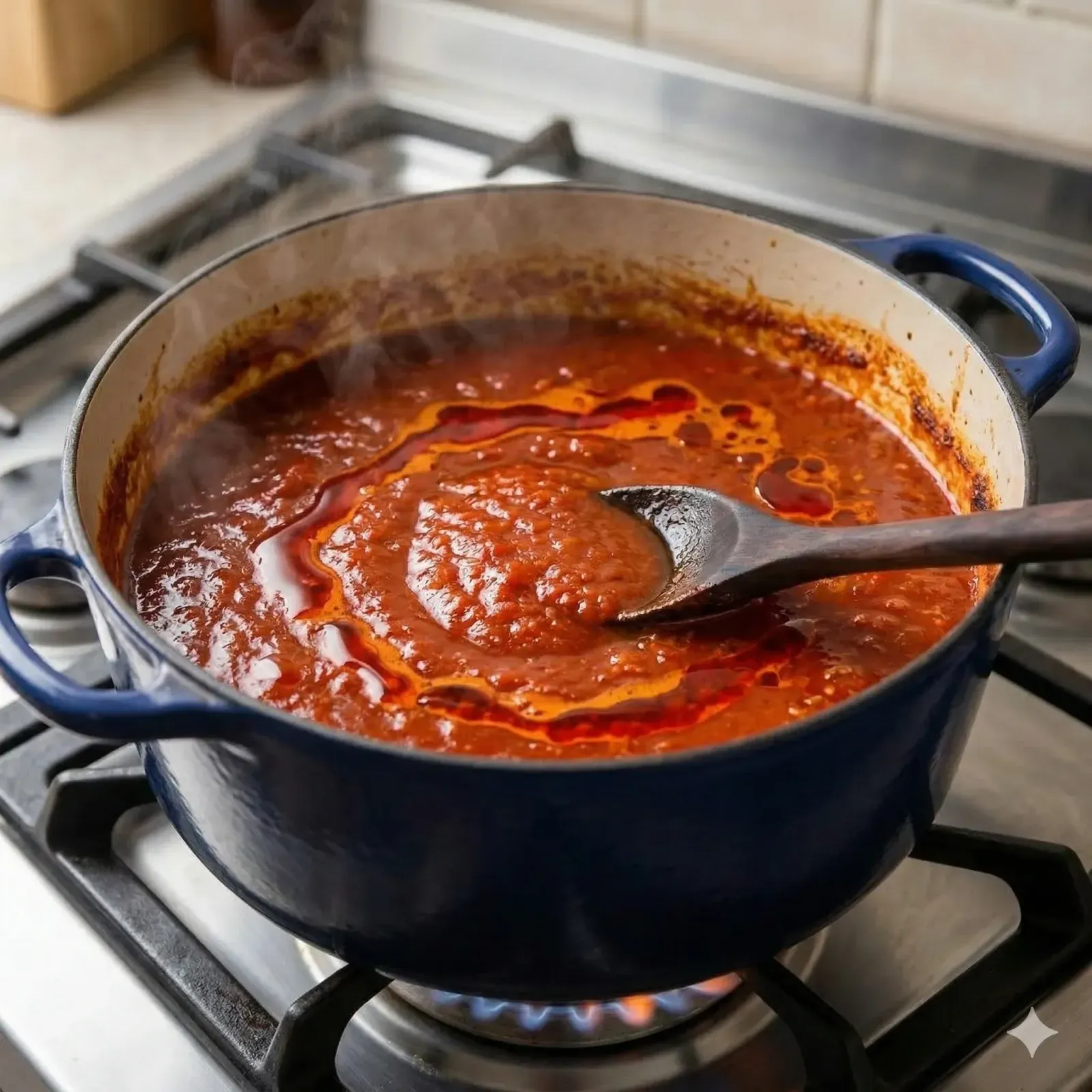
2 Heat the vegetable oil in a large, heavy-bottomed pot over medium-high heat. A Dutch oven works perfectly for this. Add the sliced onion and saute for 3 to 4 minutes until golden and translucent. Next, add the tomato paste and fry for 2 minutes, stirring constantly, until it darkens to a deep brick-red color. This step caramelizes the sugars and removes the raw, tinny taste.
Now pour in the entire blended pepper mixture. Cook uncovered for 25 to 30 minutes, stirring every few minutes, until the sauce reduces by roughly half. You will know it is ready when the oil begins to float on the surface. Additionally, the raw tomato smell will transform into a rich, sweet, concentrated aroma.
Step 3: Season the Base
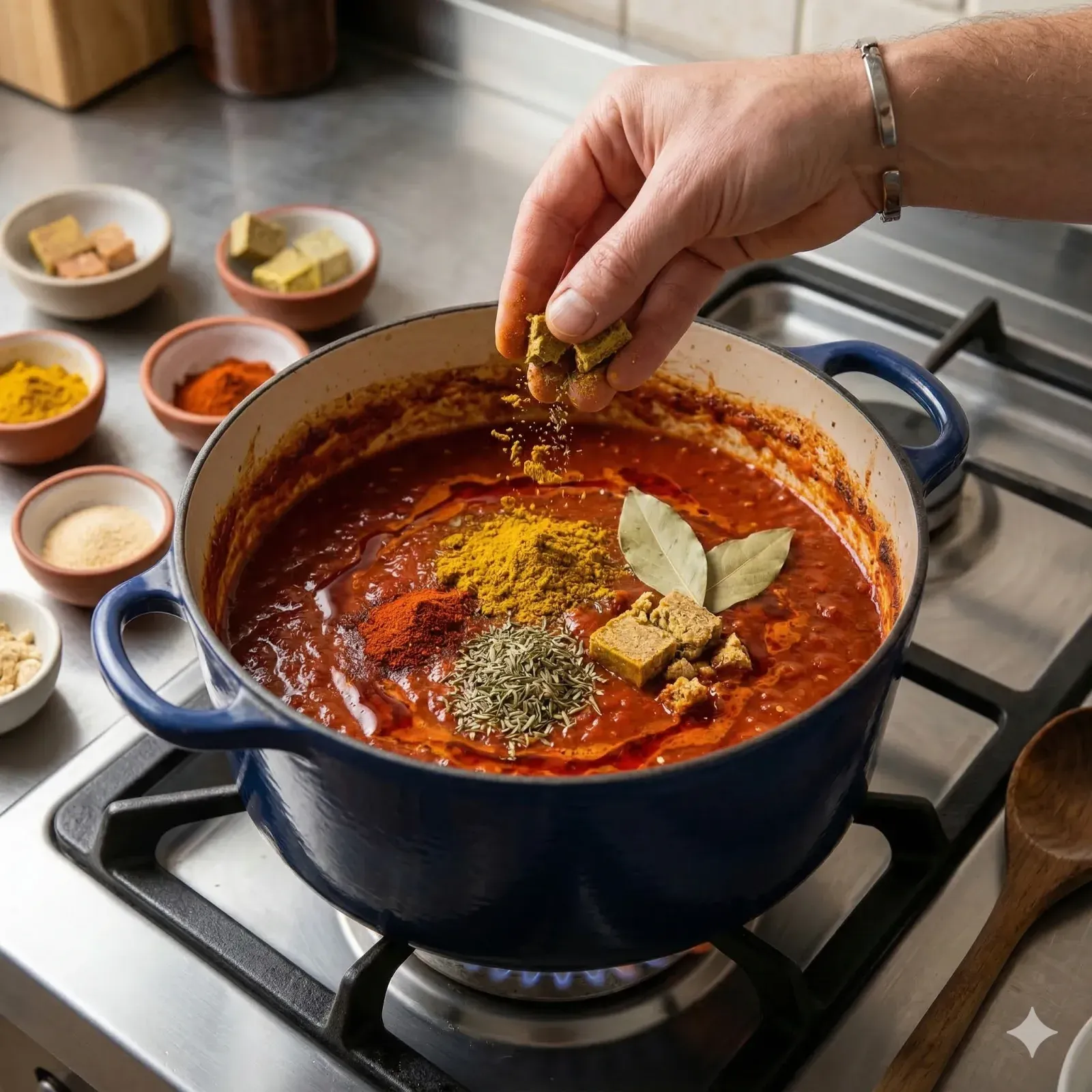
3 Add the curry powder, thyme, smoked paprika, garlic powder, ginger, white pepper, bay leaves, and seasoning cubes. Stir well and cook for 2 to 3 minutes. This lets the spices bloom in the hot oil, which unlocks their full aroma. Taste the base now and adjust the salt. It should taste a bit more intense than you want, because the rice will mellow the flavors.
Step 4: Add the Stock and Rice
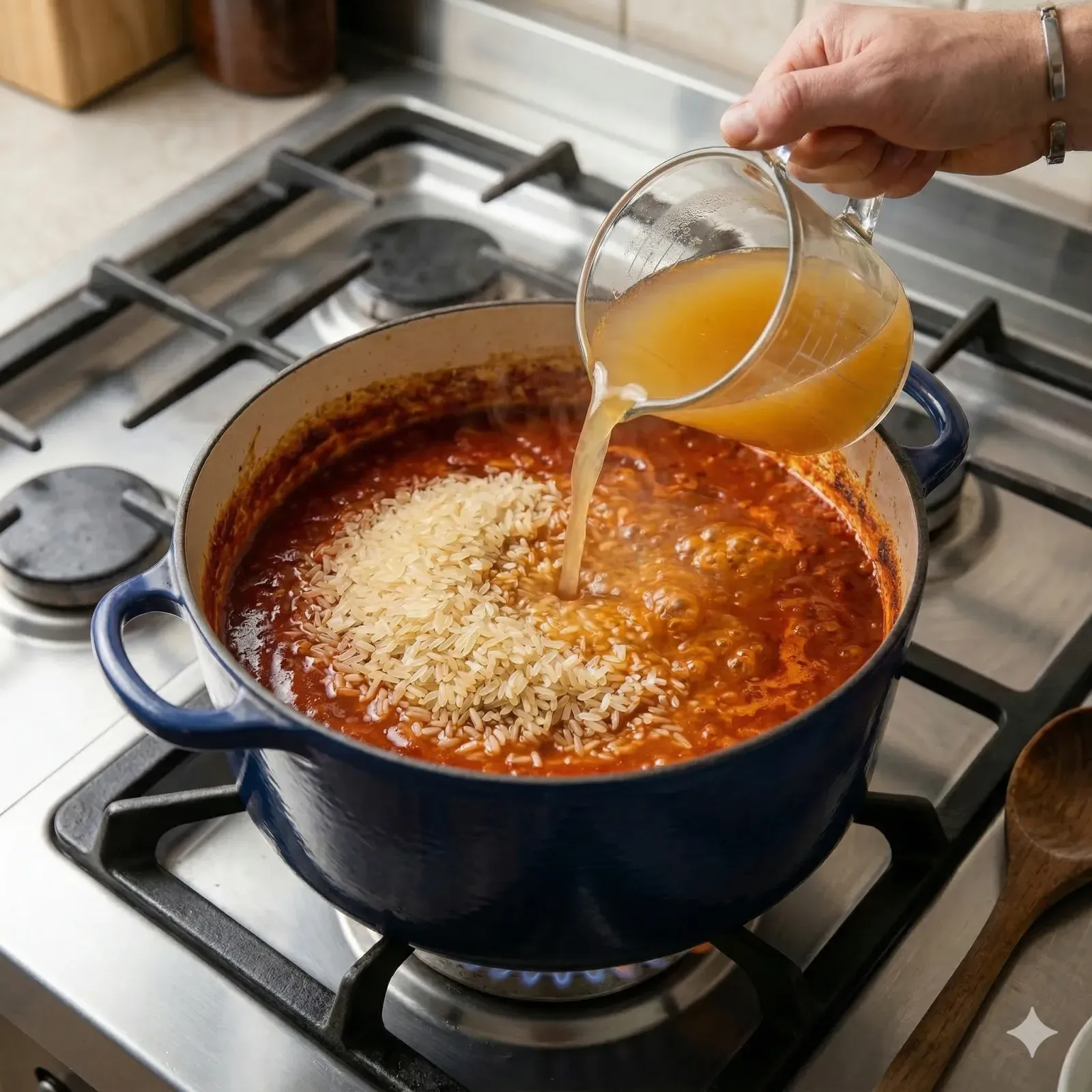
4 Pour in the warm chicken or vegetable stock and stir well. Bring the mixture to a vigorous rolling boil. Then add the washed and drained parboiled rice. Stir once to distribute the rice evenly through the sauce. The liquid should sit about one inch above the rice level. If it does not, add a small splash of stock or water.
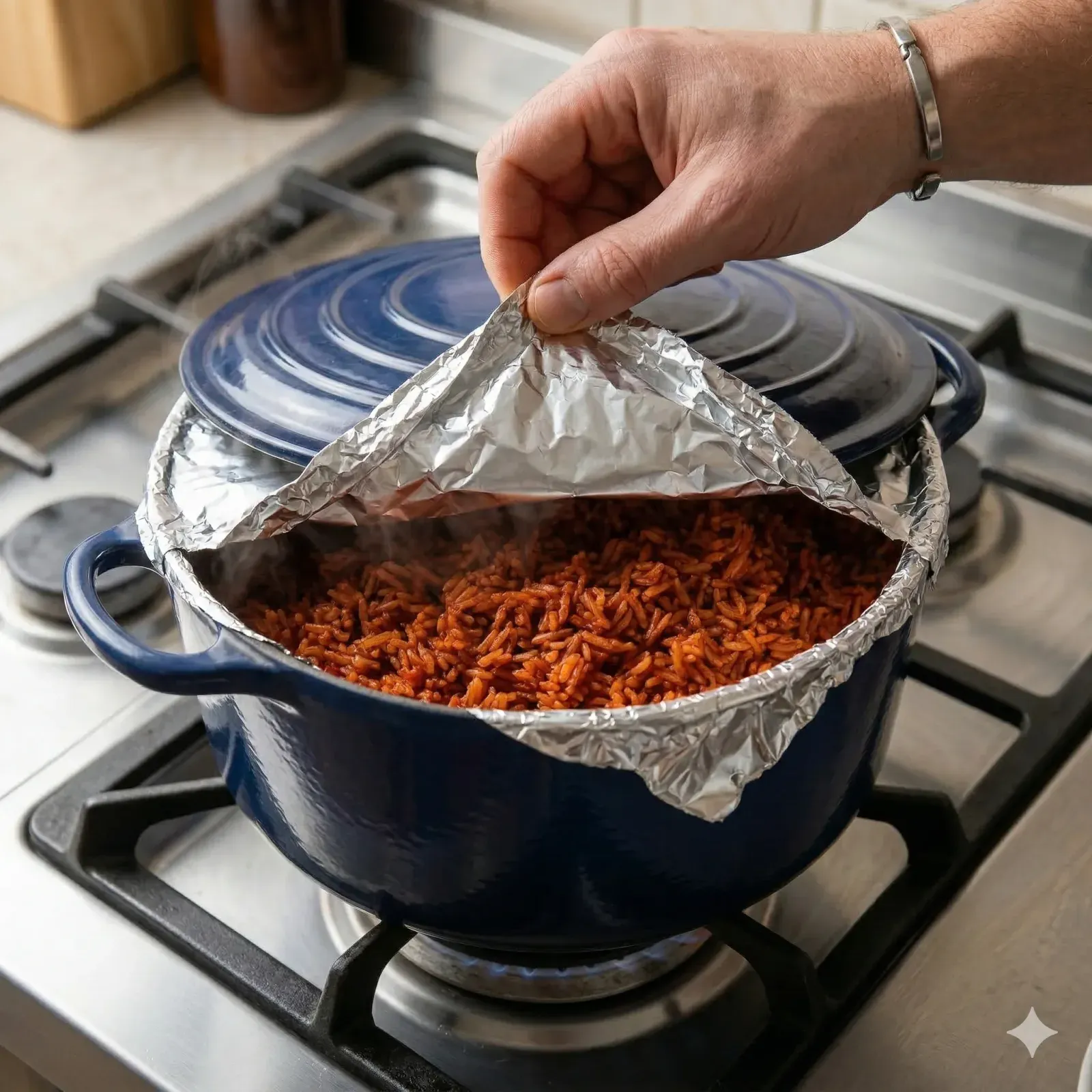
Now cover the pot tightly with a double layer of aluminum foil, then press the lid firmly on top. This double seal is essential because it traps all the steam inside. As a result, the rice cooks perfectly and evenly from all sides.
Step 5: Steam the Rice
5 Reduce the heat to the absolute lowest setting. Cook for 30 minutes without lifting the lid even once. Every time you open the lid, precious steam escapes and the cooking time increases. Therefore, trust the process and keep the pot sealed.
After 30 minutes, carefully remove the lid and foil. Gently fluff the rice with a fork, working from the edges toward the center. If the rice is still slightly firm, sprinkle 2 to 3 tablespoons of water over the top. Then cover again and cook for another 5 to 10 minutes on the lowest heat.
Step 6: Develop the Smoky Bottom (Party Jollof)
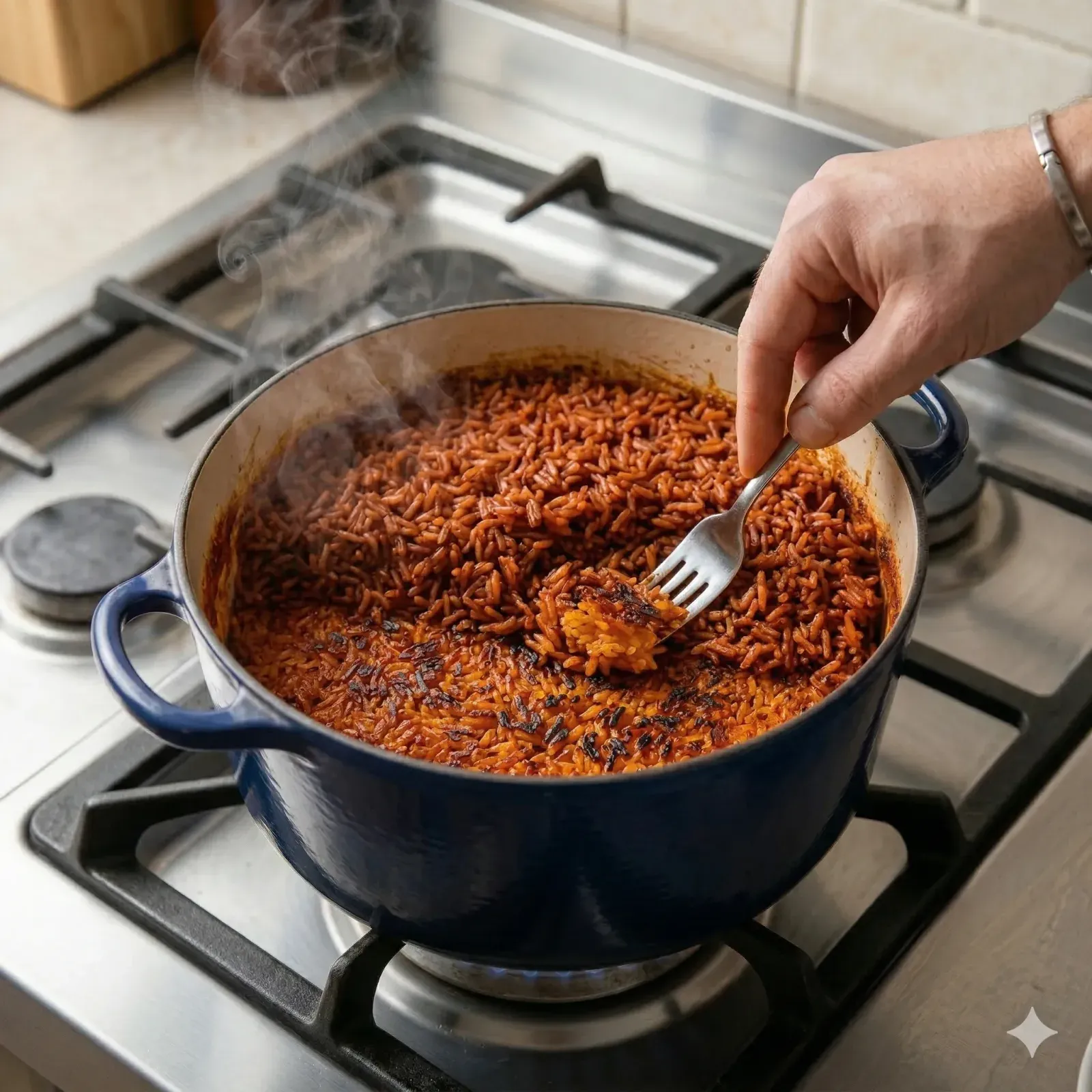
6 This step is optional but highly recommended. It transforms regular jollof into the legendary “party jollof” that people talk about for days. Once the rice is fully cooked, increase the heat to medium and leave the pot uncovered for 3 to 5 minutes. Do not stir during this time.
Let the bottom layer of rice toast and caramelize against the hot pot. Listen for a gentle crackling sound and notice the smoky aroma filling your kitchen. This toasted layer adds deeply satisfying smokiness and textural contrast. However, remove from heat once you hear the crackling, because it can quickly go from toasted to burnt.
Step 7: Garnish and Serve
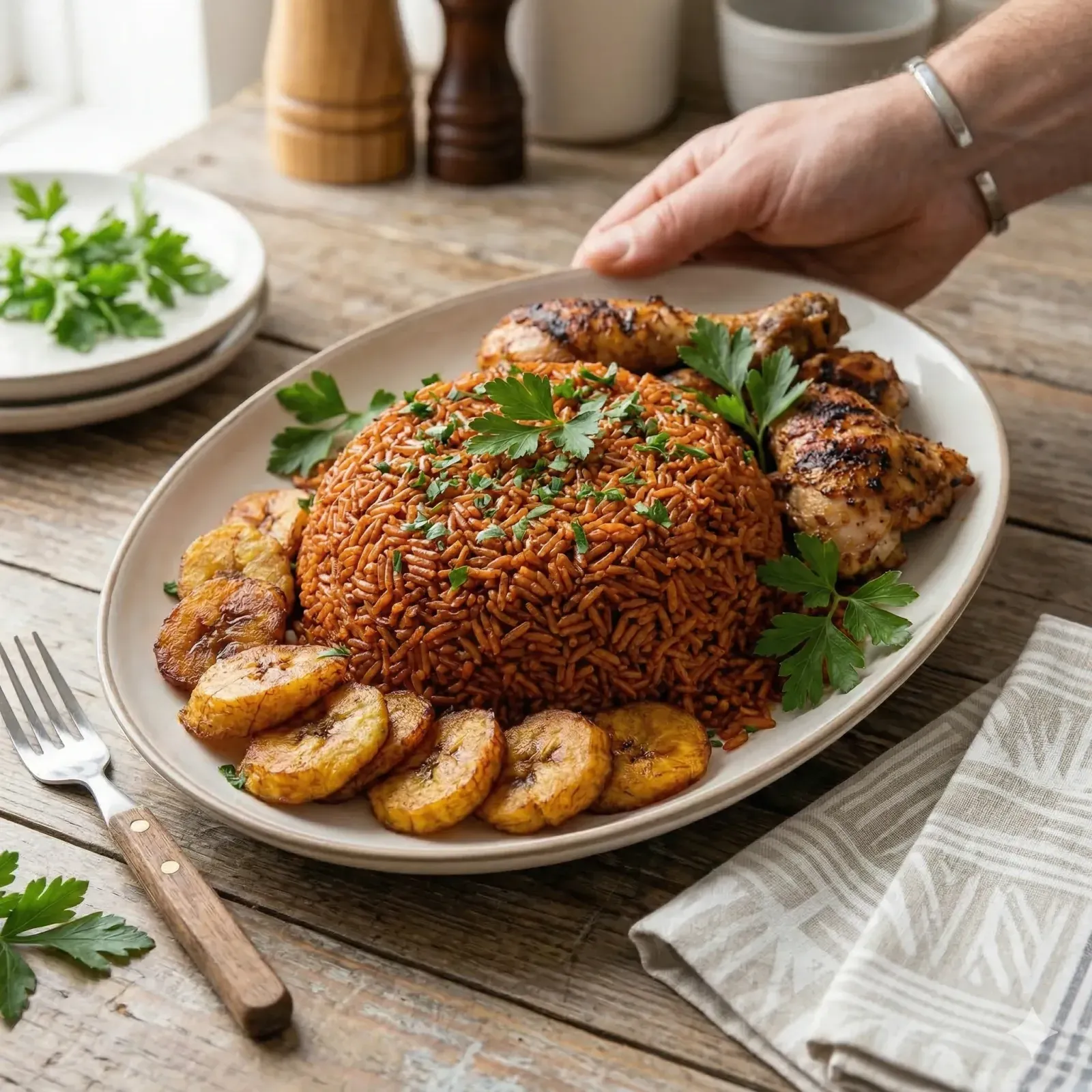
7 Remove and discard the bay leaves. Give the rice one final gentle fluff with a fork. Transfer the jollof rice to a large serving platter, or serve it straight from the pot. Garnish generously with freshly chopped parsley or cilantro for a pop of green against the vibrant red rice. Finally, serve hot alongside fried plantains, grilled chicken, or coleslaw.
Expert Tips for the Perfect Jollof Rice Recipe
Cook the Tomato Base Until the Oil Floats
This is the single most important step in any jollof rice recipe. If you rush the tomato base, your dish will taste acidic and underdeveloped. The base needs at least 25 to 30 minutes of uncovered cooking until it darkens in color and the oil visibly separates. Most importantly, this concentrated base is what gives jollof its signature depth and richness.
Seal the Pot with Aluminum Foil
The double-seal trick using foil under the lid is a game-changer. It traps all the steam inside the pot. This creates a mini pressure cooker effect. Without this seal, steam leaks through the lid gap. As a result, you get rice that is soft on the bottom but hard on top.
Never Stir the Rice While It Cooks
Once the rice is in the pot, resist every urge to stir. Stirring lets starch out of the grains. This causes them to clump. Instead, let the rice steam on its own so each grain stays separate. Only fluff with a fork after the full cook time.
Jollof Rice: A Regional Comparison
The “Jollof Wars” is one of the most passionate food debates in Africa. Each country puts its own stamp on the dish, and every version has fiercely loyal defenders. Here is how the major regional styles compare.
| Country | Rice Type | Key Characteristics | Signature Flavor |
|---|---|---|---|
| Nigeria | Long-grain parboiled | Deep red color, heavily seasoned, uses fresh tomato-pepper blend | Bold, tomato-forward, peppery |
| Ghana | Basmati or jasmine | Cooked over charcoal fire, uses more tomato paste, slightly oilier | Smoky, earthy, aromatic |
| Senegal (Thieboudienne) | Broken rice | The original jollof, includes dried fish, tamarind, and vegetables | Tangy, fishy, complex |
| Sierra Leone | Long-grain | Uses palm oil, often includes mixed vegetables and smoked fish | Rich, hearty, palm oil warmth |
| Cameroon | Long-grain | Milder spicing, fewer Scotch bonnets, often paired with plantains | Gentle, balanced, subtly sweet |
Serving Suggestions
Jollof rice works beautifully as a complete meal on its own. However, in West African tradition, it is always part of a generous spread. The rice is typically mounded on a large platter, then surrounded by proteins and sides for everyone to share.
Classic Accompaniments:
- Moi moi (steamed bean pudding): This protein-rich side from blended black-eyed peas adds substance and variety to your plate.
- Fried plantains (dodo): Sweet, caramelized plantain slices create a beautiful contrast with the savory, spicy rice.
- Grilled or fried chicken: Nigerian-style chicken, marinated in garlic, ginger, and thyme, then fried until the skin shatters at the first bite.
- Coleslaw or fresh salad: A creamy coleslaw provides a cooling, crunchy contrast to the bold, spicy rice.
Beverage Pairings:
- Chapman: Nigeria’s signature mocktail with Fanta, Sprite, grenadine, and cucumber. It is festive, sweet, and refreshing alongside spicy jollof.
- Zobo (hibiscus tea): This deep red drink from dried hibiscus flowers, ginger, and cloves is tart and aromatic.
- Palm wine: A mildly sweet, slightly effervescent wine tapped from palm trees. It cuts through the richness beautifully.
- Ginger beer: A spicy, non-alcoholic option that echoes the warmth of the ginger and pepper in the jollof rice.
- Chilled lager beer: A cold Nigerian Star, Gulder, or Ghanaian Club beer is the classic go-to at any jollof gathering.
Storage and Reheating
Refrigerator: Store leftover jollof rice in an airtight container for up to 4 days. Interestingly, the flavors actually intensify overnight as the spices continue to develop. Many people believe that day-two jollof tastes even better than fresh.
Freezer: Jollof rice freezes exceptionally well for up to 3 months. Portion it into freezer-safe bags, pressing out as much air as possible. Then thaw overnight in the refrigerator before reheating.
Reheating: The best method is on the stovetop. Place the rice in a pot, sprinkle 2 to 3 tablespoons of water or stock over the top, and cover tightly. Heat over low for 8 to 10 minutes. You can also use a microwave by adding a tablespoon of water and heating in 2-minute intervals.
Common Mistakes to Avoid
1. Not Cooking Down the Tomato Base
This is the most common mistake in any jollof rice recipe. If the blended pepper base is not cooked long enough, the dish will taste acidic and watery. The base must reduce by at least half before you add any stock. Budget at least 25 to 30 minutes for this step, because rushing it ruins the entire dish.
2. Using the Wrong Type of Rice
Sticky or short-grain rice will produce a gummy mess that does not resemble proper jollof rice. Always use long-grain parboiled rice or basmati instead. Furthermore, wash the rice thoroughly until the water runs clear to remove excess surface starch.
3. Adding Too Much Liquid
The liquid should sit about one inch above the rice. Too much liquid turns jollof into soupy porridge. Remember that the tomato base already contains significant moisture. Therefore, you often need less additional stock than you expect. You can always add more later, but you cannot remove excess.
4. Lifting the Lid Too Often
Every time you lift the lid, steam escapes and the temperature drops. This leads to uneven cooking and extends the total cook time. Use the double-seal method and commit to keeping the pot closed for the full 30 minutes. In other words, patience is essential here.
5. Stirring the Rice During Cooking
Stirring breaks the rice grains, releases starch, and creates a sticky texture. Unlike a pilaf or fried rice, jollof must steam undisturbed. Only fluff gently with a fork after the full cooking time has passed.
Frequently Asked Questions
What is the best rice for jollof rice?
Long-grain parboiled rice is the best choice because it absorbs the tomato-pepper sauce while maintaining firm, separate grains. Basmati rice is also popular, especially in Ghanaian-style jollof, and produces a lighter result. However, avoid short-grain, sticky, or jasmine rice for this dish.
What is the difference between Nigerian and Ghanaian jollof rice?
Nigerian jollof rice uses a reduced fresh tomato-pepper base with parboiled rice. This gives it a deep red color and bold flavor. In contrast, Ghanaian jollof uses basmati rice and more tomato paste. It is also often cooked over charcoal for a smoky taste. Both versions are outstanding. The debate over which is better has become a beloved cultural event.
Why is my jollof rice mushy?
Mushy jollof rice usually results from three factors: too much liquid, stirring during cooking, or not reducing the tomato base long enough. To prevent this, cook down the pepper blend until oil separates, use the correct rice-to-liquid ratio, and never stir once the rice is added.
Can I make jollof rice without Scotch bonnet peppers?
Yes, habanero peppers are the closest substitute with similar fruity heat. For a milder version, use red pepper flakes or a few dashes of hot sauce. You can also deseed the Scotch bonnets before blending to keep the flavor while reducing heat. Another option is to place the whole pepper on top of the rice during steaming and remove it before serving.
What gives party jollof rice its smoky flavor?
The legendary smoky flavor comes from cooking in large pots over high-heat wood or charcoal fires. The intense heat creates a toasted bottom layer that infuses the entire pot with smokiness. At home, increase the heat during the last 3 to 5 minutes. Alternatively, place a small piece of natural charcoal wrapped in foil into the pot during the final minutes.
Is jollof rice gluten-free?
Jollof rice is naturally gluten-free since its core ingredients contain no gluten. However, some seasoning cubes may include wheat-based ingredients. Always check the label, and use a certified gluten-free bouillon if needed. Salt with a splash of coconut aminos is a good substitute for umami depth.
Variations and Adaptations
Jollof Rice with Smoked Fish:
Add 1 cup of flaked smoked mackerel or catfish to the tomato base before adding stock. The smoked fish dissolves into the sauce, adding profound umami depth. This variation is especially popular in coastal West African communities during the Lenten season, because many families avoid meat during that period.
Coconut Jollof Rice:
Replace half of the stock with full-fat coconut milk for a rich, creamy twist. The coconut adds a subtle sweetness that balances the heat of the Scotch bonnet peppers beautifully. In addition, this variation pairs exceptionally well with grilled fish and is popular in coastal Ghana.
Vegetable Jollof Rice:
Use vegetable stock and add diced carrots, green beans, sweet corn, and green peas during the last 10 minutes of steaming. This colorful, plant-based version is lighter but still packed with the signature jollof flavor. Moreover, it makes an excellent side dish for a larger spread or a satisfying vegan main course.
Baked Oven Jollof Rice:
After preparing the tomato base and adding the rice and stock on the stovetop, transfer the pot to a preheated oven at 350 degrees Fahrenheit. Cover tightly with foil and bake for 1 hour. The surrounding heat produces incredibly consistent results. Consequently, this method is ideal for large batches when entertaining guests.
The Cultural Significance of Jollof Rice
Jollof rice is far more than food in West Africa. It is a cultural symbol, a source of national pride, and a centerpiece of communal celebration. No wedding, party, or holiday meal is complete without a big pot of jollof rice. In many areas, the quality of the jollof at an event is how guests judge the whole celebration.
The dish traces back to the Wolof people of Senegal and the Jolof Empire. That is where it gets its name. Centuries ago, a simple rice dish called thieboudienne was first made in this region. As trade grew across West Africa, every nation adapted the recipe. As a result, the rich variety of jollof rice styles we see today was born.
The famous “Jollof Wars” have become a global trend. Social media erupts with debates and memes whenever a food blog ranks one version above another. While the rivalry is fun, it shows how deeply West Africans love this dish. Simply put, jollof rice is identity on a plate.
In the West African diaspora, jollof rice is a symbol of home. From London to Houston to Toronto, it is always on the table. It connects people across borders to a shared food legacy.
Conclusion
This authentic jollof rice recipe is deeply rewarding to make at home. The key to success lies in three essential steps: blending a fresh tomato-pepper base, cooking it down until the oil floats, and steaming the rice low-and-slow with a tightly sealed lid. Follow this jollof rice recipe faithfully, and you will produce perfectly seasoned, vibrantly colored grains with that irresistible smoky bottom crust. Whether you are cooking for a weeknight dinner or a festive gathering, jollof rice never fails to impress.
Ready to explore more West African flavors? Browse our collection of African dishes, including egusi soup, suya, and doro wat. Also, discover our rice recipes from around the world for more inspiration.