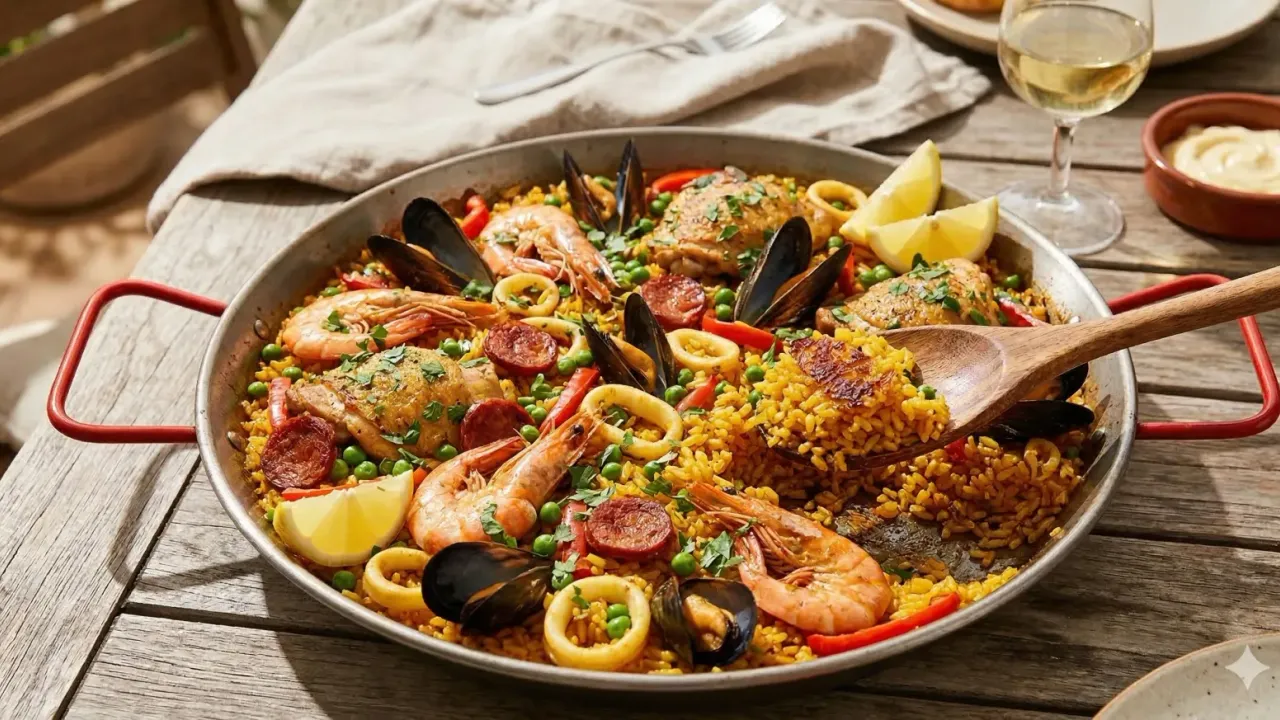
Authentic Spanish Paella is one of the world’s most celebrated one-pan dishes — a stunning showpiece of golden saffron rice loaded with tender chicken, smoky chorizo, and the freshest seafood. Originating from the sunlit region of Valencia, this recipe brings the vibrant flavors of Spain straight to your kitchen with a foolproof method that guarantees perfectly seasoned rice and that coveted crispy socarrat crust on the bottom.
Prep Time: 30 minutes | Cook Time: 45 minutes | Servings: 6
Difficulty: Medium | Calories: ~485 per serving
What Makes Paella Special?
Paella is far more than just “Spanish rice.” Born in the rice paddies surrounding Valencia’s Albufera lagoon, it began as a humble farmworker’s meal cooked over an open wood fire. Workers combined whatever was at hand — rabbit, snails, green beans, and local rice — into a wide, shallow pan. Over centuries, this peasant dish evolved into Spain’s national treasure, with each region developing its own cherished variation.
What sets a great paella apart from ordinary rice dishes is the interplay of three elements: saffron-infused broth that turns every grain a luminous gold, the layered proteins that release their juices directly into the rice, and the legendary socarrat — that caramelized crust on the bottom of the pan that Spaniards consider the ultimate reward. The technique of never stirring the rice once the broth is added is what creates this magic. Each grain absorbs flavor independently, resulting in a dish where every bite tells the full story.
This recipe follows the paella mixta style, which combines both meat and seafood for maximum flavor complexity. It is the version most popular in restaurants worldwide and the most satisfying to cook at home for a gathering of family or friends.
Choosing the Right Rice
Rice is the soul of paella, and choosing the correct variety makes the difference between a memorable dish and a forgettable one. Spanish short-grain rice varieties are specifically cultivated to absorb large amounts of liquid while maintaining their shape and a pleasant, slightly firm texture.
- Bomba Rice (best choice): The premium standard for paella. Bomba absorbs up to three times its volume in liquid without bursting or becoming sticky. It produces firm, separate grains packed with flavor. It is more expensive but virtually foolproof.
- Calasparra Rice: Another excellent Spanish variety with Denomination of Origin status. It absorbs about two and a half times its volume and produces a slightly creamier result than Bomba. A wonderful and more affordable alternative.
- Arborio Rice (substitute): If Spanish rice is unavailable, Arborio can work in a pinch. However, it releases more starch and can become slightly sticky. Use about 10% less liquid if substituting Arborio to avoid a mushy texture.

Ingredients for Authentic Spanish Paella
Main Ingredients:
- 2 cups Bomba rice (or Calasparra rice)
- 4 cups chicken broth, warm
- 1/2 teaspoon saffron threads
- 1 pound bone-in chicken thighs, cut into pieces
- 4 ounces Spanish chorizo, sliced into half-moons
- 1/4 cup extra virgin olive oil
Seafood:
- 1/2 pound large shrimp, shell-on and deveined
- 1/2 pound mussels, scrubbed and debearded
- 1/2 pound calamari, cleaned and cut into rings
Aromatics and Vegetables:
- 1 large onion, finely diced
- 4 cloves garlic, minced
- 1 red bell pepper, diced
- 1 can (14 oz) crushed tomatoes
- 1/2 cup frozen green peas
Seasonings and Garnish:
- 1 teaspoon smoked paprika (pimentón)
- Salt and freshly ground black pepper to taste
- 1 lemon, cut into wedges
- Fresh flat-leaf parsley, chopped
Pro tip: Always bloom your saffron in warm broth for at least 10 minutes before adding it to the pan. This step unlocks its full color and flavor. Dry saffron added directly to rice will not distribute evenly and you will lose much of its expensive impact.
Step-by-Step Instructions
Step 1: Prepare the Saffron Broth
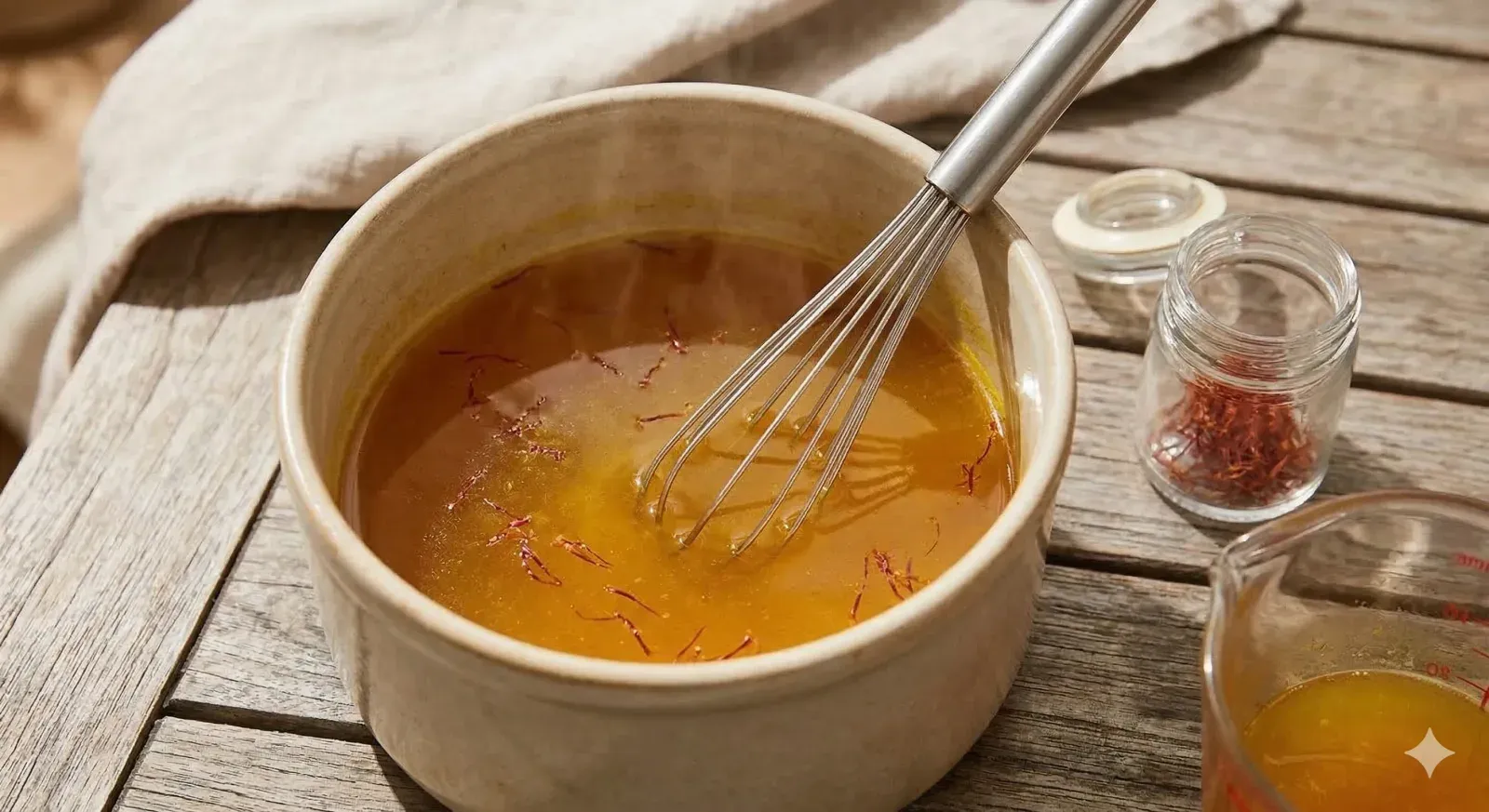
1Warm the chicken broth in a saucepan over medium heat. Add the saffron threads and let them steep for at least 10 minutes. The broth should turn a deep golden-yellow color as the saffron releases its pigment and aroma. Keep the broth warm on low heat throughout the entire cooking process — adding cold broth to the rice will shock the grains and result in uneven cooking.
Step 2: Sear the Chicken
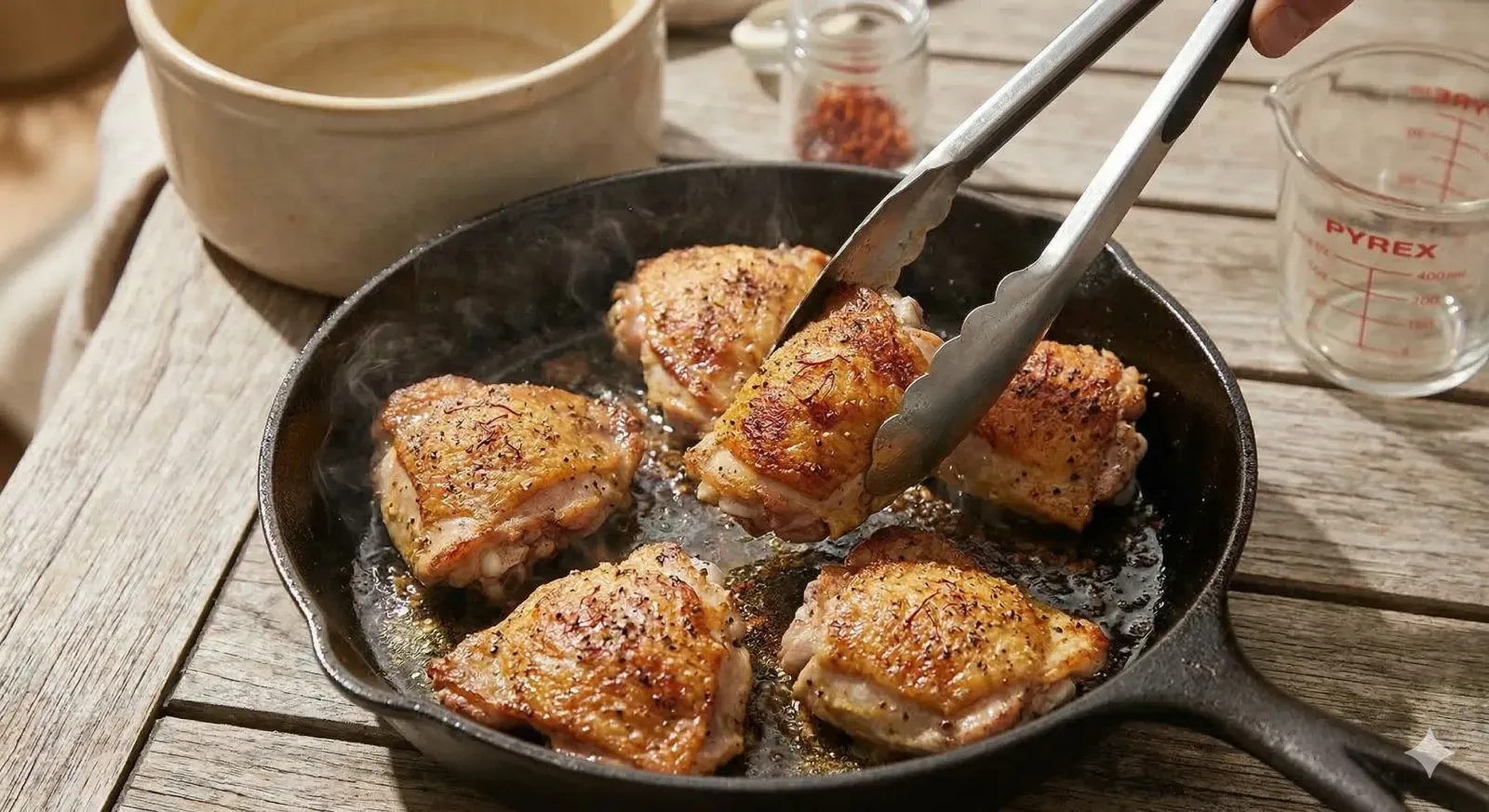
2Heat the olive oil in a 15-inch paella pan (or the widest shallow skillet you own) over medium-high heat. Season the chicken pieces generously with salt, pepper, and smoked paprika. Place the chicken skin-side down and sear for 3 to 4 minutes per side until deep golden brown. The caramelized fond left in the pan is essential — it forms the flavor foundation of your entire paella. Remove the chicken and set aside on a plate.
Step 3: Cook the Chorizo and Aromatics
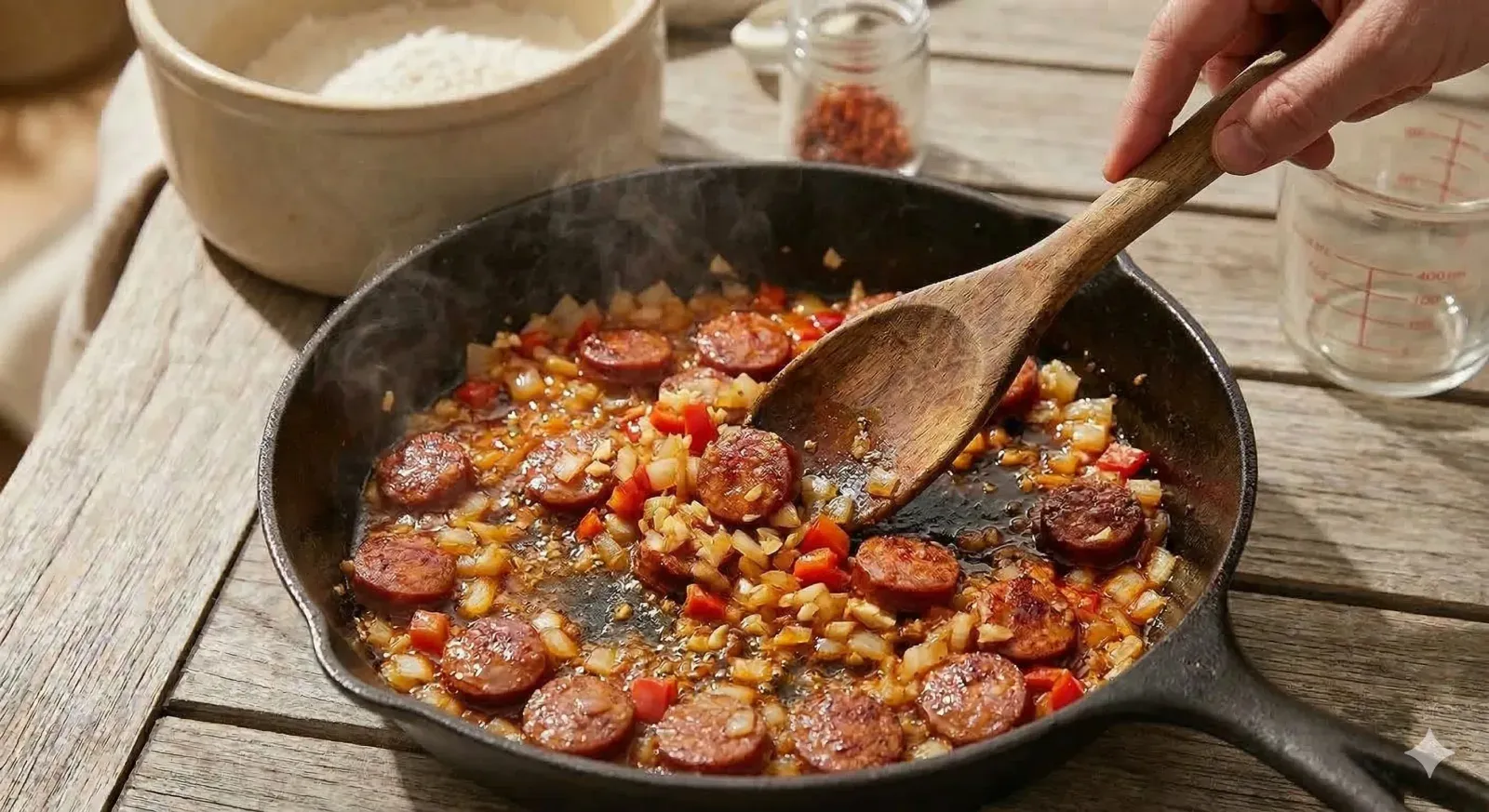
3In the same pan with all the chicken drippings, add the sliced chorizo and cook for about 2 minutes until it releases its smoky, paprika-stained oils. These red-orange oils will infuse the rice with incredible depth of flavor. Add the diced onion and red bell pepper. Sauté for 4 to 5 minutes until softened and translucent. Add the minced garlic in the last 30 seconds to prevent burning.
Step 4: Build the Rice Base
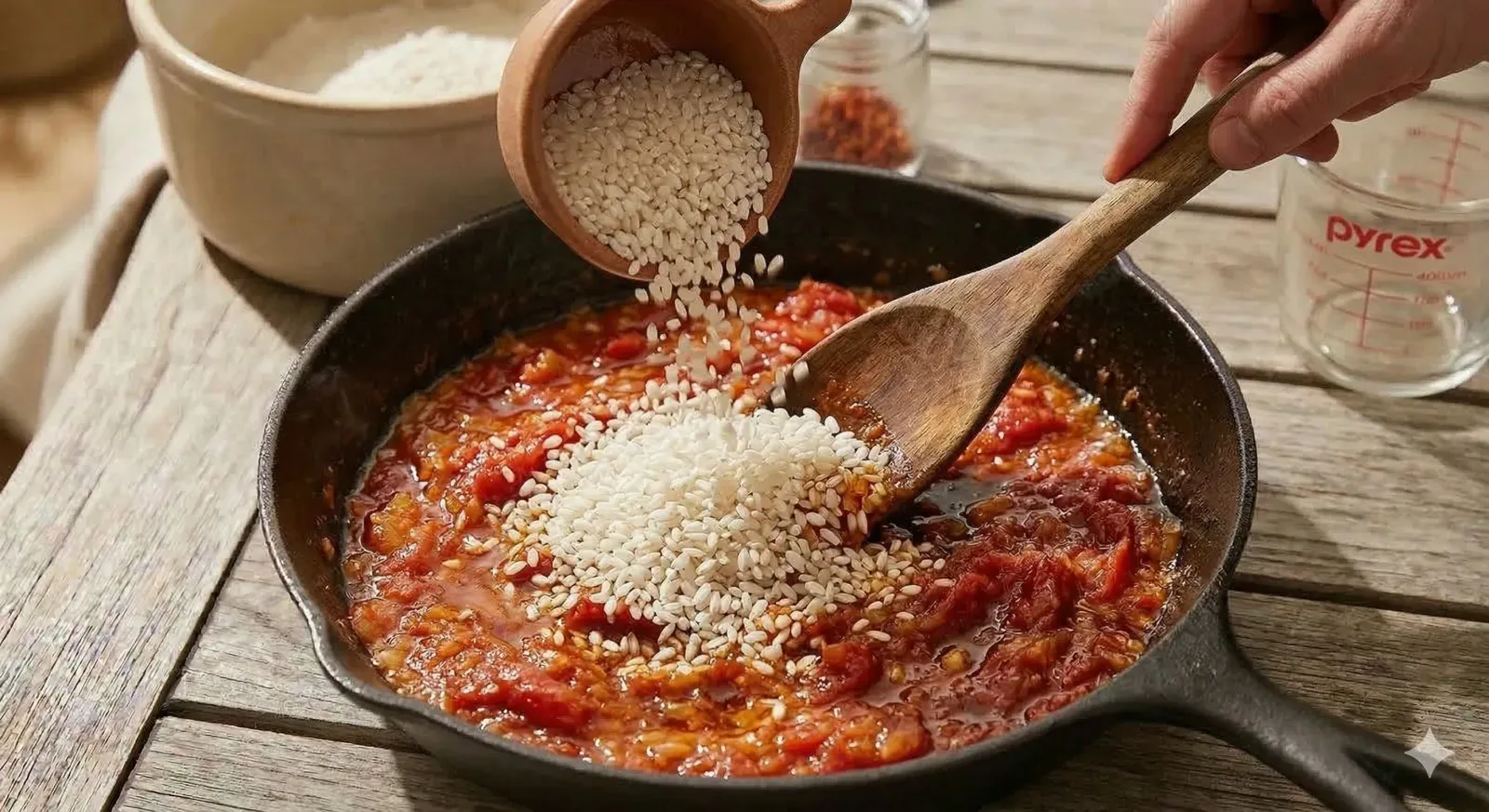
4Stir in the crushed tomatoes and cook for 2 minutes, allowing the mixture to reduce slightly and concentrate. Add the Bomba rice and stir to coat every single grain with the oil, tomato, and chorizo mixture. Spread the rice into a perfectly even layer across the entire surface of the pan. This thin, uniform layer is what allows every grain to cook at the same rate and develop that all-important crust on the bottom.
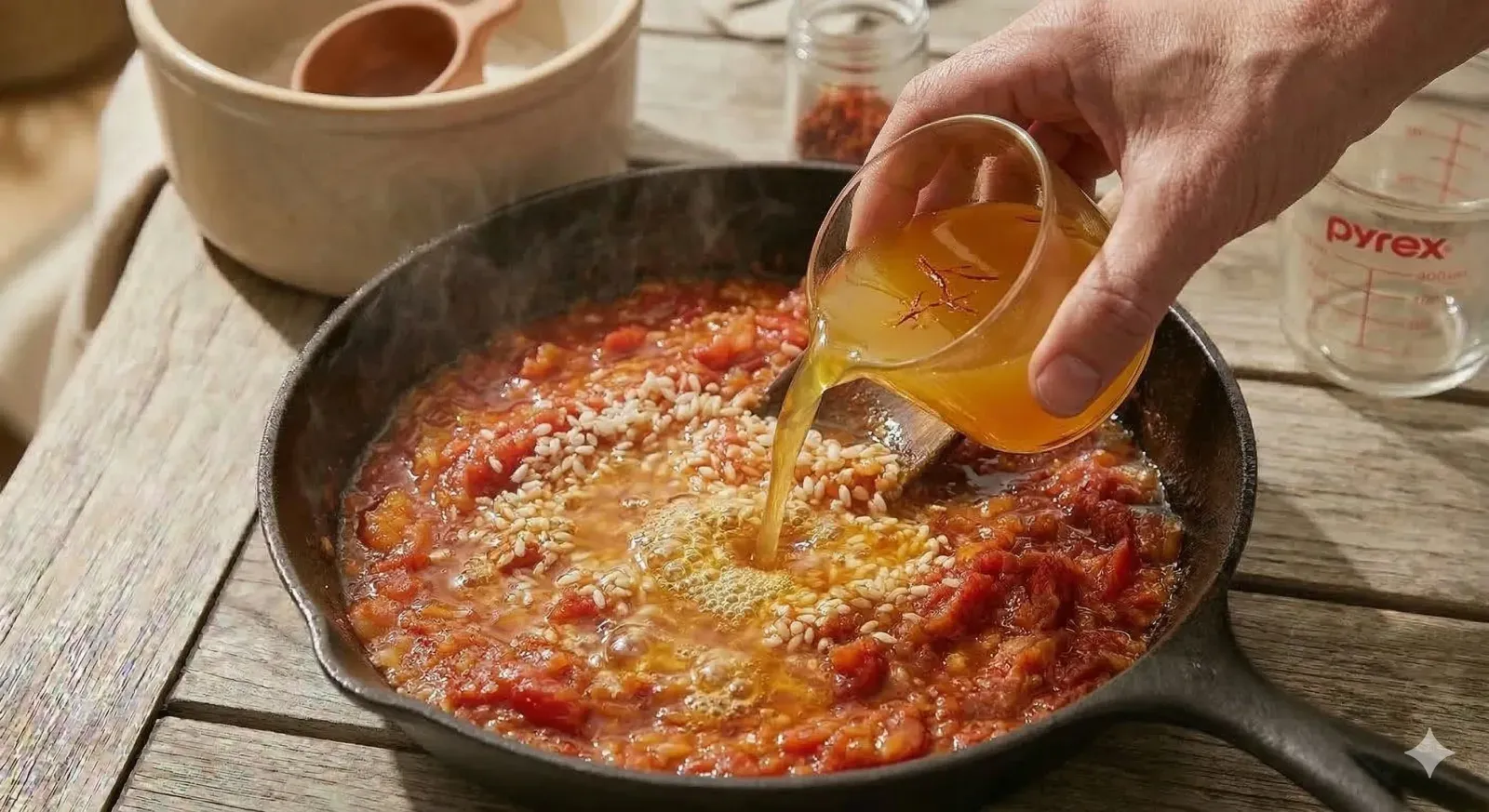
Step 5: Add the Saffron Broth and Simmer
5Pour the warm saffron broth evenly over the rice. Nestle the seared chicken pieces back into the pan, pressing them halfway into the rice. Bring everything to a boil, then reduce the heat to medium-low. Cook for 20 minutes. This is the golden rule of paella: do not stir the rice once the broth has been added. Stirring releases starch and turns the dish into risotto. Let the rice do its work undisturbed.
Step 6: Add the Seafood
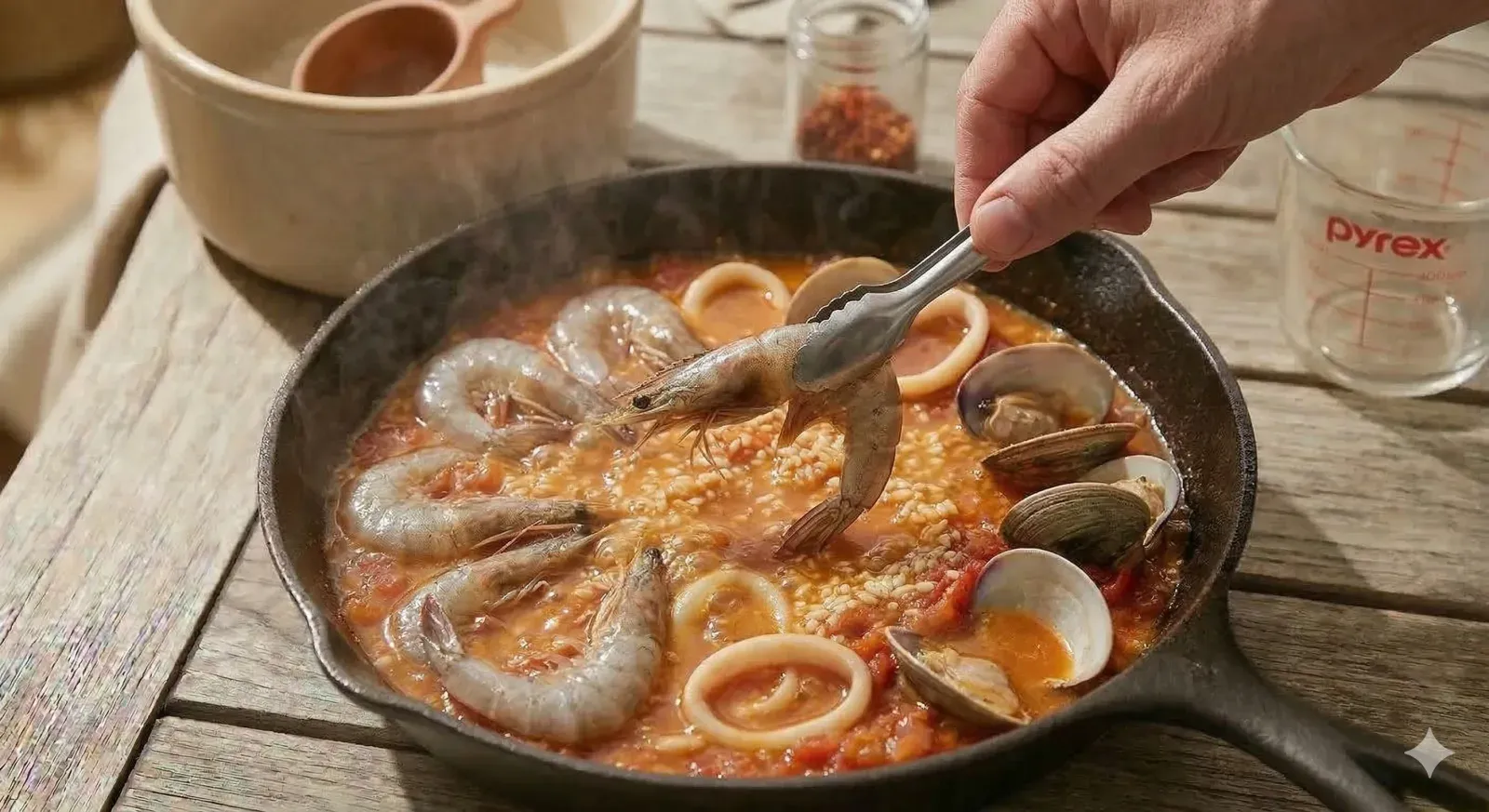
6After 20 minutes, the rice should have absorbed most of the liquid. Arrange the shrimp, mussels (hinge-side down so they open upward), and calamari rings across the surface of the rice. Scatter the frozen green peas around the pan for color. Cover loosely with aluminum foil and cook for another 8 to 10 minutes. The shrimp should turn pink and curled, and all the mussels should be open. Discard any mussels that remain closed.
Step 7: Develop the Socarrat
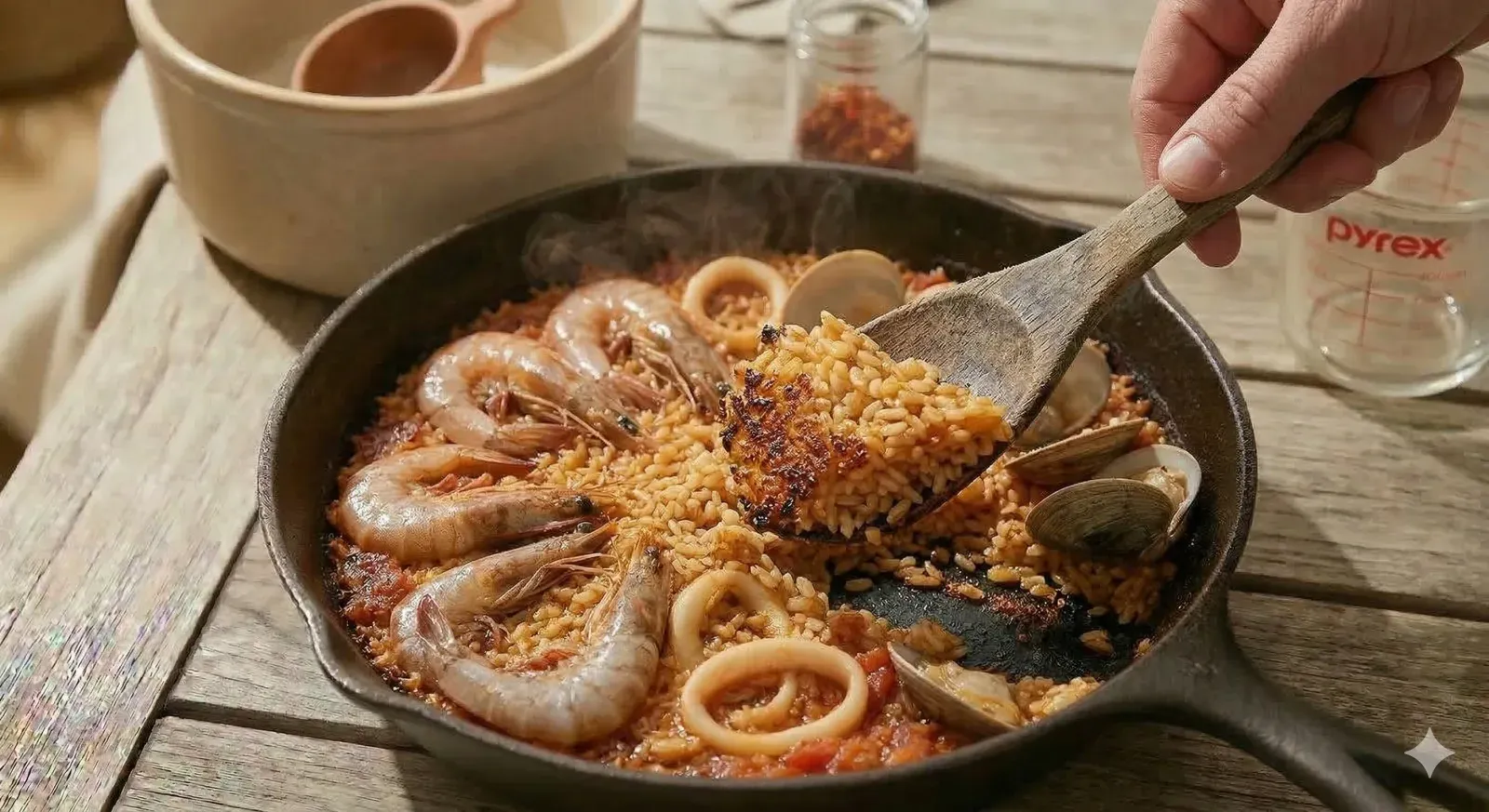
7Remove the foil and increase the heat to high for the final 2 to 3 minutes. This is the moment that separates a good paella from a great one. Listen carefully for a gentle crackling sound coming from the bottom of the pan — that is the socarrat forming. You should also smell a toasty, caramelized aroma. Be attentive and do not walk away, as there is a thin line between perfectly crispy and burnt. Remove from heat immediately once you hear the crackling.
Step 8: Rest, Garnish, and Serve
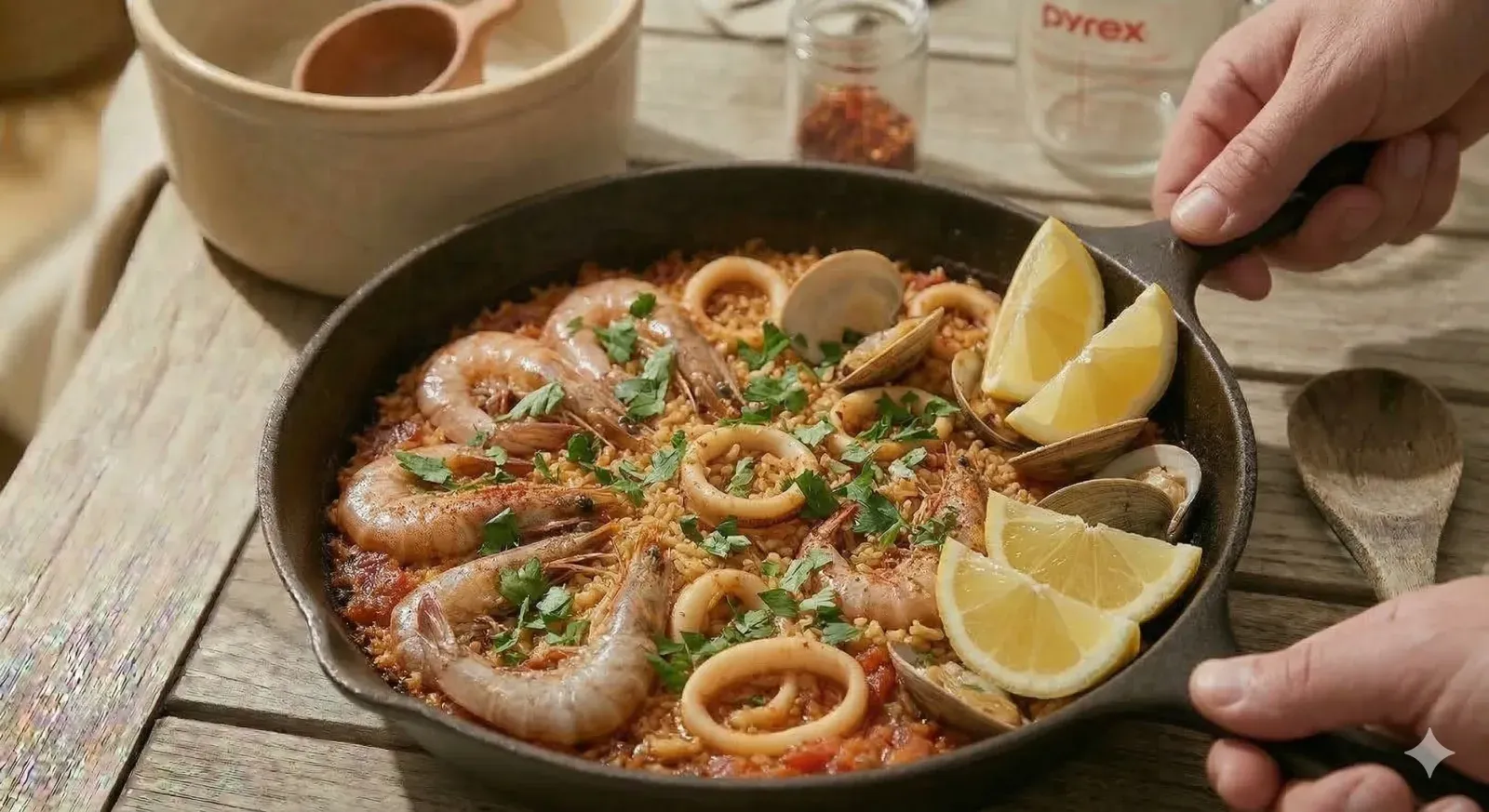
8Let the paella rest off the heat for 5 minutes. This resting period allows the remaining moisture to redistribute and the socarrat to firm up. Squeeze fresh lemon juice over the entire surface and garnish with chopped flat-leaf parsley. Arrange lemon wedges around the edges. Bring the pan directly to the table — paella is always served communal-style, straight from the pan. Each person should get some of the crispy bottom rice along with their portion of protein.
Expert Tips for Perfect Paella
Never Stir After Adding the Broth
This is the single most important rule. Unlike risotto, which requires constant stirring to release starch and create creaminess, paella demands the opposite approach. Each grain of rice should absorb the saffron broth individually, and the undisturbed bottom layer is what transforms into the socarrat. If you stir, you will get Spanish-flavored porridge instead of paella.
Use the Widest Pan You Own
The rice layer should be no more than half an inch thick. A wider pan means more surface area for socarrat and more even cooking. If you do not have a paella pan, a 14-inch cast iron skillet works beautifully. Avoid deep pots or Dutch ovens, which trap too much steam and make the rice mushy.
Keep the Broth Warm
Adding cold broth to hot rice creates thermal shock, causing uneven cooking. Always keep your saffron broth at a gentle simmer on a back burner. When you pour it into the rice, it should immediately return to a boil within seconds.
Paella Styles: A Regional Comparison
Spain takes paella seriously, and each region has its own version. Understanding these variations helps you appreciate the traditions and choose the style that best suits your taste.
| Style | Key Proteins | Defining Characteristic |
|---|---|---|
| Paella Valenciana (Original) | Rabbit, chicken, snails | Uses green beans, white beans, and rosemary. No seafood. |
| Paella de Marisco (Seafood) | Shrimp, mussels, clams, lobster | Pure seafood with fish stock. Rich and briny. |
| Paella Mixta (Mixed) | Chicken, chorizo, shrimp, mussels | Combines meat and seafood. Most popular outside Spain. |
| Paella Negra (Black) | Squid, cuttlefish | Colored with squid ink instead of saffron. Dramatic presentation. |
| Paella de Verduras (Vegetable) | Artichokes, beans, peppers | Fully plant-based. Light and seasonal. |
Serving Suggestions
In Spain, paella is traditionally served at midday as a communal meal. The pan is placed in the center of the table, and everyone eats directly from their section of the pan with a spoon. The most experienced cook at the table will scrape up portions of the socarrat and distribute them to guests — it is considered the cook’s gift.
The Perfect Accompaniments:
- Alioli (garlic aioli): A dollop of homemade alioli alongside your portion adds creamy richness that complements the saffron rice beautifully.
- Simple green salad: A lightly dressed salad of mixed greens with sherry vinaigrette provides a fresh, acidic contrast to the rich, savory paella.
- Crusty bread: A loaf of rustic bread is perfect for soaking up any remaining juices on the plate and stretching the meal.
- Grilled padron peppers: Blistered with olive oil and flaky sea salt, these small peppers are a classic Spanish side that pairs naturally with paella.
Beverage Pairings:
- Spanish white wine: An Albariño from Galicia or a Verdejo from Rueda — crisp, citrusy, and perfect with saffron and seafood.
- Rosado (Spanish rosé): A dry rosé from Navarra bridges the gap between the chicken, chorizo, and seafood components.
- Sangría: A pitcher of chilled red or white sangría is festive and fun for a casual paella party.
- Sparkling water with lemon: A non-alcoholic option that cleanses the palate and lets the complex saffron flavors shine.
Storage and Reheating
Refrigerator: Store leftover paella in an airtight container for up to 3 days. The flavors actually deepen overnight as the saffron and spices continue to meld with the rice.
Freezer: Paella freezes well for up to 2 months. Remove seafood shells before freezing and store in flat, portion-sized containers for easy reheating. Thaw overnight in the refrigerator before reheating.
Reheating: The best method is in a skillet over medium heat with a splash of chicken broth. Spread the paella in an even layer and cover for 5 to 7 minutes. This restores moisture and can even create a new layer of socarrat on the bottom. Avoid the microwave if possible, as it makes the rice rubbery.
Common Mistakes to Avoid
1. Stirring the Rice
We cannot emphasize this enough: do not stir the rice after adding the broth. Stirring breaks the grains, releases excess starch, and prevents socarrat from forming. Set a timer, walk away, and trust the process.
2. Using the Wrong Rice
Long-grain rice like basmati or jasmine will not produce authentic results. These varieties do not absorb enough liquid and will cook into dry, separate grains without the plump, flavorful bite that short-grain Spanish rice delivers. Bomba or Calasparra rice is worth seeking out at specialty stores or online.
3. Overcrowding the Pan with Too Much Rice
The rice layer should never be thicker than half an inch. If you pile too much rice into the pan, the bottom will overcook while the top stays underdone. It is better to use a wider pan or make two batches than to overfill a single one.
4. Adding Cold Broth
Cold broth drops the temperature of the pan dramatically, leading to uneven cooking and extended cook times that make the rice mushy. Always keep your saffron broth at a simmer on a separate burner.
5. Overcooking the Seafood
Shrimp and calamari go from perfectly tender to rubbery in a matter of minutes. Add seafood only during the last 8 to 10 minutes of cooking. Mussels and clams should open naturally; forcing them open means they were dead before cooking and should be discarded.
Frequently Asked Questions
What type of rice is best for paella?
Bomba rice is the gold standard. It absorbs up to three times its volume in liquid without becoming mushy, producing firm, separate grains with maximum flavor absorption. Calasparra rice is an excellent and more affordable alternative. Avoid long-grain or jasmine rice entirely.
Can I make paella without saffron?
You can substitute a pinch of turmeric combined with sweet paprika for color, but the flavor will be noticeably different. Saffron contributes a unique earthy, floral, and slightly honey-like note that no substitute can fully replicate. For the most authentic result, saffron is highly recommended — even a small pinch makes a significant difference.
What is socarrat and how do I achieve it?
Socarrat is the crispy, caramelized layer of rice that forms on the bottom of the pan. It is considered the most prized part of a well-made paella. To achieve it, increase the heat to high during the last 2 to 3 minutes of cooking. Listen for a gentle crackling sound without lifting the rice to check — trust your ears and nose.
Can I use a regular skillet instead of a paella pan?
Absolutely. A large, wide, shallow skillet (12 to 14 inches) works well. The key requirement is a wide cooking surface so the rice sits in a thin, even layer. A cast iron skillet is an excellent alternative. Avoid deep pots, as the rice will steam unevenly.
How many people does this recipe serve?
This recipe generously serves 6 people as a main course. For larger gatherings, it is better to use a bigger pan (18 to 20 inches) and scale up proportionally rather than piling more rice into a smaller pan.
Can I make paella on a grill?
Yes, and many purists prefer it. Cooking paella over a charcoal or wood fire adds a subtle smokiness that enhances the dish. Place your paella pan directly on the grill grate over medium-high heat. The technique is the same — just rotate the pan occasionally for even heat distribution.
Variations and Adaptations
Seafood-Only Paella (Paella de Marisco):
Replace the chicken and chorizo with additional seafood — clams, lobster tails, and langoustines are traditional. Use fish stock or a combination of clam juice and water instead of chicken broth. The result is a lighter, more briny paella that lets the ocean flavors shine.
Vegetarian Paella (Paella de Verduras):
Use vegetable broth and load the pan with artichoke hearts, roasted red peppers, asparagus, green beans, butter beans, and cherry tomatoes. Add the firmer vegetables early and the delicate ones toward the end. A pinch of smoked paprika compensates for the missing chorizo smokiness.
Black Paella (Arroz Negro):
Replace the saffron with squid ink for a dramatic jet-black presentation. Use cuttlefish and squid as the primary proteins. The squid ink adds a briny, minerally flavor that is utterly unique. Serve with a generous squeeze of lemon and alioli on the side.
Paella Valenciana (Traditional Original):
For the most historically authentic version, use rabbit, chicken, snails, green beans (flat runner beans), white butter beans, and a sprig of fresh rosemary. No seafood, no chorizo. This is the paella that started it all in the Valencian countryside.
The Cultural Significance of Paella
Paella is far more than a recipe in Spain — it is a ritual of togetherness. In Valencia, Sunday paella is a sacred family tradition. Extended families gather around an outdoor fire, and the eldest family member or the most experienced cook takes charge of the pan. The preparation itself is a social event, with everyone watching, chatting, and offering opinions on when the socarrat is ready.
The word “paella” actually comes from the Old French word “paele,” derived from the Latin “patella,” meaning pan. Over time, the dish became inseparable from the vessel it is cooked in. In Valencian culture, the quality of a cook is often judged by their paella — it is a point of immense pride and friendly competition. Paella contests are held across Spain, with judges evaluating flavor, texture, socarrat quality, and adherence to tradition.
Today, paella has become one of the most globally recognized dishes, served from beach shacks in Barcelona to fine dining restaurants in New York. Yet its heart remains in Valencia, where it continues to bring families together around one beautiful, generous pan.
Conclusion
Making authentic Spanish paella at home is absolutely achievable with the right rice, quality saffron, and the discipline to never stir after the broth goes in. This recipe walks you through every step — from blooming the saffron to developing that legendary socarrat crust — so you can confidently serve a stunning paella that looks and tastes like it came from a seaside kitchen in Valencia. Gather your ingredients, call your friends, and bring the spirit of Spain to your table.
Looking for more international recipes? Explore our collection of European dishes or discover Asian-inspired recipes with a homemade touch.