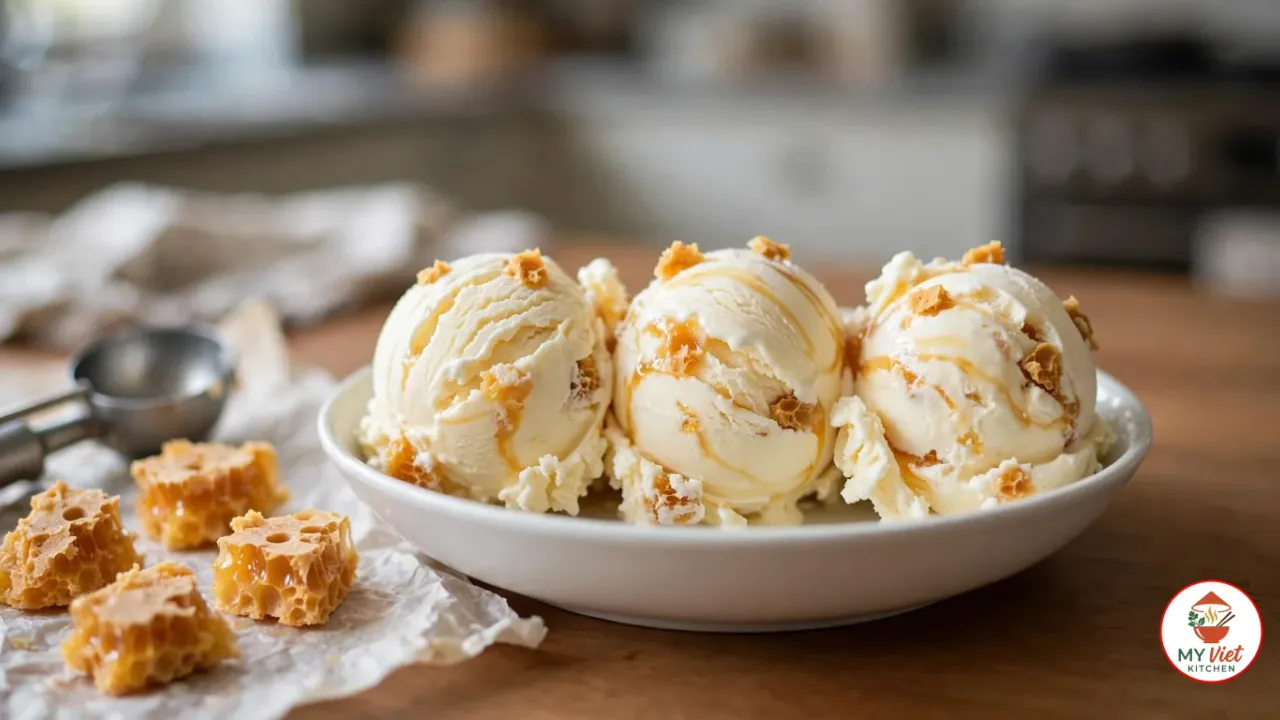
Hokey pokey ice cream is plain vanilla ice cream with small, solid lumps of honeycomb toffee through it, and hokey pokey is the New Zealand name for that toffee (Wikipedia). This recipe makes both parts at home. You cook and churn an egg custard, make a tray of hokey pokey from sugar, golden syrup and baking soda, then break it by hand and layer it in.
Prep Time: 45 minutes | Cook Time: 20 minutes | Total Time: 9 hours 5 minutes, including 4 hours of chilling and 4 hours of freezing | Servings: 8
Difficulty: Medium | Calories: ~380 per serving

Who Made the First Hokey Pokey Ice Cream?
Nobody has settled it. The New Zealand Ice Cream Association says there are several stories and a lot of speculation. One credits the Meadow Gold Ice Cream Company of Papatoetoe in the 1940s, but the association doesn’t believe that company existed until the mid-1950s. Another names Tip Top in Auckland at about the same time; the association calls that story not well documented, and says sugar rationing makes a wartime launch doubtful. A third has Peter Pan Ice Cream in Waipukurau making it in the mid-1950s (NZICA).
The association rates Brian Simon’s claim as by far the strongest. In a 2010 Radio NZ interview, he recalled making the first hokey pokey ice cream at Dunedin’s Newjoy Ice Cream Co. in 1953. He used broken Crunchie Bar pieces from the Cadbury Fry Hudson factory just down the street (NZICA).
The toffee is older than the ice cream. The association’s earliest definite proof of the name is an 1896 patent application by William Hatton, a confectioner from Caversham, Dunedin. It was for “a confection to be known as Hokey Pokey”, made from sugar, glucose, water and baking soda (NZICA).
Sources also differ on how Tip Top’s version changed. The New Zealand Herald reported in 2001 that its pieces went in the 1980s from erratic-sized chunks, made by hammering the toffee, to more regular, smooth orbs, because big chunks clogged the machines (NZ Herald). Wikipedia says the original used solid toffee until around 1980, when Tip Top switched to small balls of honeycomb toffee (Wikipedia). Breaking the toffee yourself gets you back to rough, uneven pieces.
Why Does Hokey Pokey Foam, and How Hot Is the Syrup?
The toffee here follows the Edmonds recipe that Chelsea Sugar publishes: 5 tablespoons of sugar, 2 tablespoons of golden syrup and 1 teaspoon of baking soda. You dissolve the sugar gently, boil the mixture for two minutes, take it off the heat and stir in the soda very quickly (Chelsea Sugar).
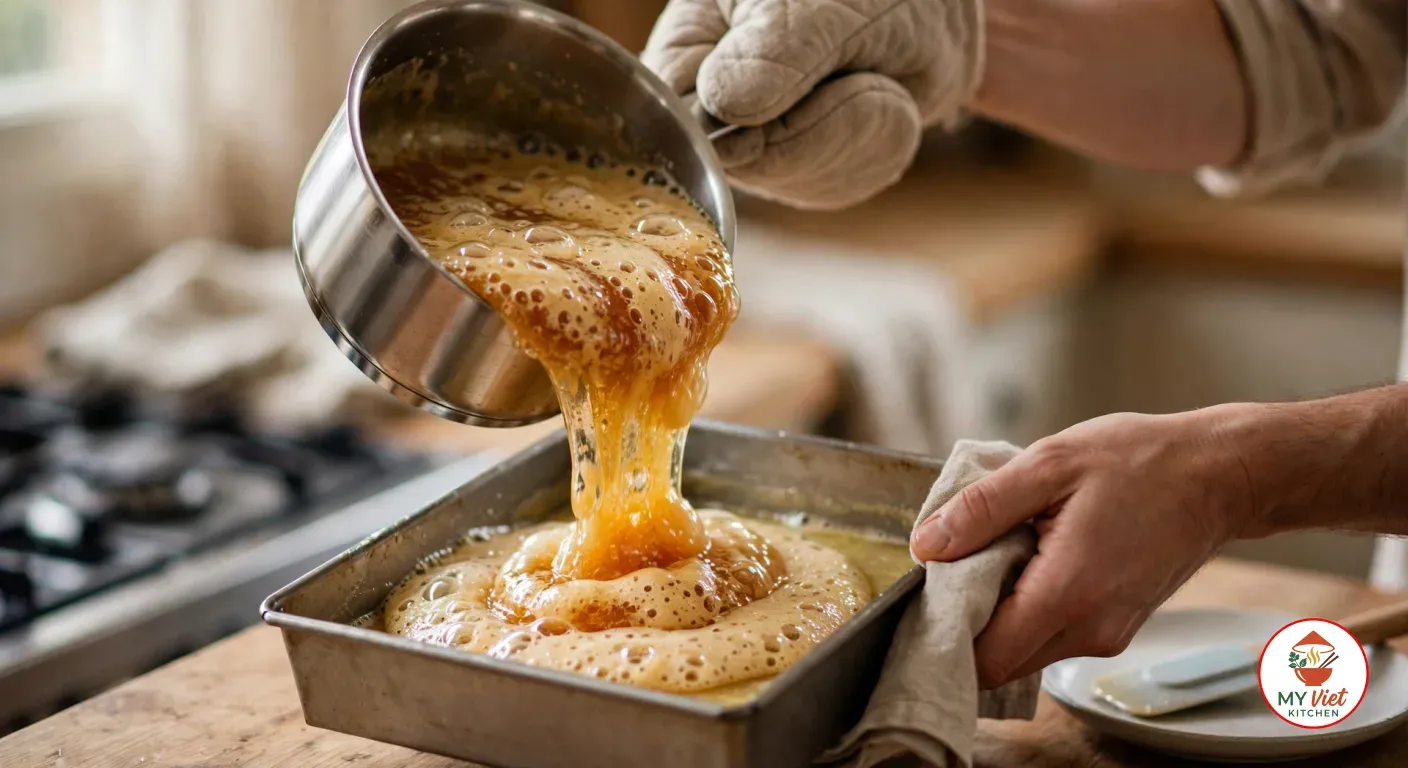
The foam is carbon dioxide. Baking soda gives off the gas when it reacts with an acid, and when no acid is added, the heat breaks the soda down and releases it anyway. The thick syrup traps the bubbles while the sugar is still liquid, then the toffee sets hard around them (Wikipedia).
The Edmonds method times the boil instead of measuring it. The cook in the video above boils the same mixture at full bubbles for 2 to 3 minutes without stirring, or until it starts to change to an amber colour (Eat Homemade). Honeycomb recipes that use a thermometer take the syrup to the hard crack stage. CSR Sugar’s recipe boils it to 149–154°C (300–309°F) on a candy thermometer (CSR Sugar), and Australia’s National Science Week aims for just under 150°C (National Science Week).
Respect that heat. Chelsea warns that boiling sugar is incredibly hot and the mixture foams up rapidly, and tells you to have all your equipment ready before you begin (Chelsea Sugar). National Science Week says to use a saucepan with room for the mixture to grow to twice its size (National Science Week). Grease the tin before you light the stove, and keep children back while the syrup boils.
How Do You Make the Egg Custard Safe?
Cook it to a measured temperature. The Minnesota Department of Health says ice cream made at home can make hundreds of people ill with salmonellosis each year, and that recipes for it often use raw eggs. A cooked custard base must reach 160°F, measured with a food thermometer, to kill Salmonella Enteritidis. The department also says to resist taste-testing before the custard is fully cooked, to chill it thoroughly before freezing, and to use only pasteurized milk and cream (Minnesota Department of Health).
This recipe takes the custard to 170°F (77°C), above that minimum. Keep the heat low and the spatula moving across the bottom of the pan, and go by the thermometer rather than the look of the custard. The four hours in the fridge cover the chilling, and the custard should be cold all the way through before it goes into the machine.
Ingredients for Hokey Pokey Ice Cream
For the Custard Base:
- 2 cups (480 ml) heavy cream (35% fat)
- 1 cup (240 ml) whole milk
- 3/4 cup (150 g) granulated sugar
- 5 large egg yolks
- 1/8 teaspoon fine salt
- 2 teaspoons pure vanilla extract
For the Hokey Pokey:
- Butter, for greasing the tin
- 5 tablespoons (60 g) white sugar
- 2 tablespoons (40 g) golden syrup
- 1 teaspoon baking soda
Step-by-Step Instructions
Step 1: Make the Custard Base
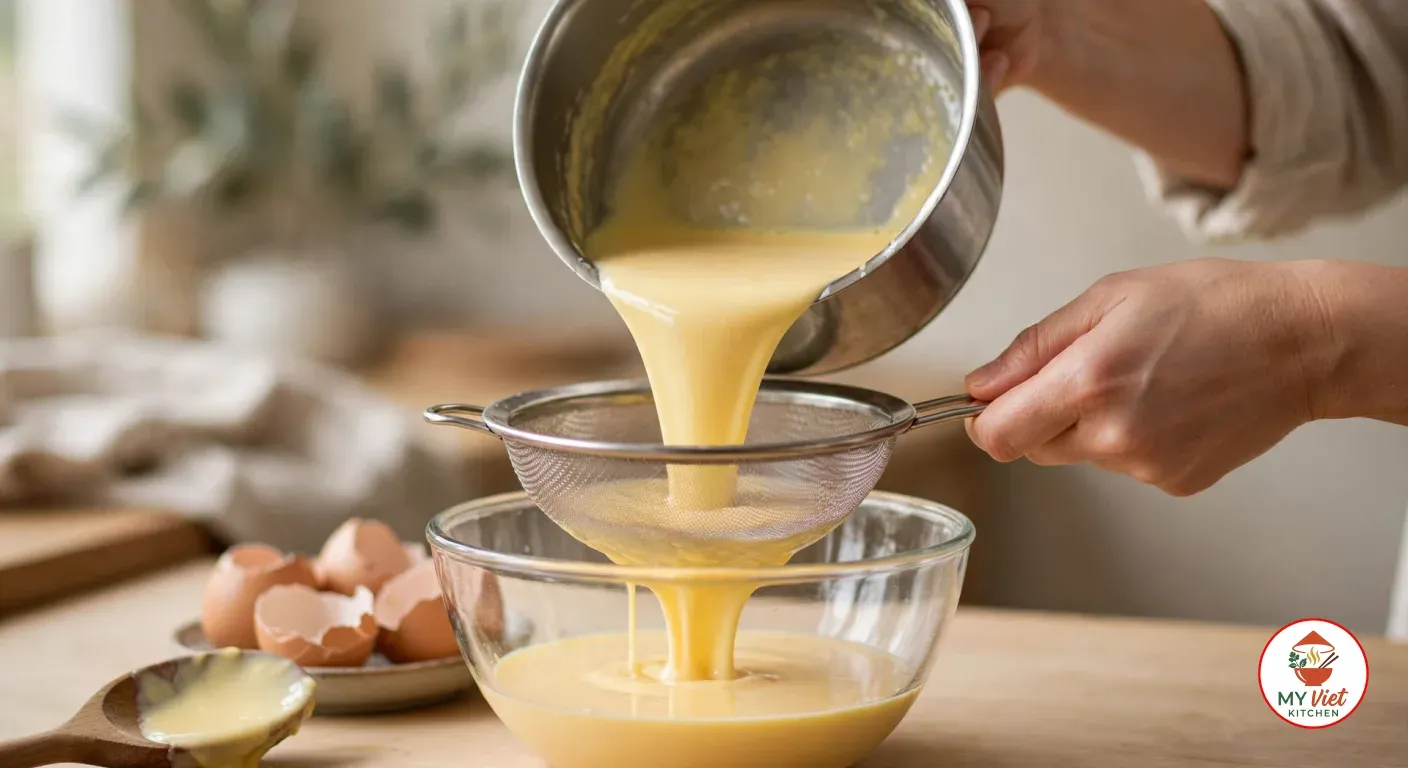
1Pour the cream and milk into a medium saucepan, add half the granulated sugar and heat over medium heat until steaming, with small bubbles at the edge; don’t let it boil. Meanwhile, whisk the egg yolks, the rest of the granulated sugar and the salt in a heatproof bowl until pale. Whisking all the time, pour about 1 cup (240 ml) of the hot cream into the yolks in a thin stream, then pour the yolk mixture back into the pan. Cook over low heat, stirring constantly with a heatproof spatula, until the custard coats the spatula and reads 170°F (77°C) on an instant-read thermometer, 5 to 8 minutes. Pour it through a sieve set over a clean bowl to catch any bits of cooked egg, then mix in the vanilla. Cover the bowl and chill it in the fridge until cold, at least 4 hours or overnight.
Step 2: Make the Hokey Pokey
2Grease the base and sides of an 8-inch (20 cm) square tin with butter and set it beside the stove. Measure the 5 tablespoons of white sugar and the golden syrup into a heavy-based 2-quart (2-litre) saucepan; the foam needs that much room. Heat gently, stirring, until the sugar dissolves. Turn up the heat and boil gently for 2 minutes, stirring only if it starts to catch, until the syrup begins to turn amber. Take the pan off the heat, add the baking soda and stir very quickly for a few seconds; the mixture froths up at once. Pour it straight into the tin without spreading it. Leave it untouched until cold and set, about 30 minutes, then keep it in an airtight container.
Step 3: Churn the Ice Cream
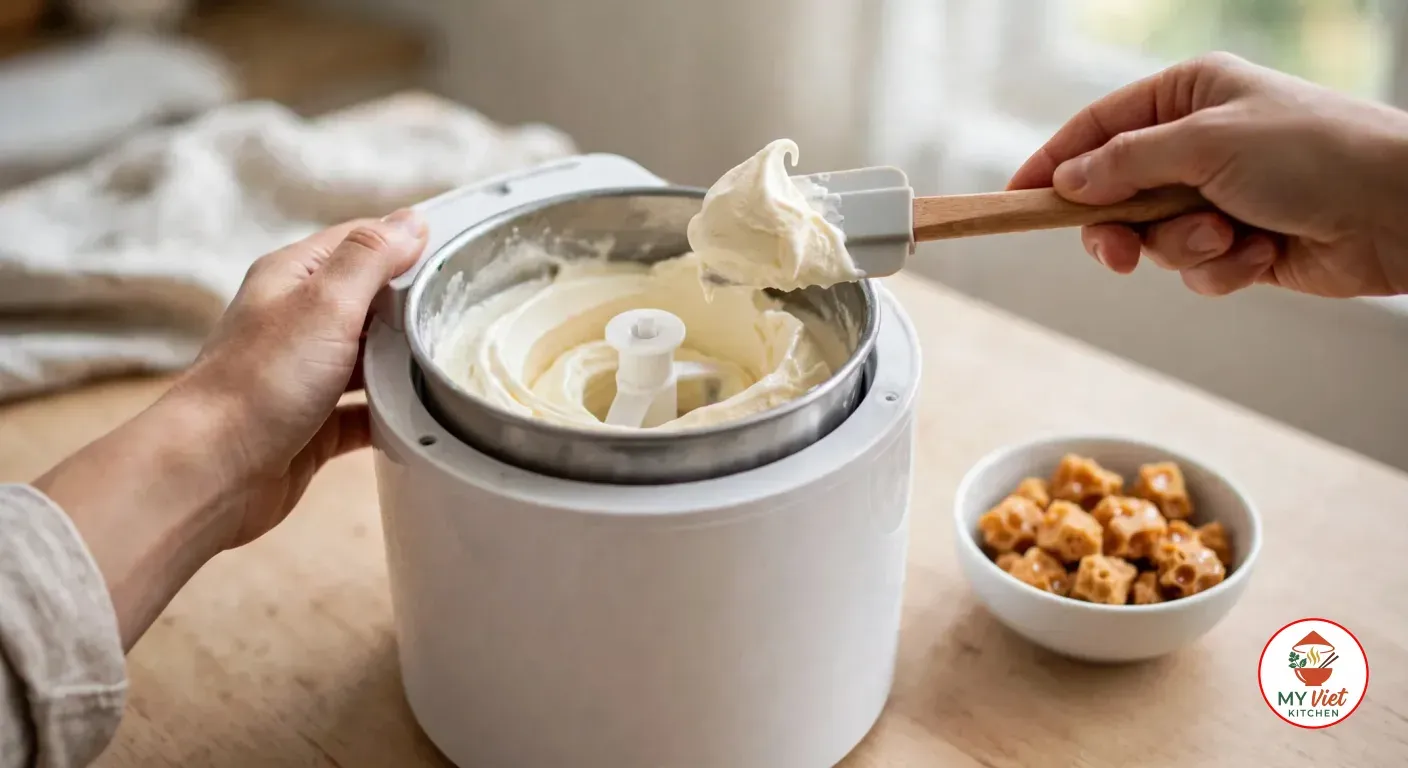
3Put a 9 x 5-inch (23 x 13 cm) loaf tin in the freezer. Pour the cold custard into your ice cream maker and churn according to the manufacturer’s instructions until it is as thick as soft-serve, about 20 to 25 minutes. While it churns, tip the hokey pokey onto a board and break it with the end of a rolling pin into rough pieces between pea and small marble size. Set aside a small handful for serving.
Step 4: Layer and Freeze
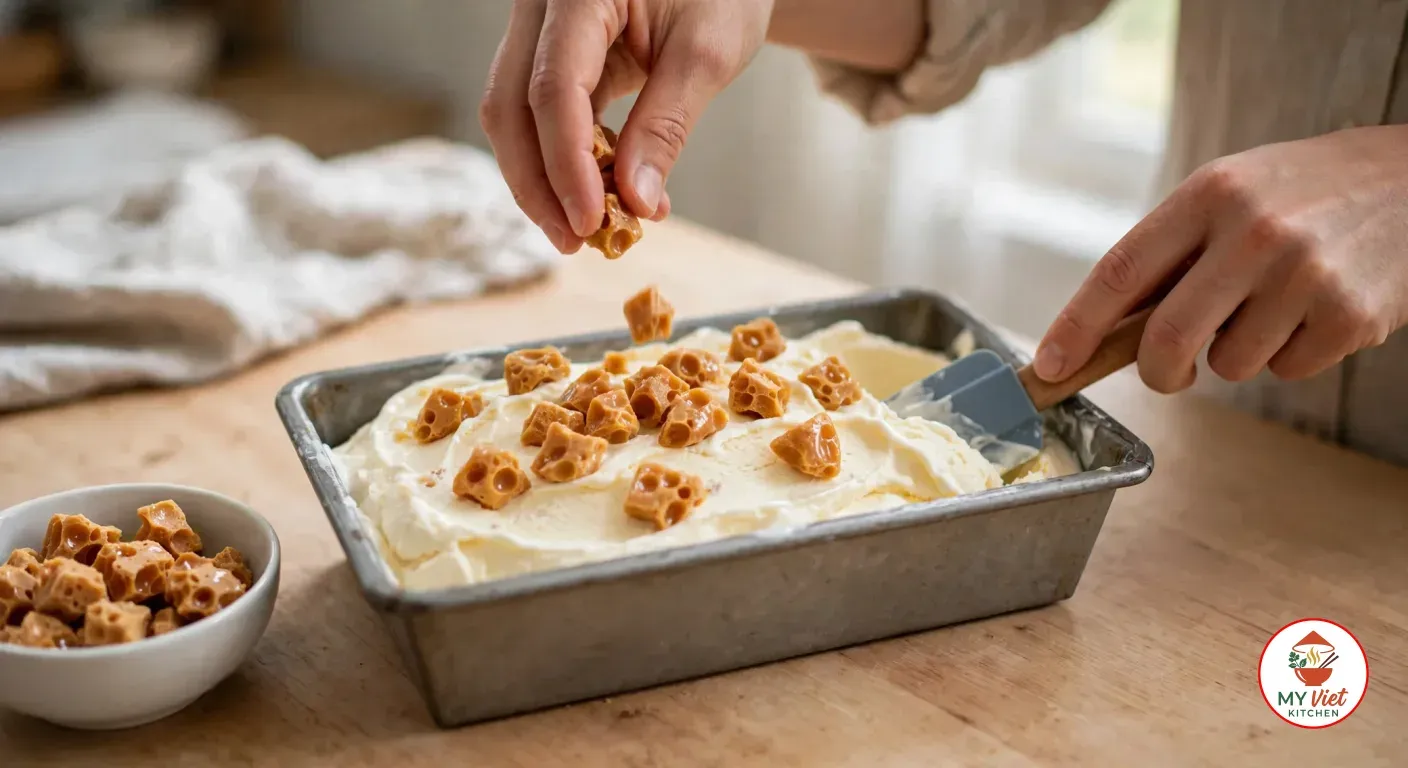
4Spread a third of the soft ice cream in the chilled loaf tin and scatter half the remaining hokey pokey over it. Add another third of the ice cream and the rest of the hokey pokey, then top with the last of the ice cream. Draw a spatula through it once or twice so the pieces sit inside the ice cream rather than on top. Press a sheet of baking paper onto the surface and freeze for at least 4 hours, until firm.
Step 5: Soften and Serve
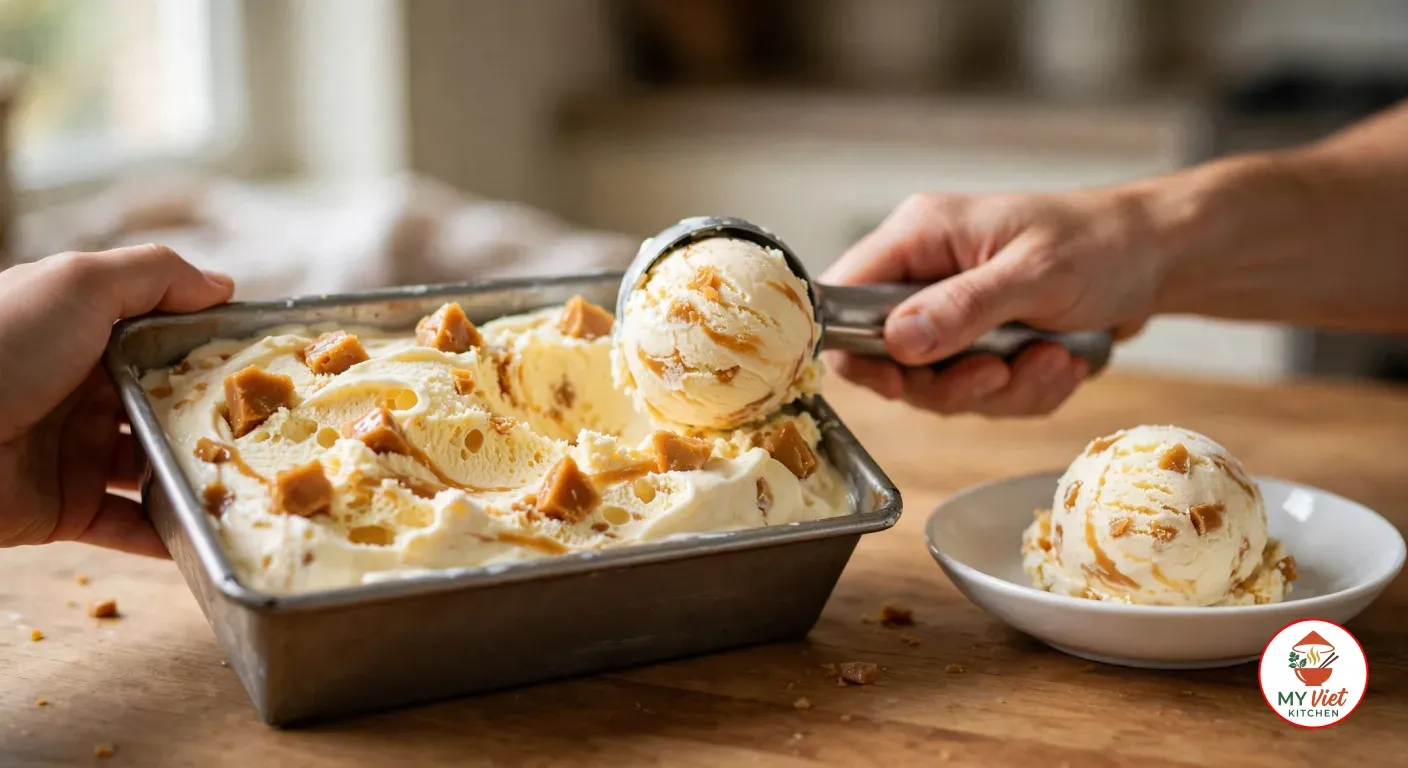
5Take the tin out of the freezer 5 to 10 minutes before serving so the ice cream softens slightly. Drag a scoop across the surface to make round scoops, put them in bowls or cones and scatter the saved hokey pokey over the top. Press the paper back onto the rest and return it to the freezer straight away.
Frequently Asked Questions
Why is it called hokey pokey?
Nobody knows for certain. Wikipedia says New Zealanders have called honeycomb toffee hokey pokey since the late 19th century, and that the reason is not known with certainty. Elsewhere, hokey pokey was slang for ice cream sold by street vendors, mostly of Italian descent, in places such as New York City and parts of Great Britain. Suggested roots include “hocus-pocus” and Italian phrases such as oh che poco, ‘oh how little’ (Wikipedia). The New Zealand Herald offered another: vendors shouting “Ecce pocce” (NZ Herald).
Can you make hokey pokey ice cream without an ice cream maker?
Yes, with a no-churn base like the one in the video above. That cook beats 500 ml of heavy cream with a 395 g can of sweetened condensed milk and 1 teaspoon of vanilla essence, then adds 1.5 cups of crushed hokey pokey before freezing. It freezes for 4 to 6 hours or overnight and comes out 10 minutes before scooping (Eat Homemade). That version has no eggs, so it skips the custard step.
Does the hokey pokey stay crunchy in the ice cream?
Not all of it, and fans disagree on which they want. In 2001, Tip Top’s managing director told the New Zealand Herald that some customers love hokey pokey when it melts and goes gooey, while others like it crunchy. Lean the blend too far either way, he said, and the complaints start (NZ Herald). Layering the pieces in by hand, as in this recipe, leaves you a mix of both.
What can you use instead of golden syrup?
Honey, in a recipe written for it. CSR Sugar’s honeycomb boils 1 cup of white sugar with 1 tablespoon of honey, 1 tablespoon of vinegar and a knob of butter. At the hard crack stage, 1/2 teaspoon of baking soda goes in (CSR Sugar). National Science Week’s version uses both golden syrup and honey (National Science Week). Follow either recipe as written rather than swapping one syrup into the Edmonds amounts.
Sources
- Hokey pokey (ice cream), Wikipedia
- History of Ice Cream in New Zealand: 1951–1960, New Zealand Ice Cream Association
- It’s a love affair in a cone, Catherine Masters, The New Zealand Herald, December 2001
- Hokey Pokey, Chelsea Sugar (Edmonds recipe), October 2024
- Honeycomb toffee, Wikipedia
- Honeycomb, CSR Sugar
- DIY Science: Honeycomb, National Science Week, August 2020
- Home Made Ice Cream: Food Safety, Minnesota Department of Health, updated September 2026
- The Creamiest No-Churn Ice Cream - Just Mix & Freeze (Hokey Pokey Ice Cream!), Eat Homemade, YouTube, October 2026