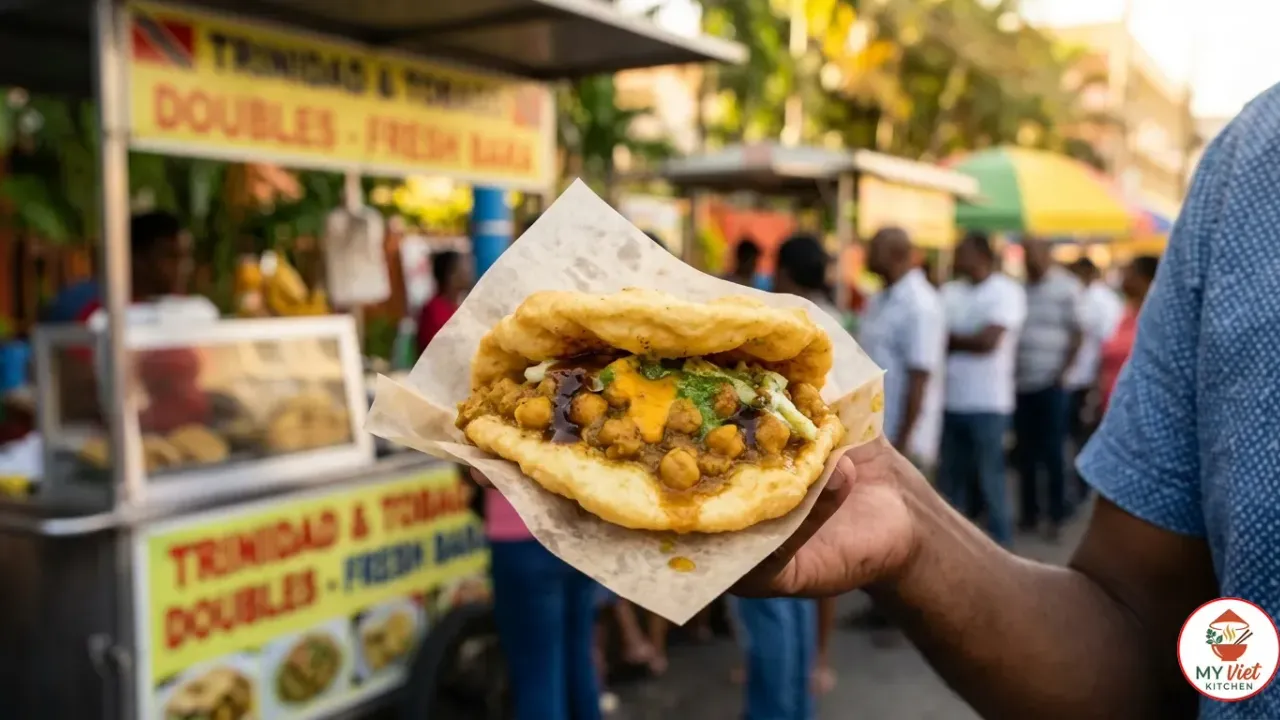
Doubles are the undisputed king of street food in Trinidad and Tobago, and one of the most beloved snacks across the entire Caribbean. This iconic Trinidadian dish features two pieces of soft, golden fried flatbread called bara wrapped around a generous filling of curried chickpeas known as channa, then finished with fiery pepper sauce and tangy chutneys. This step-by-step doubles recipe captures the authentic flavors of Trinidad so you can recreate this legendary street food at home.
Prep Time: 40 minutes | Cook Time: 30 minutes | Servings: 12
Difficulty: Medium | Calories: ~280 per serving
What Makes Doubles Special?
Doubles hold a unique place in Caribbean food culture. In Trinidad, they are not just a snack. They are a morning ritual, a late-night craving, and a national institution all at once. Street vendors set up their carts before dawn, and by sunrise, long lines of customers stretch down the sidewalk. Indeed, the best doubles vendors have loyal followings that span decades.
What sets doubles apart is the contrast between its components. Specifically, the bara is soft, pillowy, and lightly seasoned with turmeric and cumin. It absorbs the curried channa sauce like a sponge, creating a rich, spice-forward bite. Then the chutneys and pepper sauce add layers of sweet, sour, and fiery heat that wake up every taste bud. As a result, no two bites are exactly the same because the sauces distribute unevenly in the most delicious way.
Unlike many street foods that rely on heavy frying or rich dairy, doubles are naturally vegan. The dough uses no eggs or butter. The filling is pure chickpeas and spices. This makes doubles one of the most inclusive and accessible street foods on the planet. Whether you follow a plant-based diet or simply love bold Caribbean flavors, doubles deliver on every level.

Choosing the Right Chickpeas for Doubles
The channa filling is the heart and soul of every doubles. Selecting the right chickpeas and preparing them correctly makes all the difference between average channa and the kind that keeps you coming back.
- Canned chickpeas (most convenient): Drain and rinse them well before cooking. They work perfectly for weeknight doubles since they are already cooked and soft. Choose brands with firm, intact chickpeas rather than mushy ones.
- Dried chickpeas (best choice): Soak overnight in cold water, then boil until tender but not falling apart. Furthermore, dried chickpeas have a firmer texture and nuttier flavor that absorb curry spices more deeply. They require more planning but produce superior results.
- Split chickpeas (chana dal): Some Trinidadian cooks use split chickpeas for a smoother, thicker filling. As a result, they break down faster during cooking and create a creamier consistency. However, this variation is less common in traditional street doubles.
Ingredients for Doubles
For the Bara Dough:
- 2 cups all-purpose flour
- 1/2 cup chickpea flour (besan)
- 1 teaspoon active dry yeast
- 1 teaspoon sugar
- 1 teaspoon ground turmeric
- 1/2 teaspoon ground cumin
- 1/2 teaspoon salt
- 3/4 cup warm water
- Vegetable oil for frying
For the Curried Channa:
- 2 cans (15 oz each) chickpeas, drained and rinsed
- 2 tablespoons vegetable oil
- 1 medium onion, finely diced
- 4 cloves garlic, minced
- 1 tablespoon curry powder (Trinidadian or Madras style)
- 1 teaspoon ground cumin
- 1/2 teaspoon ground turmeric
- 1/4 teaspoon ground geera (roasted cumin)
- 1 Scotch bonnet pepper, seeded and minced
- 1 cup water
- Salt and black pepper to taste
- 2 tablespoons fresh cilantro, chopped
For the Toppings:
- Tamarind chutney (sweet and tangy)
- Cucumber chutney (cool and fresh)
- Pepper sauce (Scotch bonnet or Congo pepper)
- Chadon beni (culantro) chutney
Pro tip: Trinidadian curry powder is different from Indian curry powder. It has a higher proportion of roasted cumin (geera) and coriander, which gives it a distinctive earthy, toasted flavor. Look for brands like Chief or Turban at Caribbean grocery stores for the most authentic taste.
Step-by-Step Instructions
Step 1: Prepare the Bara Dough
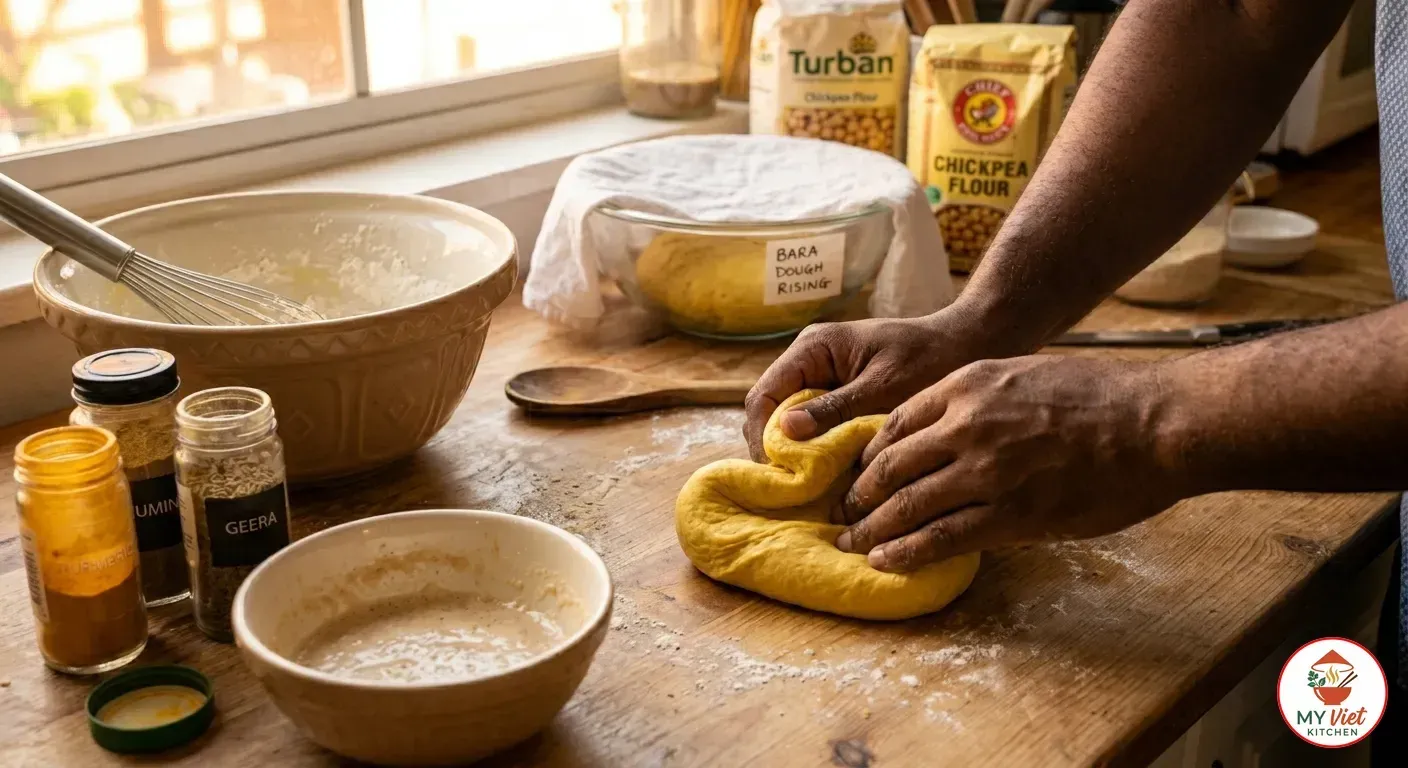
1 Combine the warm water, yeast, and sugar in a small bowl. Stir gently and let it sit for 5 to 10 minutes until the mixture turns foamy. This confirms that the yeast is active. In a large mixing bowl, whisk together the all-purpose flour, chickpea flour, turmeric, cumin, and salt. Pour the yeast mixture into the dry ingredients. Mix with a wooden spoon until a soft, slightly sticky dough forms. Turn the dough onto a lightly floured surface and knead for 3 to 4 minutes until smooth and elastic. The chickpea flour adds a subtle nutty flavor and helps the bara achieve its signature golden color. Place the dough in a lightly oiled bowl, cover with a damp cloth, and let it rise in a warm spot for at least 1 hour until it doubles in size.
Step 2: Prepare the Curried Channa
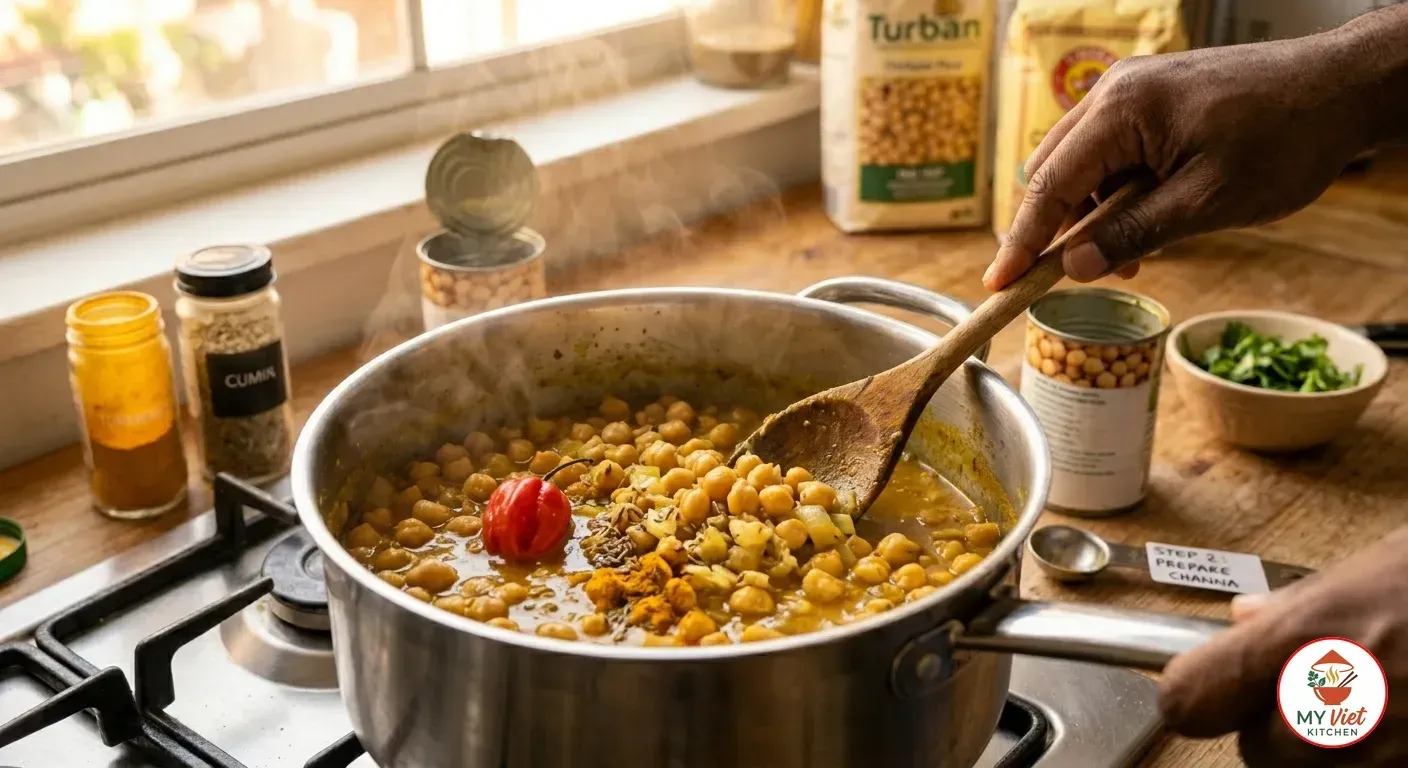
2 Heat 2 tablespoons of vegetable oil in a large saucepan over medium heat. Add the diced onion and cook for 3 to 4 minutes until soft and translucent. Then add the minced garlic, curry powder, ground cumin, turmeric, and geera. Stir constantly for about 1 minute until the spices become fragrant and coat the onions evenly. This step is called blooming, and it releases the essential oils in the spices for maximum flavor.
Next, add the drained chickpeas and the Scotch bonnet pepper. Pour in 1 cup of water and bring the mixture to a gentle simmer. Cook for 20 to 25 minutes, stirring occasionally, until the sauce thickens and the chickpeas soften slightly. Use the back of a spoon to mash a handful of chickpeas against the side of the pot. This creates a thicker, creamier base while leaving most of the chickpeas whole. Season with salt and black pepper, then fold in the fresh cilantro.
Step 3: Shape the Bara
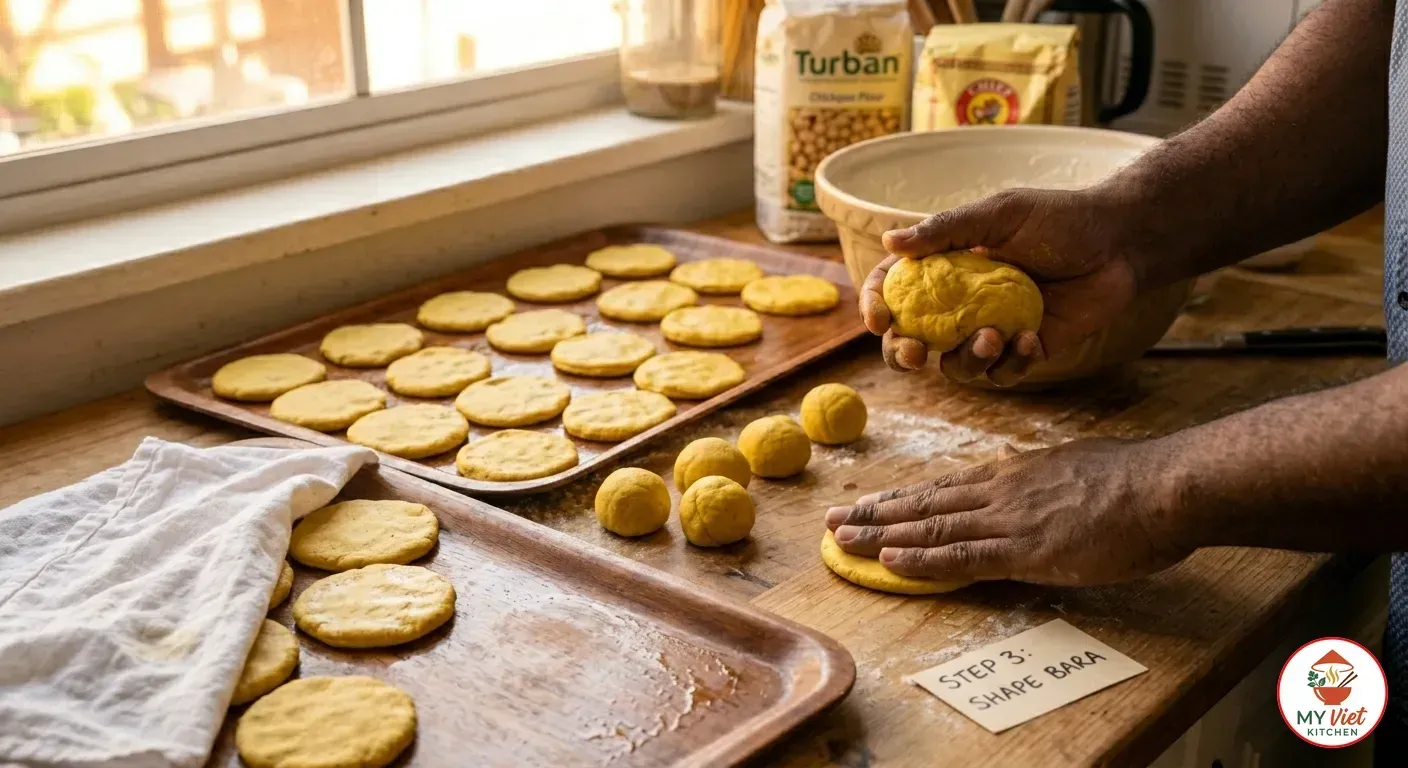
3 Once the dough has finished rising, punch it down gently to release the air. Turn it onto a lightly floured surface and divide it into 24 equal pieces. Roll each piece into a smooth ball between your palms. Then flatten each ball with your palms or a small rolling pin into a thin disc about 4 inches in diameter. The bara should be thin enough to fry quickly but thick enough to hold the channa filling without tearing. Place the shaped discs on a lightly oiled tray and cover them with a damp cloth to prevent drying while you shape the rest.
Step 4: Fry the Bara
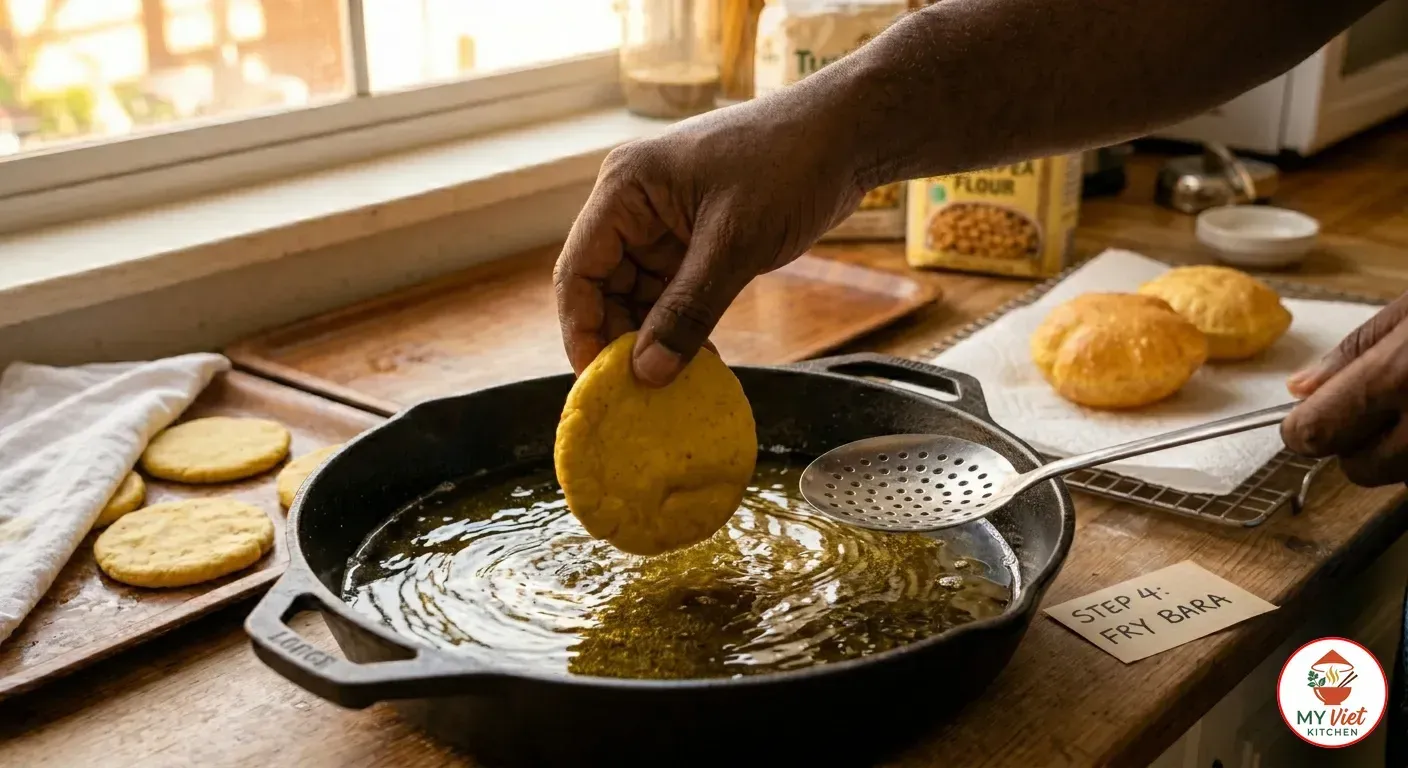
4 Pour vegetable oil into a deep skillet or frying pan to a depth of about 2 inches. Heat the oil to 350 degrees Fahrenheit (175 degrees Celsius). Test the temperature by dropping a small piece of dough into the oil. It should sizzle immediately and float to the surface within a few seconds. Carefully slide one bara disc into the hot oil. The bara will sink briefly, then float and puff slightly. Fry for about 30 to 45 seconds per side until golden and soft. The goal is a tender, pliable bara rather than a crispy one. Remove each bara with a slotted spoon and drain on paper towels. Work in batches and adjust the heat as needed to keep the oil temperature steady.
Step 5: Assemble and Serve the Doubles
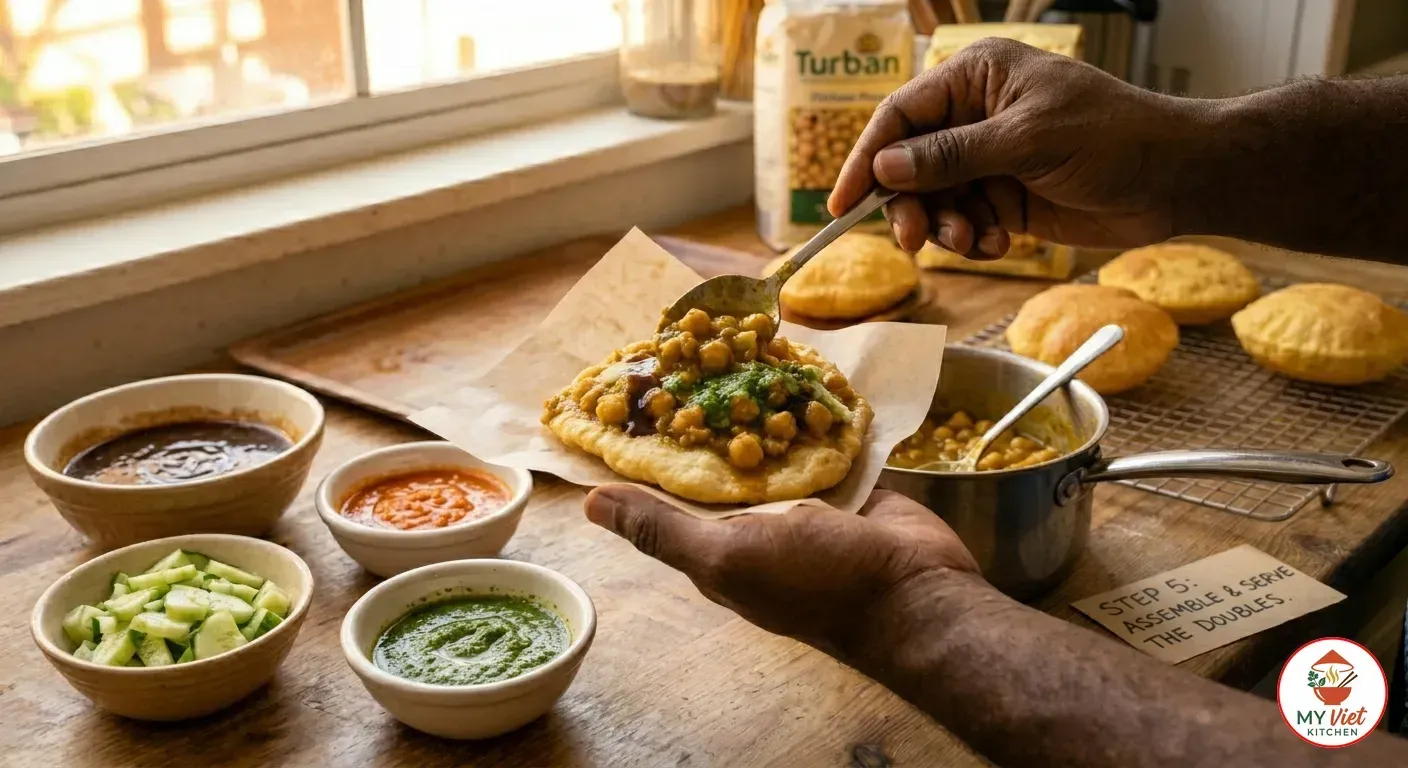
5 Place one bara flat on a piece of wax paper or directly in your palm. Spoon a generous amount of curried channa onto the center of the bara. Add your preferred combination of tamarind chutney, cucumber chutney, pepper sauce, and chadon beni chutney. In Trinidad, customers tell vendors how much pepper they want: “slight pepper” for mild, “medium” for moderate heat, or “plenty pepper” for maximum fire. Place a second bara on top to complete the sandwich. If using wax paper, wrap the bottom of the doubles for easy handling. Serve immediately while the bara is still warm, soft, and ready to soak up every drop of the curried channa.
Expert Tips for Perfect Doubles
Get the Bara Texture Right
The bara must be soft and pliable, not crispy or crunchy. If your bara comes out stiff, the oil temperature is likely too high. Lower it to 350 degrees Fahrenheit and fry for a shorter time. The bara should bend easily when you fold it. A stiff bara will crack and let the channa leak out, which defeats the purpose of this sandwich-style street food.
Bloom Your Spices
Toasting the curry powder and cumin in oil before adding the chickpeas is essential. This technique, called blooming, releases fat-soluble flavor compounds that water alone cannot extract. You will know the spices are ready when the kitchen fills with a warm, toasted aroma. Skip this step and the channa will taste flat and one-dimensional.
Mash Some Chickpeas for Texture
Press about a quarter of the chickpeas against the side of the pot with the back of a spoon. This creates a thick, saucy base that clings to the bara while still leaving plenty of whole chickpeas for a satisfying bite. A filling that is all liquid will make the doubles soggy. A filling that is all whole beans will slide out.
Doubles vs. Other Caribbean Street Foods
Trinidad and Tobago has one of the most vibrant street food scenes in the Caribbean. Here is how doubles compare to other popular options you might encounter on the islands.
| Feature | Doubles | Roti | Bake and Shark |
|---|---|---|---|
| Bread Type | Fried bara (yeasted, soft) | Griddle-cooked flatbread | Fried bake (dense, bready) |
| Main Filling | Curried channa (chickpeas) | Curried meat or vegetables | Fried shark fillet |
| Vegan Friendly | Yes, naturally vegan | Depends on filling | No |
| Price Range | Very affordable (2 to 5 TT dollars) | Moderate | Higher |
| Time of Day | Breakfast and late night | Lunch and dinner | Beach lunches |
| Messiness Level | High (drips with sauce) | Low (wrapped neatly) | Moderate |
Serving Suggestions
In Trinidad, doubles are primarily a grab-and-go street food eaten on their own. However, when you make them at home, there are several ways to build a memorable meal around this dish.
The Perfect Accompaniments:
- Extra chutneys on the side: Set out bowls of tamarind, cucumber, and pepper sauce so everyone can customize their heat level and flavor balance.
- Caribbean coleslaw: A creamy, tangy coleslaw cuts through the richness of the fried bara and adds a refreshing crunch.
- Pholourie (split pea fritters): These light, golden fritters are another beloved Trinidadian street food that pairs naturally with doubles for a full snack spread.
- Fresh fruit platter: Sliced mango, pineapple, and papaya offer a sweet, tropical contrast to the spicy channa filling.
Beverage Pairings:
- Mauby: This traditional Trinidadian bark-based drink has a bittersweet flavor that complements the spicy channa beautifully.
- Sorrel drink: A tart hibiscus beverage with ginger and spices that refreshes the palate between bites of doubles.
- Coconut water: Fresh and naturally sweet, coconut water cools the heat from the pepper sauce and hydrates on a warm day.
- Ginger beer: The spicy fizz of ginger beer echoes the warmth of the curry spices and Scotch bonnet pepper in the channa.
- Carib lager: A cold Trinidadian lager is the go-to beer pairing for late-night doubles runs across the island.
Storage and Reheating
Refrigerator: Store the bara and channa separately in airtight containers for up to 3 days. Keeping them apart prevents the bara from becoming soggy. The channa actually tastes better the next day as the spices continue to develop.
Freezer: Both components freeze well for up to 2 months. Freeze the bara in a single layer on a baking sheet first, then transfer to a freezer bag. Freeze the channa in portion-sized containers. Thaw both in the refrigerator overnight before reheating.
Reheating: Warm the channa in a saucepan over medium-low heat, adding a splash of water if it has thickened too much. For the bara, wrap them loosely in foil and heat in a 300-degree Fahrenheit oven for 5 to 7 minutes. Alternatively, warm them briefly in a dry skillet. Avoid microwaving the bara because it tends to make them rubbery.
Common Mistakes to Avoid
1. Frying the Bara Until Crispy
This is the most common mistake that newcomers make. Doubles bara should be soft, not crunchy. If you fry the bara too long, it becomes stiff and brittle. Consequently, a stiff bara cannot fold around the filling and will crack apart when you try to eat it. Pull the bara from the oil as soon as it turns golden. It should still feel pliable when you lift it with a spoon.
2. Skipping the Dough Rise
The yeast needs time to work. If you rush the rising step, the bara will come out dense and flat instead of light and pillowy. Give the dough a full hour in a warm place. For instance, in cooler kitchens, place the bowl near a warm oven or in a microwave with a cup of hot water beside it. Patience at this stage pays off enormously in the final texture.
3. Making the Channa Too Watery
A runny channa filling will soak through the bara and create a soggy mess. Instead, cook the channa until the sauce is thick enough to coat the chickpeas without pooling at the bottom of the pot. Mashing some of the chickpeas helps thicken the sauce naturally. If the filling is still too loose, simmer for a few more minutes with the lid off to evaporate excess liquid.
Frequently Asked Questions
What are doubles in Trinidad?
Doubles are the most popular street food in Trinidad and Tobago. They consist of two pieces of soft fried flatbread called bara filled with curried chickpeas known as channa. Vendors finish them with chutneys and pepper sauce. The name refers to the two pieces of bara that form the sandwich. Trinidadians eat doubles for breakfast, as a late-night snack, and at virtually every hour in between.
Are Trinidadian doubles vegan?
Yes, traditional doubles are entirely vegan. Specifically, the bara dough contains flour, yeast, water, and spices. Meanwhile, the channa filling uses chickpeas, oil, and curry spices. Even the chutneys are plant-based. This makes doubles one of the best naturally vegan street foods in the world, and they have been feeding generations long before plant-based eating became a global trend.
What is the difference between bara and roti?
Bara is a yeasted dough that gets deep-fried until soft and slightly puffy. Roti is an unleavened flatbread that cooks on a flat griddle. The texture is quite different. Bara is spongy and absorbent, designed to soak up the channa sauce. Roti is thinner, chewier, and used as a wrapper for curried meats and vegetables. Both are essential in Trinidadian cuisine but serve different purposes.
How do you eat doubles without making a mess?
Wrap the bottom of the doubles in wax paper and hold it from underneath. Eat from the top, working inward from the edges. Tilt your head slightly forward to catch any drips. Experienced doubles eaters fold the bara gently to contain the filling. Ordering “slight pepper” instead of “plenty pepper” also helps reduce the amount of runny sauce. However, most Trinidadians accept that a little mess is simply part of the experience.
Can I make the bara dough ahead of time?
Absolutely. After the initial rise, punch down the dough, wrap it tightly in plastic wrap, and store it in the refrigerator for up to 24 hours. The cold fermentation actually improves the flavor by allowing the yeast to produce more complex compounds. When you are ready to fry, let the dough come to room temperature for about 30 minutes. Then shape and fry as directed in the recipe.
What chutneys go on doubles?
The four traditional chutneys are tamarind chutney for sweetness and tang, cucumber chutney for cooling freshness, pepper sauce made from Scotch bonnet or Congo peppers for heat, and chadon beni chutney made from culantro leaves for a bold herbal kick. At doubles carts across Trinidad, vendors line up all four in squeeze bottles and let you choose your combination.
Variations and Adaptations
Egg Doubles:
Some Trinidadian vendors offer doubles with a fried egg added on top of the channa before the second bara goes on. The runny yolk mixes with the curried chickpeas and creates an even richer, more decadent version. This variation adds protein and makes the doubles more filling for a hearty breakfast.
Cheese Doubles:
A modern twist that has gained popularity in recent years. Vendors add a slice of processed cheese or a sprinkle of grated cheddar to the channa before assembling. The melted cheese adds a creamy, salty element that some younger Trinidadians love. Traditionalists may disagree, but the combination works surprisingly well.
Gluten-Free Bara:
Replace the all-purpose flour entirely with chickpea flour for a gluten-free version. The texture will be denser and more crumbly, so add an extra tablespoon of water and handle the dough gently. The flavor actually intensifies because the increased chickpea flour creates a stronger connection between the bread and the channa filling.
Baked Bara (Healthier Version):
For a lighter option, shape the bara and bake them on a greased baking sheet at 400 degrees Fahrenheit for 8 to 10 minutes. They will not puff the same way as fried bara, and the texture is closer to naan bread. Brush with a light coat of oil before baking to achieve some color. This version has significantly less fat while still delivering the familiar flavors.
The Cultural Significance of Doubles
Doubles are a perfect reflection of Trinidad and Tobago’s multicultural identity. The dish has deep roots in the Indo-Trinidadian community. Indian indentured laborers brought curry spices, chickpeas, and flatbread traditions to the Caribbean in the 19th century. Over generations, these ingredients fused with local flavors and cooking methods to create something entirely new. Doubles emerged as a uniquely Trinidadian creation that belongs to no single culture but to the entire nation.
The first doubles vendor is widely believed to be Emamool Deen and his wife Rasulan, who began selling the snack in the Princes Town area in the 1930s. They originally sold single bara with channa, but customers kept asking for two pieces of bara. The name “doubles” stuck, and the format has not changed since. Today, some of the most famous doubles carts in Trinidad have been run by the same families for over fifty years.
In the Caribbean diaspora, doubles carry deep emotional significance. Trinidadians living in New York, Toronto, London, and Miami seek out doubles vendors as a way to stay connected to home. The simple act of eating doubles with friends on a street corner recreates a piece of Trinidad wherever they are. Doubles are more than food. They are identity, nostalgia, and community wrapped in two golden pieces of bara.
Conclusion
This authentic doubles recipe brings the most iconic street food of Trinidad and Tobago straight to your kitchen. The keys to success are straightforward: let the bara dough rise fully, fry until soft rather than crispy, and cook the channa until thick and richly spiced. Then assemble with generous chutneys and pepper sauce for the complete Trinidadian experience. Whether you are craving a taste of the Caribbean or discovering doubles for the first time, this recipe delivers bold flavors, satisfying textures, and a story worth sharing.
Ready to explore more Caribbean and global street foods? Browse our collection of Caribbean dishes, including jerk chicken, ackee and saltfish, and curry goat. Also, discover our street food recipes from around the world for more inspiration.