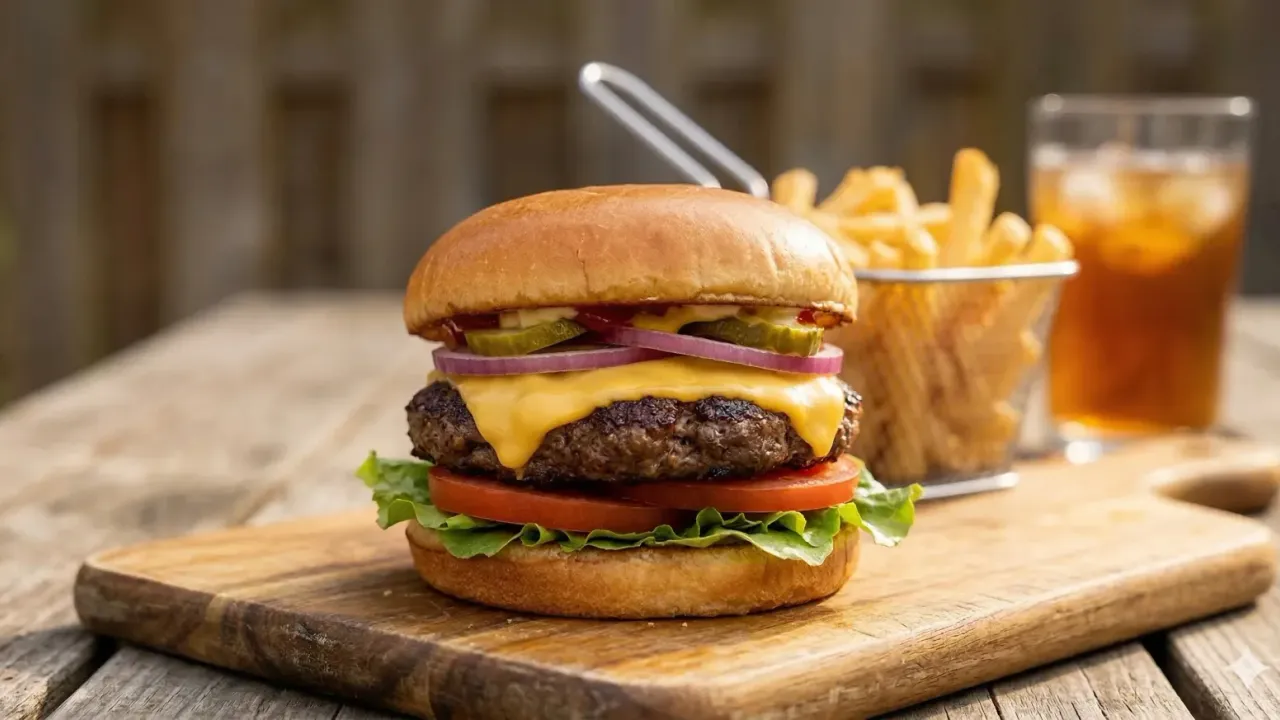
The classic American hamburger is arguably the most iconic food in the world — a juicy ground beef patty seared to a deep, caramelized crust, draped with melted cheese, stacked with crisp lettuce, ripe tomato, and tangy pickles, all held together by a soft, toasted bun. This recipe delivers the kind of hamburger you remember from the best roadside diners and backyard cookouts — simple, deeply satisfying, and built on technique rather than gimmicks. Whether you call it a burger, a cheeseburger, or simply the greatest sandwich ever invented, mastering the homemade hamburger is a skill that will serve you for a lifetime.
Prep Time: 20 minutes | Cook Time: 10 minutes | Servings: 4
Difficulty: Easy | Calories: ~550 per serving
What Makes a Great Hamburger Special?
The hamburger is deceptively simple. Ground beef, bun, toppings. But the difference between a forgettable burger and one that makes you close your eyes and stop talking mid-sentence comes down to a handful of decisions made before the meat ever touches heat. The fat content of the beef. How much you handle the meat. The temperature of the cooking surface. The moment you add the cheese. These details are everything.
What sets a truly great hamburger apart is the Maillard reaction — the complex chemical process that occurs when proteins and sugars in the beef are exposed to high, dry heat. This reaction creates hundreds of new flavor compounds that do not exist in raw meat. It is the reason a well-seared burger tastes profoundly more complex than a steamed or baked one. The deep brown crust that forms on the outside of the patty is not just color. It is flavor. It is the single most important element of a great hamburger.
The American hamburger has evolved over more than a century from a humble working-class meal at lunch counters and county fairs into a global culinary phenomenon. Yet the best versions remain faithful to the original idea: good beef, high heat, simple toppings, and no unnecessary complexity. This recipe honors that tradition while incorporating the techniques that serious burger enthusiasts and professional cooks rely on to produce consistent, exceptional results at home.

Choosing the Right Ground Beef
The beef you choose determines eighty percent of the outcome. No amount of technique can rescue a patty made from the wrong grind. Here is what to look for and why it matters.
- Ground Chuck (80/20 — best choice): This is the gold standard for hamburgers. Cut from the shoulder, ground chuck has an 80% lean to 20% fat ratio that delivers maximum juiciness and beefy flavor. The fat melts during cooking, bastes the meat from within, and contributes to the formation of a rich, flavorful crust. This is what most diners and burger restaurants use.
- Ground Round (85/15): Cut from the rear leg, ground round is leaner and produces a slightly drier burger. It works if you prefer a less greasy result, but you sacrifice juiciness and flavor depth. Best used in combination with fattier cuts.
- Ground Sirloin (90/10): Too lean for a great hamburger. The low fat content means the patty will dry out quickly, crumble apart, and lack the rich, beefy flavor that defines a proper burger. Save sirloin for dishes where the meat is mixed with sauces or other moist ingredients.
- Custom Blend (the enthusiast’s choice): Many serious burger makers ask their butcher to grind a custom blend — typically a mix of chuck, brisket, and short rib. The brisket adds deep beefiness, the short rib adds richness and an almost buttery quality, and the chuck provides the classic burger flavor and ideal fat ratio.
Ingredients for Classic American Hamburger
For the Patties:
- 680g (1 1/2 pounds) ground beef, 80/20 blend (ground chuck preferred)
- 1 teaspoon kosher salt
- 1/2 teaspoon freshly ground black pepper
- 1 tablespoon vegetable oil or beef tallow for the cooking surface
For the Buns:
- 4 brioche hamburger buns
- 1 tablespoon unsalted butter, softened
For the Toppings and Condiments:
- 4 slices American cheese (or sharp cheddar)
- 1 large ripe tomato, sliced into 4 rounds
- 4 leaves green leaf or iceberg lettuce
- 1/2 medium red onion, sliced into thin rings
- 8 dill pickle slices
- 4 tablespoons ketchup
- 4 tablespoons yellow mustard
- 4 tablespoons mayonnaise
Pro tip: Take the ground beef out of the refrigerator 10 minutes before cooking. Cold meat placed on a hot surface will cool the pan and prevent proper searing. Room temperature beef hits the hot surface and immediately begins to brown, which is exactly what you want for that deep, flavorful crust.
Step-by-Step Instructions
Step 1: Prepare the Beef Patties
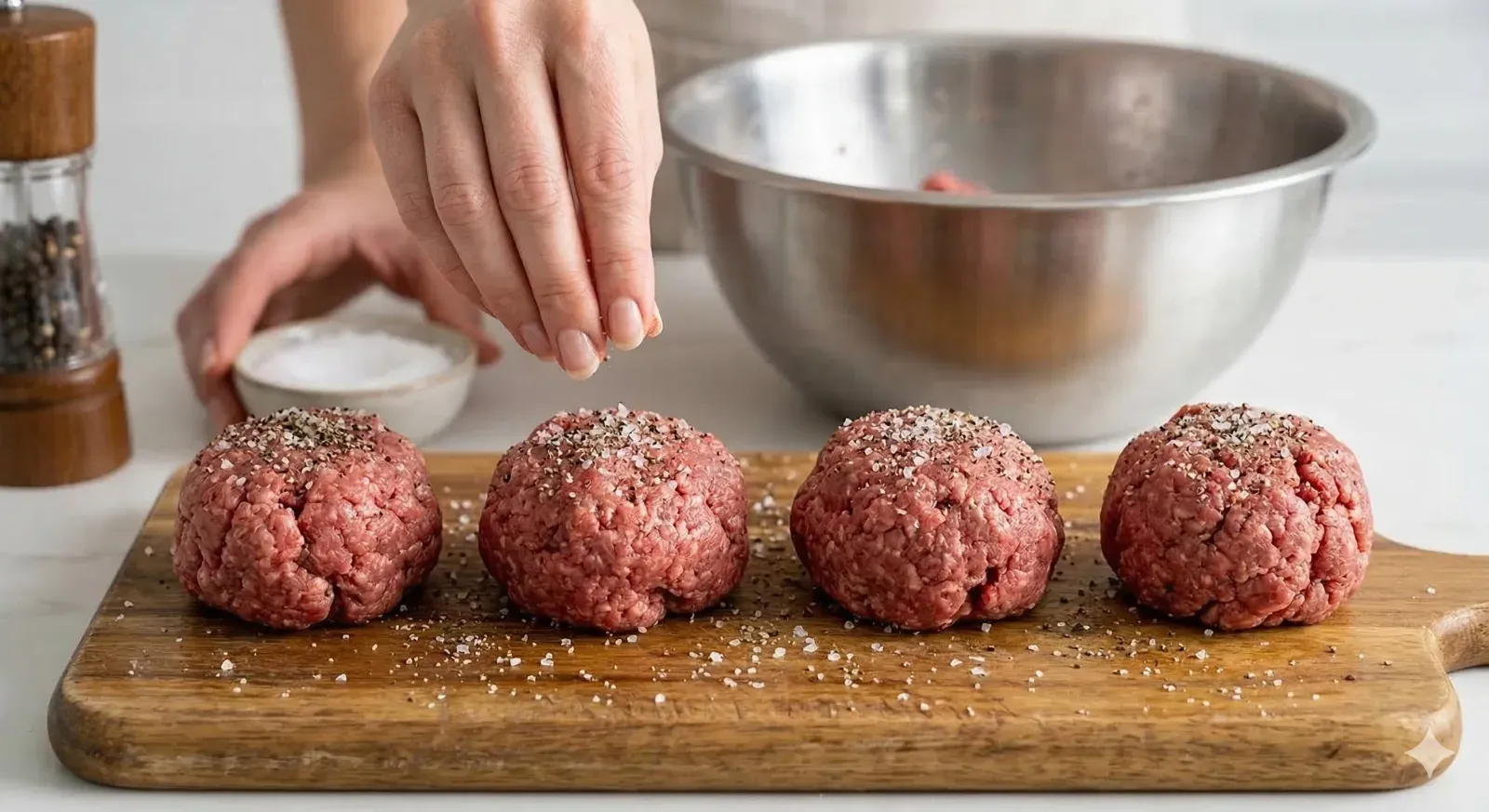
1Divide the ground beef into 4 equal portions of about 170g (6 oz) each. Gently form each portion into a loose ball, handling the meat as little as possible. This is critical — overworking ground beef activates the myosin proteins in the muscle fibers, binding them together and producing a dense, rubbery, sausage-like texture instead of a tender, juicy burger. You want the ball to just barely hold together. Season the outside of each ball generously with kosher salt and freshly ground black pepper on all sides. Do not mix the seasoning into the meat. Salt on the surface draws out moisture through osmosis, and that moisture dissolves the salt, creating a concentrated brine on the surface that enhances the Maillard reaction and produces a deeper, more flavorful crust. Let the seasoned balls rest at room temperature for 10 minutes while you prepare the remaining ingredients.
Step 2: Toast the Buns
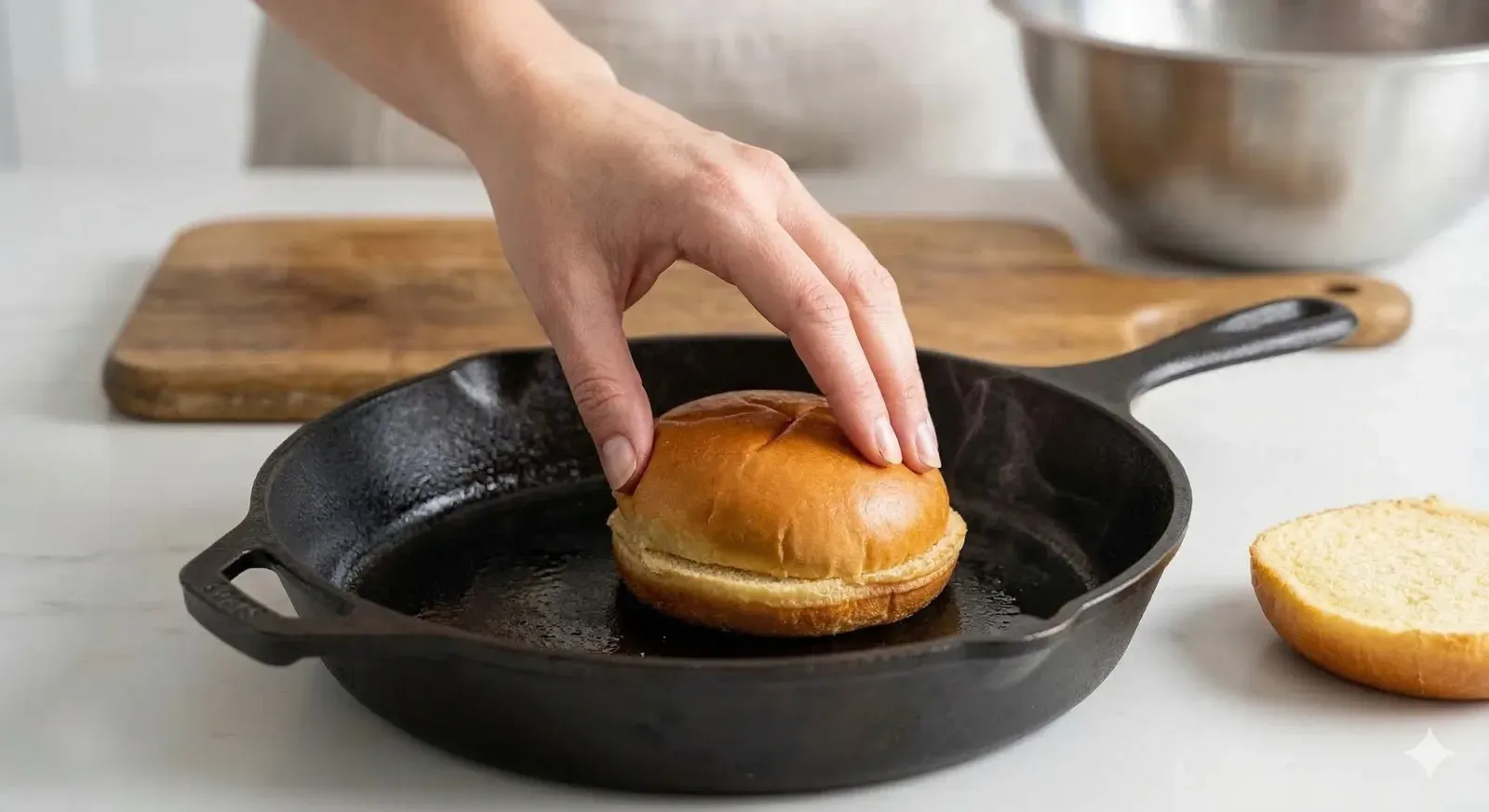
2Split each brioche bun in half. Spread a thin, even layer of softened butter on the cut sides of both halves. Place the buns cut-side down on a dry skillet or griddle over medium heat and toast for 1 to 2 minutes until golden brown and slightly crisp. Watch them carefully — brioche buns contain sugar and butter, so they brown quickly and can burn in seconds. The toasting serves two purposes: it creates a barrier that prevents the bun from becoming soggy when it meets the juices from the patty, and it adds a subtle caramelized sweetness and textural contrast. Set the toasted buns aside on a plate.
Step 3: Cook the Patties
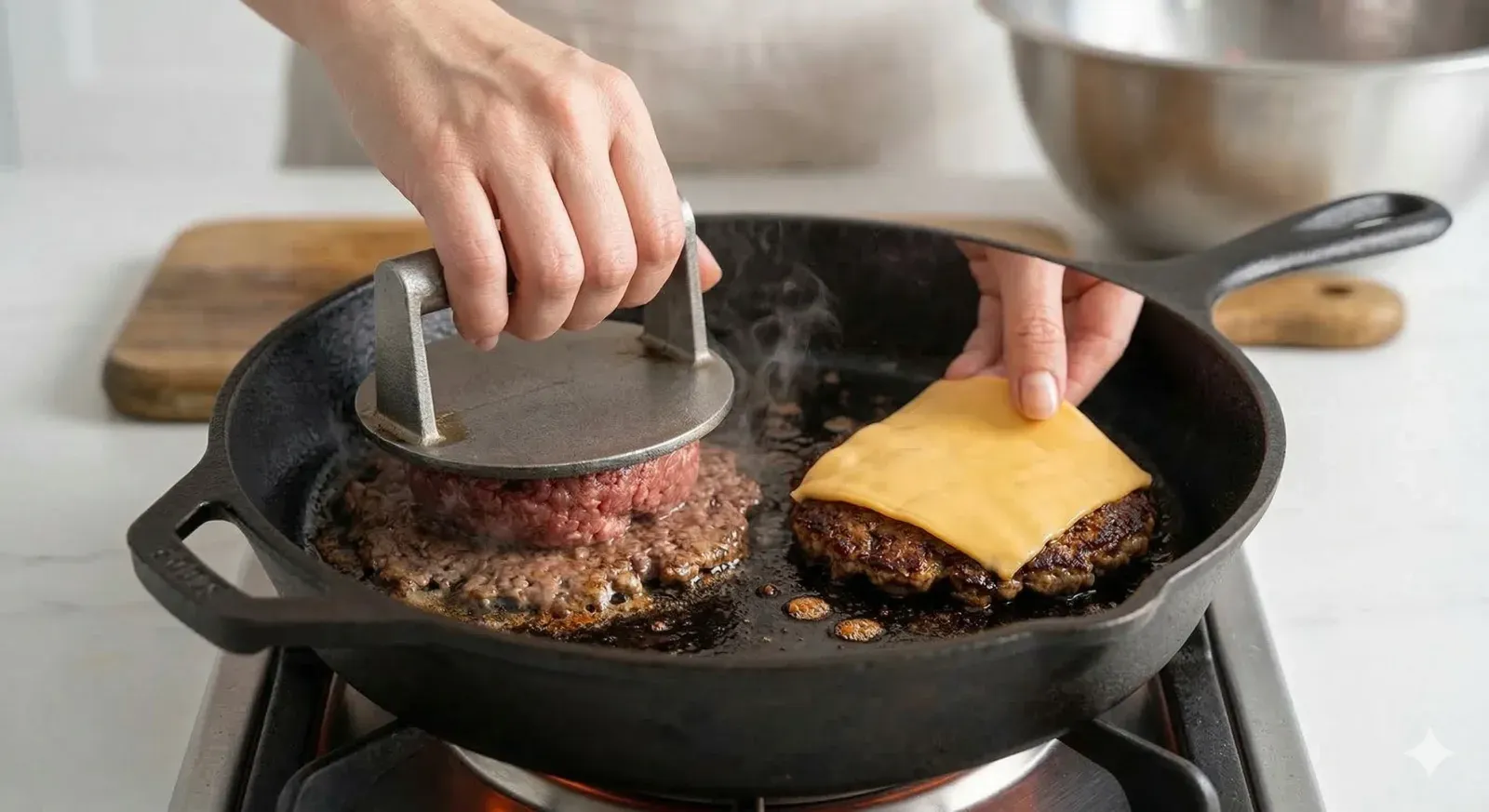
3Heat a cast iron skillet or flat griddle over high heat until it is smoking hot. This is not an exaggeration — you need the surface as hot as it can possibly get. Add a thin film of vegetable oil or, even better, beef tallow. Place the beef balls onto the screaming-hot surface and immediately press each one flat with a sturdy metal spatula or a burger press, applying firm, steady, even pressure to create a patty about 1cm (1/2 inch) thick. Press once and do not move them. This is the smash technique, and the reason it works is simple physics: maximum surface area in contact with the hot surface means maximum Maillard reaction, which means maximum flavor.
Cook for 3 to 4 minutes without touching the patties. You will see the edges begin to turn brown and crisp, and juices will pool on the top surface. When the bottom has developed a deep, dark brown, lacey crust — nearly black at the thinnest edges — flip the patties. Immediately place a slice of American cheese on each patty and cook for another 2 to 3 minutes. The residual heat from below and the steam from the cooking meat will melt the cheese into a soft, gooey blanket that drapes over the edges of the patty.
Step 4: Prepare the Condiments and Toppings
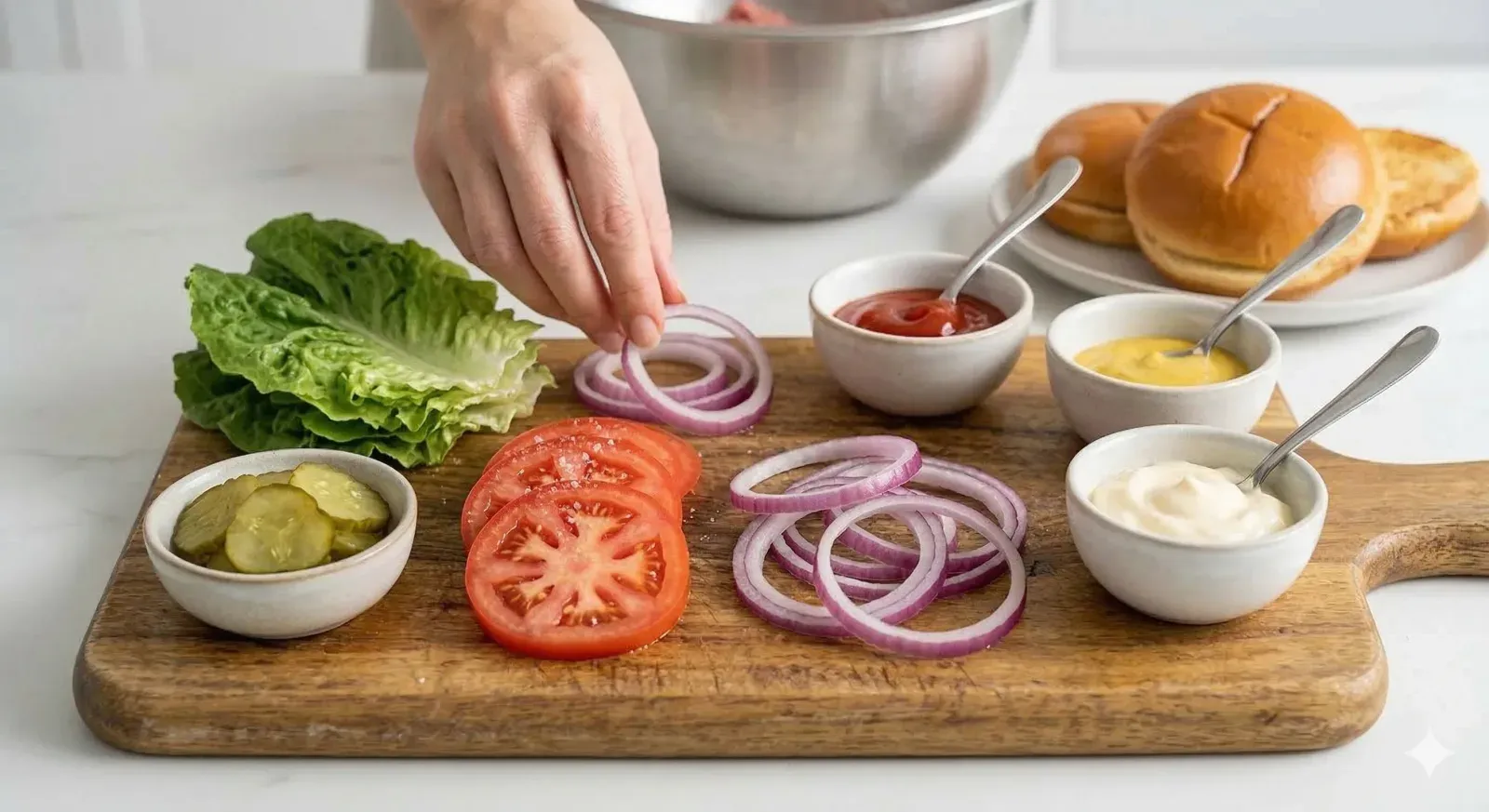
4While the patties cook, prepare your toppings. Wash and thoroughly dry the lettuce leaves — wet lettuce on a hot burger creates steam and makes the bun soggy. Slice the tomato into even rounds about 5mm (1/4 inch) thick and season them lightly with a pinch of salt to bring out their sweetness. Slice the red onion into thin rings and separate them. Have your pickle slices, ketchup, yellow mustard, and mayonnaise measured and ready. Organization matters here because once the patties come off the heat, you want to assemble immediately while everything is at its peak — the cheese still molten, the patty still sizzling, the bun still warm.
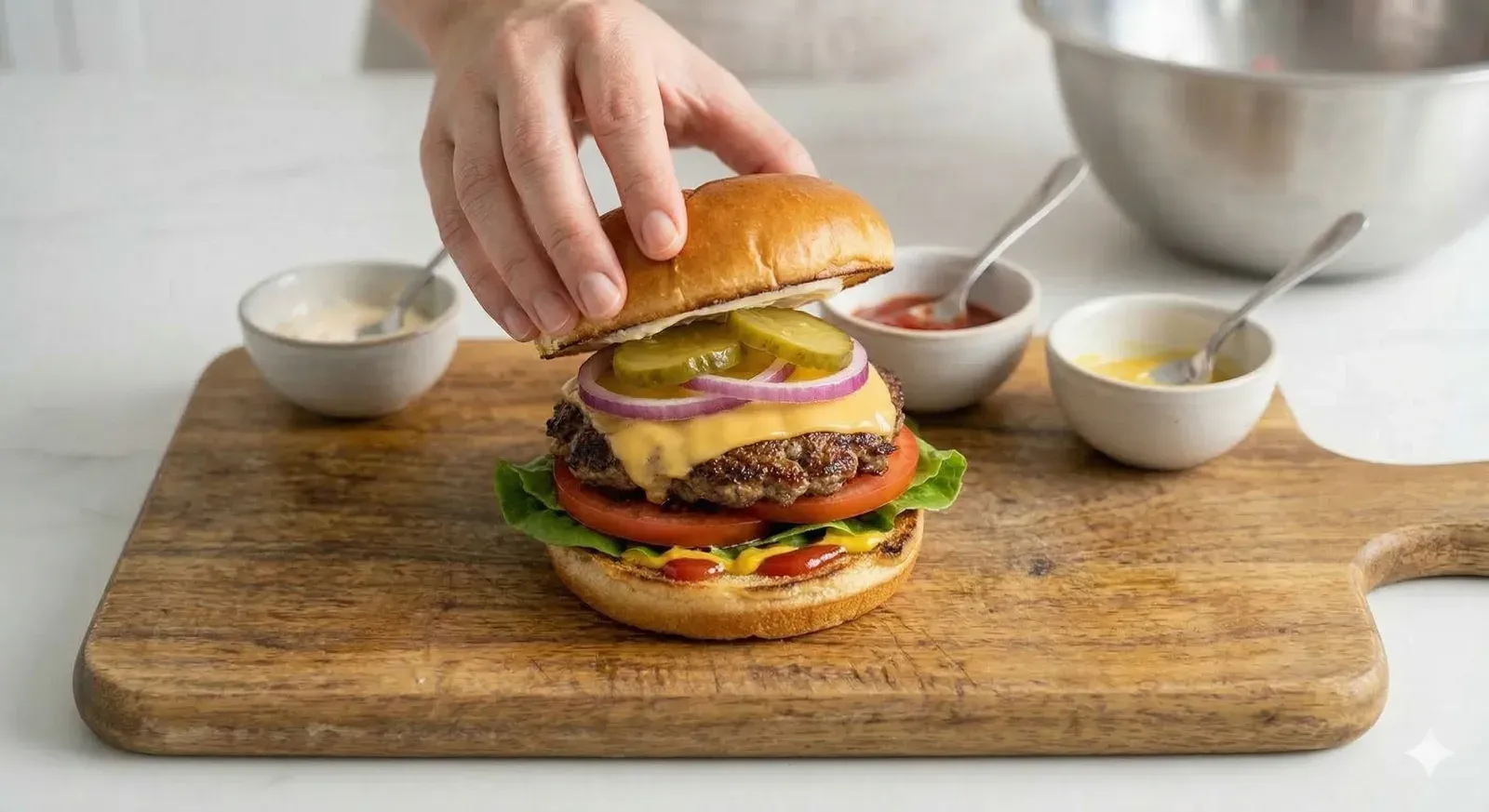
Step 5: Assemble the Hamburger
5Spread a tablespoon of mayonnaise on the cut side of the top bun. Spread ketchup and yellow mustard on the cut side of the bottom bun. Place a lettuce leaf on the bottom bun — it acts as a waterproof barrier between the juicy patty and the bread. Next, lay the tomato slice on the lettuce. Place the cheese-covered patty directly on the tomato. The heat from the patty will gently warm the tomato without cooking it. Add the onion rings on top of the patty, then the pickle slices. Press the top bun down gently but firmly enough to compress everything into a manageable bite. Serve immediately. A great hamburger waits for no one — every second of delay is a second the cheese solidifies, the bun absorbs juice, and the crust loses its crunch.
Expert Tips for Perfect Results
The Smash Technique
The smash method is the single most effective technique for achieving a deeply flavorful hamburger crust at home. By pressing the beef ball flat against a screaming-hot surface, you maximize the contact area between meat and metal. More contact means more Maillard reaction. More Maillard reaction means more flavor. Press firmly and decisively within the first 30 seconds of placing the meat on the surface — after that, the proteins begin to set and the meat will not spread evenly. Once pressed, do not move the patty. Let the crust develop undisturbed.
The Fat Ratio Rule
Never go below 20% fat for burgers. The fat in an 80/20 blend does three essential things: it keeps the patty moist during cooking, it carries and amplifies the beefy flavor compounds, and it renders out during searing to create a richer, more flavorful crust. If you use 90/10 beef, you are essentially trying to make a great burger with a steak that has had its marbling removed. It cannot work.
Season the Outside, Never the Inside
This is the mistake that ruins more homemade burgers than any other. When you mix salt into raw ground beef before cooking, it dissolves the myosin proteins and creates cross-links between muscle fibers. The result is a patty with the bouncy, springy texture of a sausage or meatball — not the loose, tender, crumbly texture of a proper hamburger. Season only the outside surface after shaping.
Hamburger Styles Across America
The American hamburger is not a single dish but a family of regional traditions, each with passionate defenders. Understanding these styles helps you appreciate the versatility of the form and find the version that speaks to you.
| Style | Key Characteristics | Origin |
|---|---|---|
| Classic Diner | Thick patty, griddle-seared, American cheese, lettuce, tomato, onion, pickles | Nationwide, 1920s onward |
| Smash Burger | Thin, smashed patty, lacey crispy edges, melted cheese, soft potato bun | Louisville, KY / Oklahoma City, OK |
| Oklahoma Onion Burger | Thin-sliced onions pressed into the patty during smashing, caramelized and crispy | El Reno, Oklahoma, 1920s |
| California Burger | Fresh produce emphasis, avocado, sprouts, thousand island dressing | Southern California |
| Juicy Lucy | Cheese stuffed inside the patty, melts into a molten center | Minneapolis, Minnesota |
| Steamed Cheeseburger | Patty and cheese steamed in a metal cabinet, unique moist texture | Meriden, Connecticut |
| Pub Burger | Thick, hefty patty (8-10 oz), premium toppings, craft bun | Gastropubs nationwide |
Serving Suggestions
The classic American hamburger is a complete meal in itself, but the right sides and drinks elevate the experience from a quick dinner to a proper feast. Here is what to serve alongside your burgers for the full American cookout experience.
The Perfect Accompaniments:
- French Fries: The inseparable companion. Crispy on the outside, fluffy inside. Whether you prefer thin shoestring fries, thick-cut steak fries, or waffle fries, the salty crunch of a good french fry is the natural partner to a juicy burger.
- Onion Rings: Beer-battered or breaded, the sweet crunch of a deep-fried onion ring adds another textural dimension to the meal.
- Coleslaw: The cool, creamy crunch of coleslaw cuts through the richness of the beef and provides a refreshing contrast.
- Corn on the Cob: Grilled or boiled, buttered corn is a classic American side that pairs naturally with hamburgers at any cookout.
- Baked Beans: Sweet, smoky, and hearty — a traditional cookout side that complements the savory beef.
- Pickle Spears: A whole dill pickle spear on the side adds a crunchy, vinegary bite that cleanses the palate between rich, meaty bites.
Beverage Pairings:
- American Lager or Pilsner: A cold, crisp beer is the quintessential burger pairing — the carbonation cuts through the fat, and the clean malt flavor complements the beef without competing.
- IPA: The hop bitterness stands up to the richness of the beef and cheese, creating a bold pairing for those who like bigger flavors.
- Milkshake: A thick vanilla, chocolate, or strawberry milkshake with a hamburger is an American classic that transcends trends.
- Iced Tea or Lemonade: For a non-alcoholic option, the sweetness and acidity of these drinks balance the salty, savory burger beautifully.
- Zinfandel or Malbec: If you prefer wine, a fruit-forward red with moderate tannins pairs surprisingly well with a cheeseburger.
Storage and Reheating
Refrigerator: Cooked patties can be stored in an airtight container in the refrigerator for up to 3 days. Store the patties separately from the buns and toppings to prevent sogginess. The flavor actually holds well, though the crust will soften.
Freezer: Uncooked patties freeze beautifully for up to 3 months. Place parchment paper between each patty, stack them, and wrap tightly in plastic wrap and aluminum foil. You can cook them directly from frozen — just add 1 to 2 extra minutes per side. Cooked patties can also be frozen for up to 2 months but will lose some of their crust texture.
Reheating: The best method is a hot skillet over medium-high heat for 2 to 3 minutes per side. This re-crisps the exterior while warming the center through. Avoid the microwave if possible — it makes the patty rubbery and steams away the crust you worked so hard to create. If using an oven, heat at 190 degrees Celsius (375 degrees Fahrenheit) for 8 to 10 minutes on a wire rack.
Common Mistakes to Avoid
1. Using Lean Ground Beef
This is the most common reason homemade burgers disappoint. Ground beef labeled 90/10 or 93/7 will produce a dry, crumbly, flavorless patty that no amount of toppings can rescue. The fat in an 80/20 blend is not optional — it is the source of juiciness, flavor, and the rich crust that defines a great hamburger. If you are concerned about fat content, eat a smaller burger, but do not compromise on the ratio.
2. Overworking the Meat
Every second you spend kneading, squeezing, and shaping the ground beef is a second spent turning your burger into a hockey puck. Myosin activation from excessive handling binds the meat fibers into a tight, elastic network. Handle the meat just enough to form a ball that holds together. If it feels like it might fall apart, you are doing it right.
3. Pressing the Patty While Cooking
If you are making a smash burger, you press once at the beginning and never again. If you are making a thick pub-style burger, you never press at all. Pressing a patty with a spatula during cooking squeezes out the rendered fat and juices — the very things that make the burger taste good. The sizzling sound you hear when you press a cooking patty is the sound of flavor leaving the meat forever.
4. Cold Cooking Surface
If the skillet is not hot enough, the meat will steam instead of sear. Steaming produces a gray, pallid patty with no crust, no flavor development, and a boiled texture. Your cast iron or griddle should be heated over high heat for at least 5 minutes before the first patty touches it. You should see wisps of smoke rising from the surface. If you are nervous about the heat level, it is probably not hot enough.
Frequently Asked Questions
What is the best meat-to-fat ratio for hamburgers?
The ideal ratio is 80% lean to 20% fat, commonly labeled as 80/20. Ground chuck naturally falls into this range and is the preferred cut for hamburgers. The 20% fat content provides juiciness, flavor, and contributes to the rich Maillard crust during cooking. Leaner blends like 90/10 or 93/7 will produce dry, tough patties.
How long do you cook a hamburger on each side?
For a smash-style burger on a screaming-hot cast iron skillet or griddle, cook for 3 to 4 minutes on the first side until a deep brown crust forms, then flip and cook for 2 to 3 minutes on the second side. For thicker pub-style patties (2 to 3 cm thick), cook 4 to 5 minutes per side for medium doneness. Use an instant-read thermometer: 57 degrees Celsius (135 degrees Fahrenheit) for medium-rare, 63 degrees Celsius (145 degrees Fahrenheit) for medium, and 71 degrees Celsius (160 degrees Fahrenheit) for well-done.
Should you season hamburger meat before or after forming patties?
Season the outside of the patties after forming them. Never mix salt into the raw ground beef. Salt dissolves the myosin proteins in muscle fibers and creates cross-links that bind the meat into a dense, bouncy, sausage-like texture. By seasoning only the exterior, you get a flavorful, well-crusted surface and a tender, juicy interior.
What is the best cheese for a hamburger?
American cheese is the classic choice for good reason — its emulsified texture melts smoothly and evenly, creating a creamy, gooey blanket that clings to the patty without separating into oily pools. Sharp cheddar provides a bolder, tangier flavor. Swiss adds a nutty, earthy note. Pepper jack brings heat. Blue cheese delivers a pungent, funky richness that pairs beautifully with a char-crusted patty. All are excellent — it comes down to personal preference.
Can you make hamburgers on a grill instead of a skillet?
Absolutely. Grilling adds a smoky char flavor that a skillet cannot replicate. Preheat a gas or charcoal grill to high heat (230 to 260 degrees Celsius / 450 to 500 degrees Fahrenheit). Form thicker patties (about 2 cm / 3/4 inch thick) with a slight dimple pressed into the center to prevent the burger from puffing into a ball. Oil the grates and cook for 4 to 5 minutes per side. The trade-off is that you lose the flat-top contact that creates the lacey smash burger crust, but you gain smoke flavor and grill marks.
Why do restaurant burgers taste better than homemade?
Three reasons. First, commercial flat-top griddles reach and maintain temperatures that most home stoves struggle to match, creating a superior Maillard crust. Second, restaurants often cook on surfaces seasoned with beef tallow or butter, adding flavor that a clean pan cannot provide. Third, they typically use higher-fat beef blends and are not shy about salt. The good news: a well-seasoned cast iron skillet preheated over high heat for 5 minutes, a generous amount of salt, and an 80/20 beef blend can close this gap almost entirely.
Variations and Adaptations
Oklahoma Onion Burger:
Place a small handful of paper-thin onion slices on top of the beef ball before smashing. The onions get pressed into the meat, caramelize on the hot surface, and become a crispy, sweet, deeply savory layer fused to the patty. This Depression-era technique was originally used to stretch expensive beef with cheap onions, but the flavor is so extraordinary that it has become a cult favorite.
Double Smash Burger:
Divide the beef into 8 smaller portions (about 85g / 3 oz each) and make two thinner patties per burger. Stack both patties with cheese between them. The thinner patties mean a higher crust-to-meat ratio, which means more flavor in every bite. This is the style popularized by chains like Shake Shack and Smashburger.
Juicy Lucy (Stuffed Cheeseburger):
Form two thin patties. Place cheese in the center of one, top with the second, and seal the edges tightly. Cook on a griddle or grill. The cheese melts inside the patty, creating a molten, gooey center that bursts when you bite into it. Originated in Minneapolis and requires patience — let it rest for 2 minutes after cooking or the molten cheese will burn your mouth.
Turkey or Chicken Burger:
For a lighter option, substitute ground turkey (93/7 blend) or ground chicken. Because poultry is leaner, add 1 tablespoon of olive oil or a grated tablespoon of cold butter to the meat to prevent dryness. Season more aggressively, as poultry has a milder flavor baseline. Cook to 74 degrees Celsius (165 degrees Fahrenheit) internal temperature.
Plant-Based Burger:
Use a high-quality plant-based patty (such as Beyond Burger or Impossible Burger) and follow the same cooking method. These products are designed to mimic the fat content and Maillard browning of beef. Cook on a well-oiled, very hot surface for 3 to 4 minutes per side. They benefit enormously from the smash technique and a good sear.
The Cultural Significance of the Hamburger
The hamburger is more than food. It is an American symbol, a cultural artifact, and an economic engine that has shaped the way the modern world eats. Its origins are disputed — multiple American cities claim to have invented it in the late 1800s and early 1900s — but what is not disputed is its impact. The hamburger democratized dining. It was working-class food from the beginning, sold for pennies at lunch counters, factory gates, and county fairs. It was fast, portable, affordable, and satisfying in a way that resonated with a nation that valued efficiency and egalitarianism.
The rise of the hamburger is inseparable from the rise of American car culture, suburban expansion, and the fast-food industry. White Castle, founded in 1921, was the first hamburger chain, and it established the model that McDonald’s, Burger King, Wendy’s, and thousands of others would follow. By the mid-20th century, the hamburger had become the single most consumed food in the United States, and its influence had spread to virtually every country on earth. Today, Americans consume roughly 50 billion hamburgers per year — about three burgers per person per week.
Yet for all its global ubiquity, the hamburger remains deeply personal. Everyone has an opinion about what makes the best burger. Thin or thick. Smashed or grilled. Ketchup or no ketchup. American cheese or cheddar. These are not trivial preferences — they are expressions of identity, memory, and place. A burger from a roadside stand in Oklahoma tastes different from one at a gastropub in Brooklyn, and both are legitimate, and both are American, and both carry within them the story of a dish that started as the simplest possible combination of meat and bread and became something much larger than the sum of its parts.
Conclusion
Making a great hamburger at home is not about expensive ingredients or complicated techniques. It is about understanding a few fundamental principles and executing them well. Use 80/20 ground chuck. Handle the meat gently. Season the outside only. Get the cooking surface screaming hot. Press once and walk away. Add cheese at the right moment. Toast the bun. Assemble fast and eat immediately. That is the entire formula, and it works every single time.
Once you master the basic technique, the hamburger becomes a canvas for endless creativity — different cheeses, different toppings, different sauces, different buns. But the foundation never changes: good beef, high heat, and respect for simplicity. Try this recipe this weekend. Make it once, and you will never settle for a mediocre burger again.
Looking for more classic American recipes? Check out our Feijoada recipe for another hearty, meat-centered comfort food experience, or explore our full collection of American and world cuisine recipes.