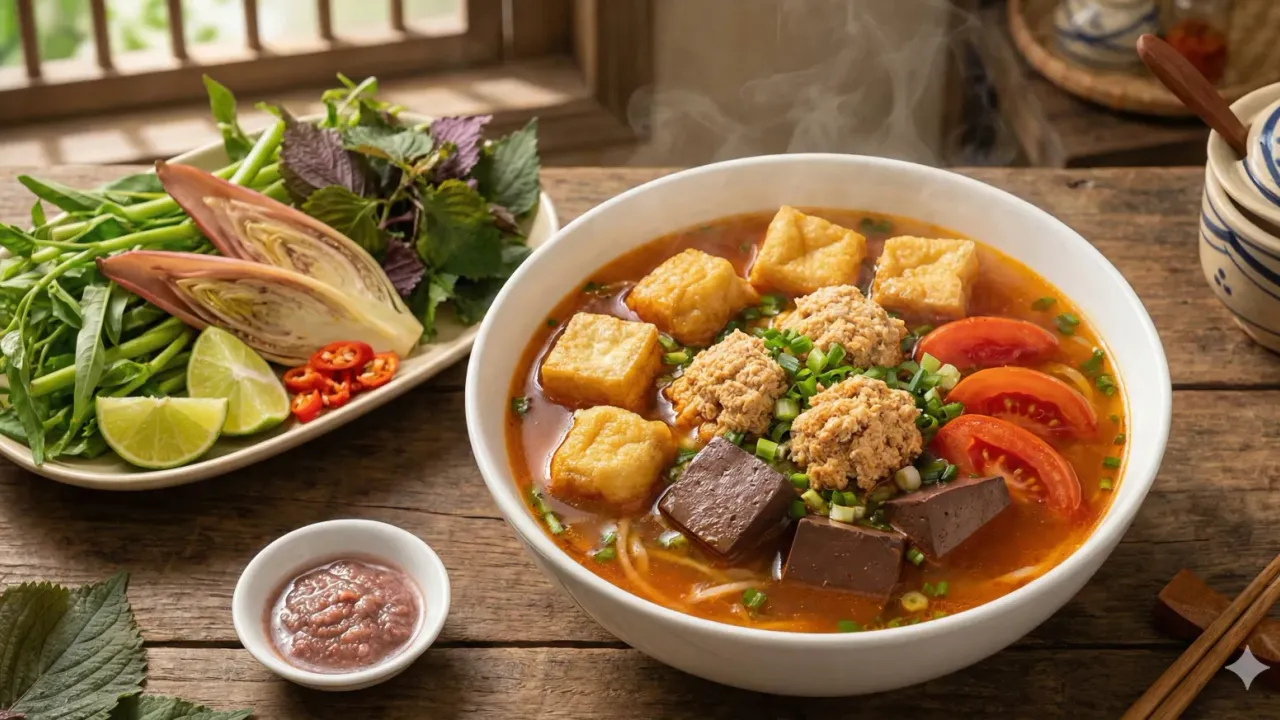
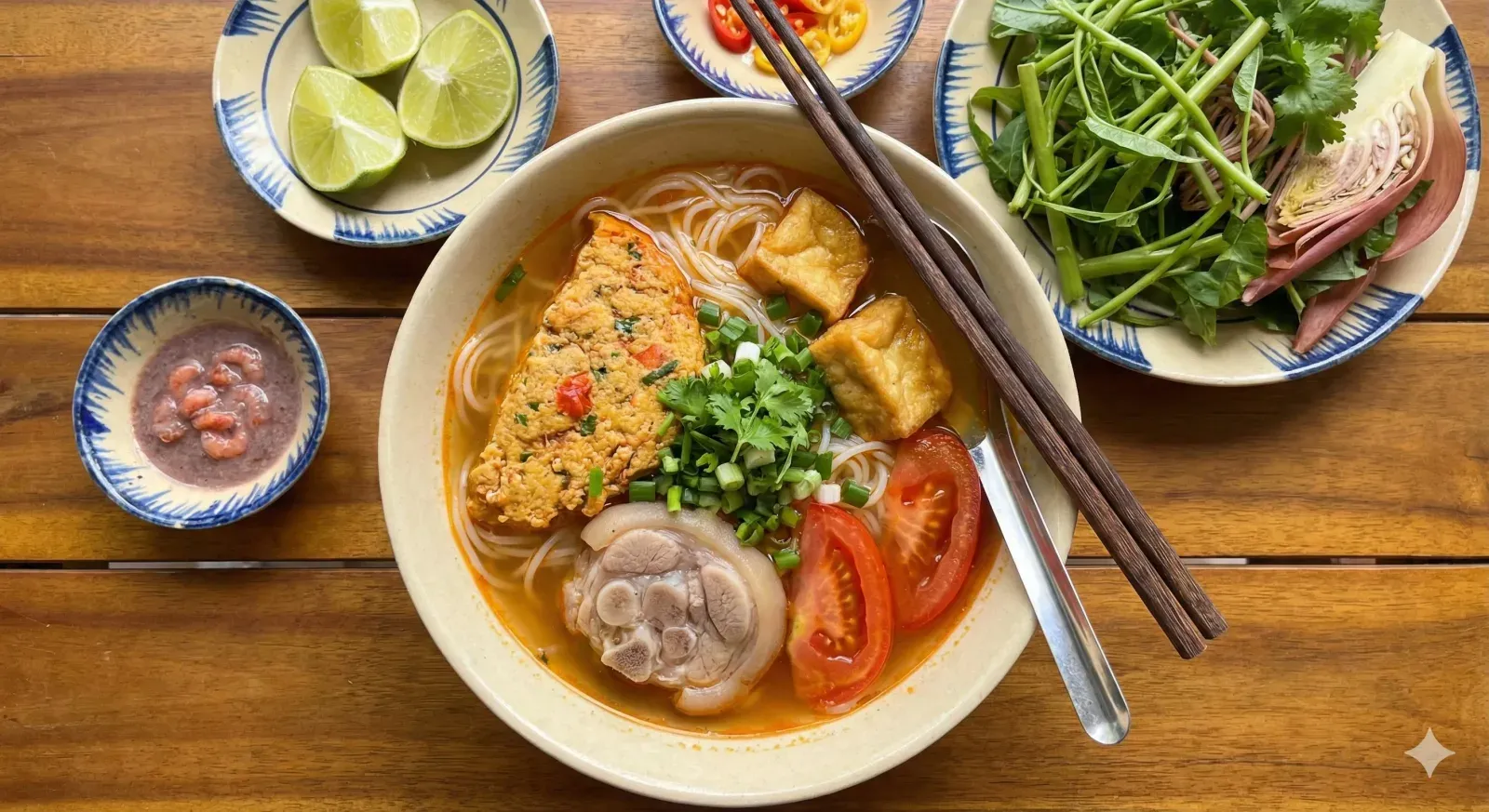
Vietnamese crab noodle soup, known as Bún Riêu Cua, is one of Vietnam’s most beloved dishes. This vibrant noodle soup features a tomato broth rich with crab paste. Each bowl brings sweet-savory broth, soft crab cakes, fresh herbs, and rice vermicelli noodles together.
Making this Vietnamese crab noodle soup might seem hard. But the secret is simple: a sweet, clear broth that shows off the dish’s true flavor. This guide walks you through every step. You will learn how to process fresh field crabs and get that perfect, fluffy crab float.

The Nutritional Power of Field Crabs
Before diving into the recipe, here is what makes field crabs (cua đồng) so nutritious:
Per 100g of field crab meat (shell and carapace removed):
-
Water: 74.4g
-
Protein: 12.3g
-
Fat: 3.3g
-
Carbohydrates: 2g
-
Calories: 89 kcal
-
Calcium: 5,040mg (exceptionally high!)
-
Phosphorus: 430mg
-
Iron: 4.7mg
-
Vitamins: B1, B2, PP
Field crabs contain 8 out of 10 essential amino acids. These include lysine, methionine, valine, leucine, and more. As a result, they are a great protein source.
Authentic Vietnamese Crab Noodle Soup Recipe with Fresh Field Crabs
Prep Time: 45 minutes Cook Time: 1 hour Total Time: 1 hour 45 minutes Servings: 6-8 people
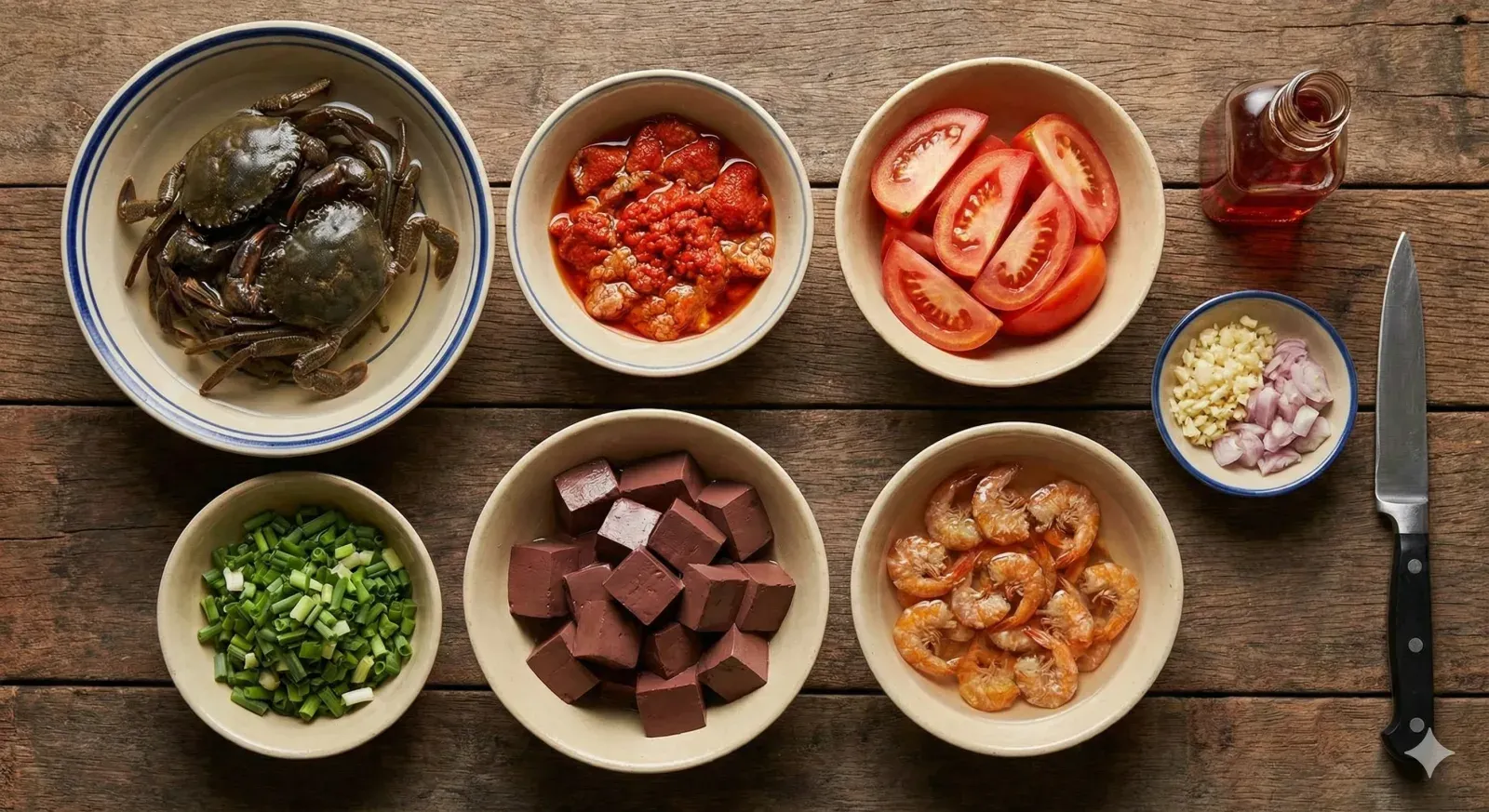
Ingredients
For the Crab Paste (Riêu):
-
1kg (2.2 lbs) fresh field crabs
-
50g (1.75 oz) dried shrimp
-
4 duck eggs
-
3 liters (12 cups) cold water
-
1 tsp salt for soaking
For the Broth:
-
500g (1.1 lbs) steamed pork blood (cut into cubes)
-
300g (10.5 oz) fried tofu (small cubes)
-
5 ripe tomatoes
-
2 tsp minced garlic
-
2 tsp minced shallots
-
10g scallions
-
5 tbsp annatto oil (dầu màu điều)
-
3 liters (12 cups) water
Seasonings:
-
Salt, sugar, MSG (or mushroom seasoning)
-
Shrimp paste (mắm tôm)
-
Chicken/pork bouillon powder
-
Fresh Herbs & Accompaniments:
-
Lettuce
-
Bean sprouts
-
Water spinach (sliced)
-
Vietnamese balm (kinh giới)
-
Fresh rice vermicelli noodles
-
Lime/calamansi
-
Bird’s eye chilies
-
Additional shrimp paste for dipping
Step-by-Step Instructions
Step 1: Prepare the Crabs and Ingredients
1Tomatoes: Wash and cut into large wedges. Heat 2 tbsp annatto oil in a pan and quickly sauté tomatoes for 1 minute. Set aside.
Scallions: Wash and chop finely.
Pork Blood: Cut into bite-sized pieces and rinse with hot water.
Dried Shrimp: Soak in water until soft. Wash, drain, and pound into a paste. Then mix in 2 duck eggs and stir well.
Field Crabs:
- First, wash crabs thoroughly
- Then separate the top shell and remove the inedible parts
- Grind the crab bodies into a fine paste
- Also reserve the crab roe from the shells separately
- Next, heat 5 tbsp annatto oil in a pan
- Then sauté minced shallots and garlic until fragrant
- Finally, add the crab roe and stir-fry for 2 minutes
- Set aside
Step 2: Extract Crab Essence and Make Riêu
- Soak the ground crab paste in 3 liters of cold water for 15 minutes
- Then add 1 tsp salt to the water and stir with chopsticks
- Strain through a fine-mesh sieve or cheesecloth. Keep the liquid and discard the solids.
- Season the strained crab water with:
- 3 tsp sugar
- 2 tsp salt
- 2 tbsp shrimp paste
- ½ tsp MSG
- Then add the dried shrimp-egg mixture and stir well
- Bring the pot to a boil over medium heat
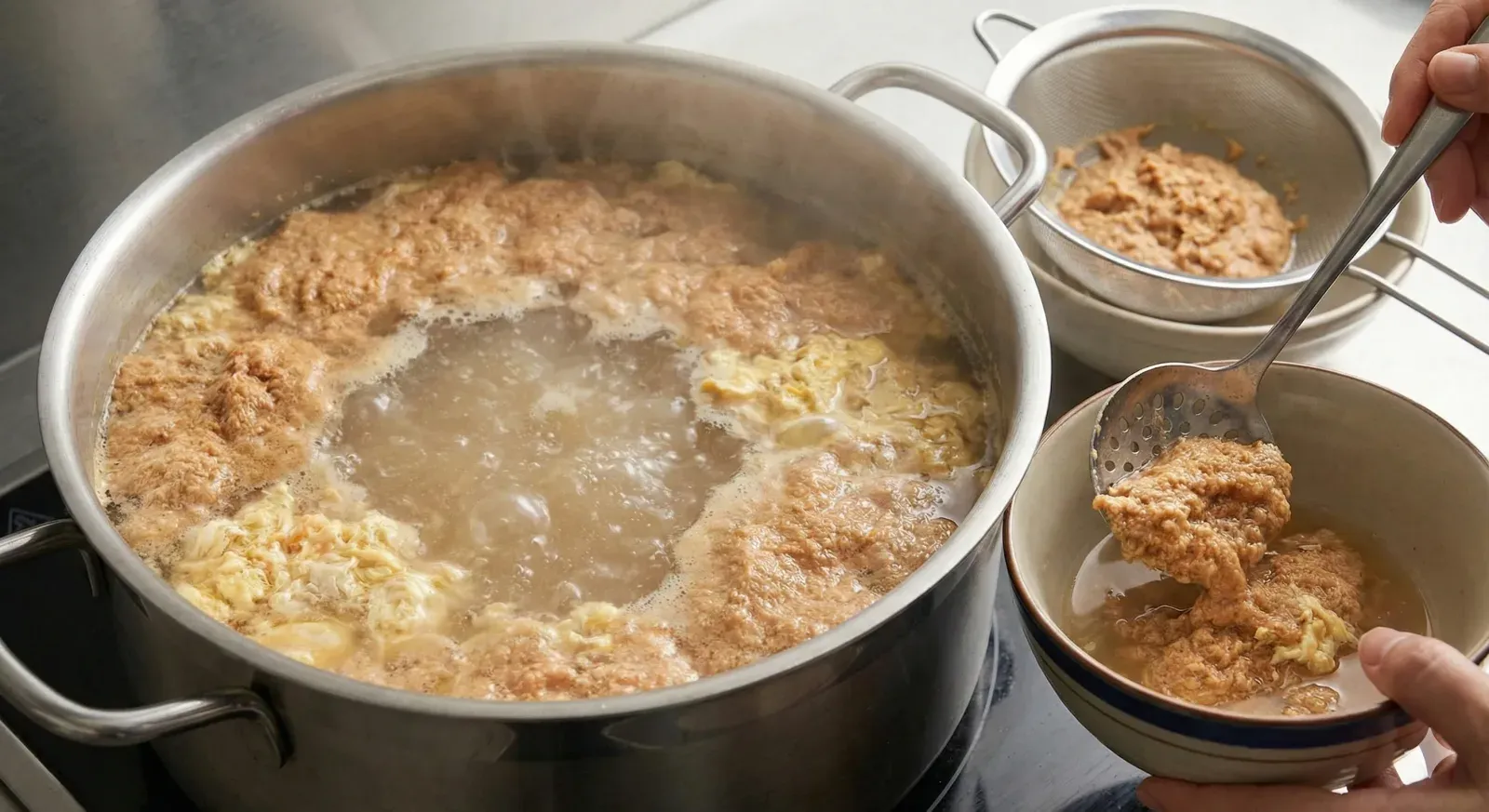
- As it heats, the riêu (crab foam) will float to the surface
- Then carefully scoop the floating riêu into a bowl
- Use a spoon to gently press the riêu to drain excess liquid
Pro Tip: Don’t stir hard when the riêu starts forming. Instead, gentle heat helps it float on its own and form fluffy clusters.
Step 3: Finish the Riêu Cakes
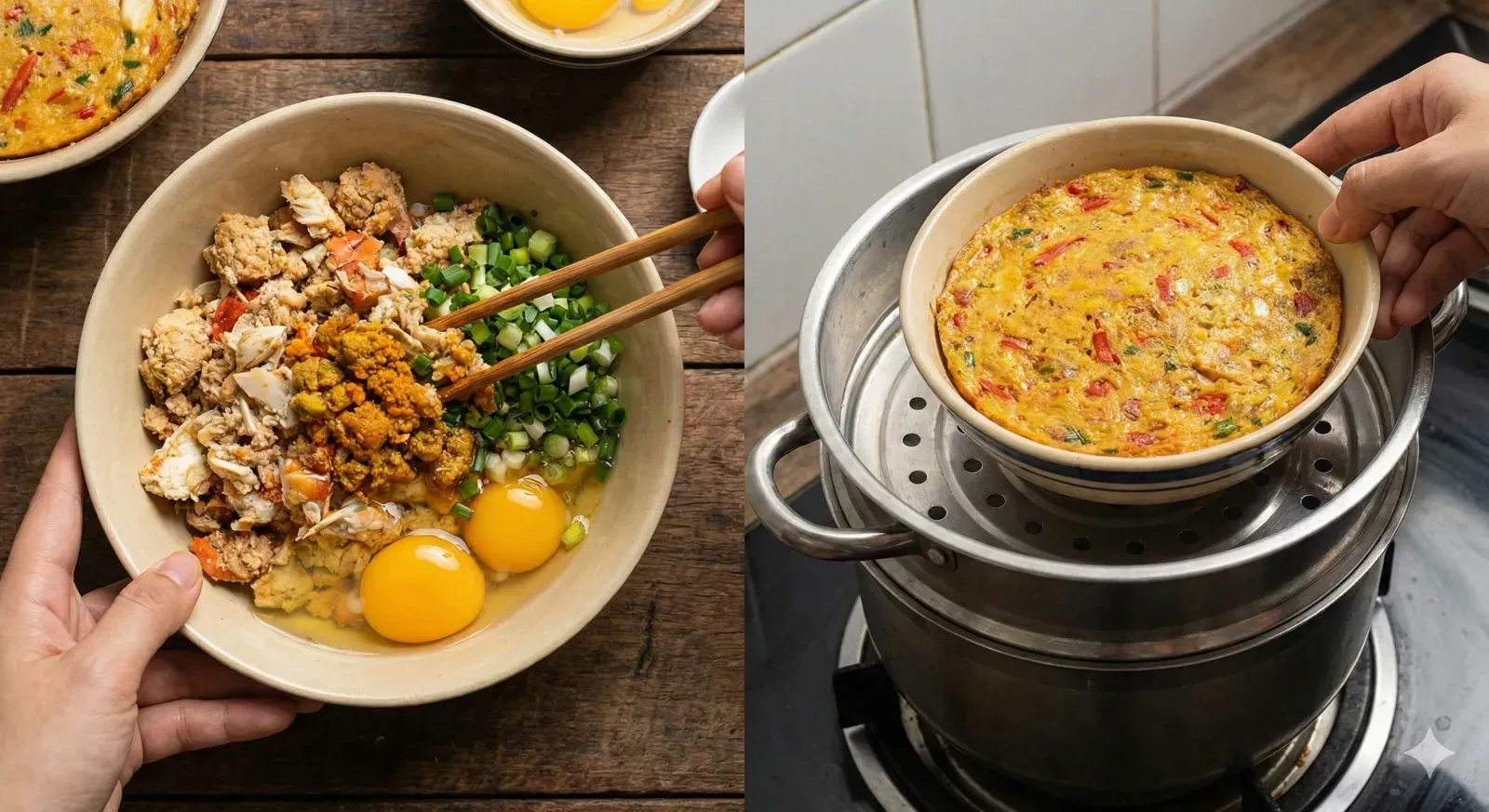
- First, gently break up the collected riêu
- Then crack in 2 remaining duck eggs
- Also add 1 tbsp chopped scallions
- Mix gently
- Next, spread the sautéed crab roe evenly on top
- Finally, microwave on medium power for 3 minutes (or steam until eggs are cooked)
Step 4: Prepare the Broth
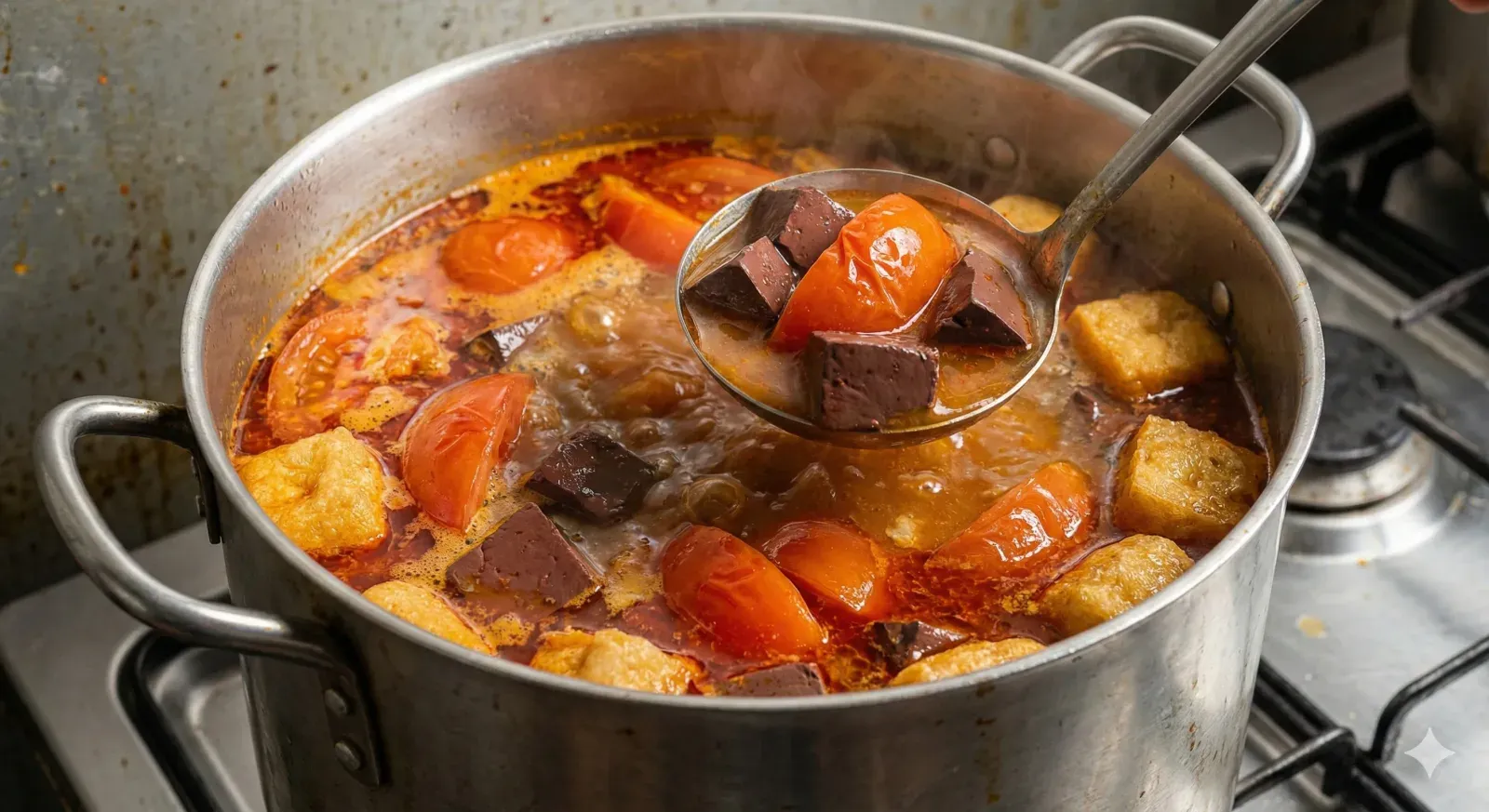
- After removing all the riêu, add the sautéed tomatoes to the broth
- Season with:
- 2 tbsp fish sauce
- 3 tsp salt
- 1 tsp sugar
- ½ tsp MSG
- Stir well to dissolve seasonings
- Taste and adjust. Don’t over-season here since shrimp paste will be added when serving.
- Then add pork blood and fried tofu
- Finally, bring to a boil, then turn off heat
Step 5: Assemble and Serve
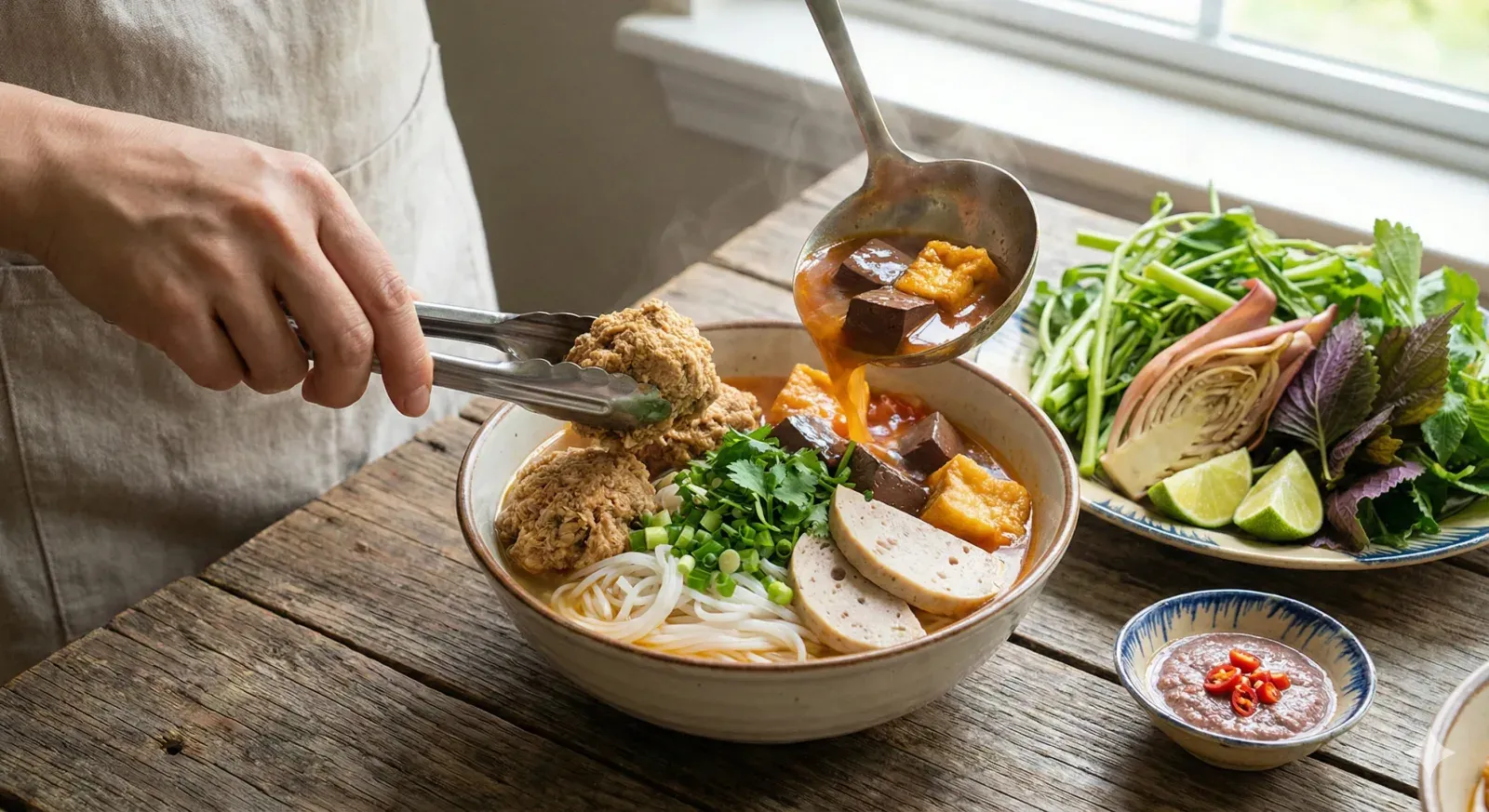
- First, blanch fresh rice vermicelli noodles and place in bowls
- Then add portions of riêu cakes
- Next, ladle hot broth with tomatoes, pork blood, and tofu
- Lastly, garnish with chopped scallions
- Optional: add Vietnamese pork sausage (chả lụa)
To Eat:
- First, squeeze fresh lime or calamansi over the bowl
- Then add shrimp paste to taste
- Also mix in fresh herbs
- Add sliced chilies if desired
- Mix everything together and enjoy!
Easy Vietnamese Crab Noodle Soup Using Canned Crab Paste
No access to fresh field crabs? You can still make a great Vietnamese crab noodle soup. This easy version uses canned crab paste and delivers tasty results.
Prep Time: 30 minutes Cook Time: 2 hours Total Time: 2 hours 30 minutes Servings: 6-8 people
Ingredients
Broth Base:
-
1.2kg (2.6 lbs) pork hock or pork bones
-
120g (4.2 oz) shallots
-
40g (1.4 oz) garlic
-
15g (0.5 oz) ginger
-
4 liters (16 cups) water
-
10g rock sugar
For the Riêu:
-
100g (3.5 oz) canned bún riêu cua seasoning
-
100g (3.5 oz) canned crab roe paste
-
350g (12 oz) ground pork
-
40g (1.4 oz) dried shrimp
-
5 chicken eggs
-
½ tbsp MSG
-
2 tbsp sugar
-
1 tsp black pepper
-
1.5 tbsp fried shallot-garlic mixture
Vegetables & Toppings:
-
500g (1.1 lb) tomatoes
-
3 tbsp tomato sauce
-
300g (10.5 oz) fried tofu
-
5 stalks scallions
-
3 bird’s eye chilies
-
Fresh rice vermicelli noodles
Seasonings:
-
100g (3.5 oz) shrimp paste
-
Fish sauce, MSG, sugar, rock sugar, chicken bouillon
-
Black pepper
-
Annatto oil
Fresh Herbs:
-
Water spinach (sliced)
-
Bean sprouts
-
Thai basil
-
Perilla leaves
-
Vietnamese balm
Detailed Instructions
Step 1: Prepare the Pork Hock
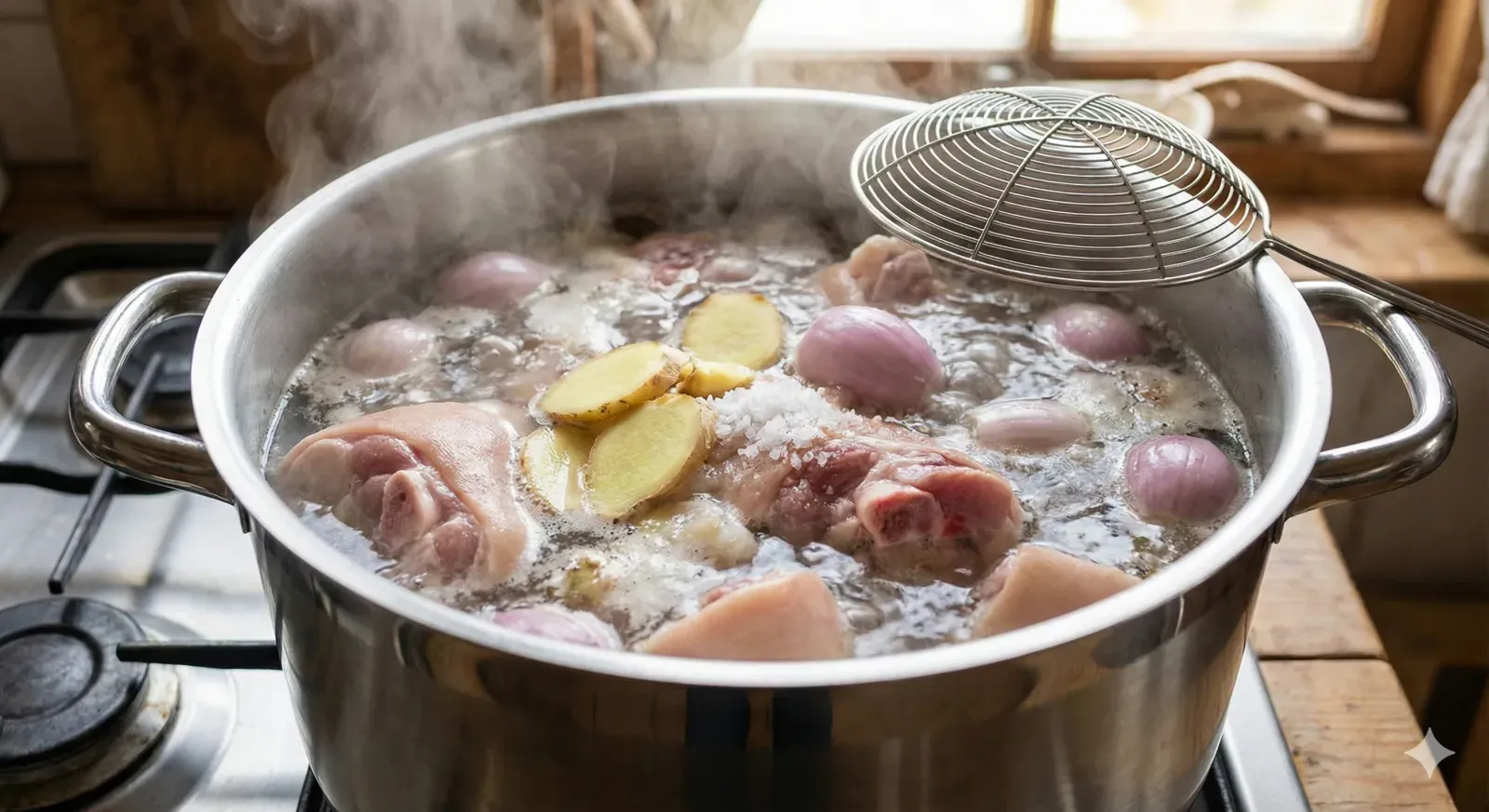
- Wash pork hock thoroughly and cut into chunks
- Bring a pot of water to boil with:
- 2 sliced shallots
- 1 slice of ginger
- ½ tbsp salt
- Then blanch pork for 2 minutes to remove impurities
- Finally, remove and rinse clean
Step 2: Simmer the Broth
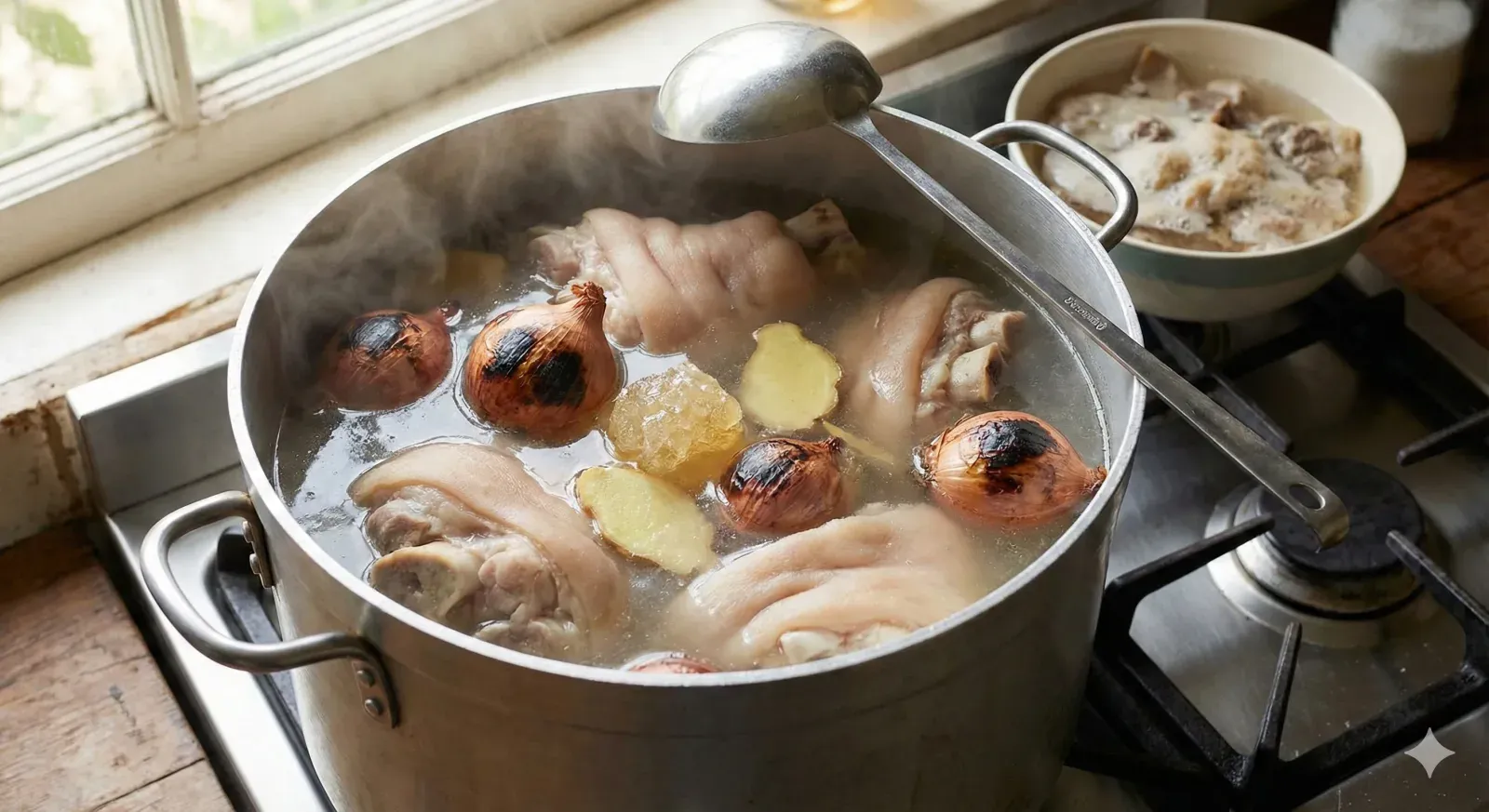
- Place blanched pork hock in a large pot
- Add 10g rock sugar and 4 liters cold water
- Next, bring to a boil over high heat while skimming off any foam
- Reduce to low heat. Simmer for 1.5 hours until tender.
- Eventually, the broth should be clear and fragrant
Pro Tip: Slow, gentle heat gives a clearer and sweeter broth. So avoid rapid boiling.
Step 3: Roast Shallots
3
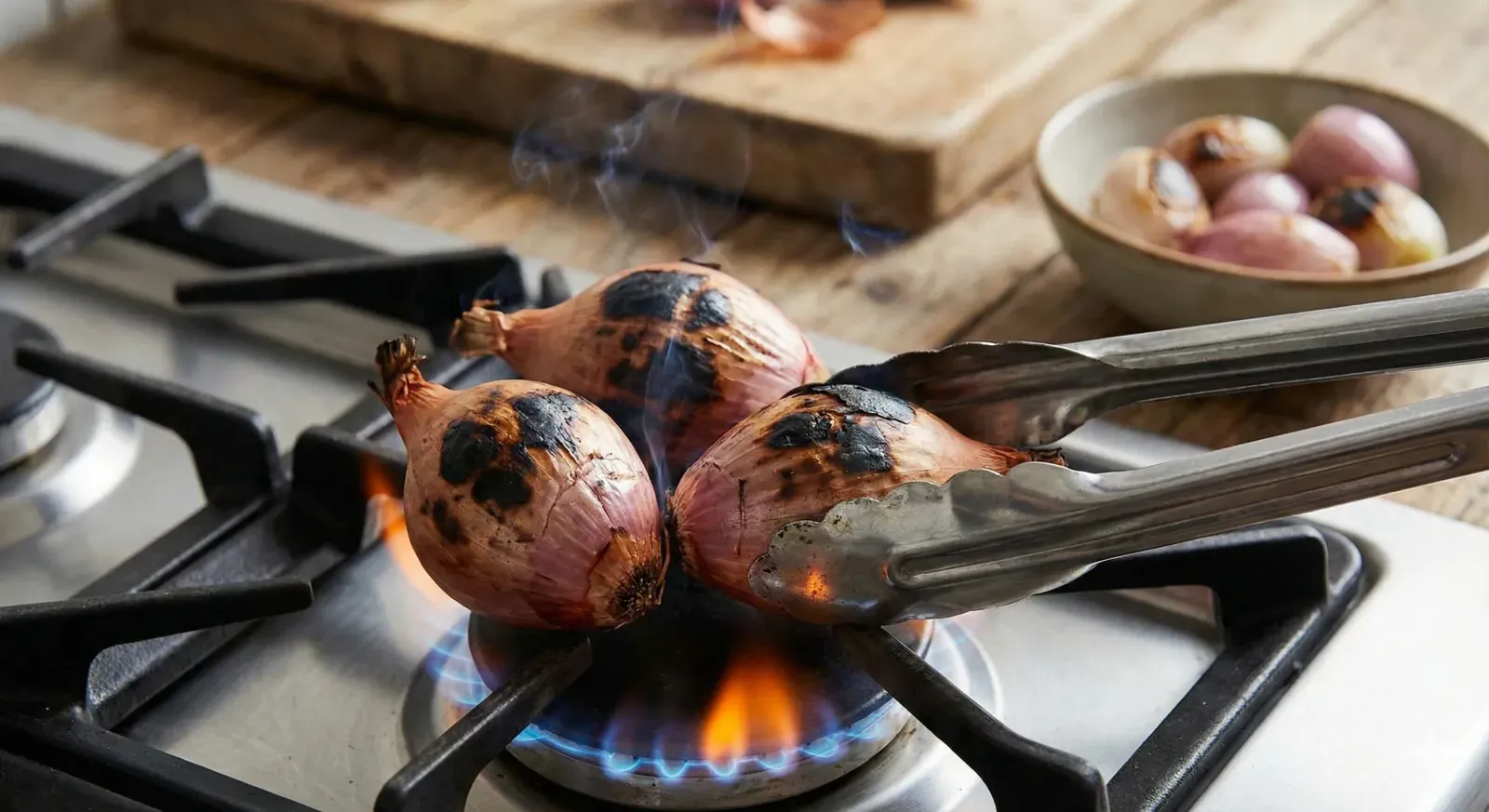
Option 1 - Charcoal/Gas Stove: Roast 3 whole shallots over an open flame until charred.
Option 2 - Oven: Wrap in foil and bake at 200°C (400°F) for 10 minutes.
Then peel off the charred skin and add to the broth. As a result, this boosts the aroma.
Step 4: Prep Other Ingredients
4
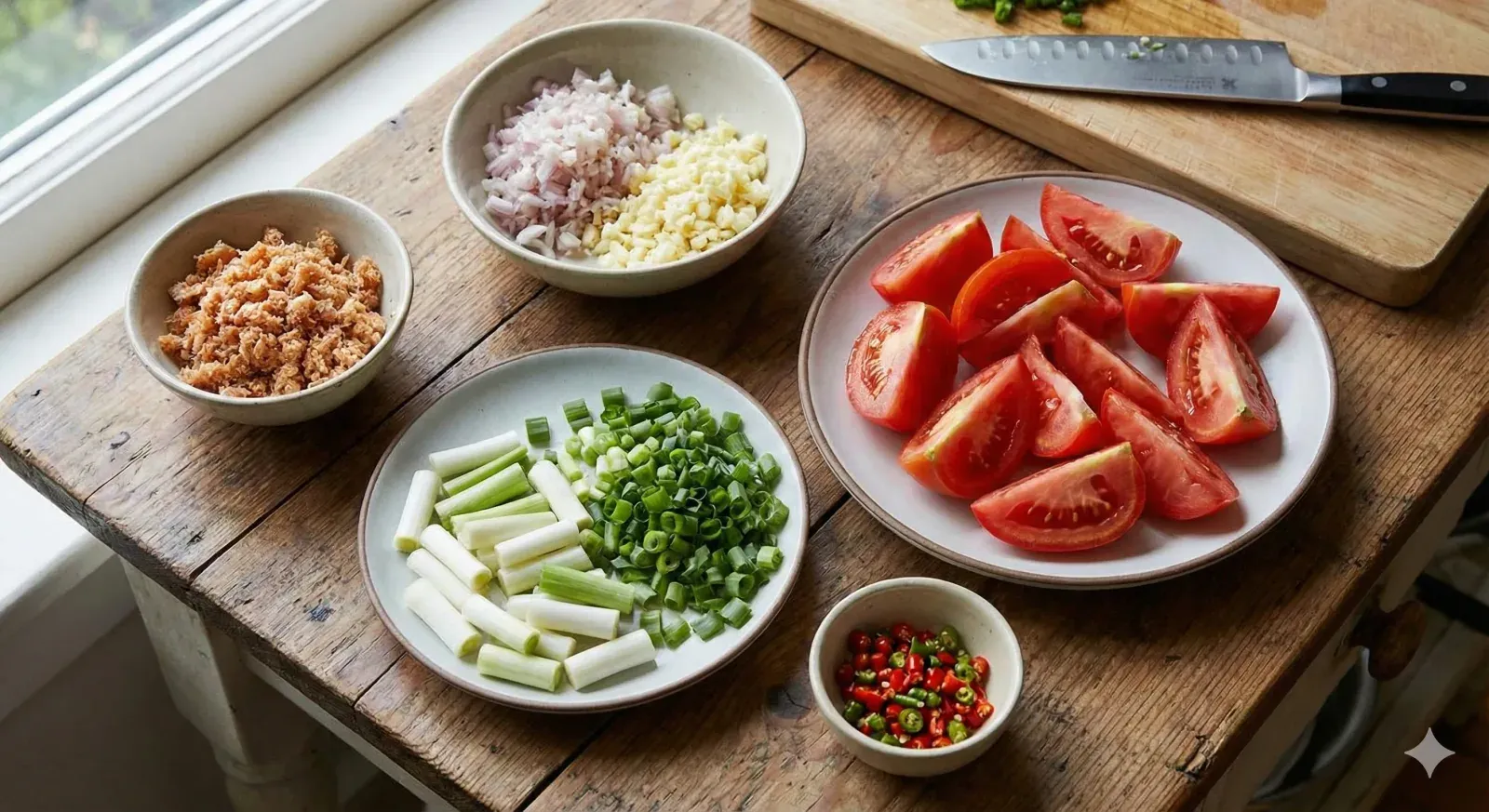
Dried Shrimp: Soak in hot water for 15 minutes, wash, and grind into paste
Shallots & Garlic: Mince finely
Scallions: Separate stems from greens. Cut stems into sections. Cut greens into small pieces.
Chilies: Mince finely
Tomatoes: Cut into large wedges, remove some seeds
Step 5: Process Shrimp Paste
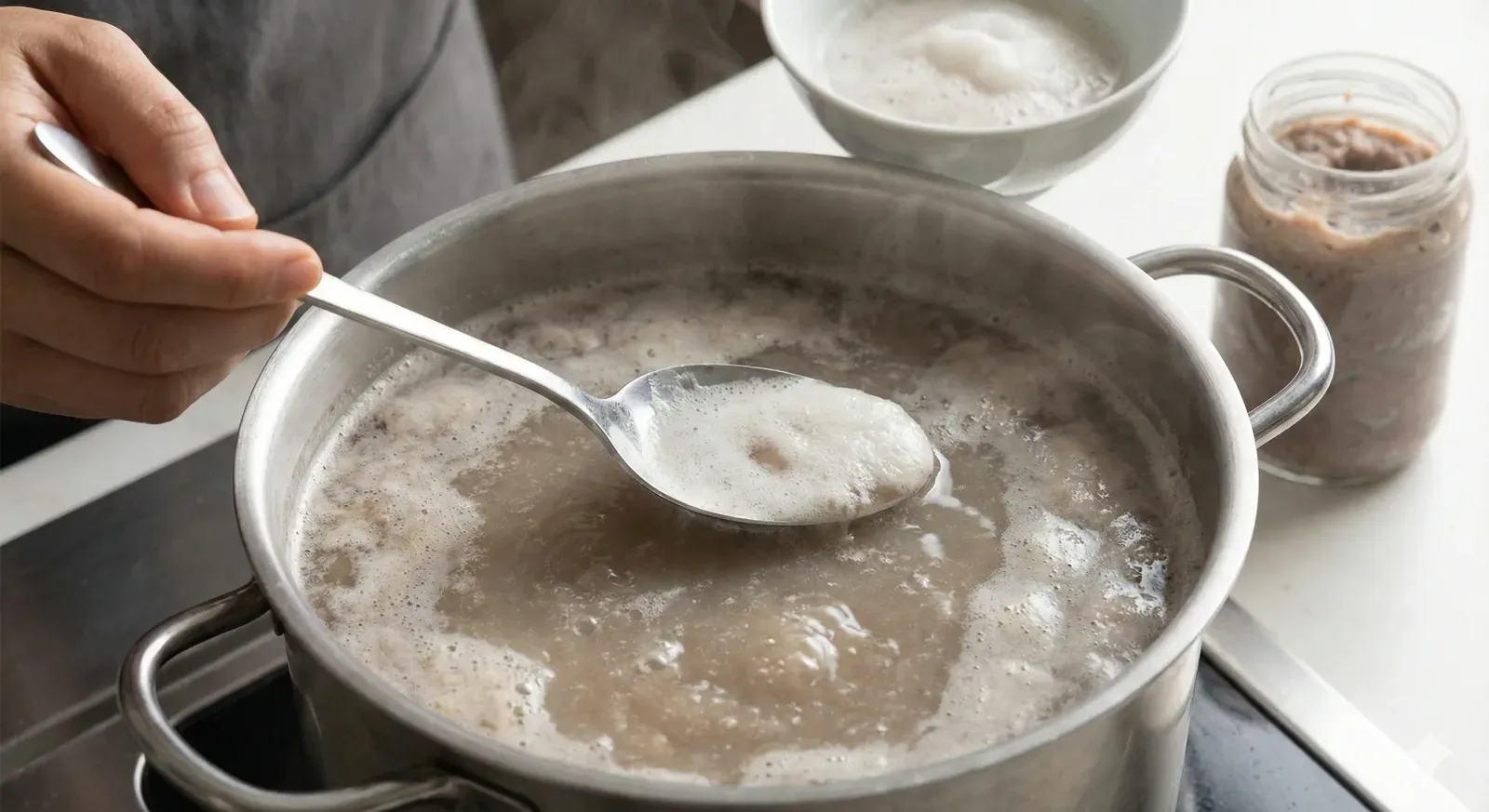
- Combine 100g shrimp paste with 600ml water in a pot
- Next, bring to a boil while skimming off foam
- Then reduce heat and simmer 10 minutes
- After that, turn off heat and let it settle
- Finally, use only the clear liquid from the top
Why This Step: Boiling mellows the strong flavor. Additionally, it removes sediment for a cleaner taste.
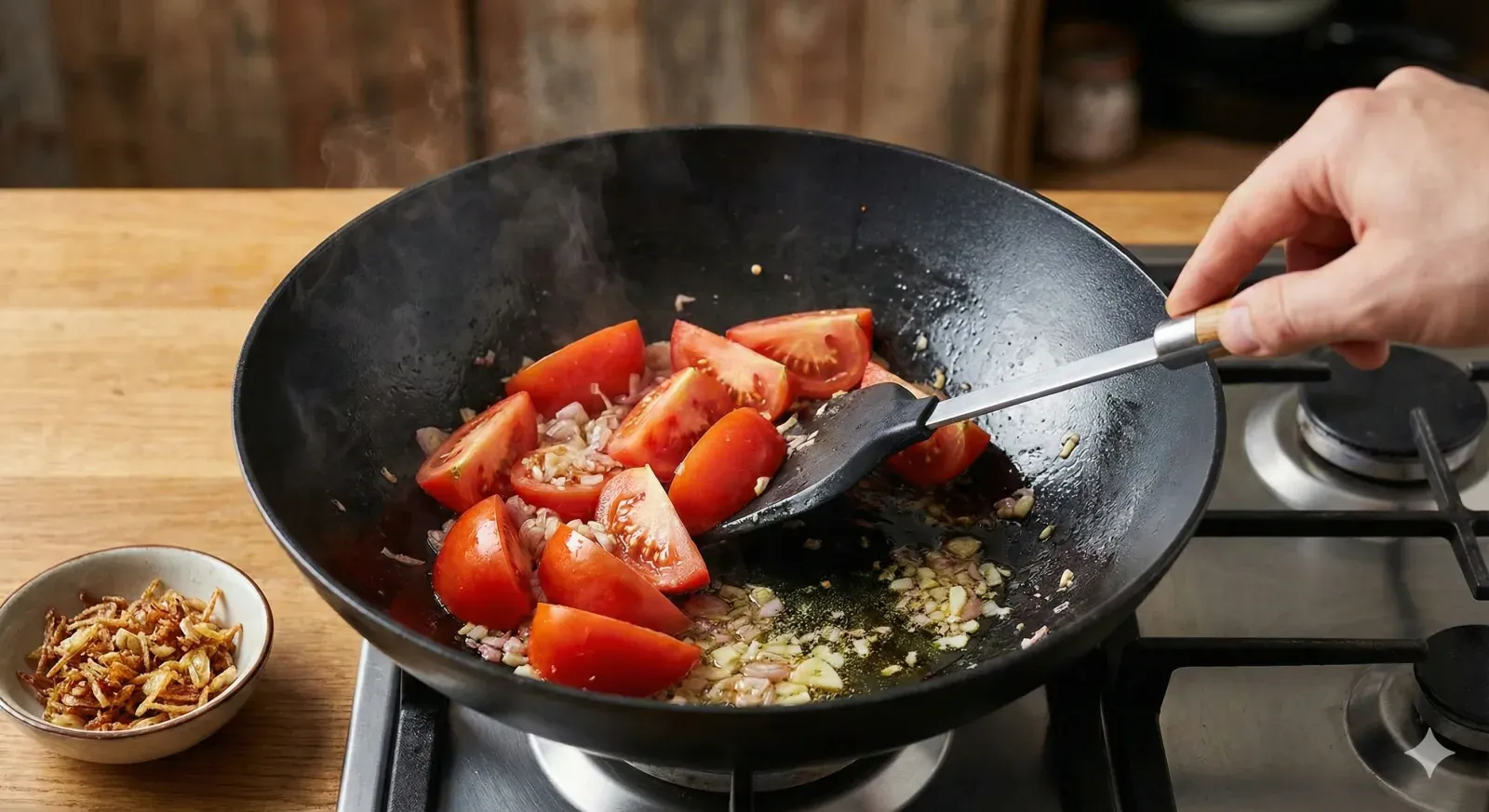
Step 6: Make Tomato Sauce
- Heat 1 tbsp oil in a wok
- Sauté shallots and garlic until fragrant. Then set aside in a small bowl.
- Next, in the same wok, quickly stir-fry tomato wedges
- Season with:
- 1 tsp chicken bouillon
- 1 tsp sugar
- Stir well and remove from heat
Step 7: Mix the Riêu
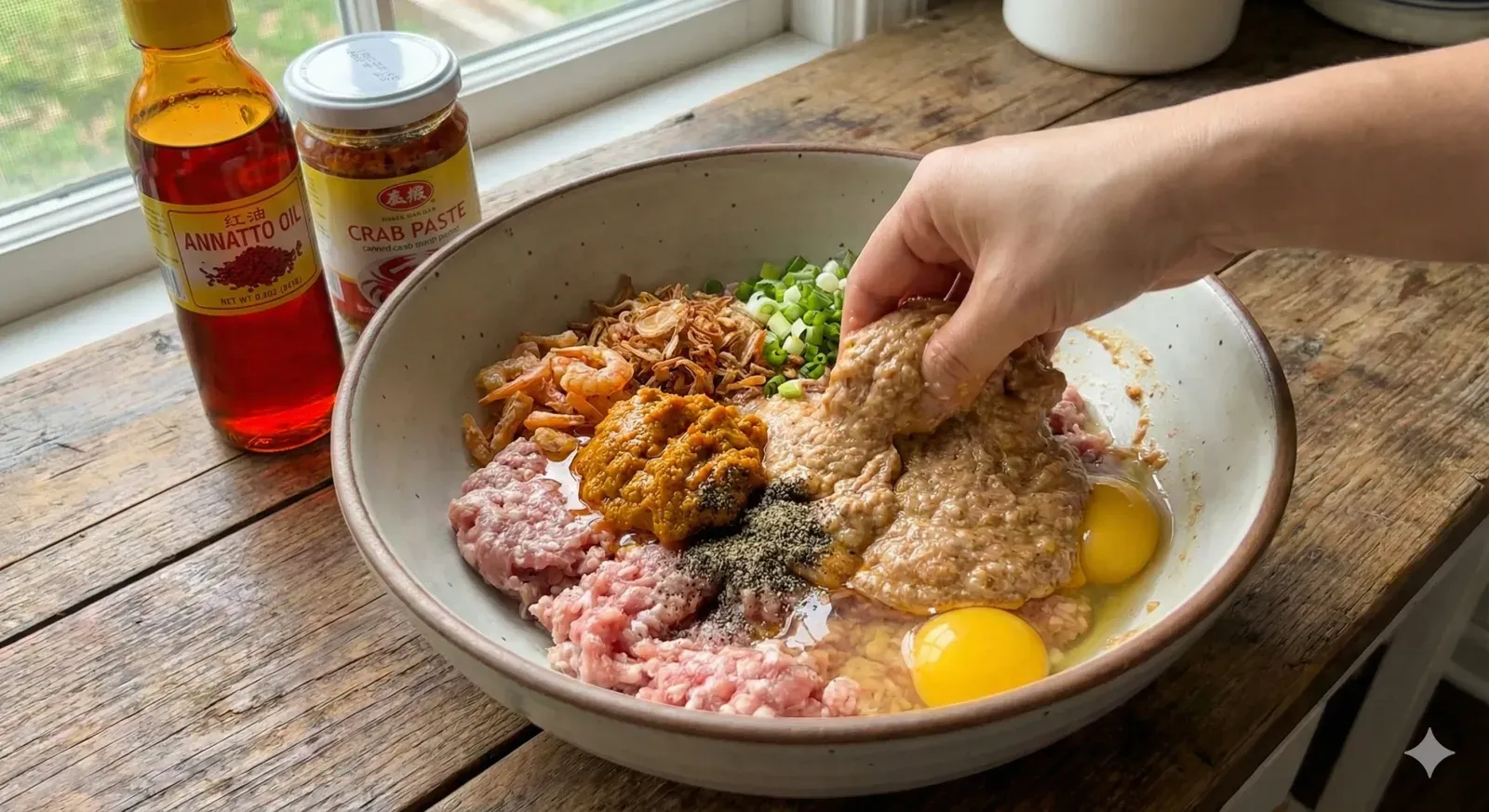
In a large bowl, combine thoroughly:
-
Ground pork
-
½ tbsp MSG
-
2 tbsp sugar
-
1 tsp black pepper
-
1.5 tbsp fried shallot-garlic mixture
-
Ground dried shrimp
-
Canned bún riêu seasoning
-
Canned crab roe paste
-
5 chicken eggs
Then mix until well combined and slightly sticky.
Step 8: Steam the Riêu
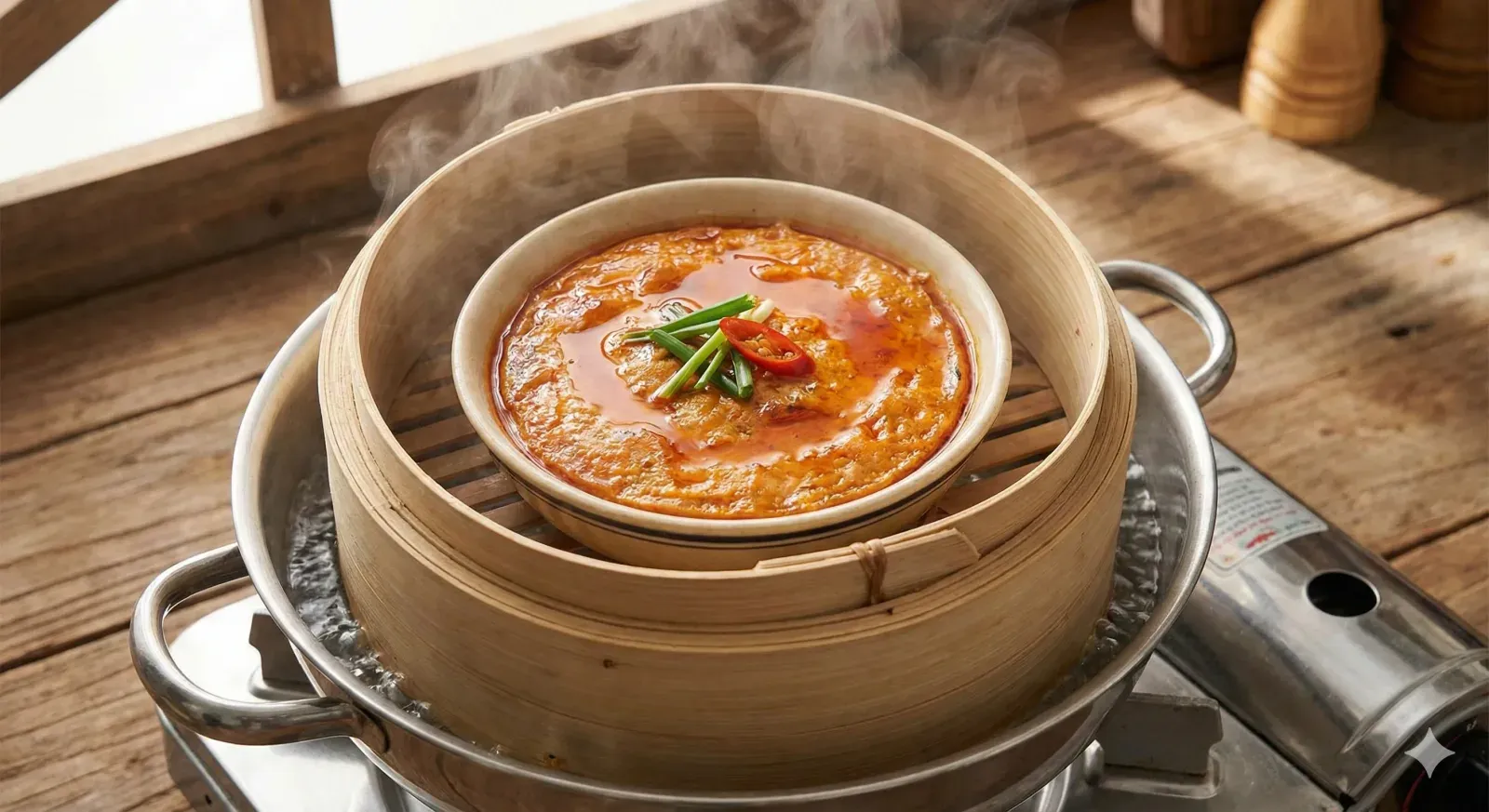
- First, brush a heatproof dish with cooking oil
- Pour in half of the riêu mixture (save the other half for the broth)
- Then steam over boiling water for 15 minutes
- Open lid, brush surface with annatto oil
- After that, cover and steam 5 more minutes
- Finally, remove and let cool slightly
The Result: Firm, savory crab cakes with a rich orange color from the annatto oil.
Step 9: Complete the Broth
After 1.5 hours of simmering:
- First, add hot water to maintain 4 liters
- Then remove pork hock and roasted shallots
- Next, add the processed shrimp paste liquid
- Season with:
- 3 tbsp tomato sauce
- 3.5 tbsp chicken bouillon
- 50g rock sugar
- 3 tbsp fish sauce
- 1 tbsp MSG
- 2 tbsp annatto oil
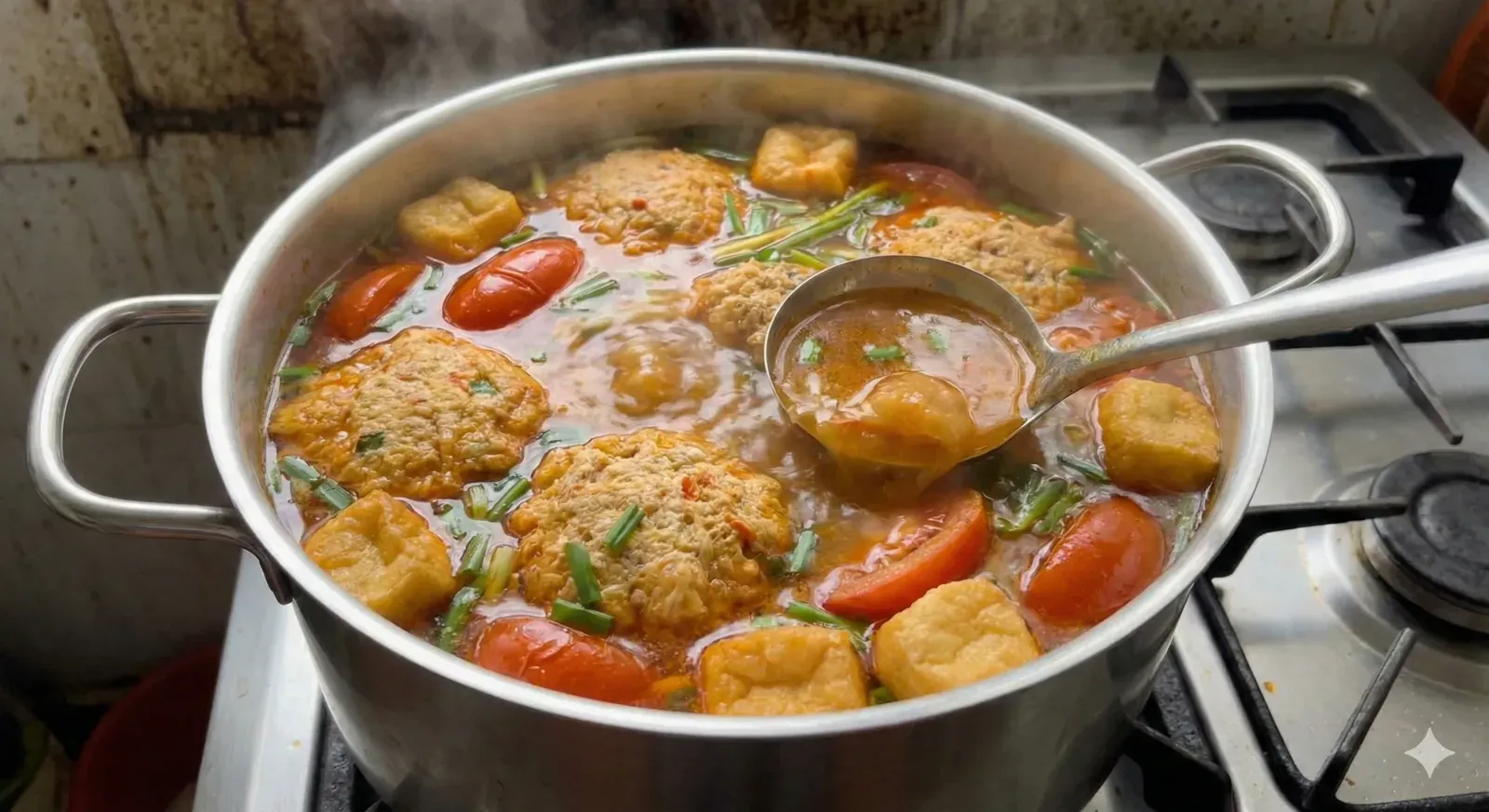
- Then add remaining raw riêu by spoonfuls (it will cook and float)
- Stir in sautéed tomatoes
- Drop in fried tofu cubes
- Toss in scallion stems
- Finally, bring to a boil, then turn off heat
Taste Test: The broth should taste sweet with a light tang from the tomatoes. You should also pick up a hint of shrimp paste. If needed, adjust seasonings.
Step 10: Serve
- First, blanch fresh rice vermicelli and divide among bowls
- Then add portions of steamed riêu cake
- Add sliced pork hock
- Add fried tofu and tomatoes
- After that, ladle hot broth over everything
- Lastly, garnish with scallion greens
Serve with: Fresh herbs, lime wedges, shrimp paste, minced chilies
How to Select the Best Field Crabs for Bún Riêu
Above all, good crabs make the difference in this dish. Here’s what to look for:
Visual Inspection
- Shell Quality: Choose crabs with shiny, hard, smooth shells
- Color: Healthy crabs have consistent coloring without dark spots
- Liveliness: Fresh crabs should be active and responsive
The Firmness Test
- Turn the crab upside down
- Gently press on the belly (yếm)
- Good: Firm belly that doesn’t indent. This means a meaty crab.
- Avoid: Soft belly that presses in easily. This means a hollow, watery crab.
Timing Matters
Best Time to Buy:
- Early lunar month (days 1-7): Crabs are fattening up
- Late lunar month (days 23-30): Crabs are at their plumpest
Avoid:
- Mid-lunar month (days 12-17): Molting season - crabs are hollow and lean
Common Questions About Making Bún Riêu Cua
How do I get the riêu to float and form nice clusters?
The Secret: Use fresh field crabs ground whole. Then strain to get the crab liquid. Don’t stir when the water heats up. Let the riêu float and set on its own. If using ground meat and eggs, add crab roe or dried shrimp. Specifically, this helps the riêu bind and float. Keep the heat low and steady.
Why is my broth cloudy or fishy-smelling?
Common Causes:
- Failing to strain crab water well
- Skipping foam removal during cooking
- Rushing the simmering of bones or meat
- Using old or low-quality ingredients
Solutions:
- Use roasted shallots, ginger, and sautéed tomatoes to cut fishy smells
- Also, blanch pork bones before making broth
- Skim foam consistently during cooking
- Finally, strain crab water through fine mesh or cheesecloth twice if needed
Can I use canned crab paste instead of fresh crabs?
Short Answer: Yes, but with trade-offs.
Pros:
- Convenient and time-saving
- Consistent results
- No need to process live crabs
Cons:
- Less aromatic than fresh crabs
- Different texture
- Less authentic flavor profile
Best Practice: If using canned, enhance with:
- Quality dried shrimp
- Ground pork
- Fried shallot-garlic mixture
- Good quality shrimp paste
- Rich pork bone broth
What should I serve with Bún Riêu Cua?
Essential Garnishes:
- Fresh lime or calamansi
- Scallions (raw and fried)
- Minced bird’s eye chilies
- Shrimp paste (mắm tôm)
- Tamarind water (optional)
Fresh Herbs (Rau Sống):
- Sliced water spinach
- Vietnamese balm (kinh giới)
- Bean sprouts
- Lettuce
- Thai basil
- Perilla leaves
Protein Add-ins
- Vietnamese pork sausage (chả lụa)
- Shrimp cakes (chả tôm)
- Fish cakes (chả cá)
- Snails (ốc)
- Pork hock or ribs
AdvertisementStorage and Reheating Tips
Broth:
- Refrigerate in airtight container: 3-4 days
- Freeze: up to 3 months
- Reheat gently, adding water if needed
Storing Riêu Cakes and Noodles
- Refrigerate: 2-3 days in sealed container
- Can be frozen for up to 1 month
- Steam briefly to reheat
Noodles:
- Best fresh, but can refrigerate 1-2 days
- Rinse with hot water before serving
Pro Tip: Store broth and solids in separate containers. As a result, this keeps the best quality when reheating.
The Cultural Significance of Bún Riêu Cua
This Vietnamese crab noodle soup shows the heart of Vietnamese home cooking. It is simple, balanced, and made for sharing. Bún Riêu Cua started in Northern Vietnam’s rice regions. Field crabs were easy to find in the paddy fields there.
In fact, every region has its own variation:
- Northern Style: Clearer broth, emphasis on fresh crab
- Central Vietnam: Spicier, may include lemongrass
- Southern Style: Sweeter broth, more vegetables and herbs
The dish shows key Vietnamese food values. It balances sweet, sour, salty, and spicy flavors. It uses fresh herbs and greens. And it is served in large bowls meant for sharing.
Final Thoughts
Making this Vietnamese crab noodle soup is a labor of love. But the reward is a bowl that captures the soul of Vietnamese home cooking. You can use fresh field crabs or the easy canned version. Regardless, the key is patience with the broth.
Remember:
- Above all, quality ingredients make a difference
- Don’t rush the broth - slow simmering develops depth
- Balance your seasonings - aim for natural sweetness
- Fresh herbs aren’t optional - they complete the dish
Once you master this recipe, you’ll have a strong base to build on. Try different proteins. Adjust seasonings to your family’s taste. Make this Vietnamese crab noodle soup your own.
Chúc ngon miệng! (Enjoy your meal!)
-
-
-
-
-
-
-
-