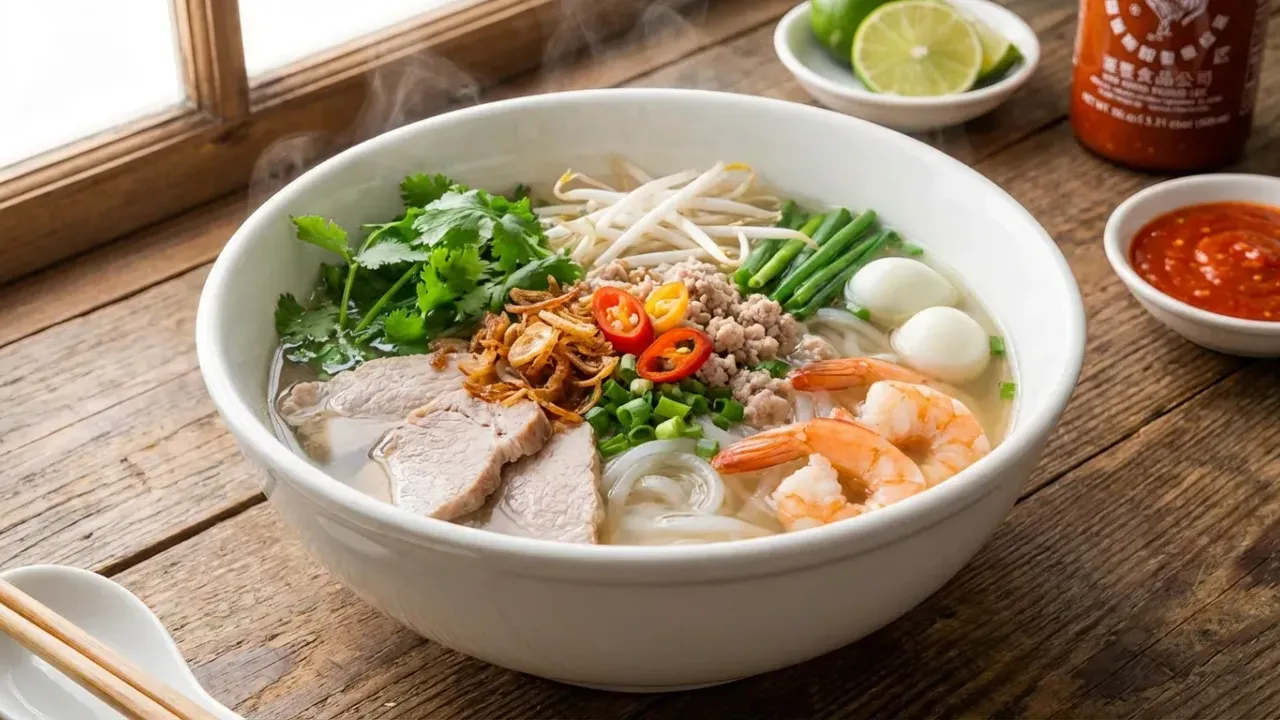
Hu Tieu Nam Vang, also known as Phnom Penh Noodle Soup, is one of Southern Vietnam’s most beloved comfort foods. First served over a century ago, this iconic dish features silky rice noodles in a crystal-clear broth. Then it’s topped with pork, seafood, and fresh herbs. Whether you enjoy it for breakfast or dinner, Hu Tieu Nam Vang delivers a perfect balance of sweet, savory, and umami flavors.
Today, I’ll show you how to make restaurant-quality Hu Tieu Nam Vang right in your own kitchen. Furthermore, you’ll use traditional techniques and authentic ingredients. For more ideas, browse our other Vietnamese dishes.
What Is Hu Tieu Nam Vang?
Hu Tieu Nam Vang has a fascinating history. In fact, it reflects the cultural exchange between Vietnam and Cambodia. According to records, this soup originated in Cambodia. “Nam Vang” is the Vietnamese name for Phnom Penh. Then, over a hundred years ago, traders brought it to Vietnam’s southern provinces.
Originally a simple street food, this dish has evolved over the decades to suit Vietnamese tastes. As a result, it has become more elaborate and refined. Today, the soup showcases the best of both culinary traditions.
What Makes This Noodle Soup Special?
Unlike other Vietnamese noodle soups like Phở or Bún Bò Huế, this bowl stands out for several reasons:
The distinctive toppings combination: A generous mix of dried shrimp, fried garlic, fresh scallions, and ground pork creates layers of flavor and texture that make every spoonful exciting.
The crystal-clear broth: The secret lies in meticulous preparation. Unlike the cloudy broth of phở, this soup features a transparent, delicately sweet base. Furthermore, it’s built from pork bones, dried squid, and dried shrimp. The clarity comes from careful skimming and gentle simmering. Meanwhile, depth of flavor develops through hours of patient cooking.
The variety of proteins: Traditional Hu Tieu Nam Vang includes pork shoulder, pork liver, pork heart, shrimp, squid, ground pork, and quail eggs. As a result, every bowl is a protein-rich meal that’s both satisfying and nutritious.
Gordon Ramsay’s Love Affair With Hu Tieu Nam Vang
Even world-renowned chef Gordon Ramsay couldn’t resist the magic of this soup. In 2012, he visited Vietnam for his documentary series “Gordon’s Great Escape.” First, Ramsay stopped at the famous Cái Răng floating market in Cần Thơ. There, a local vendor prepared a humble bowl on her small boat, as reported by VnExpress.
After just one taste, the British chef declared it “the greatest dish I’ve ever had.” Furthermore, he praised it as a stunning slow-cooked Vietnamese pork noodle soup. Coming from a chef with multiple Michelin stars, this was extraordinary praise for a simple street food dish.
Ramsay was so impressed that he featured the dish as a challenge on MasterChef US in 2013. He asked the top 5 contestants to recreate it after tasting the original. However, many talented young chefs struggled with the broth’s complexity. Its multiple layers of flavor were difficult to identify and replicate. Even Ramsay himself admitted the difficulty. Humorously, he said: “Thank God I wasn’t born in Vietnam, I’m just a bad cook here.”
This acknowledgment highlights just how sophisticated Vietnamese cuisine is. Beneath its humble street-food appearance lies incredible complexity. Indeed, it takes years to master.

Key Ingredients for Hu Tieu Nam Vang
To create an authentic bowl of this Phnom Penh noodle soup, you’ll need these essential ingredients:
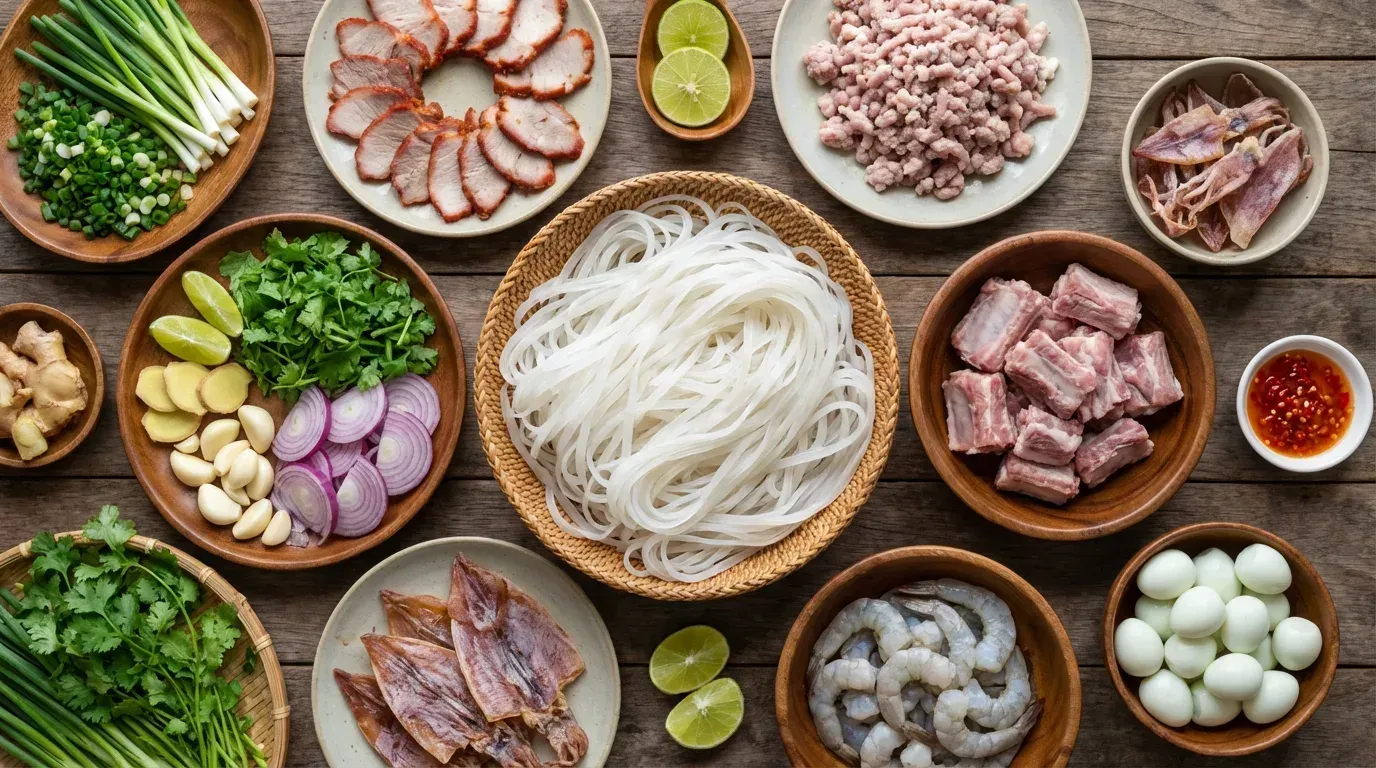
For the Noodles
Fresh Hủ Tiếu noodles (1 kg / 2.2 lbs): These flat rice noodles have a unique, slightly chewy texture. You can find them at Asian grocery stores, either fresh or dried. Also, fresh noodles are always preferred for the best texture.
For the Broth
The soul of this dish lies in the broth. You’ll need:
-
Pork bones (400g / 14 oz): Use bones with some marrow for richness and natural gelatin that gives body to the broth.
-
Pork shoulder (600g / 1.3 lbs): Provides both flavor for the broth and tender sliced meat for topping.
-
Dried squid and dried shrimp (280g / 10 oz total): These are absolutely crucial - they give the broth its signature sweet, oceanic flavor. Don’t skip these!
-
Pickled radish (280g / 10 oz): Adds a subtle tang and helps balance the richness of the broth.
-
Aromatics: Fresh ginger, scallions, cilantro, and onions create the aromatic foundation.
For the Toppings
-
Ground pork (400g / 14 oz): Stir-fried with garlic and onions for a savory topping.
-
Pork organ meats: Liver (400g) and heart (400g) add traditional flavors and tender texture.
-
Seafood: Fresh shrimp (280g) and squid (280g) for sweetness and texture contrast.
-
Quail eggs (30 pieces): These small eggs are traditional and add richness.
-
Plenty of garlic (150g / 5 oz): Both minced and fried for intense flavor.
Fresh Accompaniments
-
Bean sprouts (400g): Add crunch and freshness.
-
Lettuce (400g): Provides a cool, crisp contrast.
-
Garlic chives (200g): Essential for that authentic flavor.
-
Fresh herbs and limes: For garnishing and adjusting flavor to taste.
AdvertisementStep-by-Step Instructions
Making Hu Tieu Nam Vang is a labor of love. However, the results are absolutely worth it. Here’s how to do it:
Step 1: Prepare All Ingredients
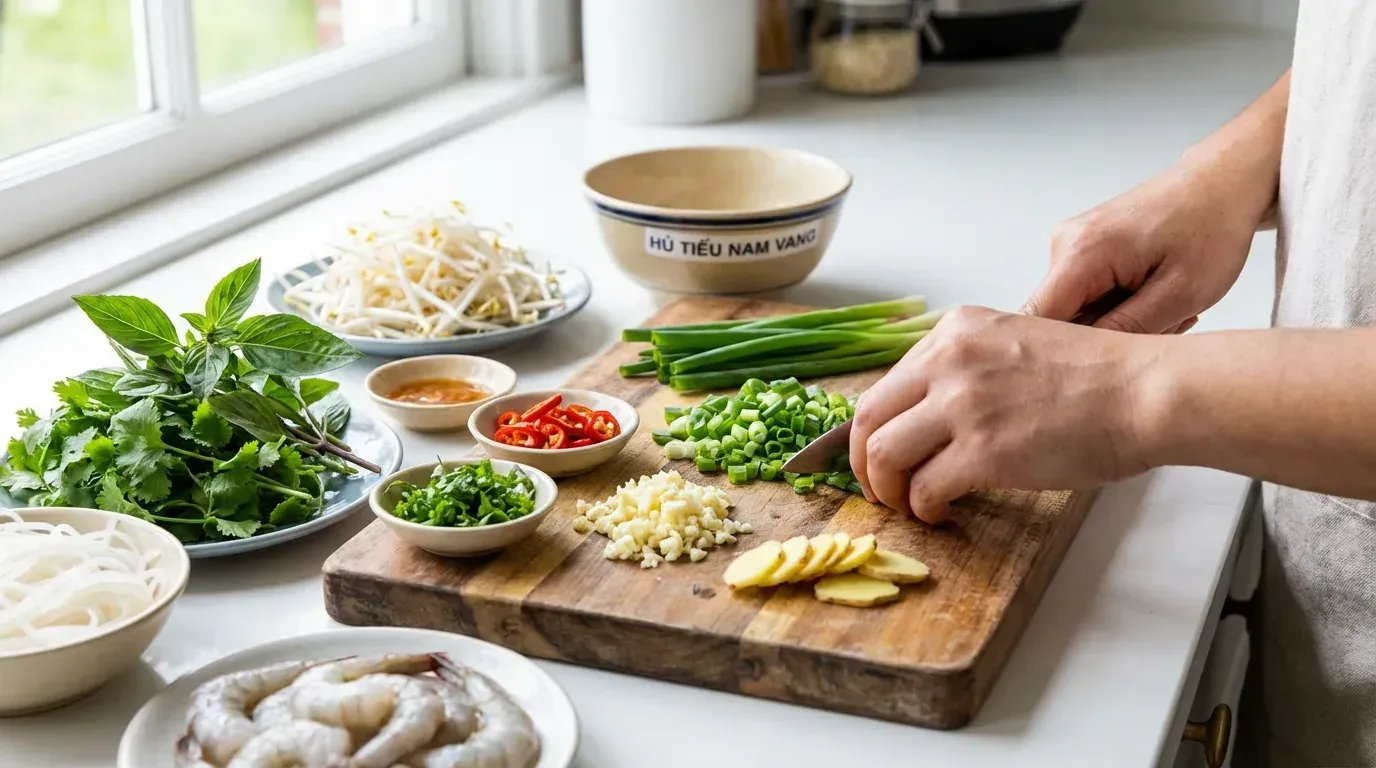
1Start by washing all your vegetables thoroughly. Rinse the lettuce, bean sprouts, and garlic chives under cold running water and drain well. Set these aside for serving.
Peel the ginger and wash it clean. Finely chop the scallions and cut the cilantro into segments. Mince about half of your garlic very finely - this will be used for frying. Dice one onion into small cubes for the ground pork, and cut the other onion into wedges for the blanching water.
Step 2: Blanch the Meats
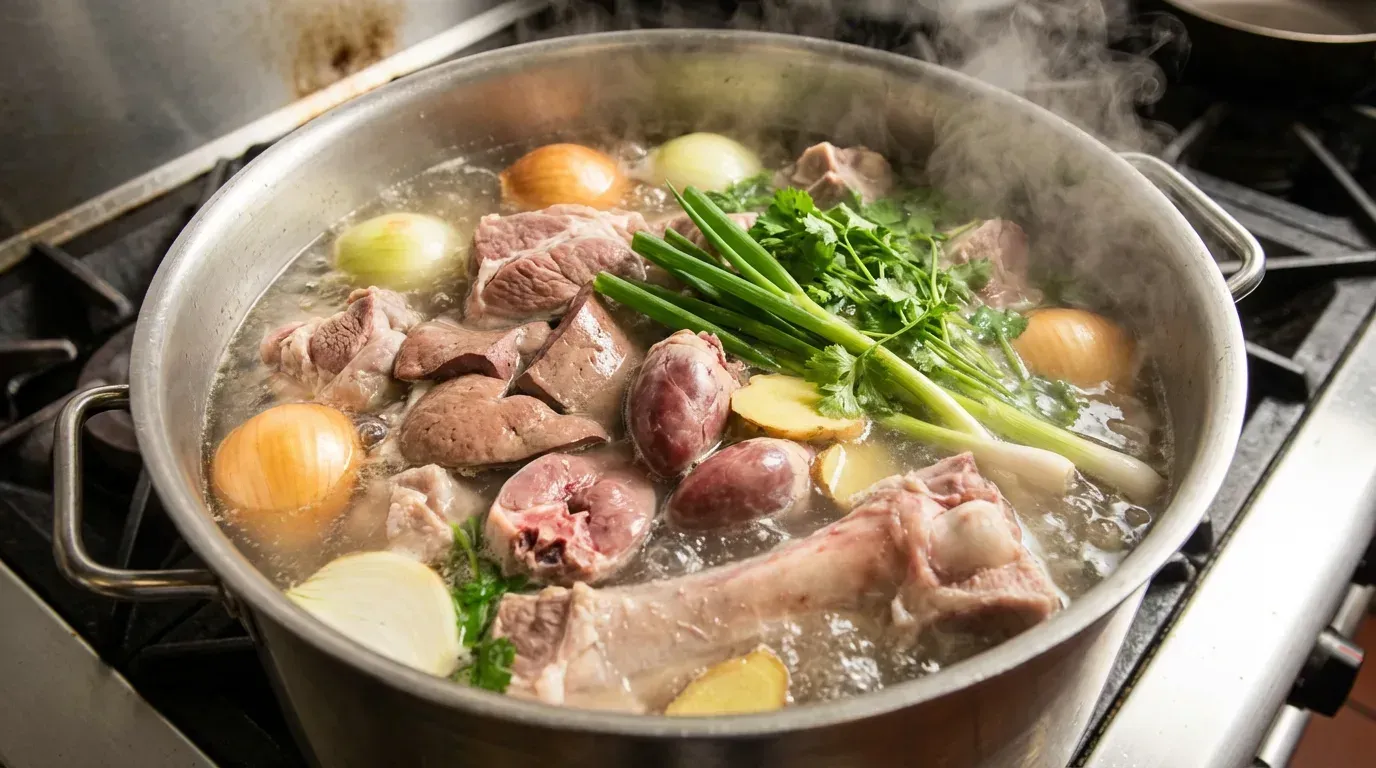
2This crucial step removes impurities and ensures a crystal-clear broth. Bring a large pot of water to a rolling boil and add the onion wedges, scallions, cilantro, and ginger. Once the water is aromatic and boiling vigorously, add the pork shoulder, pork bones, pork liver, and pork heart.
Let them blanch for about 3-4 minutes. You’ll see foam and impurities rise to the surface - this is exactly what we want to remove. Using a slotted spoon or spider, carefully remove all the meats and immediately plunge them into a bowl of cold water. This stops the cooking process and helps the meat stay tender.
Step 3: Blanch the Seafood
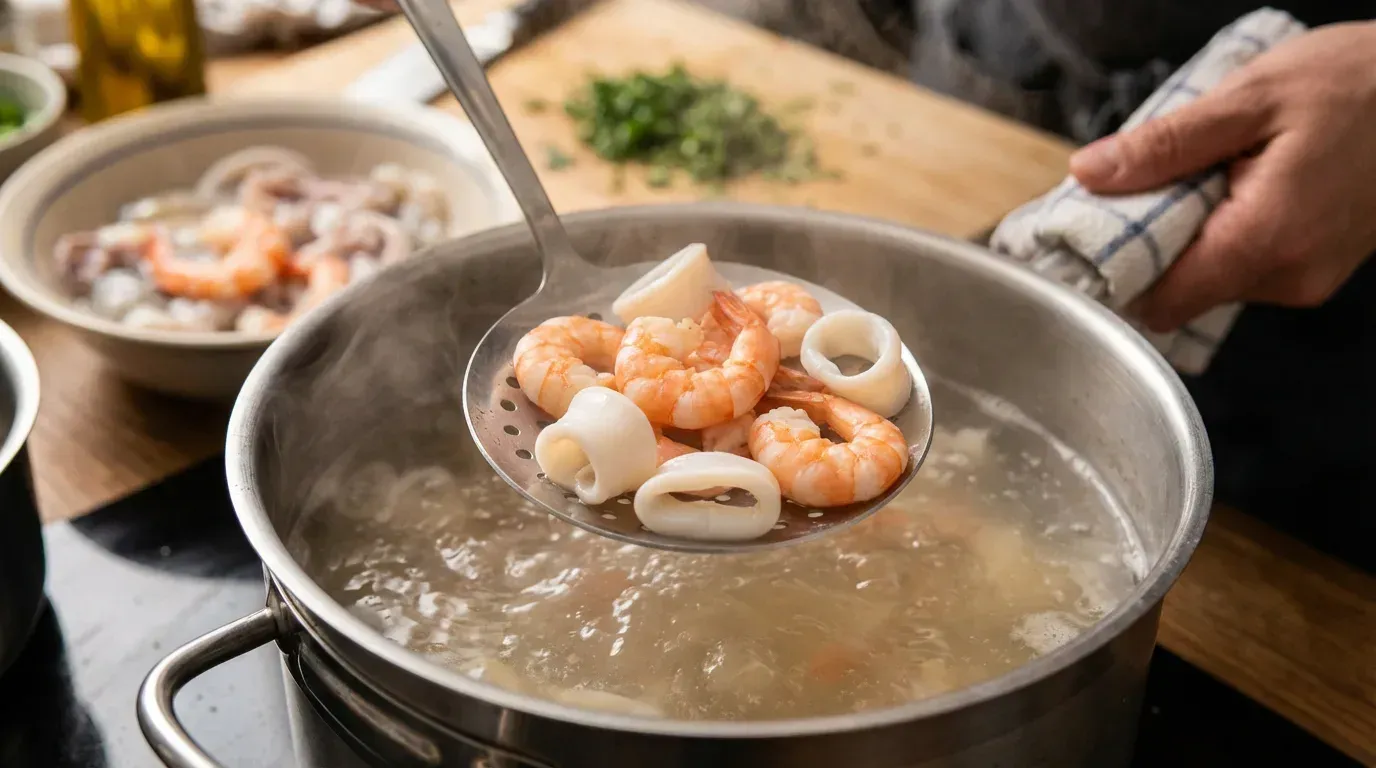
3In the same pot of boiling water (or fresh water if it’s too cloudy), blanch the squid and shrimp. These cook much faster than the pork - just 1-2 minutes until the shrimp turn pink and the squid turns opaque. Remove immediately and transfer to cold water to stop the cooking.
Step 4: Toast the Dried Ingredients
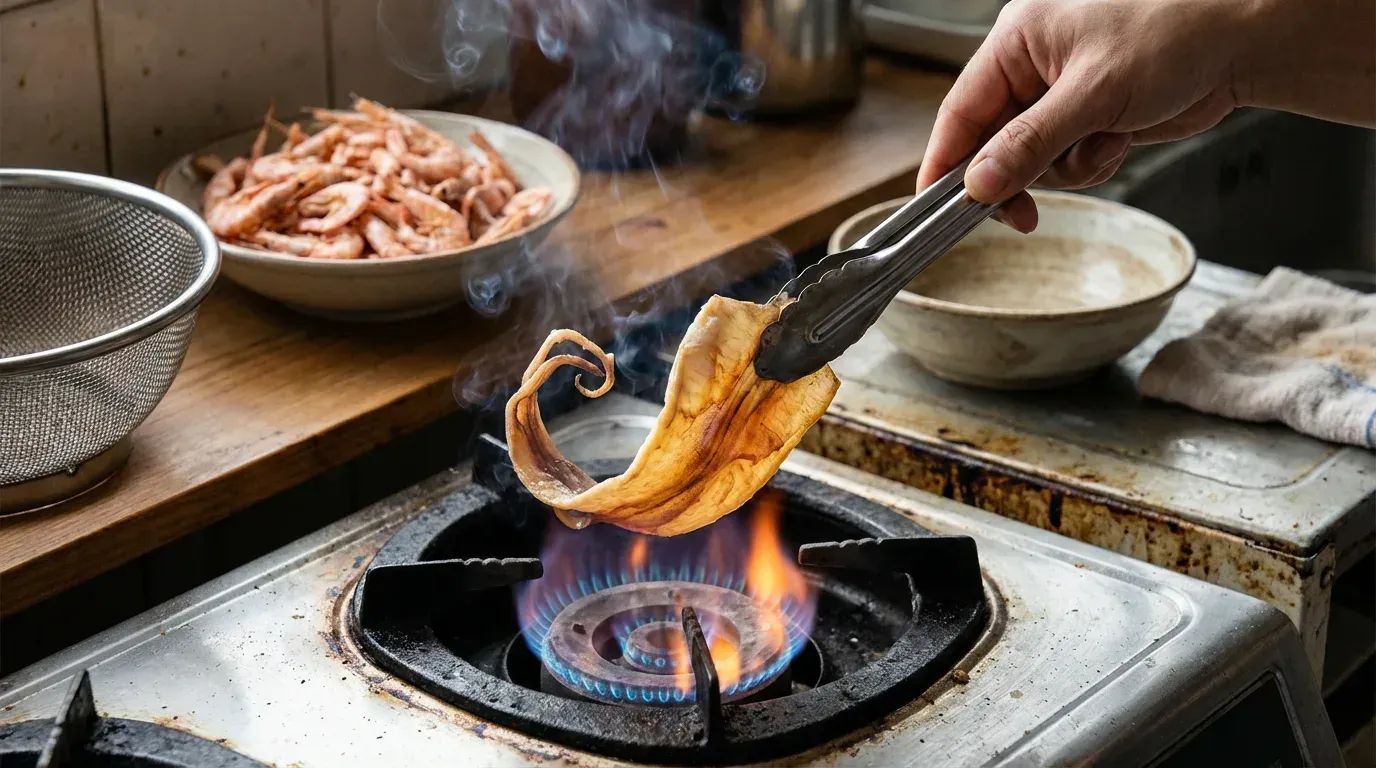
4This step is essential for unlocking maximum flavor. Hold a piece of dried squid with tongs over a gas flame (or use a kitchen torch) and toast it until it puffs up slightly and becomes fragrant - about 30 seconds to 1 minute. Don’t burn it! Repeat with all the dried squid pieces.
Do the same with the dried shrimp, toasting them until they’re aromatic and slightly darker in color. Set everything aside on a dry plate. This toasting process intensifies the umami flavors that will make your broth extraordinary.
Step 5: Make the Broth (The Most Important Step!)
5Now for the heart of the dish — the broth that makes or breaks this soup.
Fill your largest pot with about 4-5 liters (1-1.3 gallons) of fresh, cold water. Add the blanched pork bones, pork shoulder, pork heart, and pork liver. Add the toasted dried squid and dried shrimp, onion, scallions, cilantro, ginger, and pickled radish.
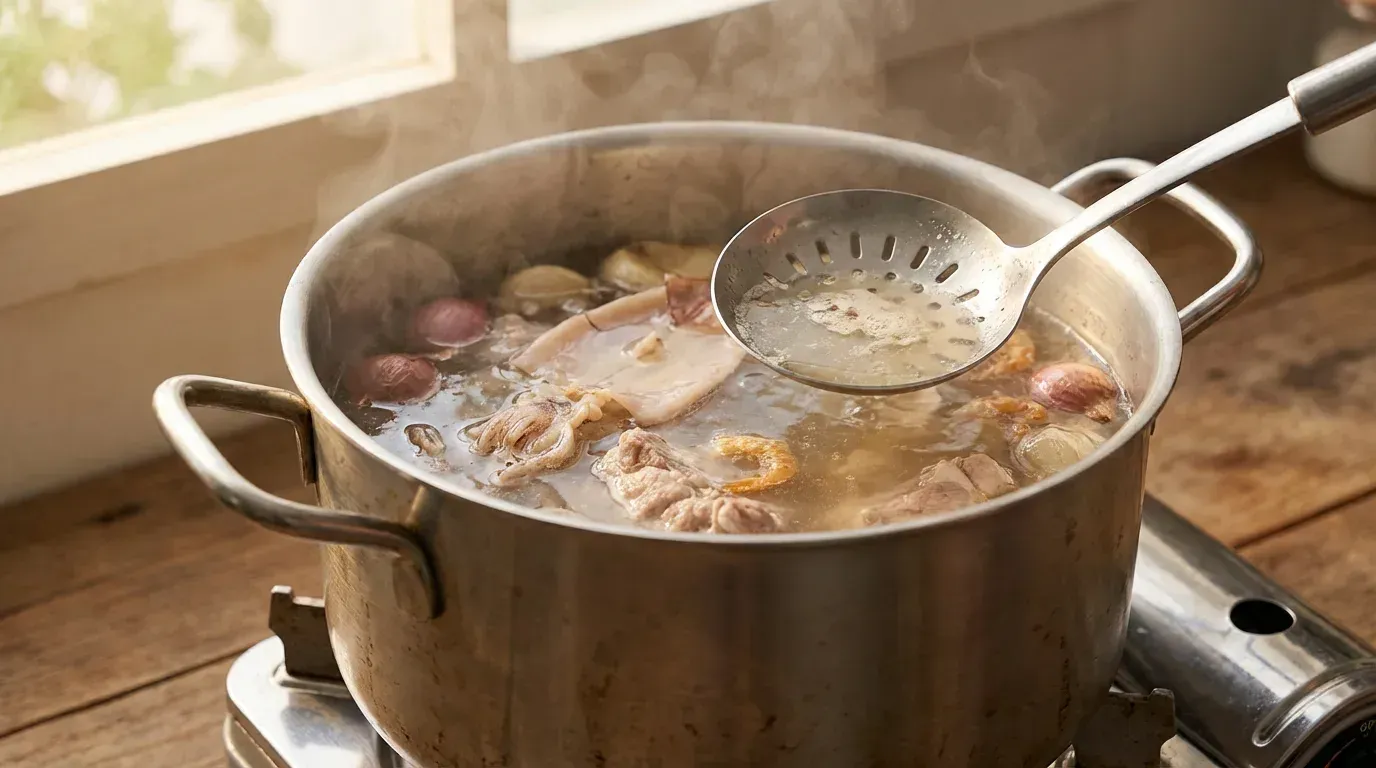
Bring everything to a gentle boil over medium-high heat. Once boiling, reduce the heat to maintain a gentle simmer. This is crucial - a rolling boil will make the broth cloudy. You want just gentle bubbles breaking the surface.
Skim, skim, skim! For the first 30 minutes, check the pot frequently and use a ladle to skim off any foam or impurities that rise to the surface. This is the key to achieving that beautiful clear broth.
Let the broth simmer gently for 2-3 hours. The pork should be tender and the broth should have a rich, golden color with incredible depth of flavor. Taste it - you should detect sweetness from the bones and dried seafood, along with complex savory notes.
After the meat is tender, carefully remove the pork shoulder, liver, and heart. Strain the broth through a fine-mesh sieve or cheesecloth to remove all solids. Return the clear broth to the pot.
Season the broth: Add salt, a pinch of sugar, and fish sauce to taste. The broth should be well-seasoned but not overpowering - remember, it will be paired with many other flavors. Keep it warm over very low heat.
Step 6: Prepare the Ground Pork Topping
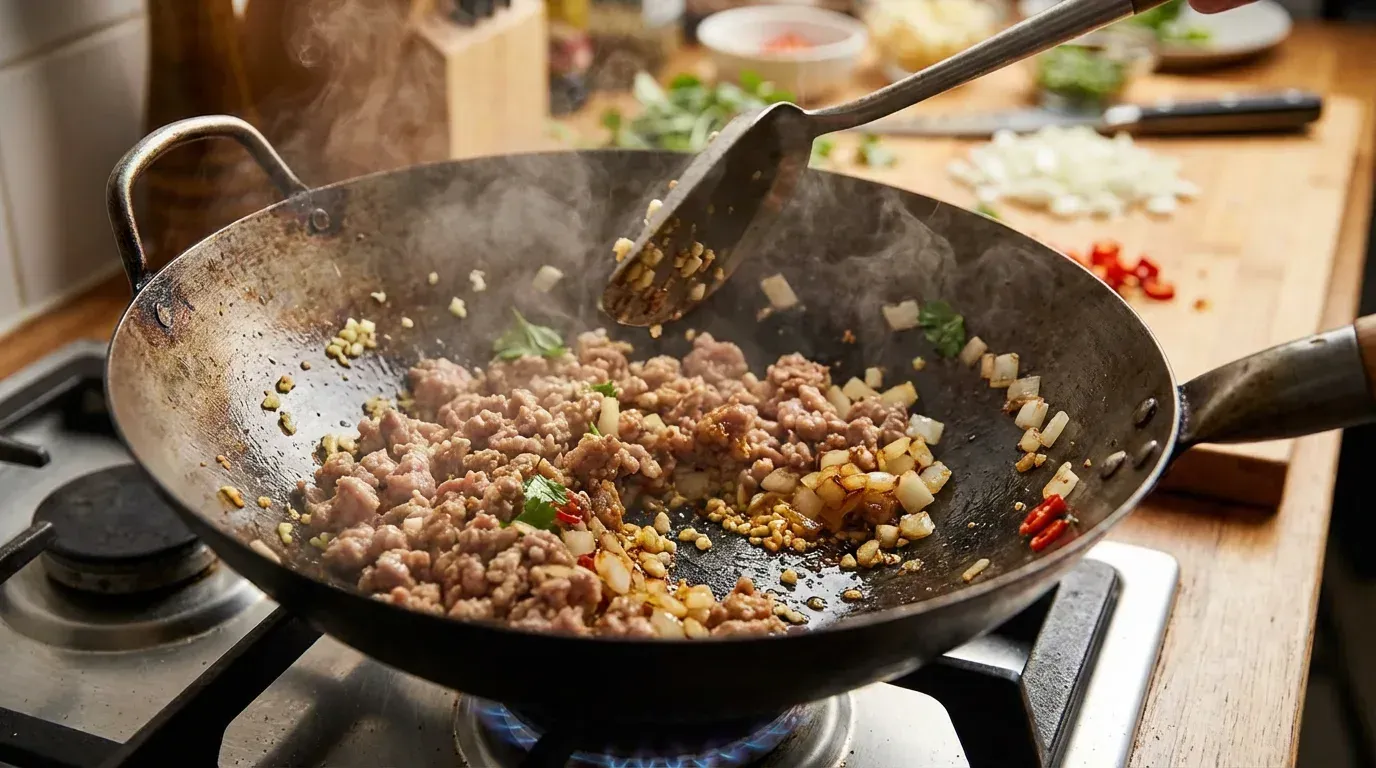
6Heat 2 tablespoons of cooking oil in a wok or large skillet over medium-high heat. Add the minced garlic and diced onion, stirring constantly until fragrant and the onion becomes translucent - about 1-2 minutes.
Add the ground pork, breaking it up with your spatula. Stir-fry until the pork is completely cooked and slightly golden brown, about 5-7 minutes. Season with chicken bouillon powder (or salt), a small pinch of sugar, and a splash of fish sauce. Toss in some chopped scallions and turn off the heat. Set aside.
Step 7: Make the Fried Garlic
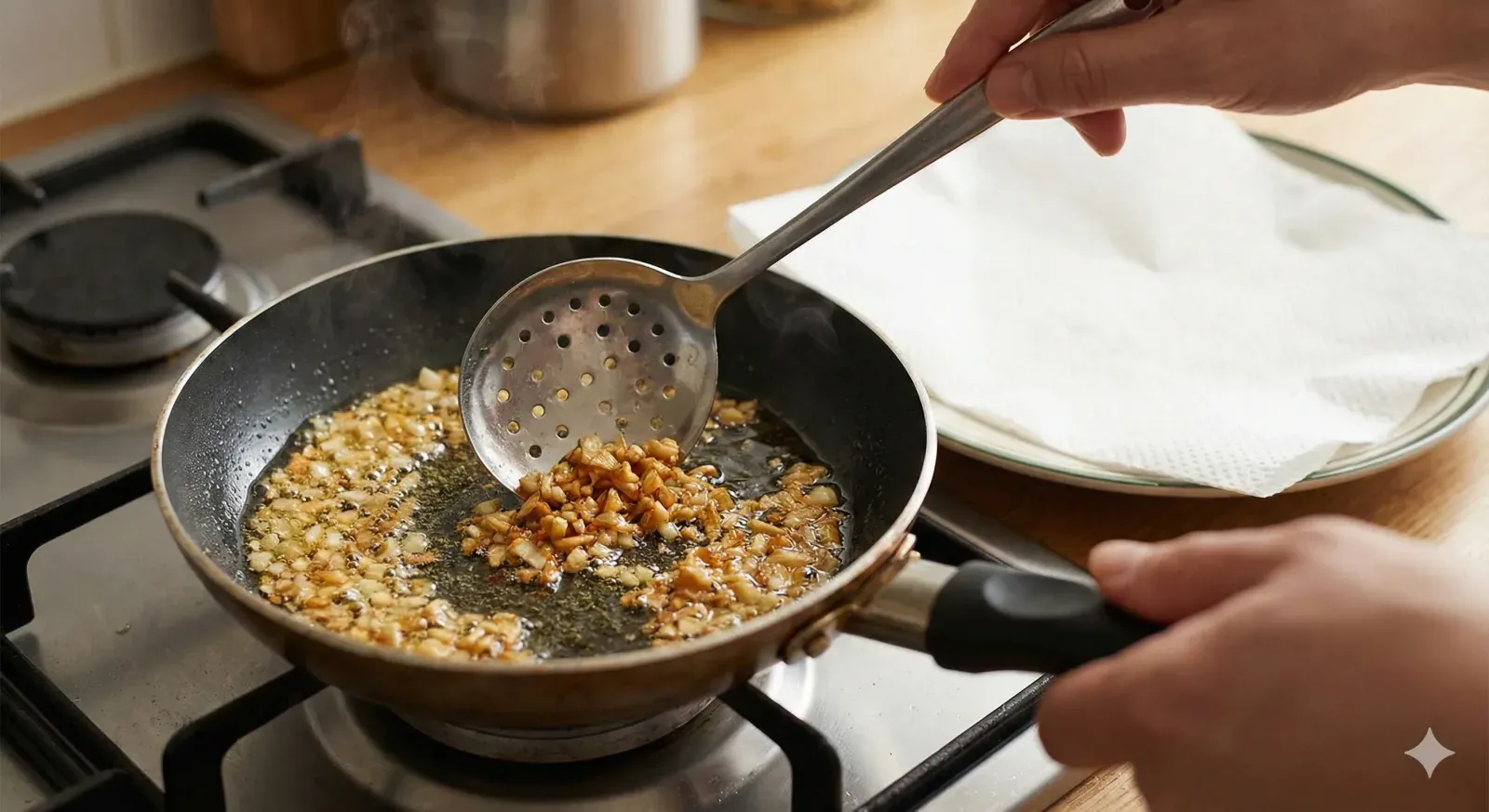
7In a small pan, heat about 1/2 cup of cooking oil over medium heat. When the oil is hot but not smoking, add the remaining minced garlic. Fry, stirring constantly, until the garlic turns golden brown and crispy - about 2-3 minutes. Be careful not to burn it!
Using a slotted spoon, remove the fried garlic to a paper towel-lined plate. Save the garlic oil - you’ll use it to toss with the noodles.
Step 8: Prepare the Remaining Toppings
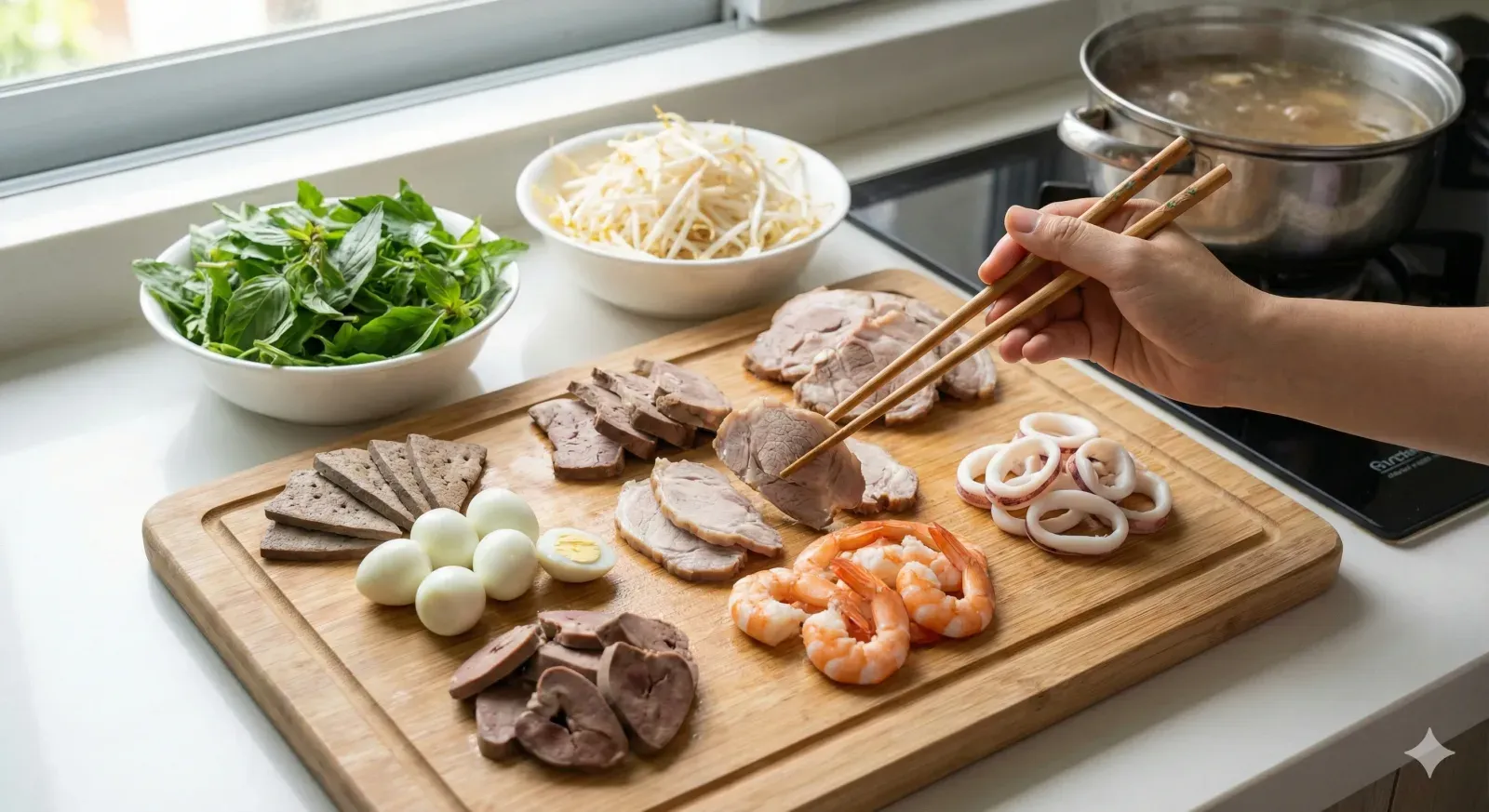
8Peel the quail eggs and peel the shrimp, leaving the tails on if you prefer (they look prettier). Slice the squid into rings about 1/4-inch thick. Slice the cooked pork shoulder, liver, and heart into thin, bite-sized pieces.
Arrange all these proteins on a large plate so they’re ready to assemble quickly.
Step 9: Assemble Your Bowl
9Now comes the fun part - putting it all together!
If using dried noodles, cook them according to package directions, then drain well. If using fresh noodles, blanch them quickly in boiling water for just 10-15 seconds to heat through.
Place the noodles in your serving bowl and drizzle with some of the garlic oil. Toss gently so the noodles are coated with the fragrant oil.
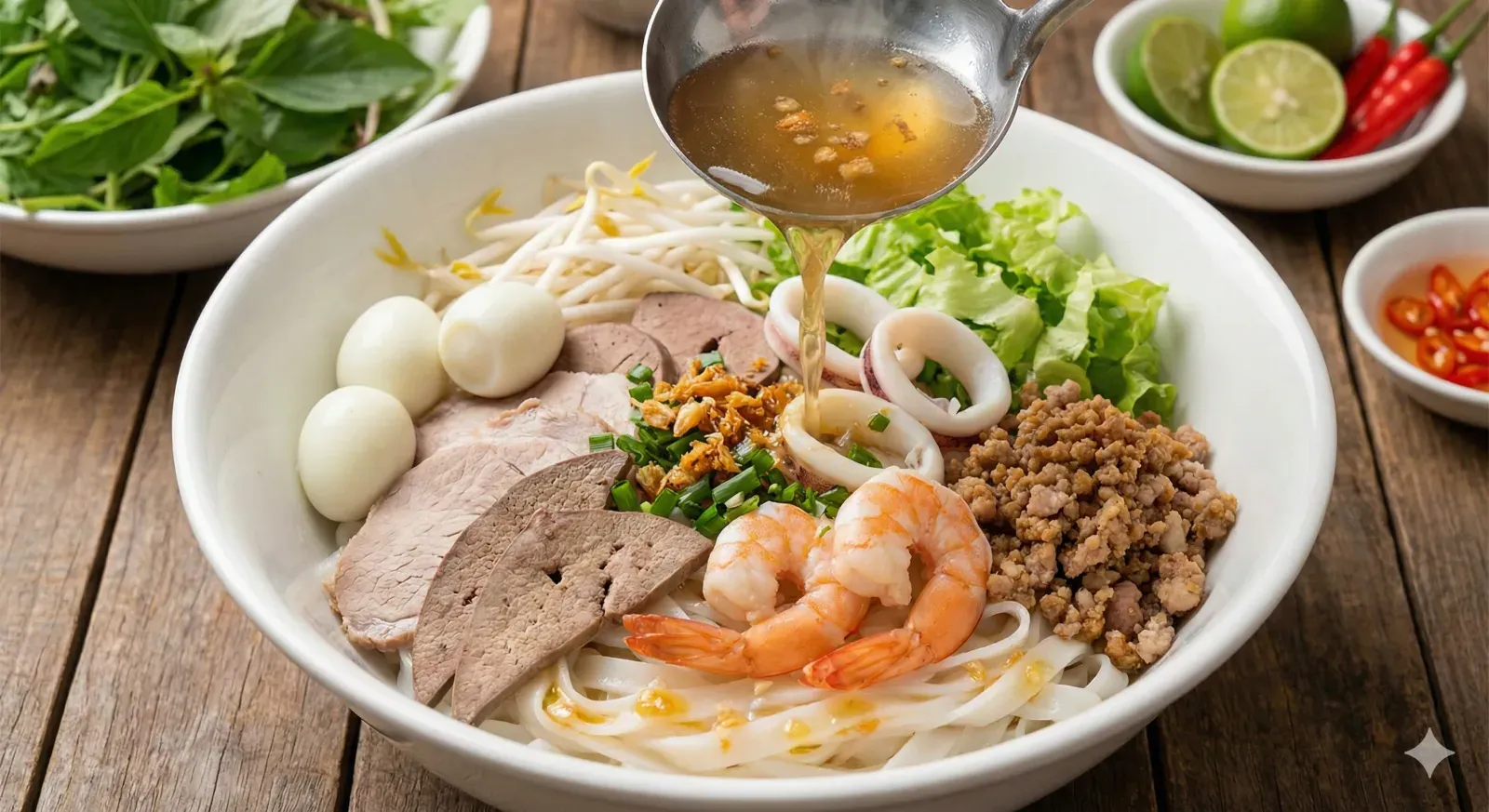
Now artfully arrange your toppings on the noodles: a few slices of pork shoulder, liver, and heart; several shrimp; squid rings; 3-4 quail eggs; and a generous spoonful of the ground pork mixture.
Ladle the hot, fragrant broth over everything until the noodles are just submerged. The broth should be steaming hot!
Top with a generous sprinkle of fried garlic, fresh garlic chives, a handful of bean sprouts, and some torn lettuce leaves.
Step 10: Serve and Enjoy!
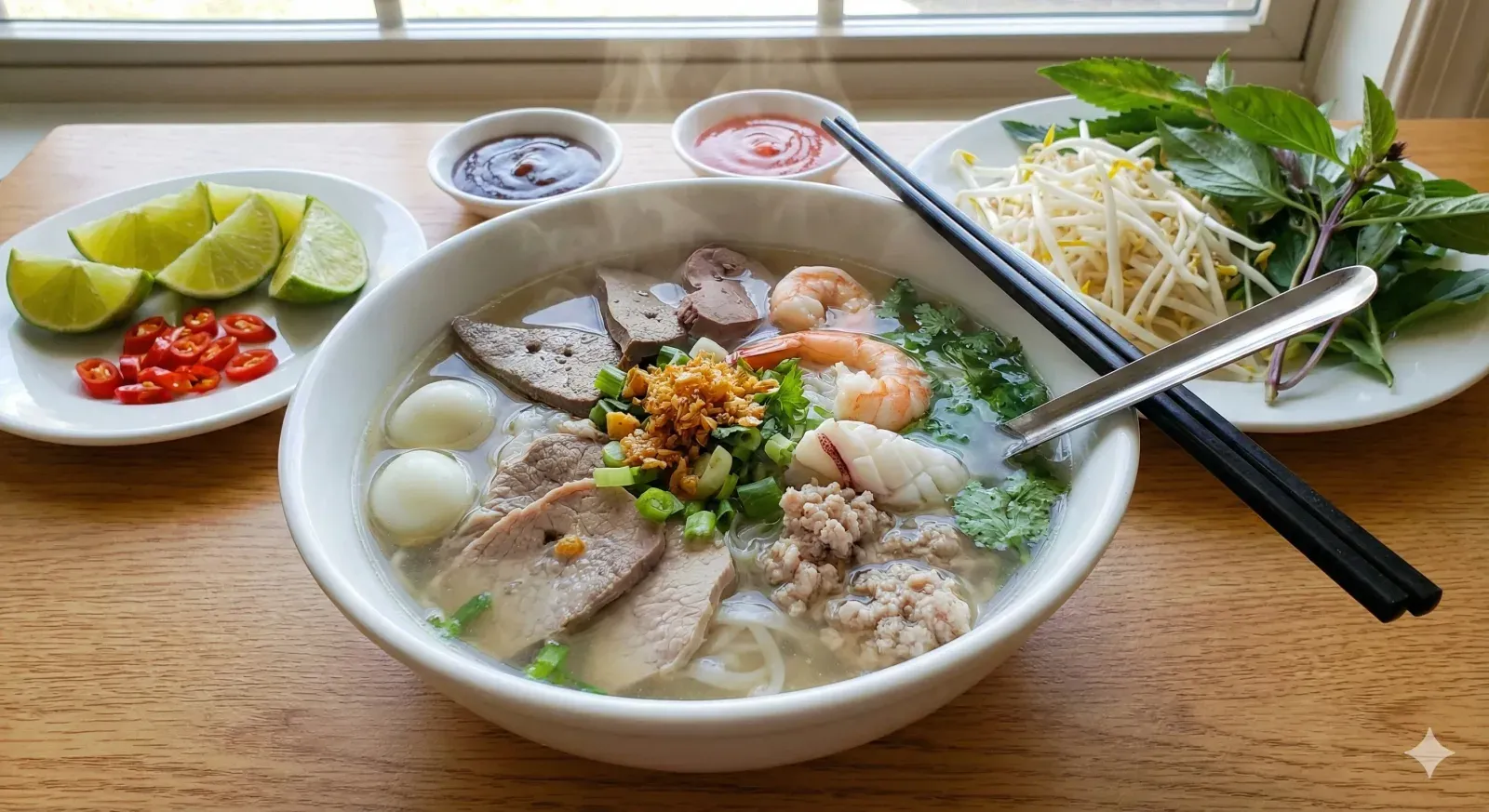
10Serve your Hu Tieu Nam Vang immediately while it’s piping hot. Then set out additional accompaniments on the side:
-
Fresh lime wedges for squeezing
-
Sliced chilies or chili sauce for heat
-
Extra herbs (Thai basil, cilantro, saw-leaf coriander)
-
More bean sprouts
-
Hoisin sauce and sriracha (optional, but not traditional)
The traditional way to eat this soup starts with tasting the broth on its own. First, appreciate that clear, sweet, complex flavor. Then squeeze in some lime and add your preferred level of heat. Finally, mix everything together. Each bite should have a little of everything: chewy noodles, tender pork, bouncy seafood, rich quail egg, and aromatic herbs.
Pro Tips for Perfect Hu Tieu Nam Vang
Use quality dried seafood: The dried squid and shrimp are not optional - they’re what give the broth its distinctive flavor. Buy from a reputable Asian market where the products are fresh and fragrant.
Don’t rush the broth: The longer you simmer (within reason), the better. 2-3 hours is ideal. Low and slow is the way to go.
Keep that broth clear: Skim religiously for the first 30 minutes and maintain a gentle simmer, not a rolling boil.
Season gradually: It’s easier to add more salt or fish sauce than to fix an over-seasoned broth. Taste and adjust as you go.
Prep everything in advance: This dish has many components. Do all your slicing, chopping, and preparation before you start assembling bowls. As a result, serving goes much smoother.
Serve immediately: Like all noodle soups, this one is best enjoyed fresh. The noodles will continue to absorb broth as they sit. Therefore, serve as soon as you assemble.
Variations and Substitutions
Vegetarian version: Use vegetable broth as your base and add shiitake mushrooms, tofu, and extra vegetables. The dried seafood is harder to replace, but dried shiitake and kombu can provide umami depth.
Simplified version: Skip the organ meats if they’re not your preference. Focus on pork shoulder, shrimp, and quail eggs for a more approachable version that’s still delicious.
Spicy variation: Some people love adding sliced fresh chilies or chili oil directly to their broth. While not traditional, it’s a delicious twist!
Dry version (Hủ Tiếu Khô): Instead of serving in broth, drain the noodles well and toss with more garlic oil, soy sauce, and arrange all toppings on top. Serve the broth on the side in a small bowl.
Storing and Reheating
The great news is that this broth actually tastes even better the next day!
Broth: Store in an airtight container in the refrigerator for up to 5 days, or freeze for up to 3 months. The layer of fat that solidifies on top actually helps preserve freshness - just scrape it off before reheating.
Cooked proteins: Store separately in the fridge for 3-4 days. Slice just before serving.
Fresh vegetables and herbs: Best used fresh, but they’ll keep in the crisper drawer for 2-3 days.
Noodles: Fresh noodles should be cooked just before serving. Dried noodles will keep in your pantry for months.
Fried garlic: Store in an airtight container at room temperature for up to a week. It loses crispness in the fridge.
To reheat, simply warm the broth on the stove, quickly blanch fresh noodles, and assemble as usual.
AdvertisementFrequently Asked Questions
Can I make this in a pressure cooker or Instant Pot? Yes! You can make the broth in about 45 minutes under high pressure. However, the traditional method produces a clearer broth.
Where can I buy Hủ Tiếu noodles? Look for them in the refrigerated or dried noodle section of Asian grocery stores. You can also order them online. In a pinch, substitute with flat rice noodles (bánh phở) or even ramen noodles.
Is this dish gluten-free? The noodles are naturally gluten-free (made from rice), but check your seasonings - some brands of fish sauce and chicken bouillon may contain gluten.
Can I skip the organ meats? Absolutely! While traditional, organ meats are optional. Just use more pork shoulder or add extra shrimp and quail eggs.
What’s the difference between Hu Tieu Nam Vang and regular Hủ Tiếu? Hu Tieu Nam Vang specifically refers to the Phnom Penh-style preparation. Notably, it features ground pork, dried seafood in the broth, and specific garnishes. Meanwhile, regional variations of hủ tiếu in Vietnam can have different broths and toppings.
Nutritional Benefits
This soup is not just delicious — it’s also nutritious:
High in protein: With multiple sources including pork, seafood, and eggs, this dish provides excellent protein for muscle building and repair.
Rich in vitamins: The fresh vegetables and herbs contribute vitamins A, C, and K, along with folate and other B vitamins.
Good source of minerals: The broth made from bones provides calcium, phosphorus, and collagen. The seafood adds selenium and zinc.
Balanced meal: With carbohydrates from noodles, protein from meats and seafood, and vitamins from vegetables, it’s a complete meal in one bowl.
Final Thoughts
Hu Tieu Nam Vang is more than just a noodle soup — it’s a celebration of Vietnamese heritage. While it requires time and effort, the reward is a bowl of pure comfort. In fact, it rivals anything you’d find in the best noodle shops of Saigon.
The beauty of this dish lies in the harmony of its components: the crystal-clear yet intensely flavorful broth, the variety of proteins each with its own texture and taste, the fresh crunch of vegetables, and the aromatic punch of fried garlic and herbs. Every element plays its part in creating a symphony of flavors.
Whether you’re cooking for family or friends, this dish is sure to impress. Also, take your time with the broth and don’t skip the dried seafood. Once you master it, you’ll have a skill that brings joy for years. For more ideas, explore our Asian dishes and other Vietnamese recipes.
Have you tried making Hu Tieu Nam Vang at home? Share your experience in the comments below! Also, if you love this recipe, don’t forget to rate and share it.
Happy cooking!
-
-
-