Injera with wat is the cornerstone of Ethiopian cuisine and one of the most distinctive dining experiences in all of Africa. This remarkable dish pairs a tangy, spongy sourdough flatbread made from fermented teff flour with a deeply spiced, slow-simmered stew called wat. Together, they create a meal that is eaten entirely by hand, where the bread serves as your plate, your utensil, and a vital part of every bite. This injera with wat recipe guides you through both components so you can bring this authentic Ethiopian feast to your table at home.
Prep Time: 30 minutes (plus 2-3 days fermentation) | Cook Time: 60 minutes | Servings: 4
Difficulty: Medium | Calories: ~520 per serving
What Makes Injera with Wat Special?
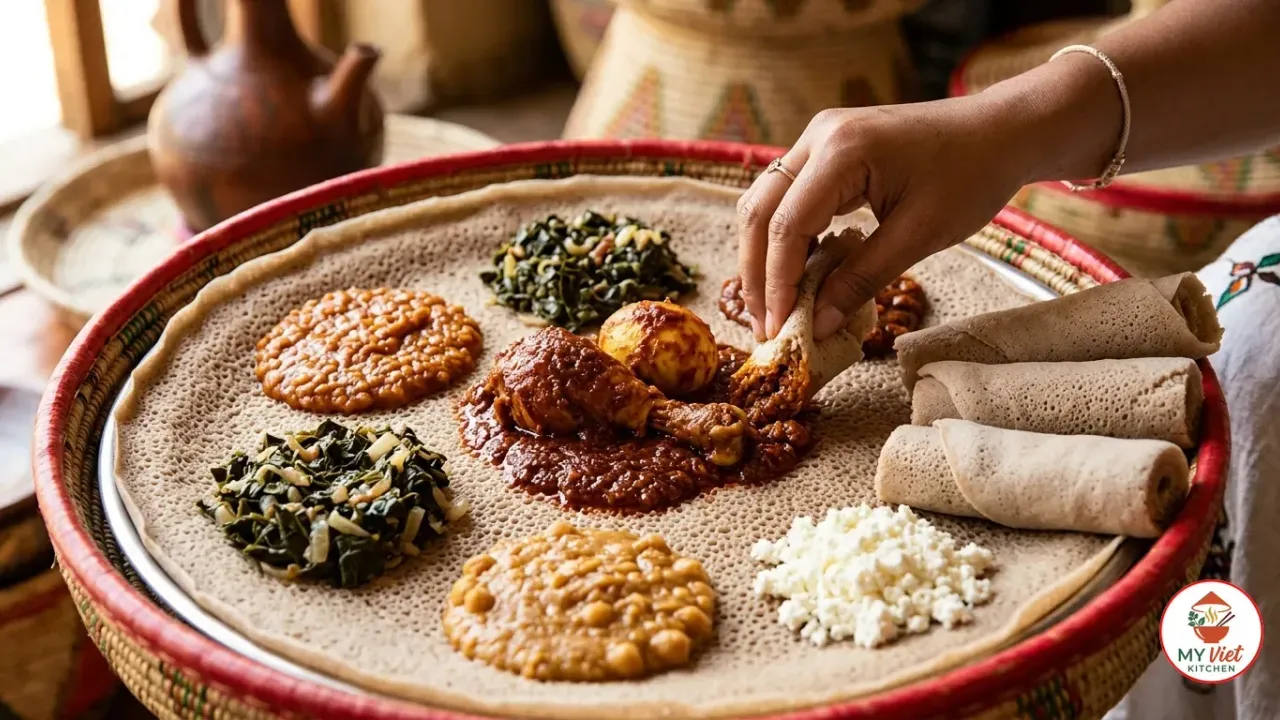
Injera with wat stands apart from nearly every other dish on the planet because of its unique eating ritual. There are no plates or silverware involved. Instead, a large sheet of injera is laid across a shared platter, and various stews and salads are spooned directly onto it. Diners tear off strips of the spongy bread, pinch a morsel of stew, and eat everything together in one layered bite. As a result, every mouthful delivers the tangy sourness of the bread, the fiery warmth of berbere spice, and the rich depth of slow-cooked onions and clarified butter.
The injera itself is a marvel of fermentation science. Teff, one of the smallest grains in the world, is mixed with water and left to ferment naturally for two to three days. During this time, wild yeasts and lactic acid bacteria transform the batter, producing carbon dioxide that creates the bread’s signature “eyes” — thousands of tiny holes covering the surface. These holes are essential because they absorb the rich stew sauces. Additionally, the fermentation gives injera its distinctive sour tang, which is similar to sourdough but lighter and more delicate.
Wat, the stew component, is equally impressive. Ethiopian cooks build wat from a base of onions cooked dry until deeply caramelized. Then they add niter kibbeh (spiced clarified butter) and berbere (a complex blend of dried chilies, warm spices, and aromatics). The chicken simmers gently in this fragrant sauce until tender, and hard-boiled eggs join the pot in the final minutes to soak up the spices. This layered approach to building flavor is what makes Ethiopian cooking so rewarding.
Choosing the Right Teff Flour for Injera
The type of teff flour you use has a direct impact on the taste, color, and texture of your injera. Ethiopian cooks are very particular about this choice, because not all teff flour performs the same way. Here are your best options for making injera with wat at home.
- Dark (brown) teff flour (best choice): This is the most traditional and widely used variety in Ethiopia. It produces a slightly darker injera with a deeper, nuttier flavor and a more robust sour character. Most importantly, dark teff ferments reliably and creates the best spongy texture with well-defined eyes.
- Ivory (white) teff flour: This lighter variety produces a paler injera with a milder, slightly sweeter taste. It is considered more refined in Ethiopia and is often reserved for special occasions. However, it ferments slightly slower than dark teff. Therefore, you may need an extra half day of fermentation time.
- Teff and wheat blend (not recommended for authenticity): Many restaurants outside Ethiopia mix teff with wheat flour to reduce cost and make the batter easier to handle. While this produces acceptable results, the bread loses the pure teff flavor and the gluten-free benefit. If you want authentic injera with wat, use 100 percent teff flour.
Ingredients for Injera with Wat
For the Injera:
- 2 cups teff flour (dark or ivory)
- 3 cups water, at room temperature
- 1/2 teaspoon salt (added before cooking)
For the Doro Wat (Chicken Stew):
- 2 pounds chicken drumsticks and thighs, skin removed
- Juice of 1 lemon (for marinating the chicken)
- 4 large onions, very finely diced
- 3 tablespoons niter kibbeh (Ethiopian spiced clarified butter)
- 3 tablespoons berbere spice blend
- 2 tablespoons tomato paste
- 3 cloves garlic, minced
- 1 tablespoon fresh ginger, grated
- 2 cups warm water
- 4 hard-boiled eggs, peeled and scored with a knife
Spices and Seasonings:
- 1 teaspoon ground cardamom
- 1 teaspoon ground fenugreek
- 1/2 teaspoon ground black pepper
- Salt to taste
Pro tip: The single most important step in making wat is the dry-cooked onion base. Ethiopian cooks place diced onions in a completely dry pot — no oil, no butter, nothing — and cook them for 15 to 20 minutes until they dissolve into a deep golden paste. This technique extracts maximum sweetness and creates the rich, complex foundation that defines authentic Ethiopian stew. Never skip this step or rush it with added fat.
Step-by-Step Instructions
Step 1: Ferment the Injera Batter (2-3 Days Ahead)
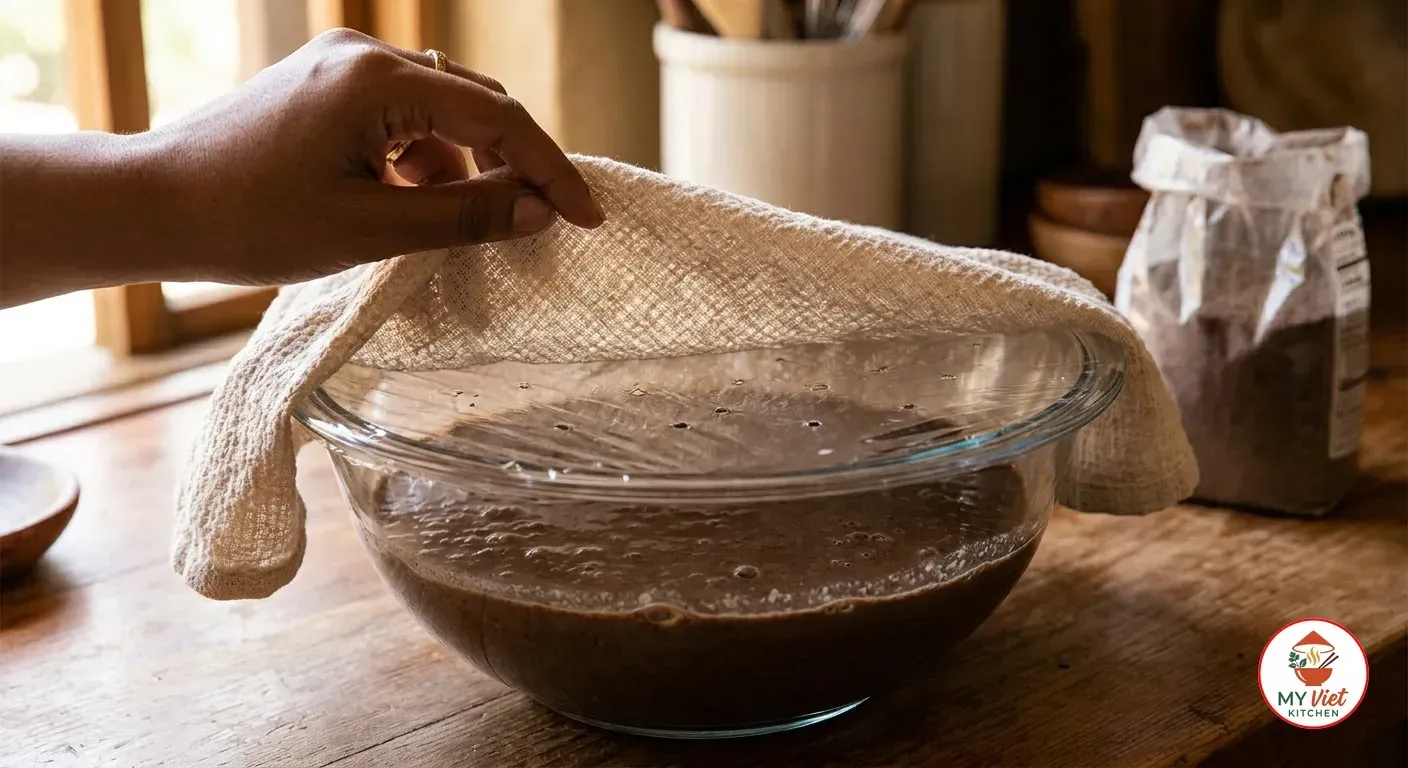
1 Combine 2 cups of teff flour with 3 cups of room-temperature water in a large mixing bowl. Whisk until completely smooth with no lumps remaining. Cover the bowl loosely with a clean kitchen cloth or plastic wrap with a few holes poked in it. Place it in a warm spot in your kitchen, ideally between 70 and 80 degrees Fahrenheit.
Let the batter sit undisturbed for 2 to 3 days. During this time, wild yeasts in the air and on the teff will colonize the batter. You will notice small bubbles forming on the surface by day two. Additionally, a thin layer of dark liquid may appear on top. This is normal and shows that fermentation is progressing well. The batter is ready when it smells pleasantly sour, similar to sourdough starter, and has a pourable consistency.
Step 2: Caramelize the Onions for the Wat
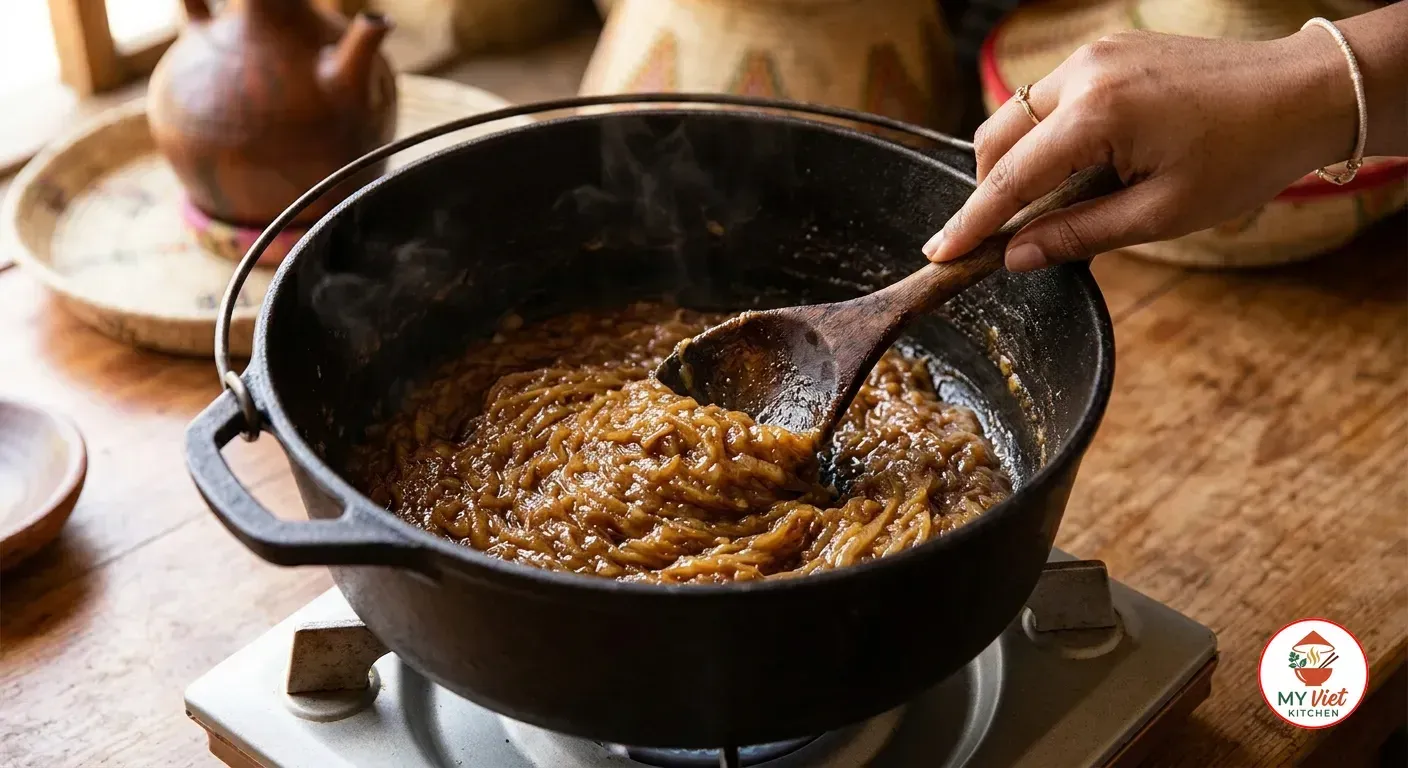
2 Place the 4 finely diced onions in a large, heavy-bottomed pot over medium heat. Do not add any oil, butter, or liquid at this stage. This dry-cooking method is the hallmark of authentic Ethiopian wat preparation. Stir the onions frequently as they begin to soften and release their natural moisture. The onions will steam in their own juices before starting to brown.
Continue cooking for 15 to 20 minutes. The onions will gradually transform from raw white to deep golden-brown. They will reduce to about a quarter of their original volume. This concentrated onion paste provides the sweetness, body, and depth that defines the stew. Be patient, because this step cannot be shortened without sacrificing flavor.
Step 3: Build the Spice Base
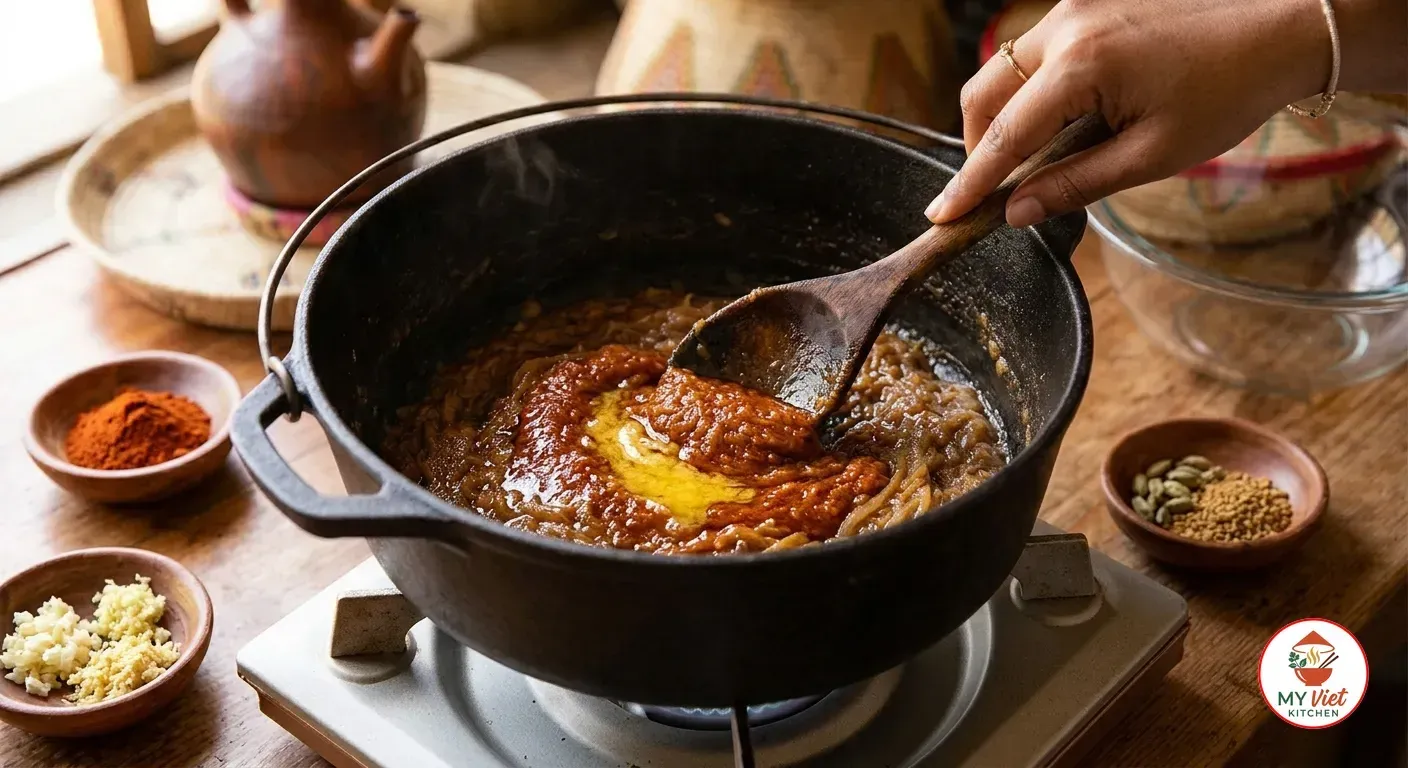
3 Add the niter kibbeh to the caramelized onions and stir until it melts completely. The spiced butter will sizzle and release its fragrant aromatics into the onion base. Next, add the berbere spice blend and tomato paste. Cook for 3 to 4 minutes, stirring constantly, until the mixture turns a deep red-orange color and the raw spice smell transforms into a warm, toasty aroma.
Now add the minced garlic, grated ginger, ground cardamom, ground fenugreek, and black pepper. Stir everything together and cook for another minute. The kitchen should fill with a heady, complex fragrance at this point. Berbere is the soul of Ethiopian cooking, and blooming it properly in the hot butter is essential for developing the full spectrum of flavor.
Step 4: Simmer the Chicken
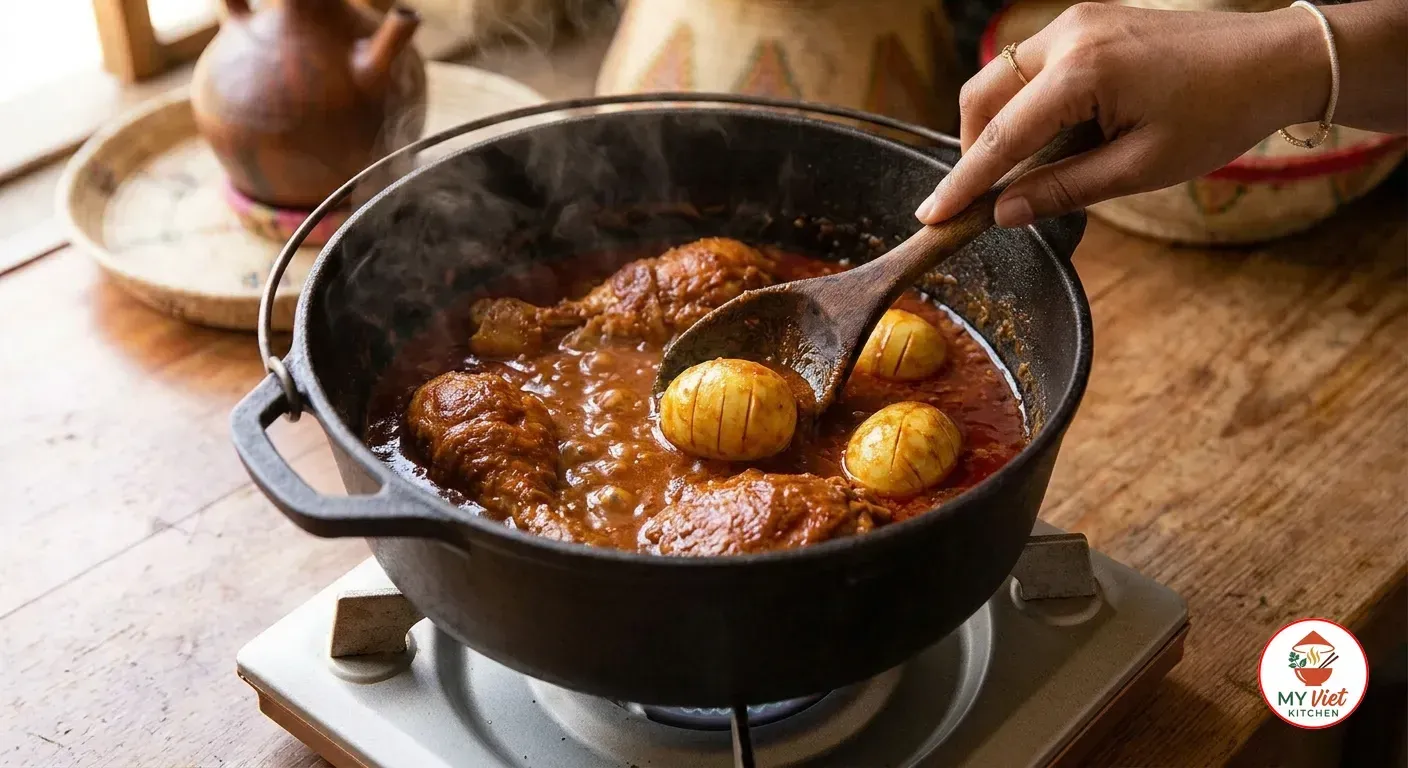
4 While the spice base was cooking, you should have marinated the chicken pieces in lemon juice and a pinch of salt for at least 15 minutes. This step tenderizes the meat and cleans it, which is a traditional Ethiopian preparation. Add the chicken pieces to the pot and stir to coat each piece thoroughly with the spice mixture.
Pour in 2 cups of warm water and stir gently. Bring the stew to a gentle simmer, then reduce the heat to low. Cover and cook for 35 to 40 minutes, stirring occasionally to prevent sticking. The sauce will thicken gradually as the chicken cooks. During the last 10 minutes, add the scored hard-boiled eggs so they absorb the rich, spicy sauce. The scoring allows the berbere flavor to penetrate the egg whites.
Step 5: Cook the Injera
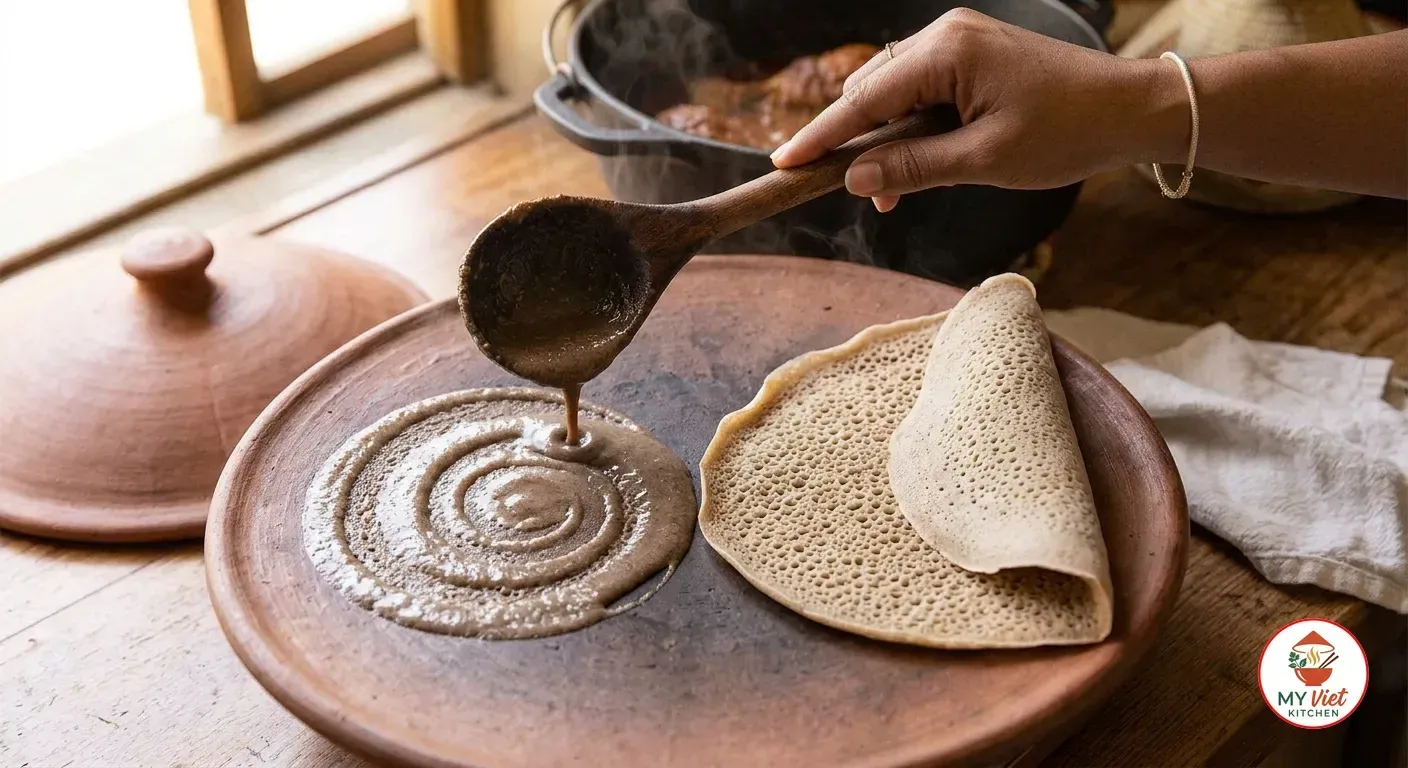
5 When you are ready to cook the injera, stir the fermented batter gently and add the salt. The batter should have the consistency of thin crepe batter. If it is too thick, add a tablespoon of water at a time until it pours easily. Heat a large nonstick pan or a traditional Ethiopian mitad (clay griddle) over medium heat. Do not grease the pan.
Pour the batter in a thin, even layer, starting from the outside edge and spiraling inward. Cover the pan with a lid and cook for 1 to 2 minutes. The injera is done when the surface is completely set, covered in tiny holes (called “eyes”), and the edges begin to pull away from the pan. Do not flip the injera. Remove it carefully with a spatula and lay it on a clean kitchen towel to cool. Repeat with the remaining batter to make 6 to 8 rounds.
Step 6: Assemble and Serve
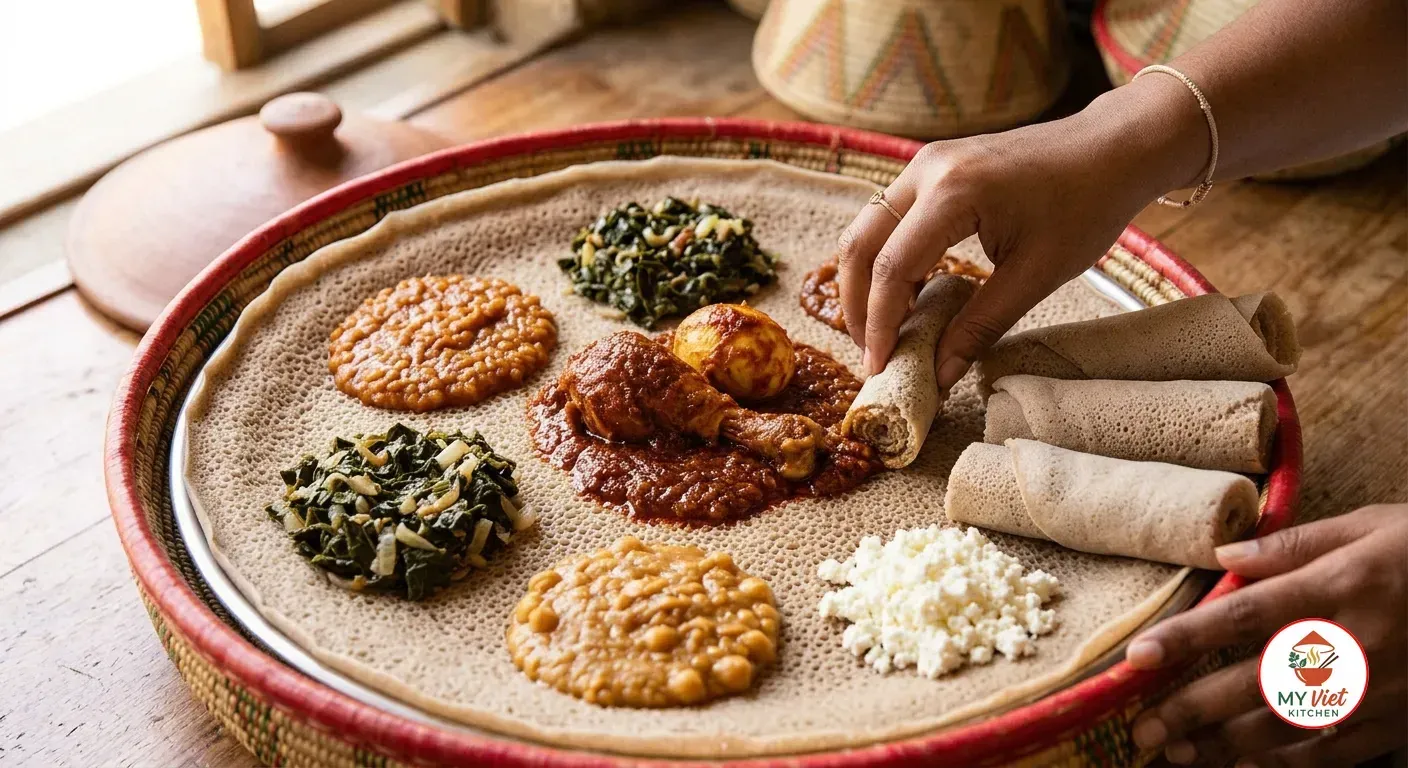
6 Lay one or two large sheets of injera across a round platter or a traditional Ethiopian mesob (woven basket table). Spoon the hot doro wat generously onto the center of the injera. Arrange the spice-stained eggs around the stew. Finally, roll the remaining injera sheets into loose tubes and arrange them around the edge of the platter for tearing and scooping.
Serve the injera with wat immediately while the stew is piping hot. Invite everyone to eat directly from the shared platter using only their right hand, which is the traditional Ethiopian way. Tear off a piece of injera, use it to pinch a portion of stew, and enjoy the combination of tangy bread, rich sauce, and tender chicken in every bite.
Expert Tips for Perfect Injera with Wat
Ferment the Batter Long Enough
Underfermented batter produces flat, bland injera with few holes. The batter needs a minimum of 48 hours at room temperature to develop the right sourness and the carbon dioxide that creates those signature tiny eyes. In cooler climates, you may need up to 4 days. Trust your nose — the batter should smell pleasantly sour but not putrid.
Cook the Onions Dry for the Best Wat
The dry-cooking onion technique is non-negotiable in authentic Ethiopian cuisine. Cooking onions without any oil forces them to release all their moisture first, then caramelize intensely. This produces a concentrated sweetness that you simply cannot achieve by sauteing onions in butter from the start. Most importantly, this step creates the velvety body that makes the sauce cling to the injera.
Use Real Niter Kibbeh for Authentic Flavor
Niter kibbeh is clarified butter infused with spices like fenugreek, cardamom, cinnamon, and turmeric. It adds a fragrant richness that plain ghee cannot replicate. You can make niter kibbeh at home by slowly simmering butter with these spices, then straining out the solids. Alternatively, look for it at Ethiopian grocery stores or online specialty shops.
Injera with Wat: A Regional Comparison
Ethiopia is a vast country with diverse ethnic groups, and each region puts its own stamp on the classic combination of injera with wat. The stew varies significantly depending on the proteins, spices, and cooking methods used in each area. Here is how the major variations compare.
| Wat Variety | Main Protein | Key Characteristics | Spice Level |
|---|---|---|---|
| Doro Wat | Chicken and eggs | National dish, slow-cooked in berbere sauce, served on holidays and special occasions | Medium to hot |
| Siga Wat | Beef or lamb | Hearty and rich, cubed meat simmered until tender, popular for everyday meals | Medium to hot |
| Yebeg Wat | Lamb | Premium cut lamb, slightly sweeter sauce, common at festive gatherings | Medium |
| Misir Wat | Red lentils | Vegan option, creamy texture, lentils dissolve into the sauce, eaten during fasting periods | Mild to medium |
| Shiro Wat | Ground chickpeas | Smooth and creamy, made from roasted chickpea flour, the most popular fasting dish | Mild |
Serving Suggestions
In Ethiopia, injera with wat is always served as part of a communal meal. The injera acts as a shared plate, and multiple stews and side dishes are arranged on top. This tradition is called a “beyaynetu” when it includes a sampling of several different preparations. Here are the ideal accompaniments for your injera with wat spread.
Traditional Accompaniments:
- Gomen (collard greens): Tender greens sauteed with garlic, ginger, and a pinch of cardamom, providing a mild, earthy contrast to the spicy wat.
- Misir wat (red lentil stew): A creamy, spiced lentil dish that adds protein and a different texture to the spread.
- Shiro wat (chickpea stew): A smooth, nutty stew made from ground roasted chickpeas, perfect for balancing the heat of doro wat.
- Azifa (green lentil salad): A refreshing cold salad with mustard, lemon, and green chilies that cools the palate between bites of spicy stew.
- Ayib (Ethiopian cottage cheese): A mild, crumbly fresh cheese that provides a cooling counterpoint to the heat of berbere.
Beverage Pairings:
- Ethiopian coffee (buna): Ethiopia is the birthplace of coffee. A traditional coffee ceremony after the meal is the perfect way to end an Ethiopian feast.
- Tej (honey wine): This traditional Ethiopian mead is sweet, slightly effervescent, and pairs beautifully with the heat of berbere-spiced stews.
- Tella (Ethiopian beer): A home-brewed grain beer with a smoky, slightly sour character that complements the tangy injera.
- Sparkling water with lemon: A simple, refreshing option that cleanses the palate between bites of rich, spicy stew.
Storage and Reheating
Refrigerator: Store leftover injera wrapped in plastic wrap or in a sealed bag for up to 3 days. Keep the wat in an airtight container for up to 4 days. Interestingly, the wat actually tastes better the next day because the spices continue to meld and deepen overnight.
Freezer: Both injera and wat freeze well for up to 2 months. Stack injera sheets with parchment paper between them, then wrap the stack tightly in plastic. Freeze the wat in portion-sized containers. Thaw both in the refrigerator overnight before reheating.
Reheating: Warm the wat gently on the stovetop over low heat, adding a splash of water if the sauce has thickened too much. For the injera, steam it briefly by placing it over a pot of simmering water for 30 seconds. Alternatively, microwave it under a damp paper towel for 15 seconds. Do not reheat injera in a dry pan, because it will become stiff and brittle.
Common Mistakes to Avoid
1. Not Fermenting the Batter Long Enough
This is the most common mistake when making injera at home. If the batter has not fermented for at least 48 hours, the bread will lack the sour tang and spongy texture that define authentic injera. The bubbles that form during fermentation are what create those essential tiny holes. Without them, you get a flat, dense crepe instead of airy, porous bread.
2. Adding Oil to the Onions Too Early
Authentic Ethiopian wat starts with dry-cooked onions. Adding oil or butter at the beginning prevents the intense caramelization that gives the stew its signature depth. Cook the onions completely dry for 15 to 20 minutes first, then add the niter kibbeh. This order matters significantly for the final flavor of the dish.
3. Using Too Much Berbere at Once
Berbere is a potent spice blend, and adding too much at once can overwhelm the dish with heat and bitterness. Start with the recommended 3 tablespoons and taste as the stew simmers. You can always add more later if you prefer a spicier result. Furthermore, different brands of berbere vary in heat level, so adjust according to your specific blend.
4. Making the Injera Too Thick
Injera should be thin enough to be flexible and pliable, but thick enough to hold stew without tearing. Pour the batter in a thin, even layer and resist the temptation to add more. If the injera is too thick, it becomes gummy in the center and does not develop the proper eye pattern. Practice with the first one and adjust the amount of batter for each subsequent round.
Frequently Asked Questions
What is injera made from?
Injera is traditionally made from teff flour, a tiny ancient grain native to the Ethiopian highlands. The flour is mixed with water and fermented for 2 to 3 days, which gives the bread its sour flavor and spongy texture. Some recipes use a blend of teff and wheat flour for a lighter result, but purists insist on 100 percent teff for authentic injera with wat.
What does berbere spice taste like?
Berbere is a warm, complex Ethiopian spice blend. It combines heat from dried chilies with earthiness from fenugreek and cumin, sweetness from cinnamon and cardamom, and depth from cloves and black pepper. The result is deeply aromatic rather than just spicy. Berbere forms the flavor backbone of most Ethiopian stews and is essential for authentic injera with wat.
Can I make injera without teff flour?
Yes, buckwheat flour or a blend of all-purpose flour and whole wheat flour can work as substitutes. However, teff gives injera its authentic sour flavor, dark color, and distinctive nutritional profile. For the closest result to traditional injera, use at least 50 percent teff flour blended with another flour. Teff is now available at many health food stores and online retailers.
How long does injera batter need to ferment?
The batter typically needs 2 to 3 days of fermentation at room temperature. In warmer climates, it may be ready in as little as 24 hours. The batter is ready when it smells pleasantly sour, has visible bubbles on the surface, and has developed a thin layer of liquid on top. In cooler environments, fermentation may take up to 4 days.
What is the difference between doro wat and siga wat?
Doro wat is the iconic Ethiopian chicken stew that is considered the national dish. It features chicken pieces and hard-boiled eggs simmered in a berbere-spiced sauce. Siga wat uses cubed beef or lamb instead. Both stews share the same base of dry-cooked onions, niter kibbeh, and berbere. However, doro wat is traditionally reserved for holidays and celebrations, while siga wat is more common in everyday meals.
Is injera with wat gluten-free?
When the injera is made with 100 percent teff flour, the entire dish is naturally gluten-free. Teff is a gluten-free grain, and the stew components contain no wheat. However, many commercial injera products and restaurant versions blend teff with wheat flour. If you have celiac disease or a gluten sensitivity, always ask about the flour blend or make your injera at home with pure teff.
Variations and Adaptations
Vegetarian Injera Platter (Yetsom Beyaynetu):
Ethiopian cuisine has one of the richest vegetarian traditions in the world, largely because of the Ethiopian Orthodox Church’s extensive fasting calendar. Replace the chicken wat with a spread of misir wat (red lentil stew), shiro wat (chickpea stew), gomen (collard greens), and azifa (lentil salad). This plant-based version is hearty, protein-rich, and deeply satisfying. Moreover, it showcases the incredible variety of Ethiopian cooking beyond meat dishes.
Lamb Wat (Yebeg Wat):
Substitute the chicken with 2 pounds of cubed lamb shoulder for a richer, more robust stew. Lamb pairs exceptionally well with berbere because the spice blend’s warm notes complement the natural richness of the meat. Increase the cooking time to 50 to 60 minutes. In addition, the fat from the lamb melts into the sauce and creates an even silkier texture.
Quick Weeknight Version:
If you do not have time for the full fermentation, you can make a faster injera by adding a tablespoon of apple cider vinegar to the batter just before cooking. This shortcut mimics the sour tang without the wait. Additionally, store-bought injera from Ethiopian grocery stores works well and saves significant preparation time. Focus your effort on making the wat from scratch, since the stew is where most of the flavor comes from.
The Cultural Significance of Injera with Wat
Injera with wat is far more than a meal in Ethiopia. It is a ritual of connection, generosity, and community. The act of eating from a shared platter, tearing bread together, and feeding one another carries deep cultural meaning. In Ethiopian tradition, feeding someone else by hand is called “gursha.” It is a gesture of love, respect, and closeness. The most honored guests always receive the first gursha from the host.
The roots of injera stretch back thousands of years to the Ethiopian highlands, where teff has been cultivated since ancient times. Archaeological evidence suggests that Ethiopians have been fermenting teff into flatbread for at least two thousand years. This makes injera one of the oldest continuously prepared breads in the world. The fermentation technique has been passed down through generations, and Ethiopian families guard their batter starters with the same devotion that French bakers give to their sourdough levains.
Doro wat holds a particularly sacred place in Ethiopian food culture. It is the centerpiece of holiday meals, especially during Timkat (Epiphany) and Genna (Christmas). Families prepare it together, and the process of cooking the stew becomes as meaningful as eating it. In the Ethiopian diaspora, injera with wat serves as a powerful link to homeland and identity. From Washington D.C. to London to Melbourne, Ethiopian restaurants bring communities together around this ancient, nourishing tradition.
Conclusion
Making authentic injera with wat at home is one of the most rewarding culinary projects you can undertake. The process teaches you patience through fermentation, technique through the dry-cooked onion base, and generosity through the communal serving style. Follow this recipe faithfully, and you will produce tangy, spongy injera covered in tiny eyes and a deeply spiced, rich chicken wat that fills your kitchen with an unforgettable aroma. Whether you are hosting a dinner party or exploring Ethiopian cuisine for the first time, this injera with wat recipe delivers an experience that goes far beyond just eating.
Ready to explore more African flavors? Browse our collection of African dishes, including jollof rice, doro wat, and shiro wat. Also, discover our world cuisine collection for more global recipe inspiration.