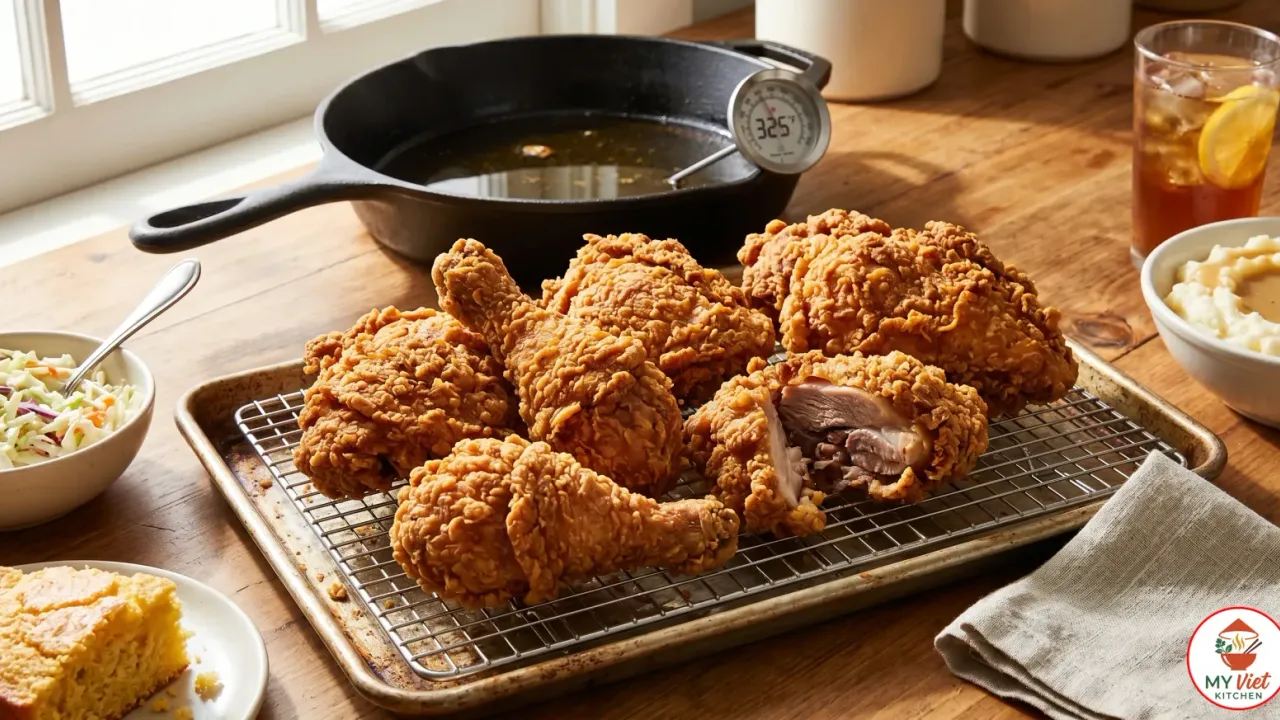
Golden, crunchy, and irresistibly juicy, fried chicken is the crown jewel of Southern American cooking. This classic recipe uses a buttermilk marinade and a double-dredged seasoned flour coating to create the crispiest crust you have ever tasted. Whether you are planning a family dinner or a backyard picnic, this dish delivers comfort in every bite. Once you master this technique, you will never settle for takeout again.
Prep Time: 30 minutes | Cook Time: 30 minutes | Servings: 4
Difficulty: Medium | Calories: ~480 per serving
What Makes Southern Fried Chicken Special?
Southern fried chicken holds a legendary place in American food culture. Its roots trace back to the 18th century, when Scottish settlers brought their tradition of deep-frying chicken to the American South. Over time, African American cooks refined the dish by adding bold spices, buttermilk marinades, and cast iron frying techniques. According to Smithsonian Magazine, this fusion of culinary traditions created one of the most beloved comfort foods in history.
What truly sets Southern fried chicken apart is the contrast between its shatteringly crispy exterior and its tender, juicy meat. The buttermilk marinade works as a tenderizer because its lactic acid gently breaks down the protein fibers. As a result, the chicken stays moist and flavorful even after frying. Furthermore, the seasoned flour coating creates a thick, craggy crust that holds up beautifully on the plate.
Additionally, this recipe uses a double-dredge technique that professional kitchens rely on. By dipping the chicken back into the buttermilk and then into the flour a second time, you build up extra layers of coating. This method produces the kind of ultra-crispy fried chicken that people line up around the block to buy.

Choosing the Right Chicken Cuts
The cut of chicken you choose has a major impact on the final result. Dark meat and white meat behave differently during frying, so it helps to understand your options before heading to the store.
- Thighs and Drumsticks (best choice): Dark meat stays juicy and forgiving even if you fry a minute too long. These cuts have more fat and connective tissue, which keeps them moist and flavorful throughout the cooking process.
- Bone-In Breasts: White meat produces a leaner result, but it dries out faster. If you prefer breast meat, monitor the internal temperature closely and remove the pieces as soon as they hit 165F.
- Whole Cut-Up Chicken: Buying a whole chicken and cutting it into 8 pieces gives you a mix of white and dark meat. This approach is also the most affordable option per pound.
Ingredients for Fried Chicken
Main Ingredients:
- 8 pieces bone-in chicken (thighs and drumsticks)
- Vegetable oil or peanut oil for frying
For the Buttermilk Marinade:
- 2 cups buttermilk
- 1 tablespoon hot sauce
For the Seasoned Flour Coating:
- 2 cups all-purpose flour
- 1/2 cup cornstarch
- 1 tablespoon garlic powder
- 1 tablespoon onion powder
- 1 tablespoon smoked paprika
- 1 teaspoon cayenne pepper
- 1 teaspoon dried thyme
- 1 teaspoon dried oregano
- 2 teaspoons salt
- 1 teaspoon black pepper
Pro tip: Adding cornstarch to the flour creates an even crispier crust. The cornstarch absorbs less oil than flour alone, so your fried chicken stays lighter and crunchier for longer.
Step-by-Step Instructions
Step 1: Marinate the Chicken
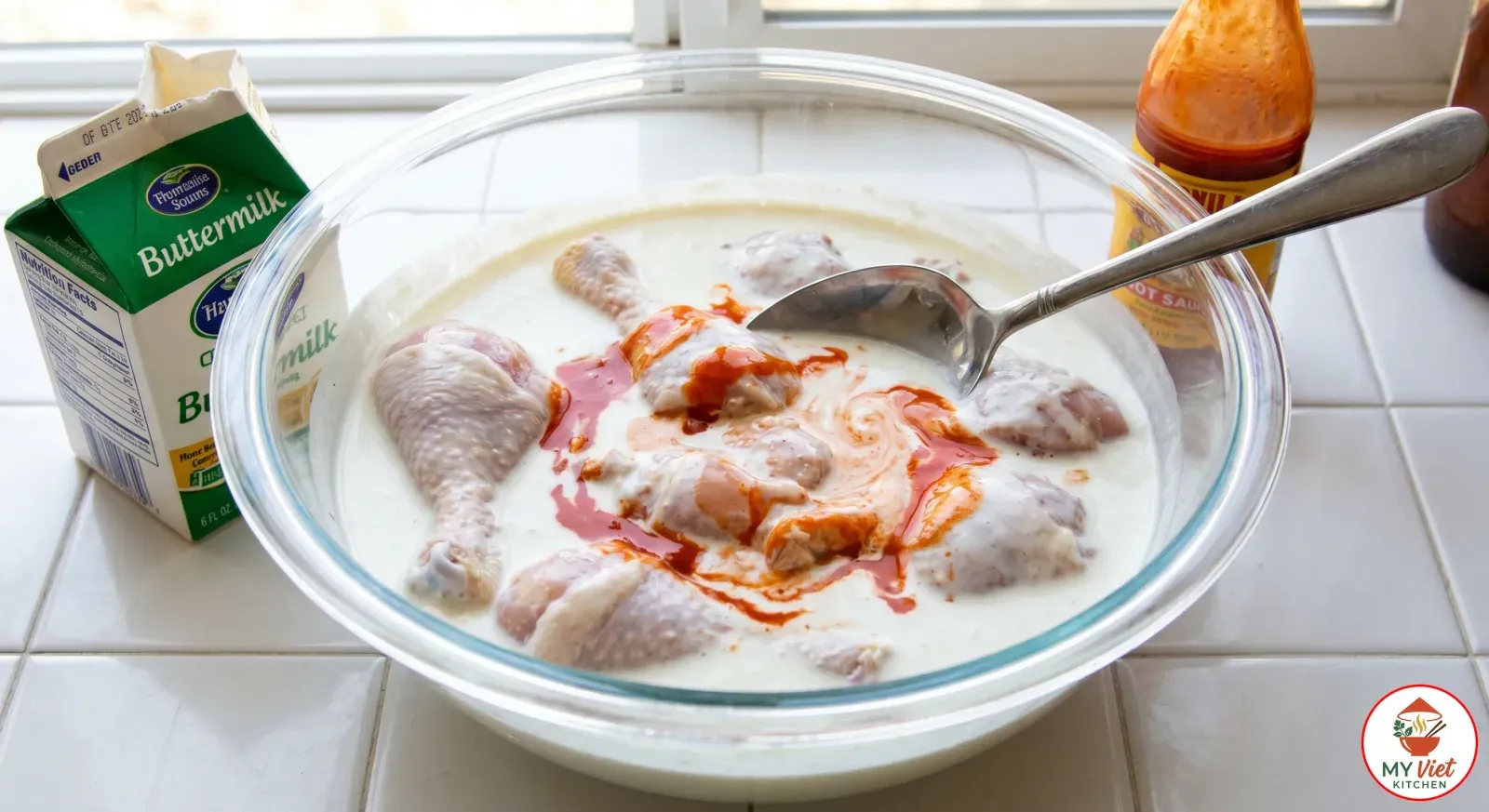
1First, place the chicken pieces in a large bowl or resealable bag. Pour the buttermilk over the chicken and add the hot sauce. Make sure every piece sits fully submerged in the liquid. Then, cover the bowl and refrigerate for at least 4 hours. For the best results, let the chicken marinate overnight. The buttermilk tenderizes the meat while the hot sauce adds a subtle layer of heat that builds during frying.
Step 2: Prepare the Seasoned Flour
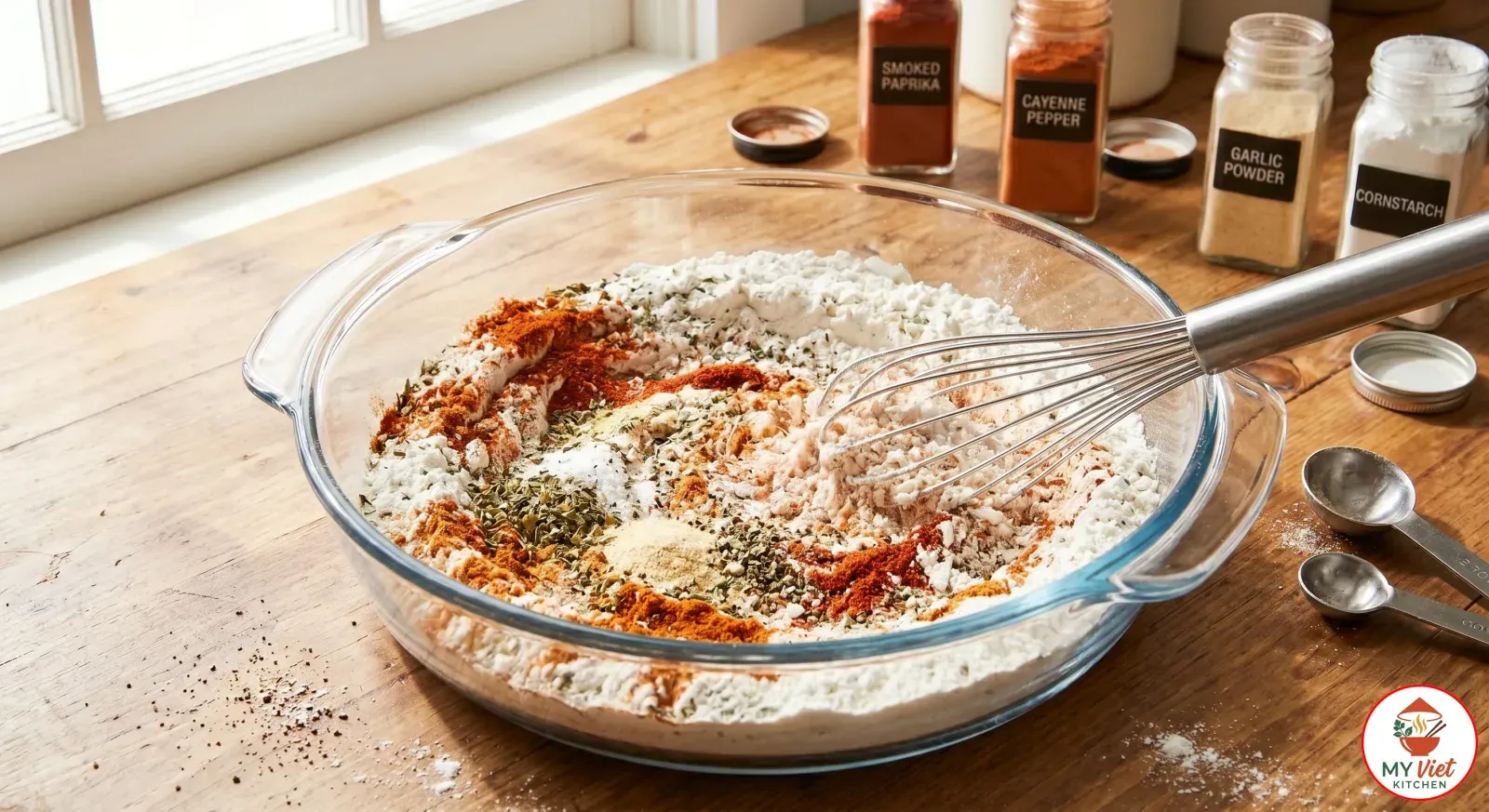
2Next, combine the flour, cornstarch, garlic powder, onion powder, smoked paprika, cayenne pepper, dried thyme, dried oregano, salt, and black pepper in a large shallow dish. Whisk everything together until the spices distribute evenly throughout the flour. This seasoning blend delivers a warm, savory flavor that penetrates the crust during frying. You can also adjust the cayenne to match your preferred heat level.
Step 3: Dredge the Chicken
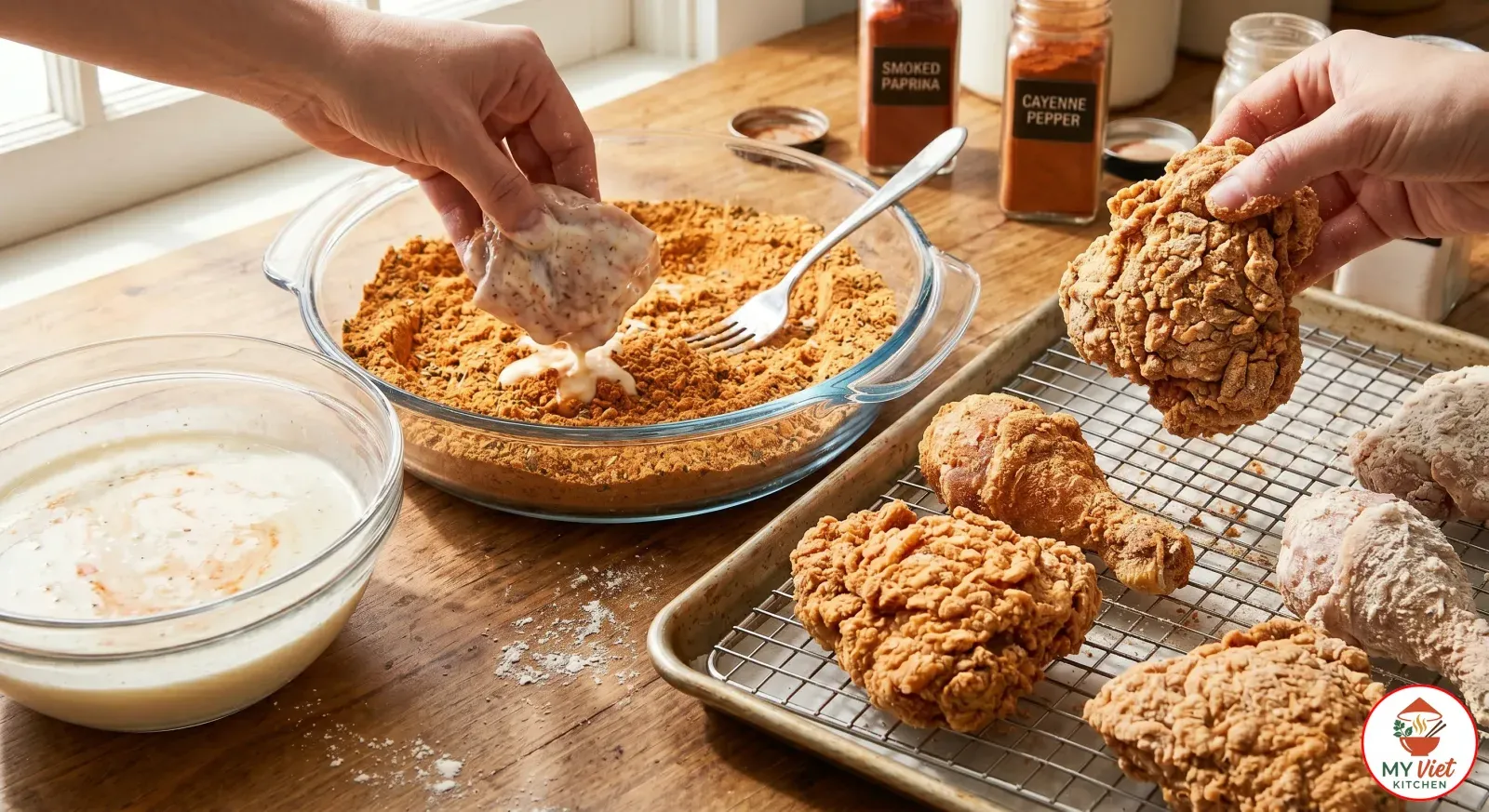
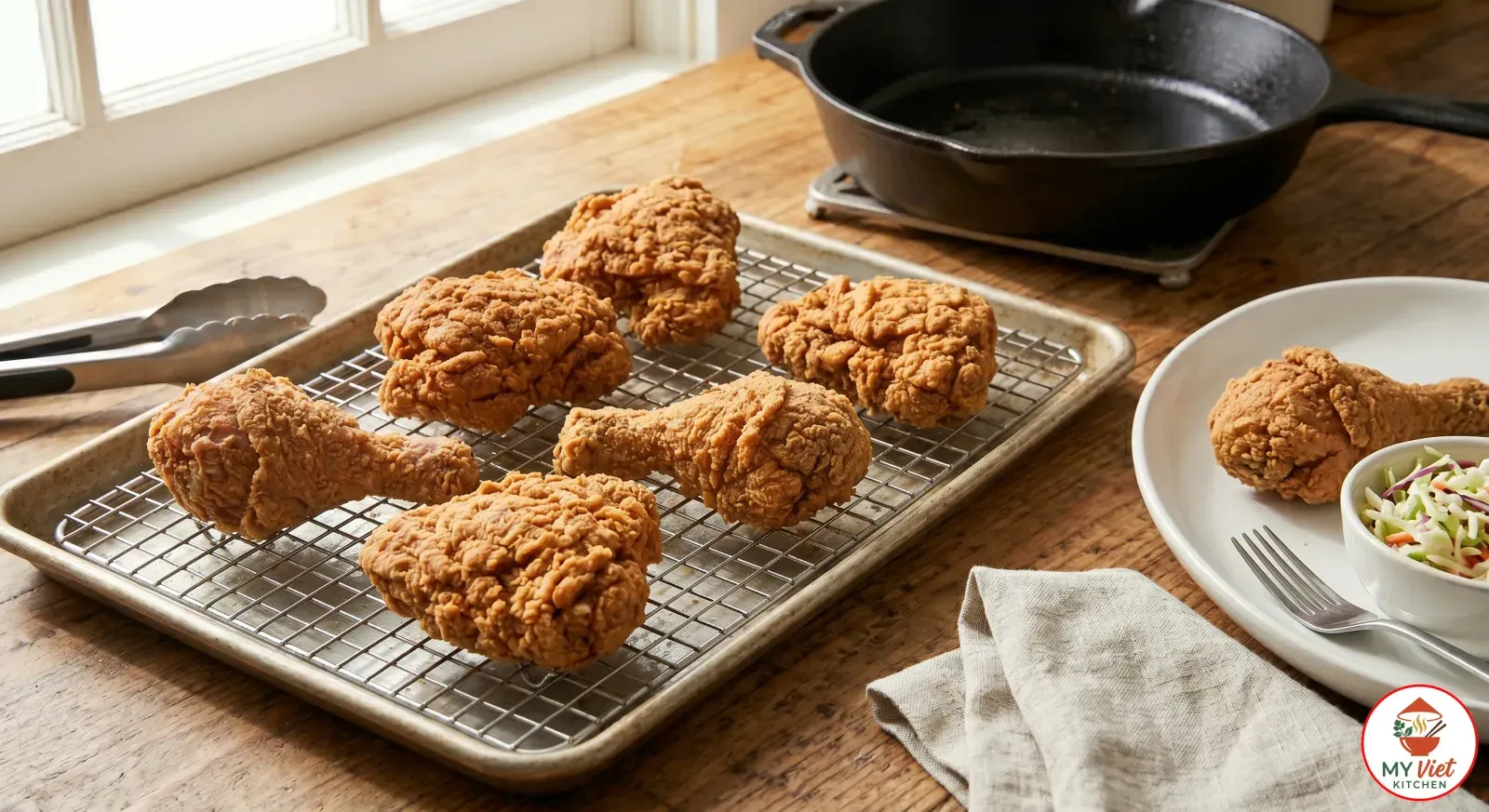
3Now, remove each piece of chicken from the buttermilk and let the excess drip off for a few seconds. Then, press the chicken firmly into the seasoned flour, turning it to coat every surface completely. For an extra crispy crust, dip the floured piece back into the buttermilk and dredge it through the flour a second time. This double-dredge technique creates thick, craggy layers that fry up incredibly crunchy. Set the coated pieces on a wire rack and let them rest for 10 minutes before frying.
Step 4: Fry Until Golden
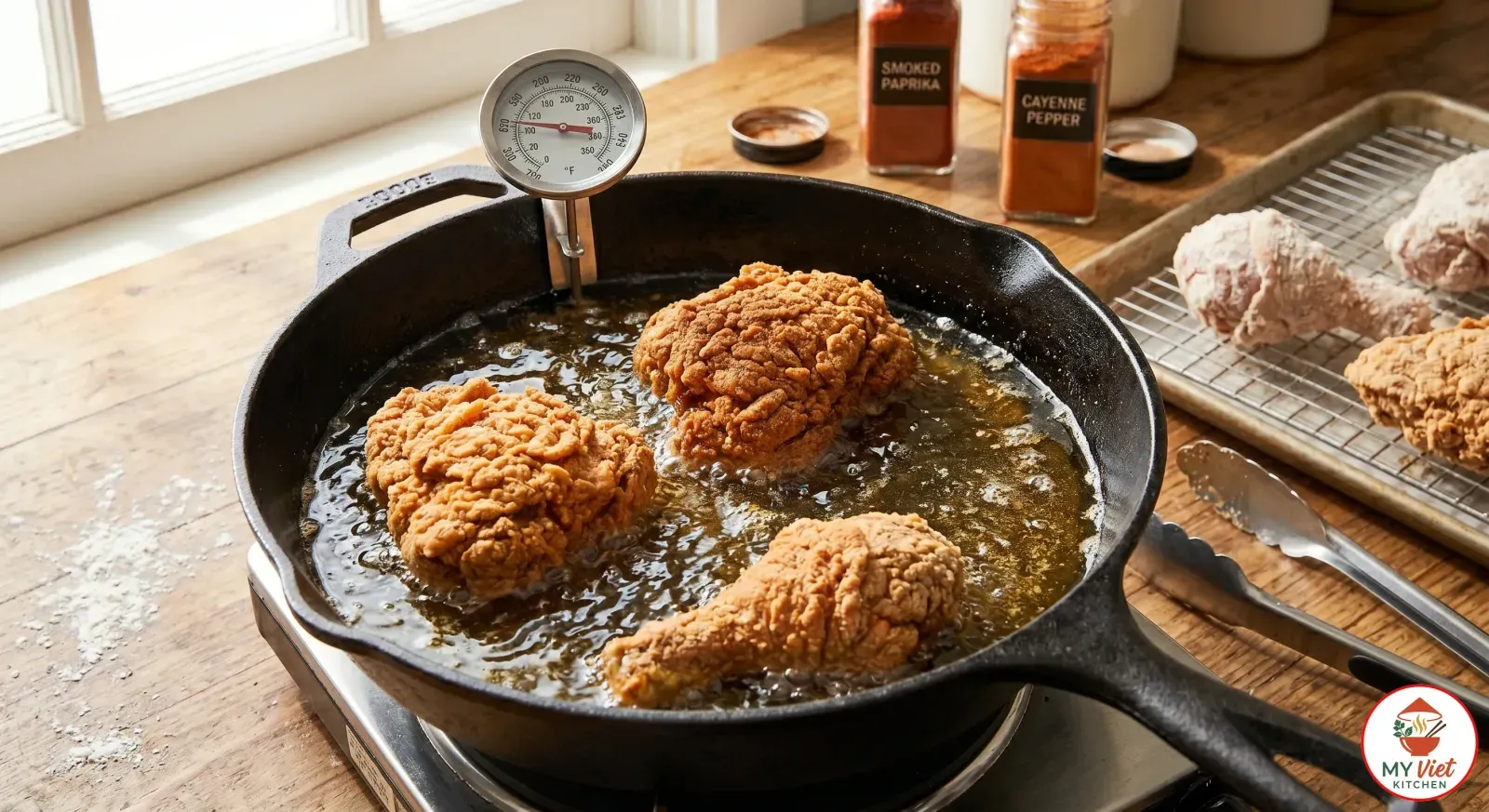
4Meanwhile, fill a large cast iron skillet or Dutch oven with oil to a depth of about 2 inches. Heat the oil to 325F using a deep-fry thermometer. Carefully lower the chicken pieces into the hot oil, working in batches of 3 to 4 pieces at a time. Fry for 7 to 8 minutes per side until the crust turns deep golden brown. Use a probe thermometer to check that the internal temperature reaches 165F. Then, adjust the heat as needed to maintain a steady 325F throughout the cooking process.
Step 5: Rest and Serve
5Finally, transfer each batch of fried chicken to a wire rack set over a baking sheet. Do not place the pieces on paper towels because the trapped steam will soften the bottom crust. Let the chicken rest for 5 minutes so the juices can redistribute throughout the meat. After that, arrange the pieces on a large platter and serve them warm alongside your favorite Southern sides.
Expert Tips for Perfect Fried Chicken
Control Your Oil Temperature
Oil temperature is the single most important factor in frying chicken. If the oil runs too hot, the crust burns before the meat cooks through. If it drops too low, the chicken absorbs excess oil and turns greasy. Therefore, always use a deep-fry thermometer and maintain a steady 325F. When you add cold chicken to the oil, the temperature drops by about 25 degrees, so start slightly higher to compensate.
Let the Coating Set Before Frying
After dredging, let the coated chicken sit on a wire rack for 10 minutes before lowering it into the oil. This resting period allows the flour to hydrate and bond with the buttermilk layer underneath. As a result, the coating sticks firmly to the chicken and does not fall off during frying. Skipping this step often leads to bare patches on the finished pieces.
Southern vs. Korean Fried Chicken
Fried chicken takes many forms around the world, and two of the most popular styles come from the American South and South Korea. While both deliver incredible crunch, they achieve it through very different techniques. Here is a side-by-side comparison.
| Feature | Southern Fried Chicken | Korean Fried Chicken |
|---|---|---|
| Coating | Thick seasoned flour crust | Thin, light batter with cornstarch |
| Frying Method | Single fry at 325F | Double fry for extra crunch |
| Seasoning Style | Spices mixed into the flour | Sauce applied after frying |
| Texture | Thick, craggy, and hearty | Paper-thin, glass-like crunch |
| Serving Style | Served dry with sides | Tossed in sweet or spicy glaze |
Serving Suggestions
Southern fried chicken deserves a spread of classic sides that complement its bold, savory flavor. The rich crunch of the crust pairs best with creamy, tangy, and slightly sweet accompaniments. Here are the most traditional options.
The Perfect Accompaniments:
- Mashed Potatoes and Gravy: Creamy mashed potatoes soak up the chicken drippings and add a comforting, buttery element to the meal.
- Cornbread: Sweet, crumbly cornbread balances the savory spices in the fried chicken crust beautifully.
- Coleslaw: A tangy vinegar slaw cuts through the richness of the fried coating and refreshes the palate between bites.
- Mac and Cheese: This creamy, cheesy classic rounds out the plate and makes the meal feel truly indulgent.
- Collard Greens: Slow-cooked greens with a touch of vinegar provide a savory, slightly bitter contrast that elevates every bite of chicken.
Beverage Pairings:
- Sweet Tea: The quintessential Southern drink cools the palate and balances the savory spices with its gentle sweetness.
- Cold Lager: A crisp, light beer complements the rich crust without overpowering the chicken’s flavor.
- Lemonade: Fresh lemonade provides a bright, citrusy contrast that pairs naturally with fried foods.
Storage and Reheating
Refrigerator: Store leftover fried chicken in an airtight container for up to 3 days. The crust softens in the fridge, but you can restore it easily with the reheating method below.
Freezer: Freeze cooled fried chicken in a single layer on a sheet pan first, then transfer the pieces to freezer bags. They keep well for up to 3 months. Thaw overnight in the refrigerator before reheating.
Reheating: For the crispiest results, place the chicken on a wire rack in a 375F oven for 12 to 15 minutes. This method re-crisps the crust without drying out the meat. Avoid microwaving because it turns the coating soggy and chewy.
Common Mistakes to Avoid
1. Frying at the Wrong Temperature
Many home cooks heat their oil too high because they want a faster cook time. However, fried chicken needs a moderate 325F to cook through without burning the crust. Use a thermometer and check the temperature frequently, especially when adding new batches. Patience at this stage makes all the difference between a golden masterpiece and a charred disappointment.
2. Skipping the Buttermilk Soak
Buttermilk is not optional in this recipe. It serves two essential purposes: tenderizing the meat and helping the flour coating stick. Without it, the crust tends to slide off during frying, and the meat turns out dry and tough. Therefore, always plan ahead and allow at least 4 hours for the marinade to work its magic.
3. Overcrowding the Pan
Adding too many pieces to the oil at once drops the temperature dramatically. As a result, the chicken absorbs more oil and the crust turns greasy instead of crispy. Fry in small batches of 3 to 4 pieces and let the oil return to 325F between each round. This approach takes more time, but it guarantees consistently crispy results.
Frequently Asked Questions
What temperature should you fry chicken at?
Fry chicken at 325F for the best results. This moderate temperature allows the thick pieces to cook through evenly while the crust turns deep golden brown. If you fry at a higher temperature, the outside burns before the inside finishes cooking. Always use a deep-fry thermometer to monitor the oil throughout the process.
How long do you soak chicken in buttermilk?
Soak the chicken in buttermilk for at least 4 hours, although overnight delivers the best results. The lactic acid in the buttermilk breaks down tough protein fibers, which makes the meat exceptionally tender and juicy. Additionally, the slightly rough surface left by the acid helps the flour coating grip the chicken firmly.
Can you use an air fryer for fried chicken?
Yes, you can adapt this recipe for an air fryer. Dredge the chicken as directed, then spray each piece generously with cooking oil. Air fry at 375F for 20 to 25 minutes, flipping the pieces halfway through. The results are lighter and use far less oil, although the crust will not be quite as thick as the traditional version.
Why is my fried chicken not crispy?
Several factors can cause a soft crust. The most common reasons include oil that is not hot enough, overcrowding the pan, and skipping the double dredge. Moreover, placing freshly fried chicken on paper towels instead of a wire rack traps steam and softens the bottom. Follow the techniques in this recipe carefully, and you will achieve a perfectly crispy result every time.
What oil is best for frying chicken?
Peanut oil is the top choice because it has a high smoke point of 450F and a clean, neutral flavor. Vegetable oil and canola oil also work well for frying. Avoid olive oil because it breaks down at high temperatures and can give the chicken a bitter taste. Regardless of your choice, make sure you use enough oil to submerge the chicken halfway.
Variations and Adaptations
Nashville Hot Chicken:
After frying, brush each piece with a fiery paste made from cayenne pepper, brown sugar, paprika, and chicken drippings. Nashville hot chicken delivers an intense, slow-building heat that tingles long after each bite. Serve it on white bread with pickles for the most authentic experience.
Honey Butter Fried Chicken:
Drizzle the hot fried chicken with a mixture of melted butter and warm honey for a sweet and savory twist. The honey creates a beautiful glaze that contrasts with the salty, spiced crust. This version is especially popular at brunch alongside waffles.
Gluten-Free Fried Chicken:
Replace the all-purpose flour with a blend of rice flour and cornstarch in equal parts. The rice flour produces a light, crispy coating that fries up golden and crunchy. You can find more recipe adaptations and inspiration on My Viet Kitchen.
The Cultural Significance of Fried Chicken
Fried chicken carries deep cultural meaning across the American South and far beyond. The dish represents a rich fusion of Scottish and West African cooking traditions that came together during the colonial era. Enslaved African Americans transformed simple fried chicken into an art form by introducing bold seasonings and perfecting cast iron techniques. Over centuries, this humble dish became a centerpiece of Sunday suppers, church gatherings, and family reunions.
In particular, fried chicken played an important role in African American entrepreneurship during the Jim Crow era. Many Black women built successful businesses by selling their legendary fried chicken at train stations and along travel routes. Today, the dish continues to bring people together across every background and region. From roadside stands in Mississippi to upscale restaurants in New York City, fried chicken remains one of the most unifying foods in American culture.
Conclusion
Making crispy, juicy fried chicken at home is a rewarding skill that every cook should master. The buttermilk marinade guarantees tender meat, while the double-dredge technique builds up a thick, crunchy crust. Remember these three essential tips: maintain your oil at 325F, soak the chicken for at least 4 hours, and always fry in small batches.
Now it is your turn to heat up the skillet and create your own batch of golden perfection. For more classic American recipes, explore our full collection at My Viet Kitchen. If you enjoy Southern cooking, you might also love our homemade cornbread or our BBQ ribs recipe for your next cookout.