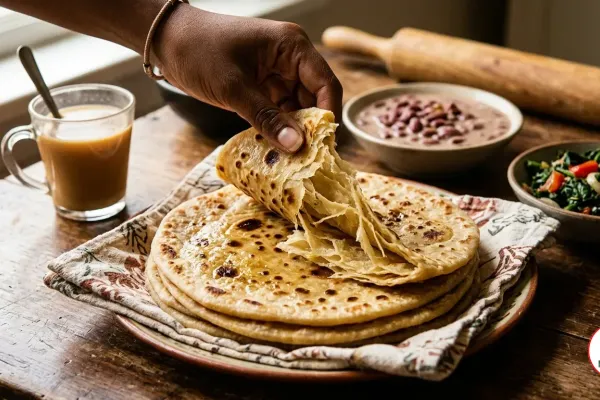
Egusi soup is the crown jewel of Nigerian cooking, a thick and luxurious stew built on ground melon seeds that delivers deep, nutty richness in every spoonful. Across Nigeria, from Lagos to Enugu to Kano, this dish holds a place of honor at family tables, celebrations, and everyday meals alike. This authentic egusi soup recipe walks you through every step of making this beloved Nigerian classic at home, from cooking the assorted meats to folding in the fresh greens at the very end.
Prep Time: 30 minutes | Cook Time: 50 minutes | Servings: 6
Difficulty: Medium | Calories: ~480 per serving
What Makes This Egusi Soup Recipe Special?
Egusi soup stands apart from every other West African soup because of its unique base. While most soups rely on okra, ogbono, or flour, this egusi soup recipe uses ground melon seeds instead. They dissolve into the palm oil to create a thick, creamy texture with no starch at all. The result is a soup that coats a spoon and clings to every piece of pounded yam or fufu you dip into it.
The flavor profile of egusi soup is deep and complex. Palm oil adds warm, earthy sweetness. Scotch bonnet peppers bring bold heat. Ground crayfish layers in briny umami that gives the soup its depth. Then the egusi melon seeds tie it all together with a mild nuttiness. Additionally, the meats and smoked fish build a rich stock that forms the backbone of the dish.
What makes this egusi soup recipe so reliable is the frying method. You cook the tomato and pepper base until the oil separates. This builds a deep flavor base before the egusi even hits the pot. Furthermore, low heat lets the melon seeds hydrate slowly and release their oils. The soup thickens bit by bit without forming lumps. This technique gives you a smooth, velvety result every time.

Choosing the Right Egusi (Melon Seeds)
The quality of your melon seeds shapes the flavor and feel of the final soup. Not all egusi is equal. Here is how to pick the best option for this egusi soup recipe.
- Whole egusi seeds (best choice): Buying whole seeds and grinding them yourself at home produces the freshest flavor. Whole seeds stay fresh longer because the oils inside remain protected by the shell. Grind them in a blender or spice grinder just before cooking for the brightest, nuttiest taste.
- Pre-ground egusi: Available at African grocery stores, pre-ground egusi is convenient and saves time. However, the exposed oils can turn rancid if the package has been open for too long. Always check for a fresh, pleasant smell before using. Store opened packages in the freezer to extend shelf life.
- Pumpkin seeds (substitute): If you cannot find egusi, shelled raw pumpkin seeds work as a reasonable substitute. Grind them to a coarse powder and use the same quantity. The flavor will be milder than true egusi, but the thickening effect and overall texture will be similar enough for a satisfying result.
Ingredients for Egusi Soup
Main Ingredients:
- 2 cups ground egusi (melon seeds)
- 1/2 cup palm oil
- 3 cups meat stock from boiling the assorted meats
- 3 tablespoons ground crayfish
- 2 seasoning cubes (Maggi or Knorr)
- Salt to taste
Proteins:
- 1.5 pounds assorted meats (beef, tripe, cow foot, or goat meat)
- 1/2 pound smoked fish or stockfish, cleaned and deboned
- 1/4 cup dried prawns (optional, for extra flavor)
Pepper and Tomato Base:
- 3 large tomatoes, blended smooth
- 2 medium red onions, chopped (one for boiling meat, one for the base)
- 2 scotch bonnet peppers, blended (adjust to your heat preference)
Leafy Greens:
- 4 cups fresh spinach, roughly chopped (or use bitter leaf, ugu, or waterleaf)
Pro tip: The ground crayfish is the secret weapon of this egusi soup recipe. It adds a deep, savory umami flavor that you cannot replicate with any other ingredient. Look for it at African or Asian grocery stores. If unavailable, dried shrimp ground to a fine powder is the closest substitute.
Step-by-Step Instructions
Step 1: Cook the Assorted Meats
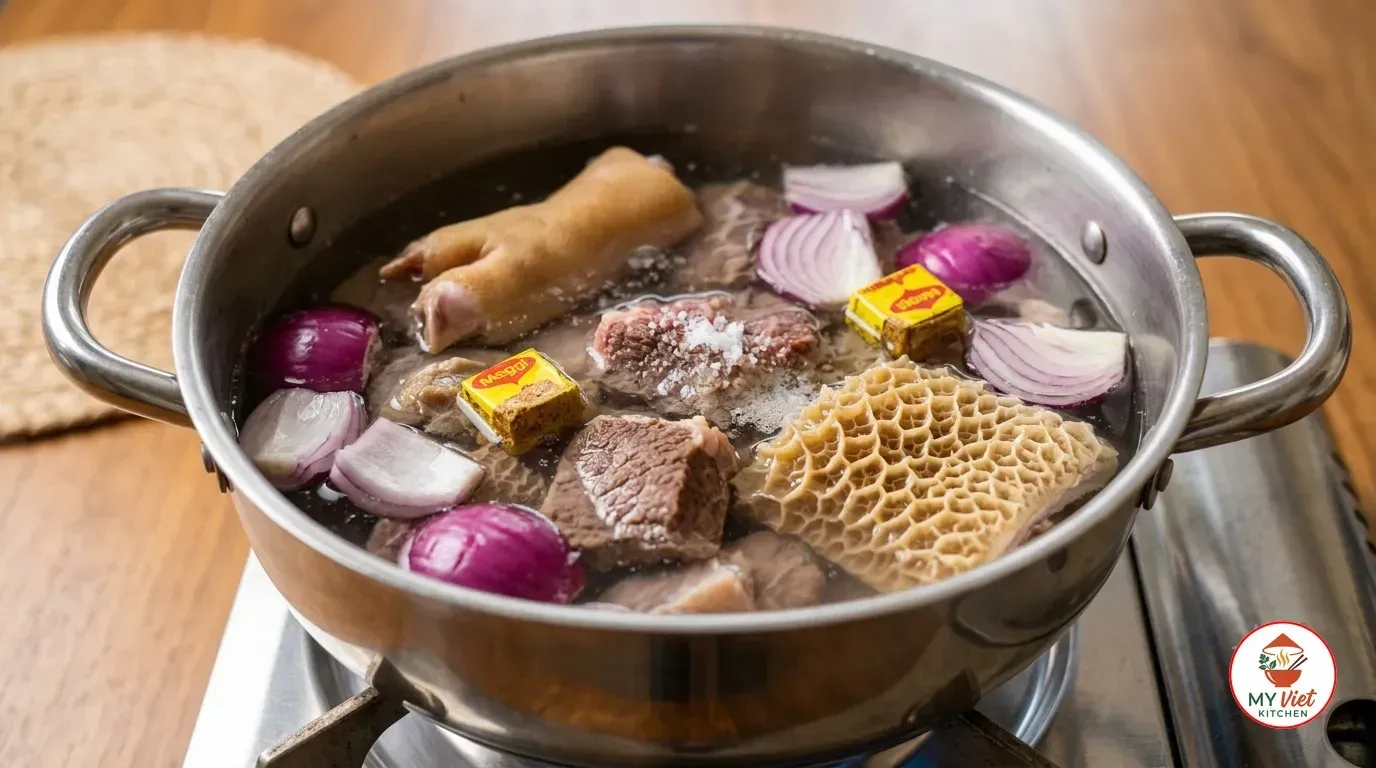
1 Wash the assorted meats thoroughly under cold running water. Place them in a large pot and add one chopped onion, one seasoning cube, and salt. Pour in enough water to cover the meat by about two inches. Bring to a boil over high heat, then reduce to medium and cook for 40 to 50 minutes until the meats are fork-tender.
Skim any foam that rises to the surface during boiling, because this keeps the stock clear and clean-tasting. Once the meats are tender, remove them with a slotted spoon and set aside. Strain and reserve the meat stock. You should have about 3 cups of rich, flavorful stock. This liquid forms the foundation of your egusi soup recipe and carries all the savory depth from the slow-cooked meats.
Step 2: Prepare the Egusi Paste
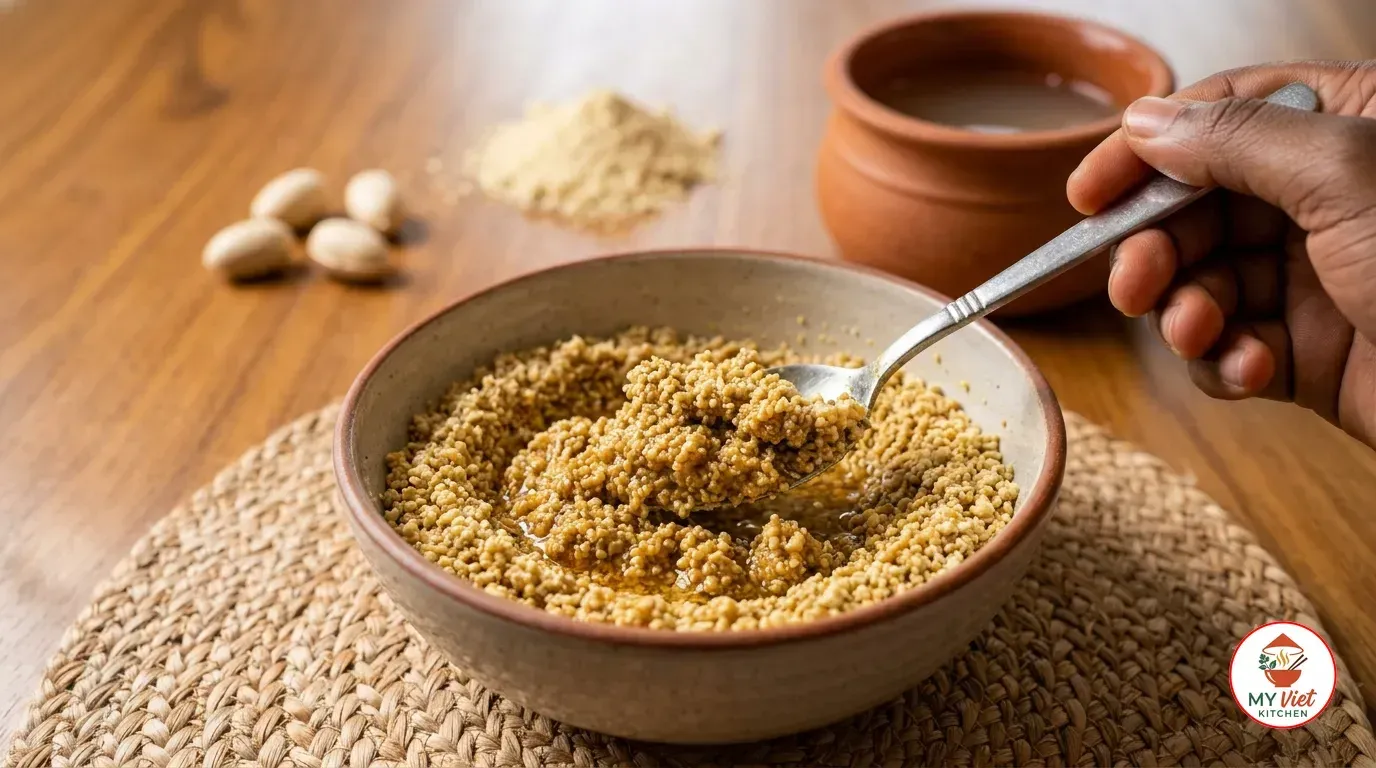
2 Pour the ground egusi into a bowl and add about 1/4 cup of warm water. Stir with a fork until the mixture forms a thick, moldable paste. Some Nigerian cooks also add a tablespoon of finely chopped onion to the paste for extra flavor. The paste should hold together when pressed but not be runny or soupy.
There are two main ways to add egusi to the soup. You can drop spoonfuls of the paste into the pot to create rustic lumps, which is the Igbo style. Alternatively, you can stir the paste directly into the sauce for a smoother, more uniform consistency, which is common in Yoruba kitchens. Both methods are authentic, so choose the style you prefer. Set the prepared paste aside while you build the soup base.
Step 3: Build the Soup Base
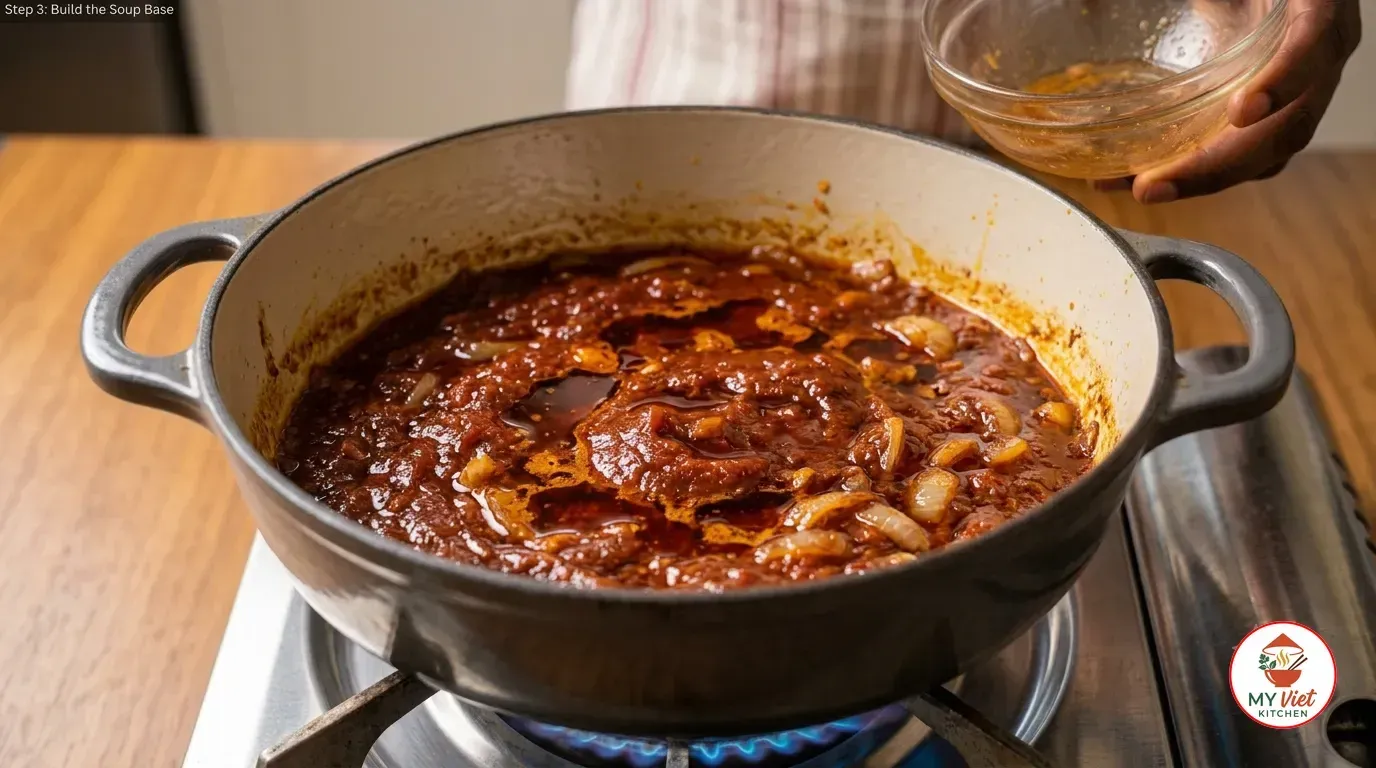
3 Heat the palm oil in a large, heavy-bottomed pot over medium heat. Allow the oil to heat for about 2 minutes until it becomes clear and shimmers slightly. If the oil smokes heavily, it is too hot, so reduce the heat immediately. Add the remaining chopped onion and saute for 3 to 4 minutes until soft and translucent.
Pour in the blended tomatoes and scotch bonnet peppers. Stir well and cook over medium heat for 15 to 20 minutes. You are waiting for a specific visual cue. The mixture is ready when the palm oil begins to float on top of the tomato sauce in small pools. This separation means the raw tomato taste has cooked out completely. The base should look rich, dark, and slightly reduced. This step is crucial for a great egusi soup recipe, because an undercooked tomato base makes the soup taste acidic.
Step 4: Add the Egusi and Simmer
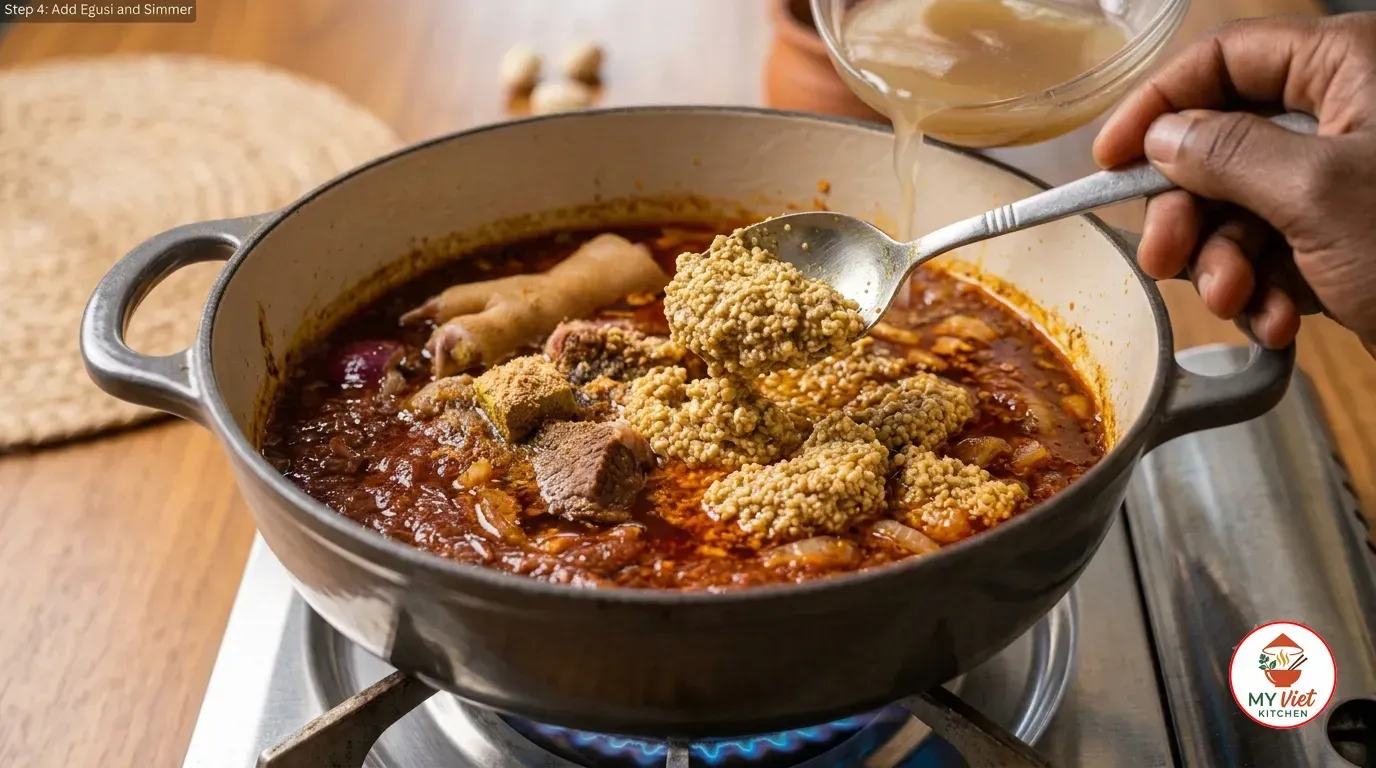
4 Now add the egusi paste to the pot. If you prefer the lumpy Igbo style, drop rounded tablespoons of the paste into the sauce and let them sit undisturbed for 2 minutes before gently stirring. For a smoother Yoruba-style soup, stir the paste directly into the tomato base until fully incorporated. Both approaches produce delicious results.
Pour in the reserved meat stock and stir gently. The soup should look thick but still pourable. If it seems too dense, add a splash more stock. Add the ground crayfish and the remaining seasoning cube. Stir once more, then cover the pot with a tight-fitting lid. Reduce the heat to low and let the soup simmer for 20 minutes. During this time, the egusi absorbs liquid, releases its natural oils, and thickens the soup beautifully. Do not lift the lid too frequently, because the steam helps cook the egusi evenly.
Step 5: Finish with Greens and Serve
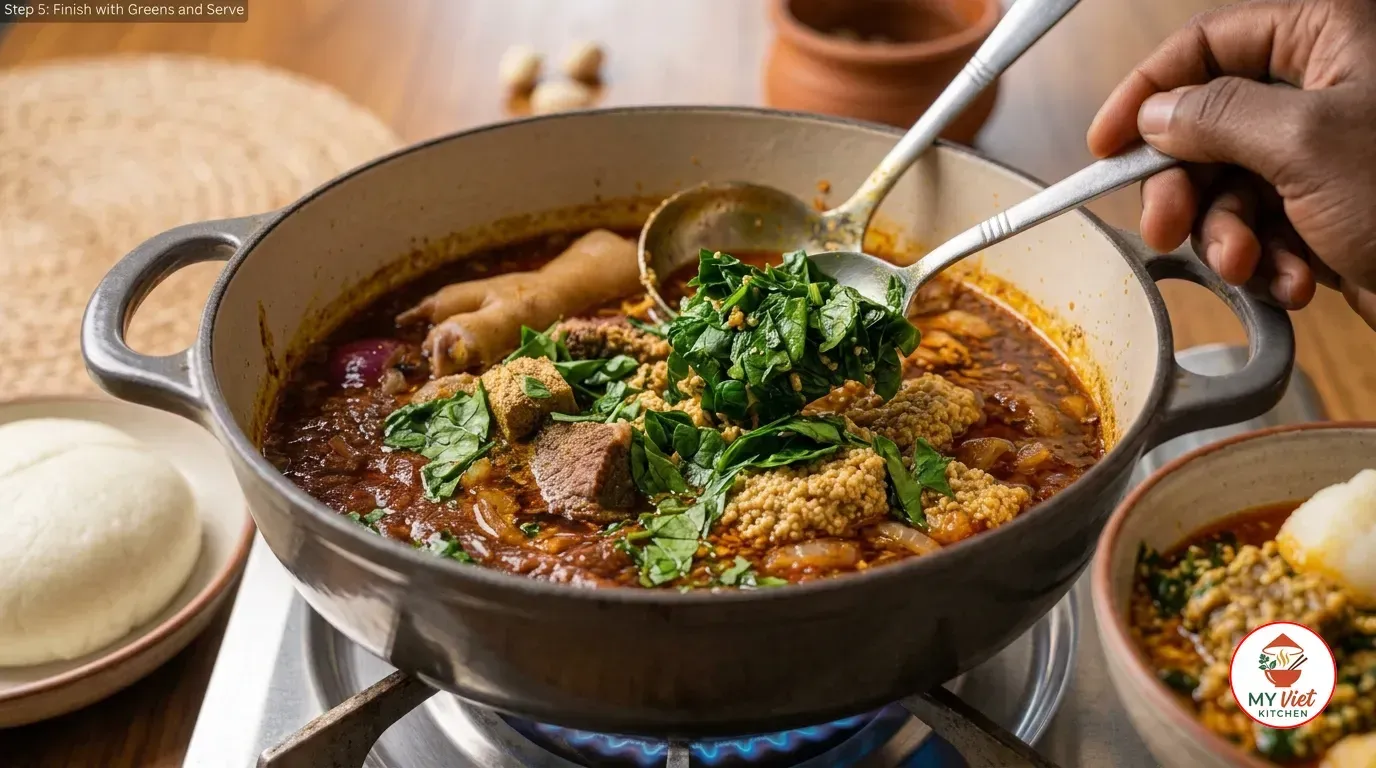
5 After 20 minutes of simmering, uncover the pot and add the cooked assorted meats, smoked fish, and dried prawns. Stir gently so you do not break up the fish too much. Let everything simmer together for 5 minutes, which allows the proteins to absorb the soup flavors and warm through completely.
Finally, fold in the chopped spinach or bitter leaf. Stir gently and cook for just 3 more minutes. The greens should wilt and soften but still retain their vibrant color. Overcooking the greens turns them dull and mushy. Taste the soup and adjust the salt and pepper as needed. Serve the egusi soup hot in deep bowls alongside your preferred swallow. Pounded yam, eba, or amala are the most traditional choices. Tear a small piece of the swallow, press it into a scoop, and use it to pick up a generous portion of the soup.
Expert Tips for the Perfect Egusi Soup Recipe
Fry the Tomato Base Until the Oil Separates
The most common mistake in making egusi soup is rushing the tomato base. If you add the egusi before the oil separates from the tomatoes, the soup will taste acidic and raw. Patience here makes all the difference. Watch for small pools of palm oil floating on the surface of the fried tomato mixture. That visual cue tells you the base is ready.
Simmer on Low Heat After Adding Egusi
High heat causes the egusi to stick to the bottom of the pot and burn. Once you add the melon seed paste, reduce the flame to the lowest setting and cover tightly. The gentle simmer allows the egusi to hydrate slowly, release its oils, and thicken the soup without scorching. Stirring occasionally prevents sticking as well.
Add Greens at the Very End
Whether you use spinach, bitter leaf, ugu, or waterleaf, always add the greens in the final 3 minutes. Fresh greens cook quickly and lose their color and nutrients when overcooked. Folding them in at the end keeps the soup vibrant and the greens tender with a pleasant bite.
Egusi Soup Cooking Methods Compared
Nigerian home cooks use several different approaches to prepare egusi soup. Each method produces a slightly different texture and appearance, though the flavor remains fundamentally the same. Here is how the three main methods compare.
| Method | Region | Texture | Best For |
|---|---|---|---|
| Frying method | Yoruba (Southwest) | Smooth and uniform | Creamy, well-blended soup |
| Lump method (caking) | Igbo (Southeast) | Chunky egusi lumps | Rustic, homestyle texture |
| Boiling method | Various regions | Lighter, more brothy | Quick weeknight meals |
Serving Suggestions
Egusi soup in Nigeria is almost always eaten with a starchy side dish known as a swallow. The swallow acts as an edible utensil that scoops up the thick soup. Choosing the right swallow transforms the meal from good to exceptional.
The Perfect Accompaniments:
- Pounded yam (iyan): The most traditional and beloved pairing. Its smooth, stretchy texture is ideal for scooping up the thick egusi soup.
- Fufu: Made from cassava and plantain, fufu has a mild flavor that lets the bold egusi soup shine.
- Eba (garri): Made from cassava flakes mixed with hot water, eba is quick to prepare and pairs perfectly with this rich soup.
- Amala: This dark, smooth swallow made from yam flour has a slightly earthy taste that complements the nutty egusi beautifully.
- Semolina (semo): Light and fluffy, semo is a modern favorite that works well for those new to Nigerian swallows.
Beverage Pairings:
- Palm wine: This naturally fermented drink from palm trees is the classic traditional pairing with egusi soup in Southern Nigeria.
- Zobo (hibiscus tea): A refreshing, tart drink that cleanses the palate between rich, oily bites of egusi.
- Chapman: Nigeria’s favorite mocktail with Fanta, Sprite, and grenadine offers a sweet counterpoint to the savory soup.
- Chilled lager beer: A cold Star or Gulder beer is the go-to choice at Nigerian gatherings where egusi soup is served.
Storage and Reheating
Refrigerator: Store leftover egusi soup in an airtight container for up to 5 days. The soup thickens as it cools, and many Nigerians agree that it actually tastes better the next day after the flavors have had time to meld together overnight.
Freezer: Egusi soup freezes exceptionally well for up to 3 months. Portion it into individual containers before freezing so you can thaw only what you need. Thaw overnight in the refrigerator for the best results.
Reheating: Warm the soup gently on the stovetop over low heat, stirring occasionally. Add a splash of water or stock if the soup has thickened too much during storage. Avoid microwaving on high power, because it can cause the palm oil to separate and the egusi to become grainy. A slow, gentle reheat preserves the creamy texture.
Common Mistakes to Avoid
1. Adding Egusi Before the Tomato Base Is Ready
If you add the egusi paste before the palm oil separates from the tomato mixture, the soup will have a raw, acidic taste. Always wait until you see pools of oil floating on the surface. This indicates that the tomato has cooked completely and the base is ready to receive the melon seeds.
2. Using Too Much Water
Egusi soup should be thick and rich, not thin and watery. Use just enough meat stock to create a pourable consistency. You can always add more liquid later, but you cannot take it away. Starting with less stock and adjusting gradually gives you much better control over the final thickness.
3. Overcooking the Leafy Greens
Spinach and other greens need only 3 minutes in the hot soup. Cooking them longer makes them dull, slimy, and devoid of nutrients. Add the greens as the very last step, stir gently, and serve promptly. The residual heat continues cooking them even after you remove the pot from the stove.
4. Cooking on High Heat After Adding Egusi
High heat causes the melon seed paste to stick and burn on the bottom of the pot. Once the egusi is in, reduce to the lowest setting and cover the pot. Gentle simmering is essential for achieving a smooth, creamy consistency without any scorched flavor.
Frequently Asked Questions
What is egusi soup made of?
Egusi soup is made from ground melon seeds cooked in a palm oil base with blended tomatoes, scotch bonnet peppers, onions, assorted meats or fish, ground crayfish, seasoning cubes, and leafy greens. The melon seeds thicken the soup naturally and give it a characteristic nutty flavor that distinguishes it from all other Nigerian soups.
What does egusi taste like?
On its own, egusi has a mild, nutty flavor that resembles pumpkin seeds or sunflower seeds. In the soup, the ground melon seeds absorb the rich flavors of palm oil, tomatoes, crayfish, and peppers. The overall taste is savory, slightly nutty, and deeply comforting. The texture is thick and creamy, similar to a rich stew rather than a brothy soup.
Can I use pumpkin seeds instead of egusi?
Yes, shelled raw pumpkin seeds serve as the best substitute for egusi melon seeds. Grind them to a coarse powder and use the same amount called for in the recipe. The flavor will be somewhat milder than true egusi, but the thickening effect and creamy texture will remain very similar. Sunflower seeds also work, though they produce a lighter-colored soup.
What do you eat with egusi soup?
Egusi soup pairs with starchy sides called swallows. Pounded yam is the most popular choice, followed by fufu, eba, amala, and semolina. You tear off a small piece of the swallow, shape it into a scoop with your fingers, and use it to pick up the soup. Some people also enjoy egusi soup with white rice, although purists prefer swallows.
Is egusi soup healthy?
Egusi soup is packed with nutrients. The melon seeds provide plant-based protein, iron, zinc, and healthy unsaturated fats. The leafy greens contribute vitamins A and C along with dietary fiber. Palm oil contains vitamin E and beta-carotene. However, the soup is calorie-dense due to the oil and melon seeds, so moderate portion sizes are recommended for those watching their calorie intake.
How long does egusi soup last in the fridge?
Properly stored in an airtight container, egusi soup keeps well in the refrigerator for 4 to 5 days. The flavors actually improve overnight as the spices and melon seeds continue to meld. For longer storage, freeze the soup in portioned containers for up to 3 months. Thaw in the refrigerator overnight and reheat gently on the stovetop.
Variations and Adaptations
Egusi Soup with Bitter Leaf:
Swap the spinach for bitter leaf to create the traditional Igbo version known as ofe egusi. Bitter leaf has a pleasantly astringent, slightly bitter taste that cuts through the richness of the palm oil and melon seeds. Wash the bitter leaf thoroughly and squeeze out excess moisture before adding it to the soup. This variation is particularly popular in southeastern Nigeria.
Seafood Egusi Soup:
Replace the assorted meats with a combination of fresh prawns, crab legs, and smoked catfish. This lighter version is popular in the riverine communities of southern Nigeria. The seafood cooks much faster than meat, so add it in the final 10 minutes. The briny sweetness of the shellfish pairs beautifully with the nutty egusi base.
Vegetarian Egusi Soup:
For a meat-free version, omit all animal proteins and use vegetable stock instead of meat stock. Increase the greens to 6 cups and add mushrooms for umami depth. Smoked paprika can mimic some of the smoky flavor that dried fish provides. This adaptation is not traditional but works surprisingly well for those following a plant-based diet.
Egusi Soup with Ugu (Pumpkin Leaves):
Ugu, also known as fluted pumpkin leaf, is one of the most traditional greens for egusi soup. It has a mild, slightly sweet flavor and a sturdy texture that holds up well in the hot soup. Chop the leaves finely and add them in the last 3 minutes. Ugu leaves are rich in iron and give the soup a deep green color that looks stunning against the orange palm oil base.
The Cultural Significance of Egusi Soup
Egusi soup holds a special place in Nigerian culture that goes far beyond daily meals. It appears at naming rites, weddings, funerals, and holiday feasts across many ethnic groups. While the Yoruba, Igbo, and Hausa peoples each have their own method, the love for this soup unites them all. In many homes, a cook’s skill is judged by their egusi soup.
The art of making egusi soup passes from mother to daughter over many years. Each family guards its own way, from the ratio of crayfish to egusi to the choice of greens and meats. Consequently, no two family recipes taste the same. Many Nigerian women say they can tell which home a pot of egusi came from by a single taste.
Egusi melon seeds have a long farming history in West Africa. Farmers have grown them for centuries in mixed-crop systems across the savanna. The seeds store well, pack dense nutrition, and thrive in tropical heat. Because of this, egusi has stayed a dietary staple even through hard economic times. Today, Nigeria is the world’s top producer of egusi. The soup remains the nation’s most beloved comfort food.
Conclusion
This egusi soup recipe gives you all you need to make one of Nigeria’s most treasured dishes at home. Fry the tomato base until the oil rises. Simmer the egusi on low heat for a smooth texture. Add the greens at the very end to keep them fresh. Follow this egusi soup recipe step by step, and you will get a thick, rich soup that rivals the best home cooking in Lagos or Enugu.
Ready to explore more Nigerian and African flavors? Browse our collection of African dishes, including jollof rice, suya, fufu with soup, and doro wat. Discover the rich tapestry of African cuisine one recipe at a time.