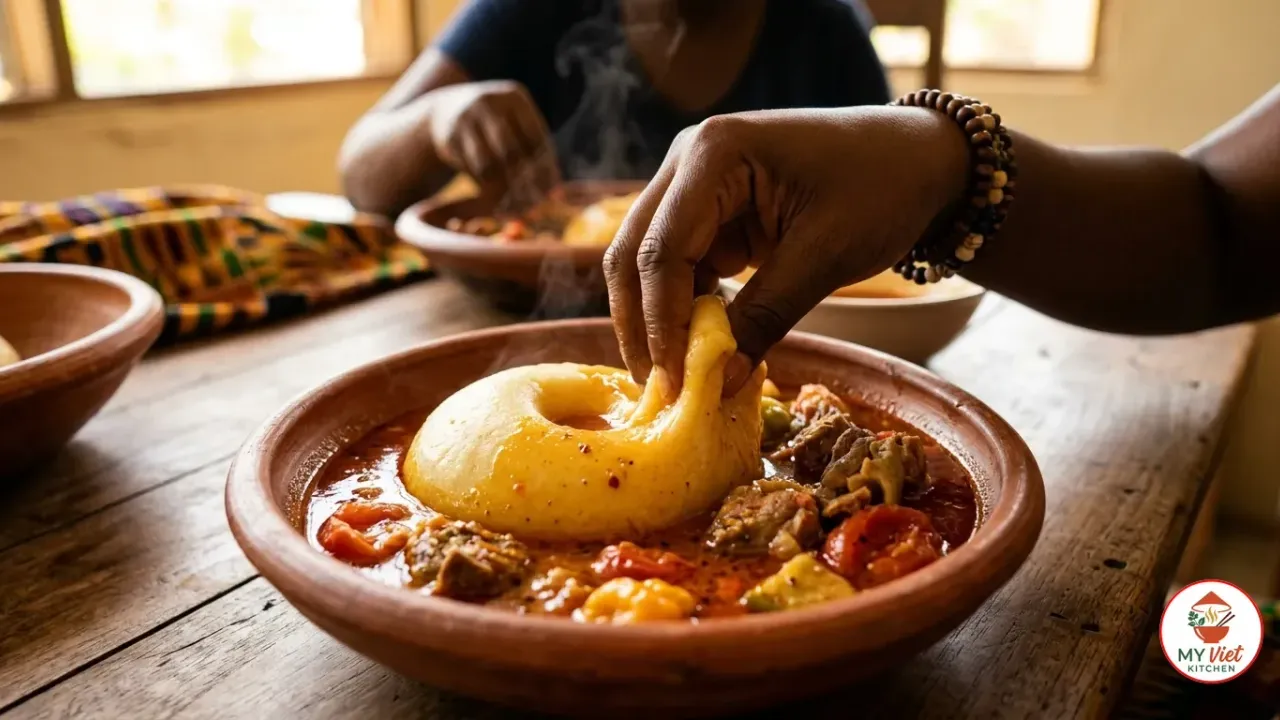
Fufu with soup is one of the most beloved and iconic dishes in all of West Africa, a staple that stretches across Ghana, Nigeria, Cameroon, and beyond. This remarkable dish pairs a smooth, stretchy dough made from pounded starchy roots with a rich, deeply flavored soup loaded with tender meat, fresh peppers, and aromatic spices. The experience of eating fufu with soup is unlike anything else — you tear off a small piece of the elastic dough, press an indentation with your thumb, scoop up the soup, and swallow it whole. This recipe guides you through making both authentic fufu and a classic Ghanaian light soup at home.
Prep Time: 30 minutes | Cook Time: 60 minutes | Servings: 4
Difficulty: Medium | Calories: ~480 per serving
What Makes Fufu with Soup Special?
Fufu with soup holds a central place in West African food culture because it represents far more than a simple meal. Across Ghana, Nigeria, Sierra Leone, and Cameroon, fufu is the foundation of daily eating. Families gather around a shared bowl, and the act of tearing, dipping, and swallowing fufu together is a ritual of togetherness. The dish demands that you eat with your hands, connecting you directly to the food in a way that no utensil can replicate.
Fufu itself is a masterpiece of texture transformation. Raw cassava and plantain are starchy, fibrous roots with little appeal on their own. However, boiling and pounding them in a wooden mortar changes everything. Starches break down and realign into long chains, creating a smooth, elastic dough. This pounding process is demanding and traditionally involves two people. One person pounds with a heavy wooden pestle while the other turns the dough between strikes. Eventually, you get a silky ball that stretches like mozzarella.
The soup component is equally important. In fact, fufu on its own is intentionally bland. It serves as a neutral vessel for the bold flavors of the soup. West African soups are built on layers of flavor. Fresh tomatoes, fiery scotch bonnet peppers, slow-cooked meats, and aromatic spices all play a role. Whether you choose light soup, groundnut soup, or palm nut soup, the result is deeply satisfying. As a result, smooth fufu paired with rich soup creates a textural experience unlike anything else.

Choosing the Right Starch for Your Fufu
The type of starch you use determines the color, texture, and flavor of your fufu with soup. Different West African countries and regions have strong preferences, and each version has unique characteristics. Here are your main options for making fufu at home.
- Cassava and plantain blend (best choice for beginners): This is the most popular combination in Ghana. Boiled cassava and green plantain are pounded together, producing a slightly yellowish fufu with a mild, slightly sweet flavor and excellent elasticity. The plantain adds color and helps the dough hold together. Most importantly, this blend produces the smoothest, most forgiving texture for first-time fufu makers.
- Pounded yam (Nigerian favorite): White yam is boiled until tender, then pounded into a fluffy, white dough that is lighter and softer than cassava fufu. Pounded yam has a mild, clean flavor and a slightly drier texture. It is the preferred fufu in Nigeria and pairs exceptionally well with egusi soup and ogbono soup.
- Instant fufu flour (quickest method): Commercial fufu flour, made from dried cassava or a cassava-plantain blend, is mixed directly with hot water on the stovetop. This method skips the boiling and pounding entirely. While it produces good results, the texture is slightly less elastic than hand-pounded fufu. Nevertheless, it is the most practical choice for weeknight cooking.
Ingredients for Fufu with Soup
For the Fufu:
- 2 cups cassava flour (or instant fufu flour)
- 1 cup plantain flour (or additional cassava flour)
- 3 cups water
For the Light Soup:
- 2 pounds goat meat, cut into medium chunks
- 4 large tomatoes, roughly chopped
- 2 large onions, roughly chopped
- 3 fresh scotch bonnet peppers (adjust for heat preference)
- 3 cloves garlic, minced
- 1 tablespoon fresh ginger, grated
- 2 tablespoons tomato paste
- 1 tablespoon palm oil
- 6 cups water
Seasonings:
- 1 teaspoon ground crayfish
- 2 seasoning cubes (Maggi or Knorr)
- Salt to taste
- Fresh garden eggs or eggplant, quartered (optional)
Pro tip: The secret to a flavorful light soup lies in the quality of your tomatoes and peppers. Use the ripest, most flavorful fresh tomatoes you can find — they should be deep red and slightly soft. For the scotch bonnet peppers, use them whole if you want mild heat and fragrance, or blend them into the soup base if you prefer serious fire. Additionally, always cook the blended pepper mixture until the raw tomato smell completely disappears before adding the broth. This step concentrates the flavors dramatically.
Step-by-Step Instructions
Step 1: Season and Boil the Goat Meat
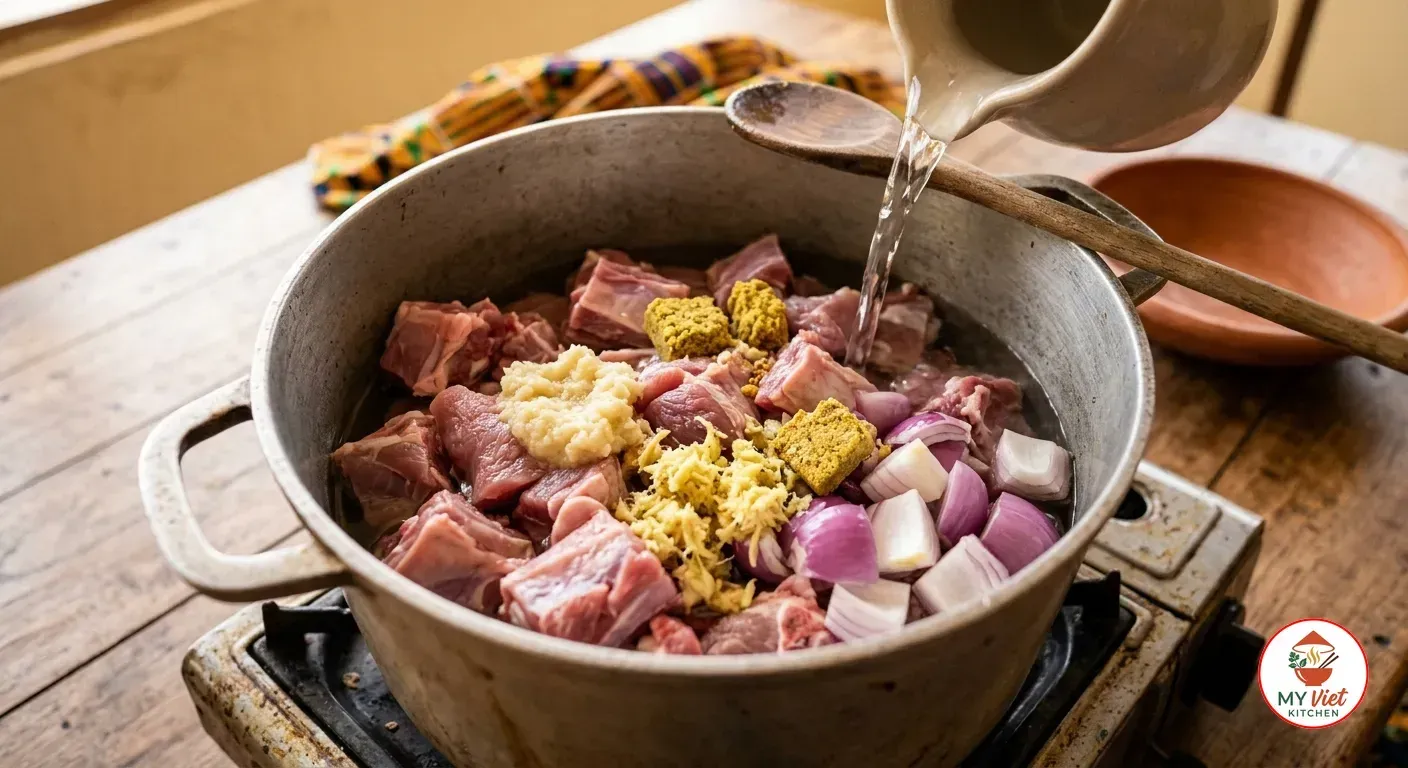
1 Place the goat meat chunks in a large pot. Add the minced garlic, grated ginger, one roughly chopped onion, one seasoning cube, and a generous pinch of salt. Pour in 4 cups of water and bring the pot to a rolling boil over high heat. Skim off any foam that rises to the surface during the first few minutes.
Reduce the heat to medium-low, cover the pot, and let the meat simmer for 40 to 50 minutes. Goat meat needs this long, gentle cooking time to become tender without falling apart. The broth will gradually turn rich and flavorful as the meat releases its juices. When the meat is fork-tender, remove it with a slotted spoon and set it aside. Reserve every drop of the broth, because it forms the liquid foundation of your light soup.
Step 2: Blend the Soup Base
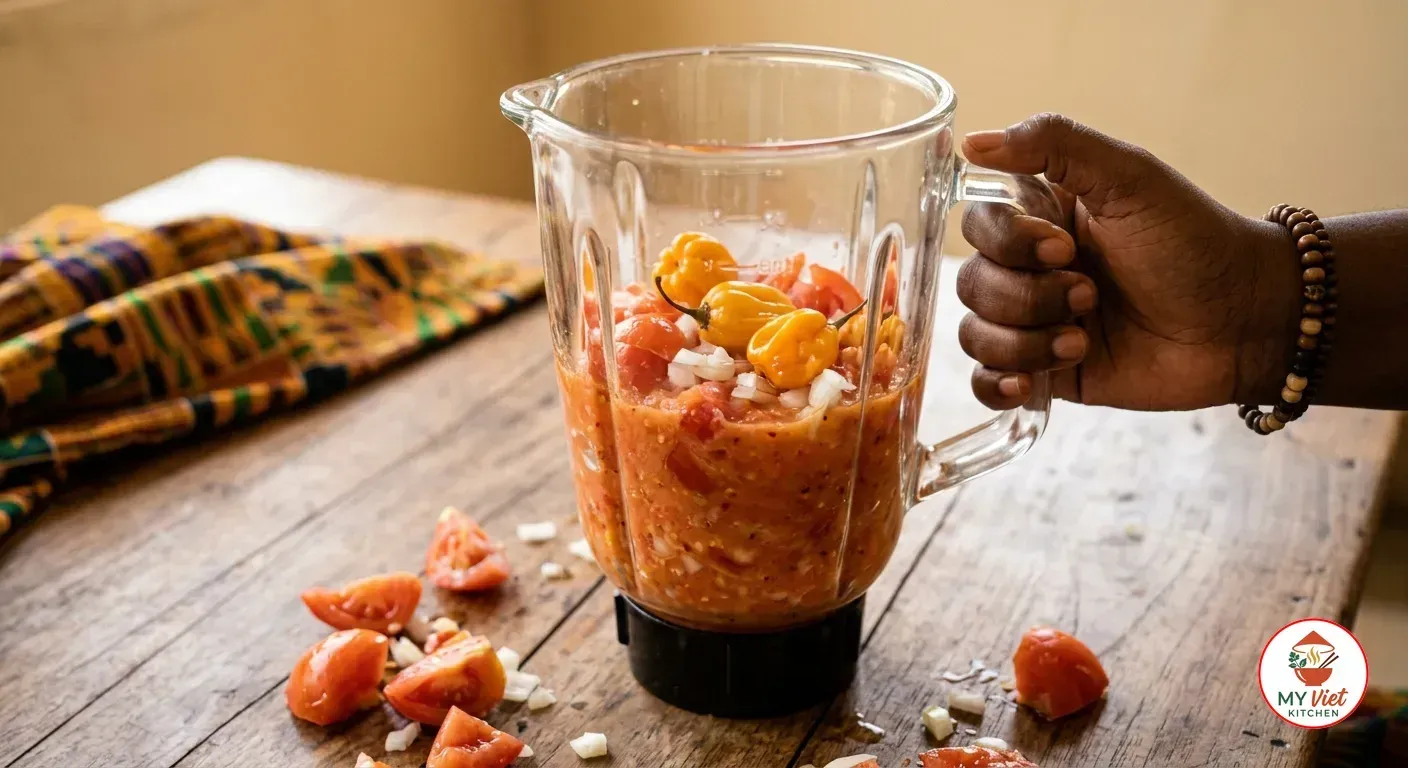
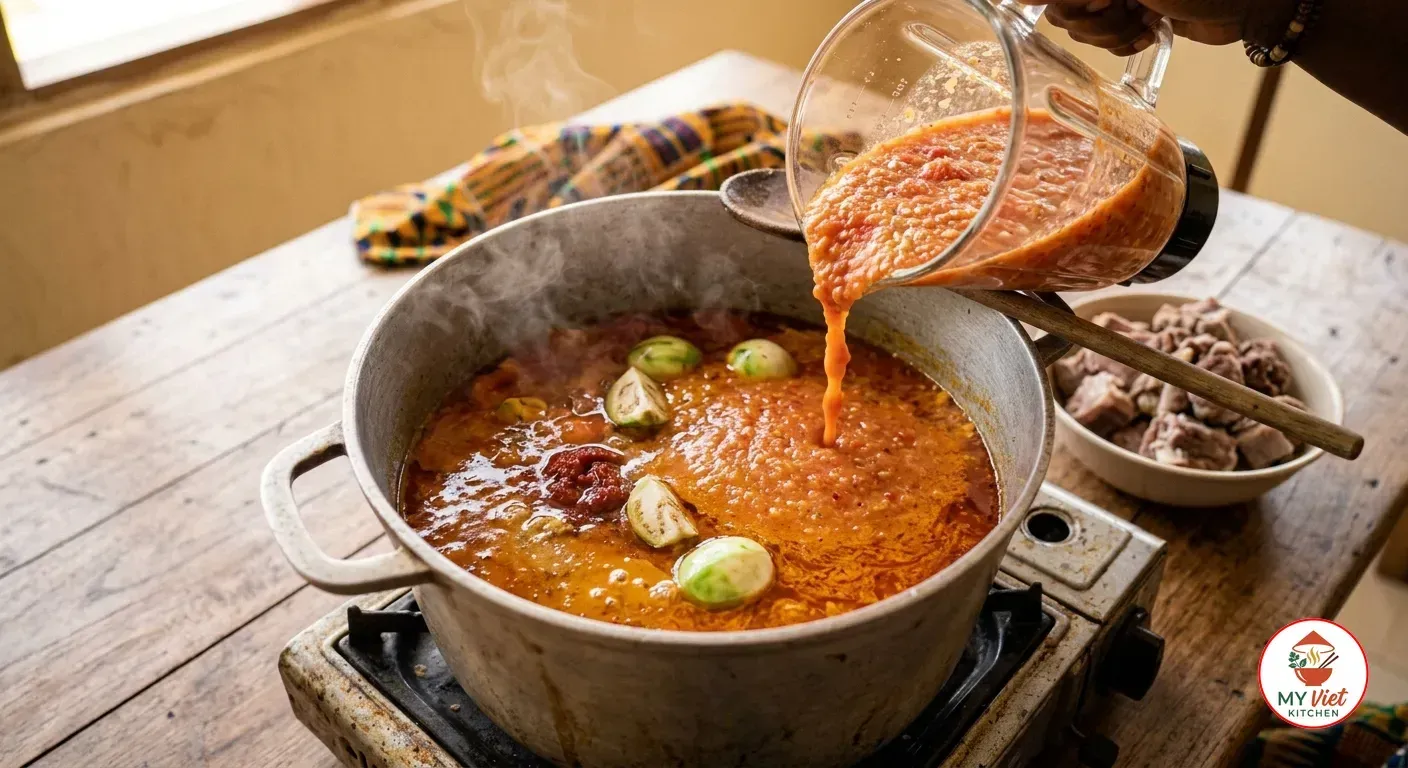
2 While the meat simmers, prepare the soup base. Place the remaining chopped onion, the 4 chopped tomatoes, and the scotch bonnet peppers into a blender. Pulse until you achieve a smooth puree with no large chunks remaining. The color should be a vibrant orange-red, and the mixture should have a thin, pourable consistency.
This fresh pepper-tomato base is the backbone of Ghanaian light soup. Specifically, ripe tomatoes bring sweetness. Meanwhile, raw onion adds sharpness. Scotch bonnet delivers fire. Together, they create a flavor profile that is bright and bold. Set the puree aside while you prepare the next step. If you prefer a milder soup, remove the seeds from the scotch bonnets before blending. You can also reduce the peppers to one or two.
Step 3: Cook the Light Soup
3 Heat the palm oil in a large pot over medium heat. Add the tomato paste and stir for 2 minutes. It will darken slightly and become fragrant. After that, pour in the blended pepper-tomato mixture. Cook this base for 8 to 10 minutes, stirring regularly. The raw tomato smell will transform into a rich aroma. You will notice the oil starting to separate and float on the surface. This signals that the base is ready.
Pour in the reserved goat meat broth and the remaining 2 cups of water. Add the ground crayfish and the second seasoning cube. Stir everything and bring it to a gentle boil. Return the goat meat to the pot. Also add garden eggs now if you are using them. Then reduce the heat and simmer uncovered for 20 minutes. The soup will reduce slightly and develop a glossy sheen. Taste and adjust the salt as needed.
Step 4: Make the Fufu Dough
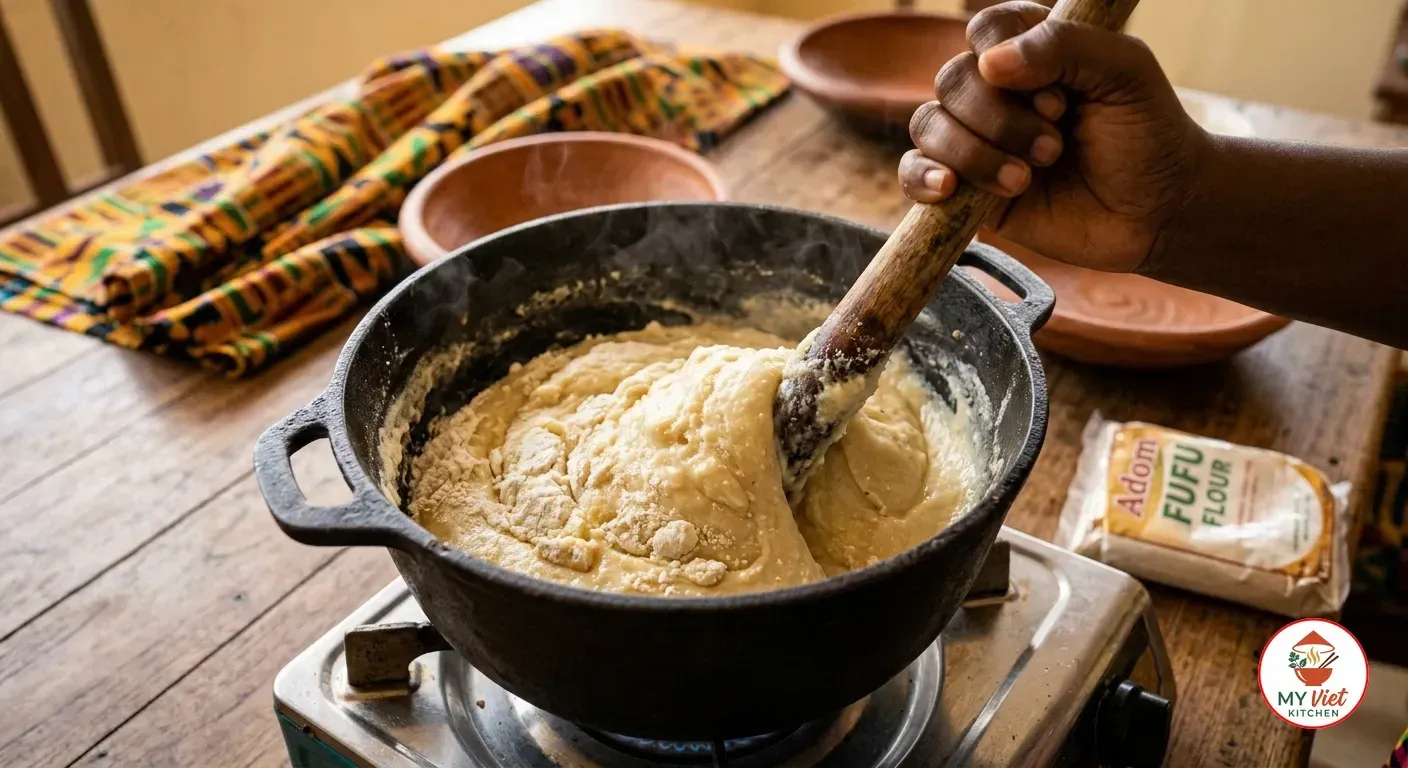
4 Bring 3 cups of water to a vigorous boil in a heavy pot. Reduce the heat to low right away. First, mix the cassava flour and plantain flour in a bowl. Then add the flour to the hot water in small batches. Stir hard with a strong wooden spoon after each addition. The mixture will thicken and resist your stirring within the first minute.
Keep stirring with all your strength for 5 to 7 minutes. The dough will turn from a lumpy paste into a smooth, elastic mass. It should pull cleanly away from the sides of the pot. Additionally, turn the dough over often. Press it against the bottom of the pot for even cooking. The fufu is ready when it feels smooth, stretches easily, and has a slight sheen. If lumps remain, add a spoon of hot water and keep stirring.
Step 5: Shape the Fufu Balls
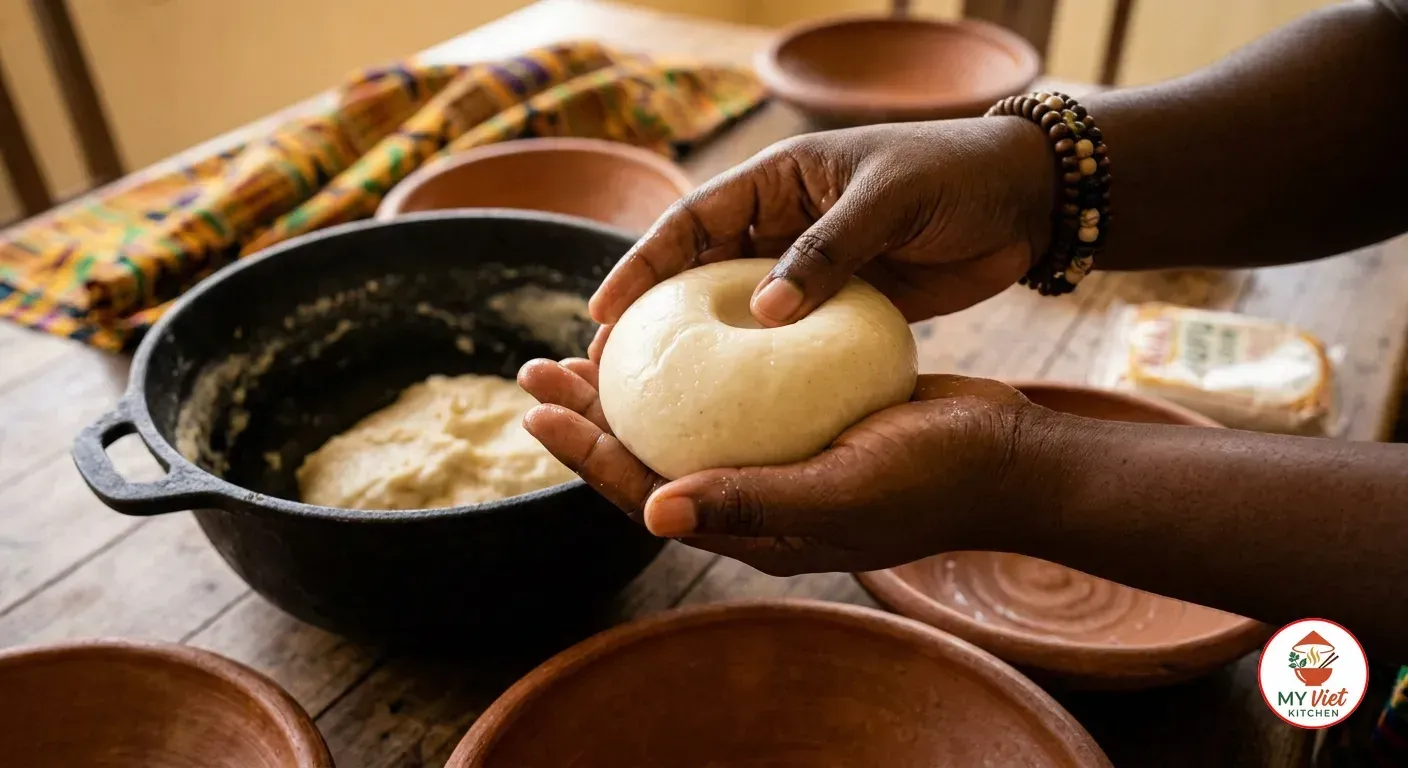
5 Wet your hands well with cold water to prevent sticking. Scoop a portion of the hot fufu dough, roughly the size of a tennis ball. Transfer it to your wet palms. Roll the dough between your hands in a circular motion. Eventually, smooth the surface until it forms a round ball with no cracks. The water on your hands creates a thin film. This gives the fufu its smooth, glossy finish.
Press a shallow well into the top of each ball with your thumb. This cup shape helps catch the soup. Place each shaped fufu ball into a serving bowl. You should get 4 portions from this recipe. Work fast, because the fufu gets harder to shape as it cools. If it stiffens, cover the pot to keep the rest warm while you shape each ball.
Step 6: Serve the Fufu with Soup
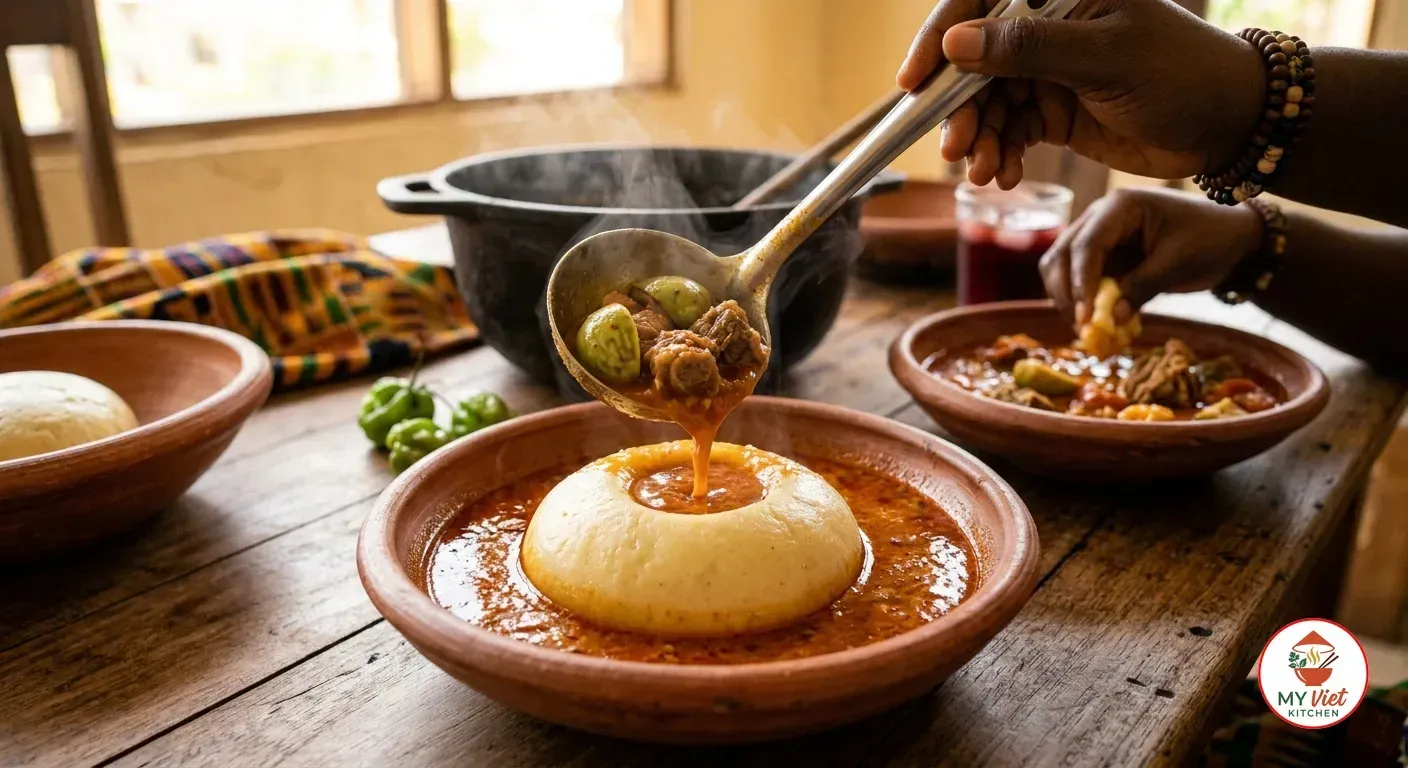
6 Ladle the hot light soup over and around each fufu ball. Include several tender pieces of goat meat and plenty of peppery broth in each bowl. The soup should fill the well on top and pool around the base. Serve right away while everything is steaming hot.
To eat fufu with soup the traditional way, use only your right hand. Tear off a small piece of the fufu. Roll it into a ball with your fingers. Next, press a slight well into it with your thumb. Then dip it into the soup and scoop up some broth and meat. Finally, swallow the fufu without chewing. The smooth dough slides down easily, carrying the rich soup with it. This technique is central to the West African fufu experience.
Expert Tips for Perfect Fufu with Soup
Stir the Fufu with Maximum Force
Making smooth fufu requires serious arm strength. The dough gets very thick as it cooks. Weak stirring will leave lumps that ruin the texture. Use a sturdy wooden spoon or a fufu stirring stick. Also, brace the pot with your other hand. Stir in one direction, pressing the dough against the pot bottom to break down lumps. In West African homes, making fufu is often a two-person job for good reason.
Cook the Pepper Base Until the Oil Separates
A common mistake in making light soup is not cooking the blended mixture long enough. You must cook it until the oil visibly separates from the tomato base. This takes 8 to 10 minutes of steady cooking. The process turns raw, acidic tomato into a rich, savory base. If you skip this step, the soup will taste flat.
Use Fresh, Ripe Tomatoes for the Best Flavor
Canned tomatoes work in a pinch. However, fresh ripe tomatoes produce a brighter, more complex soup. Choose tomatoes that are deep red and slightly soft. They should smell sweet and rich. In particular, Roma or plum tomatoes work well because they have fewer seeds and more flesh. The quality of your tomatoes shapes the final soup flavor, so do not cut corners here.
West African Soups That Pair with Fufu
While this recipe features Ghanaian light soup, fufu is traditionally served with a wide range of soups across West Africa. Each soup has its own distinct character, and choosing the right pairing depends on your preference and the occasion. Here is how the most popular fufu soups compare.
| Soup Name | Base Ingredient | Key Characteristics | Best With |
|---|---|---|---|
| Light Soup | Fresh tomatoes and peppers | Bright, fiery, and brothlike with tender meat chunks, the everyday favorite in Ghana | Cassava-plantain fufu |
| Groundnut Soup | Crushed peanuts | Rich, creamy, and nutty with a velvety texture, deeply comforting and filling | Any fufu variety |
| Palm Nut Soup | Palm fruit extract | Thick, orange-red, and earthy with a unique fruity richness that coats the fufu | Cassava fufu or pounded yam |
| Egusi Soup | Ground melon seeds | Thick and textured, packed with leafy greens and protein, a Nigerian staple | Pounded yam |
| Ogbono Soup | Wild mango seeds | Slimy, glossy, and deeply savory, with a mucilaginous texture that clings to fufu | Pounded yam or cassava fufu |
Serving Suggestions
In West Africa, fufu with soup is typically the centerpiece of a meal, but it is often accompanied by side dishes and condiments that round out the experience. The communal nature of the meal means that everything is placed in the center of the table for sharing. Here are the ideal accompaniments for your fufu spread.
Traditional Accompaniments:
- Extra scotch bonnet pepper (fresh or ground): Many West African diners add additional raw pepper on the side for those who want more heat, allowing each person to control their spice level.
- Fried plantain (alloco): Sweet, caramelized slices of ripe plantain provide a delightful contrast to the savory soup and neutral fufu.
- Fresh garden eggs: These small, white African eggplants can be served raw or lightly boiled as a refreshing side that cleanses the palate between bites.
- Jollof rice: While not traditionally served alongside fufu, some households offer jollof rice as an alternative starch for those who prefer it.
- Smoked fish: Adding smoked mackerel or herring to the soup deepens the umami character and is a common enhancement across West Africa.
Beverage Pairings:
- Palm wine: This naturally fermented sap from palm trees is sweet, slightly fizzy, and pairs beautifully with the rich, spicy soup.
- Sobolo (hibiscus tea): A chilled, tart drink made from dried hibiscus flowers that refreshes the palate between bites of spicy soup.
- Ginger beer: The spicy warmth of homemade ginger beer complements the heat of the scotch bonnet peppers in the soup.
- Cold water or coconut water: Simple and refreshing, cold water is the most common accompaniment to fufu with soup in everyday West African meals.
Storage and Reheating
Refrigerator: Store leftover fufu wrapped tightly in plastic wrap for up to 2 days. Keep the soup in an airtight container for up to 4 days. However, fufu is always best eaten fresh because it hardens as it cools. The soup actually improves overnight as the flavors continue to meld and deepen.
Freezer: The soup freezes exceptionally well for up to 3 months. Portion it into individual containers for easy thawing. Fufu does not freeze well because the texture becomes grainy and loses its characteristic stretch. Therefore, always make fufu fresh and freeze only the soup component.
Reheating: Warm the soup gently on the stovetop over low heat, adding a splash of water if it has thickened too much during storage. For leftover fufu, wrap it in plastic and microwave for 30 to 45 seconds, then knead it briefly with wet hands to restore some elasticity. Alternatively, place the wrapped fufu in a steamer for 3 minutes. Making a fresh batch of fufu takes only 10 minutes, so consider preparing it new when reheating the soup.
Common Mistakes to Avoid
1. Adding All the Flour at Once
Dumping all the flour into the hot water at once creates lumps that are very hard to remove. Instead, add the flour in small batches. Stir hard after each addition. As a result, you can control the texture. It also ensures that every bit of flour absorbs water fully before the next batch goes in.
2. Not Cooking the Tomato Base Long Enough
Raw blended tomato tastes acidic and flat. Cook the puree for at least 8 to 10 minutes. Wait until the oil separates and the color darkens. Consequently, the raw taste disappears and rich flavor develops. Rushing this step is the top reason home cooks end up with bland light soup.
3. Making the Fufu Too Watery
Too much water makes sticky, soft fufu that cannot hold its shape. Start with 3 cups and add more only if the dough is genuinely too stiff. The finished fufu should be firm enough to roll into a ball but soft enough to tear easily. If it turns out too watery, keep cooking over low heat while stirring. The extra moisture will cook off.
4. Using the Wrong Peppers
Scotch bonnet peppers are essential for real West African light soup. Jalapenos or serranos will not work. They lack the fruity, floral aroma that defines the dish. Scotch bonnets bring intense heat and a unique sweetness. No other pepper can match that flavor. If you cannot find fresh scotch bonnets, use habaneros instead. They belong to the same species and taste very similar.
Frequently Asked Questions
What is fufu made from?
Fufu is traditionally made by pounding boiled starchy staples like cassava, yam, or plantain in a large wooden mortar with a pestle until the mixture becomes a smooth, stretchy dough. Modern versions use cassava flour or instant fufu flour mixed with hot water on the stovetop. The result is a soft, elastic ball that serves as the perfect vessel for scooping up rich West African soups and stews.
What soups go best with fufu?
The most popular soups served with fufu include light soup (a tomato and pepper broth with meat), groundnut soup (a peanut-based stew), palm nut soup (made from palm fruit extract), egusi soup (thickened with ground melon seeds), and ogbono soup (made with wild mango seeds). Each region in West Africa has its own signature soups. In Ghana, light soup and groundnut soup dominate, while in Nigeria, egusi and ogbono are the most popular choices.
Why do you swallow fufu without chewing?
Swallowing fufu without chewing is a West African tradition rooted in both culture and practicality. The smooth texture carries the soup flavor directly to your stomach. Chewing changes the feel, making it sticky against your teeth. Instead, swallowing small pieces whole lets you taste the soup fully. The broth coats the smooth dough surface on the way down.
Can I make fufu without pounding?
Yes, you can make excellent fufu without a mortar and pestle by using instant fufu flour, cassava flour, or plantain flour mixed with hot water on the stovetop. Bring water to a boil, gradually stir in the flour, and keep stirring vigorously until it forms a smooth, elastic dough. This stovetop method is the most common approach outside West Africa and produces results that are very close to traditional pounded fufu.
What is the difference between fufu, banku, and pounded yam?
Fufu is typically made from cassava and plantain, pounded or stirred into a smooth, stretchy dough. Pounded yam uses boiled white yam instead, producing a lighter, fluffier result with a cleaner flavor. Banku is a Ghanaian specialty made from fermented corn and cassava dough cooked on the stovetop, giving it a slightly sour taste. All three are starchy accompaniments designed for eating with soup, but each has a distinct texture, color, and flavor.
Is fufu with soup gluten-free?
Yes, traditional fufu with soup is naturally gluten-free. Cassava, yam, and plantain are all gluten-free starches. The soups are typically thickened with natural ingredients like ground melon seeds, palm fruit, or peanuts rather than wheat flour. However, always check the ingredients if you use commercial instant fufu flour, because some brands may contain wheat or other additives.
Variations and Adaptations
Groundnut Soup Version:
Swap the light soup for a rich groundnut soup. Blend 1 cup of roasted peanuts into a smooth paste. Add it to a tomato-onion base with chicken or goat meat. Groundnut soup has a creamy, nutty richness that coats the fufu well. It is popular in Ghana and across the Sahel region. The peanut oils create a silky texture that is deeply comforting.
Fish Fufu with Soup:
Swap the goat meat for fresh tilapia, catfish, or red snapper. This makes a lighter, faster version. Fish needs only 15 to 20 minutes of simmering. Add it toward the end of cooking to prevent it from falling apart. Smoked fish also works well alongside fresh fish for extra depth. Coastal areas in Ghana and Nigeria often prefer this version.
Pounded Yam Version:
For a Nigerian-style fufu with soup, use pounded yam instead. Boil 2 pounds of peeled white yam until very tender. Then pound it in a mortar or mash it until smooth and stretchy. Pounded yam is lighter in color and fluffier than cassava fufu. It pairs very well with egusi soup and ogbono soup.
The Cultural Significance of Fufu with Soup
Fufu with soup is far more than a meal in West Africa. It is a cultural institution that binds families, communities, and entire nations together. In Ghana, fufu is often called the “national food” because of its ubiquity and deep emotional significance. The rhythmic sound of the wooden pestle striking the mortar is one of the most recognizable sounds in West African villages, and hearing it signals that a meal is being prepared with care and love.
Making fufu has always been a communal act. One person lifts and turns the dough in the mortar. The other pounds it with a heavy wooden pestle. This requires precise timing and trust. The turner must pull their hand away at the right moment between strikes. Families teach this skill to their children from a young age. Indeed, making smooth, lump-free fufu is a source of genuine pride. In the West African diaspora, fufu with soup connects people to homeland and heritage. From Accra to London to New York, this dish carries memories of home.
Fufu with soup also plays a key role in ceremonies and celebrations. It appears at weddings, naming ceremonies, funerals, and festivals across West Africa. Similarly, eating from a shared bowl builds bonds of kinship and respect. When a host serves you fufu, it is a sign of welcome and generosity. It reflects the deep West African tradition of feeding your community well.
Conclusion
Making fufu with soup at home is a deeply rewarding experience. It connects you to one of the oldest food traditions in West Africa. The process teaches patience through slow-simmered soup. It builds strength through vigorous stirring. And it fosters generosity through communal serving. Follow this recipe, and you will produce smooth, stretchy fufu paired with a fiery light soup. Your kitchen will fill with an aroma you will never forget. Whether you are new to West African cuisine or recreating the flavors of home, this fufu with soup recipe nourishes both body and soul.
Ready to explore more African flavors? Browse our collection of African dishes, including jollof rice, egusi soup, and banku with tilapia. Also, discover our world cuisine collection for more global recipe inspiration.