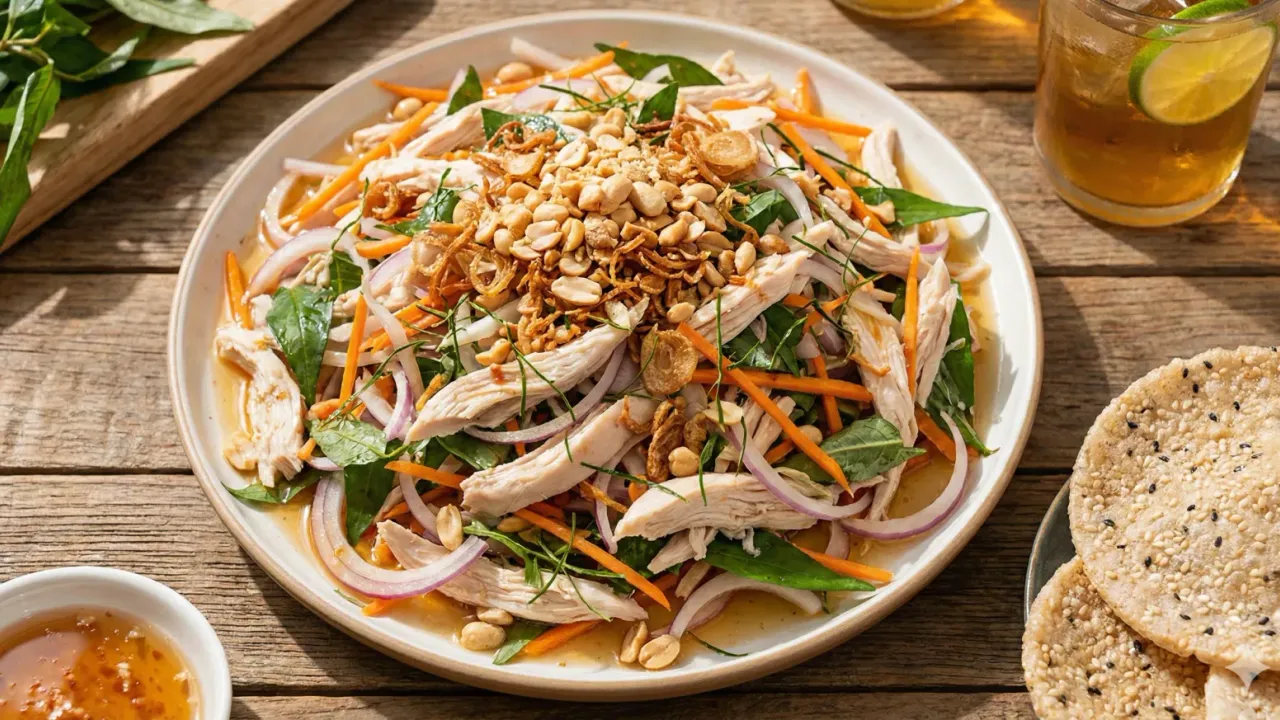
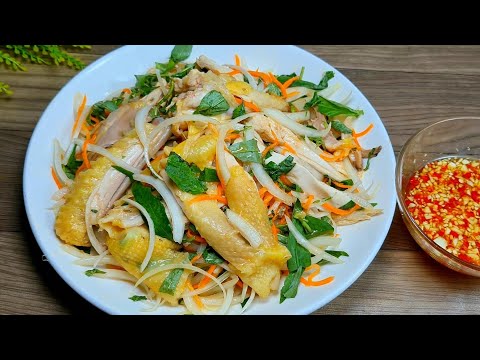
This Vietnamese chicken salad with Vietnamese coriander (gỏi gà rau răm) is summer cooking at its finest — cool, vibrant, and bursting with that perfect four-way harmony of sour, spicy, salty, and sweet that defines Vietnamese cuisine. Tender hand-shredded chicken, crunchy ice-soaked onions, peppery rau răm, and a bold fish sauce dressing come together in minutes. It’s the kind of dish that disappears fast at any table.
Prep Time: 20 minutes | Cook Time: 30 minutes | Servings: 4–5
Difficulty: Easy | Calories: ~264 per serving
What Makes Gỏi Gà Rau Răm So Special?
Gỏi gà — Vietnamese chicken salad — is a staple found from home kitchens to street stalls across Vietnam. But the version with rau răm (Vietnamese coriander) holds a special place in Northern Vietnamese cooking. Unlike heavier meat dishes, it’s light, refreshing, and deeply aromatic. The herb itself brings a uniquely peppery warmth that you simply can’t replicate with any other green.
What sets this salad apart is the technique behind every component: the chicken is gently poached then shocked in ice water for impossibly juicy meat; the onions are soaked until their bite softens to sweet crunch; the dressing is calibrated to be almost aggressively flavored before it hits the salad, knowing it will mellow as it coats every ingredient. The result is a dish that’s greater than the sum of its (very simple) parts.
Ingredients for Vietnamese Chicken Salad
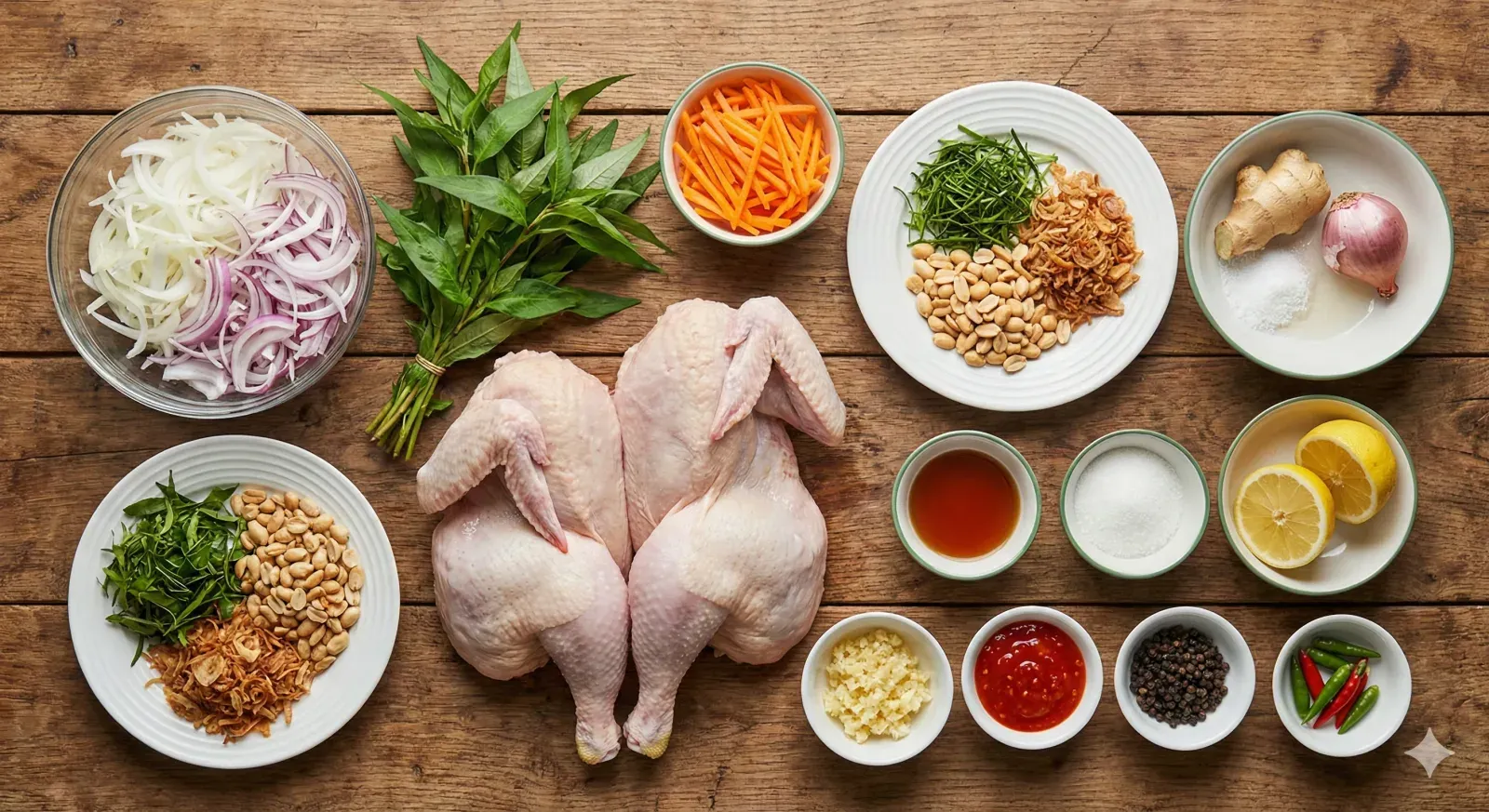
For the Salad:
- 1/2 free-range chicken (approx. 700–800g)
- 1 medium white onion, thinly sliced
- 1 small purple onion, thinly sliced
- 1 large bunch Vietnamese coriander (rau răm), leaves and tips only
- 1/2 carrot, julienned
- 4–5 kaffir lime leaves, very finely sliced
- Roasted peanuts, roughly crushed
- Fried shallots (hành phi) for topping
For Poaching the Chicken:
- 1 knob fresh ginger
- 1 shallot bulb, crushed
- Salt and seasoning powder
- Rice wine (for cleaning)
For the Dressing:
- 4 tablespoons water
- 2 tablespoons fish sauce
- 2 tablespoons sugar
- 1 tablespoon lemon juice
- 1 tablespoon garlic, minced
- 1/2 teaspoon seasoning powder
- 1–2 teaspoons chili sauce
- 1/2 teaspoon black pepper
- 1–2 bird’s eye chilies, minced (omit for children)
Pro tip: Free-range chicken (gà ta) delivers far superior flavor and texture for this salad. The meat is firmer, sweeter, and holds up better when shredded. If using a standard broiler chicken, reduce poaching time by 3–5 minutes.
Step-by-Step Instructions
Step 1: Poach the Chicken
1Start by cleaning the chicken: rub all over with coarse salt and a splash of rice wine, then rinse thoroughly under cold running water. This step eliminates any gamey odors and ensures a clean-tasting broth.
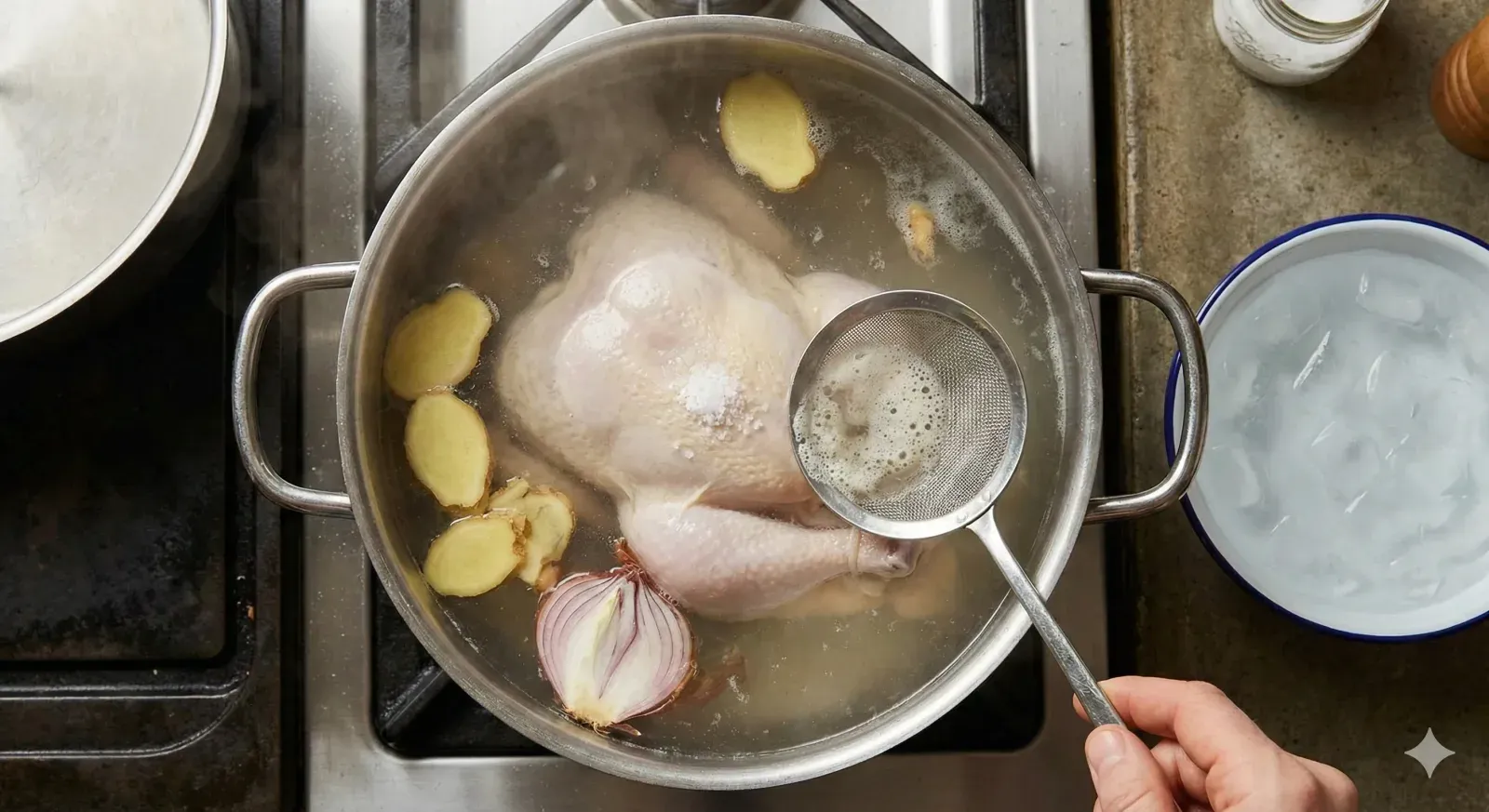
Place the chicken in a pot and cover with cold water. Add a crushed knob of fresh ginger, a smashed shallot bulb, a pinch of salt, and a little seasoning powder. Bring to a boil over high heat, skimming off any foam that rises. Reduce heat to a gentle simmer and cook for 15–20 minutes — less for a young bird, more for a mature free-range chicken.
Turn off the heat, cover the pot tightly, and let the chicken rest in the residual heat for 7–10 minutes. This gentle finishing step ensures the meat is perfectly cooked through without becoming dry or rubbery. Remove the chicken and immediately transfer to a large bowl of ice water. Once completely cooled, drain, pat dry, and hand-shred the meat into long thin strips along the grain.
Step 2: Prepare the Vegetables
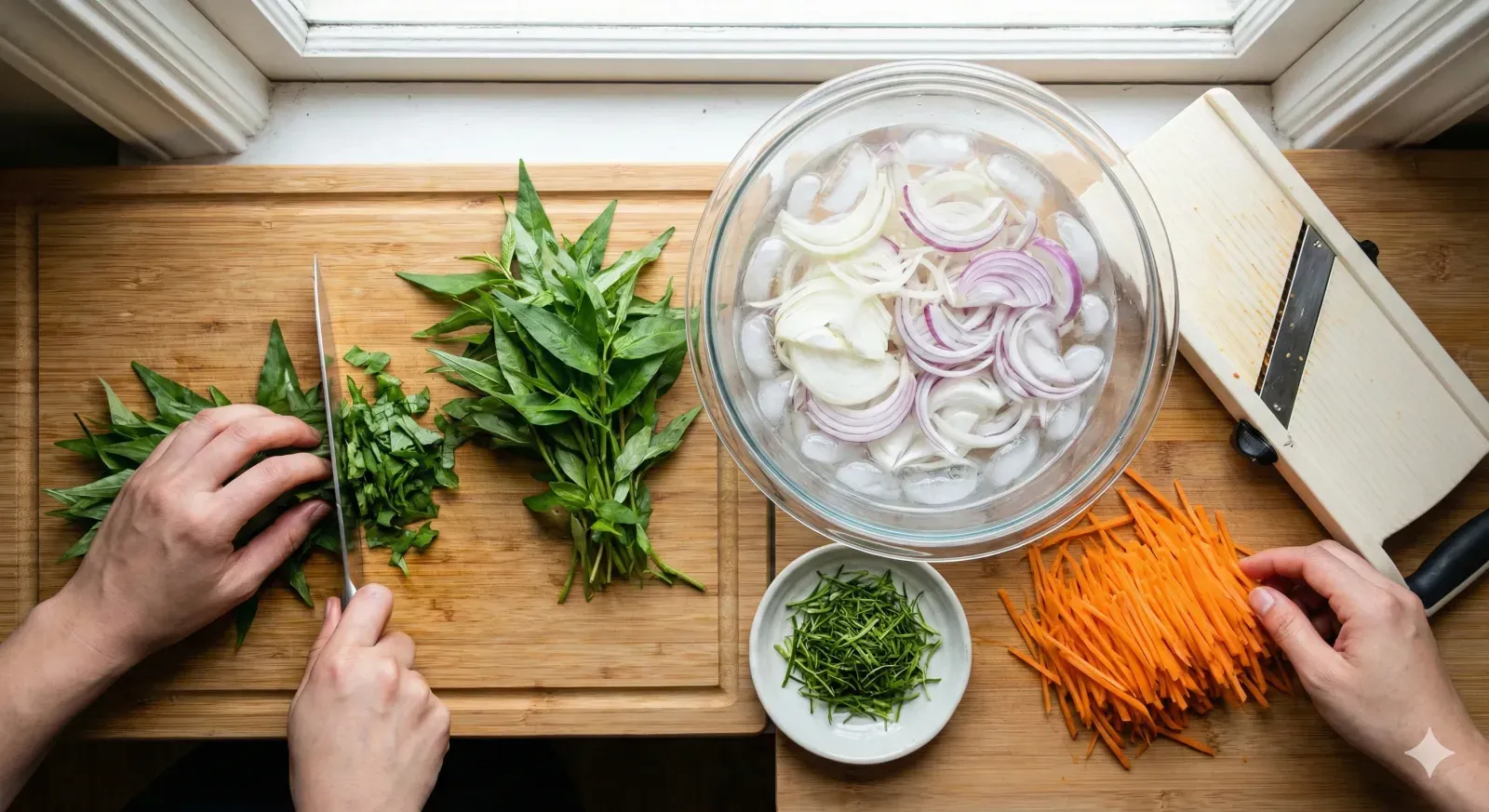
2Pick only the tender young leaves and shoot tips of the Vietnamese coriander. Wash thoroughly in several changes of water and roughly chop. Set aside.
Slice both the white and purple onions as thinly as possible — a mandoline is ideal here. Transfer slices to a large bowl of ice water and let soak for at least 10 minutes. This critical step draws out the harsh, sulfurous compounds, leaving you with onion that’s crisp, mild, and slightly sweet. Drain, shake off excess water, and pat dry with paper towels.
Julienne the carrot into fine matchsticks. Stack the kaffir lime leaves, roll tightly, and slice into hair-thin strips — these add a beautiful citrusy fragrance that elevates the whole dish.
Step 3: Prepare the Aromatics
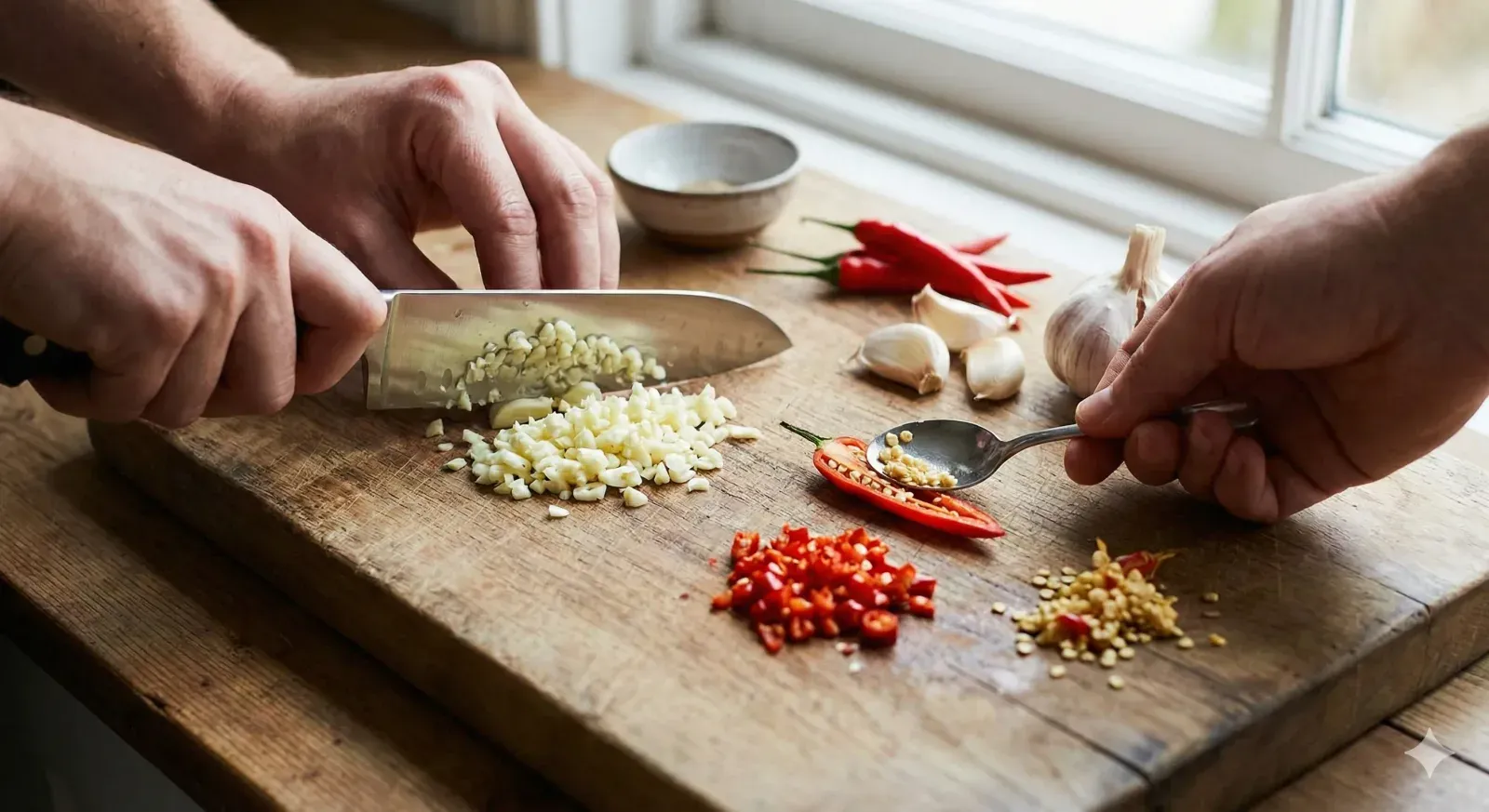
3Peel and finely mince the garlic cloves — the more uniform the mince, the better it distributes through the dressing. For the chilies, slice off the stem and scrape out the seeds with a small spoon (the seeds carry most of the heat). Mince the chili flesh finely. If cooking for children or those who don’t eat spicy food, simply leave the chili out entirely — the dressing is still wonderful without it.
Step 4: Mix the Dressing
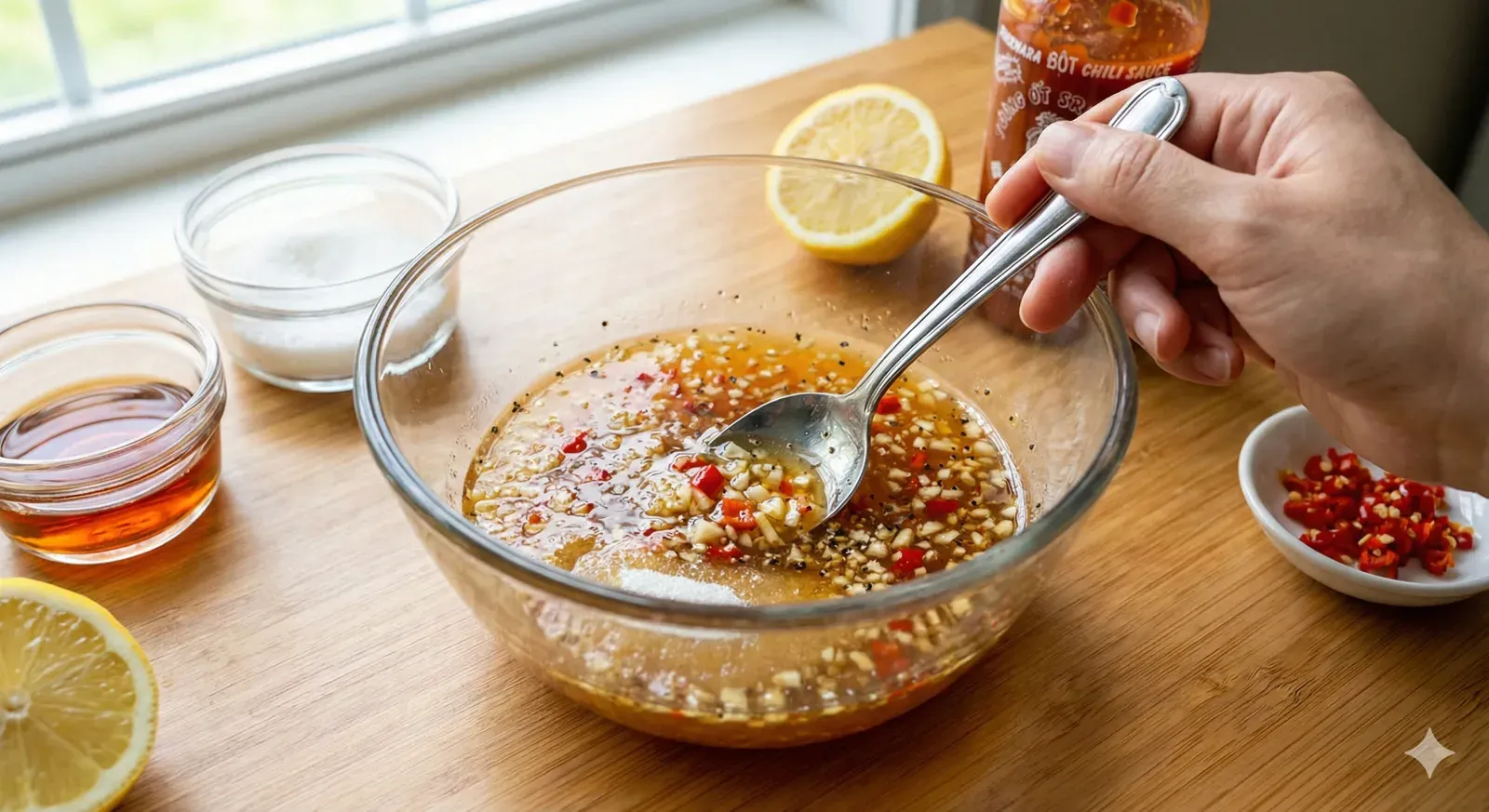
In a small bowl, combine all the dressing ingredients:
- 4 tablespoons water
- 2 tablespoons fish sauce
- 2 tablespoons sugar
- 1 tablespoon lemon juice
- 1 tablespoon minced garlic
- 1/2 teaspoon seasoning powder
- 1–2 teaspoons chili sauce
- 1/2 teaspoon black pepper
- Minced chili to taste
Stir vigorously until the sugar completely dissolves. Taste the dressing — it should be intensely salty, sweet, sour, and spicy. This is intentional. The strong flavors will mellow and distribute once they coat the chicken and vegetables. Adjust with extra lemon juice for more tang, sugar to round it out, or water to dilute.
Step 5: Toss the Salad
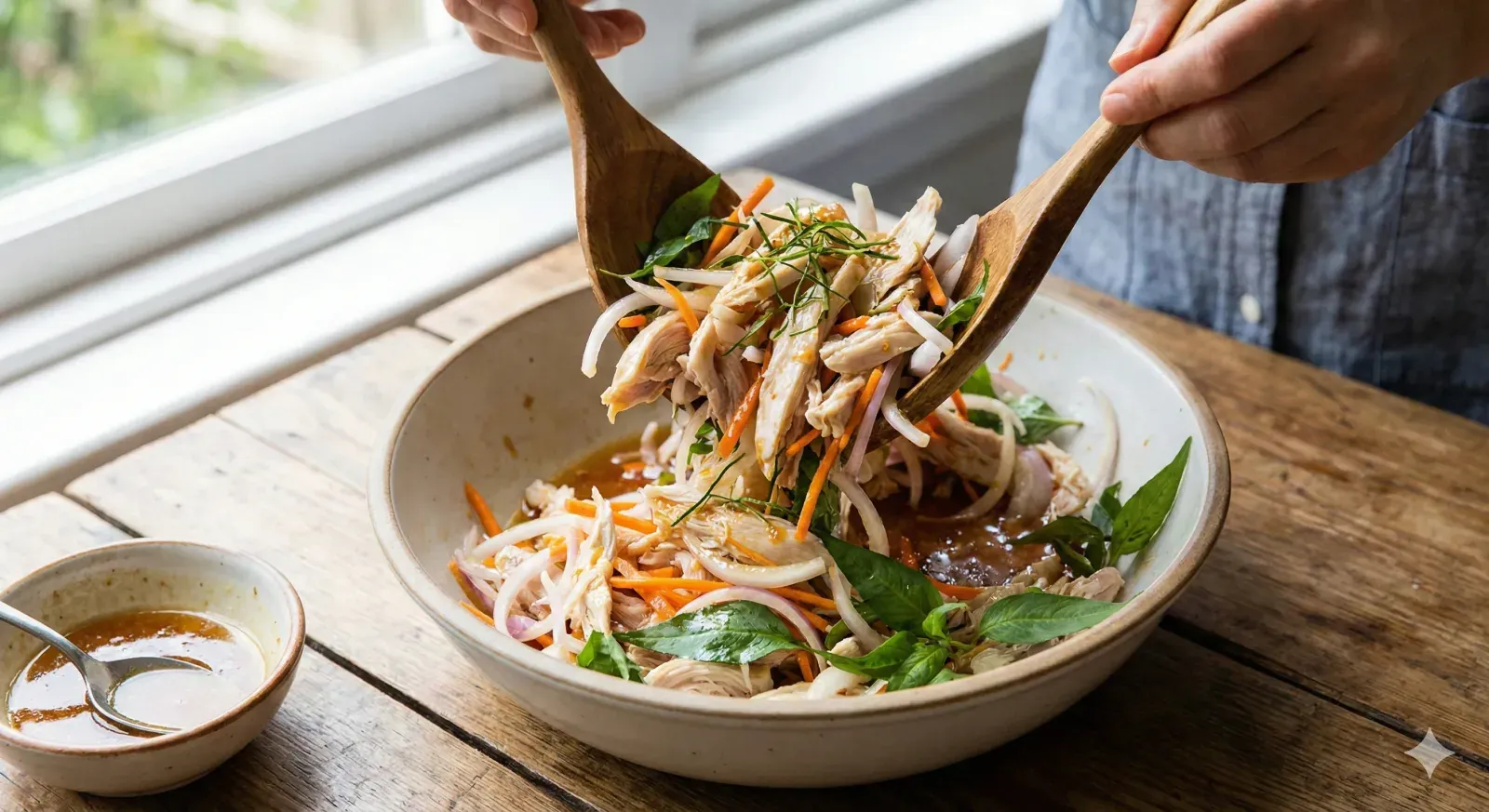
5In a large mixing bowl, combine the shredded chicken, sliced onions, and julienned carrot. Begin adding the dressing a tablespoon at a time, tossing thoroughly between each addition. Taste as you go — you may not need all the dressing depending on the size of your chicken.
Once the main components are well seasoned, add the Vietnamese coriander and sliced kaffir lime leaves. Toss gently — you want to combine without bruising the delicate herbs too much. The salad should look glossy, lightly coated, and vibrantly green.
Step 6: Plate and Serve
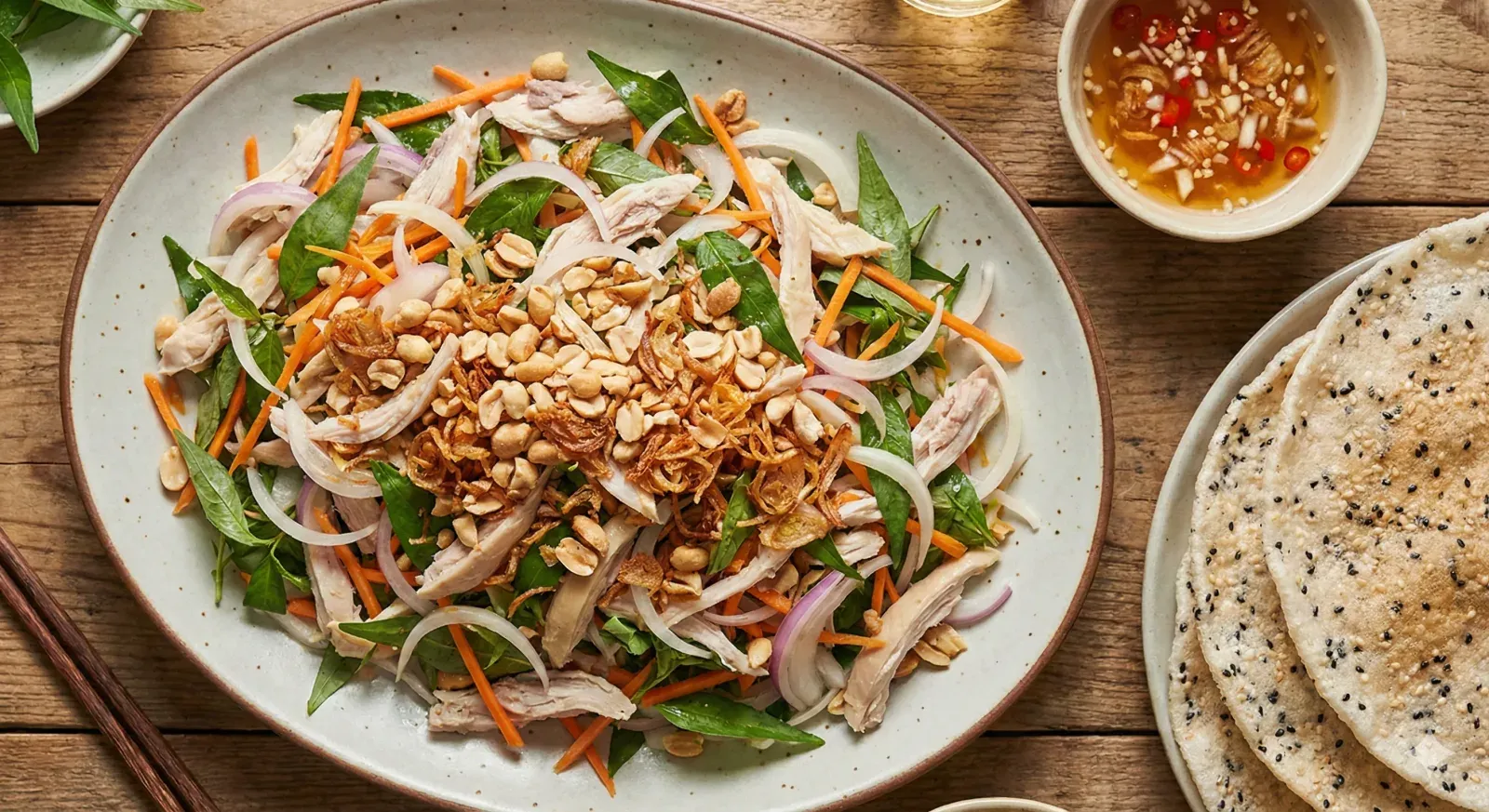
6Mound the Vietnamese chicken salad onto a large serving plate. Scatter generously with roughly crushed roasted peanuts — these add essential crunch and richness. Finish with a handful of crispy fried shallots (hành phi) for savory depth and texture.
Serve immediately while the herbs are still vibrant and the peanuts are crunchy. Accompany with rice crackers (bánh đa) or prawn crackers (phồng tôm) for the full experience — scooping the salad with a cracker is the traditional and most satisfying way to eat gỏi gà.
Expert Tips for Perfect Gỏi Gà Rau Răm
The Ice Bath Is Non-Negotiable
Plunging the just-cooked chicken into ice water immediately stops the cooking process and — crucially — causes the skin to contract, creating that smooth, slightly firm, almost silky texture that great Vietnamese chicken dishes are famous for. Skip this step and you’ll have decent chicken. Do it, and the texture is transformative.
Shred, Don’t Cut
Hand-shredding the chicken along the grain gives you irregular, fibrous pieces with a much better texture than knife-cut chicken. The rough edges also cling to the dressing more effectively, giving more flavor in every bite.
Don’t Dress Too Early
Vietnamese salads are dressed right before serving, not in advance. The herbs wilt quickly and the onions soften once dressed. Have everything prepped and ready, then toss only when you’re ready to plate and eat.
Balance Your Dressing Thoughtfully
Fish sauce brands vary in saltiness. Start with the quantities given, taste, and adjust. The dressing philosophy in Vietnamese cooking is: make it taste almost too strong on its own, because it will taste perfectly balanced once distributed through all the ingredients.
What Is Vietnamese Coriander (Rau Răm)?
Rau răm — known in English as Vietnamese coriander, Vietnamese mint, or laksa leaf — is one of the most distinctive herbs in Southeast Asian cooking. Unlike regular coriander (cilantro), it has narrow, pointed leaves with subtle purple markings on the stem, and a flavor that combines peppery heat with citrus and mint notes. It’s a warm-weather herb that thrives in summer, which is part of why this salad has become synonymous with hot weather eating in Vietnam.
You’ll find rau răm at most Asian grocery stores and Vietnamese markets. It’s also remarkably easy to grow at home in a sunny spot or pot — one plant will keep you supplied all summer. If you genuinely cannot find it, a mix of fresh mint and coriander is the closest substitute, though the unique peppery warmth of the real thing is hard to replicate.
Serving Suggestions
Gỏi gà rau răm is wonderfully versatile. In Vietnamese homes it appears as part of a shared family meal alongside rice and soup, but it also works beautifully as a standalone starter or light main course.
Traditional Accompaniments:
- Rice crackers (bánh đa): The classic pairing — use them to scoop the salad
- Prawn crackers (phồng tôm): Light and airy, they complement the salad perfectly
- Steamed jasmine rice: For serving as part of a full meal
- Light clear soup (canh): A simple vegetable broth balances the bold salad flavors
Beverage Pairings:
The bold tangy-savory flavors of gỏi gà pair beautifully with cold drinks that cut through richness. Try Vietnamese iced green tea, fresh lime soda (nước chanh), cold young coconut water, or a light crisp lager. For wine lovers, an off-dry Riesling or Grüner Veltliner matches the dish’s acidity and spice remarkably well.
Variations and Adaptations
Cabbage Version (No Onion):
If you or your family don’t eat onions, shredded white cabbage or banana blossom (hoa chuối) makes an excellent substitute. Soak cabbage in ice water the same way for maximum crunch.
Mango Gỏi Gà:
Add julienned green mango for an extra sour, fruity dimension popular in the south of Vietnam. The tartness of unripe mango works beautifully with the savory dressing.
Lotus Stem Addition:
Pickled lotus stems (ngó sen) add a lovely crunchy-tangy element that’s traditional in Southern Vietnamese versions of this salad.
Vegan Version:
Replace chicken with thinly sliced pressed tofu or young jackfruit. Swap fish sauce for good-quality soy sauce mixed with a squeeze of lime. The result is lighter but still deeply satisfying.
Storage Tips
Undressed components: Store poached shredded chicken, prepped vegetables (except herbs), and dressing separately in the fridge for up to 24 hours. Assemble and dress only right before serving.
Already dressed salad: Best eaten immediately. Leftovers can be stored for up to 1 day in an airtight container in the fridge, but the herbs will wilt and the texture will soften. Not ideal, but still tasty the next day.
Common Mistakes to Avoid
1. Overcooking the Chicken
Dry, stringy chicken ruins this salad. Cook just until done, use the off-heat resting method, and always cool in ice water. The meat should be tender and juicy — almost silky.
2. Skipping the Onion Soak
Raw unsalted onion can easily overpower the delicate herbs. The 10-minute ice water soak isn’t optional — it transforms harsh raw onion into something mild, crisp, and pleasant.
3. Dressing the Salad Too Early
Acid breaks down herbs quickly. If you dress the salad more than 10 minutes before serving, the rau răm will go limp and dark. Prep everything in advance, dress at the last moment.
4. Using the Wrong Part of the Herb
Only use the young tender leaves and shoot tips of rau răm. Older, larger leaves can be bitter and tough. Picking carefully makes a real difference in the final flavor.
5. Forgetting the Peanuts and Fried Shallots
These toppings aren’t decoration — they add essential textural contrast and flavor depth. The crunch of peanuts and the savory sweetness of fried shallots complete the dish. Don’t skip them.
Frequently Asked Questions
What is Vietnamese coriander (rau răm) and where can I find it?
Rau răm (also called Vietnamese mint or laksa leaf) is a peppery, aromatic herb with narrow leaves and a distinctive flavor that combines pepper, citrus, and mint notes. Look for it at Asian grocery stores or Vietnamese markets. It’s also easy to grow at home in a pot. If unavailable, a mix of fresh mint and regular coriander is the closest substitute.
Can I use rotisserie chicken to save time?
Yes! Remove the skin, shred the meat, and use from Step 5. The flavor will be slightly smokier and less delicate, but the salad will still taste great. A great weeknight shortcut.
Why does the dressing taste so strong before I add it?
That’s by design. The dressing needs to be intensely flavored to season a large volume of chicken and vegetables. Think of it like seasoning pasta water — it should taste almost too salty on its own so the final dish is perfectly seasoned throughout.
Is this dish suitable for children?
Absolutely — just leave out the chili and chili sauce from the dressing. The salad is mild, fragrant, and kid-friendly without the heat. The peanuts are a hit with kids too (check for allergies).
What’s the difference between gỏi gà and a regular chicken salad?
Western chicken salad is typically mayo-based and creamy. Gỏi gà is a Vietnamese-style “mixed salad” — dressed with a vibrant fish sauce vinaigrette and loaded with fresh herbs. It’s much lighter, brighter, and more aromatic. The textures are also very different: shredded chicken, crisp onions, and crunchy peanuts versus the soft, uniform texture of mayo-dressed salads.
The Cultural Context of Gỏi Gà
In Vietnamese culinary tradition, gỏi (salads) occupy a special role as refreshing, palate-cleansing dishes that provide balance in a multi-course meal. Unlike in Western cuisine where salad is often a warm-up act, Vietnamese salads are full-flavored, substantial, and considered a highlight of the table.
Gỏi gà rau răm in particular is deeply tied to summer and to celebrations — it’s a common sight at family gatherings, lunar new year tables, and wedding banquets. The combination of chicken with rau răm also has traditional associations: in Vietnamese folk wisdom, the pairing is said to be cooling and beneficial during hot weather — an edible remedy for the heat.
Every family has their own version, with subtle adjustments to the dressing ratio or herb selection passed down through generations. This recipe reflects the most widely loved Northern Vietnamese interpretation: clean, aromatic, and beautifully balanced.
Conclusion
Once you make Vietnamese chicken salad with Vietnamese coriander (gỏi gà rau răm) at home, it’s hard to go back. The combination of silky poached chicken, crisp onions, fragrant herbs, and that bright, punchy dressing is endlessly craveable — especially in summer. It’s fast to prepare, uses simple ingredients, and delivers flavors that feel genuinely special.
Master the technique — the ice bath, the onion soak, the just-right dressing — and you’ll have a dish that earns consistent requests every time you serve it. Pile it high on a plate, crown it with peanuts and fried shallots, and set out a bowl of crackers. The table will go quiet very quickly.
Looking for more authentic Vietnamese salads and light dishes? Explore our full recipe collection at My Viet Kitchen — each one comes with detailed technique notes and the cultural background that makes Vietnamese cooking so rewarding to learn.