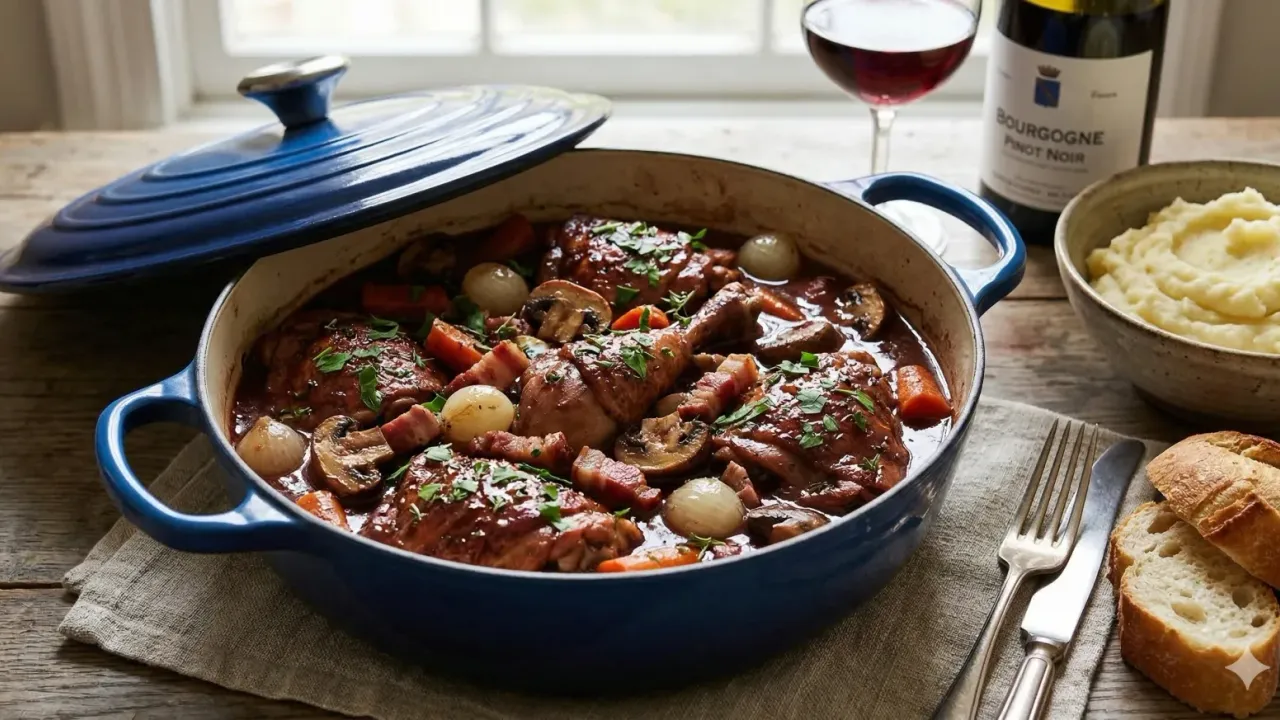
Coq au vin is one of the greatest dishes in all of French cooking, and this coq au vin recipe brings its rustic elegance to your home kitchen. Tender chicken pieces braised in a rich red wine sauce with smoky bacon, earthy mushrooms, and sweet pearl onions create a dish that feels both homey and special. This coq au vin recipe proves that French food does not have to be fussy or hard to make at home.
Prep Time: 30 minutes | Cook Time: 90 minutes | Servings: 6
Difficulty: Medium | Calories: ~520 per serving
What Makes Coq au Vin Special?
At its heart, coq au vin is peasant food made with simple stuff: a tough old rooster, cheap wine, and whatever veggies were on hand. French farm cooks figured out that slow braising in wine could turn a chewy bird into something melt-in-your-mouth tender. Over time, this humble stew climbed the ranks to become a symbol of French cuisine. Julia Child helped bring the dish to American kitchens in the 1960s, and it has stayed popular ever since.
What makes this dish so good is the depth of its sauce. As the chicken braises, it releases its juices into the wine. The bacon adds smokiness, the mushrooms bring earthiness, and the pearl onions melt into sweet little gems. All of these flavors blend together during the long, gentle simmer. By the end, the sauce is thick, glossy, and packed with taste.
The name literally means “rooster in wine” in French. Today, most cooks use a regular chicken instead of a rooster, because roosters are hard to find. However, the spirit of the dish remains the same. It is about using wine and slow cooking to create something far greater than the sum of its parts. The Burgundy region of France claims the dish as its own, though versions pop up all over the country.

Choosing the Right Wine for Coq au Vin
The wine is the backbone of this coq au vin recipe, so picking a good one matters. You do not need to spend a fortune, but the wine should be one you would enjoy drinking. Here are your best options.
- Burgundy or Pinot Noir (best choice): This is the classic pick for coq au vin. Burgundy wines are smooth, fruity, and medium-bodied. They meld with the chicken and vegetables without being too heavy. A $10 to $15 bottle works great.
- Cotes du Rhone: A bit fuller than Burgundy, with peppery and earthy notes. It gives the sauce more body and a slightly bolder flavor. This is a fine choice if you like a richer sauce.
- Cooking wine (not recommended): Cooking wines from the grocery aisle are loaded with salt and have a harsh, flat taste. They will ruin your sauce. Always use a real wine that you would pour into a glass. If you would not drink it, do not cook with it.
Ingredients for Coq au Vin
Chicken and Bacon:
- 1 whole chicken (about 4 pounds), cut into 8 pieces
- 6 slices thick-cut bacon, cut into 1/2-inch lardons
- Salt and black pepper to taste
Vegetables:
- 8 ounces cremini mushrooms, quartered
- 1 cup pearl onions, peeled
- 2 medium carrots, cut into 1-inch pieces
- 3 cloves garlic, minced
Sauce and Herbs:
- 1 bottle (750ml) dry red wine, such as Burgundy or Pinot Noir
- 2 cups chicken broth
- 2 tablespoons tomato paste
- 2 tablespoons all-purpose flour
- 2 tablespoons butter
- 2 tablespoons olive oil
- 3 sprigs fresh thyme
- 2 bay leaves
- 1 tablespoon fresh parsley, chopped
Pro tip: Do not skip browning the chicken in the bacon fat. This step builds a golden crust on the chicken skin and creates fond, those dark bits on the bottom of the pot. When you pour in the wine, those bits dissolve into the sauce and add incredible depth. Rushing past this step robs your coq au vin of its richest flavors.
Step-by-Step Instructions
Step 1: Brown the Bacon and Chicken
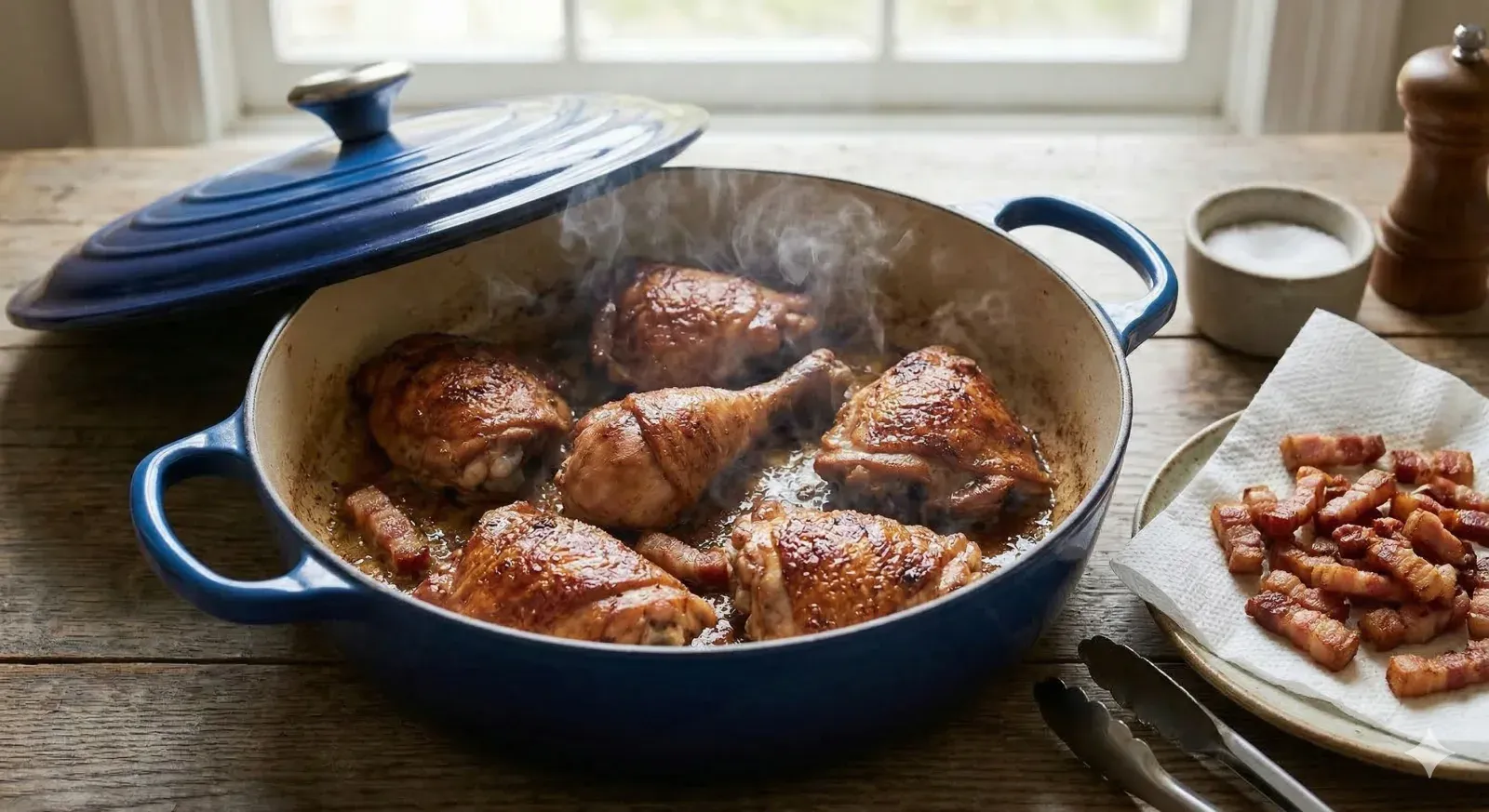
1 Set a large Dutch oven over medium heat. Add the bacon lardons and cook for 6 to 8 minutes, stirring now and then, until crispy and golden. Use a slotted spoon to move the bacon to a paper-towel-lined plate. Leave the rendered fat in the pot because it will flavor the whole dish.
Pat the chicken pieces dry with paper towels and season them well with salt and pepper. Working in batches so the pot is not crowded, brown the chicken in the hot bacon fat. Cook for about 4 minutes per side until the skin is deep golden. Do not move the pieces while they brown. Set the browned chicken aside on a plate.
Step 2: Saute the Aromatics
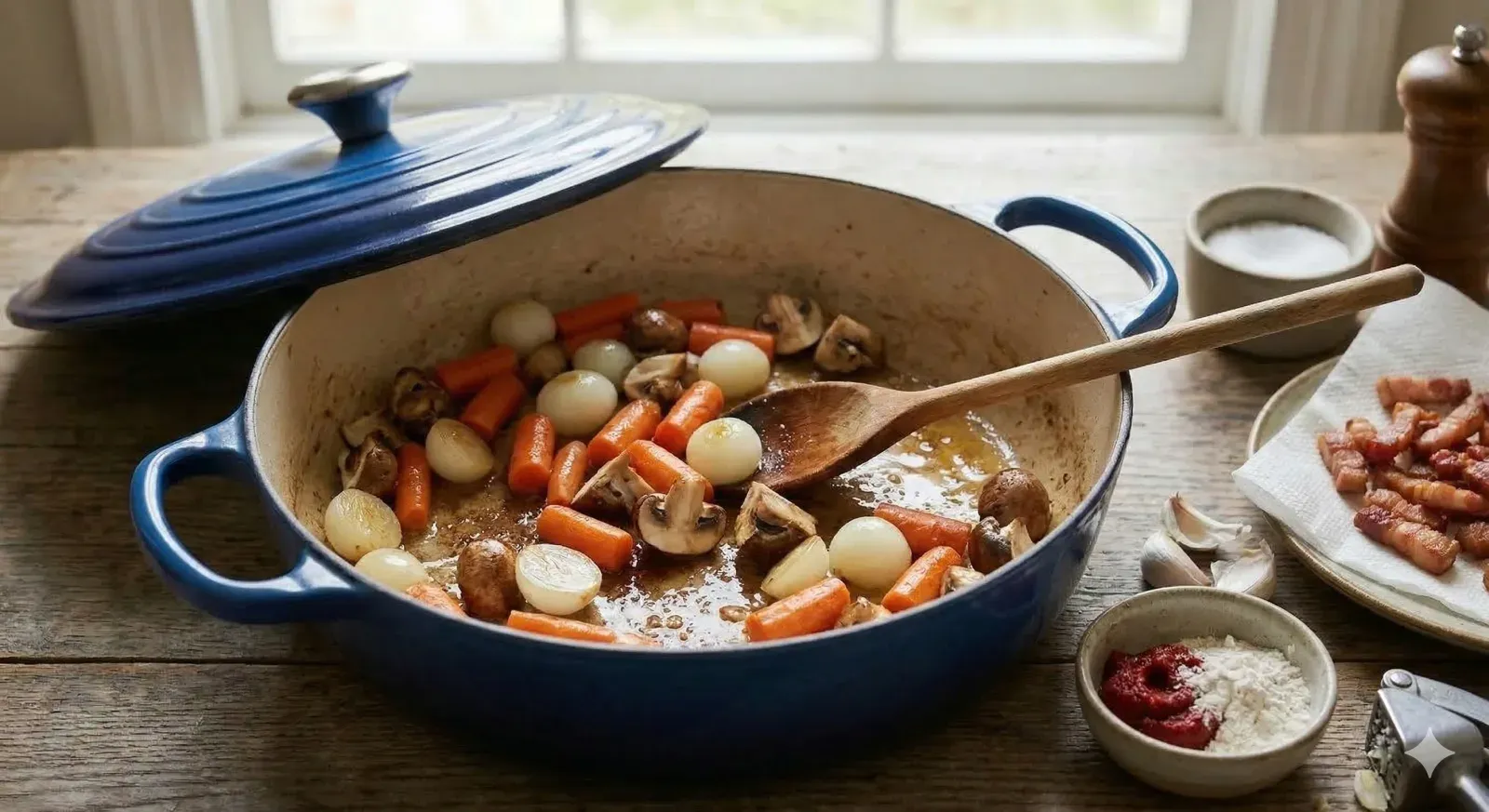
2 Pour off all but 2 tablespoons of fat from the pot. Add the pearl onions and carrots. Cook for 5 minutes over medium heat, stirring often, until the onions pick up a little color. Then add the minced garlic and tomato paste. Stir for 1 minute until the garlic is fragrant and the paste turns a shade darker.
Sprinkle the flour over the veggies and stir for 1 more minute. The flour will thicken the sauce later during braising. Cooking it now removes the raw starchy taste. This is the same roux method French cooks use in many classic sauces.
Step 3: Deglaze and Braise
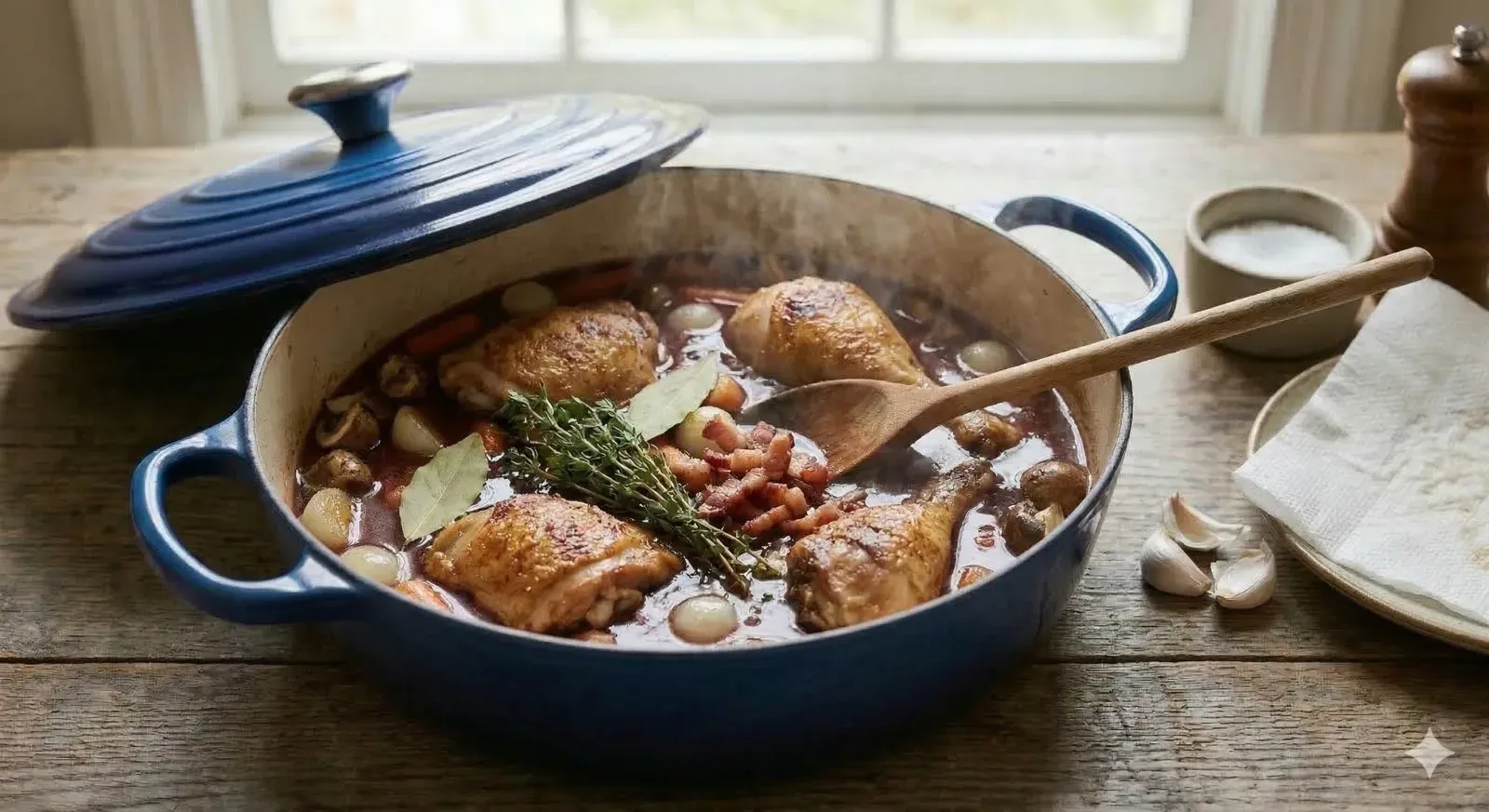
3 Pour in the full bottle of red wine and the chicken broth. Use a wooden spoon to scrape up all the browned bits stuck to the bottom of the pot. These bits are pure flavor. Bring the liquid to a boil, then lower the heat to a gentle simmer.
Add the thyme sprigs, bay leaves, and crispy bacon back to the pot. Nestle the browned chicken pieces into the liquid so they are mostly covered. Put the lid on, leaving it slightly open for steam to escape. Braise on low heat for 60 to 75 minutes. The chicken should be very tender, nearly falling off the bone. Check once around the 45-minute mark to make sure the simmer stays gentle.
Step 4: Add Mushrooms and Finish
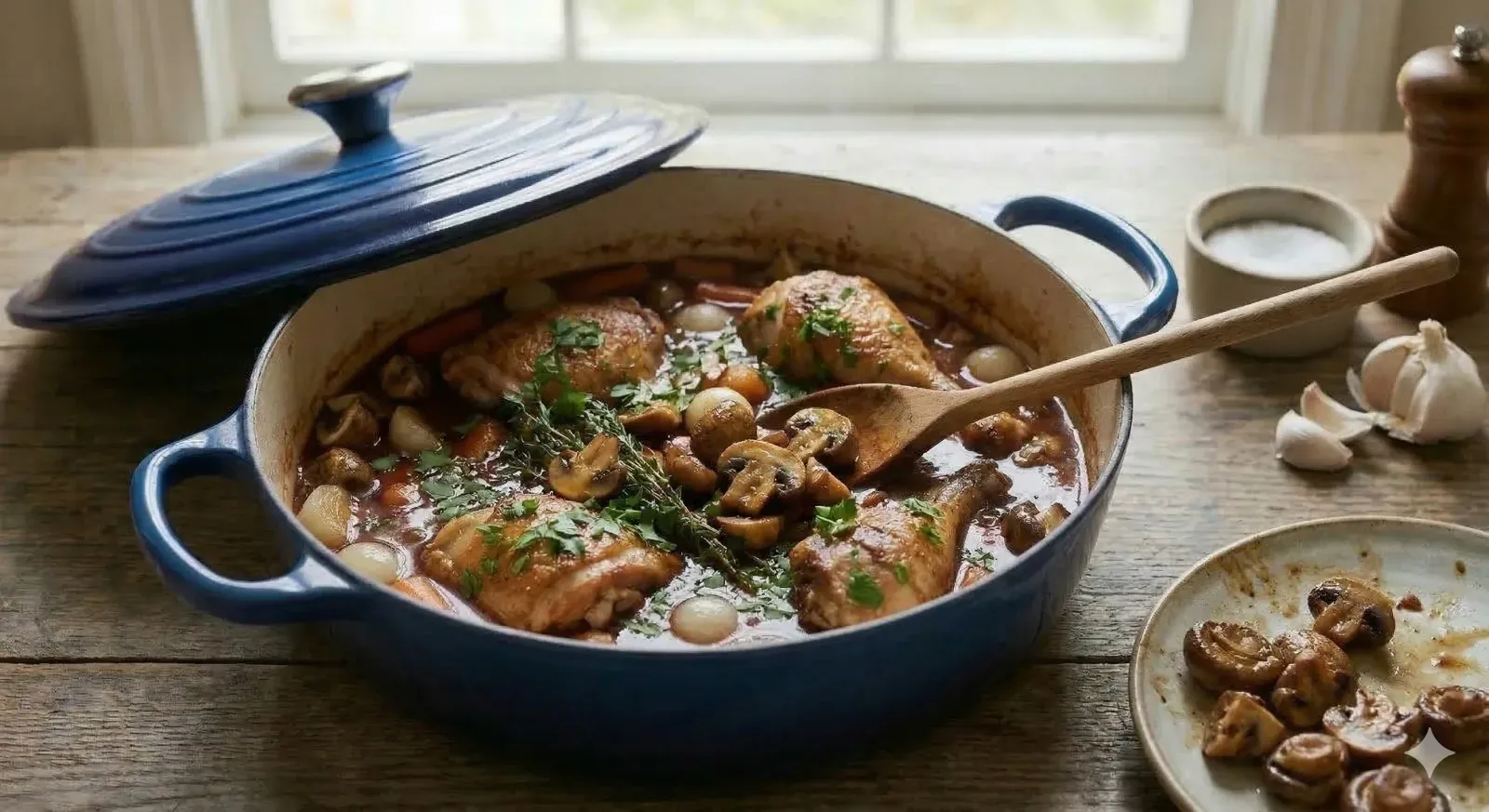
4 About 15 minutes before the braising is done, melt the butter in a skillet over medium-high heat. Add the quartered mushrooms and cook for 5 to 6 minutes until golden brown on the edges. Season them with a pinch of salt. Then add the mushrooms to the Dutch oven for the final 15 minutes of cooking.
When the braising is complete, remove the bay leaves and thyme stems. Taste the sauce and adjust the salt and pepper. If the sauce seems thin, remove the chicken and veggies, then boil the sauce for 5 to 10 minutes until it thickens to your liking. Spoon the rich sauce over the chicken, scatter fresh parsley on top, and serve.
Expert Tips for the Perfect Coq au Vin Recipe
Dry the Chicken Before Browning
Wet chicken will steam instead of sear. Pat each piece dry with paper towels right before it goes into the hot fat. Dry skin browns fast and creates a crispy, golden crust. This crust not only tastes great but also adds body to the sauce as it braises. Skipping this small step leads to pale, soggy skin.
Use a Whole Bottle of Wine
A full 750ml bottle seems like a lot, but it cooks down by half during braising. As the wine reduces, its flavor gets richer and the sauce turns silky and glossy. If you use too little wine, the sauce will taste thin and weak. Trust the process and pour in the whole bottle. Your sauce will thank you.
Keep the Heat Low During Braising
A hard boil toughens the chicken and makes the sauce murky. Low, gentle heat lets the meat soften slowly while the sauce stays clear and glossy. You want tiny bubbles rising lazily, not a rolling boil. If your stove runs hot, use a heat diffuser or move the pot to a 325-degree oven instead.
French Braised Chicken: A Regional Comparison
France has many styles of braised chicken, and each region puts its own stamp on the dish. Coq au vin is the most famous, but it is far from the only version. Here is how the major French braised chicken dishes compare.
| Dish | Region | Key Liquid | Defining Ingredients |
|---|---|---|---|
| Coq au Vin | Burgundy | Red wine | Bacon, mushrooms, pearl onions, thyme |
| Coq au Vin Blanc | Alsace/Jura | White wine | Cream, mushrooms, shallots, tarragon |
| Coq au Riesling | Alsace | Riesling wine | Cream sauce, mushrooms, egg noodles |
| Poulet Basquaise | Basque Country | Tomato base | Bell peppers, Bayonne ham, espelette pepper |
| Poule au Pot | Bearn | Broth | Root vegetables, stuffed chicken, simple broth |
Serving Suggestions
In France, coq au vin is served straight from the pot at the center of the table. The rich wine sauce calls for something starchy to soak it up. Here are the best sides to round out the meal.
Classic Accompaniments:
- Mashed potatoes: Creamy, buttery mashed potatoes are the top choice for soaking up the wine sauce. Use Yukon Gold for the best texture. A big spoonful on the plate next to the chicken is pure comfort.
- Crusty French bread: A fresh baguette is essential for mopping up every last drop of sauce. Tear off chunks and drag them through the rich, glossy liquid on your plate.
- Egg noodles: Wide egg noodles tossed in butter catch the sauce in their folds. This is a popular pairing in the Alsace region.
- Steamed green beans: Simple, lightly seasoned green beans add a fresh crunch that balances the rich, heavy sauce.
Beverage Pairings:
- Burgundy Pinot Noir: Serve the same wine you cooked with. It creates a perfect match since the flavors mirror each other.
- Beaujolais: A lighter, fruity red that keeps the meal feeling easy and approachable. Chill it slightly for the best effect.
- Sparkling water: A simple glass of bubbly water with a lemon wedge cleanses the palate between rich bites.
- Apple cider: For a non-alcoholic option, dry apple cider has a slight tartness that pairs nicely with the savory chicken and wine sauce.
Storage and Reheating
Refrigerator: Coq au vin keeps well in the fridge for up to 4 days. In fact, it tastes even better reheated because the flavors have time to blend overnight. Store the chicken and sauce together in a sealed container.
Freezer: This dish freezes well for up to 3 months. Let it cool, then portion into freezer-safe containers. The sauce may thicken as it freezes, so add a splash of broth when you reheat. Thaw in the fridge the night before.
Reheating: Warm it gently on the stove over low heat. Stir now and then so it heats evenly. The sauce should come back to a gentle simmer but not a hard boil. If the sauce has gotten too thick, stir in a few tablespoons of chicken broth to loosen it.
Common Mistakes to Avoid
1. Using Bad Wine
Cheap cooking wine from the grocery aisle will make your sauce salty and bitter. Since the wine is the main flavor of the dish, it must taste good on its own. You do not need an expensive bottle. A solid $10 to $15 Pinot Noir or Burgundy will work great. Pour yourself a glass while you cook.
2. Crowding the Pot When Browning
Too many chicken pieces in the pot at once drops the heat fast. Instead of browning, the chicken steams and turns gray. Brown the pieces in two or three batches. Give each piece plenty of space. This extra care gives you a golden crust that adds huge flavor to the final sauce.
3. Braising on Too High Heat
High heat makes the chicken tough and dry, even in a pot full of liquid. A gentle, low simmer is what you need. The liquid should barely bubble. If your stove’s lowest setting is still too hot, crack the lid open a bit or put the pot in a 325-degree oven. Slow braising gives you the softest, most tender meat.
4. Skipping the Browning Step
Some cooks dump everything in the pot raw to save time, but this costs you a lot of flavor. Browning the chicken and bacon first creates deep, savory notes through a process called the Maillard reaction. Those golden-brown bits on the pot’s bottom dissolve into the sauce and give it body. Never skip this step.
Frequently Asked Questions
What wine is best for coq au vin?
A dry red Burgundy or Pinot Noir is the classic choice. Pick a bottle in the $10 to $15 range that you would enjoy drinking. Avoid salty cooking wines. A Cotes du Rhone or Beaujolais also works well if you want a lighter or bolder flavor. The key is to use a real wine that tastes good.
Can I make coq au vin with white wine?
Yes, the white version is called coq au vin blanc. Use a dry Chardonnay or white Burgundy. The sauce will be lighter and golden instead of deep red. Many cooks add cream to the white version for extra richness. The cooking method stays exactly the same.
How long should I braise coq au vin?
Plan on 60 to 75 minutes of gentle simmering. Dark meat pieces like thighs and drumsticks take the full time. Breast pieces cook faster and may need only 45 minutes. The meat should be very tender and almost falling off the bone when done. Check it at 60 minutes and go from there.
Can I make coq au vin ahead of time?
Yes, and many French cooks say it is better that way. Make the dish a day ahead, let it cool, and store it in the fridge. The flavors blend and deepen overnight. Reheat slowly on the stove the next day. Add a little broth if the sauce has gotten too thick.
What is the difference between coq au vin and chicken cacciatore?
Both are braised chicken, but they come from different kitchens. Coq au vin is French and uses red wine, bacon, mushrooms, and pearl onions. Chicken cacciatore is Italian and relies on tomatoes, peppers, olives, and herbs like basil and rosemary. The braising method is the same, but the flavors go in very different directions.
Do I need to marinate the chicken in wine first?
Old-school recipes call for an overnight wine marinade, but most modern versions skip it. Braising the chicken in a full bottle of wine for over an hour gives you plenty of wine flavor. If you have the time, a quick 4-hour marinade does add a bit more depth. However, it is not a must for a great result.
Variations and Adaptations
Coq au Vin Blanc:
Swap the red wine for a dry white Burgundy or Chardonnay. Add a half cup of heavy cream to the sauce during the last 10 minutes. The result is a lighter, silkier dish with a golden sauce. Fresh tarragon instead of thyme gives this version its own herby character.
Quick Weeknight Version:
Use boneless, skinless chicken thighs to cut the cook time to 35 minutes. Brown the thighs, build the sauce, and braise in a covered skillet. Skip the pearl onions and use sliced yellow onion instead. You lose some depth, but you gain a fast, easy dinner that still tastes great.
Coq au Vin with Beer:
In northern France and Belgium, cooks braise chicken in dark beer instead of wine. Use a Belgian dubbel or brown ale. The beer adds malty sweetness and a slightly bitter edge. Add a tablespoon of brown sugar to balance the hops. This version is called coq a la biere and is well worth trying.
The Cultural Significance of Coq au Vin
Coq au vin is a dish that tells the story of French country cooking. It began in farmhouses where nothing went to waste. A tough old rooster past his prime would be braised in local wine until tender. The dish turned a problem into a feast. That spirit of making something great from humble parts is at the core of French cuisine.
Julia Child featured coq au vin on her TV show in 1963, and it became one of the first French dishes that home cooks in America dared to try. Her clear, warm teaching style made it seem doable. Since then, coq au vin has held a special place in the story of how French food crossed the Atlantic.
Today, you will find coq au vin on menus in bistros across France and around the world. It remains a go-to for dinner parties because it feeds a crowd, looks stunning, and tastes better when made ahead. In other words, it is the perfect dish for a host who wants to enjoy their own party.
Conclusion
This coq au vin recipe brings a taste of the French countryside to your table. The keys are simple: brown the chicken well, use a full bottle of good wine, and braise low and slow until the meat falls off the bone. Follow this coq au vin recipe step by step, and you will end up with a pot of rich, glossy, deeply savory chicken that makes the whole house smell amazing.
Ready to explore more French classics? Browse our European dishes collection, including beef bourguignon, ratatouille, and cassoulet. Also check out our Asian braised dishes for more slow-cooked comfort food.