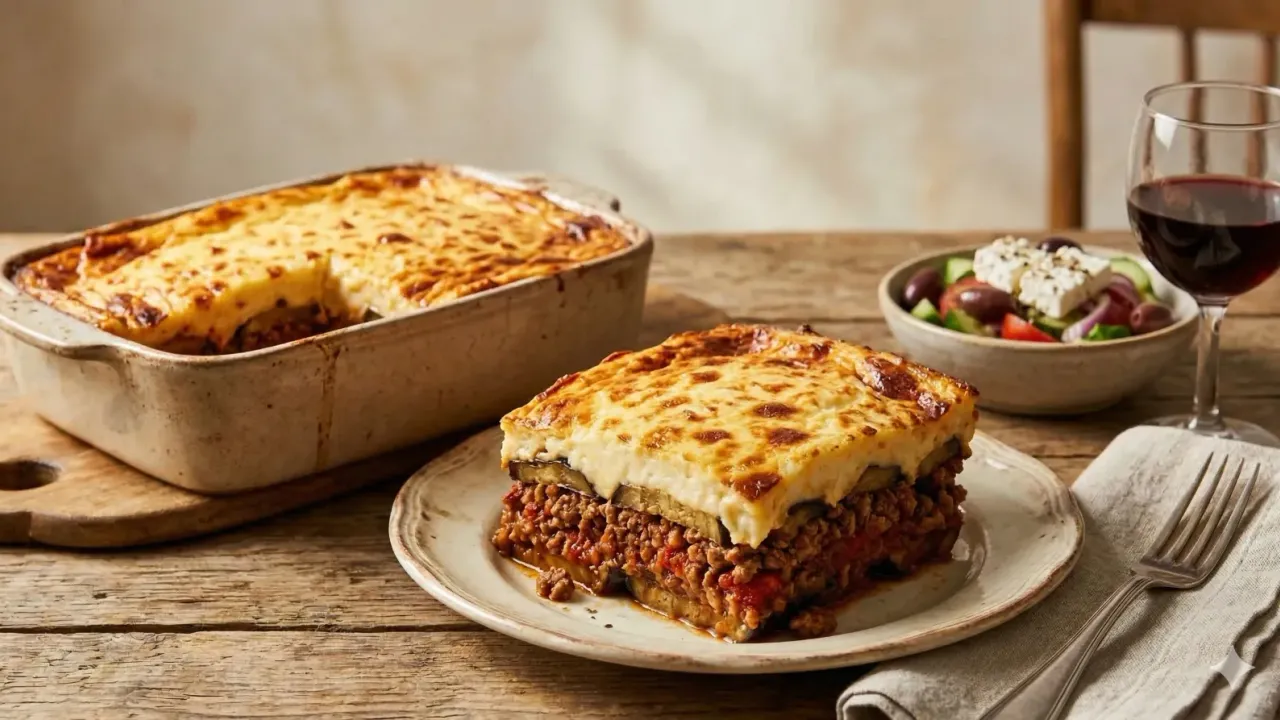
Moussaka is the undisputed queen of Greek comfort food, and this moussaka recipe brings its legendary layers right to your kitchen. Imagine golden roasted eggplant, a richly spiced lamb and tomato sauce, and a silky bechamel crown that puffs and browns in the oven. This beloved Mediterranean casserole has captured hearts across the world for centuries. Whether you are cooking for a Sunday family dinner or a festive gathering, this moussaka recipe delivers authentic Greek flavor with every forkful.
Prep Time: 40 minutes | Cook Time: 60 minutes | Servings: 8
Difficulty: Medium | Calories: ~480 per serving
What Makes Moussaka Special?
Moussaka is far more than a simple eggplant bake. It is a dish that tells the story of Greek culinary tradition. The recipe combines humble Mediterranean ingredients into something truly extraordinary. Each layer plays a distinct role: the eggplant provides a silky, smoky base, the meat sauce delivers warmth and depth from cinnamon and allspice, and the bechamel adds a luxurious creaminess that ties everything together.
What sets Greek moussaka apart from other eggplant dishes is its careful mix of textures and tastes. Unlike a quick stir-fry or simple bake, moussaka rewards patience. You must salt and roast the eggplant, simmer the meat sauce until thick, and whisk the bechamel until smooth. Additionally, the resting time after baking is key because it lets the layers firm up into clean, neat slices.
The dish traces its roots to the Ottoman Empire, but Greek chef Nikolaos Tselementes made the bechamel version famous in the 1920s. Since then, moussaka has become a pillar of Greek cooking. Every home cook takes pride in getting it right. In Greek culture, a great moussaka is the mark of a skilled kitchen.
Choosing the Right Eggplant for Moussaka
The eggplant is the base of your moussaka recipe, so picking the right type matters a lot. Here are your best options for great results.
- Globe eggplant (best choice): These large, dark purple eggplants are the traditional pick for Greek moussaka. They have a meaty texture and mild taste that soaks up sauces well. Look for firm ones with smooth, shiny skin and no soft spots.
- Italian eggplant: Slightly smaller and more tender than globe eggplants, Italian varieties work well and cook a bit faster. They have fewer seeds, which means less bitterness and a smoother texture in the finished dish.
- Japanese eggplant (not ideal): Although tasty in Asian dishes, these eggplants are too thin and soft for moussaka. They break apart during layering and do not give you the thick slices you need to hold up the heavy meat sauce and bechamel.
Ingredients for Moussaka
Eggplant Layer:
- 3 large eggplants, sliced lengthwise into 1/4-inch rounds
- 3 tablespoons olive oil for brushing
- Coarse salt for sweating
Meat Sauce:
- 1 pound ground lamb (or beef, or a mix of both)
- 1 large onion, finely diced
- 3 cloves garlic, minced
- 1 can (14 oz) crushed tomatoes
- 2 tablespoons tomato paste
- 1/2 cup dry red wine
- 1 teaspoon ground cinnamon
- 1/2 teaspoon ground allspice
- 1 teaspoon dried oregano
- 2 bay leaves
- Salt and black pepper to taste
- 3 tablespoons olive oil
Bechamel Sauce:
- 4 tablespoons unsalted butter
- 1/3 cup all-purpose flour
- 3 cups whole milk, warmed
- 1/4 teaspoon ground nutmeg
- 2 egg yolks, lightly beaten
- 1 cup grated kefalotyri or Parmesan cheese
- Salt and white pepper to taste
Pro tip: Salting the eggplant slices and letting them drain for 30 minutes is the single most important step for preventing watery moussaka. This process draws out bitter juices and tightens the flesh, so the eggplant holds its shape during baking instead of collapsing into mush.
Step-by-Step Instructions
Step 1: Prepare the Eggplant
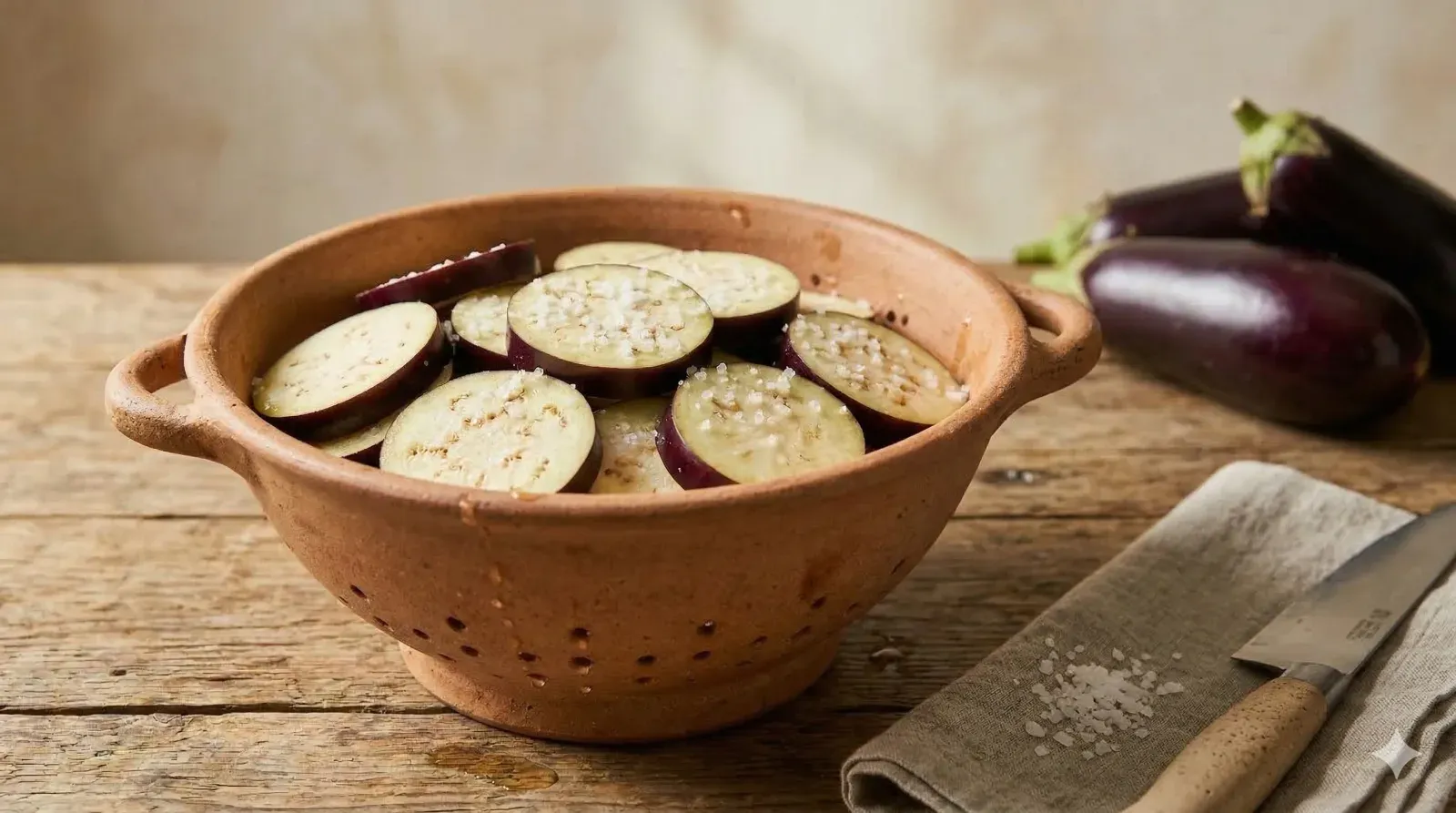
1 Slice the eggplants lengthwise into quarter-inch thick rounds. Lay them on a wire rack or in a colander and sprinkle both sides generously with coarse salt. Let them sit for 30 minutes to sweat out bitter moisture. You will see small beads of liquid forming on the surface. Rinse each slice under cold water, then pat completely dry with paper towels.
Next, preheat your oven to 400 degrees Fahrenheit. Arrange the eggplant slices on parchment-lined baking sheets in a single layer. Brush both sides lightly with olive oil. Roast for 20 minutes, flipping once halfway through, until golden brown and tender. This roasting method uses far less oil than the traditional frying approach while still delivering rich flavor.
Step 2: Make the Meat Sauce
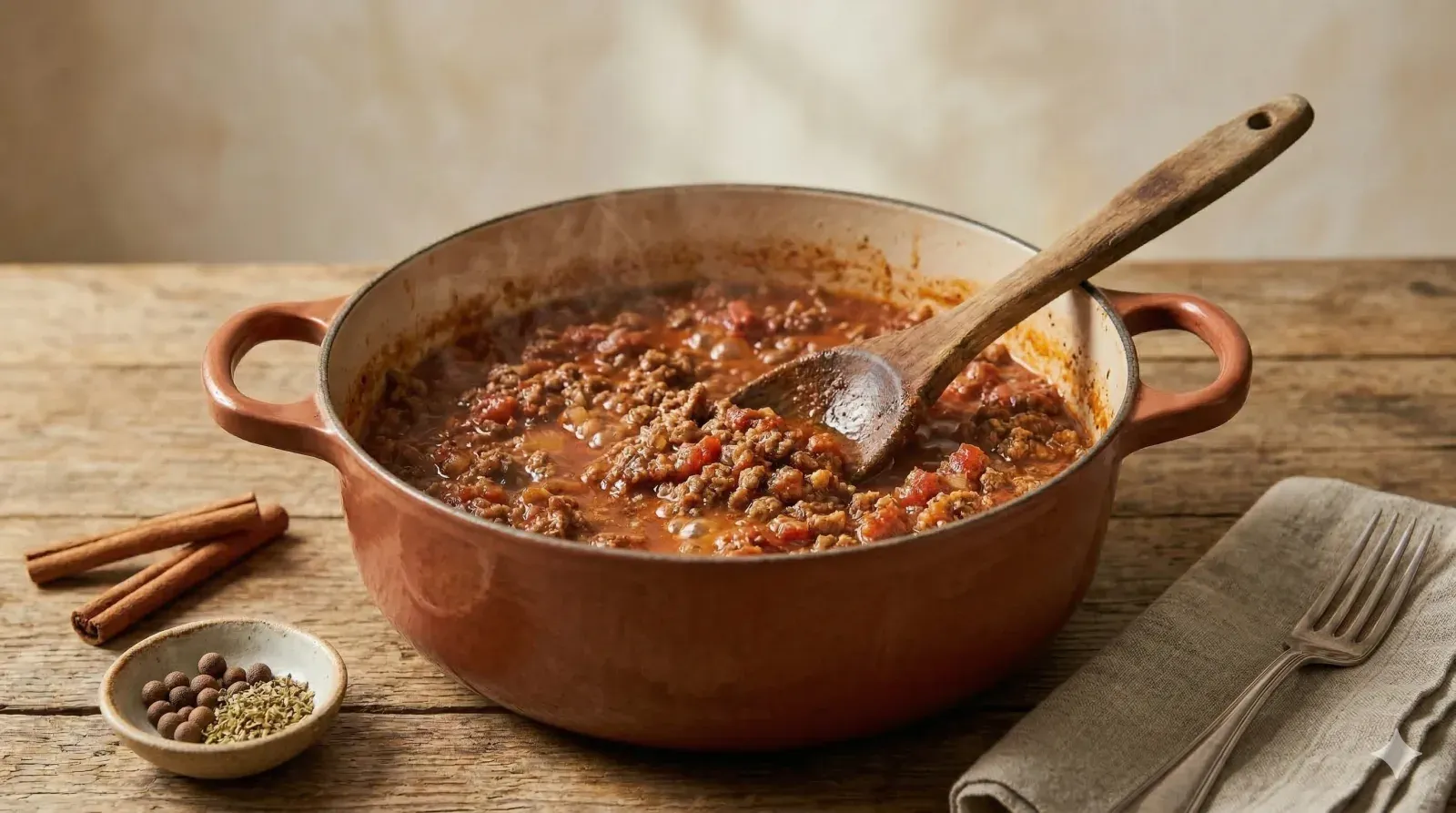
2 Heat the olive oil in a large, deep skillet over medium-high heat. Add the diced onion and saute for 5 minutes until soft and translucent. Then add the minced garlic and cook for another 30 seconds until fragrant. Add the ground lamb, breaking it up with a wooden spoon, and cook for 8 to 10 minutes until browned and no pink remains.
Pour in the red wine and let it bubble for 2 minutes, scraping up any browned bits from the bottom of the pan. These caramelized bits add tremendous depth. Then add the crushed tomatoes, tomato paste, cinnamon, allspice, oregano, and bay leaves. Stir well and bring to a simmer. Reduce the heat to low and cook uncovered for 20 minutes, stirring occasionally, until the sauce thickens and most of the liquid evaporates. Season with salt and pepper, then remove the bay leaves.
Step 3: Prepare the Bechamel Sauce
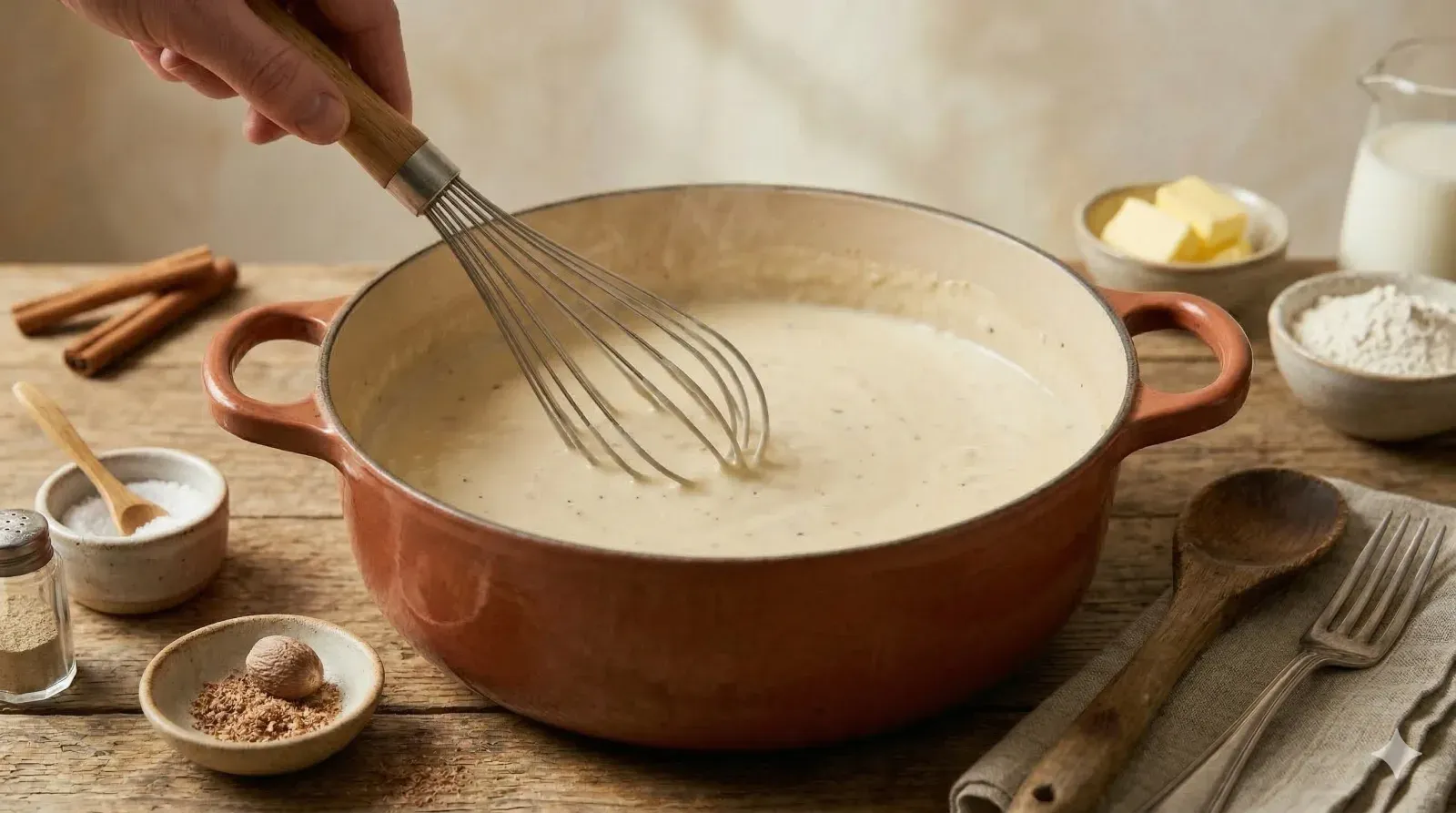
3 Melt the butter in a medium saucepan over medium heat. Once it foams, whisk in the flour and cook for 2 minutes, stirring constantly. This creates a roux that will thicken your sauce. The roux should smell nutty and turn a pale golden color. Do not let it brown, because a dark roux will change the flavor of your bechamel.
Slowly pour in the warm milk in a thin stream while whisking the whole time. Adding the milk bit by bit stops lumps from forming. Keep whisking over medium heat for 5 to 7 minutes until the sauce coats the back of a spoon. Take it off the heat and stir in the nutmeg. Let it cool for 2 minutes, then whisk in the egg yolks one at a time. Finally, fold in half of the grated cheese and season with salt and white pepper.
Step 4: Assemble the Moussaka
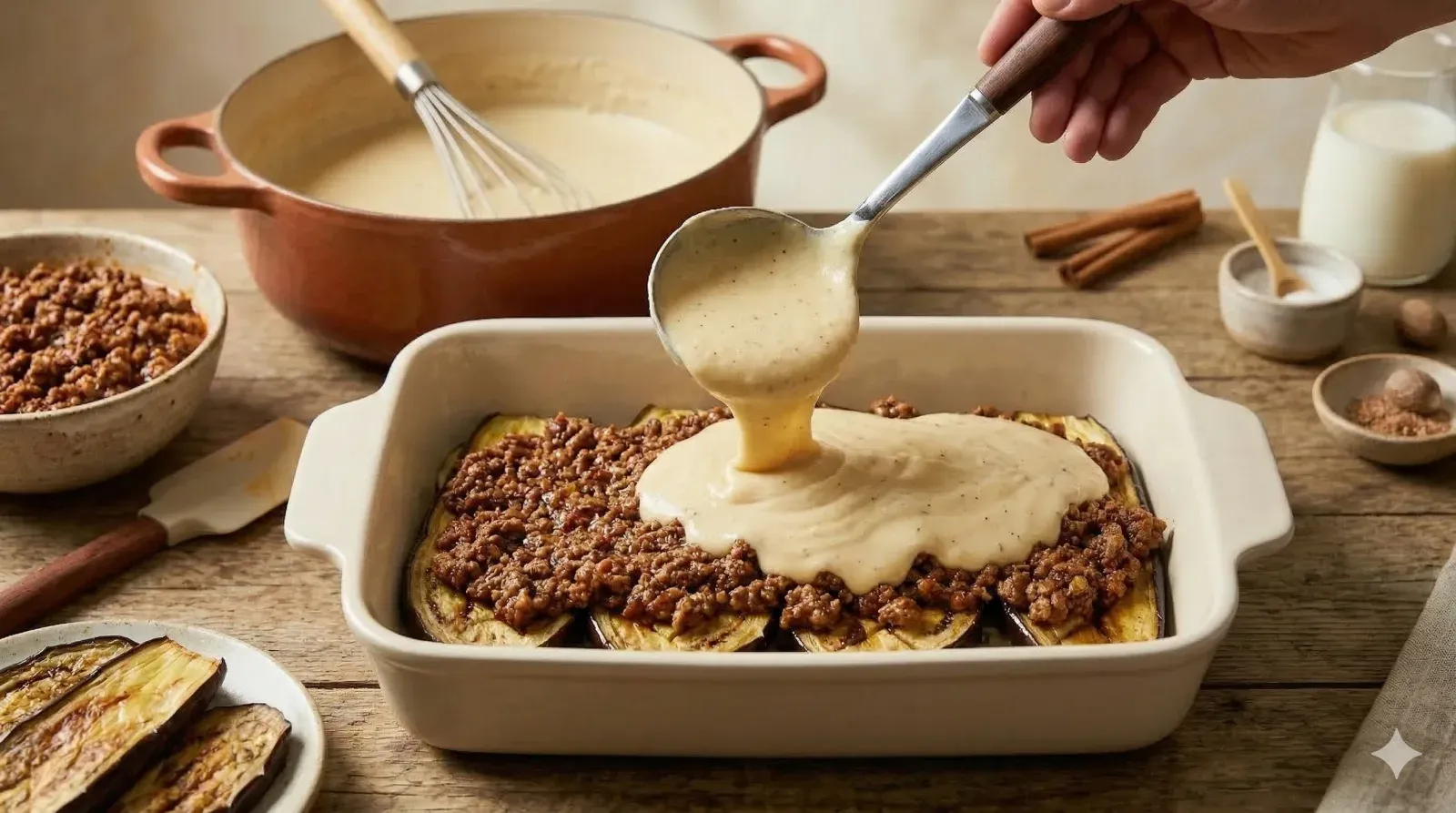
4 Preheat your oven to 375 degrees Fahrenheit. Lightly oil a 9-by-13 inch baking dish. Arrange half of the roasted eggplant slices in an even layer on the bottom, overlapping slightly if necessary. Spread all of the meat sauce evenly over the eggplant. Then layer the remaining eggplant slices on top of the meat sauce.
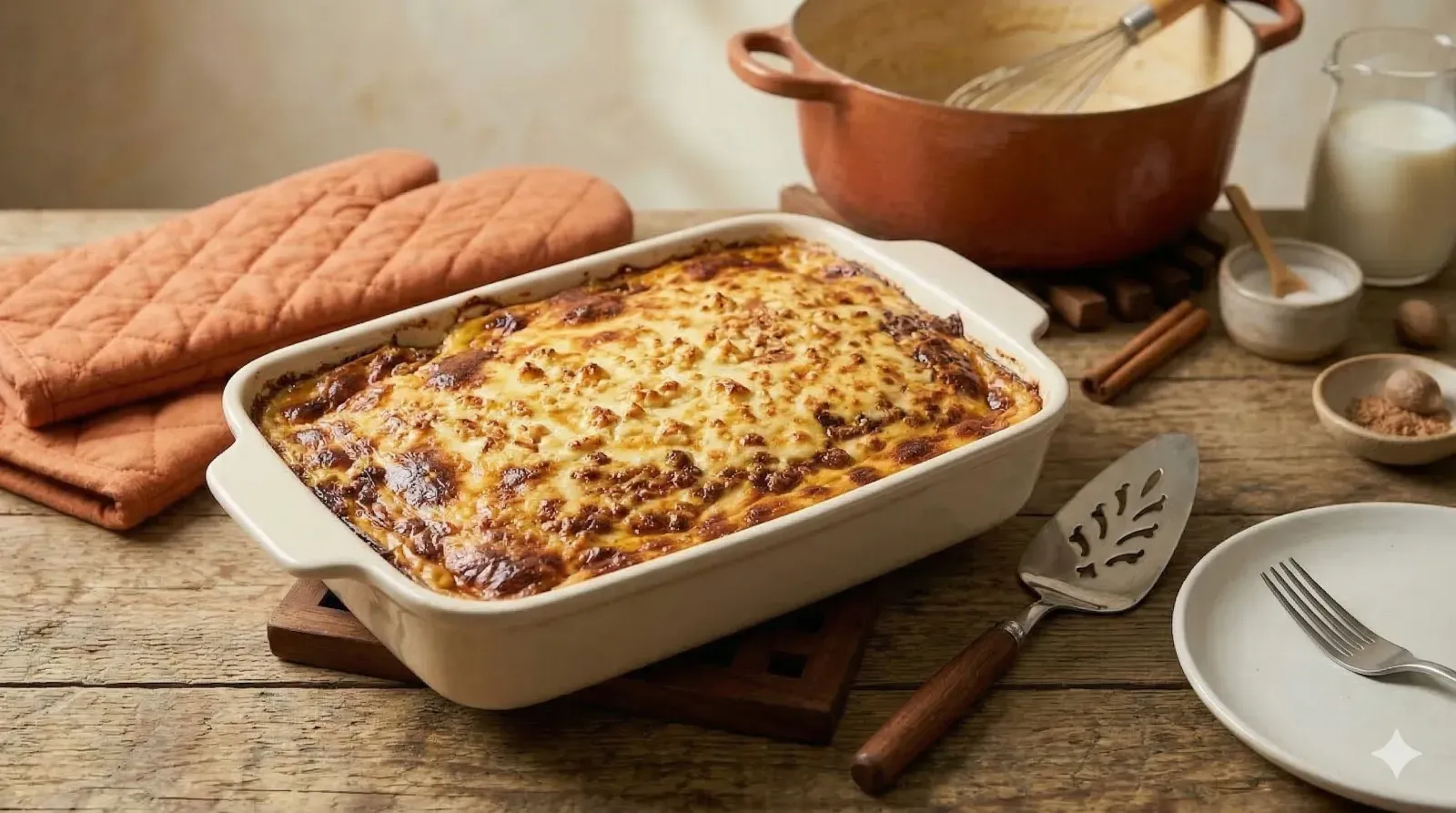
Pour the bechamel sauce over the top eggplant layer and use a spatula to spread it into an even, smooth surface. Make sure the bechamel reaches all the edges and covers the eggplant completely. Sprinkle the remaining grated cheese over the bechamel. For a decorative touch, drag a fork lightly across the surface to create small ridges that will brown beautifully in the oven.
Step 5: Bake and Rest
5 Place the assembled moussaka on the center rack of your oven. Bake at 375 degrees Fahrenheit for 45 minutes until the bechamel topping turns deep golden brown and the edges bubble vigorously. If the top browns too quickly, tent it loosely with aluminum foil for the final 15 minutes.
Remove the moussaka from the oven and let it rest for at least 20 minutes before slicing. This resting step is absolutely crucial. It allows the layers to firm up and set, so each slice holds together beautifully on the plate. Cutting too early results in a soupy, collapsing mess. After resting, cut into generous squares and serve warm.
Expert Tips for the Perfect Moussaka Recipe
Salt and Drain the Eggplant Thoroughly
Skipping the salting step is the most common cause of watery moussaka. Eggplant contains a surprising amount of moisture, and that liquid will pool at the bottom of your casserole during baking. By salting the slices for a full 30 minutes, you draw out this excess water. The result is firmer eggplant that holds its structure and absorbs the surrounding flavors instead of releasing liquid.
Warm the Milk Before Adding to the Roux
Cold milk added to a hot roux creates lumps that are very hard to whisk out. Warm the milk in a pot or in the microwave before you add it. When both the roux and milk are warm, they blend into a silky bechamel every time. This small step makes a big change in the final feel of your sauce.
Let the Moussaka Rest Before Cutting
Patience is essential after the moussaka comes out of the oven. A full 20-minute rest allows the bechamel and meat layers to set. If you cut too early, the layers slide apart and the juices run everywhere. A well-rested moussaka slices cleanly and presents gorgeously on the plate. Think of it like resting a steak: the results are worth the wait.
Moussaka Across the Mediterranean
While Greek moussaka is the most famous version, variations of this layered casserole exist across the entire Mediterranean and Middle East. Each culture brings its own twist to the concept. Here is how the major regional styles compare.
| Country | Key Differences | Topping | Signature Flavor |
|---|---|---|---|
| Greece | Eggplant, lamb, and potatoes layered with bechamel | Thick bechamel with egg yolks and cheese | Cinnamon, allspice, nutmeg |
| Turkey | No bechamel, topped with tomato sauce instead | Tomato-based sauce or plain yogurt | Tomato-forward, lighter |
| Egypt | Uses layers of fried eggplant and a spiced tomato meat sauce | No topping or light tomato drizzle | Cumin-heavy, bold spices |
| Lebanon | Features chickpeas and a lighter tomato sauce | Yogurt or tahini drizzle | Tangy, herby, garlic-forward |
| Serbia | Uses potatoes instead of eggplant as the base layer | Egg and yogurt custard | Paprika, simpler spicing |
Serving Suggestions
In Greece, moussaka is typically served as a generous main course, often as the centerpiece of a family meal. It pairs wonderfully with simple Mediterranean sides that complement its rich flavors without competing for attention.
Classic Accompaniments:
- Greek salad (horiatiki): Crisp cucumbers, tomatoes, red onion, olives, and feta cheese with a simple olive oil dressing. The freshness cuts through the richness of the moussaka perfectly.
- Crusty bread: A loaf of warm, crusty bread is essential for soaking up the delicious juices that pool on the plate. Sourdough or a rustic country loaf works best.
- Tzatziki: This cool, creamy yogurt and cucumber sauce provides a refreshing contrast to the warm, spiced casserole.
- Roasted vegetables: Simply roasted zucchini, bell peppers, or green beans dressed with lemon and olive oil keep the meal light and balanced.
Beverage Pairings:
- Greek red wine (Agiorgitiko): This medium-bodied red from Nemea has soft tannins and cherry notes that complement the lamb and cinnamon beautifully.
- Retsina: Greece’s iconic pine-resin wine is an acquired taste, but its herbaceous quality pairs surprisingly well with moussaka’s warm spices.
- Sparkling water with lemon: A simple, refreshing choice that cleanses the palate between rich, creamy bites.
- Greek mountain tea: For a non-alcoholic option, this mild herbal tea is a traditional Greek after-dinner drink that aids digestion.
Storage and Reheating
Refrigerator: Store leftover moussaka in an airtight container for up to 4 days. Interestingly, moussaka often tastes even better the next day because the flavors continue to meld and deepen as the casserole rests in the fridge.
Freezer: Moussaka freezes beautifully for up to 3 months. Cut it into individual portions, wrap each tightly in plastic wrap and then aluminum foil, and freeze flat. Thaw overnight in the refrigerator before reheating.
Reheating: The best method is in the oven at 350 degrees Fahrenheit for 20 to 25 minutes, covered with foil to prevent the bechamel from over-browning. Remove the foil for the last 5 minutes to crisp the top. You can also reheat individual portions in the microwave for 3 to 4 minutes, though the oven produces superior results.
Common Mistakes to Avoid
1. Skipping the Eggplant Salting Step
This is the number one mistake that ruins moussaka. Unsalted eggplant releases moisture during baking, creating a watery layer at the bottom of your casserole. Always salt the slices for at least 30 minutes, rinse them, and pat dry thoroughly before roasting.
2. Making a Thin or Lumpy Bechamel
A thin bechamel slides off the eggplant and pools at the sides. A lumpy one looks unappetizing. To avoid both problems, cook your roux for a full 2 minutes before adding milk. Then add warm milk gradually while whisking non-stop. The sauce should coat the back of a spoon thickly before you remove it from heat.
3. Cutting Too Soon After Baking
Everyone wants to dig in right away, but cutting moussaka straight from the oven guarantees a messy plate. The layers need at least 20 minutes to set and firm up. This resting time transforms your casserole from a sloppy heap into clean, structured slices that look as good as they taste.
4. Using Too Much Oil on the Eggplant
Eggplant absorbs oil like a sponge. If you deep-fry the slices the traditional way, they become heavy and greasy. Instead, brush them lightly with olive oil and roast them in the oven. This approach produces golden, tender slices with a fraction of the oil. Consequently, your finished moussaka will taste lighter and more refined.
Frequently Asked Questions
What is moussaka made of?
Traditional Greek moussaka has three main layers. First, roasted eggplant slices form the base, sometimes with potatoes underneath. Next comes a spiced ground lamb and tomato sauce flavored with cinnamon and allspice. On top sits a thick, creamy bechamel sauce enriched with egg yolks and cheese. All three layers bake together until golden and bubbling.
Can I make moussaka with beef instead of lamb?
Yes, ground beef works perfectly well in this moussaka recipe. Many Greek families actually prefer a half-and-half blend of lamb and beef. The lamb provides richness and a distinctive flavor, while the beef adds structure. If you use all beef, consider adding an extra pinch of cinnamon to compensate for the missing lamb flavor.
How far in advance can I make moussaka?
You can assemble the entire moussaka up to 24 hours before baking. Simply cover it tightly with plastic wrap and refrigerate. In fact, many experienced Greek cooks prefer this method because the flavors develop more fully overnight. Just add 10 to 15 extra minutes of oven time when baking from cold.
Why is my moussaka watery?
Watery moussaka typically results from two issues. First, the eggplant was not properly salted and drained before roasting. Second, the meat sauce was not reduced enough during cooking. To fix this, always salt your eggplant for 30 minutes and simmer the meat sauce until it is thick with very little visible liquid remaining.
Can I freeze moussaka?
Absolutely. Moussaka freezes well for up to 3 months, either before or after baking. For best results, portion it into individual servings, wrap each piece in plastic wrap and foil, and lay them flat in the freezer. Thaw overnight in the refrigerator, then reheat at 350 degrees Fahrenheit until hot and bubbling.
What is the difference between moussaka and lasagna?
Both are layered baked dishes, but they differ in big ways. Moussaka uses roasted eggplant instead of pasta sheets. It has a thick bechamel topping rather than melted cheese. It also uses warm spices like cinnamon and allspice instead of herbs like basil. In contrast, lasagna relies on pasta, ricotta or mozzarella, and a tomato-basil sauce.
Variations and Adaptations
Vegetarian Moussaka:
Replace the ground lamb with a hearty mixture of lentils, mushrooms, and walnuts. Cook them in the same tomato and spice sauce for a protein-rich, meat-free version that is just as satisfying. The lentils absorb the cinnamon and allspice beautifully, and the mushrooms provide a deep umami flavor that mimics the richness of meat.
Potato-Based Moussaka:
Many Greek families add a layer of thinly sliced potatoes at the very bottom of the casserole, beneath the eggplant. The potatoes absorb the meat juices and create a hearty, starchy base. Simply slice Yukon Gold potatoes into thin rounds, parboil for 5 minutes, and layer them before the eggplant. This makes the dish even more filling and stretches it to feed a larger crowd.
Zucchini Moussaka:
During summer when zucchini is abundant, many Greek cooks replace some or all of the eggplant with sliced zucchini. This creates a lighter, brighter version that works well for warm-weather dining. Salt the zucchini the same way you would the eggplant to remove excess moisture. The flavor is slightly sweeter and the texture softer.
The Cultural Significance of Moussaka
In Greece, moussaka holds a place of deep cultural importance. It is not something you eat quickly at a fast-food counter. Instead, it is a dish that brings families together, especially on Sundays and during religious holidays. A grandmother’s moussaka recipe is often passed down through generations as a treasured family heirloom.
Moussaka also tells the wider story of Greek food: simple, honest items turned into something great through patience and skill. Eggplant, lamb, tomatoes, and milk are basic staples of any Greek pantry. Yet when layered and baked with care, they become a dish that rivals the finest meals in all of Europe.
Moussaka is also a symbol of Greek hospitality. When Greeks invite you into their home for a meal, moussaka is often on the table. It represents generosity, warmth, and the belief that the best food comes from a home kitchen, not a restaurant. In tavernas across Athens, Thessaloniki, and the Greek islands, moussaka remains one of the most ordered dishes by locals and visitors alike.
Conclusion
This authentic moussaka recipe delivers everything you love about Greek home cooking: rich layers, warm spices, and a golden bechamel topping that makes your kitchen smell incredible. The keys to success are salting the eggplant, reducing the meat sauce until thick, and letting the finished casserole rest before slicing. Follow this moussaka recipe step by step, and you will produce a stunning Mediterranean masterpiece that impresses every guest at your table.
Ready to explore more Mediterranean flavors? Browse our collection of European dishes, including souvlaki, spanakopita, and pastitsio. Also, discover our Asian recipes for more global inspiration.