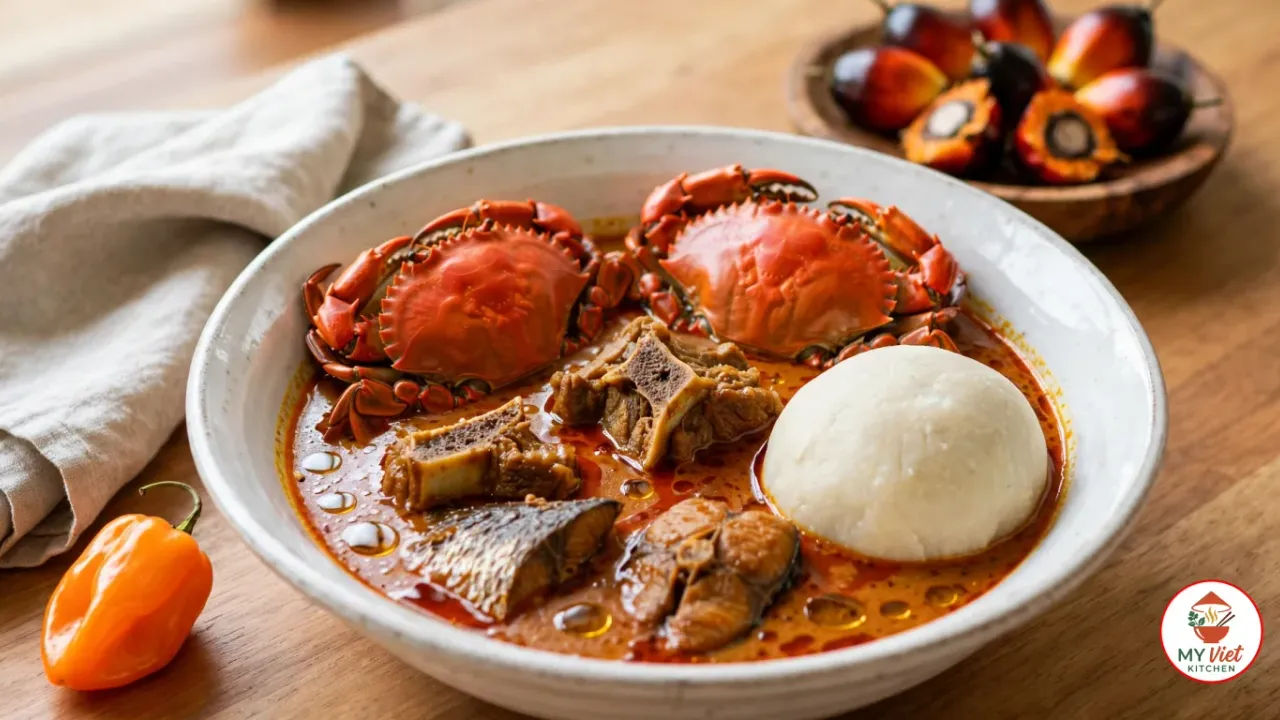
Fufu and palm nut soup is a Ghanaian pairing: abenkwan, the Akan name for palmnut soup, eaten with fufu (African Food Network). The soup comes from the pulp of boiled and pounded palm fruits (BusinessDay). Here it starts from a tin of palm nut cream. Goat steams in an onion and ginger paste, then boils in the loosened cream with whole tomatoes and peppers until red oil rises. Smoked fish and crab finish the pot.
Prep Time: 25 minutes | Cook Time: 1 hour 25 minutes | Total Time: 1 hour 50 minutes | Servings: 6
Difficulty: Medium | Calories: ~920 per serving

What Goes Into Palm Nut Soup?
Palm fruit, and not its oil. Wikipedia describes palm nut soup as made from a palm cream or palm nut base with stewed marinated meats, smoked dried fish and aromatics. The same article lists it as common in Cameroon, Sierra Leone, Ghana, Nigeria, the Democratic Republic of Congo and Ivory Coast (Wikipedia).
AFN’s recipe explains why the oil alone won’t do. Abenkwan uses the whole fruit pulp, which is less greasy and more substantial than the extracted oil and carries a fruitiness the oil does not have (African Food Network).
In Ghana the cream starts as fresh palm nuts. Fafa Gilbert of Ndudu by Fafa describes the old way. The fruits are washed and boiled till soft, then pounded with a pestle and mortar to separate the fibrous outer layer from the hard shells. Hot water then separates the juice from the fibre and the nuts (Ndudu by Fafa).
BusinessDay gives numbers for it. Boil the nuts for 30 to 45 minutes, pound them without breaking the kernels, then massage the mash with 4 to 6 cups of hot water and strain it through a fine sieve (BusinessDay).
Even fresh nuts differ. Fafa remembers that in the late 1980s her mum wasn’t impressed with the “Agric” palm nut, twice the size of the local fruit, which didn’t taste as good as the smaller, darker local ones (Ndudu by Fafa).
Outside West Africa, a tin does the pounding for you. AFN calls tinned palmnut concentrate the practical route there and what most cooks use. Shops sell it under names including palm nut cream and sauce graine (African Food Network). Fafa used the tin for her video too, since the traditional extraction can be labour intensive and time consuming (Ndudu by Fafa).
How Do You Know the Soup Is Ready?
Look at the surface. BusinessDay’s recipe calls it ready when it is thick, deep red and a clear layer of palm oil has settled on top. Before that, it boils the soup uncovered for 20 minutes, until dark red oil begins to rise. It also leaves the pot slightly open during the simmer to help the oil rise (BusinessDay). Savory Thoughts adds a second sign: you no longer see foam on top, and the oil is visible (Savory Thoughts).
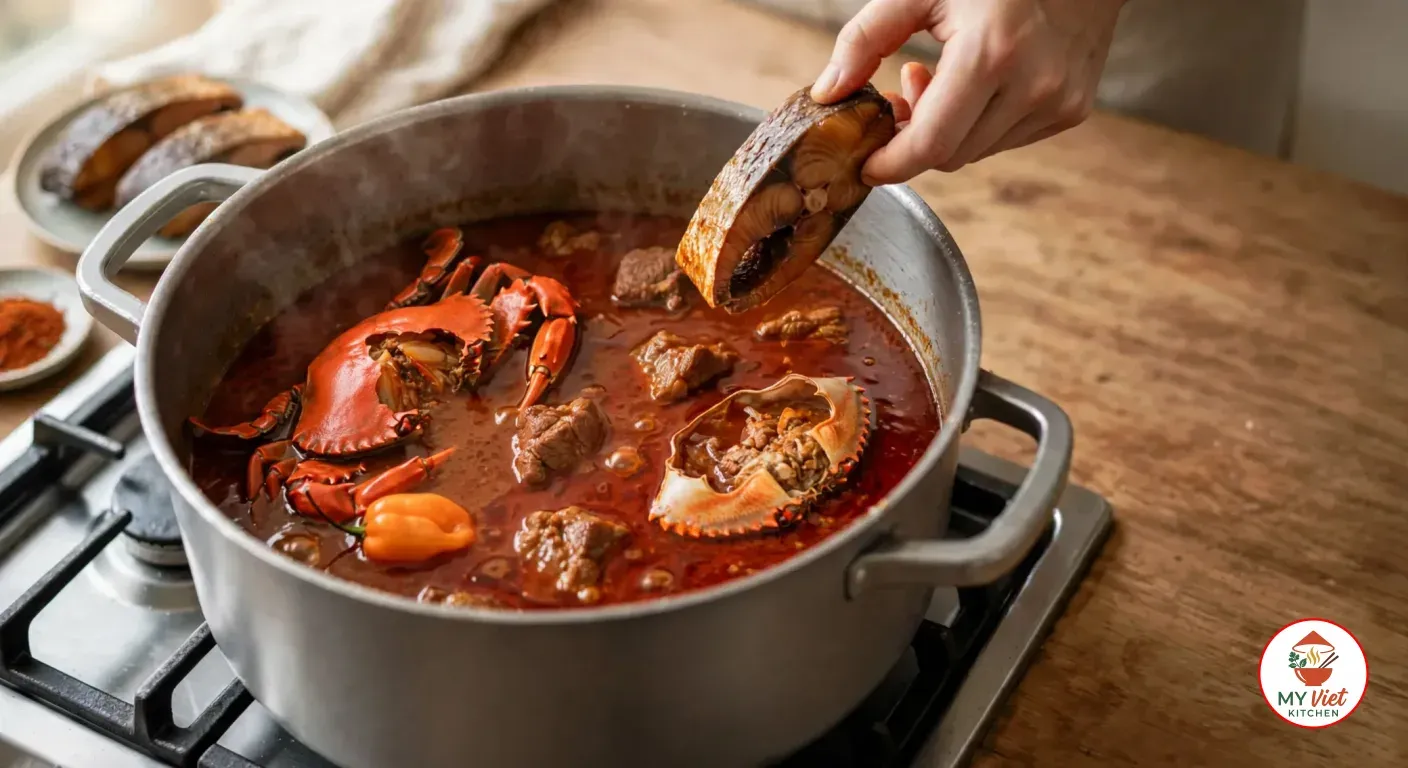
Hold the fish back. AFN’s cook adds it only in the last 20 minutes, because fish added early disintegrates and the pieces are lost in the soup. The same recipe stirs only now and then, enough to keep the soup from catching on the base of the pan (African Food Network).
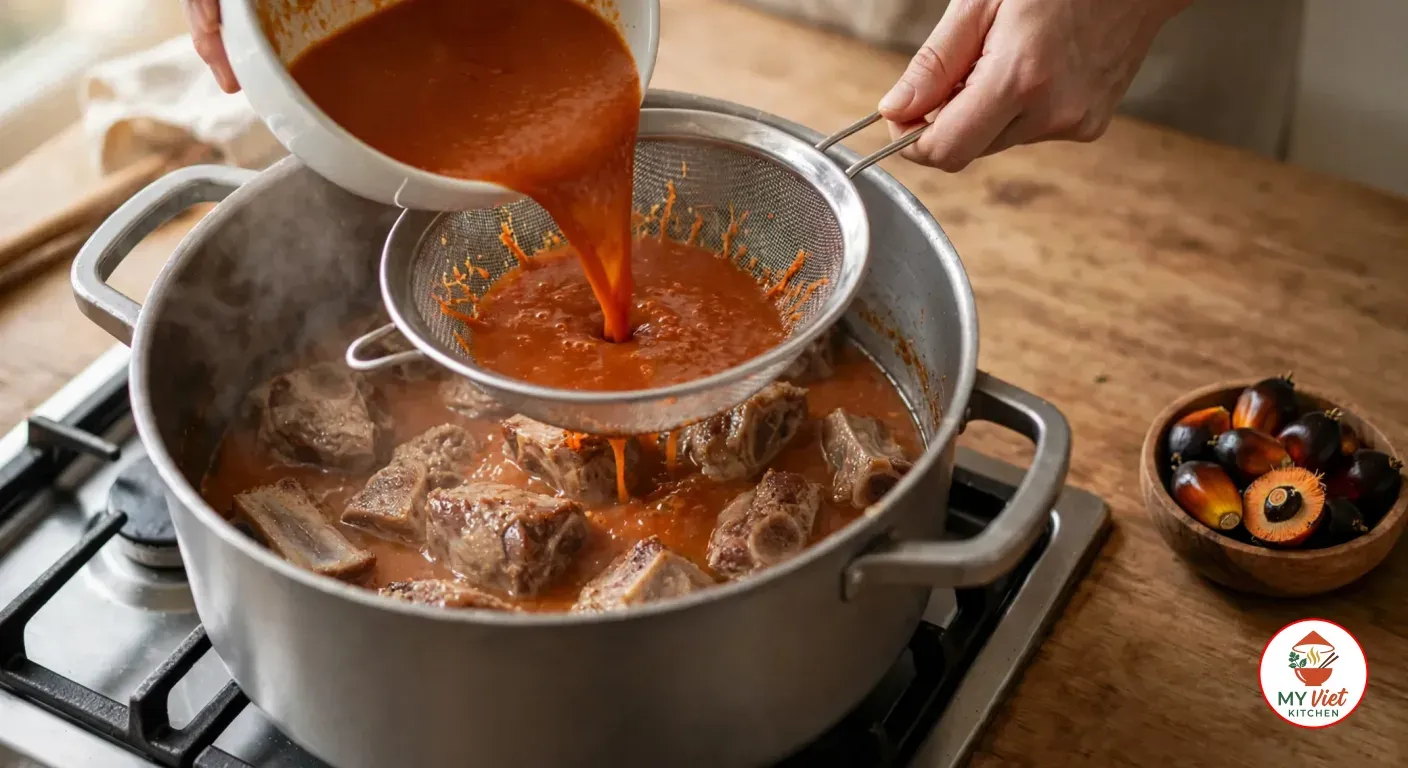
Lumps are the other trap. Added straight to the pot, AFN warns, the pulp stays lumpy and the soup never comes together. Beat it smooth with just-boiled water first, as in Step 2 (African Food Network).
Which Meat and Fish Should You Use?
Goat is a good start, but no single list exists. Fafa writes that palm nut soup is cooked differently by each tribe in Ghana, because the ingredients vary. Her recipe is inspired by her mum, who only used goat meat and smoked tuna. Fafa used herring powder in place of the tuna (Ndudu by Fafa).
BusinessDay’s ingredient list runs wider: goat, oxtail, beef, chicken or cow foot, with smoked and dried tilapia, catfish, tuna or mackerel. It also names prekese (aidan fruit), turkey berries (abeduru), okra and garden eggs as additions (BusinessDay). AFN treats smoked and dried fish as standard rather than optional in a Ghanaian pot. Together, it says, they give more depth than either alone (African Food Network).
This recipe keeps to goat, smoked fish and crab, with ground crayfish or herring powder for the dried-fish note. The crab is optional. AFN’s recipe cuts two giant crabs in half (African Food Network); small ones can go in whole.
Ingredients for Fufu and Palm Nut Soup
For the Goat:
- 1.5 lb (680 g) bone-in goat meat, cut into 2-inch (5 cm) chunks
- 1 large onion, roughly chopped
- 1-inch (2.5 cm) piece ginger, peeled
- 3 cloves garlic
- 1/2 teaspoon anise seeds
- 2 seasoning cubes (Maggi or Knorr), crushed
- 1 teaspoon salt
- 1/2 cup (120 ml) water
For the Palm Nut Soup:
- 1 can (28 oz / 800 g) palm nut cream concentrate (also sold as sauce graine)
- 5 cups (1.2 litres) just-boiled water
- 3 medium tomatoes, whole
- 1 medium onion, peeled and halved
- 2 habanero or Scotch bonnet peppers, whole
- 4 small fresh crabs, cleaned (optional)
- 1 tablespoon ground dried crayfish or herring powder
- 8 oz (225 g) smoked fish (mackerel, tuna or catfish), skin and bones removed, in large pieces
- Salt to taste
For the Fufu:
- 1 lb (460 g) plantain fufu flour
- 4 cups (1 litre) very warm water
Step-by-Step Instructions
Step 1: Steam the Goat Meat
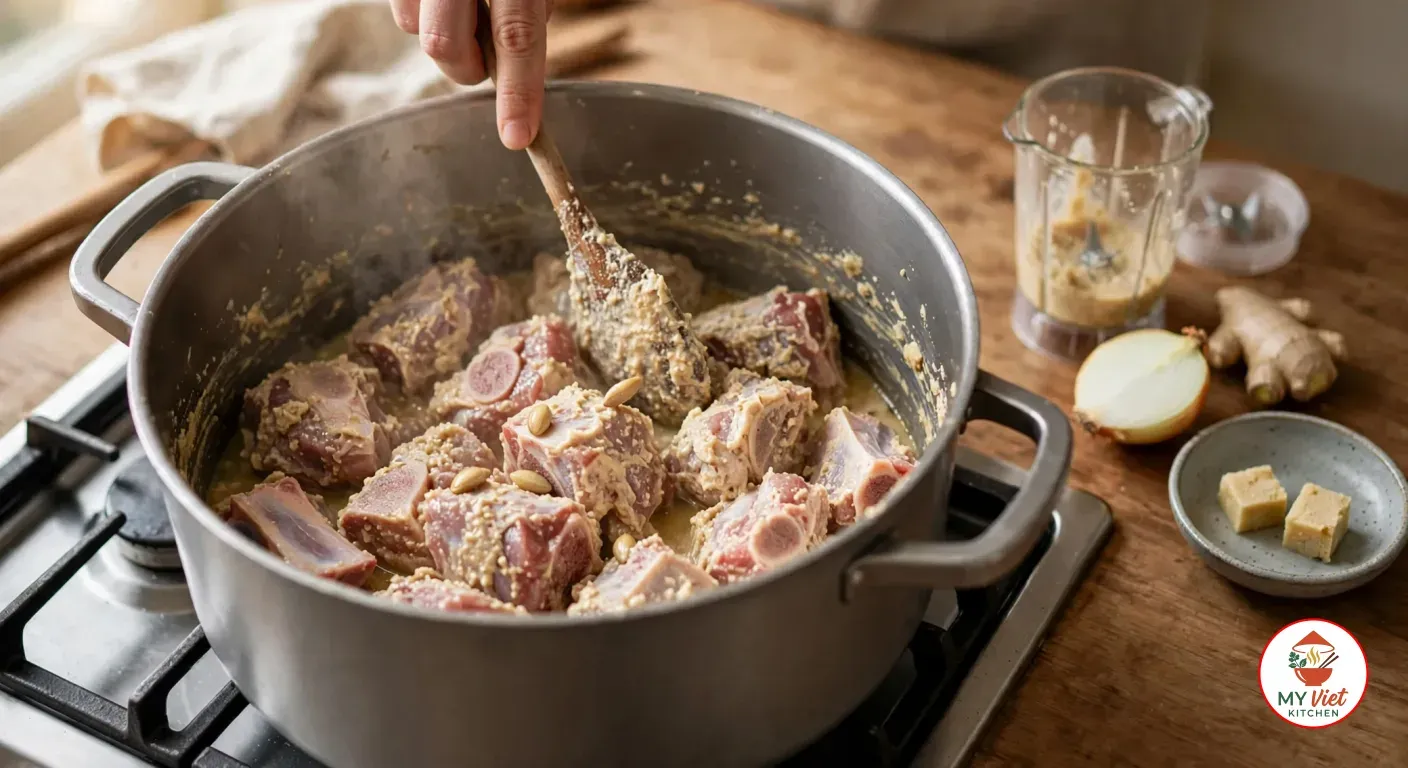
1Blend the chopped onion, ginger, garlic and anise seeds to a smooth paste. In a large heavy pot, rub the paste over the goat with the crushed seasoning cubes and salt. Pour in 1/2 cup (120 ml) water, put the lid on and let the goat steam over medium heat for 20 minutes, turning it once or twice. The meat should firm up and release its juices into the pot; it finishes cooking in the soup.
Step 2: Loosen the Palm Nut Cream
2Spoon the palm nut cream into a large bowl. Beat in the just-boiled water a cup at a time with a wooden spoon until the mixture is smooth and runny, with no lumps. Pour it through a sieve into the pot of goat, press the liquid out of any fibres left in the sieve, and discard them.
Step 3: Boil with Whole Tomatoes and Peppers
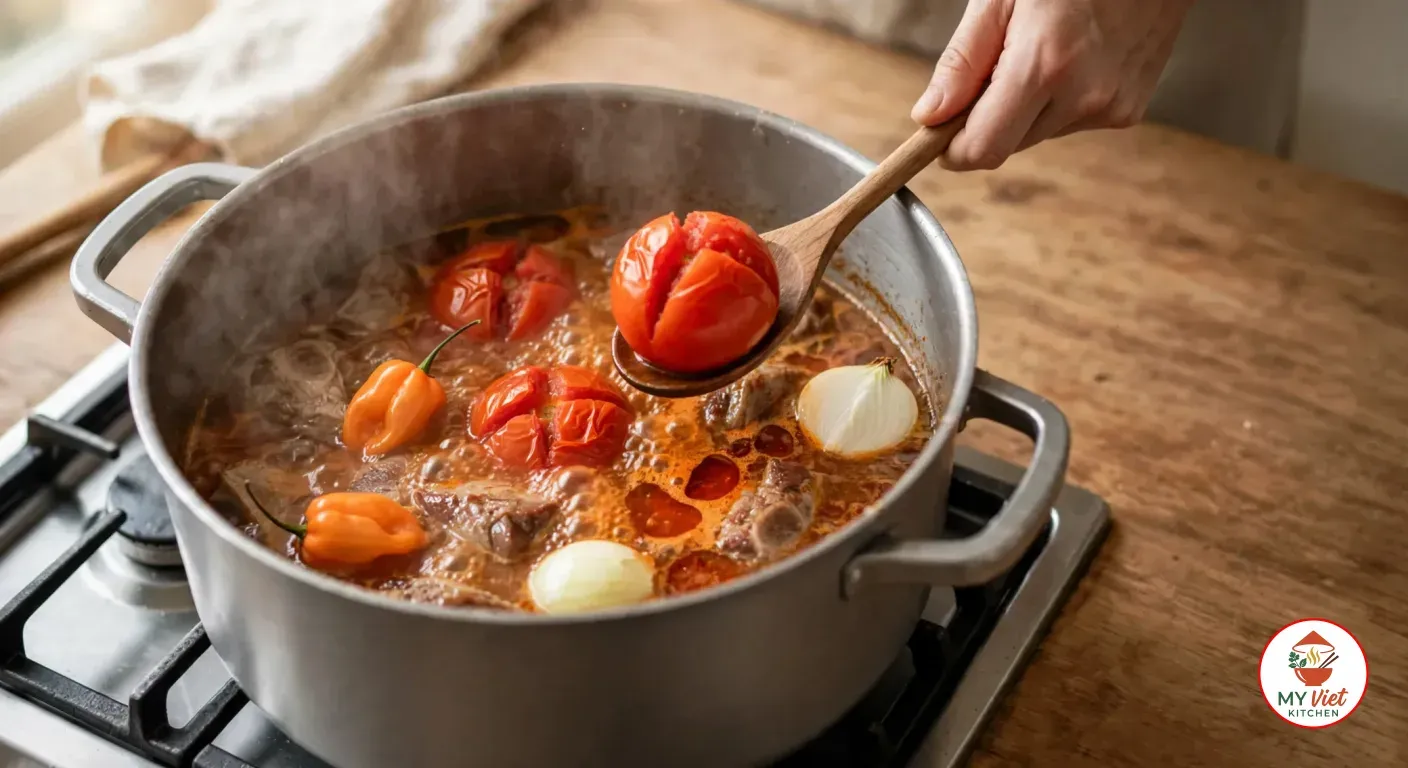
3Add the whole tomatoes, onion halves and peppers to the pot. Bring to a boil and boil uncovered over medium-high heat for 20 minutes, stirring now and then. Keep going until the tomato skins split and dark red oil begins to rise to the surface in small pools.
Step 4: Blend and Simmer with the Fish
4Lift out the tomatoes, onion and one pepper, blend them smooth and stir the purée back into the pot. Add the crabs and crayfish, lower the heat to medium-low and simmer with the lid slightly open for 10 minutes. If the goat is still firm, give it 10 to 15 minutes more. Add the smoked fish and simmer 20 minutes more, stirring gently once or twice, until the soup is thick and deep red and a clear layer of oil has settled on top. Taste and add salt.
Step 5: Make the Fufu and Serve
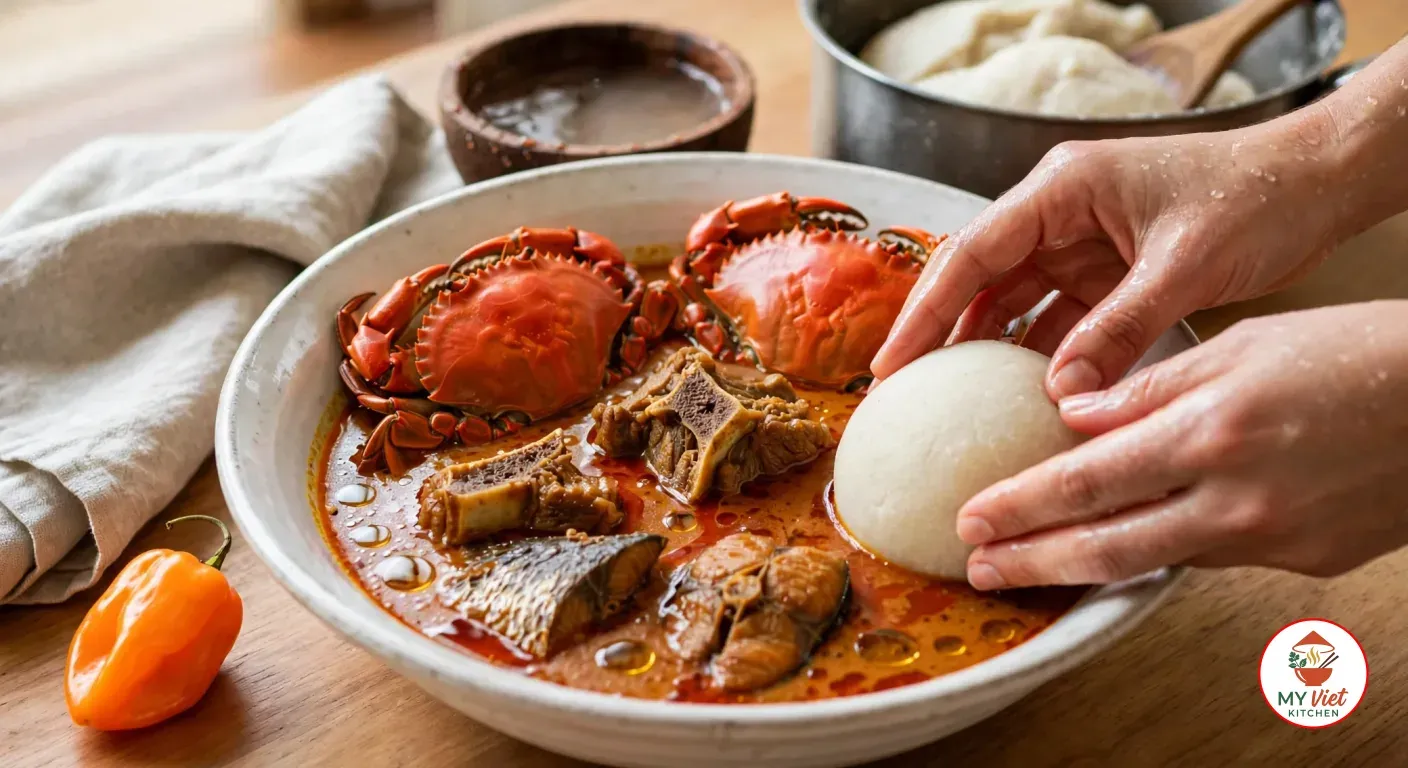
5Put the fufu flour in a saucepan and stir in half the warm water to make a thick paste. Warm the pan over low heat. Pour in the remaining water a little at a time and keep stirring for 8 to 10 minutes, pressing any lumps against the side with the back of a wooden spoon. Stop when the dough is smooth, stiff and pulls away from the pan. With wet hands, shape it into 6 balls. Set one in each bowl and ladle the soup, goat, crab and fish around it.
Frequently Asked Questions
Can I use palm oil instead of palm nut cream?
No. Palm oil is the fat extracted from the fruit, and AFN warns that it gives an oily, thin soup with the right colour and none of the body. The pulp is what makes abenkwan substantial, and AFN says there is no workable substitute for it (African Food Network). Look for tinned palm nut cream or sauce graine at a West African grocer.
What is the difference between palm nut soup and banga soup?
Both start from palm fruit, but they come from different traditions. AFN calls abenkwan the Ghanaian Akan preparation and banga the Nigerian version, most closely associated with the Urhobo of the Niger Delta and finished with beletete leaf and a distinct spice blend (African Food Network). Wikipedia places banga with the Itsekiri, Isoko, Ijaw and Urhobo and says it is eaten with eba (garri) or usi (starch) (Wikipedia).
What else can you eat with palm nut soup?
Fufu is the most common partner, but AFN lists omo tuo, banku, fonio and rice as standard too. In Ghana it is eaten by hand, using the fufu to lift the soup from the bowl (African Food Network). Savory Thoughts also suggests white rice, boiled yam and boiled plantains (Savory Thoughts).
Can you make the fufu from flour?
Yes, and in Ghana that is one of the two usual ways. Wikipedia describes Ghanaian fufu as either boiled cassava pounded with green plantain or cocoyam, or cassava, plantain or cocoyam flour stirred with water on the stove (Wikipedia). Zoe Adjonyoh, author of Zoe’s Ghana Kitchen, uses 115 g of plantain fufu flour to 250 ml of very warm water (Sous Chef). Step 5 scales that up four times.
Is the video recipe the same as this one?
Close, but not identical. Fafa Gilbert also cooks from tinned palm nut cream, and this page follows her 800 g of palmnut flesh to 1.2 litres of water. Her meat is cubed lamb, with herring powder, garden eggs, okra, Kpakpo Shito chillies and a ginger blend with carom seeds and aniseed (Ndudu by Fafa). The video description calls it a classic Ghanaian soup made from palm fruits (Ndudu by Fafa). This page uses goat, smoked fish and crab and leaves out the garden eggs and okra.
Sources
- Palm nut soup, Wikipedia
- Fufu, Wikipedia
- Palmnut Soup (Abenkwan), AFN Snr Chef, AFN (afrifoodnetwork.com), February 2024 (updated August 2026)
- PALM NUT SOUP (ABENKWAN) OR BANGA SOUP RECIPE, Fafa Gilbert, Ndudu by Fafa, December 2017
- 3 Ghanaian soups to recreate this weekend, Esther Emoekpere, BusinessDay, April 2026
- Ghanaian Palm Nut Soup Recipe (A Hearty West African Favorite), Mirlene, Savory Thoughts, June 2026
- Zoe Adjonyoh’s Fufu Recipe, Zoe Adjonyoh, Sous Chef, September 2020
- THE Perfect PALM NUT SOUP Recipe. ABENKWAN /BANGA SOUP/ Dekou Dessi, Ndudu by Fafa, YouTube, December 2017