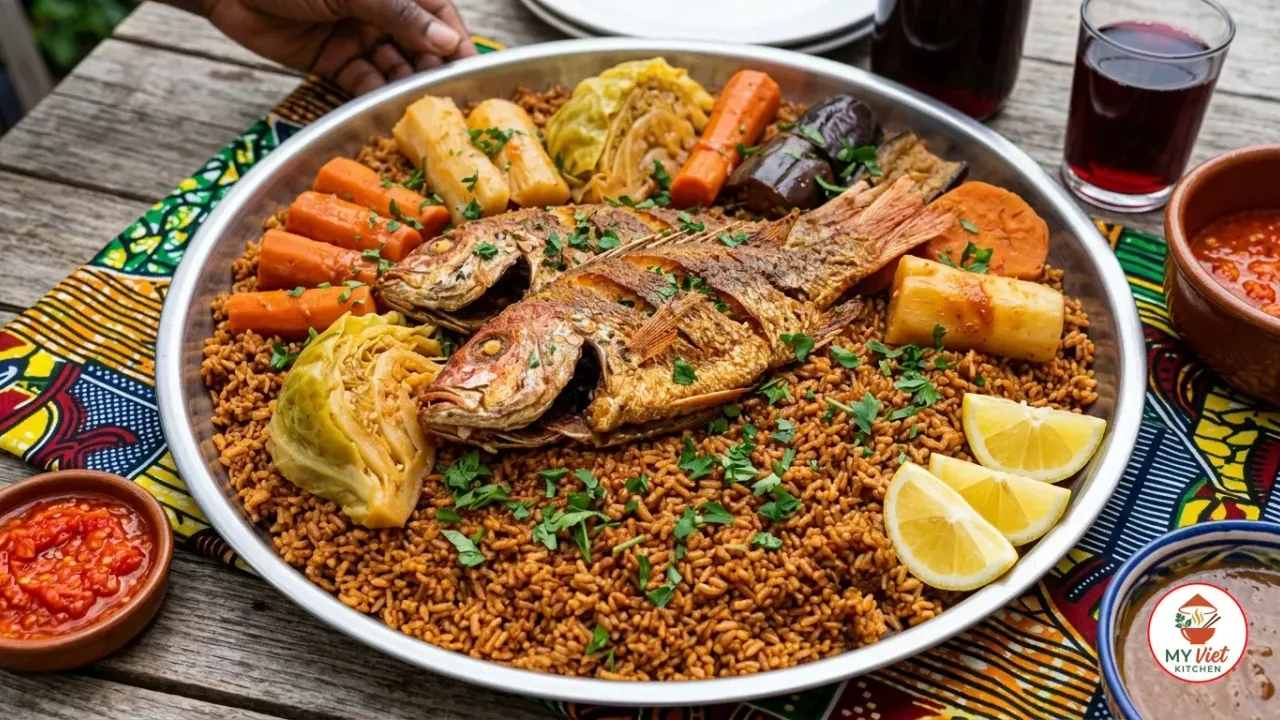
Thieboudienne is the national dish of Senegal and one of West Africa’s greatest culinary achievements. This magnificent one-pot meal features fish and broken rice simmered together in a deep, savory tomato sauce loaded with vegetables like cassava, eggplant, cabbage, and sweet potato. Also known as ceebu jen in the Wolof language, thieboudienne earned UNESCO recognition as an Intangible Cultural Heritage in 2021. This recipe walks you through every step to make authentic Senegalese thieboudienne at home in about 90 minutes.
Prep Time: 30 minutes | Cook Time: 60 minutes | Servings: 6
Difficulty: Medium | Calories: ~520 per serving
What Makes Thieboudienne Special?
Thieboudienne stands apart from other rice dishes because the rice cooks directly in the fish and vegetable broth rather than in plain water. As a result, every grain absorbs the rich tomato sauce, tamarind tang, and deep seafood flavor. The rice turns a striking reddish-brown color that signals the depth of taste inside. Indeed, no other African rice dish uses this exact technique of layering flavors through one pot.
The dish traces its origins to the city of Saint-Louis in northern Senegal, where a woman named Penda Mbaye is credited with creating it in the 19th century. She combined local fish with broken rice, tomato paste, and whatever vegetables grew in the region. From that starting point, thieboudienne spread across all of Senegal and into neighboring countries like Gambia, Mauritania, and Mali. According to food historians, the dish became so central to Senegalese identity that families serve it at nearly every major gathering, from weddings to religious festivals.
Beyond its history, thieboudienne earns respect for how much flavor it packs into simple, affordable items. Fish, rice, tomato paste, and root vegetables form the core. Yet the combination of tamarind, dried fish, and slow-cooked tomato creates a broth so complex that each bite reveals a new layer. Furthermore, the communal style of eating from a shared platter makes thieboudienne more than food. It becomes a gathering ritual that brings people together around one dish.

Choosing the Right Fish for Thieboudienne
The fish is the star of thieboudienne, so picking the right type matters a great deal. You need a firm, meaty white fish that can handle frying and then simmering without falling apart. Here are the best choices.
- Grouper (best choice): This is the traditional fish used in Senegal. Grouper has thick, firm flesh that holds together through frying and braising. Its mild, sweet flavor absorbs the spiced stuffing paste beautifully. If you can find fresh grouper, it delivers the most authentic thieboudienne experience.
- Red snapper: An excellent alternative with firm texture and clean flavor. Red snapper is widely available at most fish markets. The skin crisps up nicely during frying. In fact, many Senegalese cooks outside Africa rely on red snapper as their go-to fish for this dish.
- Sea bass or halibut: Both offer firm, white flesh that stands up well to the cooking process. Sea bass brings a slightly richer flavor. Halibut is milder but very sturdy. Either one works when grouper or snapper are hard to find at your local market.
Ingredients for Thieboudienne
Main Ingredients:
- 2 pounds firm white fish fillets (grouper, red snapper, or sea bass)
- 3 cups broken rice or long-grain rice
- 1 can (400g) crushed tomatoes
- 3 tablespoons tomato paste
- 3 tablespoons peanut oil or vegetable oil
- Water as needed (about 5 to 6 cups total)
For the Fish Stuffing Paste:
- 4 cloves garlic, minced
- 1 large bunch flat-leaf parsley, finely chopped
- 1 Scotch bonnet pepper, seeded and minced
- 1 tablespoon dried parsley
- Salt and black pepper to taste
For the Vegetables and Broth:
- 1 large onion, finely chopped
- 1 medium eggplant, cut into large chunks
- 2 medium carrots, peeled and halved lengthwise
- 1 small cabbage, quartered
- 1 piece cassava (about 200g), peeled and cut into chunks
- 1 large sweet potato, peeled and cut into chunks
- 2 tablespoons tamarind paste
- 1/4 cup dried fish or fermented fish (guedj), optional
- 2 bay leaves
Pro tip: Broken rice is the authentic choice for thieboudienne. It absorbs the tomato broth more evenly than whole grains. You can find broken rice at African or Asian grocery stores. If you cannot find it, use regular long-grain rice. Just reduce the cooking liquid by about half a cup since whole grains absorb less.
Step-by-Step Instructions
Step 1: Prepare the Fish Stuffing and Marinate
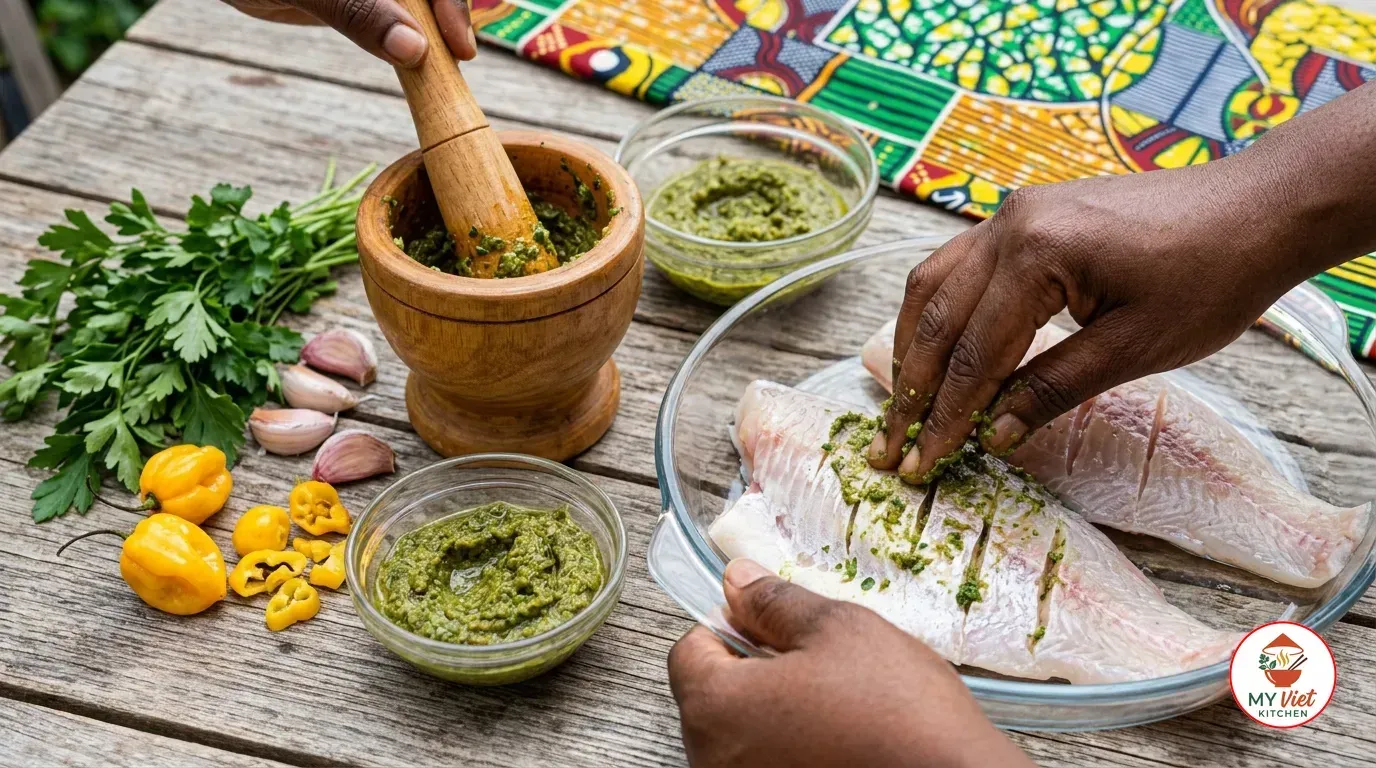
1 Blend the garlic, fresh parsley, Scotch bonnet pepper, dried parsley, salt, and black pepper into a thick paste using a mortar and pestle or a small food processor. Cut two or three small, deep pockets into each fish fillet using a sharp knife. Stuff the paste firmly into each pocket.
Then rub any leftover paste across the surface of the fish. This step is essential because it builds flavor from the inside out. The stuffing melts into the flesh during frying and creates pockets of intense, herby seasoning throughout the fish. Let the fish sit for at least 15 minutes while you prepare the vegetables. Longer is better, so you can marinate for up to one hour in the fridge.
Step 2: Fry the Fish and Build the Tomato Base
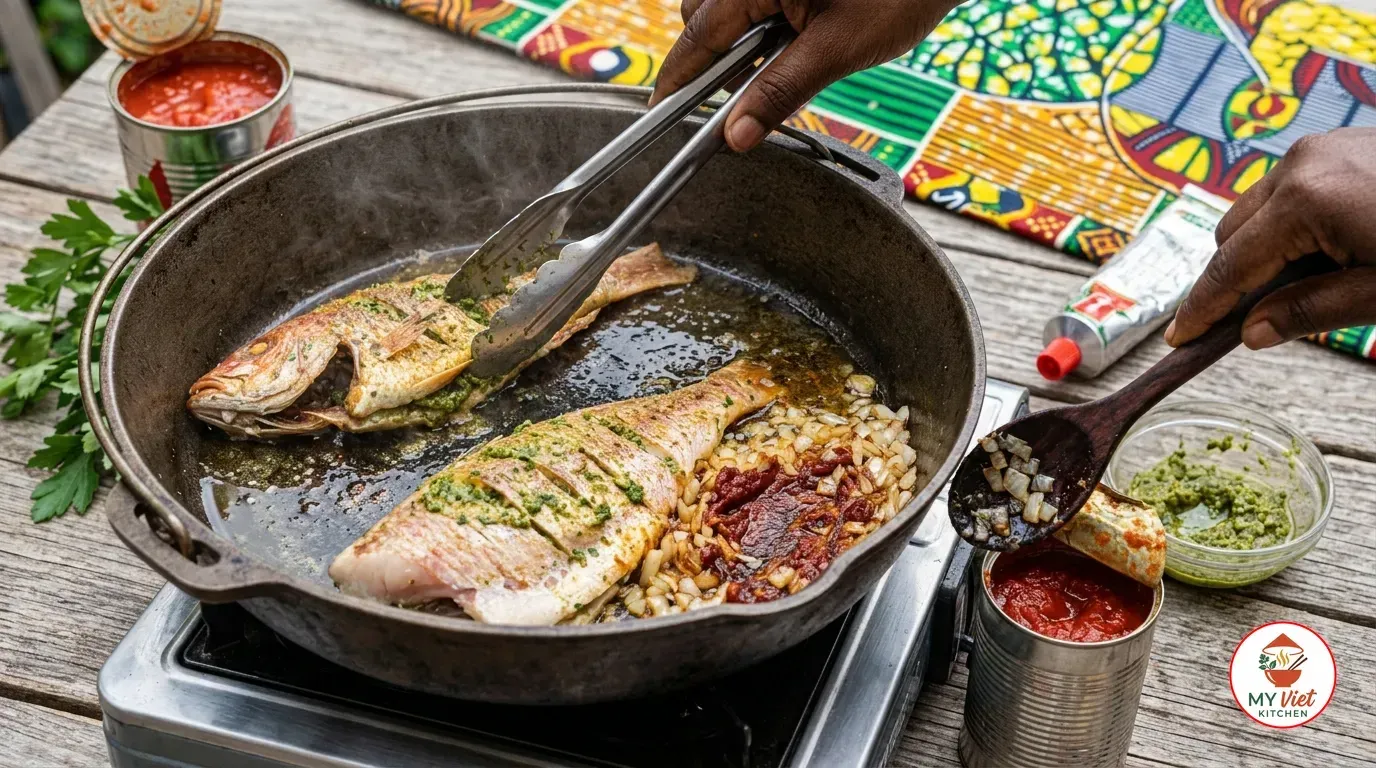
2 Heat 3 tablespoons of peanut oil in a large, heavy-bottomed pot over medium-high heat. When the oil shimmers, carefully lay the stuffed fish fillets into the pot. Fry for about 3 minutes on each side until the surface turns golden brown and crispy. Afterwards, remove the fish to a plate and set it aside.
In the same pot with the flavored oil, add the chopped onion and cook for 5 minutes until it softens. Then stir in the tomato paste and cook for 2 minutes, stirring constantly. The paste should darken slightly. This toasting step concentrates the tomato flavor. After that, pour in the crushed tomatoes and stir well. Let the sauce cook for 8 minutes until it thickens and the oil starts to separate at the edges. This rich tomato base forms the backbone of the entire dish.
Step 3: Simmer the Vegetables in the Broth
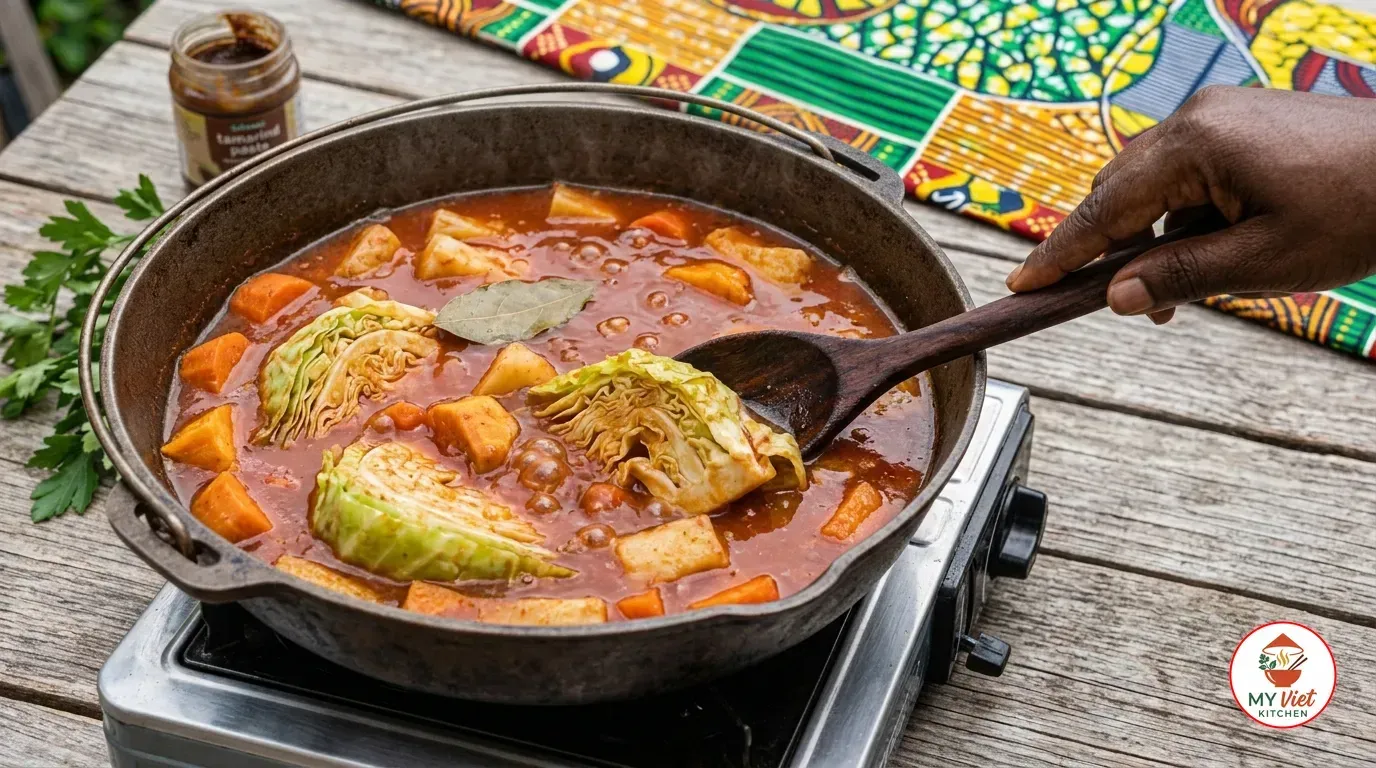
3 Pour about 4 cups of water into the pot. Add the tamarind paste, bay leaves, and dried fish if you are using it. Stir to dissolve the tamarind. Bring the liquid to a boil. First, add the carrots, cassava, and sweet potato since these root vegetables need the longest cooking time. Simmer for 10 minutes.
Next, add the eggplant and cabbage quarters. Cook for another 15 minutes until all the vegetables feel tender when pierced with a knife. Carefully lift each vegetable out of the broth and arrange them on a platter alongside the fried fish. Also remove the bay leaves. The broth should now be deeply flavored with tomato, tamarind, vegetables, and fish essence. Taste and adjust the salt.
Step 4: Cook the Rice in the Sauce
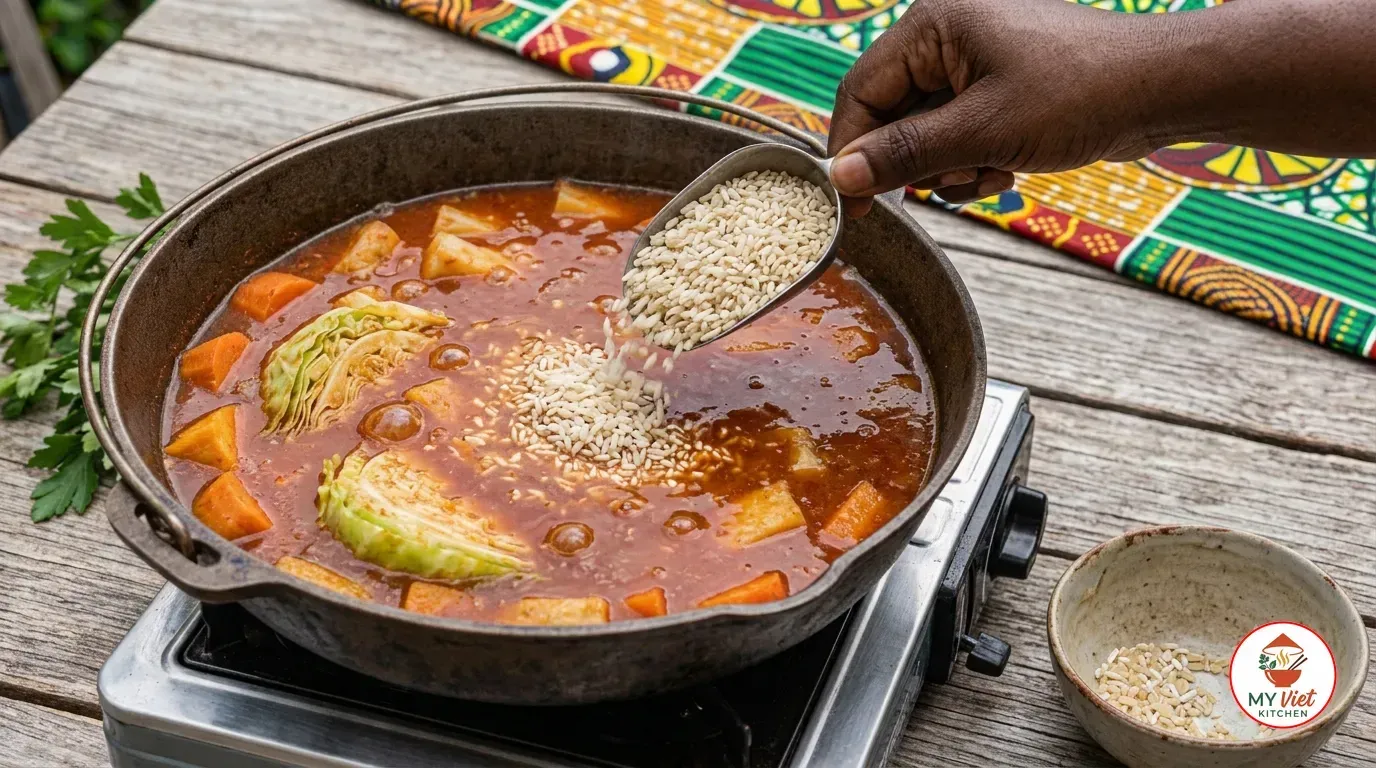
4 Rinse the broken rice under cold water until the water runs clear. Add the rice directly into the remaining broth in the pot. If the liquid does not sit about one inch above the rice, add a bit more water. Stir the rice once to spread it evenly across the bottom.
Next, bring the pot to a boil over medium-high heat. Then reduce the heat to low and cover the pot tightly with a lid. Let the rice cook undisturbed for 20 to 25 minutes. Do not lift the lid during this time. The steam trapped inside cooks the rice evenly. When the time is up, remove the lid and fluff the rice gently with a fork. Every grain should be a rich reddish-brown color and should taste like the concentrated tomato and fish broth.
Step 5: Assemble and Serve
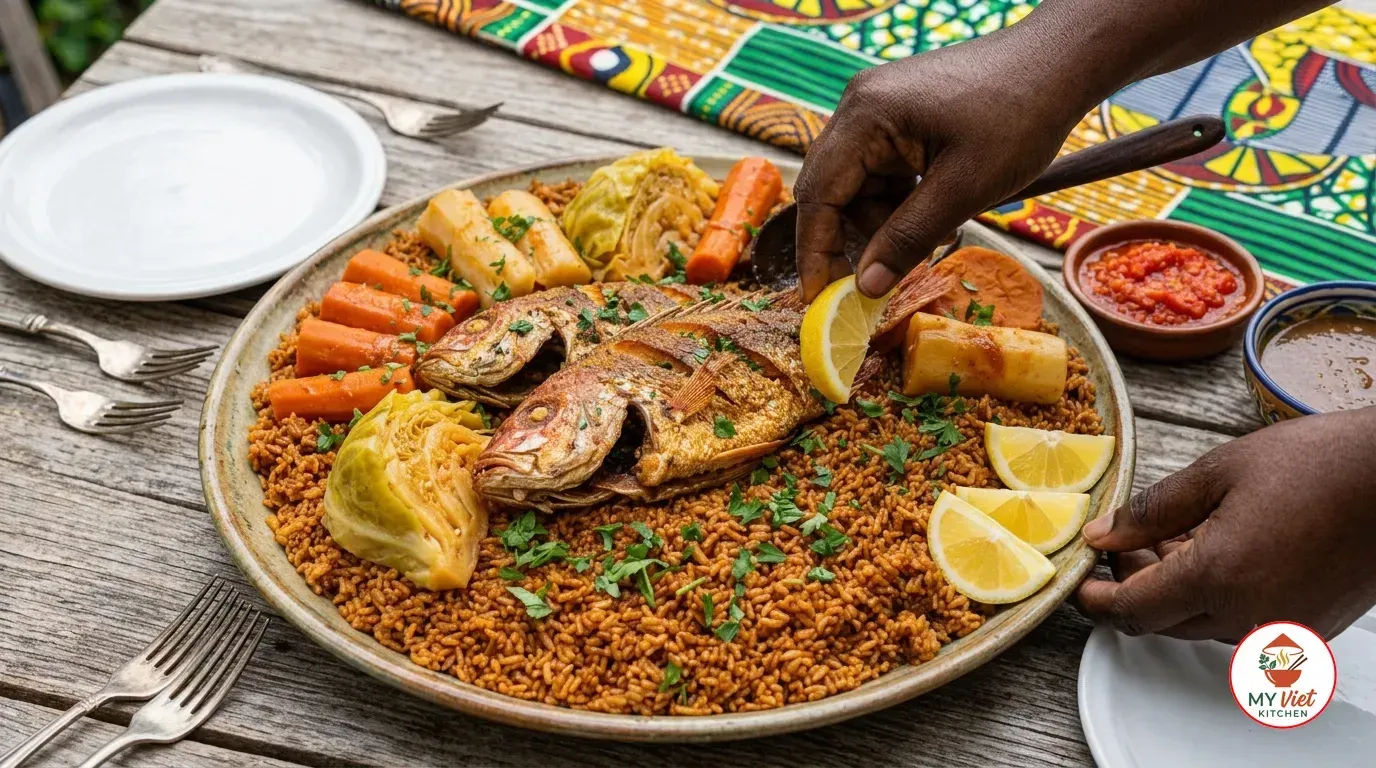
5 Mound the tomato-stained rice onto a large, round serving platter. Place the fried fish pieces in the center of the rice. Arrange the cooked vegetables around the fish in a ring. Drizzle any remaining sauce from the pot over the top.
Finally, serve immediately at the table, family-style, with everyone gathered around the platter. In Senegal, this communal way of eating is central to the thieboudienne experience. Traditionally, the host breaks the fish into pieces and pushes choice portions toward honored guests. Squeeze fresh lemon juice over the rice for a bright finish.
Expert Tips for Perfect Thieboudienne
Toast the Tomato Paste First
Above all, cooking the tomato paste in oil for 2 minutes before adding any liquid is one of the most important techniques in this recipe. This step caramelizes the natural sugars in the paste and removes the raw, tinny taste. The result is a deeper, sweeter, more complex tomato flavor that carries through the entire dish. Senegalese cooks call this process “cooking the tomato” and consider it non-negotiable.
Do Not Stir the Rice
Once you add the rice to the broth and bring it to a boil, resist the urge to stir. Stirring breaks the rice grains and releases starch, which turns the finished dish gummy and sticky. Instead, simply spread the rice evenly, cover tightly, and let the steam do all the work. After 20 to 25 minutes, each grain will be separate, fluffy, and stained with the rich tomato broth.
Layer the Vegetables by Cooking Time
Not all vegetables cook at the same speed. Cassava and carrots are dense and need more time. Eggplant and cabbage soften quickly. Add the harder vegetables first and give them a 10-minute head start. Then add the softer ones. This way, everything finishes at the same time. Overcooked vegetables turn to mush. Undercooked ones feel chalky. Layering by cook time keeps each piece perfectly tender.
Thieboudienne Across Senegal and West Africa
While thieboudienne originated in Saint-Louis, different regions across Senegal and West Africa have developed their own variations. Here is how the dish changes depending on where you eat it.
| Region | Key Differences |
|---|---|
| Saint-Louis (original) | Uses generous amounts of dried fish (guedj), broken rice, and a wide variety of vegetables. The sauce tends to be rich and deeply concentrated. |
| Dakar | Often uses less dried fish and more tomato paste for a sweeter, less pungent flavor. Dakar versions sometimes include okra and bitter tomato (jaxatu). |
| Casamance (southern Senegal) | Palm oil sometimes replaces peanut oil, giving the rice a golden hue instead of red. Smoked fish is more common here than dried fish. |
| Gambia (benachin) | Called benachin or “one pot,” the Gambian version is very similar but often uses more chili heat and less tamarind. |
| Mauritania | The Mauritanian version uses more spice blends and sometimes adds lamb alongside the fish for a richer, heavier meal. |
Serving Suggestions
In Senegal, thieboudienne arrives at the table on a single large platter called a bol. The family gathers around and eats together. This communal style is the heart of the thieboudienne tradition. Here are the best ways to complete the meal.
The Perfect Accompaniments:
- Fresh lemon wedges: A squeeze of lemon over the rice and fish brightens all the deep, savory flavors. Lemon is the most common condiment served with thieboudienne in Senegal. The acidity cuts through the richness of the tomato broth.
- Tamarind dipping sauce: Mix tamarind paste with water, sugar, and a pinch of chili to make a tangy dipping sauce. This adds a sour, fruity note that pairs well with the fried fish.
- Simple green salad: A light salad of lettuce, sliced onions, and vinaigrette provides a fresh, crunchy contrast to the hearty rice and vegetables. Many Senegalese restaurants serve a side salad alongside thieboudienne.
- Scotch bonnet hot sauce: For those who want extra heat, blend Scotch bonnet peppers with onion, vinegar, and salt. Senegalese diners often drizzle this fiery sauce over individual portions of rice to customize the spice level.
Beverage Pairings:
- Bissap (hibiscus tea): This deep red, tangy drink is the most popular beverage in Senegal. Served cold with sugar and a splash of orange blossom water, bissap complements the savory richness of thieboudienne perfectly.
- Ginger juice (gingembre): Freshly pressed ginger juice sweetened with sugar and flavored with lime is a classic Senegalese refreshment. Its sharp, warming spice pairs naturally with the bold flavors of the fish and tomato rice.
- Attaya (Senegalese mint tea): This strong, sweet green tea is brewed three times, with each round carrying a different flavor. Senegalese families often serve attaya after the thieboudienne meal as a digestive ritual that extends the gathering.
Storage and Reheating
Refrigerator: Store leftover thieboudienne in a sealed container for up to 3 days. Keep the fish, rice, and vegetables together. The flavors actually deepen overnight as the rice absorbs more of the tomato broth. Many Senegalese families say that thieboudienne tastes even better the next day.
Freezer: Freeze portions for up to 2 months in airtight bags or containers. Thaw in the fridge overnight before reheating. The vegetables may soften a bit after freezing, but the rice and fish hold up well.
Reheating: Warm leftovers in a covered pot over medium-low heat with a splash of water to prevent sticking. Stir gently to avoid breaking the fish. You can also reheat individual portions in the microwave for 2 to 3 minutes. The stovetop method gives better results because it restores the texture of the rice more evenly.
Common Mistakes to Avoid
1. Using Flaky, Delicate Fish
Thin, soft fish like tilapia or sole falls apart during frying and completely disintegrates in the broth. Thieboudienne needs firm, thick fillets that can handle high heat and long cooking. Always choose grouper, snapper, or sea bass. The fish should hold its shape from start to finish so you can present it whole on the serving platter.
2. Skipping the Tomato Paste Toasting
Adding tomato paste straight to the liquid gives the sauce a raw, acidic taste that never fully disappears. Toasting the paste in oil for 2 minutes before adding water or tomatoes removes that harsh edge. The paste darkens, sweetens, and develops a concentrated richness. This small step makes a massive difference in the final flavor of the broth and the rice.
3. Adding Too Much Water to the Rice
Excess water makes the rice soggy and washes out the deep tomato color. The broth should sit roughly one inch above the rice level. If you add too much, the rice drowns instead of absorbing the flavored liquid. Measure carefully and remember that you can always add a small splash of water later if the rice looks dry before it finishes cooking.
Frequently Asked Questions
Where can I buy broken rice?
Broken rice is available at African grocery stores, Asian grocery stores (where it is often labeled as “jasmine broken rice”), and online retailers. In Senegal, broken rice is cheaper than whole grain rice because it consists of grains that cracked during milling. If you cannot find broken rice at all, use regular long-grain rice. Reduce the cooking liquid by about half a cup since whole grains absorb less liquid.
What is guedj and do I really need it?
Guedj is a Senegalese fermented and dried fish product that adds deep umami and a funky, savory punch to the broth. It plays a role similar to fish sauce in Southeast Asian cooking. While guedj delivers the most authentic flavor, you can skip it. Substitute one tablespoon of fish sauce or a small piece of kombu seaweed. The dish will still taste excellent without guedj.
Can I make a vegetarian version of thieboudienne?
Yes. Replace the fish with firm tofu or thick slices of eggplant, and skip the dried fish. Use vegetable broth instead of water for a richer base. Keep all the vegetables, tamarind, and tomato sauce the same. The vegetarian version will lack the seafood depth, but the tomato, tamarind, and spice combination still delivers a satisfying, complex flavor.
Variations and Adaptations
Thieboudienne Blanc (White Thieboudienne):
This lighter version skips the tomato sauce entirely. The fish and vegetables cook in a clear broth seasoned with onion, garlic, and lemon. The rice stays white instead of turning red. Thieboudienne blanc is popular in parts of Senegal during hot months because it feels lighter and less heavy than the red version. The clean, simple flavors let the quality of the fish shine.
Thieboudienne with Meat:
Some families in eastern Senegal and Mauritania replace the fish with lamb or beef. The meat is browned first, then simmered in the tomato broth until tender. This version takes longer to cook but produces a richer, heartier meal. The technique stays the same. Brown the protein, build the tomato base, simmer the vegetables, then cook the rice in the resulting broth.
Quick Weeknight Thieboudienne:
For a faster version, use canned fish or leftover cooked fish. Skip the frying step and build the tomato broth directly. Use fewer vegetables, such as just carrots and cabbage, to cut prep time. Cook the rice in the broth as usual. This shortcut takes about 40 minutes total. While it lacks the depth of the full version, it still captures the core flavors of tomato, tamarind, and spiced rice.
The Cultural Significance of Thieboudienne
Thieboudienne holds a place in Senegalese culture that goes far beyond food. It is the dish that defines national identity. In 2021, UNESCO added thieboudienne to its list of Intangible Cultural Heritage of Humanity, recognizing not just the recipe but the entire social ritual around it. Consequently, this honor placed Senegalese food culture on the global stage alongside other protected traditions from around the world.
In Senegalese homes, thieboudienne is almost always the lunch dish. Families gather around the bol, the large communal platter, and eat with their hands. The head of the household breaks the fish and distributes pieces to family members and guests. Receiving a choice piece of fish from the host is a sign of respect and welcome. In other words, thieboudienne turns a meal into an act of community and generosity.
The dish also carries the legacy of Penda Mbaye, the woman from Saint-Louis who created it. Her invention transformed simple, locally available items into a dish that feeds and connects an entire nation. Today, thieboudienne remains a source of pride for Senegalese people around the world. Mothers pass the recipe down to daughters, each generation adding its own small twist while keeping the core technique alive. For more African dishes, explore our collection of African recipes including West African jollof rice and Ethiopian doro wat.
Conclusion
Making authentic thieboudienne at home requires patience, good fish, and attention to a few key steps: stuff and fry the fish properly, toast the tomato paste, layer the vegetables by cooking time, and let the rice absorb the broth without stirring. Master these techniques and you will produce a dish that captures the heart of Senegalese cooking in your own kitchen.
Whether you serve this thieboudienne for a family gathering or a special weekend meal, the combination of spiced fish, tomato-stained rice, and tender vegetables creates one of Africa’s most deeply satisfying one-pot meals. For more West African and African recipes, explore our growing collection of African dishes including fufu with soup and Nigerian egusi soup.