Suya is Nigeria’s most beloved street food, and one bite explains why. These smoky, fiery grilled beef skewers are coated in a signature peanut spice blend called yaji that delivers a bold combination of heat, nuttiness, and warmth. Whether you encounter suya at a roadside stand in Lagos or a bustling night market in Abuja, the aroma alone stops you in your tracks. This authentic suya recipe brings that irresistible Nigerian flavor to your home kitchen with simple ingredients and straightforward technique.
Prep Time: 30 minutes | Cook Time: 15 minutes | Servings: 4
Difficulty: Easy | Calories: ~350 per serving
What Makes This Suya Recipe Special?
Suya is not just grilled meat on a stick. It is a deeply seasoned, smoke-kissed experience rooted in centuries of Hausa culinary tradition from northern Nigeria. The magic lies entirely in the yaji spice blend, a fragrant mixture of ground roasted peanuts, fiery cayenne pepper, smoky paprika, and warm spices like ginger, cloves, and cinnamon. This combination creates a crust on the meat that is nutty, spicy, and deeply savory all at once.
What truly sets suya apart from other grilled skewers is how the peanut powder melts into the oil on the surface of the beef during grilling. As a result, it forms a crispy, caramelized coating that locks in moisture and delivers an explosion of flavor with every bite. Additionally, the thin slicing technique ensures the beef cooks in minutes, staying juicy on the inside while charring beautifully on the outside.
This suya recipe stays true to the authentic Nigerian method. You make the yaji from scratch, slice the beef thin against the grain, and grill over high heat until the edges char. The result is a dish that tastes exactly like what you would find at the best suya spots across Nigeria. Moreover, the entire suya recipe takes less than 45 minutes from start to finish, so it is perfect for busy weeknights.

Choosing the Right Beef for Suya
The cut of beef you select directly affects the tenderness and flavor of your finished suya. Nigerian suya vendors typically use cuts with some fat marbling, because the fat keeps the meat juicy during high-heat grilling. Getting this right is essential for a great suya recipe. Here are your best options.
- Beef sirloin (best choice): Sirloin strikes the ideal balance between lean muscle and fat marbling. It slices cleanly, holds up well on skewers, and stays tender after grilling. Most suya vendors in Nigeria prefer this cut for good reason.
- Flank steak: This cut is leaner but has excellent beefy flavor. Slice it very thinly against the grain for the best results. Flank steak benefits from a slightly longer marination time to tenderize the fibers.
- Skirt steak: With its loose grain and rich fat content, skirt steak produces incredibly juicy suya. However, it can be chewy if sliced too thick. Cut it into strips no more than one-quarter inch thick for the best texture.
Ingredients for Suya
Yaji Spice Blend:
- 1/2 cup roasted peanuts, finely ground into powder
- 2 tablespoons smoked paprika
- 1 tablespoon cayenne pepper (adjust to taste)
- 1 tablespoon onion powder
- 1 tablespoon garlic powder
- 1 teaspoon ground ginger
- 1 teaspoon ground white pepper
- 1 teaspoon bouillon powder (Maggi or Knorr)
- 1/2 teaspoon ground cloves
- 1/2 teaspoon ground cinnamon
- Salt to taste
Main Ingredients:
- 1.5 pounds beef sirloin or flank steak, thinly sliced against the grain
- 3 tablespoons vegetable oil or peanut oil
- Wooden skewers, soaked in water for 30 minutes
For Serving:
- 1 large red onion, sliced into thin rings
- 2 large tomatoes, sliced
- Fresh cabbage leaves
- Lemon or lime wedges
Pro tip: The secret to authentic yaji spice is using dry-roasted peanuts ground to a very fine powder. If the peanut pieces are too coarse, they will burn on the grill instead of forming that signature crispy crust. Blend in short bursts to avoid turning the peanuts into peanut butter from the heat of the blender motor.
Step-by-Step Instructions
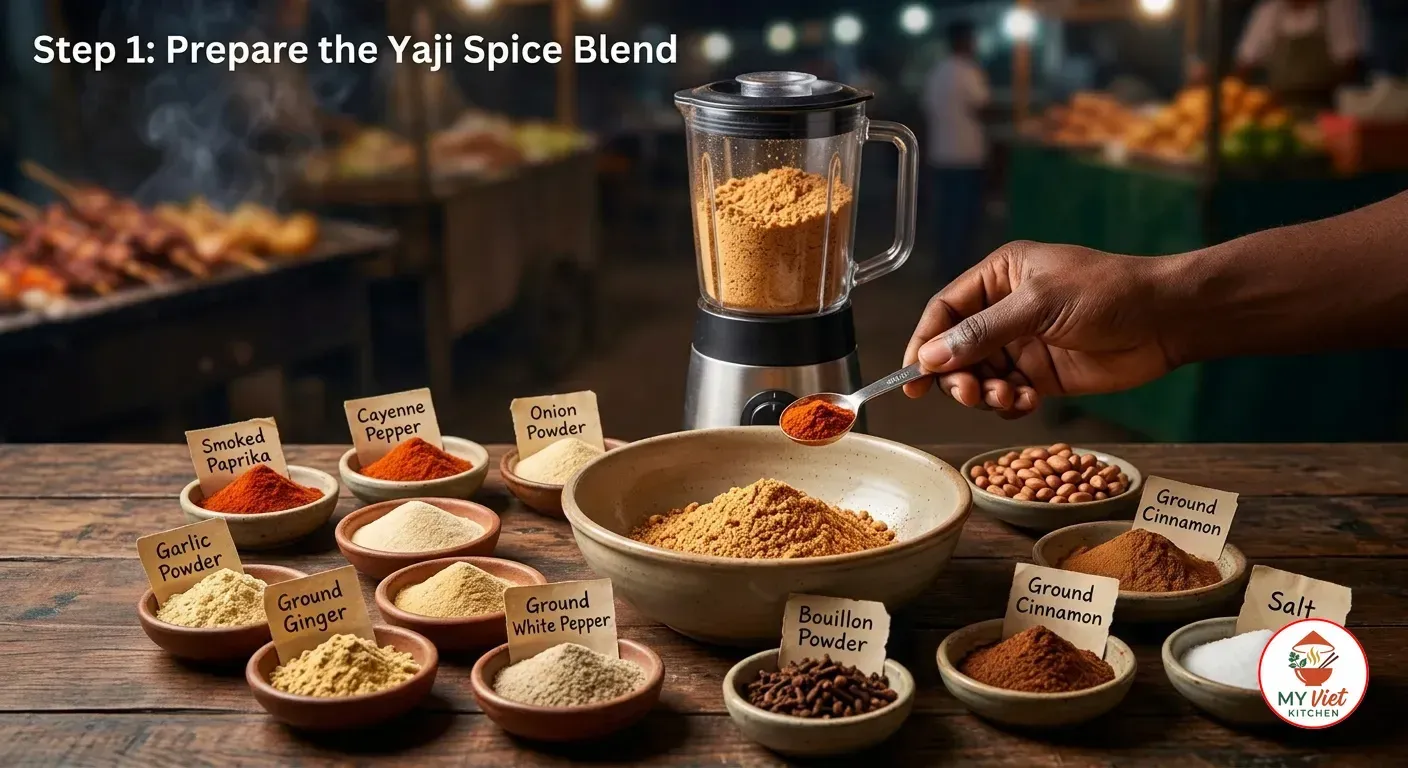
Step 1: Prepare the Yaji Spice Blend
1 Start by grinding the roasted peanuts into a fine powder using a blender, food processor, or spice grinder. Pulse in short bursts to keep the texture powdery rather than pasty. Transfer the peanut powder to a bowl and add the smoked paprika, cayenne pepper, onion powder, garlic powder, ground ginger, white pepper, bouillon powder, ground cloves, ground cinnamon, and salt. Mix thoroughly until the blend is uniform in color and texture. This yaji spice is the soul of your suya recipe, so take time to ensure every ingredient is evenly distributed.
Step 2: Slice and Season the Beef
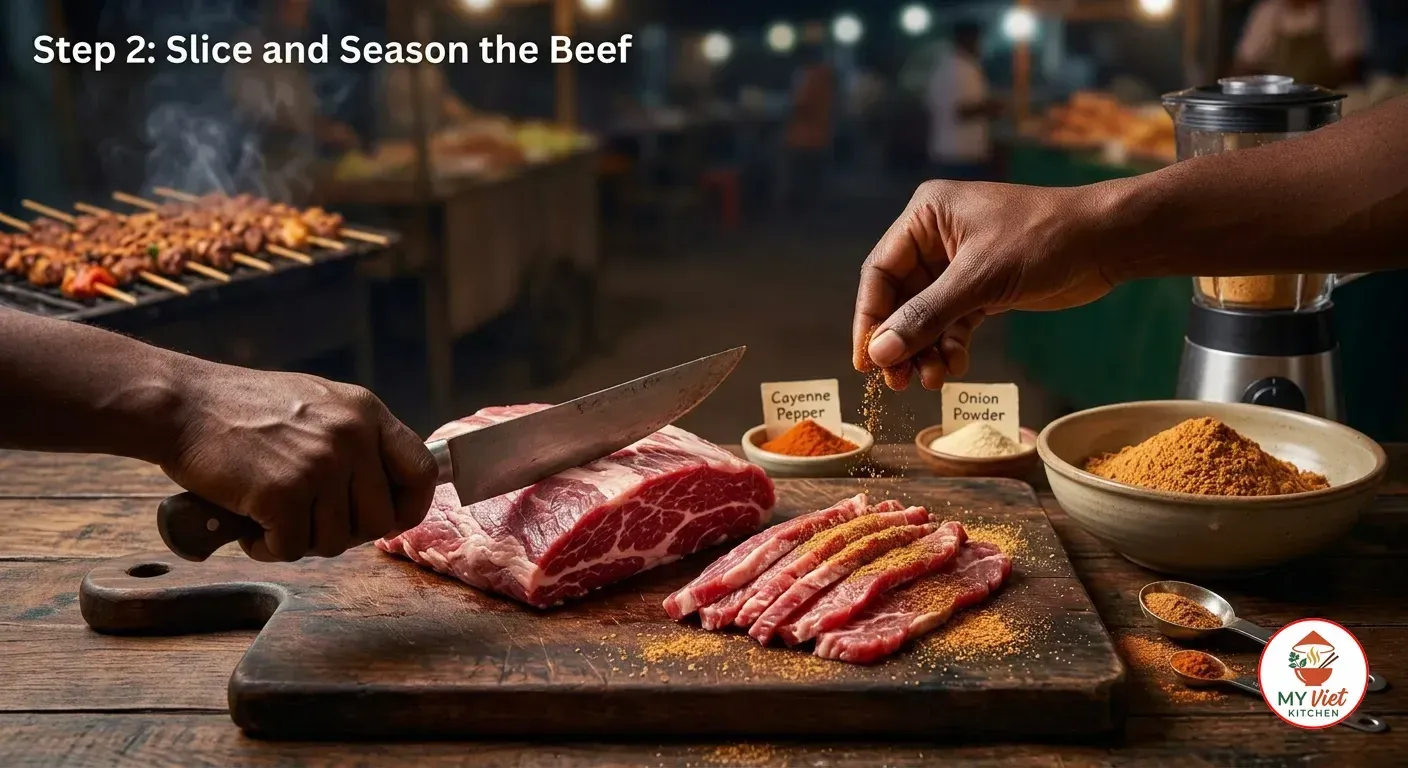
2 Place the beef in the freezer for 15 to 20 minutes before slicing. This firms up the meat and makes it much easier to cut thin, even strips. Then slice the beef against the grain into strips about one-quarter inch thick and 3 to 4 inches long. Place all the strips in a large mixing bowl.
Drizzle the vegetable oil over the beef and toss to coat every strip evenly. The oil helps the yaji spice stick to the meat and also promotes browning during grilling. Now add about two-thirds of the yaji spice blend and mix thoroughly with your hands. Make sure every surface of every strip is generously coated. Reserve the remaining third of the spice for finishing later.
Step 3: Thread the Skewers
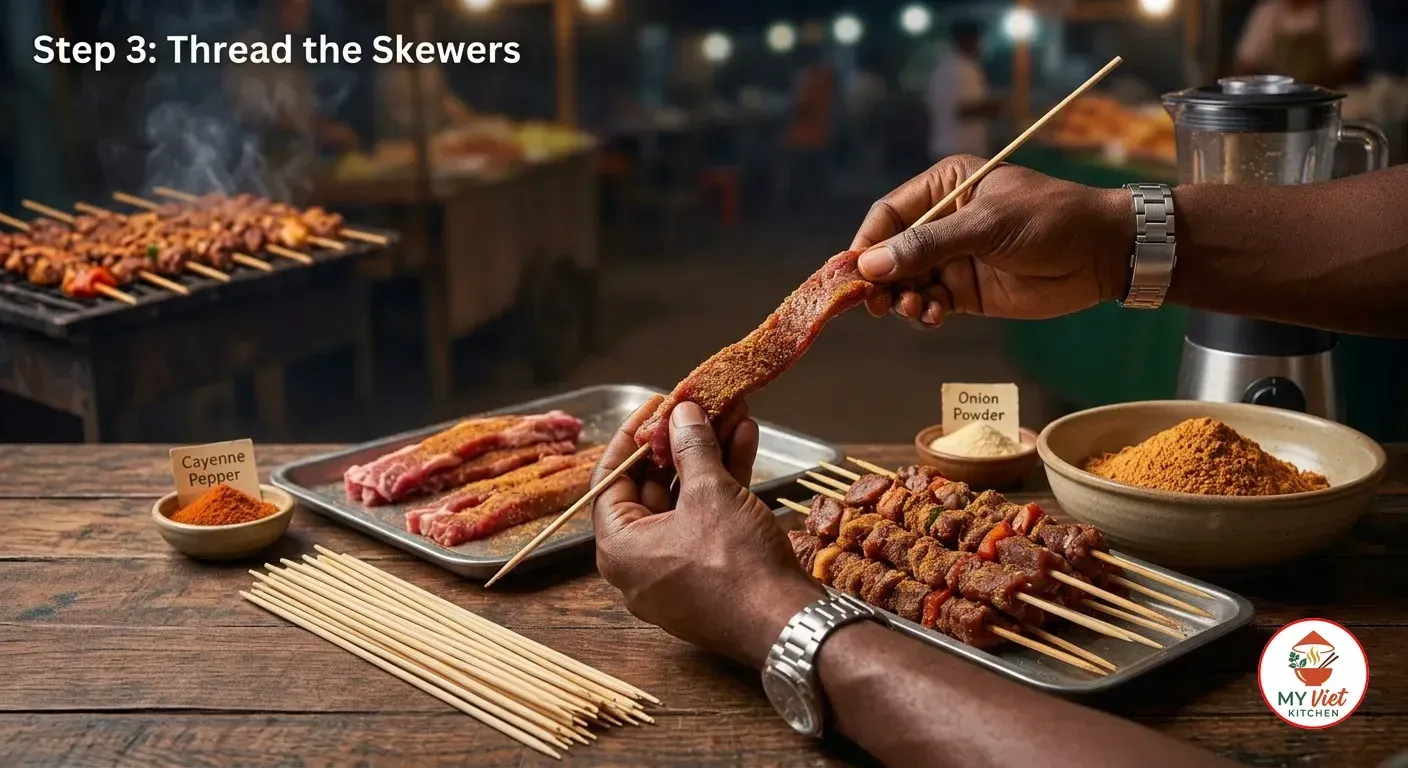
3 Take a soaked wooden skewer and thread one beef strip onto it in a zigzag pattern. Weave the skewer through the meat back and forth so the strip lies relatively flat along the length. This technique is essential because it keeps the beef thin and exposed to direct heat. As a result, you get even charring on both sides instead of a thick lump that stays raw in the middle.
Thread 3 to 4 strips onto each skewer, leaving a small gap between each piece. Lay the finished skewers on a tray and sprinkle lightly with additional yaji spice. For the best results, let the skewers rest at room temperature for 10 minutes before grilling. This allows the spice to bond with the oil on the meat surface.
Step 4: Grill the Suya
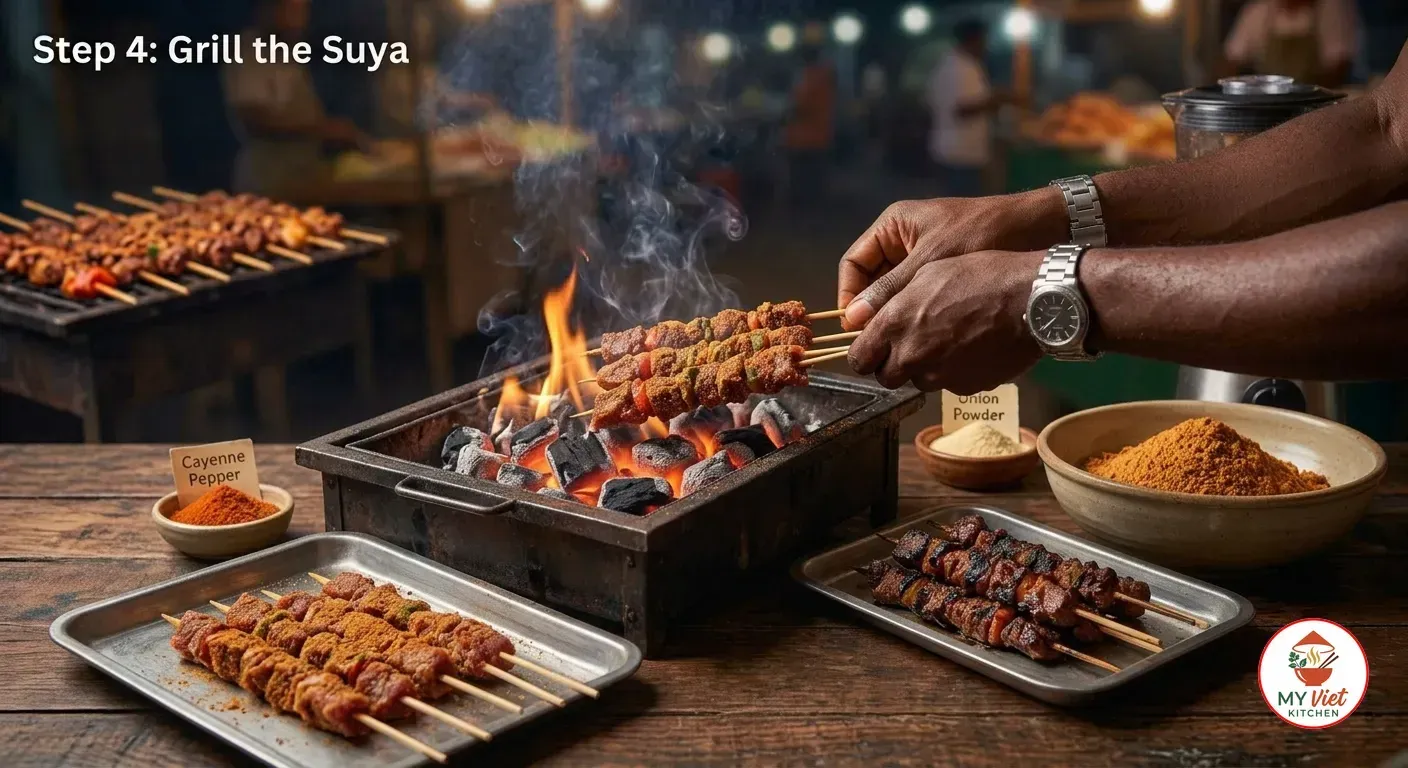
4 Preheat your charcoal grill, gas grill, or oven broiler to high heat. If using a charcoal grill, wait until the coals are white-hot and glowing before placing the skewers. The high heat is critical because it sears the exterior quickly, creating that signature smoky char while keeping the inside juicy and tender.
Place the skewers directly over the heat source. Grill for 3 to 4 minutes on the first side without moving them. Then flip and grill for another 3 to 4 minutes on the other side. Brush lightly with oil if the meat looks dry. The peanut coating should turn dark golden brown with slightly blackened edges. Importantly, do not overcook the beef. Suya should be slightly pink in the center for the best texture and juiciness.
Step 5: Finish and Serve
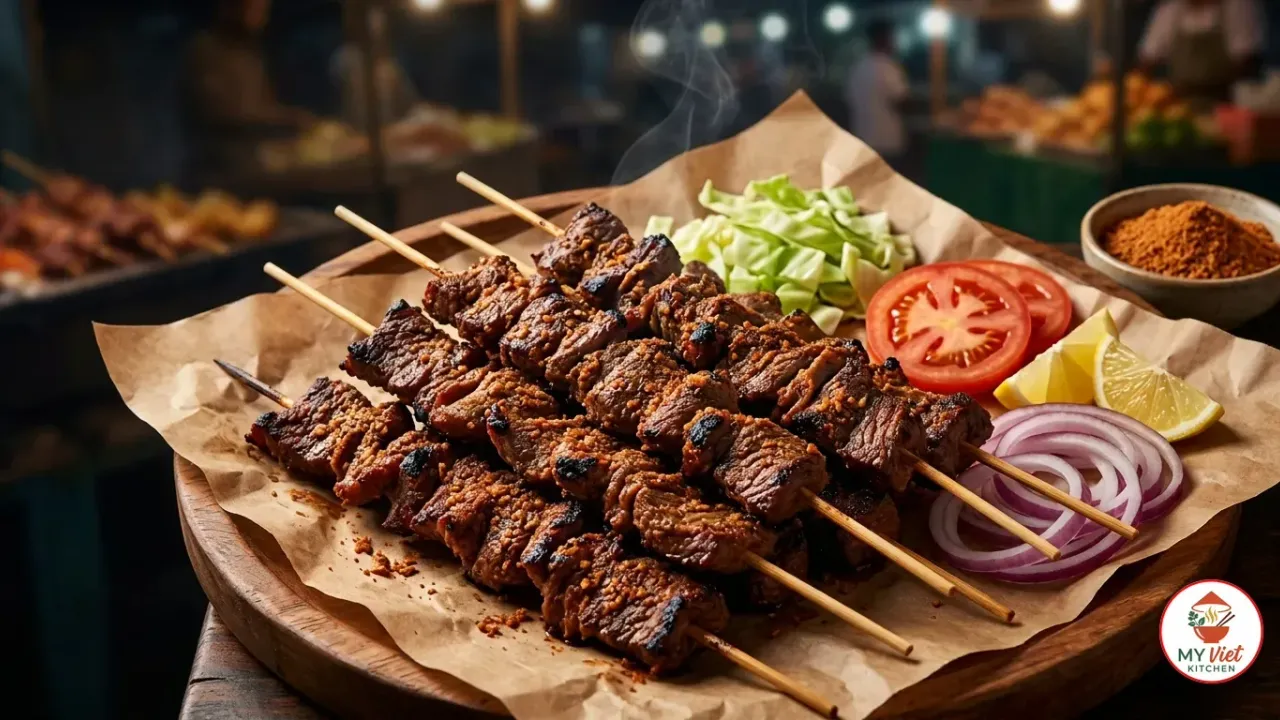
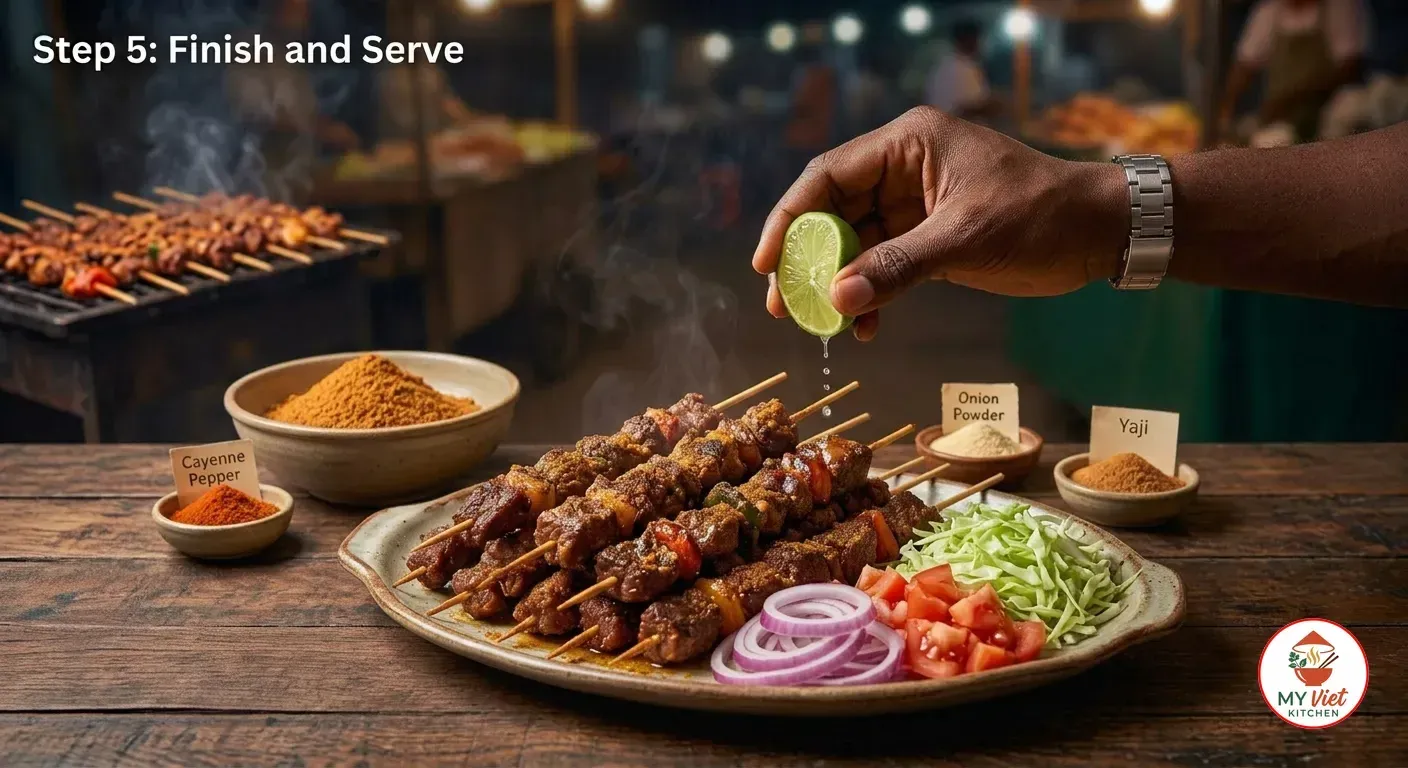
5 Remove the skewers from the grill and immediately sprinkle the reserved yaji spice over the hot meat. The residual heat activates the spices and allows the peanut powder to cling to the surface. Arrange the suya skewers on a large platter lined with fresh cabbage leaves. Surround them with sliced red onion rings, tomato slices, and lemon or lime wedges. In Nigeria, suya is always served wrapped in newspaper or brown paper with these fresh vegetables tucked alongside. Squeeze the citrus over the meat just before eating for a bright, tangy contrast to the smoky heat.
Expert Tips for the Perfect Suya Recipe
Grind the Peanuts to a Fine Powder
The texture of your peanut powder shapes the quality of the crust. Coarse pieces burn on the grill before the beef is done. Fine powder, on the other hand, melts into the oil and forms a smooth, crispy shell. Use a spice grinder for the best results. You can also pulse in a blender with short bursts. Just stop before it turns into paste.
Slice the Beef as Thin as Possible
Thin slicing is what makes suya cook so quickly and stay so tender. Freezing the beef for 15 to 20 minutes before cutting makes this much easier. Aim for slices no thicker than one-quarter inch. Thicker pieces will take too long to cook through, and the spice coating will burn before the center is done.
Use the Highest Heat Possible
Authentic suya cooks over blazing hot charcoal. The intense heat sears the spice crust in seconds, creating that characteristic smoky flavor. If you are using a gas grill, preheat it to the maximum setting. For oven broiling, position the rack 4 to 5 inches from the element. Low or medium heat will dry out the beef instead of charring the exterior.
Suya vs. Other Grilled Skewers Around the World
Grilled meat on skewers appears in nearly every cuisine. However, each tradition brings its own unique seasoning and technique. Here is how Nigerian suya compares to other popular grilled skewer dishes.
| Dish | Origin | Seasoning | Key Difference |
|---|---|---|---|
| Suya | Nigeria | Peanut-based yaji spice | Nutty, spicy crust from ground peanuts |
| Satay | Southeast Asia | Turmeric and lemongrass marinade | Served with peanut dipping sauce on the side |
| Kebab | Middle East | Cumin, coriander, sumac | Often uses ground meat rather than sliced strips |
| Yakitori | Japan | Tare sauce (soy and mirin) | Uses chicken, glazed with sweet soy sauce |
| Anticuchos | Peru | Aji panca chili paste | Traditionally made with beef heart |
Serving Suggestions
In Nigeria, suya is traditionally served as a street food snack wrapped in old newspaper or brown paper. The grilled skewers come piled with sliced raw onions, tomatoes, and sometimes fresh cabbage or cucumber. This simple presentation is part of the charm and allows the bold yaji spice to take center stage.
Classic Accompaniments:
- Sliced raw onions: The sharp, pungent bite of raw red onion cuts through the richness of the meat and adds a refreshing crunch.
- Fresh tomato slices: Juicy tomato provides a cooling contrast to the fiery yaji spice.
- Jollof rice: For a full Nigerian meal, pair suya with a plate of rich, tomato-stewed jollof rice.
- Fried plantains (dodo): Sweet caramelized plantain slices complement the smoky, spicy beef perfectly.
- Fresh cabbage leaves: The mild, crispy leaves serve as edible wrappers for pulling the meat off the skewers.
Beverage Pairings:
- Chapman: Nigeria’s beloved mocktail made with Fanta, Sprite, grenadine, and cucumber slices. Its sweetness balances the heat of the suya.
- Zobo (hibiscus tea): This tart, deep red drink from dried hibiscus flowers and ginger is refreshing and naturally cooling.
- Kunu (millet drink): A traditional Northern Nigerian beverage made from millet, ginger, and cloves. Its creamy, slightly sweet flavor soothes the palate after spicy bites.
- Chilled lager beer: A cold Star, Gulder, or Heineken is the classic companion at any suya spot in Lagos.
Storage and Reheating
Refrigerator: Store leftover suya in an airtight container for up to 3 days. The spice flavor actually intensifies overnight, so leftover suya often tastes even bolder the next day. Keep the fresh vegetables separate from the meat to avoid sogginess.
Freezer: Freeze cooked suya skewers in a single layer on a baking sheet first, then transfer to freezer bags. They keep well for up to 2 months. Thaw overnight in the refrigerator before reheating.
Reheating: The best method is on a hot grill or under the broiler for 2 to 3 minutes per side. This re-crisps the yaji coating and restores the smoky char. You can also reheat in a dry skillet over high heat. Avoid the microwave, because it softens the crispy peanut crust and makes the meat rubbery.
Common Mistakes to Avoid
1. Cutting the Beef Too Thick
Thick beef strips take too long to cook through on high heat. By the time the center is done, the yaji coating has burned and turned bitter. Always slice the beef no thicker than one-quarter inch. Freezing the meat briefly before slicing gives you much more control over the thickness.
2. Using Raw Peanuts Instead of Roasted
Raw peanuts have a bland, beany taste that does not belong in yaji spice. Roasted peanuts deliver the deep, toasty flavor that defines authentic suya. If you can only find raw peanuts, dry-roast them in a skillet over medium heat for 5 to 7 minutes until golden and fragrant before grinding.
3. Grilling Over Low Heat
Low heat dries out the beef and prevents the yaji crust from forming properly. Suya requires blazing high heat for a short time. The goal is to char the exterior in minutes while the interior stays juicy. If your grill is not hot enough, wait until it reaches maximum temperature before placing the skewers.
4. Skipping the Resting Step
After seasoning the threaded skewers, let them rest at room temperature for at least 10 minutes. This allows the oil and spice to form a cohesive layer on the meat. Grilling immediately after threading often results in the yaji spice falling off onto the coals, which wastes flavor and creates flare-ups.
Frequently Asked Questions
What is suya made of?
Suya consists of thinly sliced beef coated in yaji, a spicy peanut-based spice blend. The yaji contains ground roasted peanuts, cayenne pepper, paprika, onion powder, garlic powder, ginger, and warm spices like cloves and cinnamon. The coated beef is then grilled over high heat until smoky and slightly charred. Some vendors also make suya with chicken, ram, or kidney.
What cut of meat is best for suya?
Beef sirloin is the most popular choice because of its ideal balance of lean meat and fat marbling. Flank steak and skirt steak also produce excellent suya. The most important factor is slicing the beef very thinly against the grain. This ensures quick cooking and tender results regardless of which cut you choose.
Can I make suya without a grill?
Absolutely. Your oven broiler is the best indoor alternative. Place the skewers on a wire rack set over a lined baking sheet and broil on high for 3 to 4 minutes per side. A hot cast-iron grill pan on the stovetop also works well. While charcoal gives the most authentic smoky flavor, both alternatives produce delicious results that capture the essential character of the dish.
How spicy is suya?
Traditional Nigerian suya ranges from moderately to very spicy. The heat comes primarily from cayenne pepper in the yaji blend. You can easily control the spice level by reducing the cayenne or replacing part of it with mild paprika. For a family-friendly version, start with half the recommended cayenne and offer extra yaji on the side for those who want more heat.
What is yaji spice?
Yaji is the traditional Nigerian spice blend that gives suya its distinctive flavor. It combines finely ground roasted peanuts with a mix of dried chilies, paprika, ginger, garlic, and warm spices. Every suya vendor in Nigeria guards their yaji recipe closely, and the blend varies from region to region. In Northern Nigeria, the yaji tends to be hotter and more peanut-heavy, while southern versions are often milder.
Is suya gluten-free?
Yes, suya is naturally gluten-free. The core ingredients are beef, ground peanuts, and dried spices, none of which contain gluten. However, certain bouillon powders may include wheat-based fillers. Check the label on your bouillon powder, or simply use salt and a pinch of MSG instead to keep the recipe safe for those with gluten sensitivities.
Variations and Adaptations
Chicken Suya:
Replace the beef with boneless, skinless chicken thighs sliced into thin strips. Chicken suya is lighter but still absorbs the yaji spice beautifully. Grill for 4 to 5 minutes per side since chicken needs to cook through completely. This variation is popular across Nigeria and often costs less than beef suya at street stalls.
Ram Suya (Tsire):
During festive periods like Eid and Christmas in Nigeria, suya vendors switch to ram or goat meat. The stronger flavor of ram pairs exceptionally well with the bold yaji spice. Slice the ram meat thin and marinate for at least one hour, because the denser muscle fibers benefit from extra time with the spice and oil.
Kidney and Liver Suya:
Offal suya is a beloved delicacy among Nigerian suya enthusiasts. Beef kidney and liver are sliced thin, coated heavily in yaji, and grilled until just cooked through. The organs have a rich, mineral flavor that stands up boldly to the spice. Be careful not to overcook organ meats, because they become tough and dry very quickly.
Oven-Baked Suya:
For a hands-off approach, arrange the seasoned skewers on a wire rack over a baking sheet. Bake at 425 degrees Fahrenheit for 10 minutes, then switch to the broiler for the final 3 to 4 minutes to get the charred effect. This method is convenient for making large batches and produces consistently good results, although it lacks the deep smokiness of charcoal grilling.
The Cultural Significance of Suya in Nigeria
Suya is woven into the fabric of Nigerian daily life. Originally a Hausa tradition from the northern regions, suya has spread across all of Nigeria and into neighboring countries. Today, you will find suya spots on virtually every major street corner after sundown. The mai suya, which means “suya man” in Hausa, is one of the most recognized figures in Nigerian street food culture.
What makes suya so powerful is how it brings people together. In Lagos, Abuja, and Port Harcourt, families and friends gather around suya stands after work and during football matches. Standing around a smoky grill, waiting for fresh skewers, and debating whose spot is best is a deeply loved ritual. Furthermore, suya cuts across ethnic and religious lines in a country with over 250 ethnic groups.
The Hausa people first created suya as a way to preserve and flavor meat with local peanuts and spices. Over time, the craft of making yaji became a guarded family secret. Many famous suya vendors today learned the trade from their fathers and grandfathers. Consequently, each vendor’s yaji has a unique flavor that loyal fans can spot blindfolded. Suya is not just food in Nigeria. It is heritage, community, and pride served on a stick.
Conclusion
This authentic suya recipe captures everything that makes Nigerian grilled beef skewers so addictive. The key lies in preparing a proper yaji spice blend with finely ground peanuts, slicing the beef thin, and grilling over the highest heat you can get. Follow this suya recipe step by step, and you will produce smoky, spicy, peanut-crusted skewers that rival the best suya stands in Lagos. Whether you serve it as a party snack or a weeknight dinner, this suya recipe delivers bold Nigerian flavor every single time.
Ready to explore more Nigerian and African flavors? Browse our collection of African dishes, including jollof rice, egusi soup, and doro wat. Also discover our grilled recipes from around the world for more smoky inspiration.