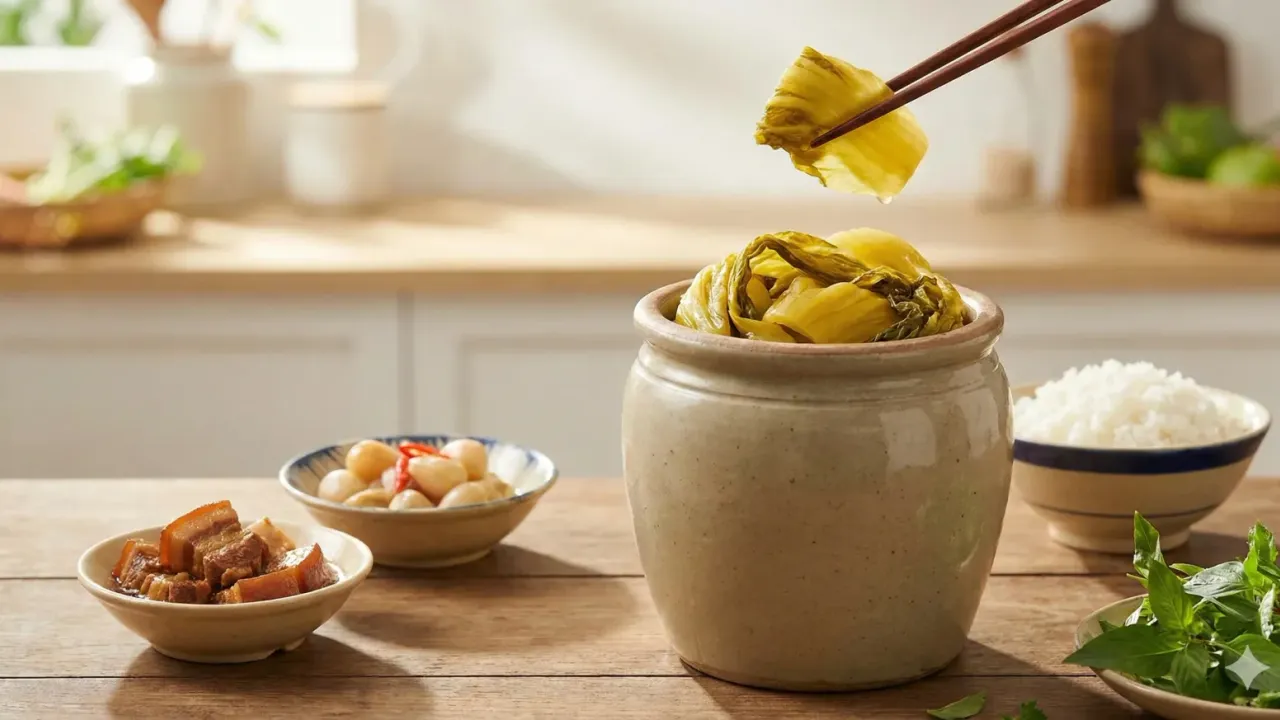
Vietnamese pickled mustard greens, known as dưa cải muối, is a beloved traditional dish that transforms humble vegetables into a tangy, crispy accompaniment that elevates any Vietnamese meal. This ancient preservation method has been perfected over generations, creating a fermented delicacy that’s not only delicious but also remarkably healthy.
Whether you’re enjoying it with thịt kho (braised pork), cá kho tộ (caramelized fish), or simply with steamed rice, these golden pickles add the perfect burst of sour flavor and satisfying crunch. Best of all, making them at home ensures food safety and allows you to control the ingredients for optimal taste.
Table of Contents
- The Ancient Art of Pickling
- Ingredients You’ll Need
- Step-by-Step Preparation
- Preparing Your Ingredients
- Creating the Perfect Pickling Brine
- The Pickling Process
- How to Serve and Store
- Pro Tips for Success
- Health Considerations
- Frequently Asked Questions
The Ancient Art of Pickling Vietnamese Vegetables
Pickling vegetables in salt brine is one of humanity’s oldest food preservation techniques, dating back approximately 4,000 years. Our ancestors discovered that submerging vegetables and meats in salt created an environment that prevented spoilage, allowing them to enjoy produce long after harvest season ended.
In Vietnamese cuisine, pickled mustard greens hold a special place. The fermentation process develops complex flavors - sour, salty, and umami - that stimulate the appetite and complement rich, savory dishes. The characteristic crunch provides textural contrast, making every bite more interesting.

Ingredients for Vietnamese Pickled Mustard Greens
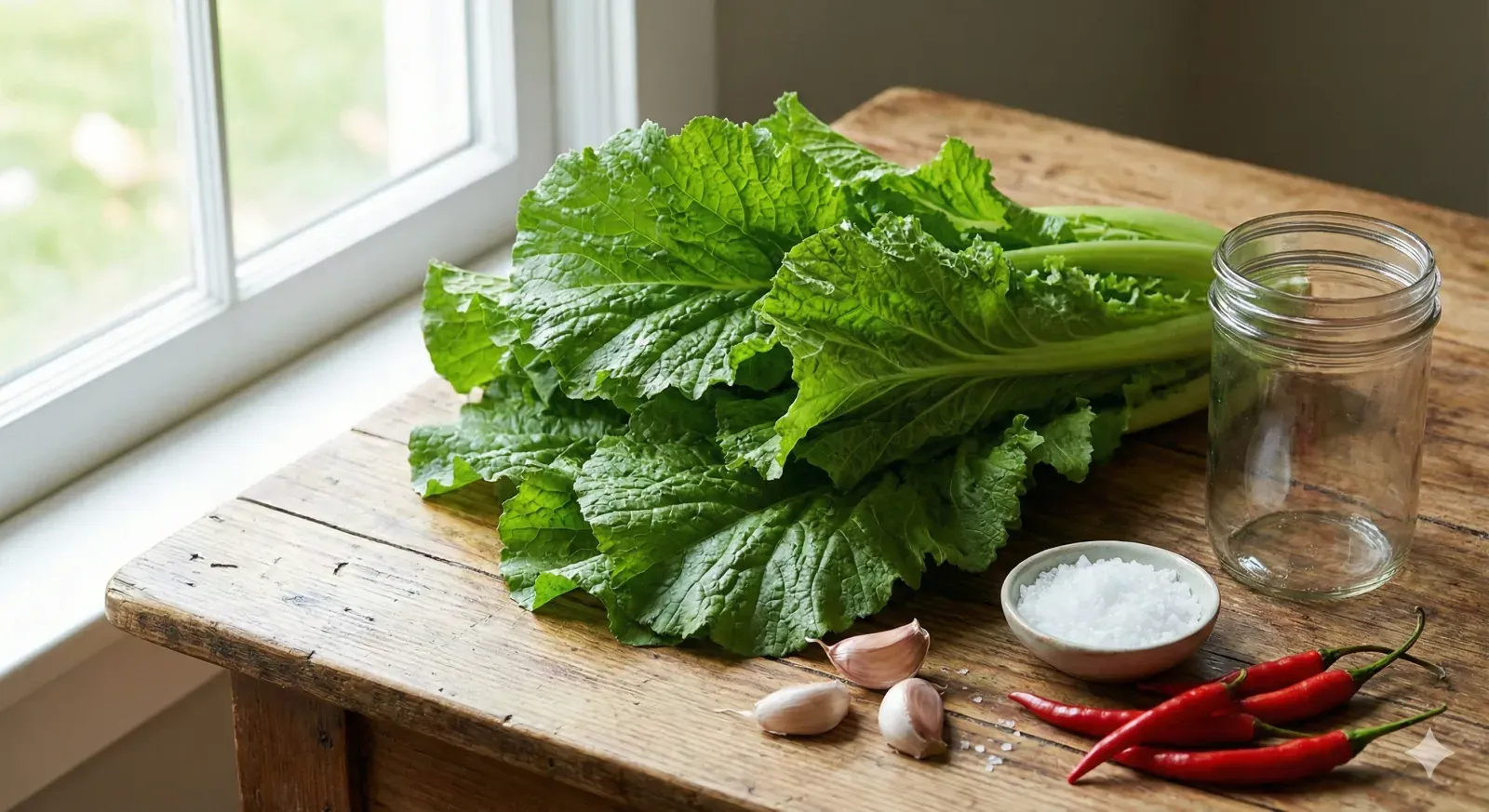
Main Ingredients:
-
1 kg (2.2 lbs) mustard greens (Chinese mustard cabbage or cải bẹ xanh) - Choose mature leaves with thick, crisp stems
-
6 shallots - Adds aromatic sweetness
-
4 red chili peppers (horn chilies or small red chilies) - For color and mild heat
-
50g (1.7 oz) scallions - Contributes fresh aromatic notes
-
1 liter (4 cups) boiled water, cooled to room temperature
Seasonings:
-
50g (3.5 tablespoons) salt
-
30g (2 tablespoons) sugar
-
50ml (3 tablespoons) white vinegar
- 50g (3.5 tablespoons) salt
- 30g (2 tablespoons) sugar
- 50ml (3 tablespoons) white vinegar
Ingredient Selection Tips:
- Choose mustard greens with large, green stems that aren’t bruised or yellowed
- Select slightly mature greens rather than very young ones for better crunch
- All ingredients should be fresh and blemish-free
- The ratio is typically 1:1 - 1kg vegetables to 1 liter brine
Step 1: Preparing Your Ingredients
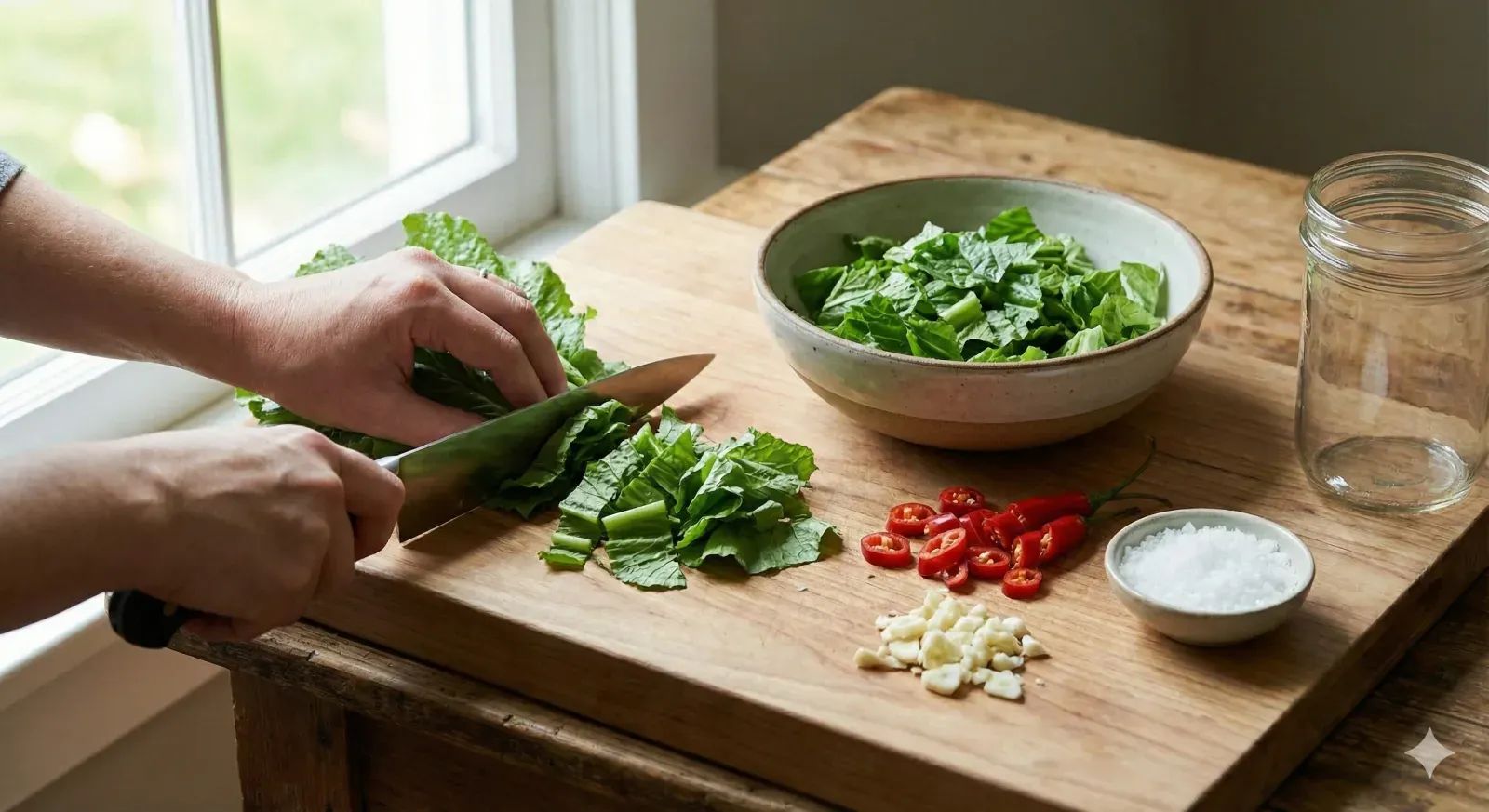
Preparing the Mustard Greens:
- Sun-dry first (crucial step): After purchasing, immediately lay the mustard greens in strong sunlight for about 2 hours without washing them first. This removes excess moisture and helps achieve that signature crispy texture.
- Pro tip: If no sunlight is available, air-dry in a breezy spot or use a food dehydrator at 50°C (122°F) for 2 hours
- Important: Do not wash before drying - this can cause spoilage
- Wash thoroughly: After drying, separate each leaf and wash under running water, cleaning between all folds to remove dirt and grit.
- Cut appropriately: Cut the mustard greens into pieces about 5cm (2 inches) long. Keep the stems and leaves separated - you’ll need this later when packing the jar.
- Remove imperfect parts: Discard any wilted, bruised, or yellowed leaves. Use mature leaves for the best texture.
Preparing Other Ingredients:
- Scallions: Remove wilted green parts, wash clean, cut into 5cm pieces, and drain well
- Shallots: Peel, wash thoroughly, and drain
- Chili peppers: Wash, cut in half, remove seeds, and slice into long strips (or leave whole if using small chilies)
Critical Preparation Notes:
- Always wash vegetables under running water for the most thorough cleaning
- The stems go into the jar first because they’re thicker and need more time to pickle
- Scallions add essential aromatic flavor to the finished pickles
- Chilies provide beautiful color - adjust quantity based on your heat preference
Step 2: Creating the Perfect Pickling Brine
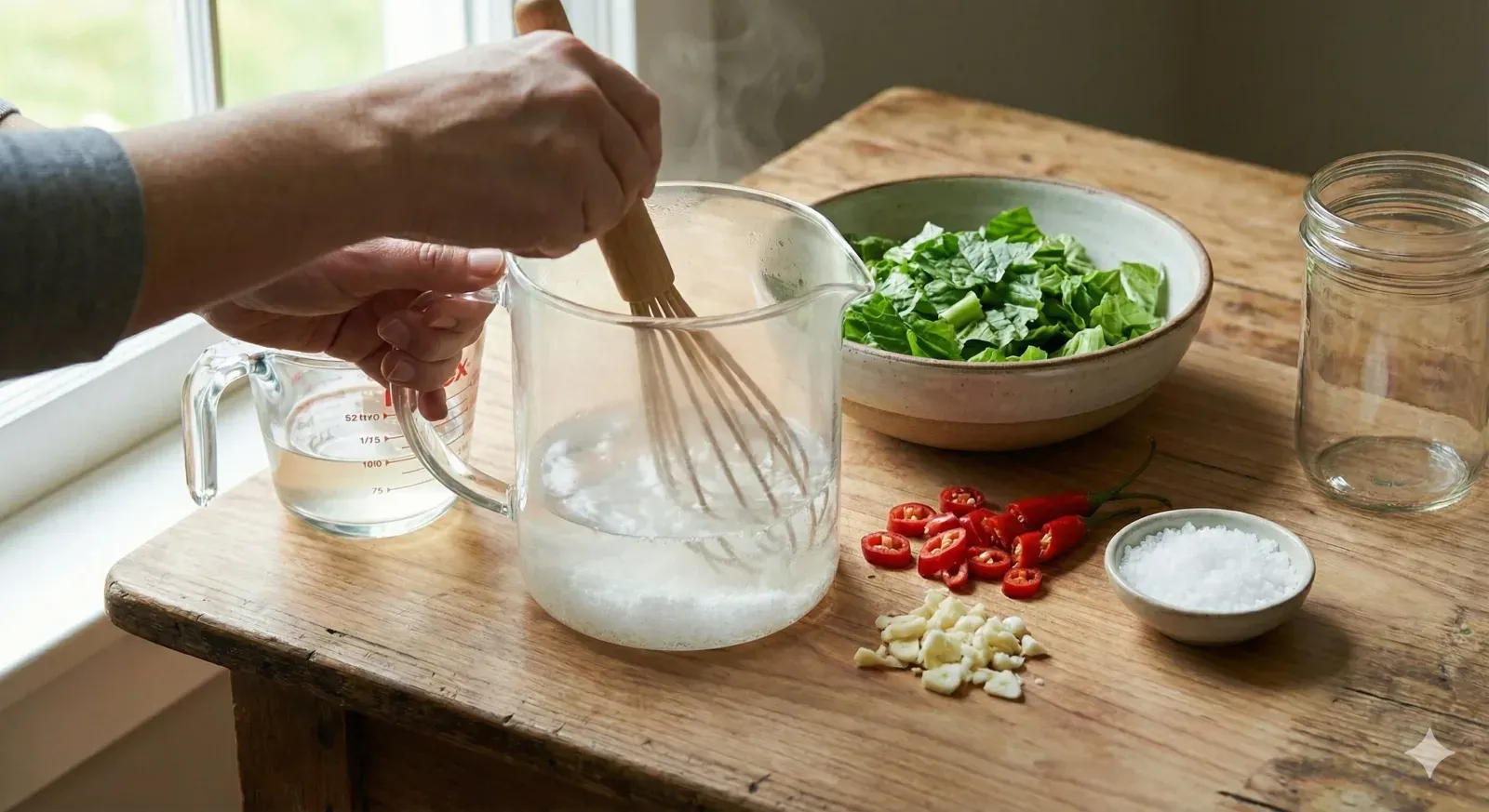
The brine is the heart of your pickles - it determines flavor, texture, and shelf life. Here’s how to make it perfectly every time:
Brine Instructions:
- Pour 1 liter of boiled and cooled water into a large clean bowl
- Add 50g salt and 30g sugar
- Stir continuously until completely dissolved
- Once dissolved, add the vinegar and mix thoroughly
Science of the Brine:
- Boiled water: Using boiled water that’s been cooled (not cold tap water) prevents contamination and spoilage during fermentation
- Salt concentration: The 1:1 ratio (1kg vegetables to 1L brine) is standard for most pickled vegetables
- Sugar’s role: Sugar is essential! It acts as a catalyst for fermentation, feeding beneficial bacteria that create that characteristic sour flavor
- Vinegar addition: Vinegar jump-starts the acidification process and adds extra tanginess
Want Faster Fermentation?
Mix 500ml boiled cooled water with 500ml warm water (around 45°C/113°F). The warmth accelerates the fermentation process, giving you pickles ready in 2 days instead of 3.
Step 3: The Pickling Process
Now comes the satisfying part - assembling your pickles. Follow these steps for professional results:
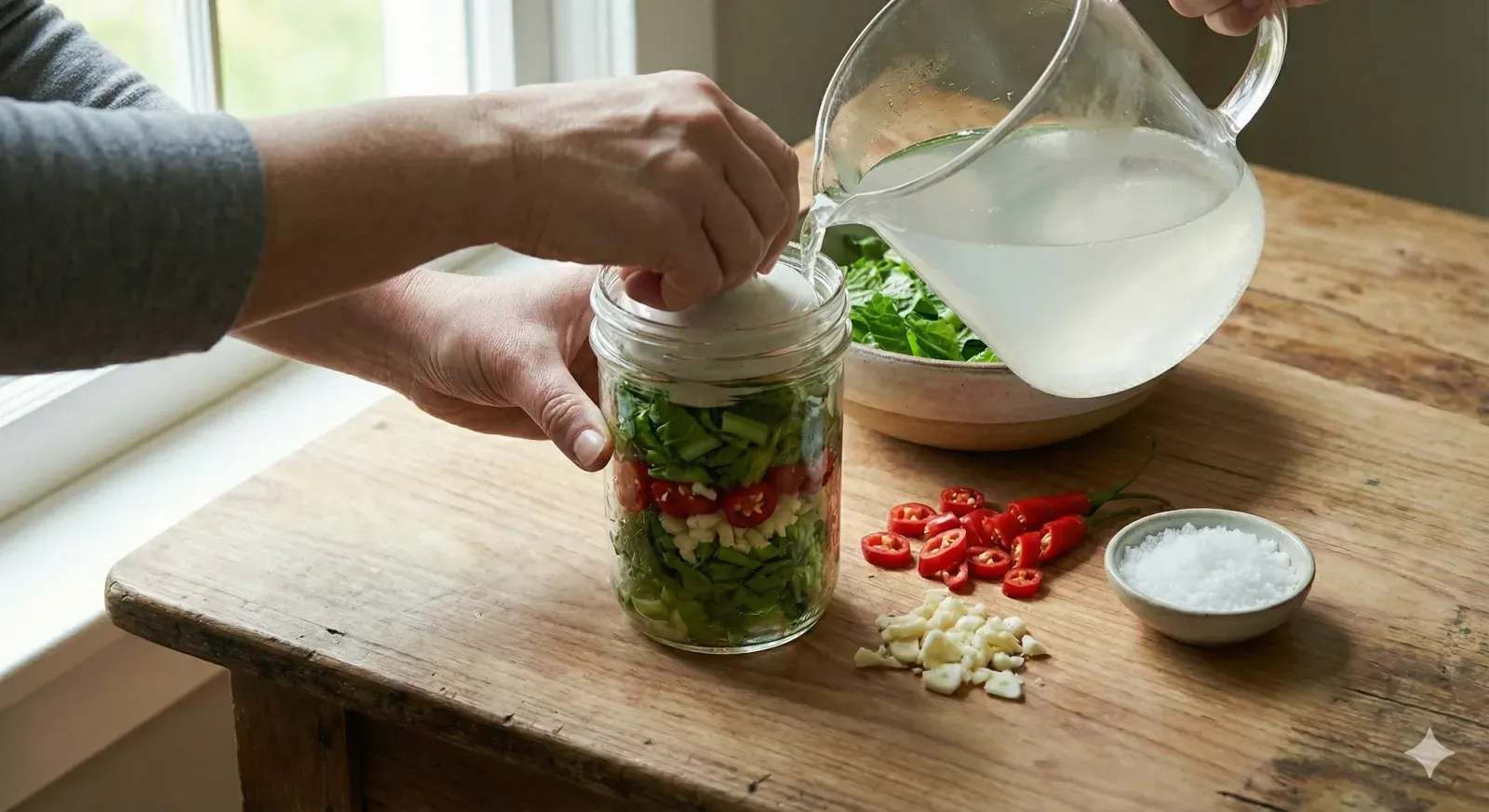
Packing Your Jar:
- Sanitize everything: Wash your hands thoroughly. Ensure your jar is completely clean - wash with hot water and dry completely, or rinse with boiling water just before use.
- Layer strategically:
- Start with mustard green stems at the bottom (they’re thicker and need more pickling time)
- Add leaves on top
- Intersperse scallions, shallots, and chilies throughout the layers
- Press down firmly as you go to eliminate air pockets
- Add the brine: Slowly pour the prepared brine into the jar until vegetables are completely covered
- Weight it down: Place a bamboo grate, clean stone, or ceramic bowl on top to keep vegetables fully submerged. This is crucial for even fermentation and preventing dark spots.
- Seal properly: Close the jar tightly with its lid
Critical Success Factors:
- Jar material matters: Use ceramic, glass, or porcelain jars only. Avoid plastic, aluminum, or stainless steel which can react with the brine and affect flavor or safety
- Full submersion required: The weight keeps vegetables underwater, ensuring even golden color and preventing black spots from oxidation
- Cleanliness prevents mold: The #1 cause of mold is poor sanitization. Clean and dry (or boiling water rinse) your jar before use
- Press firmly: Compact vegetables well so brine doesn’t overflow when you add it
Step 4: Fermentation and Serving Your Pickles
The Waiting Game:
Place your sealed jar in a cool, dry, well-ventilated location away from direct sunlight. After 3 days, your pickles are ready to enjoy!
Serving Suggestions:
Vietnamese pickled mustard greens are incredibly versatile:
- Eat raw: Rinse to reduce saltiness, then serve as a tangy side dish
- Cá chép om (Carp fish with pickled mustard greens): Classic combination
- Lòng xào dưa: Stir-fried organ meats with pickles
- Canh dưa thịt bò: Beef soup with pickled greens
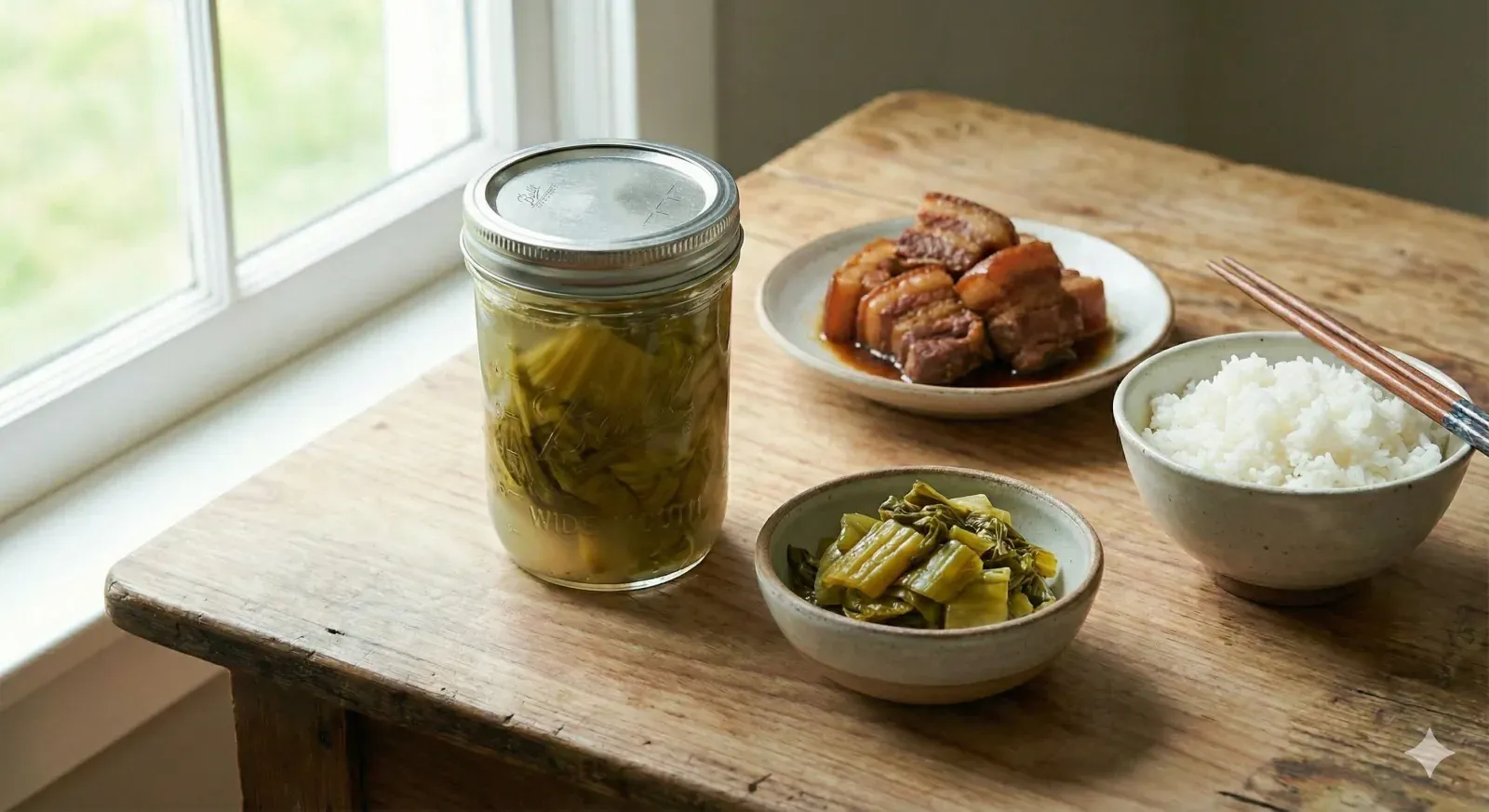
- With braised dishes: Perfect alongside thịt kho, cá kho, or tôm rang
Pro Tips for Perfect Pickles Every Time
Achieving That Golden Color:
- Keep vegetables fully submerged with a proper weight
- Use boiled water (cooled), never tap water
- Maintain proper salt concentration
- Ferment in a cool, consistent temperature environment
Preventing Mold Growth:
- Sterilize your jar with boiling water before use
- Ensure all vegetables are completely submerged
- Use clean utensils every time you remove pickles
- Never return uneaten pickles to the jar
- Keep the jar sealed when not in use
Storage Guidelines:
- Properly made pickles last 2-3 weeks in cool conditions
- Always use clean chopsticks or tongs to remove servings
- Take out only what you’ll eat immediately
- Keep jar away from heat and direct sunlight
Variations to Try:
This same method works beautifully with:
- Daikon radish (củ cải trắng)
- Cabbage (bắp cải)
- Bean sprouts (giá đỗ)
- Celery (rau cần)
- Carrots (cà rốt)
Health Benefits and Considerations
The Good News:
- Probiotic-rich: Fermentation creates beneficial bacteria for gut health
- Nutrient preservation: Vitamins and minerals remain largely intact
- Digestive aid: The tangy flavor stimulates digestion
- Low calorie: Mostly vegetables with minimal added calories
Important Health Warnings:
When NOT to Eat Pickled Vegetables:
Never eat when still green and pungent: Fresh pickles (less than 3 days old) that still taste sharp and look green contain high levels of nitrosamines, which are potentially carcinogenic compounds. Only eat when pickles have turned a golden-yellow color, taste pleasantly sour, remain crispy, and have a characteristic fermented aroma.
Medical conditions requiring caution:
- High blood pressure: The high sodium content can raise blood pressure
- Heart conditions: Excess salt stresses the cardiovascular system
- Kidney disease: Sodium retention can worsen kidney function
- Diabetes: Monitor portions due to sugar content
- Stomach ulcers: Acidic content may irritate existing ulcers
Healthy Eating Practices:
- Rinse pickles multiple times before eating to reduce saltiness and sourness
- Eat in moderation - pickles are a condiment, not a main dish
- Always pair with other foods, especially fresh vegetables
- Don’t consume pickled vegetables daily
AdvertisementFrequently Asked Questions
Q: How long do pickled mustard greens last?
A: When properly made and stored in a cool place with clean utensils, pickled mustard greens can last 2-3 weeks. Always check for signs of spoilage (off smell, slimy texture, mold growth) before consuming.
Q: Why did my pickles turn out soft instead of crispy?
A: Common causes include: not sun-drying the greens before pickling, using very young/tender greens instead of mature ones, or using warm water instead of cooled boiled water. The initial drying step is crucial for maintaining crunch.
Q: Can I speed up the fermentation process?
A: Yes! Use half boiled-cooled water and half warm water (45°C/113°F) instead of all room temperature water. This can reduce fermentation time from 3 days to about 2 days. However, slower fermentation often develops better flavor.
Q: What if mold appears on my pickles?
A: If you see mold (white film or fuzzy growth), discard the entire batch. Mold indicates contamination, usually from insufficient sanitization, vegetables not fully submerged, or introducing bacteria via dirty utensils. Prevention is key - clean everything thoroughly and keep vegetables underwater.
Q: Why is my pickling liquid cloudy?
A: Cloudiness is normal during fermentation as beneficial bacteria multiply. However, if accompanied by a bad smell or slimy texture, the pickles have spoiled and should be discarded.
Q: Can I reuse the pickling brine?
A: While technically possible for one additional batch, it’s not recommended. The salt concentration decreases with each use, and contamination risk increases. Fresh brine ensures the best results and food safety.
Q: What’s the white residue at the bottom of my jar?
A: This is typically yeast sediment from fermentation - completely normal and harmless. Simply avoid including it when you remove pickles to serve.
Q: Can I make this without vinegar?
A: Yes, traditional fermentation relies solely on salt and natural bacteria. Omitting vinegar results in a more traditionally fermented product, though it may take an extra day or two to develop tartness. Vinegar speeds up the process and adds sharpness.
Quality Indicators for Perfect Pickled Mustard Greens
Your pickles are ready and properly made when they exhibit these characteristics:
Visual Quality:
- Beautiful golden-yellow color throughout
- No dark or blackened spots
- Clear brine with no surface mold or excessive cloudiness
Textural Quality:
- Crispy, firm texture when bitten
- Not mushy, slimy, or soft
- Maintains structural integrity
Aromatic Quality:
- Pleasant sour, fermented aroma
- No off-putting or rotten smells
- Characteristic tangy scent
Final Thoughts: Mastering Vietnamese Pickled Mustard Greens
Making dưa cải muối at home connects you to centuries of Vietnamese culinary tradition while ensuring you know exactly what goes into your food. This simple preservation technique transforms ordinary mustard greens into an extraordinary condiment that brightens meals and stimulates the appetite.
The keys to success are straightforward: start with quality ingredients, maintain cleanliness throughout the process, ensure vegetables stay fully submerged, and be patient during fermentation. Follow these principles, and you’ll produce golden, crispy pickles that stay fresh for weeks without any mold.
Whether you’re serving them alongside cơm tấm (broken rice), bún (vermicelli), or rich braised dishes, these pickled mustard greens add that authentic Vietnamese touch that makes every meal special. The investment of just 30 minutes of preparation time yields weeks of delicious, probiotic-rich accompaniment to your favorite dishes.
Ready to Try This Recipe?
Have you made Vietnamese pickled mustard greens before? What’s your favorite way to enjoy them? Share your experiences, questions, or tips in the comments below! And if you try this recipe, don’t forget to rate it and let us know how it turned out.
Share This Recipe:
Love this recipe? Share it with friends and family!
Comments & Reviews
Have questions or want to share your results? Leave a comment below!
-