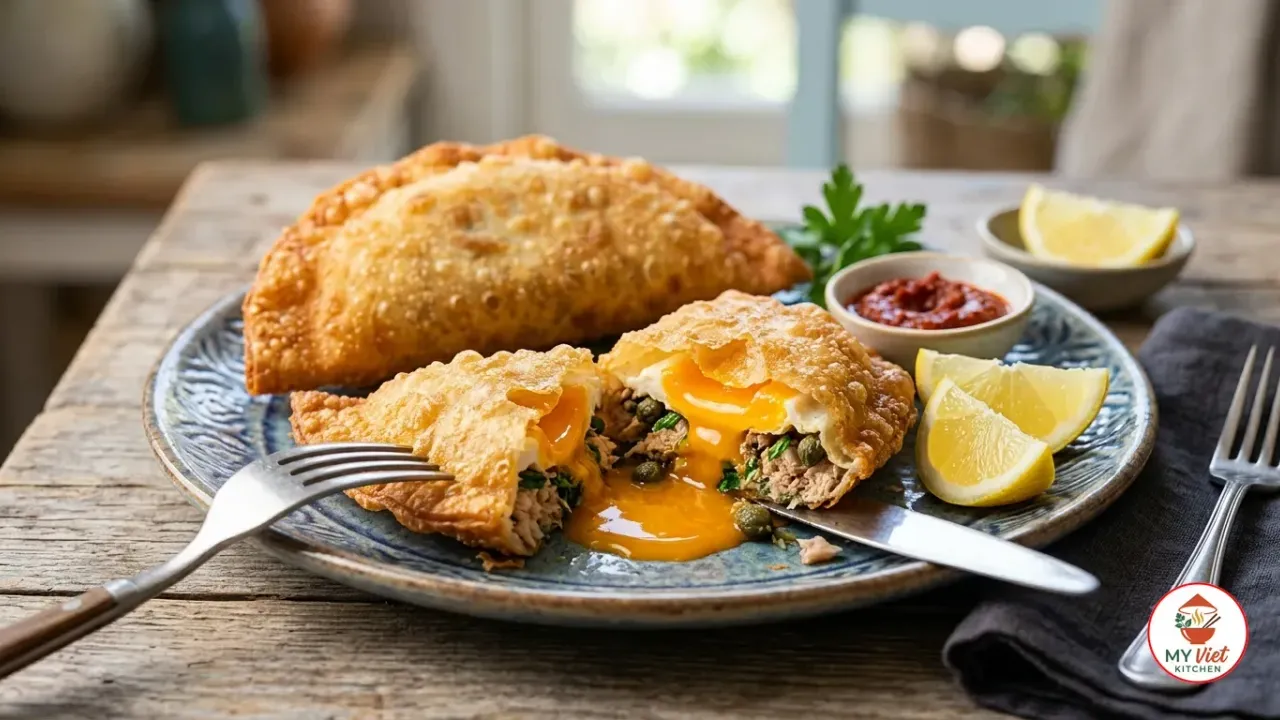
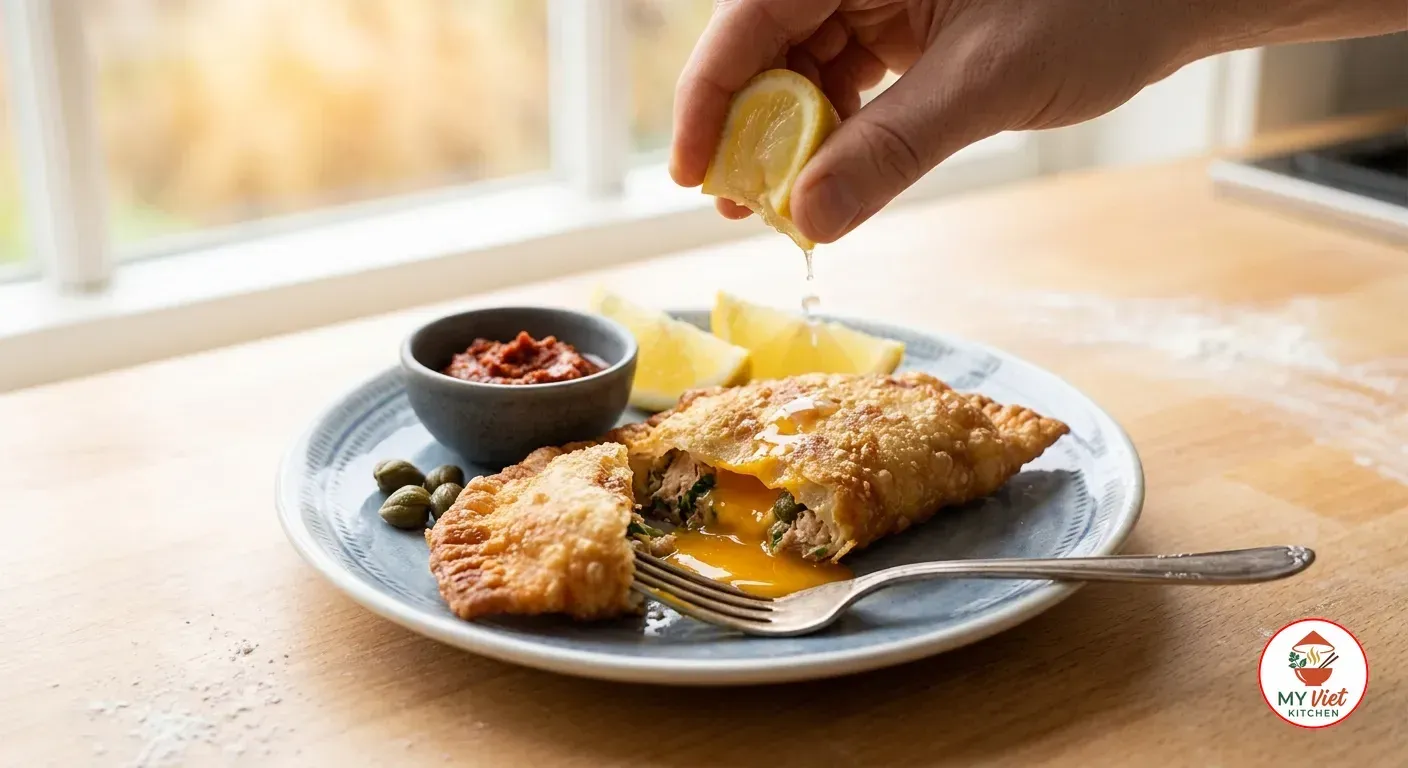
Tunisian brik is a golden, crispy pastry that shatters at first bite to reveal a filling of runny egg, seasoned tuna, and bright capers. This tunisian brik recipe guides you through every step of making this beloved North African street food at home, from preparing the spiced filling to achieving the perfect golden fry. Whether you serve it as a Ramadan starter or a weeknight appetizer, brik delivers an unforgettable contrast of crunch and richness that captures the soul of Tunisian cooking.
Prep Time: 15 minutes | Cook Time: 5 minutes | Servings: 4
Difficulty: Medium | Calories: ~280 per serving
What Makes Tunisian Brik Special?
Brik holds a revered place in Tunisian cuisine that few other dishes can match. In fact, Tunisians consider brik the unofficial national appetizer, and it appears at celebrations, family dinners, and street food stalls across the country. The word “brik” likely comes from the Turkish “borek,” reflecting centuries of Ottoman influence on North African cooking. However, Tunisian cooks transformed the concept into something entirely their own by adding the signature runny egg at the center.
What sets this tunisian brik recipe apart from other filled pastries is the dramatic contrast of textures. The malsouka wrapper fries to a paper-thin crispness that crackles loudly when you break through it. Inside, the egg yolk stays liquid. It creates a rich sauce that blends with the tuna, tangy capers, and fresh parsley. A squeeze of lemon ties everything together with bright acidity. This interplay between crispy, creamy, savory, and sour makes brik one of the most satisfying single bites in all of North African cuisine.
The cultural significance of brik runs especially deep during Ramadan. Across Tunisia, the iftar table is incomplete without a plate of freshly fried brik. Families break their fast with this crispy pastry before the main meal. Street vendors set up temporary stalls during the holy month, and the aroma of frying brik fills neighborhoods from Tunis to Sfax. Beyond Ramadan, brik also appears at weddings, holidays, and casual meals. It brings people together. Learning to fold a perfect brik is a skill that Tunisian grandmothers pass down through generations.

Choosing the Right Pastry Wrapper
The pastry wrapper determines whether your tunisian brik recipe succeeds or falls flat. Authentic brik uses malsouka, a paper-thin Tunisian pastry that fries to an impossibly crisp and delicate shell. Finding the right wrapper and handling it properly makes all the difference in your final result.
- Malsouka pastry (best choice): This is the traditional wrapper for brik. Malsouka sheets are round, thin, and slightly sticky. They fry to a beautiful golden color with a shattering crispness that no substitute can perfectly replicate. Look for them in Middle Eastern or North African grocery stores, often in the freezer section.
- Spring roll wrappers: These are the most accessible substitute. They fry well and hold their shape around the egg filling. Choose the thinnest variety available for the closest texture to malsouka. Spring roll wrappers work especially well because they seal easily when pressed.
- Phyllo dough: Use two sheets brushed with olive oil to build enough strength. Phyllo creates a flaky rather than crispy texture, so the result will differ from traditional brik. However, the flavor remains excellent, and phyllo is widely available in most supermarkets.
Ingredients for Tunisian Brik
Main Ingredients:
- 4 sheets malsouka pastry or spring roll wrappers
- 4 large eggs
- 1 can (5 oz) tuna in olive oil, drained and flaked
- 2 tablespoons capers, drained and chopped
- 1 small onion, finely diced
Seasoning and Herbs:
- 3 tablespoons fresh flat-leaf parsley, chopped
- 1 teaspoon harissa paste
- 1/2 teaspoon ground black pepper
- 1/4 teaspoon salt
For Frying and Serving:
- Vegetable oil for deep frying (about 2 cups)
- Fresh lemon wedges for serving
- Extra harissa on the side (optional)
Pro tip: Use tuna packed in olive oil rather than water for a richer, more authentic flavor. The olive oil adds moisture and richness that water-packed tuna simply cannot provide. Drain the tuna lightly, keeping a thin coat of oil for added taste.
Step-by-Step Instructions
Step 1: Prepare the Filling
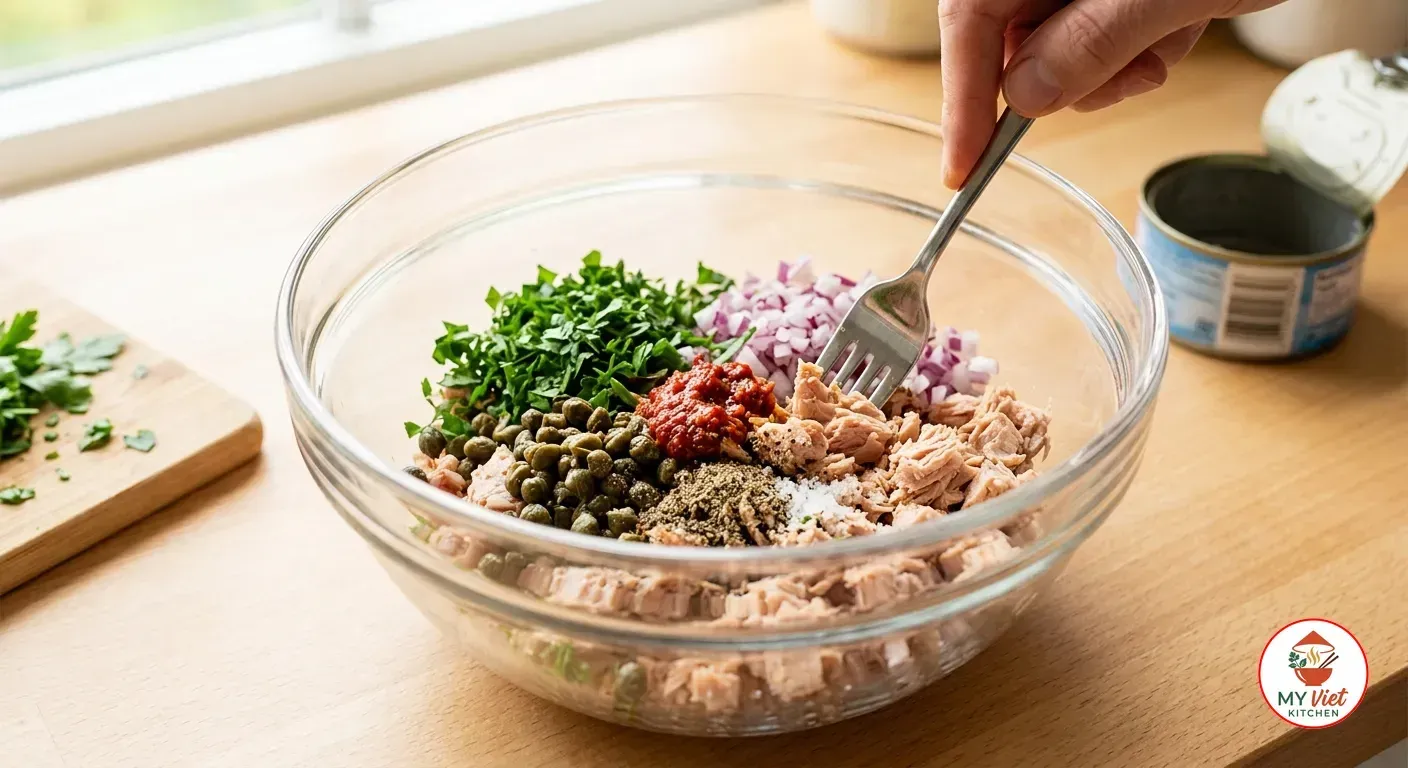
1 Drain the canned tuna and transfer it to a mixing bowl. Use a fork to flake the tuna into small, even pieces. Add the finely diced onion, chopped capers, fresh parsley, harissa paste, black pepper, and salt. Mix everything together until the filling is evenly combined.
Taste the filling and adjust the seasoning as needed for your tunisian brik recipe. The capers add saltiness, so go easy on additional salt. If you enjoy more heat, add an extra half teaspoon of harissa at this stage. The filling should taste bold and well-seasoned because the mild pastry and rich egg will balance the flavors once assembled.
Step 2: Assemble the Brik
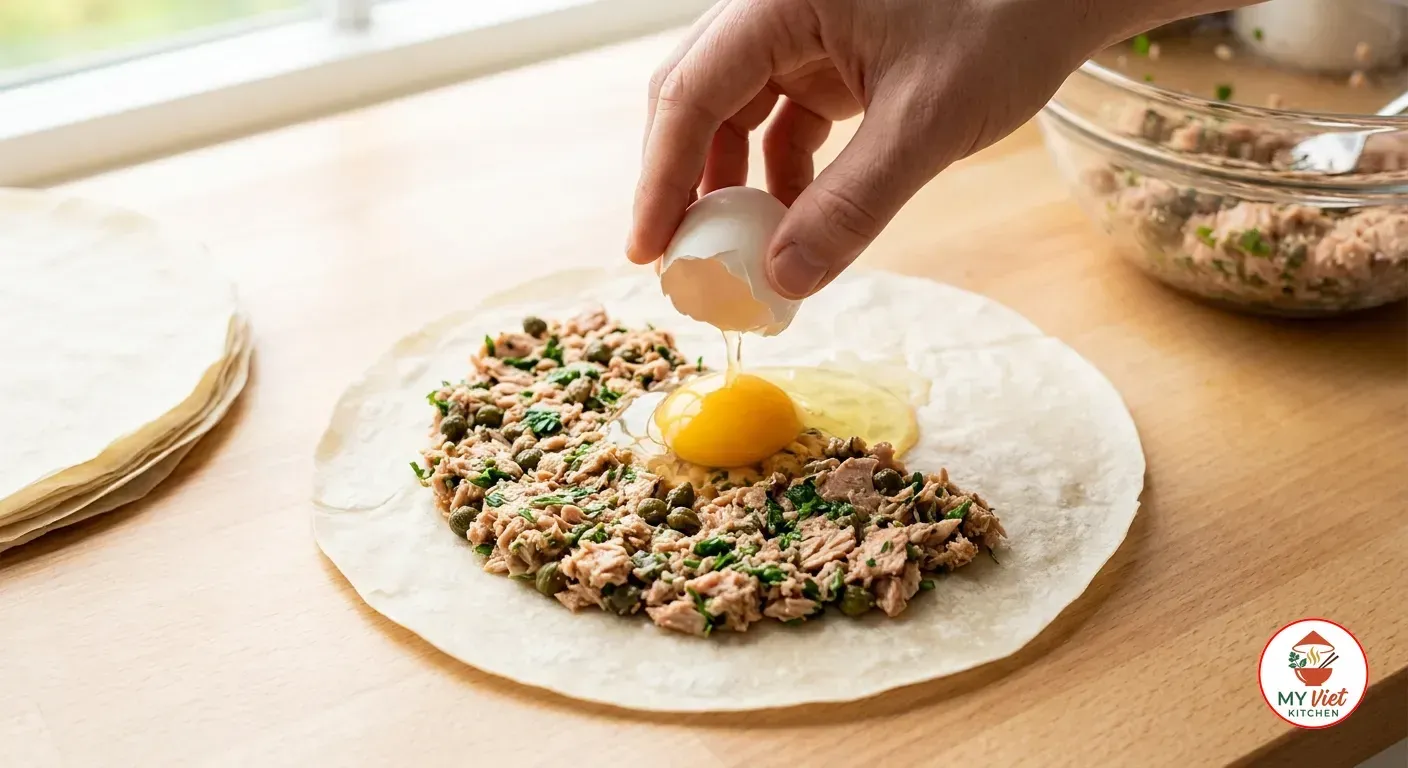
2 Lay one sheet of malsouka pastry flat on a clean, dry work surface. Spoon about a quarter of the tuna filling onto one half of the pastry round, spreading it into a thin layer. Use the back of the spoon to create a shallow well in the center of the filling. This well holds the egg in place and prevents it from sliding around during folding.
Crack one egg directly into the well. Be careful not to break the yolk, because an intact yolk is what gives brik its signature runny center. Work quickly at this point, since the liquid egg can soften the pastry if it sits too long. Repeat with the remaining pastry sheets and filling.
Step 3: Fold and Seal
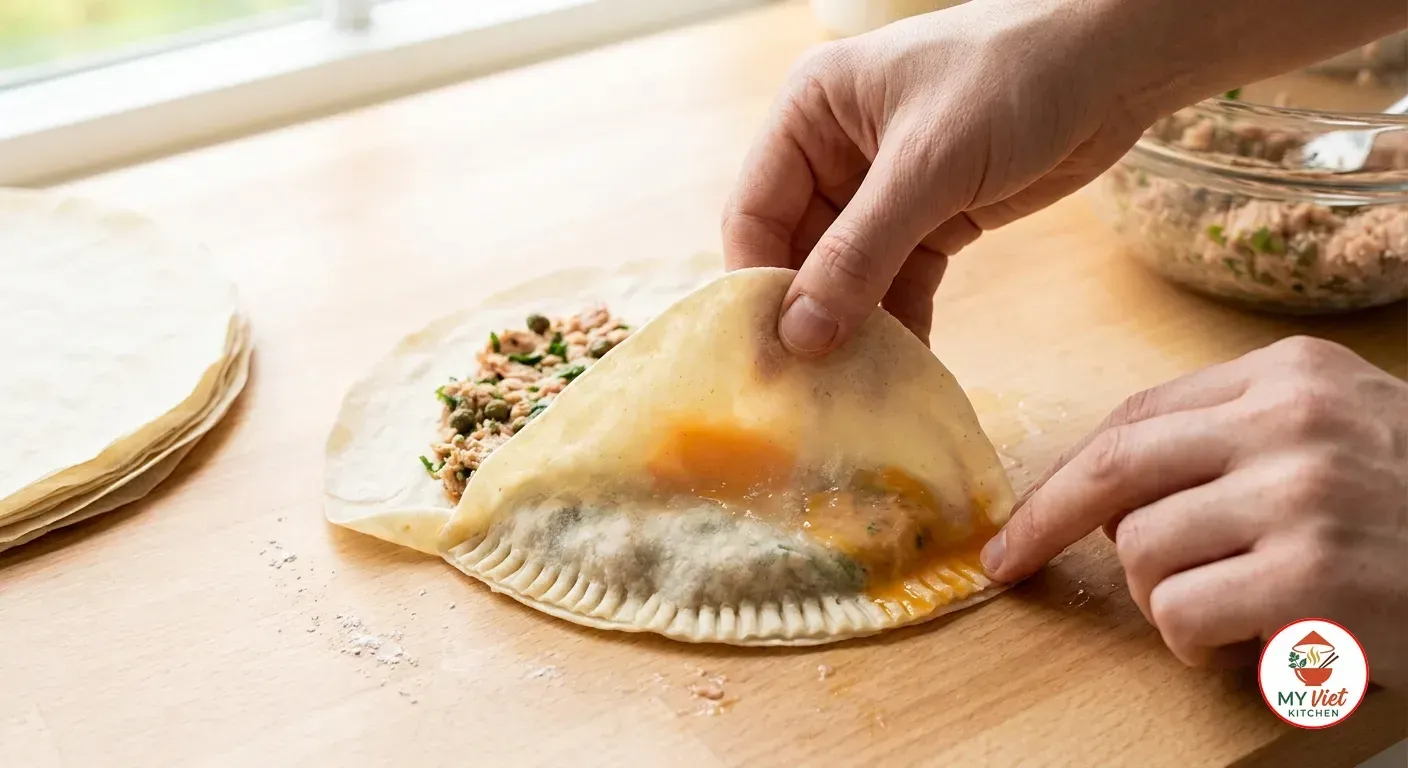
3 Carefully fold the empty half of the pastry over the filled half to form a half-moon shape. Press the edges firmly together, starting from the corners and working toward the center. Fold the edges over by about half an inch, crimping as you go, to create a tight seal that keeps the oil out and the filling in during frying.
A secure seal matters more than you might think when making this tunisian brik recipe. If the edges are loose, hot oil will seep into the brik and make the pastry soggy instead of crispy. Additionally, a poor seal lets the egg white leak out, ruining the presentation. Some Tunisian cooks brush the edges with a bit of beaten egg to help them stick. This extra step takes only a few seconds but guarantees a firm seal every time.
Step 4: Fry Until Golden
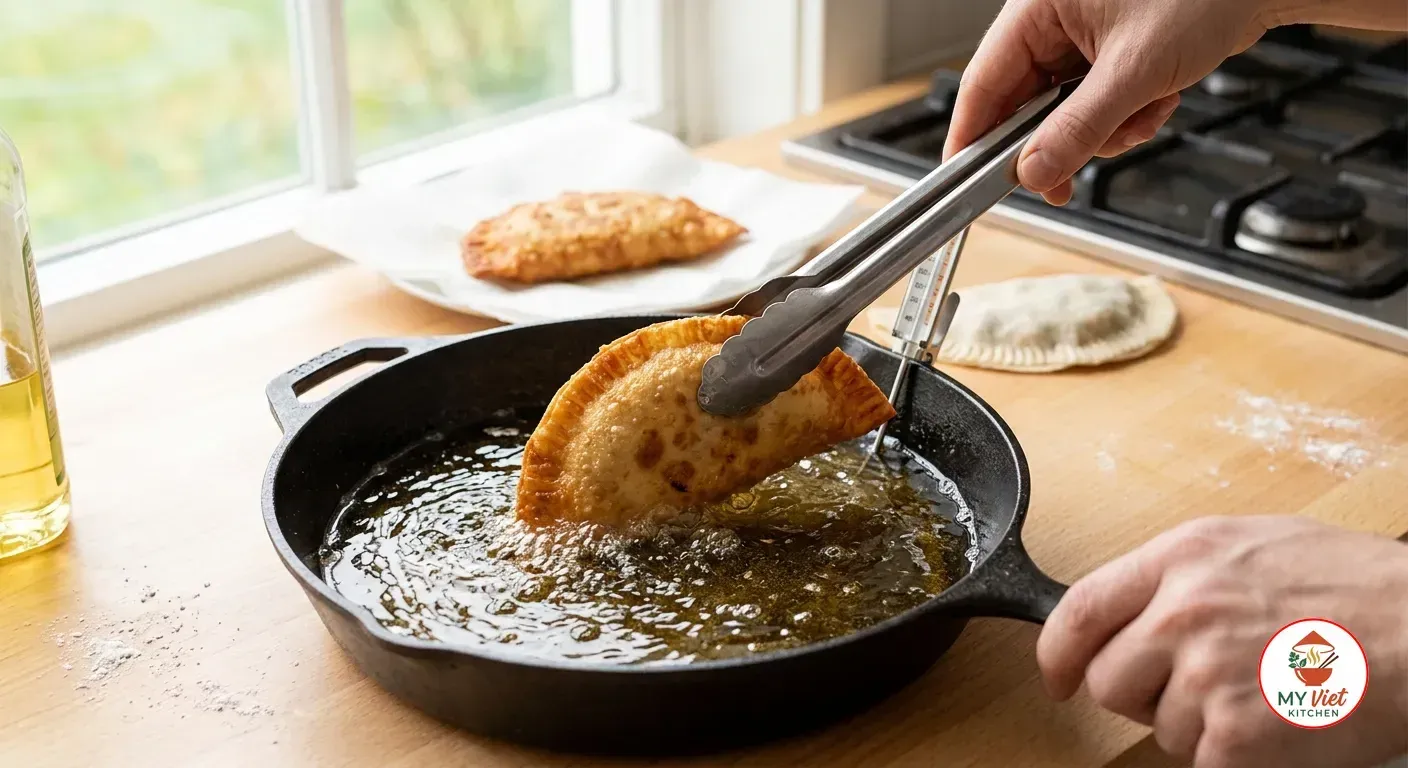
4 Pour about 1 inch of vegetable oil into a wide, heavy skillet and heat it to 350 degrees Fahrenheit (175 degrees Celsius). Test the oil temperature by dipping a small corner of pastry into it. The pastry should sizzle immediately and bubble vigorously. If the oil smokes, it is too hot, so reduce the heat and wait a moment before proceeding.
Gently slide one brik into the hot oil using a large, flat spatula. Fry for about 1 to 2 minutes on the first side until the bottom turns deep golden brown. Then carefully flip the brik and fry the other side for another 1 to 2 minutes. The total frying time should be 2 to 3 minutes because cooking too long will set the egg yolk solid. Remove the brik and place it on a plate lined with paper towels to drain. Fry the remaining brik one at a time to maintain the oil temperature.
Step 5: Serve Immediately
5 Transfer each brik to a serving plate as soon as it finishes draining. Squeeze a generous amount of fresh lemon juice over the top while the pastry is still hot. The lemon juice cuts through the richness of the egg and tuna, bringing the flavors into perfect balance.
Serve the brik immediately, because the pastry loses its crispness within minutes of leaving the oil. Tunisians eat brik with their hands, carefully biting into one corner and tilting the pastry so the runny yolk does not drip. Offer extra lemon wedges and a small bowl of harissa on the side for guests who enjoy more heat.
Expert Tips for the Perfect Tunisian Brik Recipe
Keep the Egg Yolk Runny
The defining feature of a great tunisian brik recipe is a yolk that flows when you cut into the pastry. To achieve this, your oil must be hot enough (350 degrees Fahrenheit) so the pastry crisps quickly without overcooking the egg inside. Fry each side for no more than 2 minutes. If the oil temperature drops too low, the brik sits in oil longer, and the yolk sets completely.
Work Quickly After Cracking the Egg
Once you crack the egg onto the filling, fold and fry the brik within 30 seconds. The raw egg will soften the pastry rapidly, and a soggy wrapper tears easily during frying. Prepare your workspace in advance so that the oil is already hot before you begin assembling. Many experienced Tunisian cooks assemble and fry one brik at a time for this exact reason.
Use the Right Amount of Oil
You need enough oil to cover the brik halfway, typically about 1 inch in a wide skillet. Too little oil means the pastry does not crisp evenly, and you end up with pale, chewy patches. Too much oil wastes product and makes flipping more difficult. A wide skillet with moderate oil depth gives you the best control over the frying process.
Brik Variations Across Tunisia
While the classic tuna and egg filling remains the most popular, Tunisian cooks adapt brik with regional ingredients and personal preferences. The following table compares the most common variations you will find across the country.
| Variation | Filling | Region |
|---|---|---|
| Brik a l’Oeuf (Classic) | Tuna, egg, capers, parsley | All of Tunisia |
| Brik with Minced Meat | Seasoned lamb or beef, onion, egg | Tunis, Sfax |
| Brik with Chicken | Shredded chicken, potato, herbs | Sousse, Monastir |
| Brik with Shrimp | Sauteed shrimp, garlic, parsley | Coastal cities |
| Vegetarian Brik | Potato, cheese, egg, spinach | Modern adaptation |
Serving Suggestions
Tunisians traditionally serve brik as the opening course of a meal, especially during Ramadan when it arrives at the iftar table alongside soup and salads. The crispy pastry pairs beautifully with bright, acidic accompaniments that cut through its richness.
The Perfect Accompaniments:
- Lemon wedges: Essential for authentic brik. The fresh acidity brightens every bite and balances the rich egg yolk.
- Harissa: This fiery Tunisian chili paste adds smoky heat that complements the savory tuna filling perfectly.
- Harira soup: During Ramadan, brik and harira form the classic opening to iftar across North Africa.
- Mechouia salad: A roasted pepper and tomato salad dressed with olive oil that brings smoky sweetness alongside the crispy pastry.
- Simple green salad: Fresh greens with lemon vinaigrette provide a light, refreshing contrast to the fried brik.
Beverage Pairings:
- Tunisian mint tea: The traditional choice, served sweet and hot, cleansing the palate between bites.
- Sparkling water with lemon: The bubbles and citrus refresh the palate after the rich, fried pastry.
- Cithan (barley water): A popular Tunisian Ramadan drink that pairs naturally with fried appetizers.
Storage and Reheating
Refrigerator: Store leftover brik in an airtight container for up to 1 day. The pastry will lose its crispness in the refrigerator, so plan to reheat before serving.
Freezer: You can freeze the uncooked, assembled brik (without the egg) for up to 1 month. Place them on a parchment-lined tray, freeze until solid, then transfer to a freezer bag. Add the egg when you are ready to fry.
Reheating: Reheat leftover brik in a preheated oven at 375 degrees Fahrenheit for 8 to 10 minutes. The oven restores some crispness, though the egg yolk will no longer be runny. Avoid microwaving brik, because the pastry becomes chewy and soggy.
Common Mistakes to Avoid
1. Using Cold Oil
Sliding brik into oil that has not reached the proper temperature results in a greasy, pale pastry that absorbs oil instead of crisping. Always test the oil with a small piece of pastry first. The pastry should sizzle immediately upon contact. If it sinks quietly without bubbling, the oil needs more time to heat.
2. Breaking the Egg Yolk
A broken yolk means no runny center, and the runny center is what makes brik special. Crack the egg into a small bowl first if you are not confident about cracking directly onto the filling. Then gently pour it into the well. This gives you more control and keeps shell bits out of the filling.
3. Overfilling the Pastry
Too much filling makes the brik difficult to fold and seal properly. The edges will not close tightly, and oil will leak inside during frying. Use about 2 tablespoons of tuna filling per brik. Leave enough empty pastry around the edges to fold over and press firmly. Less filling creates a better seal and a cleaner result.
4. Letting the Assembled Brik Sit Too Long
The raw egg will soak through the thin pastry within a minute or two. If the pastry becomes wet, it tears apart in the oil and the filling spills out. Assemble each brik and fry it immediately before moving on to the next one. Preparation speed is the single most important skill in making perfect brik.
Frequently Asked Questions
Can I make brik without tuna?
Absolutely. Many Tunisian households make brik with just egg, parsley, and a squeeze of lemon. You can also fill brik with seasoned minced lamb, chicken, shrimp, or even mashed potato with cheese. The egg remains the constant element across almost all brik variations, while the supporting filling changes based on personal taste and regional tradition.
How spicy is traditional brik?
Traditional brik has a mild to moderate heat level. The harissa in the filling adds warmth rather than intense burn. Most Tunisian families serve extra harissa on the side so each person can adjust the heat to their preference. If you are sensitive to spice, reduce the harissa in the filling to half a teaspoon or omit it entirely. The brik will still taste delicious because the capers, parsley, and lemon carry plenty of flavor on their own.
What oil is best for frying brik?
A neutral oil with a high smoke point works best. Vegetable oil, canola oil, and sunflower oil are all excellent choices. Some Tunisian cooks use olive oil for a more authentic flavor, but olive oil has a lower smoke point and costs more for deep frying. If you want a hint of olive oil flavor, fry in vegetable oil and drizzle a small amount of extra virgin olive oil over the finished brik.
How many brik can I fry at once?
Fry one brik at a time for the best results. Each brik needs space in the pan so you can flip it easily, and crowding the pan drops the oil temperature significantly. When the oil cools, the pastry absorbs more oil and becomes greasy instead of crispy. Frying one at a time takes only 2 to 3 minutes per brik, so the process remains fast even when making a full batch.
Variations and Adaptations
Brik with Minced Lamb:
For a twist on the classic tunisian brik recipe, replace the tuna with 200 grams of seasoned minced lamb cooked with onion, cumin, and cinnamon. The lamb version is heartier and works well as a main course rather than an appetizer. Brown the lamb fully before assembling, because raw meat will not cook through in the short frying time. Add the egg on top of the cooked lamb filling as you would in the classic version.
Potato and Cheese Brik:
For a vegetarian option, use mashed potato seasoned with cumin, turmeric, and chopped parsley. Add a tablespoon of crumbled feta or gruyere cheese to each brik before cracking the egg on top. The cheese melts during frying and creates a stretchy, savory filling that pairs beautifully with the crispy pastry.
Baked Brik (Lighter Version):
Brush assembled brik generously with olive oil on both sides and bake at 400 degrees Fahrenheit for 12 to 15 minutes. The baked version has fewer calories and less oil. It is a good pick for lighter meals. Keep in mind that the pastry will be crisp but not as shatteringly crunchy as fried brik, and the egg yolk may set slightly more during baking.
The Cultural Significance of Brik
Brik tells the story of Tunisia itself. The dish traces its roots to the Ottoman Empire, when Turkish borek traveled across North Africa and evolved into local variations. Tunisian cooks adapted the concept by using malsouka, a uniquely Tunisian pastry that women have made by hand for centuries. The process of making malsouka is an art form on its own. Skilled hands spread wet dough across a hot griddle in one swift motion. The thin sheet peels off in seconds.
In Tunisian society, brik carries deep emotional weight. Families associate the dish with Ramadan evenings, when the call to prayer signals the end of the day’s fast and the first bite is often a warm, freshly fried brik. Mothers teach daughters to fold brik properly, and the skill passes through generations like a treasured family recipe. In many homes, the quality of a cook’s brik reflects their culinary reputation. A brik with a sealed edge, golden pastry, and runny yolk earns respect at any table.
Today, brik has traveled far beyond Tunisia’s borders. French bistros serve it as an appetizer, and food lovers around the world seek out this remarkable pastry. Despite its global fame, brik stays Tunisian at heart. Every bite links you to the busy markets of Tunis, the seaside stalls of Sidi Bou Said, and the family kitchens where cooks have honed this dish for ages.
Conclusion
This tunisian brik recipe proves that great food does not need a long list of items or hours of work. With thin pastry, a fresh egg, seasoned tuna, and hot oil, you can create a dish that has delighted Tunisians for centuries. Focus on keeping your oil hot, your seal tight, and your frying time short, and you will achieve a brik with shattering crispness and a flowing golden yolk inside.
Whether you serve brik at iftar, a dinner party, or on a lazy weekend, this dish rewards you with flavors and textures no other pastry can match. Explore more North African recipes on our site, including shakshuka and Moroccan tagine, to build a complete spread that celebrates the vibrant cuisine of this region.