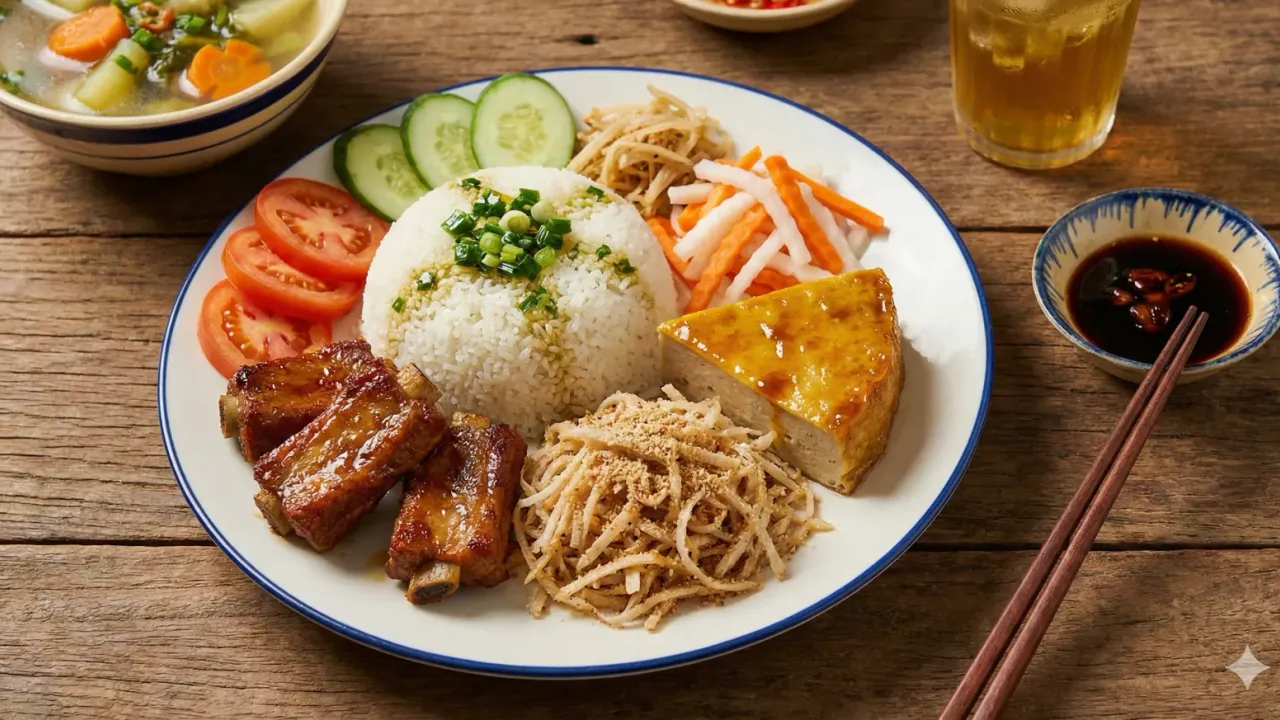
If you’re looking for a hearty, satisfying plant-based meal that doesn’t compromise on flavor, this Vietnamese vegetarian broken rice (cơm tấm chay) is the answer. With chewy, caramelized vegetarian ribs (sườn chay), fragrant shredded bì tossed in toasted rice powder, and a silky steamed tofu cake (chả chay), this dish captures everything you love about the original cơm tấm — just without the meat.
Perfect for Buddhist feast days (ngày rằm), meatless Mondays, or anyone curious about authentic Vietnamese vegetarian cooking.
Prep Time: 40 minutes | Cook Time: 50 minutes | Servings: 4
Difficulty: Intermediate | Calories: ~420 per serving
What Is Cơm Tấm Chay?
Cơm tấm — literally “broken rice” — is one of Vietnam’s most beloved street food dishes, born from the broken rice grains that were too imperfect to sell. Today, it’s a national institution. The vegetarian version, cơm tấm chay, follows the same structure but replaces animal proteins with clever plant-based alternatives that are just as satisfying.
The three essential components are:
- Sườn chay – Vegetarian spare ribs, braised in a rich savory-sweet glaze
- Bì chay – Shredded cellophane noodles tossed with toasted rice powder and fried shallots
- Chả chay – A steamed tofu and mushroom cake with a golden annatto glaze
Together with pickled vegetables, cucumber, and a caramelized nước mắm chay dipping sauce, this dish is a complete, nutritious, and deeply flavorful meal.
Ingredients for Cơm Tấm Chay
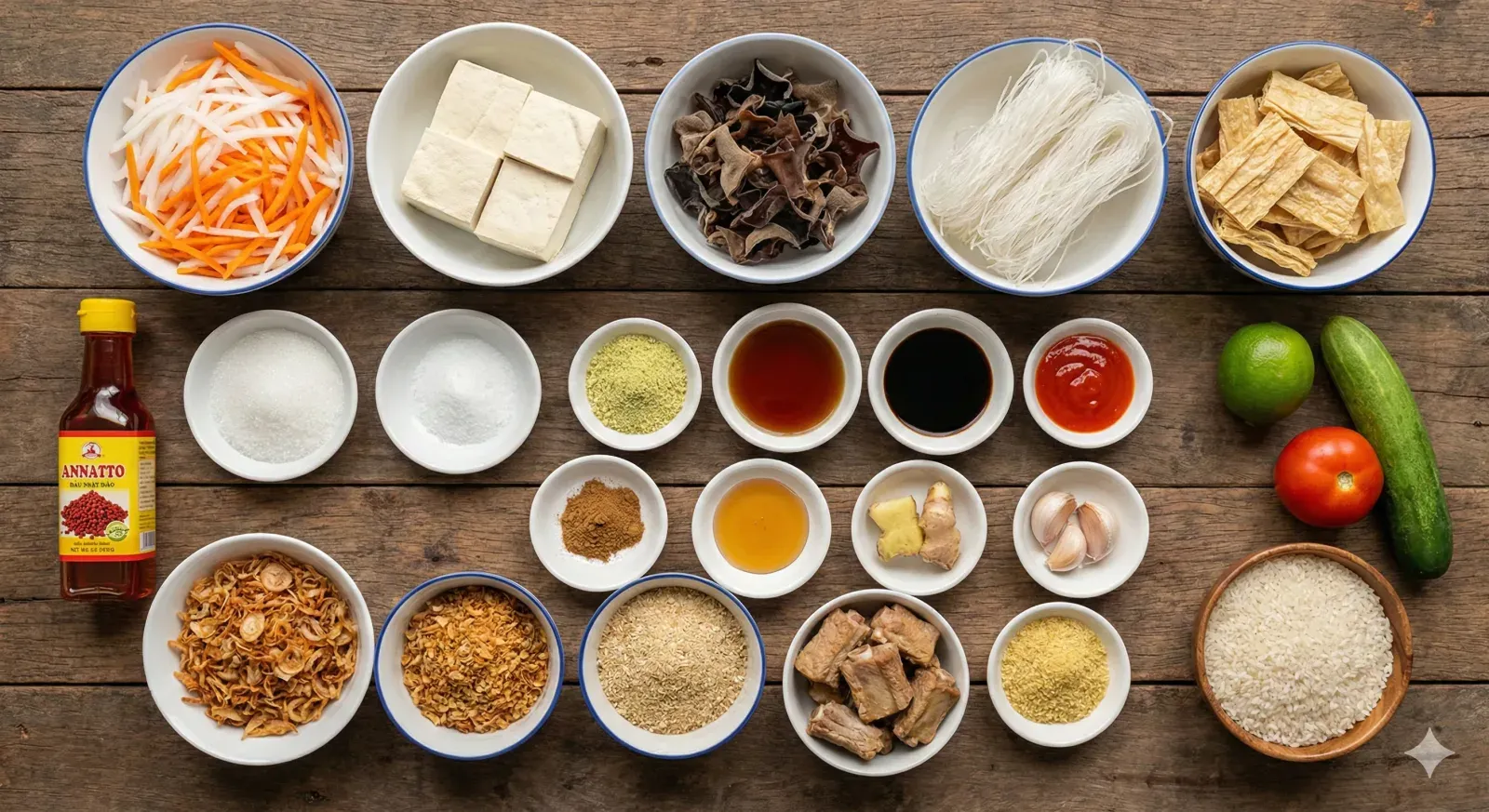
For the Pickled Vegetables (Dưa Chua)
- 350g daikon radish (củ cải trắng), peeled and julienned
- 100g carrot (cà rốt), peeled and julienned
- 1.5 tsp salt
- 2 tbsp sugar (divided)
- 2 tbsp fresh lime juice
For the Steamed Tofu Cake (Chả Chay)
- 400g firm tofu (đậu hũ)
- 10g dried wood ear mushrooms (nấm mèo khô)
- 40g glass noodles (bún tàu)
- 30g dried tofu skin (tàu hũ ky)
- 50g shallots (hành tím), fried until golden
- 3g fresh ginger, grated
- 1.5 tsp vegetarian seasoning powder (hạt nêm chay)
- 2 tsp sugar
- 1.5 tsp vegetarian fish sauce (nước mắm chay)
- 1 tbsp cornstarch (tinh bột bắp)
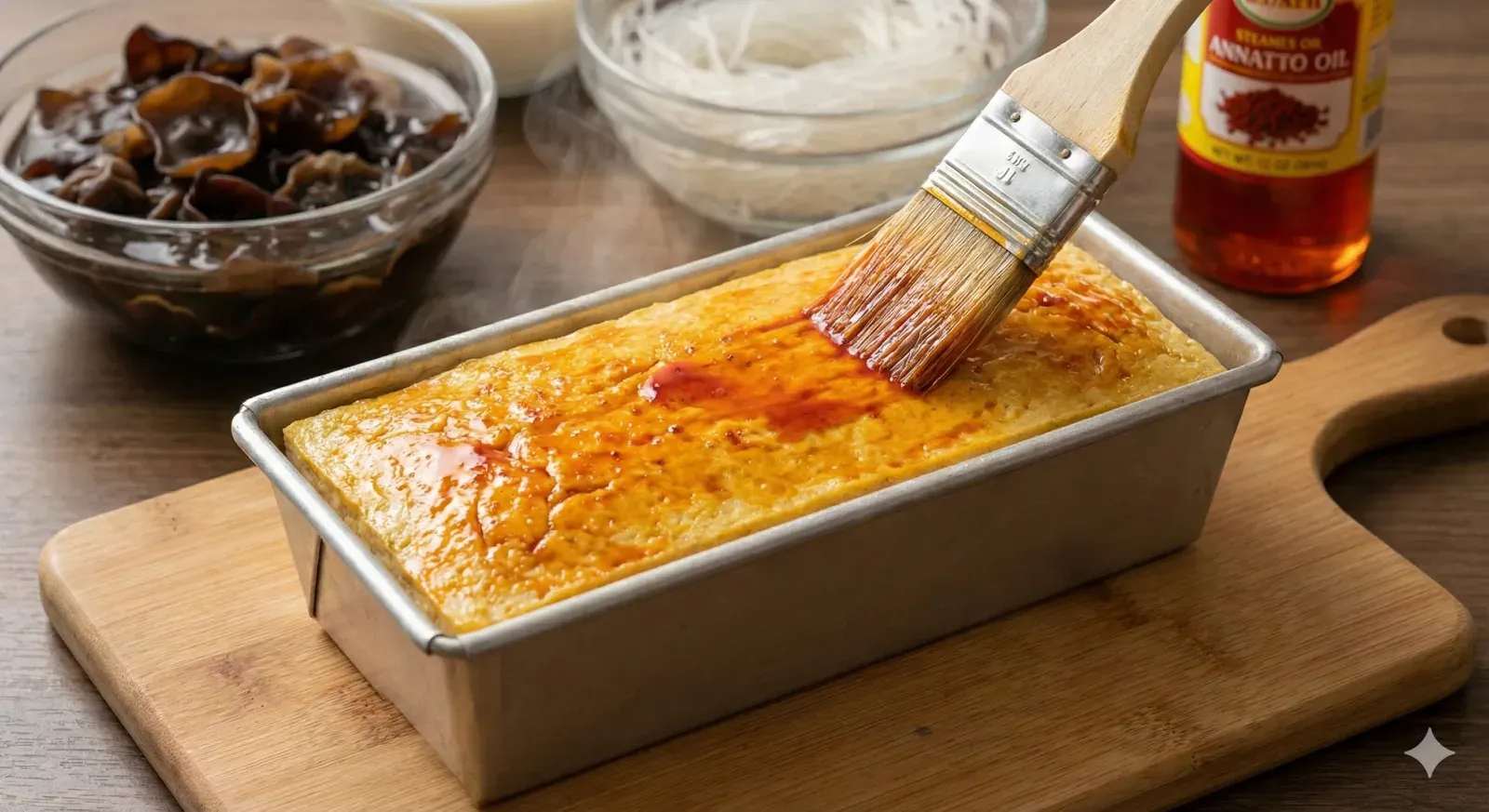
- 1 tsp annatto oil (dầu màu điều)
- Black pepper, to taste
- Cooking oil (to grease mold)
Glaze for chả: Mix 1 tsp cornstarch + 2 tsp annatto oil + ½ tsp seasoning powder
For the Vegetarian Ribs (Sườn Chay)
- 80g dried vegetarian spare ribs (sườn non chay)
- 1 tbsp fried shallot oil (dầu hành phi)
- 1 tbsp golden sugar (đường cát vàng)
- 2 tsp vegetarian oyster sauce (dầu hào chay)
- ½ tsp vegetarian seasoning powder
- 2 tsp soy sauce (nước tương)
- 2 tsp chili sauce (tương ớt)
- 1 tsp rice wine or cooking wine
- ⅓ tsp five-spice powder (ngũ vị hương)
- 1 tsp honey (or agave for vegan)
- 3g fresh ginger
- 120ml water
- Cooking oil for frying
For the Vegetarian Bì
- 40g cellophane noodles (miến)
- ¼ tsp salt
- 1 tsp sugar
- ½ tsp vegetarian seasoning powder
- 1 tsp fried shallot oil
- ½ glazed vegetarian rib piece, chopped small
- Toasted rice powder (thính), to taste
For the Dipping Sauce (Nước Mắm Chay)
- 2.5 tbsp sugar (divided)
- 120ml water
- ½ tsp salt
- ½ tsp vegetarian fish sauce
- A pinch of MSG (optional)
- ½ tsp lime juice
To Serve
- Cooked broken rice (cơm tấm) or jasmine rice
- Sliced cucumber and tomato
- Fried shallot oil (mỡ hành)
Pro tip: Annatto oil (dầu màu điều) gives the chả its signature golden color. Find it at Asian grocery stores or make your own by gently heating annatto seeds in oil.
Step-by-Step Instructions
Step 1: Make the Pickled Vegetables (Dưa Chua)
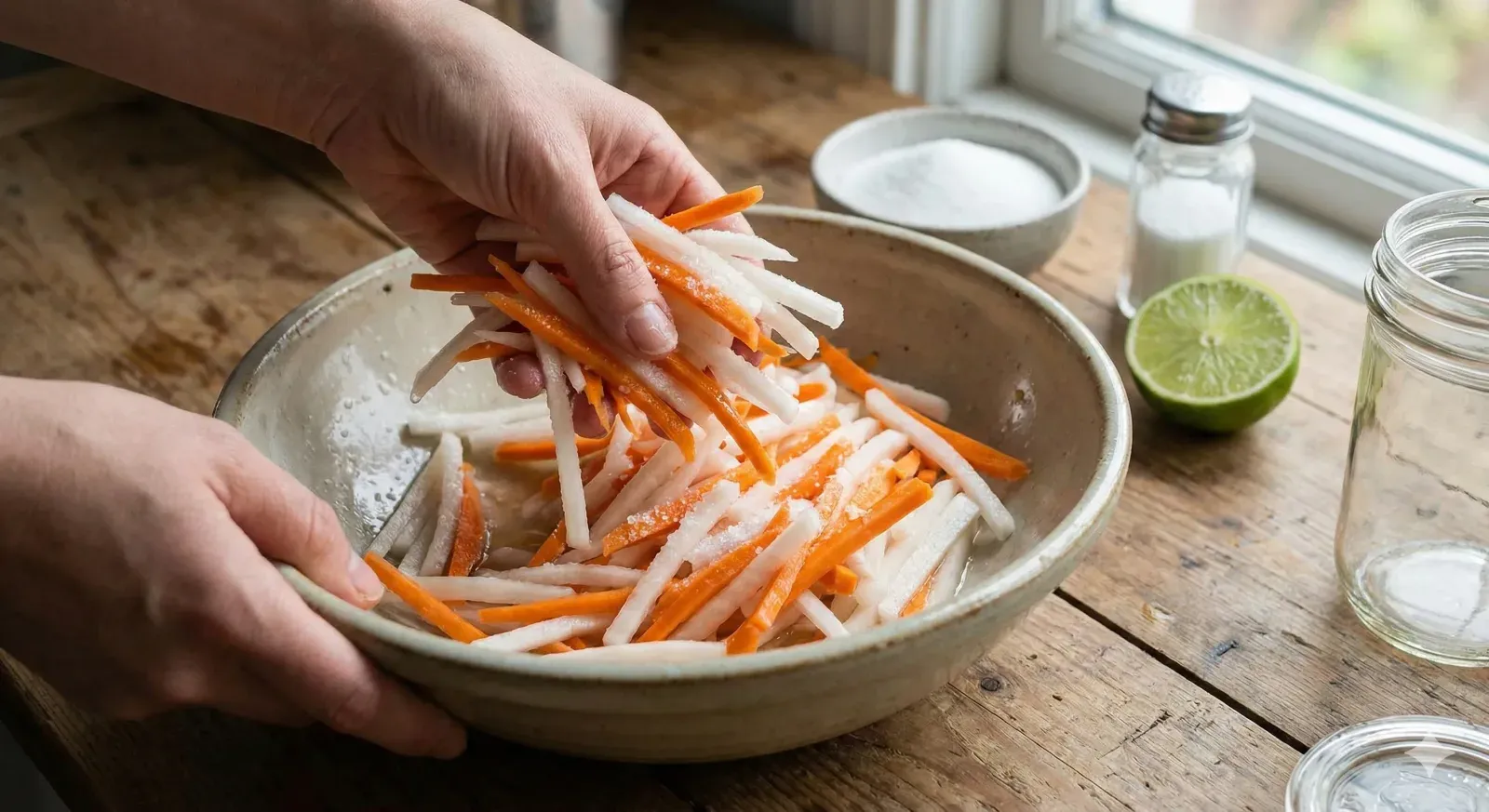
1Peel and julienne the daikon and carrot into thin matchstick strips. Combine them in a bowl with 1.5 tsp salt and 1 tbsp sugar. Toss well and let sit for 15 minutes — the vegetables will release moisture and soften slightly.
Squeeze out as much liquid as possible with your hands. Transfer to a clean bowl and add 1 more tbsp sugar and 2 tbsp fresh lime juice. Mix thoroughly and let the pickles rest for at least 20 minutes before serving.
Make-ahead tip: Prepare the pickles the night before and refrigerate. The extra time makes them crunchier and more deeply flavored — just like you’d find at a Vietnamese restaurant.
Step 2: Make the Steamed Tofu Cake (Chả Chay)
2Start with the mushrooms: soak dried wood ear mushrooms until fully hydrated, then blanch briefly in boiling water to eliminate any earthy smell. Drain, then julienne into thin strips.
Soak the tofu skin (tàu hũ ky) until soft, squeeze dry, and finely chop. Soak the glass noodles until pliable, blanch in boiling water for 30 seconds, drain, and snip into short pieces with scissors.
Boil the tofu for 10 minutes — this firms it up and removes any sour smell. Drain thoroughly and mash completely smooth with a fork or your hands. Any lumps will affect the final texture.
Combine mashed tofu, chopped tofu skin, glass noodles, and mushrooms in a large bowl. Add the fried shallot oil, grated ginger, vegetarian seasoning, sugar, vegetarian fish sauce, cornstarch, annatto oil, and black pepper. Mix very thoroughly — the more you work the mixture, the smoother and more cohesive your chả will be.
Grease a loaf tin or suitable mold with oil. Pack the mixture in firmly, pressing to eliminate air pockets. Steam over high heat for 20 minutes.
While still hot, brush the top with the annatto glaze (cornstarch + annatto oil + seasoning). Cover and steam for another 5 minutes until the glaze sets.
Important: Let the chả cool completely before unmolding and slicing. Cutting it while hot will cause it to crumble.
Step 3: Cook the Vegetarian Ribs (Sườn Chay)
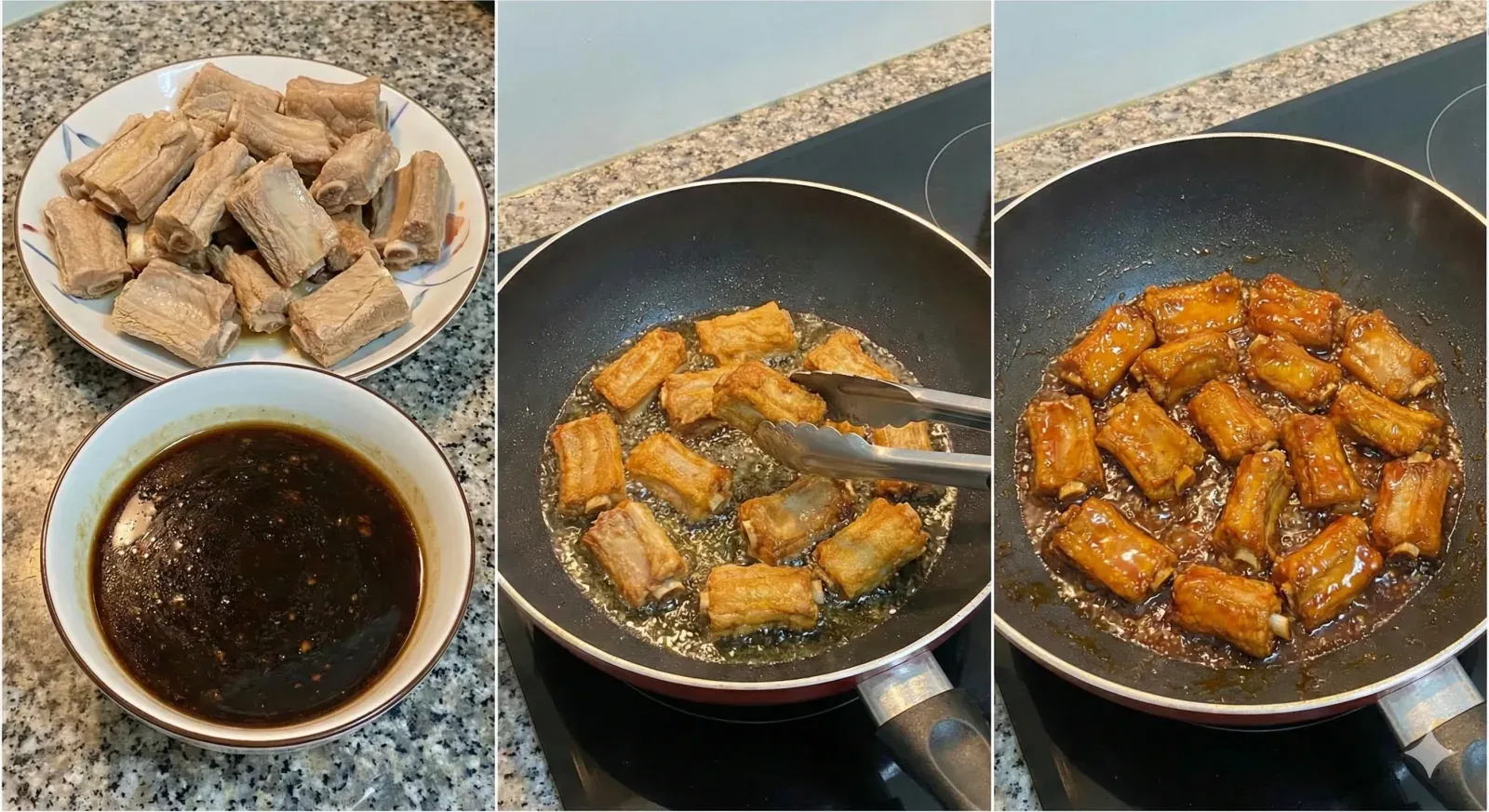
3Soak the dried vegetarian ribs in water for 30 minutes until fully rehydrated and soft. Rinse well, then squeeze out excess moisture.
Heat a generous amount of oil in a wok or deep pan over high heat. Fry the ribs in batches until golden and crispy on all sides — this is the key step that gives them their satisfying chew and prevents them from becoming soggy when braised. Drain on paper towels.
In a bowl, whisk together all the braising sauce ingredients: fried shallot oil, golden sugar, vegetarian oyster sauce, seasoning powder, soy sauce, chili sauce, cooking wine, five-spice powder, honey, ginger, and water. Stir until the sugar dissolves.
Pour the sauce into a clean pan and bring to a boil. Add the fried ribs and braise over medium heat, turning them frequently, until the sauce reduces completely and the ribs are coated in a glossy, fragrant glaze.
Pro tip: Fry the ribs over very high heat and keep them moving — fast frying means crispy exterior without excess oil absorption. When braising, turn them constantly so every surface gets coated with that beautiful glaze.
Step 4: Make the Vegetarian Bì
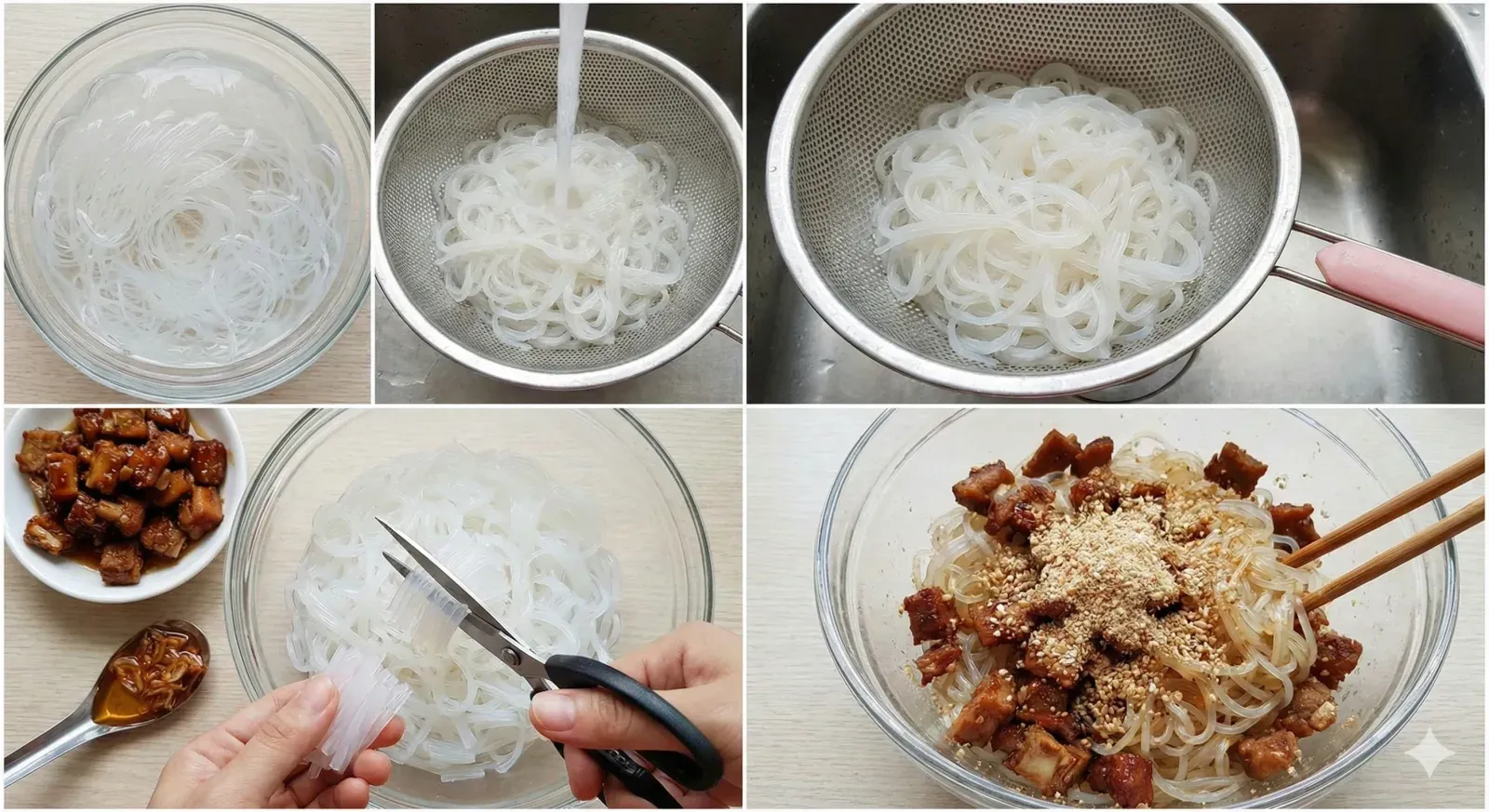
4Soak cellophane noodles (miến) in water for 15 minutes until soft and translucent. Blanch in boiling water for exactly 1 minute — no longer, or they’ll become mushy. Drain immediately and rinse with cool water. Use scissors to cut into bite-sized pieces.
In a bowl, season the noodles with salt, sugar, and vegetarian seasoning. Add the fried shallot oil and toss to coat. Chop half a glazed rib into small pieces and add to the bowl. Finally, add toasted rice powder (thính) and toss everything together.
Tip: Don’t overdo the fried shallot oil — too much and the bì will turn clumpy and oily instead of staying light and separate.
Step 5: Make the Dipping Sauce (Nước Mắm Chay)
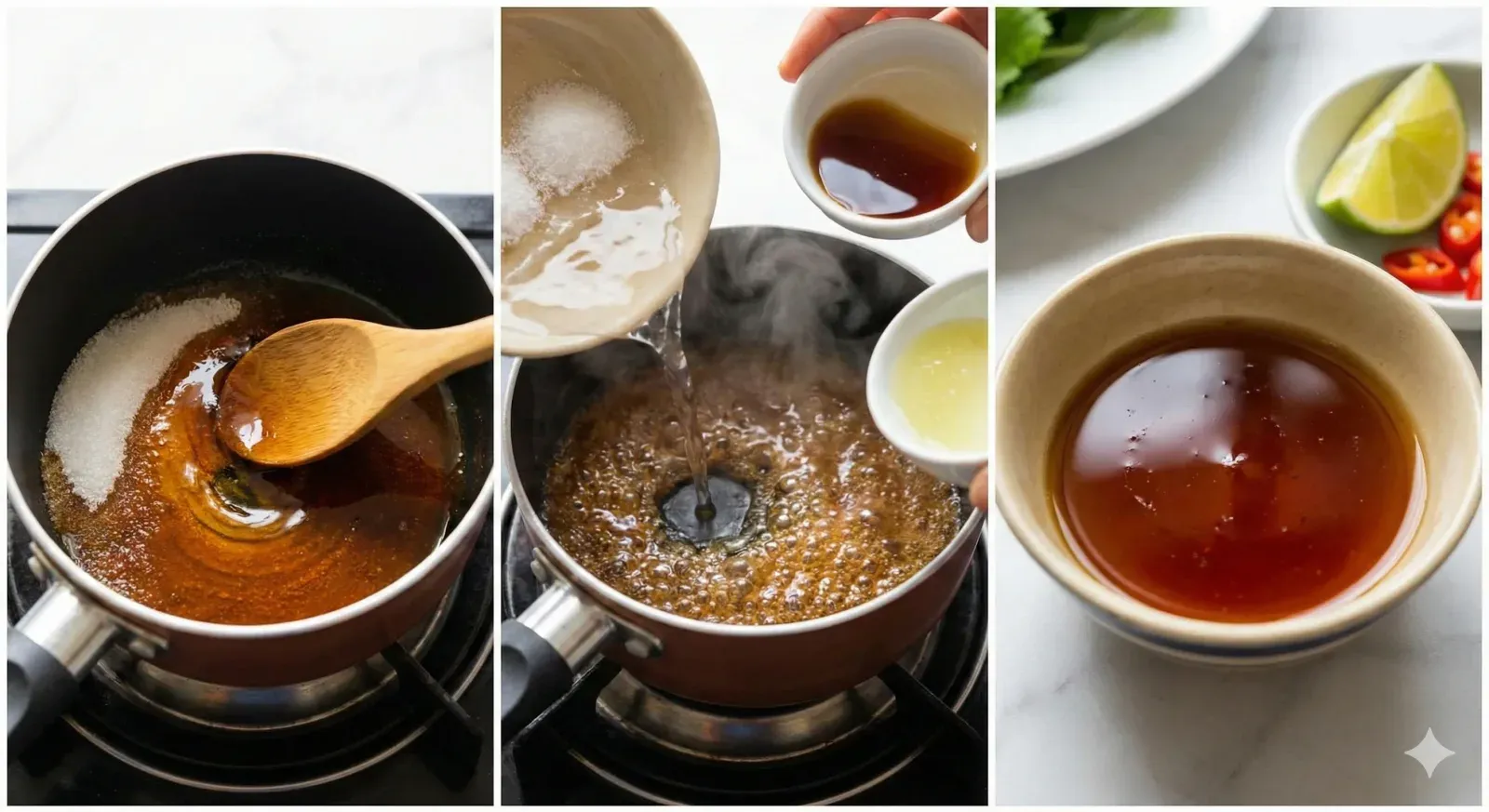
5This caramelized dipping sauce is what sets Vietnamese cơm tấm apart from other rice dishes. Place 1 tbsp sugar in a small saucepan over medium heat. Let it melt and caramelize to a deep amber color without stirring — just swirl the pan gently.
Carefully add 120ml water (it will sputter). Add the remaining 1.5 tbsp sugar, salt, vegetarian fish sauce, optional MSG, and lime juice. Stir over medium heat until everything dissolves completely. Taste and adjust — the sauce should be balanced between sweet, salty, and lightly sour. Let cool before serving.
Step 6: Assemble and Serve
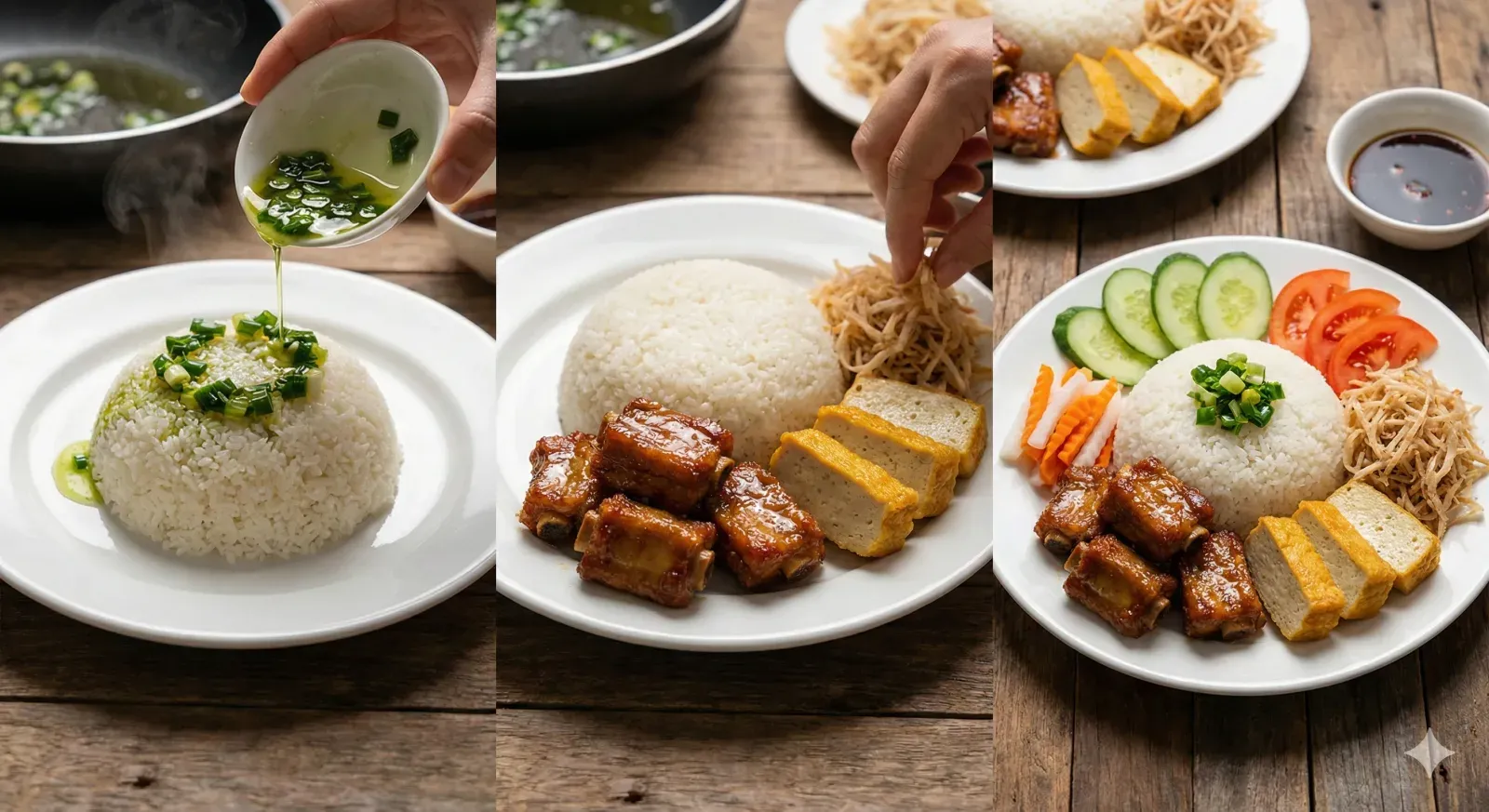
6Mound cooked broken rice onto a plate and drizzle generously with fried shallot oil (mỡ hành). Arrange the glazed vegetarian ribs, sliced steamed chả, and bì neatly alongside the rice. Add sliced cucumber, tomato wedges, and a spoonful of pickled vegetables.
Serve with the caramelized dipping sauce on the side. Spoon the sauce over the rice, mix everything together, and enjoy.
Expert Tips for Perfect Cơm Tấm Chay
Getting the Chả Texture Right
The secret to a firm, sliceable chả that doesn’t fall apart is twofold: boiling the tofu first to remove excess moisture, and mixing the filling vigorously to develop cohesion. Don’t be tempted to skip either step. Cornstarch helps bind everything together — you can substitute potato starch or tapioca starch with identical results.
Frying the Sườn Chay Correctly
High heat is non-negotiable here. Vegetarian spare ribs are made from gluten or soy protein and will turn greasy and soft if fried at low temperature. Make sure your oil is fully hot before adding the ribs, and fry in small batches. A crispy crust means they’ll absorb the braising sauce rather than falling apart in it.
Thính — The Secret Ingredient
Toasted rice powder (thính) is what transforms simple glass noodles into proper bì. You can find it ready-made at Vietnamese stores, or make it at home: dry-toast raw jasmine rice in a skillet over medium heat, stirring constantly, until golden brown and nutty-smelling. Cool completely, then grind in a blender to a slightly coarse powder. Store in an airtight jar.
Which Rice to Use
Authentic broken rice (gạo tấm) has a distinct texture — slightly drier and more toothsome than regular jasmine rice. Look for it labeled “broken jasmine rice” at Vietnamese or Asian grocery stores. If unavailable, regular jasmine rice works perfectly well and most diners won’t notice the difference.
Northern vs. Southern Style Cơm Tấm Chay
Like many Vietnamese dishes, cơm tấm has regional variations. The Southern version (from Saigon/Ho Chi Minh City) tends to include a steamed egg cake (chả trứng) and is served with a sweeter dipping sauce and more garnishes. The vegetarian adaptations follow similar regional patterns:
| Southern Style (Phổ Biến) | Simpler Home Style |
|---|---|
| Full sườn + bì + chả trio | Sườn + bì only |
| Steamed tofu chả with annatto glaze | Skip the chả |
| Caramelized nước mắm chay | Simple soy-based dipping sauce |
| Pickled daikon and carrot | Fresh cucumber only |
| Fried shallot oil on rice | Scallion oil (dầu hẹ) |
Make It Vegan
This recipe is very easy to make fully vegan with two small swaps. Replace the honey in the rib braising sauce with agave syrup or plain sugar. Make sure your vegetarian fish sauce and oyster sauce are labeled vegan-friendly (some contain trace shellfish). Everything else in the recipe — tofu, glass noodles, tofu skin, mushrooms, vegetables — is naturally vegan.
Serving Suggestions
In Vietnamese culture, cơm tấm chay is especially popular on the 1st and 15th of each lunar month (ngày rằm), when many Vietnamese observe a meatless day. But it’s equally satisfying as an everyday meal. Here’s how to build a full spread:
- Light vegetable soup (canh rau) — balances the richness of the main plate
- Stir-fried water spinach (rau muống xào tỏi) — classic Vietnamese pairing
- Extra pickled vegetables — always welcome alongside broken rice
- Iced jasmine tea — the traditional beverage choice
Storage and Reheating
Refrigerator: Store each component separately in airtight containers for up to 3 days. The sườn chay actually improves overnight as it absorbs more sauce flavor. The pickles keep for up to a week and get better with time.
Chả chay: Wrap sliced chả tightly in plastic wrap and refrigerate. Reheat in a steamer for 5 minutes, or pan-fry slices in a little oil for crispy edges.
Sườn chay: Reheat in a dry pan over medium heat, adding a splash of water if needed to loosen the glaze. Do not microwave — it makes the texture rubbery.
Freezer: The cooked sườn chay and chả chay both freeze well for up to 1 month. Defrost in the refrigerator overnight before reheating.
Common Mistakes to Avoid
1. Not Draining the Tofu Enough
Wet tofu is the enemy of good chả. After boiling, let the tofu sit in a colander for at least 10 minutes, pressing gently to expel water. Excess moisture causes the cake to steam unevenly and become crumbly.
2. Adding Too Much Fried Shallot Oil to the Bì
It’s tempting to be generous, but too much oil makes the bì clump together into a greasy mass. Use just enough to lightly coat the noodles and help the thính stick.
3. Overcooking the Glass Noodles
Cellophane noodles go from perfectly tender to mushy in seconds. A 1-minute blanch is all they need. Pull them out immediately, rinse with cold water to stop the cooking, and don’t let them sit in hot water.
4. Skipping the Caramelization Step in the Dipping Sauce
The caramelized sugar gives the nước mắm chay its signature deep color and complex, slightly bitter-sweet note. Without it, the sauce tastes flat and one-dimensional. It only takes 2–3 minutes and makes a dramatic difference.
5. Cutting the Chả Too Soon
Patience! The steamed tofu cake needs to cool completely before slicing — ideally 30 minutes at room temperature. Cutting while hot results in jagged, crumbling slices instead of clean, beautiful pieces.
Frequently Asked Questions
What is cơm tấm chay?
Cơm tấm chay is the Vietnamese vegetarian version of broken rice, featuring plant-based ribs (sườn chay), shredded noodle bì with toasted rice powder, and a steamed tofu cake (chả chay). It faithfully replicates the flavors and textures of the original meatbased dish without any animal products beyond optional honey.
Where can I buy vegetarian spare ribs?
Vegetarian spare ribs (sườn chay) are sold at most Asian grocery stores in the vegetarian foods section, usually vacuum-packed or dried. They’re made from wheat gluten or soy protein and are also available from Vietnamese online retailers.
Can I skip the steamed tofu cake?
Absolutely. The chả chay requires the most effort, and the dish is still delicious without it. Many home cooks prepare just the sườn and bì for a faster weeknight version.
Is this recipe gluten-free?
Not as written — most vegetarian spare ribs are made from wheat gluten. For a gluten-free version, replace the sườn chay with marinated and grilled firm tofu slices, and ensure your soy sauce is certified gluten-free (tamari).
What is thính and where do I find it?
Thính is dry-roasted rice ground into a coarse, nutty powder. It’s available ready-made at Vietnamese grocery stores, or you can make it at home in 10 minutes by toasting rice in a dry pan until golden, then grinding coarsely. There’s no direct substitute for its distinctive toasty flavor.
The Cultural Heart of Cơm Tấm
Cơm tấm originated in Saigon as a working-class breakfast, built from the broken rice grains that milled into fragments during processing. Too irregular to sell as premium rice, broken grains were sold cheaply to street vendors who transformed them into something extraordinary. Today, cơm tấm shops open before dawn across Ho Chi Minh City, steaming mountains of broken rice served with charcoal-grilled pork and sweet dipping sauce.
The vegetarian version follows the same ethos: humble, honest ingredients elevated through careful technique. Cơm tấm chay has become a staple of Vietnamese Buddhist cooking, appearing on temple feast menus and family tables alike — proof that plant-based cooking doesn’t mean sacrificing flavor or satisfaction.
Conclusion
This Vietnamese vegetarian broken rice (cơm tấm chay) is a labor of love — but every component is approachable, the techniques are learnable, and the payoff is a complete, restaurant-quality meal that you made entirely at home from scratch. The chewy glazed sườn, the nutty bì, the silky steamed chả, the caramelized dipping sauce — everything works together in the beautiful harmony that defines great Vietnamese cooking.
Whether you’re cooking for a Buddhist feast day or simply exploring Vietnam’s rich vegetarian tradition, this dish will not disappoint. Make the pickles the night before, cook each element with care, and you’ll have a plate that’s as satisfying as anything you’d find at a sidewalk stall in Saigon.
Tried this recipe? Leave a comment and star rating below — your feedback helps other cooks find their way to great Vietnamese vegetarian cooking. And don’t miss our other Vietnamese recipes for more authentic flavors from My Viet Kitchen.