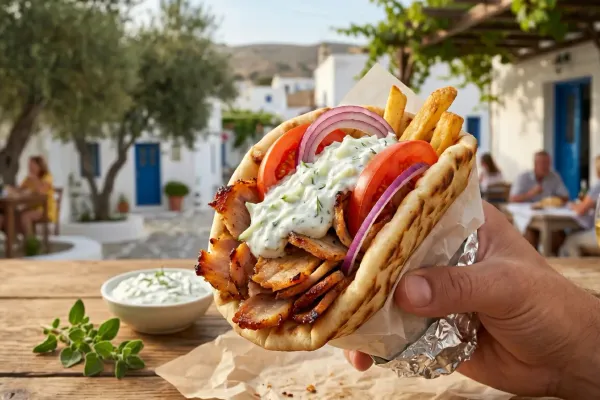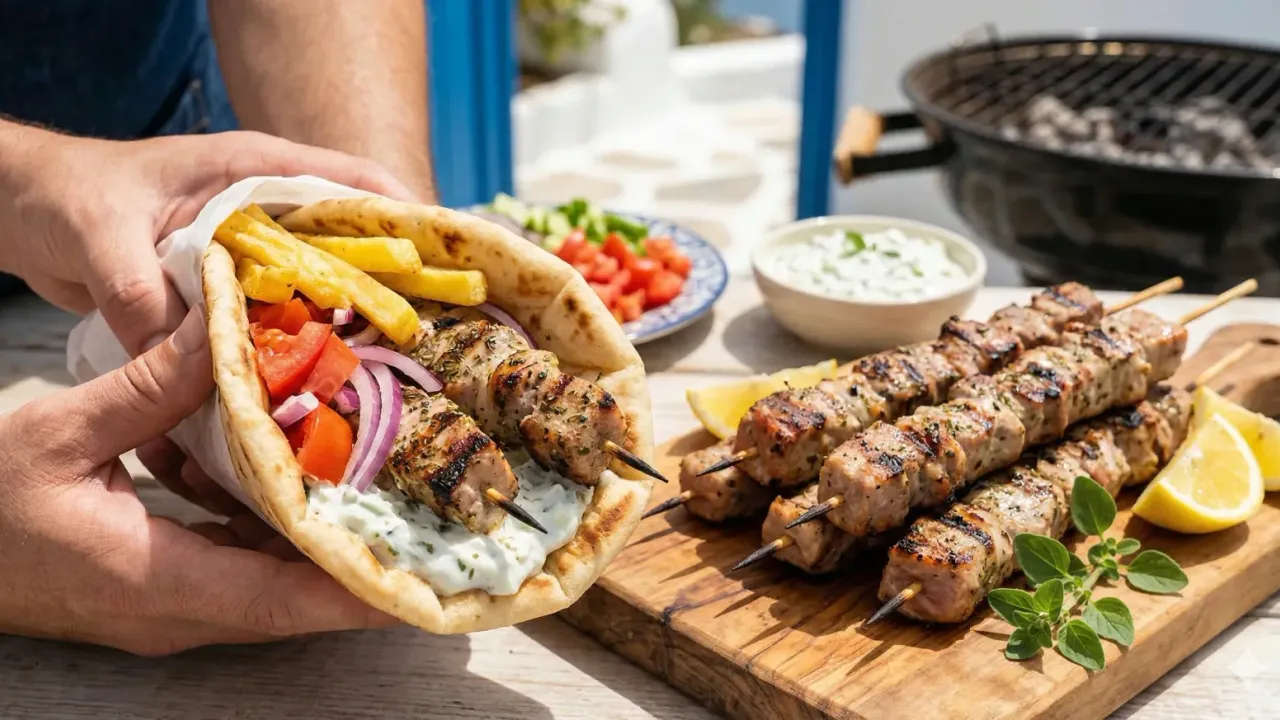
Few dishes capture the spirit of Greek street food quite like souvlaki. These smoky, herb-marinated pork skewers deliver bold Mediterranean flavor in every bite. Tucked inside warm pita with cool tzatziki, ripe tomatoes, and sharp red onion, souvlaki is Greece’s most beloved fast food — and one of the most satisfying meals you can grill at home. This recipe stays faithful to the Athenian tradition while keeping everything approachable for any home cook.
Prep Time: 20 minutes (plus 4 hours marinating) | Cook Time: 15 minutes | Servings: 4
Difficulty: Easy | Calories: ~480 per serving
What Makes Souvlaki Special?
Souvlaki traces its roots back thousands of years. Ancient Greeks grilled skewered meat over open flames, and the technique has barely changed since. In fact, the word “souvlaki” comes from the Greek “souvla,” meaning skewer. Unlike complex braised dishes that demand hours of attention, souvlaki celebrates simplicity. A handful of bold ingredients — olive oil, lemon, oregano, garlic — transform humble pork into something extraordinary.
What truly sets this dish apart is the interplay of textures and temperatures. Hot, charred meat meets cool, creamy tzatziki. Soft pita wraps around crunchy onion and juicy tomato. Every component plays a distinct role, and together they create a harmony that feels both rustic and refined. As a result, souvlaki has conquered palates far beyond Greece, becoming a global street food icon.
Furthermore, souvlaki embodies the Greek philosophy of eating well without fuss. It requires no specialty equipment and no rare ingredients. The magic lies in quality meat, a proper marinade, and intense heat. Master those three elements, and you will produce skewers that rival any Athens souvlatzidiko.

Choosing the Right Pork Cut
The cut of pork you select determines whether your souvlaki turns out juicy or dry. Not all cuts behave the same on high heat, so choose wisely.
- Pork Shoulder (Best Choice): Rich in marbling and connective tissue. It stays moist under intense heat, making it the traditional Greek pick for souvlaki.
- Pork Loin: Leaner and milder in flavor. It works in a pinch, but tends to dry out quickly without careful timing on the grill.
- Pork Tenderloin: Very tender, yet extremely lean. Best for those who prefer a lighter option, though it benefits from a shorter grilling time.
- Chicken Thigh (Alternative): A popular swap that absorbs the marinade beautifully. Dark meat keeps its moisture far better than chicken breast on skewers.
Ingredients for Souvlaki
For the Pork Skewers:
- 2 pounds boneless pork shoulder, cut into 1-inch cubes
- 1/4 cup extra virgin olive oil
- 3 tablespoons fresh lemon juice
- 4 cloves garlic, minced
- 2 teaspoons dried oregano
- 1 teaspoon smoked paprika
- 1 teaspoon ground cumin
- 1/2 teaspoon black pepper
- 1 teaspoon salt
For the Tzatziki Sauce:
- 1 cup Greek yogurt (full-fat for best results)
- 1/2 English cucumber, grated and squeezed dry
- 1 clove garlic, finely grated
- 1 tablespoon fresh dill, chopped
- 1 tablespoon extra virgin olive oil
- 1 teaspoon white wine vinegar
- Salt to taste
For Serving:
- 4 pita breads (soft, not pocket-style)
- 1 large red onion, thinly sliced
- 2 medium tomatoes, diced
- French fries (optional, but traditional in Greece)
- Fresh parsley for garnish
Pro tip: Use bone-in pork shoulder and debone it yourself for the freshest, most flavorful meat. The trimmings near the bone hold the most marbling, which is exactly what delivers juicy souvlaki.
Step-by-Step Instructions
Step 1: Prepare the Marinade
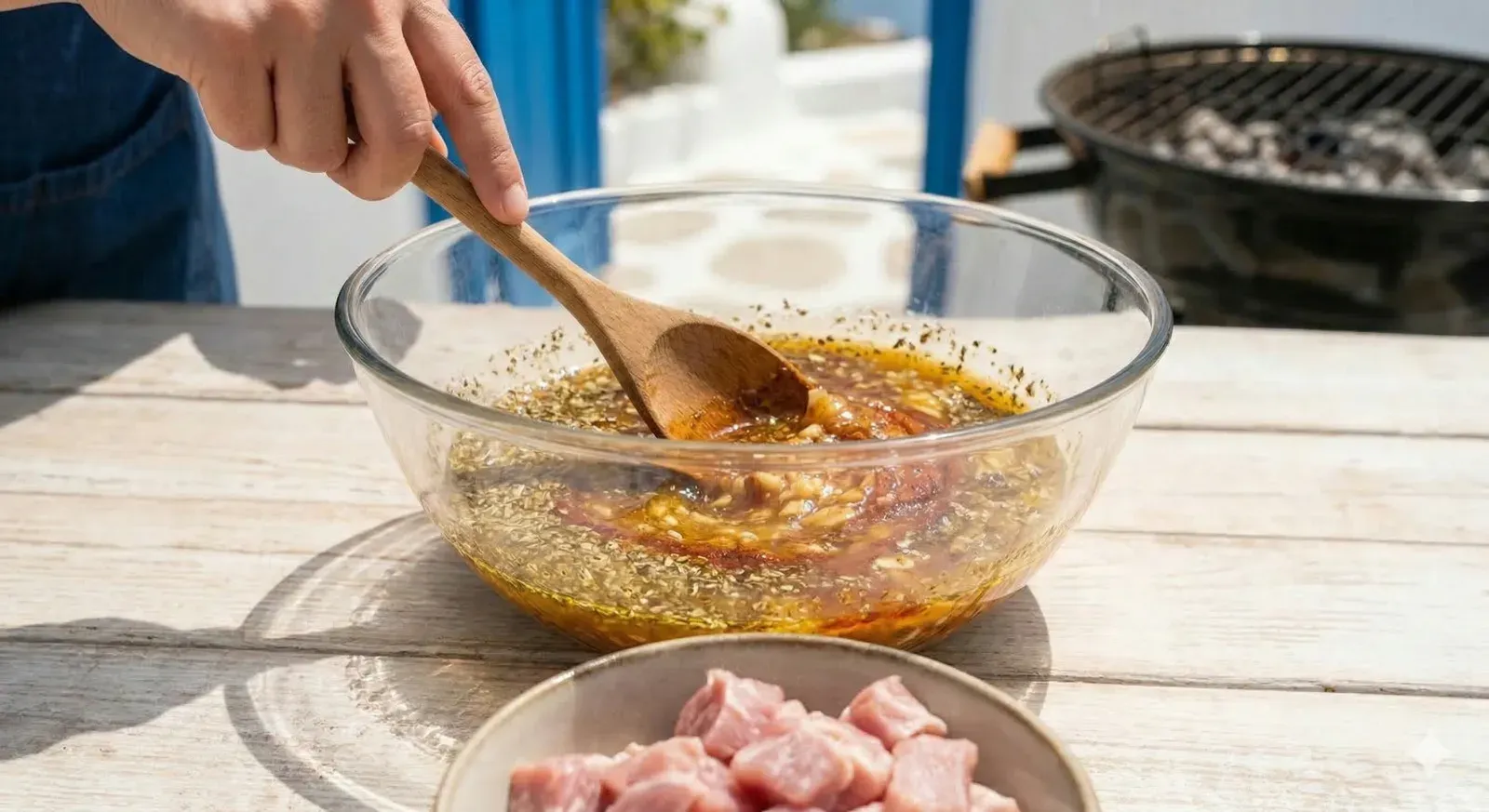
1Start by whisking together the olive oil, lemon juice, minced garlic, oregano, smoked paprika, cumin, salt, and pepper in a large bowl. The lemon juice serves a dual purpose here. It adds bright acidity while also tenderizing the pork’s surface proteins. Add the pork cubes and toss until every piece is thoroughly coated. Cover the bowl tightly with plastic wrap and refrigerate for at least 4 hours. Overnight marination produces the deepest flavor, so plan ahead when possible.
Step 2: Make the Tzatziki
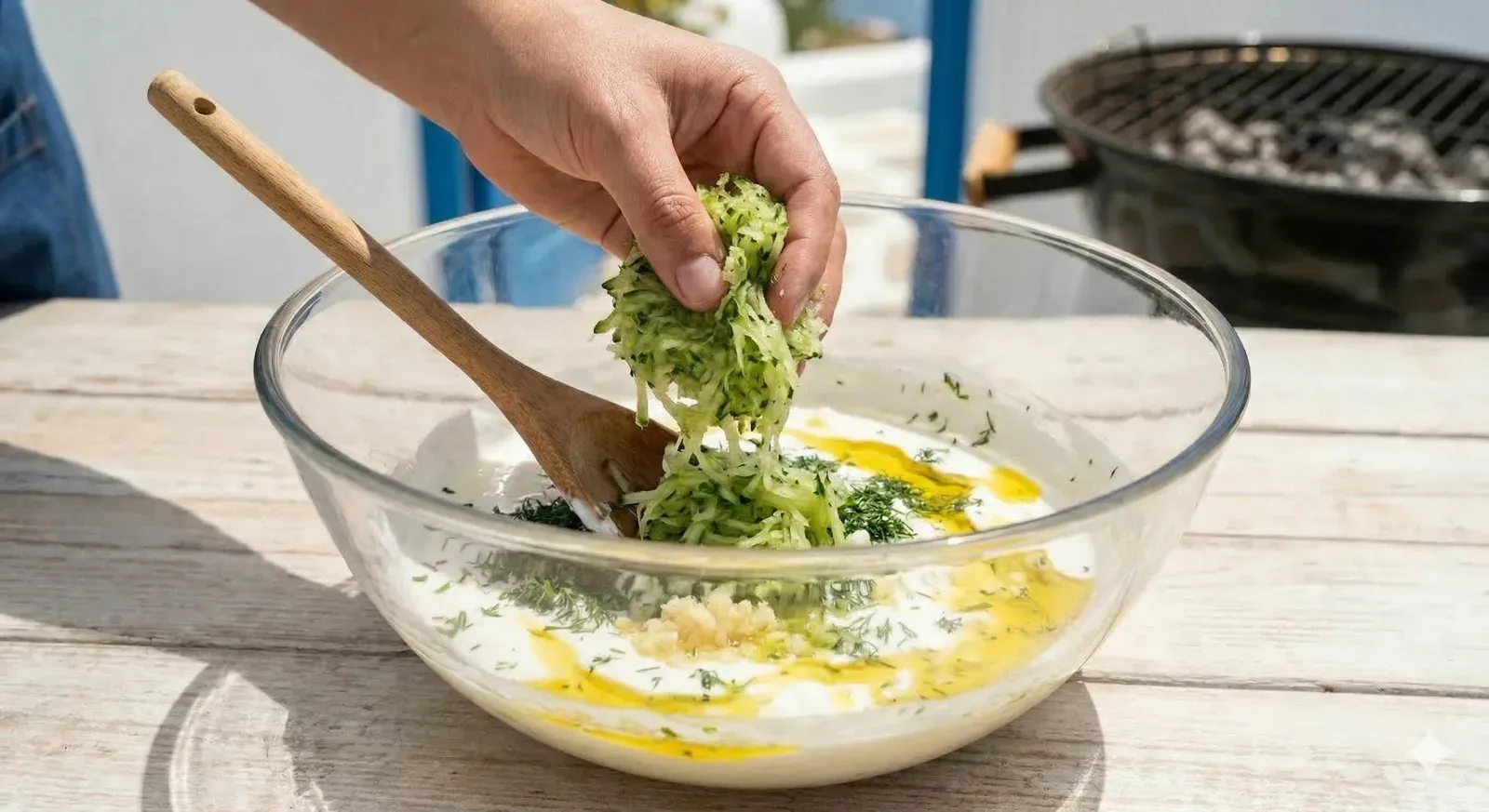
2Grate the cucumber using the large holes of a box grater. Then place it in a clean kitchen towel and squeeze firmly to extract as much liquid as possible. This step is essential — watery tzatziki dilutes flavor and makes pita wraps soggy. In a medium bowl, combine the drained cucumber with Greek yogurt, grated garlic, dill, olive oil, and vinegar. Season with salt and stir well. Refrigerate for at least 30 minutes so the flavors can meld together properly.
Step 3: Thread the Skewers
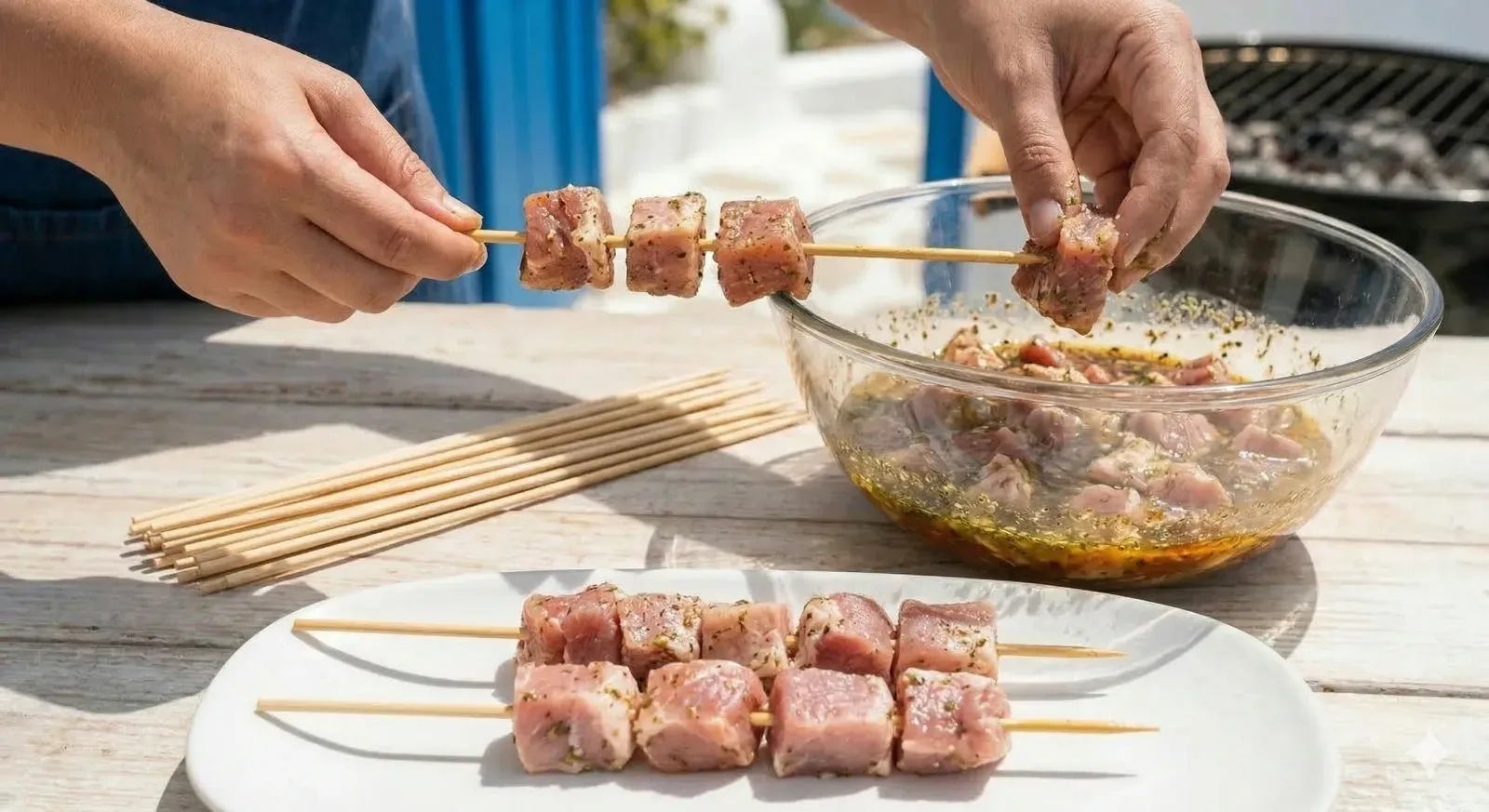
3Remove the pork from the refrigerator about 20 minutes before grilling. Cold meat placed directly on a hot grill cooks unevenly, leaving you with charred outsides and raw centers. Then thread 5 to 6 cubes onto each skewer, leaving a small gap between pieces. These gaps allow heat to circulate around each cube, ensuring consistent doneness. If you are using wooden skewers, soak them in water for at least 30 minutes beforehand to prevent burning.
Step 4: Grill the Souvlaki
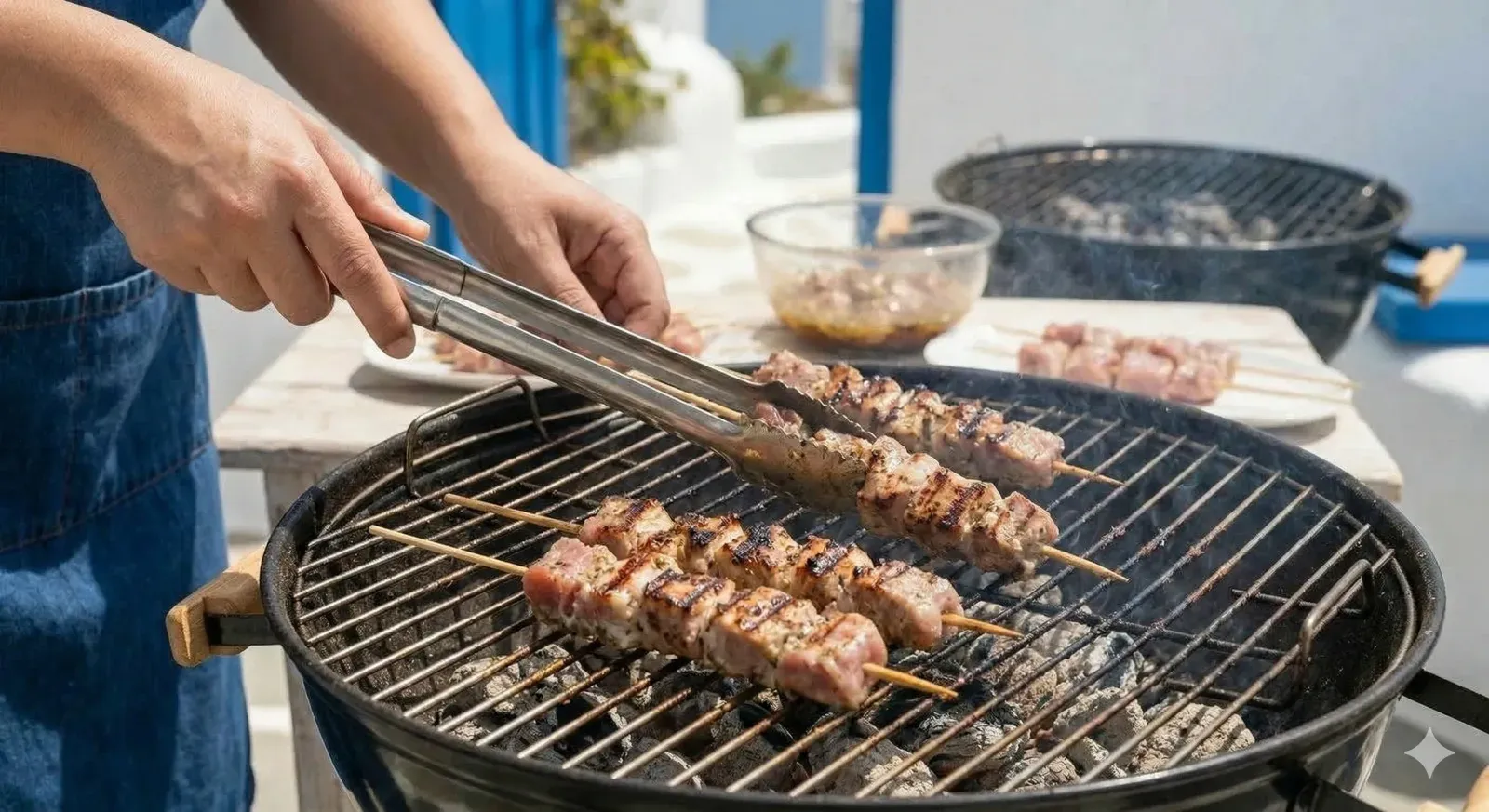
4Preheat your grill to high heat, around 450 to 500 degrees Fahrenheit. Clean and oil the grates to prevent sticking. Next, place the skewers directly over the flame and grill for 3 to 4 minutes per side. You want a distinct char on the edges while the interior stays juicy and tender. Resist the urge to move the skewers constantly — let the Maillard reaction do its work undisturbed. The pork is done when it reaches an internal temperature of 145 degrees Fahrenheit. Let the skewers rest for 2 minutes before serving.
Step 5: Warm the Pita and Assemble
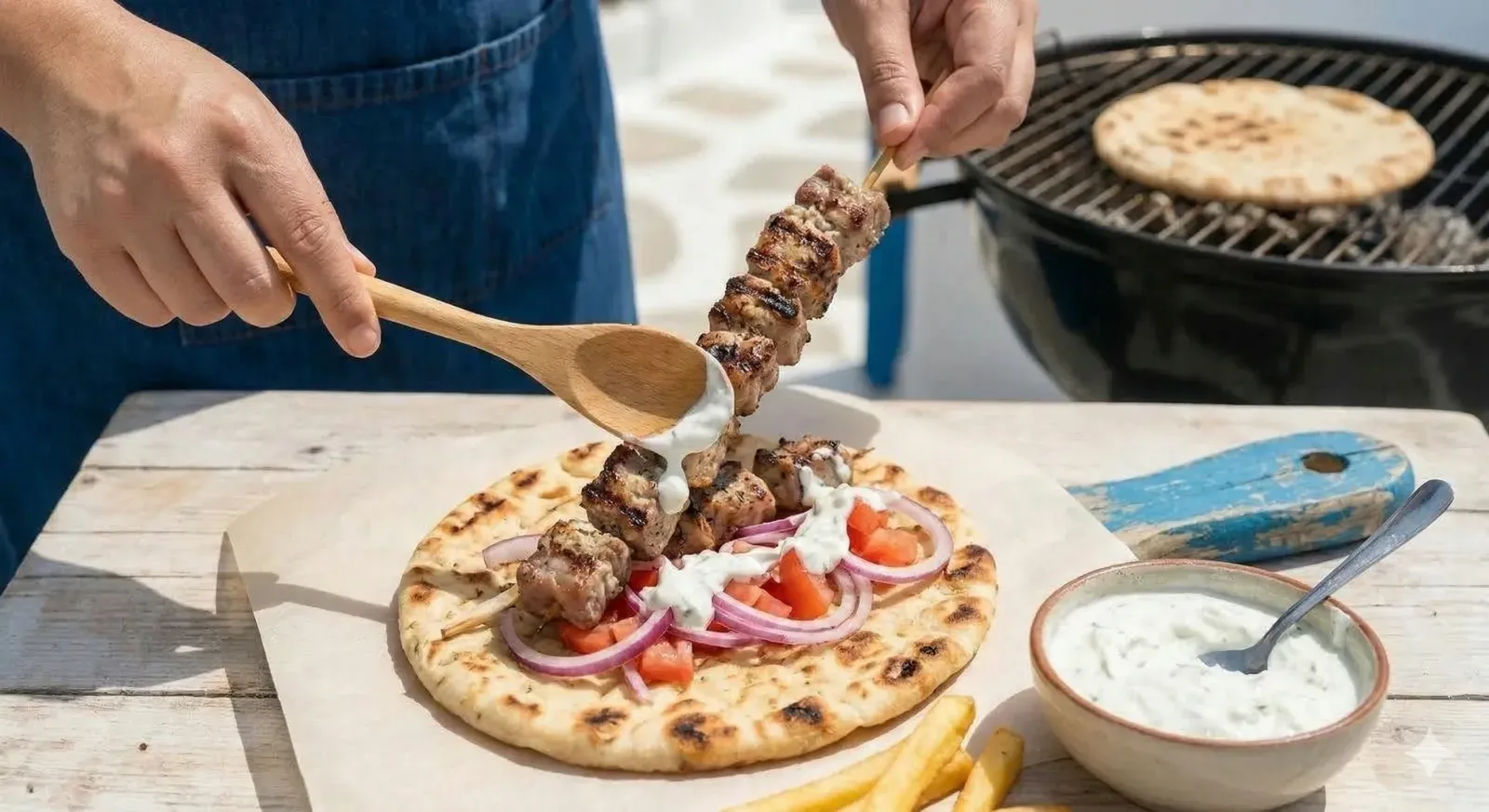
5While the skewers rest, place the pita breads on the grill for about 30 seconds per side. You want them warm and pliable, not crispy. Slide the charred pork off each skewer directly onto the center of a warm pita. Top generously with sliced red onion, diced tomatoes, and a thick drizzle of tzatziki. For an authentic Athenian touch, add a handful of golden French fries right inside the wrap. Roll the pita tightly around the filling, wrap the bottom in foil or parchment paper, and serve immediately.
Expert Tips for Perfect Results
Nail the Marinade Ratio
The balance between acid and oil is crucial. Too much lemon juice makes the pork mushy on the surface, while too little leaves it bland. Stick to a 1:1 ratio of lemon juice to olive oil as your baseline. Additionally, dried oregano outperforms fresh in this marinade because it releases its essential oils more readily into the liquid.
Control Your Heat
High, direct heat is non-negotiable for proper souvlaki. The intense temperature creates the signature caramelized crust that defines great street-style skewers. However, if your grill runs exceptionally hot, move the skewers to a slightly cooler zone after the initial sear. This prevents the exterior from burning before the interior cooks through.
Cut Uniform Pieces
Consistency in size matters more than most cooks realize. Cubes that vary in size cook at different rates, leaving some pieces dry and others underdone. Aim for a uniform 1-inch cut throughout. A sharp chef’s knife and a steady hand make this quick work.
Greek Souvlaki: Regional and Style Variations
Souvlaki varies significantly across Greece, with each region claiming its version as the definitive one. Here is how the major styles compare.
| Style | Meat | Serving | Key Difference |
|---|---|---|---|
| Athens (Attica) | Pork | Pita wrap with fries | French fries stuffed inside the wrap |
| Thessaloniki | Pork or Chicken | Pita wrap with mustard | Mustard and ketchup instead of tzatziki |
| Kalamaki (Southern Greece) | Pork | Small skewers, platter | Called “kalamaki” to distinguish from gyros |
| Cypriot Souvla | Lamb or Pork | Large spit-roasted chunks | Cooked on a long rotisserie over charcoal |
| Chicken Souvlaki | Chicken Thigh | Pita wrap or platter | Lighter option, often with lemon-herb marinade |
Serving Suggestions
In Greece, souvlaki is served two ways: as a pita wrap for quick eating, or on a platter for a sit-down meal. Both approaches shine when paired with the right accompaniments.
The Perfect Accompaniments:
- Greek Salad (Horiatiki): Fresh tomatoes, cucumber, red onion, olives, and feta tossed in olive oil. The crisp vegetables balance the richness of the grilled pork beautifully.
- Crispy French Fries: Traditionally stuffed inside the pita wrap in Athens. Thick-cut and lightly salted fries work best.
- Roasted Lemon Potatoes: Wedges of potato roasted with olive oil, lemon, and oregano until golden and creamy inside.
- Grilled Vegetables: Zucchini, eggplant, and bell peppers charred alongside the skewers make a colorful, healthy side.
- Rice Pilaf: Fluffy rice cooked in chicken broth with a touch of butter. It soaks up the tzatziki and meat juices wonderfully.
Beverage Pairings:
- Assyrtiko White Wine: A crisp, mineral-driven Greek white that cuts through the richness of the pork.
- Mythos or Fix Lager: Light, refreshing Greek beers that complement smoky grilled flavors perfectly.
- Ouzo with Water: The traditional Greek aperitif. Its anise flavor pairs surprisingly well with grilled meat.
- Sparkling Lemonade: A non-alcoholic option that echoes the lemon notes in the marinade.
Storage and Reheating
Refrigerator: Store cooked souvlaki in an airtight container for up to 3 days. Keep the tzatziki and pita bread stored separately to maintain their textures.
Freezer: Cooked pork skewers freeze well for up to 2 months. Wrap them tightly in foil and place inside a freezer bag. Thaw overnight in the refrigerator before reheating. Tzatziki does not freeze well due to its yogurt base.
Reheating: For the best results, reheat souvlaki on a hot grill or grill pan for 2 to 3 minutes per side. Alternatively, use a skillet over medium-high heat with a drizzle of olive oil. Avoid the microwave whenever possible, as it steams the meat instead of crisping it, leaving you with a rubbery texture.
Common Mistakes to Avoid
1. Skipping the Marinating Time
A quick 30-minute marinade simply will not deliver authentic souvlaki flavor. The oregano and garlic need time to penetrate the meat. Four hours is the minimum, and overnight yields dramatically better results. Patience here makes the difference between good and exceptional.
2. Using the Wrong Cut of Pork
Lean cuts like loin or tenderloin dry out rapidly on a hot grill. Pork shoulder contains the intramuscular fat needed to stay juicy during high-heat cooking. Consequently, choosing the right cut is arguably the single most important decision in this recipe.
3. Crowding the Skewers
Pushing cubes tightly together prevents heat from reaching all surfaces. The result is steamed, pale meat instead of charred, caramelized souvlaki. Leave a small gap between each piece to allow proper airflow and even browning.
4. Serving Watery Tzatziki
Failing to drain the cucumber is a common oversight. Excess moisture thins the sauce and turns pita wraps into a soggy mess. Always squeeze the grated cucumber in a towel until no more liquid drips out. This single step transforms your tzatziki from mediocre to restaurant quality.
Frequently Asked Questions
What is the best meat for souvlaki?
Pork shoulder (also called pork butt) is the most traditional and popular choice for Greek souvlaki. It has the ideal balance of lean meat and marbling, which keeps the skewers juicy during grilling. Chicken thigh and lamb leg are also excellent alternatives that absorb the marinade well.
How long should you marinate souvlaki?
For the best flavor, marinate souvlaki for at least 4 hours, though overnight is ideal. The lemon juice and olive oil tenderize the meat while the oregano and garlic infuse deep flavor. Avoid marinating for more than 24 hours, as the acid can break down the texture and make it mushy.
What is the difference between souvlaki and gyros?
Souvlaki features small cubes of marinated meat grilled on skewers, while gyros uses thinly sliced meat cooked on a vertical rotisserie. Both are often served in pita wraps with similar toppings, but the cooking method and meat preparation are fundamentally different. In Athens, ordering “souvlaki” at a shop can refer to either style, which confuses even Greeks.
Can you make souvlaki without a grill?
Yes, you can absolutely make souvlaki without an outdoor grill. A cast iron grill pan over high heat produces excellent char marks and similar flavor. For another option, use your oven broiler — place skewers on a baking sheet and broil for 4 to 5 minutes per side about 6 inches from the heat source. The key is replicating that intense, direct heat.
What sides go well with souvlaki?
Traditional Greek sides pair beautifully with souvlaki. Classic options include Greek salad, crispy French fries, grilled vegetables, rice pilaf, and roasted lemon potatoes. Tzatziki sauce is considered essential, and warm pita bread rounds out the meal perfectly.
Is souvlaki healthy?
Souvlaki can be a nutritious meal when prepared thoughtfully. Grilled lean pork provides high-quality protein, while the olive oil marinade offers heart-healthy monounsaturated fats. Served with fresh vegetables and tzatziki instead of heavy sauces, a souvlaki pita wrap contains roughly 480 calories with a well-balanced macronutrient profile. Skip the fries to reduce the calorie count further.
Variations and Adaptations
Chicken Souvlaki:
Swap the pork for boneless, skinless chicken thighs. Use the same marinade but reduce the marinating time to 2 to 4 hours. Chicken cooks faster, so grill for just 3 minutes per side. The result is lighter yet equally flavorful, making it a popular choice during warmer months.
Lamb Souvlaki:
Lamb leg, cut into cubes, brings a richer and more robust flavor. Add a teaspoon of ground coriander and a sprig of fresh rosemary to the marinade. Grill to medium-rare for the most tender results. This variation is especially popular on the Greek islands and during Easter celebrations.
Vegetarian Souvlaki:
Halloumi cheese and mixed vegetables make a satisfying meatless version. Cut the halloumi into thick slabs and alternate on skewers with bell peppers, zucchini, and red onion chunks. The salty, squeaky cheese holds up to high heat without melting, and it develops a gorgeous golden crust.
Oven-Baked Souvlaki:
When grilling is not an option, arrange skewers on a wire rack set over a baking sheet. Bake at 425 degrees Fahrenheit for 20 to 25 minutes, turning once halfway through. Finish under the broiler for 2 minutes to develop char. While not identical to grilled souvlaki, this method still delivers satisfying results.
The Cultural Significance
Souvlaki holds a special place in Greek identity that extends far beyond the plate. Walk through any Greek city at lunchtime, and the scent of charcoal-grilled meat fills the air. Souvlaki shops — called souvlatzidika — occupy nearly every block, often staying open past midnight to serve late-night crowds. For many Greeks, grabbing a souvlaki pita after a night out is as much a ritual as the evening itself.
The dish also carries surprising historical weight. Archaeological evidence from Santorini suggests that ancient Minoans used stone skewer supports to grill meat over 3,000 years ago. Homer’s Iliad references spit-roasted meat at feasts, connecting today’s souvlaki to one of civilization’s oldest cooking traditions. In many ways, when you grill souvlaki at home, you are participating in a culinary practice that predates written history.
Moreover, souvlaki represents democratic eating at its finest. Whether you are a university student or a shipping magnate, everyone lines up at the same window for the same wrap. This egalitarian quality has helped souvlaki become Greece’s unofficial national dish, uniting people across class, region, and generation.
Conclusion
Authentic Greek souvlaki is one of the most rewarding dishes you can master at home. The recipe is straightforward: marinate well, grill hot, and assemble with care. Once you nail the marinade and learn to read the heat of your grill, you will produce skewers with that unmistakable smoky char and herb-infused tenderness that define the real thing. Fresh tzatziki and warm pita tie everything together into a meal that feels both casual and deeply satisfying.
Ready to explore more European classics? Browse our full collection of European dishes for more tested recipes from across the continent.