This Vietnamese mung bean sticky rice recipe (xôi đậu xanh) is one of the most beloved breakfast and snack dishes in Vietnamese cuisine. Made with fragrant glutinous rice and tender split yellow mung beans steamed together until perfectly chewy, it’s a dish that’s deeply comforting, incredibly simple, and far more delicious than its short ingredient list suggests. Best of all, with the right technique, your sticky rice will stay soft and pliable even the next day — no hardening, no graining out.
Prep Time: 10 minutes (+ 6–8 hours soaking) | Cook Time: 40 minutes | Servings: 4–6
Difficulty: Easy | Calories: ~320 per serving
What Is Xôi Đậu Xanh?
Xôi đậu xanh (pronounced “soy dow xanh”) is a traditional Vietnamese sticky rice dish combining glutinous rice (gạo nếp) with split yellow mung beans (đậu xanh lòng vàng). It belongs to the broader family of xôi mặn — savory sticky rice dishes — that are eaten throughout Vietnam as a hearty breakfast, an afternoon snack sold by street vendors, or as a ceremonial offering on the 1st and 15th of each lunar month.
Unlike sweet sticky rice desserts, xôi đậu xanh is lightly seasoned with salt and finished with cooking oil, making it a versatile base that pairs beautifully with both savory toppings and simple condiments. The mung beans cook to a soft, crumbly, nutty consistency that contrasts perfectly with the chewy, stretchy rice.

Why This Recipe Works
The secret to outstanding xôi đậu xanh comes down to two things: proper soaking and the two-stage steaming method. Soaking both the rice and mung beans for the right amount of time ensures they cook at the same rate, giving you evenly tender results throughout. The two-stage steaming — adding oil midway through — coats every grain so the finished rice is plump, glossy, and stays soft for hours without becoming sticky or gummy.
Ingredients for Vietnamese Mung Bean Sticky Rice
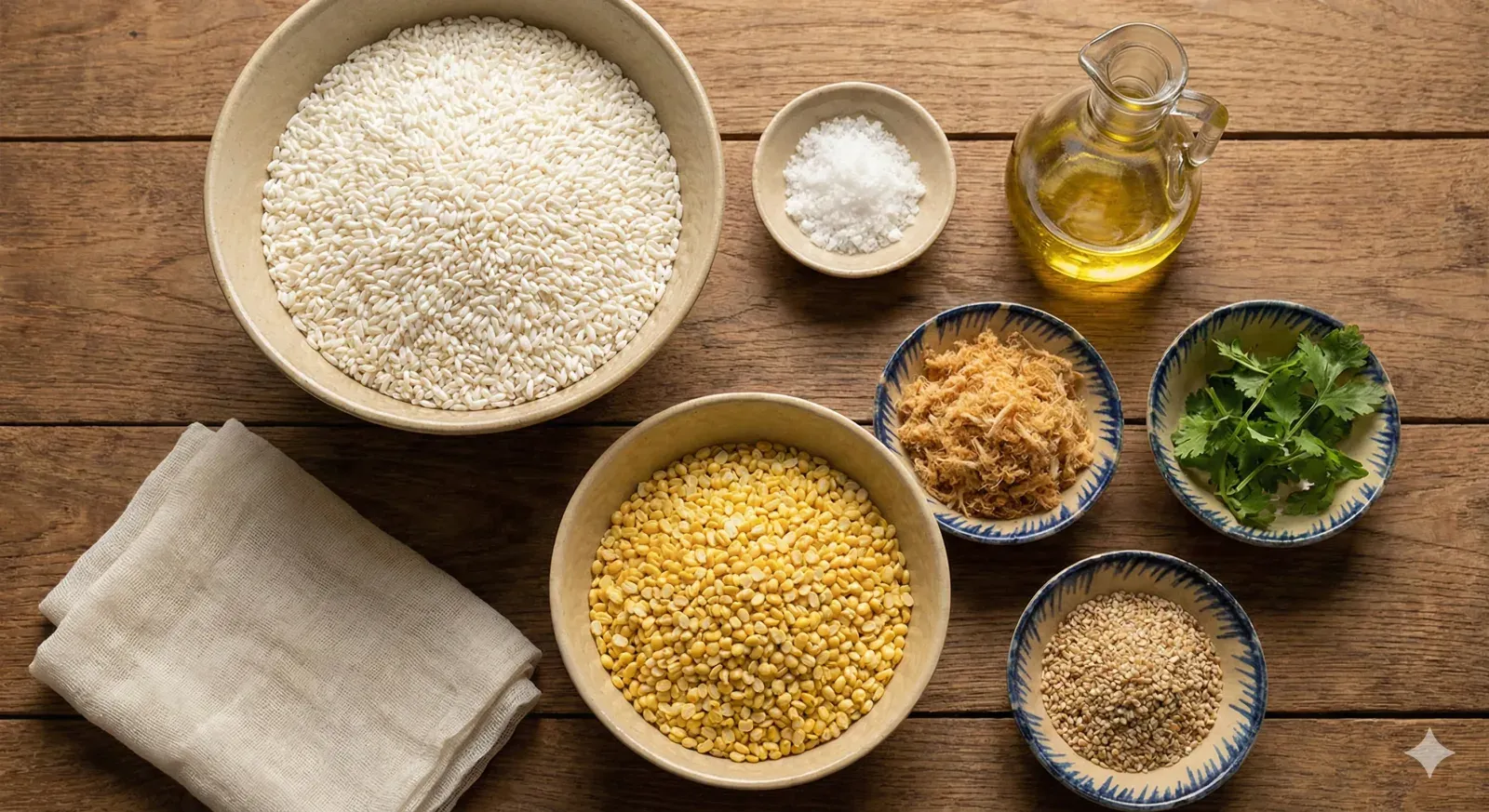
-
500g glutinous rice (gạo nếp) — nếp cái hoa vàng variety preferred for fragrance
-
200g split yellow mung beans, peeled (đậu xanh bỏ vỏ)
-
2 teaspoons coarse salt
-
50ml cooking oil (neutral vegetable oil or light sesame oil)
Pro tip: Look for split, peeled mung beans — they appear yellow and flat, not whole green beans. These are sold at Asian grocery stores and are essential for getting the correct texture: soft, floury, and melt-in-the-mouth.
AdvertisementStep-by-Step Instructions
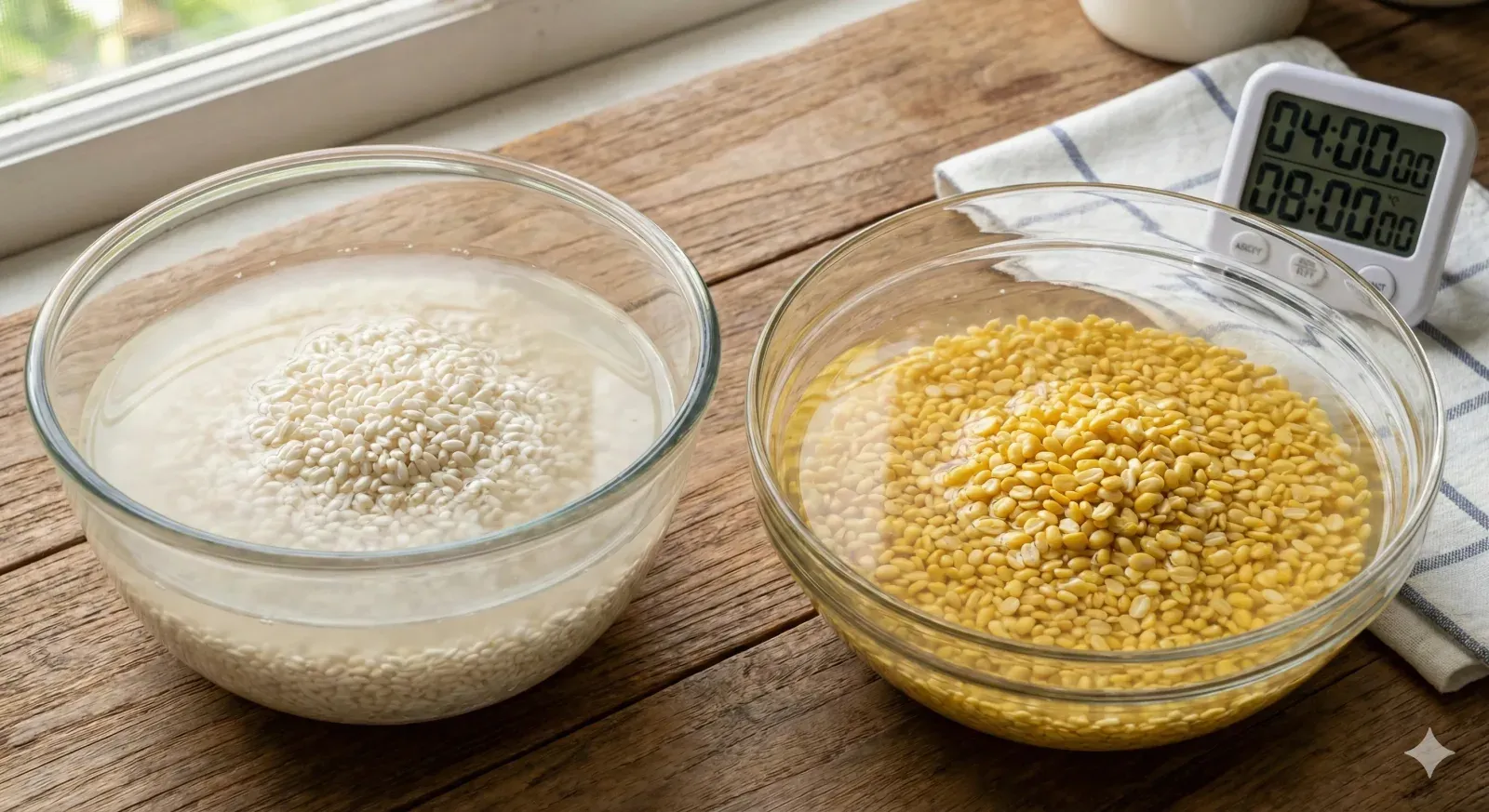
Step 1: Soak the Rice and Mung Beans
1Give the glutinous rice a quick rinse to remove any surface dust, then submerge it in a large bowl of cold water. Let it soak for 6–8 hours (or overnight). The grains should absorb water and become visibly swollen and slightly translucent.
In a separate bowl, soak the split yellow mung beans in cold water for 4 hours. After soaking, each bean should be fully plumped — press one between your fingers and it should yield easily with no hard core in the center. A hard core means the beans need more soaking time.
Step 1: Soak the Rice and Mung Beans
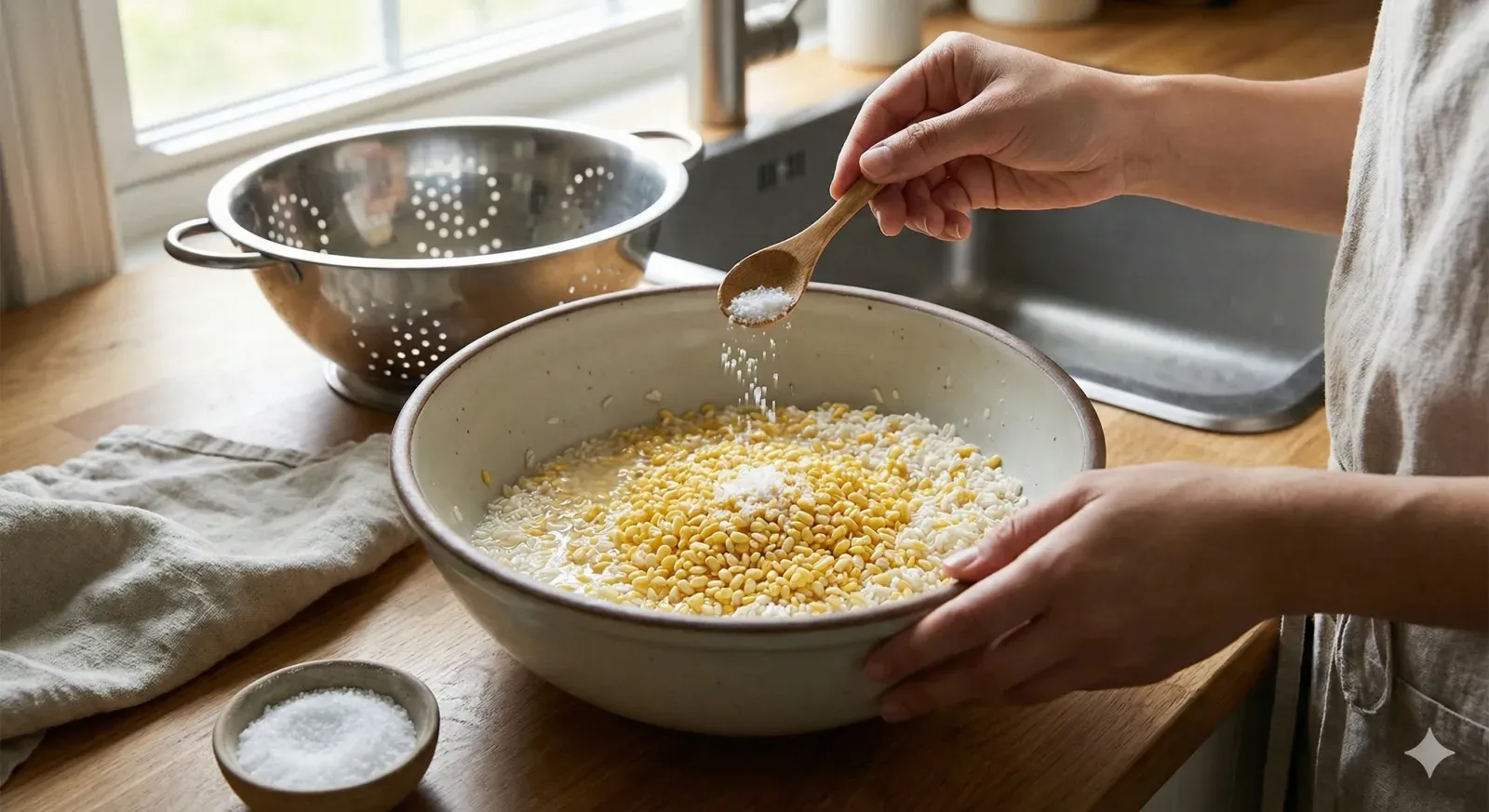
Step 2: Rinse, Combine, and Season
2Drain both the rice and mung beans. Combine them in one large bowl and rinse together several times with fresh water, gently rubbing the grains together until the water runs clear rather than cloudy. Drain thoroughly in a colander.
Sprinkle 2 teaspoons of coarse salt evenly over the mixture and toss well with your hands. The salt should coat every grain of rice and every bean. This step seasons the rice from within during steaming — far more effective than seasoning after cooking.
Step 2: Rinse, Combine, and Season
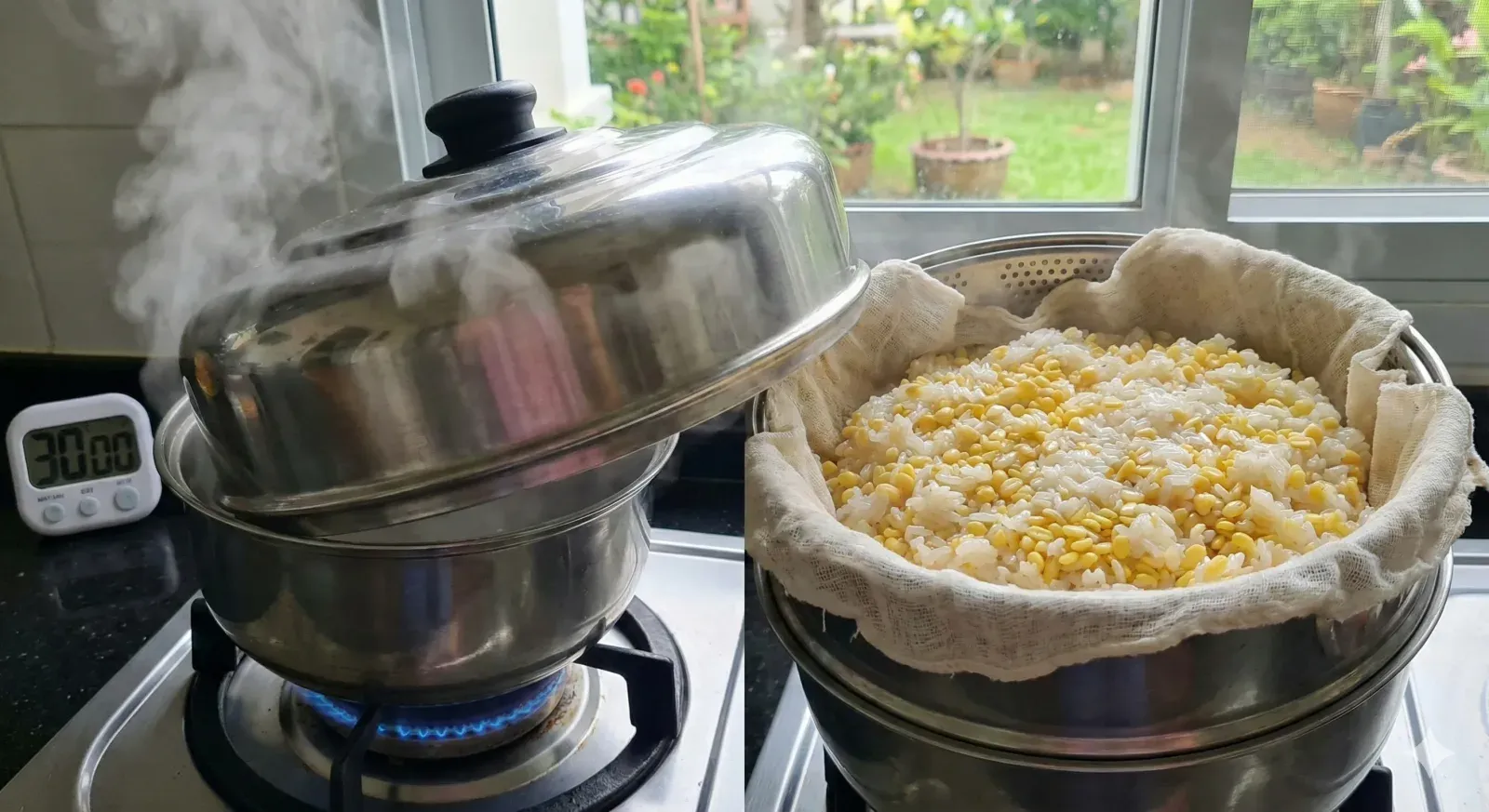
Step 3: First Steam — 30 Minutes
3Bring a large pot of water to a vigorous boil. Line your steamer basket with a piece of cheesecloth, a clean cotton cloth, or a banana leaf if you want extra fragrance. Transfer the rice and mung bean mixture into the steamer in an even layer.
Place the steamer over the boiling water, cover tightly, and steam on high heat for 30 minutes. Do not open the lid during this time — consistent steam is what cooks the rice evenly. After 30 minutes, the grains should look fully cooked: slightly translucent and beginning to clump together.
Step 3: First Steam — 30 Minutes
Step 4: Add Oil and Steam for 10 More Minutes
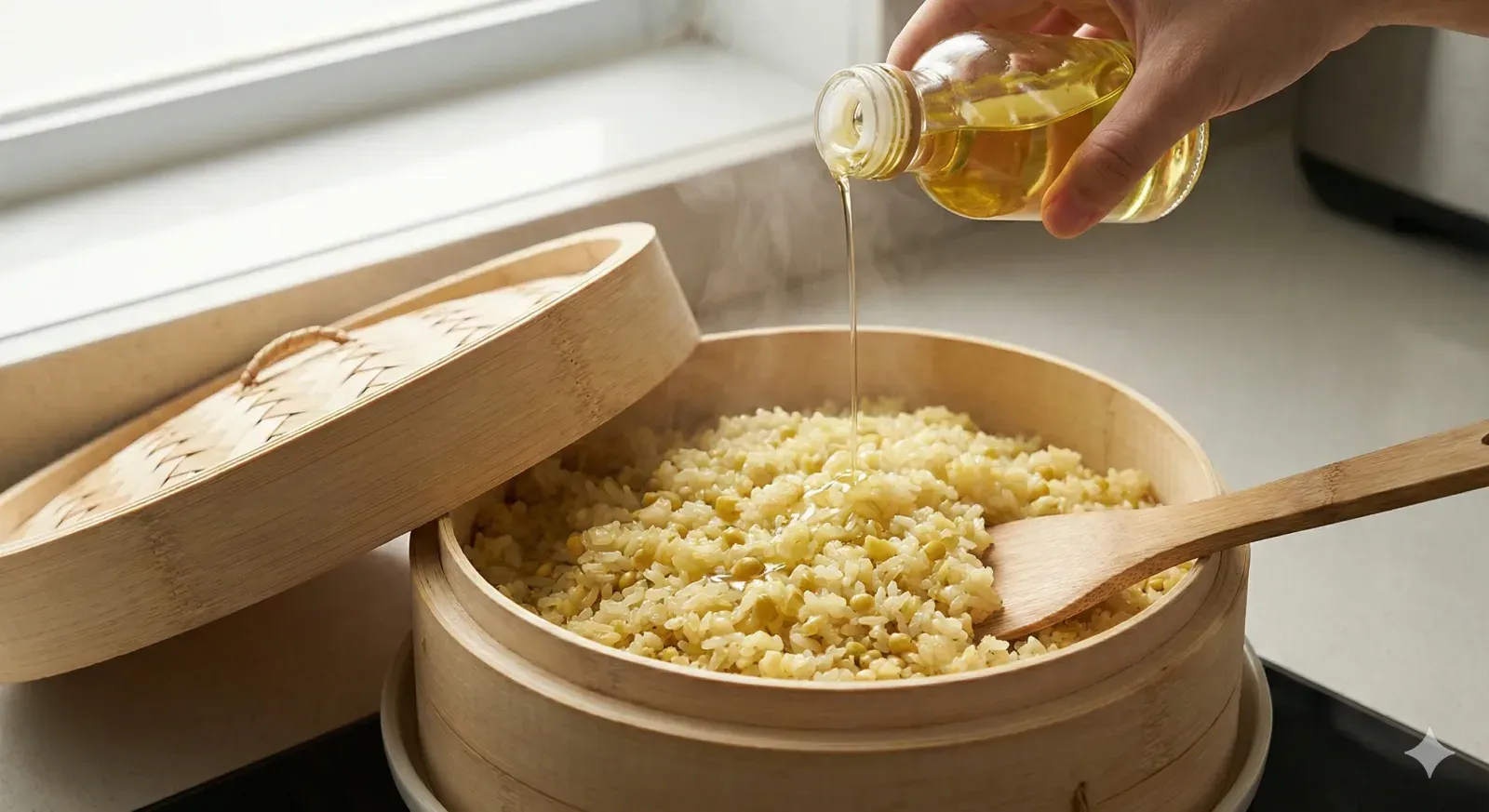
4This is the step that transforms good sticky rice into great sticky rice. Open the steamer and use a spatula or rice paddle to fluff and turn over the rice from the bottom up. This redistributes moisture and ensures even cooking throughout.
Drizzle 50ml of cooking oil in a thin stream all over the surface of the rice. Using your spatula, fold and stir the rice repeatedly until the oil is fully incorporated and every grain glistens. The rice will feel looser and more pliable as you mix.
Replace the lid and steam for an additional 10 minutes. During this time, the rice absorbs the oil fully — the grains swell further, the texture becomes irresistibly stretchy, and the whole dish develops a gorgeous sheen. This oil-coating step is also why the sticky rice holds its softness for hours, even after cooling.
Step 4: Add Oil and Steam for 10 More Minutes
Step 5: Serve
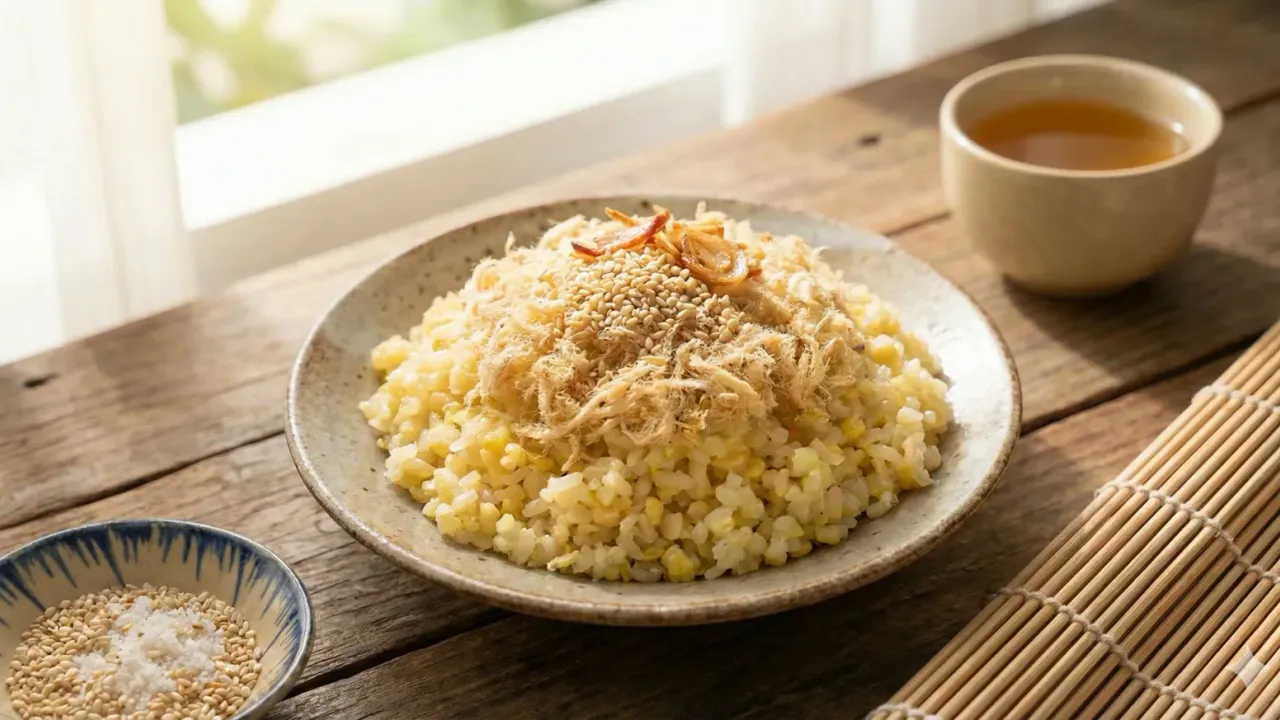
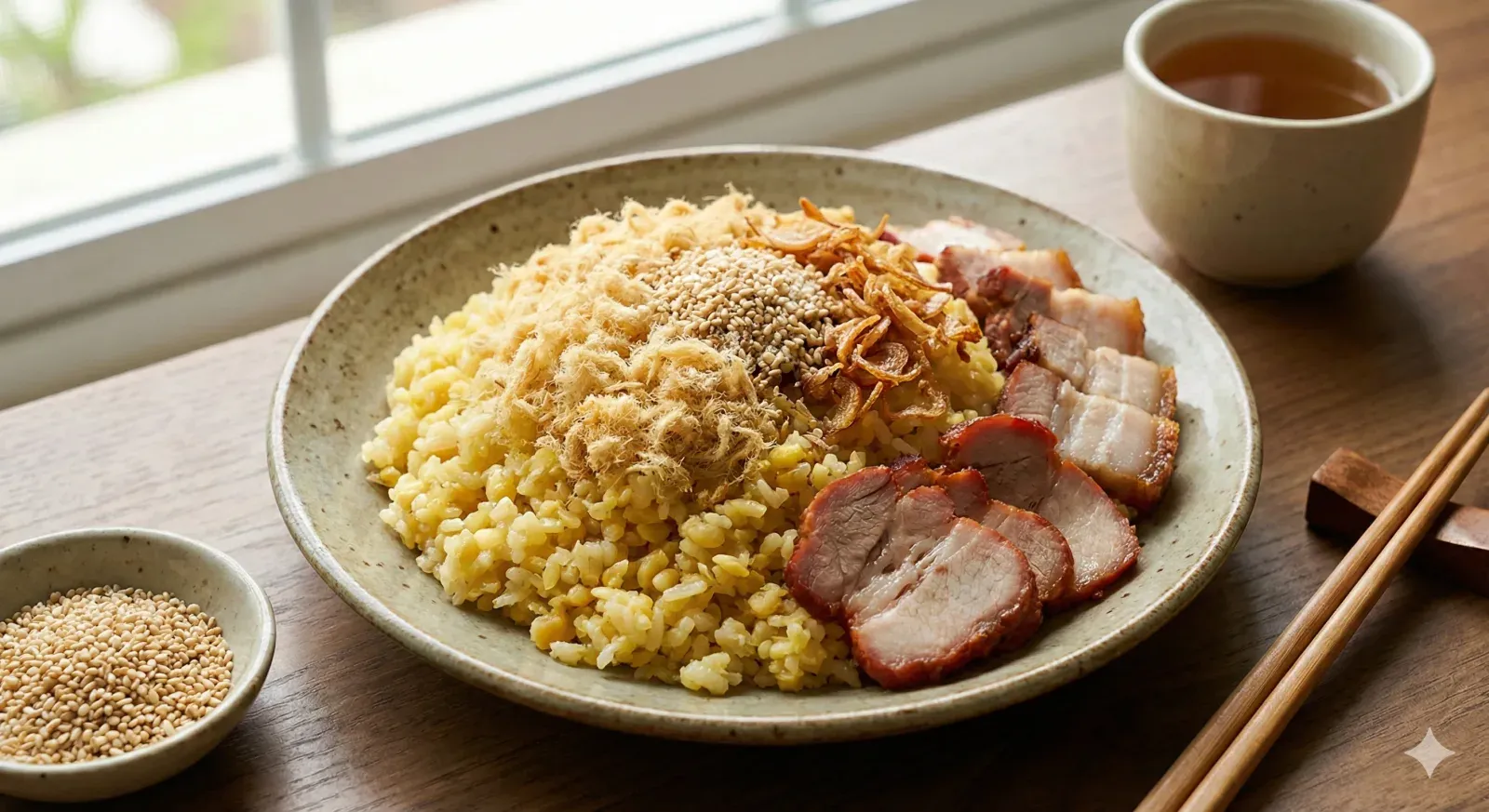
5Transfer the Vietnamese mung bean sticky rice onto a large plate or wooden board. The finished dish should be beautifully glossy, with individual grains just visible through a soft, cohesive mass of chewy rice and crumbly golden mung beans.
Serve warm alongside your choice of accompaniments. In Vietnamese households, xôi đậu xanh is equally at home on the breakfast table, on a temple offering tray, or packed as a midday snack.
Step 5: Serve
AdvertisementExpert Tips for Perfect Xôi Đậu Xanh
Choose the Right Glutinous Rice
Not all glutinous rice is equal. Nếp cái hoa vàng — literally “yellow flower glutinous rice” — is the variety prized in Northern Vietnam for its natural floral fragrance and superior stickiness. Look for it at Vietnamese or Chinese grocery stores. If unavailable, Japanese short-grain mochi rice is a good substitute. Avoid pre-soaked or par-cooked varieties.
Soaking Time Is Non-Negotiable
The 6–8 hour soak for glutinous rice is not a suggestion — it’s what makes the difference between rice that steams evenly into chewy, cohesive grains and rice that ends up with hard, undercooked centers. Plan ahead and soak overnight for the most convenient timing.
Check the Mung Bean Cores
Before combining your beans with the rice, press one soaked bean between two fingers. It should smash completely with no resistance. Any residual hardness means the beans need more soaking time — undersoaked beans will remain slightly gritty in the final dish even after steaming.
Don’t Skip the Oil Step
The oil added at the 30-minute mark does three critical things: it separates the grains so the rice doesn’t clump into a single dense mass, it extends softness so the rice stays chewy as it cools, and it adds a subtle richness that elevates the overall flavor. Use a neutral oil like vegetable or sunflower oil for a clean taste, or light sesame oil for added fragrance.
Line the Steamer Properly
Always line your steamer basket with cheesecloth or a thin cloth before adding the rice mixture. Without a liner, small grains of rice fall through the holes and the mung beans can escape as they soften. The cloth also traps just enough steam to keep the surface moist without making the rice waterlogged.
Serving Suggestions and Traditional Accompaniments
One of the great strengths of xôi đậu xanh is how versatile it is at the table. In Vietnam, it’s served in small portions alongside one or two flavorful accompaniments that complement its mild, nutty flavor. Here are the most traditional and popular options:
- Pork floss (ruốc thịt): The most classic pairing. Fluffy, savory, slightly sweet dried pork crumbles sprinkled generously over the top.
- Sesame salt (muối vừng): A simple mix of roasted sesame seeds and salt. Incredibly aromatic and deeply satisfying.
- Char siu pork (thịt xá xíu): Sweet and smoky Cantonese-style roasted pork, thinly sliced alongside the sticky rice.
- Roasted pork belly (thịt quay): Crispy-skinned pork belly with fatty, tender meat — a rich contrast to the mild rice.
- Stir-fried pork with onion (thịt rang hành): A fragrant, savory stir-fry that turns the sticky rice into a full, satisfying meal.
For a sweeter variation popular in the South, drizzle the finished sticky rice with a tablespoon of thick coconut milk and top with toasted sesame seeds. This turns the dish into a light dessert or sweet snack.
Cultural Significance: Sticky Rice in Vietnamese Life
Xôi — sticky rice — holds a unique place in Vietnamese culture that goes far beyond being just a food. It’s present at every major life event: on altars during the first and fifteenth of the lunar month (ngày rằm, mùng 1), at ancestral ceremonies (giỗ), weddings, Tết celebrations, and even as a daily breakfast staple sold from bamboo baskets by street vendors before dawn.
Xôi đậu xanh specifically is one of the most auspicious varieties, with the golden yellow of the mung beans symbolizing prosperity and good fortune. It’s commonly prepared as an offering dish during lunar calendar observances, prepared simply and with care as a gesture of respect and gratitude.
For everyday cooking, it represents the Vietnamese principle of making something extraordinary from humble, inexpensive ingredients through patience and proper technique. A bowl of xôi đậu xanh costs almost nothing to make yet delivers enormous satisfaction — it is, in every sense, the taste of Vietnamese home cooking.
AdvertisementStorage and Reheating
Room temperature: Thanks to the oil coating, xôi đậu xanh stays soft at room temperature for up to 8 hours. Wrap tightly in plastic wrap or keep covered to prevent drying.
Refrigerator: Store in an airtight container for up to 3 days. The texture will firm slightly when cold but returns fully to its soft, chewy state after reheating.
Freezer: Portion into individual servings, wrap in plastic wrap, and freeze for up to 1 month. Thaw overnight in the refrigerator before reheating.
Reheating: The best method is re-steaming for 5–8 minutes, which fully restores the original texture. You can also microwave with a damp paper towel covering the bowl — heat in 30-second intervals until warmed through. Avoid reheating in a dry pan, which makes the rice hard and brittle.
Common Mistakes to Avoid
1. Not Soaking Long Enough
Glutinous rice soaked for less than 6 hours will not cook evenly — you’ll get a mix of chewy cooked grains and hard undercooked ones. Set a timer and plan ahead.
2. Using Whole Green Mung Beans
Whole mung beans in their green skin take much longer to cook than split yellow mung beans and have a completely different texture. Always use đậu xanh bỏ vỏ — split, peeled yellow mung beans.
3. Skipping the Cloth Liner in the Steamer
Without a liner, the soft mung beans fall through the steamer holes and the bottom layer of rice gets waterlogged. Always line the steamer with cloth.
4. Opening the Lid Too Often
Every time you open the steamer, steam escapes and the cooking temperature drops. Only open at the 30-minute mark to add oil, then keep the lid on for the final 10 minutes.
5. Under-seasoning
Two teaspoons of salt for 500g of rice sounds like a lot, but glutinous rice absorbs seasoning less efficiently than regular rice. Trust the amounts — under-seasoned xôi tastes bland and flat.
Variations
Coconut Milk Mung Bean Sticky Rice
Replace the cooking oil with 100ml of thick coconut milk mixed with a pinch of salt. Add this in place of the oil at the 30-minute fluffing step. The result is a richer, slightly sweet, deeply fragrant version that’s especially popular as a dessert or sweet snack.
Pandan-Scented Sticky Rice
Blend 4–5 fresh pandan leaves with a small amount of water, strain out the green liquid, and use it to soak the rice instead of plain water. The rice will take on a beautiful pale green color and a distinctive, floral aroma beloved throughout Southeast Asia.
Mixed Sticky Rice with Mung Bean and Black-Eyed Peas
Replace half the mung beans with soaked black-eyed peas (đậu trắng) for a two-tone sticky rice with a slightly different flavor profile and a more festive appearance. Both legumes have similar soaking and cooking requirements.
AdvertisementFrequently Asked Questions
What type of glutinous rice is best for xôi đậu xanh?
Nếp cái hoa vàng (yellow flower glutinous rice) is the gold standard for Vietnamese sticky rice. It has a naturally fragrant aroma and produces an especially chewy, cohesive texture. If unavailable, any high-quality long-grain glutinous rice works well.
Why does my sticky rice turn out hard and dry?
Insufficient soaking is the most common culprit. Glutinous rice needs at least 6 hours to absorb enough water for even steaming. Skipping the oil step at 30 minutes also results in drier, less pliable rice.
Can I use whole green mung beans instead?
It’s not recommended for this recipe. Split yellow mung beans cook at the same rate as glutinous rice and become soft and crumbly. Whole green mung beans take longer and stay firmer, giving a very different final result.
How do I keep the sticky rice soft until the next day?
The cooking oil added during steaming is the key — it prevents the grains from drying and hardening as they cool. Wrap tightly or store in an airtight container. Re-steam for 5–8 minutes to fully restore the original texture.
Can I make xôi đậu xanh in a rice cooker?
Some rice cookers with a “sticky rice” or “glutinous rice” setting work reasonably well. Add only a small amount of water (about 1/4 cup for 500g soaked rice) since the rice is already hydrated from soaking. However, traditional steaming produces a significantly superior texture and is strongly recommended.
Is xôi đậu xanh gluten-free?
Yes — glutinous rice contains no gluten whatsoever. Despite its name, “glutinous” refers to its sticky, glue-like texture, not to the protein gluten. This dish is naturally gluten-free and suitable for those with gluten intolerance or celiac disease.
AdvertisementConclusion
Learning to make Vietnamese mung bean sticky rice (xôi đậu xanh) at home is one of the most rewarding introductions to Vietnamese cooking. With just four ingredients and a technique built on patience — proper soaking, two-stage steaming, and the critical oil step — you’ll produce a dish that is genuinely extraordinary: chewy, fragrant, golden-speckled, and deeply satisfying.
Whether you serve it as a morning breakfast with pork floss and sesame salt, lay it out on a tray for a lunar ceremony, or pack it as a midday snack, xôi đậu xanh delivers on its promise every time. And because it keeps beautifully without hardening, it’s a dish that rewards making in bulk — cook once and enjoy throughout the day.
This is Vietnamese home cooking at its most honest and most delicious: humble ingredients, careful technique, and a result that’s worth every minute of soaking time.
Love Vietnamese sticky rice? Explore our full collection of xôi recipes and authentic Vietnamese breakfast dishes on My Viet Kitchen — each one tested, detailed, and made with real home cooks in mind.