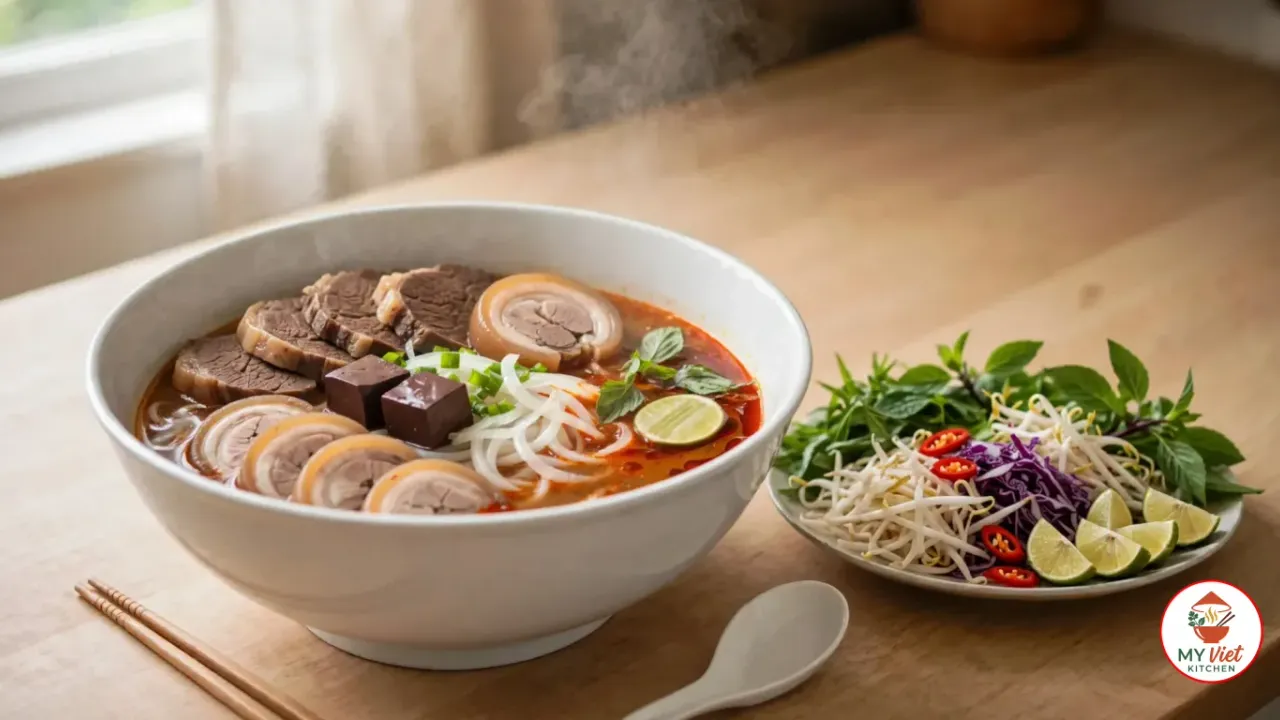
This authentic Bun Bo Hue recipe captures the bold, fiery spirit of Central Vietnamese cuisine that has defined Hue’s culinary reputation for centuries. Unlike the gentle, aromatic Northern pho, Bun Bo Hue demands attention with its intense lemongrass-infused broth, vibrant red color, and unapologetic heat. The secret to restaurant-quality bun bo Hue lies in mastering the complex interplay of lemongrass, shrimp paste, and annatto oil - techniques I learned from Central Vietnamese cooks who guard these traditions fiercely. This recipe creates that signature spicy, aromatic broth that will transport you straight to the ancient imperial city of Hue.
Bun Bo Hue is more than just a spicy noodle soup - it’s the culinary pride of Central Vietnam and a testament to the region’s bold flavors. Born in the former imperial capital, this dish reflects the sophisticated palace cuisine while remaining accessible as beloved street food. Whether you’re craving an adventurous breakfast or want to impress with an authentic Vietnamese feast, this bun bo Hue recipe will help you achieve that perfect balance of spicy heat, aromatic depth, and satisfying richness that makes this soup unforgettable.

Ingredients
For the Broth:
- 4.4 lbs (2 kg) beef bones (leg bones and knuckles)
- 2 lbs (1 kg) beef shank
- 2 lbs (1 kg) pork hock (giò heo)
- 1 lb (500g) pork belly
- 8 stalks lemongrass (bruised and tied into knots)
- 2 large onions (halved)
- 4-inch piece ginger (halved lengthwise)
- 6 shallots
- 3 tablespoons shrimp paste (mắm ruốc)
- 2 tablespoons annatto seeds (hạt điều màu)
- 1/4 cup vegetable oil
- 3 tablespoons sugar
- 5 tablespoons fish sauce
- 2 tablespoons salt
- 8 quarts water
For the Spice Blend:
- 3 cinnamon sticks
- 5 star anise pods
- 1 tablespoon coriander seeds
- 1 teaspoon black peppercorns
- 3 cardamom pods
- 5 whole cloves
For Serving:
- 3 lbs (1.5 kg) Bun Bo Hue noodles (thick round rice noodles)
- 1 lb (500g) Vietnamese pork sausage (chả lụa), sliced
- 1 lb (500g) pork blood cake (huyết) - optional
- Fresh banana blossom (bắp chuối), thinly sliced
- Fresh herbs: Vietnamese coriander (rau răm), mint, Thai basil
- Lime wedges
- Bean sprouts
- Red cabbage, shredded
- Bird’s eye chilies, sliced
- Shrimp paste sauce (mắm ruốc pha)
- Scallions, chopped
- White onion, thinly sliced
Directions
Step 1: Prepare and Parboil the Bones and Meat
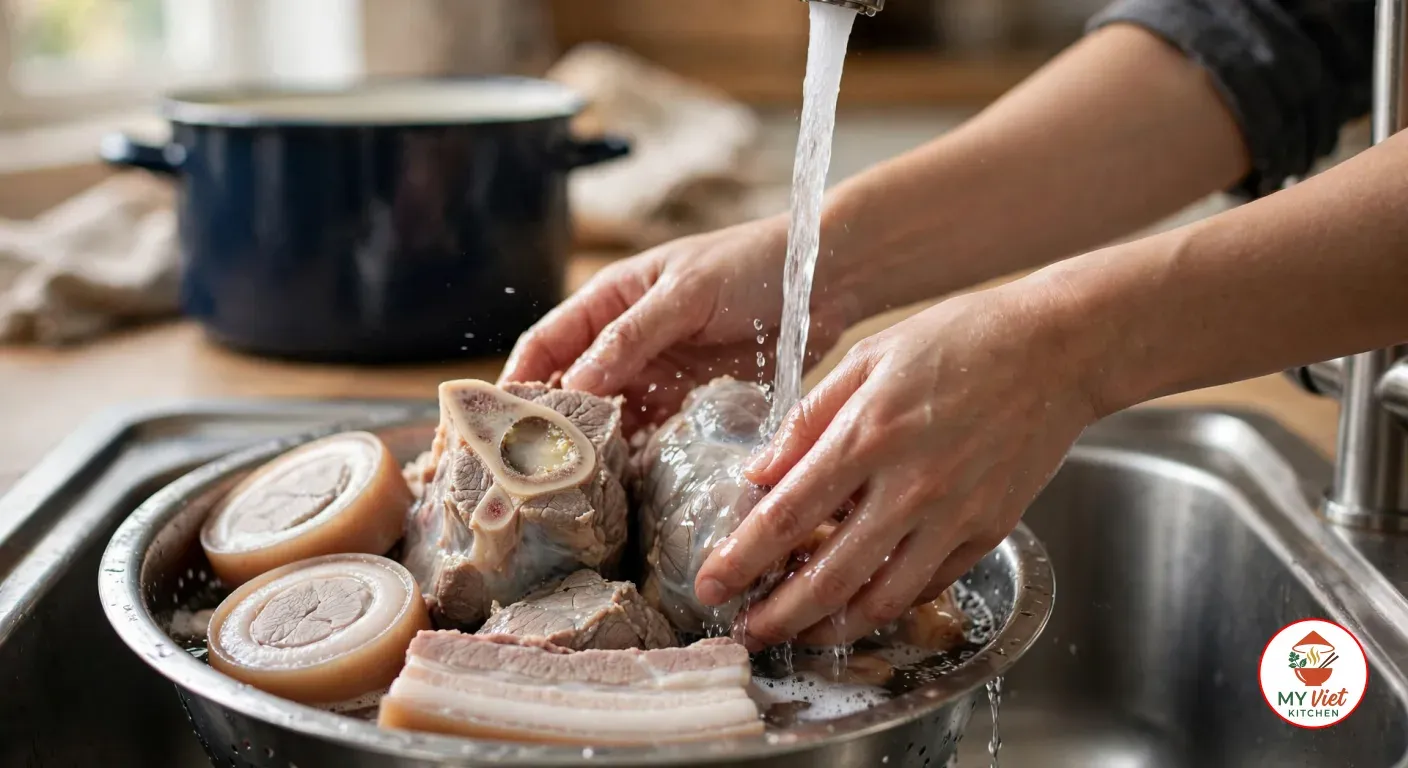
1Thoroughly rinse all beef bones, beef shank, pork hock, and pork belly under cold running water. Fill a large stockpot with water and bring to a rolling boil. Add all the bones and meat, then parboil for 10-15 minutes. During this time, you’ll notice significant foam and impurities rising to the surface—this is essential for achieving the clean broth that characterizes good Bun Bo Hue. Drain everything and rinse the bones and meat under cold water, scrubbing away any remaining residue. This critical step removes blood and impurities that could muddy your final broth.
Step 2: Char the Aromatics
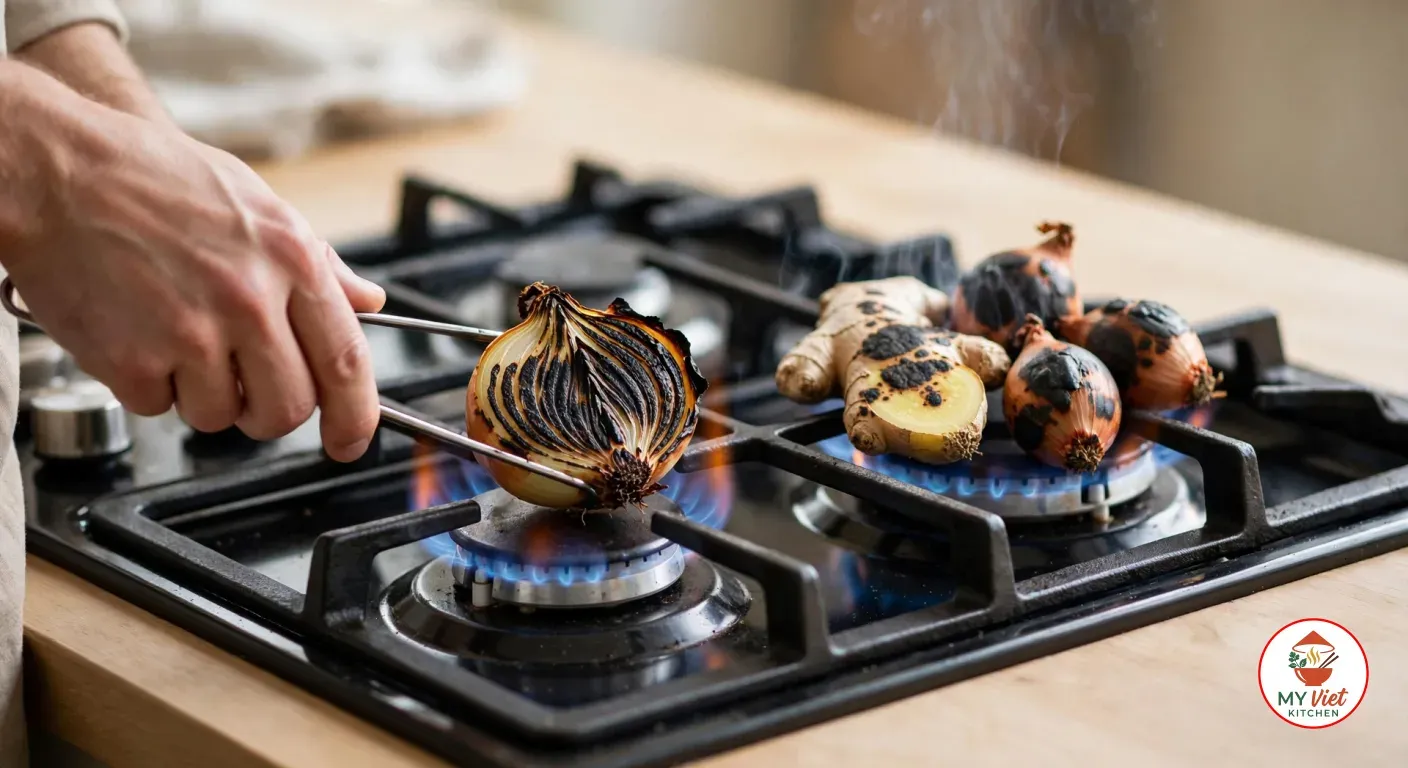
2Place the halved onions, ginger halves, and shallots directly over a gas burner flame or under a high broiler. Char them until the outsides are blackened and blistered, approximately 4-5 minutes per side. This traditional Vietnamese technique adds a subtle smoky sweetness and depth to the broth that cannot be replicated any other way. The charring process caramelizes the natural sugars while mellowing their raw pungency. Once properly charred, rinse off the blackened skins under water—you want the smoky essence without the bitter burnt taste. This step is non-negotiable for authentic Bun Bo Hue flavor.
Step 3: Toast the Spice Blend and Make Annatto Oil
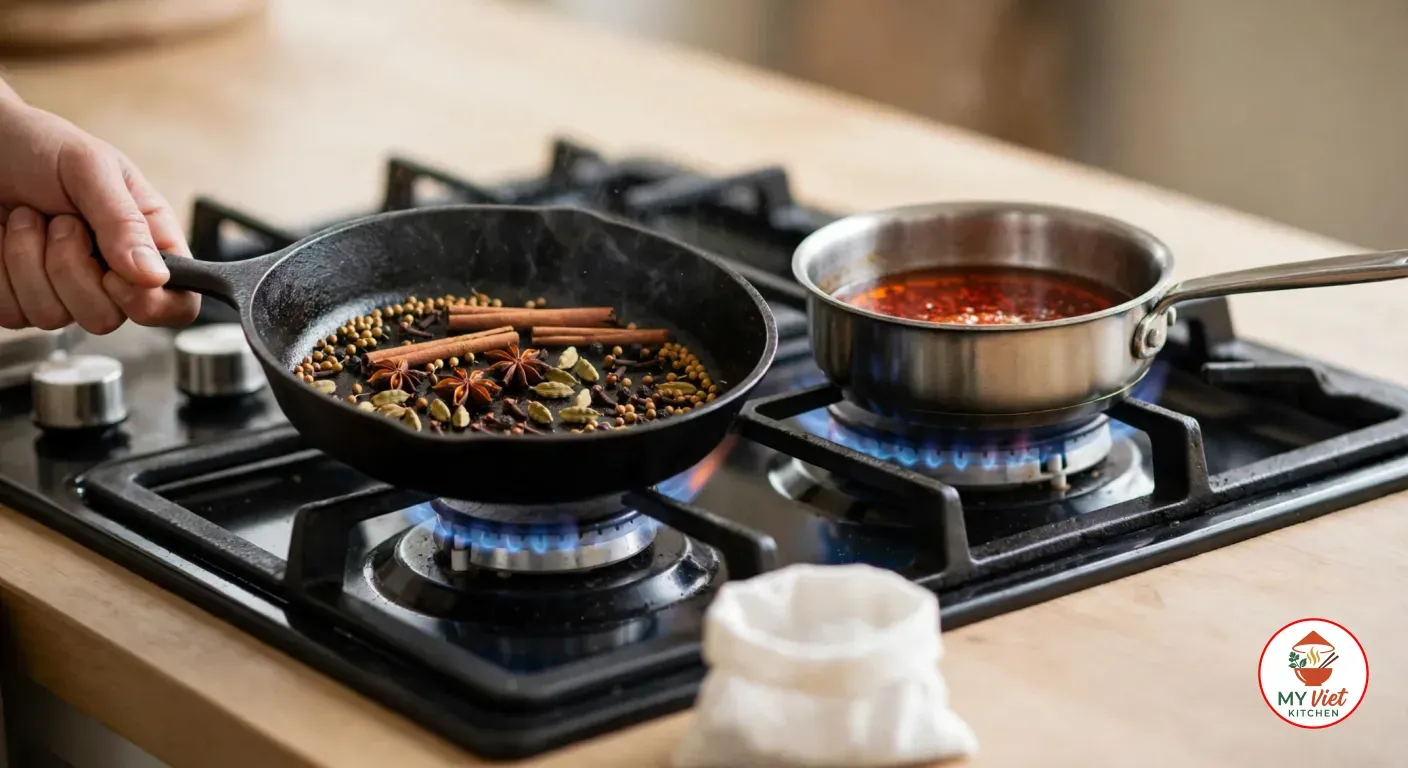
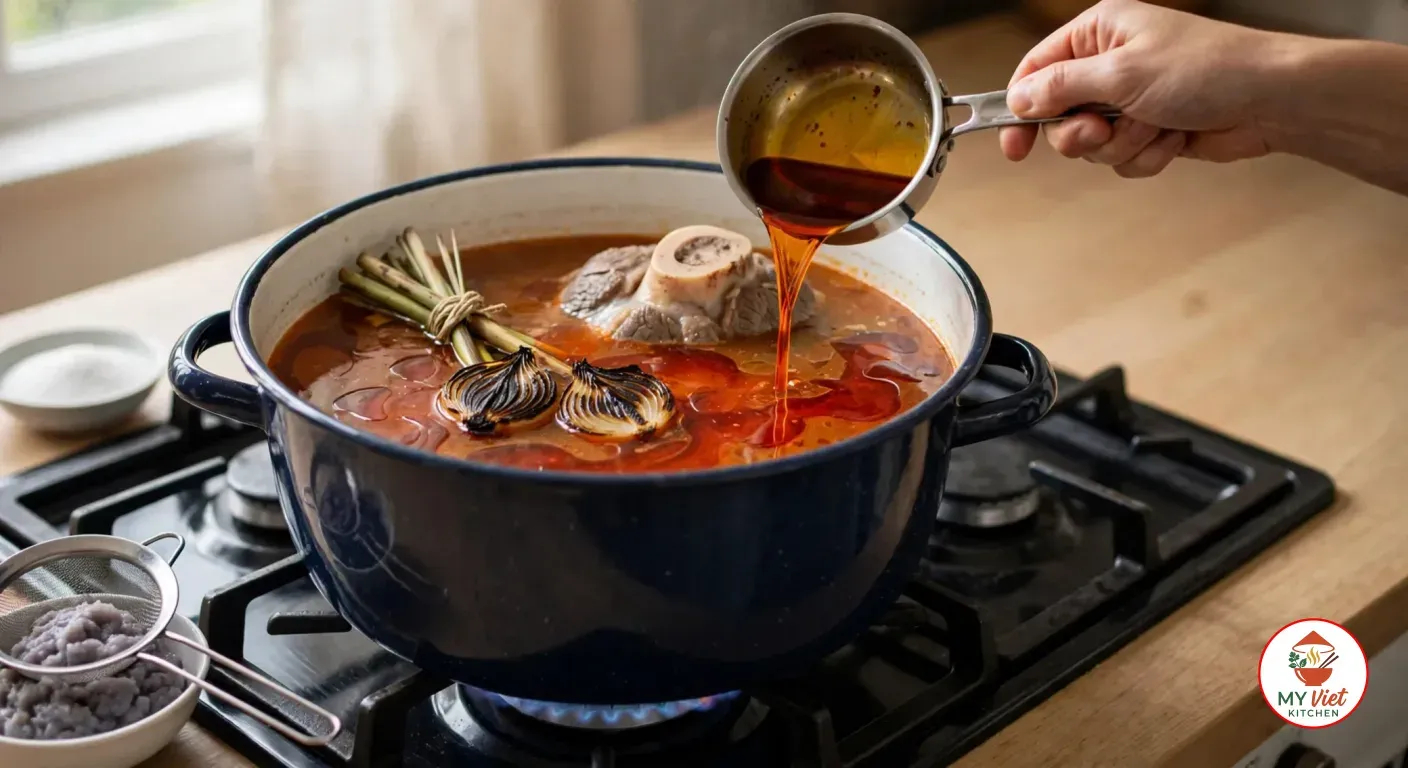
3Heat a dry skillet over medium heat and add the cinnamon sticks, star anise, coriander seeds, black peppercorns, cardamom pods, and cloves. Toast them for 2-3 minutes, shaking the pan frequently, until fragrant. Place all toasted spices into a muslin spice bag or tie them in cheesecloth. In a separate small saucepan, heat 1/4 cup of vegetable oil over low heat. Add the annatto seeds and gently heat for 3-4 minutes until the oil turns a vibrant red-orange color. Strain out the seeds and set the colored oil aside. This annatto oil is responsible for Bun Bo Hue’s signature color and adds a subtle earthy flavor.
Step 4: Build and Simmer the Broth
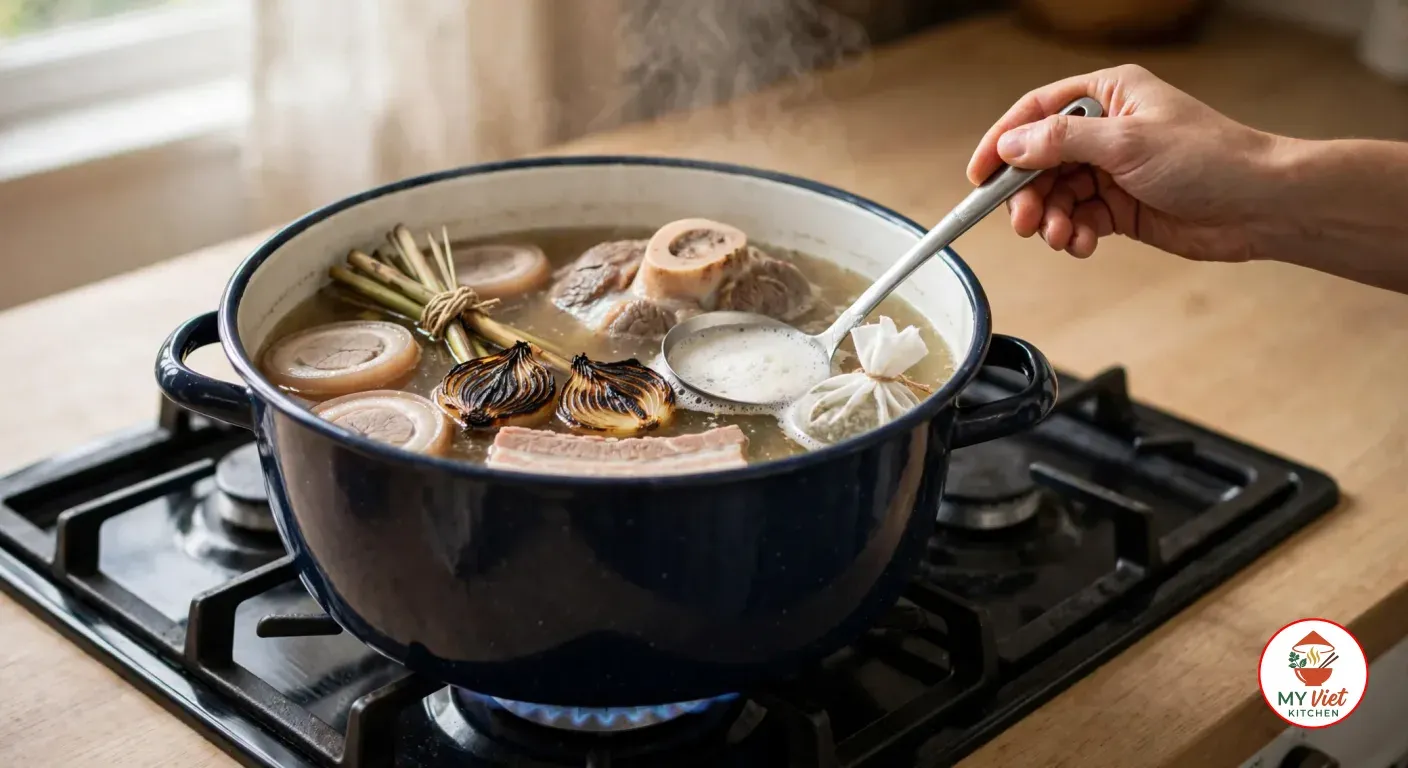
4Fill your largest stockpot with 8 quarts of fresh water. Add the cleaned bones, beef shank, pork hock, pork belly, charred aromatics, lemongrass stalks (bruised and tied in knots), and spice bag. Bring everything to a boil over high heat, then immediately reduce to a gentle simmer. During the first 30-45 minutes, skim any foam that rises to the surface diligently—this is your last chance to ensure crystal-clear broth. After the initial skimming period, let the broth simmer undisturbed for 3-4 hours. The long, slow simmer extracts maximum flavor from the bones and creates that rich, complex quality that makes Bun Bo Hue broth so satisfying.
Step 5: Season and Enhance the Broth
5After 2 hours of simmering, remove the beef shank, pork hock, and pork belly. Let them cool, then slice thinly for serving later. Continue simmering the bones for another 1-2 hours to extract every bit of flavor. In a small bowl, mix the shrimp paste with a ladle of warm broth to dissolve it, then strain this mixture back into the main pot—this is the secret ingredient that gives Bun Bo Hue its distinctive umami depth. Add the annatto oil, fish sauce, sugar, and salt. Taste and adjust seasoning—the broth should be savory, slightly sweet, with a noticeable kick from the lemongrass and a subtle funk from the shrimp paste.
Step 6: Prepare the Noodles and Toppings
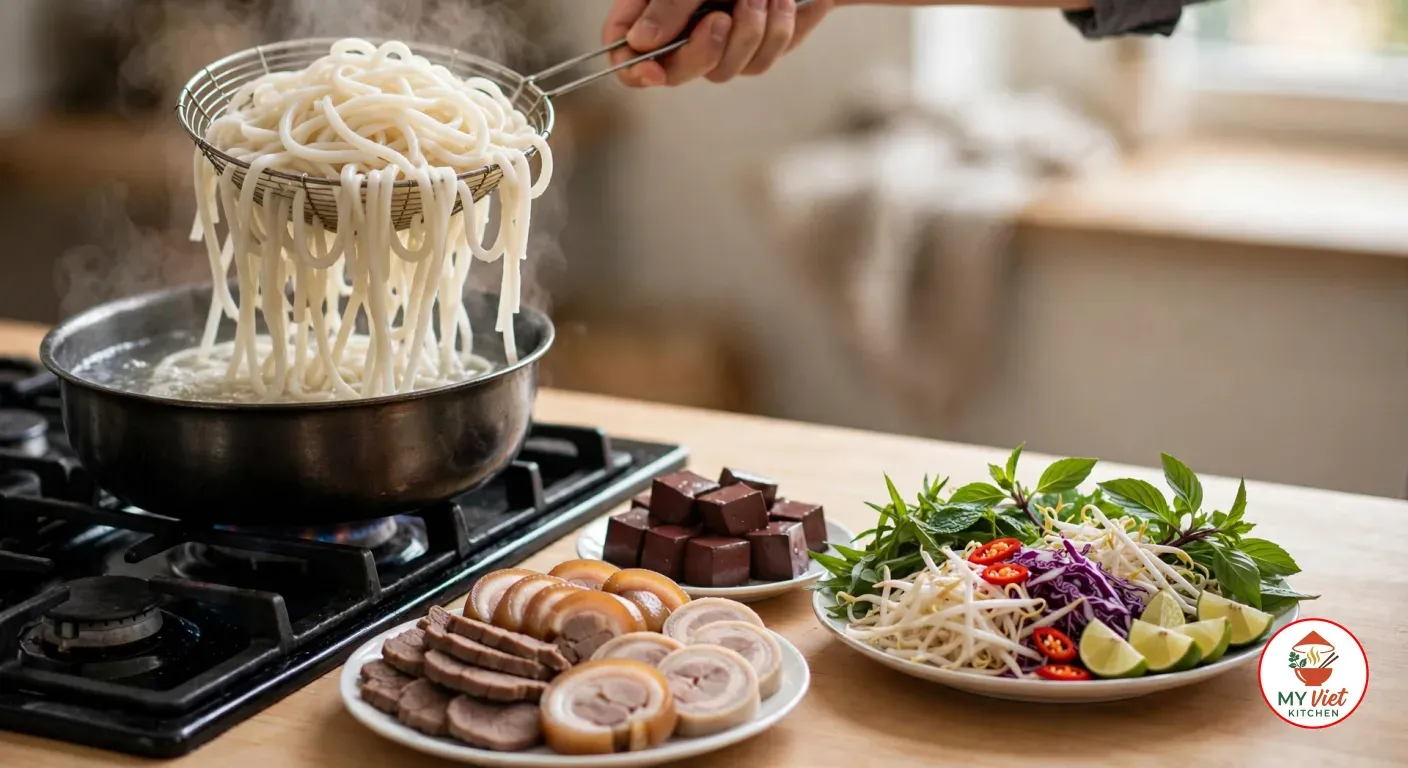
6Bring a large pot of water to a rolling boil for the noodles. Bun Bo Hue uses thick, round rice noodles that are chewier and more substantial than pho noodles. If using dried noodles, soak them in warm water for 20 minutes first. Blanch the noodles in boiling water for just 1-2 minutes until tender but still with a pleasant chew. Don’t overcook them—they should have more texture than pho noodles. Slice the pork sausage into rounds. If using blood cake, slice it into cubes. Prepare all your fresh garnishes: thinly slice the banana blossom and soak in lime water, wash and arrange fresh herbs, julienne the cabbage, and slice the chilies.
Step 7: Assemble and Serve
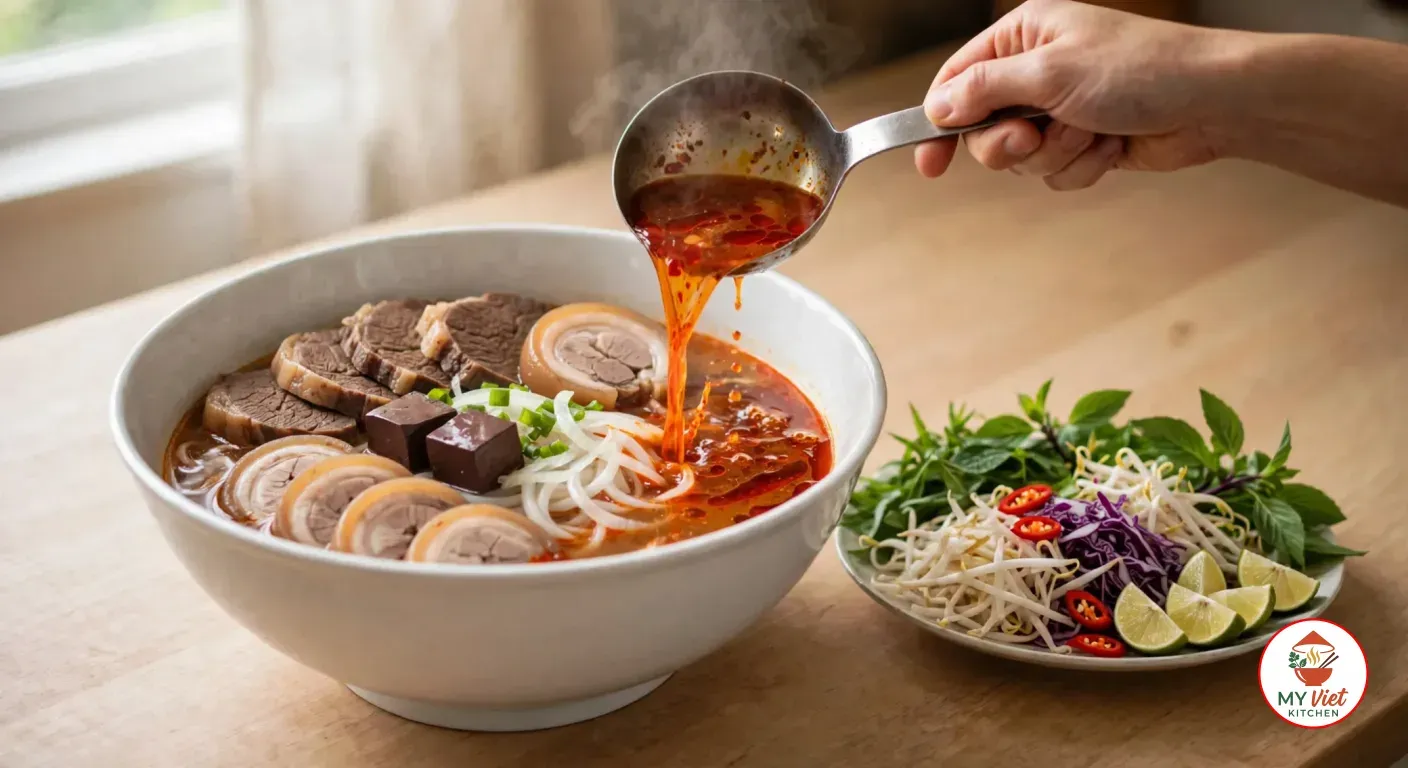
7To serve, place a generous portion of noodles in each large bowl. Top with slices of beef shank, pork hock, pork belly, and pork sausage. If using, add cubes of blood cake. Add sliced scallions and white onions. Ladle the piping hot, aromatic broth over everything—the heat will warm all the ingredients and meld the flavors together. Serve immediately with the herb and vegetable platter on the side, along with lime wedges, fresh chilies, and small dishes of shrimp paste sauce for those who want extra funk and heat. Each diner can customize their bowl, adding herbs, squeezing lime, and adjusting the spice level to their preference.
Secret Tips for Restaurant-Quality Bun Bo Hue
Master These Techniques:
✓ Master the Lemongrass: Don’t just slice the lemongrass—bruise it well with the back of a knife and tie it into knots. This releases maximum aromatic oils into the broth. The lemongrass is what makes Bun Bo Hue recognizable from the first sip.
✓ Shrimp Paste is Essential: While it might seem intimidating, shrimp paste (mắm ruốc) is the soul of Bun Bo Hue. It provides that distinctive umami depth and slight fermented quality. Start with less if you’re new to it, but don’t skip it entirely—it’s what makes this soup authentic.
✓ Get the Spice Level Right: Bun Bo Hue should be noticeably spicier than pho. Add dried chili flakes or fresh chili oil to the broth if you want more heat. The spiciness should build gradually, not overwhelm immediately.
✓ Bone Selection Matters: Use a combination of knuckle bones for collagen and leg bones for flavor. The gelatin extracted from these bones creates that silky, lip-coating quality that distinguishes restaurant-quality broth.
✓ Pork is Non-Negotiable: Unlike pho which can be all beef, Bun Bo Hue must include pork. The combination of beef and pork creates the complex flavor profile that defines this dish. The pork hock adds sweetness and richness that beef alone cannot provide.
✓ Annatto Color Should Be Vibrant: If your broth isn’t a beautiful orange-red, you haven’t used enough annatto oil. Don’t be shy—the color is part of the presentation and signals authentic Hue-style preparation.
✓ Noodle Texture Matters: Bun Bo Hue noodles should be thicker and chewier than pho noodles. If you can’t find authentic bun bo Hue noodles, thick round rice noodles work, though the texture won’t be exactly the same.
✓ Serve Piping Hot: The broth must be at a rolling boil when you ladle it over the noodles. This ensures everything is heated through and the aromatics release their full fragrance when the hot broth hits them.
Frequently Asked Questions About Making Bun Bo Hue
How long does it take to make Bun Bo Hue?
Making authentic Bun Bo Hue requires 4-5 hours total time, with most of that being hands-off simmering. Active preparation takes about 45 minutes (parboiling, charring aromatics, preparing spices), then the broth needs 3-4 hours of gentle simmering to develop proper depth and richness.
Shortcuts available:
- Pressure cooker method: Reduces broth time to about 90 minutes
- Make-ahead strategy: Prepare the broth a day ahead—the flavors actually improve overnight as they meld together
For meal planning, many Vietnamese cooks prepare the broth a day ahead. The next day, you just need to reheat the broth and prepare fresh noodles and toppings, making it much faster for serving.
Can I make Bun Bo Hue without shrimp paste?
Technically yes, but you’ll lose the distinctive character that makes Bun Bo Hue authentic. Shrimp paste (mắm ruốc) provides that essential umami depth and slight fermented quality that defines Central Vietnamese cuisine. Without it, you’ll have a tasty noodle soup, but it won’t truly be Bun Bo Hue.
If you’re hesitant: Start with just 1 tablespoon instead of the full 3 tablespoons. The flavor is strong but not fishy when properly dissolved into the broth. Many people who initially resist shrimp paste come to love it once they taste how it transforms the soup.
For shellfish allergies: There’s no perfect substitute, but fermented bean paste or additional fish sauce can provide some umami depth, though the flavor profile will be different.
Where can I find Bun Bo Hue noodles?
Authentic Bun Bo Hue noodles (bún bò Huế) are thick, round rice noodles available at Asian grocery stores, especially Vietnamese markets. Look in the refrigerated or frozen section—they’re often sold in 1-2 pound packages labeled “Bun Bo Hue” or “Thick Round Rice Noodles.”
Can’t find them locally? They’re available from online Asian grocery stores like Weee! or ImportFood. In a pinch, you can substitute with:
- Thick round rice noodles from other Southeast Asian countries
- Japanese udon noodles (texture won’t be identical but acceptable)
Avoid: Flat pho noodles—the thick, chewy texture of Bun Bo Hue noodles is part of the dish’s identity.
What makes Bun Bo Hue different from Pho?
While both are beloved Vietnamese noodle soups, they’re distinctly different:
Broth Flavor: Pho has a more delicate, sweet broth dominated by star anise and cinnamon. Bun Bo Hue is bolder, spicier with pronounced lemongrass, shrimp paste, and chili heat.
Spice Level: Pho is generally mild. Bun Bo Hue is notably spicier with a lingering heat.
Noodles: Pho uses flat rice noodles. Bun Bo Hue uses thick, round rice noodles that are chewier.
Meat: Pho typically features beef only. Bun Bo Hue must include both beef and pork, plus often blood cake and pork sausage.
Color: Pho broth is clear and golden. Bun Bo Hue broth is distinctly orange-red from annatto oil.
Origin: Pho originated in Northern Vietnam (Hanoi). Bun Bo Hue comes from Central Vietnam (Hue city).