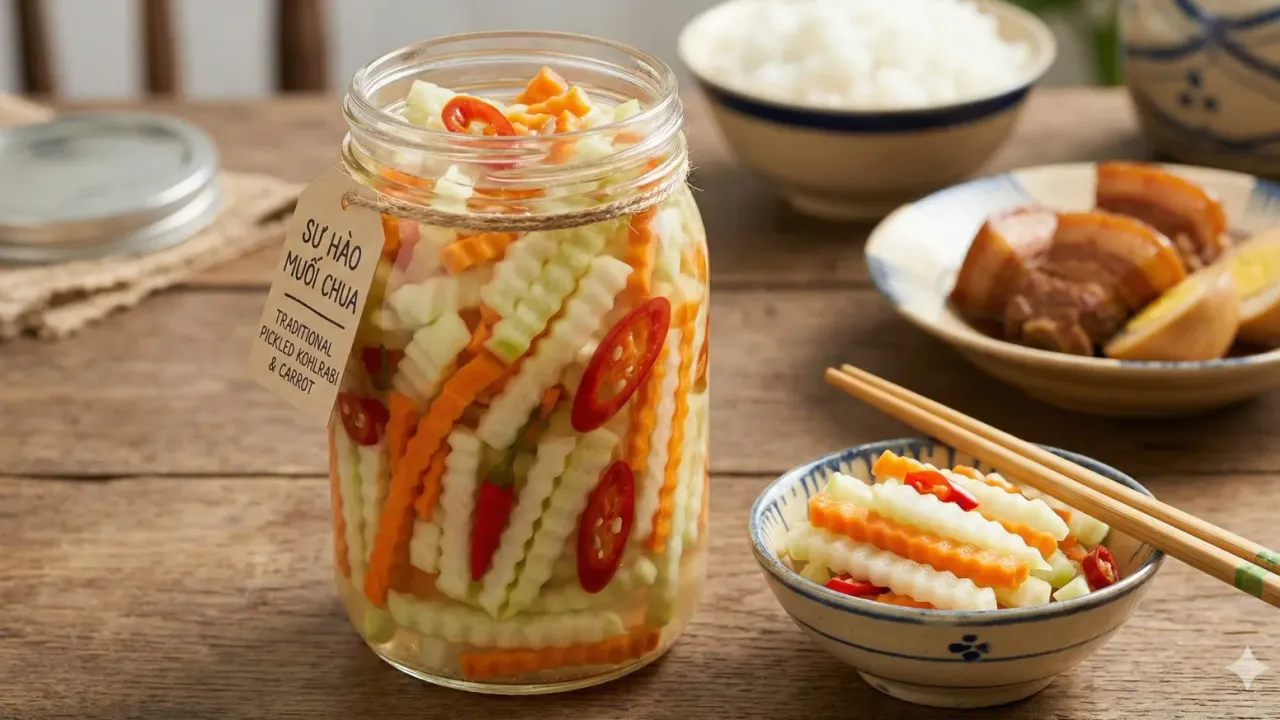
This Vietnamese pickled kohlrabi recipe (su hào muối chua) is one of those humble, everyday condiments that makes every Vietnamese meal feel complete. With just a handful of ingredients and a few days of patience, you’ll have a jar of crispy, tangy pickled kohlrabi and carrot that perfectly offsets rich braised meats, roast pork, or braised fish. It’s simple to make, keeps well in the fridge, and adds a bright, refreshing contrast to any heavy dish.
Prep Time: 20 minutes | Brine Time: 5 minutes | Fermentation: 3–5 days | Servings: 1 jar (4–6 servings)
Difficulty: Very Easy | Calories: ~25 per serving
What Is Vietnamese Pickled Kohlrabi (Su Hào Muối Chua)?
Su hào muối chua is a traditional Vietnamese fermented pickle made from kohlrabi and carrot submerged in a light salt-and-sugar brine. Unlike heavily spiced pickles, this Vietnamese version is refreshingly clean in flavor — mildly sour, subtly sweet, gently salty, with a satisfying crunch that holds up even after days in the brine.
In Vietnamese home cooking, pickled vegetables play an essential balancing role. When a meal centers around something rich and fatty — think thịt kho (braised pork), thịt quay (roast pork), or oily braised fish — a small dish of su hào muối chua on the side cuts through the heaviness, resets the palate, and makes each bite feel lighter. It’s not garnish; it’s a functional part of the meal.
Why You’ll Love This Recipe
What makes this recipe stand out is its reliability. With the right technique — salting the vegetables first, cooling the brine completely, and using a properly sterilized jar — you get consistently crispy, clear-brined pickles every single time. No mushiness, no cloudiness, no unpleasant smell. Just beautifully crunchy, tangy vegetables that look as good as they taste.
The recipe is also wonderfully flexible. You can cut the kohlrabi into matchstick strips for a lighter texture, or into chunky checkered cubes for a more substantial bite. Add chili for a gentle heat, or leave it out for a milder result. Either way, the process takes less than 30 minutes of active work, and the fermenting does the rest.
How to Choose the Best Kohlrabi for Pickling
Good pickles start with good produce. For Vietnamese pickled kohlrabi, you want bulbs that are medium in size — not too large, not too small. Here’s what to look for at the market:
- Size and weight: Choose bulbs that feel heavy for their size — this indicates high water content and freshness.
- Skin color: Look for a natural, pale green exterior. Avoid bulbs that look dull, yellowed, or overly shiny.
- Leaves: Fresh kohlrabi should still have green leaves attached to the stem. Wilted or yellowed leaves indicate the bulb is old.
- Texture: Avoid very large, rock-hard bulbs — these tend to be fibrous and pithy inside. Medium bulbs give the best crispy texture after pickling.
Pro tip: Avoid bruised or damaged kohlrabi. Even small blemishes can harbor bacteria that cause the brine to turn cloudy or grow surface mold.
Ingredients for Vietnamese Pickled Kohlrabi
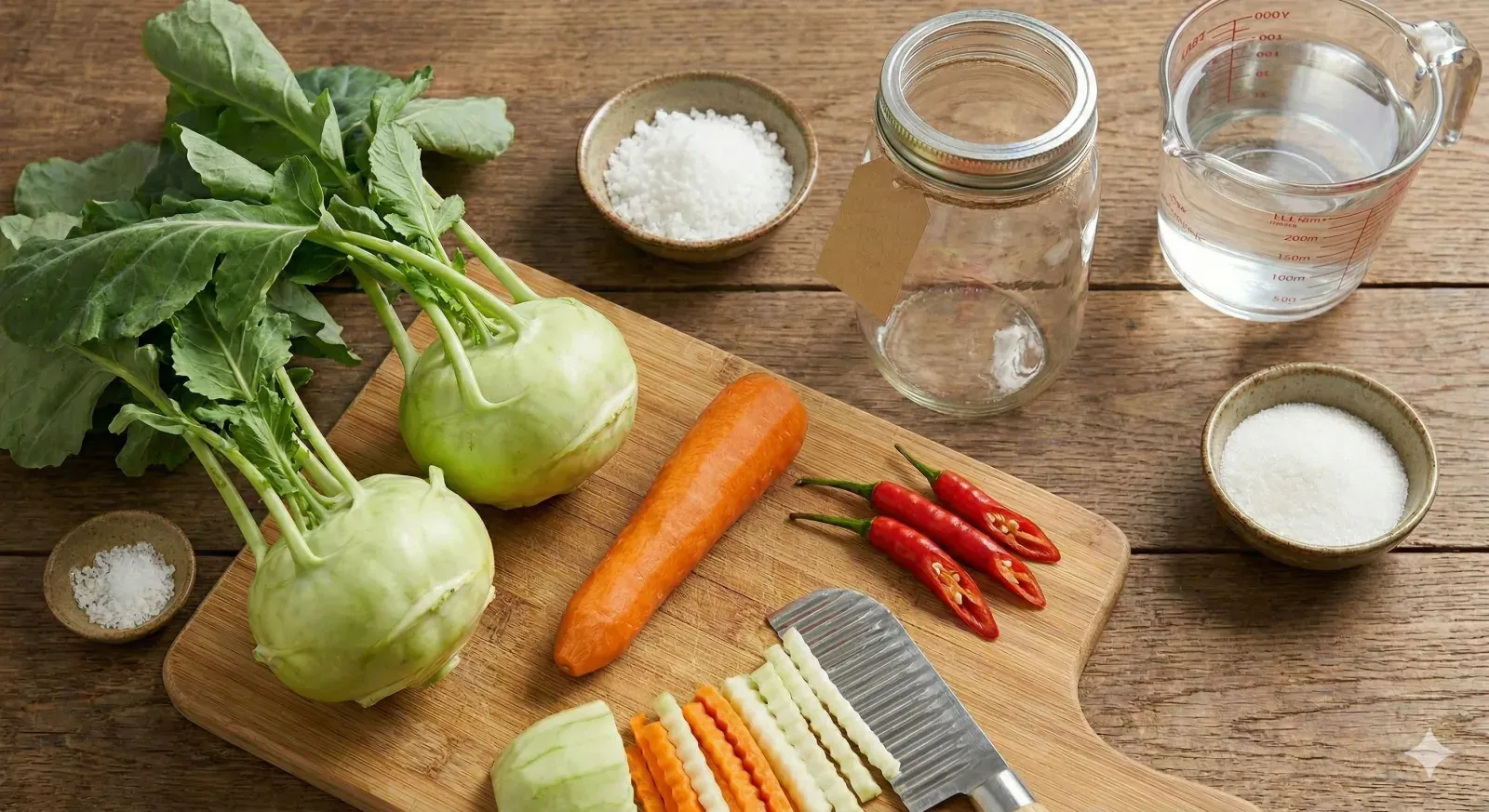
Main Ingredients:
- 2–3 kohlrabi bulbs (medium-sized, firm and heavy)
- 1 carrot (medium, peeled)
- 1 chili pepper (horn chili or bird’s eye, optional)
- 1 sterilized glass or ceramic jar (clean and fully dry)
For the Brine:
- 1 liter water
- 40g coarse salt (non-iodized preferred)
- 10g sugar
For the Pre-salting Step:
- A generous pinch of coarse salt
Note on salt: Use non-iodized coarse salt when possible. Iodized table salt can interfere with fermentation and sometimes causes the brine to turn cloudy faster.
Step-by-Step Instructions
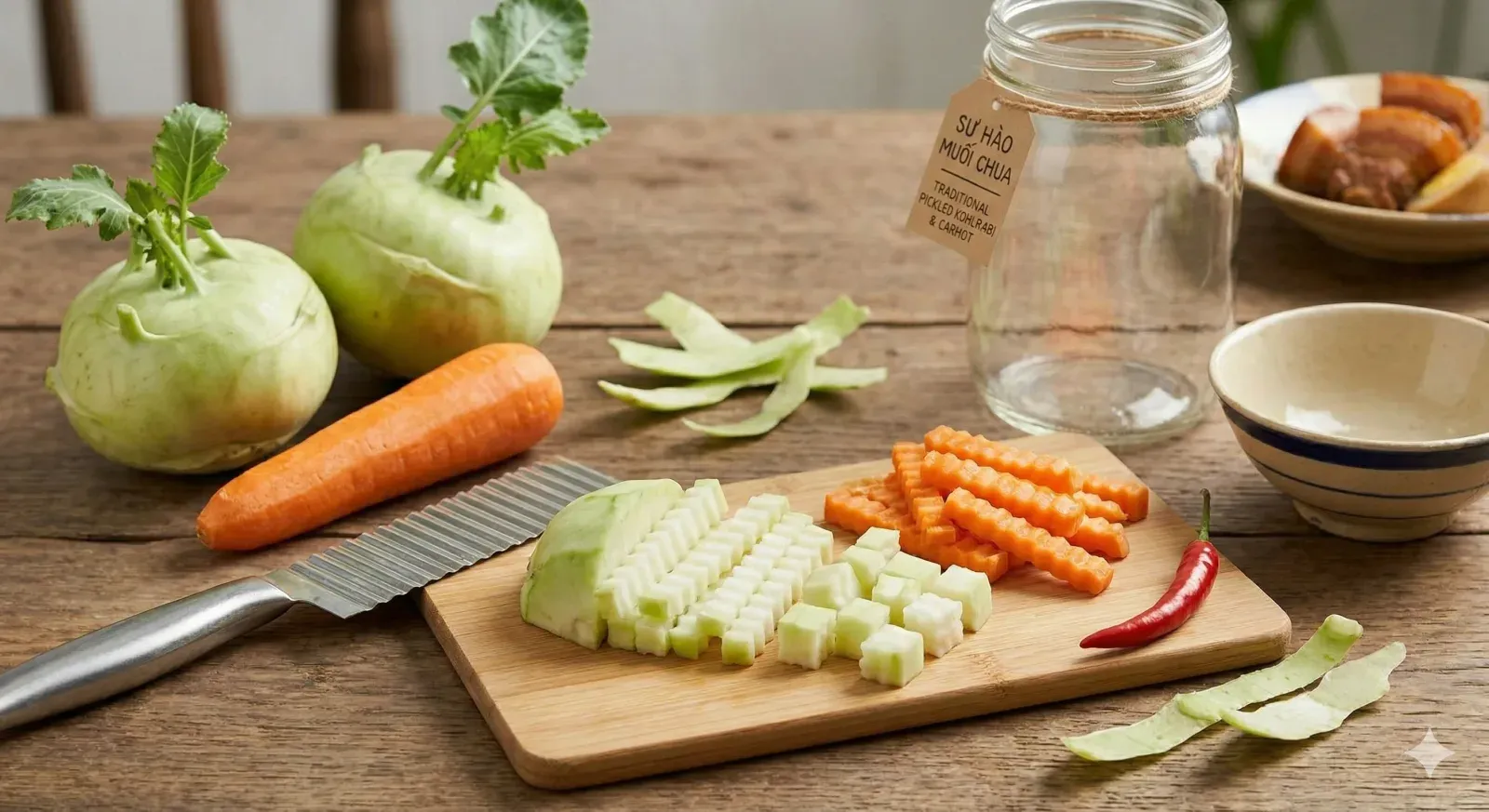
Step 1: Select and Prepare the Vegetables
1Peel the kohlrabi and carrot. Cut them into your preferred shape — either matchstick strips using a crinkle knife for extra surface texture, or chunky checkered cubes for a heartier bite. Both work beautifully; the matchstick cut ferments slightly faster while the cube cut stays crunchier for longer.
Try to keep the pieces uniform in size so they ferment evenly. Slice the chili diagonally into rounds or leave it whole if you want only a mild heat.
Step 2: Salt and Rinse (The Crunch Secret)
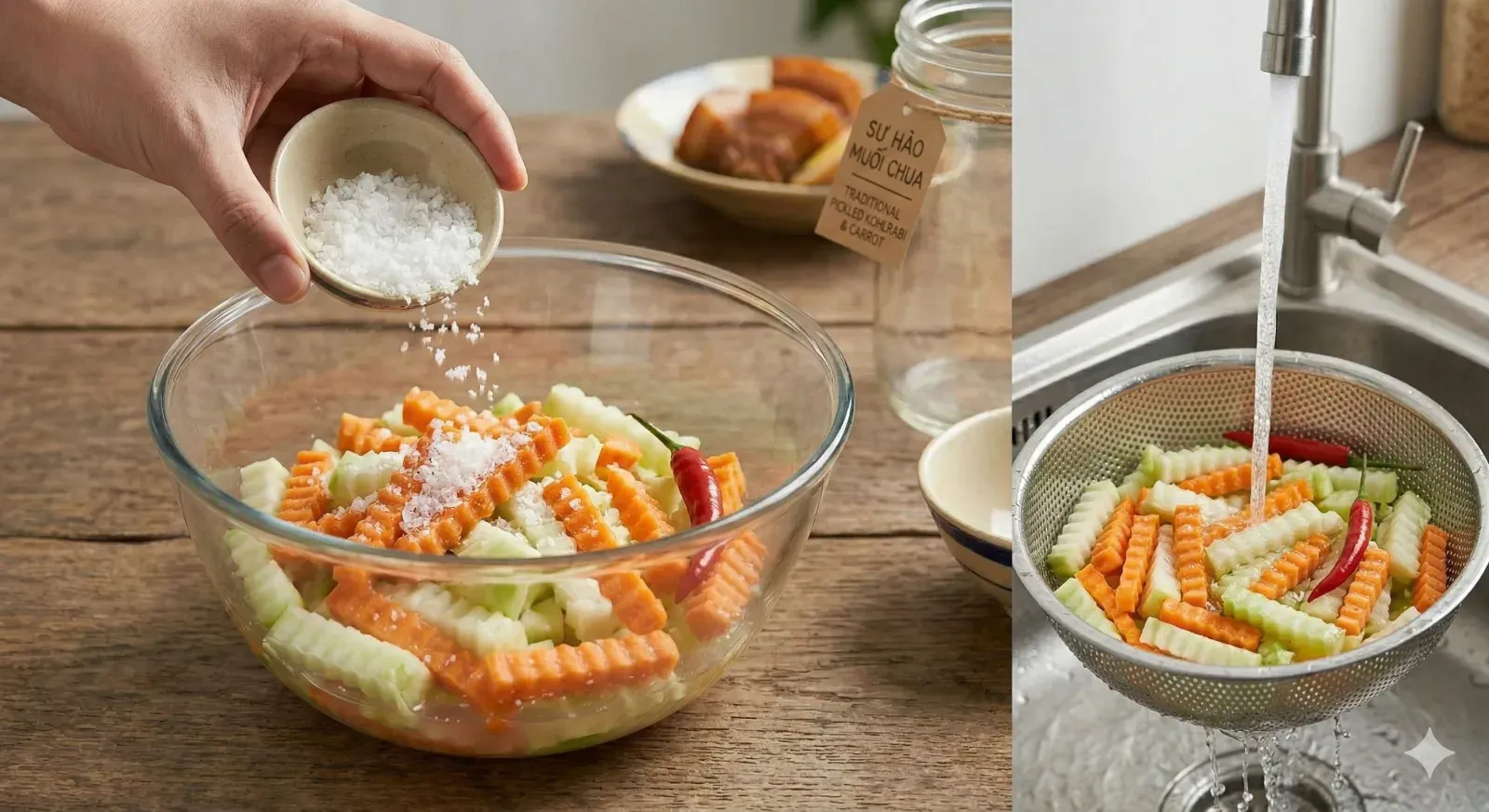
2Place the cut kohlrabi and carrot into a large bowl. Sprinkle over a generous pinch of coarse salt, toss to coat evenly, and leave for about 30 minutes. During this time, the salt draws out excess moisture from the vegetables. This step serves three important purposes: it ensures the final pickles stay crispy, it removes the raw, slightly bitter smell of fresh kohlrabi, and it reduces the risk of surface scum forming in the jar during fermentation.
After 30 minutes, you’ll see a pool of liquid at the bottom of the bowl. Discard this liquid, then rinse the vegetables thoroughly under cold running water — at least 2 to 3 times — to wash away the excess salt. Drain in a colander and allow to dry completely.
Step 3: Prepare the Pickling Brine
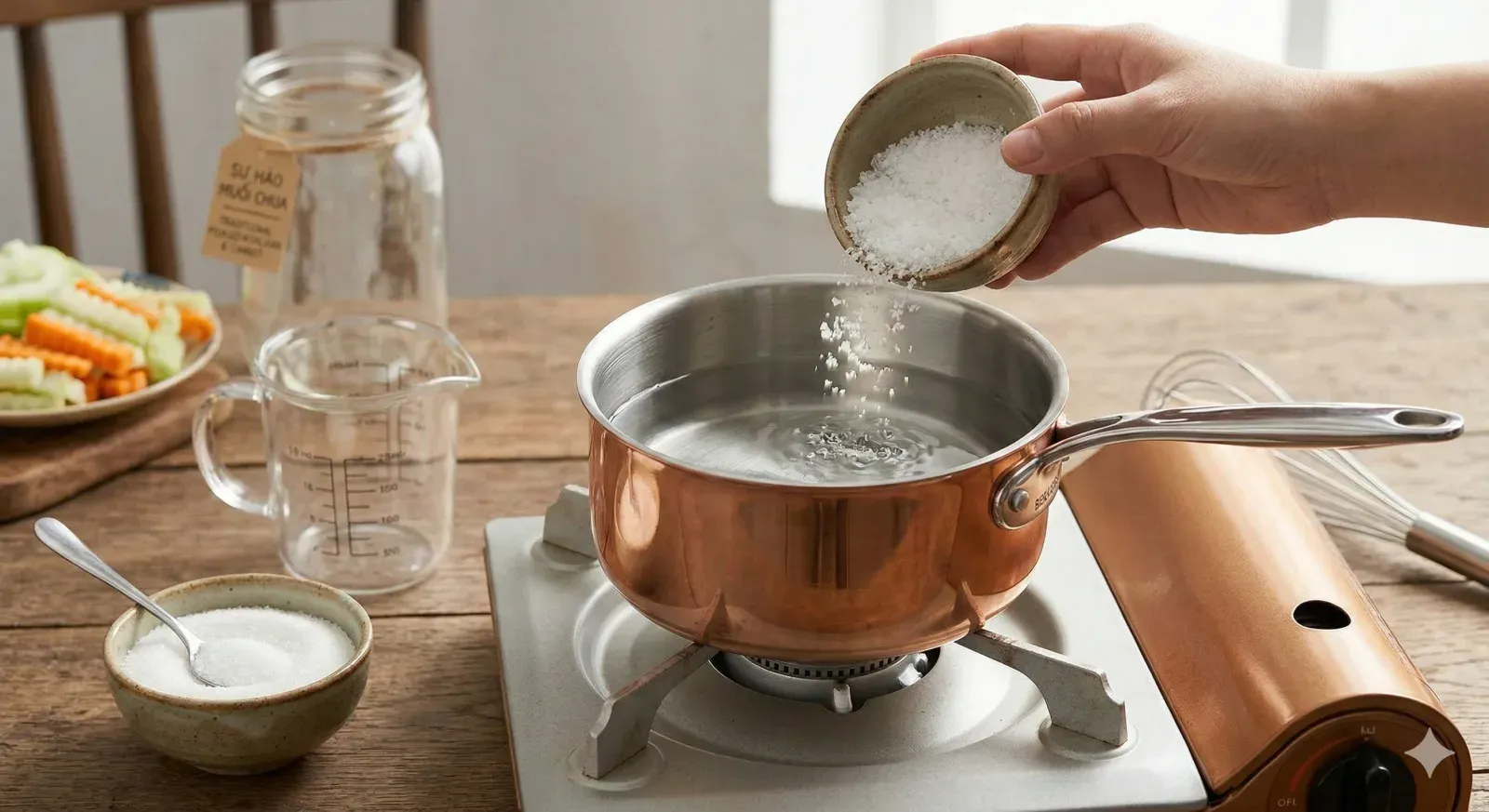
3Pour 1 liter of water into a small saucepan. Add 40g of coarse salt and 10g of sugar. Bring to a boil over medium heat, stirring until the salt and sugar are fully dissolved. Once dissolved, remove from heat and set aside to cool.
This step is critical: the brine must be completely cool — at room temperature — before you pour it into the jar. Adding warm or hot brine will cook the vegetables slightly, destroying their crispy texture. If you’re in a hurry, place the pot in a bowl of cold water or ice to speed up cooling.
Step 4: Pack the Jar and Ferment
4Make sure your glass jar has been thoroughly washed, rinsed with boiling water to sterilize, and is completely dry before use. Any moisture or residue in the jar can encourage mold or cause the brine to cloud prematurely.
Pack the kohlrabi and carrot tightly into the jar, interspersing slices of chili between the layers. Press the vegetables down firmly as you pack — this is important. If they float up when you add the brine, they’ll be exposed to air and may develop mold or discoloration. You can use a small zip-lock bag filled with brine as a weight, or simply pack tightly enough that they stay submerged.
Once packed, slowly pour the completely cooled brine over the vegetables until they are fully submerged. Seal the jar tightly and place it in a cool, well-ventilated spot away from direct sunlight. After 3 to 5 days, the pickles will develop a pleasant, mild sourness and are ready to eat.
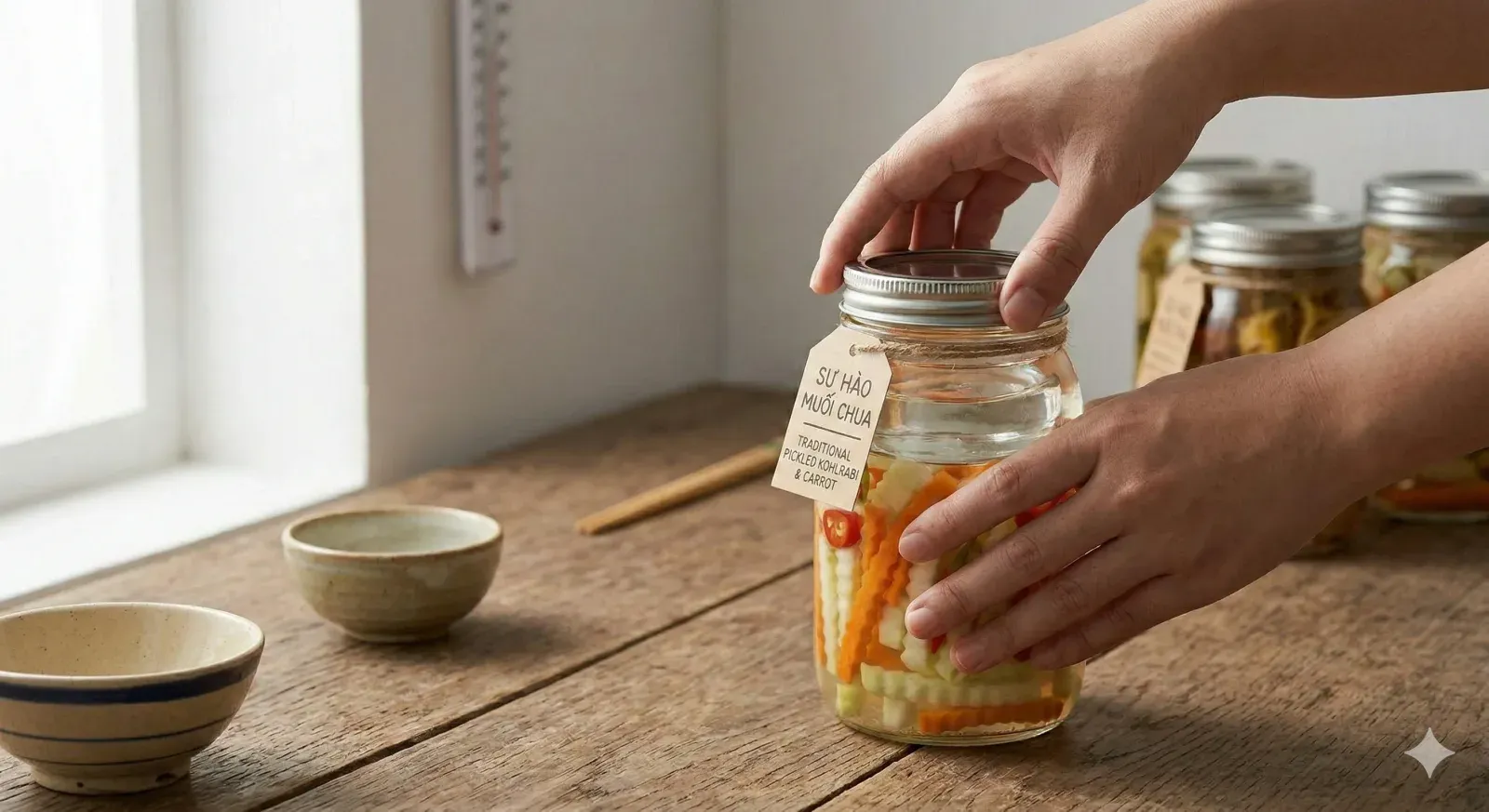
What Perfect Vietnamese Pickled Kohlrabi Looks Like
Well-made su hào muối chua should meet these standards:
- Texture: Crispy and firm — not soft, mushy, or limp
- Brine: Clear to very lightly hazy — not cloudy, white, or foamy
- Flavor: Mildly sour, lightly salty, with a clean finish — not overpowering
- Color: Bright and vibrant — the kohlrabi stays pale green-white, the carrot stays orange
- Aroma: Fresh and tangy, with a gentle heat from the chili
If the brine turns thick and white, or the vegetables smell off rather than pleasantly sour, discard the batch and start fresh with a sterilized jar.
Expert Tips for the Best Results
Always Use Cool Brine
This cannot be overstated. Hot brine is the number one reason homemade Vietnamese pickles turn out soft. The brine needs to be at room temperature before it touches the vegetables. Make the brine first and let it cool while you prep and salt the vegetables — that way everything is timed perfectly.
Sterilize and Dry Your Jar Thoroughly
Rinse your jar with boiling water, then allow it to air-dry completely — upside down on a clean towel. Even a small amount of residual moisture can introduce bacteria that cause surface scum. For extra insurance, some Vietnamese cooks wipe the inside of the jar with a clean cloth dipped in rice wine or vodka before packing.
Don’t Skip the Pre-Salting Step
Many beginner recipes skip this, but pre-salting and rinsing is what gives Vietnamese-style pickled kohlrabi its characteristic crunch. It removes excess water from the vegetable cells and eliminates the raw smell that can make the brine turn bitter. It adds 30 minutes to the process, but the texture difference is very noticeable.
Keep Vegetables Fully Submerged
Any vegetable exposed to air above the brine line can develop mold. Press the vegetables down firmly when packing, and top up with extra brine if needed. Once the jar is sealed, avoid opening it unnecessarily during the first 2 days of fermentation.
Refrigerate Once Sour Enough
Fermentation is temperature-dependent. In warmer climates or during summer, the pickles may be ready in 2 to 3 days. In cooler weather, it can take 4 to 5 days. Taste from day 2 onward. Once they reach the sourness you like, move the jar to the refrigerator — cold temperatures slow fermentation dramatically and keep the pickles crispy for weeks.
What to Serve with Vietnamese Pickled Kohlrabi
In Vietnamese cuisine, su hào muối chua acts as a palate cleanser and flavor balancer. Its gentle acidity is specifically designed to cut through rich, fatty, or savory dishes. Here are the best pairings:
Classic Vietnamese Pairings:
- Thịt kho tàu (braised pork belly and eggs): The pickles’ acidity perfectly balances the caramel richness of the braising sauce.
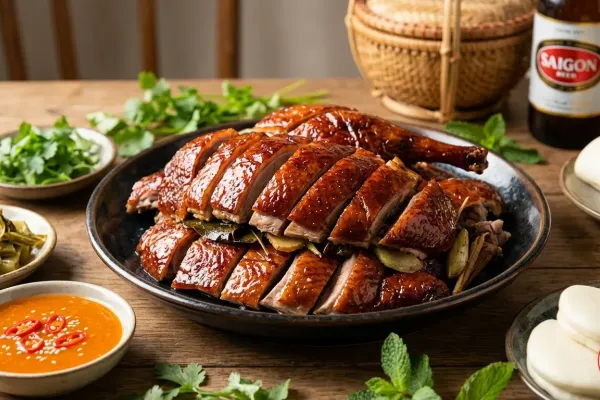
- Thịt quay (Vietnamese roast pork): Especially popular during Tết — the tang cuts through the fatty crackling.
- Thịt luộc (boiled pork with shrimp paste): A classic Northern Vietnamese combination.
- Cá kho (braised fish in clay pot): The oily, savory fish becomes much more approachable with crispy pickles alongside.
- Steamed white rice: Always — pickled vegetables and plain rice is one of the most comforting combinations in Vietnamese home cooking.
Traditional note: Su hào muối chua is especially associated with Tết (Vietnamese Lunar New Year) meals, where it appears alongside richer festive dishes to help guests eat more without feeling overly full.
The Traditional Whole-Kohlrabi Method
If you want to explore the older, more traditional approach, Vietnamese families in rural areas have long preserved whole kohlrabi using a dry-salt method. In this method, the kohlrabi is left whole and unpeeled, just washed and dried. The bulbs are then layered inside a ceramic crock (vại sành) with alternating layers of coarse salt — no water, no brine, no sugar. The salt draws out the natural moisture over time, creating its own brine around the vegetables.
This method produces a much saltier, more intensely flavored pickle that keeps for months at room temperature. It’s a year-round pantry staple in traditional Vietnamese households, eaten in small quantities alongside simple rice-based meals. It requires more patience — up to several weeks — but the flavor is deeper and more complex than the quick brine method.
Storage Tips
Room temperature: During fermentation only (3–5 days). Keep in a cool, shaded spot away from direct heat or sunlight.
Refrigerator: Once the pickles reach your desired sourness, store in the fridge. They will keep for 2 to 3 weeks while remaining crispy.
Important: Always use clean, dry chopsticks or tongs when removing pickles from the jar. Introducing food particles or saliva into the jar will cause the brine to spoil faster.
Common Mistakes to Avoid
1. Adding Warm Brine
The most common mistake. Always wait until the brine is fully cooled to room temperature. If in doubt, wait longer.
2. Using a Wet or Unclean Jar
Residual moisture or food particles in the jar will lead to surface mold (white film) or a foul smell. Sterilize and dry thoroughly before use.
3. Skipping the Pre-Salting Step
Straight-to-brine pickles tend to be softer and have a slightly bitter aftertaste. Pre-salting is what gives this Vietnamese-style pickle its distinctive crunch.
4. Leaving Vegetables Exposed to Air
Vegetables that float above the brine will turn brown and can grow mold. Press them down firmly and top up with extra brine if needed.
5. Fermenting Too Long at Room Temperature
Over-fermented pickles turn very sour, soft, and lose their bright color. Taste daily from day 2 and refrigerate as soon as the sourness is right for you.
Frequently Asked Questions
How long does Vietnamese pickled kohlrabi take to ferment?
About 3 to 5 days at room temperature. In warm weather, it may be ready in as little as 2 days. Taste from day 2 onward and refrigerate once it reaches your preferred sourness.
Why is my pickled kohlrabi soft instead of crunchy?
The most likely cause is adding the brine while it was still warm. The brine must be completely cool. Also, make sure you salted and rinsed the vegetables beforehand — this step is key to crispiness.
Can I add other vegetables to the jar?
Yes! Daikon radish is a popular addition and pickles beautifully alongside kohlrabi. You can also add cucumber, though it tends to soften faster and is best consumed within the first week.
Is there white film on top — should I be worried?
A thin white film (kahm yeast) can occasionally form on the surface of lacto-fermented pickles. It’s generally harmless and can be skimmed off. However, if the brine smells foul (not just sour) or you see fluffy mold growth, discard the batch and start fresh with a cleaner jar.
Can I use table salt instead of coarse salt?
You can, but use slightly less as table salt is more concentrated by volume. Non-iodized salt is preferred for fermentation — iodized salt can inhibit the beneficial bacteria that drive the fermentation process and may cause the brine to cloud more quickly.
What does su hào muối chua taste like?
It’s mild and refreshing — mildly sour from natural fermentation, lightly salty, with a clean sweetness from the carrot and a gentle heat if you’ve added chili. The texture is the highlight: firm and satisfyingly crunchy, even after days in the brine.
Conclusion
Making Vietnamese pickled kohlrabi (su hào muối chua) at home is one of the most rewarding, low-effort projects in Vietnamese cooking. With minimal ingredients, a bit of patience, and a few simple techniques — pre-salting, cooling your brine, and sterilizing your jar — you’ll produce crispy, bright, and deliciously tangy pickles that elevate every meal they accompany.
This is the kind of recipe that rewards you quietly in the background: prep it on a Sunday, and by Wednesday you have a jar of homemade pickles ready to bring balance and brightness to everything from a simple bowl of rice to a full festive spread. Once you try it, you’ll always want a jar in the fridge.
Looking for more Vietnamese recipes? Explore our collection of authentic Vietnamese home cooking — from braised dishes to fresh salads and traditional condiments, every recipe comes with detailed technique tips and cultural context to help you cook Vietnamese food with confidence.