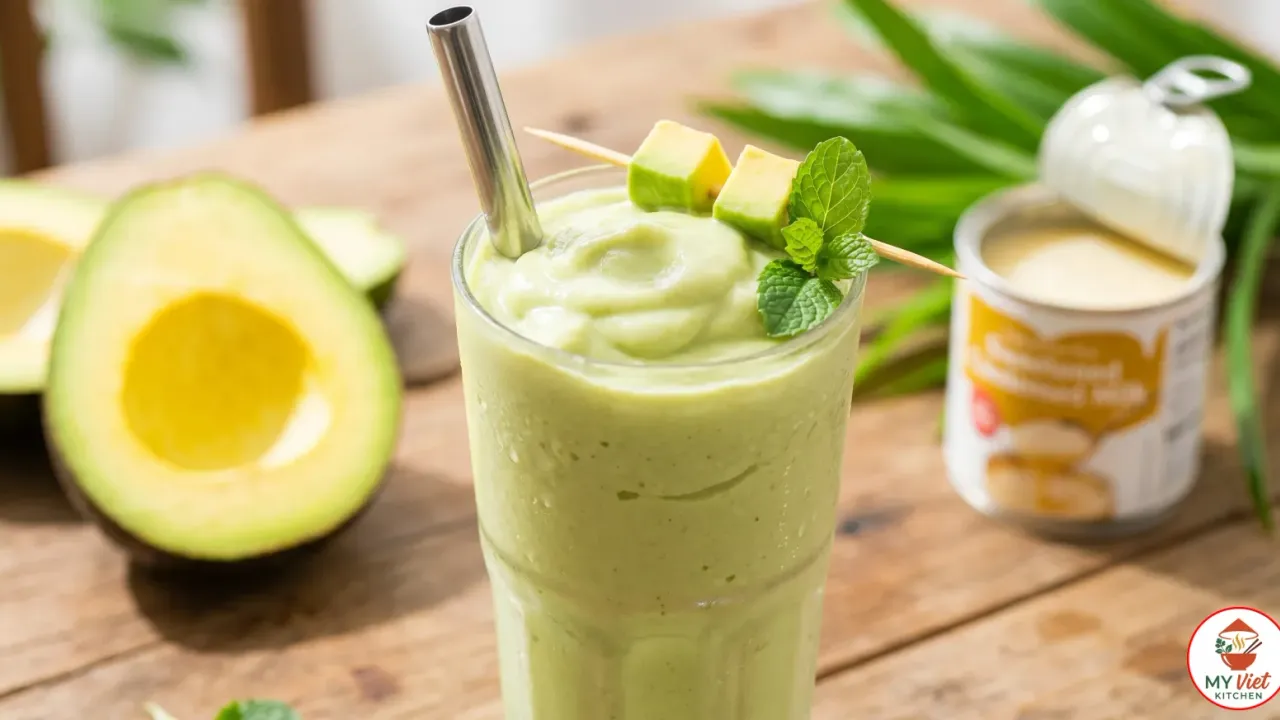
Sinh to bo, also known as Vietnamese avocado smoothie, is the cool, creamy drink that locals reach for on hot afternoons. This glass of sinh tố bơ blends ripe wax avocado with sweetened condensed milk, a splash of fresh milk, and a generous mound of crushed ice. In this guide, you will learn how to make authentic sinh to bo avocado smoothie at home from scratch. You will choose the right avocado, prep it the Vietnamese way to avoid bitterness, and blend a glossy smoothie that rivals any cafe in Saigon. This Vietnamese avocado smoothie is silky, refreshing, and ready in under 10 minutes.
Prep Time: 5 minutes | Blend Time: 3 minutes | Servings: 1
Difficulty: Easy | Calories: ~300 per serving
What Makes Sinh To Bo Avocado Smoothie Special?
Vietnamese avocado smoothie stands apart from western avocado drinks because of its sheer, buttery richness. Each sip of sinh to bo coats the tongue with the natural oils of a ripe wax avocado. The sweet condensed milk then folds in slowly. Most importantly, the smoothie carries no green, grassy edge when made the right way. Instead, the avocado tastes nutty and almost ice-cream-like. As a result, every glass feels indulgent yet light.
The drink has its roots in southern Vietnam, where wax avocado trees thrive in the rich red soil of Dak Lak and Lam Dong. Specifically, street vendors in Saigon have served sinh to bo since the 1970s, often from glass-fronted carts loaded with seasonal fruit. Additionally, mothers make this avocado smoothie at home for their children after school, since the drink is nutritious and easy to prepare. Over the years, the recipe has spread to cafes from Hanoi to Can Tho. Today, sinh to bo sits proudly on almost every Vietnamese drink menu, sometimes mixed with banana, mango, or durian for extra flavor.
What makes a great Vietnamese avocado smoothie is balance. The avocado must be perfectly ripe so the flesh blends into a glossy puree. Furthermore, the condensed milk should sweeten the drink without drowning the natural buttery notes. In addition, a great glass has a thick, spoonable texture rather than a thin, watery one. If you love refreshing Vietnamese drinks, you will also enjoy our recipes for ca phe muoi and sua dau nanh. According to the Wikipedia overview of the avocado, the fruit is a nutritional powerhouse rich in heart-healthy monounsaturated fats.

Choosing the Right Avocado for Sinh To Bo Smoothie
Great avocado smoothie starts with the right fruit. The flesh must be ripe enough to blend into a silky puree. It should still hold its shape when sliced and not feel mushy. Look for avocados harvested within the past week, then ripen them on the counter if needed. Below are the best avocado options at your local Asian grocery or farmers market.
- Bo sap (Vietnamese wax avocado, the classic): Bo sap has dense, oily flesh and a buttery flavor that defines authentic Vietnamese avocado smoothie. The skin is smooth green with light yellow spots, and the fruit feels heavy for its size. This variety blends into the thickest, glossiest smoothie.
- Hass avocado (the global standard): Hass avocados are widely available outside Vietnam. The flesh is creamy and slightly nuttier than bo sap, although the smoothie turns a touch thinner. Choose fruits that yield to gentle pressure near the stem for the best texture.
- Fuerte avocado (smoother style): Fuerte avocados carry a milder, slightly sweet flavor and smooth green skin. The flesh blends into a lighter sinh to bo that suits drinkers who prefer a less buttery smoothie.
- Avocados ripened at home: Always ripen avocados at room temperature before blending for the best flavor. A ripe fruit gives slightly under thumb pressure near the stem. Shake the avocado gently and listen for the seed rattling, which is another sign of perfect ripeness.
Ingredients for Vietnamese Avocado Smoothie
Main Ingredients:
- 1 ripe Vietnamese wax avocado (about 150 grams of flesh)
- 40 milliliters sweetened condensed milk
- 20 milliliters fresh whole milk
- 20 grams white sugar
- 1 cup crushed ice or ice cubes
For the Garnish:
- 1 small fresh mint sprig
- 2 small avocado cubes on a cocktail stick
- 1 wide bubble-tea straw or long spoon
For Equipment:
- 1 jug blender or handheld immersion blender
- 1 small sharp knife and chopping board
- 1 tall chilled glass
Pro tip: Chill the glass in the freezer for 10 minutes before pouring. A cold glass keeps the smoothie thick for longer and stops the ice from melting too fast on hot afternoons.
Step-by-Step Instructions for Avocado Smoothie
Step 1: Choose and Prep the Avocado
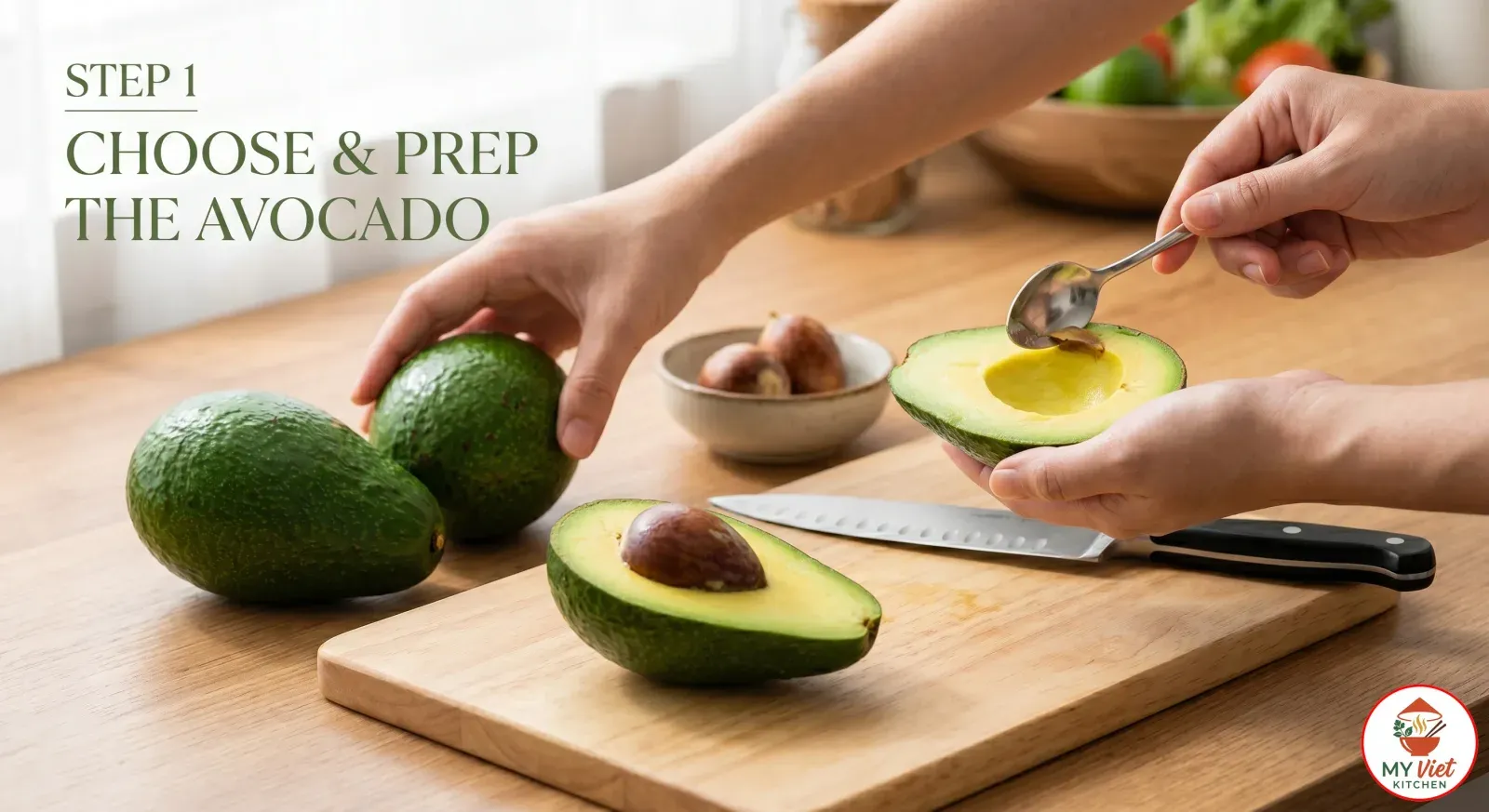
1 Pick a ripe wax avocado that feels firm yet yields slightly to the touch. Place the fruit on a chopping board and slice it lengthwise around the seed. Twist the two halves apart, then lift the seed out with the tip of a knife. The flesh inside should show a bright yellow center fading to pale green near the skin.
Cut the flesh into small cubes inside the skin. Then use a spoon to scoop the cubes out, since this captures the green layer next to the skin where the most nutrients hide. Most importantly, scrape away the thin film that hugs the seed with the tip of a knife. This membrane is the main reason home avocado smoothies often taste bitter. As a result, this small extra step keeps your Vietnamese avocado smoothie silky and sweet.
Step 2: Macerate the Avocado with Sugar
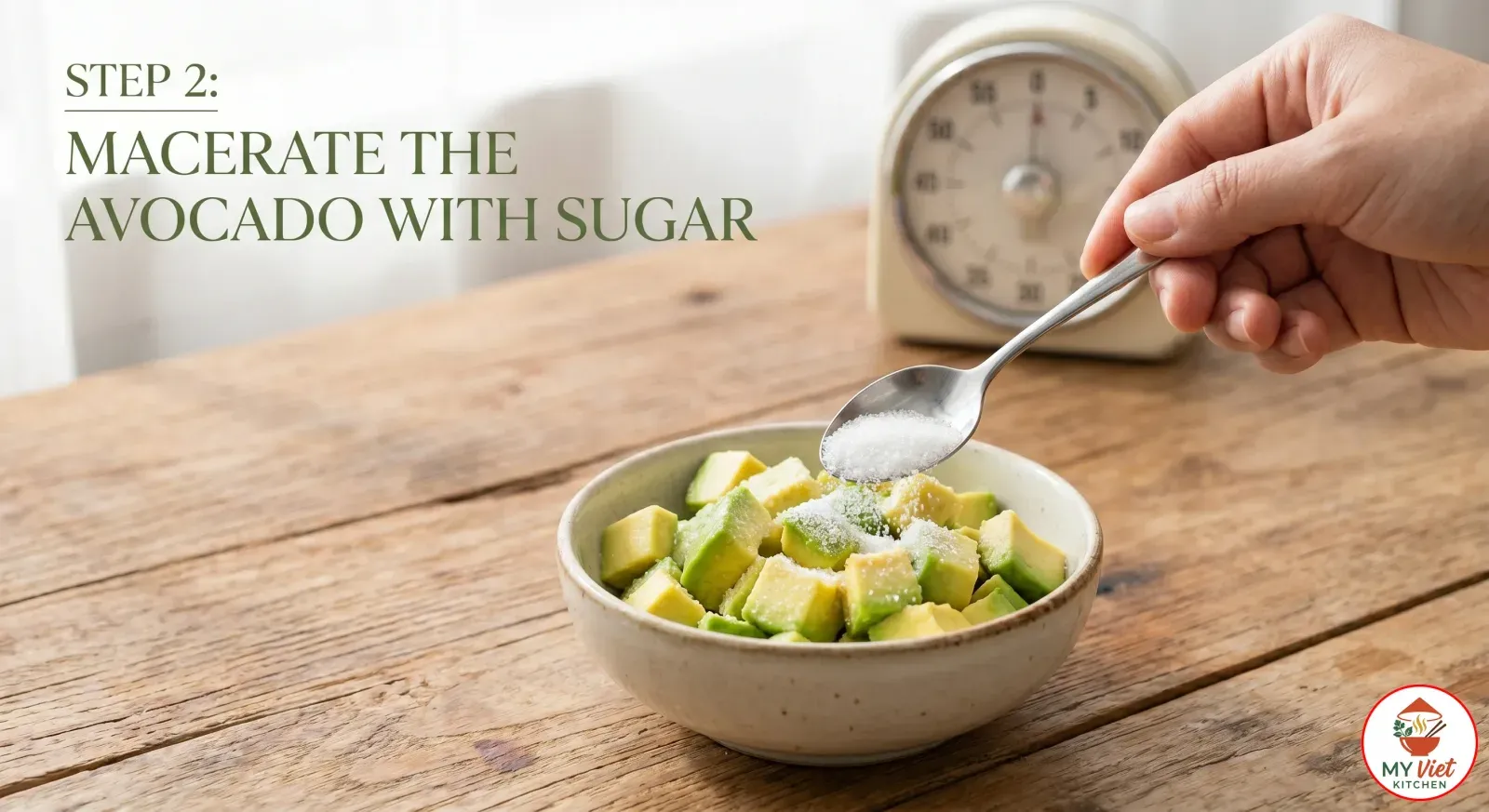
2 Place the avocado cubes in a small bowl. Sprinkle 20 grams of white sugar evenly over the flesh and stir gently with a spoon. Let the bowl rest at room temperature for 30 minutes. The sugar slowly draws out the natural oils and softens the cell walls of the avocado.
As a result, the macerated fruit blends into a deeper, richer smoothie than raw avocado alone. Vietnamese street vendors have used this trick for decades to coax extra flavor out of every fruit. Skip the step if you are in a hurry, although the texture and taste will be slightly lighter. The macerated avocado can also rest in the fridge for up to 2 hours if you want to prep ahead for guests.
Step 3: Blend the Smoothie Base
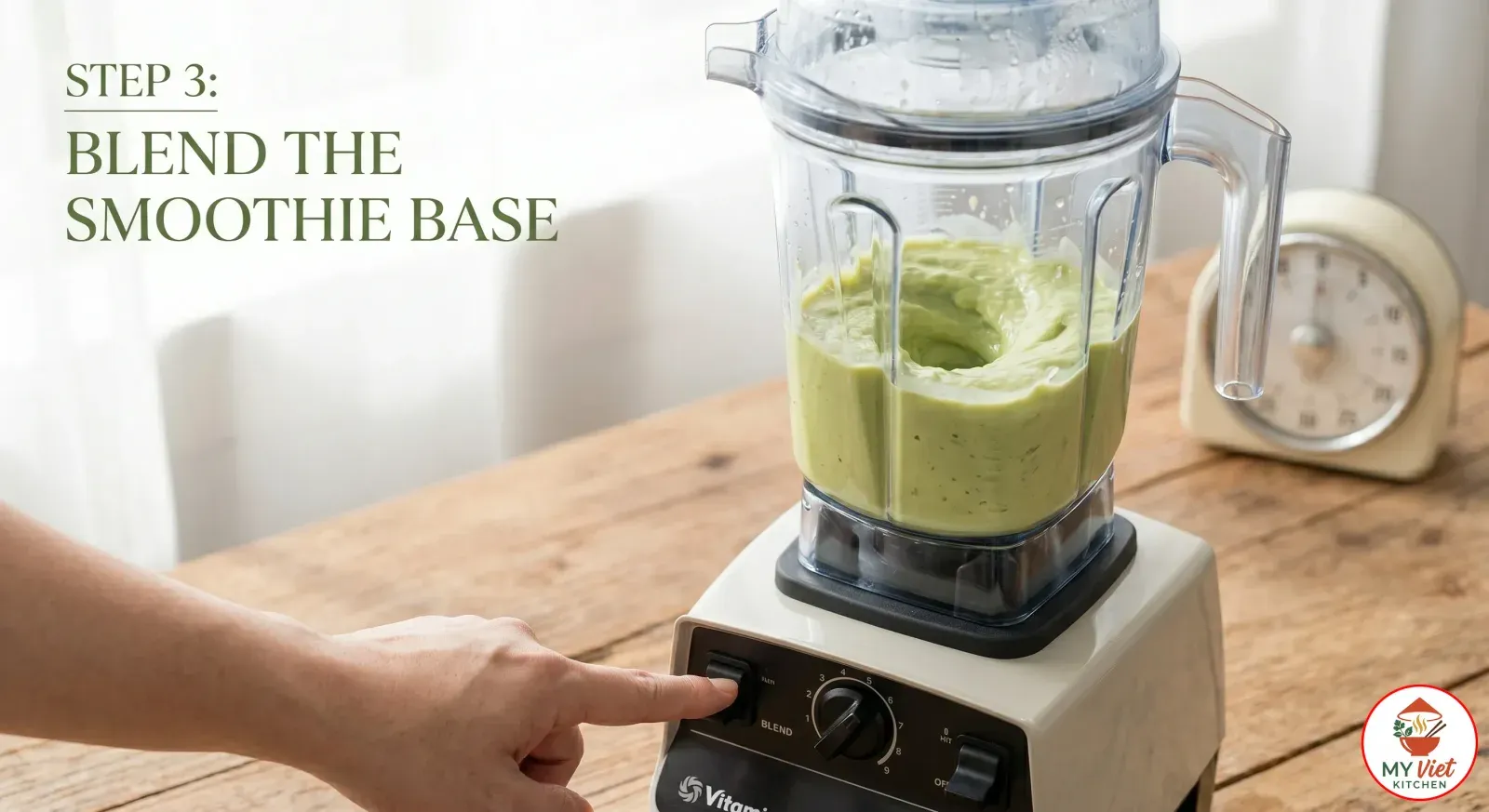
3 Transfer the macerated avocado into a blender jug. Pour in 40 milliliters of sweetened condensed milk and 20 milliliters of fresh whole milk. Blend on medium speed for 30 seconds. The mixture turns into a smooth, pale green paste with no visible chunks of fruit.
Taste the base before adding ice. It should taste creamy, sweet, and slightly buttery, similar to a soft serve avocado ice cream. Add another teaspoon of condensed milk if the smoothie tastes too plain. As a result, the final glass will land on the perfect balance between sweetness and avocado richness rather than tasting flat.
Step 4: Add Crushed Ice and Finish Blending
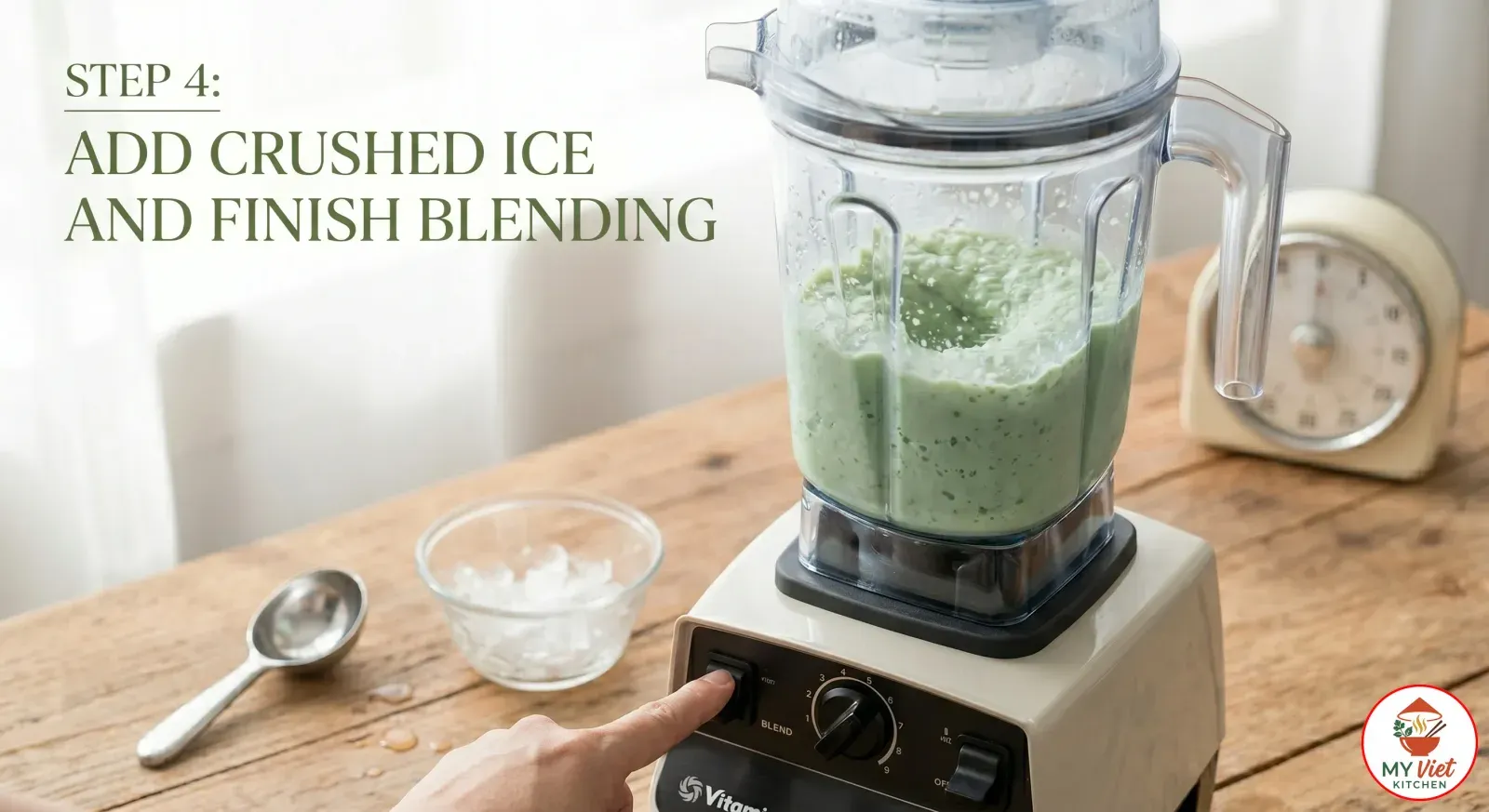
4 Drop 1 cup of crushed ice into the blender. Pulse on high speed for 20 to 30 seconds in short bursts. The mixture should turn thick, frosty, and pale jade green, with no large shards of ice left behind. Stop the blender as soon as the smoothie forms soft ribbons on the back of a spoon.
Over-blending warms the ice and turns the smoothie watery. If your blender struggles with whole ice cubes, crush the ice in a bag with a rolling pin first. Vietnamese cafes use heavy-duty commercial blenders that pulverize ice in seconds. As a result, their smoothies always come out thick and frosty. A home blender works just as well with crushed ice and a few quick pulses.
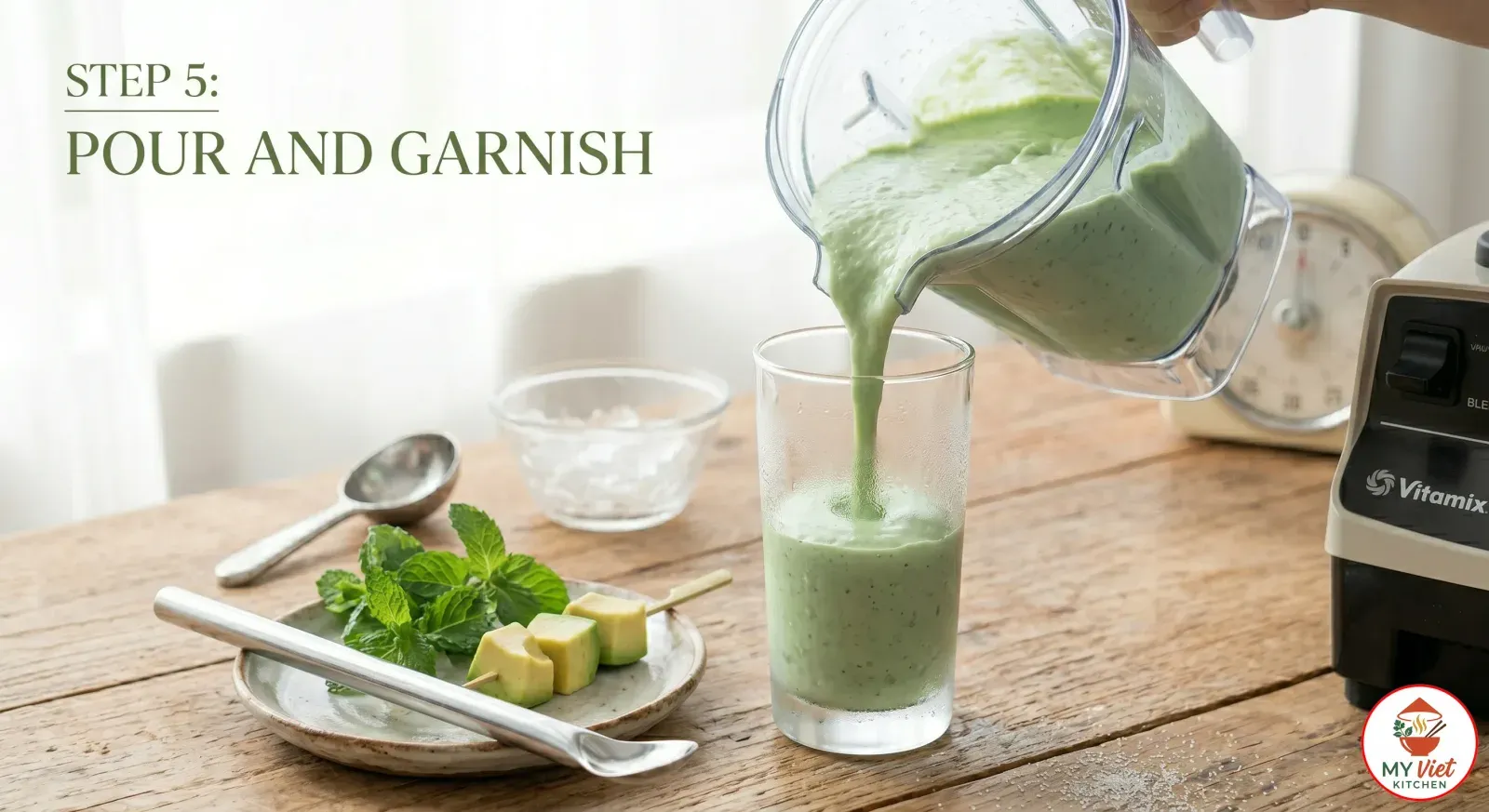
Step 5: Pour and Garnish
5 Pour the smoothie into a tall chilled glass. As a result, the drink should mound up slightly above the rim and hold its shape for several seconds before settling. Top with two small cubes of fresh avocado on a cocktail stick and tuck a sprig of mint at the side for color. Some Vietnamese cafes also drizzle a thin ribbon of condensed milk down the inside of the glass before pouring.
Serve right away with a wide bubble-tea straw or a long spoon. The smoothie tastes best in the first 10 minutes, before the ice begins to melt. Many Vietnamese drinkers stir the smoothie once with the spoon before sipping. This blends the garnish flavors into every spoonful. Some prefer to scoop the thick top first and sip the lighter base later.
Expert Tips for Perfect Avocado Smoothie
Use Cold Ingredients
Cold milk and chilled avocado help keep the smoothie thick and frosty. A warm base melts the ice on contact and produces a thin, runny drink. Pop the avocado in the fridge for 15 minutes before blending if your kitchen runs hot. Most Vietnamese cafes also chill their milk overnight to lock in that signature creamy texture.
Always Scrape the Seed Membrane
The thin layer of flesh that hugs the avocado seed contains bitter compounds. These compounds ruin even the most carefully blended avocado smoothie. Use the tip of a knife or a small spoon to scrape away every bit of that membrane before blending. This single tip is the difference between a Vietnamese-cafe-quality smoothie and a bitter homemade attempt.
Adjust Sweetness to Taste
40 milliliters of condensed milk and 20 grams of sugar make a classic, sweet drink. Cut the sugar in half for a lighter smoothie, or skip it altogether if your avocado is very ripe. Some Vietnamese cafes also swap the white sugar for palm sugar syrup, which adds a soft caramel note. Taste the base before adding ice and adjust on the fly.
Classic vs. Modern Sinh To Bo: A Quick Comparison
Vietnamese drinkers enjoy this smoothie in two main styles. First, the classic version stays true to the Saigon street-vendor recipe. In contrast, the modern version often uses lower-fat dairy and natural sweeteners. Both are delicious, although they suit very different goals. Here is how the two styles compare side by side.
| Feature | Classic Sinh To Bo | Modern Light Version |
|---|---|---|
| Origin | Saigon street vendors | Modern cafes and home kitchens |
| Avocado type | Vietnamese bo sap | Hass or Fuerte avocado |
| Milk base | Condensed milk and fresh milk | Unsweetened almond or oat milk |
| Sweetener | White sugar plus condensed milk | Honey, stevia, or none |
| Texture | Thick, dense, and buttery | Lighter and more drinkable |
| Calories | About 300 per glass | About 180 per glass |
| Best paired with | Banh mi or che ba ba | Fresh fruit or granola |
Serving Suggestions for Sinh To Bo
Vietnamese avocado smoothie is rich and filling, so the way you serve it shapes the whole experience. In Vietnam, the drink almost always comes in a tall glass. This way, the thick green smoothie shows off its frosty texture. Cafes often pair this drink with a small snack or a cold drink chaser. The pairings cleanse the palate and balance the buttery richness of the avocado.
The Perfect Accompaniments:
- Banh mi sandwich: A crunchy banh mi pairs beautifully with the cool, creamy smoothie. This combo is a popular Saigon breakfast.
- Che ba ba (mixed bean dessert): The warm coconut sweetness of che ba ba contrasts nicely with the chilled sinh to bo for a fun dessert duo.
- Vietnamese coconut macaroons: The chewy coconut and sugar match the buttery avocado beautifully and add a tropical note to every spoonful.
- Fresh dragon fruit slices: The light, slightly tart flesh of dragon fruit refreshes the palate between sips and brightens the rich smoothie.
Beverage Pairings:
- Iced jasmine tea (tra da): A glass of jasmine tea sits next to almost every Vietnamese drink and resets the palate between sips.
- Fresh coconut water: A cooling chaser that lightens the rich smoothie and complements the natural sweetness of the avocado.
- Cold sparkling water with lime: A few sips between spoonfuls lift the cream and prepare the palate for the next bite of smoothie.
Storage and Make-Ahead Tips
Refrigerator: The smoothie keeps in an airtight container for up to 4 hours. However, it may darken slightly on top from oxidation. Simply skim that layer off or stir before serving. A squeeze of lime juice in the blender also slows the browning and keeps the color bright.
Freezer: Pour leftover smoothie into popsicle molds for a treat the next day. The frozen sinh to bo lasts up to 2 weeks in the freezer. The smoothie itself does not freeze well as a drink, since the ice crystals form and the texture turns grainy after thawing.
Best fresh: The smoothie shines when served right after blending. The avocado is at its brightest, the ice is at its frostiest, and the drink holds its thick shape on the spoon. Therefore, plan to ripen the avocado a day ahead and blend each glass to order.
Common Mistakes to Avoid
1. Using an Underripe Avocado
An underripe avocado lacks the oils that give sinh to bo its signature buttery texture. The green flesh also tastes sharp and grassy. Wait until the fruit yields gently under thumb pressure near the stem end. As a result, the smoothie will turn thick, creamy, and naturally sweet rather than thin and bitter.
2. Forgetting to Scrape the Seed Membrane
The thin film around the seed carries bitter compounds. Even a few flecks of that membrane can ruin a whole glass of avocado smoothie. Run the tip of a knife across the flesh that touched the seed and discard the shavings. This tiny step is the secret behind every silky avocado smoothie at a Saigon cafe.
3. Adding Too Much Ice
Over-loading the blender with ice dilutes the smoothie. The drink loses its rich avocado flavor as a result. Stick to about 1 cup of crushed ice per serving and pulse in short bursts. The goal is a frosty, spoonable smoothie rather than a slushy. Cold ingredients also help reduce the amount of ice you actually need.
4. Skipping the Sugar Maceration
The 30-minute sugar rest may feel optional, although it draws out the avocado oils and deepens the flavor of the smoothie. Plain avocado tastes flatter when blended cold straight from the fruit. Vietnamese vendors have used this small trick for decades to make their smoothies taste richer than the home version.
Frequently Asked Questions about Avocado Smoothie
What is sinh to bo in Vietnamese drink culture?
Sinh to bo translates to avocado smoothie and is one of the most beloved Vietnamese drinks. The smoothie blends ripe wax avocado with sweetened condensed milk, a splash of fresh milk, sugar, and crushed ice. The result tastes buttery, creamy, and gently sweet, with the natural richness of avocado at its core. Vietnamese cafes serve sinh to bo all year, although it shines brightest as a cooling drink on hot afternoons.
Why does my sinh to bo taste bitter?
Bitter sinh to bo almost always comes from two sources. First, the avocado may be underripe, since green avocados carry sharp, grassy notes that no amount of milk can mask. Second, the thin membrane that hugs the seed often slips into the blender. As a result, the smoothie turns bitter. Always scrape that layer off with a knife before blending.
What type of avocado is best for sinh to bo?
Use Vietnamese wax avocado, called bo sap, for the most authentic Vietnamese avocado smoothie. Wax avocados have dense, oily flesh that blends into a thick, glossy smoothie. Look for fruits with smooth green skin dotted with small yellow spots, a small fresh stem, and no signs of mold. The fruit should feel firm but yield gently when pressed near the stem end.
How many calories are in a glass of sinh to bo?
A standard glass of sinh to bo carries about 300 calories. The avocado itself contributes around 160 calories per 100 grams, with most of that coming from healthy monounsaturated fats. The condensed milk and sugar add roughly 100 to 140 calories. Reduce the sugar or use unsweetened almond milk for a lighter version.
Can I make sinh to bo without a blender?
Yes, although a blender produces the smoothest texture. Use a fork or potato masher to crush the ripe avocado into a soft puree. Then whisk in the condensed milk and fresh milk until silky. Stir in shaved ice at the end for a drink that mimics the classic smoothie. A handheld immersion blender also works well if you do not own a full jug blender.
How long does sinh to bo keep in the fridge?
Sinh to bo tastes best within 30 minutes of blending, since avocado begins to brown as soon as it meets the air. Store any leftover smoothie in a tall airtight container in the fridge for up to 4 hours. Shake or re-blend before drinking. A squeeze of lime juice in the blender also helps slow the browning.
Variations and Adaptations
Sinh To Bo Chuoi (Banana Avocado):
Add 1 small ripe banana to the blender along with the avocado. The banana adds natural sweetness and a soft fruity note that pairs beautifully with the buttery avocado. Furthermore, reduce the condensed milk to 20 milliliters, since the banana already brings extra sweetness to the smoothie.
Sinh To Bo Xoai (Mango Avocado):
For a tropical twist, blend half a ripe mango with the avocado. Also, reserve a few mango cubes for the top of the smoothie. This bright, sunset-colored drink packs extra vitamin C and tastes especially refreshing on hot summer days.
Sinh To Bo Sau Rieng (Durian Avocado):
Add 2 small pieces of fresh durian flesh to the blender. As a result, the durian deepens the buttery notes of the avocado and adds a rich custard-like aroma. Especially popular at southern Vietnamese cafes, this bold version shines during durian season from May to August.
Vegan Sinh To Bo Chay:
Swap the sweetened condensed milk for sweetened coconut condensed milk. Also, use oat milk instead of fresh whole milk for the base. As a result, the plant-based smoothie tastes almost identical to the original and works beautifully for vegan drinkers or guests with a dairy allergy.
The Cultural Significance of Sinh To Bo
Sinh to bo is more than a smoothie in Vietnam. This Vietnamese avocado smoothie marks the country’s love of fresh tropical fruit and its talent for turning simple ingredients into iconic drinks. Saigon street vendors first popularized the smoothie in the 1970s, often blending the avocado by hand with a fork. Today, the drink sits on menus from family stalls to upscale cafes, sometimes priced at just 20,000 dong for a tall glass.
The drink also reflects Vietnam’s deep agricultural roots. Wax avocados grow abundantly in the Central Highlands, where the cool climate and rich soil produce some of the buttery fruit in Southeast Asia. Local farmers harvest the avocados by hand and rush them to wholesale markets in Saigon and Hanoi within a day. As a result, Vietnamese sinh to bo always tastes fresher and creamier than versions made with imported fruit.
Modern Vietnamese cafes continue to honor sinh to bo while adding their own creative spins. Some blend the smoothie with palm sugar, while others top each glass with a scoop of coconut ice cream. Whether you serve this Vietnamese avocado smoothie for a quick breakfast or an afternoon cooler, every glass ties you to the warmth of a Saigon sidewalk on a sunny day. For more refreshing Vietnamese drinks, try our guides to ca phe trung, ca phe muoi, and sua dau nanh.
Conclusion
Making sinh to bo avocado smoothie at home is easier than you might think. The keys to success are simple: choose a ripe wax avocado, scrape away the bitter seed membrane, and pulse the smoothie with just enough ice to keep it thick. Master these three tricks and you will turn out a glass of Vietnamese avocado smoothie that rivals any cafe in Saigon. The rest is just choosing your garnish and deciding between the classic style or a lighter modern version.
Once you taste your first homemade smoothie, you will understand why sinh to bo has stayed on Vietnamese menus for so long. The creamy avocado, the silky milk, and the cold crushed ice come together in a balance that feels both bold and refreshing at the same time. So pick up a ripe wax avocado, dust off your blender, and let the smell of fresh fruit fill your kitchen. Your first sip will transport you straight to a sunny Saigon afternoon. For more Vietnamese favorites, explore our guides to banh mi, pho, and ca phe trung.