Looking for the best Vietnamese egg coffee recipe? You are in the right place. Vietnamese egg coffee (cà phê trứng) is a beloved Hanoi drink that has put Vietnamese coffee culture on the world map. Strong coffee meets silky whipped egg cream in a cup that tastes like a rich, warm dessert. Follow along as I walk you through each step.
The Story Behind Vietnamese Egg Coffee – Hanoi’s Signature Beverage
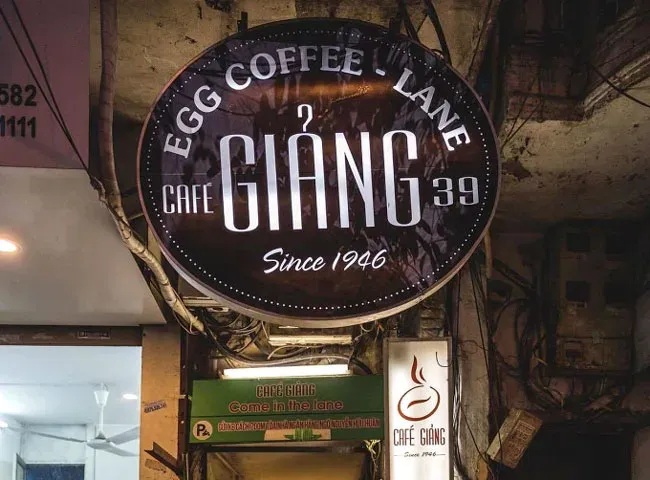
When people think of egg coffee in Hanoi, they think of Café Giang. This iconic drink was created by Mr. Nguyen Van Giang decades ago. It has been passed down through generations ever since. According to the owner of the famous Café Giang, fresh milk was scarce in 1950s Hanoi. Because of this, many people could not afford premium coffee drinks.
Mr. Nguyen Van Giang worked as a bartender at the Sofitel Metropole Hanoi hotel. He used egg yolk as a clever substitute for milk. Eventually, this creation became a signature drink of the city.
Today, you don’t need to travel to Hanoi to enjoy it. With this Vietnamese egg coffee recipe, you can make a delicious cup anytime at home.
Ingredients for This Vietnamese Egg Coffee Recipe
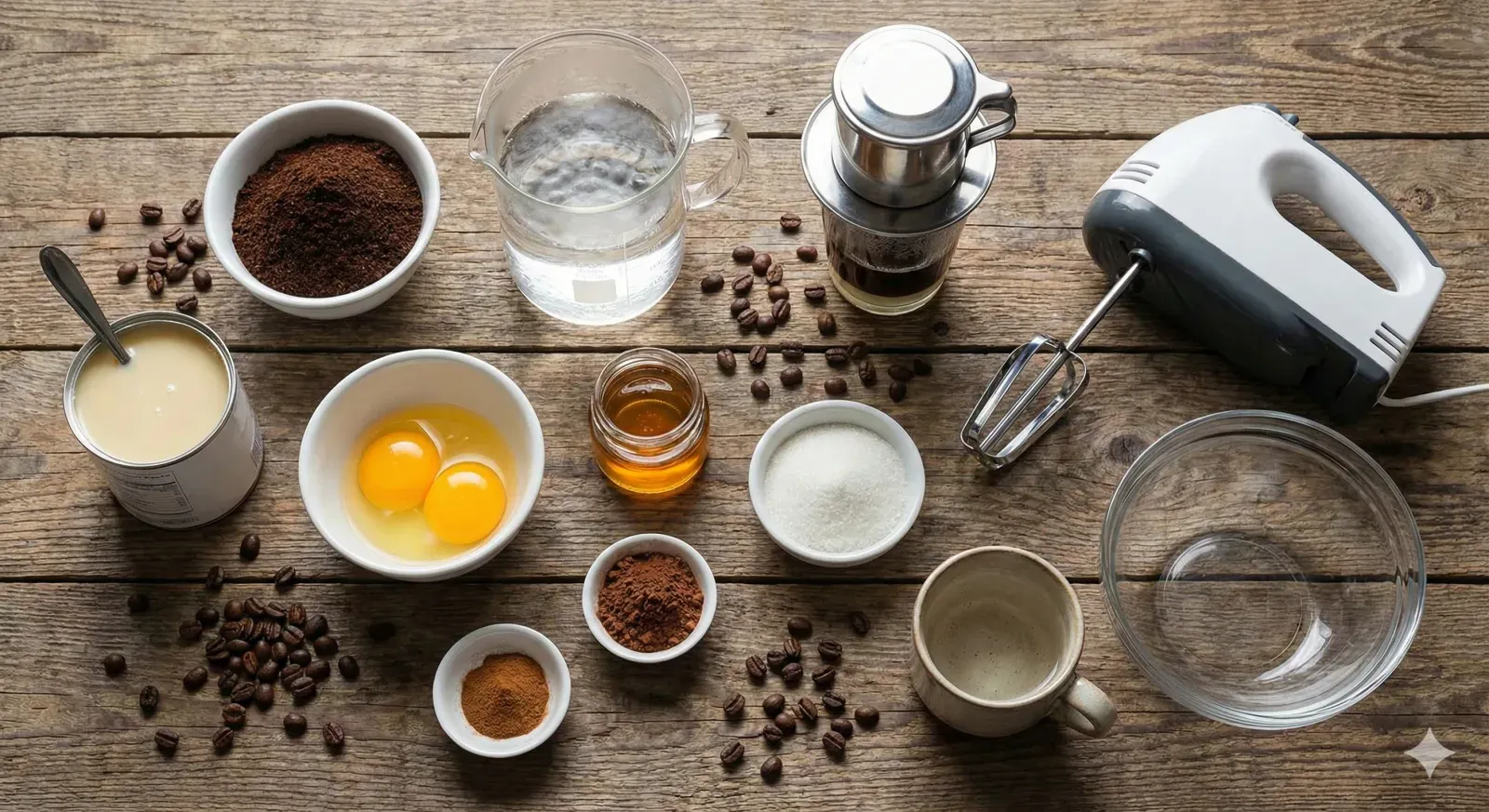
For the Coffee:
-
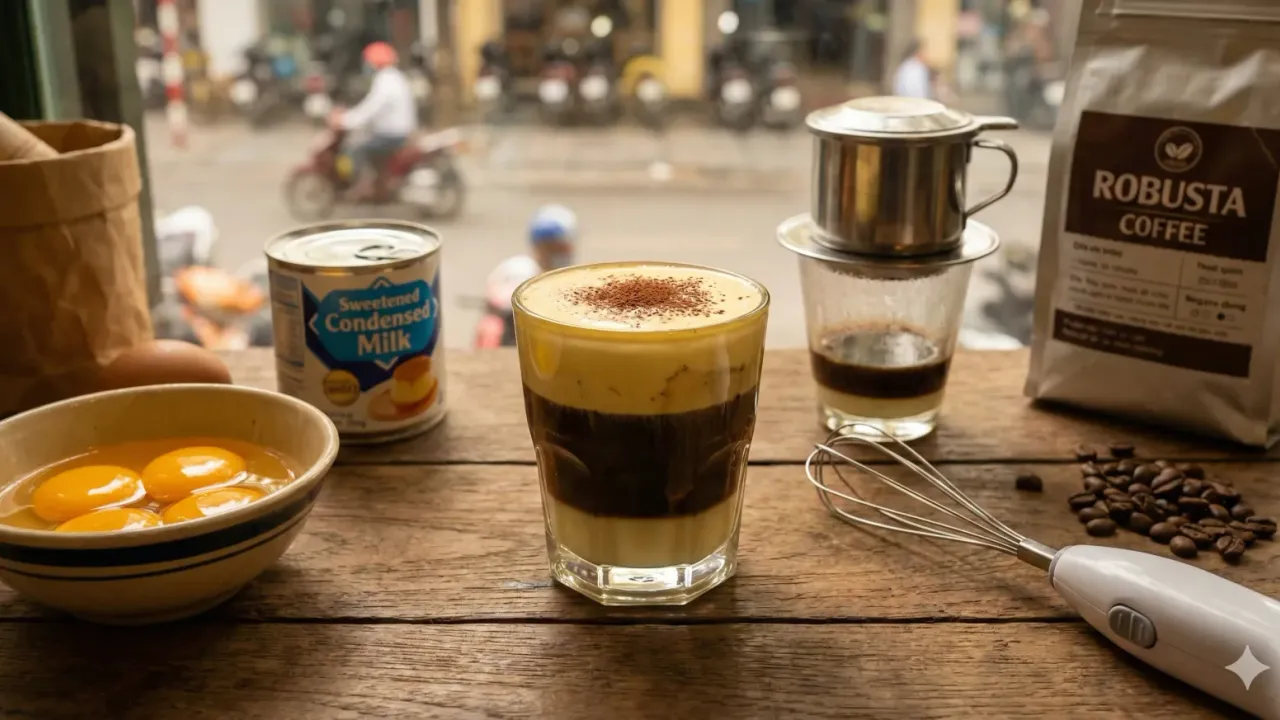
3 tablespoons Vietnamese ground coffee (robusta recommended)
-
80ml boiling water (divided: 30ml + 50ml)
-
4 tablespoons sweetened condensed milk
For the Egg Cream:
-
2 egg yolks (from fresh chicken eggs)
-
3 tablespoons honey
-
2 tablespoons granulated sugar
-
Cinnamon powder or cocoa powder for garnish (optional)
Equipment Needed:
-
Vietnamese coffee filter (phin)
-
Electric mixer or whisk
-
Glass or ceramic cup
-
Small bowl for hot water bath
-
Mixing bowl
How to Make Vietnamese Egg Coffee (Step-by-Step)
Step 1: Brew the Vietnamese Coffee
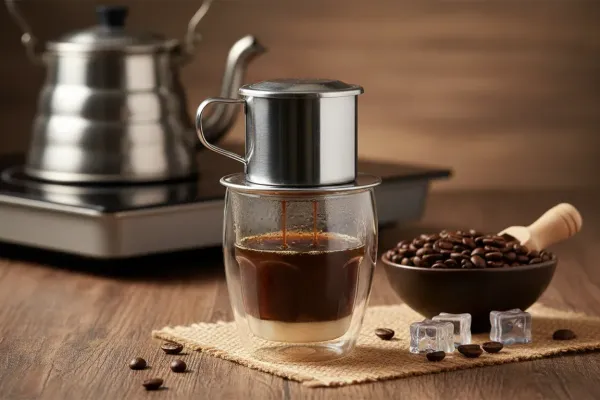
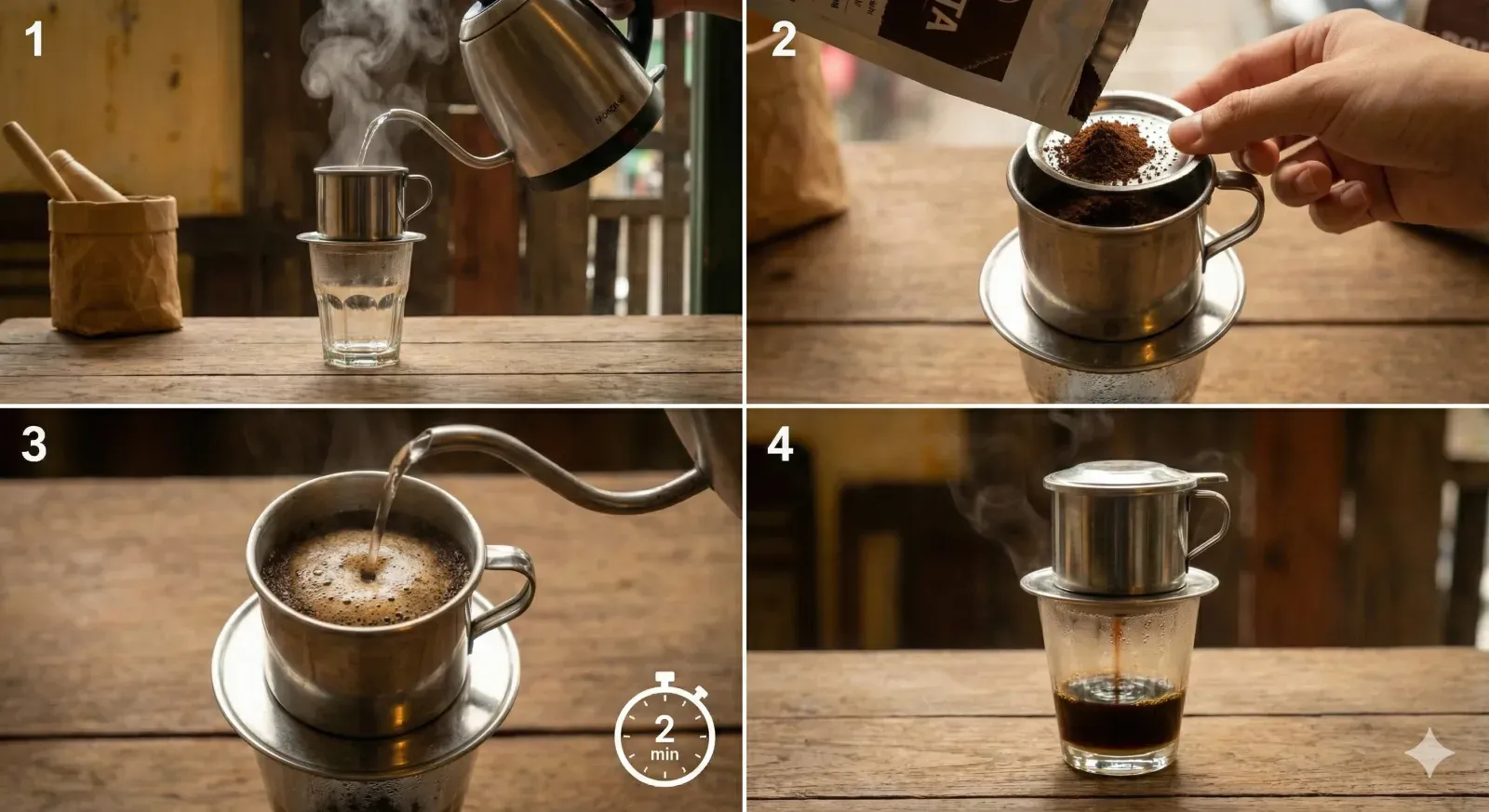
1First, rinse your Vietnamese coffee filter (phin) and glass with boiling water. This warms them up. Then add the ground coffee to the filter. Use the press plate to gently compress it for even distribution.
Next, place the filter on top of your glass. Pour 30ml of boiling water slowly into the filter. Wait about 2 minutes for the coffee to bloom. After that, add the remaining 50ml of boiling water. Cover with the lid and let the coffee drip into the glass. As a result, you get a rich, strong brew that is perfect for egg coffee.
For more info, read How to Make Vietnamese Coffee (Cà Phê Phin) – The Ultimate Guide
Step 2: Whip the Egg Cream
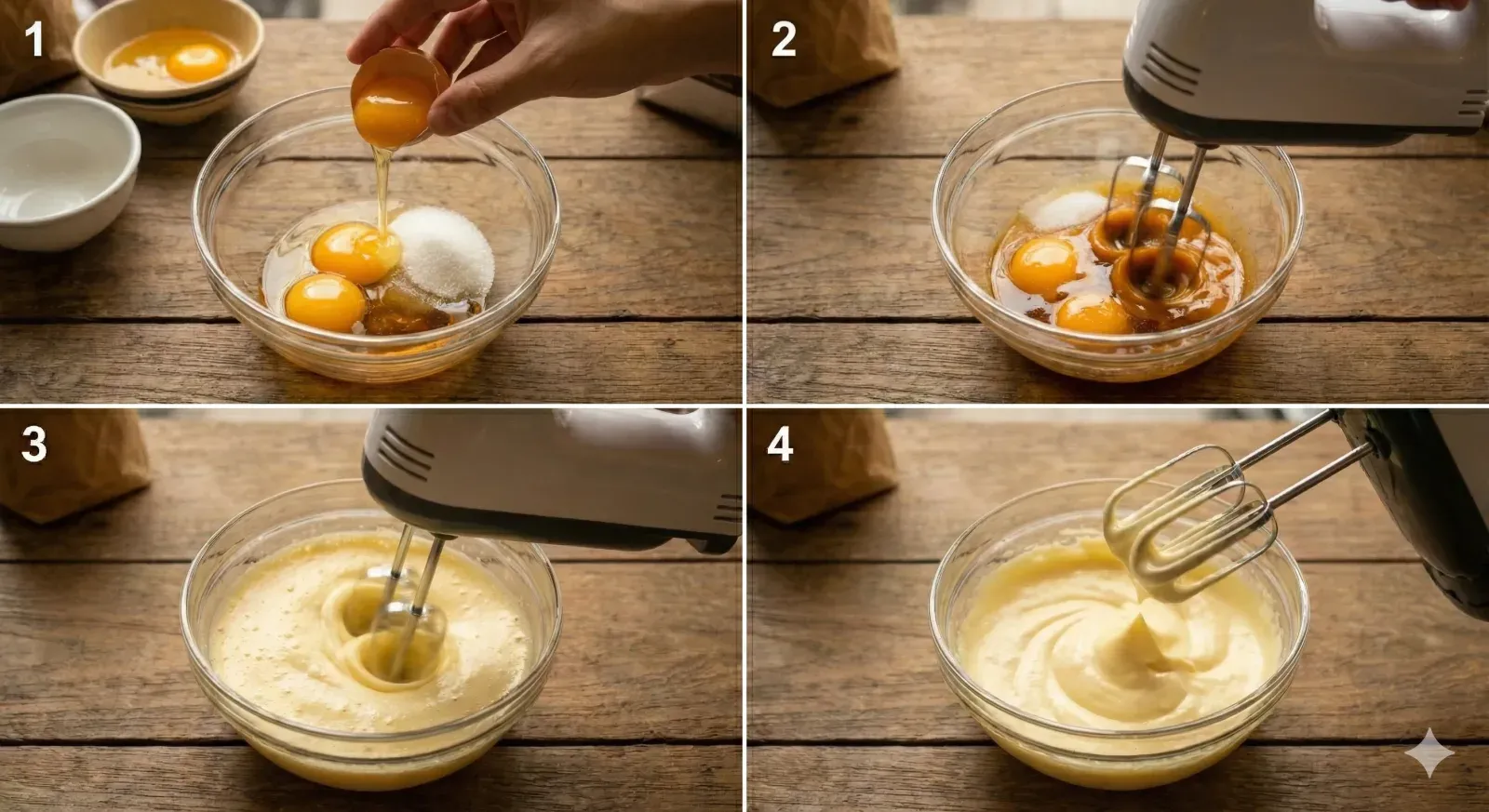
2Separate the egg yolks from the whites. You only need the yolks for this Vietnamese egg coffee recipe. Next, place the egg yolks in a mixing bowl with 3 tablespoons of honey and 2 tablespoons of sugar. Then beat the mixture on high speed in one direction using an electric mixer. Keep going until it turns pale yellow, light, and airy.
Pro tip: Beat in the same direction the whole time to prevent separation. The cream should be thick and smooth. It should hold its shape when you lift the beater.
Step 3: Assemble the Egg Coffee
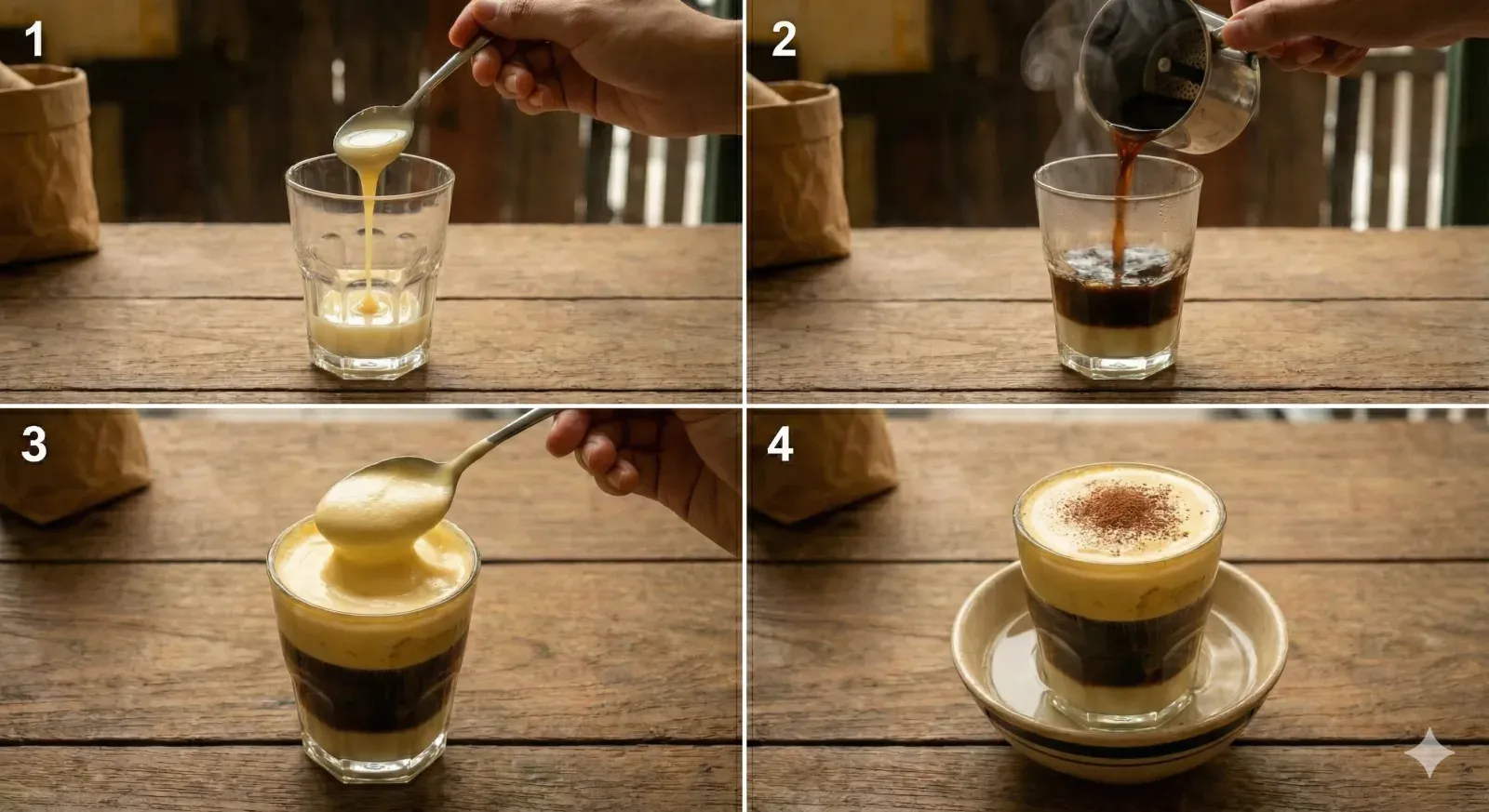
3Your coffee is brewed and your egg cream is ready. Now it is time to put the drink together:
- Add 4 tablespoons of sweetened condensed milk to your serving glass (adjust to taste)
- Pour the hot black coffee over the condensed milk
- Gently spoon the whipped egg cream on top, creating a beautiful layered effect
- Sprinkle cinnamon or cocoa powder on top for garnish
- Place the coffee glass in a small bowl filled with hot water to keep it warm
The finished drink has three layers. Condensed milk sits at the bottom, black coffee in the middle, and silky egg cream on top.
The Perfect Way to Drink Vietnamese Egg Coffee
Egg coffee must be enjoyed while hot. Coffee experts suggest gently stirring the bottom layer upward with a spoon before your first sip. Do not over-stir. This cools the coffee fast and may give the egg an odd taste.
Alternatively, many people prefer not to stir at all. Instead, they use a spoon to scoop deep into the glass. Each spoonful gets a mix of coffee and egg cream. This way, you taste the full range of flavors: rich, creamy, and bittersweet.
AdvertisementExpert Tips for the Best Vietnamese Egg Coffee Recipe

1. Choose Quality Eggs
Fresh eggs are key to great flavor and no fishy taste. In particular, free-range or local farm eggs work best. They have richer yolks in both color and flavor.
2. Keep Equipment Clean and Dry
Make sure your mixing bowl and beaters are clean and dry. Even a little water or grease can stop the egg mixture from getting fluffy.
3. Serve Hot
The hotter the coffee, the better the taste. Keep your egg coffee warm by placing the glass in a bowl of hot water. You can also microwave the black coffee briefly before adding the toppings.
4. Use Authentic Vietnamese Coffee
For the most authentic flavor, use Vietnamese robusta coffee beans. Specifically, freshly ground beans work best. The strong, bold taste of robusta pairs well with the rich egg cream.
5. Don’t Over-Stir
Too much stirring cools the coffee fast. Furthermore, it can give the egg a fishy taste. So stir gently or not at all for the best result.
Nutritional Benefits of Vietnamese Egg Coffee
While egg coffee is an indulgent treat, it does offer some nutritional benefits:
- Protein: Egg yolks provide high-quality protein and essential amino acids
- Vitamins: Rich in vitamins A, D, E, and B-complex
- Energy boost: The combination of caffeine and natural sugars provides sustained energy
- Healthy fats: Egg yolks contain beneficial fats that support brain health
Note: Due to its richness, egg coffee is best enjoyed as an occasional treat rather than a daily beverage.
Variations of Vietnamese Egg Coffee
Iced Egg Coffee
During Hanoi’s hot summers, some cafés serve iced egg coffee. Simply prepare the coffee as directed, let it cool slightly, pour over ice, and top with the egg cream.
Coconut Egg Coffee
Add a tablespoon of coconut cream to the egg mixture for a tropical twist on this classic drink.
Egg Coffee with Cheese
Some modern cafés add a sprinkle of grated cheese on top for an extra layer of richness and saltiness that contrasts beautifully with the sweet egg cream.
AdvertisementFrequently Asked Questions
Is it safe to consume raw egg yolk?
The egg yolk in this Vietnamese egg coffee recipe is not fully cooked. However, using fresh, high-quality eggs from a trusted source lowers the risk. Also, the hot coffee adds some heat. If you are concerned, use pasteurized eggs.
Can I make egg coffee without an electric mixer?
Yes. You can use a manual whisk, but it takes more effort. Expect 8 to 10 minutes of hard whisking to get the right fluffy texture.
Why does my egg cream taste fishy?
A fishy taste usually means the eggs are not fresh enough. It can also happen if the coffee has cooled too much. Therefore, always use fresh eggs and keep your coffee hot.
Can I prepare egg cream in advance?
It is best to make it fresh each time. However, you can store it in the fridge for up to 2 hours. Just give it a quick whisk before using.
What type of coffee works best?
Traditional Vietnamese robusta coffee gives the most authentic flavor. You can use any strong, dark-roasted coffee though. Avoid light roasts since they will not stand up to the rich egg cream.
Where to Try Authentic Vietnamese Egg Coffee
If you’re visiting Hanoi, these iconic spots serve the best egg coffee:
- Café Giang: 39 Nguyen Huu Huan, Hoan Kiem District (the original)
- Café Dinh: Another historic location famous for egg coffee
- Loading T Café: Modern interpretation with a view
Conclusion
Vietnamese egg coffee is more than just a drink. It is a piece of Hanoi’s cultural heritage and a sign of Vietnamese ingenuity. This Vietnamese egg coffee recipe may look complex, but it is surprisingly simple to make at home. The mix of strong coffee, sweet condensed milk, and silky egg cream creates a taste unlike anything else.
Now that you have this Vietnamese egg coffee recipe, why not try it for your next brunch or afternoon treat? Once you master it, you will see why this Hanoi specialty has won over coffee lovers worldwide.
Have you tried making Vietnamese egg coffee at home? Share your experience in the comments below!
Looking for more authentic Vietnamese recipes? Check out our collection of traditional Vietnamese drinks and desserts, including Vietnamese iced coffee, coconut coffee, and Vietnamese yogurt.
-
-