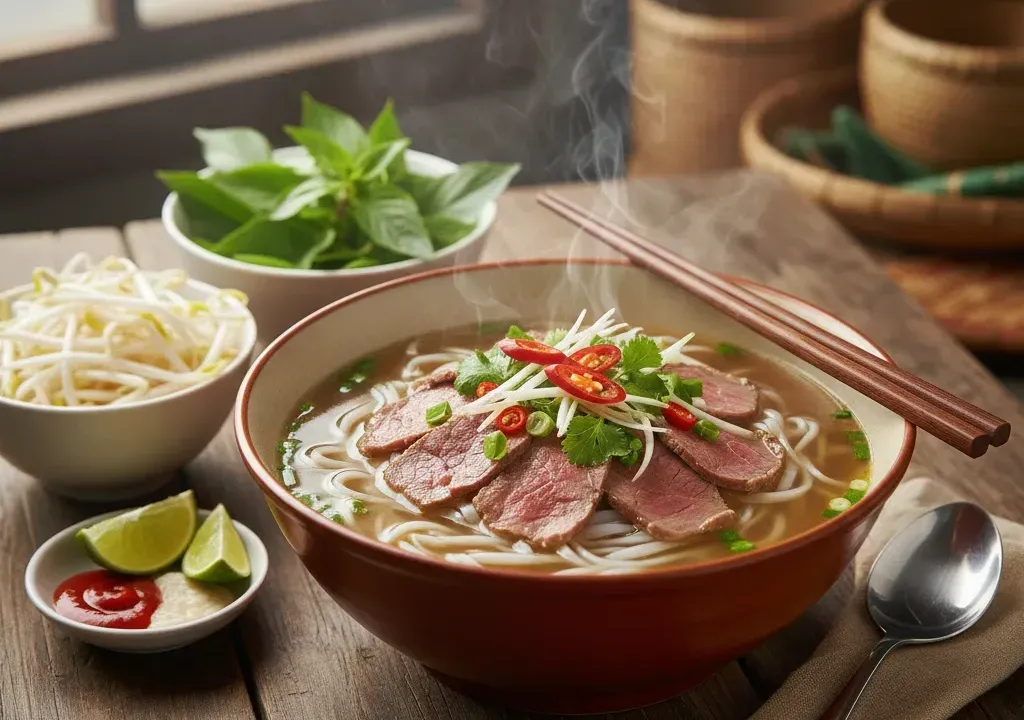
This authentic Vietnamese beef pho recipe has been perfected over generations in my family, originating from the bustling streets of Hanoi. What started as a simple street food breakfast has evolved into Vietnam’s most iconic dish, now celebrated worldwide. The secret to restaurant-quality pho bò lies in the deeply aromatic broth, which I’ll teach you to master with traditional techniques passed down from my grandmother. This recipe creates that signature clear, golden broth with complex flavors that will transport you straight to a Hanoi pho shop.
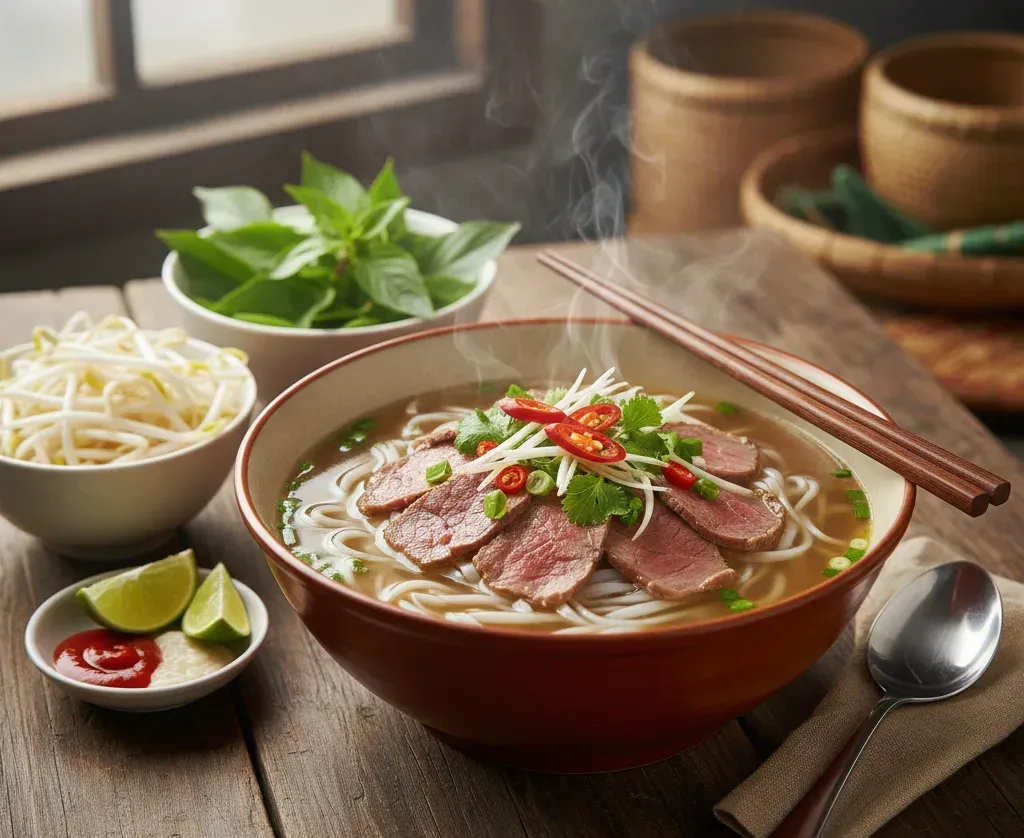
Pho is more than just a bowl of noodles - it’s a cultural treasure that represents Vietnamese culinary heritage. Born in the Red River Delta region, pho has traveled from street vendors to fine dining establishments around the globe. Whether you’re making this for a comforting breakfast or an impressive dinner, this authentic pho bo recipe will help you achieve that perfect balance of aromatic spices, tender beef, and silky rice noodles.

Ingredients
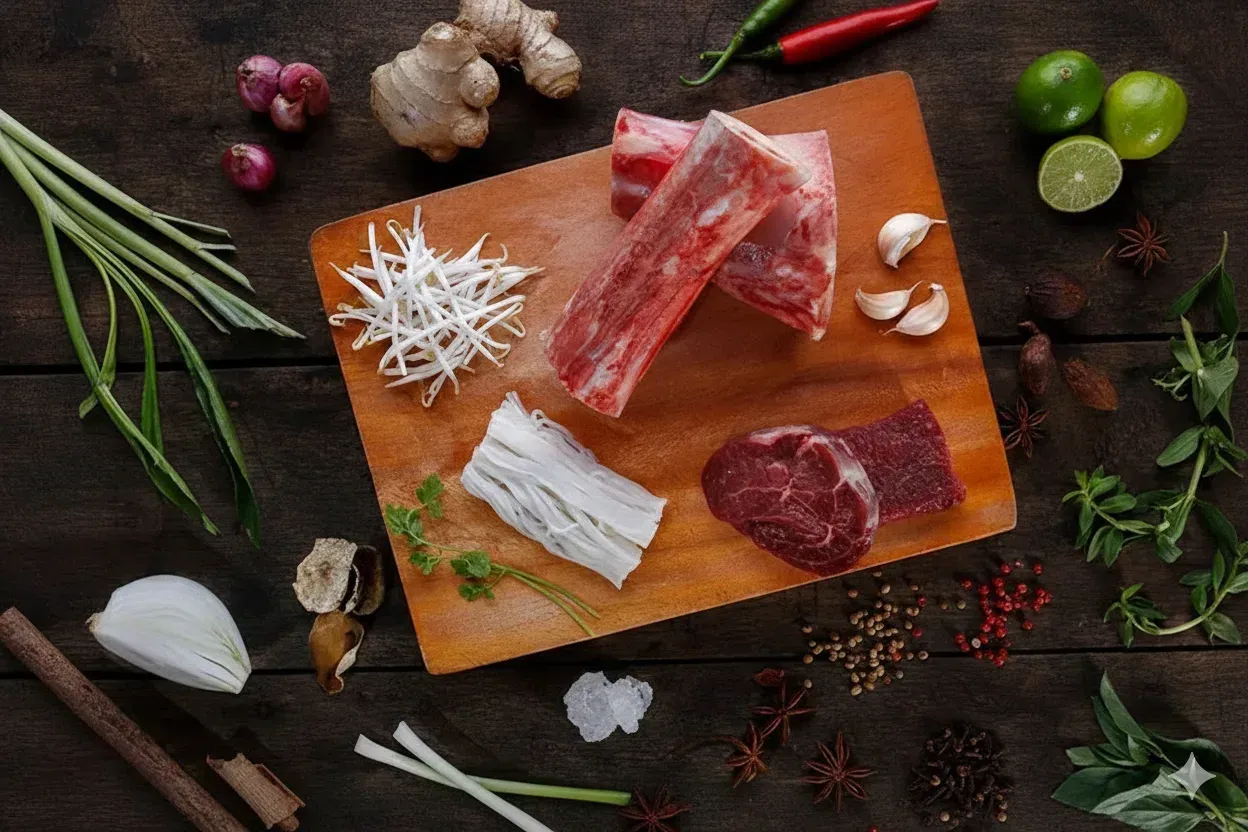
For the Broth:
-
4.4 lbs (2 kg) beef bones (knuckle and marrow bones)
-
2.6 lbs (1.2 kg) beef brisket or chuck
-
1.5 lbs (0.7 kg) beef shank
-
1 large onion (halved)
-
4-inch piece fresh ginger (halved lengthwise)
-
2 shallots
-
2 stalks lemongrass (bruised)
-
1 cinnamon stick (3 inches)
-
3 star anise pods
-
3 black cardamom pods
-
1 tablespoon coriander seeds
-
3 whole cloves
-
1 dried tangerine peel (optional)
-
2 tablespoons rock sugar
-
3 tablespoons fish sauce (Vietnamese fish sauce guide)
-
1 tablespoon salt
-
6 quarts water
For Serving:
-
2 lbs (900g) fresh rice noodles (bánh phở) or dried rice sticks
-
1 lb (450g) beef sirloin or eye round (thinly sliced for rare beef)
-
Bean sprouts
-
Fresh herbs: Thai basil, cilantro, sawtooth coriander
-
Lime wedges
-
Thai bird chilies (sliced)
-
Hoisin sauce
-
Sriracha sauce
-
Scallions (thinly sliced)
-
White onion (thinly sliced)
Directions
Step 1: Prepare and Parboil the Bones
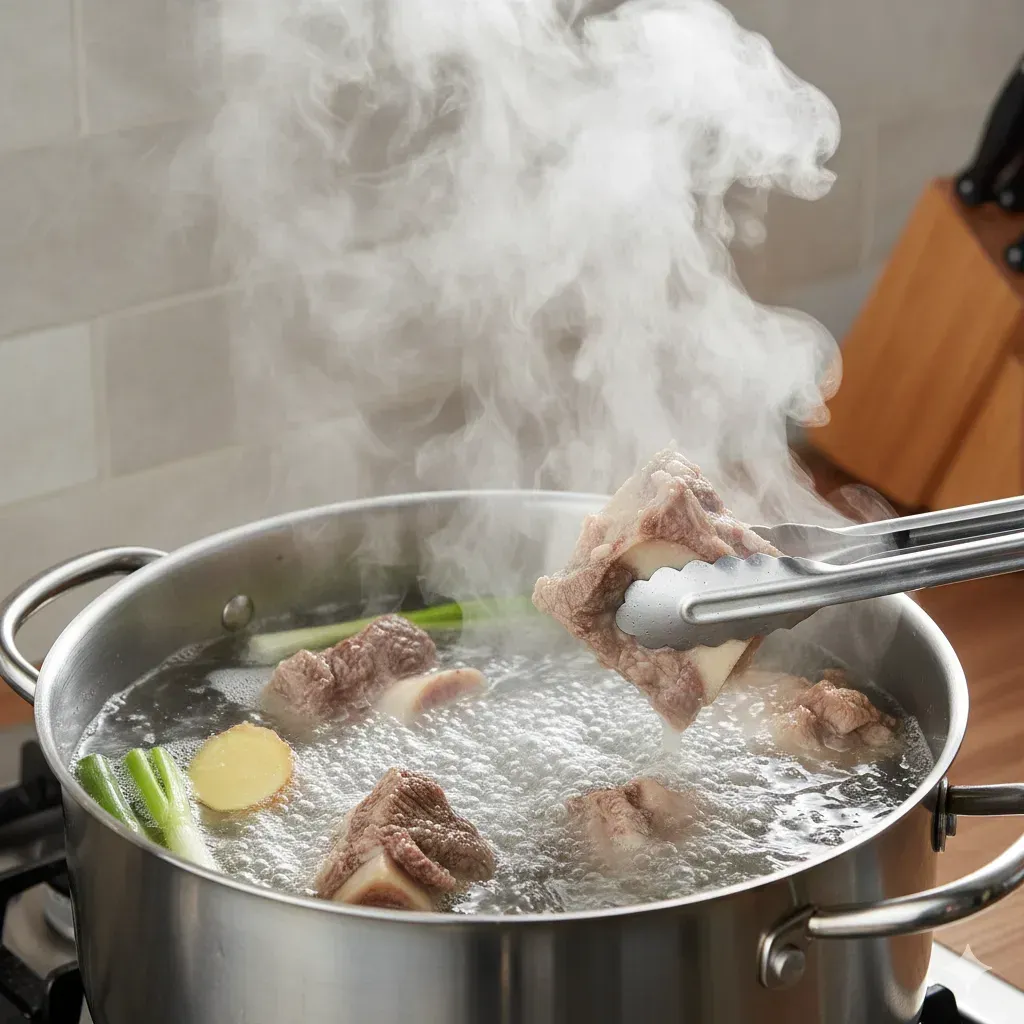
1Rinse beef bones thoroughly under cold running water. Fill a large stockpot with water and bring to a boil. Add bones and parboil for 5-10 minutes to remove impurities and blood. You’ll see lots of foam and scum rise to the surface - this is normal. Drain bones, rinse them under cold water, and scrub away any remaining residue. This crucial step ensures your pho broth stays clear and clean-tasting.
Step 2: Char the Aromatics
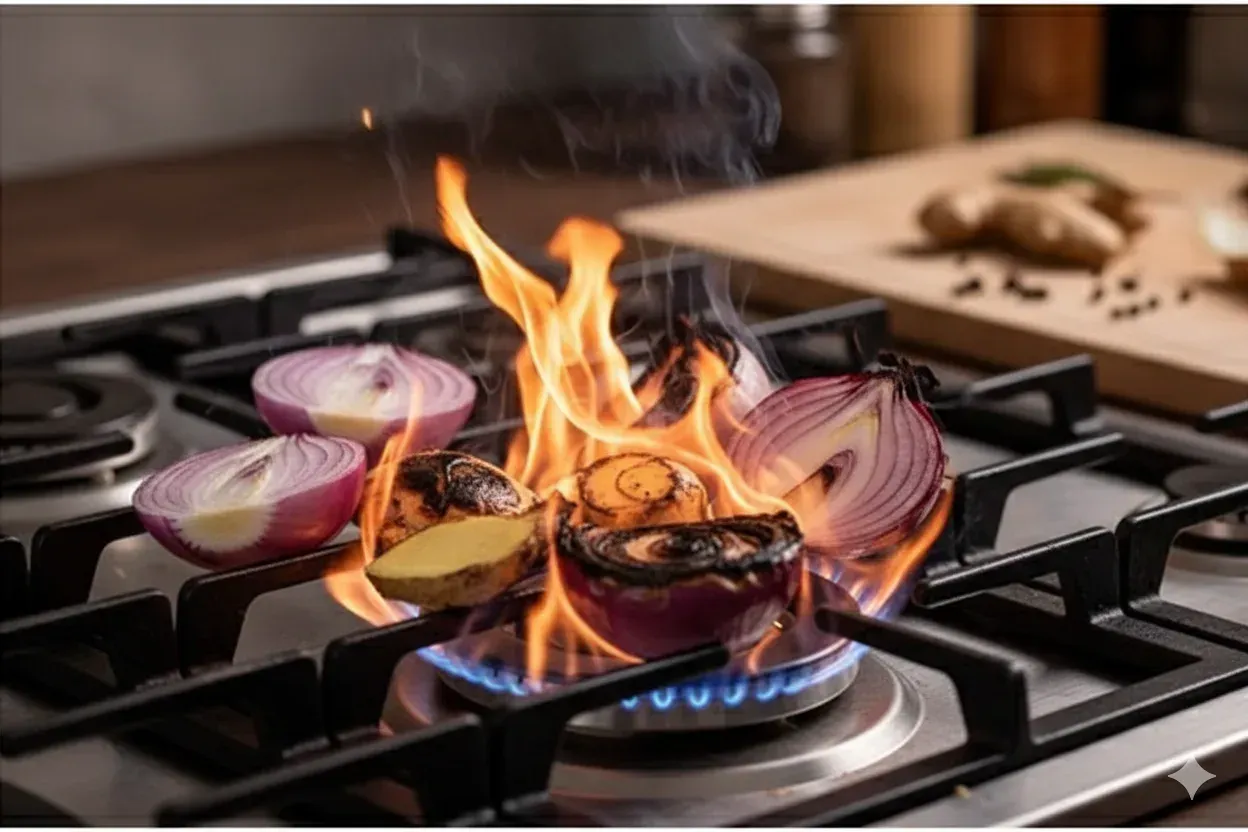
2Place onion halves, ginger, and shallots directly on your gas burner flame or under a broiler. Char until the outsides are blackened and fragrant, about 3-4 minutes per side. This traditional Vietnamese technique (learn more about Vietnamese cooking techniques) adds a subtle smoky sweetness that defines authentic pho. Rinse off the charred skin under water and set aside.
Step 3: Toast the Spices
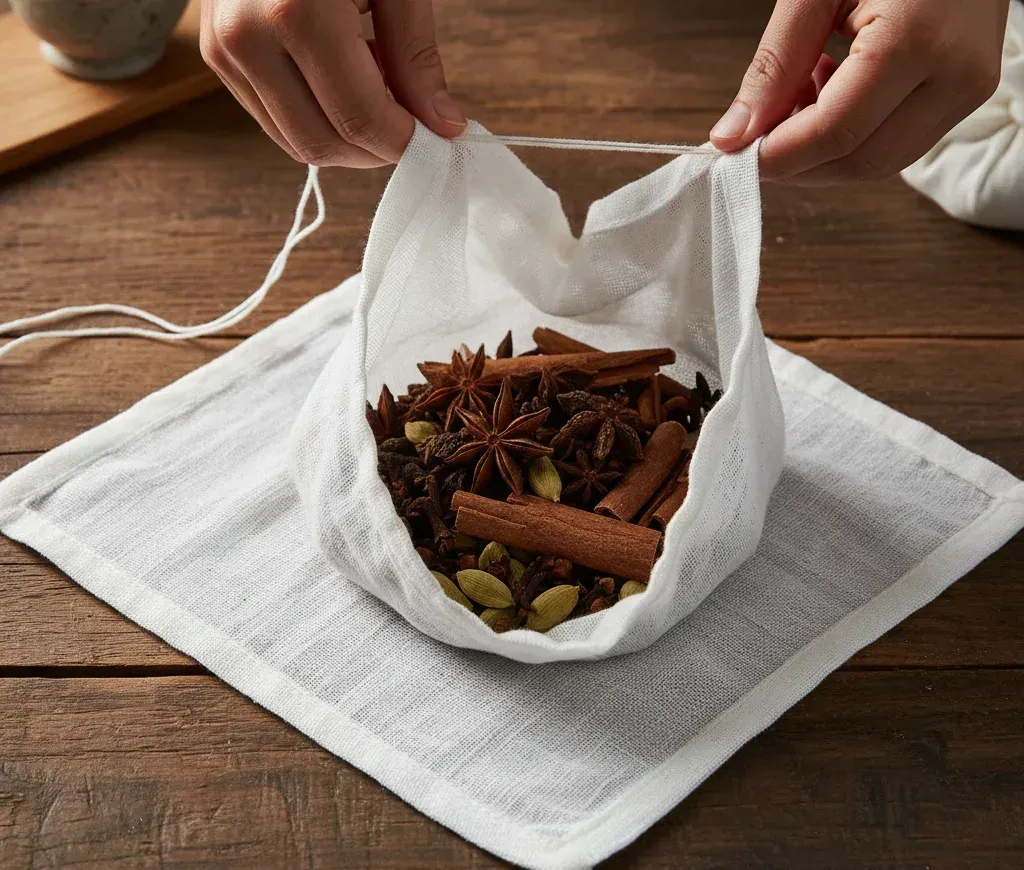
3In a dry skillet over medium heat, toast cinnamon stick, star anise, cardamom pods, coriander seeds, and cloves for 2-3 minutes until fragrant. Be careful not to burn them. Place all toasted spices into a small muslin bag or tie them in cheesecloth - this makes removal easy and keeps your broth clear. This spice blend creates the signature warm, aromatic flavor that makes Vietnamese pho so distinctive.
Step 4: Simmer the Broth
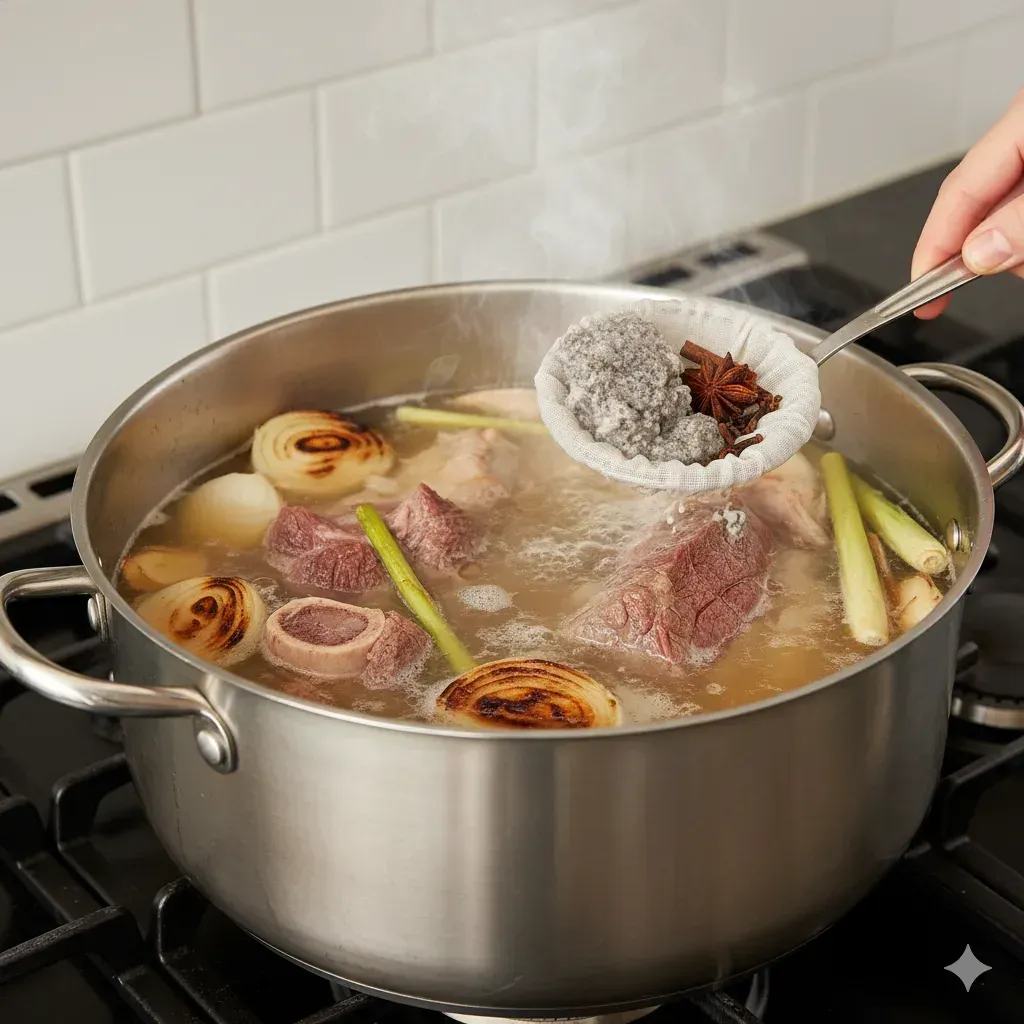
4Fill your largest pot with 6 quarts of fresh water. Add the cleaned bones, beef brisket, beef shank, charred aromatics, lemongrass, and spice bag. Bring to a boil, then immediately reduce to a gentle simmer. Skim off any foam that rises to the surface during the first 30 minutes - this is essential for crystal-clear broth. Simmer uncovered for 6-8 hours, adding water if the level drops below the bones. The long, slow simmer extracts maximum flavor and creates that signature golden color.
Step 5: Remove Meat and Season
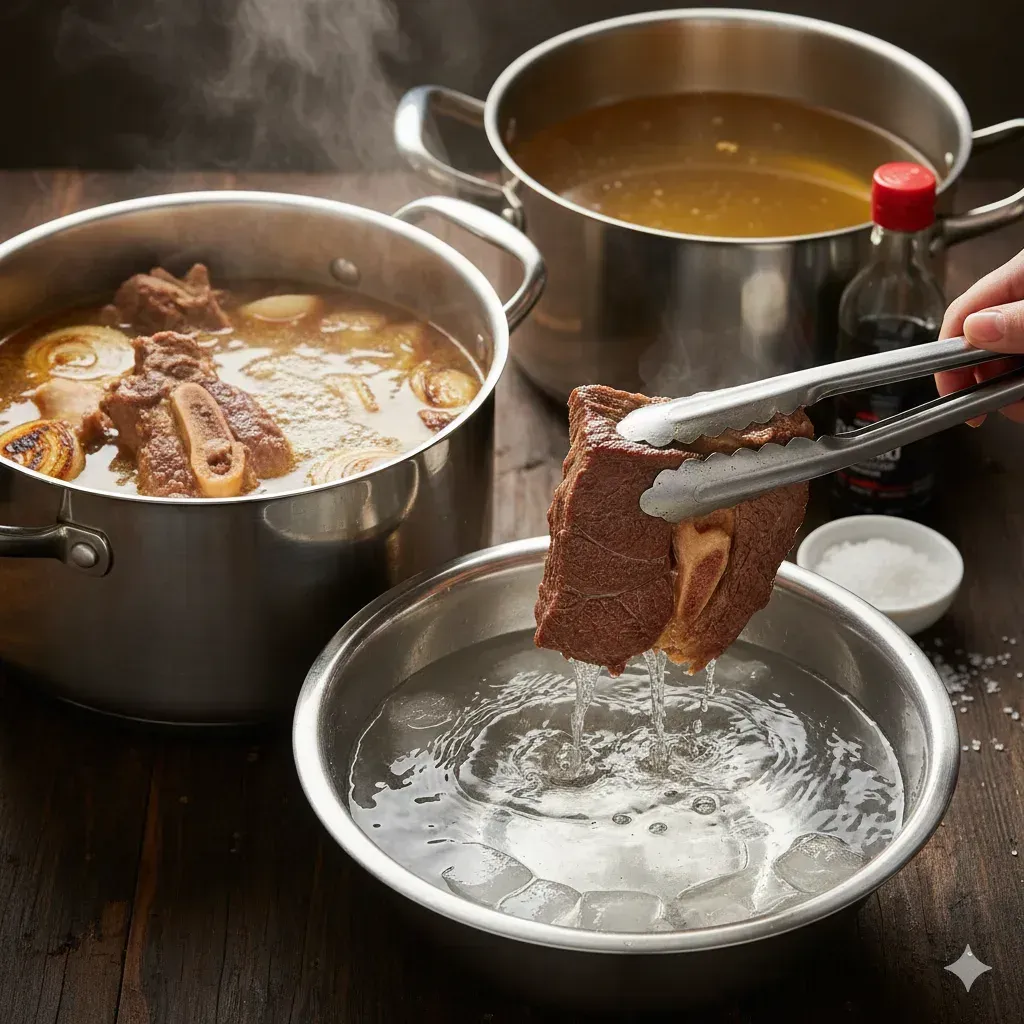
5After 3 hours of simmering, remove the beef brisket and shank (they should be tender). Immediately plunge them into ice water to stop the cooking and prevent darkening. Once cooled, refrigerate until ready to slice. Continue simmering the bones for another 3-5 hours. When finished, strain the broth through a fine-mesh sieve lined with cheesecloth. Season with rock sugar, fish sauce, and salt to taste. The broth should be rich, aromatic, and slightly sweet with savory depth.
Step 6: Prepare Noodles and Assembly
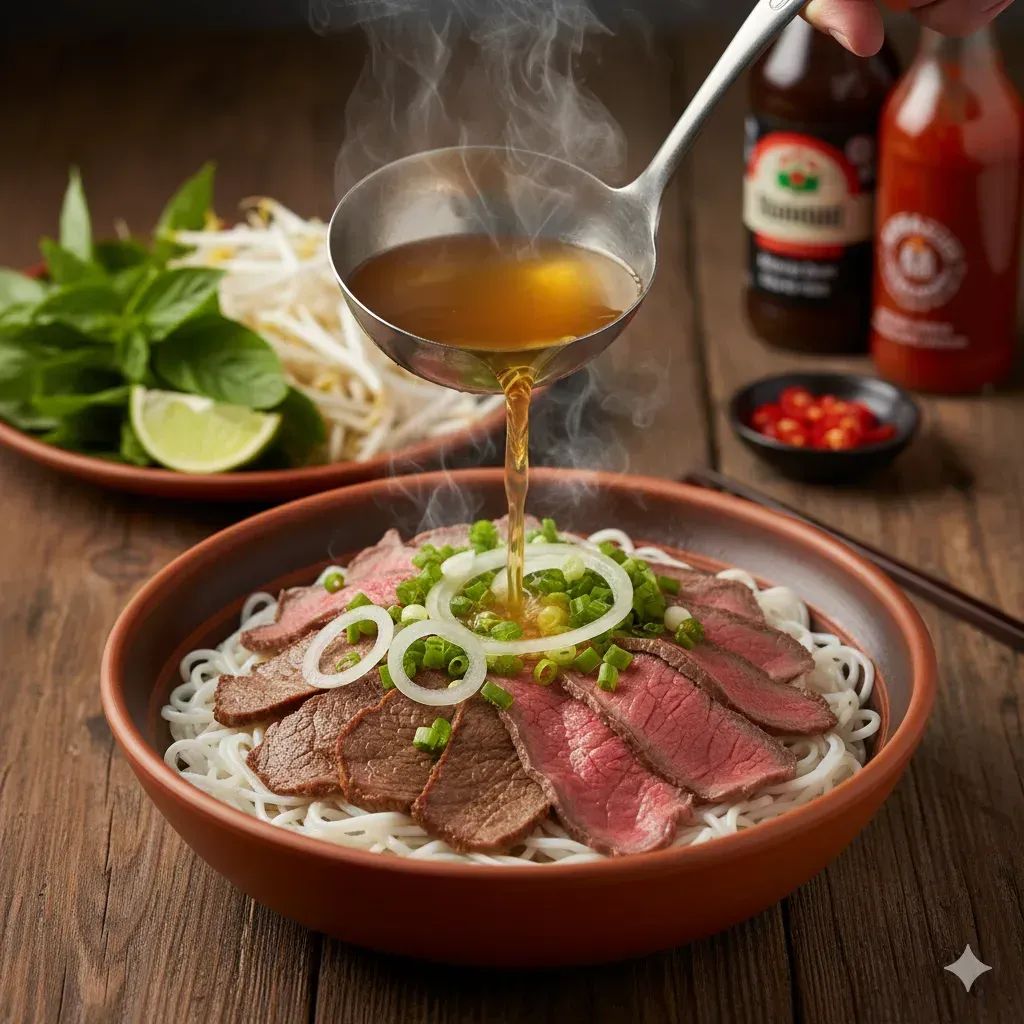
6Bring a large pot of water to a rolling boil. If using dried rice noodles, soak them in warm water for 30 minutes first. Blanch noodles in boiling water for just 30-60 seconds until tender but still chewy. Drain and rinse with cold water. Thinly slice the cooked beef and raw sirloin (freezing for 15 minutes makes slicing easier). To serve: place noodles in a large bowl, top with cooked beef slices, raw beef slices, scallions, and onions. Ladle piping hot broth over everything - the heat will cook the raw beef to medium-rare perfection.
Step 7: Serve with Fresh Herbs
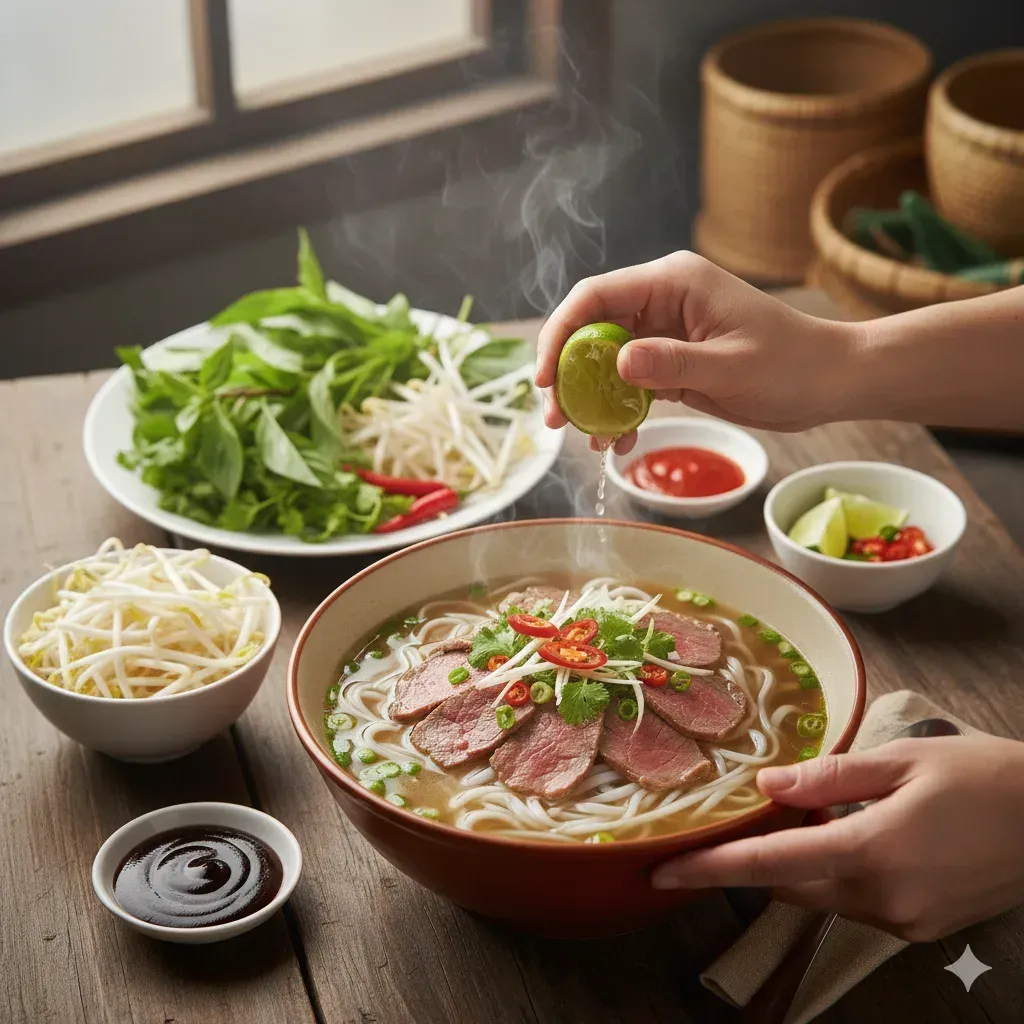
7Serve immediately with a generous plate of fresh herbs, bean sprouts, lime wedges, sliced chilies, hoisin sauce, and sriracha on the side. The beauty of authentic pho is that each person customizes their bowl to their liking. Add herbs for freshness, lime for acidity, chilies for heat, and sauces for extra depth. This is how pho is traditionally enjoyed in Vietnam - an interactive, personal experience.
Secret Tips for Restaurant-Quality Pho Bo
Master These Techniques:
✓ Char your aromatics properly: The smoky sweetness from charred onions and ginger is irreplaceable. Don’t skip this step - it’s what separates good pho from great pho.
✓ Handle your meat correctly: After removing cooked beef from broth, immediately shock it in ice water and hang to dry before refrigerating. This prevents the meat from turning dark and keeps it tender and pink.
✓ Skim, skim, skim: During the first hour of simmering, skim foam every 15-20 minutes. This ensures your Vietnamese beef pho broth stays clear and beautiful.
✓ Use only beef bones: Never mix pork or chicken bones with beef - it muddies the pure, clean flavor that defines authentic pho bo. Each type of pho has its own distinct character.
✓ Get your noodle texture right: Rice noodles should be blanched in rapidly boiling water, swirled with chopsticks to separate, then quickly drained. They should be tender but still have a slight chew (al dente).
✓ Broth temperature matters: The broth must be at a full rolling boil when ladled over the raw beef. This ensures the meat cooks to perfect medium-rare without being overdone.
✓ Proper broth ratio: Don’t drown your noodles - ladle just enough broth to rise about 1cm above the noodles and meat. Too much broth makes the bowl watery.
✓ Rock sugar vs. white sugar: Rock sugar adds a subtle, complex sweetness that white sugar cannot replicate. It’s worth seeking out at your local Asian grocery store.
AdvertisementFrequently Asked Questions About Making Pho Bo
How long does it take to make Vietnamese beef pho?
The traditional method requires 8-10 hours total, with most of that time being hands-off simmering. The bone broth needs 6-8 hours of gentle simmering to extract maximum flavor and achieve that signature golden color. However, you can use shortcuts:
- Pressure cooker method: Reduces broth time to 2-3 hours
- Instant Pot: Makes acceptable pho broth in about 90 minutes
- Make-ahead strategy: Prepare broth the day before and refrigerate overnight (this actually improves flavor and makes fat removal easier)
For business or regular home cooking, many Vietnamese restaurants start their broth at 4 AM to serve lunch, or simmer overnight for next-day service.
Why is my pho broth cloudy instead of clear?
Cloudy pho broth is a common problem with several causes:
Main culprits:
- Skipping the parboil: Not parboiling bones to remove blood and impurities is the #1 reason for cloudy broth
- Boiling too vigorously: Keep it at a gentle simmer - aggressive boiling emulsifies fat into the broth
- Not skimming foam: Skim diligently during the first hour of cooking
- Overcrowding the pot: Too many bones in too little water creates cloudiness
Pro tip: If your broth is already cloudy, strain it through cheesecloth or coffee filters. For crystal-clear broth like restaurants, add a “raft” (egg whites whisked with crushed eggshells) which attracts impurities as it cooks, then strain.
Can I use chicken or pork bones instead of beef bones?
No, you should never substitute beef bones with pork or chicken bones when making traditional pho bo (beef pho). Here’s why:
- Flavor profile is completely different: Beef bones create a rich, deep, slightly sweet broth with distinctive umami. Pork bones make a lighter, sweeter broth (better for bun rieu or hu tieu). Chicken bones create delicate broth perfect for pho ga (chicken pho)
- Each pho has its identity: Vietnamese cuisine has distinct pho varieties - pho bo (beef), pho ga (chicken), and even pho hai san (seafood). Mixing proteins creates confusion and loses authenticity
- Aromatic spice balance: The spice blend in pho bo is specifically calibrated for beef’s robust flavor. It would overpower chicken or clash with pork
The verdict: If you want chicken pho, make pho ga with chicken bones and adjust the spices accordingly. Don’t try to make beef pho without beef - it simply won’t taste like authentic Vietnamese pho.
-