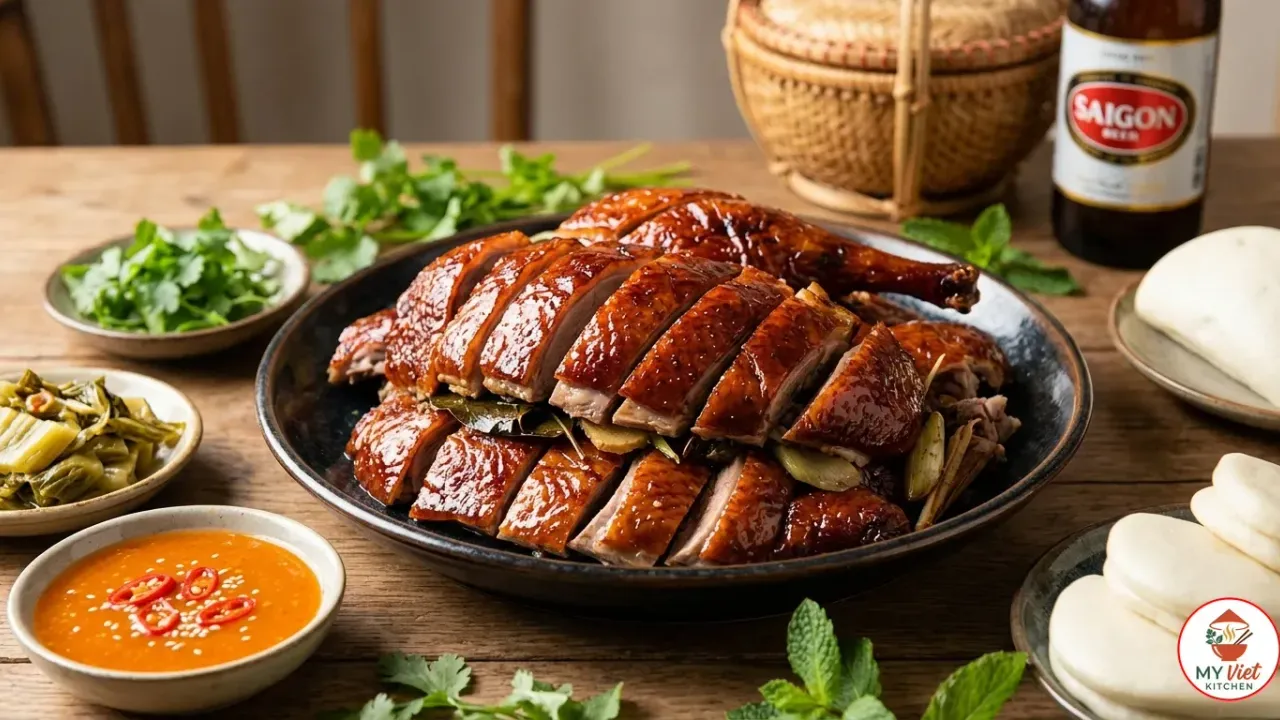
Vit quay is the crown jewel of Vietnamese roast duck cookery. The dish, known in full as vịt quay, marries a glossy mahogany skin with juicy five-spice scented meat. In this guide, you will learn how to make authentic Vietnamese roast duck at home, from the boiling water blanch that tightens the skin to the maltose glaze that gives vit quay its lacquered shine. We also cover the famous Lang Son version with fragrant mac mat leaves, plus three classic ways to serve the roast duck once it leaves the oven.
Prep Time: 45 minutes | Cook Time: 90 minutes | Drying Time: 8 hours | Servings: 4
Difficulty: Medium | Calories: ~560 per serving
What Makes Vit Quay Special?
Vit quay stands apart from every other roast duck because of its lacquered skin and fragrant five-spice meat. Each slice glows a deep mahogany red, with crackling skin and tender pink flesh underneath. Most importantly, the Vietnamese roast duck stays juicy because the cavity is packed with mac mat leaves, ginger, and scallions, which steam the meat from inside while the skin crisps in the oven. As a result, vit quay is one of the most rewarding banquet dishes you can cook at home.
The dish has its roots in northern Vietnam, where the Tay and Nung ethnic groups of Lang Son province perfected vit quay centuries ago. Because Lang Son sits along the old trade route to China, the cooks there borrowed glazing tricks from Cantonese roast duck masters. Yet they also added their own touch, most notably the use of fresh mac mat leaves, a citrusy mountain herb that grows wild in the region. Today, vit quay appears at every kind of Vietnamese feast, from Lunar New Year tables to wedding banquets to weekday dinners in Hanoi.
What makes a great vit quay is balance. The skin must shatter at the first bite, while the meat should taste deeply of five-spice and ginger without feeling salty. A good Vietnamese roast duck also needs a tangy dipping sauce to cut through the rich fat. If you love bold Vietnamese mains, you will also enjoy our recipes for bo kho and com tam. According to the Wikipedia overview of Vietnamese cuisine, vit quay ranks among the most beloved festive dishes in the country and is often listed alongside heo quay as a signature Vietnamese roast meat.

Choosing the Right Duck for Vit Quay
Great vit quay starts with the right bird. The duck must have a thick fat layer under the skin, since the rendered fat is what makes the meat juicy. Look for a 4-to-5-pound duck with intact, unbroken skin and a plump breast. Here are the best options to look for at your butcher or Asian market when you plan to roast a Vietnamese duck.
- Pekin duck (the classic): Also called Long Island duck in the US, Pekin is the standard for Vietnamese roast duck because of its thick skin and mild flavor. Most supermarkets carry a frozen Pekin in the 4-to-5-pound range, which is ideal for one home pan.
- Male muscovy duck (most authentic): Vietnamese cooks prize male muscovy for its firmer meat and richer flavor. The bird is leaner than Pekin, although the skin still crisps beautifully when properly dried. Look for one at a Vietnamese or Filipino market.
- Free-range farm duck (premium pick): A heritage farm duck has deep flavor and a thicker fat layer than commercial breeds. The cost is higher, but the payoff is worth it for a holiday vit quay or a banquet roast.
- Avoid lean game ducks: Wild mallard and other game ducks are too lean for this recipe. The meat dries out before the skin has a chance to crisp. Stick to farmed ducks with visible fat under the skin for the best Vietnamese roast duck.
Ingredients for Vit Quay
For Cleaning and Deodorizing:
- 1 whole duck, about 4 to 5 pounds, preferably male
- 2 tablespoons coarse salt
- 3 tablespoons Vietnamese white rice wine (or vodka)
- 1 thumb-size piece of ginger, smashed
For the Five-Spice Marinade:
- 1 tablespoon Vietnamese five-spice powder
- 2 teaspoons salt
- 1 tablespoon sugar
- 1 tablespoon hoisin sauce
- 2 tablespoons oyster sauce
- 1 tablespoon soy sauce
- 1 tablespoon minced garlic
- 1 tablespoon minced ginger
- 1 teaspoon ground black pepper
- 1 teaspoon annatto powder or sweet paprika
For the Cavity Aromatics:
- 1 small handful fresh mac mat leaves (or 4 kaffir lime leaves plus 2 bay leaves)
- 3 scallions, cut into 2-inch lengths
- 4 garlic cloves, smashed
- 3 thick slices of ginger
- 2 star anise pods
- 1 small cinnamon stick
For the Maltose Glaze and Skin Blanch:
- 8 cups water for blanching
- 3 tablespoons rice vinegar
- 3 tablespoons maltose (or honey)
- 1 tablespoon dark soy sauce
For the Hoisin Dipping Sauce:
- 2 tablespoons hoisin sauce
- 1 teaspoon sesame oil
- 1 small red chili, sliced
- 1 teaspoon roasted white sesame seeds
- 1 garlic clove, finely minced
- 1 teaspoon fresh lime juice
Pro tip: Maltose is sold at most Asian grocers in small plastic tubs. If you cannot find it, mix 3 tablespoons of honey with 1 teaspoon of light corn syrup for a similar caramelization on your Vietnamese roast duck skin.
Step-by-Step Instructions for Vit Quay
Step 1: Clean and Deodorize the Duck
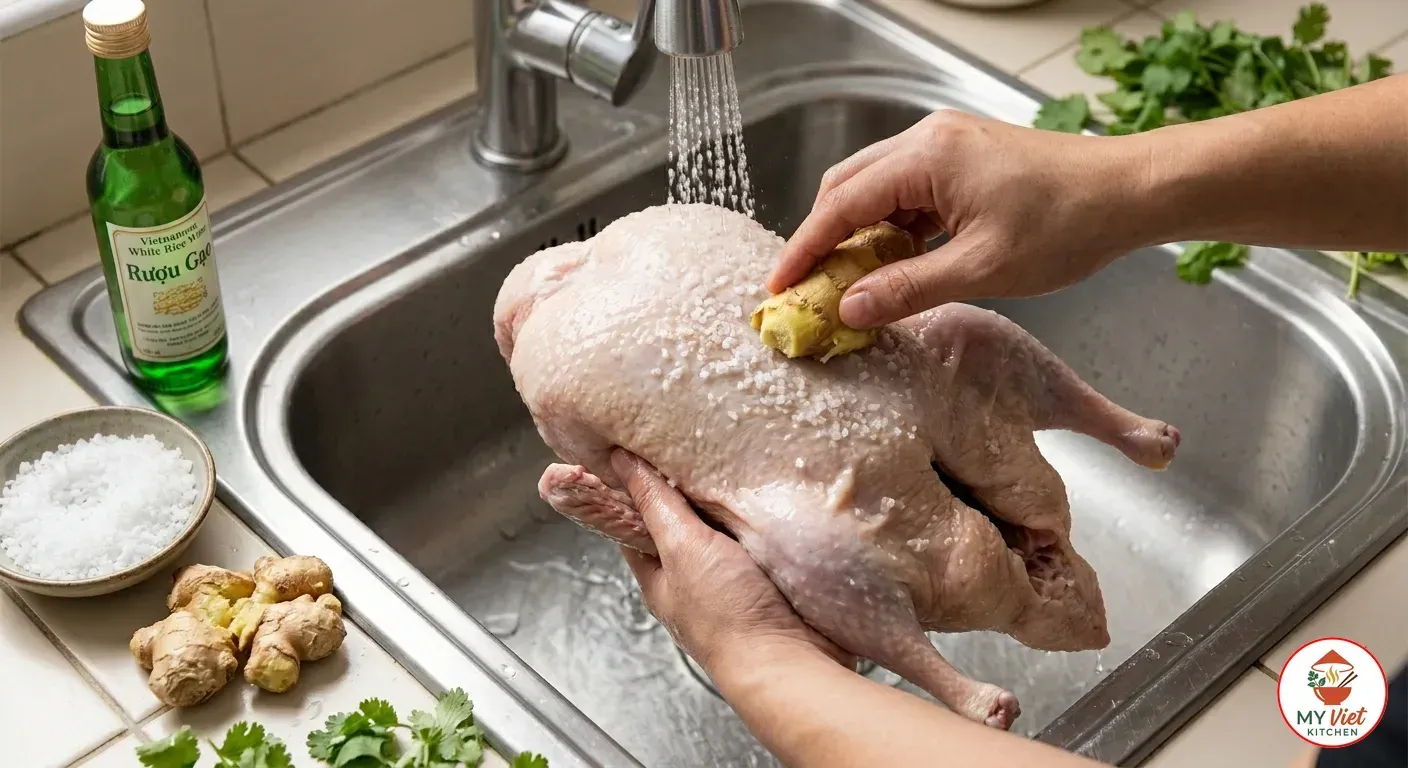
1 Rub the duck inside and out with coarse salt, then scrub the skin with smashed ginger and rice wine. Rinse under cool water and pat the bird completely dry with paper towels. This step removes the gamey smell that ruins so many homemade vit quay attempts. The ginger and wine work together to neutralize the strong odor inside the cavity.
Be gentle while you handle the skin. Avoid puncturing it with your fingernails or a knife, since any hole will leak fat during roasting and ruin the crackling. Most importantly, dry the cavity well, because trapped water will steam the marinade right out of the meat. Hang the duck over the sink for 10 minutes before moving to the next step.
Step 2: Mix the Five-Spice Marinade
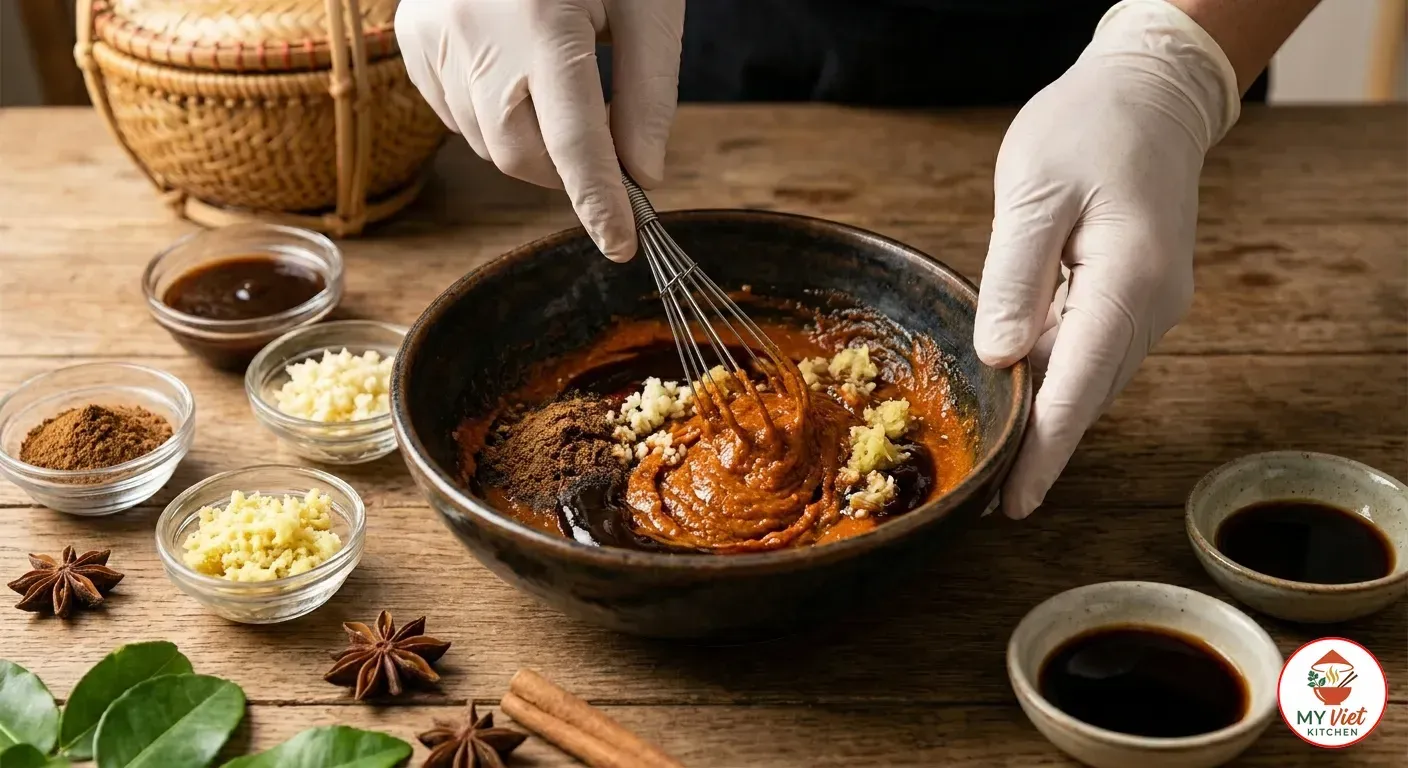
2 In a small bowl, combine the five-spice powder, salt, sugar, hoisin, oyster sauce, soy sauce, minced garlic, minced ginger, pepper, and annatto powder. Whisk into a thick, fragrant paste that smells warm and slightly sweet. The annatto is optional, although it adds a beautiful orange tint to the meat that you would otherwise miss.
The marinade is the soul of any Vietnamese roast duck. Without a balanced five-spice blend, the meat tastes flat no matter how crisp the skin turns. Taste a tiny dab on the tip of your finger. It should hit you first with salt, then sweetness, then a slow warmth of star anise and clove on the finish.
Step 3: Marinate and Stuff the Cavity
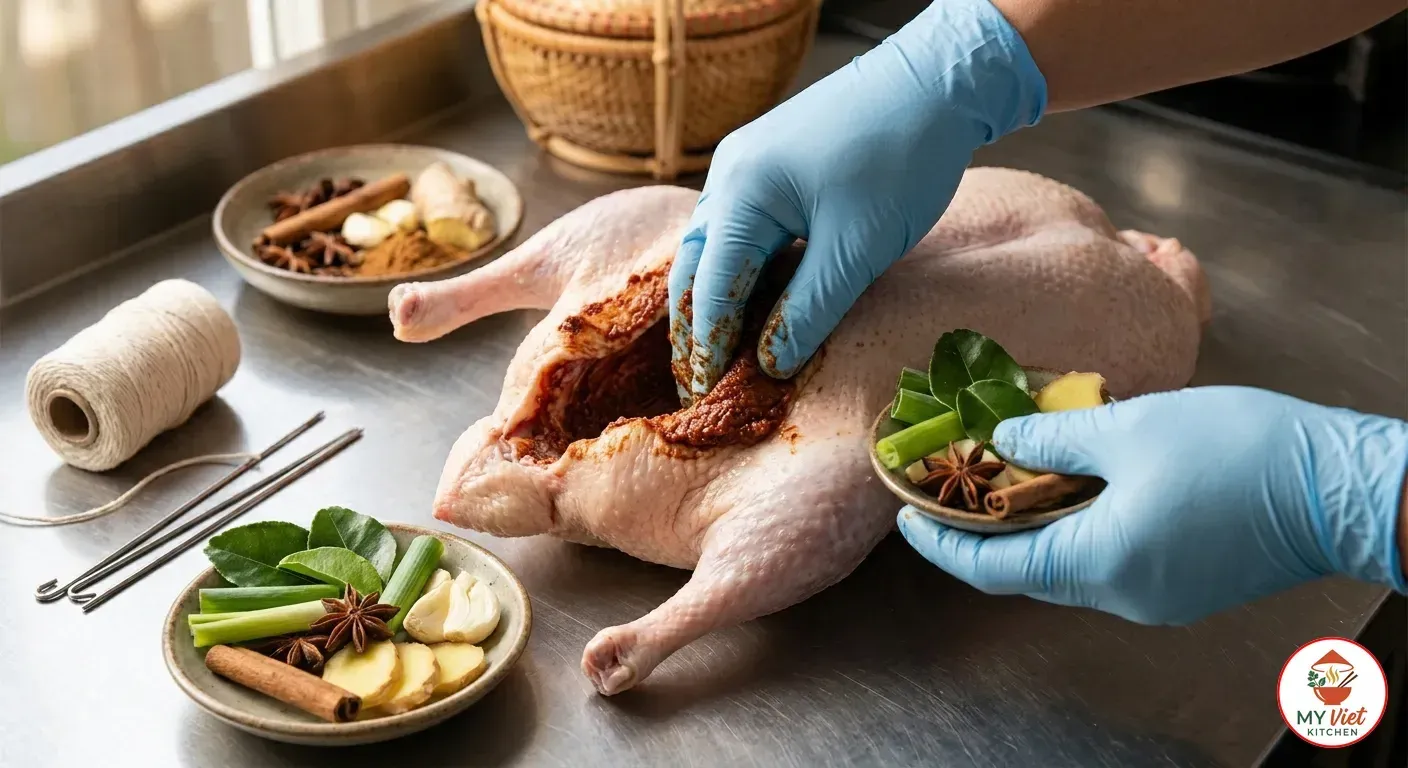
3 Wear a pair of food-safe gloves and rub the marinade thoroughly inside the cavity. Reach into every corner so the spices coat every wall. Stuff the duck with mac mat leaves, scallions, smashed garlic, ginger slices, star anise, and the cinnamon stick. The aromatics will steam the meat from inside as the duck roasts.
Sew the belly closed with kitchen twine or seal it with two metal skewers. Closing the cavity is important because it traps the fragrant steam inside the bird. Otherwise, the cavity juices will drip into the pan and the meat will dry out. Set the stuffed duck aside while you prepare the boiling water blanch for the skin.
Step 4: Blanch the Skin with Boiling Water
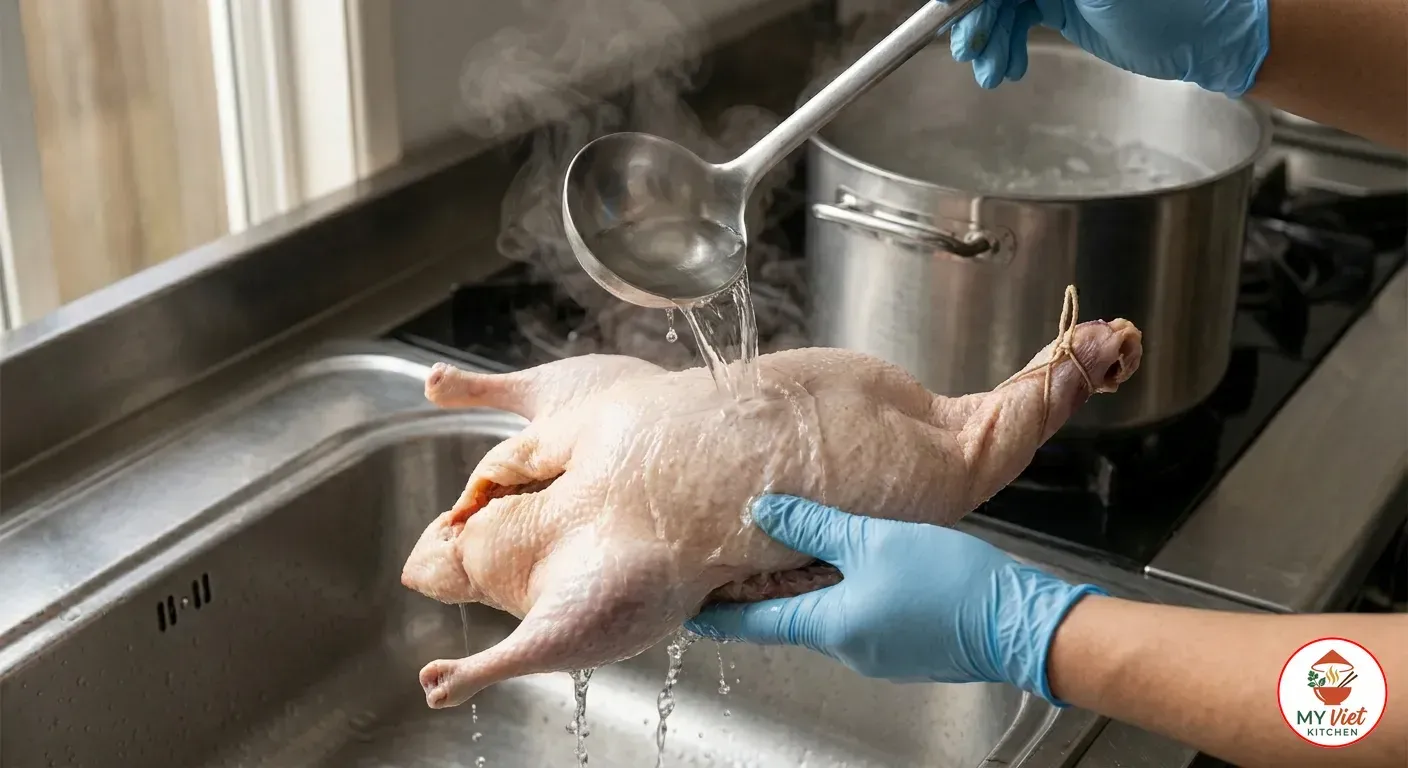
4 Bring 8 cups of water to a rolling boil in a tall stockpot. Hang the duck by its neck over a clean sink, or set it on a wire rack inside a roasting pan. Ladle the boiling water slowly over the skin, covering every inch from neck to tail. You will see the skin shrink and tighten almost instantly as the proteins set.
This step is the secret behind every great vit quay you have ever eaten in Hanoi or Lang Son. The boiling water closes the pores of the skin so that it dries flat and crisps evenly in the oven. Skipping this step gives you a soft, bubbly skin instead of the crackling you want. Pat the duck dry once more after the blanch.
Step 5: Apply the Maltose Glaze
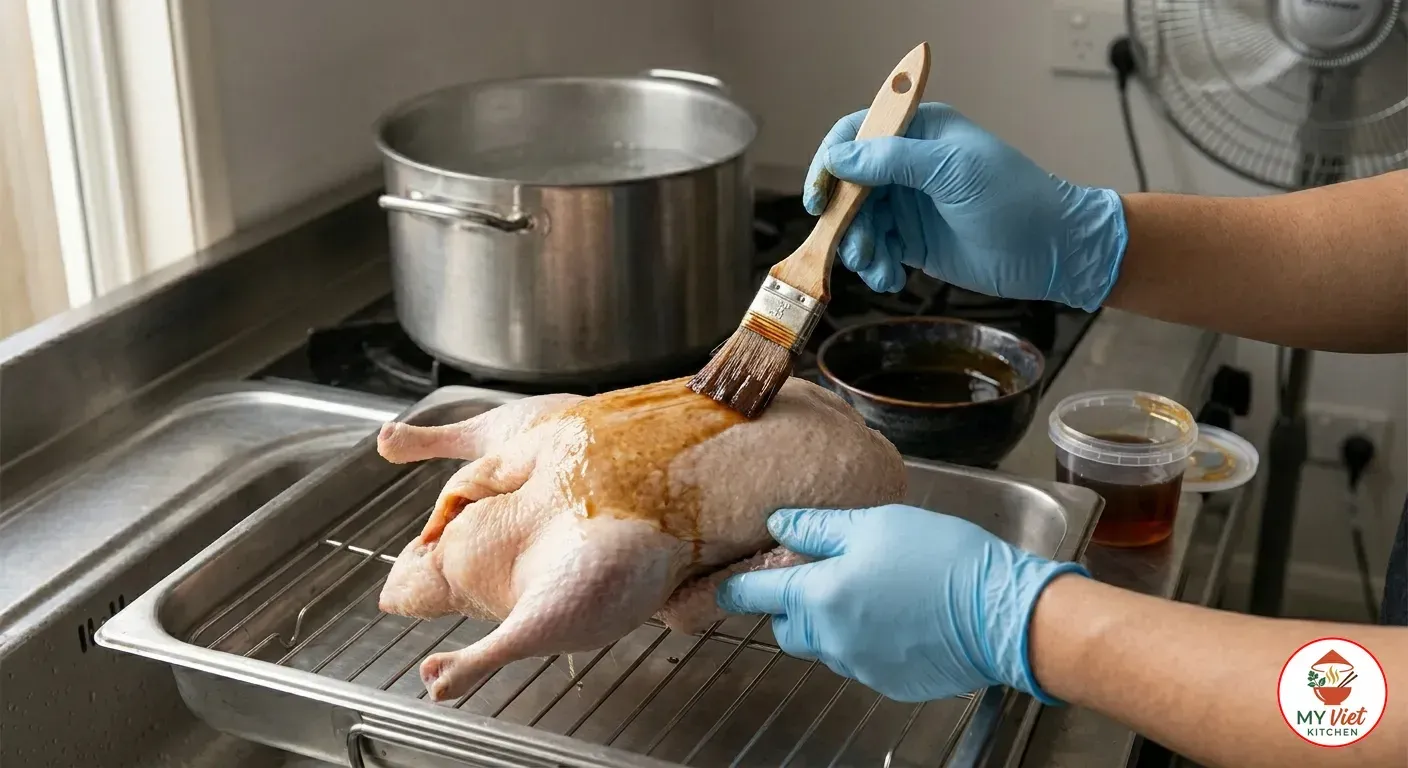
5 In a small bowl, stir the maltose, rice vinegar, and dark soy sauce into a smooth glaze. If your maltose is very thick, warm it gently in the microwave for 10 seconds. Brush the glaze evenly over the entire skin in three coats, letting each coat dry for 5 minutes before brushing the next.
Maltose is the secret behind the glossy mahogany sheen of any classic Vietnamese roast duck. Unlike honey, maltose caramelizes slowly and clings to the skin during the long drying phase. As a result, the finished bird has that lacquered red color you see in the windows of Hanoi roast meat shops. Honey works as a backup, although the final color will be slightly less dramatic.
Step 6: Air-Dry the Skin Overnight
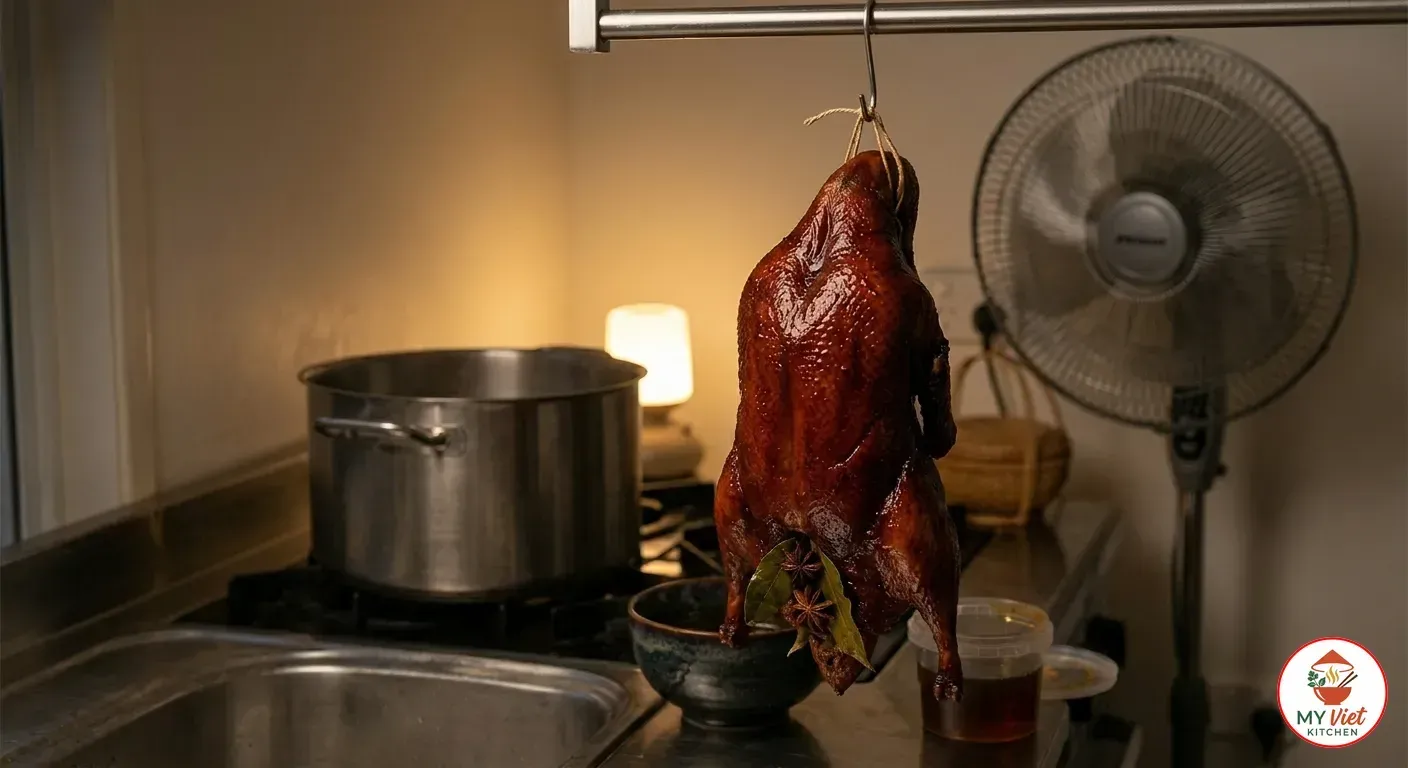
6 Hang the duck breast-up in front of a fan for 8 hours, or place it uncovered on a rack in the fridge overnight. Patience here is everything, since the skin needs to feel papery and slightly tacky before it ever sees the oven. A wet skin will steam in the oven instead of crisping.
If you have time, dry the bird for a full 24 hours for an even crisper crackling. Many Vietnamese roast duck shops in Lang Son hang their birds for two full days before roasting. The home version still produces a stunning vit quay with one overnight rest, although the longer the dry, the better the result.
Step 7: Roast at High Heat
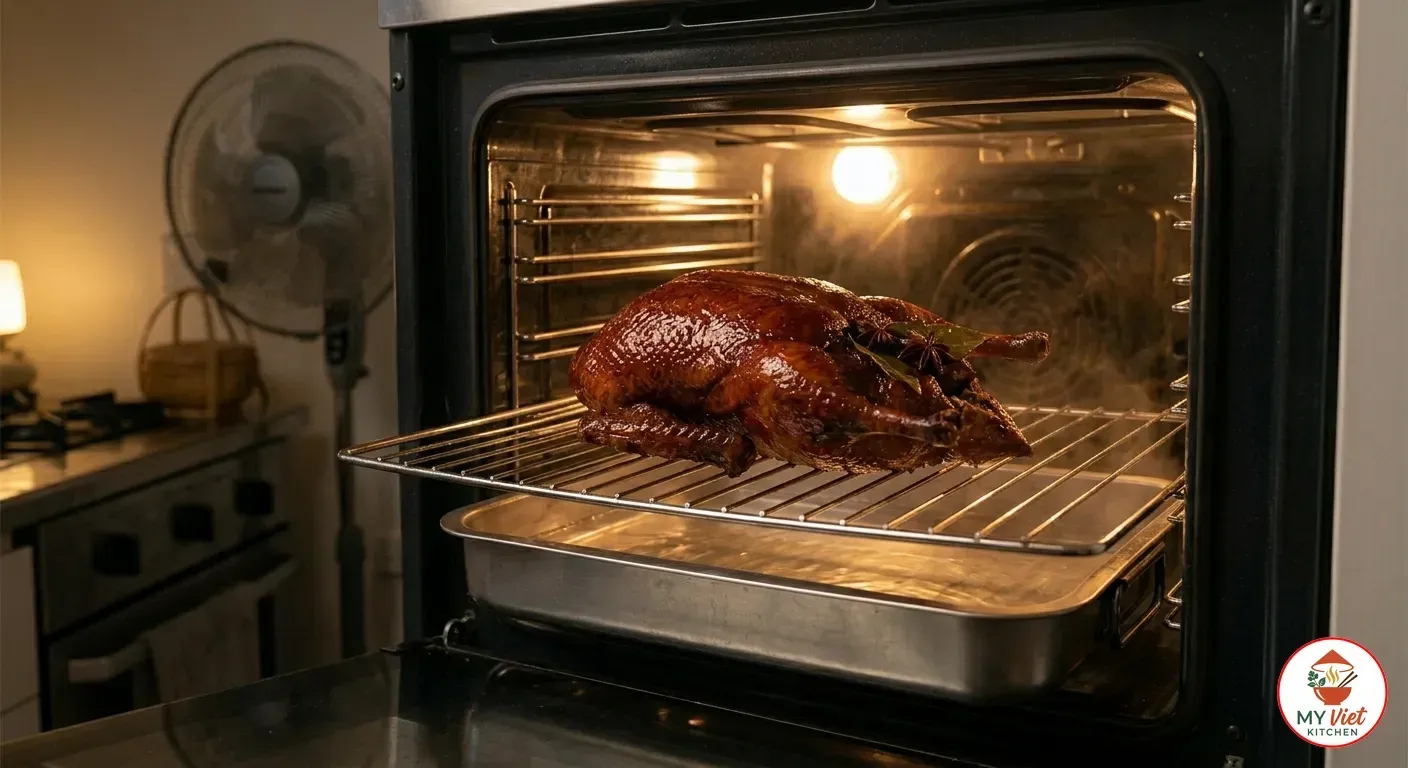
7 Preheat the oven to 425 degrees F. Set the duck breast-up on a roasting rack placed over a pan with 2 cups of water. The water catches the dripping fat and keeps the oven from smoking. Roast at 425 degrees F for 25 minutes to start the crackling, then lower the temperature to 350 degrees F and roast for another 50 minutes.
Brush the duck with any leftover glaze halfway through the lower-heat roast. If the wing tips or drumsticks darken too quickly, tent them with small squares of foil. The Vietnamese roast duck is ready when an instant-read thermometer in the thickest part of the thigh reads 165 degrees F. The juices should run clear, not pink.
Step 8: Finish, Rest, and Carve
8 Turn the heat back up to 475 degrees F for 8 minutes to finish crisping the skin. Watch carefully so the glaze does not burn. Pull the duck out of the oven and let it rest on a cutting board for 15 minutes. Resting lets the juices redistribute through the meat, which keeps every slice tender.
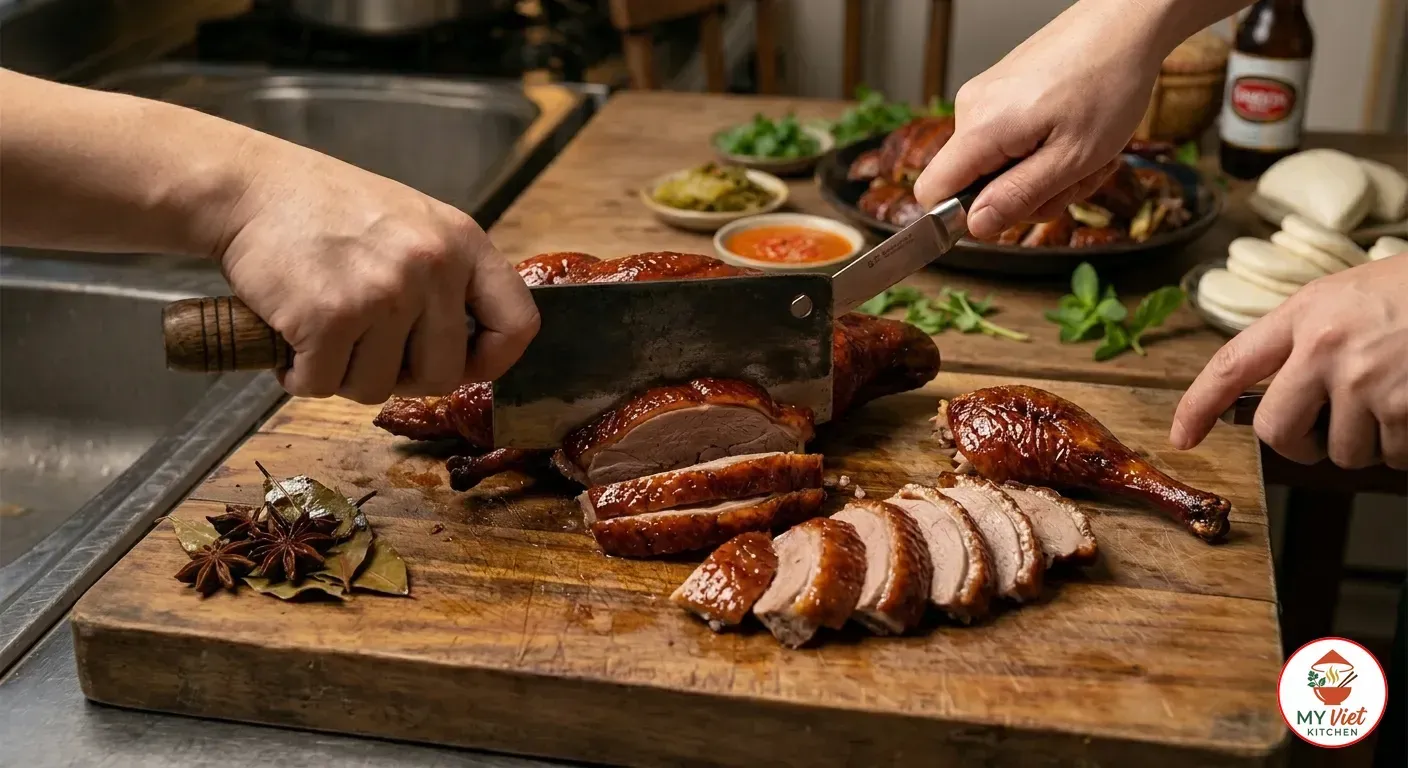
Carve the duck into serving pieces using a heavy cleaver. Start by removing the legs, then the wings, then slice the breast meat against the grain. Arrange the pieces on a warm platter with the crackling skin on top. Serve with pickled mustard greens, fresh herbs, and the hoisin dipping sauce alongside.
Expert Tips for Perfect Vit Quay
Find Fresh Mac Mat Leaves When You Can
Fresh mac mat leaves, from the wild Clausena indica tree, are the defining flavor of Lang Son vit quay. Look for them frozen at well-stocked Vietnamese grocers in larger cities. If you cannot find any, a mix of kaffir lime leaves and bay leaves comes surprisingly close. The leaves carry a citrusy, slightly resinous note that perfumes the meat from inside.
Use a Sharp Toothpick to Seal the Cavity
Sewing with kitchen twine is the traditional way, although a few sharp toothpicks woven through the belly skin work just as well. The goal is to trap the aromatic steam inside the duck during roasting. As a result, the meat picks up flavor from every direction and stays incredibly moist.
Dry the Vit Quay Skin Longer for Extra Crackling
The longer you can dry the skin, the crisper the final crackling. Aim for at least 8 hours, although 24 hours is even better. Place the duck on a rack over a baking sheet inside the fridge, with no cover. The cold, dry air pulls moisture out and tightens the skin against the meat.
Vit Quay Lang Son vs Vit Quay Bac Kinh: A Quick Comparison
There are two main schools of vit quay in Vietnam. The northern Lang Son style leans on mac mat leaves and a slow charcoal roast, while the Bac Kinh (Beijing-influenced) style features a heavier maltose glaze and shop-window lacquered look. Both are delicious, although they suit different cravings. Here is how the two styles compare side by side.
| Feature | Vit Quay Lang Son | Vit Quay Bac Kinh |
|---|---|---|
| Origin | Northern mountains, Tay-Nung | Saigon and southern shops |
| Cavity stuffing | Mac mat leaves, ginger, garlic | Star anise, cinnamon, scallion |
| Skin glaze | Honey and rice vinegar | Maltose, vinegar, dark soy |
| Roasting fuel | Charcoal in a clay oven | Gas oven or rotisserie |
| Skin color | Golden brown | Deep mahogany red |
| Typical serving | With pickled mustard greens | With banh bao or hoisin |
| Best for | Banquets and Lunar New Year | Noodle soup and banh mi |
Serving Suggestions for Vit Quay
Vit quay is rich and savory, so the way you serve it shapes the whole meal. In Vietnam, the dish almost always comes with a tray of fresh herbs, pickled vegetables, and a sweet-tangy dipping sauce. Diners build each bite at the table, which keeps every plate fresh and balanced.
The Perfect Accompaniments:
- Pickled mustard greens (dua chua): The tart bite cuts through the rich duck fat and refreshes the palate between bites.
- Cucumber and pickled carrot: Crisp ribbons of cucumber and shredded carrot add cool crunch next to the warm crackling skin.
- Hoisin-sesame dipping sauce: Sweet hoisin spiked with sesame oil, garlic, and chili is the classic dip for any Vietnamese roast duck.
- Steamed jasmine rice or banh bao: Either soaks up the dripping fat and balances the smoky flavor of the roast duck.
Beverage Pairings:
- Cold Vietnamese beer (Saigon or 333): A crisp lager cuts the richness of the duck fat and pairs naturally with five-spice.
- Iced jasmine tea: A light, floral tea cleanses the palate between bites of crispy skin.
- Off-dry Riesling: A touch of sweetness echoes the maltose glaze, while the acidity matches the pickles on the plate.
- Vietnamese coconut water: Cool and lightly sweet, coconut water is the favorite non-alcoholic pour for vit quay at Lang Son tables.
Storage and Reheating
Refrigerator: Store leftover vit quay in an airtight container for up to 3 days. The flavor stays excellent overnight, although the skin loses some of its crackling. Keep any leftover dipping sauce in a separate jar so it does not soak the meat.
Freezer: Carve the meat off the bone, pack into freezer-safe bags, and freeze for up to 2 months. Save the carcass for stock. Thaw overnight in the fridge before reheating. The texture stays tender, although the skin will not crisp up the same way after freezing.
Reheating: Warm leftover Vietnamese roast duck in a 375-degree F oven for 12 minutes to revive the skin. Avoid the microwave, since it steams the meat and softens the crackling. A 2-minute pass under the broiler at the end brings back some of the crisp texture.
Common Mistakes to Avoid
1. Skipping the Boiling Water Blanch
The blanching step tightens the skin and closes the pores. Without it, the skin steams in the oven and bubbles unevenly. Plan ahead and bring a full pot of water to a rolling boil before you handle the duck. As a result, the final crackling stays flat and evenly crisp across the entire bird.
2. Not Drying the Skin Long Enough
Wet skin is the number one reason home vit quay never crisps. Plan for at least 8 hours of air-drying, although 24 hours gives you a noticeably crunchier crackling. Place the duck on a rack inside the fridge, uncovered, and let the cold dry air do the work overnight.
3. Piercing the Skin
Many cooks score the skin to render the fat, although that move backfires for Vietnamese roast duck. Any hole in the skin leaks juices into the pan and ruins the crackling. Keep the skin intact and let the boiling water blanch handle the fat render naturally during roasting.
4. Forgetting to Seal the Cavity
An open belly lets the aromatic steam escape during roasting, which leaves the meat dry. Sew or skewer the cavity shut before you blanch the skin. Closed-cavity roasting is one of the oldest tricks in Lang Son, since it traps every drop of mac mat fragrance inside the bird.
Frequently Asked Questions about Vit Quay
What is vit quay in Vietnamese cuisine?
Vit quay is the classic Vietnamese roast duck, prized for its lacquered red skin and tender, juicy meat. The dish takes inspiration from Cantonese roast duck, although Vietnamese cooks add their own touch with five-spice powder, fish sauce, and fragrant mac mat leaves from the northern mountains. You will see vit quay served as a banquet centerpiece, sliced into mi vit quay noodle soup, or tucked into a crusty banh mi.
What makes vit quay Lang Son different from regular vit quay?
Vit quay Lang Son is the signature roast duck of Vietnam’s far north, made famous by the Tay and Nung ethnic groups. Cooks there stuff the duck with fresh mac mat leaves, a citrusy herb that grows wild in Lang Son province. As the bird roasts over charcoal, those leaves perfume the meat from inside. The result is a brighter, more aromatic flavor than the standard southern vit quay.
How do I get crispy skin on Vietnamese roast duck?
Crispy skin on vit quay comes from three steps. First, pour boiling water over the duck to tighten the skin. Second, brush on a maltose, vinegar, and soy glaze in three coats. Third, air-dry the duck overnight in front of a fan or uncovered in the fridge. The dry, tacky skin then crisps up beautifully when it hits the hot oven.
Can I make vit quay without mac mat leaves?
Yes. Mac mat leaves are hard to find outside Vietnam, although a mix of 4 kaffir lime leaves and 2 bay leaves makes a good substitute. The combination gives you the citrusy aroma and resinous depth that mac mat provides. Some cooks also add a strip of orange peel inside the cavity for extra fragrance.
What does maltose do for vit quay?
Maltose is the sticky malt syrup that gives Vietnamese roast duck its glossy mahogany sheen. Unlike honey, maltose caramelizes evenly and clings to the skin during drying. As a result, the finished duck has the lacquered red color you see in Chinatown windows. Honey works as a backup, although the shine will be slightly less dramatic.
How is vit quay served in Vietnam?
Vit quay shows up at the Vietnamese table in three main ways. The first is sliced on a platter with pickled mustard greens and hoisin-sesame dipping sauce. The second is mi vit quay, where slices of duck top a bowl of yellow egg noodle soup. Finally, banh mi vit quay layers the duck into a baguette with pickled carrots, cucumber, and herbs.
Variations and Adaptations of Vit Quay
Mi Vit Quay (Roast Duck Noodle Soup):
Simmer the duck carcass with star anise, ginger, and dried shiitake for 2 hours to make a deep broth. Boil fresh yellow egg noodles and divide among bowls. Top with sliced vit quay, blanched bok choy, and a generous scoop of pickled mustard greens. Mi vit quay is one of the most beloved breakfast dishes in Cholon, Saigon’s Chinatown.
Banh Mi Vit Quay (Roast Duck Banh Mi):
Slice vit quay into thin pieces and pile inside a toasted baguette with pickled carrot and daikon, cucumber sticks, cilantro, and a smear of pate. A drizzle of the hoisin dipping sauce ties everything together. Banh mi vit quay is the favorite weekend lunch sandwich for many Vietnamese American households.
Vit Quay Air Fryer Version:
An 8-quart air fryer can handle a smaller 3-pound duck. Set the fryer to 320 degrees F for 25 minutes breast-up, flip, then continue for 20 more minutes. Finish at 380 degrees F for 5 minutes to crisp the skin. The air fryer method skips the long oven time, although the skin still turns wonderfully crackly.
Chao Vit Quay (Duck Rice Porridge):
Stretch leftover vit quay into a comforting bowl of duck congee. Simmer rice with the carcass and ginger for 90 minutes until silky. Shred the meat and pile it on top with crispy fried shallots, scallions, and white pepper. Chao vit is the favorite morning-after meal in northern Vietnam.
The Cultural Significance of Vit Quay
Vit quay is more than a roast in northern Vietnam. It is a marker of celebration. Lang Son families serve a whole duck for Lunar New Year, weddings, and the death anniversaries of elders. Cooks offer the bird first at the family altar, then carve and share it at the table. This ritual ties every generation back to the Tay and Nung ancestors who first paired mac mat leaves with roasted duck centuries ago.
The dish also reflects Vietnam’s long cultural conversation with China. Vit quay borrows freely from Cantonese roast meat traditions, with its maltose glaze and hanging-roast technique. Yet the soul of the dish remains entirely Vietnamese, with mac mat leaves, fish sauce undertones, and the tangy pickled mustard greens at every table. As a result, Vietnamese roast duck stands as one of the clearest examples of how northern Vietnam built a unique cuisine from shared regional roots.
Modern Vietnamese chefs continue to honor vit quay while putting their own spin on the dish. Some smoke the duck over tea leaves, while others sous vide the breast before crisping the skin in a torch. Whether you serve it for a banquet or a casual Sunday lunch, every plate of Vietnamese roast duck ties you to that long northern tradition of patient, careful cooking. For more festive Vietnamese mains, try our guides to heo quay, ga nuong, and banh mi.
Conclusion
Making vit quay at home is easier than you might think. The keys to success are simple: deodorize with ginger and wine, blanch the skin with boiling water, brush on a maltose glaze, and dry the duck overnight before roasting. Master these four steps and you will turn out a deeply lacquered, crackling-skinned Vietnamese roast duck that rivals any Lang Son banquet table. The rest is just choosing the right side dishes and pouring a cold beer.
Once you taste your first homemade vit quay, you will understand why northern Vietnam adores it. The shattering skin, the juicy five-spice meat, and the fragrant mac mat leaves hit every note in one bite. So clear a weekend, pick up a plump Pekin duck, and let the kitchen fill with the smell of star anise and ginger. Your family will reach for seconds, and the leftovers shine in mi vit quay, banh mi vit quay, and chao vit. For more Vietnamese favorites, explore our guides to pho, com tam, and bo kho.