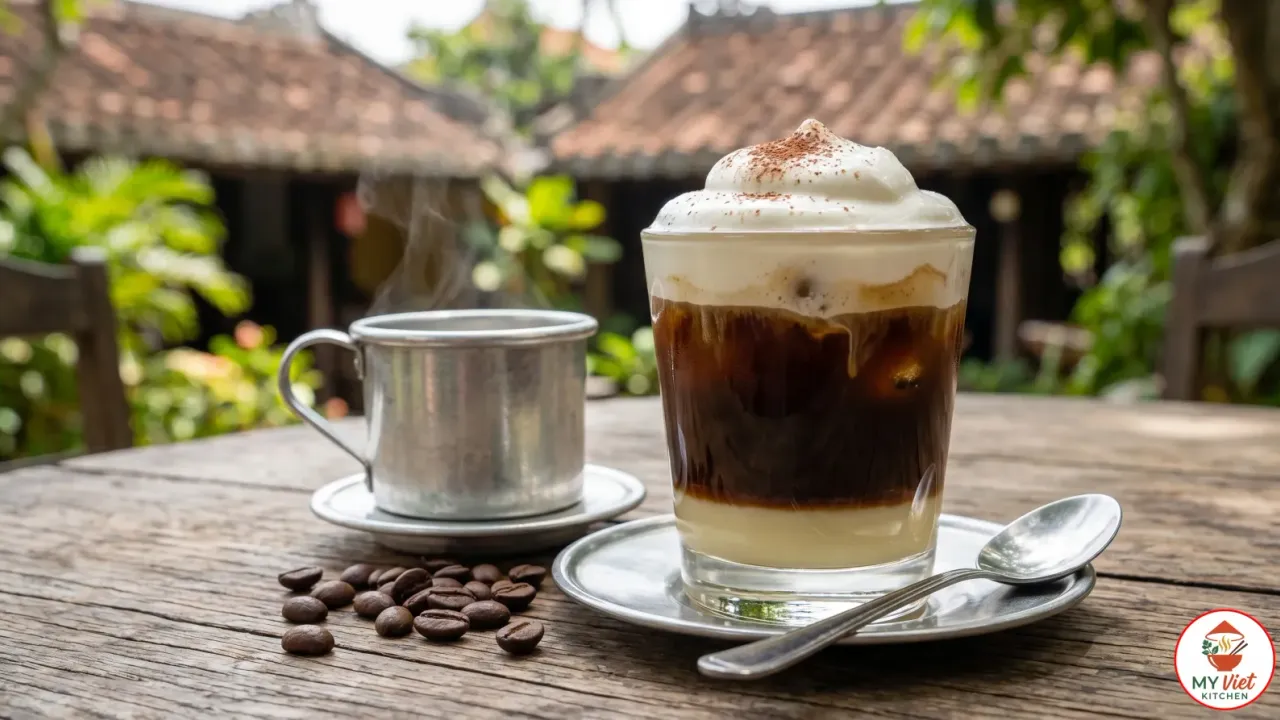
Ca phe muoi, also known as Vietnamese salt coffee, is the dreamy drink that took the country by storm. Born on a quiet street in Hue, this glass of cà phê muối pairs deep robusta coffee with sweetened condensed milk. A cloud of whipped salted cream sits on top. In this guide, you will learn how to make authentic ca phe muoi salt coffee at home from scratch. You will grind fresh robusta beans, brew a traditional phin filter, and whip a silky salted cream. The Hue salt coffee can be served hot or iced for a true taste of central Vietnam.
Prep Time: 5 minutes | Brew Time: 10 minutes | Servings: 1
Difficulty: Easy | Calories: ~320 per serving
What Makes Ca Phe Muoi Salt Coffee Special?
Vietnamese salt coffee stands apart from every other Vietnamese coffee because of its unexpected pinch of salt. Each sip of ca phe muoi starts creamy and slightly salty on the tongue. The flavor then turns deep and roasted as the coffee hits the back of the palate. Most importantly, the salt does not make this Hue salt coffee taste salty in a sharp way. Instead, it dials down the bitterness of the robusta. As a result, every sip feels rounder and smoother.
The drink has its roots in central Vietnam. A small garden cafe on Nguyen Luong Bang Street in Hue first served ca phe muoi around 2010. The owners had read a story about sailors brewing coffee with seawater and wanted to recreate it. After several rounds of testing, the team landed on the salt coffee recipe used today. It paired phin-brewed robusta with a whipped salted cream made from non-dairy creamer. The cafe became a local landmark. Within a few years, this Vietnamese salt coffee spread to Saigon, Hanoi, and Da Nang. Today, you can find the salt coffee on menus across Vietnam, from family stalls to upscale cafes.
What makes a great ca phe muoi is balance. The coffee must be strong enough to stand up to the cream. The salt should sit just below the surface, never overpowering the milk. A great glass also has a clear visual contrast. A thick white cap of whipped cream rests on top of a dark caramel coffee. If you love bold Vietnamese drinks, you will also enjoy our recipes for ca phe trung and sinh to bo. According to the Wikipedia overview of Vietnamese iced coffee, robusta phin drinks like ca phe muoi rank among the most distinctive in Southeast Asia.

Choosing the Right Coffee for Ca Phe Muoi Salt Coffee
Great salt coffee starts with the right beans. The coffee must be bold enough to carry through the layer of cream and condensed milk. It should still taste clean and not burnt. Look for whole beans roasted within the past 7 to 10 days, then grind them right before brewing. Here are the best options for your ca phe muoi at your local roaster or Vietnamese grocery.
- 100 percent Vietnamese robusta (the classic): Robusta carries a deep, chocolatey body and nearly double the caffeine of arabica. As a result, the brew stands up beautifully to milk and salt. Trung Nguyen and Cau Dat are two well-known Vietnamese sources.
- Robusta-arabica blend (smoother style): A 70 percent robusta and 30 percent arabica blend keeps the body strong while softening the bitter edge. Many Hue cafes use this blend for ca phe muoi served to first-time drinkers.
- Dark roast arabica (modern twist): A solo arabica works if you cannot find robusta, although the drink turns lighter and more acidic. Choose a French or Italian roast level to keep the cup bold enough.
- Whole beans, ground at home: Always grind right before brewing for the freshest aroma. A medium grind, similar to coarse sand, suits the phin filter and helps the coffee bloom evenly during the slow drip.
Ingredients for Vietnamese Salt Coffee
For the Phin Coffee:
- 25 grams Vietnamese robusta coffee beans, freshly medium-ground
- 95 milliliters filtered water, heated to 95 degrees Celsius
- 1 traditional aluminum phin filter
For the Salted Cream:
- 200 milliliters Rich’s non-dairy creamer (or heavy whipping cream)
- 5 grams fine sea salt
For Sweetening and Finishing:
- 25 milliliters sweetened condensed milk
- 1 teaspoon unsweetened cocoa powder (optional, for garnish)
- Ice cubes, for the iced version
Pro tip: Use Rich’s non-dairy whip topping if you can find it in an Asian market. Vietnamese cafes prefer it for one key reason. It whips into a stable, glossy cream that holds its shape on hot coffee much longer than dairy cream.
Step-by-Step Instructions for Salt Coffee
Step 1: Brew the Phin Coffee
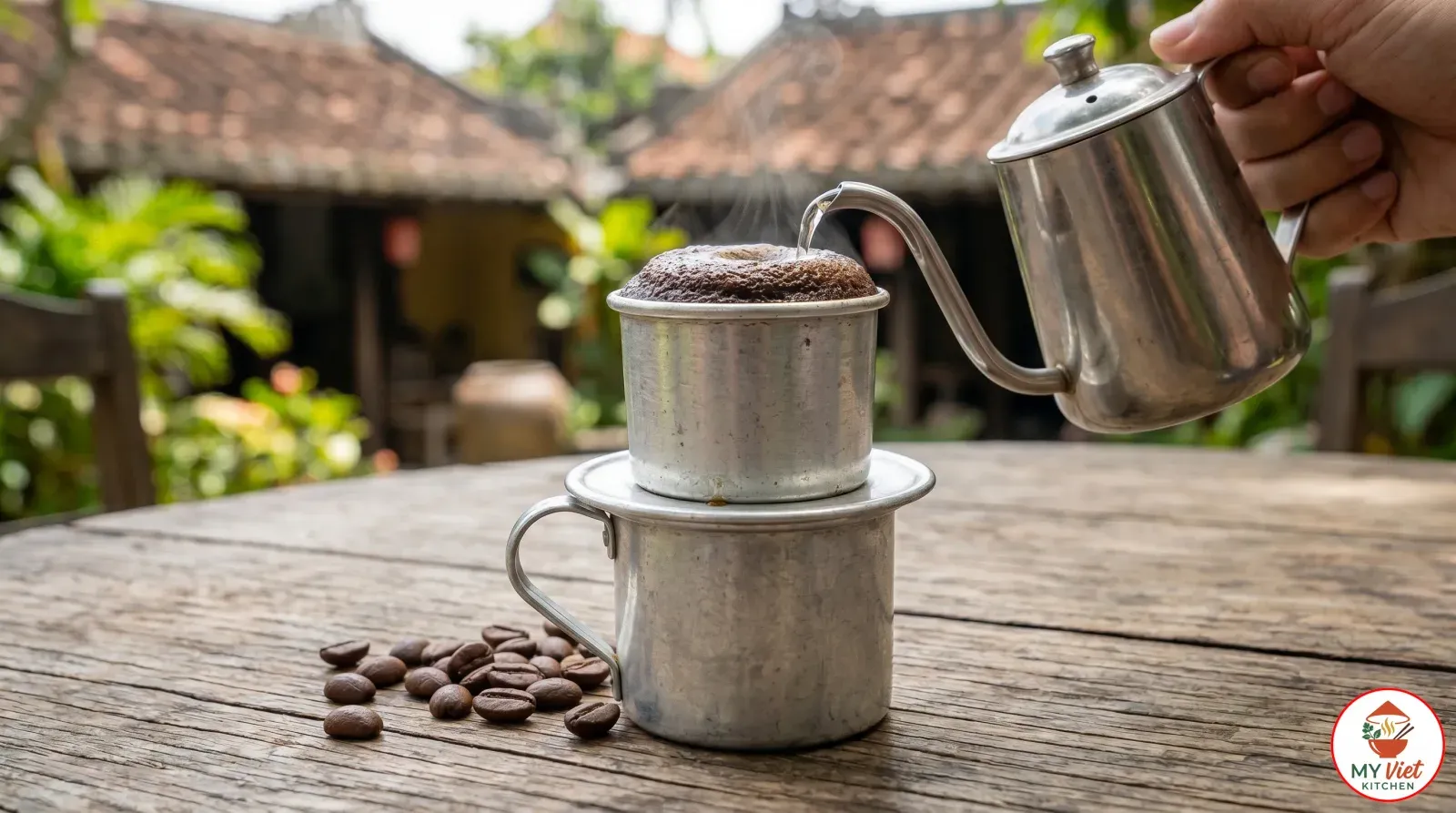
1 Rinse the phin filter and the serving glass with hot water. This quick wash cleans the metal and warms the surfaces, which helps the coffee bloom evenly during the slow drip. Set the warmed phin on top of the glass and add 25 grams of medium-ground robusta. Shake the phin gently from side to side so the bed of grounds lies flat and level.
Heat 95 milliliters of filtered water to 95 degrees Celsius. Pour 45 milliliters across the grounds in a slow spiral and wait 30 seconds. The grounds will puff up like a small cake, which is called the bloom. Press the gravity insert down with light pressure, then pour the remaining 50 milliliters over the top. Cover the phin with its lid and let the coffee drip slowly for 5 to 7 minutes. A controlled drip is the heart of any great phin brew.
Step 2: Whip the Salted Cream
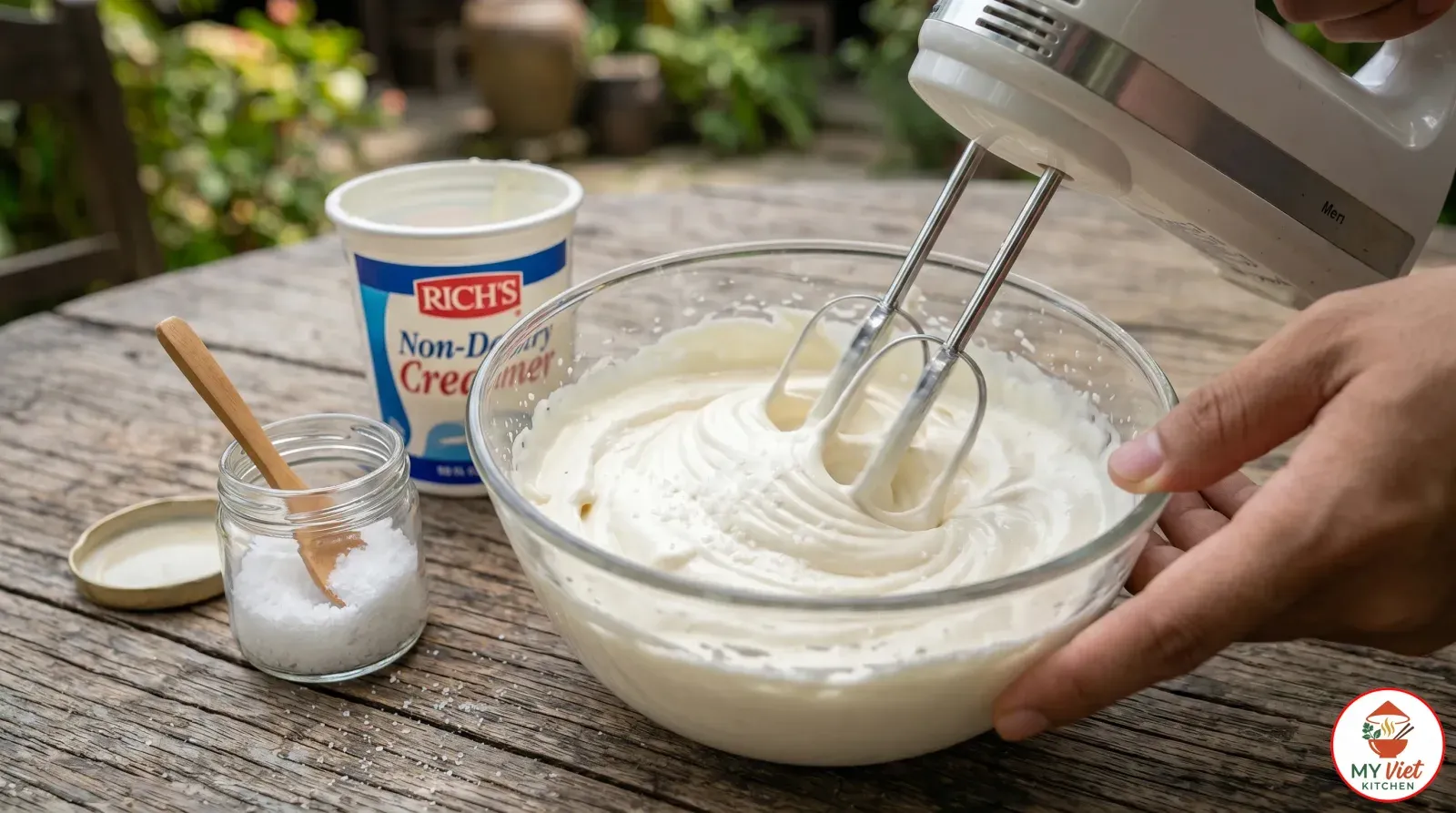
2 While the coffee drips, pour 200 milliliters of Rich’s non-dairy creamer or heavy whipping cream into a tall mixing cup. Add 5 grams of fine sea salt and stir once with a small whisk so the salt distributes evenly. Use cold cream, since cold liquid whips faster and holds more air than room-temperature cream.
Whip the mixture with an electric hand mixer on medium speed for 2 to 3 minutes. The cream is ready when it forms soft peaks and clings to the whisk when you lift it. Stop right before stiff peaks form, since over-whipped cream turns grainy and refuses to float on the coffee. Taste a tiny spoonful. The cream should taste lightly salty, like a beach breeze, rather than briny.
Step 3: Sweeten the Coffee Base
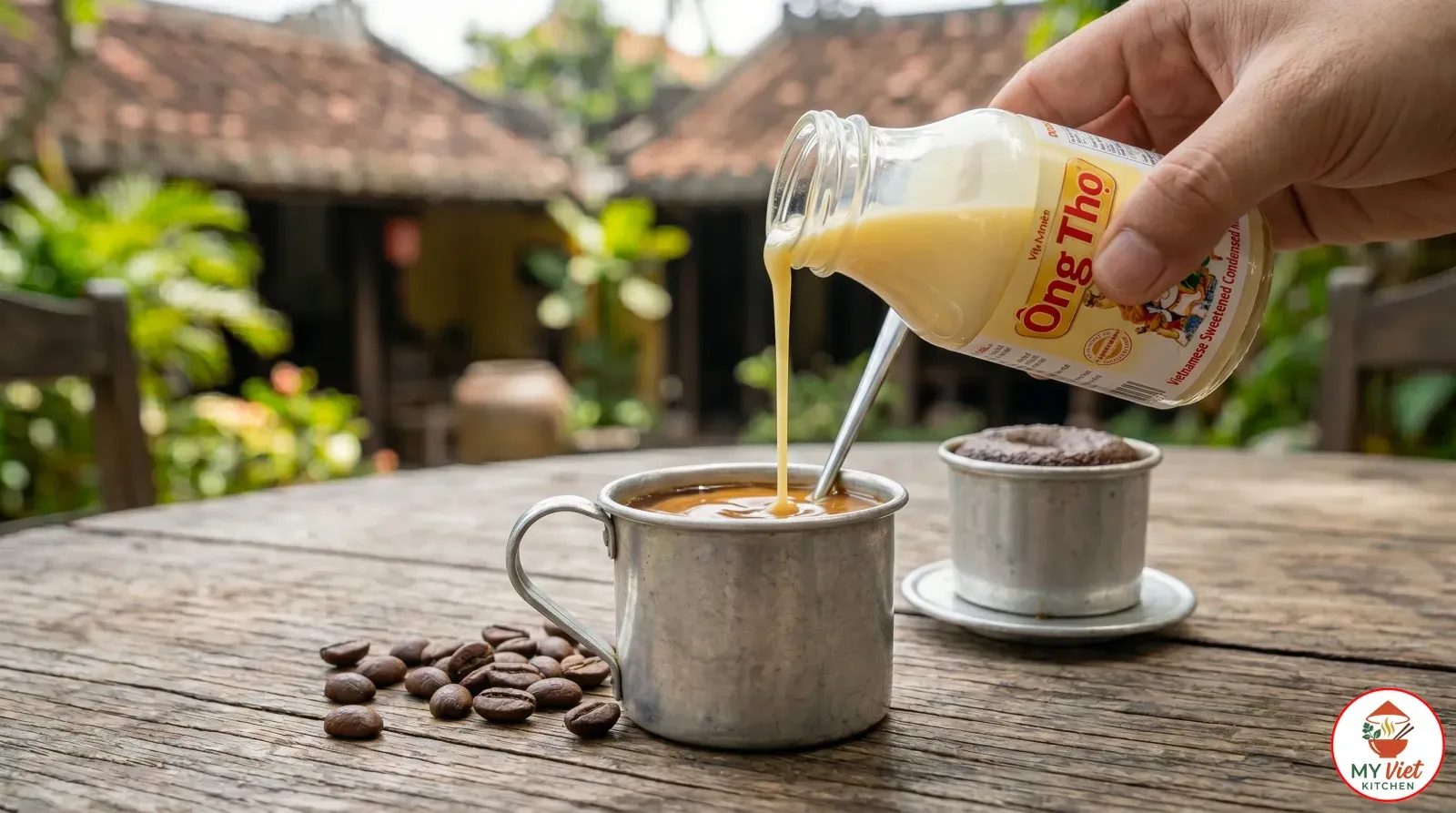
3 Lift the phin off the glass once the last few drops fall. Pour 25 milliliters of sweetened condensed milk straight into the hot coffee. Stir gently with a long spoon until the milk dissolves and the liquid turns a glossy caramel brown. The contrast between the deep coffee and the pale milk should disappear within 10 seconds.
Taste the base coffee before adding the cream. It should taste smooth, sweet, and richly roasted, similar to a classic Vietnamese ca phe sua. If the brew tastes too strong or bitter, stir in another teaspoon of condensed milk. As a result, the salted cream layer on top will balance every sip rather than fighting with the coffee.
Step 4: Layer the Salted Cream
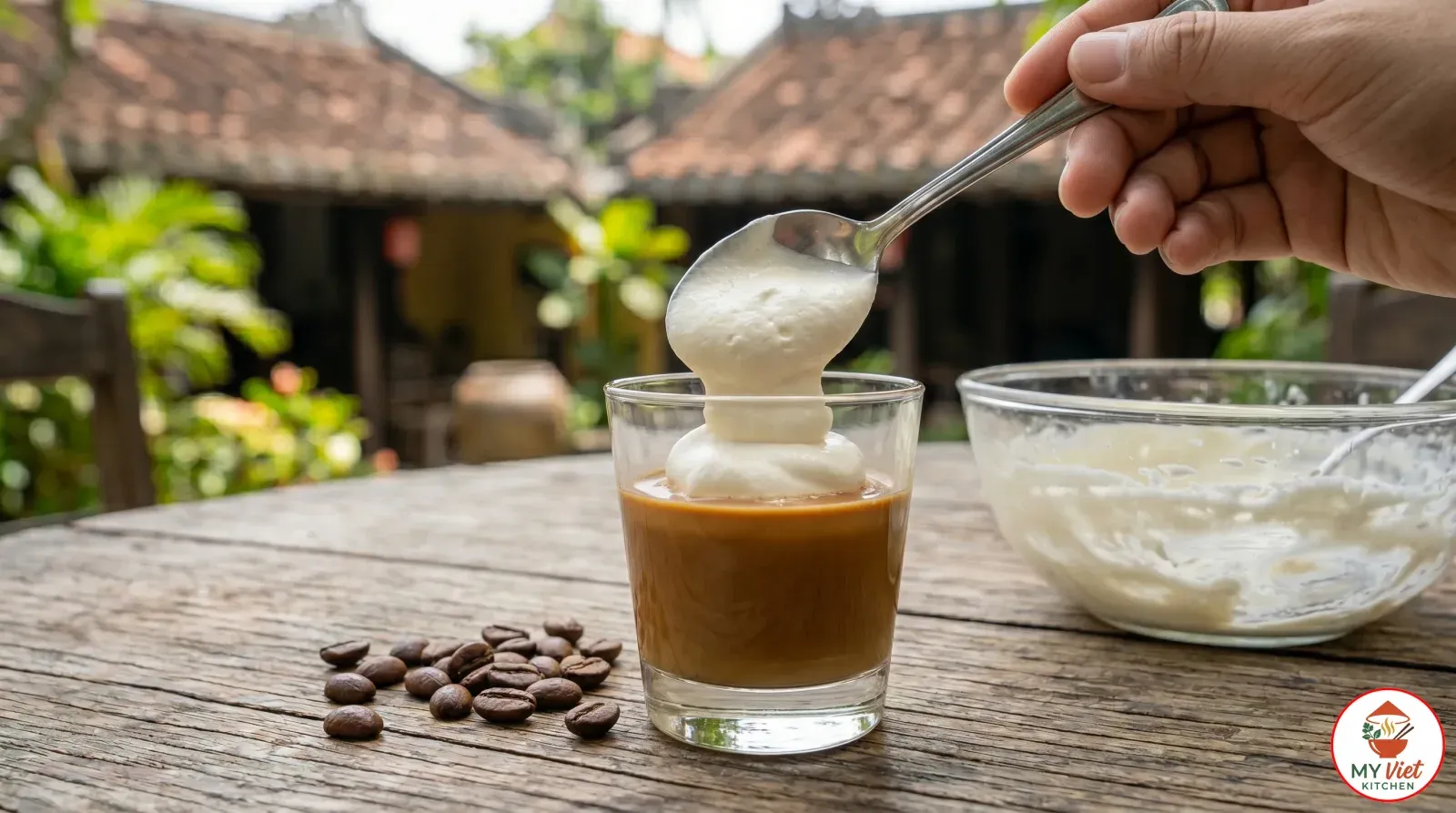
4 Tilt the glass slightly to one side. Scoop 15 to 20 milliliters of whipped salted cream onto the back of a spoon. Guide it gently onto the surface of the coffee. The spoon slows the pour. As a result, the cream floats in a thick, cloud-like layer rather than sinking. Do not stir at this stage. The visual contrast of dark coffee and white cream is one of the joys of Vietnamese salt coffee.
If your cream sinks, your whip was too soft. Whisk it for another 30 seconds and try again. Vietnamese cafes have refined this layering trick over a decade. A beautifully capped glass is what makes salt coffee so popular on social media. After all, the visual is just as important as the flavor.
Step 5: Garnish and Serve
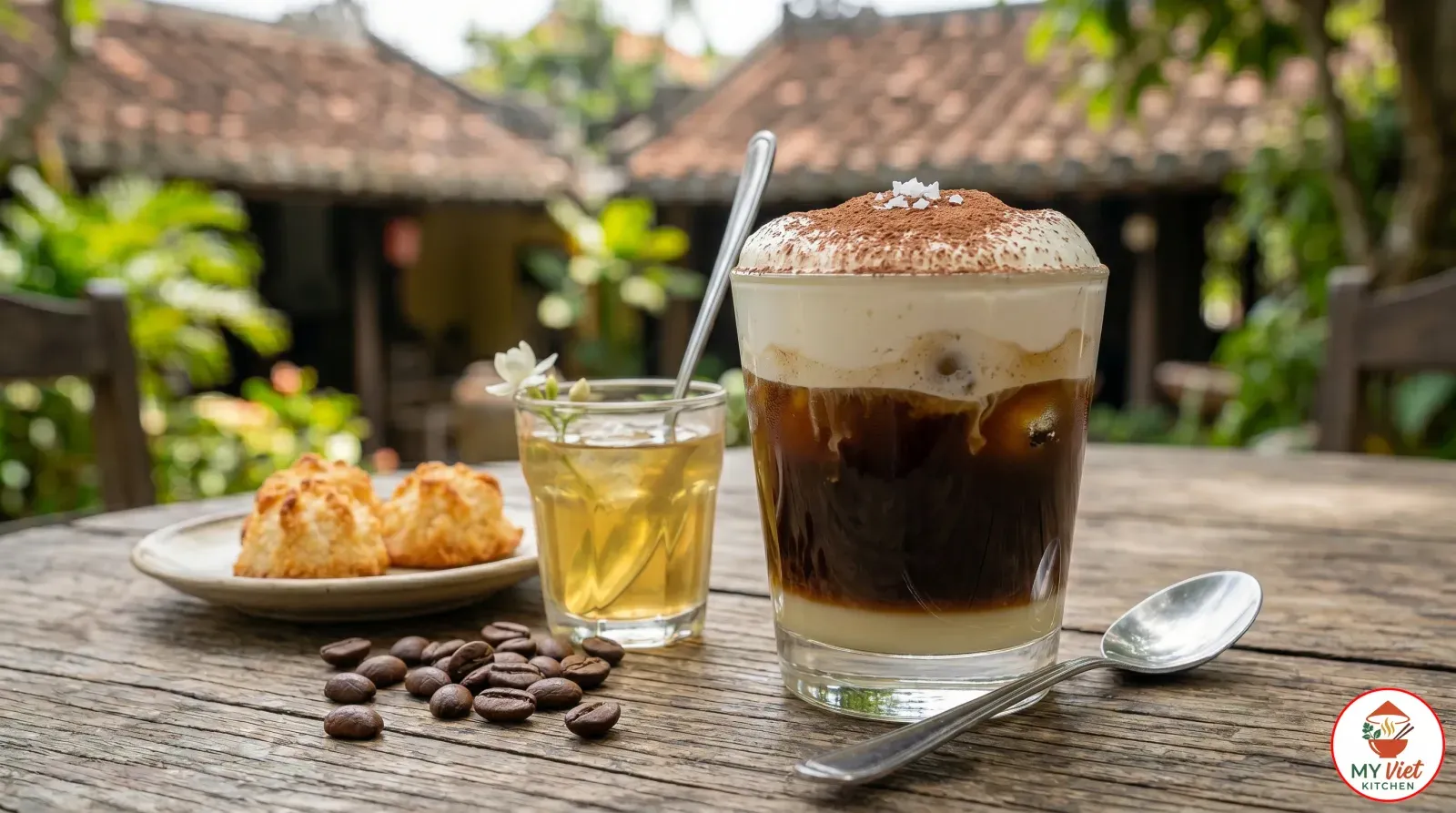
5 Sift a light dusting of unsweetened cocoa powder over the salted cream. The cocoa adds a subtle bitter note that ties the salt and milk together. Some Hue cafes skip this step. Others sprinkle a tiny pinch of extra sea salt for visual contrast. Pick whichever finish you prefer.
For the iced version, drop a small handful of ice cubes around the rim of the glass. Take care not to disturb the cream cap. Slide a long spoon down the side and give the drink one gentle stir before sipping. This blends the salty cream into the sweet coffee. As a result, every sip carries all three layers of flavor at once. Many Vietnamese drinkers also enjoy ca phe muoi without stirring, letting the cream slowly mix in.
Expert Tips for Perfect Salt Coffee
Warm the Phin Before Brewing
A cold phin pulls heat from the brewing water and leads to under-extraction. Rinse the phin and your glass with hot water first, so the metal stays warm during the drip. As a result, the coffee blooms evenly and the final cup tastes richer and less sour. Most Vietnamese cafes also pre-warm the glass to keep the drink hot longer.
Control the Drip Time
A good phin brew takes between 5 and 7 minutes to drip. If the coffee finishes in under 4 minutes, the grind is too coarse or the press is too light. If it drags past 8 minutes, the grind is too fine. Adjust your grinder one notch at a time until the drip lands in the sweet spot. A steady, slow drip produces the syrupy concentrate that ca phe muoi needs.
Get the Salt Ratio Right
5 grams of salt for 200 milliliters of cream is a good starting point. The cream should taste like a buttery, salted whipped topping rather than seawater. If you prefer a softer salty note, start with 3 grams and taste before whipping more in. Use fine sea salt or kosher salt, since coarse salt does not dissolve fast enough to whip evenly.
Hot vs. Iced Salt Coffee: A Quick Comparison
Vietnamese drinkers enjoy ca phe muoi in two main styles. The hot version is the original from Hue, while the iced version dominates menus in Saigon and Da Nang. Both are delicious, although they suit very different moments. Here is how the two styles compare side by side.
| Feature | Ca Phe Muoi Nong (Hot) | Ca Phe Muoi Da (Iced) |
|---|---|---|
| Origin | Hue, central Vietnam | Saigon, southern Vietnam |
| Temperature | Served warm | Chilled with ice |
| Texture | Smooth and creamy | Cold, layered with melting cream |
| Best time of day | Morning or rainy afternoon | Hot afternoon or evening |
| Glass size | Small 6 ounce cup | Tall 12 ounce glass |
| Calories | About 290 per cup | About 320 per glass |
| Best paired with | Banh mi or banh bao | Banh trang nuong or fresh fruit |
Serving Suggestions for Salt Coffee
Vietnamese salt coffee is rich and energizing, so the way you serve it shapes the whole experience. In Vietnam, the drink almost always comes in a clear glass. This way, the cream and coffee layers show through. Cafes often pair ca phe muoi with a small snack or a glass of cold jasmine tea. The tea balances the bold coffee and refreshes the palate between sips.
The Perfect Accompaniments:
- Banh mi or banh bao: A small bite of bread soaks up the cream and tames the strong coffee. This makes ca phe muoi a perfect breakfast pairing.
- Vietnamese coconut macaroons: The chewy coconut and sugar match the salty cream beautifully and add a tropical note to the cup.
- Fresh tropical fruit: Sliced mango, dragon fruit, or pineapple cleanse the palate between sips and highlight the coffee’s chocolatey body.
- Banh trang nuong (Vietnamese pizza): A crispy snack from Da Lat that pairs perfectly with iced ca phe muoi on a hot afternoon.
Beverage Pairings:
- Iced jasmine tea (tra da): A free glass of jasmine tea sits next to almost every Vietnamese coffee and resets the palate between sips.
- Fresh coconut water: A cooling chaser that softens the strong robusta and complements the salty cream layer.
- Cold soda water: A few sips between cups lift the cream and prepare the palate for the next sip of coffee.
Storage and Make-Ahead Tips
Refrigerator: Whipped salted cream keeps in an airtight container for up to 2 days. Re-whip for 10 seconds before using, since the cream loses some volume in the fridge. Store the brewed phin coffee separately for up to 24 hours and reheat gently before assembling.
Freezer: Coffee concentrate freezes well for up to 2 months. Pour the cooled brew into an ice cube tray. Drop a few cubes into a glass of milk for a quick iced ca phe muoi. The salted cream itself does not freeze well, since it splits when thawed.
Best fresh: Ca phe muoi shines when served right after brewing. The cream is at its fluffiest, the coffee is at its hottest, and the layers stay clearly defined. So plan to whip the cream while the phin drips, then assemble each glass to order.
Common Mistakes to Avoid
1. Using Too Much Salt
Salt should sit just below the surface of the flavor, never on top. Stick to about 2.5 percent salt by weight of cream, which is 5 grams per 200 milliliters. If your first batch tastes too salty, cut the salt to 3 grams next time. As a result, the cream rounds out the coffee instead of fighting with it.
2. Skipping the Bloom
Pouring all 95 milliliters of water at once drowns the coffee and leads to a thin, sour brew. Always pour 45 milliliters first and wait 30 seconds. This bloom phase lets the grounds release trapped gases and absorb water evenly, which produces a richer and more chocolatey cup.
3. Whipping the Cream Too Hard
Over-whipped cream turns grainy and refuses to float in a smooth layer. Stop right when soft peaks form and the whisk leaves clear trails in the cream. Soft peaks hold up well on hot coffee and slowly melt into the drink, which is exactly the texture Vietnamese cafes aim for.
4. Using Pre-Ground Supermarket Coffee
Pre-ground coffee loses its aroma within hours of grinding, and many supermarket blends contain fillers like roasted corn or chicory. Buy whole beans from a Vietnamese roaster and grind them medium right before brewing. The fresh aroma alone is worth the small extra effort.
Frequently Asked Questions about Salt Coffee
What is ca phe muoi in Vietnamese coffee culture?
Ca phe muoi, which translates to salt coffee, is a Vietnamese drink that pairs strong phin-brewed robusta coffee with whipped salted cream and sweetened condensed milk. The drink first appeared at a small garden cafe on Nguyen Luong Bang Street in Hue around 2010. The salt softens the natural bitterness of the coffee and brings out the sweetness of the milk, creating a balanced cup that tastes creamy, slightly salty, and deeply roasted all at once.
Why is salt added to ca phe muoi instead of just sugar?
Sodium ions in fine sea salt suppress bitter taste receptors on the tongue. They do this more effectively than sugar does. As a result, ca phe muoi tastes smoother and rounder than a regular Vietnamese iced coffee. The trick has roots in maritime cooking. Sailors and fishermen on long voyages brewed coffee with seawater when fresh water was scarce.
What kind of coffee is best for ca phe muoi?
Use 100 percent Vietnamese robusta beans for the most authentic ca phe muoi. Robusta has nearly twice the caffeine of arabica and a bold, chocolatey body. Choose beans roasted within the past 7 to 10 days, and grind them to a medium texture right before brewing. Avoid pre-ground supermarket blends or flavored coffees.
Can I make ca phe muoi without a phin filter?
Yes, although the texture is slightly different. A moka pot, AeroPress, or espresso machine all produce a dark concentrated brew. Pull a 25 to 30 milliliter double espresso, or extract about 60 milliliters from a moka pot. The phin remains the traditional choice. Its slow drip produces a thicker, syrupy coffee that floats the cream beautifully.
Is ca phe muoi served hot or iced?
Both versions are popular. The hot version is the original style from Hue. It is usually served in small glass cups. The iced version, often called ca phe muoi da, is the most common style in Saigon and Da Nang. To make the iced version, brew the coffee as usual. Add the condensed milk and salted cream, then drop in a few ice cubes before serving.
How is ca phe muoi different from a salted caramel latte?
A salted caramel latte uses espresso, steamed milk, and caramel syrup. Salt mostly serves as a finishing flavor on top. Ca phe muoi relies on slow-dripped robusta coffee, sweetened condensed milk, and a whipped salted cream. The cream is mixed directly into the drink. The Vietnamese version is bolder, less milky, and has a stronger contrast between sweet, salty, and bitter notes.
Variations and Adaptations
Ca Phe Muoi Da (Iced Version):
Follow the recipe through Step 4, then drop a small handful of ice cubes around the rim of the glass. Use slightly less water during the phin brew, since the melting ice will dilute the coffee. The iced version dominates summer menus in Saigon and Da Nang.
Ca Phe Muoi Bot (Cocoa Twist):
Whisk 1 teaspoon of unsweetened cocoa powder into the salted cream before whipping. The cocoa deepens the chocolatey notes of the robusta and gives the cream a beautiful pale-brown color. This twist is popular at trendy cafes in District 1, Saigon.
Ca Phe Muoi Dua (Coconut Style):
Replace 50 milliliters of cream with full-fat coconut cream for a tropical version. The coconut adds a soft sweetness that balances the salt, and the cream still whips into firm peaks. Da Nang cafes sometimes top this version with toasted coconut flakes instead of cocoa.
Vegan Ca Phe Muoi Chay:
Swap the sweetened condensed milk for a sweetened oat or coconut condensed milk, and use Rich’s non-dairy whip topping for the cream. The drink tastes almost identical to the original and works beautifully for plant-based drinkers.
The Cultural Significance of Vietnamese Salt Coffee
Ca phe muoi is more than a coffee drink in Vietnam. This salt coffee is a marker of Hue’s quiet creativity and the speed at which Vietnamese cafe culture moves. A drink that did not exist before 2010 is now on menus from Hanoi to the Mekong Delta, sometimes even with its own dedicated chains. Hue locals still claim the original salt coffee recipe as theirs, while every region adds its own small twist. As a result, every cup tells a small story about where it was brewed.
The drink also reflects Vietnam’s deep love of coffee. The country is the second-largest coffee producer in the world after Brazil, and most of its harvest is robusta. Cafes in Vietnam range from sidewalk plastic-stool stalls to multi-story specialty bars. Salt coffee works at every level, from a 25,000 dong street glass to a 75,000 dong specialty version in a designer cafe. The salt coffee recipe is simple enough for any home cook, yet it has the elegance of a drink crafted in a top cafe.
Modern Vietnamese baristas continue to honor ca phe muoi while putting their own spin on the drink. Some pull the salt coffee as a double espresso, while others use single-origin Da Lat arabica for a softer style. Whether you serve this Vietnamese salt coffee for a slow Sunday breakfast or a midday pick-me-up, every glass ties you to the warmth of Hue’s quiet courtyard cafes. For more comforting Vietnamese drinks, try our guides to ca phe trung, sinh to bo, and sua dau nanh.
Conclusion
Making ca phe muoi salt coffee at home is easier than you might think. The keys to success are simple: brew strong phin coffee with fresh robusta, whip a soft salted cream to gentle peaks, and pour the cream over the back of a spoon for a clean layered look. Master these three steps and you will turn out a glass of Vietnamese salt coffee that rivals any Hue cafe. The rest is just choosing your favorite garnish and deciding between hot or iced.
Once you taste your first homemade salt coffee, you will understand why ca phe muoi swept Vietnam in just one decade. The salty cream, the silky milk, and the deep robusta come together in a balance that feels both bold and gentle at the same time. So pick up a fresh bag of Vietnamese beans, dust off your phin filter, and let the slow drip fill your kitchen with the smell of toasted coffee. Your first sip will transport you straight to a quiet courtyard in Hue. For more Vietnamese favorites, explore our guides to ca phe trung, banh mi, and pho.