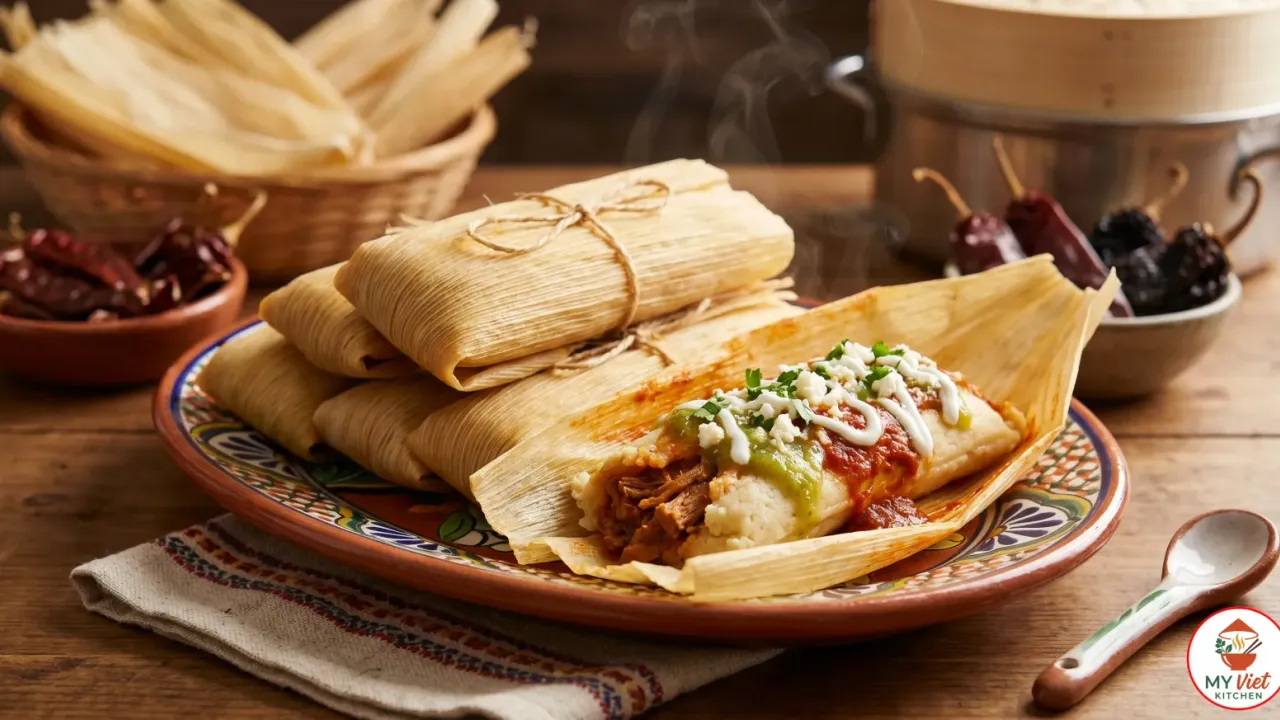
Tamales are one of the most beloved treasures of Mexican cuisine. These tender parcels of seasoned masa dough, filled with slow-braised pork in a rich red chile sauce and wrapped in corn husks, deliver a depth of flavor that few dishes can match. For thousands of years, tamales have been at the heart of Mexican celebrations, family gatherings, and holiday traditions. Making them from scratch is a labor of love that rewards you with something no store-bought version can replicate.
Prep Time: 60 minutes | Cook Time: 90 minutes | Servings: 24 tamales
Difficulty: Intermediate | Calories: ~280 per tamale
What Makes Tamales Special?
Tamales are far more than a simple wrapped food. In fact, they represent a culinary tradition that predates the arrival of Europeans in the Americas by several thousand years. Archaeological evidence suggests that people in Mesoamerica were making tamales as early as 8000 BC. The Aztecs, Maya, and Olmec cultures all viewed tamales as essential food for warriors, travelers, and feasts. Even today, tamales remain a cornerstone of Mexican cooking. They appear across Latin America in countless regional forms.
What sets tamales apart from other filled doughs is the masa itself. Unlike wheat-based doughs, masa comes from nixtamalized corn. This ancient process treats dried corn with an alkaline solution, which changes its nutrition and flavor. As a result, the dough has a sweet, earthy corn taste that regular cornmeal cannot match. When the masa is whipped with lard until fluffy and then steamed inside a corn husk, it turns soft and moist. It practically melts on the tongue. At the same time, the filling infuses the dough with smoky, savory flavor from the inside out.
Moreover, the process of making tamales is a communal activity by tradition. Mexican families gather for what is called a tamalada, a tamale-making party where everyone takes on a role. For example, one person spreads the masa, another adds the filling, and someone else wraps and folds. Because of this collaborative spirit, tamales carry emotional significance that goes well beyond their ingredients. They represent family bonds, cultural continuity, and the joy of cooking together.
Choosing the Right Dried Chiles
The chile sauce is the soul of pork tamales. Specifically, dried chiles provide a complex flavor that fresh chiles or chili powder simply cannot deliver. Each variety brings its own character to the sauce. Therefore, selecting the right blend is the key to a balanced filling.
- Guajillo chiles (essential): These long, dark red chiles are the backbone of most Mexican red sauces. They contribute a bright, tangy heat with notes of cranberry and green tea. The heat level is mild to moderate. Guajillos provide the vibrant red color that makes the filling visually striking. Use them as the primary chile in a roughly 2:1 ratio with ancho chiles.
- Ancho chiles (best supporting role): Ancho chiles are dried poblanos with a deep, fruity sweetness reminiscent of raisins and chocolate. They add body and richness to the sauce without sharp heat. The combination of guajillo and ancho creates a sauce with both brightness and depth. This pairing is the gold standard for tamales across central Mexico.
- Chile de arbol (optional, for extra heat): If you prefer a spicier filling, add 2 or 3 small chiles de arbol to the sauce. These thin, fiery chiles deliver sharp, direct heat. Use them sparingly, as they can overpower the more nuanced guajillo and ancho flavors. Toast them alongside the other chiles for the best results.
Ingredients for Tamales
For the Pork Filling:
- 2 pounds (900g) pork shoulder, cut into large chunks
- 4 cups (960ml) water or pork broth
- 6 dried guajillo chiles, stemmed and seeded
- 3 dried ancho chiles, stemmed and seeded
- 4 cloves garlic, peeled
- 1 teaspoon ground cumin
- 1 teaspoon dried Mexican oregano
- 2 tablespoons vegetable oil
- Salt to taste
For the Masa Dough:
- 4 cups (500g) masa harina
- 1 cup (225g) pork lard or vegetable shortening
- 1 teaspoon baking powder
- 1 teaspoon salt
- 2.5 cups (600ml) warm pork broth (reserved from cooking the pork)
For Assembly:
- 24 dried corn husks, soaked in warm water for 1 hour
- Kitchen twine or strips of corn husk for tying (optional)
Pro tip: Use the broth from cooking the pork shoulder to prepare the masa dough. This infuses the dough with savory pork flavor from the very start. The broth contains dissolved collagen and rendered fat that improve the texture and richness of the masa. Additionally, look for freshly ground masa at Mexican grocery stores or tortillerias for an even more authentic flavor and softer texture than dried masa harina can provide.
Step-by-Step Instructions
Step 1: Prepare the Corn Husks
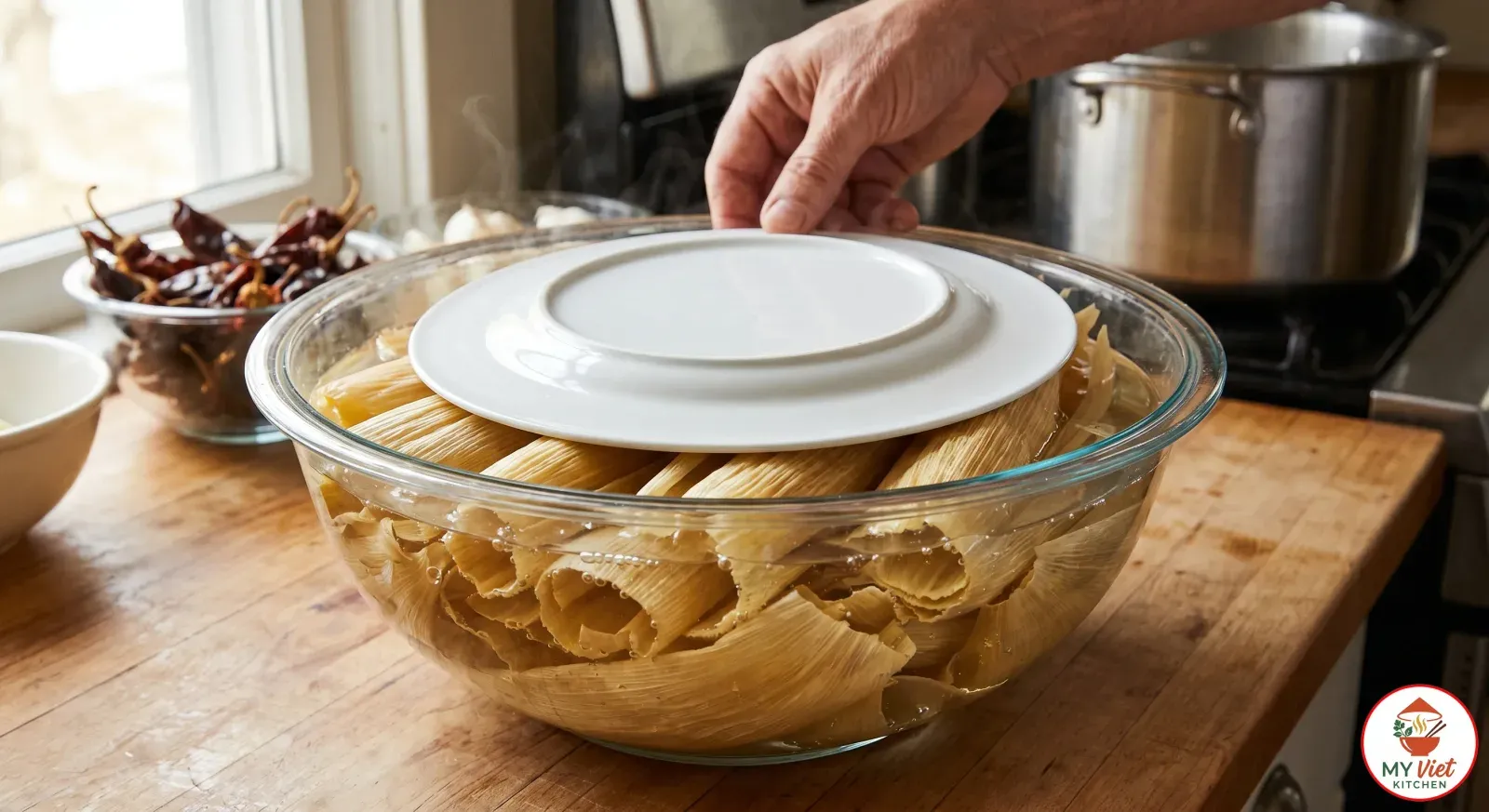
1 Place the dried corn husks in a large bowl or baking dish. Cover them completely with warm water and weigh them down with a plate to keep them submerged. Let the husks soak for at least 1 hour until they become soft and pliable. Stiff husks crack during folding and ruin the tamale.
While the husks soak, separate them gently and remove any silk threads or debris. After soaking, rinse each husk under running water. Then pat dry with a clean towel. Keep the husks covered with a damp cloth as you work so they do not dry out. First, select the largest and most intact husks for wrapping. Next, set aside any torn or small husks. You can tear these into thin strips for ties, or lay them across the bottom of the steamer as a barrier between the tamales and the water.
Step 2: Braise the Pork Filling
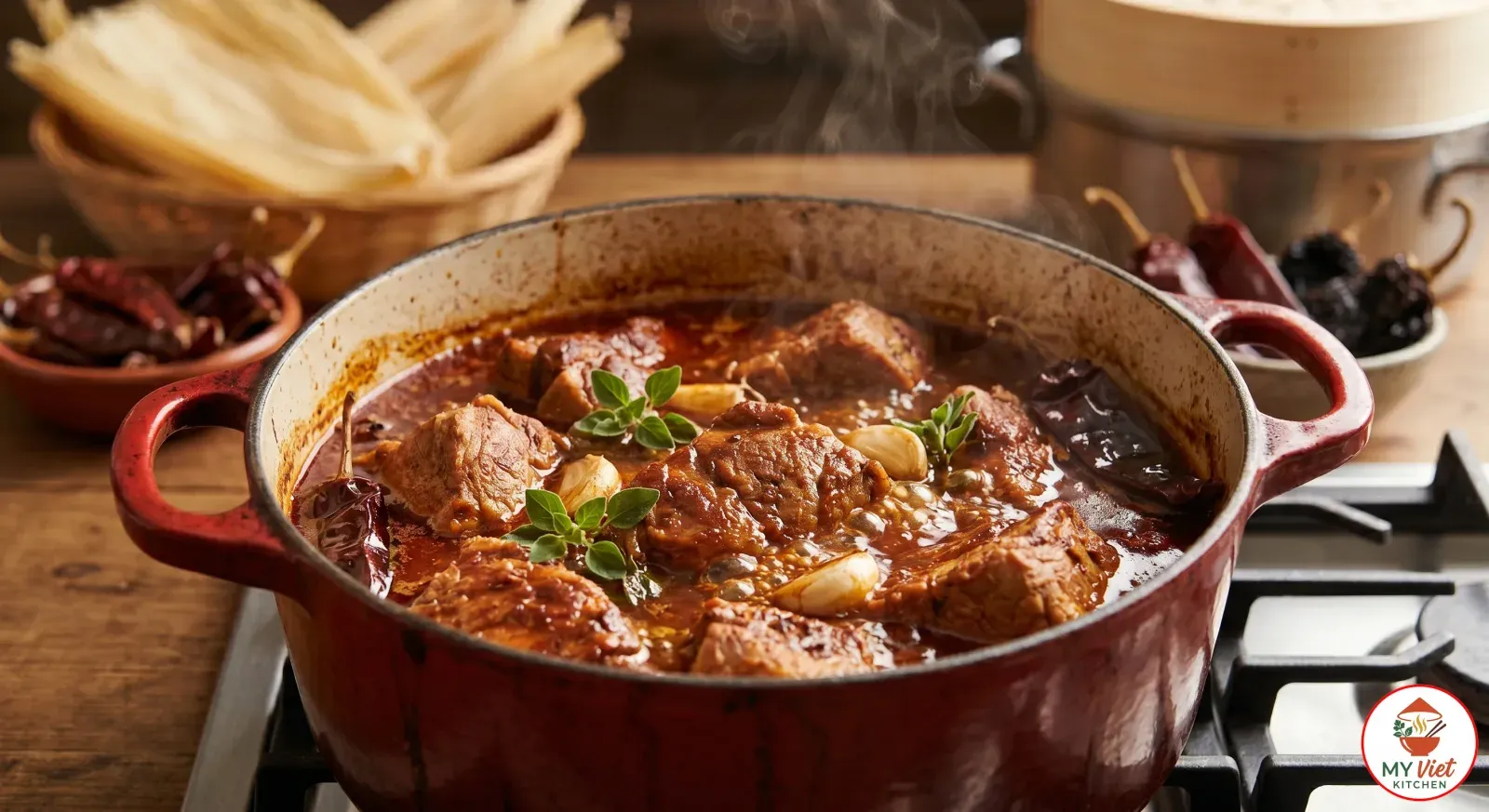
2 Place the pork shoulder chunks in a large pot. Cover with 4 cups of water or broth. Add half a teaspoon of salt. Bring the liquid to a boil over high heat. Skim off any foam that rises to the surface during the first few minutes of boiling. Then reduce the heat to a gentle simmer.
Cover the pot and cook for 1.5 to 2 hours until the pork shreds easily with a fork. During this slow cook, the collagen in the shoulder breaks down into gelatin. As a result, both the meat and the broth become richer. Then remove the pork to a cutting board and let it cool slightly. Be sure to reserve the cooking broth, since you will need it for the masa dough and the chile sauce. Finally, shred the meat using two forks into bite-sized pieces. Discard any large chunks of solid fat or gristle.
Step 3: Make the Red Chile Sauce
3 Heat a dry skillet or comal over medium heat. Place the stemmed and seeded guajillo and ancho chiles flat in the pan. Toast them for 1 to 2 minutes per side, pressing gently with a spatula. The chiles should become fragrant and slightly darkened but not burnt. Burnt chiles taste bitter and will ruin the sauce.
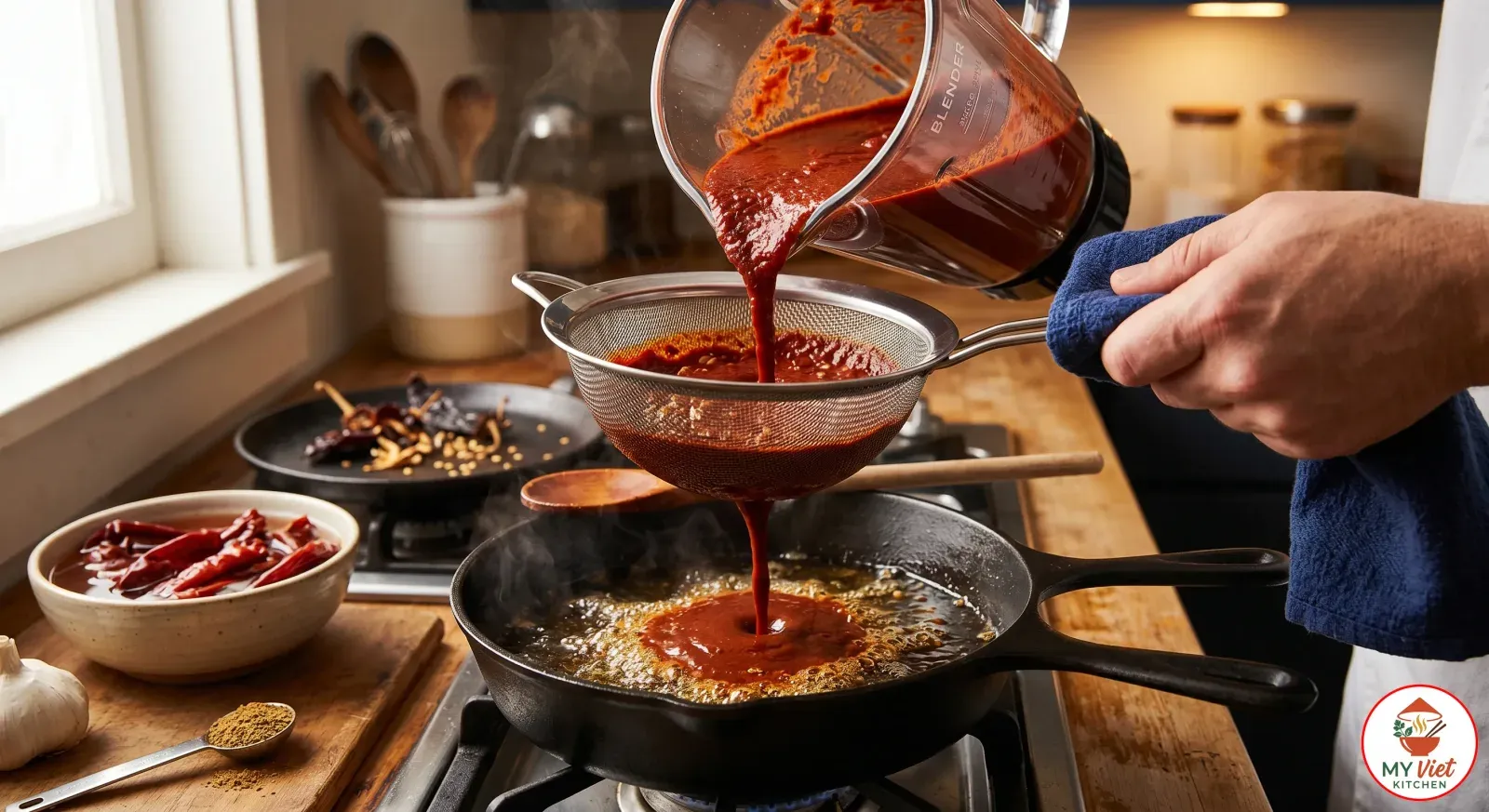
Transfer the toasted chiles to a bowl and cover with hot water. Let them soak for 20 minutes until soft. Next, place the chiles in a blender with the garlic, cumin, oregano, and about 1 cup of the soaking liquid. Blend on high until smooth with no visible chunks. Then heat the oil in a saucepan over medium heat. Pour the sauce through a fine-mesh strainer into the hot oil. It will sizzle, so pour carefully. Cook for 10 minutes, stirring often, until the sauce darkens and thickens. Season with salt to taste. Finally, combine the shredded pork with the chile sauce in a large bowl. Mix well so the filling is moist and evenly coated.
Step 4: Prepare the Masa Dough
4 Place the lard or vegetable shortening in the bowl of a stand mixer fitted with the paddle attachment. Beat on medium-high speed for 3 to 5 minutes until the fat becomes white, fluffy, and nearly doubled in volume. This whipping step is critical. It incorporates air into the fat, which creates the light, spongy texture that defines a great tamale.
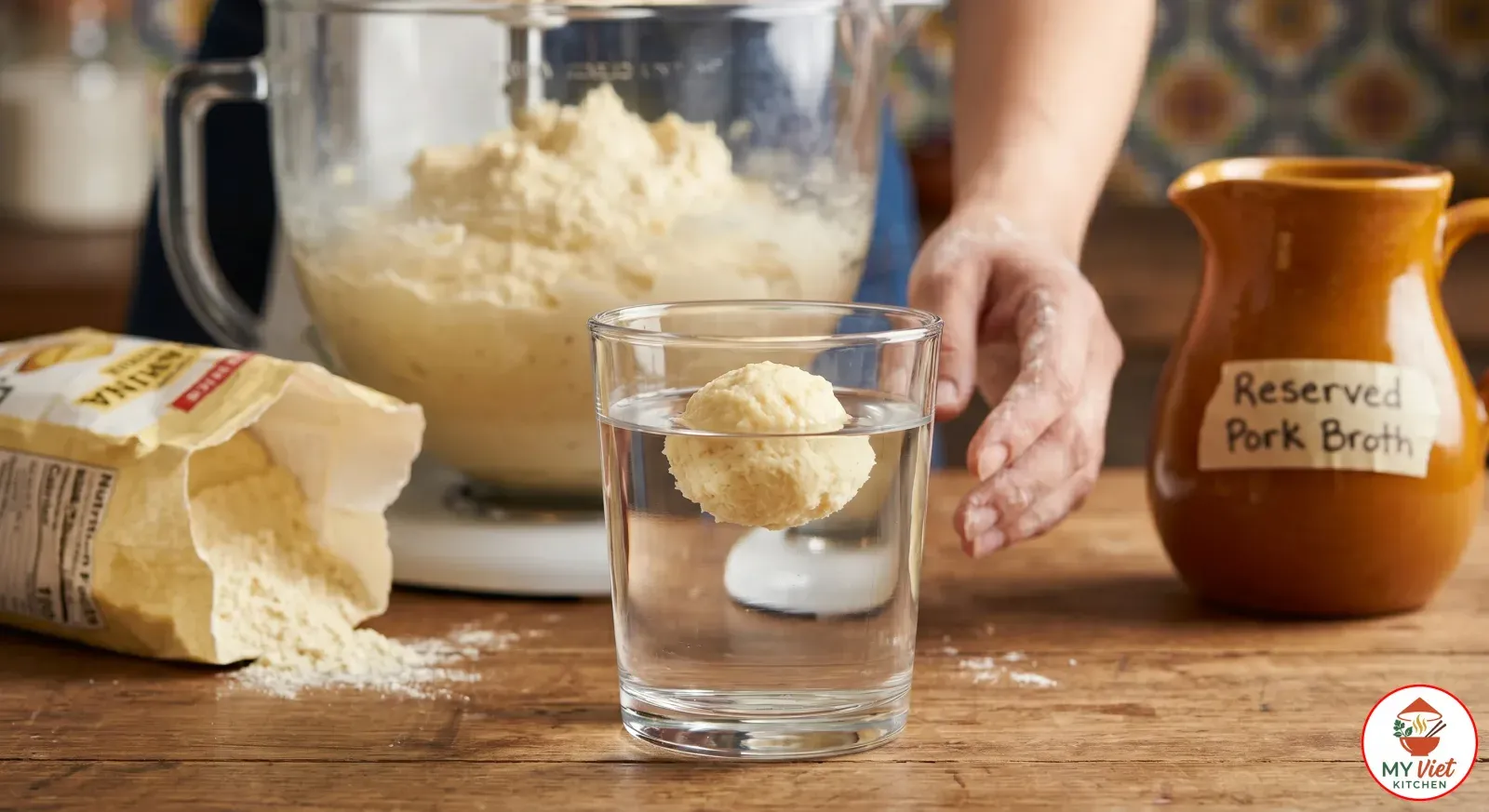
Then add the masa harina, baking powder, and salt to the whipped fat. Mix on low speed while slowly pouring in the warm pork broth. Once combined, increase the speed to medium and beat for 5 more minutes. The finished dough should be smooth, slightly sticky, and easy to spread. To test readiness, drop a small ball of dough into a cup of cold water. If it floats, the masa has enough air and fat. However, if it sinks, keep beating for 2 to 3 more minutes and test again. This float test is a reliable method used by tamale makers across Mexico.
Step 5: Assemble the Tamales
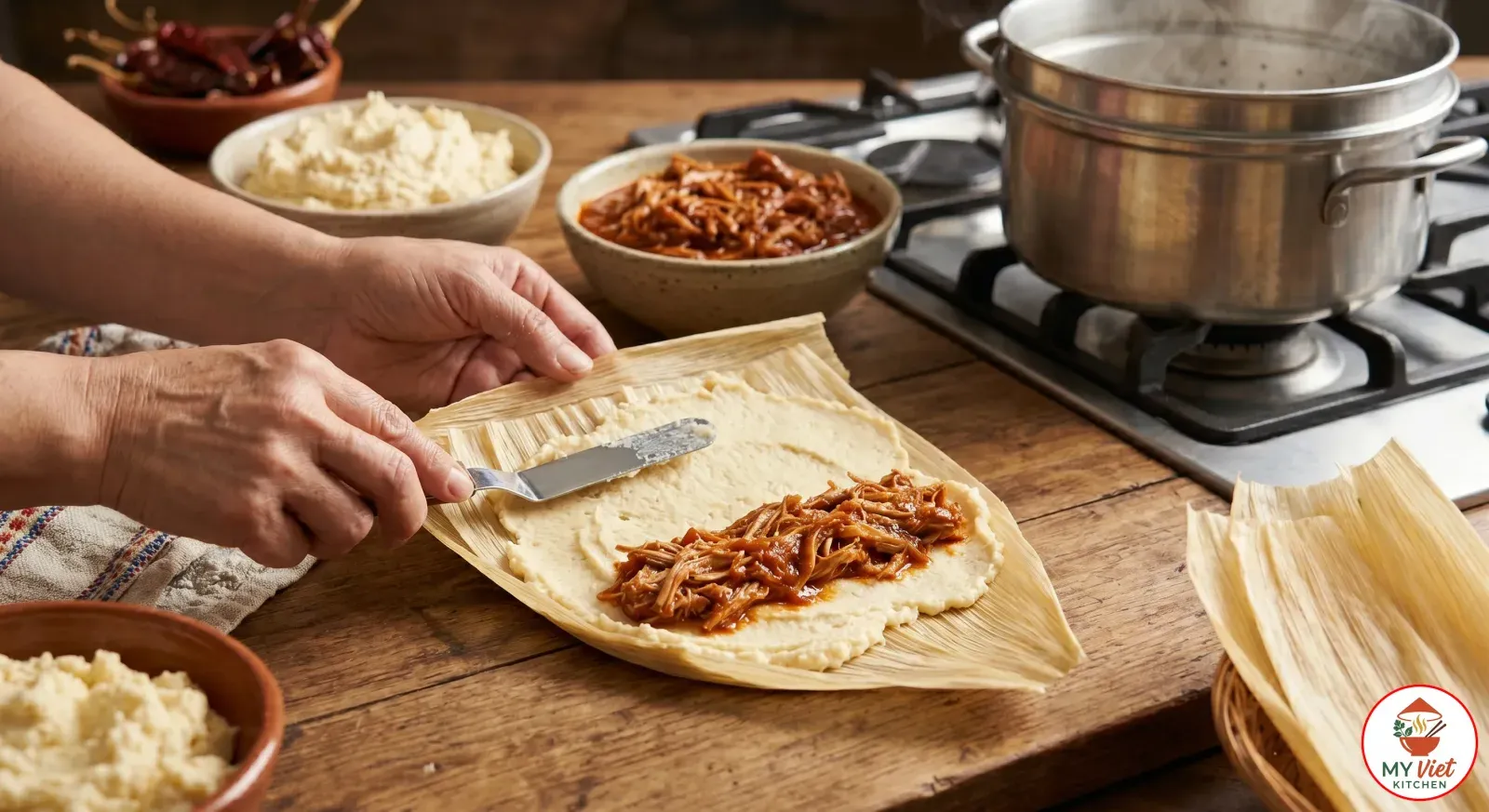
5 Take a soaked corn husk and pat it dry with a towel. Lay it flat on your work surface with the wide end facing you. Spread about 3 tablespoons of masa dough in a thin, even layer across the upper two-thirds of the husk. Leave a 2-inch border at the top and a 1-inch border along each side. The masa layer should be roughly one-quarter inch thick.
Next, spoon about 2 tablespoons of the pork filling in a line down the center. Fold the left side of the husk over so the masa edge meets the right side. Then fold the right side over the left. The masa should fully enclose the filling with no gaps. After that, fold the narrow bottom end up toward the top. You can secure it with a thin strip of corn husk tied around the middle. However, this is optional if you pack the tamales tightly in the steamer. Repeat with all remaining husks, masa, and filling. Working in an assembly line makes this step faster.
Step 6: Steam the Tamales
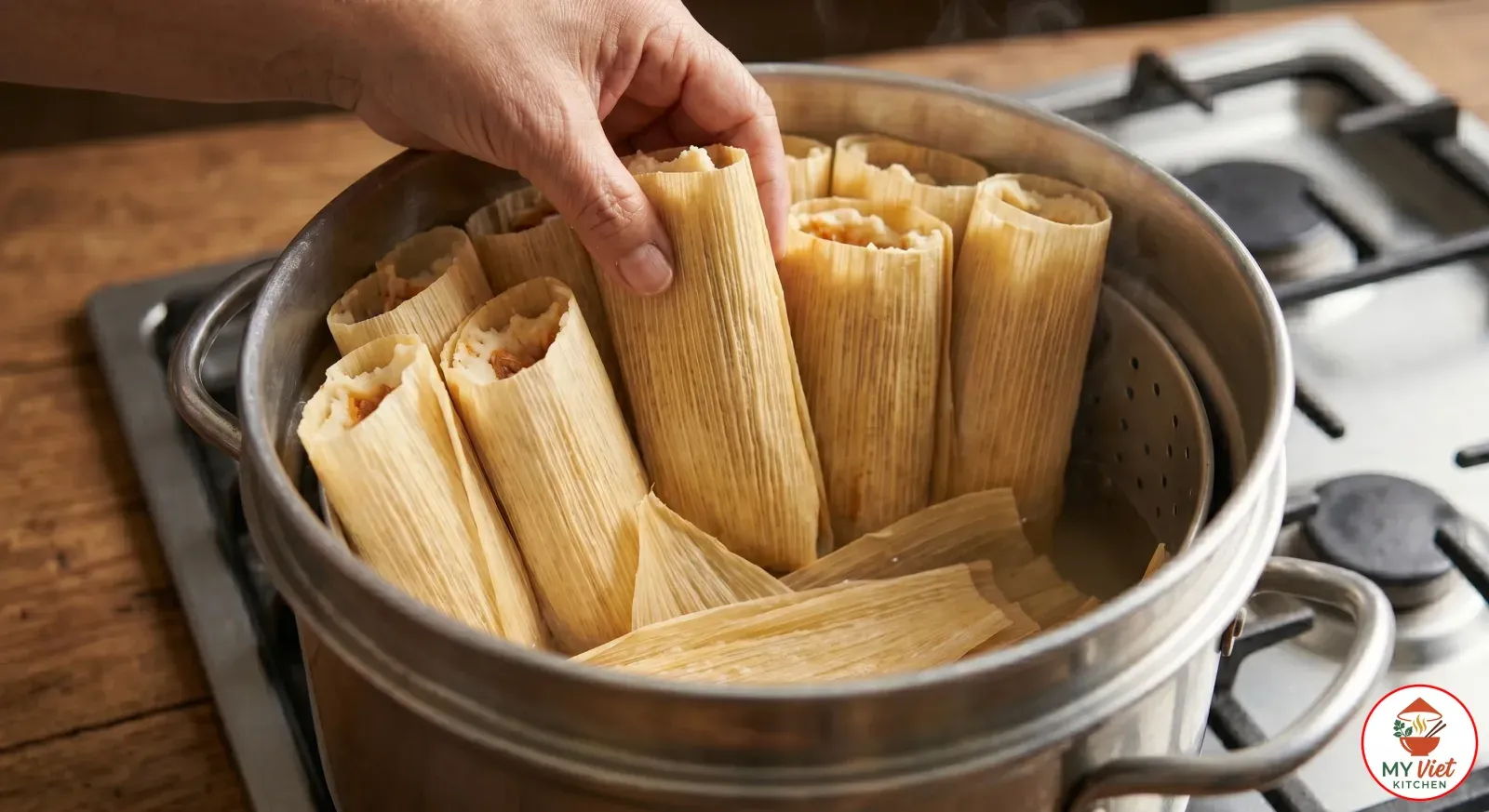
6 Set up a large steamer pot. Place a few extra corn husks or a steamer rack at the bottom. Fill the pot with about 2 inches of water, making sure the water level stays below the steamer basket. Stand the tamales upright in the basket with the open end facing up and the folded end at the bottom. Pack them snugly together so they support each other.
Cover the pot with a tight-fitting lid. Bring the water to a boil, then reduce the heat to medium. Steam the tamales for 1 to 1.5 hours. Meanwhile, check the water level every 30 minutes and add more hot water if needed. The tamales are done when the masa pulls away cleanly from the husk. To test, remove one tamale after 1 hour. If the dough is still sticky, return it and continue steaming for 15 to 20 more minutes. Once done, turn off the heat and let the tamales rest in the covered steamer for 10 minutes. This resting step allows the masa to firm up before serving.
Expert Tips for Perfect Tamales
Whip the Lard Until It Doubles in Volume
The texture of your tamales depends almost entirely on how well you whip the fat. Essentially, whipped lard traps air bubbles that expand during steaming. These air pockets create the light, spongy masa that melts in your mouth. By contrast, under-whipped fat produces dense, heavy tamales. So beat the lard for a full 3 to 5 minutes until it turns white and nearly doubles in volume. Then continue beating after adding the masa harina and broth. The float test confirms that enough air is in the dough. Never skip this step.
Toast the Dried Chiles Before Soaking
Toasting dried chiles in a dry skillet activates their oils and deepens flavor. The heat triggers reactions that create nutty, roasted notes. Toast them just until fragrant, about 1 to 2 minutes per side. But watch carefully, because burnt chiles turn bitter. In fact, no amount of seasoning can fix that acrid taste. This single step elevates the sauce from good to great.
Do Not Overfill the Tamales
One of the most common mistakes is adding too much filling. As a result, overfilled tamales burst open during steaming. The filling then leaks into the masa. Instead, use about 2 tablespoons per tamale. The masa should fully surround the filling on all sides once folded. Spread it thin enough to cook evenly but thick enough to hold the filling. About one-quarter inch is ideal. In short, restraint with the filling gives you a better ratio of masa to meat in every bite.
Regional Tamale Styles Across Mexico
Mexico has an astonishing diversity of tamale styles. Indeed, nearly every state has its own version. The following table highlights some of the most distinctive regional approaches to this ancient dish.
| Style | Region | Key Characteristics |
|---|---|---|
| Tamales Rojos | Central Mexico | Red chile sauce with pork, wrapped in corn husks |
| Tamales Oaxaquenos | Oaxaca | Mole negro filling, wrapped in banana leaves, rich and complex |
| Tamales de Elote | Michoacan | Sweet fresh corn tamales, no filling, dessert style |
| Tamales Colados | Yucatan | Strained masa, achiote-seasoned pork, banana leaf wrapped |
| Corundas | Michoacan | Triangular shape, plain masa, served with cream and salsa |
| Zacahuil | Huasteca Region | Giant tamale up to 5 feet long, feeds an entire community |
Serving Suggestions
Tamales are often served as a complete meal on their own. Still, the right sides elevate the experience. Mexican families typically offer several salsas and sides alongside a platter of steaming tamales so everyone can build their own plate.
The Perfect Accompaniments:
- Salsa verde: A bright tomatillo-based green salsa cuts through the richness of the pork filling with its tangy, herbaceous flavor. Drizzle it generously over each unwrapped tamale. The acidity balances the fat in the masa beautifully.
- Crema mexicana: This thin, tangy sour cream adds a cooling contrast to the spicy chile filling. A drizzle across the top softens the heat and adds a creamy richness. Sour cream works as a substitute if crema is unavailable.
- Refried beans: A side of creamy refried pinto or black beans provides substance and rounds out the meal. The earthy flavor of the beans complements the corn masa naturally. Sprinkle crumbled queso fresco over the beans for added texture.
- Mexican rice: Fluffy tomato-seasoned rice adds color and a mild flavor that does not compete with the tamale. It fills the plate and makes the meal more satisfying for larger appetites.
Beverage Pairings:
- Atole: This warm, thick corn-based drink is the traditional Mexican pairing for tamales. Flavored with cinnamon, vanilla, and piloncillo, its sweetness complements the savory masa. Drinking atole with tamales is a centuries-old tradition, especially during Christmas season.
- Mexican hot chocolate: Rich chocolate with cinnamon and a hint of chile creates a warming accompaniment. The bittersweet chocolate stands up to the bold chile sauce in the filling. Use a molinillo to froth it traditionally.
- Agua de jamaica: This refreshing hibiscus flower tea served cold provides a tart, fruity contrast. The floral acidity cleanses the palate between bites. It works especially well with spicier tamale fillings.
- Mexican lager: A cold Modelo Especial or Pacifico provides a crisp, clean contrast to the rich masa and spicy filling. The light carbonation refreshes the palate without overwhelming the food.
Storage and Reheating
Refrigerator: Let the tamales cool completely to room temperature before storing. Place them in an airtight container or wrap tightly in plastic wrap. Refrigerated tamales keep for 5 to 7 days. The masa firms up in the fridge, which is normal. The flavor actually develops further as the chile sauce continues to permeate the dough during storage.
Freezer: Tamales freeze exceptionally well, making them ideal for batch cooking. Freeze cooled tamales in a single layer on a baking sheet for 1 hour. Then transfer to freezer bags, removing as much air as possible. They keep for up to 6 months. Do not thaw before reheating. Steam frozen tamales directly for 20 to 25 minutes until heated through.
Reheating: Steaming is the best reheating method because it restores the original moist texture. Place tamales in a steamer over simmering water for 15 to 20 minutes if refrigerated or 20 to 25 minutes if frozen. Alternatively, wrap a tamale in a damp paper towel and microwave for 2 to 3 minutes. Avoid reheating in the oven without moisture, as dry heat makes the masa tough and crumbly.
Common Mistakes to Avoid
1. Using Cold Broth for the Masa
Cold broth causes the whipped lard to seize and harden. Consequently, the fat loses the air you spent minutes adding. So always use warm broth when mixing the masa dough. The warmth keeps the lard soft, which allows it to blend smoothly with the masa harina. Room temperature is fine, but warm is best. This small detail makes the difference between fluffy tamales and dense ones.
2. Not Soaking the Corn Husks Long Enough
Corn husks need at least 1 hour of soaking to turn fully pliable. Otherwise, stiff husks crack when you fold them. Cracked husks then allow steam to escape during cooking. This leads to dry, unevenly cooked tamales. So soak the husks while you prepare the filling and masa. If they still feel brittle after an hour, keep soaking until they bend without breaking.
3. Letting the Steamer Run Dry
Tamales steam for over an hour, and during that time the water evaporates steadily. If the water runs out, the pot burns and the tamales dry out from the base up. Therefore, check the water level every 30 minutes and add more hot water as needed. Some cooks place a coin at the bottom of the pot. When the coin stops rattling, the water is too low. This simple trick prevents a costly mistake.
4. Spreading the Masa Too Thick
A thick layer of masa takes longer to cook and produces a heavy, doughy tamale. As a consequence, the filling gets lost. Instead, spread the masa to about one-quarter inch. It should be thin enough to see the husk faintly through the dough. Thin masa cooks faster and gives you a better balance between dough and filling. Aim for a ratio where every bite has both masa and pork in equal measure.
Frequently Asked Questions
What is the best fat to use for tamales masa?
Traditional tamales use pork lard, which gives the best flavor and lightest texture. Lard whips up fluffier than any other fat, so it creates the spongy quality of great tamales. Alternatively, vegetable shortening works well with a neutral taste. Butter gives a richer but denser result. For the best outcome, look for freshly rendered lard from a butcher rather than the hydrogenated versions in most grocery stores.
How do I know when tamales are done steaming?
After about 1 hour, remove one tamale from the steamer. Let it cool for 2 to 3 minutes, then peel back the husk. If the masa separates cleanly in one piece with no sticky spots, the tamales are done. The texture should be firm yet moist. However, if the dough still clings to the husk, return all tamales to the steamer for 15 to 20 more minutes. Then test again.
Can I make tamales ahead of time and freeze them?
Tamales are among the best make-ahead foods you can prepare. After steaming, let them cool fully. First, freeze in a single layer, then transfer to freezer bags. They keep for up to 6 months. To reheat, simply steam them from frozen for 20 to 25 minutes. Additionally, you can freeze uncooked tamales and add 30 extra minutes to the steaming time.
What can I use instead of corn husks for wrapping tamales?
Banana leaves are the most popular alternative. They are traditional in southern Mexico and Central America. Also, they give a slightly different flavor and a smoother texture on the masa. Cut banana leaves into squares and briefly soften them over a flame before using. Parchment paper is another practical option, though it lacks the subtle corn flavor that husks add.
Why are my tamales dry or crumbly?
Dry tamales almost always result from too little fat or not enough broth. The dough needs plenty of lard for moisture and tenderness. So make sure it passes the float test before you assemble. If a ball of dough sinks in cold water, beat in more fat until it floats. Also, over-steaming can dry out tamales. Therefore, keep the cooking time between 1 and 1.5 hours.
How many tamales does this recipe make?
This recipe yields about 24 tamales. Most people eat 2 to 3 as a main course, so plan for 8 to 12 servings. Since the process is time-intensive, tamales are best made in large batches. Furthermore, they freeze so well that a big batch is always worth the effort. Simply double the recipe for a holiday gathering or a large freezer supply.
Variations and Adaptations
Chicken and Green Chile Tamales:
Instead of pork, use shredded poached chicken breast or thighs. Then swap the red chile sauce for a tangy salsa verde made from roasted tomatillos, serrano peppers, cilantro, and lime juice. As a result, the flavor shifts from deep and smoky to bright and herbaceous. Chicken tamales are lighter and cook a bit faster. This variation is popular throughout Mexico City and nearby states.
Sweet Tamales (Tamales de Dulce):
Add sugar, cinnamon, and a few drops of pink food coloring to the masa dough. Fill with raisins, sweetened cream cheese, cajeta (caramelized goat milk), or strawberry jam. Sweet tamales are a beloved dessert and breakfast item in Mexico. The pink-tinted masa signals the sweet filling inside. Serve them alongside a cup of hot chocolate or atole for an authentic Mexican breakfast experience.
Vegetarian Bean and Cheese Tamales:
Fill the tamales with a mixture of seasoned refried black beans and strips of Oaxaca cheese or Monterey Jack. The cheese melts during steaming, creating a gooey, savory filling. Use vegetable shortening instead of lard to keep the entire tamale vegetarian. Add a spoonful of roasted green chile or chipotle salsa to each one for extra flavor. These are quick to assemble and satisfy both vegetarians and meat-eaters alike.
Instant Pot Tamales:
An electric pressure cooker reduces the steaming time for tamales significantly. Place assembled tamales upright on the trivet with 1.5 cups of water in the pot. Cook on high pressure for 25 minutes, then allow a natural pressure release for 10 minutes. The results are comparable to traditional steaming with a fraction of the active time. This method works especially well for smaller batches of 10 to 12 tamales.
The Cultural Significance of Tamales
Tamales occupy a sacred place in Mexican culture that spans thousands of years. Before the Spanish conquest, the Aztecs offered tamales to their gods during religious ceremonies. The Maya served elaborate tamales at royal feasts and celebrations. According to the Smithsonian, tamales appear in ancient Mesoamerican art, codices, and oral traditions as symbols of abundance and community. The dish predates written history in the region and has survived conquest, colonization, and industrialization virtually unchanged.
In modern Mexico, tamales are inseparable from the Christmas and New Year season. Families spend entire days preparing hundreds of tamales for the holiday table. During the tamalada, grandmothers, parents, children, and extended family all gather in the kitchen. Each person has a role, and recipes pass down orally from one generation to the next. Besides holidays, tamales also appear at birthdays, baptisms, weddings, and Day of the Dead. They are offered to the departed on ofrendas alongside other favorite foods. Above all, the dish represents continuity, generosity, and the belief that the best food is food you make together. For Mexicans across the country and the diaspora, tamales are far more than a meal. They are a real connection to ancestors, identity, and home.
Conclusion
Making tamales from scratch is a project, not a quick weeknight dinner. Yet the reward is extraordinary. When you unwrap that first steaming tamale and the soft masa pulls away from the husk, you will see a core of tender pork in red chile sauce. At that moment, you will understand why this dish has lasted for millennia. The techniques are simple, and the ingredients are easy to find. Ultimately, what makes tamales special is the care you invest in each step, from whipping the lard to folding the last husk.
Ready to explore more authentic Latin American recipes? Browse our full collection of Latin American dishes for recipes like empanadas, pupusas, and arepas. If you try this tamales recipe, share your experience and leave a rating in the comments below.