Knowing how to brew Vietnamese tea perfectly comes down to mastering just three things: water temperature, steeping time, and the right amount of tea. Whether you’re working with aromatic Vietnamese green tea (trà xanh), complex oolong (trà ô long), or bold black tea (trà đen), these three factors determine the difference between a cup that sings and one that disappoints.
Most people fall into one of two traps. On one end, they treat tea brewing as too casual — just dumping leaves in hot water and waiting. On the other end, they overcomplicate it with mystical rituals that have no practical value. This guide cuts through both extremes and gives you a clear, repeatable method for brewing a genuinely outstanding cup every time.
The 3 Key Factors for Brewing Vietnamese Tea Perfectly
Before diving into the steps, it helps to understand why these three variables matter so much. Together, they control how the compounds inside the tea leaf dissolve into your water — and that ultimately determines whether your cup is pleasantly complex or mouth-puckeringly bitter.
1. Water Temperature
Not all tea is brewed at boiling point. Fully boiling water (100°C) is appropriate only for black tea or aged oolong — these denser, more tightly oxidized teas need high heat to break down their structures and release flavor. Delicate teas like Vietnamese green tea and light oolong, however, require cooler water.
Water that is too hot will scorch the leaves, producing harsh bitterness and destroying the subtle floral or grassy notes that make good green tea special. Conversely, water that is too cool prevents the compounds from dissolving properly, leaving you with a weak, flat brew. The sweet spot, therefore, depends entirely on the tea variety.
| Tea Type | Ideal Temperature | Leaf Character |
|---|---|---|
| Vietnamese Green Tea (trà xanh) | 75–80°C | Fine, thin, delicate leaves |
| Light Oolong (trà ô long nhẹ) | 85–90°C | Medium-rolled leaves |
| Aged / Dark Oolong | 90–95°C | Tightly rolled, dense leaves |
| Black Tea (trà đen) | 95–98°C | Fully oxidized, robust |
Pro tip: No thermometer? Bring water to a full boil in an electric kettle, then let it rest for 5 minutes — temperature naturally drops to around 83°C, which is perfect for oolong. Wait a few more minutes for green tea. As a general rule, fine thin leaves need lower temperatures, while large dense leaves can handle the heat.
2. Tea Quantity
Too much tea makes your cup harshly bitter. Too little, and the flavor is simply not worth drinking. In addition, the quantity affects how the flavor evolves across multiple steeps.
A reliable starting point is 8g of tea per 300ml of water. From there, adjust based on your palate. If you want a stronger cup, add more tea leaves — and resist the temptation to compensate by increasing heat or steeping time, since that only adds bitterness, not richness.
3. Steeping Time
This is where most people go wrong. The most common mistake when learning how to brew Vietnamese tea is leaving the leaves to soak (ngâm trà). Over-steeping draws out excessive tannins, resulting in an unpleasantly bitter, astringent brew with a stale smell.
Here’s the key insight: steeping time for Vietnamese tea is measured in seconds, not minutes. Green tea may need only 10–15 seconds. Oolong and black tea rarely need more than 30–40 seconds. Consequently, this short steep — combined with quality leaves and the right temperature — produces a cup of remarkable clarity and depth.

What You Need to Brew Vietnamese Tea at Home
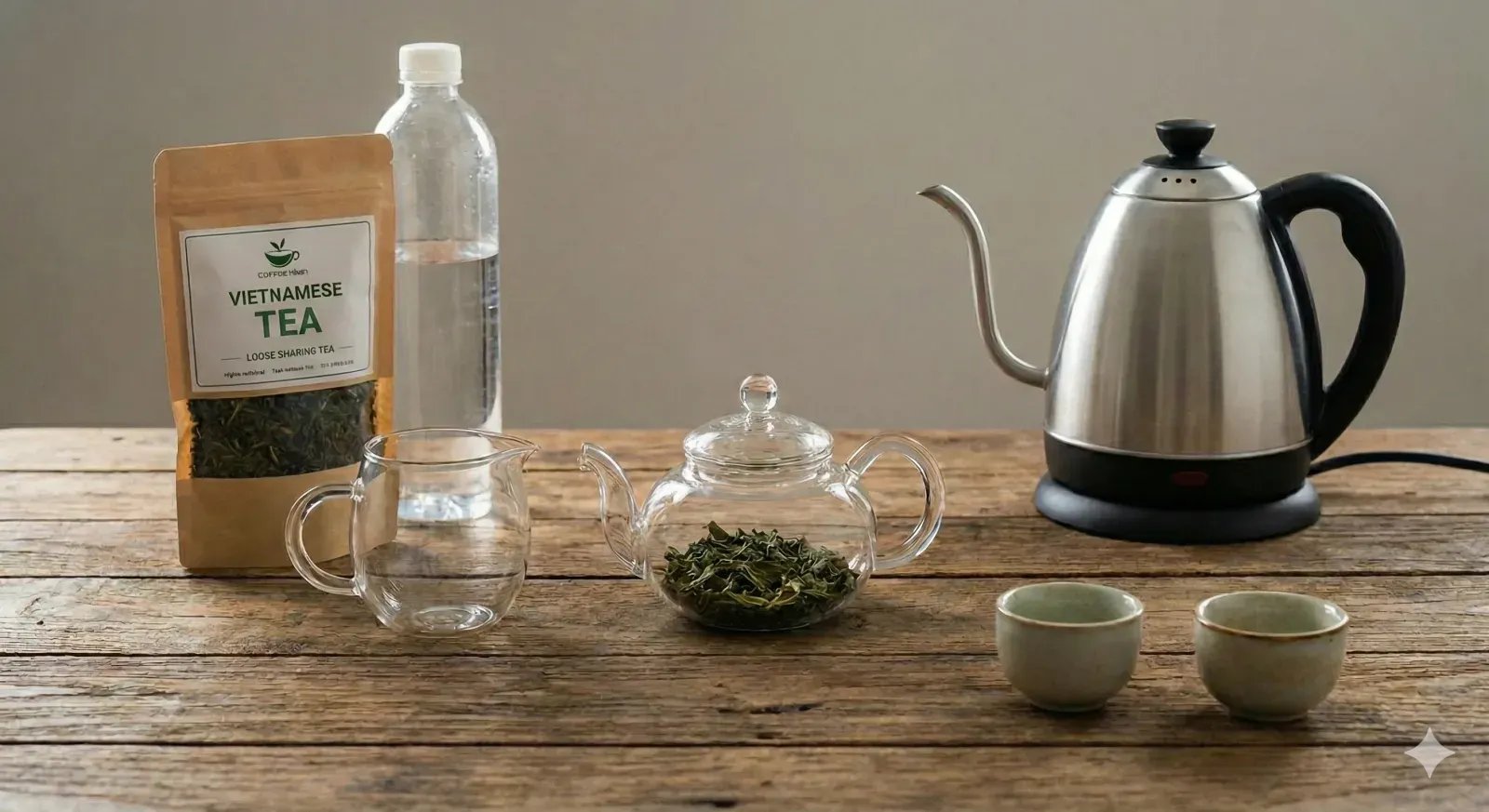
Equipment:
- Small glass or ceramic teapot (150–300ml recommended for beginners)
- Sharing pitcher — chuyên trà (essential, not optional)
- Small teacups
- Electric kettle or stovetop pot
Tea and Water:
- Quality loose-leaf Vietnamese tea (green, oolong, or black)
- Filtered bottled water — not mineral water, not tap water
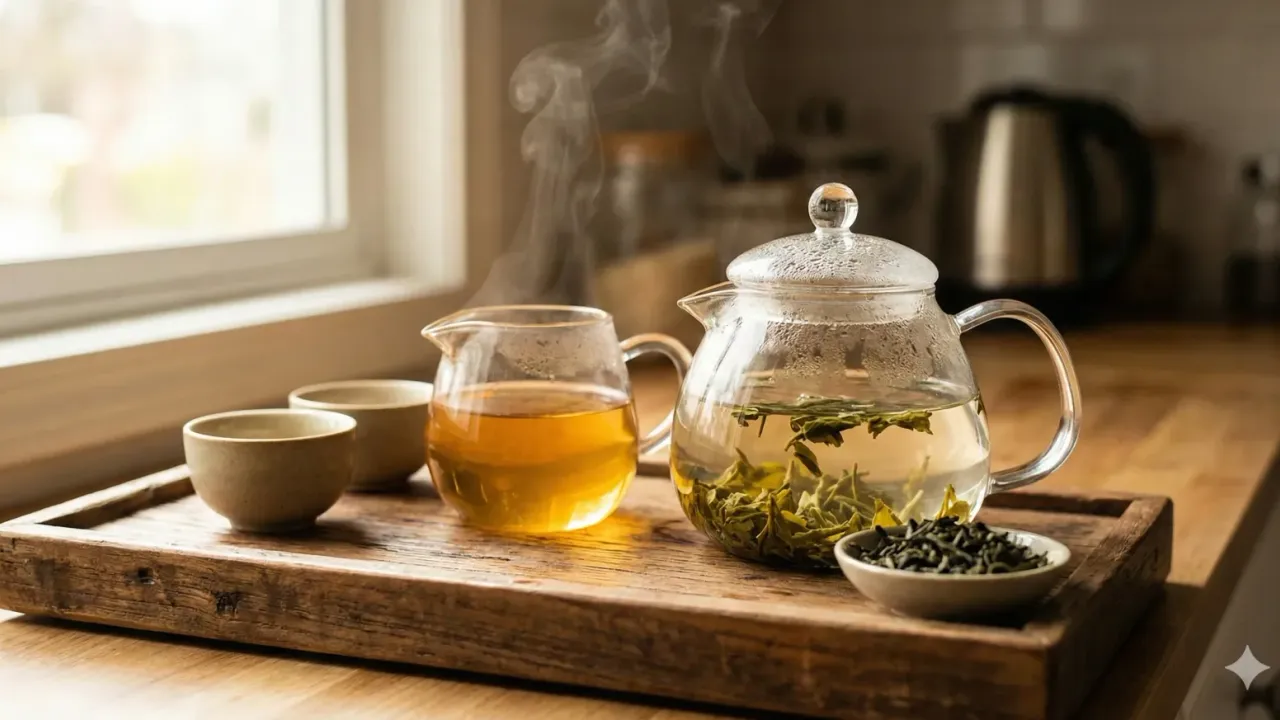
The teapot choice matters more than most people realize. A glass teapot lets you watch the leaves unfurl and monitor the brew color — making it ideal for learning. A ceramic or porcelain teapot, on the other hand, gives a true neutral flavor with no residual scent, so you can brew many different tea types in the same pot. Avoid clay pots until you’re more experienced, as their porous surface absorbs flavors over time.
How to Brew Vietnamese Tea: 7 Steps
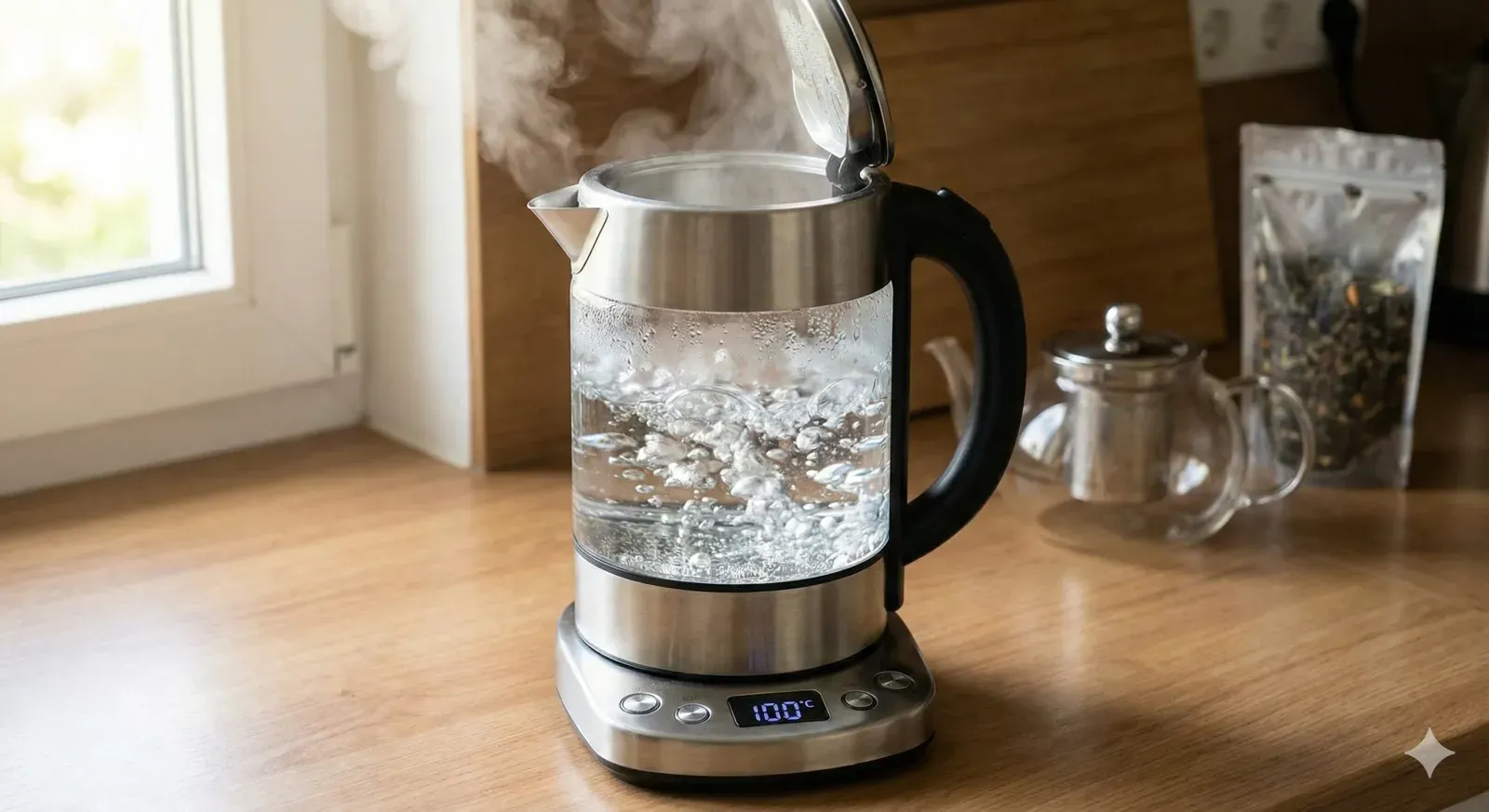
Step 1: Boil the Water
1Fill your kettle with filtered bottled water. Tap water contains chlorine that flattens tea flavor, while mineral water has too many dissolved minerals that interfere with taste — so neither is suitable. Next, heat the water to the appropriate temperature for your tea type (see the table above). Most Vietnamese teas are brewed well below boiling point, somewhere between 75°C and 98°C depending on the variety.
If you don’t have a temperature-controlled kettle, simply bring the water to a full boil, then let it sit uncovered. After 5 minutes it will have cooled to roughly 83°C, which is suitable for most oolong teas. Leave it a few more minutes for green tea.
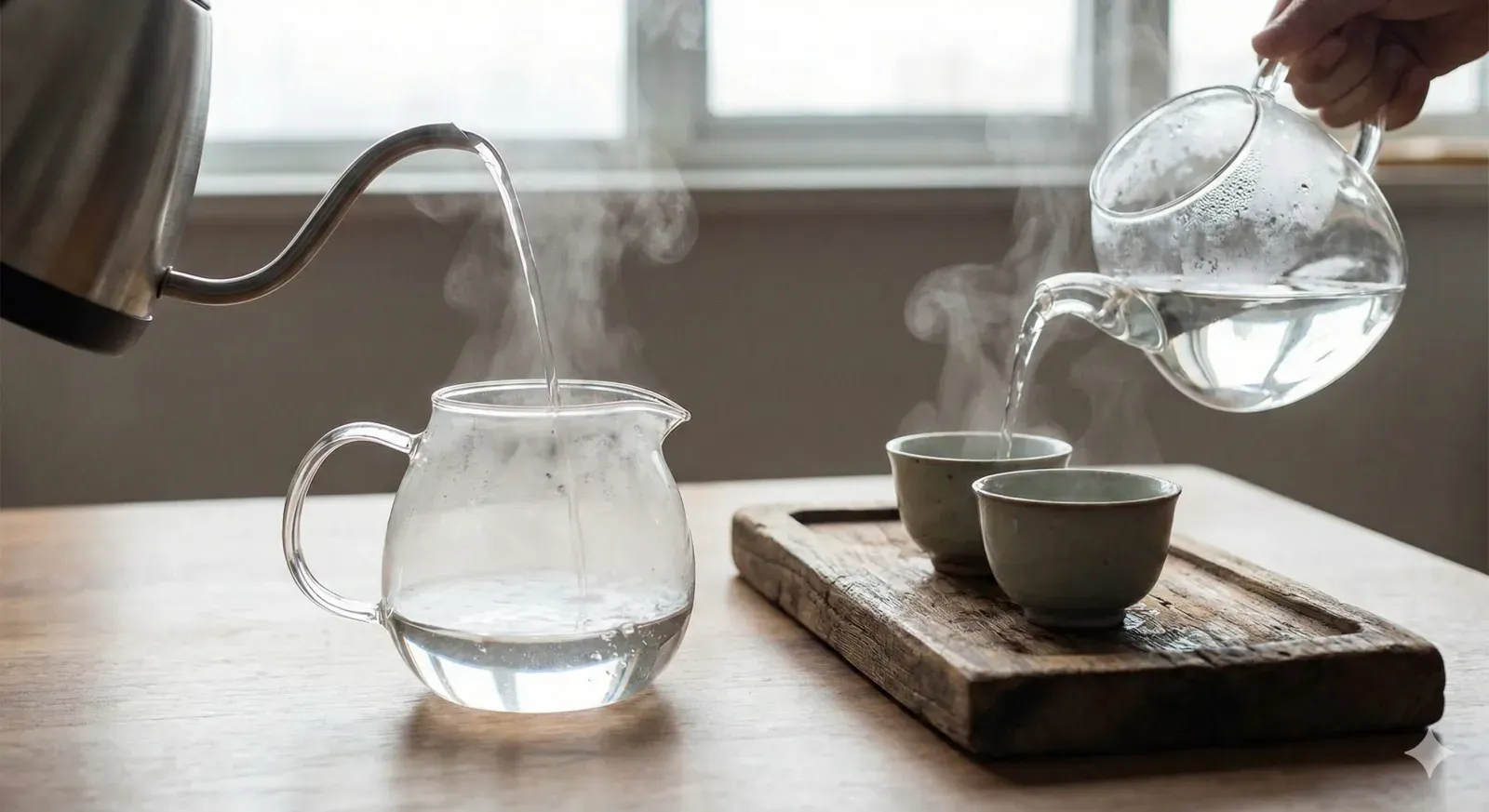
Step 2: Warm the Teapot and Cups
2Just before the water reaches your target temperature, pour some into the empty teapot, replace the lid, and let it sit for 30 seconds. Then pour that water into the sharing pitcher and, from there, into your teacups.
Beginners often skip this pre-warming step, but it makes a real difference. Cold ceramic or glass drops the water temperature the moment you pour it in, thereby throwing off your carefully calibrated heat. Warming the vessels keeps everything consistent from the very first steep.
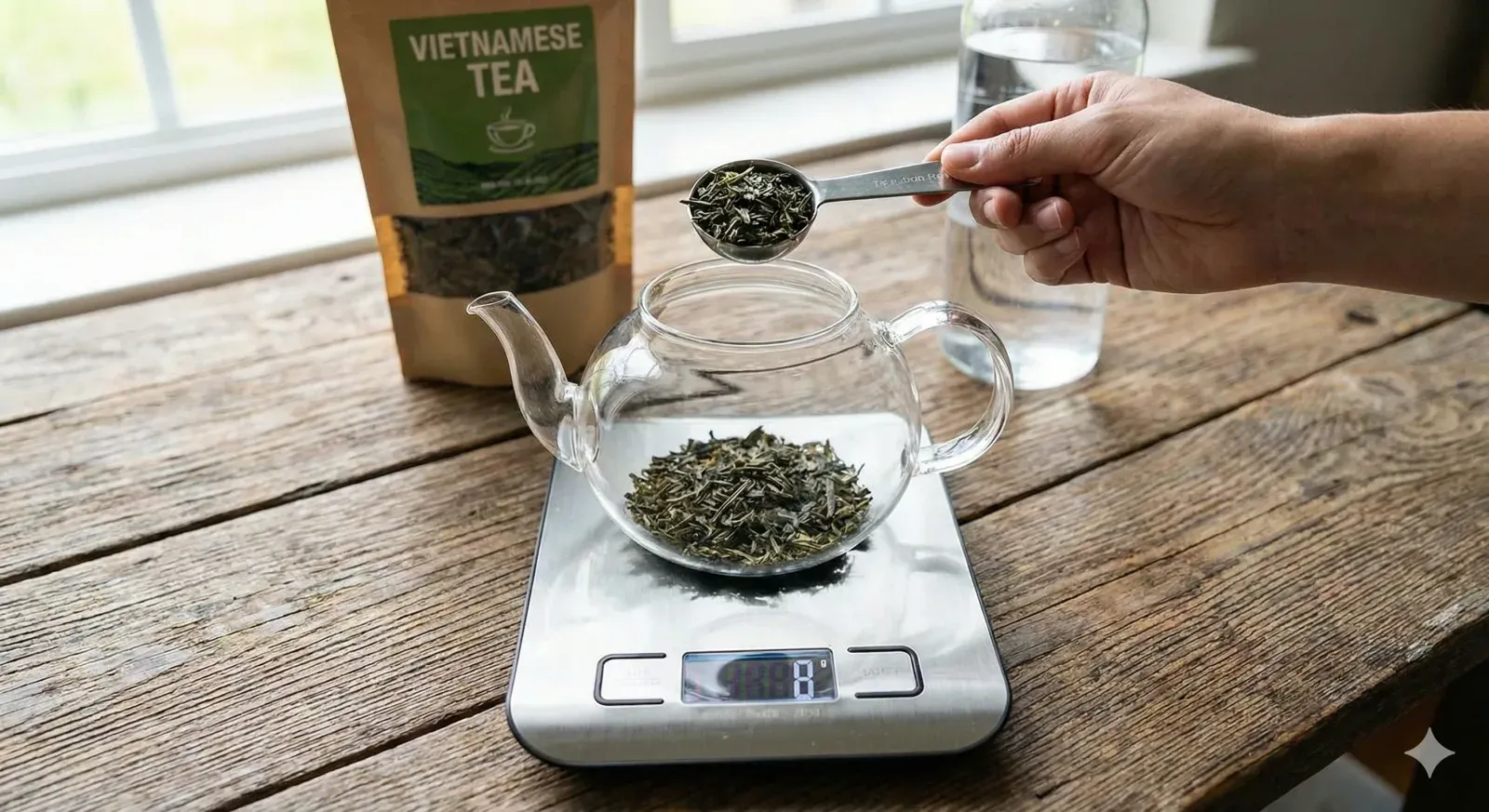
Step 3: Measure Your Tea
3Add your loose leaf tea to the dry teapot. The standard starting ratio is 8g per 300ml, though this varies by tea type. Generally, you’ll use between 1/5 and 1/2 of the pot’s volume. Oolong leaves tightly rolled into balls expand dramatically when wet, so start with less. Flat green tea leaves don’t expand as much, so you can be slightly more generous.
Don’t worry about getting this perfect on your first try — adjusting quantity is easy once you taste the result. The important thing, at this stage, is to start with a consistent baseline.
Step 4: Awaken the Tea Leaves
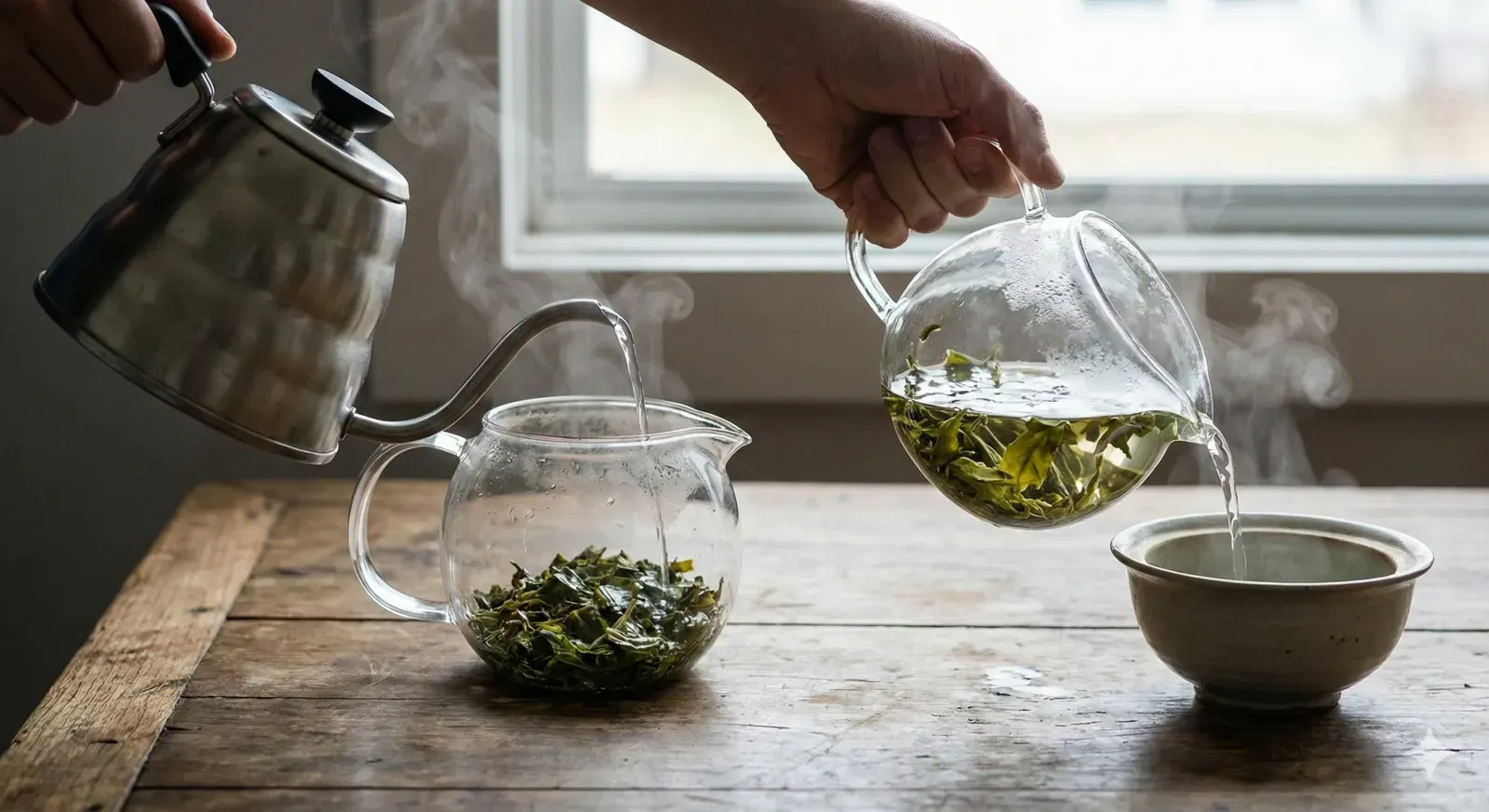
4Pour just enough hot water to submerge the leaves, then immediately discard this water — as fast as you can. You’re not making a drink yet. This “awakening rinse” (đánh thức trà) serves two purposes: it removes any dust or debris from the dry leaves, and it causes the leaves to begin opening up, priming them to release their best flavor in the next steep.
Use water that is slightly cooler than your brewing temperature for this step, or the same temperature if that’s not feasible. Either way, the key point is to act immediately — this water should never sit on the leaves.
Step 5: Steep the Tea
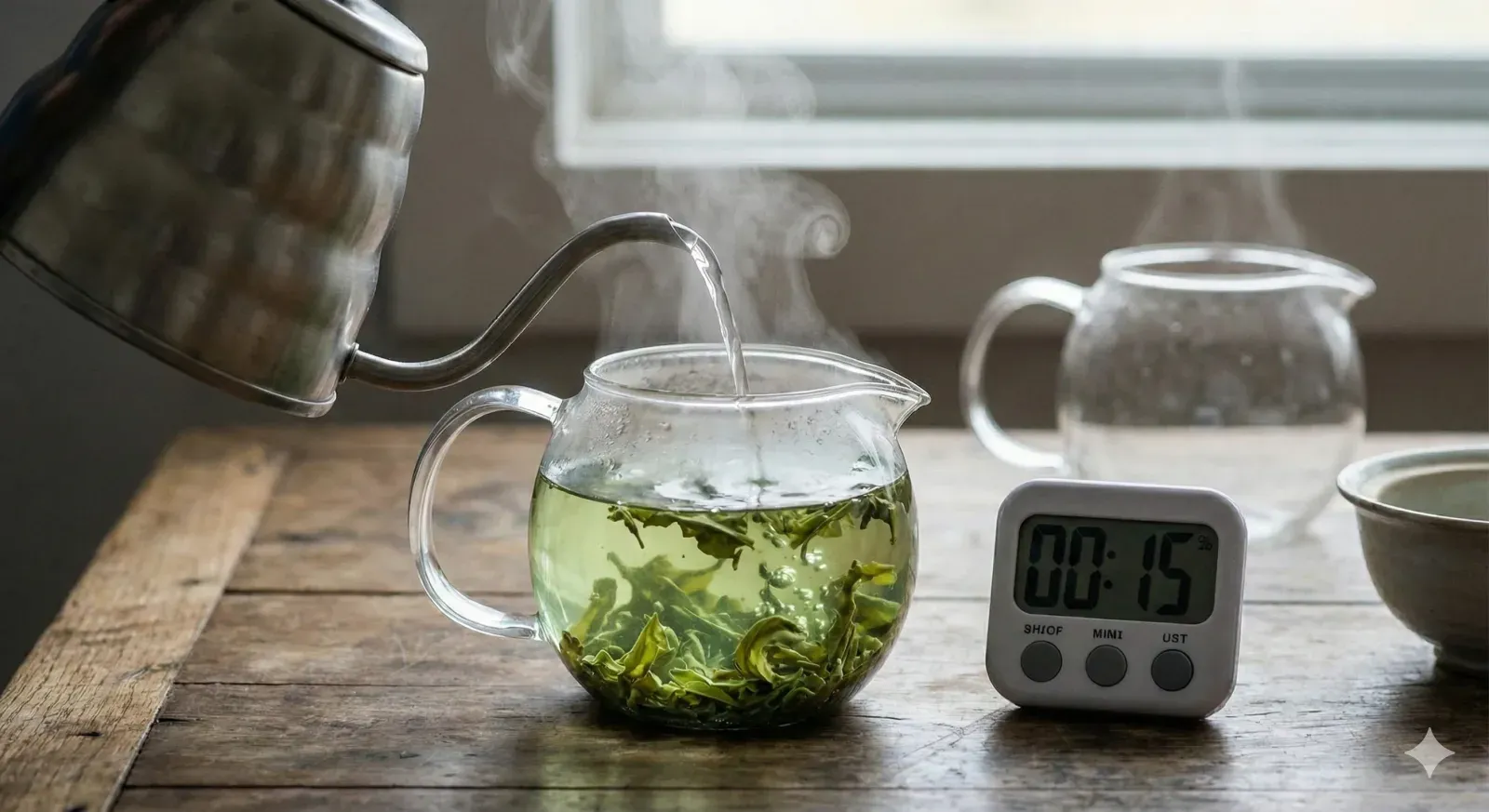
5Now pour hot water at the correct temperature to fill the teapot, and replace the lid. Start your timer. This is the most critical step when you brew Vietnamese tea — the one where temperature and time intersect to create either a great cup or a bitter one.
For the first steep, use these guidelines as your starting point:
- Vietnamese green tea: 10–20 seconds
- Light oolong: 20–30 seconds
- Dark / aged oolong: 25–35 seconds
- Black tea: 30–40 seconds
These times may feel absurdly short if you’re used to leaving a tea bag in for several minutes. Nevertheless, trust the process. The high leaf-to-water ratio combined with properly heated water extracts flavor very efficiently. Short steeps produce clean, bright, layered flavor; long steeps, by contrast, produce bitterness.
Step 6: Pour into the Sharing Pitcher
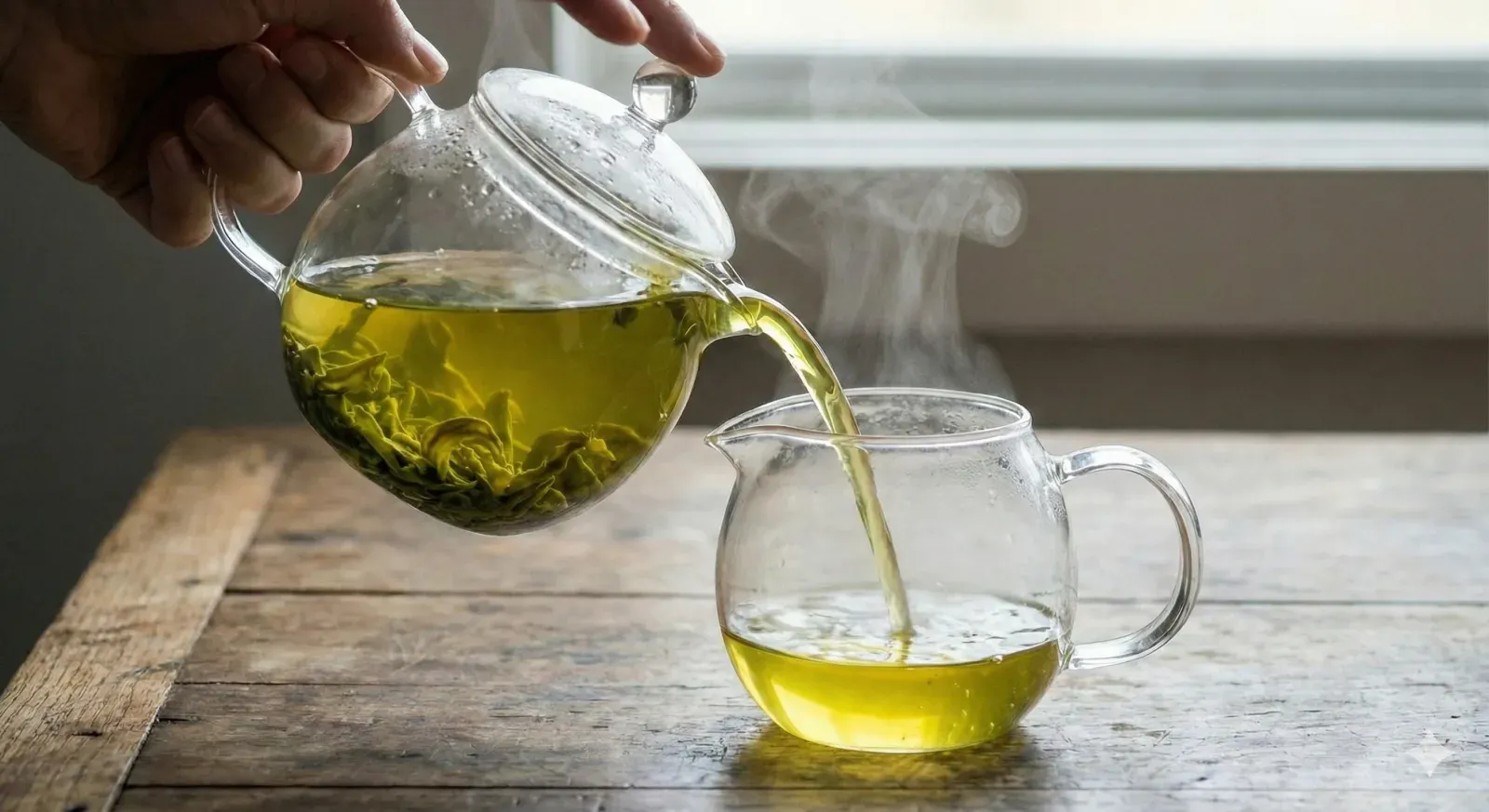
6The moment your steeping time is up, pour all of the liquid from the teapot into the sharing pitcher (chuyên trà) — quickly and completely. Don’t leave a drop in the pot. The chuyên is what stops the steeping process by separating the liquid from the leaves, so acting fast is essential.
After pouring, leave the teapot lid open. A closed lid traps heat and moisture around the leaves, causing them to continue steeping and developing the stale, musty taste known as trà nẫu. From the pitcher, pour into individual teacups and serve. Furthermore, pouring through a sharing pitcher ensures consistency — every cup has the same strength, rather than the first cup being weak and the last one bitter.
Step 7: Re-steep and Explore
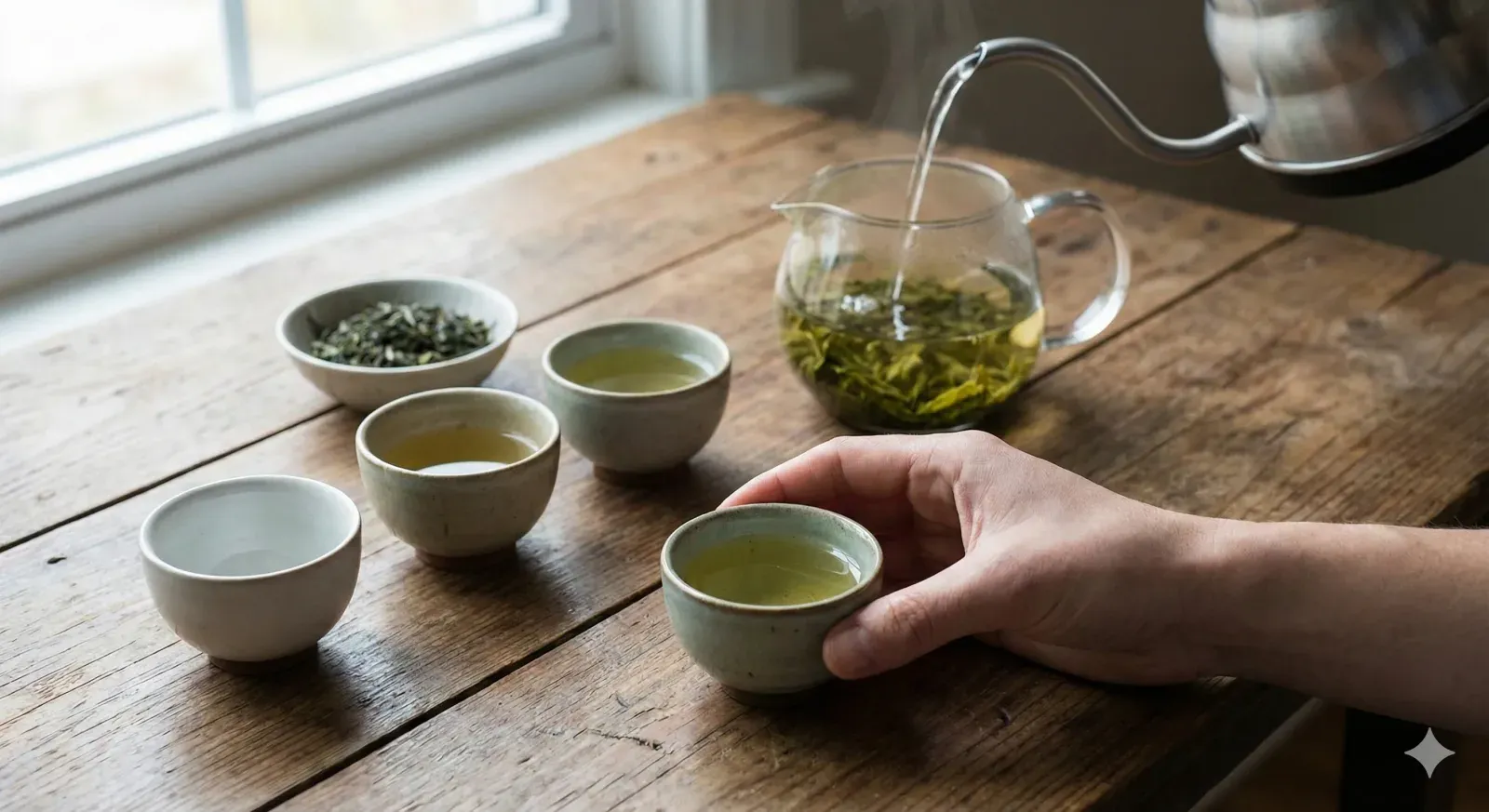
7Repeat steps 5 and 6 for as many steeps as you like. Add 5–10 seconds to each subsequent steep to compensate for the gradually depleting leaves. Quality Vietnamese tea typically yields 5–8 excellent steeps before the flavor fades to nothing.
This final stage is also where you refine your technique. If the first steep was too bitter, shorten the time next round. If it was too pale and weak, add a few more seconds. Since there is no single universally correct answer, the perfect steep is simply the one that tastes right to you.
Vietnamese Tea Types and How to Brew Each One
How to Brew Vietnamese Green Tea (Trà Xanh)
Vietnamese green tea — produced in regions like Thái Nguyên, Mộc Châu, and Bảo Lộc — has a distinctively grassy, slightly nutty flavor profile that differs from Chinese or Japanese green teas. It’s more robust and can stand up to slightly higher temperatures than many Japanese varieties, but still needs protection from boiling water. Brew at 75–80°C for 10–20 seconds. Thin, needle-like leaves signal a more delicate variety; broader, flatter leaves, however, are slightly more forgiving. According to the Vietnam Trade Promotion Agency, Thái Nguyên green tea is among the country’s most celebrated exports, prized for its clean, sweet finish.
How to Brew Vietnamese Oolong Tea (Trà Ô Long)
Vietnamese oolong — particularly the high-altitude varieties from Lâm Đồng province — spans a wide flavor spectrum from floral and creamy to roasted and woody, depending on oxidation level. Lightly oxidized oolongs behave more like green tea and prefer cooler water around 85°C. Darker, more heavily oxidized oolongs, on the other hand, can handle 90–95°C. Steep for 20–35 seconds. Tightly balled oolong leaves expand significantly, so use less leaf than you think you need initially.
How to Brew Vietnamese Black Tea (Trà Đen)
Produced primarily in the northern highlands, Vietnamese black tea is full-bodied and malty. It’s the most forgiving of the three types — use water at 95–98°C (essentially just off the boil) and steep for 30–40 seconds. Although black tea can withstand slightly longer steeping times than green or oolong, the Vietnamese brewing approach still produces a cleaner result than the 3–5 minute steeps common in British-style preparation.
Lotus Tea (Trà Sen) and Jasmine Tea (Trà Nhài)
These are scented green teas — base tea leaves layered with lotus stamens or jasmine blossoms to absorb their fragrance. Brew them exactly as you would the underlying green tea (75–80°C, 10–20 seconds), since the delicate floral notes are even more vulnerable to heat damage than the tea itself. Overheating scented teas produces a flat, vaguely chemical aroma rather than the intended floral sweetness. If you enjoy Vietnamese drinks beyond tea, our Vietnamese coffee guide covers another beloved brewing tradition worth exploring.
Common Mistakes When Brewing Vietnamese Tea (And How to Fix Them)
Mistake 1: Using Boiling Water for Green Tea
The result is a bitter, harsh cup with a sharp astringency that’s unpleasant rather than complex. To fix it, let boiled water rest for 5–8 minutes before brewing green tea, or invest in a temperature-controlled kettle.
Mistake 2: Leaving the Leaves to Soak
Even leaving leaves in the pot for just an extra 30–60 seconds causes over-extraction. As a result, the tea turns bitter, astringent, and stale-smelling. Always transfer all liquid to the sharing pitcher the moment steeping is done, and keep the teapot lid open.
Mistake 3: Using Tap or Mineral Water
Chlorine in tap water interferes with tea’s aromatic compounds. Similarly, high mineral content in mineral water creates off-flavors and muddies the taste. For best results, use plain filtered bottled water for a clean, bright brew.
Mistake 4: Compensating Weakness with Time or Temperature
If your tea is too weak, the instinct is often to steep longer or use hotter water. However, this only increases bitterness. The correct fix is to add more tea leaves — more leaves equals more flavor without more bitterness.
Mistake 5: Not Pre-Warming Your Vessels
Cold glass or ceramic drops the brewing water temperature significantly on contact. Fortunately, pre-warming takes less than a minute and ensures your 80°C water actually brews the tea at 80°C rather than 70°C.
Quick Tips for Better Results When You Brew Vietnamese Tea
- Start small: Brew in a 150–200ml teapot before scaling up. Smaller vessels are easier to control and respond faster to adjustments.
- Glass first: A transparent glass teapot lets you see the color develop in real time — invaluable for beginners learning to judge strength visually.
- No thermometer needed: Boil water and let it cool naturally. 5 minutes ≈ 83°C, 8–10 minutes ≈ 78°C.
- Fine leaves, lower temperature: Thin, delicate leaves extract faster and are more fragile. Thick, dense leaves, by contrast, are more heat-tolerant.
- Adjust quantity, not time: For stronger flavor, use more tea. For milder flavor, use less. Keep steeping time constant once you find your sweet spot.
- There’s no single right answer: Experiment with all three variables — temperature, time, and quantity — until you discover the combination that tastes best to you with your specific tea.
The Role of the Sharing Pitcher (Chuyên Trà) in Vietnamese Tea Brewing
Western tea culture rarely uses a sharing pitcher, but in Vietnamese (and broader East Asian) tea tradition, the chuyên is considered an essential part of the brewing set — not a nice-to-have accessory.
Its purpose is twofold. First, it stops the steeping process instantly by separating the brewed liquid from the leaves. Without it, you’d need to pour directly from the teapot into cups, which takes longer and risks uneven extraction. Second, it homogenizes the brew — the tea at the bottom of the teapot is often slightly stronger than at the top, and passing everything through the pitcher equalizes the concentration so that every cup tastes the same.
If you don’t have a chuyên, a small glass measuring jug works as a practical substitute. The key is simply having a vessel where you can collect and hold all the steeped liquid before distributing to cups. For more context on traditional Vietnamese tea culture, Wikipedia’s overview of Vietnamese tea is a solid starting point.
Frequently Asked Questions About How to Brew Vietnamese Tea
What water temperature is best for Vietnamese green tea?
75–80°C is the target range. Water above 85°C scorches the delicate leaves, turning the flavor bitter and destroying the light, grassy aroma. Without a thermometer, boil water and let it rest uncovered for 8–10 minutes to reach this range naturally.
How long should I steep Vietnamese tea?
Count in seconds, not minutes. Green tea: 10–20 seconds. Oolong: 20–35 seconds. Black tea: 30–40 seconds. Steeping even slightly longer than this will make the tea noticeably more bitter and astringent.
How much tea per pot should I use?
Start with 8g per 300ml of water. If you want stronger flavor, increase the tea quantity — do not increase the steeping time or temperature, as that only creates bitterness rather than depth.
Can I use tap water for Vietnamese tea?
No — tap water’s chlorine and impurities significantly affect the flavor. Always use plain filtered bottled water (not mineral water). The quality of your water has a direct impact on the clarity and cleanliness of the final cup.
What teapot is best for Vietnamese tea?
For beginners, a small glass or ceramic teapot is ideal. Glass lets you watch the brewing process in real time; ceramic is flavor-neutral and versatile. Avoid clay teapots until you’ve developed your palate, as they absorb and retain the flavor of previous brews.
How many times can I re-steep the same leaves?
High-quality Vietnamese tea can be re-steeped 5–8 times. Add 5–10 seconds to each subsequent steep. The flavor evolves noticeably across steeps — in fact, many people find the 2nd or 3rd infusion to be the most complex and satisfying of all.
Conclusion
Learning how to brew Vietnamese tea properly is one of the most rewarding small skills you can develop in the kitchen. Once you understand the three core variables — water temperature, tea quantity, and steeping time — and commit to using good water and pre-warming your vessels, the results are dramatically better than casual brewing.
The Vietnamese approach to tea — small pots, short steeps, multiple infusions, a sharing pitcher — is built around extracting maximum flavor from quality leaves without over-extracting bitterness. It rewards attentiveness and, as a result, produces a cup that is clean, complex, and genuinely worth savoring.
Start with a good Vietnamese green tea or oolong, a small glass pot, and filtered water. Follow the 7 steps above. Taste, adjust, and taste again. Within a few sessions, you’ll have a feel for it that no amount of reading can fully replace — and every cup will be better than the last.
Explore more Vietnamese food and drink traditions on My Viet Kitchen — from authentic Vietnamese recipes to the art of Vietnamese coffee and tea culture.