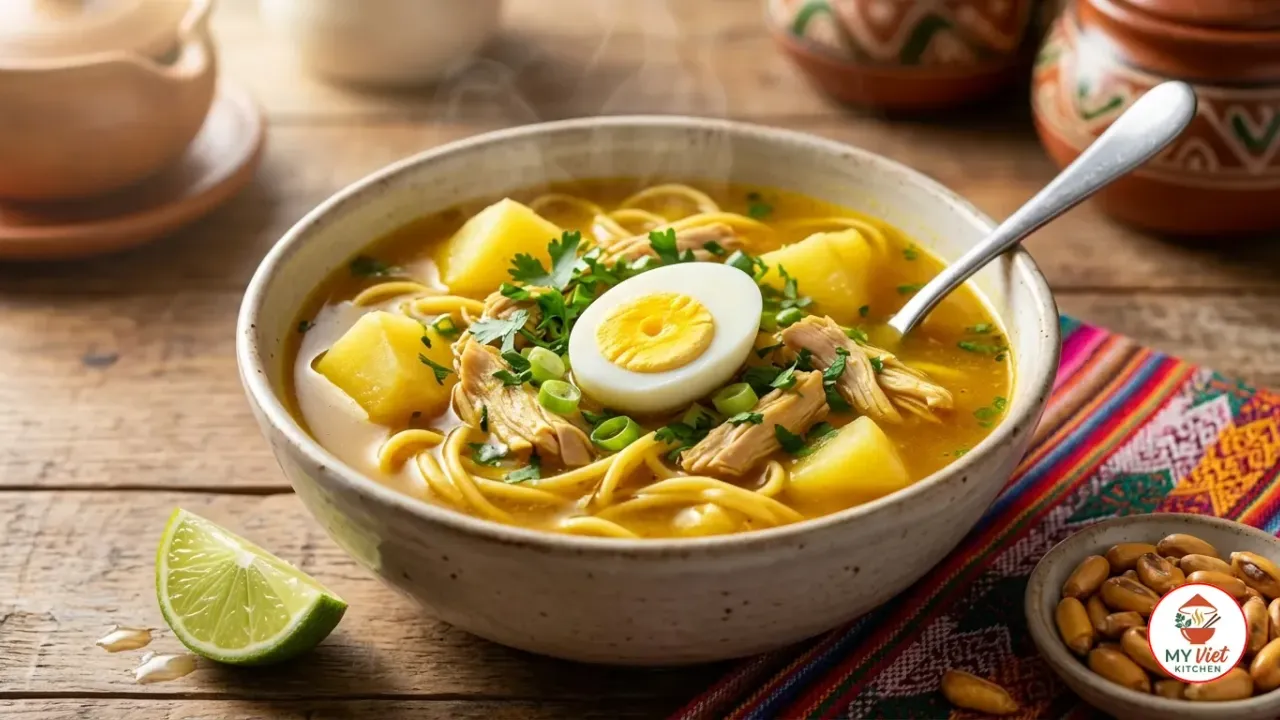
Caldo de gallina is Peru’s most beloved comfort soup, a steaming bowl of golden hen broth loaded with egg noodles, tender potatoes, and halved boiled eggs. This caldo de gallina recipe teaches you how to build that rich, deeply flavored broth at home using a whole stewing hen, aji amarillo paste, and a handful of fresh herbs. Whether you are fighting a cold or feeding a crowd on a chilly evening, this Peruvian hen soup delivers warmth, nourishment, and soul-deep satisfaction in every spoonful.
Prep Time: 25 minutes | Cook Time: 75 minutes | Servings: 6
Difficulty: Easy | Calories: ~380 per serving
What Makes Caldo de Gallina Special?
Walk into any market in Lima at dawn and you will find vendors ladling out bowls of caldo de gallina to early risers. This soup is not just food in Peru. It is medicine, tradition, and morning ritual all at once. Peruvians eat it after late nights, during cold spells, and whenever the body needs repair. The secret is the hen itself. Unlike a young broiler chicken, a mature gallina has tough, flavorful meat packed with collagen. When simmered low and slow, that collagen melts into the broth and gives it a body and richness that no regular chicken soup can match.
What sets caldo de gallina apart from other chicken soups around the world is the seasoning. Aji amarillo paste brings a gentle, fruity heat and a golden hue to the broth. Ground cumin adds an earthy depth, while turmeric reinforces the warm color and offers anti-inflammatory benefits. The soup comes together with soft egg noodles, chunks of potato, and the classic garnish of a halved hard-boiled egg nestled in the bowl. A squeeze of lime and a handful of cilantro finish the dish with brightness.
Caldo de gallina has deep roots in Peruvian culinary history, blending indigenous Andean ingredients with Spanish colonial cooking traditions. The result is a soup that feels both ancient and alive. Every family in Peru has its own version, and the recipe varies from the coast to the highlands to the jungle. This version captures the essential Lima-style preparation that you will find at market stalls and family tables across the capital.

Choosing the Right Hen for Caldo de Gallina
The bird you choose defines the quality of your broth. A true gallina gives you a soup with depth that a regular supermarket chicken simply cannot deliver. Here are your options and what to expect from each one.
- Stewing hen or gallina (best choice): A mature laying hen, usually over one year old, with firm dark meat and plenty of connective tissue. The long simmer breaks down that collagen into a silky, golden broth with real body. Ask for gallina at Latin or Asian grocery stores.
- Whole roasting chicken: Younger and more tender, a roasting chicken cooks faster but produces a lighter broth. If you go this route, reduce the simmering time to 40 minutes. You can boost the broth with a couple of chicken wings or a small piece of pork neck bone for extra gelatin.
- Chicken thighs and drumsticks: Dark meat pieces are a good shortcut when you cannot find a whole bird. They have more flavor and fat than breasts. Use bone-in, skin-on pieces for the best results. The tradeoff is a slightly thinner broth compared to a whole hen.
Ingredients for Caldo de Gallina
The Broth:
- 1 whole hen (gallina) or large stewing chicken, about 4 pounds, cut into pieces
- 10 cups cold water
- 1 large onion, quartered
- 4 cloves garlic, smashed
- 2 stalks celery with leaves
- 1 tablespoon vegetable oil
Seasoning and Spices:
- 1 tablespoon aji amarillo paste
- 1 teaspoon ground cumin
- 1 teaspoon ground turmeric
- Salt and black pepper to taste
Vegetables, Noodles, and Garnish:
- 2 medium carrots, peeled and sliced into rounds
- 2 medium potatoes, peeled and cut into chunks
- 8 ounces egg noodles or fideo pasta
- 3 hard-boiled eggs, halved
- 1/2 cup fresh cilantro, chopped
- 1/4 cup fresh parsley, chopped
- 2 green onions, thinly sliced
- 1 lime, cut into wedges
Pro tip: The aji amarillo paste is the soul of this soup. It brings a uniquely Peruvian flavor that no other chile can replicate. If you cannot find it locally, order it online. In a pinch, use a small amount of yellow bell pepper pureed with a dash of cayenne, but the flavor will not be the same.
Step-by-Step Instructions
Step 1: Build the Broth
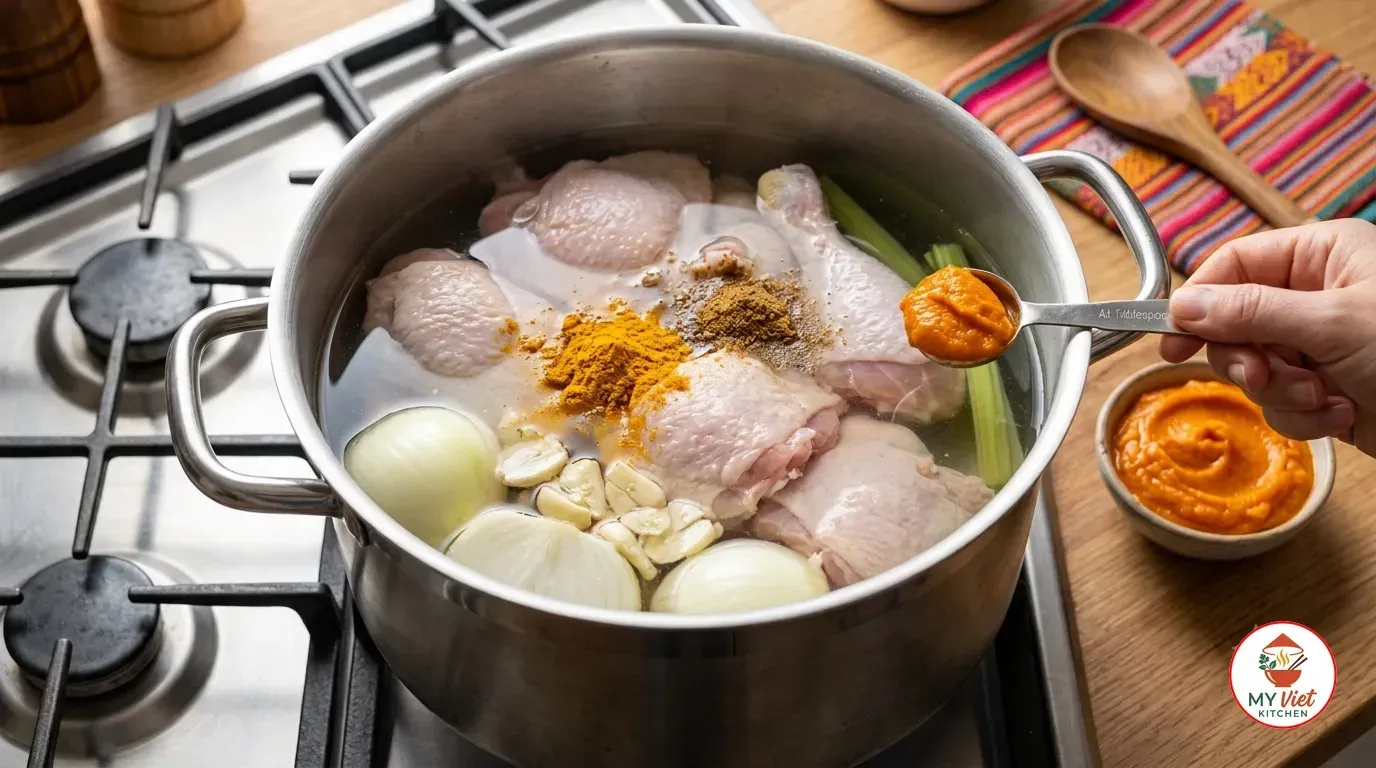
1 Heat the vegetable oil in a large, heavy pot over medium heat. Add the quartered onion and smashed garlic cloves. Cook for about 3 minutes, stirring occasionally, until the onion softens and turns slightly golden. This step builds a flavor base that makes the broth taste deeper and more complex than simply boiling the hen in plain water.
Place the hen pieces into the pot and pour in 10 cups of cold water. Starting with cold water is important because it draws out more flavor and collagen from the bones as the temperature rises slowly. Bring to a boil over high heat. As foam rises to the surface, skim it off with a large spoon. Once the broth is clean, add the cumin, turmeric, aji amarillo paste, and celery stalks. Lower the heat to a gentle simmer, cover partially, and let it cook for 60 minutes. The hen should be very tender and the broth golden.
Step 2: Prepare the Hen
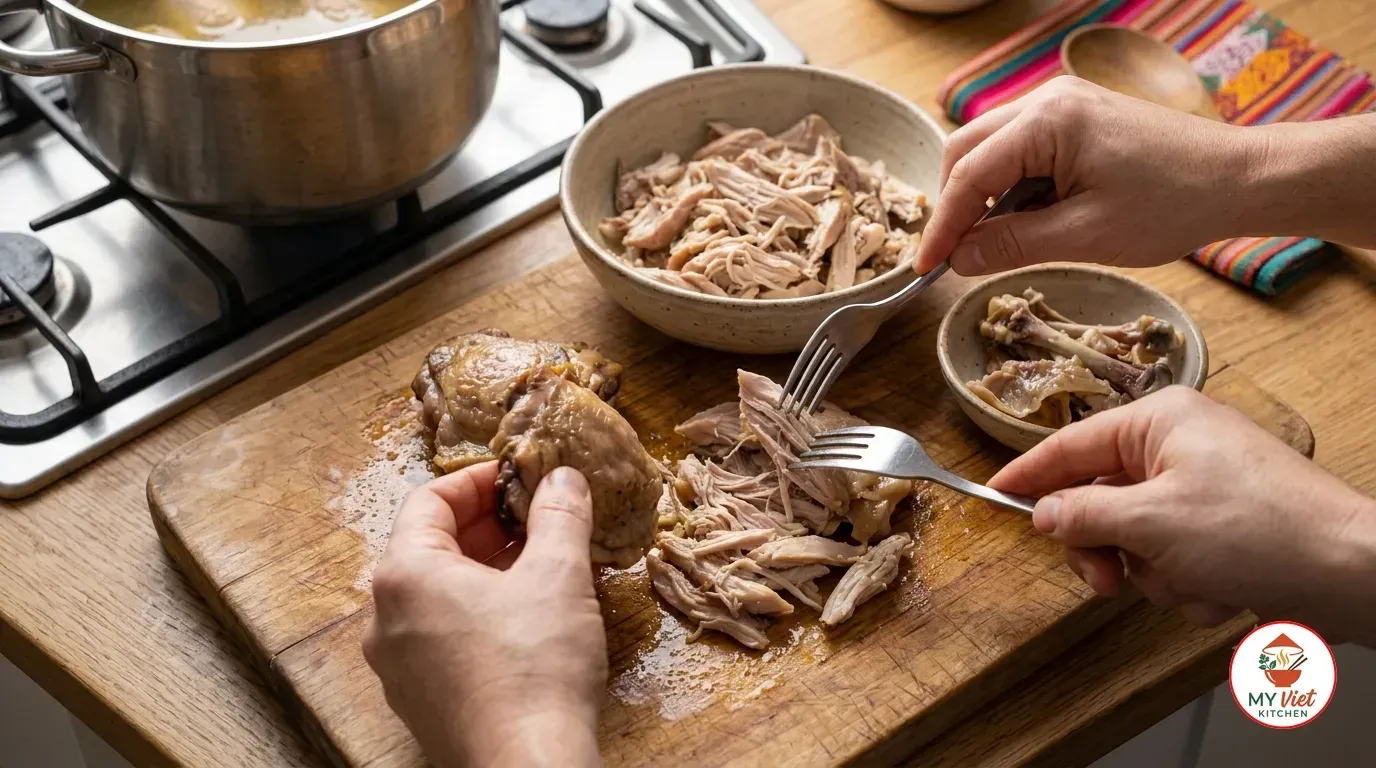
2 Use tongs to lift the hen pieces out of the broth and place them on a cutting board. Let them cool for a few minutes until you can handle them comfortably. Pull the meat from the bones, shredding it into bite-sized pieces. Discard the skin and bones. Set the shredded meat aside in a bowl.
Pour the broth through a fine-mesh sieve into a clean pot. This removes the celery, onion pieces, and any small bone fragments. You want a clean, clear golden broth as the foundation for the final soup. Return the strained broth to the stove and bring it back to a gentle simmer.
Step 3: Cook the Vegetables and Noodles
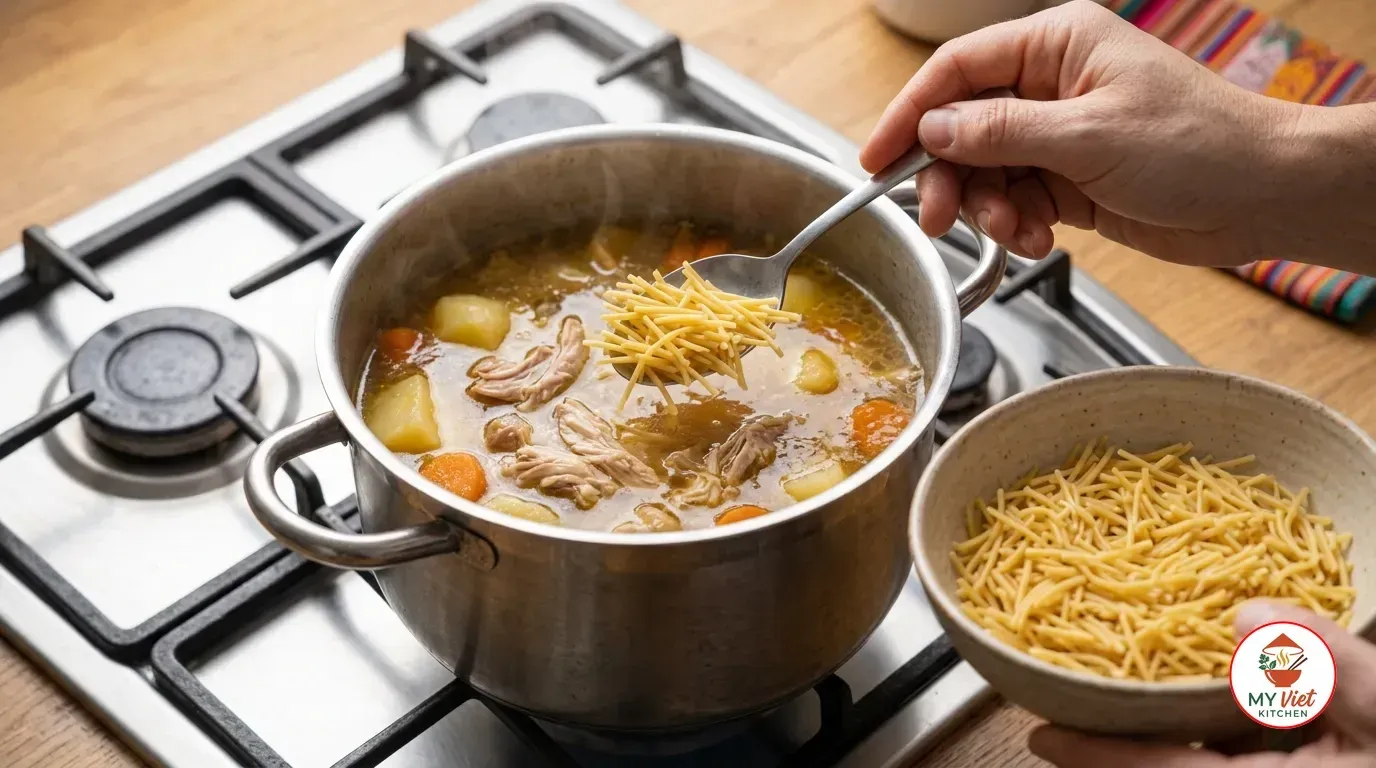
3 Add the sliced carrots and potato chunks to the simmering broth. Cook for about 10 minutes until the potatoes are almost tender but still hold their shape. Then add the egg noodles directly into the pot. Cook for another 6 to 8 minutes, stirring gently a few times so the noodles do not clump together.
Once the noodles are cooked through and the potatoes are fully tender, return the shredded hen meat to the pot. Stir gently to combine everything. The soup should be brothy but hearty, with plenty of noodles, vegetables, and meat in every scoop. If the broth has reduced too much, add a cup of hot water to thin it slightly.
Step 4: Season and Serve
4 Taste the broth and adjust the seasoning with salt and black pepper. The soup should be well-seasoned but not salty. If you want more heat, stir in a little extra aji amarillo paste. The flavors should be balanced: savory broth, gentle warmth from the aji, and an earthy note from the cumin.
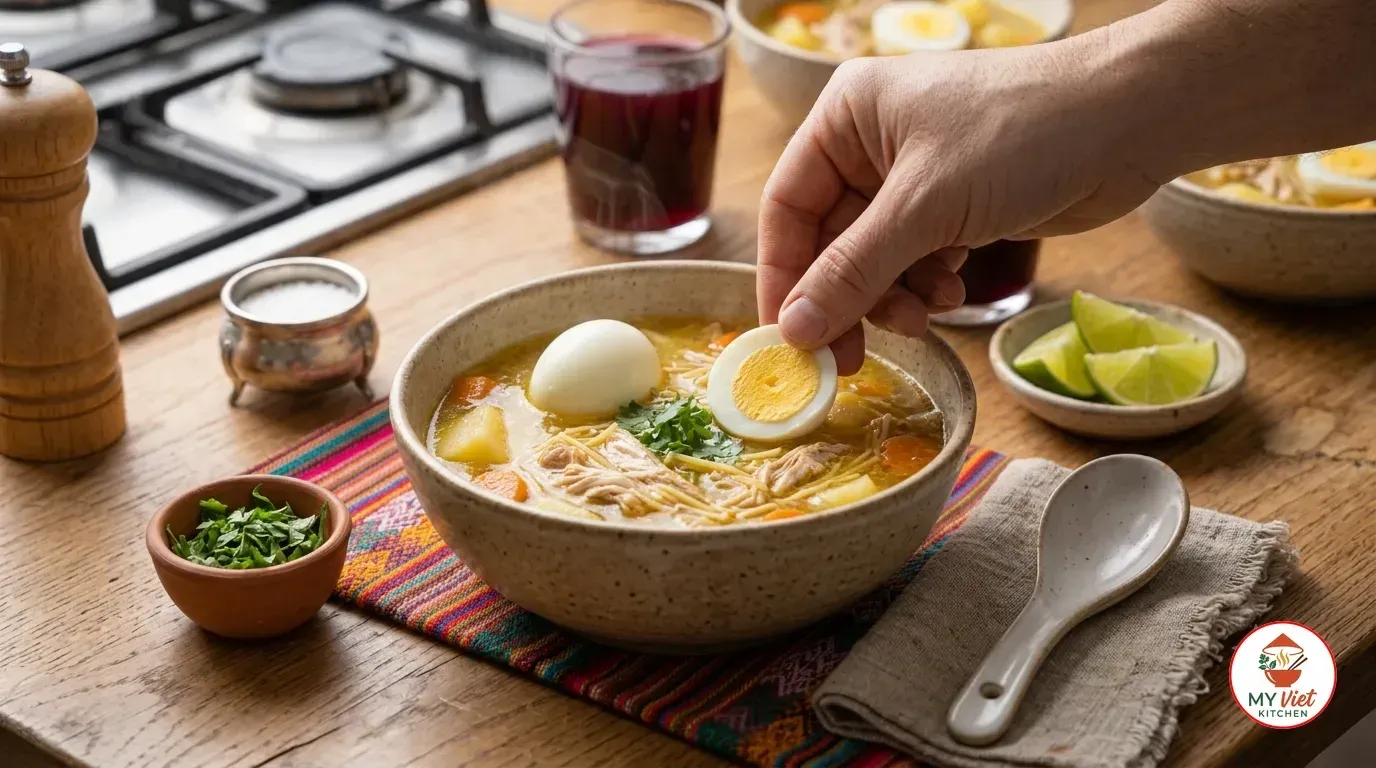
Ladle the caldo de gallina into deep, warmed bowls. Place half a hard-boiled egg in each bowl, yolk side up. Scatter chopped cilantro, parsley, and sliced green onions over the top. Serve with a lime wedge on the side. The lime is essential. A fresh squeeze of lime juice over the hot soup brightens all the flavors and ties the dish together. Serve immediately while everything is piping hot.
Expert Tips for Perfect Caldo de Gallina
Start with Cold Water
Always begin your broth with cold water, not hot. Cold water extracts proteins, collagen, and flavor from the hen bones gradually as the temperature rises. Hot water seals the surface of the meat too quickly, trapping flavors inside instead of releasing them into the broth. This simple step is the difference between a thin soup and a rich, full-bodied caldo de gallina.
Skim the Foam Carefully
During the first 10 minutes of boiling, gray foam will rise to the surface. Skim it off patiently with a large spoon or ladle. This foam contains impurities and coagulated proteins that make the broth cloudy and give it a slightly bitter taste. As a result, a clean broth looks golden and appetizing, and it tastes cleaner on the palate.
Cook Noodles Separately if Storing
If you plan to store leftovers, cook the egg noodles in a separate pot and add them to individual bowls at serving time. Otherwise, noodles left in the broth overnight absorb all the liquid and turn soft and bloated. Keeping them separate preserves their texture and keeps the broth at the right consistency for reheating the next day.
Caldo de Gallina vs Other Latin American Soups
Latin America is rich with chicken and hen soups, and each country puts its own stamp on the concept. Here is how caldo de gallina compares to similar soups from neighboring traditions.
| Soup | Country | Key Ingredients | Distinctive Feature |
|---|---|---|---|
| Caldo de gallina | Peru | Hen, egg noodles, potatoes, aji amarillo, boiled eggs | Golden broth from turmeric and aji amarillo, served with lime |
| Sancocho de gallina | Colombia | Hen, yuca, plantain, corn on the cob, cilantro | Thick stew-like broth with starchy root vegetables |
| Caldo de pollo | Mexico | Chicken, rice, chayote, zucchini, chipotle | Lighter broth with rice instead of noodles, often smoky |
| Sopa de gallina india | Honduras | Free-range hen, root vegetables, corn, green banana | Long-simmered broth with native hen for deeper flavor |
| Aguadito de pollo | Peru | Chicken, rice, cilantro, beer, peas | Bright green broth from a large amount of pureed cilantro |
Serving Suggestions
In Peru, caldo de gallina is a complete meal in itself. It is traditionally served in the early morning hours at market stalls, often between midnight and dawn. The soup comes in a deep bowl with all the garnishes already arranged on top. Still, there are wonderful sides and drinks that complement the experience.
The Perfect Accompaniments:
- Cancha (toasted corn): Crunchy Peruvian corn kernels add a salty, toasty contrast to the soft noodles and tender hen meat. Scatter a handful on top or eat them alongside the soup.
- Crusty bread rolls: A simple white bread roll is perfect for dunking into the golden broth. Many Peruvians tear the bread and drop pieces directly into the bowl.
- Aji criollo sauce: A spicy table sauce made with aji limo peppers, red onion, and lime juice. A spoonful stirred into the soup adds bright heat and acid that cuts through the richness of the broth.
- Arroz blanco (white rice): Some Peruvians serve a small mound of steamed white rice on the side or directly in the bowl. The rice absorbs the broth and makes the soup even more filling.
Beverage Pairings:
- Chicha morada: A sweet, refreshing drink made from purple corn, pineapple, and cinnamon. Its fruity flavor balances the savory richness of the soup perfectly.
- Emoliente: A warm herbal drink made with barley, flaxseed, and lime. Popular at Peruvian breakfast carts, it pairs naturally with a bowl of morning caldo de gallina.
- Inca Kola: Peru’s beloved golden soft drink with a bubblegum-like sweetness. It is the national beverage and goes with almost every Peruvian meal.
- Hot tea with lemon: A simple cup of tea rounds out the meal, especially on cold Andean mornings when the soup is most appreciated.
Storage and Reheating
Refrigerator: Store the broth and shredded hen meat in a sealed container for up to 4 days. Keep the noodles in a separate container if possible. The broth may gel when cold due to the collagen from the hen. This is a sign of a well-made caldo de gallina. It will return to liquid when reheated.
Freezer: The broth and hen meat freeze well for up to 3 months. Let the soup cool completely before transferring to freezer-safe containers. Leave an inch of headspace for expansion. Do not freeze the noodles or potatoes, as they break down when thawed. Cook fresh noodles and potatoes when you reheat the frozen broth.
Reheating: Warm the broth gently on the stove over medium-low heat. Avoid boiling it hard, because that can make the shredded meat tough. If the broth has thickened in the fridge, add a splash of water to bring it back to the right consistency. Add freshly cooked noodles, a new boiled egg, and fresh herbs when serving. The garnishes should always be fresh.
Common Mistakes to Avoid
1. Using Boneless Chicken Breast
Boneless, skinless chicken breast produces a pale, flat-tasting broth with no body. The whole point of caldo de gallina is the rich, gelatinous broth that comes from simmering bones, skin, and connective tissue. Always use bone-in pieces, and if you can find a whole hen, the result will be dramatically better.
2. Boiling the Broth Too Hard
In contrast to a gentle simmer, a rolling boil makes the broth cloudy and gives it a greasy texture. The fat emulsifies into the liquid instead of staying on the surface where you can skim it. Keep the heat low after the initial boil. You want gentle bubbles breaking lazily at the surface, not a vigorous churn.
3. Skipping the Aji Amarillo
Without aji amarillo, your soup becomes a generic chicken soup. The aji amarillo paste is what makes caldo de gallina taste Peruvian. It adds gentle heat, a golden color, and a fruity depth that no other ingredient can replicate. Even a single tablespoon transforms the entire bowl. Do not leave it out.
4. Leaving Noodles in the Broth Too Long
Similarly, egg noodles absorb liquid quickly and become bloated and mushy if left sitting in the broth. Serve the soup soon after adding the noodles. If you are making this ahead of time, keep the noodles separate and add them to individual bowls just before serving. This keeps every portion fresh and properly textured.
Frequently Asked Questions
What is caldo de gallina?
Caldo de gallina is a traditional Peruvian soup made by simmering a whole hen to create a deeply flavored golden broth. The soup includes egg noodles, potatoes, carrots, and hard-boiled eggs. It is seasoned with aji amarillo paste, cumin, and turmeric, then garnished with cilantro and lime. In Peru, it is one of the most popular comfort foods.
Can I use regular chicken instead of hen?
Yes, a regular whole chicken works as a substitute. However, a mature hen has tougher meat with more collagen, which creates a richer and more gelatinous broth. If you use a younger chicken, reduce the simmering time to about 40 minutes. You can also add a few extra chicken wings or a pork bone to boost the broth body.
What does aji amarillo taste like?
Aji amarillo is a Peruvian yellow pepper with moderate heat, similar to a jalapeno but fruitier and slightly sweet. It gives the broth its signature golden color and a warm, aromatic flavor. You can find jars of aji amarillo paste at Latin grocery stores or order them online. There is no perfect substitute, but a mix of yellow bell pepper and a pinch of cayenne comes close.
Is caldo de gallina good for colds?
Peruvians have relied on caldo de gallina as a cold remedy for generations. The long-simmered broth is rich in collagen and minerals from the hen bones. Garlic and turmeric add natural anti-inflammatory properties. The steam from the hot soup helps clear congestion. While no soup is a cure, the nourishment and warmth provide real comfort when you are feeling sick.
What noodles are used in caldo de gallina?
Traditional caldo de gallina uses thin egg noodles or fideo, a short vermicelli pasta common in Latin American kitchens. You can also use spaghetti broken into short pieces or angel hair pasta. The key is to choose a thin noodle that cooks quickly in the broth and absorbs some of the golden flavor without becoming too soft.
Can I make caldo de gallina ahead of time?
The broth and shredded hen meat store well in the fridge for up to 4 days. However, cook the noodles fresh at serving time. Noodles left in the broth overnight absorb the liquid and lose their texture. Prepare the garnishes fresh as well. The boiled eggs, cilantro, and lime should go on just before you bring the bowl to the table.
Variations and Adaptations
Caldo de Gallina with Rice:
Some Peruvian families use rice instead of egg noodles. Add one cup of long-grain white rice to the broth after the potatoes and cook for 15 minutes until the rice is tender. The rice thickens the broth slightly and gives the soup a heartier, porridge-like quality. This version is especially popular in the Peruvian highlands.
Spicy Caldo de Gallina:
For extra heat, double the aji amarillo paste or add a tablespoon of aji panca paste along with it. Aji panca is a smoky, mildly sweet dried pepper that adds complexity without overpowering heat. You can also serve the soup with a small dish of rocoto paste on the side for those who want to customize the spice level.
Lighter Weeknight Version:
Use bone-in chicken thighs and good-quality chicken broth to cut the cooking time in half. Brown the thighs first for extra flavor, then simmer in the broth for 25 minutes. Shred the meat and proceed with the vegetables and noodles as usual. This shortcut version takes about 45 minutes total and still tastes excellent.
The Cultural Significance of Caldo de Gallina
In Peru, caldo de gallina is far more than a recipe. It is a cultural institution woven into the rhythm of daily life. The soup is closely tied to the tradition of Peruvian market cooking, where women known as “senoras de mercado” have served steaming bowls of caldo from small stalls for decades. These market cooks are keepers of an oral tradition, passing down techniques through generations without ever writing them down.
Caldo de gallina holds a special place in Peruvian celebrations and healing rituals. After a night of dancing and drinking, Peruvians head to the nearest market for a bowl of caldo de gallina as a restorative. New mothers eat it to regain strength after childbirth. Families gather around big pots of the soup during holidays and special occasions. Above all, this dish represents care, nourishment, and the Peruvian belief that good food is the best medicine.
Beyond its role as comfort food, caldo de gallina also reflects the broader story of Peruvian cuisine, a cuisine that blends indigenous Andean traditions with Spanish, African, Chinese, and Japanese influences. Specifically, the hen came with the Spanish colonizers, the aji amarillo is native to Peru, and the egg noodles arrived with Chinese immigrants in the 19th century. Every bowl of this soup tells the story of a nation built on cultural exchange, and that is what makes Peruvian food so endlessly fascinating.
Conclusion
This caldo de gallina recipe brings the warmth and soul of Peruvian cooking into your kitchen. The keys to success are simple: use a whole hen for the richest possible broth, season boldly with aji amarillo and cumin, and serve the soup hot with fresh garnishes. The long simmer does the heavy lifting, turning a tough old bird into the most comforting bowl of soup you have ever tasted. Follow these steps and you will understand why millions of Peruvians consider caldo de gallina the ultimate comfort food.
Want to explore more Latin American comfort food? Browse our Latin American dishes collection for recipes like empanadas and arepas. Also check out our Asian soups and stews for more warming bowls from around the world.