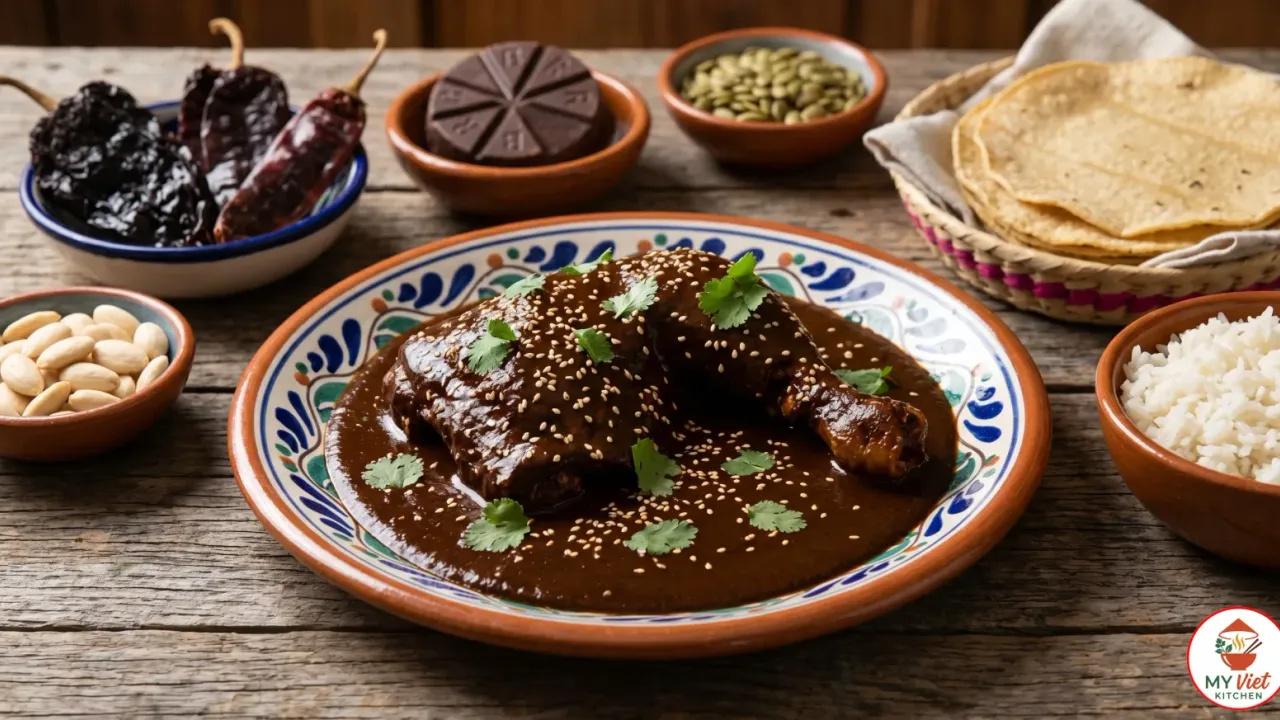
Mole Poblano is Mexico’s most celebrated sauce — a breathtaking blend of dried chiles, dark chocolate, toasted nuts, and spices that has been perfected over centuries in the kitchens of Puebla. Indeed, this mole poblano recipe brings that deep, complex tradition into your home kitchen. Every spoonful delivers smoky, fruity, earthy, and subtly sweet flavors at once. Once you taste authentic mole poblano, no store-bought sauce will ever compare.
Prep Time: 45 minutes | Cook Time: 1 hour 30 minutes | Servings: 6
Difficulty: Advanced | Calories: ~480 per serving
What Makes Mole Poblano Special?
Mole poblano stands apart from every other sauce in the world. It combines more than twenty ingredients into a single, unified flavor. Indeed, the result is neither spicy nor sweet nor savory alone — it is all of these at once. This complexity is precisely what makes mole poblano the crown jewel of Mexican cuisine. Furthermore, no two batches taste exactly the same. Each cook brings their own hand to the chiles, the chocolate, and the balance of spices.
Historically, the sauce originates from the colonial city of Puebla in central Mexico. According to popular legend, the nuns of the Convent of Santa Catalina created mole poblano in the 17th century to honor a visiting archbishop. They ground together dried chiles, chocolate, and spices using the tools and ingredients available to them. Subsequently, the dish became famous across Mexico and eventually across the world. Today, Taste Atlas ranks mole poblano among the most iconic dishes in Latin American cooking.
What truly sets mole poblano apart is the layering of techniques. Specifically, you toast, char, fry, and blend each component separately before combining them. Each step builds a different layer of flavor. First, toasted chiles provide earthy depth. Next, charred vegetables add smokiness and bitterness. Meanwhile, fried nuts and seeds contribute body and richness. Finally, the dark chocolate ties everything together. Together, these components create a sauce of extraordinary complexity.

Choosing the Right Chiles for Mole Poblano
The chiles are the heart of any authentic mole poblano recipe. Moreover, using the right combination of dried chiles is essential. Each variety contributes a specific flavor, heat level, and color to the final sauce. Here is what each chile brings to the dish.
- Mulato chile (essential): This is the most important chile in mole poblano. It has a mild, chocolatey, slightly fruity flavor with very low heat. Additionally, its dark color gives the sauce its characteristic deep brown tone. Look for large, wrinkled, dark-brown chiles at Latin grocery stores or online.
- Ancho chile (essential): The dried form of the poblano pepper. Ancho chiles taste fruity and mildly sweet, with hints of raisin and dried plum. They provide a brick-red color and a medium body to the sauce. They are the most widely available dried chile in North America.
- Pasilla chile (important): Long, thin, and very dark, the pasilla chile has an earthy, herbal flavor with notes of dried fruit and mild bitterness. It adds complexity and a slight licorice quality. The name means “little raisin” in Spanish, which hints at its flavor profile.
- Chipotle chile (for smokiness): Dried and smoked jalapeños, chipotles add the smoky heat element. Use them sparingly. Two chiles provide the right amount of smokiness without making the mole too hot. Adjust to your taste preferences.
Ingredients for Mole Poblano
For the Meat:
- 6 bone-in chicken thighs or 2 pounds turkey pieces
- Salt to taste
For the Chile Base:
- 4 dried mulato chiles, stemmed and seeded
- 3 dried ancho chiles, stemmed and seeded
- 2 dried pasilla chiles, stemmed and seeded
- 2 dried chipotle chiles, stemmed and seeded
- 1 medium white onion, roughly chopped
- 6 cloves garlic, peeled
- 2 medium Roma tomatoes, halved
- 3 tomatillos, husked and halved
For the Body and Spices:
- 3 ounces (85g) Mexican dark chocolate or bittersweet chocolate
- 2 tablespoons sesame seeds, toasted
- 1/4 cup (35g) raw pumpkin seeds (pepitas), toasted
- 1/4 cup (30g) blanched almonds, toasted
- 2 tablespoons raisins
- 1/2 corn tortilla, torn and toasted
- 1 slice stale white bread, toasted
- 1 teaspoon ground cumin
- 1 teaspoon dried Mexican oregano
- 1/2 teaspoon ground cinnamon
- 1/4 teaspoon ground black pepper
- 1/4 teaspoon ground cloves
- 2 cups (480ml) chicken broth
- 2 tablespoons lard or vegetable oil
Pro tip: Toast each chile variety separately on the comal. Different chiles require slightly different toasting times. Mulato chiles are thicker and need a few extra seconds. As soon as you smell a toasty, slightly smoky aroma, the chile is ready. Burnt chiles turn the sauce bitter and unpleasant, so watch them closely.
Step-by-Step Instructions
Step 1: Toast and Rehydrate the Chiles
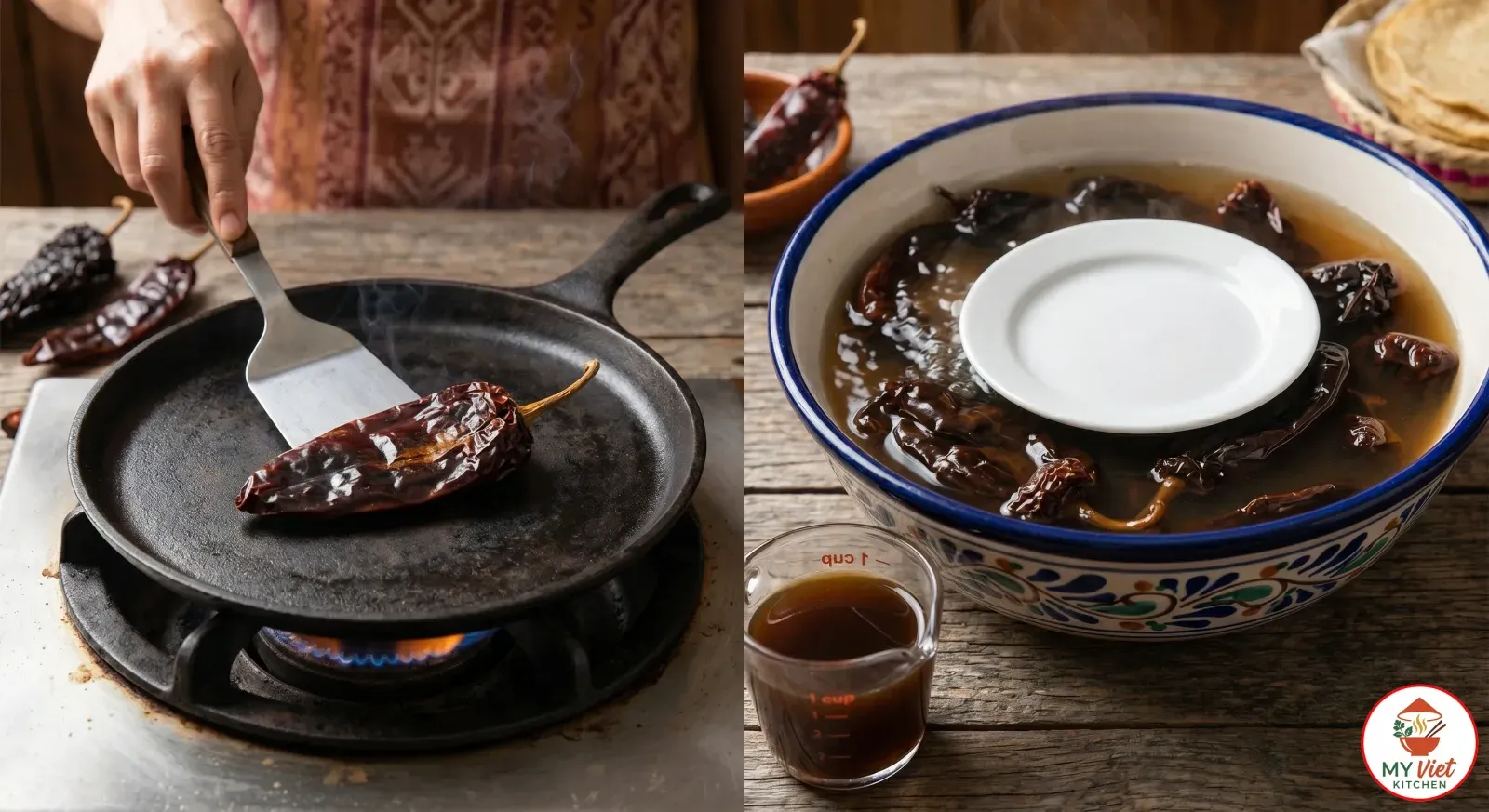
1 Heat a dry comal or heavy cast-iron skillet over medium heat. Work with one chile at a time. Press each dried chile flat against the hot surface using a spatula. Toast for 20 to 30 seconds per side until the skin puffs slightly and the aroma turns fragrant and toasty. Remove immediately when done.
Transfer all toasted chiles to a large heatproof bowl. Pour enough boiling water over them to submerge completely. Place a plate on top to keep them submerged. Let them soak for 20 minutes. They will soften and expand as they rehydrate. Meanwhile, reserve 1 cup of the soaking liquid. This liquid carries intense chile flavor and will later thin the mole to the right consistency.
Step 2: Char the Vegetables
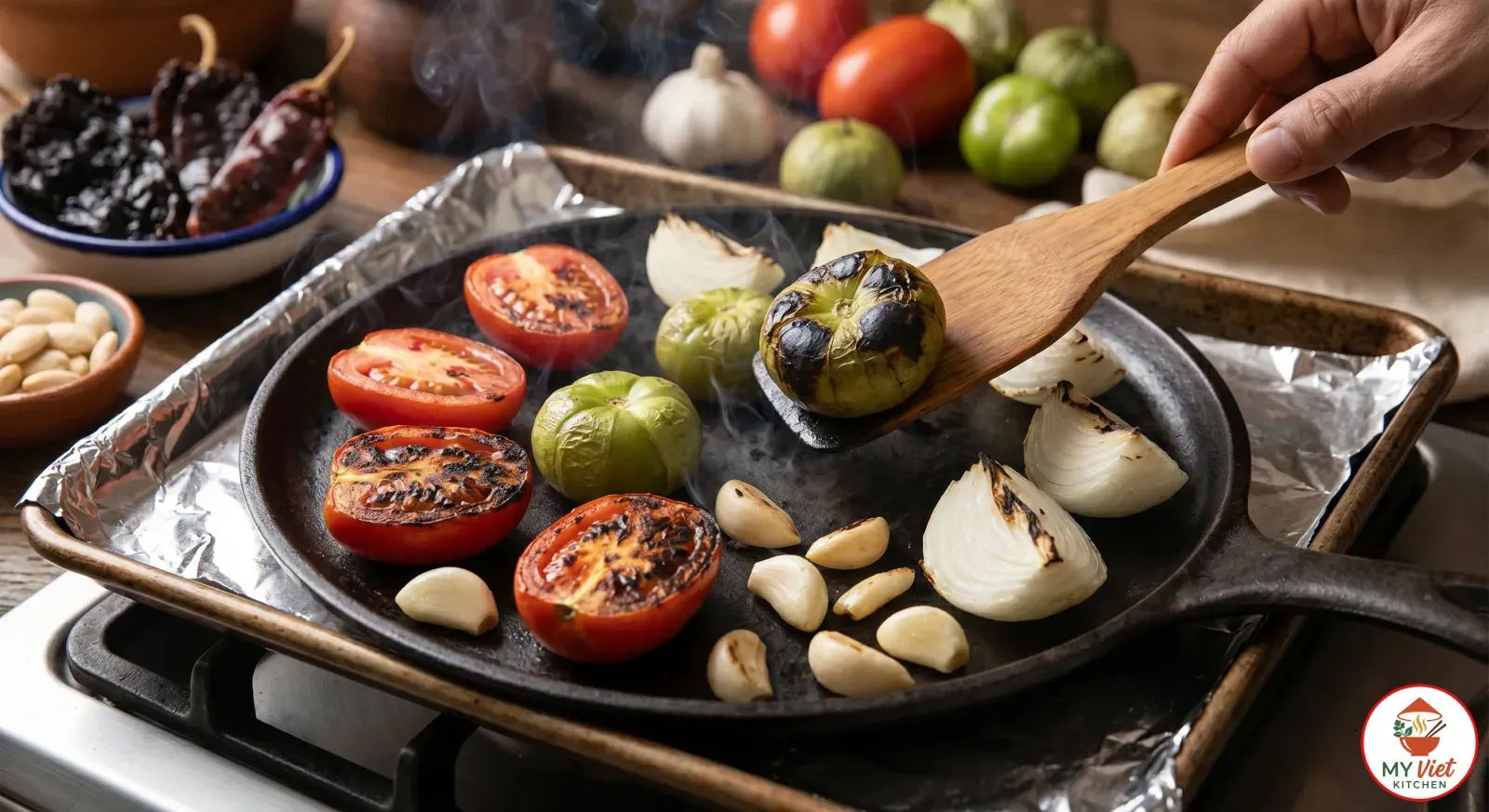
2 Place the halved tomatoes, tomatillos, onion chunks, and garlic cloves directly on the dry comal over medium-high heat. Alternatively, place them on a foil-lined baking sheet under the broiler. Cook without moving them until the skin chars deeply and turns black in spots, about 8 to 10 minutes.
Turn each piece and char the other side. The vegetables should look almost burnt in places. This is entirely intentional. Specifically, the charring creates bitter, smoky compounds that are essential to mole’s complexity. These darkened edges dissolve into the sauce during blending and simmering, contributing a signature depth that no other technique can replicate. Afterwards, set the charred vegetables aside to cool slightly before blending.
Step 3: Toast Seeds, Nuts, and Spices
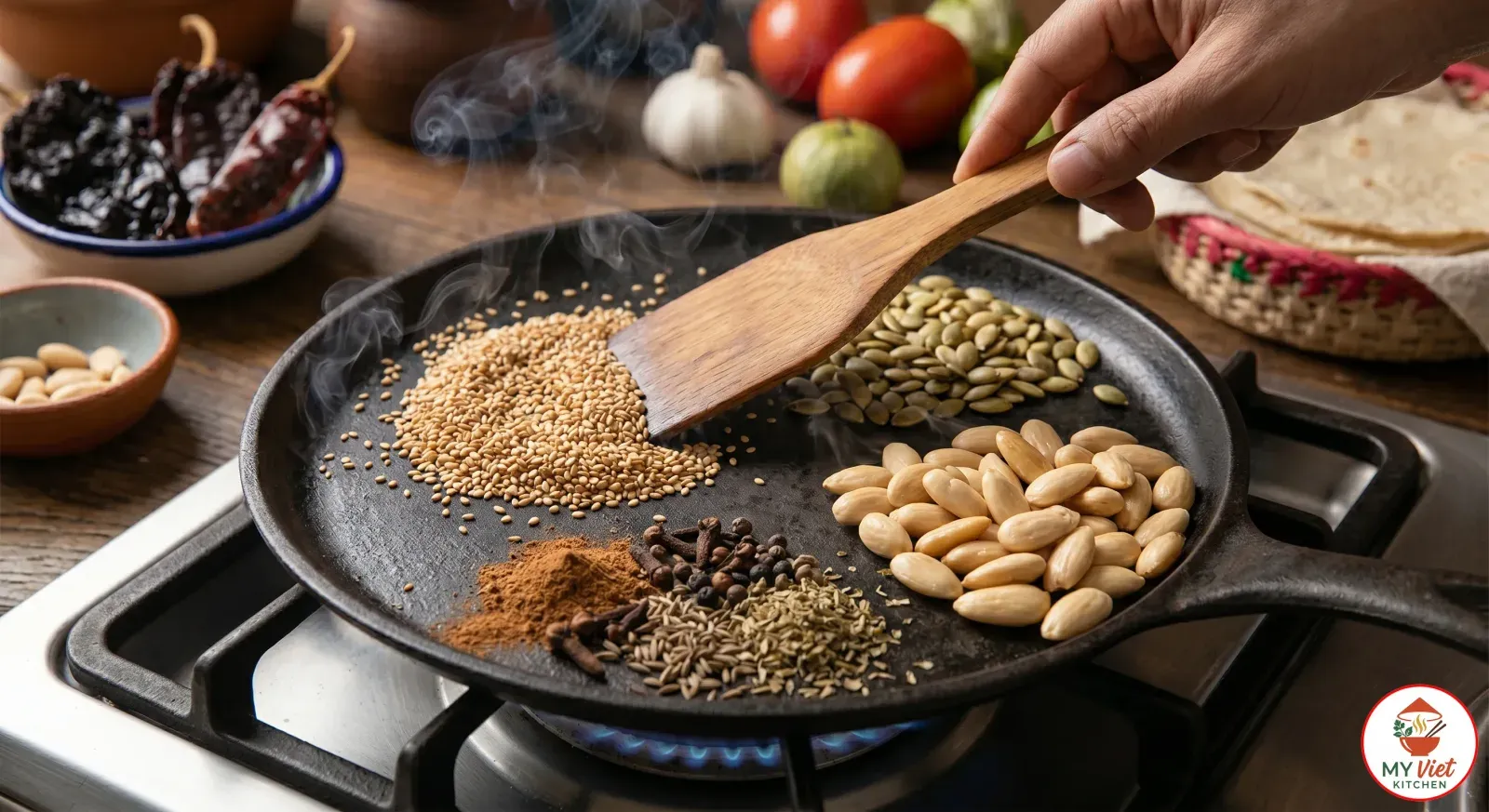
3 Toast each seed and nut separately in a dry skillet over medium-low heat. First, add the sesame seeds. Stir constantly for 2 minutes until golden. Transfer to a bowl. Next, toast the pepitas for 2 to 3 minutes until they puff and pop lightly. Set aside. Finally, toast the almonds for 3 minutes until lightly golden.
In the same skillet, heat a teaspoon of oil over medium heat. Fry the torn tortilla pieces and bread until crispy and golden on both sides, about 2 minutes per side. Notably, these fried starches thicken the mole and add a subtle corn and wheat flavor. Additionally, toast the ground cumin, cinnamon, oregano, black pepper, and cloves together in the dry skillet for 1 minute. Toasting activates the fat-soluble flavor compounds in each spice.
Step 4: Blend the Mole Base
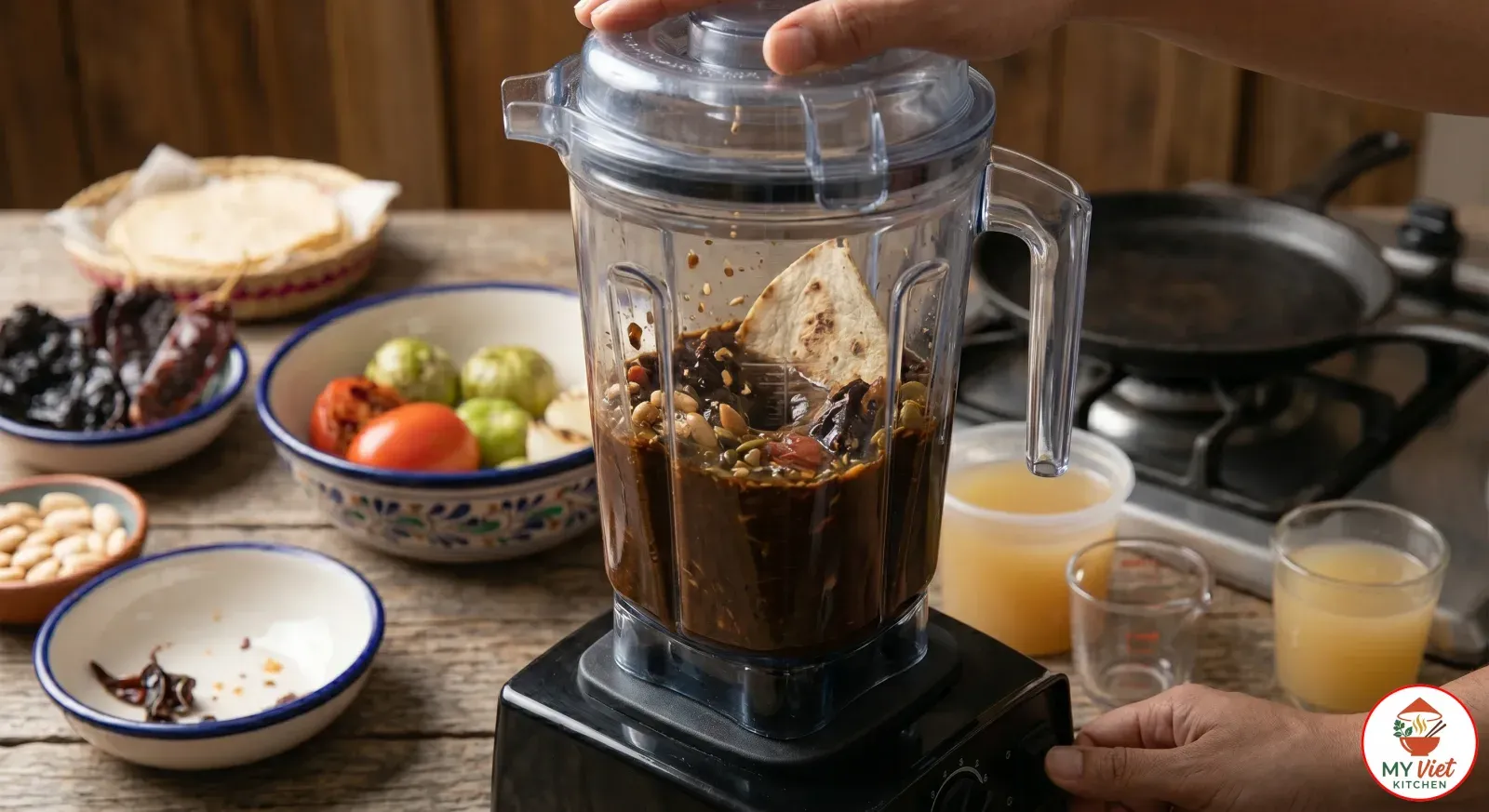
4 Drain the soaked chiles and discard the soaking liquid except for the reserved cup. Combine the drained chiles, charred vegetables, toasted seeds, nuts, raisins, fried bread, tortilla, and all spices in a blender. Add the reserved soaking liquid and half the chicken broth to help the blender move.
Blend on high speed for at least 3 minutes per batch until completely smooth. A powerful blender produces a silkier sauce. For the smoothest result, strain the blended mixture through a fine-mesh sieve, pressing the solids with a spoon. Discard the skins and seeds left in the sieve. The strained sauce should have the consistency of thick heavy cream. Work in two or three batches to avoid overfilling the blender. Overall, the straining step makes a noticeable difference in texture.
Step 5: Fry and Simmer the Mole Sauce
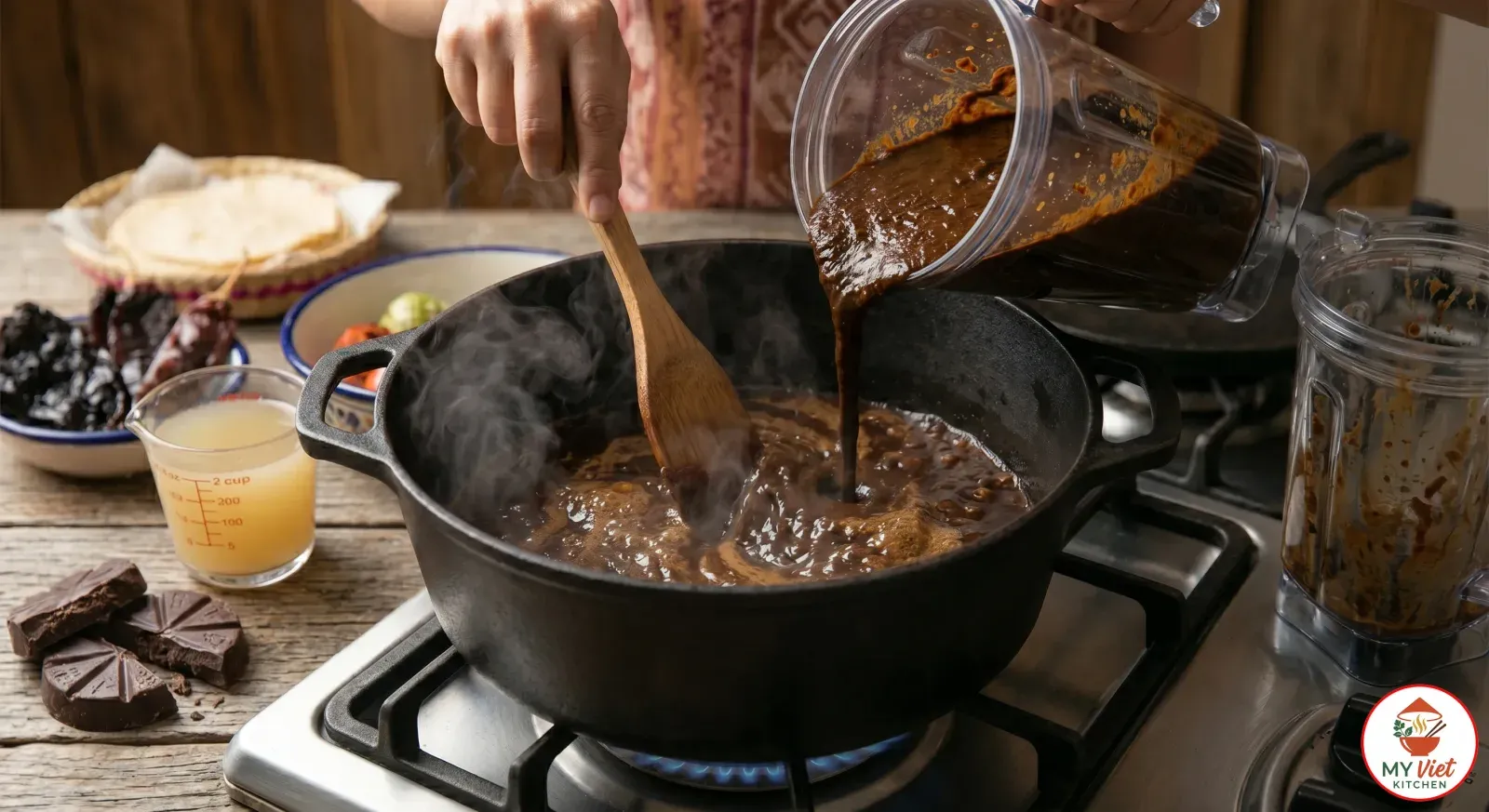
5 Heat 2 tablespoons of lard or vegetable oil in a large, deep, heavy pot over medium-high heat until very hot and shimmering. Carefully pour the blended mole sauce into the hot oil. Step back immediately — the sauce will splatter and sizzle loudly. Stir constantly with a wooden spoon for 5 minutes. This frying step is called “freir el mole” and it is not optional.
After 5 minutes of frying, the sauce darkens and thickens slightly. At this point, the raw flavor of the chiles disappears. Now add the remaining chicken broth and the dark chocolate, broken into small pieces. Stir continuously until the chocolate melts completely, about 3 minutes. Then reduce the heat to low. Simmer the mole uncovered for 30 minutes, stirring every 5 minutes to prevent sticking. The sauce should thicken to coat the back of a spoon.
Step 6: Add the Meat and Finish
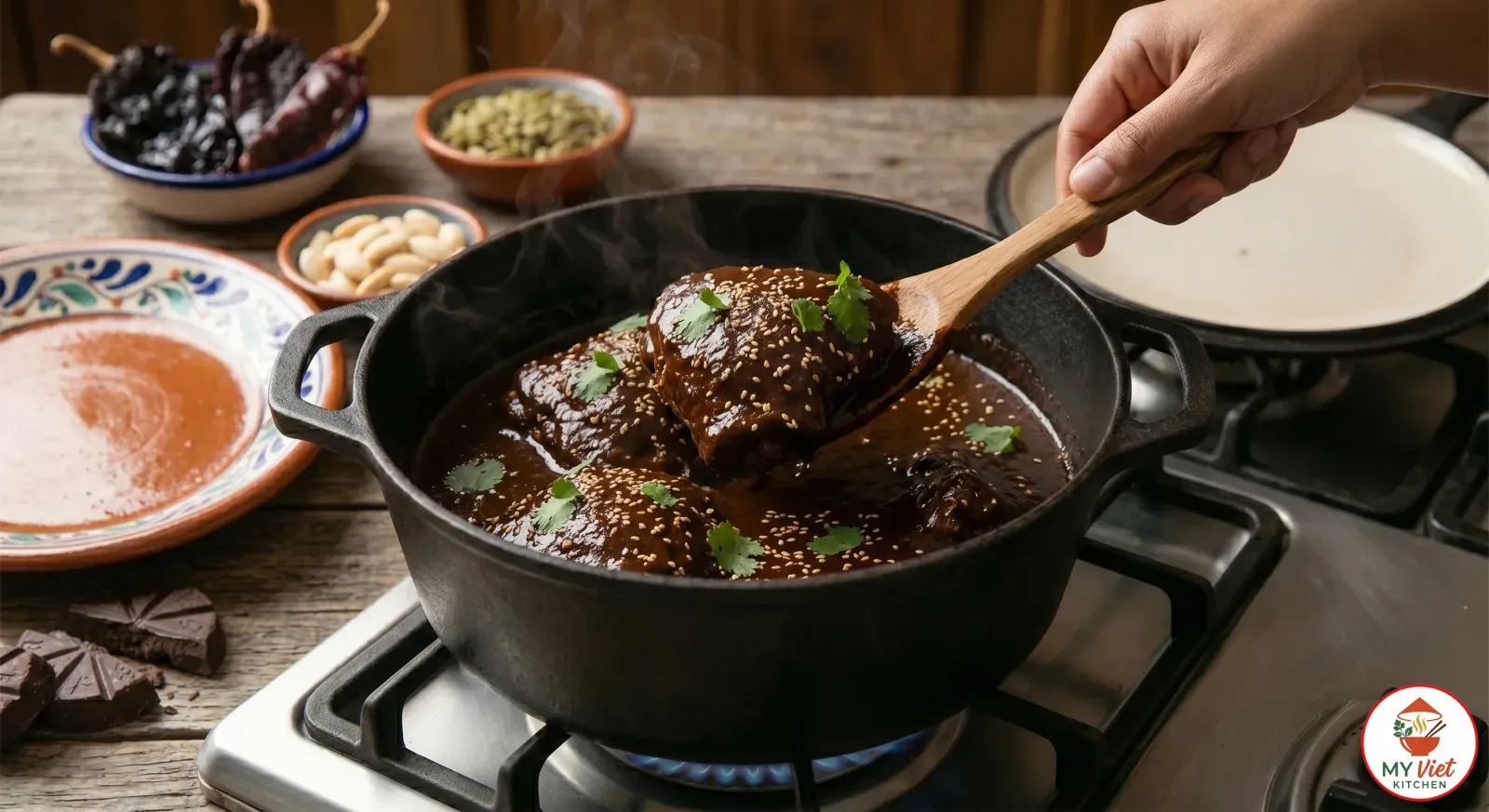
6 Season the chicken or turkey pieces generously with salt. Add them directly to the simmering mole sauce. Spoon the sauce over the meat to coat completely. Cover the pot with a lid and reduce the heat to the lowest setting. Cook for 45 to 55 minutes, turning the meat once halfway through.
The meat is ready when it pulls away from the bone easily. At that point, the sauce should cling thickly to each piece. Taste the sauce and adjust the salt. If the sauce is too thick, add a splash of warm broth to loosen it. Then serve the mole poblano over fluffy white rice. Spoon extra sauce generously over the top. Garnish with toasted sesame seeds and fresh cilantro leaves for a traditional presentation.
Expert Tips for Perfect Mole Poblano
Never Skip the Chile Toasting Step
Toasting the dried chiles transforms their flavor completely. Raw dried chiles taste flat and dusty. In contrast, toasted chiles taste rich, complex, and slightly smoky. However, there is a fine line between toasted and burnt. Burnt chiles make the entire mole bitter and unpleasant. Keep the heat at medium and watch each chile carefully. As soon as you smell a pleasant toasty aroma and see the surface puff slightly, pull the chile off the heat. This skill improves with practice.
Use Real Mexican Chocolate
Mexican chocolate, such as the Ibarra or Abuelita brand, contains cinnamon, sugar, and ground almonds in addition to cacao. This combination creates a more rounded, traditional mole flavor. Additionally, bittersweet dark chocolate with at least 70% cacao works very well. Avoid using cocoa powder as a direct substitute — it lacks the fat and body that solid chocolate provides. The fat in chocolate emulsifies the sauce and gives it a silky, glossy finish.
Blend for a Full Three Minutes
Many home cooks stop blending too early. A truly smooth mole requires at least three minutes of high-speed blending per batch. Otherwise, under-blended mole has a grainy, gritty texture from the chile skins, seeds, and nuts. A high-powered blender like a Vitamix produces the silkiest results. If you have a standard blender, follow the blending with straining through a fine-mesh sieve. The extra effort produces a noticeably more refined, restaurant-quality mole.
Mole Poblano vs. Other Mexican Moles
Mexico is home to hundreds of mole varieties. Each region and family has its own approach. For instance, the following table compares mole poblano to other well-known Mexican moles so you can appreciate what makes each one unique.
| Mole Type | Origin | Key Ingredients | Flavor Profile |
|---|---|---|---|
| Mole Poblano | Puebla | Mulato, ancho, pasilla, chipotle chiles, dark chocolate | Complex, earthy, slightly sweet, smoky |
| Mole Negro | Oaxaca | Chilhuacle negro, burned chile seeds, dark chocolate | Very dark, intensely smoky, bitter, complex |
| Mole Verde | Oaxaca | Tomatillos, green chiles, pumpkin seeds, fresh herbs | Fresh, bright, herbal, slightly tangy |
| Mole Rojo | Various | Ancho, guajillo chiles, tomatoes | Simpler, fruity, mild, earthy |
| Pipian | Central Mexico | Pumpkin seeds, green or red chiles | Nutty, thick, mild to medium heat |
Serving Suggestions
Mole poblano is a festive, celebratory dish in Mexico. Specifically, it appears at weddings, baptisms, and Day of the Dead celebrations. Serving it with the right accompaniments honors this tradition and makes the meal complete.
The Perfect Accompaniments:
- Fluffy white rice: The neutral, starchy rice absorbs the rich mole sauce perfectly. Cook the rice with a garlic clove and a bay leaf for subtle flavor. Use long-grain rice for the best texture.
- Warm corn tortillas: Fresh, warm tortillas are essential for scooping up extra mole sauce. They also serve as edible utensils for picking up pieces of meat. Make your own if possible, or heat store-bought ones on the comal.
- Refried beans: Creamy, lard-fried pinto beans provide a rich, savory contrast to the complex mole. They balance the meal and add protein alongside the meat.
- Pickled red onions: The bright acidity of thinly sliced red onions pickled in lime juice cuts through the richness of the mole. They add a welcome pop of color and freshness to each bite.
Beverage Pairings:
- Mezcal or tequila: A small glass of smoky mezcal or aged tequila reposado complements the earthy, complex mole beautifully. The agave spirit echoes the smoky chile notes in the sauce.
- Horchata: This sweet, cold rice drink cools the palate between bites of rich mole. The cinnamon in horchata also mirrors the cinnamon in the mole sauce, creating a harmonious pairing.
- Mexican dark beer: A cold Negra Modelo or Dos Equis Amber provides malty, roasted notes that echo the chocolate in the mole. The carbonation refreshes the palate between bites.
- Agua fresca: For a non-alcoholic option, try tamarind or hibiscus agua fresca. The tartness balances the richness of the mole and keeps the meal feeling light and refreshing.
Storage and Reheating
Refrigerator: Store leftover mole poblano in an airtight container for up to 5 days. The sauce thickens considerably as it cools. Therefore, add a splash of chicken broth when reheating to restore its original consistency. In fact, the flavors deepen and improve significantly after a day of rest in the refrigerator.
Freezer: Mole poblano freezes exceptionally well. Portion the sauce into freezer-safe containers, leaving an inch of headspace for expansion. Label with the date and freeze for up to 3 months. Thaw overnight in the refrigerator. You can also freeze the sauce separately from the meat for maximum flexibility.
Reheating: Warm mole gently over medium-low heat, stirring frequently to prevent burning on the bottom. Add warm chicken broth one tablespoon at a time to reach the desired consistency. Avoid boiling, as high heat can cause the sauce to separate. Taste and adjust the seasoning after reheating.
Common Mistakes to Avoid
1. Burning the Chiles
Burnt chiles are the most common mistake beginners make. Even slightly over-toasted chiles turn the entire mole bitter and harsh. Notably, the difference between perfectly toasted and burnt is just 10 to 15 seconds. Use medium heat only. Watch each chile constantly. As soon as the surface puffs and the aroma becomes pleasantly smoky and toasty, remove it from the heat. If a chile tastes bitter when you chew a small piece, discard it and start again.
2. Skipping the “Freir el Mole” Step
Many recipes omit the step of frying the blended sauce in hot oil. However, this technique is essential to authentic mole. Specifically, frying concentrates the flavors, removes the raw taste of the chiles, and creates new Maillard compounds that deepen the sauce’s richness. Without this step, the mole tastes flat and slightly raw. The splattering can be alarming, but use a deep pot and a long-handled spoon to stay safe.
3. Using Sweet Chocolate
Milk chocolate or regular baking chocolate makes the mole cloying and sweet. Authentic mole poblano is not a sweet dish. Instead, the chocolate provides bitterness, body, and complexity — not sweetness. Always use Mexican dark chocolate (Ibarra brand) or bittersweet chocolate with at least 70% cacao. If the sauce tastes too bitter, balance it with a pinch of sugar rather than switching to a sweeter chocolate.
4. Rushing the Simmer
Mole poblano needs at least 30 minutes of gentle simmering after the chocolate goes in. This time allows the flavors to meld and the sauce to thicken naturally. Increasing the heat to speed up the process causes the sauce to scorch on the bottom and develop an off taste. Therefore, set a timer, stir regularly, and be patient. The final result is worth every minute of careful attention.
Frequently Asked Questions
What chiles are used in mole poblano?
Traditional mole poblano uses mulato, ancho, pasilla, and chipotle chiles. Mulato chiles form the chocolatey backbone. Ancho chiles add fruity sweetness. Pasilla chiles contribute earthy depth. Chipotle chiles provide smokiness and heat. Each chile plays a specific role. Together, they create the layered complexity that makes mole poblano unlike any other sauce in the world.
Does mole poblano always contain chocolate?
Yes, dark chocolate is always present in authentic mole poblano. However, it does not make the sauce taste like a dessert. The chocolate adds bitterness, body, and a subtle earthiness that balances the heat of the chiles. Mexican chocolate with cinnamon is traditional. Bittersweet dark chocolate works equally well. Avoid sweet or milk chocolate, as both destroy the flavor balance of the sauce.
Can I make mole poblano ahead of time?
Absolutely. Mole poblano tastes even better the next day. The flavors meld and deepen overnight. You can make the sauce up to 5 days in advance and store it in the refrigerator. Alternatively, freeze it for up to 3 months. Many Mexican cooks prepare mole a full day before serving it for celebrations. This makes the dish practical for dinner parties, as the hardest work is done well in advance.
What meat is traditionally served with mole poblano?
Turkey is the most traditional meat for mole poblano, especially for holidays and celebrations. According to legend, mole was first created to honor a visiting archbishop using the available turkey. In practice, chicken thighs are the most practical everyday choice. They cook faster than turkey and remain juicy in the thick sauce. Bone-in cuts provide more flavor than boneless. Additionally, pork ribs also work beautifully with mole poblano.
Why do you fry the mole sauce in hot oil?
Frying the blended mole in hot oil is called “freir el mole.” This technique concentrates the flavors and removes the raw taste of the chiles and spices. The Maillard reaction occurs when the sauce hits the hot oil, creating hundreds of new flavor compounds. Without this step, the mole tastes flat and slightly raw. Always use a deep pot and a long-handled spoon. The sauce splatters intensely and requires constant stirring for safety.
Variations and Adaptations
Vegetarian Mole Poblano:
Replace the chicken or turkey with roasted cauliflower florets, butternut squash, or firm tofu. Also, use vegetable broth in place of chicken broth. The sauce itself is naturally vegetarian. Roast the vegetables until deeply caramelized before adding them to the mole. The rich sauce provides all the flavor the meat would otherwise bring. Indeed, this adaptation works remarkably well and makes mole accessible to plant-based eaters.
Quick Weeknight Mole:
For a faster version, use a high-quality store-bought mole paste such as Dona Maria or El Molino. Fry the paste in oil for 2 minutes, then add broth and simmer for 20 minutes. Add a square of dark chocolate and adjust the seasoning. This shortcut produces a respectable mole in under 30 minutes. While it lacks the depth of homemade mole, it is an excellent option for busy weeknights.
Mole Poblano Enchiladas:
Use leftover mole poblano sauce to make enchiladas. First, dip corn tortillas briefly in warm mole sauce to soften them. Fill with shredded chicken and roll tightly. Place the enchiladas in a baking dish and pour more mole over the top. Then bake at 375°F for 20 minutes. Garnish with crumbled queso fresco, toasted sesame seeds, and sliced red onion. This is one of the best uses for leftover mole.
The Cultural Significance of Mole Poblano
Mole poblano holds a place in Mexican culture that goes far beyond food. It represents the blending of pre-Hispanic and Spanish colonial culinary traditions. The dried chiles, chocolate, and pumpkin seeds come from indigenous Mexican cooking. The almonds, raisins, cinnamon, cloves, and bread reflect Spanish colonial influence. Together, they created something entirely new — a sauce that belongs to no single tradition but to all of Mexico.
In Puebla, mole poblano appears at every major celebration. Weddings, quinceañeras, baptisms, and Day of the Dead feasts are incomplete without it. Families guard their mole recipes jealously, passing them down through generations with small variations that mark each family’s identity. Learning to make mole is a rite of passage for many Mexican cooks. The process teaches patience, layering, and balance — values that apply equally in the kitchen and in life. Explore more incredible dishes from the Americas on My Viet Kitchen and discover how every culture expresses itself through food.
Conclusion
Mole poblano is challenging, but it is entirely achievable in a home kitchen. Overall, the key is patience and attention at each stage. Toast the chiles carefully. Char the vegetables deeply. Blend thoroughly. Fry the sauce properly. These four steps are the foundation of an outstanding mole. Once you master them, you will have one of the most impressive recipes in your repertoire.
Ready to explore more bold and complex dishes from around the Americas? Browse our full collection at My Viet Kitchen for recipes like jambalaya, feijoada, and clam chowder. If you make this mole poblano recipe, share your experience in the comments and leave a star rating below.