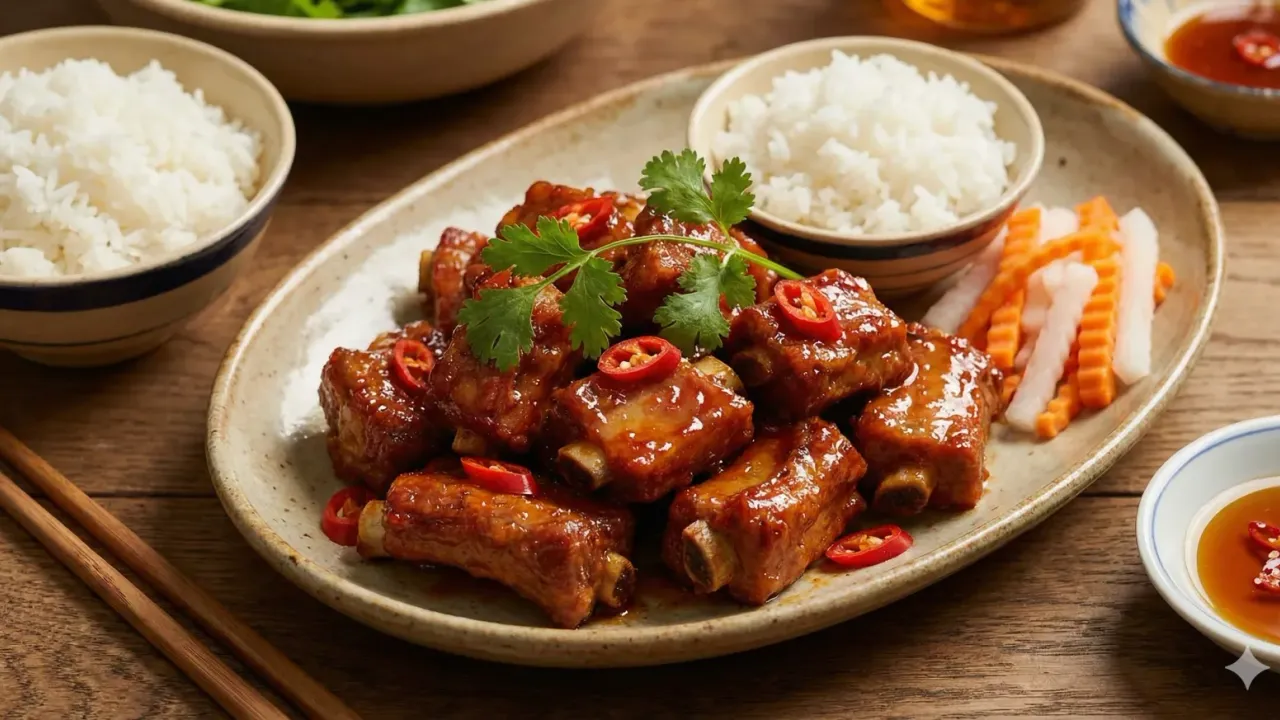
This Vietnamese sweet and sour pork ribs recipe brings you the authentic taste of Northern Vietnam’s home cooking. With tender, fall-off-the-bone meat coated in a perfectly balanced tangy-sweet glaze, this dish (sườn xào chua ngọt) is a beloved staple that transforms simple ingredients into something extraordinary. Unlike the battered, tomato-based versions found elsewhere, this traditional Hanoi-style recipe relies on the pure flavors of fish sauce, vinegar, and sugar to create its signature taste.
Prep Time: 15 minutes | Cook Time: 30 minutes | Servings: 4-6
Difficulty: Easy | Calories: ~373 per serving
What Makes Vietnamese Sweet and Sour Pork Ribs Special?
The magic of sườn xào chua ngọt lies in its beautiful simplicity. This classic Vietnamese pork ribs dish showcases the fundamental balance of flavors that defines Vietnamese cuisine: the saltiness of fish sauce (nước mắm), the sweetness of sugar, and the tanginess of vinegar all harmonizing together.
Unlike Chinese-American sweet and sour pork or Southern Vietnamese versions with bell peppers and tomato sauce, the Northern Vietnamese approach is minimalist and refined. The ribs are blanched, marinated, lightly fried, then braised in a simple yet intensely flavorful sauce. The result? Tender meat with crispy caramelized edges, coated in a glossy reddish-brown glaze that clings to every surface.
Choosing the Right Pork Ribs
Success with this recipe starts at the market. Pork ribs come in three sections:
- Front section (6 ribs near the neck): Smaller, more irregular
- Middle section (6-8 center ribs): Best choice! Flat bones with thick, even meat
- Back section (remaining ribs): Thinner meat, can be dry
For Vietnamese sweet and sour ribs, always select the middle section (sườn thăn). Look for ribs with a natural pink-red color, firm texture when pressed, and a dry surface. Fresh ribs should spring back when you press them and have minimal odor.
Ingredients for Vietnamese Sweet and Sour Pork Ribs
Main Ingredients:
-
800-900g pork spare ribs (middle section, cut into bite-sized pieces)
-
2 shallots (or small red onions), minced
-
4-5 cloves garlic, minced
-
Pork lard or cooking oil for frying
For the Marinade:
-
2 teaspoons fish sauce
-
1 teaspoon sugar
-
1/2 teaspoon freshly ground black pepper
For the Sauce:
-
3 tablespoons fish sauce (30° protein content recommended)
-
1 tablespoon sugar
-
1 tablespoon rice vinegar (or white vinegar)
-
2-3 tablespoons water
For Blanching:
-
Salt
-
1 whole shallot
-
Water
Pro tip: Fish sauce quality matters! A 30-35° protein fish sauce provides the right balance of saltiness and umami. If using higher protein content, reduce the amount slightly or add more water.
AdvertisementStep-by-Step Instructions
Step 1: Prepare the Pork Ribs
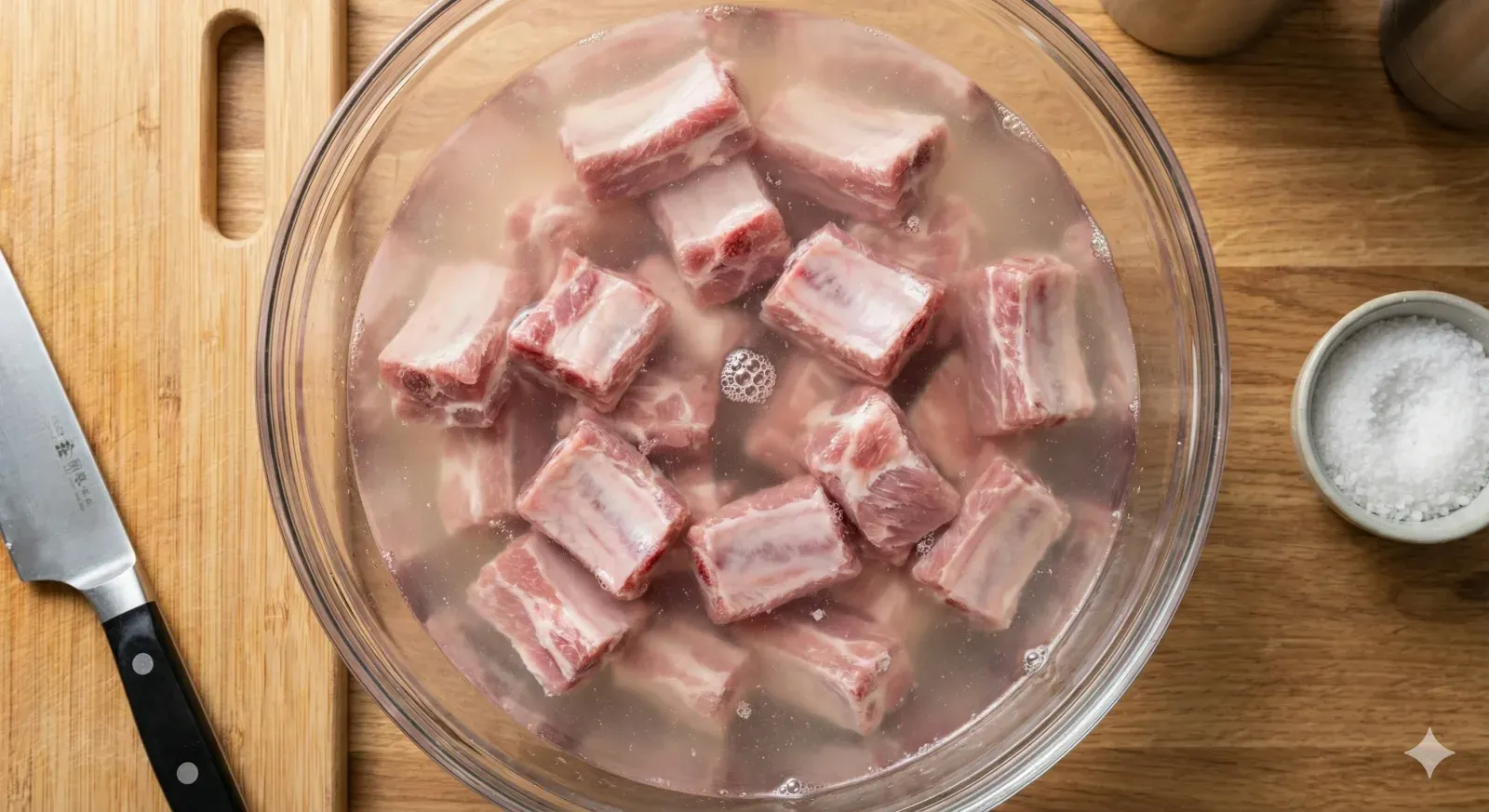
1Begin by cutting your ribs into individual pieces, roughly 2-3 inches long. Soak them in lightly salted water for about 10 minutes—this draws out any remaining blood and impurities. Rinse thoroughly under cold running water and drain in a colander.
Step 2: Blanch the Ribs (Critical Step!)
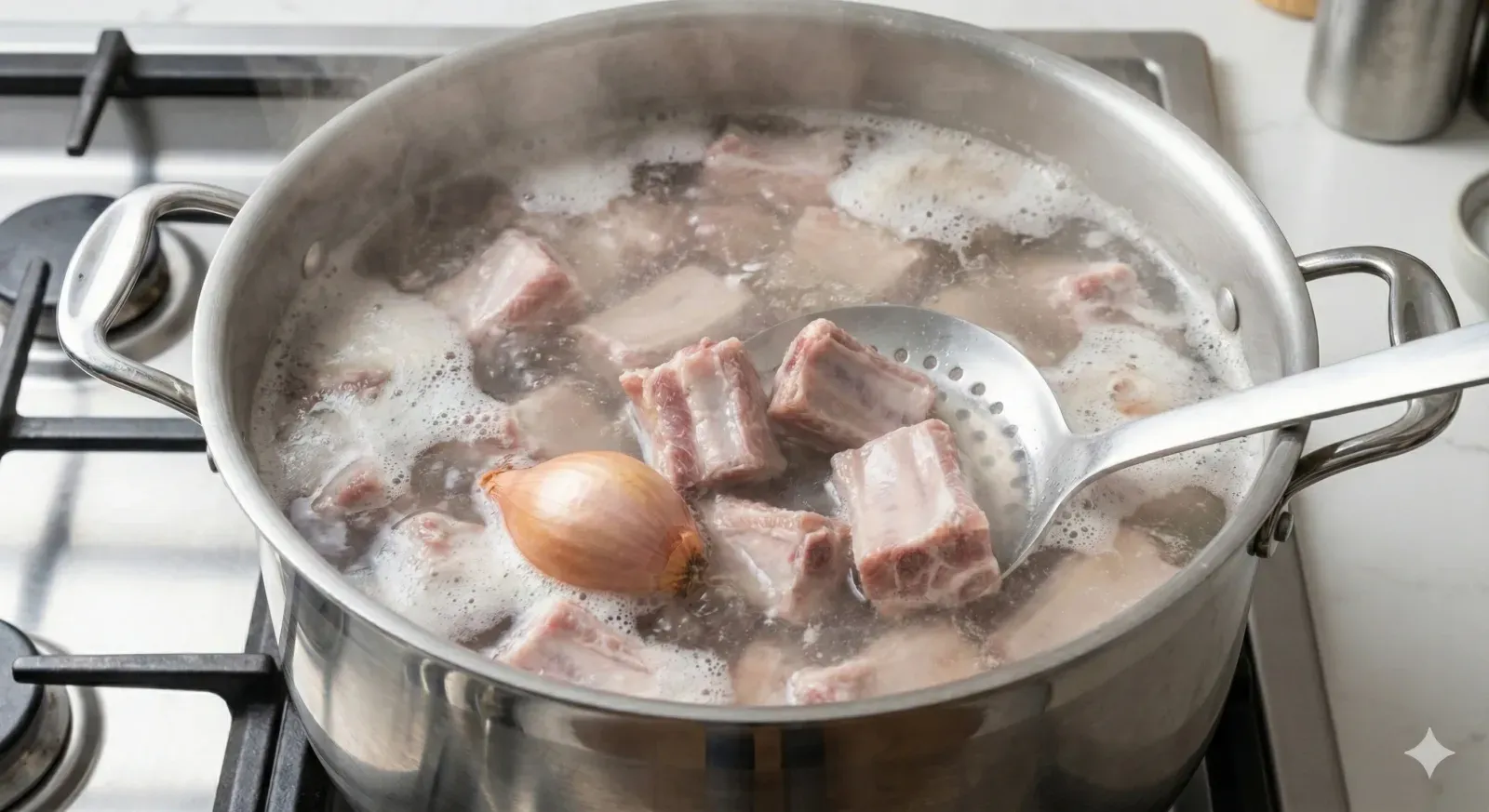
2This step is what separates restaurant-quality ribs from home cooking gone wrong. Place your ribs in a pot and cover with cold water. Add a pinch of salt and a whole shallot (peeled). Starting with cold water is crucial—it allows impurities to slowly rise to the surface as the water heats.
Bring to a rolling boil over high heat. You’ll notice foam and scum rising to the top. Once boiling, remove the ribs immediately and rinse them under warm water, rubbing gently to remove any remaining residue. This blanching process ensures your final dish has a clean, pure flavor without any gamey taste.
Step 3: Score and Marinate
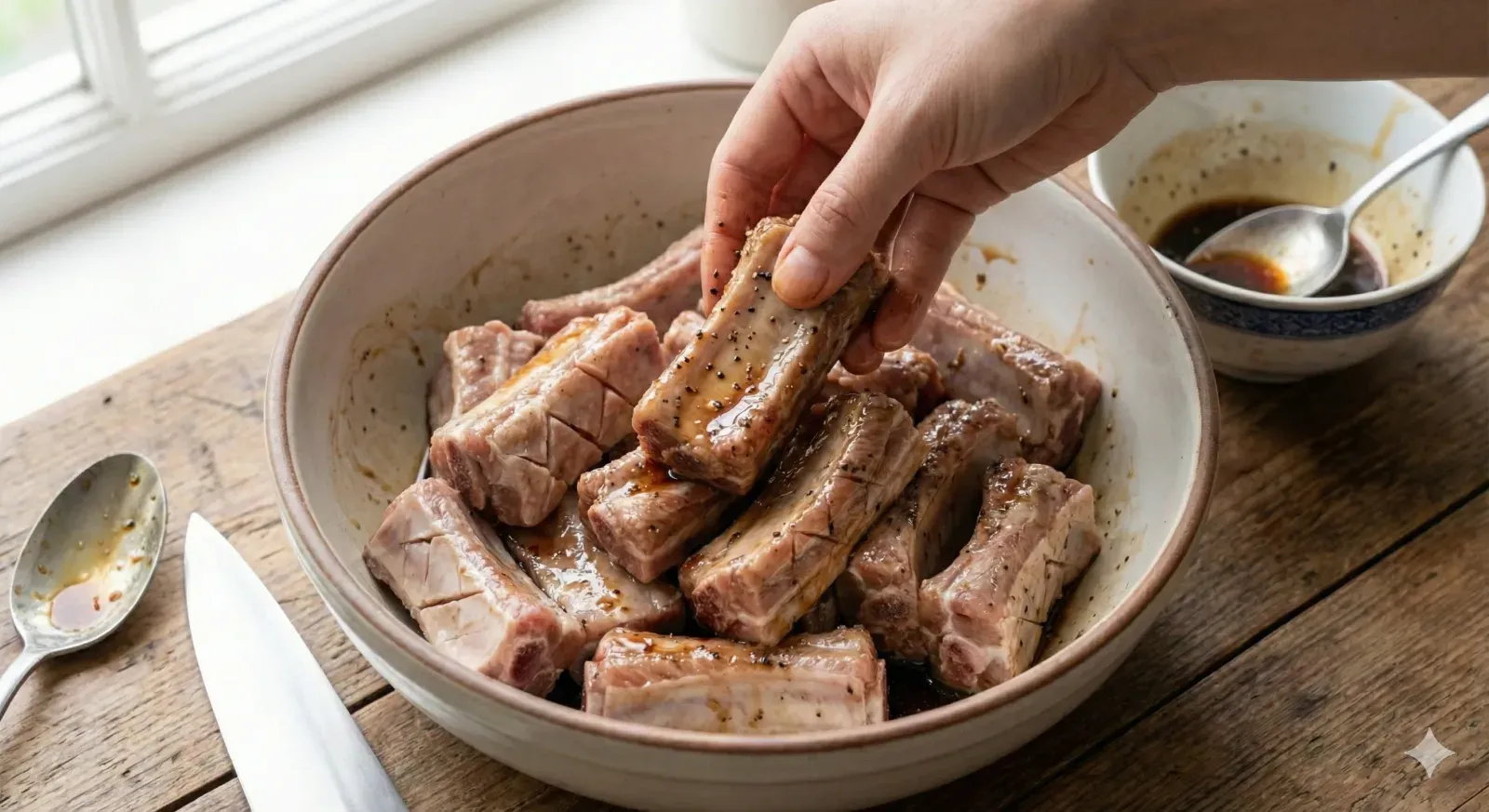
3Here’s a secret technique that makes your ribs incredibly easy to eat: Take a sharp knife and make a lengthwise cut along the back of each rib piece where the membrane is. Don’t cut all the way through—just score deeply. This allows the meat to naturally separate from the bone during cooking while staying attached.
In a bowl, combine the blanched ribs with 2 teaspoons fish sauce, 1 teaspoon sugar, and 1/2 teaspoon black pepper. Mix well with your hands, ensuring every piece is coated. Cover and let marinate for 30 minutes at room temperature (or up to 2 hours in the refrigerator).
Step 4: Prepare the Sauce
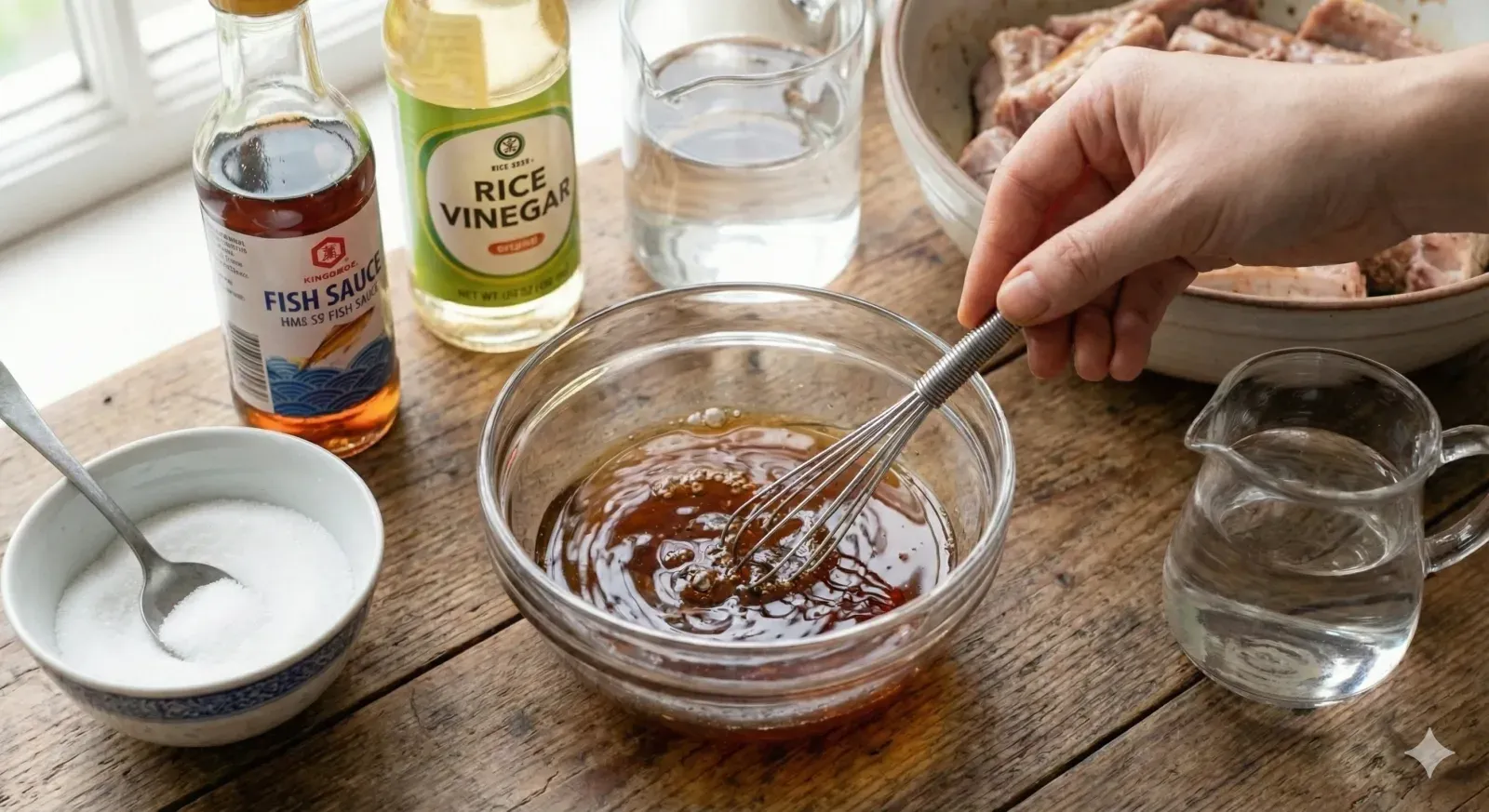
While the ribs marinate, prepare your sauce mixture. In a small bowl, combine:
-
3 tablespoons fish sauce
-
1 tablespoon sugar
-
1 tablespoon vinegar
-
2-3 tablespoons water
Stir until the sugar completely dissolves. Taste and adjust—it should be intensely salty-sweet-sour before adding to the ribs, as it will dilute slightly during cooking. Set aside.
Step 5: Fry the Ribs
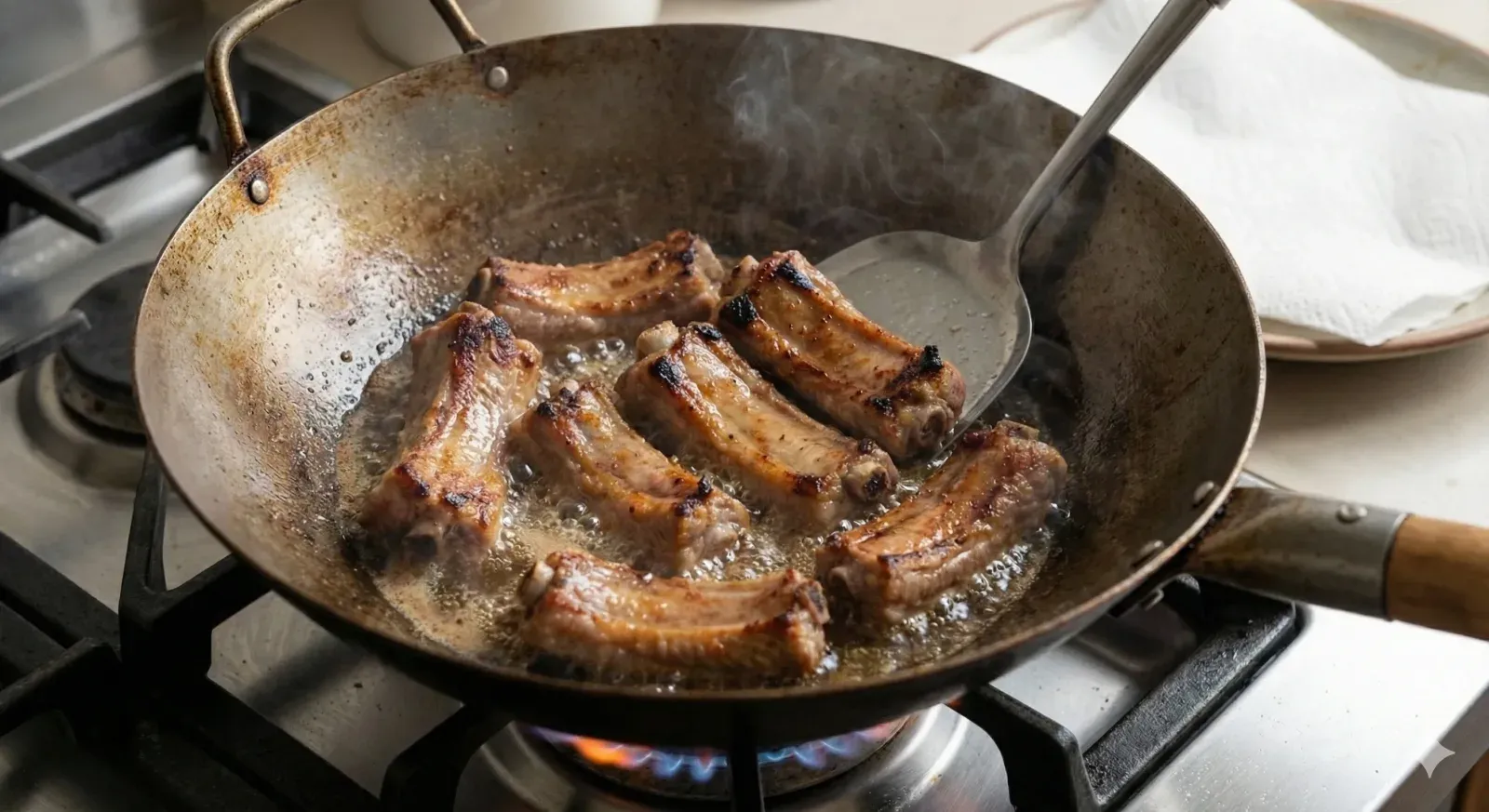
5Heat 2-3 tablespoons of pork lard (traditional) or neutral oil in a large pan or wok over medium-high heat. Traditional Vietnamese cooking uses pork lard for extra flavor, but vegetable oil works fine too.
Working in batches to avoid overcrowding, add the marinated ribs to the hot oil. Fry for 2-3 minutes per side until golden brown with slightly charred edges. The goal isn’t to cook them through completely—just to develop color and seal in the marinade. Those lightly charred spots will add incredible flavor depth.
Remove fried ribs to a plate lined with paper towels. Don’t worry if they seem slightly undercooked inside—they’ll finish cooking in the sauce.
Step 6: Create the Sweet and Sour Glaze
6In the same pan (don’t clean it—those browned bits are flavor gold), reduce heat to medium. If there’s excess oil, pour most of it out, leaving about 1 tablespoon.
Add your minced shallots and garlic. Stir-fry for 30 seconds until fragrant and just starting to turn golden. Be careful not to burn them.
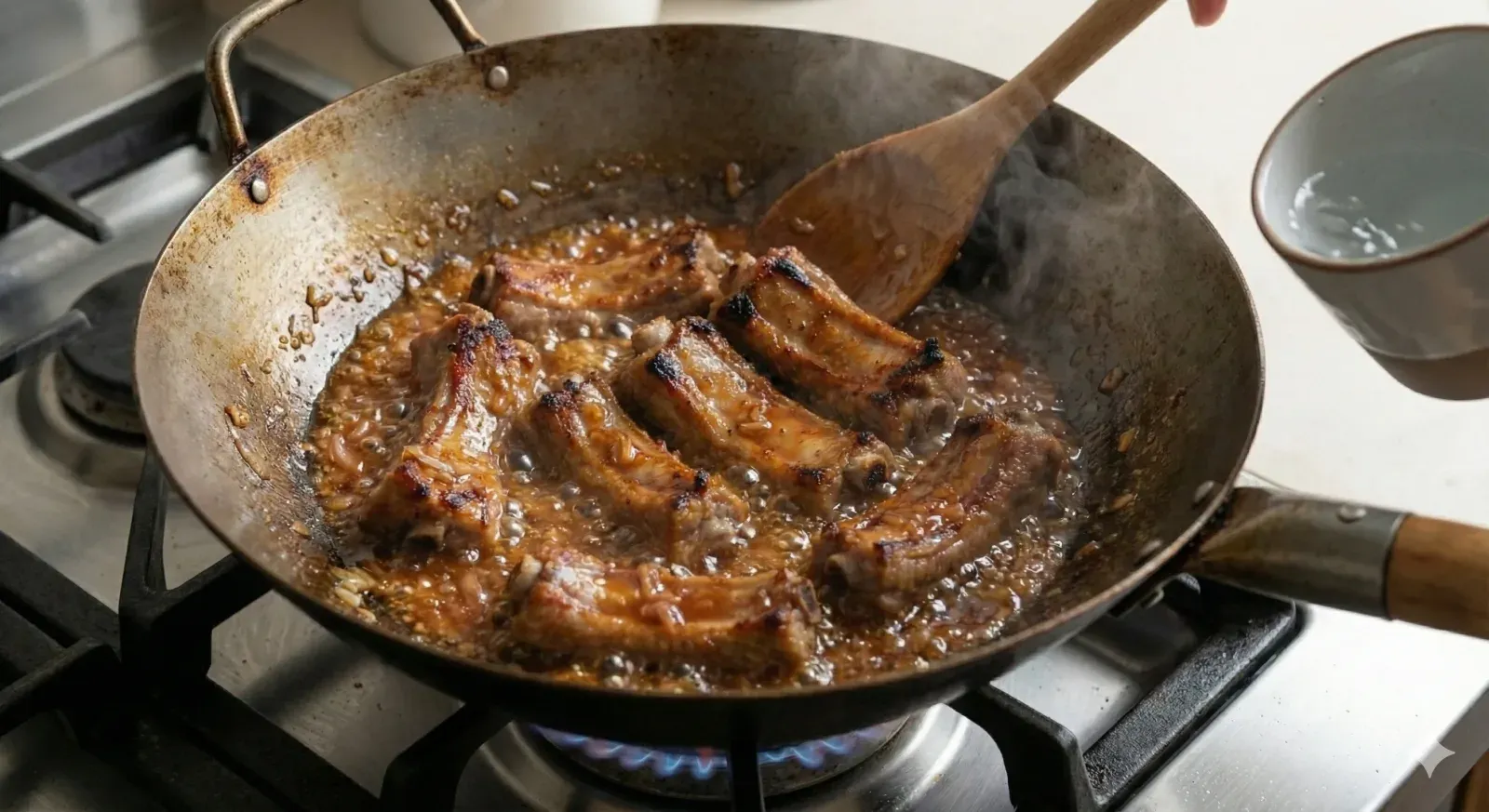
Return all the fried ribs to the pan. Pour in your prepared sauce mixture. Stir well to coat all the ribs. The sauce will bubble and steam vigorously—this is perfect.
Reduce heat to medium-low. Let the ribs simmer in the sauce for 10-15 minutes, stirring every few minutes. As the sauce reduces, it will thicken and turn from a thin liquid to a glossy, syrupy consistency. The color will deepen to a beautiful reddish-brown, and the sauce will cling to the ribs like a glaze.
Watch carefully in the final few minutes—you want the sauce thick enough to coat the back of a spoon but not so reduced that it becomes sticky or burnt. If it’s reducing too quickly, add a splash of water.
Step 7: Serve
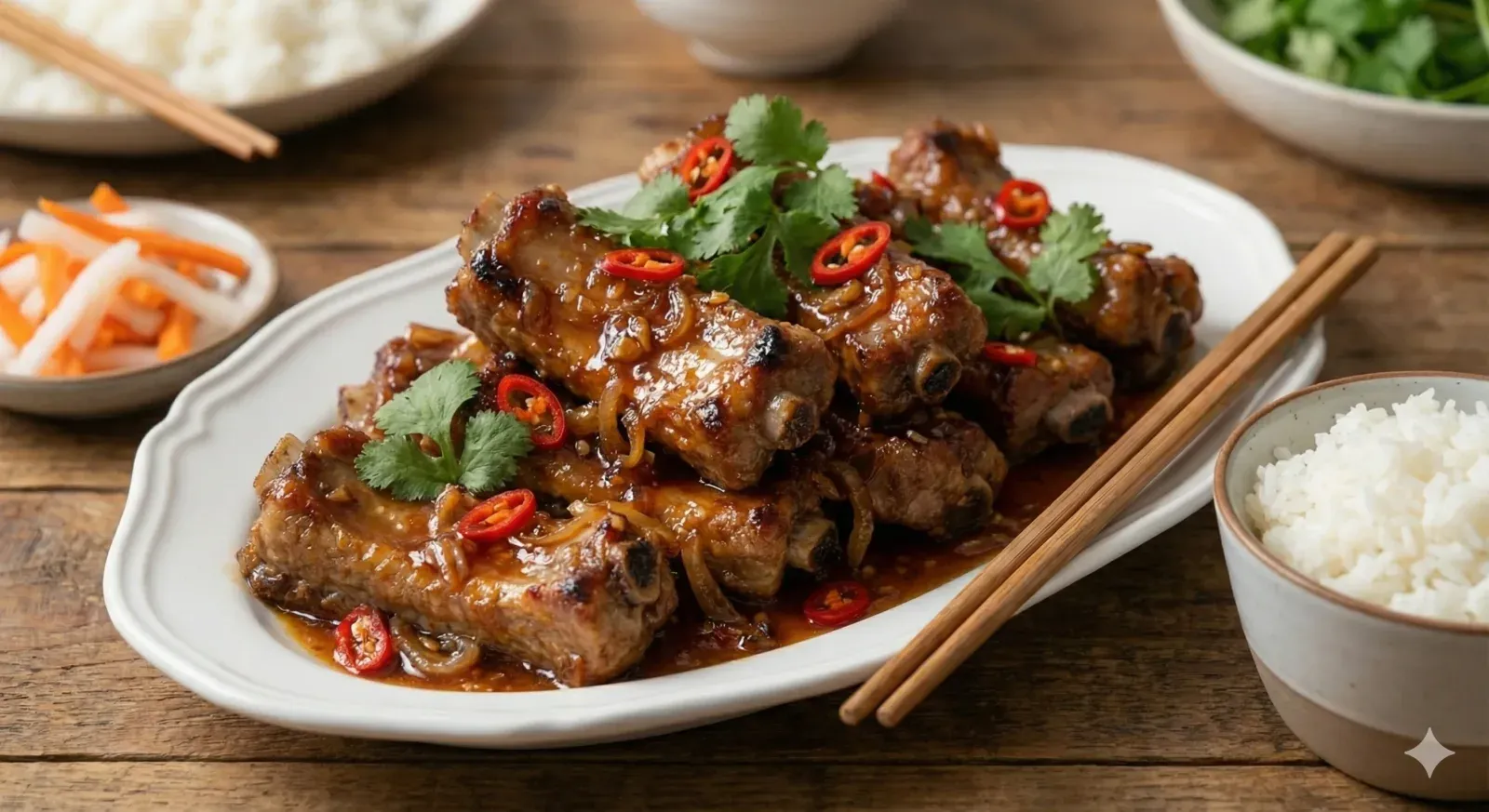
7Transfer your Vietnamese sweet and sour pork ribs to a serving platter. Spoon any remaining sauce from the pan over the top. The ribs should glisten with a beautiful mahogany glaze.
Serve immediately while hot, alongside steamed jasmine rice and simple pickled vegetables (đồ chua). The acidity of the pickles cuts through the richness perfectly.
AdvertisementExpert Tips for Perfect Results
Why Blanching Matters
Never skip the blanching step! Starting ribs in cold water allows proteins to slowly denature and release impurities. If you drop ribs into already-boiling water, the exterior seals immediately, trapping unwanted flavors inside. The result? A cleaner, purer-tasting dish.
The Scoring Technique
That lengthwise cut on each rib isn’t just for show. It serves two purposes: it allows the marinade to penetrate deeper, and during cooking, the meat naturally pulls away from the bone while staying attached. Your guests will thank you when they can easily pull the meat off with chopsticks.
Don’t Over-Fry
The frying stage is about developing flavor and texture, not cooking the ribs through. Over-fried ribs become dry and tough. Aim for golden brown with slightly charred spots—the braising will finish the cooking.
Sauce Balance
Fish sauce brands vary significantly in saltiness. Start with the recipe proportions, but taste your sauce before adding it to the pan. It should taste quite intense—almost too salty-sweet—because it will dilute as it reduces. Adjust with water, sugar, or fish sauce as needed.
Northern vs. Southern Vietnamese Style
This recipe represents the traditional Northern Vietnamese (miền Bắc) approach to sweet and sour ribs, which differs significantly from Southern Vietnamese preparations:
Northern Style (This Recipe) Southern Style Simple sauce: fish sauce, sugar, vinegar Tomato sauce, bell peppers, pineapple No batter coating Often batter-fried like Chinese style Pure, concentrated flavors More complex, sweeter profile Reddish-brown glaze Brighter red from tomatoes Served with rice and pickles Often served as appetizer Both styles are delicious, but the Northern version showcases the essence of Vietnamese flavor balancing—letting quality ingredients speak for themselves.
Serving Suggestions
In Vietnamese homes, sườn xào chua ngọt is typically served as part of a multi-dish meal. Here’s how to create an authentic experience:
The Perfect Accompaniments:
- Steamed jasmine rice: Essential for soaking up that incredible sauce
- Quick pickled carrots and daikon (đồ chua): The acidity cuts through the richness
- Simple vegetable soup (canh rau): Light and refreshing contrast
- Stir-fried greens: Morning glory or bok choy adds balance
- Vietnamese pickled mustard greens (dưa cải chua): Traditional pairing
Beverage Pairings:
Traditionally, this dish is enjoyed with jasmine tea or simple iced water. For modern pairings, try:
- Light, crisp lager or pilsner beer
- Riesling or Gewürztraminer (the sweetness complements the dish)
- Fresh young coconut water
- Vietnamese iced coffee as an after-meal treat
AdvertisementStorage and Reheating
Refrigerator: Store leftover ribs in an airtight container for up to 3 days. The flavors actually deepen overnight as the ribs absorb more sauce.
Freezer: These ribs freeze well for up to 2 months. Cool completely before freezing in portions. Thaw overnight in the refrigerator.
Reheating: The best method is stovetop—place ribs in a pan with a splash of water, cover, and warm over medium-low heat until heated through. This preserves the texture better than microwaving. You can also reheat uncovered to crisp up the edges slightly.
Common Mistakes to Avoid
1. Starting with Boiling Water
Always start blanching in cold water. Dropping ribs into boiling water seals the outside before impurities can escape.
2. Over-Reducing the Sauce
If your sauce reduces too much, it becomes sticky and candy-like rather than glossy. Keep some moisture in the pan.
3. Using Low-Quality Fish Sauce
Fish sauce is the backbone of this dish. Invest in a good Vietnamese or Thai brand with 30-35° protein content.
4. Crowding the Pan When Frying
Fry in batches! Overcrowding drops the oil temperature, leading to greasy, soggy ribs instead of crispy ones.
5. Skipping the Scoring Step
That small cut makes ribs dramatically easier to eat with chopsticks—very important for family-style dining.
AdvertisementFrequently Asked Questions
Can I use baby back ribs instead of spare ribs?
Yes! Baby back ribs work beautifully. They’re more tender and leaner than spare ribs. Reduce cooking time by about 5 minutes since they’re smaller and cook faster.
What can I substitute for fish sauce?
For authentic flavor, there’s no true substitute for fish sauce. However, in a pinch, try soy sauce mixed with a tiny bit of anchovy paste. The flavor won’t be identical, but it provides umami depth. Use 2 parts soy sauce to 1 part water, plus a little anchovy paste.
Can I make this without pork lard?
Absolutely. Neutral vegetable oil, canola oil, or avocado oil all work fine. You’ll lose a tiny bit of traditional flavor, but the dish will still be delicious.
My sauce is too salty/sweet/sour—help!
Too salty: Add water and a pinch more sugar. Too sweet: Add vinegar and a splash of fish sauce. Too sour: Add sugar and let it reduce more to concentrate flavors.
Can I make this in advance?
You can complete steps 1-4 (up to frying) a day ahead. On serving day, fry the ribs and finish with the sauce. Actually, many Vietnamese cooks say the flavor improves after a day in the fridge!
Why are my ribs tough?
Two main reasons: over-frying before braising, or not simmering long enough in the sauce. The braising stage should be gentle and adequate to fully tenderize the meat.
What’s the best cut of pork ribs for this recipe?
Middle-section spare ribs (sườn thăn) are ideal. They have the perfect meat-to-bone ratio and stay tender during cooking. Front ribs work too but are less uniform. Avoid back ribs as they tend to be dry.
Variations and Adaptations
Spicy Version:
Add 2-3 sliced Thai bird’s eye chilies when stir-frying the aromatics for a fiery kick.
Ginger-Infused:
Add 1 tablespoon julienned fresh ginger with the garlic for additional warmth and complexity.
Southern Vietnamese Style:
Add 2 tablespoons tomato paste, diced bell peppers (red and green), and pineapple chunks. This creates the colorful, slightly sweeter Southern version.
Instant Pot Version:
After marinating, pressure cook ribs with sauce on high for 8 minutes, natural release. Then use the sauté function to reduce sauce to desired consistency.
Air Fryer Adaptation:
After marinating, air fry at 400°F (200°C) for 15 minutes, flipping halfway. Toss with sauce and air fry another 3-4 minutes until caramelized.
The Cultural Significance
Sườn xào chua ngọt represents the essence of Vietnamese home cooking—taking humble ingredients and transforming them through technique and careful seasoning into something memorable. It’s a dish that appears at family gatherings, weekend lunches, and special occasions throughout Northern Vietnam.
The recipe has been passed down through generations, with each family adding their own subtle variations. Some add a splash of caramel sauce for deeper color, others include a hint of five-spice powder for complexity. But the core principles remain: quality ribs, proper blanching, balanced seasoning, and patient braising.
This dish also demonstrates the Vietnamese philosophy of food—nothing is wasted, flavors are balanced, and the result should be greater than the sum of its parts. The scoring technique, the blanching method, even the choice of middle-section ribs—every element serves a purpose.
AdvertisementConclusion
Making authentic Vietnamese sweet and sour pork ribs (sườn xào chua ngọt) at home is easier than you might think. With the right technique—especially that crucial blanching step and the scoring method—you’ll achieve tender, flavorful ribs with a beautiful caramelized glaze that rivals any restaurant.
The beauty of this dish lies in its simplicity. No complicated ingredient lists or exotic spices—just pork ribs, fish sauce, vinegar, sugar, and proper technique. It’s proof that Vietnamese cuisine’s magic comes from understanding how to balance flavors and treat ingredients with respect.
Whether you’re cooking for family dinner or exploring Vietnamese cuisine for the first time, this recipe delivers authentic Northern Vietnamese flavors that will have everyone reaching for seconds. Serve it with steamed rice, some quick pickles, and you have a complete meal that speaks of home cooking at its finest.
Ready to try more Vietnamese recipes? Check out our collection of authentic Vietnamese dishes. Each recipe includes detailed instructions and cultural insights to help you master Vietnamese home cooking.
-
-
-
-