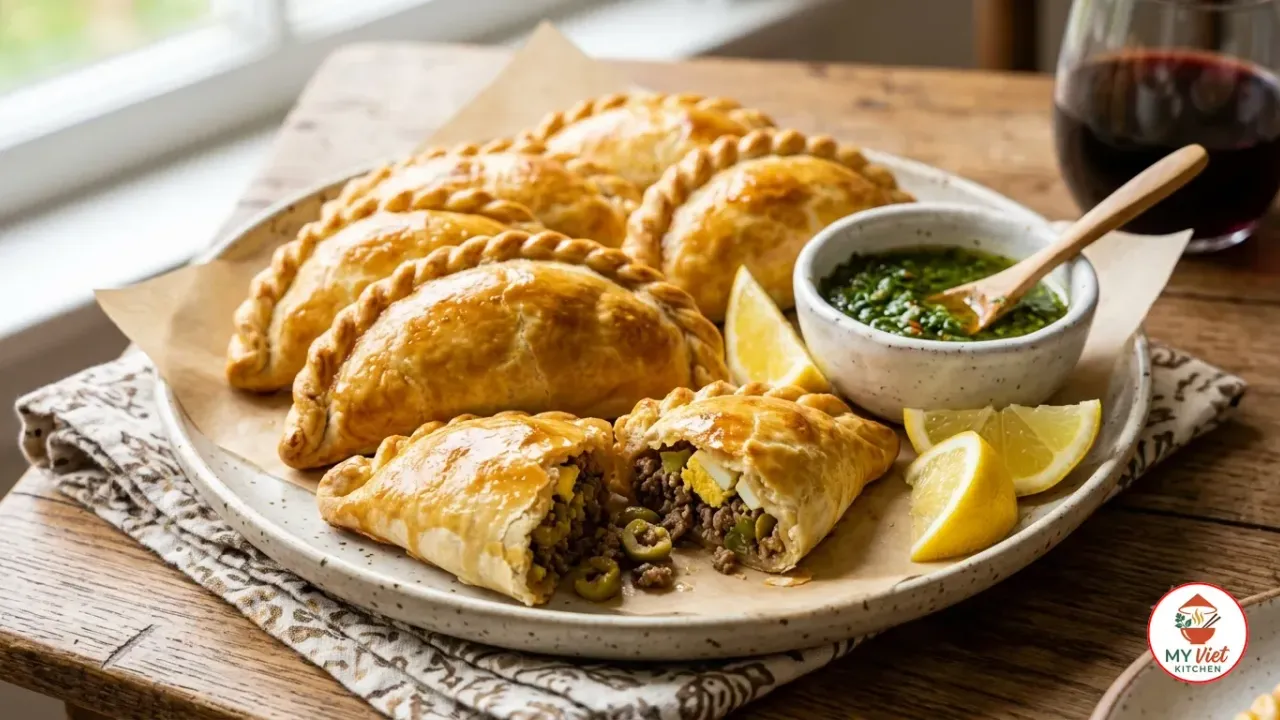
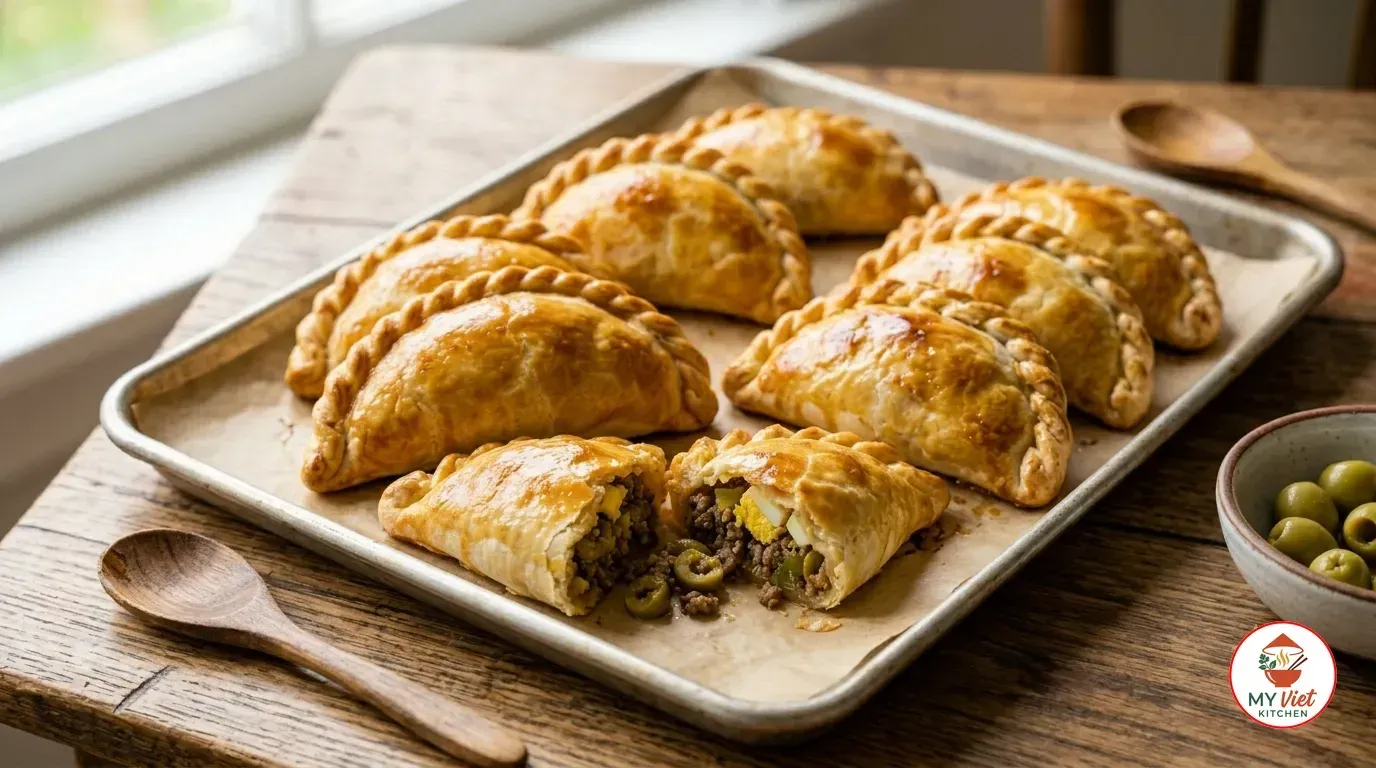
Empanadas are the golden, hand-held treasures of Argentine cuisine. These flaky pastry pockets hold seasoned beef, green olives, and hard-boiled eggs inside a buttery crust. They have been a staple of South American cooking for centuries. Every province claims its own version. In fact, debates over fillings, dough, and cooking method run as deep as the country’s love for them. This recipe gives you authentic Argentine empanadas with a buttery, crisp crust and a savory filling that balances smoky spice with briny olive punch.
Prep Time: 45 minutes | Cook Time: 25 minutes | Servings: 12 empanadas
Difficulty: Medium | Calories: ~285 per empanada
What Makes Argentine Empanadas Special?
Empanadas exist across Latin America, Spain, and even parts of Southeast Asia. Yet Argentine empanadas occupy a unique position among the world’s filled pastries. Specifically, the Argentine version stands out because of its dough. Butter and egg make it tender and flaky. It shatters at first bite. While Chilean empanadas use a sturdier, bread-like dough and Colombian empanadas rely on corn-based masa, the Argentine pastry has a lightness that lifts the entire eating experience.
In addition, the filling tells the story of Argentine food culture. Beef is king in a country built around cattle ranching. The classic empanada de carne pairs seasoned beef with green olives and hard-boiled eggs. Indeed, this trio is non-negotiable in any traditional recipe. Cumin and smoked paprika give the warm, earthy spice base. Meanwhile, the olives add a sharp, briny punch that cuts through the richness. Together, these parts create a filling that is bold yet balanced.
What truly sets Argentine empanadas apart, however, is their cultural role. In Argentina, empanadas are not merely a snack or appetizer. Instead, they are a social ritual. Families gather on weekends to make dozens together. Similarly, friends order them by the dozen from neighborhood bakeries. Even political campaigns serve them at rallies. Every province has its signature style, and Argentines defend their regional version with fierce pride. As a result, learning to make empanadas is about entering a tradition that runs through the heart of Argentine daily life.

Choosing the Right Beef for Empanadas
The quality and cut of beef you select determines whether your empanadas taste ordinary or extraordinary. Above all, Argentine cooks take this decision seriously. The filling should be savory, moist, and rich without being greasy. Here are the best options to consider.
- Ground beef, 80/20 lean-to-fat ratio (best for beginners): This is the most practical choice for home cooks. The 20 percent fat keeps the filling juicy during baking. Leaner blends dry out inside the pastry. Cook the beef until it browns deeply and the moisture evaporates. A dry filling prevents soggy dough.
- Hand-cut sirloin or flank steak (traditional method): Called carne cortada a cuchillo, this method involves dicing the beef into small cubes by hand. The result is a chunkier, more textured filling that many Argentines consider the only authentic approach. Use a sharp knife and cut the meat into pieces no larger than a pea.
- Chuck roast (rich and forgiving): Chuck has more marbling than sirloin, which produces a richer, more succulent filling. Dice it finely or ask the butcher to coarse-grind it. The extra connective tissue breaks down during cooking and adds body. This cut works especially well for fried empanadas, where the added fat complements the crispy shell.
Ingredients for Empanadas
For the Dough:
- 3 cups (375g) all-purpose flour
- 1/2 teaspoon salt
- 1/2 cup (115g) cold unsalted butter, cubed
- 1 large egg
- 1/3 cup (80ml) ice water
- 1 tablespoon white vinegar
For the Beef Filling:
- 1 pound (450g) ground beef
- 1 large onion, finely diced
- 1 red bell pepper, finely diced
- 2 green onions, thinly sliced
- 2 cloves garlic, minced
- 1 teaspoon ground cumin
- 1 teaspoon smoked paprika
- 1/2 teaspoon dried oregano
- 1/4 teaspoon cayenne pepper
- 2 tablespoons olive oil
- Salt and black pepper to taste
For the Assembly:
- 1/2 cup (75g) pitted green olives, chopped
- 2 hard-boiled eggs, chopped
- 1 egg beaten with 1 tablespoon water for egg wash
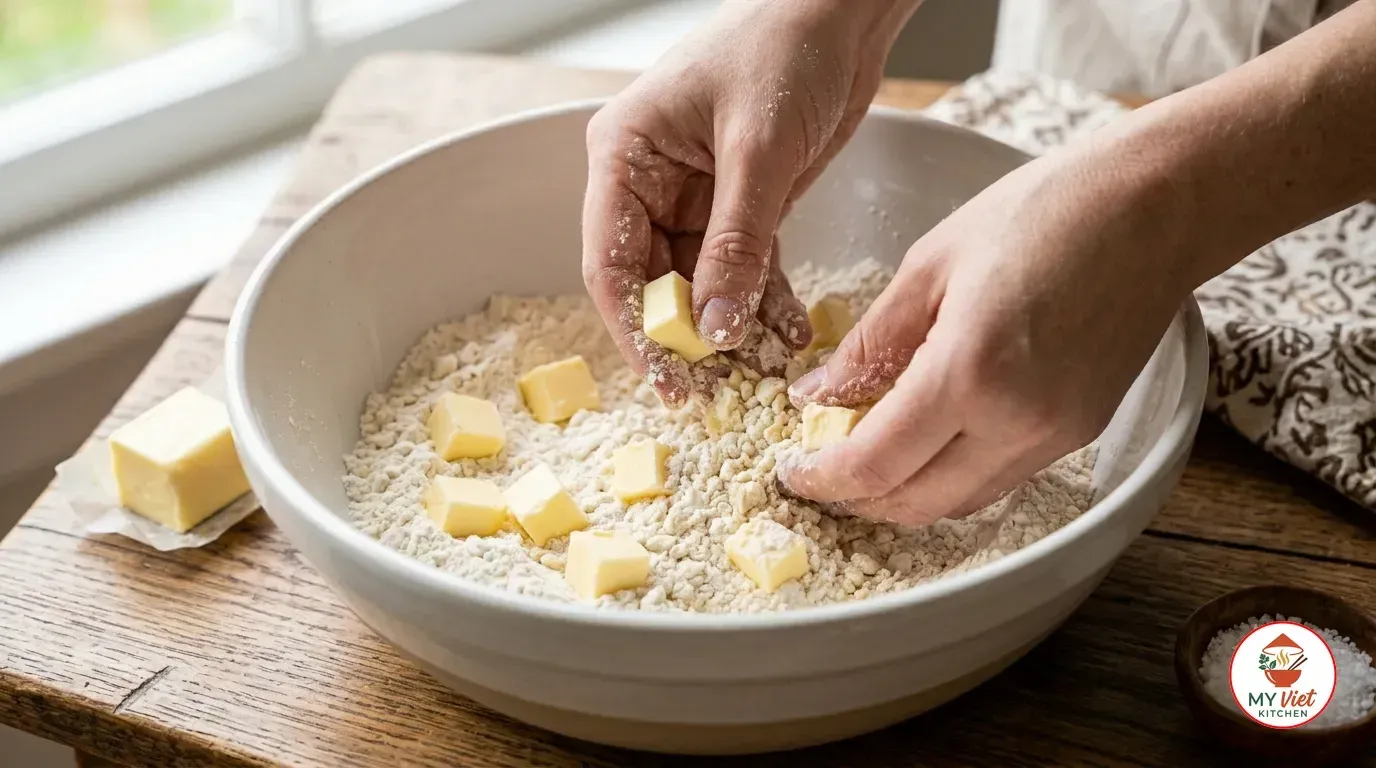
Pro tip: Keep the butter and water as cold as possible when making the dough. Cold fat creates pockets of steam during baking, which is what produces the flaky layers. If your kitchen is warm, chill the flour in the freezer for 15 minutes before starting. Additionally, the vinegar in the dough inhibits gluten development. This keeps the pastry tender rather than tough. You will not taste it in the finished empanadas, but it makes a significant difference in texture.
Step-by-Step Instructions
Step 1: Make the Dough
1 Combine the flour and salt in a large mixing bowl. Add the cold cubed butter. Work the butter into the flour using your fingertips, a pastry cutter, or two forks. Rub the butter and flour together until the mixture resembles coarse breadcrumbs with some pea-sized butter pieces remaining. These visible butter pieces are essential for creating flaky layers.
In a small bowl, whisk together the egg, ice water, and vinegar. Next, pour this mixture into the flour and butter. Stir with a fork until the dough comes together in a shaggy mass. Then turn it out onto a lightly floured surface and knead gently for about 1 minute until smooth. Do not overwork it, because excessive kneading develops gluten and produces a tough pastry. Finally, shape the dough into a flat disk, wrap it tightly in plastic, and chill for at least 30 minutes. This rest allows the gluten to relax and the butter to firm up again.
Step 2: Prepare the Filling
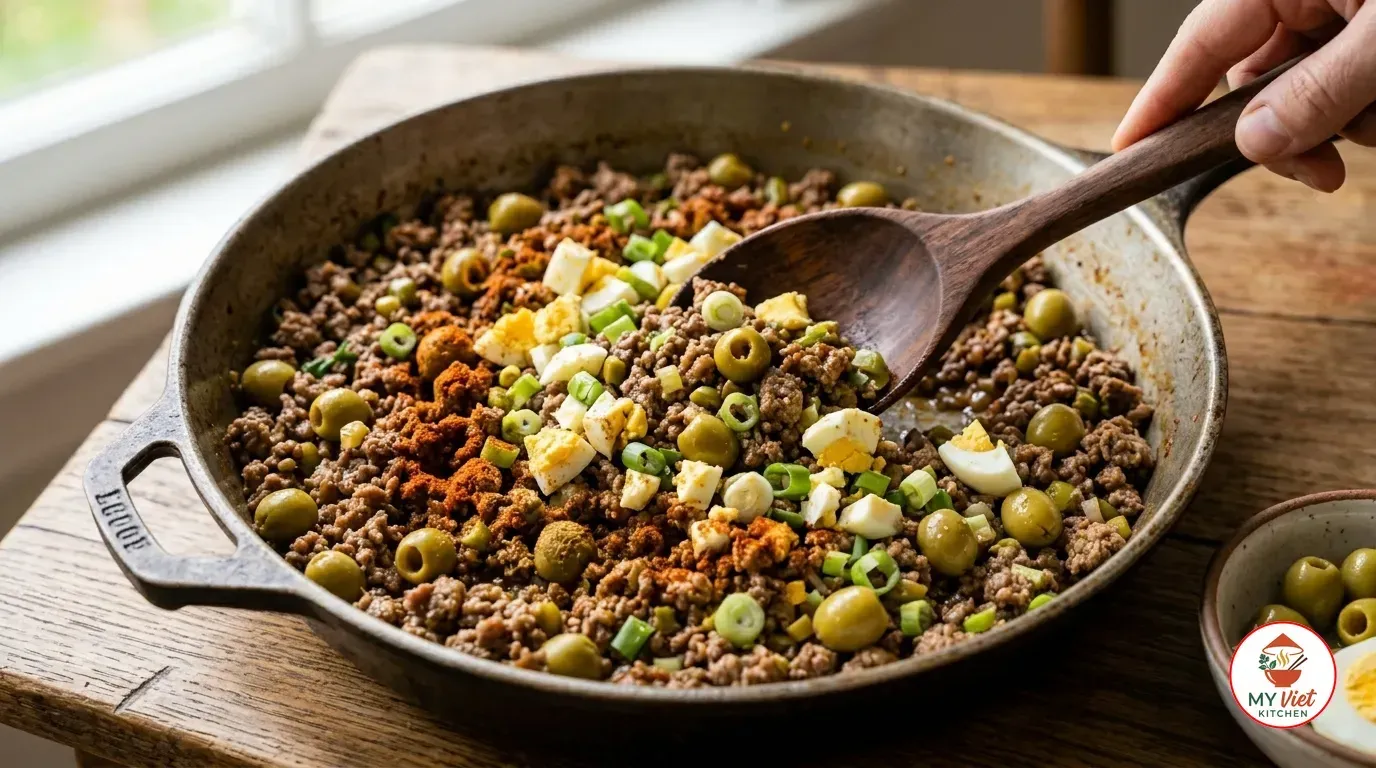
2 Heat the olive oil in a large skillet over medium-high heat. Add the diced onion and red bell pepper. Cook for 5 to 7 minutes, stirring occasionally, until the vegetables soften and the onion turns translucent. The bell pepper adds a sweet depth that balances the spices. Stir in the minced garlic and cook for just 1 minute until fragrant.
Next, add the ground beef to the skillet. Break it apart with a wooden spoon into small crumbles. Cook for 6 to 8 minutes until the meat browns deeply and no pink remains. If the mixture looks greasy, pour off any excess fat. Then stir in the cumin, smoked paprika, dried oregano, and cayenne pepper. Season with salt and black pepper. Cook for 2 more minutes so the spices toast in the meat fat. After that, remove the skillet from heat. Fold in the chopped green olives, hard-boiled eggs, and sliced green onions. Finally, spread the filling on a plate and allow it to cool fully. A hot filling will melt the dough and cause the empanadas to leak.
Step 3: Roll and Cut the Dough
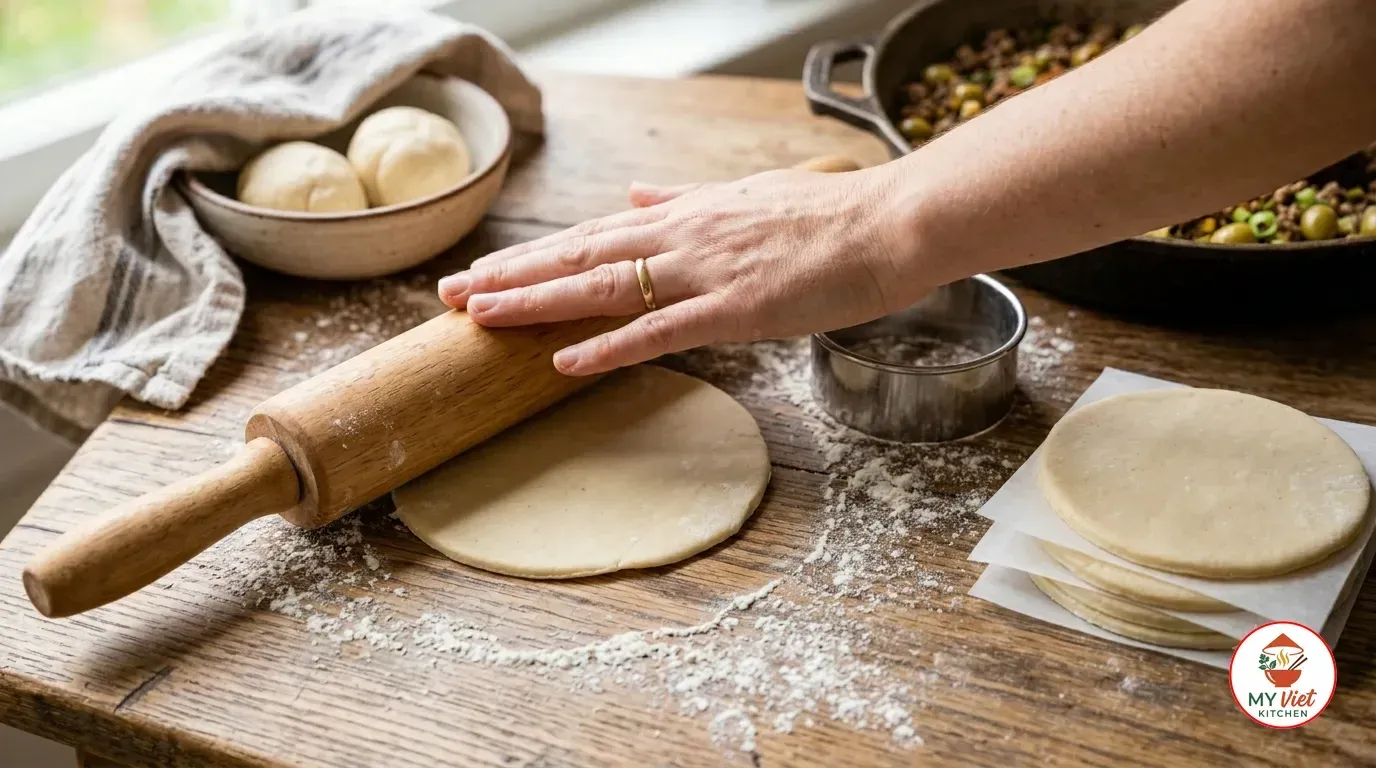
3 Remove the chilled dough from the refrigerator. Divide it into 12 equal portions, each weighing roughly 50 grams. Roll each portion into a smooth ball between your palms. Then place one ball on a lightly floured surface and roll it into a thin circle about 6 inches in diameter. Rotate the dough a quarter turn after each roll to maintain a round shape and even thickness.
Work with one piece of dough at a time. Also, keep the other portions covered with a damp towel to stop them from drying out. If the dough gets too soft or sticky, simply return it to the fridge for 10 minutes. Cold dough rolls more easily and yields a flakier result. Stack the finished circles between sheets of parchment paper so they do not stick.
Step 4: Assemble the Empanadas
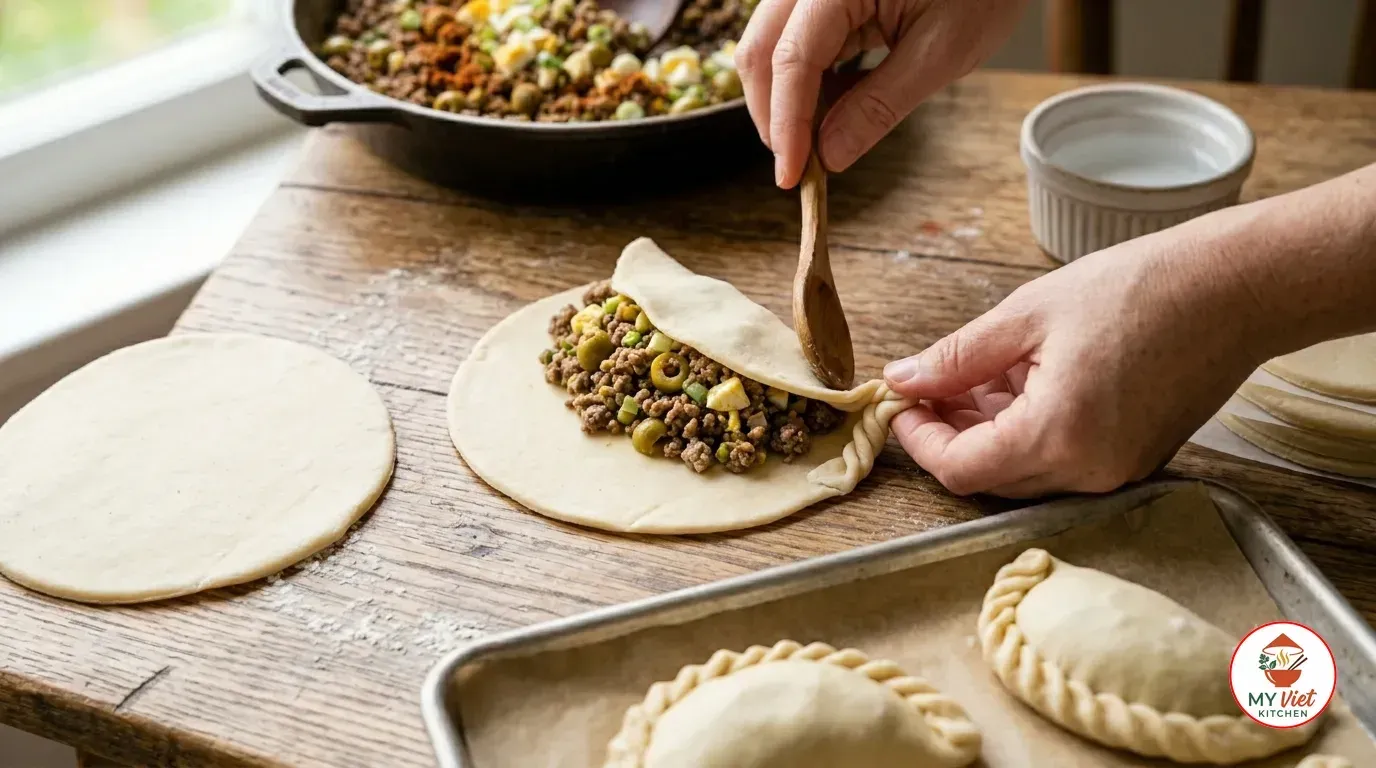
4 Place about 2 tablespoons of the cooled beef filling in the center of each dough circle. Leave a clean border of at least half an inch around the edge. Lightly moisten the border with water using your fingertip. This moisture helps the dough seal securely. Fold the dough in half over the filling to form a half-moon shape. Press the edges together firmly with your fingers to remove any trapped air.
Now create the traditional repulgue. This is the decorative crimped edge that seals Argentine empanadas. First, fold a small section of the edge over itself at one corner. Press it down, then fold the next section over so it slightly overlaps the first. Continue this pattern along the entire curved edge. The repulgue not only seals the empanada but also marks the filling inside. In fact, each filling type has a distinct crimp pattern in Argentine bakeries so customers know what they are picking. Place the finished empanadas on a parchment-lined baking sheet.
Step 5: Bake Until Golden
5 Preheat the oven to 400 degrees Fahrenheit (200 degrees Celsius). Whisk together the egg and water to make a smooth egg wash. Brush the top and sides of each empanada generously with the egg wash. This step produces the characteristic deep golden color and glossy sheen. For extra shine, apply a second coat after the first one dries slightly.
Bake the empanadas on the center rack for 20 to 25 minutes. The pastry should turn a rich golden brown. Also, the bottoms should feel firm and crisp when you lift one with a spatula. Rotate the baking sheet halfway through if your oven heats unevenly. Then remove from the oven and let the empanadas rest for 5 minutes before serving. Because the filling gets extremely hot during baking, this brief rest prevents burnt mouths. Serve them warm alongside chimichurri sauce and lemon wedges.
Expert Tips for Perfect Empanadas
Keep Everything Cold
Above all, temperature control is the single most important rule for flaky empanada dough. Cold butter melts slowly in the oven and creates steam pockets. These pockets then become flaky layers. However, if the butter melts before the empanadas enter the oven, the dough turns dense and cracker-like. So work quickly when handling the dough. If at any point it feels soft or the butter looks shiny, slide the tray into the fridge for 10 minutes. This discipline separates good empanadas from great ones.
Cool the Filling Completely
Patience during cooling pays enormous dividends. Hot filling softens the dough on contact. As a result, it becomes nearly impossible to roll, fill, and seal properly. Furthermore, warm filling generates steam inside the sealed empanada. That steam blows open the seams during baking. To speed up cooling, spread the filling in a thin layer on a plate or sheet pan. For even faster results, place it in the fridge for 20 minutes. This ensures every empanada holds its shape in the oven.
Do Not Overfill
It is natural to want to pack each empanada with as much filling as possible. However, overfilling makes them hard to seal. It also thins the dough, creating weak spots where the pastry tears during baking. Instead, stick to 2 tablespoons of filling per empanada. You want enough for a satisfying bite, but not so much that the pastry loses its shape. Ultimately, a well-made empanada has a generous filling inside a consistent layer of crisp, flaky dough.
Empanadas Across Argentina: A Regional Comparison
Argentina has 23 provinces. Nearly every one boasts its own empanada style. The differences in filling, dough, and cooking method reflect local ingredients and centuries of tradition. Below are the most celebrated styles.
| Province | Filling Style | Cooking Method | Key Characteristics |
|---|---|---|---|
| Salta | Hand-cut beef, potato, green onion | Baked | Juicy, slightly spicy, considered the gold standard |
| Tucuman | Hand-cut beef, cumin, no potato | Fried | Small, intensely flavored, crispy shell |
| Buenos Aires | Ground beef, olives, hard-boiled egg | Baked or fried | Larger size, milder spice, most accessible style |
| Mendoza | Beef, olives, garlic, oregano | Baked | Generous garlic flavor, wine-country influence |
| Cordoba | Beef, potato, raisins, sugar on top | Baked | Sweet-savory combination, sugar-dusted crust |
| Catamarca | Beef, potato, goat cheese | Baked in clay oven | Rustic, smoky from wood-fired cooking |
Serving Suggestions
In Argentina, empanadas show up in every context. They appear as appetizers at formal dinners, as the main course at casual gatherings, and as street food from sidewalk vendors. Even schoolchildren carry them as packed lunches. The sides are simple but key to a complete meal.
The Perfect Accompaniments:
- Chimichurri sauce: This bright, herbaceous sauce of parsley, garlic, oregano, red pepper flakes, olive oil, and red wine vinegar is the definitive empanada companion. Its acidity and freshness cut through the rich pastry and seasoned beef. Make it at least 30 minutes before serving so the flavors meld.
- Salsa criolla: A fresh relish of finely diced tomato, red onion, and green bell pepper dressed with red wine vinegar and olive oil. The crisp vegetables provide a textural contrast to the soft filling. It is especially popular in northern Argentina alongside grilled meats and empanadas alike.
- Mixed green salad: A simple salad of butter lettuce, arugula, and thinly sliced radishes dressed with lemon and olive oil balances the richness of the empanadas. The fresh, peppery greens refresh the palate between bites.
- Lemon wedges: A squeeze of fresh lemon over a hot empanada is a common Argentine habit. The bright acid lifts the flavors of the beef and spices instantly. Always serve a plate of lemon wedges alongside the empanadas.
Beverage Pairings:
- Malbec wine: Argentina’s signature red grape produces a full-bodied, fruit-forward wine that stands up to the bold spices in the filling. The soft tannins complement the buttery pastry. A Mendoza Malbec at cool room temperature is the classic pairing.
- Torrontes white wine: For those who prefer white wine, this aromatic Argentine varietal from Salta offers floral notes and a crisp finish. It pairs beautifully with chicken or cheese empanadas and holds its own against the beef version.
- Quilmes beer: Argentina’s most popular lager is cold, crisp, and refreshing. Its light body and clean finish cleanse the palate without competing with the empanada flavors. This is the most common pairing at casual gatherings across the country.
- Mate or iced mate: For a non-alcoholic option, this traditional South American herbal drink provides a slightly bitter, earthy counterpoint that Argentines have enjoyed alongside empanadas for generations.
Storage and Reheating
Refrigerator: Store baked empanadas in an airtight container in the refrigerator for up to 3 days. The pastry softens slightly during storage but remains delicious. Layer parchment paper between empanadas to prevent them from sticking together. For best results, reheat before eating rather than serving them cold.
Freezer: Empanadas freeze exceptionally well both before and after baking. For unbaked empanadas, arrange them on a parchment-lined tray and freeze until solid, about 2 hours. Transfer to a freezer bag and store for up to 3 months. Bake directly from frozen at 400 degrees Fahrenheit, adding 5 to 8 extra minutes to the standard baking time. Previously baked empanadas can also be frozen and reheated from frozen in a 350-degree oven for 15 minutes.
Reheating: The best method is the oven. Place leftover empanadas on a baking sheet and reheat at 375 degrees Fahrenheit for 10 to 12 minutes until the pastry crisps up again. Avoid the microwave, as it turns the flaky dough soft and chewy. A toaster oven works equally well for reheating one or two empanadas at a time. The filling should be hot throughout, and the crust should feel firm and slightly crackly to the touch.
Common Mistakes to Avoid
1. Using Warm or Room-Temperature Butter
Soft butter blends fully into the flour instead of creating distinct pockets. Because of this, the baked dough turns out dense and crumbly rather than flaky. The butter must be cold from the fridge and cut into small cubes before you begin. In fact, some Argentine bakers even freeze the butter for 10 minutes before cutting it. This extra chill gives you more working time before the butter softens.
2. Filling the Empanadas While the Meat Is Hot
Rushing the assembly with hot filling is the most common cause of empanada failure. Specifically, hot filling melts the cold butter in the dough. This destroys the flaky layers before baking even begins. It also creates steam that blows open the seals. Therefore, the filling needs to cool to room temperature at minimum. For best results, chill it in the fridge for 20 minutes. Plan your timing so the filling cools while the dough rests.
3. Skipping the Egg Wash
Without the egg wash, empanadas bake up pale and matte instead of golden and glossy. In contrast, when you apply egg wash, the proteins set in the oven heat. They create a thin, shiny coat that locks in moisture. Additionally, the water in the wash makes steam that helps the surface crisp. So brush every surface, including the crimped edges. A second coat after the first dries slightly yields an even deeper golden color.
4. Rolling the Dough Too Thick
Thick dough produces a bready, heavy empanada instead of a light, crisp one. Therefore, roll each circle to about one-eighth of an inch. The dough should be thin enough to see your hand through it, yet thick enough to hold the filling. Even thickness across the circle ensures the empanada bakes uniformly. Otherwise, uneven dough creates spots that are done too soon on the thin parts and still raw on the thick ones.
Frequently Asked Questions
What is the best meat for Argentine empanadas?
The classic choice is hand-cut beef. Use a lean cut like sirloin or flank steak diced into small cubes. This method gives a chunkier texture that many Argentines prefer. Ground beef with an 80/20 lean-to-fat ratio is a great and easier option. The fat keeps the filling moist during baking. Avoid extra-lean blends, as the filling will dry out inside the pastry.
Can empanadas be made ahead of time and frozen?
Yes, absolutely. Empanadas are one of the best make-ahead foods. Assemble them fully, including crimped edges and egg wash. Then arrange them on a tray and freeze until solid. Move them to freezer bags and store for up to 3 months. Bake right from frozen at 400 degrees Fahrenheit. Just add 5 to 8 extra minutes. There is no need to thaw them first. In fact, many Argentine families keep a stash of frozen empanadas ready for surprise guests.
What is the difference between baked and fried empanadas?
Baked empanadas use a butter-rich dough that turns flaky and golden in the oven. They are lighter and more delicate. Fried empanadas use a simpler dough made with lard. When fried at 350 degrees, the dough puffs up and gets very crispy. Fried types are richer and crunchier. In Argentina, the choice varies by region. Salta favors baking, while Tucuman is known for its fried empanadas.
How do you keep empanadas from leaking during baking?
Three things stop leaking. First, cool the filling fully before you assemble. Hot filling makes steam that forces the seams open. Second, seal the edges firmly and crimp them tight with the repulgue technique. Third, do not overfill. Use no more than 2 tablespoons per empanada. Leave a clean half-inch border of dough for sealing. If you spot any small cracks after crimping, patch them with a tiny piece of dough and a drop of water.
What sauces go with empanadas?
Chimichurri is the go-to Argentine sauce for empanadas. Its bright mix of parsley, garlic, oregano, red pepper flakes, olive oil, and red wine vinegar cuts right through the rich filling. Salsa criolla, a fresh mix of tomato, onion, and bell pepper, is also popular. For those who like heat, aji molido or any good hot sauce works well. Also, a simple squeeze of fresh lemon juice is a beloved choice all over Argentina.
How many empanadas per person should I plan for?
As an appetizer, plan 2 to 3 empanadas per person. As a main course, allow 4 to 5 per person. For a party, estimate 3 to 4 per guest alongside other dishes. Empanadas disappear fast, so it is always wise to make extra. Leftover empanadas reheat beautifully in the oven and make excellent packed lunches the following day.
Variations and Adaptations
Chicken Empanadas (Empanadas de Pollo):
Swap the beef for shredded poached chicken thighs. Use the same cumin and paprika, but add a big squeeze of lime juice and fresh cilantro. Chicken empanadas are lighter than beef. They work well as a summer snack. The chicken soaks up the spices, and the lime adds a bright note that pairs well with a cold Torrontes wine.
Ham and Cheese Empanadas (Empanadas de Jamon y Queso):
This is the second most popular filling in Argentina after beef. Use diced cooked ham and shredded mozzarella in equal parts. No extra seasoning is needed. The cheese melts during baking and creates a gooey, stretchy center that contrasts the flaky crust. Kids love these empanadas. Serve them right from the oven when the cheese is at its most molten.
Spinach and Ricotta Empanadas (Empanadas de Humita):
For a vegetarian option, mix sauteed spinach with creamy ricotta, a pinch of nutmeg, and grated Parmesan. Squeeze the cooked spinach well to remove excess water. A wet filling will make the dough soggy. This elegant version works well as a dinner party starter. The creamy, slightly sweet filling is a nice change from the meatier types.
Corn Empanadas (Empanadas de Choclo):
A sweet-savory option popular in northern Argentina during corn season. Saute fresh corn kernels with diced onion. Then stir in a touch of sugar and a splash of cream to make a thick filling. Some cooks add crumbled goat cheese. The natural sweetness of the corn pairs with the buttery pastry to create a unique empanada. It sits right on the line between snack and dessert.
The Cultural Significance of Empanadas
Empanadas are far more than food in Argentina. They are a national symbol and a source of deep regional pride. The act of making empanadas together brings families into the kitchen for hours of shared work and talk. Grandmothers teach grandchildren the family’s secret filling recipe. Friends gather on Sunday afternoons to fold dozens of empanadas while sharing mate. In this sense, the empanada is both a dish and a ritual that brings people closer.
Regional diversity in empanadas reflects Argentina’s vast geography and cultural complexity. In the northwest, the spicy, hand-cut beef empanadas of Salta tell the story of Andean influence. Meanwhile, the fried empanadas of Tucuman carry the legacy of indigenous cooking traditions. By contrast, the larger, milder empanadas of Buenos Aires show the impact of European immigration. According to Taste Atlas, the Argentine empanada is recognized as one of the world’s most iconic filled pastries. Every September, the town of Famailla in Tucuman hosts the Fiesta Nacional de la Empanada, a festival that draws thousands of visitors and celebrates the empanada as a cornerstone of Argentine identity. This annual gathering underscores what every Argentine already knows: empanadas are woven into the fabric of the nation’s culture and history.
Conclusion
Making Argentine empanadas at home is deeply rewarding. First, the ingredients are simple and widely available. Second, the technique becomes intuitive after your first batch, even though the crimping takes a bit of practice. Once you master the balance between a flaky, buttery crust and a savory, well-spiced filling, you will understand why Argentina has devoted an entire national festival to this humble pastry. In the end, these empanadas deliver warmth, satisfaction, and a genuine connection to one of South America’s greatest food traditions.
Ready to explore more Latin American and South American flavors? Browse our collection of South American dishes for more authentic recipes. You might also enjoy our feijoada for another classic from the region. If you try these empanadas, leave a rating and share your experience in the comments below.