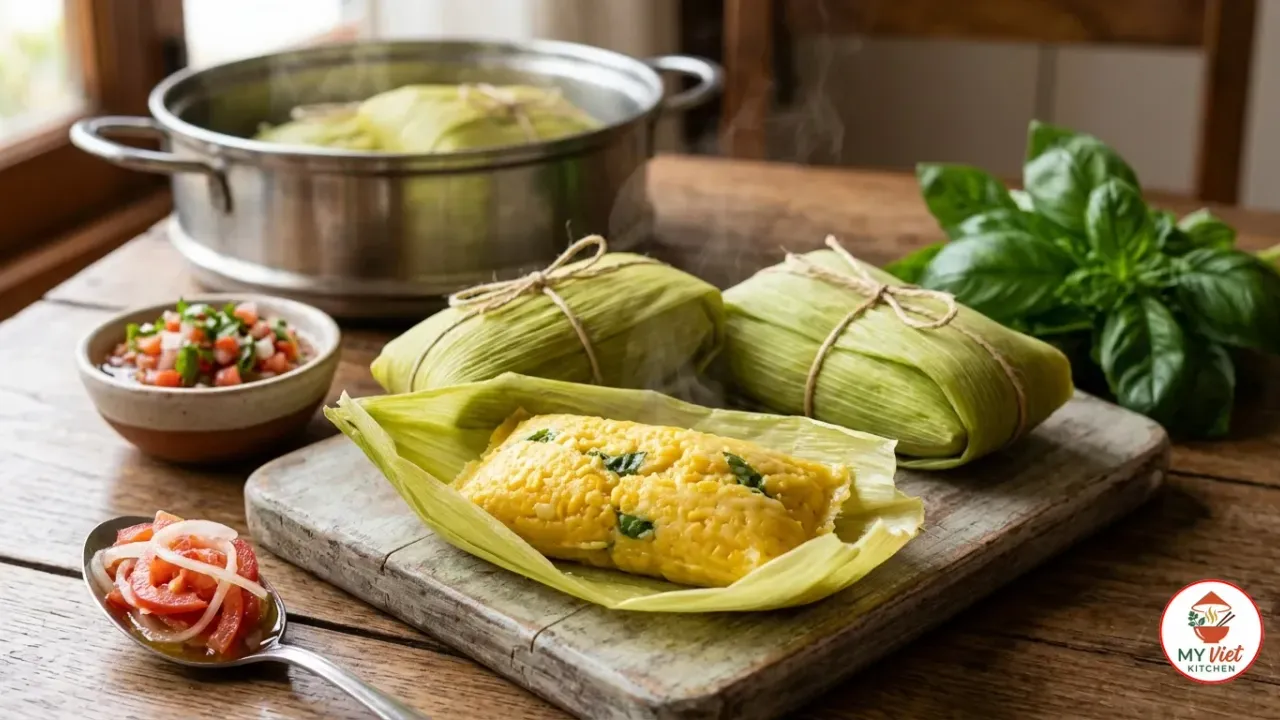
Humitas are one of South America’s most treasured corn dishes, and this humitas recipe brings the authentic flavors of Chile and Argentina straight to your kitchen. These corn tamales turn fresh summer corn into a fragrant, tender filling wrapped in its own husks and gently steamed. Unlike their Mexican cousins, humitas celebrate the pure, sweet flavor of corn without relying on masa harina or heavy fillings. If you have ever tasted one at a Chilean market stall or an Argentine family table, you know that nothing quite compares to the first bite through the steaming husk.
Prep Time: 45 minutes | Cook Time: 40 minutes | Servings: 12
Difficulty: Medium | Calories: ~210 per serving
What Makes Humitas Special?
Humitas stand apart from other wrapped corn dishes because they let fresh corn do all the talking. The base is nothing more than raw corn kernels ground into a thick, chunky paste. There is no dried flour, no complicated dough, and no heavy fats. Instead, the starch inside the fresh kernels acts as a natural binder. When the paste cooks inside the husk, it firms up into something creamy, dense, and full of sweet corn flavor. This simplicity is what makes humitas so special.
The flavor profile of a classic Chilean humita revolves around three elements: sweet corn, aromatic basil, and gently softened onion. These ingredients might sound modest, but together they create a harmony that is deeply satisfying. In particular, the basil adds a peppery, slightly anise-like fragrance that lifts the corn’s natural sweetness. Meanwhile, the onion provides a savory backbone that keeps the dish from tipping into dessert territory. A touch of smoked paprika rounds out the flavor with a subtle warmth.
Humitas trace their origins to pre-Columbian South America, where indigenous peoples first wrapped ground corn in husks and cooked them over fire. Indeed, the word “humita” comes from the Quechua “humint’a,” meaning a corn-based food. Today, humitas remain a staple across Chile, Argentina, Bolivia, Peru, and Ecuador, with each country adding its own twist. In Chile, they are almost always savory with basil. By contrast, in Argentina, you might find sweet versions with sugar or savory ones with cheese. Regardless of the variation, humitas always honor the same principle: let the corn shine.

Choosing the Right Corn for Humitas
The corn you select determines everything about your humitas. Because the filling is essentially ground corn with minimal additions, there is nowhere for mediocre corn to hide. For that reason, here is what to look for when shopping.
- Fresh sweet corn (best choice): Look for ears with bright green, tightly wrapped husks and golden silk. The kernels should be plump, tightly packed, and release a milky liquid when you press a thumbnail into one. This milky stage indicates the ideal balance of sugar and starch for humitas.
- Field corn or choclo: In South America, traditional humitas often use choclo, a large-kerneled, starchy corn variety. Choclo produces a denser, more substantial humita. If you can find it at Latin American markets, try it for the most authentic texture and flavor.
- Frozen corn kernels (off-season option): When fresh corn is unavailable, frozen kernels will work in a pinch. However, frozen corn lacks the natural starch and moisture of fresh ears. You may need to add a tablespoon of cornstarch to help the filling bind properly. The flavor will be milder, so season more generously.
- Bicolor or white corn: Both varieties produce excellent humitas. Generally, white corn tends to be starchier and yields a firmer filling, while yellow corn is sweeter and creates a more tender, creamy result. Choose based on your personal preference.
Ingredients for Humitas
Main Ingredients:
- 12 large ears of fresh corn, with husks intact
- 1 large white onion, finely diced
- 2 tablespoons butter
- 1 tablespoon olive oil
- 1/2 cup fresh basil leaves, chopped
Seasonings:
- 1 teaspoon salt
- 1/2 teaspoon black pepper
- 1/2 teaspoon smoked paprika
- 1 pinch sugar (optional, if corn lacks sweetness)
For Wrapping:
- Reserved corn husks from the ears
- Kitchen twine or thin strips of corn husk for tying
Pro tip: Fresh basil is not negotiable in Chilean humitas. Dried basil lacks the volatile oils that give the dish its distinctive aroma. When you open a steaming humita and that wave of basil-scented corn hits you, you will understand why this herb is essential. Buy a large bunch and chop it right before adding it to the corn mixture.
Step-by-Step Instructions
Step 1: Prepare the Corn Husks
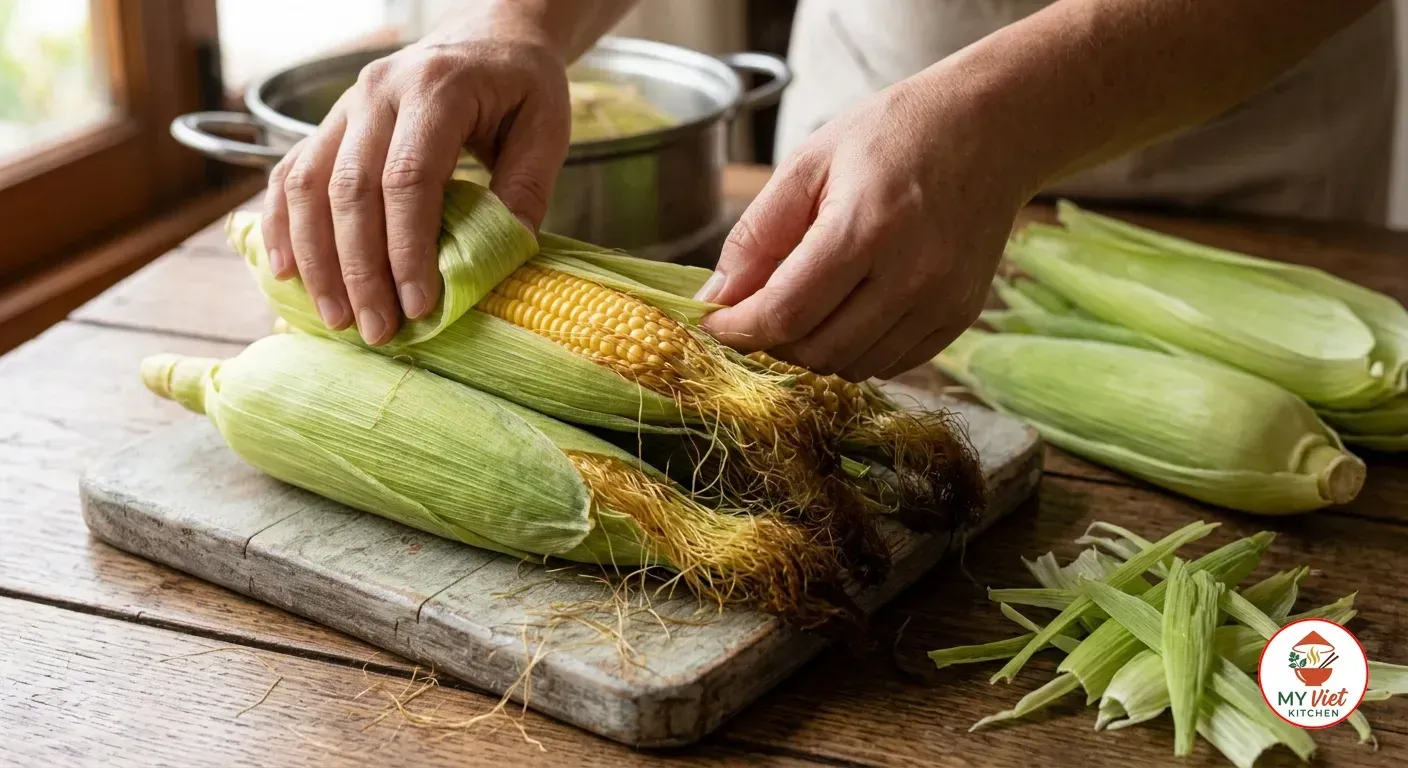
1 Start by carefully peeling back the husks from each ear of corn. Work slowly and try to keep the husks as intact as possible, since you will use them to wrap the humitas later. Pull the husks down toward the base of the ear without tearing them off completely. Then remove all the silk threads from the corn and from inside the husks.
Select the largest, cleanest husks and set them aside in pairs. You will need two overlapping husks per humita to create a secure wrapper. If any husks are torn or too small, save them anyway. You can tear these into thin strips to use as ties instead of kitchen twine. As a result, this traditional tying method gives your humitas an authentic, rustic look.
Step 2: Grind the Corn
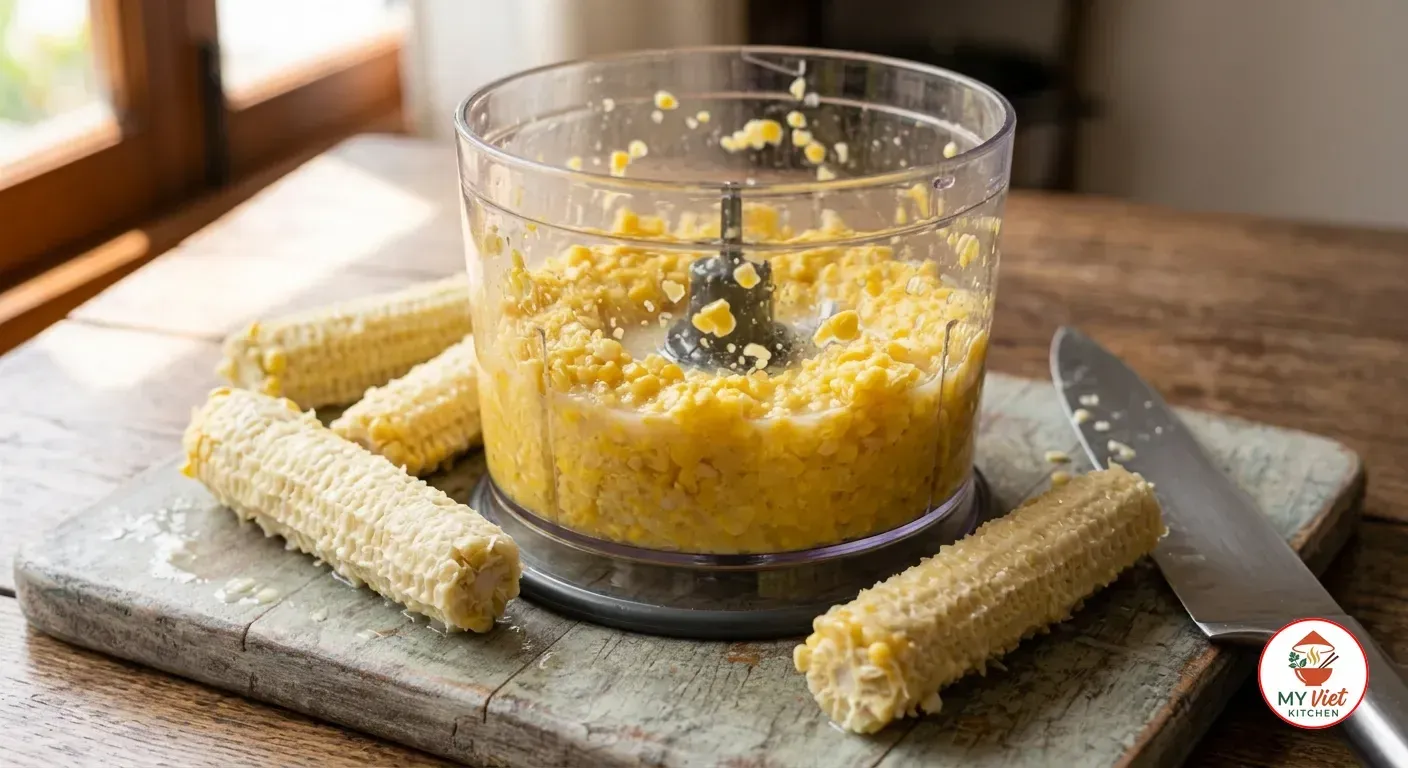
2 Use a sharp knife to cut the corn kernels off the cobs. Hold each ear upright on a cutting board and slice downward in long strokes, rotating the ear as you go. After that, scrape the cobs with the back of your knife to extract the milky liquid still trapped inside. This corn milk is packed with starch and flavor.
Transfer the kernels and corn milk to a food processor. Pulse in short bursts until you achieve a coarse, chunky paste. The texture should resemble rough polenta, with visible pieces of corn throughout. Most importantly, avoid over-processing into a smooth puree, because those chunks of kernel are what give humitas their characteristic rustic texture. If you do not have a food processor, a box grater works beautifully. Grate the ears directly over a bowl using the large holes.
Step 3: Cook the Sofrito
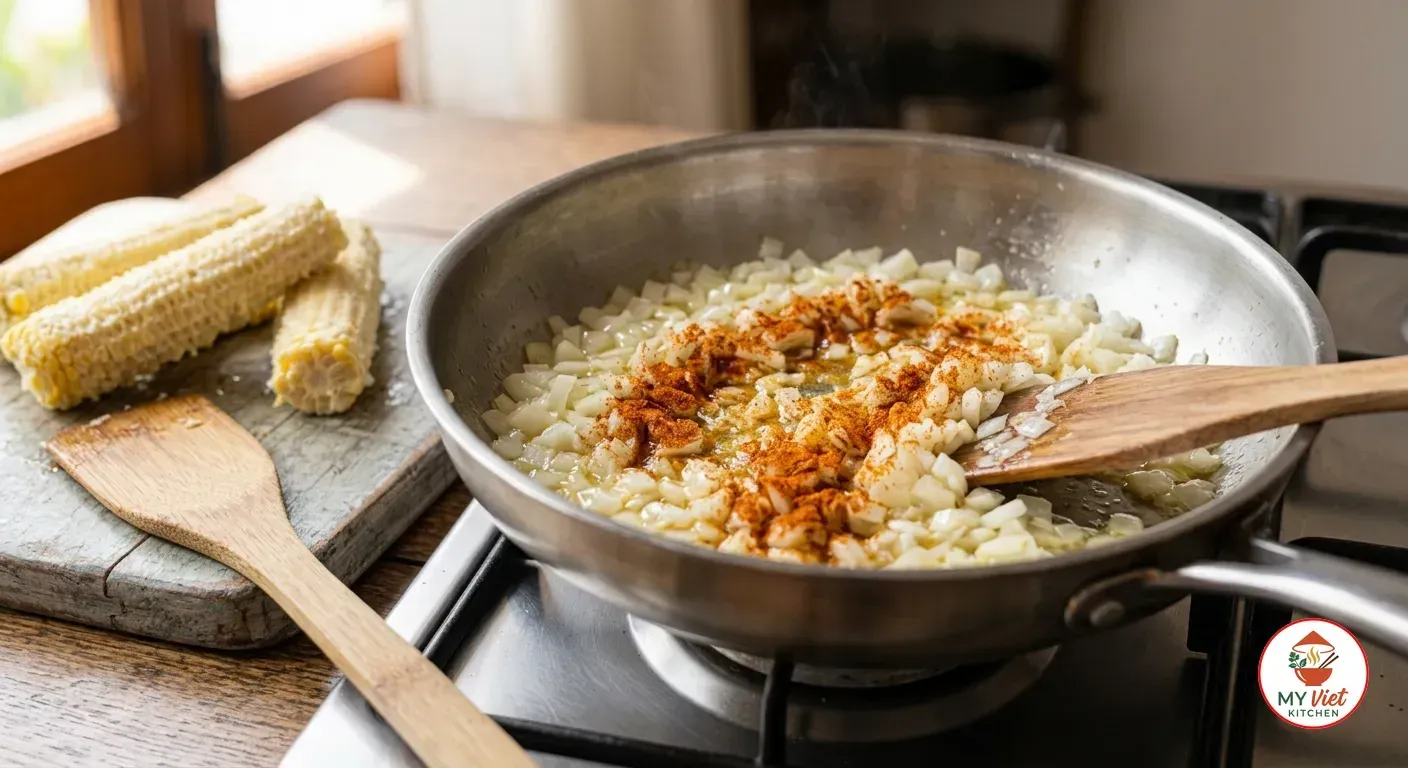
3 Place a large skillet over medium heat and add the butter along with the olive oil. The combination of butter and oil gives you rich flavor from the butter and a higher smoke point from the oil. Once the butter melts and begins to foam, add the finely diced white onion. Stir occasionally and cook for 5 to 7 minutes until the onion turns soft and translucent.
When the onion is ready, sprinkle in the smoked paprika and stir for about 30 seconds. The heat releases the paprika’s volatile oils and creates a fragrant, rust-colored base. Consequently, this sofrito becomes the savory foundation of your humitas. Do not rush the onion. If you brown it too quickly, the sharp raw flavor will carry through into the finished dish.
Step 4: Combine the Filling
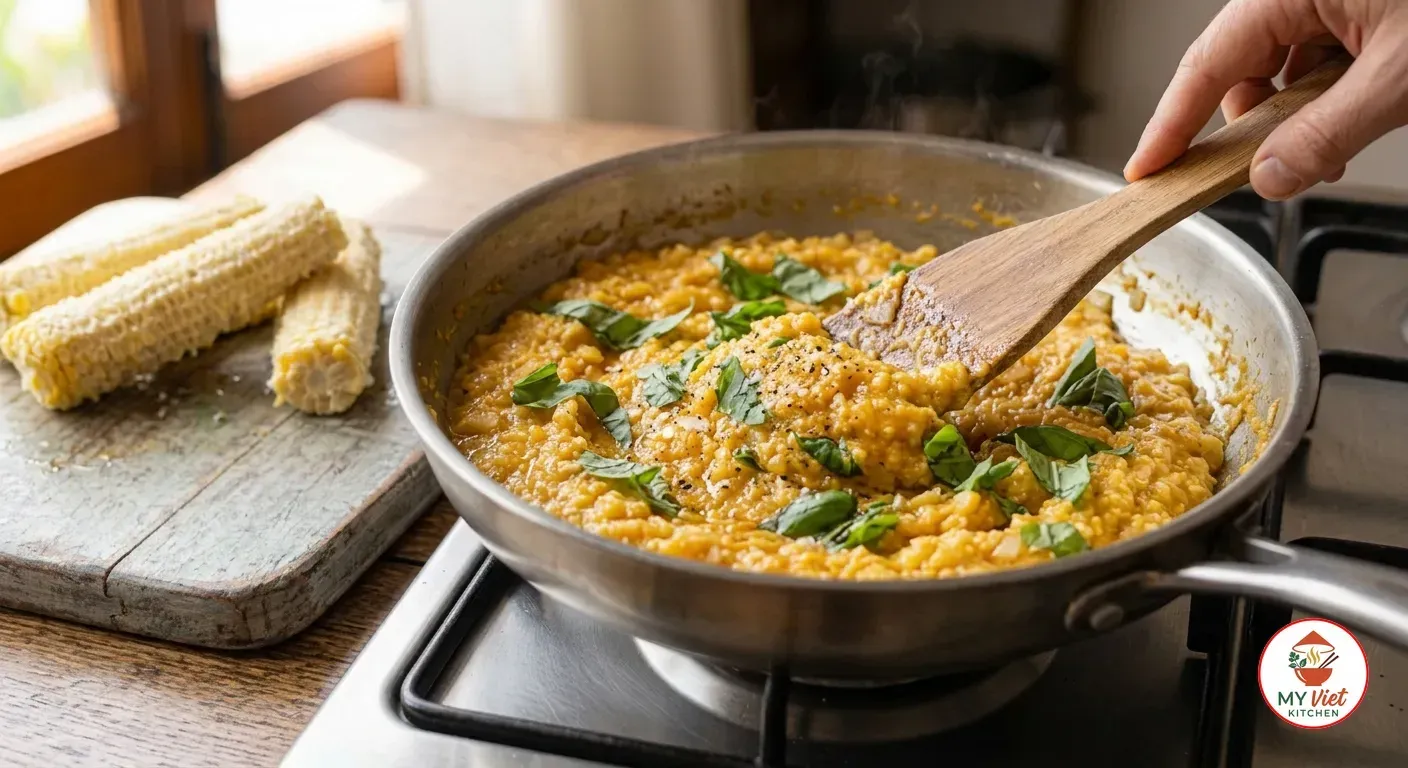
4 Add the ground corn paste to the skillet with the cooked onion mixture. Stir everything together over medium heat for about 5 minutes. The corn will begin to thicken as the natural starches activate. Then fold in the chopped fresh basil, salt, pepper, and the optional pinch of sugar. At this point, the basil should wilt immediately from the heat, releasing its aromatic oils into the corn.
Taste the filling at this point and adjust the seasoning. The mixture should taste noticeably well-seasoned, since the steaming process will mellow the flavors slightly. If your corn is very sweet, skip the sugar. If it tastes starchy and bland, add both sugar and a bit more salt. Ultimately, the filling should be thick enough to hold its shape on a spoon without running off. Then remove the skillet from heat and let the mixture cool for 10 minutes before wrapping.
Step 5: Wrap the Humitas
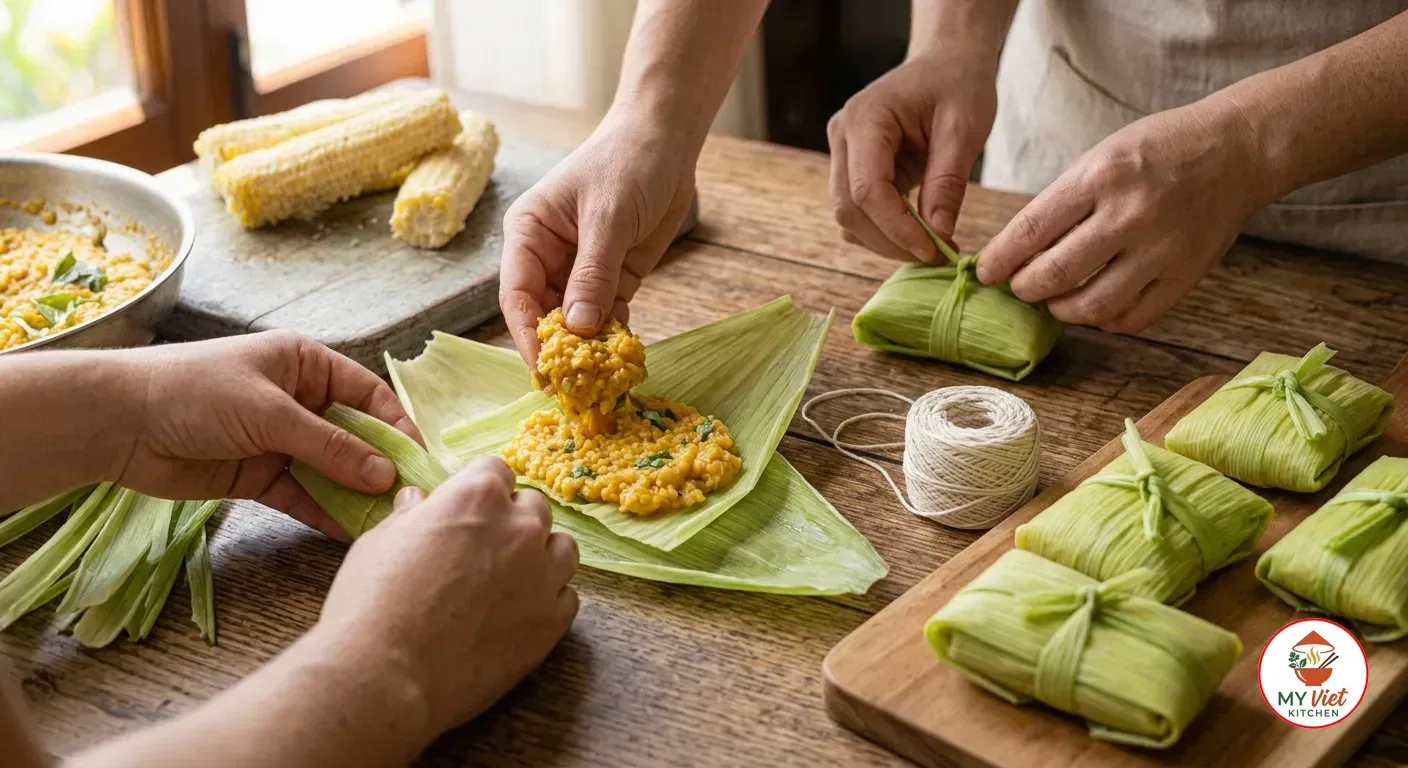
5 Take two of the largest corn husks and overlap them side by side, creating a wide surface. Place about half a cup of the corn filling in the center of the overlapping husks. First, fold one side of the husks over the filling, then fold the other side on top to create a neat rectangular packet. Fold the top and bottom edges inward to seal the packet completely.
Tie the packet securely with kitchen twine or a thin strip of corn husk. The tie should be snug enough to hold the humita closed during steaming but not so tight that it crushes the filling. Next, repeat with the remaining husks and filling until you have about 12 humitas. As you work, place the finished packets seam-side down on a tray to keep them from unraveling.
Step 6: Steam the Humitas
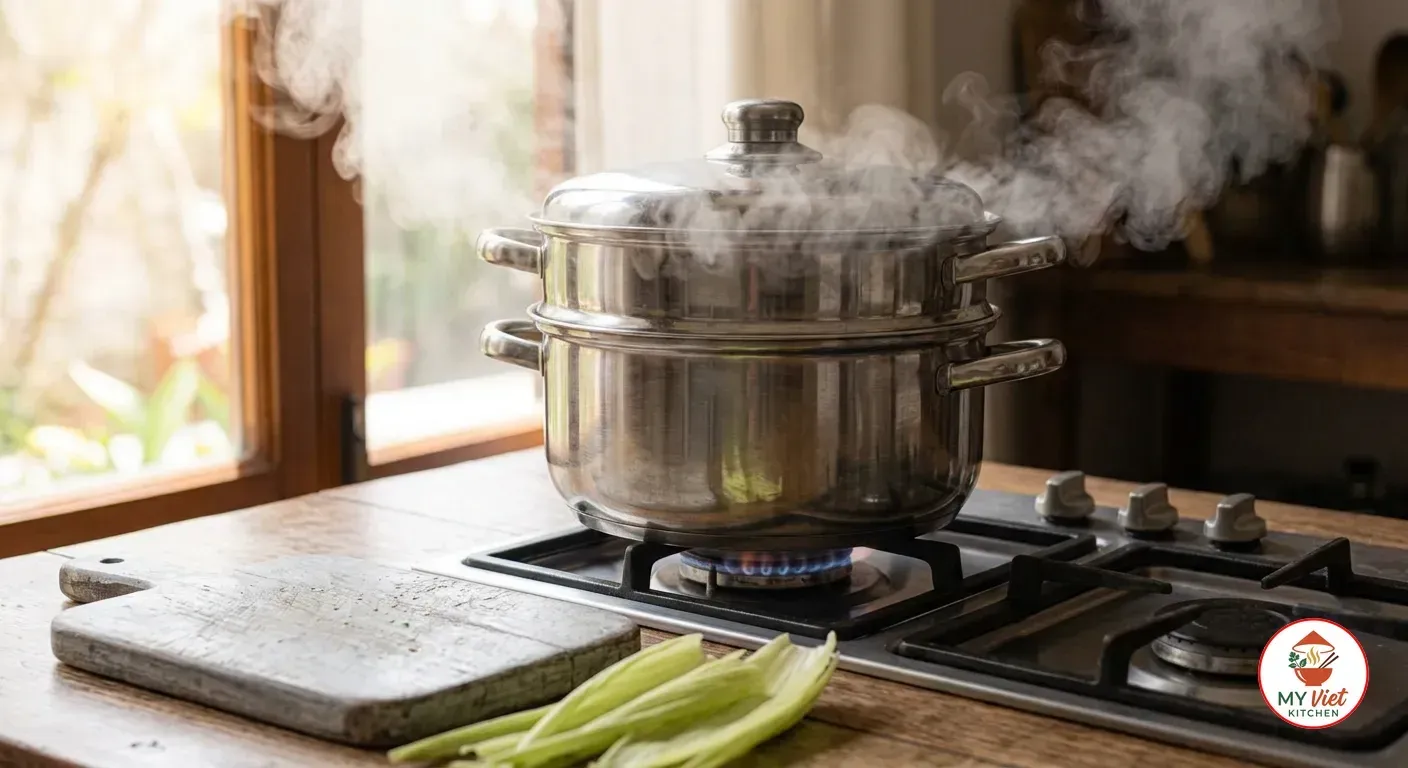
6 Set up a large steamer pot with a few inches of water at the bottom. If you do not own a steamer, place a metal colander or a rack inside a deep pot. Arrange the wrapped humitas upright in the steamer, packing them snugly so they support each other. Finally, cover the pot with a tight-fitting lid and bring the water to a steady simmer over medium heat.
Steam for 35 to 40 minutes without lifting the lid. The humitas are done when the corn filling pulls away from the husk cleanly and feels firm to the touch. However, if the filling sticks to the husk or looks wet and loose, steam for another 5 to 10 minutes. Once finished, remove the pot from heat and let the humitas rest for 5 minutes before unwrapping. This resting period allows the filling to set and makes them easier to handle.
Expert Tips for Perfect Results
Use Corn at Its Peak
The quality of your humitas depends entirely on the freshness and sweetness of your corn. Buy ears that feel heavy and have tightly packed kernels. The ideal corn for humitas sits between the milk stage and the dough stage, meaning the kernels release a milky liquid when punctured but still have substantial body. On the other hand, corn that is too young will be watery, and corn that is too mature will be tough and starchy.
Do Not Skip the Sofrito
Cooking the onion in butter before mixing it with the corn adds a layer of savory depth that raw onion simply cannot provide. The Maillard reaction that occurs as the onion softens builds deep flavor. Additionally, the butter coats the corn starch and adds a rich feel to each bite. Although this step takes less than ten minutes, it makes a significant difference in the final taste.
Wrap Tightly but Not Too Tight
The filling grows slightly as it steams. If you wrap too loosely, the filling leaks out and the packets lose their shape. However, if you wrap too tight, pressure builds up and can split the husks. Aim for a firm, secure wrap with just enough room for the filling to swell. Practice with one or two before wrapping the entire batch.
Humitas Across South America: Regional Styles
Every South American country has its own take on humitas. The core concept remains the same, but the details vary in fascinating ways. Here is a comparison of the most popular regional styles.
| Region | Style | Key Differences |
|---|---|---|
| Chile | Humitas en chala (savory) | Fresh basil, onion, and paprika. Always wrapped in corn husks and steamed. Served with tomato salad. |
| Argentina | Humitas en chala or en olla | Can be sweet or savory. Sweet versions add sugar and sometimes raisins. “En olla” means cooked unwrapped in a pot. |
| Bolivia | Humintas | Often include cheese and aji pepper. Can be baked or steamed. Sometimes sweetened with sugar and anise. |
| Peru | Humitas | Frequently filled with cheese, olives, or aji amarillo. Can be either sweet or savory. Wrapped and steamed. |
| Ecuador | Humitas | Often include cheese and eggs in the corn mixture. Typically steamed in corn husks and served for breakfast. |
Serving Suggestions
In Chile, humitas arrive at the table still wrapped in their husks. Diners unwrap them at the plate, and the ritual of peeling back the husk to reveal the steaming corn inside is part of the experience. Here is how to build a complete meal around your humitas.
Traditional Accompaniments:
- Ensalada chilena: A simple Chilean salad of sliced tomatoes and white onion dressed with olive oil, salt, and a squeeze of lemon. The acidity of the tomatoes cuts through the richness of the corn beautifully.
- Pebre: Chile’s version of salsa, made with chopped cilantro, tomato, onion, garlic, and aji pepper. The fresh heat and herbaceous kick of pebre complements the sweet, mild humita perfectly.
- Sugar sprinkle: Some Chileans enjoy a light dusting of sugar on top of their savory humitas. This sweet-savory contrast highlights the natural corn sweetness and is surprisingly addictive.
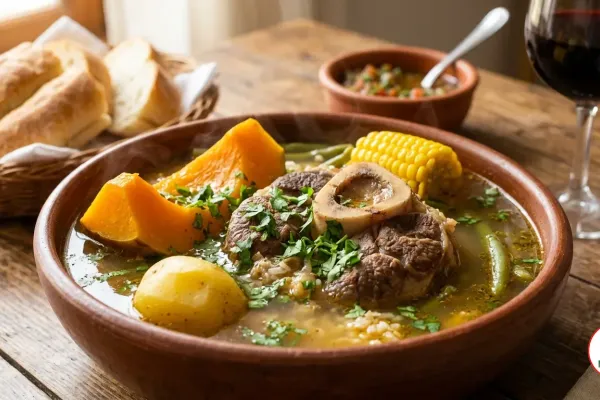
- Cazuela or chicken soup: Humitas often appear alongside a bowl of cazuela, a hearty Chilean soup with chicken, pumpkin, corn, and potatoes. Together, they form a traditional Chilean summer lunch.
Beverage Pairings:
- Chilean Sauvignon Blanc: A crisp white wine from the Casablanca or Leyda valleys pairs wonderfully with the sweetness of corn and the herbal note of basil.
- Mote con huesillo: This traditional Chilean drink made from wheat berries and dried peaches is a classic summer companion to humitas.
- Argentine Torrontes: An aromatic white wine with floral notes that echoes the fragrance of basil in the humitas.
- Fresh lemonade: For a non-alcoholic option, tart lemonade balances the starchy richness of the corn and refreshes the palate between bites.
Storage and Reheating
Refrigerator: Store leftover humitas in their husks inside a sealed container for up to 3 days. The husks help retain moisture and prevent the filling from drying out. The flavor actually deepens overnight as the corn starch continues to absorb the basil and onion seasonings.
Freezer: Humitas freeze exceptionally well for up to 3 months. Place the wrapped, cooled humitas in a single layer on a baking sheet and freeze until solid. Then transfer them to a freezer bag. This prevents them from sticking together. To serve, steam them directly from frozen for 20 to 25 minutes.
Reheating: Steaming is the best reheating method. Place the humitas back in a steamer for 10 to 15 minutes until heated through. You can also microwave them in their husks for 2 to 3 minutes on high. Avoid reheating in a dry oven or on a grill, as the filling dries out quickly without the moisture of steam.
Common Mistakes to Avoid
1. Using Stale or Over-Mature Corn
Corn that has sat on the shelf for days loses its natural sugars as they convert to starch. The result is humitas that taste flat and mealy instead of sweet and creamy. Always use the freshest corn you can find, ideally purchased the same day you plan to cook. Press a thumbnail into a kernel before buying. If milky liquid squirts out, the corn is perfect.
2. Over-Processing the Corn
Running the food processor too long turns the corn into a smooth puree. While this might sound appealing, it actually produces humitas with a gummy, baby-food texture. The goal is a coarse paste with visible corn pieces. These chunks create pockets of texture inside the finished humita. Pulse the processor in short, controlled bursts and check the texture frequently.
3. Not Draining Excess Moisture
Some ears of corn are juicier than others. If your ground corn mixture looks very wet and runny, the humitas will not hold their shape after steaming. Cook the filling in the skillet for a few extra minutes to evaporate excess moisture. The paste should mound on a spoon and hold its shape. Taking this precaution prevents soggy, fallen-apart humitas.
4. Lifting the Lid During Steaming
Every time you lift the steamer lid, you release a burst of steam and drop the internal temperature. This breaks the cooking flow and can leave humitas unevenly done. Trust the timing. Set a timer for 35 minutes and resist the urge to peek. The humitas will tell you they are done by their firm texture when you finally open the pot.
Frequently Asked Questions
What are humitas made of?
Traditional humitas use fresh corn kernels ground into a thick paste, mixed with sauteed onion, fresh basil, butter, and simple seasonings. The mixture wraps in corn husks and cooks by steaming. Unlike Mexican tamales, humitas contain no masa harina, lard, or heavy fillings. The corn itself is both the wrapper ingredient and the star of the dish.
What is the difference between humitas and tamales?
The main difference lies in the corn preparation. Humitas use fresh corn ground into a paste, while Mexican tamales use masa harina, a dried and nixtamalized corn flour mixed with lard or shortening. As a result, humitas taste lighter and more corn-forward. Tamales tend to be richer and denser. Additionally, humitas typically have fewer and simpler fillings compared to the elaborate meat, cheese, and chile stuffings found in many tamale traditions.
Can I make humitas with frozen corn?
Frozen corn works as a backup, but fresh corn delivers far superior results. Fresh kernels contain more natural starch and the milky liquid that gives humitas their creamy binding. If you must use frozen corn, thaw and drain it thoroughly first. Add one tablespoon of cornstarch to the mixture to compensate for the reduced binding power. Expect a milder flavor overall.
Are humitas sweet or savory?
Both versions exist across South America. In Chile, savory humitas with basil and onion dominate. In Argentina, you will find sweet humitas made with sugar and sometimes raisins alongside savory ones filled with cheese. Bolivian and Peruvian humitas can go either way as well. This recipe follows the classic Chilean savory tradition, but you can easily adapt it by adding sugar and omitting the paprika.
How do you reheat leftover humitas?
Steam them for 10 to 15 minutes for the best results. The steam rehydrates the corn filling and keeps it tender. Microwaving in the husk for 2 to 3 minutes also works well. Avoid dry heat methods like ovens or grills, because the filling dries out rapidly. Frozen humitas go straight into the steamer for 20 to 25 minutes without thawing first.
What season is best for making humitas?
Summer is prime humitas season because fresh corn reaches its peak sweetness and starch content during the warm months. In Chile and Argentina, humitas are synonymous with the summer harvest from January through March. In the Northern Hemisphere, July through September offers the best corn for this recipe. Making humitas out of season means compromising on the ingredient that matters most.
Variations and Adaptations
Cheese Humitas:
Add a cube of queso fresco or mozzarella to the center of each humita before wrapping. The cheese melts during steaming and creates a gooey, stretchy pocket inside the corn filling. This variation is popular in Argentina and Bolivia. Use a mild, melting cheese that will not overpower the delicate corn flavor.
Sweet Humitas:
Replace the basil and paprika with 3 tablespoons of sugar and a teaspoon of ground cinnamon. Some recipes also add raisins soaked in warm water. Sweet humitas make an excellent dessert or afternoon snack. The natural sweetness of the corn amplifies the added sugar, so start with less than you think you need and adjust to taste.
Spicy Humitas with Aji:
Stir a tablespoon of aji amarillo paste or chopped fresh aji pepper into the corn filling for a Peruvian-inspired kick. The fruity heat of aji peppers complements the sweet corn perfectly. You can also add chopped olives and a hard-boiled egg slice to each humita before wrapping for even more Peruvian character.
Humitas en Olla (Pot-Cooked):
In Argentina, humitas en olla skip the wrapping step entirely. Instead, you simmer the corn mixture directly in a pot with broth until it thickens into a creamy porridge-like dish. This method is faster and easier, though you lose the beautiful presentation of the husk-wrapped version. Serve it in bowls topped with a pat of butter and fresh basil.
The Cultural Significance of Humitas
Humitas carry deep cultural weight across South America. They represent far more than a recipe. In Chile, making humitas is a communal event. Families gather around the kitchen table during summer, each person taking a role in the production line. One person shucks the corn. Another grinds the kernels. Someone else prepares the husks while the most experienced cook mixes the filling and judges the seasoning. Children learn the wrapping technique by watching their grandmothers’ hands fold the husks with practiced ease.
This dish connects modern South Americans to their pre-Columbian ancestors in a tangible way. The Quechua and Aymara peoples wrapped ground corn in husks and cooked them over fire thousands of years ago. Yet the basic method has stayed the same through all of history. When you fold a corn husk around a spoonful of ground corn today, you are performing the same action that indigenous cooks performed centuries before European contact.
In Chile specifically, humitas signal the arrival of summer. When fresh corn appears at the feria, the open-air markets that line city streets every weekend, Chileans know it is humita season. Street vendors sell them steaming hot from large pots, wrapped in newspaper. Restaurants add them to their seasonal menus. Families make enormous batches and freeze them to enjoy well into autumn. The humble humita, born from nothing more than corn and ingenuity, remains one of the most beloved foods on the continent.
Conclusion
This humitas recipe captures the authentic spirit of Chilean and Argentine home cooking in every steaming packet. The keys to success are straightforward: find the freshest corn available, grind it to a coarse texture, build flavor with a proper sofrito, and wrap the humitas securely before steaming. Follow these steps, and you will produce corn tamales that taste like a South American summer, fragrant with basil, sweet with fresh corn, and deeply satisfying.
Ready to explore more South American and Latin American classics? Browse our full South American dishes collection for recipes like empanadas, ceviche, and arepas. Each recipe brings a different corner of Latin America to your kitchen table.