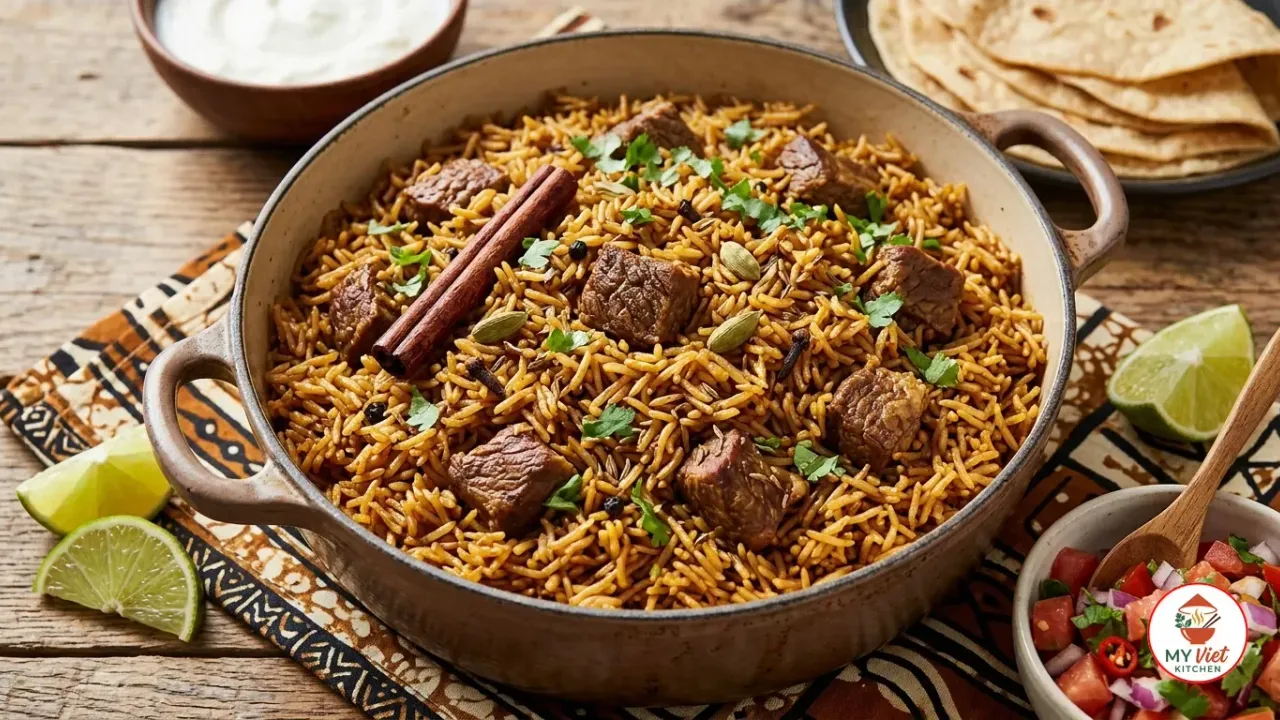
Pilau is the crown jewel of East African one-pot cooking. This pilau recipe shows you how to make fragrant, deeply spiced rice with tender beef, caramelized onions, and a blend of whole spices that fills your kitchen with an aroma you will not forget. Pilau is a celebration dish across Kenya, Tanzania, and the Swahili coast. With this pilau recipe, you bring centuries of Indian Ocean trade history and coastal tradition to your dinner table.
Prep Time: 20 minutes | Cook Time: 50 minutes | Servings: 6
Difficulty: Medium | Calories: ~480 per serving
What Makes This Pilau Recipe Special?
East African pilau stands apart from every other spiced rice dish in the world because of its deeply caramelized onions and its specific spice blend. The onions cook slowly until they turn a rich mahogany brown. This creates a natural sweetness and a dark golden color that defines authentic pilau. Consequently, no food coloring or artificial shortcuts are needed. The onions do all the work. Combined with whole cardamom pods, cinnamon sticks, cloves, and cumin seeds, the result is a complex flavor that is warm, aromatic, and deeply satisfying.
This pilau recipe captures the soul of Swahili coastal cooking. Along the coastlines of Mombasa, Dar es Salaam, and Zanzibar, pilau has been a centerpiece dish for centuries. Arab and Indian traders brought spiced rice techniques to East Africa through the Indian Ocean trade routes. Over time, local cooks transformed those influences into something uniquely East African. They used locally available meats, caramelized their onions darker than any other tradition, and developed pilau masala as their own signature spice blend.
What makes this pilau recipe irresistible is its simplicity. Everything cooks in one pot. The beef sears in the same vessel as the onions and spices, and then the rice absorbs all of those layered flavors as it steams. By the time you lift the lid, every grain carries the story of the whole dish. There is no separate sauce, no complicated assembly. Just one pot of rice that is greater than the sum of its parts.

Choosing the Right Rice for Your Pilau Recipe
The rice you choose makes or breaks this pilau recipe. East African cooks insist on long-grain rice because it stays separate and fluffy after cooking. Here are three options for your pilau recipe ranked by how well they work.
- Basmati rice (best choice): Basmati is the gold standard for pilau. Indeed, its long, slender grains absorb the spiced broth beautifully while staying firm and separate. The natural fragrance of basmati also complements the warm spice blend. Rinse it well before cooking to remove surface starch.
- Jasmine rice: Jasmine rice works as a substitute, though it produces a slightly stickier result. The grains are shorter and rounder than basmati. If you use jasmine rice, reduce the broth by about two tablespoons per cup of rice to avoid a mushy texture.
- Regular long-grain white rice: Standard long-grain rice is widely available and produces decent pilau. It lacks the distinctive aroma of basmati, but it holds up well during the one-pot cooking process. This is a practical everyday option when basmati is not available.
Ingredients for Pilau Recipe
Main Ingredients:
- 500g beef chuck, cut into 2cm cubes
- 2 cups basmati rice, rinsed and soaked for 15 minutes
- 2 large onions, thinly sliced
- 4 cloves garlic, minced
- 1 tablespoon fresh ginger, grated
- 2 medium tomatoes, diced
- 3 tablespoons vegetable oil or ghee
- 3 cups beef broth or water
- 1 teaspoon salt (adjust to taste)
- Fresh cilantro for garnish
For the Pilau Masala Spice Blend:
- 1 cinnamon stick
- 6 whole cardamom pods, lightly crushed
- 6 whole cloves
- 1 teaspoon cumin seeds
- 1 teaspoon black peppercorns
- 2 bay leaves
- 1 teaspoon ground cumin
- 1/2 teaspoon ground turmeric
For Serving:
- Kachumbari salad (diced tomatoes, onions, cilantro, lime juice)
- Plain yogurt or raita
- Lemon or lime wedges
Pro tip: Soak the basmati rice in cold water for at least 15 minutes before cooking. Specifically, soaking allows the grains to absorb water gradually, so they expand fully during steaming without breaking. This step is the secret to fluffy, separate grains in your pilau.
Step-by-Step Instructions
Step 1: Toast the Whole Spices in Hot Oil
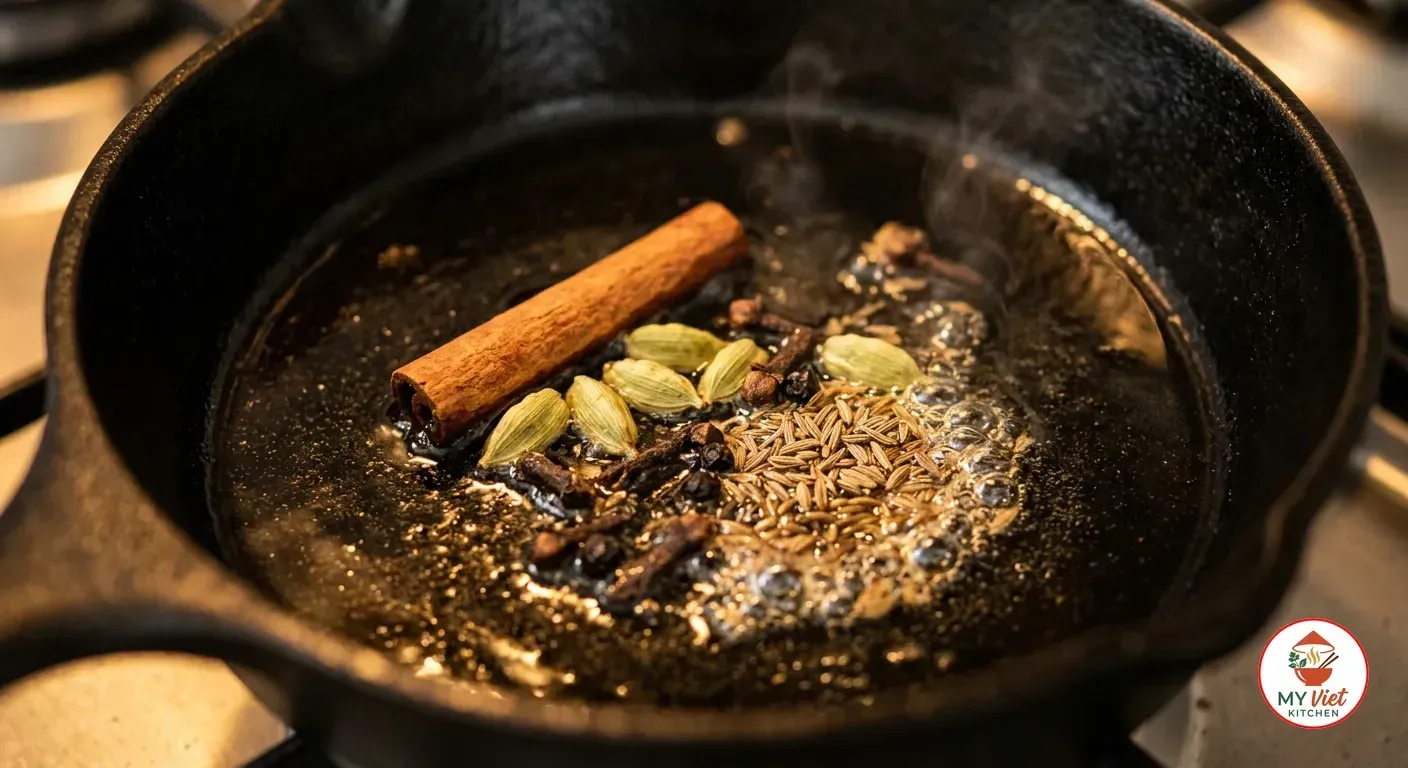
1Heat the vegetable oil or ghee in a heavy-bottomed pot over medium heat. Add the cinnamon stick, cardamom pods, cloves, cumin seeds, peppercorns, and bay leaves. Stir constantly for about one minute until the spices become fragrant and start to crackle. This blooming process releases essential oils trapped inside the whole spices. Those oils carry the flavor compounds that define pilau. Be careful not to let them burn. If any spice turns black, the oil is too hot. Lower the heat and start again.
Step 2: Caramelize the Onions Until Deep Golden Brown
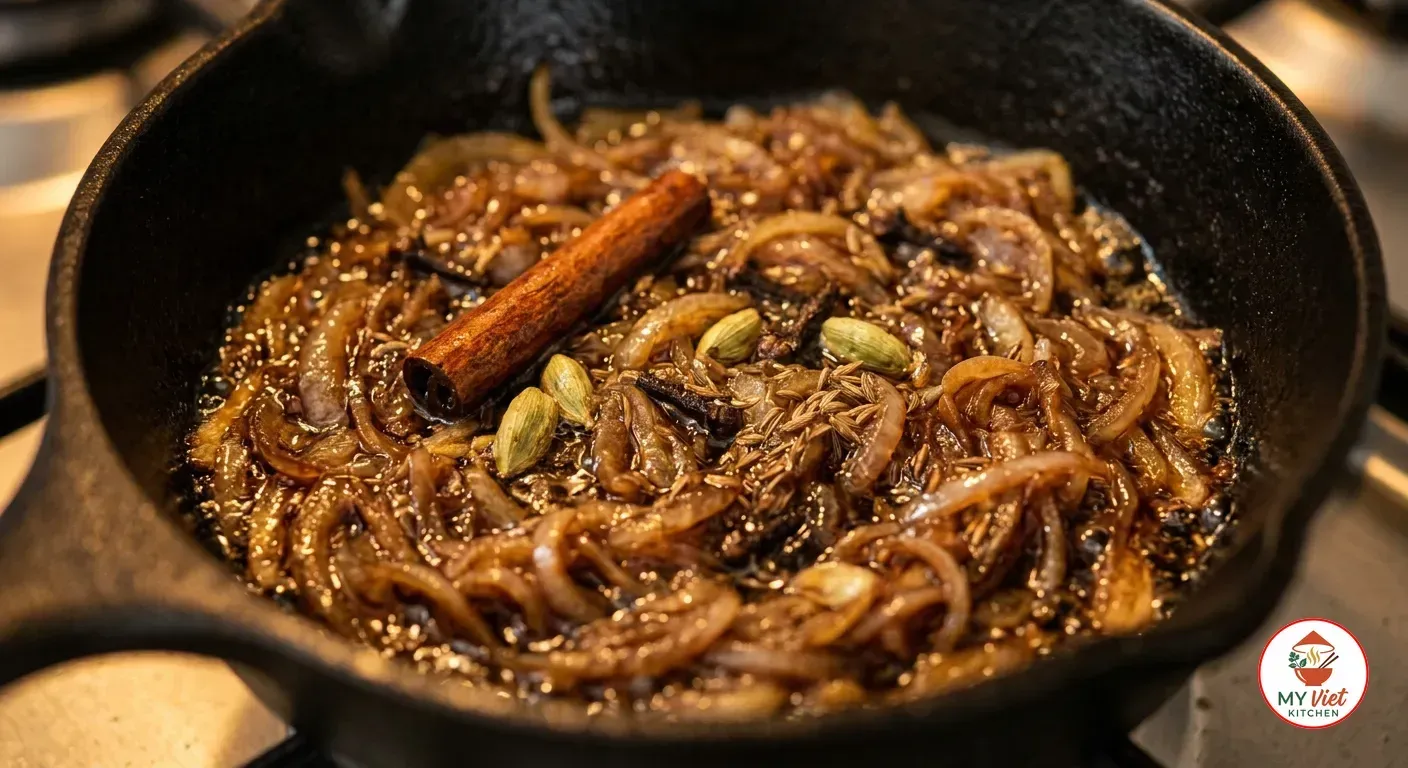
2Add the thinly sliced onions to the pot. Stir them to coat with the spiced oil. Cook for 12 to 15 minutes, stirring every two to three minutes, until the onions turn a deep golden brown. Do not rush this step. The caramelization of the onions gives pilau its signature dark color and a natural sweetness that balances the warm spices. If the onions start to stick, add a splash of water and scrape the bottom of the pot. Those browned bits are full of flavor.
Step 3: Brown the Beef and Add Tomatoes
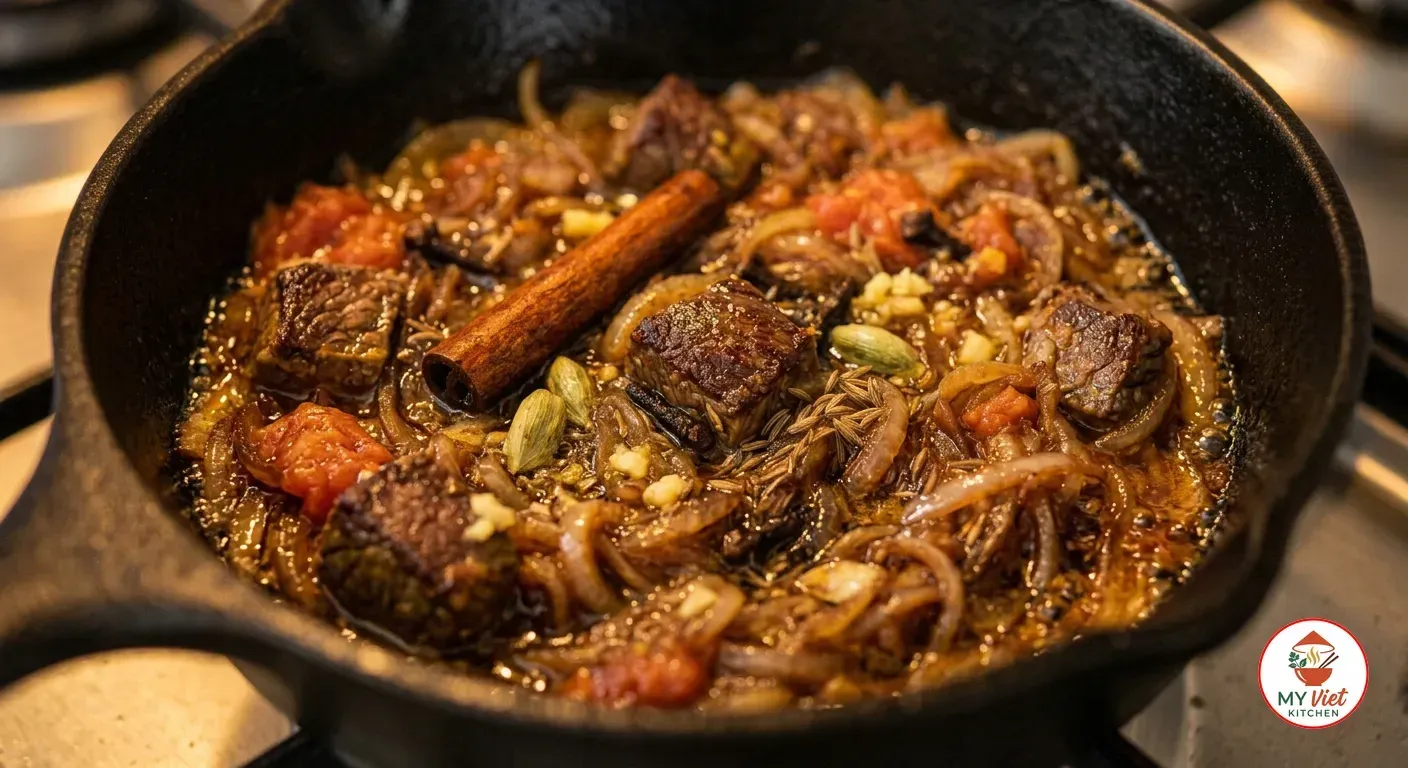
3Add the minced garlic and grated ginger to the caramelized onions. Stir for one minute until fragrant. Then add the beef cubes and spread them in a single layer. Let them sear without moving for two minutes, then turn and cook for another three to four minutes until browned on most sides. In particular, browning the meat creates a Maillard reaction that adds deep savory flavor to the entire dish. Next, stir in the ground cumin and turmeric. Add the diced tomatoes and cook for three minutes until they soften and release their juices.
Step 4: Add Rice and Cook Until Perfectly Fluffy
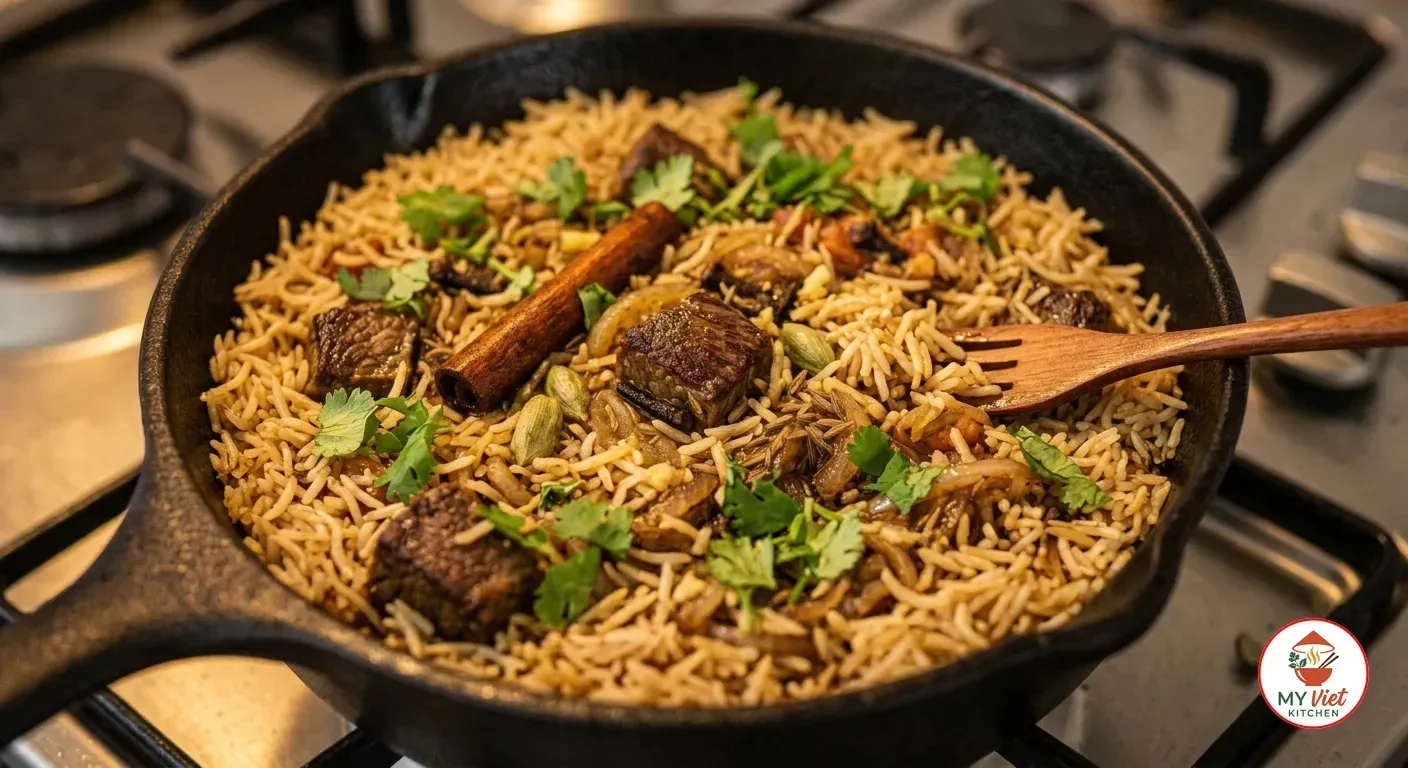
4Pour the beef broth into the pot and bring it to a rolling boil. Drain the soaked basmati rice and add it to the pot along with the salt. Stir gently just once to distribute the rice evenly. Now reduce the heat to the lowest possible setting. Cover the pot with a tight-fitting lid. Most importantly, a good seal traps all the steam inside, and that steam is what cooks the rice. Let it cook undisturbed for 20 minutes. Do not lift the lid during this time. After 20 minutes, remove the pot from heat and let it rest, still covered, for 10 minutes. Finally, remove the lid, fluff the rice gently with a fork, and garnish with fresh cilantro.
Expert Tips for Perfect Pilau
Master the Onion Caramelization
The onions are the backbone of authentic pilau. They must cook slowly until they reach a deep mahogany color. This takes a full 12 to 15 minutes on medium heat. Many home cooks following a pilau recipe stop too early at a light golden stage. At that point, the sugars in the onions have not fully broken down. The difference between light gold and deep brown onions is the difference between average pilau and extraordinary pilau. Be patient with this step.
Use the Correct Liquid Ratio
The ratio of liquid to rice determines whether your pilau turns out fluffy or mushy. For basmati rice, use one and a half cups of broth for every cup of rice. Since the beef and tomatoes release additional moisture, this ratio accounts for the extra liquid already in the pot. If you use a different type of rice, adjust slightly. Too much broth makes the grains sticky. Too little leaves them crunchy in the center.
Keep the Lid Sealed During Cooking
Once you add the rice and lower the heat, resist the urge to peek. Every time you lift the lid, steam escapes. That steam is essential for cooking the rice evenly from top to bottom. If your lid does not seal tightly, place a sheet of aluminum foil between the pot and the lid. This creates a seal that traps all the moisture inside.
East African Pilau vs. Indian Pulao: Key Differences
Pilau and pulao share ancient roots, but centuries of separate development have created two distinct dishes. Here is a comparison that highlights what makes each one unique.
| Feature | East African Pilau | Indian Pulao |
|---|---|---|
| Onions | Deeply caramelized to dark brown, providing color and sweetness | Lightly fried until translucent or golden |
| Key Spices | Cardamom, cinnamon, cloves, cumin seeds, black pepper | Cumin, bay leaf, sometimes saffron and star anise |
| Common Protein | Beef, goat, or chicken | Chicken, paneer, or vegetables |
| Rice Color | Deep golden brown from caramelized onions | Light yellow or white |
| Cooking Method | One pot, absorption method, low and slow | One pot, absorption method, quicker cook |
| Served With | Kachumbari salad, lime wedges, yogurt | Raita, pickle, papadum |
Serving Suggestions
In East Africa, pilau is never served alone. It always arrives at the table with a spread of fresh accompaniments that balance and brighten the rich, spiced rice. Here is how to build an authentic pilau spread.
The Perfect Accompaniments:
- Kachumbari salad: This fresh East African salad of diced tomatoes, red onions, cilantro, and lime juice is the classic pairing for pilau. The bright acidity cuts through the richness of the spiced rice and meat.
- Plain yogurt or raita: A dollop of cool yogurt balances the warm spices in the pilau. For a simple raita, mix yogurt with grated cucumber, a pinch of cumin, and a squeeze of lemon.
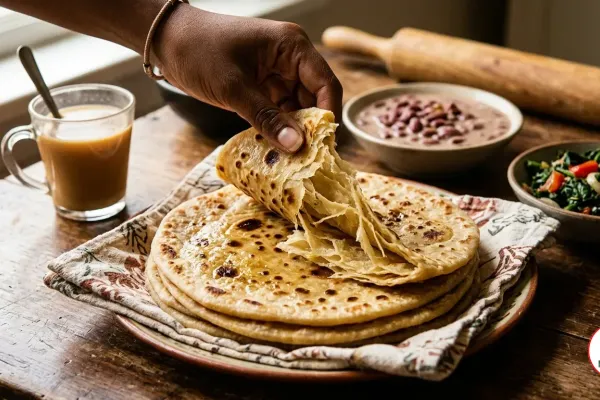
- Chapati flatbread: Soft, flaky chapati is a favorite side dish with pilau across Kenya and Tanzania. The bread is perfect for scooping up every last grain of spiced rice.
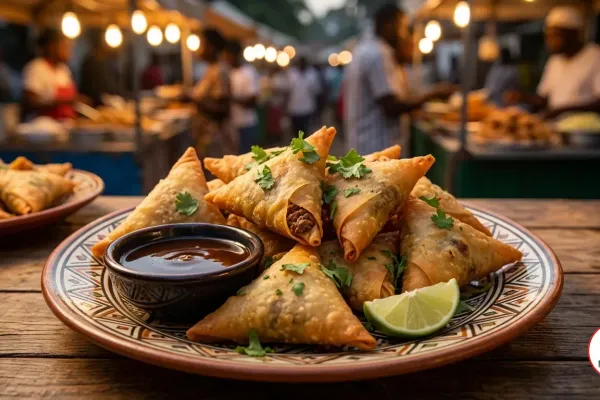
- Sambusa: Crispy East African meat pastries make an excellent starter before a pilau main course. The warm spice profiles of both dishes complement each other well.
- Lime or lemon wedges: A squeeze of fresh citrus over the pilau just before eating lifts all the flavors and adds a bright finish that keeps you going back for more.
Beverage Pairings:
- Spiced chai (chai ya tangawizi): Kenyan ginger tea brewed strong with cardamom and cinnamon echoes the warm spices in the pilau and makes the most traditional pairing.
- Tamarind juice: The sweet-tart flavor of chilled tamarind juice refreshes the palate between bites of the richly spiced rice.
- Fresh passion fruit juice: The tropical acidity of passion fruit provides a bright, fruity contrast to the warm, savory depth of pilau.
Storage and Reheating
Refrigerator: Store leftover pilau in an airtight container for up to 4 days. The flavors actually deepen overnight as the spices meld further into the rice. Many East African cooks say pilau tastes even better the next day.
Freezer: Pilau freezes well for up to 3 months. Portion it into freezer-safe containers, leaving a small gap at the top for expansion. Thaw overnight in the refrigerator before reheating.
Reheating: The best way to reheat pilau is in a covered pot on the stovetop over low heat. Add two tablespoons of water, cover, and warm for 8 to 10 minutes. The steam revives the rice without drying it out. You can also microwave individual portions covered with a damp paper towel for two to three minutes. Avoid reheating at high temperatures, as this dries out the rice and toughens the beef.
Common Mistakes to Avoid
1. Rushing the Onion Caramelization
This is the most common mistake when making a pilau recipe. Many cooks turn the heat up high to speed up the browning. However, high heat burns the outside of the onion slices while leaving the inside raw. The result is bitter, unevenly colored rice instead of the sweet, deep golden pilau you want. Keep the heat at medium and give the onions a full 12 to 15 minutes. Patience here pays off in every bite.
2. Skipping the Rice Soaking Step
Unsoaked rice absorbs liquid unevenly. The outer layer cooks faster than the center, leaving you with grains that are mushy on the outside and hard in the middle. Soaking for 15 minutes allows water to penetrate the grain gradually. After soaking, drain the rice completely before adding it to the pot. This simple step makes a dramatic difference in the final texture of your pilau.
3. Lifting the Lid While the Rice Cooks
Steam does the actual cooking once the lid goes on. Every time you peek, steam escapes and the temperature inside the pot drops. As a result, the rice cooks unevenly. Some grains end up soft while others stay crunchy. Trust the process. Set a timer for 20 minutes and walk away. The pilau will be perfect when you return.
Frequently Asked Questions
What is the difference between pilau and biryani?
Pilau cooks everything together in one pot using the absorption method. The rice, meat, and spices all simmer together so the flavors meld completely. Biryani, on the other hand, uses a layering technique. Partially cooked rice goes on top of fully cooked meat, and then the pot steams until everything finishes. Additionally, East African pilau features deeply caramelized onions and a specific blend of cardamom, cinnamon, and cloves that gives it a distinct identity.
Can I use goat meat for this pilau recipe?
Goat meat is actually the traditional protein for pilau in many parts of East Africa. Cut it into small cubes and brown it the same way as beef. Goat takes slightly longer to become tender, so add 15 extra minutes of simmering in the broth before you add the rice. The gamey depth of goat meat pairs beautifully with the warm pilau spices and creates an exceptionally rich dish.
What is pilau masala and where can I buy it?
Pilau masala is an East African spice blend made from cardamom, cinnamon, cloves, cumin, and black pepper. You can find it at African grocery stores, Indian spice shops, or online retailers. Alternatively, you can make your own by toasting and grinding whole spices at home. Homemade pilau masala always tastes fresher and more aromatic than store-bought versions.
How do I prevent my pilau from becoming mushy?
Three things prevent mushy results in any pilau recipe. First, rinse the basmati rice until the water runs clear to remove excess surface starch. Second, use the correct liquid ratio of one and a half cups of broth per cup of rice. Third, stir the rice only once after adding it to the pot. After that single stir, leave it completely alone. Disturbing the rice during cooking breaks the grains and releases starch, which leads to a sticky, gummy texture.
Variations and Adaptations
Chicken Pilau:
Replace the beef with bone-in chicken pieces for a lighter version. Brown the chicken in the spiced oil until the skin is golden, then follow the same steps. Use chicken broth instead of beef broth. Bone-in thighs and drumsticks work best because they release collagen during cooking, which enriches the rice with extra flavor and body. This variation is particularly popular for weeknight dinners.
Vegetable Pilau:
For a vegetarian version, skip the meat and add diced potatoes, carrots, green peas, and green beans. Saute the vegetables briefly with the caramelized onions and spices before adding the rice. Use vegetable broth for cooking. The result is a fragrant, colorful dish that retains all the aromatic complexity of the original pilau recipe. In addition, this vegetarian pilau recipe works well for meal prep since the vegetables hold their texture when reheated.
Zanzibar Pilau:
Zanzibar pilau is the most aromatic version from the East African coast. It uses extra cardamom, a pinch of saffron, and sometimes rosewater added just before serving. The Zanzibari version often includes raisins and cashew nuts folded into the rice at the end. These additions give it a sweet-savory character that reflects the island’s centuries-old spice trade heritage.
Lamb Pilau:
Lamb shoulder cut into cubes makes a rich and tender pilau. The fat from the lamb renders during cooking and bastes the rice from within. Season and brown the lamb exactly as you would the beef. Lamb pilau is especially popular during celebrations and religious holidays across the Swahili coast. The slightly gamey flavor of lamb stands up well to the bold pilau masala spices.
The Cultural Significance of Pilau in East Africa
Pilau is far more than a rice dish in East Africa. It is a symbol of celebration, hospitality, and cultural identity. When an East African family prepares pilau, it signals that something important is happening. Weddings, religious holidays, graduations, and the arrival of honored guests all call for pilau. In Kenya, the saying goes that if there is no pilau, there is no party. The dish carries so much cultural weight that its presence on the table communicates respect and generosity.
The history of pilau in East Africa is a story of cultural convergence. Persian traders first brought spiced rice dishes to the Swahili coast more than a thousand years ago. Arab merchants expanded the tradition, and Indian immigrants added their own techniques and spice knowledge. East African cooks absorbed all of these influences and created something distinctly their own. The deeply caramelized onions, the specific combination of whole spices, and the use of local meats like goat and beef set East African pilau apart from any other rice dish in the world.
In coastal cities like Mombasa and Dar es Salaam, pilau is an everyday food as well as a celebration dish. Street vendors serve it from large communal pots during lunch. Office workers line up for plates of steaming pilau topped with kachumbari salad. At home, making pilau is often a communal activity. The elder in the family watches over the pot while younger members prepare the accompaniments. The aroma of toasting spices and caramelizing onions fills the entire house and draws everyone to the kitchen. By making this pilau recipe, you participate in a living tradition that connects East Africa to the ancient spice routes and to the warmth of gathering around one shared pot.
Conclusion
This pilau recipe gives you everything you need to master authentic East African spiced rice at home. Toast your whole spices until fragrant, caramelize your onions to a deep golden brown, and let the rice steam undisturbed with the lid on. Those three techniques are the foundation of great pilau. Above all, use good basmati rice, keep the correct liquid ratio, and trust the one-pot process.
If you enjoy East African cooking, try our sambusa recipe for crispy spiced meat pastries, or explore our ugali recipe for the staple cornmeal dish that pairs beautifully with stews. For another classic from the region, check out our nyama choma recipe for Kenyan grilled meat that brings the flavors of the East African grill to your backyard.