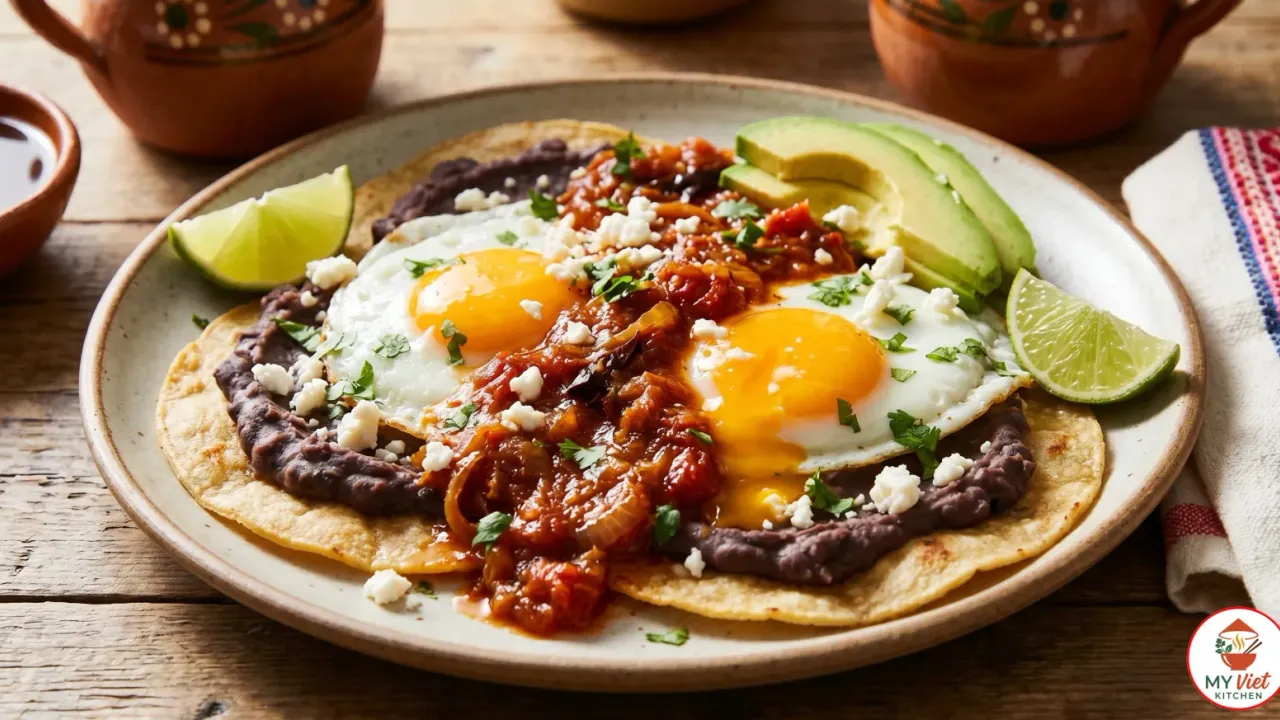
Huevos Rancheros is the breakfast that built rural Mexico. Crispy corn tortillas, sunny runny eggs, and a bold ranchero salsa made from roasted tomatoes and dried chiles come together in a dish so satisfying it has conquered breakfast tables far beyond its homeland. Originally the mid-morning meal of Mexican ranch workers who needed serious fuel for a day of physical labor, huevos rancheros delivers layers of smoky heat, creamy richness, and bright acidity in every single bite. This is not a delicate brunch plate. It is an honest, deeply flavorful meal that happens to be remarkably simple to make.
Prep Time: 15 minutes | Cook Time: 25 minutes | Servings: 4
Difficulty: Easy | Calories: ~410 per serving
What Makes Huevos Rancheros Special?
Huevos rancheros belongs to a category of egg dishes found across Latin America, the Mediterranean, and North Africa. Shakshuka poaches eggs in spiced tomato sauce. Turkish cilbir nests eggs in garlicky yogurt. Yet huevos rancheros stands apart because of its architecture. The crispy fried tortilla base creates a textural foundation that no other egg dish offers. When the runny yolk breaks and mixes with the warm ranchero salsa, it forms a natural sauce that the tortilla absorbs without disintegrating. This interplay of textures — crispy, creamy, saucy, tender — is what makes the dish unforgettable.
The name translates literally to “rancher’s eggs” or “ranch-style eggs.” It originated in the rural farmlands of central Mexico, where ranch hands ate a substantial late breakfast called almuerzo after completing their early morning chores. The meal needed to be hearty, quick to prepare from pantry staples, and packed with enough protein and calories to sustain hours of hard work under the sun. Corn tortillas, eggs from the henhouse, and salsa made from dried chiles stored in the pantry formed the natural combination. What began as practical sustenance evolved into one of the most beloved dishes in all of Mexican cuisine.

The Secret Is in the Salsa
The heart of great huevos rancheros is the salsa ranchera. Unlike fresh pico de gallo or jarred tomato salsa, authentic ranchero sauce starts with charred tomatoes and rehydrated dried chiles. The charring creates deep, smoky complexity through caramelization. The dried guajillo and ancho chiles contribute fruity heat and an earthy depth that fresh chiles simply cannot match. When these roasted vegetables are blended and then fried briefly in hot oil — a technique Mexican cooks call “frying the salsa” — the flavor concentrates and rounds out into something far greater than the sum of its parts. This salsa is what separates a memorable plate of huevos rancheros from a forgettable one.
Choosing the Right Dried Chiles
Dried chiles are the backbone of an authentic ranchero salsa. Each variety contributes a different flavor dimension. The combination of two or three types creates the layered complexity that defines the sauce. Here is what to look for at the market or specialty store.
- Guajillo chiles (essential): These long, smooth, deep-red chiles provide the primary flavor and color of the salsa. They have a moderate heat level with bright, tangy, slightly berry-like notes. Guajillos are the most commonly used dried chile in Mexican cooking and are readily available in most supermarkets. Choose chiles that are pliable rather than brittle, which indicates freshness.
- Ancho chiles (best supporting role): Anchos are dried poblano peppers. They are wide, wrinkled, and nearly black in color. Their heat is mild, and they contribute a rich, sweet, raisin-like depth that rounds out the sharper guajillo. One ancho per batch of salsa adds remarkable complexity without overwhelming heat. This is the chile that gives the salsa its velvety body.
- Chile de arbol (optional for extra heat): Small, thin, and bright red, these chiles pack significant heat. Add one or two if you prefer a spicier salsa. They contribute a clean, sharp burn without the fruity complexity of the larger chiles. Use them sparingly. A little goes a long way.
Ingredients for Huevos Rancheros
For the Ranchero Salsa:
- 6 medium Roma tomatoes
- 2 dried guajillo chiles, stemmed and seeded
- 1 dried ancho chile, stemmed and seeded
- 1 medium white onion, quartered
- 4 cloves garlic, unpeeled
- 1 jalapeno pepper, halved and seeded
- 1 teaspoon ground cumin
- 1/2 teaspoon smoked paprika
- 1/2 teaspoon dried oregano (Mexican oregano preferred)
- 1 tablespoon vegetable oil or lard
- Salt to taste
For the Eggs and Tortillas:
- 8 large eggs
- 8 corn tortillas (6-inch)
- Vegetable oil for frying tortillas
- Salt and black pepper to taste
For Serving:
- 1 can (15 oz) refried black beans, warmed
- 1 cup crumbled queso fresco
- 1/2 cup fresh cilantro, roughly chopped
- 1 ripe avocado, sliced
- 1 lime, cut into wedges
Pro tip: Toast your dried chiles in a dry skillet just until fragrant, about 30 seconds per side. Over-toasting makes them bitter. The chiles should smell nutty and warm, not acrid. If you cannot find dried guajillo or ancho chiles, substitute two tablespoons of good-quality chile powder plus one chipotle pepper in adobo sauce. This approximation captures both the fruity depth and smoky heat of the traditional dried chiles.
Step-by-Step Instructions
Step 1: Toast the Dried Chiles and Roast the Vegetables
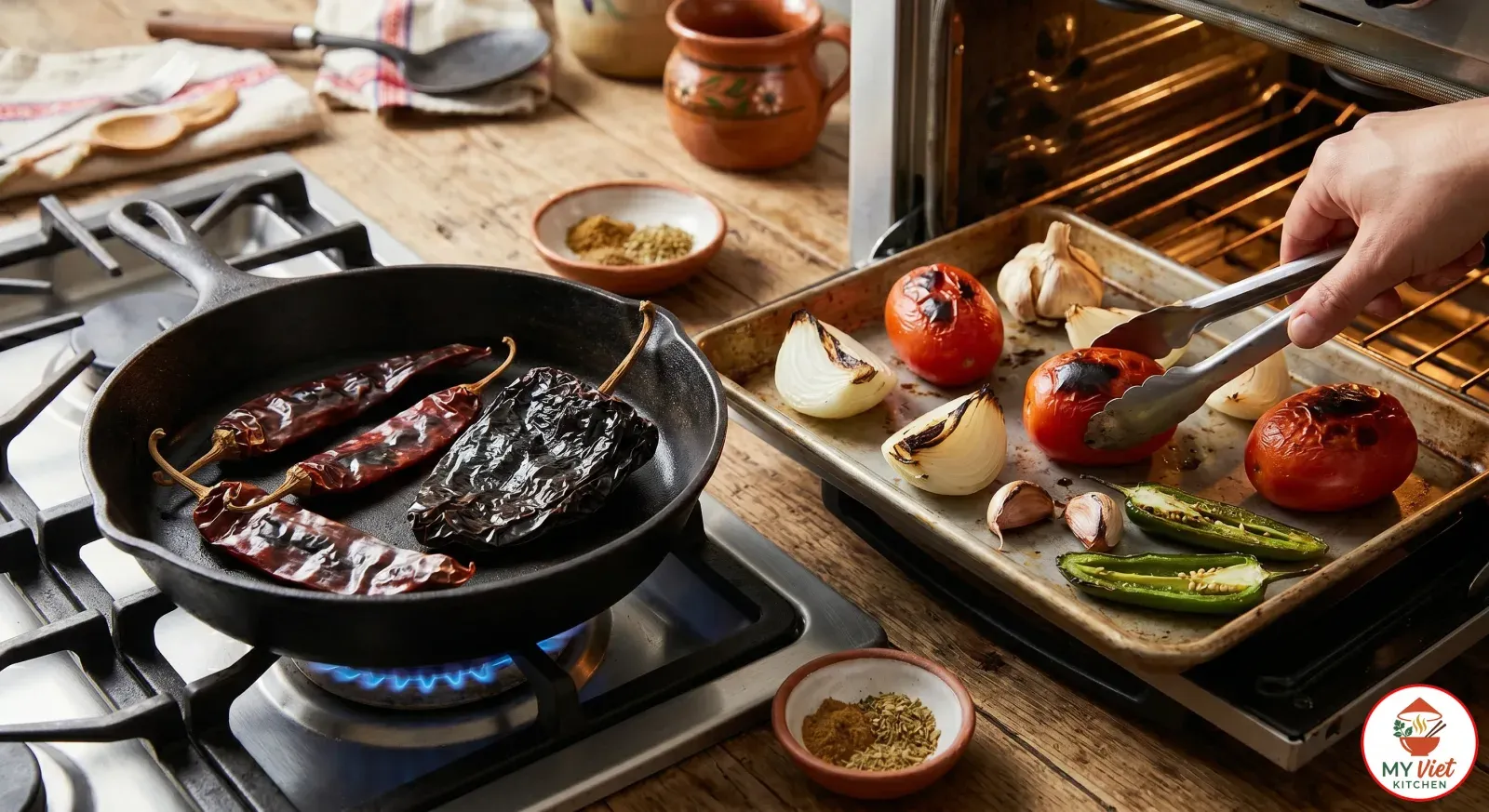
1 Heat a dry cast-iron skillet or comal over medium-high heat. Place the guajillo and ancho chiles flat in the hot pan. Press them down gently with a spatula. Toast for about 30 seconds per side until they become fragrant, puff slightly, and develop a few dark spots. Do not let them blacken or they will turn bitter. Transfer the toasted chiles to a heat-proof bowl and cover them with boiling water. Let them soak for 15 minutes until they become soft and pliable.
While the chiles soak, roast the vegetables. Place the whole Roma tomatoes, quartered white onion, unpeeled garlic cloves, and halved jalapeno on a rimmed baking sheet. Position the oven rack about 6 inches from the broiler element. Broil on high for 8 to 10 minutes, turning once halfway through, until the vegetables are deeply charred and blistered on all sides. The charring is essential. It creates new flavor compounds through caramelization and adds a smoky sweetness that raw vegetables cannot provide. Peel the garlic cloves once they are cool enough to handle.
Step 2: Blend the Ranchero Salsa
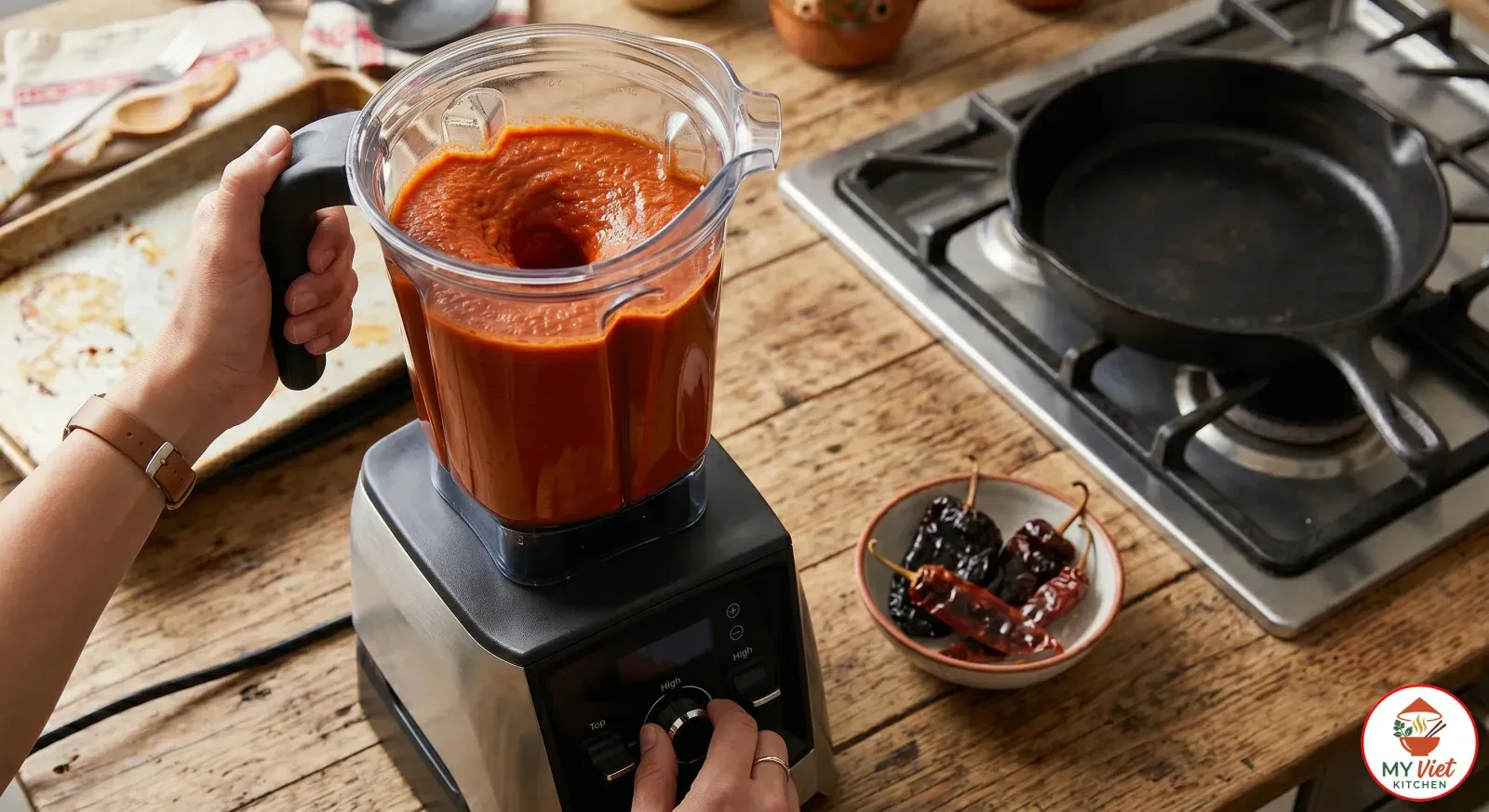
2 Drain the soaked chiles, discarding the soaking liquid. Place them in a blender along with the charred tomatoes, roasted onion quarters, peeled garlic, and roasted jalapeno. Add the ground cumin, smoked paprika, dried oregano, and a generous pinch of salt. Blend on high speed until completely smooth, about 60 seconds. The salsa should be a rich, deep red-orange color with no visible chunks.
Now comes the crucial step that many recipes skip: frying the salsa. Heat one tablespoon of vegetable oil or lard in a medium saucepan over medium-high heat until it shimmers. Pour the blended salsa directly into the hot oil. It will sizzle and splatter vigorously, so stand back. This frying technique, fundamental to Mexican cooking, concentrates the flavors and removes the raw taste from the blended ingredients. Reduce the heat to medium-low and simmer for 10 to 12 minutes, stirring occasionally, until the salsa thickens slightly and darkens to a deeper shade of red. Taste and adjust the salt. The finished salsa should be bold, smoky, and well-balanced between acidity and heat.
Step 3: Prepare the Tortillas and Beans
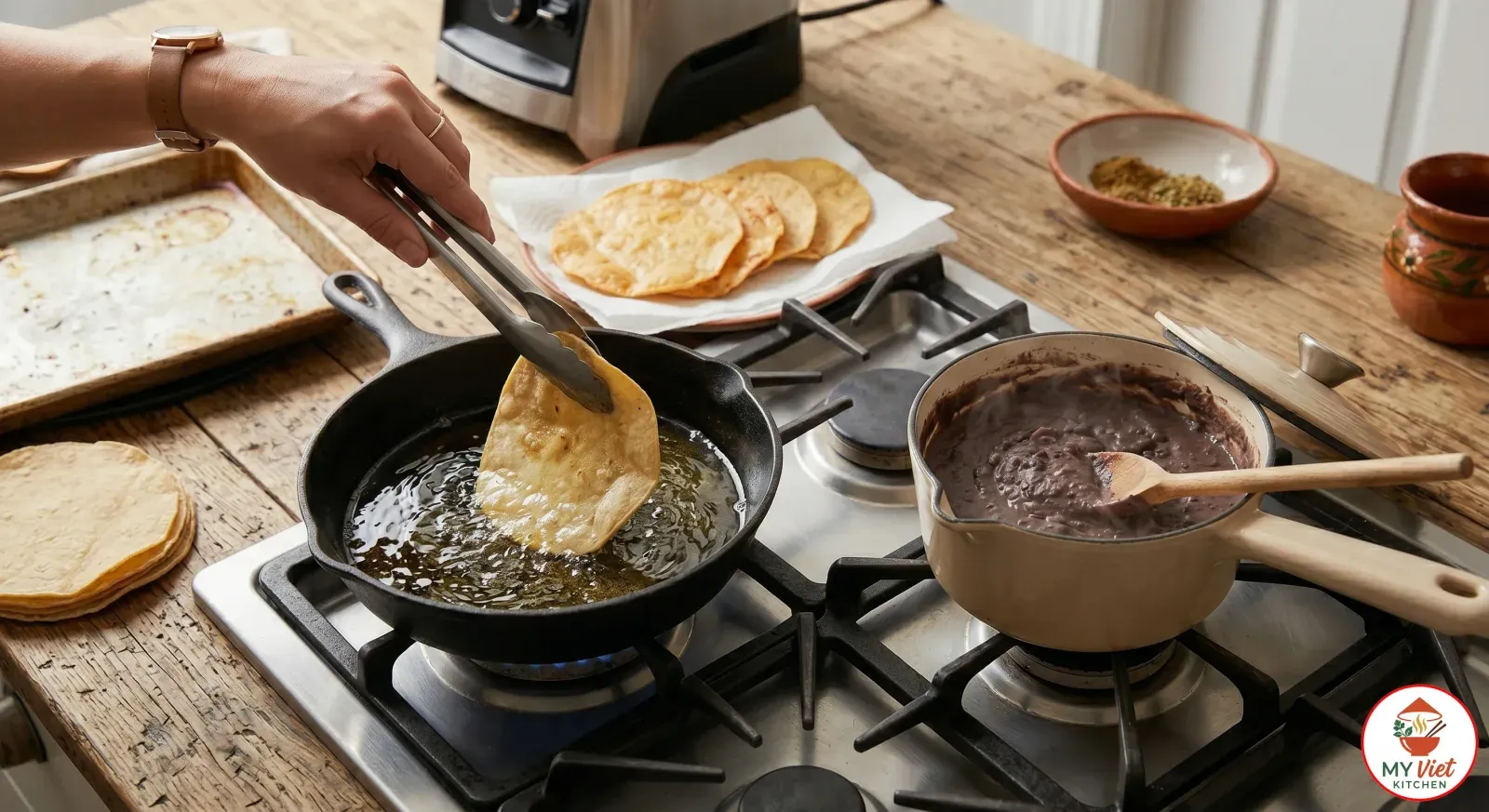
3 Pour about half an inch of vegetable oil into a small skillet. Heat over medium-high heat until the oil shimmers and a small piece of tortilla dropped in sizzles immediately. Using tongs, lower each corn tortilla into the hot oil. Fry for 20 to 30 seconds per side until the tortilla turns lightly golden and develops a slight crispness while remaining pliable enough to fold. Drain on a plate lined with paper towels and sprinkle with a pinch of salt while still hot.
This frying step is not optional. A raw corn tortilla placed under warm salsa turns into a soggy, disintegrating mess within minutes. The brief fry creates a thin, crispy barrier that holds up under the weight of beans, eggs, and salsa. Think of it as waterproofing. The tortilla should be golden and firm enough to pick up, but not so crunchy that it shatters. Meanwhile, warm the refried black beans in a small saucepan over medium-low heat. Stir in a tablespoon of water if needed to reach a smooth, spreadable consistency. The beans should be hot and creamy, not stiff.
Step 4: Fry the Eggs
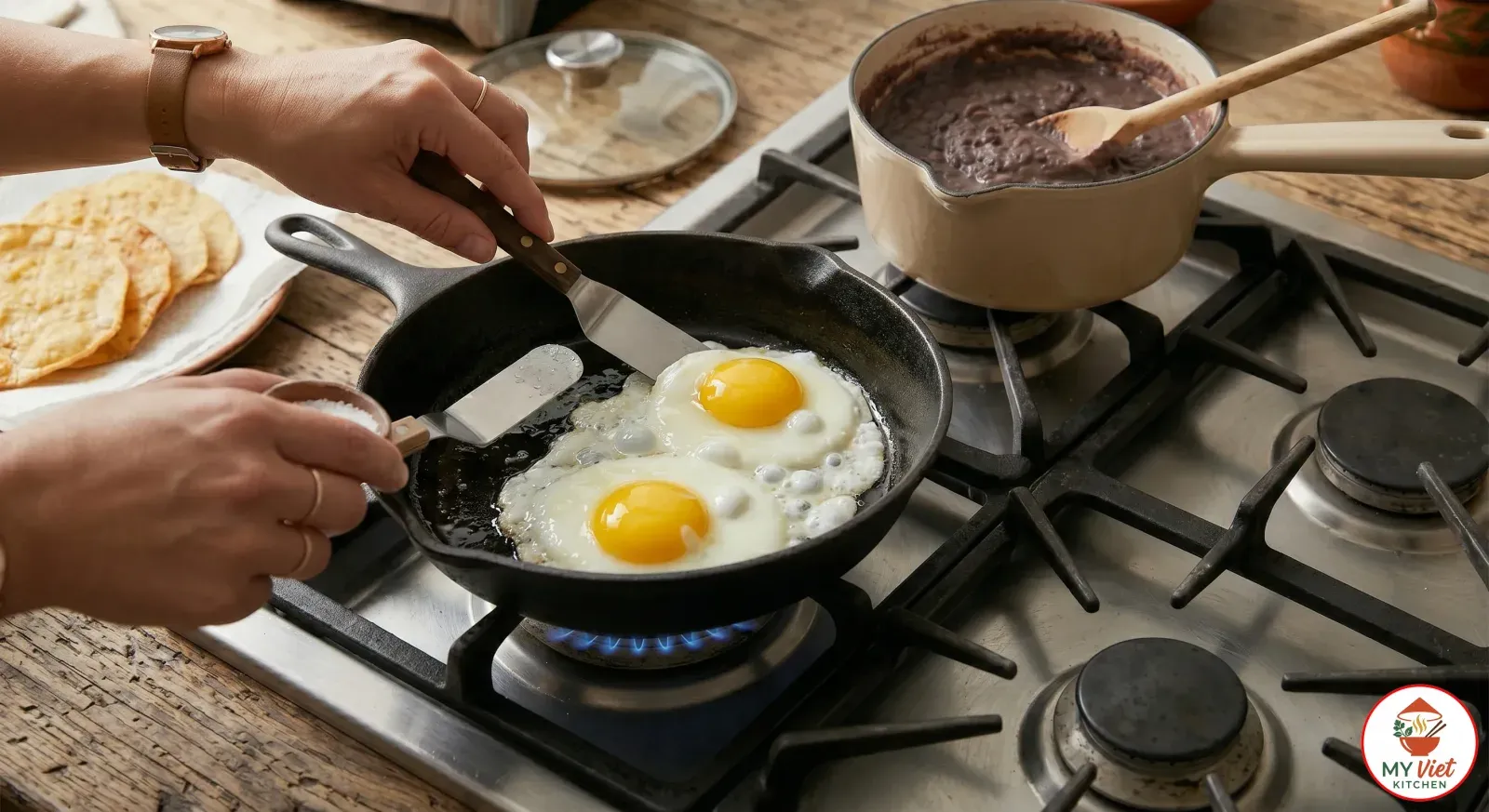
4 Heat a non-stick skillet or well-seasoned cast-iron pan over medium-low heat. Add a thin film of oil or butter. Crack the eggs into the pan, working in batches of two or three to avoid crowding. The eggs need space so the whites set evenly without merging into one mass. Cook for 3 to 4 minutes until the whites are completely opaque and set, but the yolks remain gloriously runny. The runny yolk is not merely aesthetic. When it breaks over the salsa and tortilla, it creates a rich, silky sauce that ties the entire dish together.
Temperature control is critical here. Too high, and the egg whites develop crispy, lacy brown edges with rubbery texture. Too low, and the whites take forever to set while the yolk overcooks from residual heat. Medium-low is the target. You should hear a gentle sizzle, not an aggressive crackle. For a slightly firmer yolk that still flows when cut, cover the pan with a lid for the last 30 to 60 seconds. This traps steam and cooks the top of the egg gently without flipping. Season each egg with a pinch of salt and a grind of black pepper immediately after cooking.
Step 5: Assemble and Serve
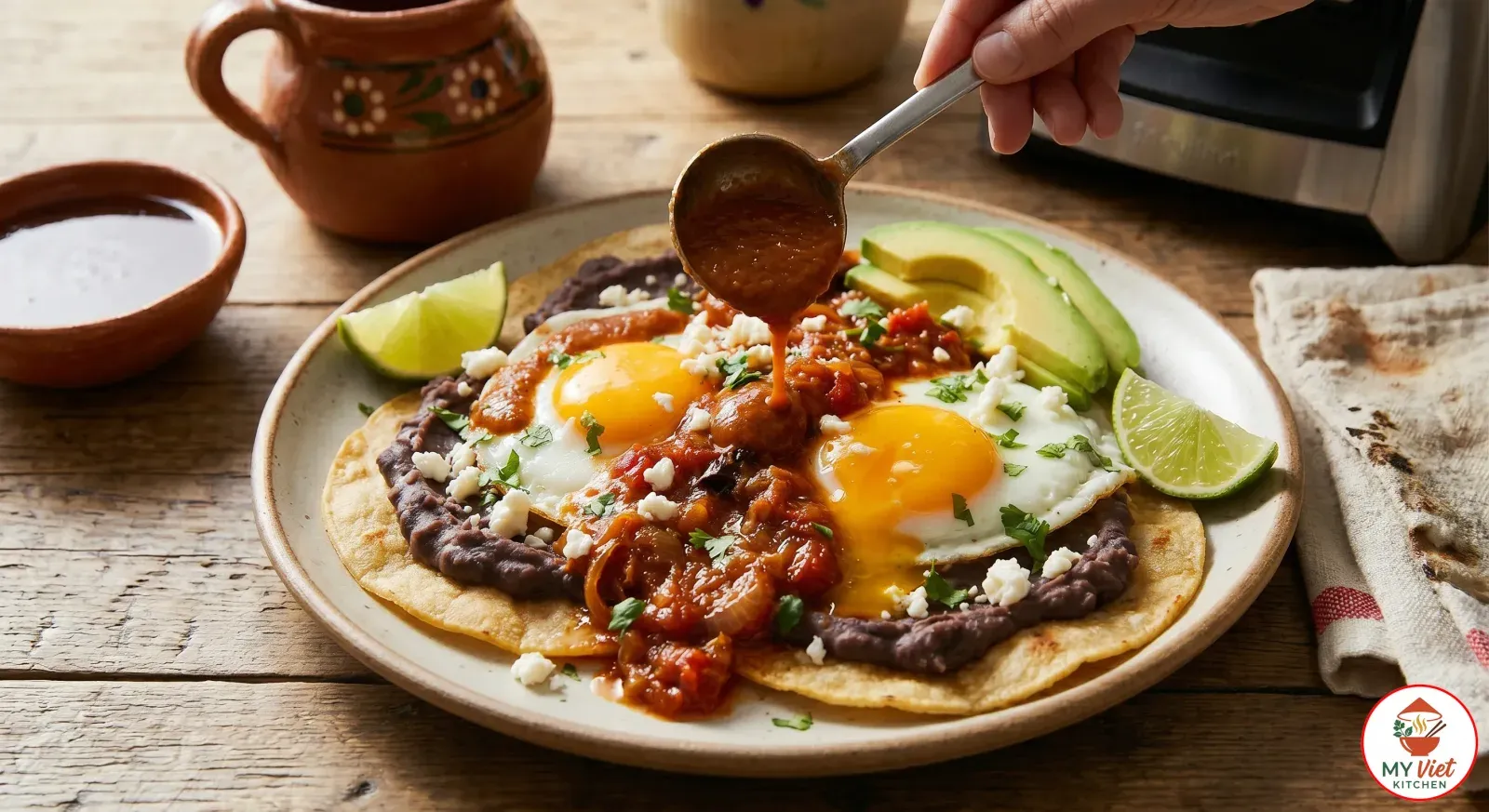
5 Place two fried tortillas on each plate, overlapping them slightly at the center. Spread a generous layer of warm refried black beans over the tortillas, leaving a small border around the edges. The beans act as both flavor and mortar, helping the eggs stay in place. Carefully set two fried eggs on top of the beans, positioning them so each tortilla holds one egg.
Ladle the warm ranchero salsa generously around and over the eggs, but leave the yolks partially visible. The visual contrast of the bright orange yolks peeking through the deep red salsa is part of the dish’s appeal. Top with crumbled queso fresco, sliced avocado, and a generous scattering of fresh cilantro. Serve immediately with lime wedges on the side. Instruct your guests to squeeze the lime over the plate just before eating. The hit of citrus acid brightens every element and pulls the flavors into sharp focus. Huevos rancheros waits for no one — eat it hot, eat it now.
Expert Tips for Perfect Huevos Rancheros
Use Dried Chiles, Not Chile Powder
The single most impactful decision in this recipe is making the salsa from whole dried chiles rather than pre-ground chile powder. Dried guajillo and ancho chiles contain volatile oils that dissipate rapidly once the chile is ground. A whole dried chile, toasted and rehydrated, delivers a depth of flavor that powder simply cannot match. The flesh of the rehydrated chile also adds body to the salsa, creating a naturally thick, velvety texture without any thickeners. This is the difference between a salsa that tastes homemade and one that tastes like it came from a jar.
Fry the Salsa in Hot Oil
Pouring blended salsa into sizzling hot oil is a fundamental Mexican technique that transforms raw-tasting blended sauce into a rich, concentrated salsa. The high heat causes rapid evaporation of excess water. Simultaneously, the Maillard reaction occurs where the sugars in the tomatoes caramelize against the hot pan surface. The salsa darkens, thickens, and develops a rounder, more complex flavor profile. Without this step, the salsa tastes bright and sharp. With it, the salsa becomes deep, smoky, and harmonious. Never skip the fry.
Get the Tortilla Texture Right
The tortilla must be fried, not merely warmed. A quick pass through hot oil for 20 to 30 seconds per side creates a crispy exterior that resists the moisture of the salsa and beans. At the same time, the interior stays soft and pliable. This dual texture is essential. If the tortilla is too raw, it dissolves into mush. If it is fried too long, it becomes a hard tostada that shatters when cut. The goal is a tortilla that holds its shape under the toppings but yields easily to a fork.
Huevos Rancheros vs. Other Mexican Egg Dishes
Mexico has a rich tradition of egg-based breakfast dishes. Each one uses similar base ingredients — eggs, tortillas, salsa, and beans — but the preparation methods and textures differ significantly. Understanding these differences helps you appreciate what makes huevos rancheros unique.
| Dish | Tortilla Treatment | Egg Style | Key Characteristic |
|---|---|---|---|
| Huevos Rancheros | Whole, lightly fried | Sunny-side-up on top | Crispy base, layered assembly, runny yolk |
| Chilaquiles | Cut into chips, simmered in salsa | Fried or scrambled on top (optional) | Soft, saucy, casserole-like texture |
| Huevos a la Mexicana | Served alongside as a side | Scrambled with tomato, onion, chile | Quick scramble with fresh vegetables |
| Huevos Motulenos | Whole, fried crispy (tostada) | Sunny-side-up | Yucatan style with ham, peas, and plantain |
| Huevos Divorciados | Whole, lightly fried | Two eggs, each with different salsa | One egg in salsa verde, one in salsa roja |
Serving Suggestions
Huevos rancheros is a complete breakfast on its own. The combination of protein from the eggs, carbohydrates from the tortillas and beans, and healthy fats from the avocado covers all the bases. Still, a few well-chosen accompaniments can turn it into an impressive weekend brunch spread.
The Perfect Accompaniments:
- Mexican rice (arroz rojo): A side of tomato-flavored red rice adds another layer of comfort and helps soak up extra salsa. The rice provides additional substance for a heartier meal.
- Sliced radishes and pickled jalapenos: Their crisp, acidic bite provides a refreshing contrast to the rich eggs and creamy beans. They cleanse the palate between bites and add color to the plate.
- Refried pinto beans: If you prefer pinto beans over black beans, they work beautifully as a side or base. Pinto beans have a slightly creamier, more buttery flavor that pairs well with the smoky salsa.
- Fresh fruit: Sliced mango, papaya, or watermelon on the side adds natural sweetness that balances the savory richness of the main plate. This is common in Mexican breakfast culture.
Beverage Pairings:
- Cafe de olla: This traditional Mexican spiced coffee made with piloncillo (unrefined cane sugar) and cinnamon is the classic pairing. Its warm sweetness complements the smoky, spicy salsa beautifully.
- Agua de jamaica: Hibiscus iced tea with a tart, cranberry-like flavor provides a refreshing, non-caffeinated option that cuts through the richness of the eggs and cheese.
- Fresh orange juice: The bright acidity of freshly squeezed orange juice is a simple, reliable choice that pairs with every element on the plate. It mirrors the lime squeeze that finishes the dish.
- Michelada: For a brunch with friends, this Mexican beer cocktail made with lime juice, hot sauce, and Worcestershire sauce over ice is a festive and flavorful pairing that matches the bold spirit of the dish.
Storage and Reheating
Refrigerator: The ranchero salsa and refried beans store separately in airtight containers for up to 5 days. Fried tortillas keep for 2 days in a sealed bag at room temperature but lose crispness. The eggs must be cooked fresh each time — there is no good way to store and reheat a fried egg with a runny yolk. For the best results, prepare the salsa and beans ahead of time and assemble the dish fresh each morning.
Freezer: The ranchero salsa freezes exceptionally well for up to 3 months. Portion it into small containers or ice cube trays for convenient single-serving portions. Refried beans also freeze well for up to 2 months. Thaw both in the refrigerator overnight before using. Do not freeze assembled huevos rancheros, as the tortillas become soggy and the eggs turn rubbery after thawing.
Reheating: Warm the salsa gently on the stovetop over medium-low heat, stirring occasionally. Reheat the beans in a saucepan with a splash of water to restore their creamy consistency. Re-fry or re-toast the tortillas briefly in a hot skillet to restore crispness. Cook the eggs fresh. Assembly should always happen just before serving to maintain the contrast between the crispy tortilla, hot salsa, and runny egg yolk.
Common Mistakes to Avoid
1. Using Flour Tortillas Instead of Corn
Flour tortillas are softer, blander, and soak up liquid differently than corn. They lack the earthy, slightly nutty flavor that corn tortillas contribute to the dish. More importantly, flour tortillas become gummy and paste-like when they absorb the warm salsa. Corn tortillas, especially when lightly fried, maintain their structure and provide a textural contrast that is fundamental to authentic huevos rancheros. Always use corn.
2. Overcooking the Eggs
A fully set, rubbery yolk defeats the purpose of huevos rancheros. The runny yolk is the binding sauce of the entire dish. When it breaks and mingles with the warm ranchero salsa, it creates a rich, emulsified mixture that coats every bite. An overcooked yolk sits there dry and chalky, contributing nothing to the overall harmony. Keep the heat at medium-low and watch the eggs carefully. Pull them off the heat when the whites are just set and the yolks still jiggle visibly.
3. Skipping the Salsa Fry Step
Simply blending the roasted vegetables and pouring the raw salsa over the eggs produces a thin, sharp-tasting sauce. Frying the blended salsa in hot oil for 10 to 12 minutes is the step that transforms it from a raw puree into a cooked, concentrated sauce with depth and body. The sizzle in hot oil drives off excess moisture, caramelizes the natural sugars, and melds the individual flavors into a cohesive whole. This technique is used across virtually every traditional Mexican salsa recipe for good reason.
4. Assembling Too Far in Advance
Huevos rancheros must be eaten immediately after assembly. The crispy tortilla begins absorbing moisture from the beans and salsa within minutes. After 10 minutes, it has transformed from a sturdy, crunchy base into a soft, soggy disc. The egg yolk cools and thickens, losing its ability to flow and coat. Prepare all components and have them ready, then assemble each plate individually and serve it straight to the table. This is not a dish that waits on a buffet.
Frequently Asked Questions
What is the difference between huevos rancheros and chilaquiles?
Huevos rancheros use whole fried tortillas as a base with eggs and salsa placed on top. The tortilla remains intact and provides a crispy foundation. Chilaquiles, on the other hand, use torn or cut tortilla pieces that are simmered directly in salsa until they soften and partially dissolve. Chilaquiles have a softer, more porridge-like consistency, while huevos rancheros maintain distinct layers with contrasting textures. Both are traditional Mexican breakfast dishes, but the eating experience is quite different.
Can I make huevos rancheros with store-bought salsa?
You can, though the result will lack the smoky depth of homemade ranchero salsa. If using store-bought, choose a salsa that lists roasted tomatoes and dried chiles in its ingredients. Avoid salsas made primarily from tomato paste or concentrate. Warm the salsa in a saucepan and simmer it for a few minutes to concentrate the flavor before using. For a compromise, blend store-bought salsa with one rehydrated guajillo chile and a roasted tomato to add some of that homemade complexity.
What kind of tortillas should I use for huevos rancheros?
Always use corn tortillas. Traditional huevos rancheros calls for 6-inch corn tortillas made from masa harina. They should be lightly fried in oil for 20 to 30 seconds per side to create a crispy yet pliable base. Flour tortillas lack the right flavor and become gummy under the wet toppings. If you have access to freshly made tortillas from a tortilleria, they produce the best results. Otherwise, store-bought corn tortillas work well when properly fried.
Are huevos rancheros healthy?
Huevos rancheros is a nutritionally balanced breakfast. Eggs provide complete protein and essential B vitamins. The ranchero salsa is low in calories and rich in vitamins A and C from the tomatoes and chiles. Black beans contribute dietary fiber and plant-based protein. Avocado adds heart-healthy monounsaturated fats. A typical serving contains roughly 410 calories. To reduce calories, toast the tortillas on a dry skillet instead of frying and use less cheese. The dish is naturally gluten-free.
Can I make the ranchero salsa ahead of time?
The ranchero salsa stores beautifully for up to 5 days in the refrigerator and freezes for up to 3 months. It actually tastes better after resting overnight, as the roasted tomato and dried chile flavors continue to meld. Making a large batch on Sunday and using it throughout the week is an excellent strategy. Reheat gently on the stovetop before assembling the dish.
What is the best cheese for huevos rancheros?
Queso fresco is the traditional choice. This mild, crumbly Mexican cheese softens slightly from the heat of the salsa but does not melt into a pool. It adds a fresh, milky contrast to the bold flavors. Cotija cheese is another excellent option with a saltier, more aged profile. For melting cheese, Oaxaca or Chihuahua cheese work well. If Mexican cheeses are unavailable, mild feta serves as the closest substitute for queso fresco in both texture and flavor.
Variations and Adaptations
Huevos Divorciados:
This popular variation translates to “divorced eggs.” Two eggs sit on separate tortillas, one topped with salsa roja (red salsa) and the other with salsa verde (green tomatillo salsa). A line of refried beans runs down the center, separating the two “divorced” halves. It allows you to enjoy two completely different flavor profiles on a single plate. The tangy, bright salsa verde contrasts beautifully with the smoky, rich red ranchero salsa. It is a playful twist with serious culinary merit.
Vegan Huevos Rancheros:
Replace the eggs with firm tofu scrambled with turmeric for color and nutritional yeast for a savory, slightly cheesy flavor. Use vegan refried beans (check the label, as many brands contain lard). Swap the queso fresco for crumbled vegan feta or cashew cream. The ranchero salsa is already naturally vegan. The tortillas fried in vegetable oil remain unchanged. This adaptation captures the spirit of the dish while being entirely plant-based. Add black salt (kala namak) to the tofu for a remarkably egg-like sulfurous flavor.
Huevos Rancheros with Salsa Verde:
Swap the red ranchero salsa for a bright green salsa made from roasted tomatillos, serrano peppers, garlic, and cilantro. The tomatillo salsa is tangier and lighter than the tomato-chile version, creating a completely different flavor experience. Roast the tomatillos under the broiler until charred, then blend with the other ingredients. This green version is particularly refreshing in warmer months. The bright acidity of the tomatillos pairs exceptionally well with avocado and queso fresco.
Breakfast Burrito Style:
For a portable version, wrap scrambled eggs, refried beans, ranchero salsa, cheese, and avocado inside a large flour tortilla. This adaptation sacrifices the authentic corn tortilla base for convenience. Roll it tightly and toast the seam in a dry skillet for a crispy exterior. The flavor profile remains similar, though the textural contrasts change significantly. This version works well for meal prep — assemble the burritos, wrap in foil, and reheat in the oven for a quick weekday breakfast.
The Cultural Significance of Huevos Rancheros
Huevos rancheros carries deep cultural meaning in Mexican food traditions. It is a dish born from the agricultural rhythms of rural life. Ranch workers rose before dawn, completed several hours of feeding livestock and tending crops, and returned to the kitchen for a late-morning meal that served as both breakfast and lunch. This almuerzo needed to be quick, affordable, and sustaining. Eggs from the family’s own hens, tortillas made from corn grown on the property, and salsa from dried chiles in the pantry met every requirement. The dish is a monument to self-sufficiency and resourcefulness.
As Mexican cuisine gained international recognition, huevos rancheros became one of its most recognized ambassadors. It appears on brunch menus from New York to London, Tokyo to Sydney. According to Taste Atlas, huevos rancheros is consistently rated among the best egg dishes in the world. Yet its soul remains rooted in the Mexican countryside. The dish connects modern diners to a centuries-old tradition of making something extraordinary from the simplest ingredients. Every plate of properly made huevos rancheros honors the ingenuity of the ranch cooks who created it. It proves that great food does not require expensive ingredients or complicated technique. It requires only good instincts, quality staples, and respect for tradition.
Conclusion
Huevos rancheros is one of those rare dishes that is simultaneously simple to make and deeply impressive to eat. The ingredients are humble. Eggs, tortillas, tomatoes, dried chiles, beans. But the technique of roasting, rehydrating, blending, and frying the salsa transforms them into something far greater than you would expect. Master the ranchero salsa, nail the tortilla fry, and keep those yolks runny. Do those three things, and you will produce a breakfast that rivals anything served in the best taquerias of Mexico City.
Ready to explore more bold international breakfasts? Browse our collection of Mexican dishes for recipes like chilaquiles and tamales. For more egg-centered breakfasts from around the world, try our full English breakfast or shakshuka. If you make this huevos rancheros recipe, leave a rating and share your experience in the comments below.