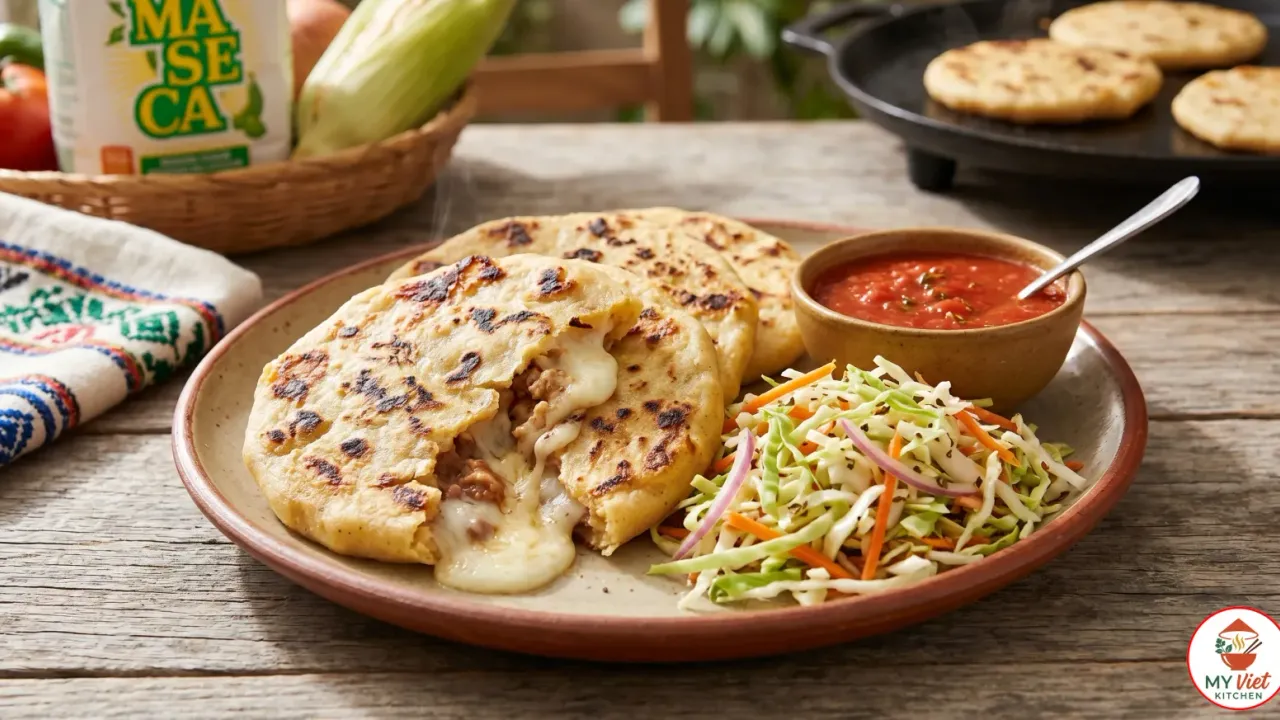
Few street foods carry the soul of a nation quite like the pupusa. This thick, handmade corn masa cake stuffed with melted cheese, savory beans, or seasoned pork is the national dish of El Salvador, and for good reason. Every bite delivers a crispy golden exterior that gives way to a warm, gooey filling. In this recipe, you will learn how to make authentic pupusas at home, along with the essential curtido slaw and salsa roja that complete the dish.
Prep Time: 40 minutes | Cook Time: 25 minutes | Servings: 12 pupusas
Difficulty: Easy | Calories: ~220 per serving
What Makes Pupusa Special?
The pupusa is more than just stuffed dough. It goes back over 2,000 years to the Pipil people, who lived in the region long before the Spanish arrived. Ruins at the Joya de Ceren site show that early cooks made pupusas much like we do today. This dish remains the heart of Salvadoran food and a top street food across Central America.
What sets the pupusa apart from other stuffed breads is the method. You press the filling inside the raw dough, seal it shut, and pat it flat before it hits the griddle. As a result, the masa cooks around the filling. This creates a sealed pocket where cheese melts and flavors build. A quesadilla folds a tortilla around the cheese, but a pupusa bakes the filling right into the bread.
The flavors work in perfect balance. The mild, sweet corn masa pairs with rich, salty fillings. Then the tangy curtido and bright salsa roja cut through that richness. These three parts come together so well that El Salvador now sets aside the second Sunday of every November as National Pupusa Day.

Choosing the Right Masa Harina
The masa dough is the base of every great pupusa. The type of flour you pick matters more than any other choice in this recipe. Not all corn flours work the same way. The right one gives you soft, smooth dough. The wrong one leaves you with dry, crumbly results.
- Maseca (best choice): This widely available instant corn masa flour produces a smooth, workable dough with consistent results every time.
- Bob’s Red Mill Masa Harina: A good alternative with a slightly coarser grind that creates a more rustic texture in the finished pupusa.
- Fresh masa from a tortilleria: If you have access to freshly ground masa, it delivers the best flavor and texture. However, you may need to adjust the water ratio since fresh masa already contains moisture.
Ingredients for Pupusa
For the Masa Dough:
- 4 cups masa harina (instant corn masa flour)
- 3 cups warm water (adjust as needed)
- 1 teaspoon salt
- 1 tablespoon vegetable oil
For the Fillings:
- 2 cups shredded Oaxaca cheese or mozzarella
- 1 cup refried beans
- 1 cup chicharron (cooked seasoned ground pork)
For the Curtido:
- 1 medium green cabbage, finely shredded
- 2 medium carrots, grated
- 1 small white onion, thinly sliced
- 1 teaspoon dried oregano
- 1/2 cup white vinegar
- 1/2 cup water
- 1 teaspoon salt
For the Salsa Roja:
- 1 cup tomato sauce
- 1 small Roma tomato, diced
- 1 clove garlic, minced
- 1/2 teaspoon dried oregano
- Salt and pepper to taste
Pro tip: The dough should feel like soft playdough. If it cracks when you press it flat, add more warm water one tablespoon at a time. If it sticks to your hands, add a small pinch of masa harina. Getting this texture right is the single most important step for successful pupusas.
Step-by-Step Instructions
Step 1: Prepare the Curtido
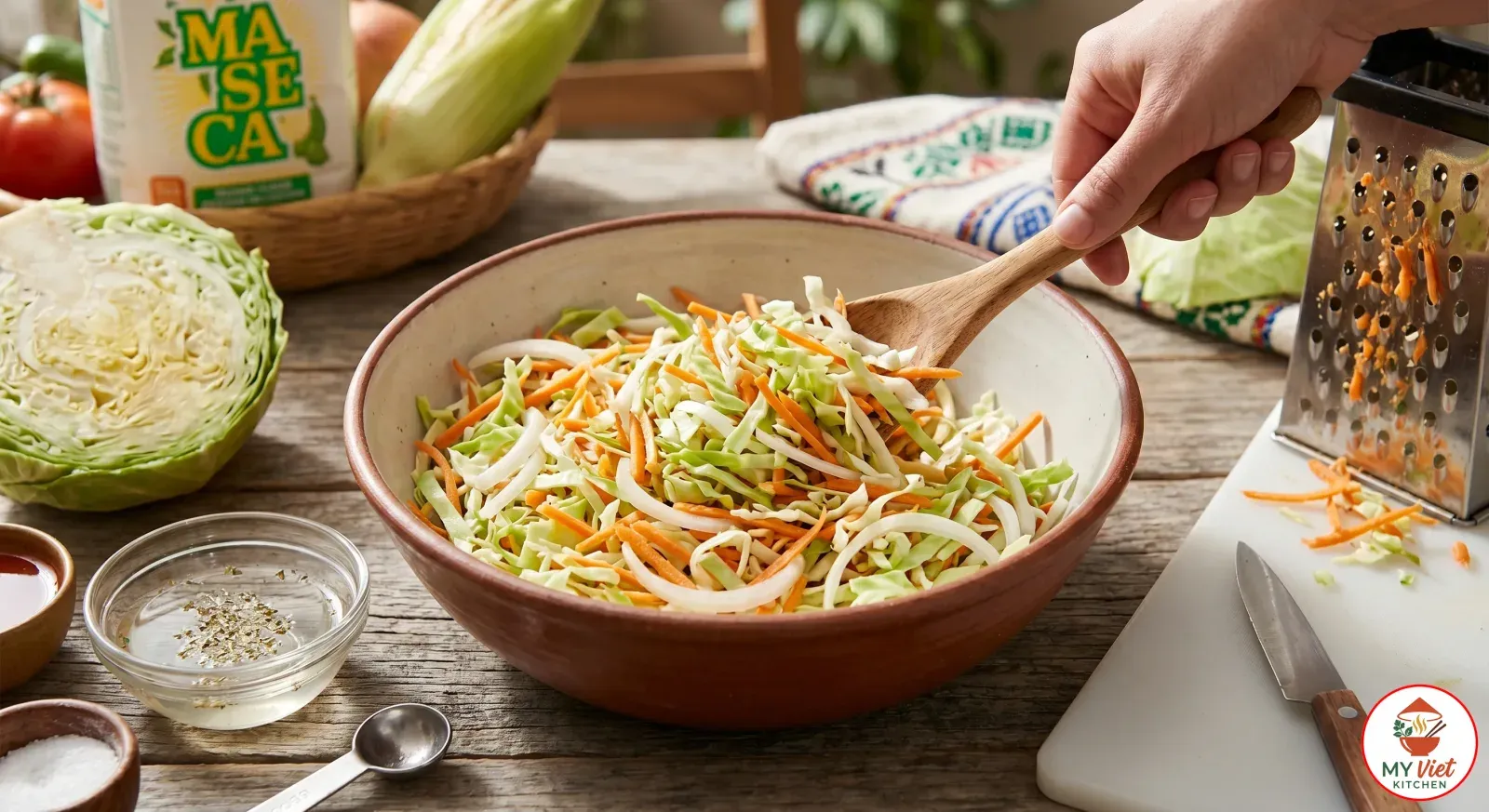
1Start with the curtido because it needs time to pickle. Finely shred the green cabbage and place it in a large bowl. Add the grated carrots, thinly sliced onion, and dried oregano. In a small bowl, mix the vinegar, water, and salt until the salt dissolves. Pour this brine over the vegetables and toss everything together thoroughly. Cover the bowl and set it aside at room temperature for at least 30 minutes. The longer it sits, the more flavor develops. For the best results, prepare the curtido the night before.
Step 2: Make the Masa Dough
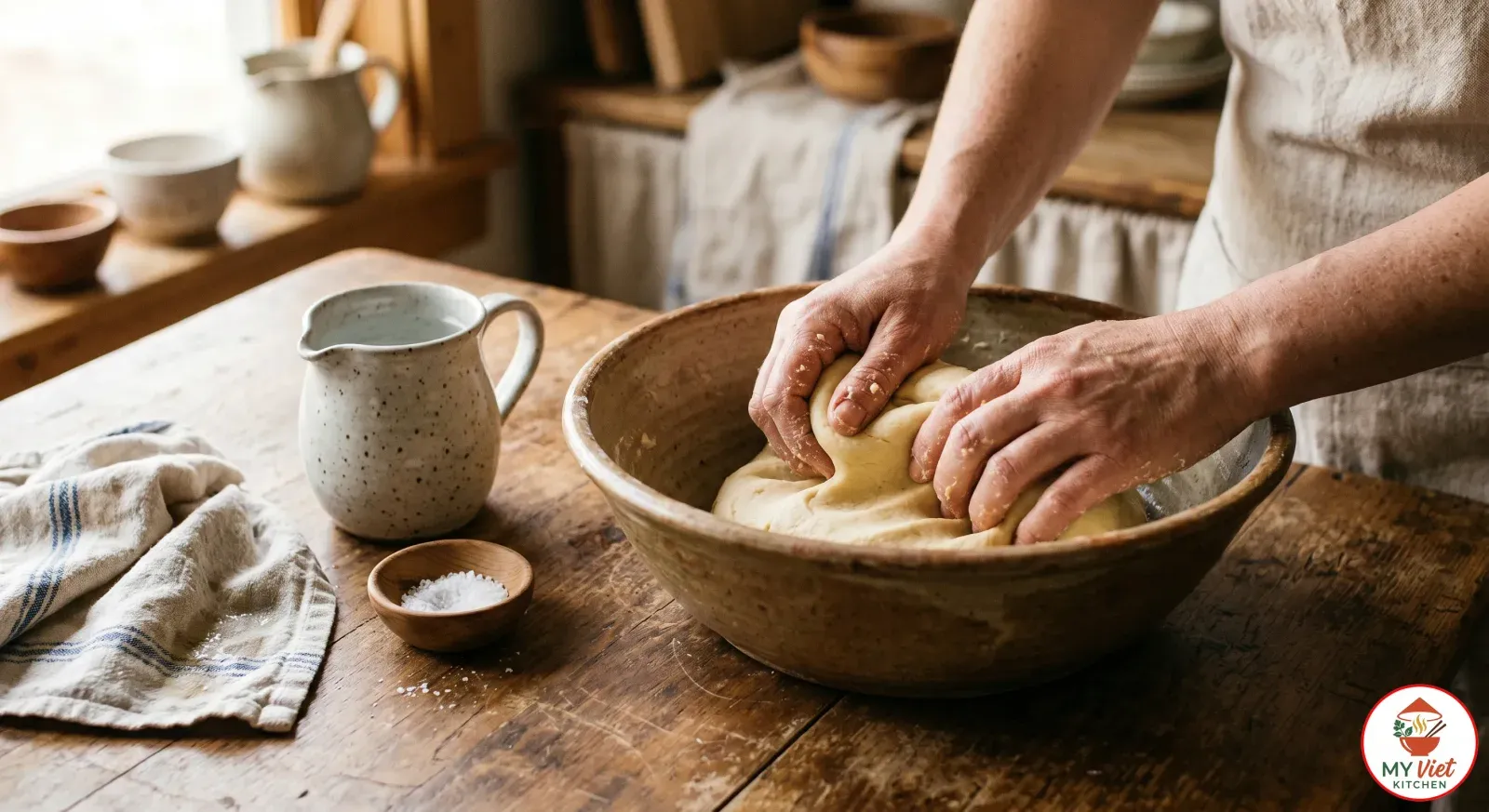
2Pour the masa harina and salt into a large bowl. Add the warm water and oil bit by bit while mixing with your hands. Knead for 3 to 5 minutes until the dough feels smooth and soft. Warm water helps the starches bind, so do not use cold water here. Test it by pressing a small ball flat. If the edges crack, add more water. If it sticks to your skin, add a pinch more masa harina. Cover the dough with a damp towel so it stays moist.
Step 3: Prepare the Fillings
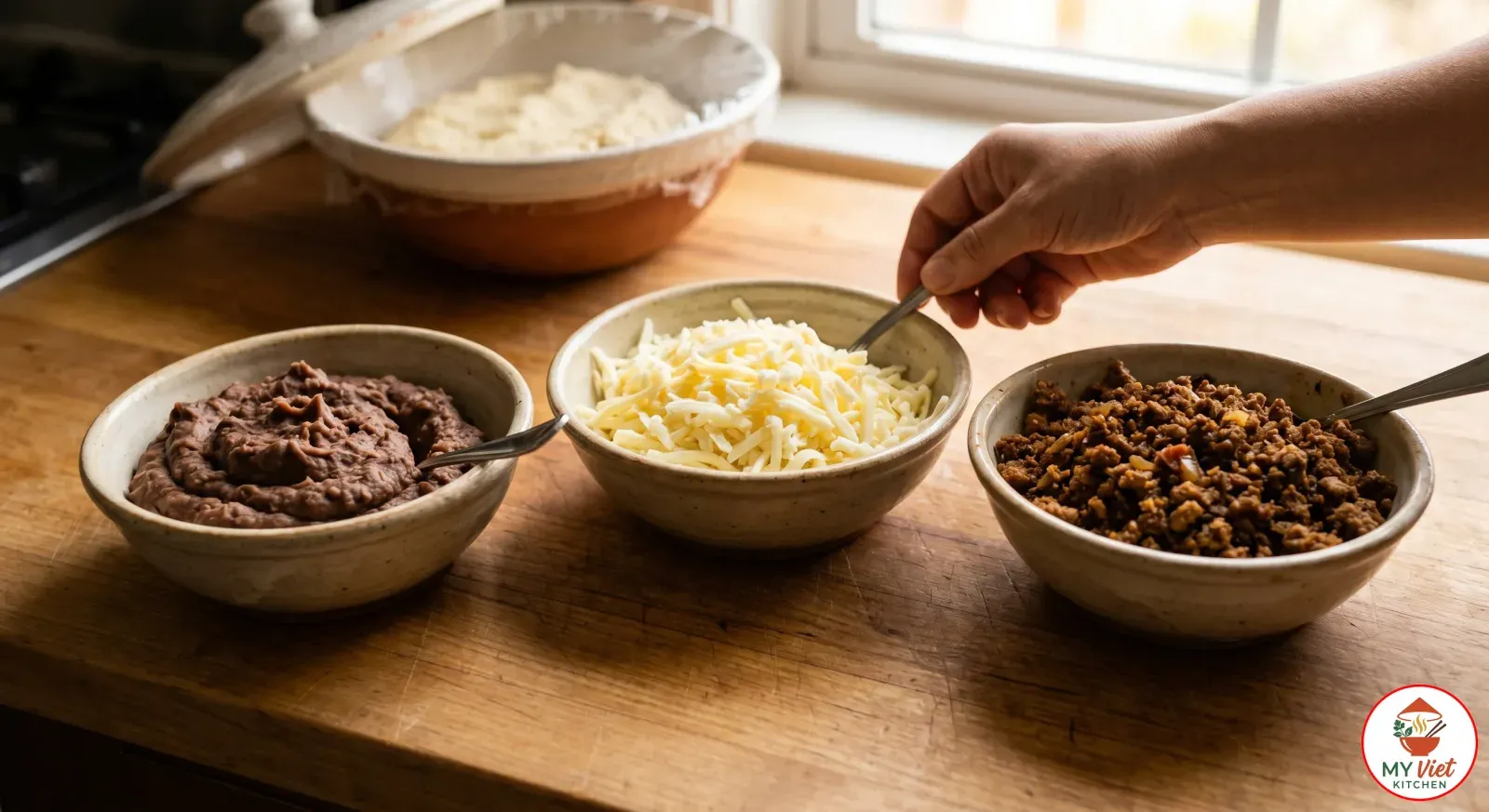
3Place the cheese, beans, and chicharron in three bowls. For the revuelta pupusa, mix equal parts of all three. If you want just one filling per pupusa, keep them apart. The beans must be thick and dry. Watery beans will make the dough soggy and hard to seal. To make chicharron at home, cook ground pork with garlic, onion, and tomato until the mix turns dry and crumbly.
Step 4: Shape and Stuff the Pupusas
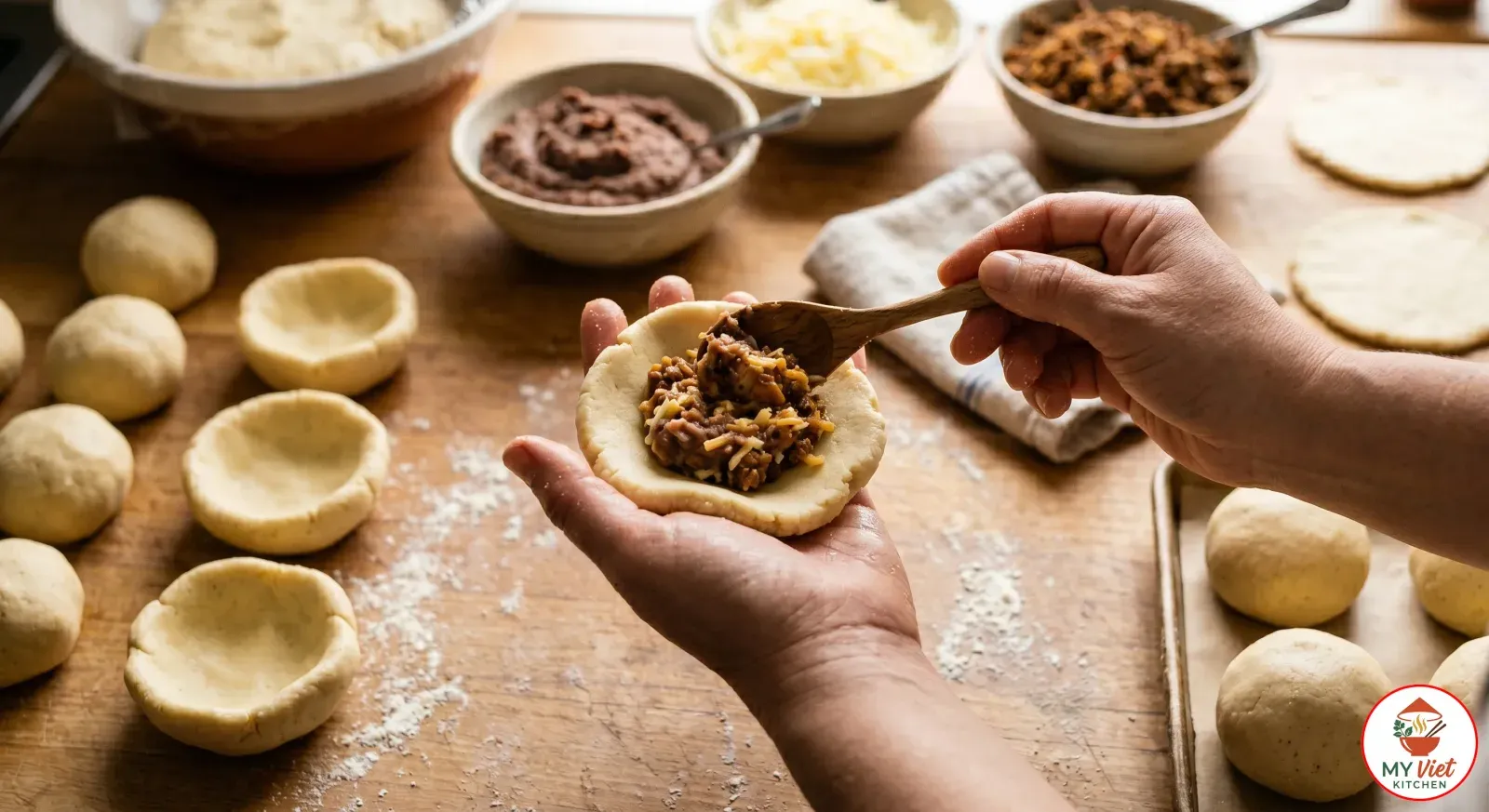
4Split the dough into 12 equal balls, each about the size of a golf ball. Take one ball and press it flat in your palm to form a 3-inch disc. Cup the disc and drop about 2 tablespoons of filling in the center. Fold the edges up and around the filling to seal it shut. Pinch the seam closed, then roll the ball gently between your palms. Pat it flat into a disc about half an inch thick and 4 to 5 inches wide. Keep your hands wet to stop the dough from sticking.
Step 5: Cook the Pupusas
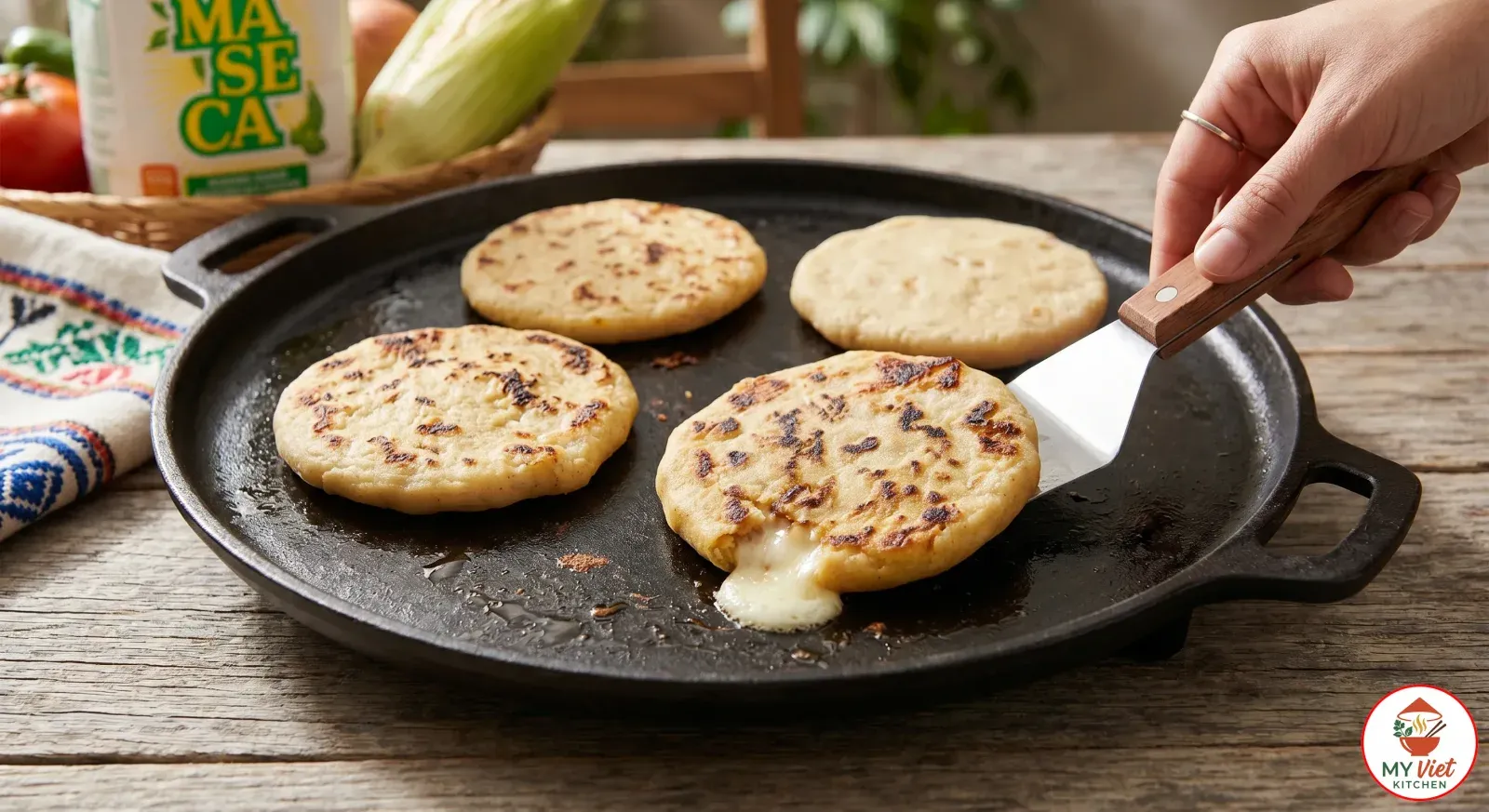
5Heat a flat griddle or cast iron skillet over medium heat. Grease it lightly with oil. Place the pupusas on the hot surface with at least an inch of space between them. Cook for 3 to 4 minutes per side until you see golden brown spots. Press down gently with a spatula so the dough makes full contact. You will hear a soft sizzle as the masa crisps. When cheese starts to ooze at the edges, the pupusa is done.
Step 6: Make the Salsa Roja and Serve
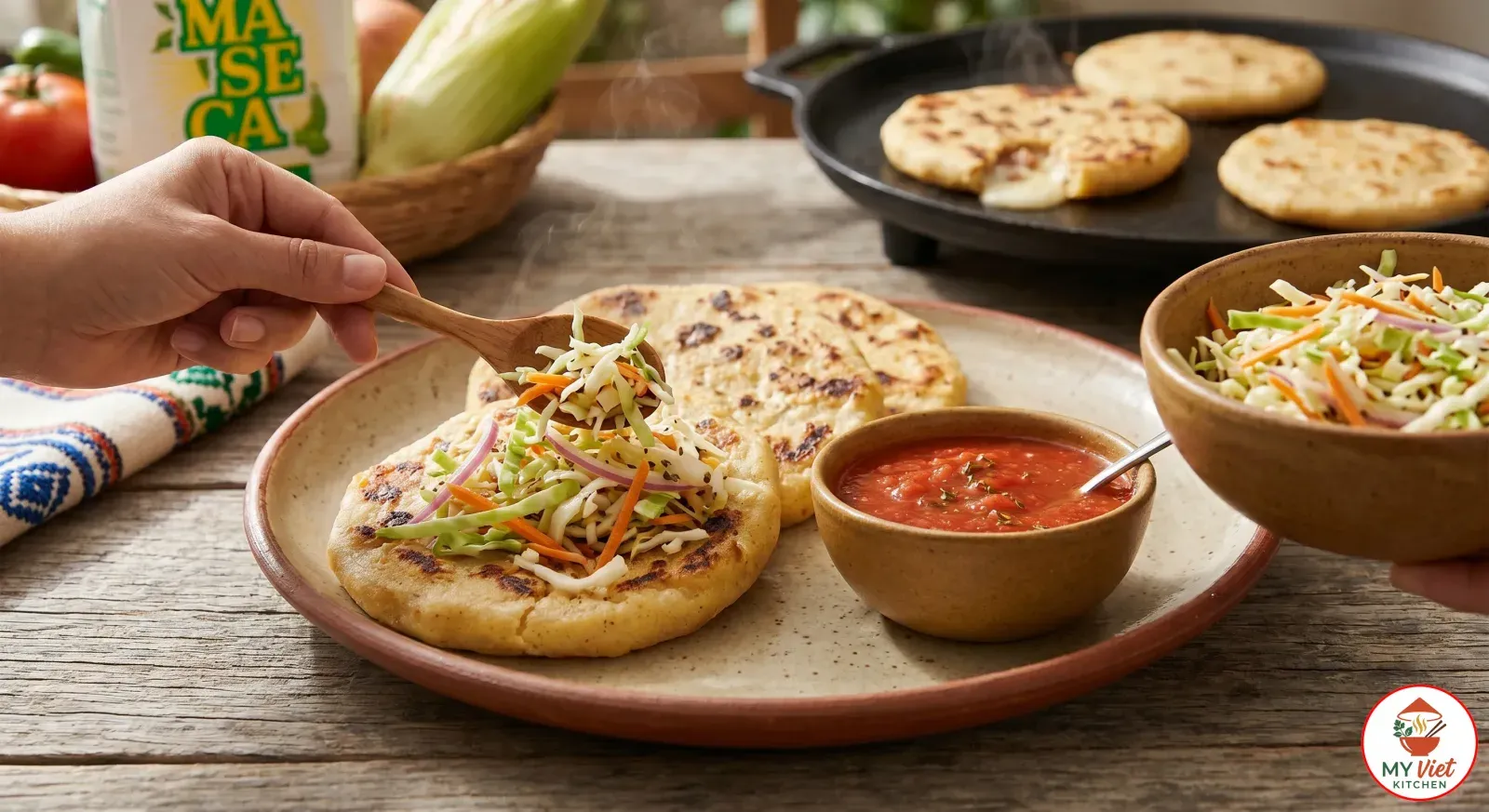
6While the pupusas cook, prepare the salsa roja. Combine the tomato sauce, diced tomato, minced garlic, oregano, salt, and pepper in a small saucepan. Simmer over low heat for 10 minutes, stirring occasionally, until the flavors meld together. The sauce should be thin enough to pour but thick enough to cling to the pupusa. Serve each pupusa hot off the griddle with a generous pile of curtido on top and the salsa roja alongside for dipping.
Expert Tips for Perfect Pupusas
Master the Dough Consistency
Your dough texture sets the tone for the whole dish. It should feel like soft playdough that holds its shape and does not crack. In a dry climate, you may need more water than listed. Add it bit by bit and knead after each splash. Also, keep the dough under a damp towel at all times. A dry crust on the surface will ruin the final texture.
Control Your Filling Amount
Too much filling is the top mistake new cooks make. Two tablespoons per pupusa is the sweet spot. More than that makes it hard to seal, and the pupusa may burst on the griddle. Start with less until you feel at ease with the shaping step. Also, keep the filling dry. Wet filling breaks down the dough seal.
Get the Griddle Temperature Right
Medium heat works best. Too high and the outside burns before the cheese melts. Too low and the pupusa dries out and turns tough. A good griddle should make a quiet sizzle when you place the pupusa on it. If it pops loudly, turn the heat down and wait a moment.
Pupusa vs. Arepa vs. Gordita
Latin American cooking has several corn-based stuffed breads. They may look alike, but each one has its own story, method, and taste. Here is a quick chart that shows the key differences.
| Feature | Pupusa (El Salvador) | Arepa (Venezuela/Colombia) | Gordita (Mexico) |
|---|---|---|---|
| Dough | Masa harina, filled before cooking | Pre-cooked cornmeal, split and filled after | Masa harina, filled before or after frying |
| Filling Style | Sealed inside the dough | Stuffed into a pocket after cooking | Sealed inside or slit open after cooking |
| Thickness | About 1/2 inch | About 3/4 inch | About 1/2 inch |
| Cooking Method | Griddle only | Griddle then baked or fried | Griddle or deep fried |
| Traditional Side | Curtido and salsa roja | Various sauces and fillings | Salsa verde or crema |
Serving Suggestions
In El Salvador, pupusas are served with two essential accompaniments: curtido and salsa roja. This trio forms the complete dish, and skipping either condiment means missing part of the experience. Beyond the traditional sides, several additional pairings elevate the meal even further.
The Perfect Accompaniments:
- Curtido: This tangy pickled cabbage slaw provides crunch and acidity that cuts through the richness of the cheese and pork fillings.
- Salsa roja: The mild tomato-based sauce adds warmth and ties the flavors together without overpowering the masa.
- Fried plantains: Sweet, caramelized plantains complement the savory pupusa and add a satisfying textural contrast.
- Black beans: A side of whole black beans adds protein and makes the meal more substantial.
Beverage Pairings:
- Horchata: This creamy rice-based drink is the classic Salvadoran pairing and balances the savory filling beautifully.
- Tamarindo juice: The sweet-tart flavor of tamarind refreshes the palate between bites.
- A light lager beer: The crisp carbonation and mild bitterness complement the golden, crispy masa.
Storage and Reheating
Refrigerator: Store cooked pupusas in an airtight container for up to 3 days. Place parchment paper between each one to prevent sticking. The curtido actually improves with time and keeps for up to two weeks.
Freezer: Freeze uncooked or cooked pupusas for up to 2 months. Lay them flat on a parchment-lined baking sheet until frozen solid, then transfer to a freezer bag. Cook frozen pupusas directly on the griddle, adding an extra minute per side.
Reheating: Reheat cooked pupusas on a dry skillet over medium heat for 2 to 3 minutes per side. This method restores the crispy exterior. Avoid the microwave because it makes the masa rubbery and unevenly soft.
Common Mistakes to Avoid
1. Using Dry Dough
Dry masa dough cracks when you shape the pupusa, and those cracks allow the filling to leak out during cooking. Always test a small piece by pressing it flat. If the edges crack, add more warm water and knead again. The dough should feel soft, smooth, and slightly moist to the touch.
2. Overstuffing the Pupusas
Too much filling prevents the dough from sealing properly. When the pupusa hits the griddle, the filling bursts through the weak seal and creates a mess. Stick to 2 tablespoons of filling per pupusa, and make sure the dough completely covers the filling before you pat it flat.
3. Cooking on High Heat
High heat burns the outside before the inside cooks through. Since the filling needs time to heat up and the cheese needs time to melt, medium heat is essential. Low and slow wins the race with pupusas. If you see dark spots forming after just one minute, your griddle is too hot.
Frequently Asked Questions
What is the difference between a pupusa and a tortilla?
A pupusa is thicker than a tortilla and has the filling sealed inside the dough before cooking. A tortilla is a thin flatbread that wraps around fillings after it has been cooked. Both use corn masa, but the preparation technique and final texture differ significantly. According to Saveur, the pupusa’s sealed construction is what gives it the characteristic melted interior.
What are the most popular pupusa fillings?
The three traditional fillings are queso (cheese), frijoles refritos (refried beans), and chicharron (seasoned ground pork). Many Salvadorans prefer the revuelta, which combines all three in one pupusa. Loroco, an edible flower bud native to Central America, is another cherished filling that pairs beautifully with cheese.
Can I make pupusas ahead of time?
Yes, you can shape and stuff the pupusas up to 4 hours before cooking. Place them on a parchment-lined tray, cover with plastic wrap, and refrigerate until ready. Alternatively, freeze uncooked pupusas for up to 2 months. Cook them directly from frozen by adding an extra minute per side on the griddle.
Why do my pupusas crack when I shape them?
Cracking indicates that the dough is too dry. Add warm water one tablespoon at a time and knead thoroughly between each addition. The dough should feel smooth and pliable without sticking to your hands. Keeping a damp towel over the dough while you work prevents it from drying out.
What is curtido and how long does it last?
Curtido is a lightly fermented cabbage relish that always accompanies pupusas in El Salvador. It resembles coleslaw but uses vinegar and salt for a tangy, crunchy bite. You can serve it after just 30 minutes of pickling, though it tastes even better after a full night of fermentation. Stored in the refrigerator, curtido lasts up to two weeks.
Variations and Adaptations
Pupusa de Loroco y Queso:
Loroco is an edible flower bud with a unique earthy, slightly floral flavor. Mix chopped loroco with shredded cheese for a filling that many Salvadorans consider the finest of all pupusa varieties. You can find jarred or frozen loroco at Latin American grocery stores. This variation showcases an ingredient that simply does not exist in any other cuisine.
Pupusa de Arroz (Rice Flour Pupusa):
In the eastern regions of El Salvador, pupusas are made with rice flour instead of corn masa. The result is a lighter, slightly crispier texture with a more delicate flavor. To make them at home, substitute the masa harina with finely ground rice flour and increase the water slightly. Because rice flour absorbs moisture differently, you will need to knead the dough a bit longer.
Vegan Pupusa:
Replace the cheese with a mixture of sauteed spinach, zucchini, and black beans. The vegetables provide moisture and flavor without any animal products. The basic masa dough is already vegan, so no changes to the dough recipe are needed. Top with extra curtido for a fresh, plant-forward meal that stays true to the traditional format.
The Cultural Significance of Pupusa
The pupusa holds a sacred place in Salvadoran identity. In 2005, the Legislative Assembly of El Salvador officially declared the second Sunday of November as Dia Nacional de la Pupusa, or National Pupusa Day. On this day, communities across the country hold festivals where vendors compete to make the largest pupusa, sometimes stretching several feet in diameter.
For Salvadorans living abroad, pupusas are a direct link to home. In Los Angeles, Houston, and Washington D.C., pupuserias serve as hubs where families eat, talk, and keep traditions alive. Making pupusas is a skill passed from one generation to the next. Grandmothers teach the patting rhythm to their grandchildren, and the craft lives on.
The pupusa now appears on menus across North America and Europe. New fans discover it every day. Even so, the best pupusas still come from home cooks and street vendors who learned the craft from their own families. This recipe honors that tradition and makes it easy for anyone with a griddle and a bag of masa harina.
Conclusion
Making pupusas at home is easier than you think. Get the dough smooth, keep the filling modest, and cook on medium heat until golden. Once you learn the hand-patting move, you can turn out 12 pupusas in under an hour. Above all, do not skip the curtido and salsa roja. These sides turn a simple stuffed bread into a full meal that tastes like El Salvador.
Ready to explore more dishes from around the world? Check out our full collection of recipes for authentic dishes from every continent. If you love Latin American comfort food, you might also enjoy our Empanada or Arepa recipes.