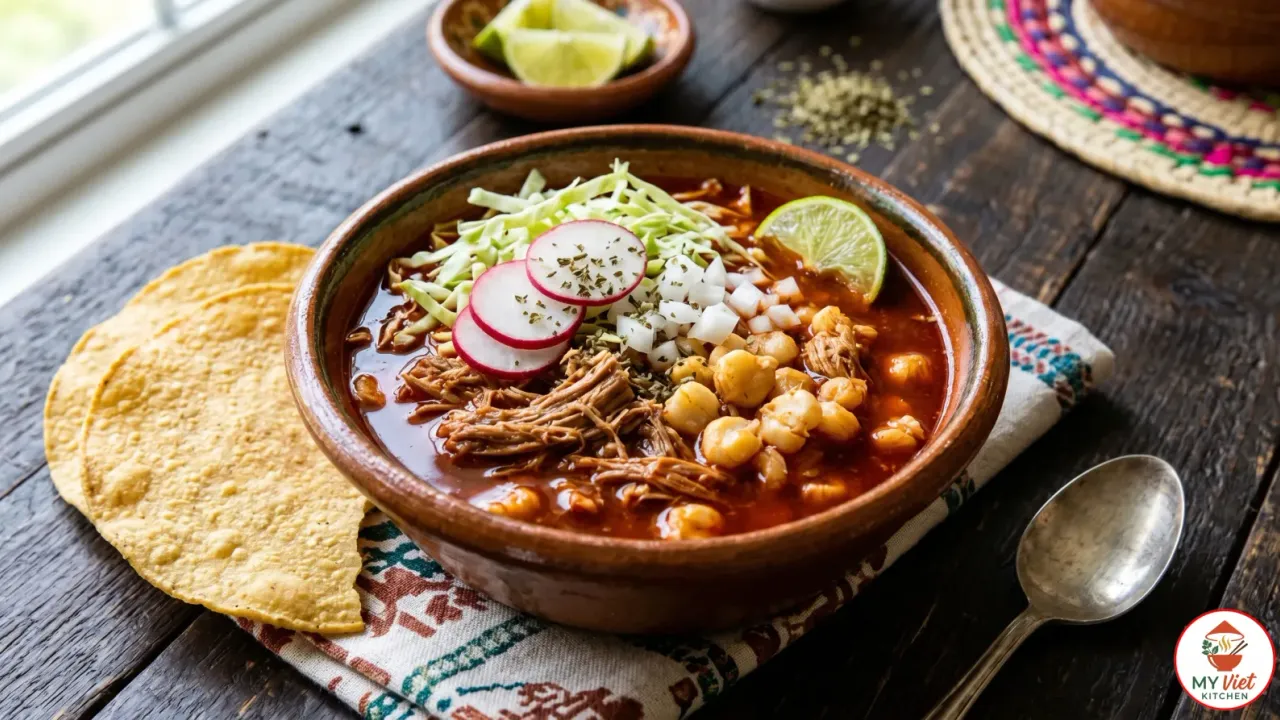
Pozole is one of the most celebrated soups in all of Mexican cuisine. This hearty stew pairs tender, slow-cooked pork shoulder with puffy hominy corn in a bold dried chile broth that glows a deep, earthy red. For thousands of years, Mexican families have gathered around steaming bowls of this ancient dish during holidays, celebrations, and cold winter nights. Every spoonful delivers the smoky warmth of guajillo and ancho chiles, the satisfying chew of nixtamalized corn, and the comfort of fall-apart pork.
Prep Time: 30 minutes | Cook Time: 2 hours 30 minutes | Servings: 8
Difficulty: Intermediate | Calories: ~480 per serving
What Makes Pozole Special?
What sets pozole apart from every other soup is one extraordinary ingredient: hominy. These large, swollen corn kernels go through a process called nixtamalization. In this ancient method, dried corn is soaked in water mixed with lime (calcium hydroxide). The soak removes the tough outer hull and changes the starch inside. Consequently, the kernels puff up to nearly twice their original size. They develop a uniquely chewy texture and a deep, earthy corn flavor that cannot be replicated by any other ingredient.
The dish traces its origins back to pre-Columbian Mexico, where the Aztecs prepared it for ritual ceremonies and important feasts. In fact, early versions date back over 3,000 years based on what we know from the remains. After the Spanish conquest, pork took the place of the original proteins. Over time, the recipe evolved into the version we know today. However, the core concept of slow-cooked meat with hominy in a rich broth has remained remarkably unchanged across millennia. Few dishes anywhere in the world carry this much historical weight.
Today, this beloved soup comes in three varieties based on color. Rojo uses dried red chiles for its deep crimson broth. Verde relies on tomatillos and green chiles. Meanwhile, blanco keeps the broth clear and simple. This recipe focuses on pozole rojo, the most widely beloved version. The combination of guajillo and ancho chiles creates a broth with moderate heat, smoky sweetness, and a complexity that deepens with every minute of simmering. Additionally, the fun topping ritual turns each bowl into a personal creation that brings people together at the table.

Choosing the Right Dried Chiles
Dried chiles are the soul of pozole rojo. The mix you pick sets the color, heat, and flavor of your broth. Mexican cooking uses dozens of dried chile types. However, pozole works best with just two or three for a good balance. Here is what to look for when you shop.
- Guajillo chiles (essential): These long, smooth, dark red chiles form the backbone of pozole rojo. They bring a bright, tangy taste with mild heat and a hint of fruity sweetness. Guajillos give the broth its gorgeous red color. Look for chiles that still bend, not ones that snap. Brittle chiles have lost their oils and make a flat, dull sauce.
- Ancho chiles (essential): Anchos are dried poblano peppers. They are wide, wrinkled, and nearly black in color. Their flavor is rich, sweet, and slightly smoky with hints of dried fruit and chocolate. Because of their mild heat, anchos add body and depth to the sauce without too much spice. Together with guajillos, they create the classic pozole rojo flavor that is complex yet approachable.
- Chiles de arbol (optional, for heat): These small, thin, bright red chiles pack real heat. Adding one or two raises the spice level without changing the overall flavor. They give a clean, sharp heat that stays on the tongue. Start with one and taste before adding more. After all, you can always add heat but cannot take it away.
Ingredients for Pozole Rojo
For the Pork Broth:
- 2 pounds (900g) bone-in pork shoulder, cut into 2-inch chunks
- 1/2 large white onion
- 2 cloves garlic
- 2 bay leaves
- 8 cups (1.9L) water or pork stock
- Salt to taste
For the Chile Sauce:
- 4 dried guajillo chiles, stemmed and seeded
- 2 dried ancho chiles, stemmed and seeded
- 2 dried chiles de arbol (optional)
- 1/2 large white onion, roughly chopped
- 4 cloves garlic
- 1 teaspoon ground cumin
- 1 tablespoon dried Mexican oregano
- 1 cup chile soaking liquid
- 2 tablespoons vegetable oil
For the Stew and Toppings:
- 2 cans (29 ounces each) white hominy, drained and rinsed
- Shredded green cabbage
- Thinly sliced radishes
- Diced white onion
- Fresh lime wedges
- Dried Mexican oregano
- Crushed red chile flakes or ground chile de arbol
- Tostadas or tortilla chips
- Sliced avocado (optional)
Pro tip: Toast your dried chiles in a dry skillet for just 30 seconds per side until they become fragrant and slightly pliable. Toasting activates the volatile oils trapped in the dried flesh. The aroma shifts from dusty and flat to warm and complex. Be careful not to burn them, as burnt chiles turn bitter instantly. Furthermore, save the chile soaking liquid after rehydrating. It contains dissolved flavor compounds and natural sugars that enrich the sauce when blended in. This small step makes a significant difference in the final broth depth.
Step-by-Step Instructions
Step 1: Cook the Pork
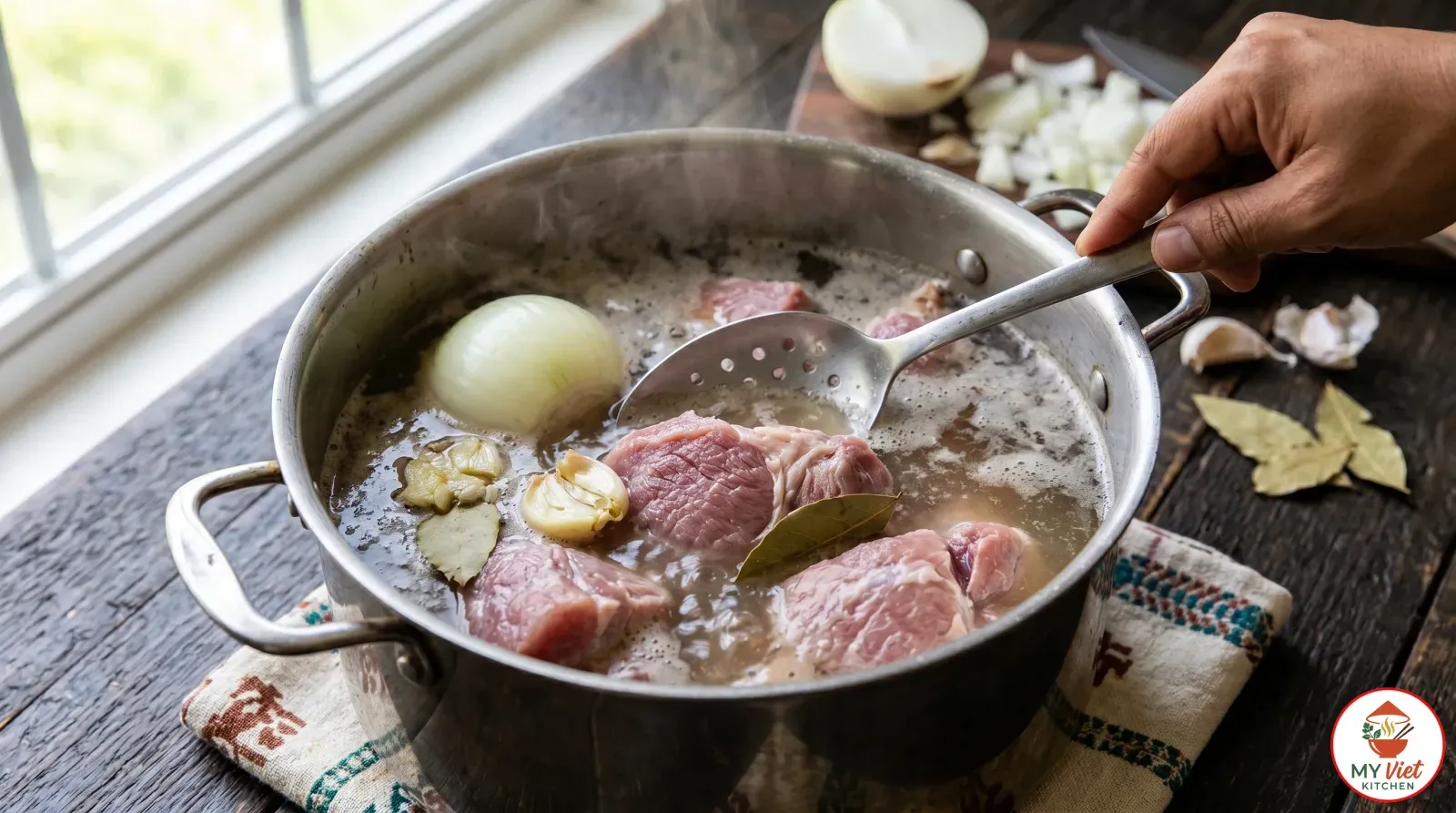
1 Place the pork shoulder chunks in a large stockpot or Dutch oven. Add half the onion, two garlic cloves, the bay leaves, and water or pork stock. Bring everything to a boil over high heat. A layer of gray foam will rise to the top in the first few minutes. Skim this foam off with a large spoon or ladle. It consists of proteins and bits that would cloud the broth if left in.
Once the foam is removed, reduce the heat to a gentle simmer. The top should show a few lazy bubbles, not a rolling boil. Then cover the pot with a lid slightly ajar. Cook for 1.5 to 2 hours until the pork is very tender and pulls apart with two forks. During this time, the collagen in the bones melts into gelatin. This gives the broth a silky, rich texture. Next, remove the pork and shred it into bite-sized strands. Strain the broth through a fine-mesh sieve and set it aside. Discard the spent onion, garlic, and bay leaves.
Step 2: Prepare the Chile Sauce
2 While the pork simmers, prepare the chile sauce. Remove the stems and seeds from the guajillo, ancho, and arbol chiles. Cut each chile open with kitchen scissors and shake out the seeds. Since the seeds hold the most capsaicin, removing them keeps the heat at a good level.
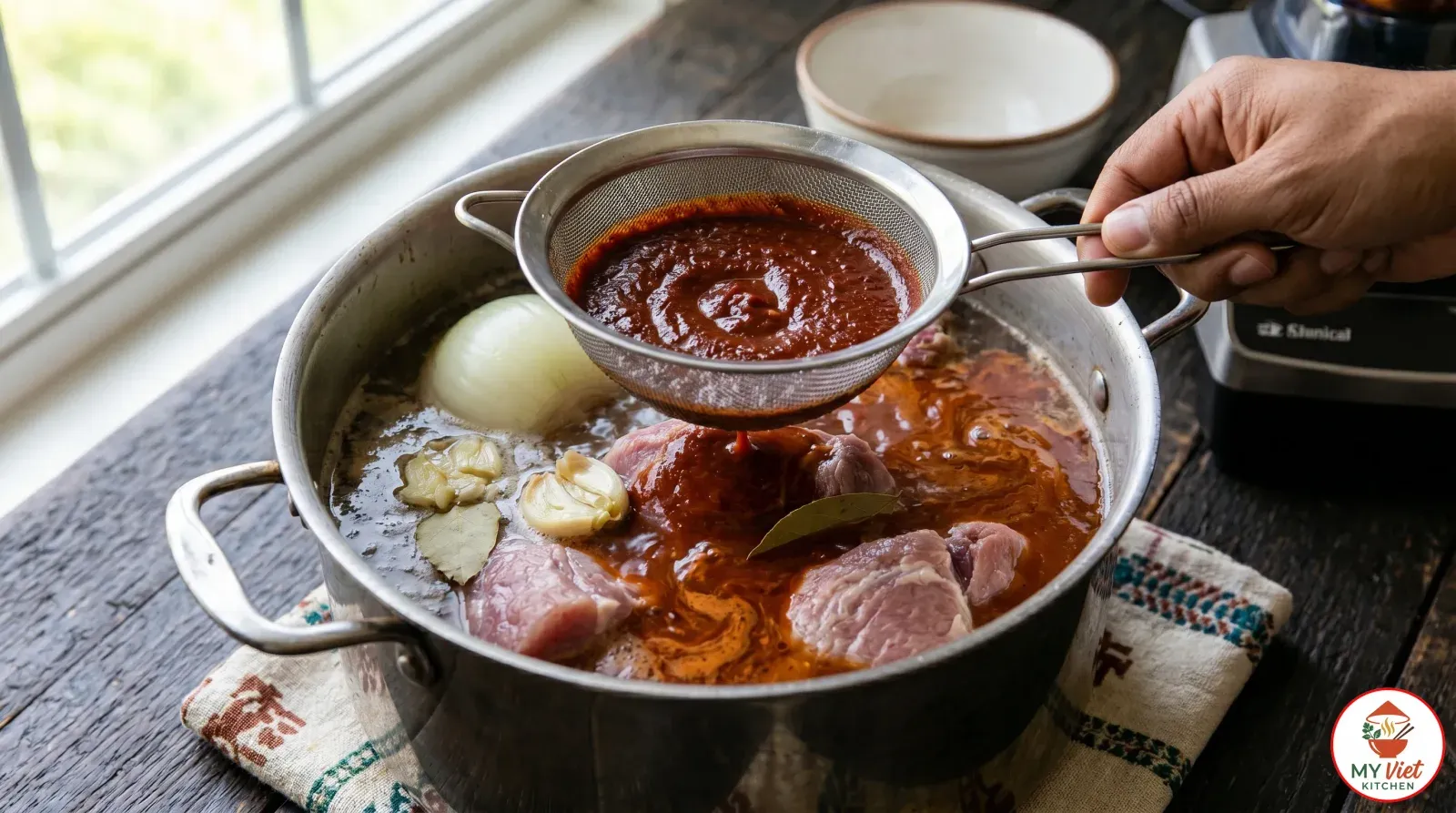
Then heat a dry skillet over medium heat. Press the chiles flat on the pan for about 30 seconds per side. They should smell good and bend easily. Transfer the toasted chiles to a bowl and cover with very hot water. Let them soak for 20 minutes until completely soft. Then transfer the softened chiles to a blender. Add the remaining half onion (roughly chopped), four garlic cloves, ground cumin, and one cup of the chile soaking liquid. Blend on high for 2 to 3 minutes until the sauce is completely smooth with no visible chunks. Finally, pour the sauce through a fine-mesh sieve into a clean bowl. Press with a spoon to get every drop out. Discard the solids. This step removes any bits of tough chile skin and gives you a velvety sauce.
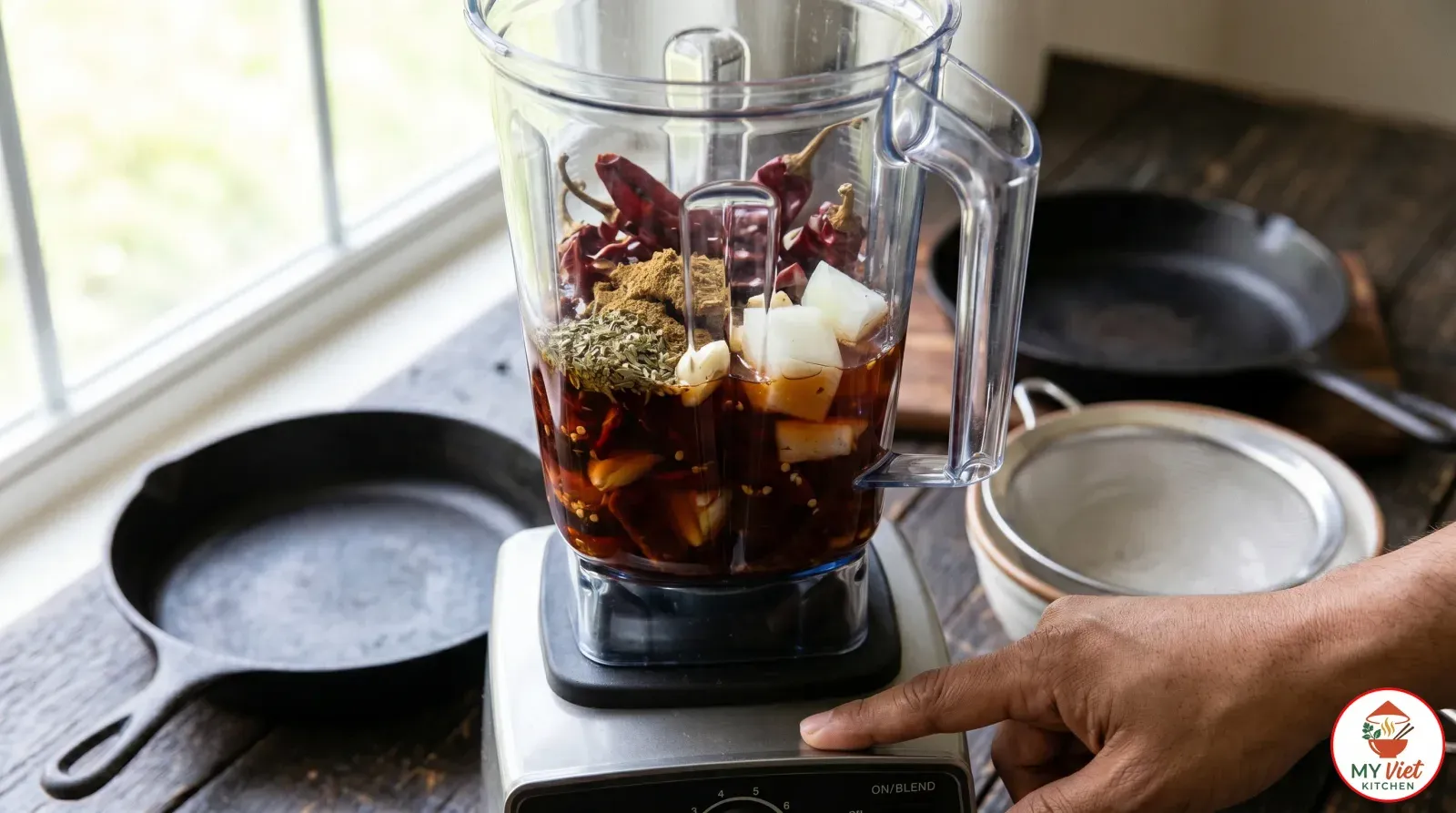
Step 3: Build the Pozole Broth
3 Heat the vegetable oil in a large, clean pot over medium-high heat. Carefully pour in the strained chile sauce. It will sputter and sizzle when it hits the hot oil, so stand back a bit. Stir often with a wooden spoon. Cook the sauce for 5 to 7 minutes until it darkens in color and thickens noticeably. Mexican cooks call this “frying the sauce.” The high heat browns the natural sugars in the chiles and makes the flavor much deeper.
Pour the reserved pork broth into the pot with the fried chile sauce. Stir well to combine. The broth will transform into a rich, red-orange liquid. Bring it to a gentle simmer. Taste the broth at this stage. It should have a balanced chile flavor with mild warmth, earthy sweetness, and savory depth from the pork. If needed, adjust the salt now. At this point, the base of your pozole is ready.
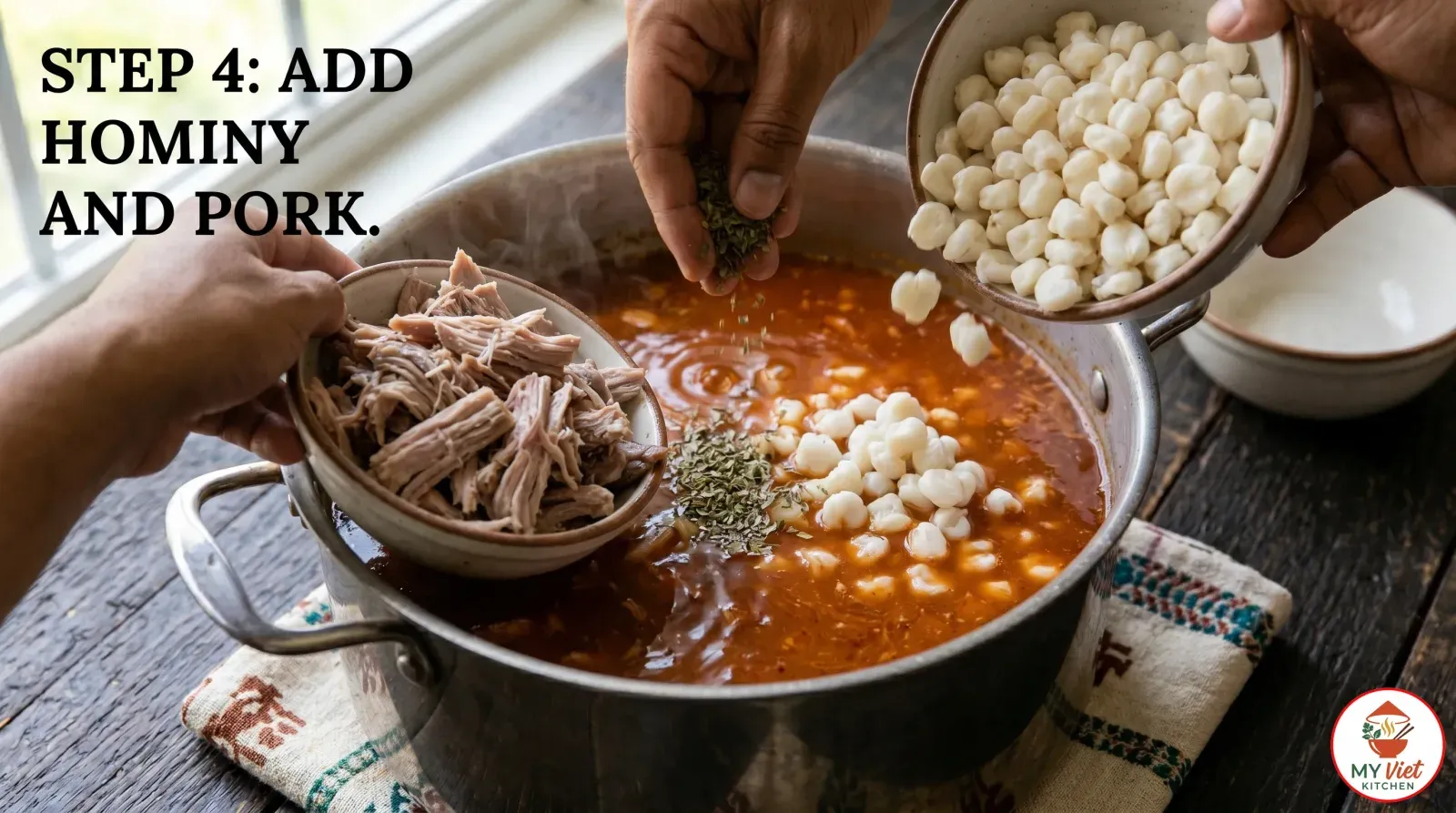
Step 4: Add Hominy and Pork
4 Add the drained and rinsed hominy to the chile broth. Then add the shredded pork. Stir in the dried Mexican oregano, crushing it between your fingers to free the oils. Bring the pot back to a gentle simmer.
Cook for 30 to 40 minutes at a low simmer. During this time, the hominy soaks up the chile broth and gets more flavorful. Meanwhile, the pork keeps releasing gelatin into the liquid. Stir now and then to stop anything from sticking to the bottom. The broth should be soupy but rich enough to coat the back of a spoon. If it gets too thick, add a splash of hot water. Taste once more and adjust the salt. At this stage, the pozole should taste bold, earthy, and warm.
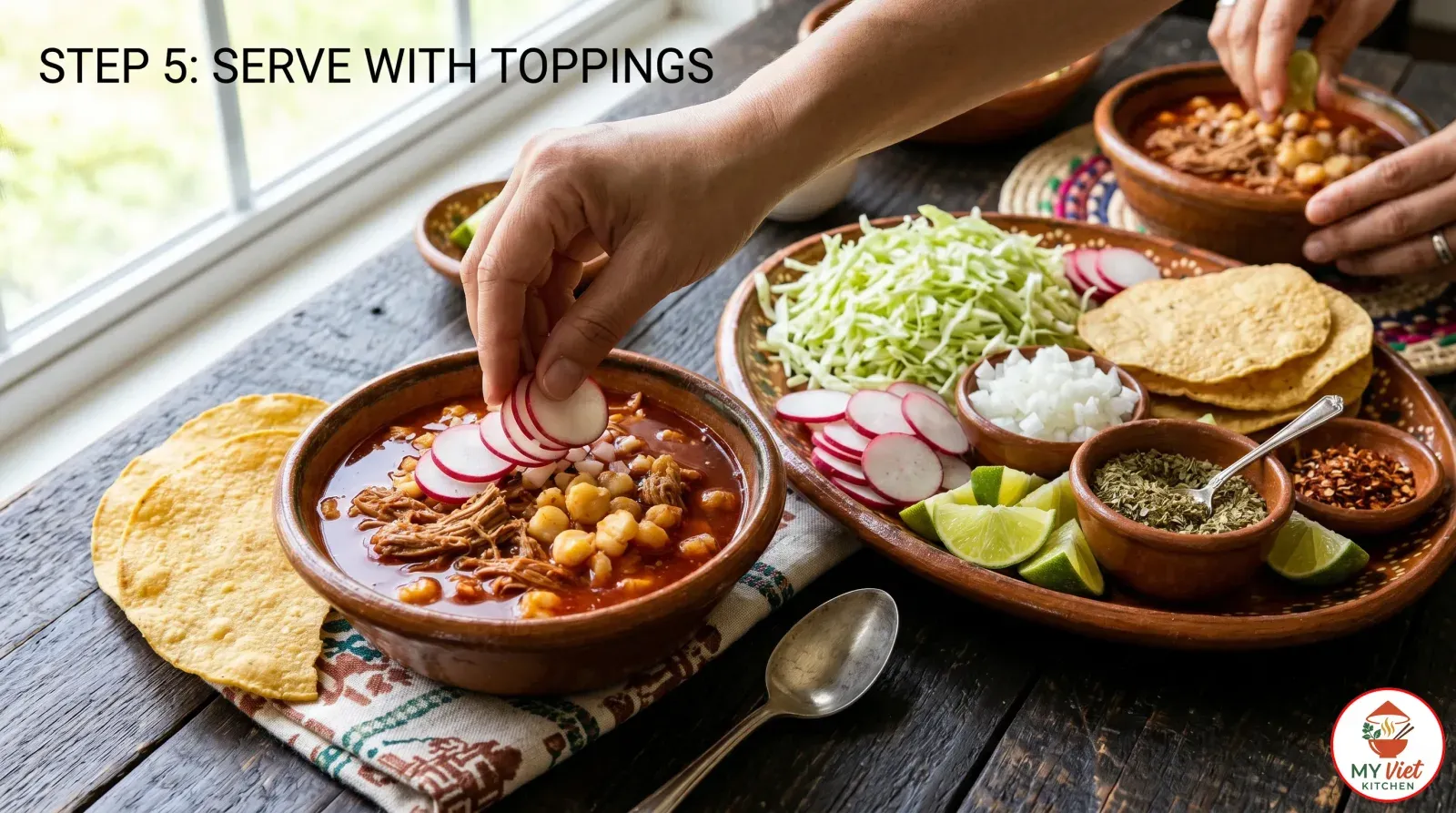
Step 5: Serve with Toppings
5 Ladle the hot pozole into deep, wide bowls. Each serving should contain a generous amount of hominy, shredded pork, and rich red broth. While the pozole simmers, prepare a large platter of toppings. Arrange shredded green cabbage, thinly sliced radishes, diced white onion, lime wedges, dried oregano, and tostadas in separate piles.
Place the topping platter in the center of the table. Each person builds their bowl the way they like it. The crunchy cabbage adds texture against the soft hominy. Then the radishes bring a peppery bite that cuts through the rich broth. A big squeeze of fresh lime brightens every element. A pinch of dried oregano adds herbal warmth. Finally, crumble a tostada right into the bowl for a crunch that melts into the broth. This fun, hands-on serving style is one of the great joys of eating pozole.
Expert Tips for Perfect Pozole
Use Bone-In Pork for the Richest Broth
Bone-in pork shoulder is the ideal cut for pozole because it serves two purposes at once. The meat itself becomes tender and shreddable after the long simmer. Meanwhile, the bones release collagen that converts to gelatin in the broth. This gelatin gives the liquid a silky, full-bodied texture that boneless cuts simply cannot achieve. You will notice the difference immediately when you taste the broth. Moreover, bone-in shoulder is typically more affordable than boneless, so this choice saves money while improving the final result.
Always Strain Your Chile Sauce
Blending alone does not produce a smooth enough sauce for pozole. Even the most powerful blender leaves behind tiny bits of tough chile skin that create a gritty texture in the broth. Straining through a fine-mesh sieve removes these particles completely. Press firmly with a spoon or spatula to extract maximum flavor from the pulp. The resulting sauce should pour like heavy cream. This extra step takes only three minutes but transforms the broth from rustic to refined.
Fry the Chile Sauce Before Adding Broth
Frying the chile sauce in hot oil is a technique that Mexican cooks call “refrying.” It concentrates the flavors, caramelizes the natural sugars, and drives off excess moisture. The sauce should darken by one or two shades and reduce slightly. A raw, unfried chile sauce produces a thinner, less complex broth. The frying step takes only five minutes but makes a dramatic difference in the depth and richness of the final pozole. As a result, the broth tastes rounder, sweeter, and more layered.
Three Varieties of Pozole Compared
Mexico celebrates three distinct colors of pozole. Each version reflects the regional ingredients and preferences of the area where it originated. The following comparison highlights the key differences between these beloved variations of the same ancient dish.
| Variety | Chile or Base | Flavor Profile | Region |
|---|---|---|---|
| Pozole Rojo | Guajillo and ancho chiles | Smoky, earthy, moderately spicy | Central Mexico, Jalisco |
| Pozole Verde | Tomatillos, poblano, cilantro, pepitas | Tangy, bright, herbal, nutty | Guerrero, Morelos |
| Pozole Blanco | No chile sauce, clear pork broth | Clean, mild, pork-forward | Northern Mexico, Sinaloa |
Serving Suggestions
Pozole is a substantial one-bowl meal, but the toppings and sides elevate it into a festive dining experience. In Mexico, the topping spread is just as important as the stew itself. Traditionally, hosts arrange all garnishes on a communal platter and let each guest build their perfect bowl.
Essential Toppings:
- Shredded cabbage: Crisp green cabbage adds a fresh crunch that balances the soft, rich stew. It stays slightly crunchy even after sitting in the hot broth for a few minutes, providing textural contrast throughout the meal.
- Sliced radishes: Their peppery bite and cool, watery snap provide a refreshing counterpoint to the warm chile broth. For the best results, slice them paper-thin so they blend into each spoonful.
- Fresh lime wedges: Above all, a generous squeeze of lime transforms every bowl. The acid brightens the earthy chile flavors, cuts through the pork fat, and lifts the entire dish. Never skip the lime.
- Dried oregano: Mexican oregano has a more citrusy, earthy flavor than its Mediterranean cousin. Simply crumble it between your fingers over the hot soup to release its aromatic oils. Even a small pinch adds significant herbal depth.
- Tostadas: Crispy corn tostadas crumbled into the broth add a wonderful crunch. You can also serve them on the side to scoop up the stew. They soak up the chile broth beautifully.
Beverage Pairings:
- Mexican lager: A cold Modelo Especial, Pacifico, or Victoria provides the perfect refreshing counterpoint to the warm, spicy pozole. The clean carbonation and mild malt flavor cleanse the palate between spoonfuls.
- Agua fresca de jamaica: This hibiscus flower drink offers a tart, floral, and slightly sweet refreshment that pairs naturally with Mexican food. Its acidity mirrors the lime and complements the earthy chiles.
- Mezcal or tequila: A small pour of smoky mezcal alongside the bowl reinforces the smoky chile notes in the broth. Sip it between bites for a fully immersive Mexican dining experience.
- Sparkling water with lime: A non-alcoholic option that works beautifully. The bubbles refresh the palate, and the lime echoes the citrus element in the toppings.
Storage and Reheating
Refrigerator: Allow the pozole to cool to room temperature before transferring to an airtight container. Store in the refrigerator for up to 5 days. The hominy will absorb broth as it sits, causing the stew to thicken. This is normal and actually concentrates the flavor. Add a splash of water or stock when reheating to restore the soupy consistency. Store toppings separately to keep them fresh and crunchy.
Freezer: Pozole freezes exceptionally well for up to 3 months. Portion it into freezer-safe containers, leaving an inch of headspace for expansion. Thaw overnight in the refrigerator before reheating. The pork and broth maintain their quality beautifully after freezing. However, the hominy may soften slightly, which most people find perfectly acceptable.
Reheating: Warm pozole gently over medium-low heat on the stovetop. Stir occasionally and add water or stock gradually until it reaches your desired consistency. Avoid boiling vigorously, as the hominy can break apart. Taste and adjust salt after reheating. Serve with fresh toppings each time for the best experience. Many Mexican families consider reheated pozole superior to the freshly made version because the flavors continue melding overnight.
Common Mistakes to Avoid
1. Using the Wrong Chiles
Not all dried chiles work for pozole rojo. For instance, chipotle chiles have an overly smoky flavor that takes over the broth. Similarly, New Mexico chiles are too mild and one-note on their own. The guajillo-ancho combo provides the ideal balance of color, heat, sweetness, and complexity. Stick with this classic pairing for your first batch. Once you understand the baseline flavor, you can experiment with adding a single new chile variety in small amounts.
2. Skipping the Chile Straining Step
Blending alone leaves tiny bits of tough chile skin in the sauce. As a result, these fragments create a gritty texture in the final broth. Straining through a fine-mesh sieve only takes a few minutes. Press firmly with a spoon to push through all the smooth puree while catching the fibrous bits. The result is a velvety sauce that integrates seamlessly into the pork broth. Consequently, every spoonful feels smooth and refined rather than rough and grainy.
3. Not Cooking the Pork Long Enough
Undercooked pork shoulder stays chewy and does not shred well. Because the collagen needs time to break down into gelatin, this process requires at least 1.5 hours at a gentle simmer. Rushing by using higher heat toughens the exterior while leaving the center underdone. Instead, test the pork by pressing it with a fork. If it shreds easily with minimal resistance, the meat is ready. Patience during this step ensures tender, pull-apart pork in every bowl.
4. Forgetting Fresh Toppings
Pozole without toppings is incomplete. In fact, the cabbage, radishes, lime, and oregano are not optional garnishes. Rather, they provide key contrasts in texture, warmth, and flavor. The cool crunch of cabbage against the hot broth, the acid of lime against the rich pork, and the herbal oregano against the earthy chiles all play critical roles. A bowl of pozole served without its topping platter misses half the eating experience.
Frequently Asked Questions
What is the difference between pozole rojo, verde, and blanco?
The rojo version uses dried red chiles like guajillo and ancho to build a deep, earthy red broth. In contrast, the verde version uses green ingredients such as tomatillos, poblano peppers, cilantro, and pepitas (pumpkin seeds) for a bright, tangy green broth. Meanwhile, blanco is the simplest version with a clear pork broth and no chile sauce at all. All three share the same foundation of hominy and slow-cooked meat. Rojo is the most popular in central Mexico and Jalisco. Verde dominates in the state of Guerrero. Blanco is common in northern Mexican states.
Can I use chicken instead of pork in pozole?
Yes, chicken pozole is a widely enjoyed lighter variation. Use bone-in chicken thighs or a whole chicken instead of pork shoulder. Reduce the cooking time to approximately 40 to 50 minutes, since chicken cooks faster. Shred the meat the same way after cooking. The broth will have a lighter body. Consider adding a chicken bouillon cube for extra depth. Chicken pozole is especially popular during Lent when many Mexican families abstain from red meat.
Where can I find hominy for pozole?
Canned hominy is available in most American grocery stores, typically in the canned vegetable aisle near the beans. Look for white hominy labeled as “maiz pozolero” in Mexican markets. For the best texture, seek out dried hominy from Latin American stores or online retailers. Dried hominy requires overnight soaking and 2 to 3 hours of separate cooking before adding it to the pozole. Brands like La Costena and Juanitas are reliable canned options that work perfectly for this recipe.
Can I make pozole in a slow cooker or Instant Pot?
Both appliances work well for this recipe. In a slow cooker, combine the raw pork, hominy, prepared chile sauce, and broth. Cook on low for 8 hours or high for 4 to 5 hours. Shred the pork directly in the pot before serving. In an Instant Pot, pressure cook the pork with broth for 35 minutes on high pressure with natural release. Shred the meat, then add the chile sauce and hominy on saute mode for 15 minutes. However, stovetop cooking gives you more control over broth reduction and concentration.
How long does leftover pozole last?
Properly stored in an airtight container, pozole keeps for up to 5 days in the refrigerator. The hominy absorbs broth as it rests, so add water or stock when reheating. Pozole freezes well for up to 3 months in sealed containers. Store the fresh toppings separately and prepare them just before serving. Like most stews, pozole tastes even better the next day because the chile and pork flavors continue developing in the broth overnight.
What makes pozole different from other Mexican soups?
Hominy is the defining ingredient that sets pozole apart. These large, puffy corn kernels undergo nixtamalization, an ancient process that gives them a unique chewy texture and deep corn flavor. No other Mexican soup uses hominy as its central ingredient. The combination of slow-cooked meat, chile-infused broth, and hominy creates a hearty hybrid between soup and stew. The interactive topping ritual also distinguishes pozole from simpler soups like caldo de pollo or sopa de fideo.
Variations and Adaptations
Pozole Verde:
Replace the dried red chiles with a green sauce made from roasted tomatillos, poblano peppers, jalapeños, cilantro, and toasted pepitas. The tomatillos provide a bright acidity that contrasts the rich pork beautifully. Blend the green ingredients until smooth and fry the sauce in oil the same way as the red version. The result is a tangy, herbaceous broth with a beautiful green color. Pozole verde works especially well with chicken instead of pork for an even lighter variation.
Pozole Blanco:
For the simplest version, skip the chile sauce entirely. Cook the pork in a clear broth with just onion, garlic, and bay leaves. Add the hominy and simmer until the flavors meld. The toppings carry the flavor in this version, so serve generously with lime, oregano, and sliced chiles on the side. Pozole blanco lets the pure pork and corn flavors shine without competition from the chiles. It is the ideal starting point for anyone new to the dish.
Vegetarian Pozole:
Replace the pork with roasted mushrooms, zucchini, and chayote squash. Use vegetable stock instead of pork broth. Add an extra ancho chile and a tablespoon of tomato paste to compensate for the missing pork depth. Roast the mushrooms until deeply caramelized before adding them to the pot. The hominy still provides the essential texture and corn flavor. While the broth will lack the gelatin-rich body of the pork version, it remains deeply satisfying and surprisingly hearty.
Instant Pot or Slow Cooker Pozole:
Modern appliances make weeknight pozole achievable. Brown the pork first on the saute setting for better flavor, then pressure cook for 35 minutes. Prepare the chile sauce separately while the pork cooks. Combine everything after shredding the meat and simmer for 15 minutes. The slow cooker version requires less hands-on time. Add all ingredients in the morning, and return to a finished pozole by dinner. Both methods produce tender pork, though the stovetop version offers superior broth concentration.
The Cultural Significance of Pozole
Pozole occupies a unique place in Mexican culture. It is far more than a recipe. It is a living connection to pre-Columbian civilization that has survived conquest, colonization, and modernization. The Aztecs prepared pozole for sacred ceremonies and offered it to the gods during important festivals. The dish appears in the Florentine Codex, a 16th-century ethnographic study of Aztec life compiled by Spanish friar Bernardino de Sahagun. Today, pozole remains a centerpiece of Mexican celebrations, particularly during Independence Day on September 16, Christmas Eve, New Year’s Eve, and birthday parties.
In Mexican families, pozole recipes pass from generation to generation. Grandmothers teach their children the exact ratio of chiles, the proper way to skim the pork broth, and the right moment to add the oregano. According to Taste Atlas, pozole ranks among the most iconic dishes in all of Latin American cuisine. Every state in Mexico claims its own variation, and friendly debates over whose pozole is best fuel family gatherings and community festivals nationwide. The dish embodies the Mexican philosophy of communal eating. Everyone gathers around one pot, and each person makes the bowl uniquely their own through the topping selection. Pozole is not just food. It is an act of togetherness, tradition, and cultural pride that has sustained Mexican identity for millennia. Explore more traditional recipes from around the world in our Mexican dishes collection.
Conclusion
Pozole is one of those rare dishes that manages to be both ancient and absolutely modern at the same time. The technique is straightforward. You simmer pork until tender, blend dried chiles into a velvety sauce, and combine everything with hominy in a pot. Yet the final result delivers a depth of flavor that belies its simplicity. The earthy warmth of the chile broth, the satisfying chew of the hominy, and the tender shredded pork create a bowl of soup that comforts and nourishes on every level. Make this recipe once, and you will understand why Mexican families have cherished it for thousands of years.
Ready to explore more iconic dishes from around the world? Browse our full collection of Mexican recipes for dishes like birria, tamales, and mole poblano. If you try this pozole recipe, leave a rating and share your experience in the comments below.