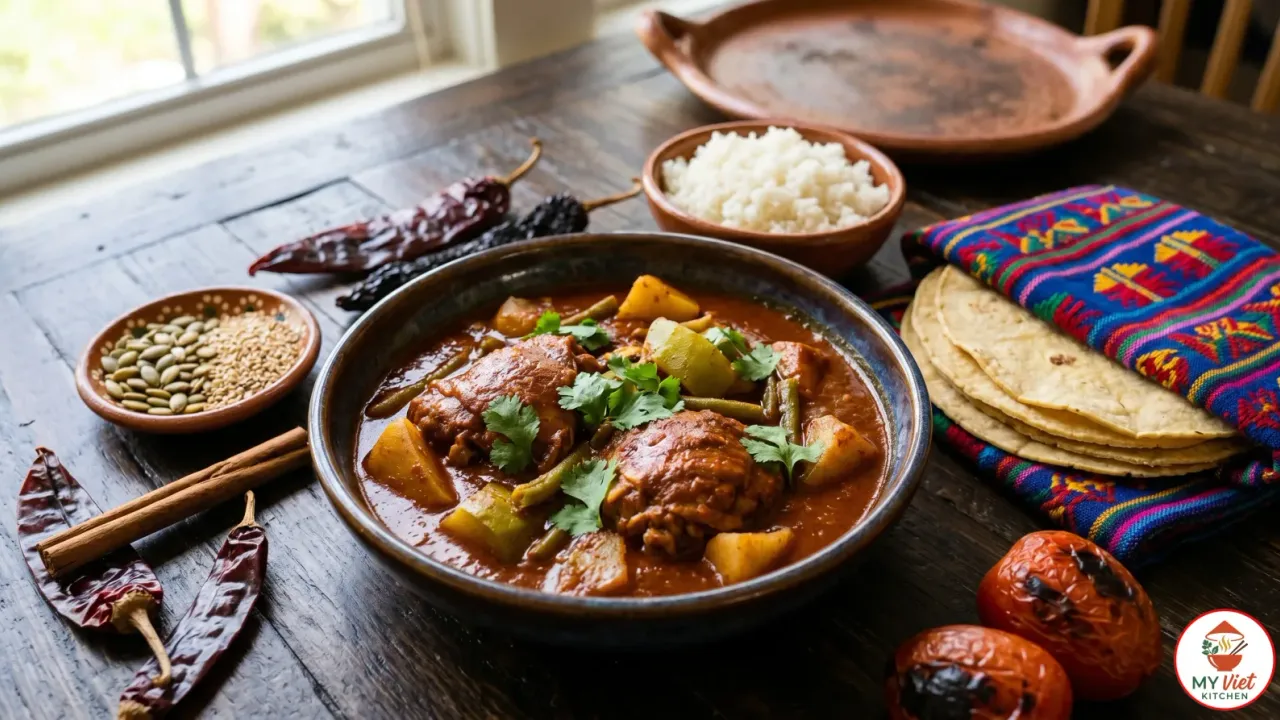
Pepian is the undisputed national dish of Guatemala, a magnificent stew that traces its roots directly to ancient Mayan cooking traditions. This deeply flavored dish combines bone-in chicken with a complex sauce built from toasted squash seeds, dried chilies, fire-roasted tomatoes, and warm spices like cinnamon and allspice. Every spoonful delivers layers of nutty, smoky, and gently spiced flavor that no other Latin American stew can match. Making pepian at home connects you to centuries of Guatemalan culinary heritage.
Prep Time: 40 minutes | Cook Time: 1 hour 20 minutes | Servings: 6
Difficulty: Intermediate | Calories: ~480 per serving
What Makes Pepian Special?
Pepian holds a unique place in Central American cuisine. While Mexican moles rely on chocolate and many dried chilies, Guatemalan pepian gets its flavor from toasted seeds and fire-roasted vegetables. The pepitoria (squash seeds) and sesame seeds form the backbone of the sauce. Once toasted and ground into a paste, these seeds make a thick, nutty base. They thicken the stew on their own without any flour or starch. Consequently, pepian has a velvety body and an earthy richness that feels entirely different from its Mexican neighbors.
Remarkably, this dish is far older than Spanish rule in the region. Mayan cooks in the highlands of Guatemala toasted seeds and blended them with native chilies and tomatoes long before European contact. In fact, similar seed-based sauces may date back to 2000 BCE. After the Spanish arrived, they brought cinnamon and allspice. Local cooks folded these new spices into the old recipe. In this way, pepian became a living bridge between pre-Columbian and modern Central American foodways.
What truly sets pepian apart is the layered toasting process. Every component of the sauce gets toasted individually before blending. First, the seeds are toasted until golden. Next, the tortilla is charred until nearly black. Then the chilies are pressed against the hot comal until they puff and release their oils. Finally, the tomatoes and tomatillos are roasted until blistered and collapsing. Each toasting step develops unique Maillard compounds that contribute to the sauce’s extraordinary depth. Skipping or rushing any of these steps produces a noticeably flatter result. Patience during the toasting phase is the single most important factor in making outstanding pepian.

Choosing the Right Dried Chilies
Dried chilies define the color, heat level, and flavor complexity of pepian. Traditional Guatemalan cooks use specific local varieties, but widely available Mexican dried chilies work beautifully. Above all, the key is selecting chilies with deep flavor and moderate heat rather than scorching intensity. Here is what to look for.
- Guajillo chilies (essential): These provide the signature brick-red color and a mild, fruity heat with notes of cranberry and green tea. They are the workhorse chili in pepian. Look for chilies that are pliable, not brittle, which indicates freshness. Three to four large guajillos give the sauce its characteristic hue without overwhelming spice.
- Pasilla chilies (best choice for depth): Sometimes called chile negro, pasilla chilies add a dark, smoky, raisin-like complexity. They deepen the color of the sauce to a rich mahogany. Their heat is mild, so they contribute more flavor than fire. Two pasilla chilies alongside the guajillos create the most balanced and traditional pepian sauce.
- Ancho chilies (substitute option): If pasilla chilies are unavailable, anchos provide a similar mild heat with sweet, pruny notes. They are the most widely available dried chili in North American grocery stores. Use the same quantity as the pasilla chilies they replace. The resulting sauce will be slightly sweeter but still authentically flavored.
Ingredients for Pepian
For the Chicken:
- 2 pounds (900g) bone-in chicken thighs and drumsticks
- Salt to taste
- 2 tablespoons vegetable oil
For the Recado Sauce:
- 3 dried guajillo chilies, stemmed and seeded
- 2 dried pasilla chilies, stemmed and seeded
- 3 medium tomatoes, halved
- 3 tomatillos, husked and halved
- 1 large white onion, quartered
- 4 cloves garlic, unpeeled
- 1/4 cup raw pepitoria or pepitas (squash seeds)
- 2 tablespoons raw sesame seeds
- 1 corn tortilla, torn into pieces
- 1 cinnamon stick
- 3 whole allspice berries
- 3 whole black peppercorns
- 4 cups (950ml) chicken stock
For the Vegetables:
- 2 medium chayote squash, peeled and cubed
- 2 medium potatoes, peeled and cubed
- 1 cup green beans, trimmed and halved
- Fresh cilantro for garnish
- Warm corn tortillas for serving
- Cooked white rice for serving
Pro tip: Toast the seeds in small batches and watch them constantly. Squash seeds go from golden to burnt in seconds. Shake the pan continuously rather than stirring with a spoon, as this prevents the seeds from sticking. Additionally, save the soaking water from the dried chilies. If your finished sauce needs thinning, use this flavorful liquid instead of plain water. It reinforces the chili flavor rather than diluting it.
Step-by-Step Instructions
Step 1: Toast the Seeds, Spices, and Chilies
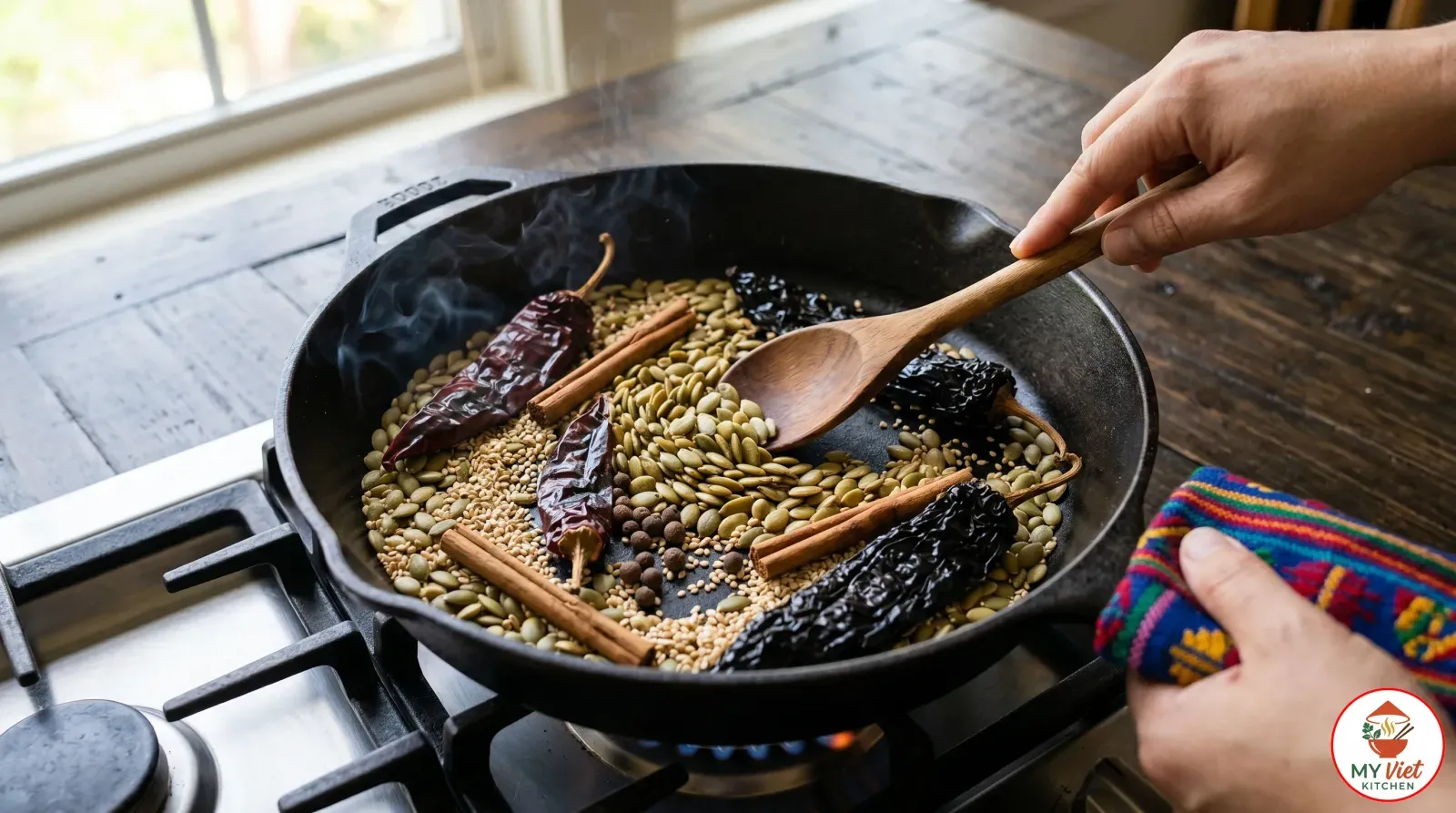
1 Heat a dry comal or heavy cast-iron skillet over medium heat. Add the pepitoria and sesame seeds. Toast them for 2 to 3 minutes, stirring constantly, until they turn golden and begin to pop. Transfer the seeds immediately to a bowl. They will continue to darken from residual heat, so removing them promptly prevents burning.
In the same pan, add the torn tortilla pieces. Toast them until they become dark brown and completely crisp on both sides, about 2 minutes total. Add them to the seed bowl. Next, toast the cinnamon stick, allspice berries, and black peppercorns for about 1 minute until fragrant. Transfer to the bowl. Finally, press the stemmed guajillo and pasilla chilies flat against the hot surface. Hold each one down for 10 to 15 seconds per side until it puffs slightly and releases a toasty aroma. Transfer the chilies to a separate bowl of hot water and let them soak for 15 minutes until soft and pliable.
Step 2: Roast the Vegetables
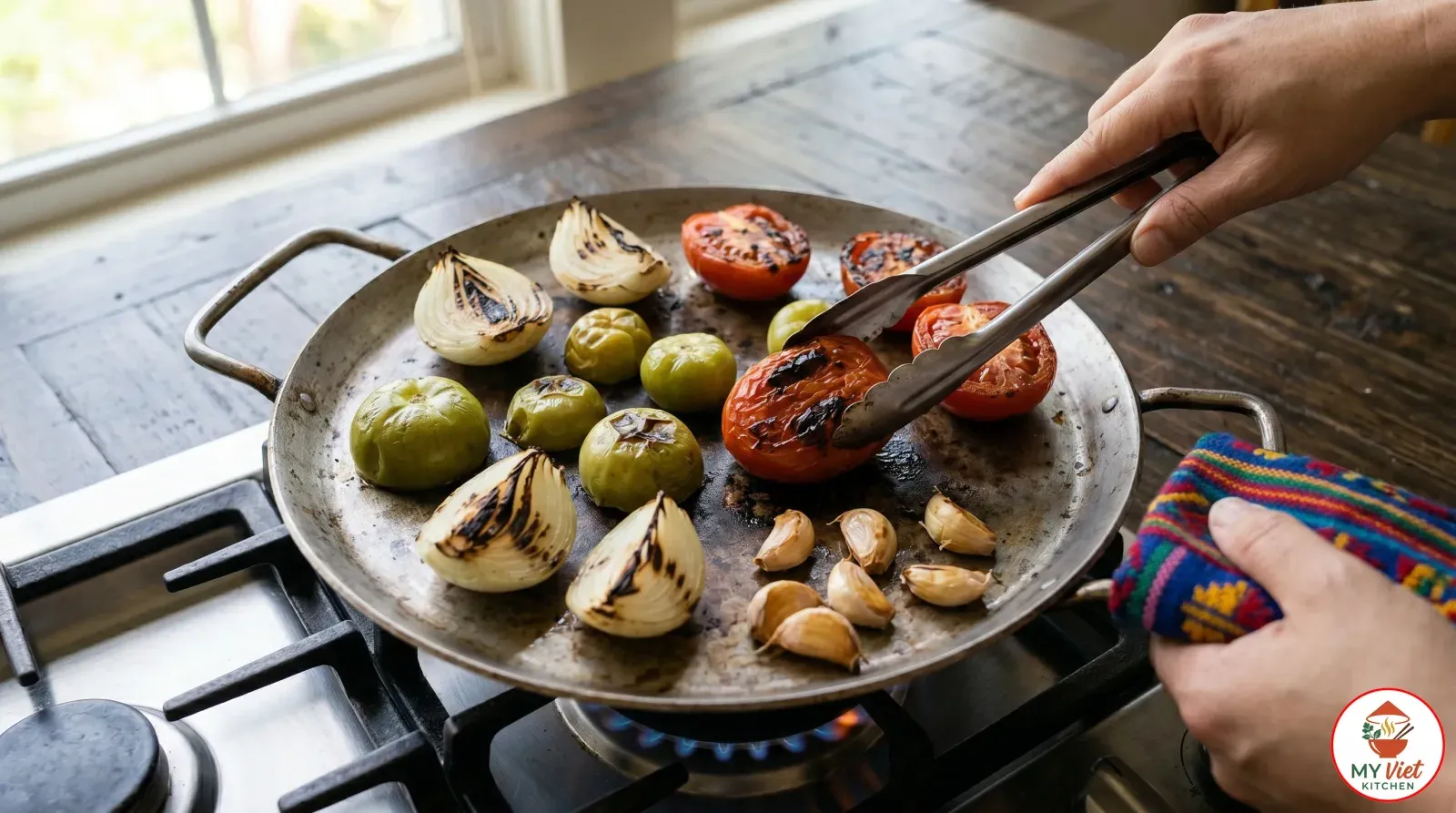
2 Place the halved tomatoes, tomatillos, onion quarters, and unpeeled garlic cloves directly on the hot comal or under a broiler set to high. Roast for 8 to 10 minutes, turning the vegetables occasionally with tongs. The tomato and tomatillo skins should blister and char in spots. Similarly, the onion should develop black marks on its cut surfaces. Meanwhile, the garlic should feel soft and squeezable through its papery skin.
This fire-roasting step is not optional. Because high heat triggers sugar to caramelize on the vegetable surfaces, it also creates smoky flavor compounds on the char marks. As a result, these compounds give pepian its smoky undertone. Peel the garlic cloves after roasting and set all the roasted vegetables aside. They will release their juices as they cool. Save every drop of that liquid for the blender.
Step 3: Blend the Recado Sauce
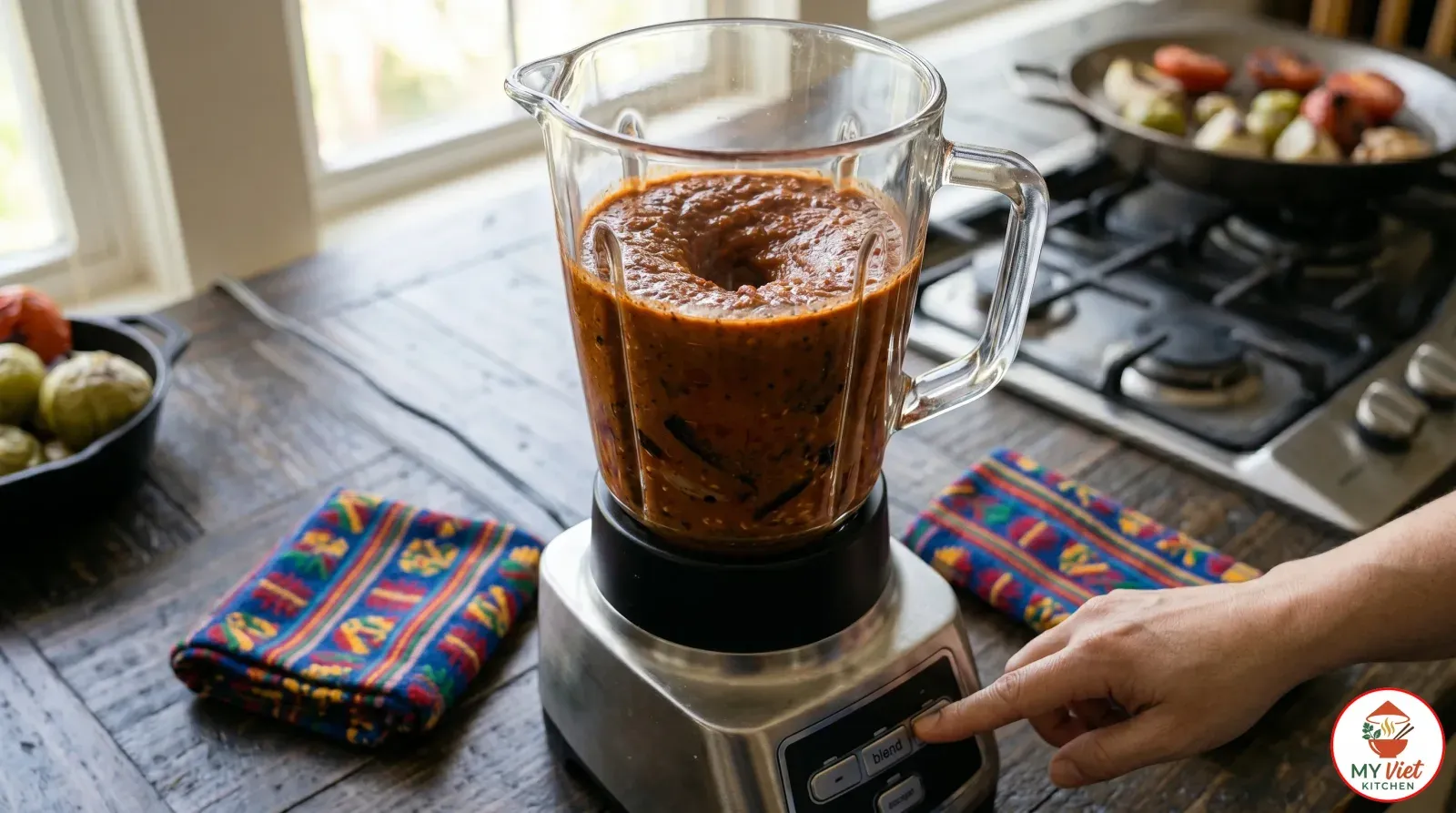
3 Drain the softened chilies and place them in a blender. Add the roasted tomatoes, tomatillos, onion, peeled garlic, toasted seeds, toasted tortilla pieces, cinnamon stick, allspice berries, peppercorns, and about half a cup of chicken stock. Blend on high for 2 to 3 minutes until completely smooth. Scrape down the sides of the blender as needed.
Your sauce should now be thick, rich, and brick-red. Pour it through a mesh sieve into a clean bowl. Press the solids with a spoon to get every bit of liquid out. Straining takes out gritty seed bits and chili skin that would ruin the silky texture. Discard the solids left in the sieve. Ultimately, this strained recado is the heart and soul of your pepian. Its quality determines the quality of the entire dish.
Step 4: Simmer the Chicken in the Sauce
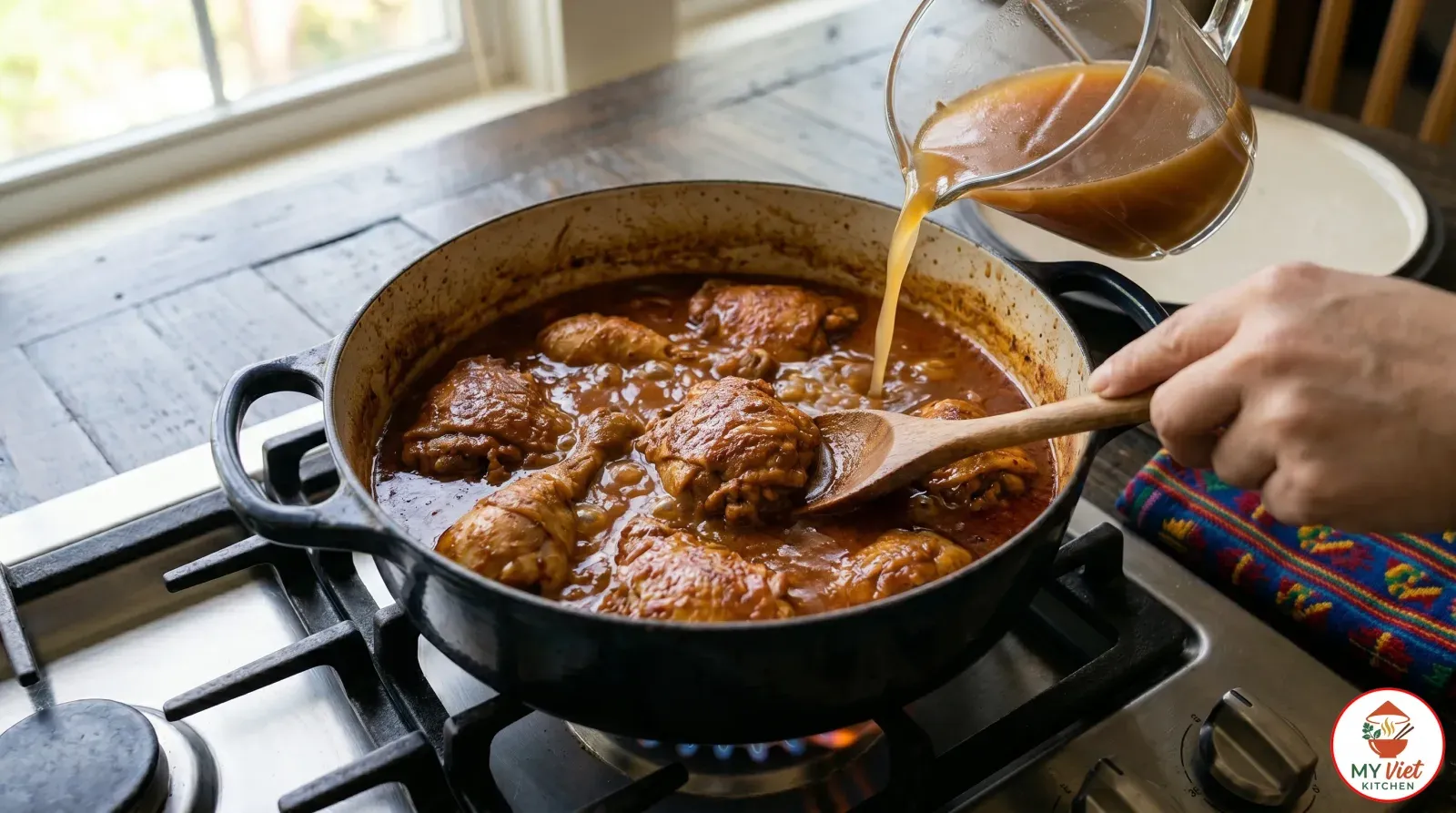
4 Heat 2 tablespoons of oil in a large Dutch oven over medium-high heat. Then carefully pour the strained recado sauce into the hot oil. It will splutter and bubble, so stand back. Stir for 5 minutes without stopping. This frying step makes the sauce darker, richer, and more flavorful. At the same time, any raw taste from the blended items cooks away.
After frying, pour in the rest of the chicken stock and stir until smooth. Then season the chicken with salt and tuck the pieces into the sauce. Bring it to a boil and reduce to a gentle simmer right away. Cover the pot with a lid slightly ajar. Cook for 35 to 40 minutes until the meat pulls easily from the bone. Check now and then to keep the heat at a lazy bubble.
Step 5: Add the Vegetables and Finish
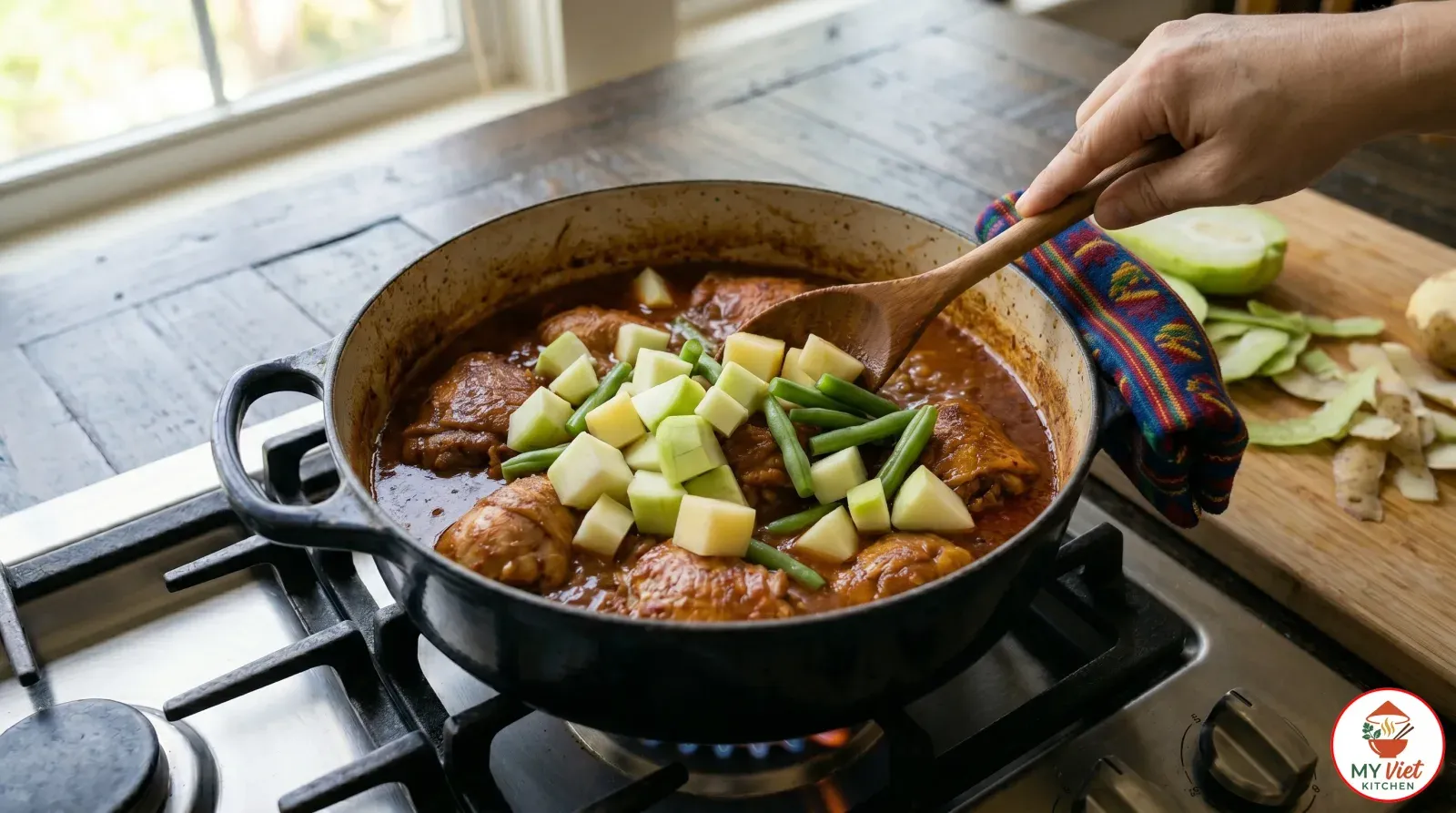
5 Add the cubed chayote and potatoes to the pot. Stir gently to coat them in sauce without breaking the chicken. Simmer for 15 minutes until they are nearly fork-tender. Then add the green beans and cook for 5 more minutes. Keep the green beans slightly crisp for a nice contrast.
Taste the sauce and adjust the salt. Ideally, it should be thick enough to coat the back of a spoon. If too thick, add a splash of stock. Ladle the pepian into deep bowls with chicken, vegetables, and plenty of sauce. Top with fresh cilantro leaves. Serve with warm corn tortillas and a mound of white rice. Use the tortillas to scoop up every last bit of that rich sauce.
Expert Tips for Perfect Pepian
Toast Each Component Separately
Seeds, tortilla, spices, and chilies all toast at different rates. Consequently, tossing them all in the pan at once means some will burn while others stay raw. Instead, toast each one on its own. Watch closely and move them to a bowl as they finish. This takes just five extra minutes but makes the sauce much more complex. Think of it as building flavor in layers. Moreover, seeds toasted on their own release oils more evenly than a crowded pan allows.
Fry the Sauce Before Adding Stock
Pouring the blended recado into cold stock is a shortcut that dulls the flavor. Instead, fry the sauce in hot oil first. This step drives off water and focuses the taste. Meanwhile, the sugars in the roasted vegetables caramelize further. As a result, the sauce turns darker and gains a rounded, toasty aroma. In Guatemalan kitchens, this frying step is seen as essential. Just five minutes of frying can turn a good pepian into a great one.
Use Bone-In Chicken for Richer Flavor
Boneless breast cooks faster, but the stew will be thinner and less rich. In contrast, bones release collagen and marrow as they simmer. These proteins make the sauce silky in a way boneless meat simply cannot. Additionally, dark meat stays moist during long cooking, while breast meat dries out. For the best pepian, always pick bone-in, skin-on thighs and drumsticks.
Pepian Compared to Other Latin American Stews
Central and South America have many great spiced stews. Pepian shares some methods with its neighbors but stays unique. Here is how it compares to the region’s other famous stew styles.
| Dish | Country | Key Ingredients | Key Characteristics |
|---|---|---|---|
| Pepian | Guatemala | Toasted squash seeds, dried chilies, roasted tomatoes | Nutty, earthy, seed-thickened, moderate heat |
| Mole Poblano | Mexico | Multiple dried chilies, chocolate, nuts, spices | Complex, sweet-savory, chocolate-enriched |
| Ajiaco | Colombia | Three potato varieties, guascas herb, corn | Creamy, herbal, mild, thickened by potato starch |
| Seco de Pollo | Peru | Cilantro, beer, aji amarillo, chicken | Bright green, cilantro-forward, tangy |
| Locro | Argentina | White corn, squash, beans, chorizo | Thick, hearty, mild, corn-based |
Serving Suggestions
In Guatemala, pepian shows up at family parties, festivals, and holidays. Serving it is simple but deeply satisfying. A big scoop of stew goes into a deep bowl with chicken, vegetables, and plenty of sauce. Rice and tortillas come with every plate. The simple sides let the complex sauce stay the star.
Traditional Accompaniments:
- Warm corn tortillas: Handmade corn tortillas are the essential partner. Their mild corn flavor complements the toasted seed sauce without competing. Use them to scoop up the thick recado and soak up every drop left in the bowl. Flour tortillas lack the authentic corn flavor that ties the meal together.
- Fluffy white rice: A mound of plain steamed rice absorbs the rich pepian sauce beautifully. The neutral starch provides a clean backdrop that lets the complex flavors shine. Cook the rice simply with water and a pinch of salt. Avoid seasoned or flavored rice, as it would clash with the nuanced sauce.
- Curtido (pickled cabbage slaw): A tangy, lightly fermented cabbage slaw cuts through the richness of the stew. The acidity refreshes the palate between bites. Make it with shredded cabbage, carrots, white vinegar, and dried oregano. This bright side dish adds color and contrast to the plate.
- Sliced avocado: Creamy avocado slices provide a cool, fatty contrast to the warm, spiced stew. The mild flavor does not compete with the sauce. Arrange a few slices alongside the bowl or directly on top of the stew just before serving.
Beverage Pairings:
- Horchata: This traditional rice and cinnamon drink is the classic Guatemalan pairing for pepian. Its creamy sweetness tempers the chili heat. The cinnamon in the horchata echoes the warm spice notes in the stew, creating a harmonious flavor bridge between food and drink.
- Gallo beer: Guatemala’s most popular lager is a natural companion. Its crisp, light body and gentle carbonation cleanse the palate between bites. The cold temperature contrasts pleasantly with the warm, rich stew. Serve it ice-cold for the best experience.
- Tempranillo or Garnacha red wine: A medium-bodied Spanish red with soft tannins pairs well with the earthy, seed-based sauce. The wine’s fruit notes complement the dried chili flavors without overpowering them. Avoid heavily oaked wines, as the strong wood flavor clashes with the delicate nuttiness of the pepitoria.
- Jamaica (hibiscus tea): A tart, deeply colored agua fresca made from dried hibiscus flowers. The bright acidity and floral notes provide a refreshing counterpoint. Serve it chilled and lightly sweetened. This non-alcoholic option works beautifully for family meals.
Storage and Reheating
Refrigerator: Let the pepian cool down before putting it in a sealed container. It keeps in the fridge for up to 4 days. The sauce will get much thicker as it cools. This is normal. In fact, the flavor gets even better after a day of rest. The toasted seed oils and spices keep blending with the chicken and vegetables.
Freezer: Pepian freezes very well for up to 3 months. Put portions into freezer-safe boxes and leave room at the top. Freeze the chicken and sauce together for the best results. Thaw in the fridge the night before you plan to serve it. The vegetables may get a bit softer after freezing, but the sauce and chicken hold up great.
Reheating: Warm pepian on the stove over medium-low heat. Add stock a spoonful at a time to thin the sauce back out. Stir now and then so the thick sauce does not stick to the pot. Try to avoid the microwave, since it heats unevenly. Taste and fix the salt after warming, because cold storage dulls the seasoning.
Common Mistakes to Avoid
1. Burning the Seeds
Squash seeds and sesame seeds contain high amounts of natural oils. Because of this, they go from golden to burnt in just seconds. Once burned, the seeds taste bitter, and that taste ruins the entire sauce. So keep the heat at medium and stir without stopping. Pull the seeds out the moment they turn golden. A bit under-toasted is fine. Over-toasted seeds, on the other hand, cannot be saved. When in doubt, take them off early.
2. Skipping the Straining Step
Even a powerful blender leaves behind tiny fragments of seed hulls and chili skins. Unfortunately, these bits create a gritty feel in the sauce. However, straining through a mesh sieve takes just a few minutes. It turns the sauce from rough to silky. Press hard on the solids to get all the good liquid out. This one step is what lifts a home pepian to restaurant quality.
3. Using Pre-Ground Spices Instead of Whole
Pre-ground cinnamon, allspice, and pepper lose most of their aroma by the time you open the jar. By contrast, whole spices toasted fresh release oils that are far more potent. For instance, one toasted cinnamon stick gives more flavor than a full tablespoon of ground powder. Furthermore, whole spices blend more evenly into the sauce. Spend the extra minute toasting for a much better result.
4. Adding Vegetables Too Early
Chayote, potatoes, and green beans cook much faster than bone-in chicken. Therefore, putting them in at the start means mushy vegetables that fall apart in the sauce. Instead, add roots only in the last 20 minutes. Put green beans in during the final 5 minutes. Each piece should be tender but still hold its shape. This staged method gives every item the right texture at the same time.
Frequently Asked Questions
What is Guatemalan pepian?
Pepian is the national dish of Guatemala. It is a thick, richly spiced stew built from toasted squash seeds, sesame seeds, dried chilies, fire-roasted tomatoes, and warm spices like cinnamon and allspice. The dish has deep Mayan roots stretching back thousands of years. Chicken is the most common protein, though pork and beef versions also exist. The toasted seeds thicken the sauce naturally and give it a distinctive nutty, earthy flavor that no other Latin American stew replicates.
What does pepian taste like?
Essentially, the flavor profile of pepian is complex and layered. First, toasted squash and sesame seeds provide a rich nuttiness. Then dried guajillo and pasilla chilies deliver mild heat with fruity, smoky undertones. Also, roasted tomatoes and tomatillos add brightness and a gentle acidity. Meanwhile, cinnamon and allspice bring warm sweetness. The overall taste is earthy, smoky, and gently spiced rather than fiery. Most people describe it as savory and deeply satisfying, with a warmth that builds gradually rather than hitting you with immediate heat.
Can I make pepian with pork instead of chicken?
Absolutely. Bone-in pork shoulder or country-style ribs are traditional alternatives. Cut the pork into 2-inch pieces and increase the simmering time to about 1.5 hours so the tougher meat becomes fall-apart tender. The higher fat content from the pork enriches the sauce further. Some Guatemalan families combine both chicken and pork in a single pot for maximum depth. Beef stew meat also works, though it requires a similar extended cooking time and produces a heartier result.
What can I substitute for pepitoria?
Standard raw pepitas (hulled green pumpkin seeds) from any grocery store are the closest widely available substitute for traditional pepitoria. Similarly, they offer a nutty flavor and thickening ability when toasted and blended. You can also increase the sesame seed quantity slightly to compensate for any difference. Alternatively, sunflower seeds provide another workable option with comparable fat content. In any case, always use raw, unsalted seeds. Pre-seasoned or roasted seeds will throw off the delicate spice balance of the sauce.
Is pepian spicy?
Pepian is moderately spiced but not fiery. The guajillo and pasilla chilies in the traditional recipe deliver mild to medium heat. Most versions rate around 3 to 4 on a 10-point heat scale. The toasted seeds, warm spices, and roasted vegetables balance and soften the chili heat significantly. For a milder version, reduce the dried chilies by half and add an extra tomato. For more heat, include one or two dried chile de arbol in the blender with the other chilies.
How do I store leftover pepian?
Refrigerate leftovers in an airtight container for up to 4 days. Since the sauce thickens as it cools, add chicken stock when reheating. Pepian also freezes well for up to 3 months. Simply thaw overnight in the refrigerator and reheat gently on the stovetop. Notably, the flavor actually improves after resting, because the toasted seed oils and spices continue to develop. Avoid reheating at high temperatures, which can cause the seed-based sauce to separate.
Variations and Adaptations
Pork Pepian:
Simply replace the chicken with 2 pounds of bone-in pork shoulder cut into chunks. Although the recado sauce and vegetables remain the same, increase the simmering time to 1.5 hours so the pork becomes tender. The pork fat melts into the sauce and creates an even richer, more luxurious texture. This version is especially popular in the western highlands of Guatemala. Serve with extra tortillas because the pork-enriched sauce demands thorough soaking.
Vegetarian Pepian:
For this version, omit the chicken entirely and use vegetable stock instead of chicken stock. Then double the amount of chayote, potatoes, and green beans. Also add cubed zucchini, corn on the cob cut into rounds, and chunks of butternut squash for heartiness. Since the seed-based sauce already provides substantial body and protein on its own, the dish still feels satisfying. Cook the vegetables in stages, adding denser items first and delicate ones last. This adaptation stays true to the Mayan roots of the dish, which often featured plant-based preparations.
Slow Cooker Pepian:
First, prepare the recado sauce on the stovetop through the frying step. Then transfer the fried sauce to a slow cooker. Add the chicken stock and chicken pieces. Cook on low for 6 to 7 hours or on high for 3 to 4 hours. Add the vegetables during the last hour on low or the last 30 minutes on high. The slow cooker produces exceptionally tender chicken and a deeply infused sauce. This hands-off method is perfect for busy weekdays while still delivering authentic flavor.
Turkey Pepian:
Interestingly, turkey is historically the most traditional protein for pepian, since turkeys are native to Central America. Use bone-in turkey thighs or legs. Because of the larger pieces, the cooking time increases to about 1 hour for the turkey alone before adding vegetables. Turkey meat has a slightly gamier, more robust flavor than chicken. It pairs exceptionally well with the earthy seed sauce. This variation is the closest to what ancient Mayan cooks would have prepared centuries ago.
The Cultural Significance of Pepian
Pepian is far more than a recipe in Guatemala. In fact, it is a symbol of pride, identity, and history. Traditionally, the dish shows up at weddings, baptisms, funerals, and all major holidays. Families pass their pepian recipes down through the years. Each household guards its own small tweaks as closely held secrets. A grandmother’s ratio of seeds to chilies, or her way of charring the tortilla, becomes part of the family’s food legacy.
Indeed, the Mayan roots of pepian are well known. According to Taste Atlas, this dish dates to pre-Columbian times. Mayan people grew squash, chilies, and tomatoes in the Guatemalan highlands. Notably, they toasted seeds and ground them into sauces. This was a skilled cooking method that showed deep plant knowledge. When the Spanish arrived, they brought spices like cinnamon and allspice. Rather than wiping out the old recipe, these new items blended right in. Today’s pepian stands for this mix of Mayan and Spanish food traditions. It proves that the native food culture of Guatemala grew stronger over time rather than fading away. Making pepian at home honors a tradition that has lasted over two thousand years.
Conclusion
Pepian is one of the most rewarding dishes you can make at home. Certainly, toasting seeds, charring vegetables, and making sauce from scratch takes time. However, you get a stew of rare depth that no store-bought sauce can match. Once you nail the toasting and blending steps, the rest is just waiting while the pot simmers. The rich, nutty smell filling your kitchen will prove that every minute was worth it.
Ready to explore more global stew traditions? Browse our collection of Central American dishes and discover recipes like jollof rice, goulash, and feijoada. If you try this pepian recipe, leave a rating and share your experience in the comments below.