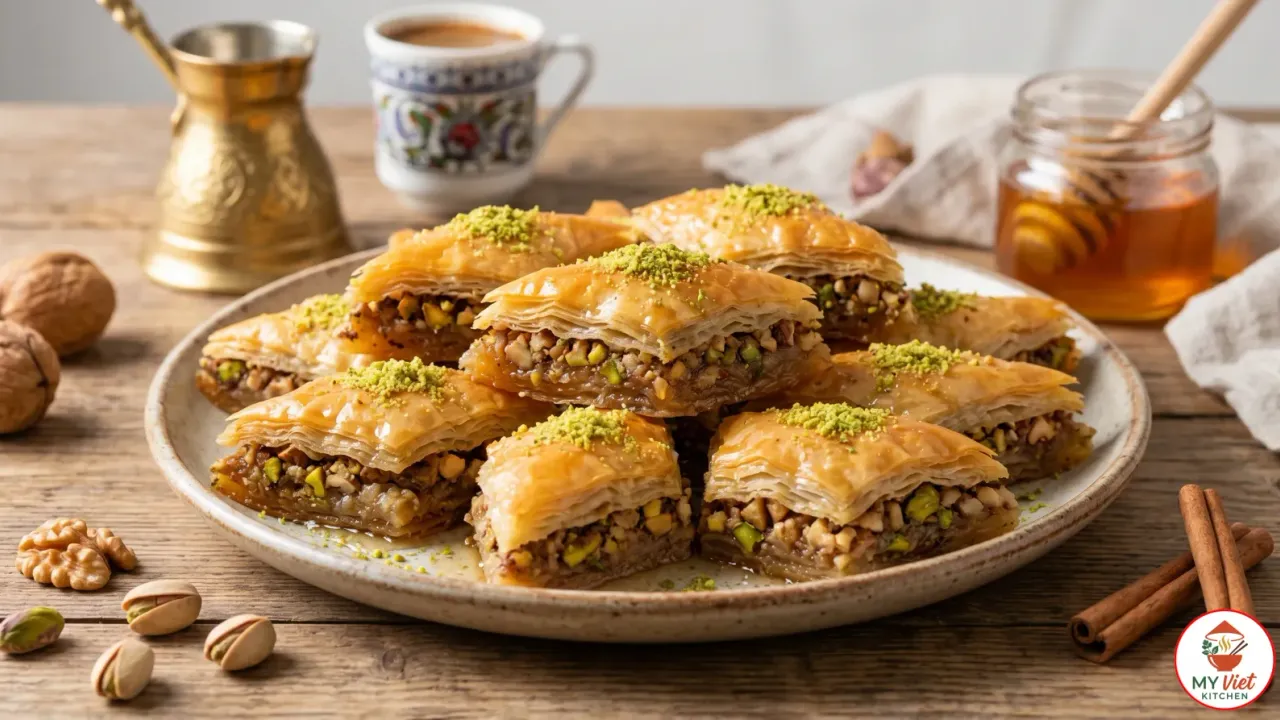
Baklava is one of the most celebrated pastries in the world, and the very first bite explains its enduring fame. Shatteringly crispy layers of golden phyllo dough encase a fragrant filling of spiced nuts, all drenched in a glistening honey-lemon syrup that seeps into every crevice. Claimed with equal passion by Greece and Turkey, baklava has been perfected over centuries across the Eastern Mediterranean, the Middle East, and Central Asia. This step-by-step guide shows you how to make authentic baklava at home with a three-nut filling and a perfectly balanced syrup that keeps the pastry crisp rather than soggy.
Prep Time: 40 minutes | Cook Time: 50 minutes | Servings: 24 pieces
Difficulty: Medium | Calories: ~280 per serving
What Makes Baklava Special?
Baklava holds a singular position among the world’s desserts because it achieves something that most sweets never attempt: a perfect balance between crunch and syrup. Every layer of phyllo is brushed with clarified butter that turns it impossibly crisp in the oven. Then a cool syrup pours over the scorching pastry, soaking into the nut filling while the buttery phyllo resists turning soft. The result is a dessert where each bite delivers a shattering crack followed by a rush of honeyed, nutty sweetness. No other pastry manages this textural duality with such elegance.
The origins of baklava stretch back to the Ottoman Empire, and quite possibly further to the Assyrians, who layered thin dough with chopped nuts as early as the 8th century BCE. The Ottoman palace kitchens in Istanbul elevated the dish into high art, with the imperial baklava ceremony held every Ramadan when trays of baklava were presented to the Janissaries. Today, Greece, Turkey, Lebanon, Syria, Iran, and many other nations each claim baklava as part of their culinary heritage. The debate over its true origin remains lively and unresolved, but one thing is universally agreed upon: properly made baklava is transcendent.
What separates extraordinary baklava from ordinary versions comes down to three principles. First, every single sheet of phyllo must be brushed with clarified butter, not melted whole butter. Clarified butter contains no milk solids, which means no burning and maximum crispness. Second, the nut filling must be chopped to a precise consistency. Too coarse and the layers separate. Too fine and the filling turns into paste. Third, the syrup temperature must contrast with the pastry. Hot syrup on hot pastry makes mush. Cool syrup on hot pastry creates magic. Master these three elements and your baklava will rival any bakery in Athens or Istanbul.
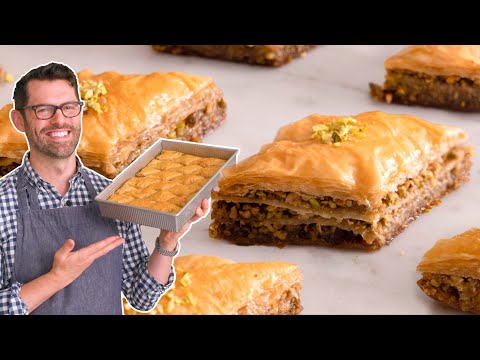
Choosing the Right Nuts for Baklava
Nuts are the heart and soul of baklava, so your choice determines the character of the entire pastry. Different regions use different nuts, and each brings a distinct flavor profile. The most important rule is that the nuts must be raw and unsalted. Roasted or salted nuts will throw off both the flavor balance and the texture. The oven does the toasting for you, and the syrup provides all the sweetness you need.
- Walnuts (Greek tradition): The most affordable option and the standard in Greek baklava. Walnuts deliver a deep, earthy bitterness that pairs beautifully with honey and cinnamon. They chop easily and hold their texture well during baking. Choose halves and pieces rather than pre-chopped bags for the freshest flavor.
- Pistachios (Turkish tradition, best choice for flavor): Unsalted, shelled pistachios produce the most visually stunning and delicately flavored baklava. Their natural green color creates gorgeous layers, and their subtle sweetness requires less syrup. Antep pistachios from southeastern Turkey are considered the gold standard. They cost more, but the difference in flavor is unmistakable.
- Almonds: Blanched almonds add a mild, slightly sweet crunch that rounds out nut blends beautifully. They work best in combination with walnuts or pistachios rather than alone, because their flavor is subtle compared to the intense sweetness of the syrup.
- Three-nut blend (recommended): Combining walnuts, pistachios, and almonds creates the most complex and satisfying baklava. Each nut contributes a different texture and flavor note. This is the approach used in this recipe and the one most pastry chefs recommend for home bakers.
Ingredients for Baklava
Phyllo Layers:
- 1 pound phyllo dough, thawed according to package directions
- 1 cup unsalted butter, melted and clarified
Spiced Nut Filling:
- 2 cups walnuts, finely chopped
- 1 cup pistachios, finely chopped
- 1/2 cup almonds, finely chopped
- 1 teaspoon ground cinnamon
- 1/2 teaspoon ground cardamom
- 1/4 teaspoon ground cloves
Honey-Lemon Syrup:
- 1 cup granulated sugar
- 3/4 cup water
- 1/2 cup honey
- 2 tablespoons fresh lemon juice
- 1 teaspoon vanilla extract
- 2 strips lemon zest
- 1 cinnamon stick
Pro tip: Clarify your butter before brushing the phyllo. Melt unsalted butter slowly, let it separate, then skim off the white foam and carefully pour the clear golden liquid off the milky solids at the bottom. Clarified butter has a higher smoke point and contains no water, which means every layer of phyllo turns crisp and golden rather than soggy. This single step makes the biggest difference in the finished texture of your baklava.
Step-by-Step Instructions
Step 1: Prepare the Nut Filling
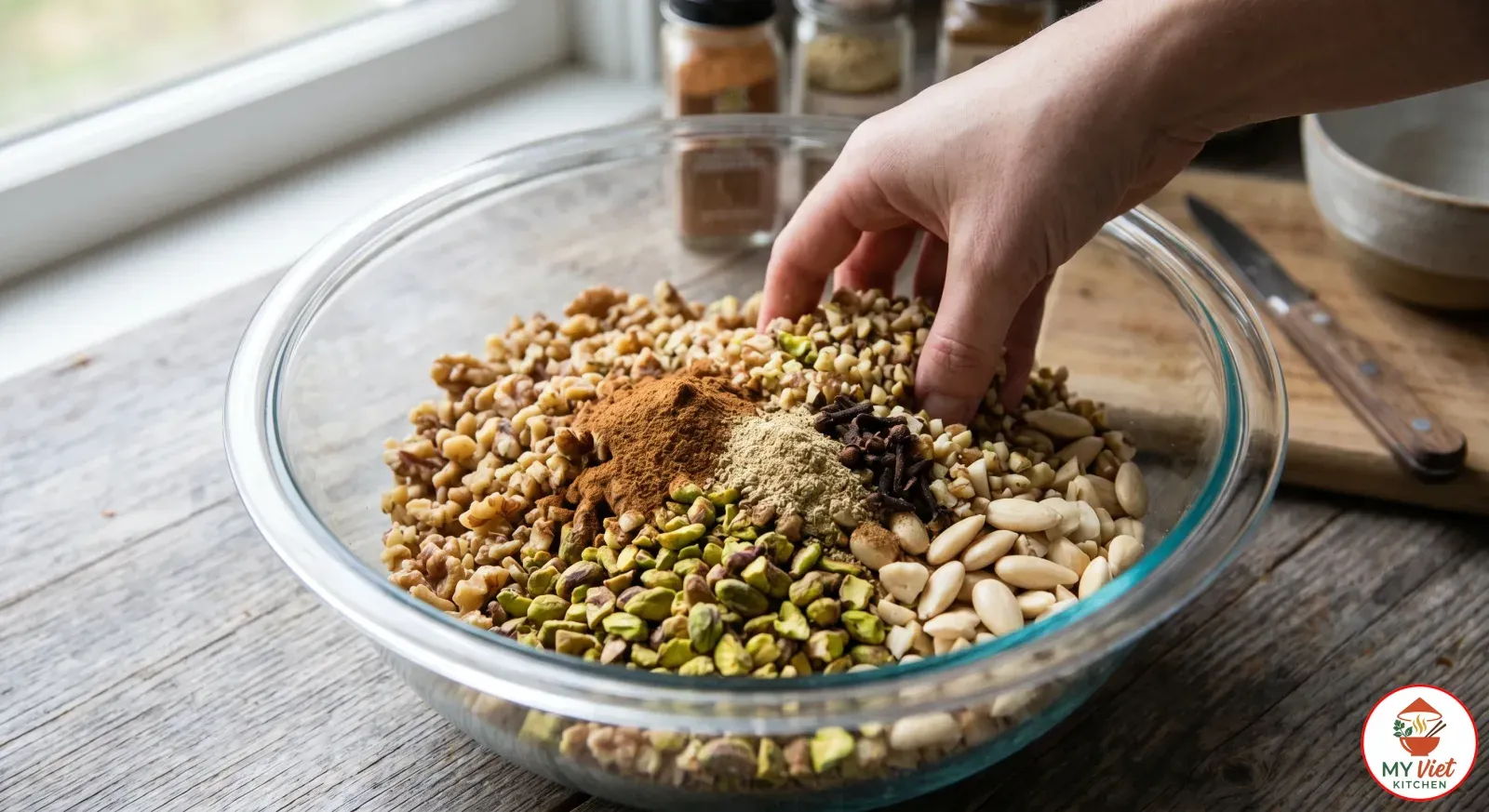
1 Combine the finely chopped walnuts, pistachios, and almonds in a large mixing bowl. Add the ground cinnamon, cardamom, and cloves. Toss everything together with your hands until the spices distribute evenly throughout the nuts. The chopping consistency is critical here. You want pieces roughly the size of a lentil, small enough to form a cohesive layer but coarse enough to provide satisfying crunch in every bite. Avoid using a food processor on pulse for more than a few seconds, because nuts go from chopped to paste very quickly. A chef’s knife and cutting board give you the best control over the texture.
Step 2: Layer the Phyllo and Nuts
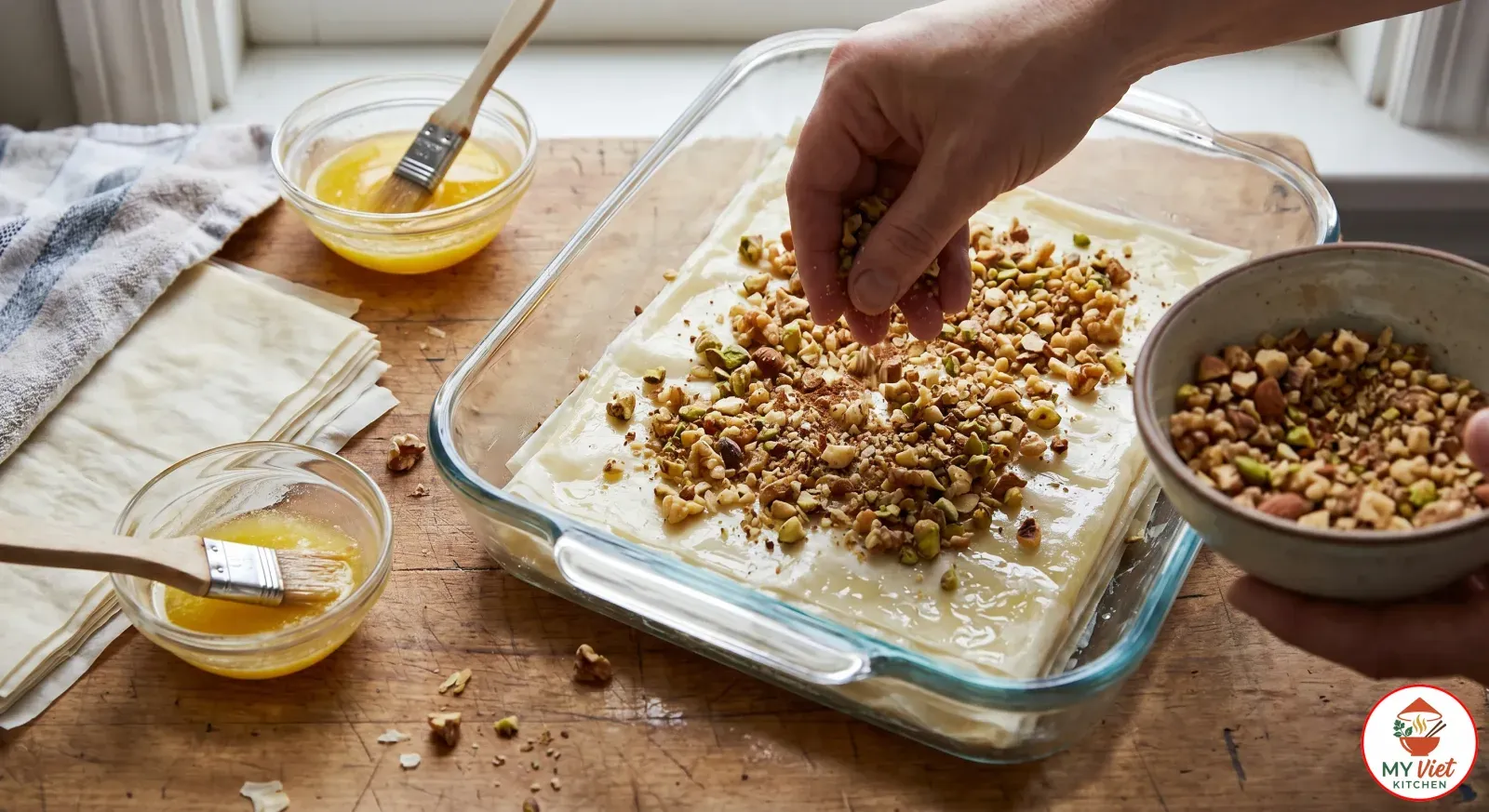
2 Preheat your oven to 325 degrees Fahrenheit. Unroll the thawed phyllo dough and trim the sheets to fit your 9x13-inch baking pan. Cover the phyllo stack with a damp kitchen towel to prevent it from drying out. Phyllo dries within minutes when exposed to air, and dry phyllo cracks and crumbles instead of layering smoothly. Brush the bottom of the pan generously with clarified butter.
Place one sheet of phyllo in the pan and brush it thoroughly with clarified butter, making sure to reach the edges and corners. Repeat this process until you have layered 8 sheets on the bottom. These bottom layers form the foundation that supports the weight of the nuts and syrup, so they need to be thick and well-buttered. Spread one-third of the spiced nut mixture evenly over the phyllo. Add 6 more sheets of phyllo, buttering each one individually, then spread another third of the nuts. Add 6 more buttered sheets, spread the remaining nuts, and finish with 8 to 10 buttered phyllo sheets on top. Brush the final layer generously with the remaining butter.
Step 3: Cut and Bake the Baklava
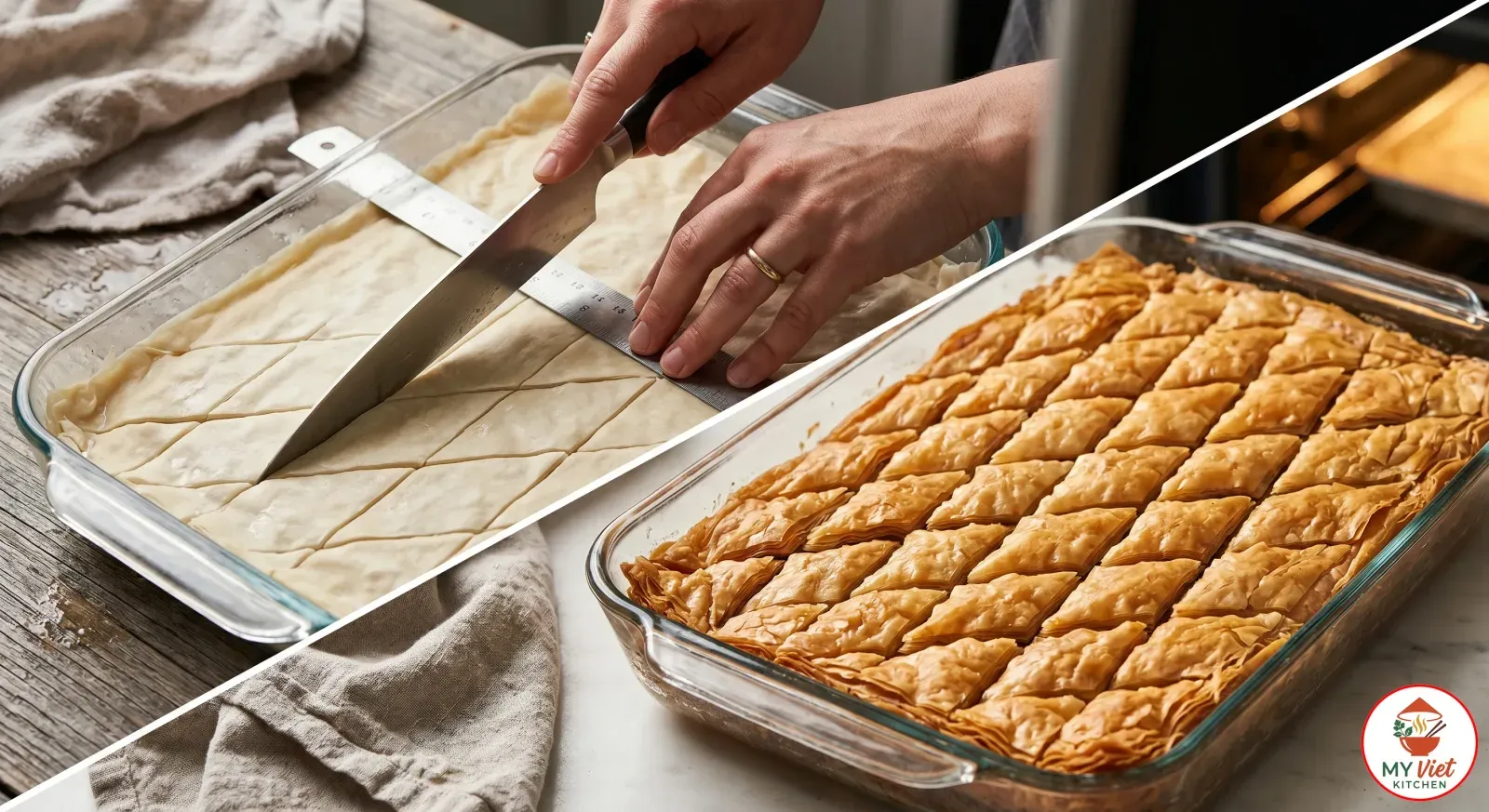
3 Before the baklava goes into the oven, you must cut it into pieces. This step is not optional and cannot be done after baking. Use a very sharp knife to cut the baklava into diamonds or squares. For diamonds, make parallel cuts about 2 inches apart across the length of the pan, then cut diagonals across those lines. Press the knife firmly through all the layers, cutting completely down to the bottom of the pan. If you only score the top, the baked phyllo will shatter into jagged pieces when you try to cut through it later.
Place the pan in the preheated oven and bake at 325 degrees Fahrenheit for 45 to 50 minutes. The low temperature is deliberate. High heat browns the top layers before the interior crisps, leaving you with dark edges and soggy middle layers. At 325 degrees, the butter slowly renders out of the phyllo, crisping each sheet individually from the inside out. The baklava is done when the top turns a deep, even golden brown and the edges pull slightly away from the sides of the pan. The entire kitchen will fill with the smell of toasted butter and warm spices.
Step 4: Make the Honey-Lemon Syrup
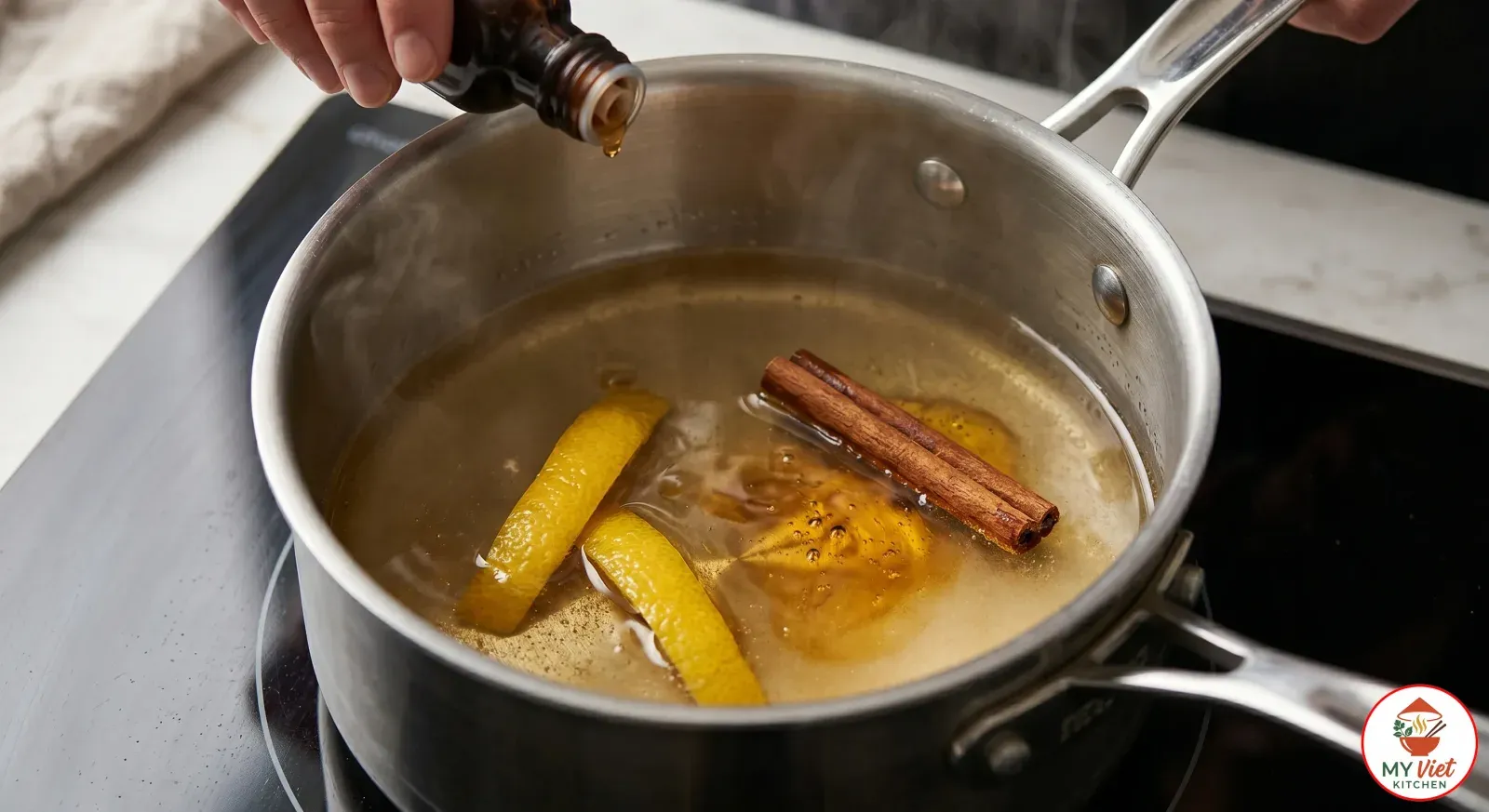
4 While the baklava bakes, prepare the syrup. Combine the sugar and water in a medium saucepan over medium heat. Stir until the sugar dissolves completely, then add the honey, lemon juice, lemon zest strips, and cinnamon stick. Bring the mixture to a gentle boil, then reduce the heat to low and let it simmer without stirring for 10 minutes. The syrup should thicken slightly but remain pourable, similar to the consistency of warm maple syrup.
Remove the saucepan from the heat. Fish out and discard the lemon zest strips and cinnamon stick. Stir in the vanilla extract. Now let the syrup cool to room temperature. This cooling period is absolutely essential. The syrup must be cool or at most lukewarm when it meets the hot baklava. This temperature contrast is the single most important technique in the entire recipe. Hot syrup on hot pastry creates steam that turns the phyllo layers into a soggy, compressed mass. Cool syrup on hot pastry soaks in gently while allowing the phyllo to stay flaky and crisp.
Step 5: Soak with Syrup and Rest
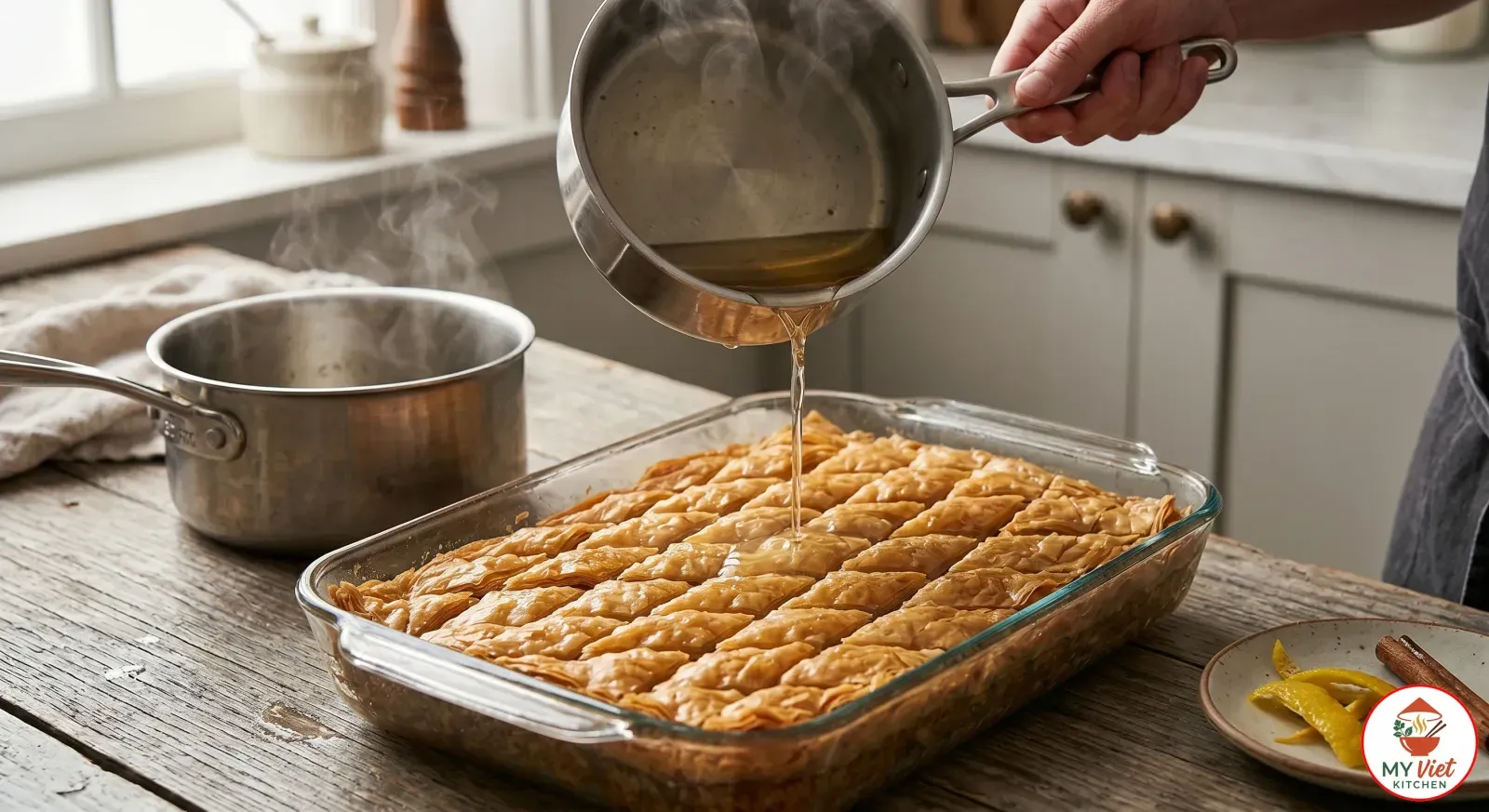
5 The moment the baklava comes out of the oven, pour the cooled syrup evenly over the entire surface. Use a spoon to drizzle the syrup along every cut line and around the edges of the pan. You will hear the phyllo crackle and hiss as the cool syrup meets the scorching pastry. This sound means the syrup is being drawn into the layers by capillary action, which is exactly what you want. Make sure every piece receives syrup, paying special attention to the corners and edges of the pan.
Let the baklava rest uncovered at room temperature for at least 4 hours, and ideally overnight. Do not cover the pan during this resting period. Covering traps moisture and creates condensation that softens the top layer of phyllo. During the rest, the syrup migrates slowly downward through the nut layers, saturating the filling while leaving the top sheets crisp. After the resting period, the baklava is ready to serve. Use a sharp knife to re-cut along the original lines and lift each piece out carefully with a small offset spatula.
Expert Tips for Perfect Baklava
Work Quickly with Phyllo Dough
Phyllo dough is extremely thin and dries out within minutes of being unwrapped. Before you begin layering, have your clarified butter melted and ready, your nut filling mixed, and your baking pan greased. Unroll the phyllo, trim it to size, and cover the stack with a slightly damp kitchen towel. Pull one sheet at a time from under the towel, butter it, and immediately cover the rest. If a sheet tears, do not discard it. Simply lay it in the pan and butter over the tear. Once baked, small tears are invisible under the golden crust.
Use Clarified Butter, Not Whole Butter
This distinction matters enormously. Whole melted butter contains water and milk solids. The water creates steam during baking that prevents the phyllo from crisping. The milk solids burn at the oven temperature, leaving dark spots and a bitter taste. Clarified butter is pure fat with a high smoke point. It coats each phyllo sheet in a thin layer of golden oil that crisps beautifully without burning. To clarify butter, melt it slowly over low heat, skim the white foam, and pour off the clear golden liquid, leaving the milky sediment behind. One cup of whole butter yields about 3/4 cup of clarified butter.
Bake Low and Slow
The temptation to bake baklava at a higher temperature for faster results will ruin the pastry. At 350 degrees or above, the top layers brown and burn while the interior remains soft and undercooked. Baklava needs 325 degrees for 45 to 50 minutes so that the heat reaches the bottom layers and crisps every sheet of phyllo from edge to edge. Patience during baking is what creates the satisfying crunch that defines great baklava. If the top starts browning too quickly, tent it loosely with aluminum foil for the last 10 minutes.
Greek vs. Turkish Baklava: A Comparison
Both Greece and Turkey claim baklava as their national dessert, and both have developed distinct versions over the centuries. The differences are subtle but meaningful, and understanding them helps you tailor your baklava to your personal taste.
| Feature | Greek Baklava | Turkish Baklava |
|---|---|---|
| Primary nut | Walnuts | Pistachios |
| Syrup base | Honey and lemon | Sugar syrup, sometimes rose water |
| Spices | Cinnamon, cloves | Cardamom, minimal spice |
| Phyllo thickness | Standard sheets | Paper-thin, up to 40 layers |
| Sweetness level | Rich and honeyed | Lighter, more delicate |
| Butter type | Clarified butter | Clarified butter or ghee |
| Texture | Crunchy and robust | Delicate and flaky |
The recipe in this guide draws from both traditions. It uses the Greek approach of honey-based syrup with cinnamon and lemon, combined with a nut blend that includes Turkish-style pistachios alongside walnuts and almonds. This fusion produces a baklava with depth and complexity that honors the best of both culinary worlds.
Serving Suggestions
Baklava is traditionally served at room temperature, which is when the contrast between crispy phyllo and syrup-soaked nuts is at its peak. It is the star of holiday tables across the Mediterranean and Middle East, from Greek Easter to Turkish Ramadan celebrations. A beautifully arranged platter of diamond-cut baklava makes a stunning centerpiece at any gathering.
The Perfect Accompaniments:
- Turkish coffee or Greek coffee: The intense, slightly bitter coffee is the traditional partner for baklava across the Eastern Mediterranean. Its bold flavor provides the perfect counterpoint to the sweetness.
- Vanilla ice cream: A small scoop of high-quality vanilla ice cream alongside a piece of warm baklava creates a beautiful temperature and texture contrast.
- Fresh fruit: Sliced oranges, pomegranate seeds, or fresh figs cut through the richness and add color to the plate.
- Clotted cream or kaymak: In Turkey, baklava is often served with thick kaymak, a rich clotted cream that adds an extra layer of indulgence.
Beverage Pairings:
- Turkish or Greek coffee: The classic and most traditional pairing, with dark roast bitterness balancing the honeyed sweetness.
- Mint tea: Fresh mint tea served hot is the North African and Middle Eastern partner of choice, cleansing the palate between bites.
- Moscato d’Asti: This lightly sparkling Italian dessert wine has enough sweetness to complement rather than clash with baklava.
- Raki or ouzo: The anise-flavored spirit traditional in Turkey and Greece provides a sharp, aromatic contrast to the sweet pastry.
Storage and Reheating
Room temperature: Baklava stores beautifully at room temperature for up to 2 weeks. Cover the pan loosely with foil or place pieces in a single layer in an airtight container with parchment between layers. The flavors actually improve over the first 2 to 3 days as the syrup continues to meld with the nuts and spices. Do not refrigerate baklava unless your kitchen is extremely hot, because cold temperatures cause the butter in the phyllo to solidify and the texture to become waxy.
Freezer: Baklava freezes well for up to 3 months. Wrap individual pieces or the entire tray tightly in plastic wrap and then aluminum foil. Thaw at room temperature for 2 to 3 hours before serving. The phyllo may lose a small amount of crispness after freezing, but the flavor remains excellent.
Reheating: Baklava is best served at room temperature and does not require reheating. If you prefer it slightly warm, place pieces on a baking sheet in a 300-degree oven for 5 to 8 minutes. Do not microwave baklava. The microwave turns the phyllo rubbery and causes the syrup to boil, destroying the texture completely.
Common Mistakes to Avoid
1. Pouring Hot Syrup Over Hot Baklava
This is the most destructive mistake you can make when preparing baklava. When both the syrup and the pastry are hot, the liquid floods the layers too rapidly and creates steam that collapses the delicate phyllo structure. The result is a dense, soggy, and overly sweet block instead of a layered pastry. Always make the syrup first or at the same time as the baklava bakes, and let it cool completely to room temperature before pouring it over the fresh-from-the-oven pastry.
2. Skipping the Pre-Bake Cut
Once baked, the phyllo layers become extremely crispy and brittle. Attempting to cut baklava after baking shatters the top layers into jagged shards, and the force of the knife crushes the delicate internal structure. Cutting before baking, when the phyllo is still pliable, creates clean lines that hold their shape through baking and syrup-soaking. Use a sharp, thin-bladed knife and cut in a single firm motion rather than sawing back and forth.
3. Using Too Much Syrup
More syrup does not mean better baklava. The ratio of syrup to pastry is carefully calibrated so that the nut filling absorbs the sweetness while the phyllo stays crisp. If you double the syrup, the excess pools at the bottom of the pan and the lower layers become waterlogged. Follow the syrup quantity in this recipe precisely. Each piece should glisten and taste sweet but not drip or feel sodden when you pick it up.
4. Chopping Nuts Too Fine
Nuts ground into powder or paste release their oils and create a dense, heavy filling that turns greasy during baking. The baklava loses its textural contrast and tastes flat. Chop the nuts by hand to the size of lentils or small peas. Each piece should be distinct and identifiable. The goal is a coarse, crunchy filling that contrasts with the shatteringly thin phyllo layers, not a smooth nut butter.
Frequently Asked Questions
What is the best nut for baklava?
The best nuts for baklava depend on the regional tradition you follow. Turkish baklava typically uses pistachios for their vibrant green color and delicate, slightly sweet flavor. Greek baklava favors walnuts for their earthy richness and more affordable price. A blend of walnuts, pistachios, and almonds provides the most complex flavor and is the approach most pastry chefs recommend for home bakers. Whichever nut you choose, make sure it is raw and unsalted.
Should the syrup be hot or cold when poured over baklava?
The syrup must be cool or at room temperature, and the baklava must be hot straight from the oven. This temperature contrast is the single most important technique in making baklava. Pouring hot syrup over hot pastry creates steam that collapses the phyllo layers and makes the entire dessert soggy. Cool syrup on hot pastry soaks in gradually, saturating the nut filling with sweetness while allowing the buttered phyllo layers to retain their crisp, flaky texture.
Why is my baklava soggy?
Soggy baklava results from three common mistakes. First, pouring hot syrup over hot pastry instead of letting the syrup cool. Second, not using enough clarified butter between the phyllo layers, which prevents them from crisping during baking. Third, covering the baklava before it has fully cooled and absorbed the syrup. Always let baklava rest uncovered at room temperature for at least 4 hours after adding the syrup before covering or serving.
Can you make baklava ahead of time?
Baklava is one of the best make-ahead desserts in existence. It actually improves over the first 24 to 48 hours as the syrup fully penetrates the nut layers and the flavors meld together. Store it loosely covered at room temperature for up to 2 weeks. Baklava does not need refrigeration and genuinely tastes better after a day or two of resting than it does fresh from the oven.
What is the difference between Greek and Turkish baklava?
Greek baklava typically uses walnuts, a honey-based syrup with cinnamon and lemon, and standard phyllo sheets that produce a robust, crunchy texture. Turkish baklava favors pistachios, a lighter sugar syrup sometimes scented with rose water, and extremely thin phyllo sheets that create a more delicate, flaky pastry. Both versions are authentic and delicious. The recipe in this guide blends elements from both traditions for the richest possible result.
Variations and Adaptations
Rose Water Baklava:
For a fragrant, floral variation popular in Lebanon and Iran, replace the vanilla extract in the syrup with 1 tablespoon of rose water. Omit the cinnamon stick and cloves to let the delicate rose flavor shine. Use pistachios as the sole nut for a classic Middle Eastern presentation. The rose water adds an ethereal, perfumed quality that transforms the entire dessert into something distinctly elegant.
Chocolate Baklava:
For a modern twist, add 1/2 cup of finely chopped dark chocolate to the nut filling. The chocolate melts during baking and creates pockets of bittersweet richness between the nut layers. Use hazelnuts instead of almonds for a flavor combination reminiscent of Nutella. Drizzle the finished baklava with melted dark chocolate for a stunning presentation. Reduce the syrup quantity by one quarter to prevent the dessert from becoming too sweet.
Vegan Baklava:
Replace the butter with refined coconut oil, which has a neutral flavor and behaves similarly to clarified butter when baking. Use maple syrup or agave nectar in place of honey in the syrup. Most store-bought phyllo dough is already vegan, but check the label to confirm. The resulting baklava is remarkably close to the original in flavor and texture. The coconut oil crisps the phyllo beautifully, and maple syrup adds its own distinctive caramel sweetness.
Baklava Rolls (Saragli):
Instead of layering the phyllo flat, roll the nut filling inside individual phyllo sheets to create cigar-shaped pastries known as saragli in Greek or burma in Turkish. Lay 2 to 3 buttered phyllo sheets on top of each other, sprinkle a line of nut filling along one edge, and roll tightly. Place the rolls seam-side down in the pan, brush with butter, and bake for 25 to 30 minutes until golden. Pour the cooled syrup over the hot rolls. This format is easier to handle and makes a beautiful presentation for individual servings.
The Cultural Significance of Baklava
Few desserts carry as much cultural weight as baklava. Across the Eastern Mediterranean, the Middle East, and Central Asia, baklava is not merely a sweet treat. It is a symbol of celebration, hospitality, and generosity. In Turkish culture, the phrase “I am not rich enough to eat baklava every day” reflects how the dessert represents abundance and special occasions. Greek households bring out trays of baklava at Easter, Christmas, and name day celebrations. Across Lebanon and Syria, offering baklava to guests is an expression of respect and welcome that carries deep social meaning.