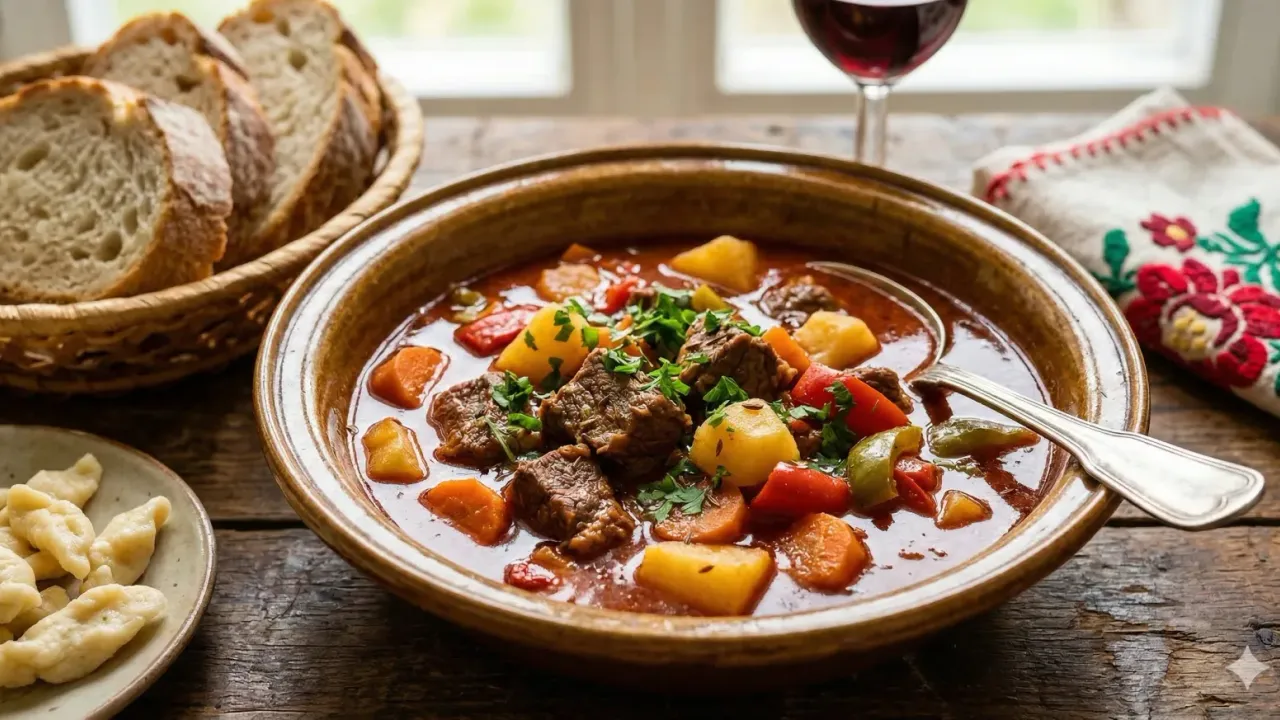
Goulash is Hungary’s most beloved dish, a soul-warming beef stew built on a foundation of sweet paprika, slow-cooked onions, and tender vegetables. This goulash recipe follows the traditional Hungarian method, where patience and quality paprika transform humble ingredients into a stew of extraordinary depth. Whether you call it gulyás or goulash, one spoonful will show you why this dish has captivated the world for centuries.
Prep Time: 25 minutes | Cook Time: 2 hours 15 minutes | Servings: 6
Difficulty: Easy-Medium | Calories: ~420 per serving
What Makes Goulash Special?
Goulash originated on the Great Hungarian Plain, where cattle herders called gulyás slow-cooked beef over open fires during long drives across the puszta. These herdsmen had limited ingredients at hand: onions, dried meat, and the dried paprika peppers that arrived in Hungary from the Americas via the Ottoman Empire. From this simplicity, however, they created a dish so flavorful that it eventually reached the aristocratic tables of Budapest and Vienna.
What elevates goulash above ordinary beef stew is the sheer volume of paprika. While most Western stews rely on wine, stock, or tomatoes for flavor, goulash builds its identity almost entirely on this single spice. Three full tablespoons of sweet Hungarian paprika stain the broth deep crimson and infuse every bite with a warm, fruity sweetness. Furthermore, the onions are cooked so slowly that they dissolve entirely into the sauce, creating a thick and velvety base without any flour or roux.
The genius of goulash lies in its patience. Low, slow simmering breaks down tough connective tissue in the beef chuck until each piece falls apart at the touch of a fork. Meanwhile, the paprika deepens in flavor as it melds with the meat juices and tomatoes. The result is a stew that tastes far more complex than its modest ingredient list suggests. In fact, many Hungarians consider goulash to be a dish that improves overnight, tasting even better the next day after the flavors have fully married.
Choosing the Right Paprika for Goulash
Paprika is the soul of this dish, so choosing the right variety matters enormously. Not all paprika is created equal. The supermarket paprika that sits forgotten in most spice racks will produce a dull, lifeless stew. For authentic goulash, you need genuine Hungarian paprika with vibrant color and bold aroma.
- Hungarian sweet paprika (édes): This is the foundation of every goulash recipe. It delivers a deep red color and a gentle, fruity sweetness without heat. Look for paprika labeled “édes” from the Szeged or Kalocsa regions. These two cities produce the finest paprika in the world.
- Hungarian hot paprika (erős): A small amount adds pleasant warmth without overwhelming the sweet base. Use about one teaspoon alongside three tablespoons of sweet. However, it is entirely optional. Traditional goulash is not meant to be a fiery dish.
- Freshness test: Good paprika should smell vivid and slightly peppery when you open the jar. If it smells like dust or has a faded brown color, it has lost its potency. Replace it immediately. Stale paprika is the number one reason home cooks produce bland goulash.
- Paprika to avoid: Do not use smoked Spanish paprika (pimentón). Although delicious in Spanish dishes, it creates a smoky flavor that does not belong in Hungarian goulash. Similarly, generic “paprika” from bulk bins often lacks the depth needed for this recipe. Consequently, investing in authentic Hungarian paprika is the single best thing you can do for your goulash.
Ingredients for Goulash
Beef:
- 2.5 pounds beef chuck, cut into 1.5-inch cubes
Aromatics and Vegetables:
- 3 large onions, finely diced
- 4 cloves garlic, minced
- 2 large bell peppers (red and green), diced
- 3 medium potatoes, peeled and cubed
- 2 medium carrots, sliced into rounds
Spices and Seasonings:
- 3 tablespoons Hungarian sweet paprika
- 1 teaspoon hot paprika (optional)
- 2 tablespoons tomato paste
- 1 can (14 ounces) diced tomatoes
- 2 bay leaves
- 1 teaspoon caraway seeds
- 1 teaspoon dried marjoram
- Salt and black pepper to taste
Liquid and Cooking Fat:
- 4 cups beef broth
- 1 cup water
- 2 tablespoons lard or vegetable oil
For Serving:
- Fresh parsley for garnish
- Csipetke (pinched egg noodles) or crusty bread
Pro tip: Always add paprika off the heat. Remove the pot from the burner before stirring the paprika into the onions. Paprika contains natural sugars that burn quickly at high temperatures. Burnt paprika turns bitter and ruins the entire stew. The residual heat in the onions is enough to bloom the spice and release its oils. This simple step is the difference between a vibrant, sweet goulash and one that tastes acrid.
Step-by-Step Instructions
Step 1: Cook the Onions Until Translucent
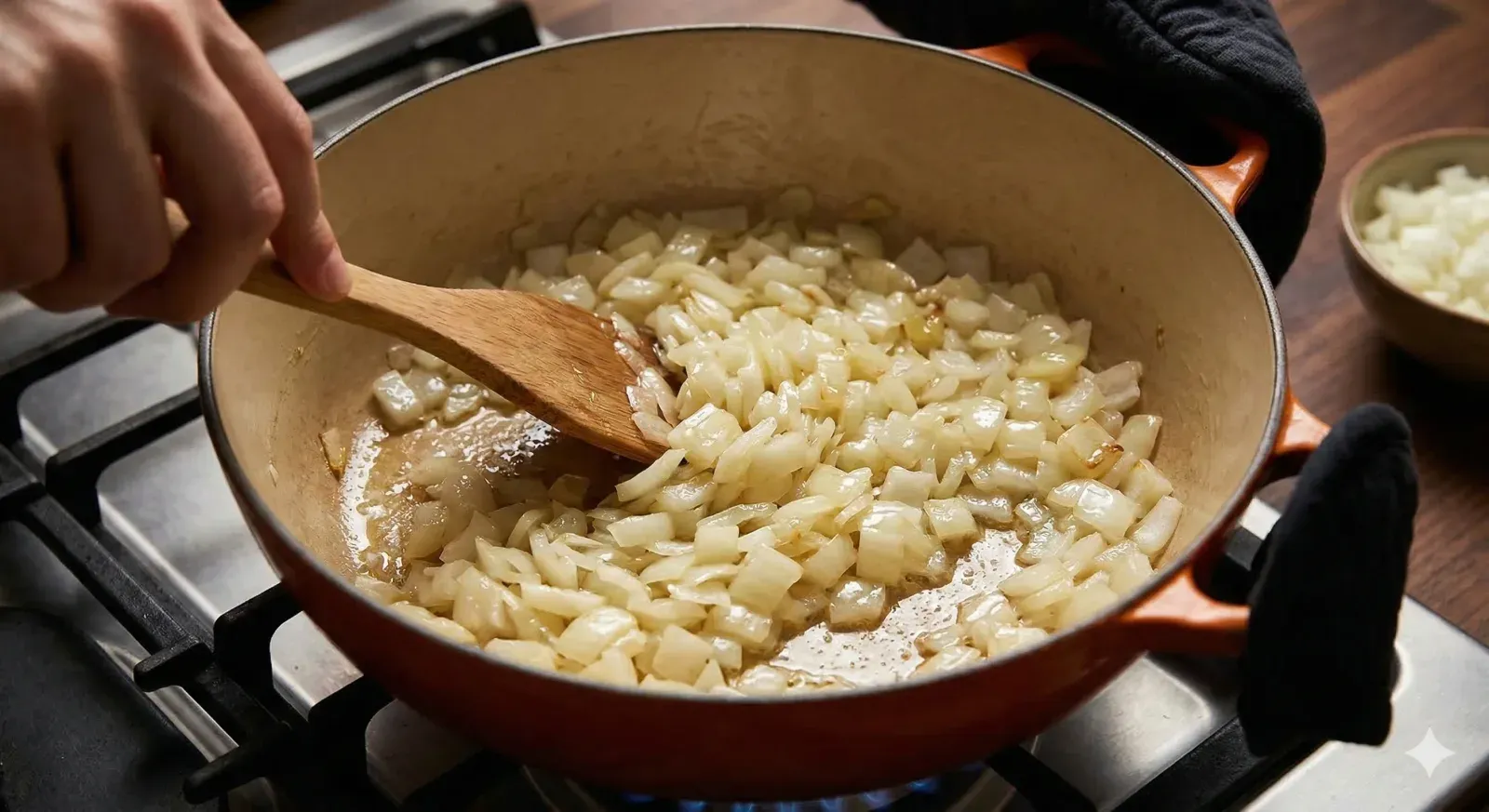
1 Heat the lard or vegetable oil in a large Dutch oven over medium heat. Add all the finely diced onions to the pot. Cook them slowly for 12 to 15 minutes, stirring occasionally, until they turn completely soft and translucent. The onions should not brown at all. In Hungarian cooking, this slow, gentle process is essential because the dissolved onions create the thick, silky body of the stew.
Resist any urge to rush this step by raising the heat. Browned onions add a caramelized sweetness that competes with the paprika. Instead, keep the heat at a steady medium and let the onions melt gradually. By the time they are ready, they should look almost like a pale paste. Moreover, the moisture they release will deglaze the bottom of the pot naturally, preventing any sticking.
Step 2: Bloom the Paprika
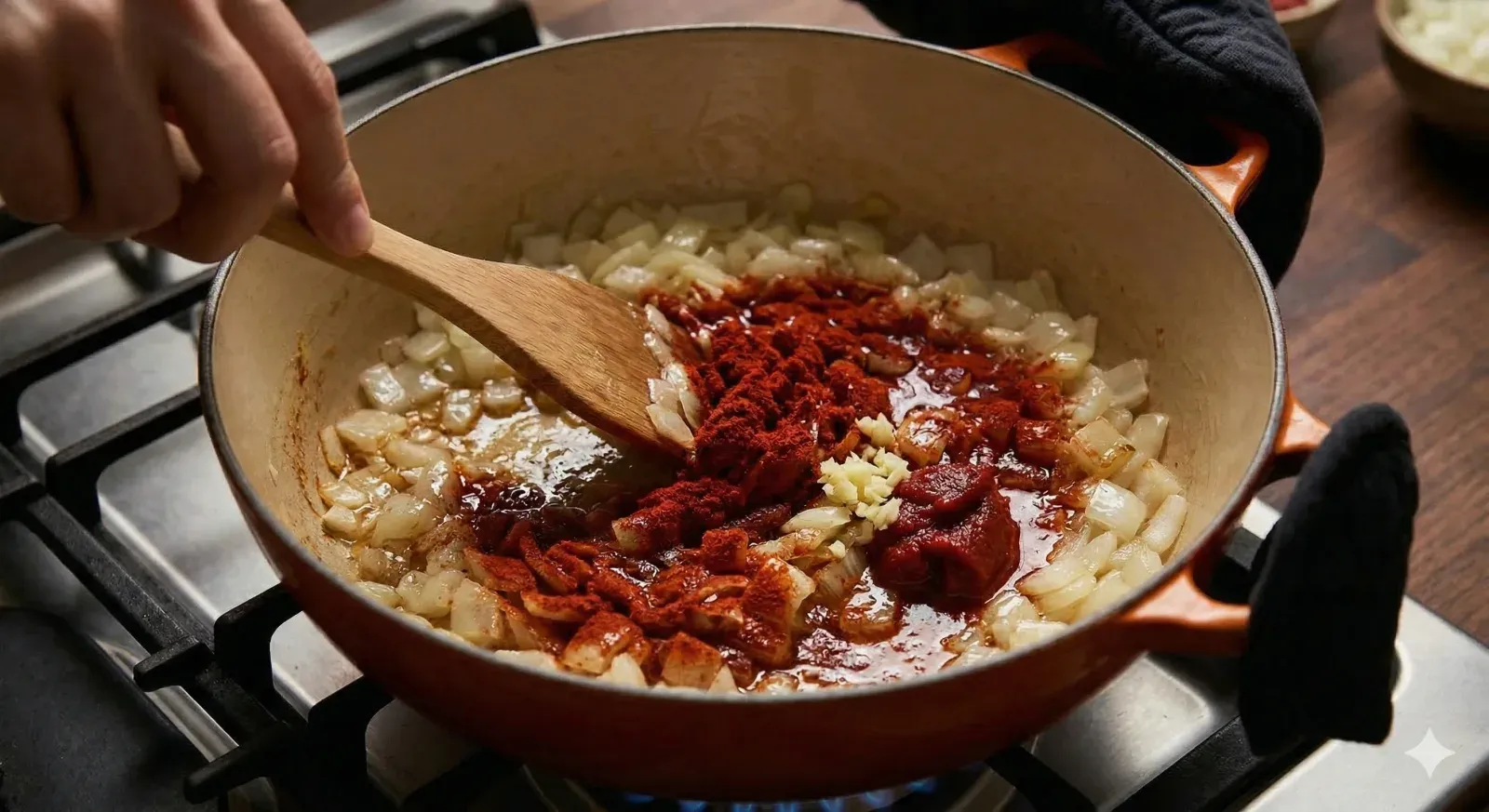
2 Remove the pot from the heat entirely. This is a critical moment. Add the three tablespoons of sweet paprika and one teaspoon of hot paprika to the softened onions. Stir quickly and thoroughly so that every bit of onion is coated in the spice. The residual heat will release the paprika’s essential oils, filling your kitchen with a warm, peppery fragrance.
Next, stir in the minced garlic and tomato paste. Mix everything together for about 30 seconds. The mixture will turn into a thick, deep red paste that clings to your spoon. This paprika-onion base, known as the “soul” of the goulash, is what gives the finished stew its unmistakable color and flavor. Therefore, take care not to skip or shorten this step.
Step 3: Sear and Simmer the Beef
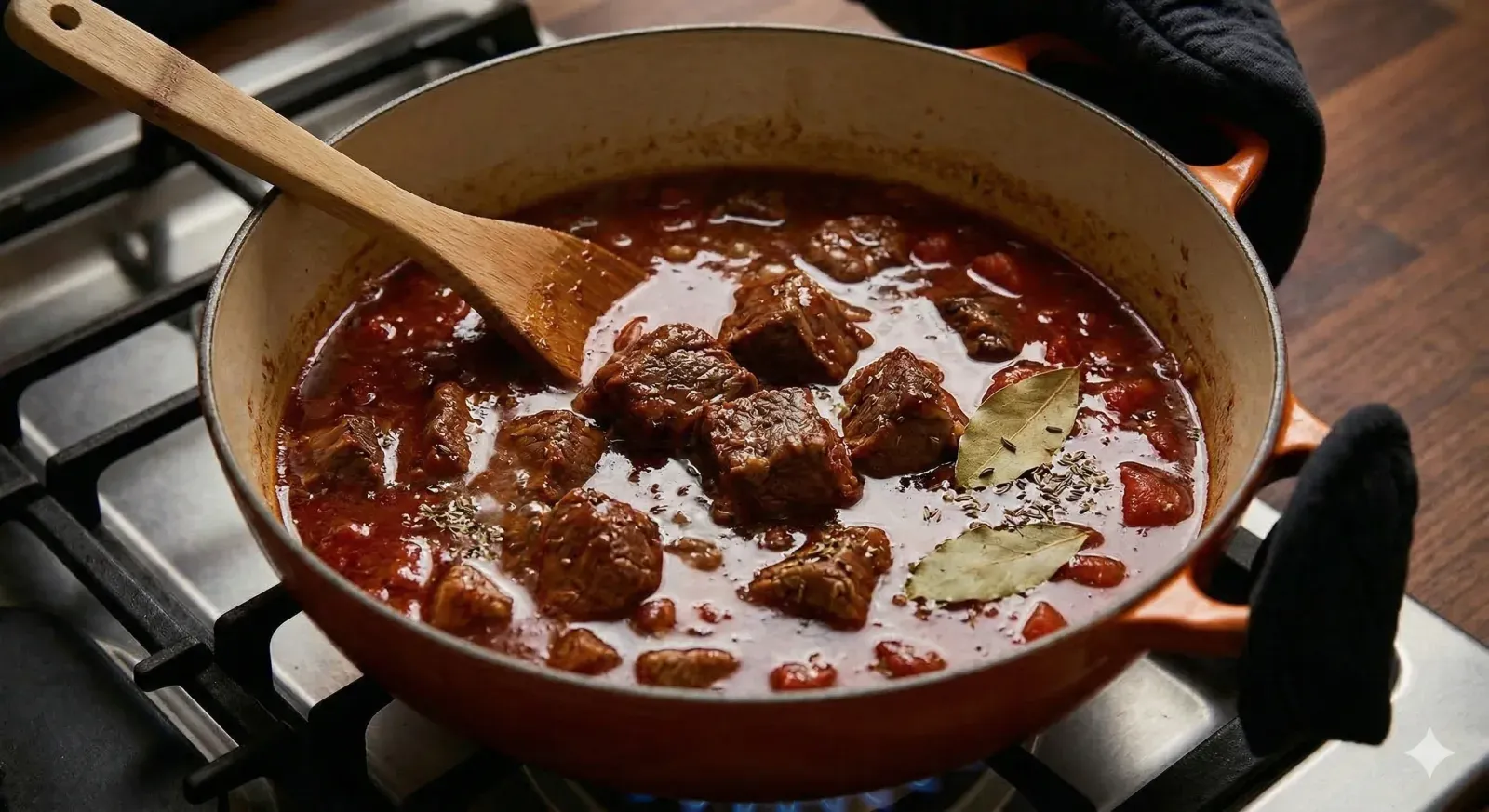
3 Return the pot to medium-high heat. Add the beef chuck cubes and stir to coat every piece in the paprika-onion mixture. Cook for about 5 minutes, turning the pieces occasionally, until the edges lightly brown. The beef does not need a hard sear here. A gentle browning is sufficient because the long simmer will develop all the flavor you need.
Pour in the beef broth, water, and diced tomatoes. Add the bay leaves, caraway seeds, and dried marjoram. Bring the liquid to a boil, then immediately reduce the heat to the lowest possible setting. Cover the pot with a tight-fitting lid. Let the goulash simmer gently for 1 hour and 30 minutes. During this time, the beef slowly tenderizes as the collagen in the chuck converts to gelatin. Additionally, the broth thickens and takes on a rich, deep red hue from the paprika. Check the pot occasionally and stir gently to prevent sticking.
Step 4: Add Vegetables and Finish
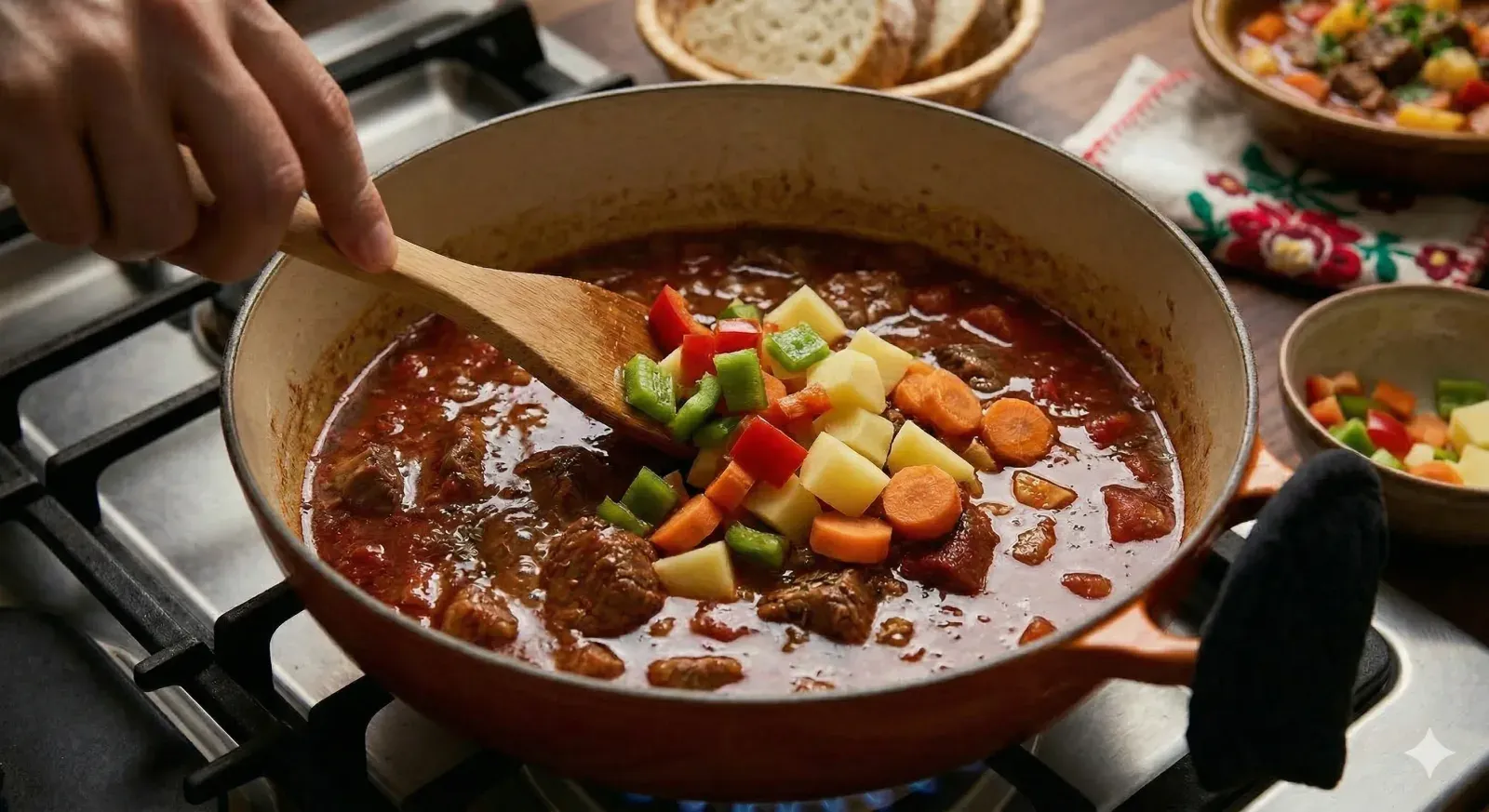
4 After the beef has simmered for 90 minutes, it should be nearly tender. Add the diced bell peppers, cubed potatoes, and sliced carrots to the pot. Stir gently to distribute the vegetables evenly. Return the stew to a gentle simmer and cook uncovered for 30 to 40 minutes. The potatoes will thicken the broth naturally as they release starch.
Test the beef by pressing a piece with a fork. It should fall apart with almost no resistance. Similarly, the vegetables should be tender but not mushy. Remove the bay leaves and discard them. Taste the broth carefully and adjust salt and pepper as needed. Ladle the goulash into deep, warmed bowls. Garnish with a generous scatter of fresh parsley. Serve immediately alongside csipetke, egg noodles, or thick slices of crusty bread to soak up every drop of the paprika-rich broth.
Expert Tips for Perfect Goulash
Use Lard for Authenticity
Traditional Hungarian goulash is cooked in lard, not olive oil or butter. Lard has a high smoke point and adds a subtle richness that complements the paprika beautifully. It also helps the onions cook evenly without browning too quickly. If you cannot find lard, use a neutral vegetable oil. However, avoid olive oil, as its strong flavor competes with the delicate paprika notes.
Never Add Flour
Authentic goulash contains no flour, roux, or thickener. The stew gets its body from the dissolved onions and the starch released by the potatoes. Adding flour creates a gravy-like consistency that masks the clean, bright flavor of the paprika. If your goulash seems thin, simply simmer it uncovered for an extra 15 minutes. The liquid will reduce and the broth will thicken naturally.
Let It Rest Overnight
Goulash belongs to the family of dishes that taste better the next day. As the stew cools and rests in the refrigerator, the flavors continue to meld and deepen. The paprika becomes more rounded, and the beef absorbs more of the broth. Consequently, making goulash a day ahead is not just convenient but actually produces a superior result. Reheat gently on the stove before serving.
Hungarian Stews: A Regional Comparison
Hungary has a rich tradition of paprika-based dishes, and goulash is only one member of a larger family. Understanding these related stews helps clarify what makes each version distinct. Here is how the main Hungarian stews compare.
| Dish | Type | Key Difference | Typical Pairing |
|---|---|---|---|
| Gulyás (Goulash) | Soup-stew | Thinner broth, includes potatoes and vegetables | Csipetke (pinched noodles), bread |
| Pörkölt | Thick stew | Less liquid, meat only, no potatoes | Nokedli (egg dumplings), rice |
| Paprikás | Creamy stew | Finished with sour cream, lighter meats | Nokedli, wide egg noodles |
| Tokány | Ragout | Meat cut into strips, less paprika, more pepper | Mashed potatoes, pasta |
| Bográcsgulyás | Kettle goulash | Cooked outdoors in a bogrács (cauldron), thinner | Fresh bread, raw peppers |
Serving Suggestions
Goulash is a hearty, stand-alone meal that needs only simple accompaniments. In Hungary, the stew is typically ladled into deep bowls and served with something starchy to soak up the rich paprika broth. The right pairings enhance the experience without overshadowing the star of the table.
Classic Accompaniments:
- Csipetke (pinched noodles): These tiny hand-torn egg noodles are the most traditional pairing. They cook directly in the goulash broth during the last few minutes and add a satisfying chewiness. Making them from scratch takes only 10 minutes with flour, egg, and salt.
- Crusty bread: A thick slice of rustic bread is the simplest and most common accompaniment. Tear off pieces and dunk them into the broth. Choose a bread with a firm crust and open crumb that absorbs liquid without falling apart.
- Nokedli (spaetzle): Small, irregularly shaped egg dumplings make an excellent side. Their soft, pillowy texture contrasts beautifully with the tender beef. Although nokedli is more traditional with pörkölt, it works wonderfully alongside goulash as well.
- Pickled vegetables: A small plate of Hungarian pickled peppers, cucumbers, or cabbage adds a sharp, vinegary contrast that cuts through the richness. This simple side refreshes the palate between spoonfuls.
Beverage Pairings:
- Egri Bikavér (Bull’s Blood): This bold Hungarian red wine from the Eger region is the classic pairing. Its dark fruit flavors and peppery finish stand up to the intense paprika without clashing. Serve it slightly below room temperature for the best experience.
- Furmint (dry): A dry white Furmint from Tokaj offers a refreshing contrast to the heavy stew. Its bright acidity and mineral notes cleanse the palate effectively. This pairing works especially well in warmer months.
- Dark lager or bock beer: A malty Hungarian or Czech dark lager complements the roasted, sweet notes of the paprika. The carbonation also helps refresh the palate between bites of rich stew.
- Pálinka: For an authentic Hungarian finish, serve a small glass of fruit brandy after the meal. Plum or apricot pálinka is the most traditional choice. It aids digestion and provides a fitting end to a hearty Hungarian feast.
Storage and Reheating
Refrigerator: Store leftover goulash in a sealed container for up to 4 days. The stew actually improves during this time as the flavors continue to develop. Allow the goulash to cool to room temperature before refrigerating. The fat will solidify on top and can be easily removed if you prefer a leaner result.
Freezer: Goulash freezes exceptionally well for up to 3 months. Portion it into freezer-safe containers, leaving an inch of headroom for expansion. However, if your goulash contains potatoes, note that they may become slightly grainy after freezing. For the best texture, freeze the stew without potatoes and add freshly cooked ones when reheating.
Reheating: Warm goulash gently on the stove over medium-low heat. Add a splash of beef broth or water if the stew has thickened too much during storage. Stir occasionally and bring it to a gentle simmer. Avoid boiling vigorously, as this can toughen the beef. Microwave reheating works in a pinch, but stovetop warming produces a more even result. Additionally, taste and adjust the seasoning after reheating, since flavors can mellow during storage.
Common Mistakes to Avoid
1. Using Stale or Wrong Paprika
This is the most frequent error. Stale paprika that has sat in the cupboard for years produces a flat, lifeless stew. Equally problematic is substituting smoked Spanish paprika, which overpowers the dish with campfire flavors. Fresh Hungarian sweet paprika is non-negotiable. Buy it from a reputable source and replace it every six to twelve months. The difference between fresh and stale paprika is genuinely dramatic.
2. Burning the Paprika
Paprika contains sugars that caramelize and burn at high temperatures. Burning it creates a harsh, bitter taste that cannot be fixed. Always remove the pot from the heat before adding the paprika to the onions. The residual warmth is sufficient to bloom the spice. Returning the pot to the burner only after adding liquid protects the paprika from scorching.
3. Rushing the Onions
Undercooked onions leave a harsh, sharp flavor in the finished stew. Instead, the onions must cook for at least 12 minutes until completely soft and translucent. They should nearly dissolve into a paste. This slow cooking is what creates the silky thickness of authentic goulash. If you skip this step, no amount of simmering will compensate for the missing body.
4. Choosing the Wrong Cut of Beef
Lean cuts like sirloin or round seem appealing but dry out during the long cooking time. Instead, beef chuck, with its generous marbling and connective tissue, is the ideal choice. The collagen in chuck converts to gelatin during the simmer, creating meltingly tender meat and a rich, glossy broth. As a result, the finished dish has both fall-apart texture and full-bodied flavor.
Frequently Asked Questions
What cut of beef is best for goulash?
Beef chuck is the best cut for goulash. It has the right balance of meat and connective tissue that breaks down during the long simmer, creating tender, fall-apart pieces. Beef shank and short ribs also work well, though they have a higher bone-to-meat ratio. Avoid lean cuts like sirloin or tenderloin, which dry out during extended cooking. The marbling in chuck is what gives the broth its rich, glossy body.
Is goulash a soup or a stew?
In Hungary, authentic gulyás is actually a soup with a relatively thin broth. It contains potatoes, vegetables, and csipetke noodles. The thicker, stew-like version most people know outside Hungary is technically closer to pörkölt. However, the international version served as a hearty stew has become widely accepted. Both preparations use paprika as the dominant seasoning, and both are delicious. For this recipe, we aim for a consistency between soup and stew.
What kind of paprika should I use for goulash?
Hungarian sweet paprika, labeled “édes,” is essential. It provides the deep red color and fruity sweetness that define this dish. Brands from Szeged or Kalocsa are considered the gold standard. You can supplement with a small amount of Hungarian hot paprika (erős) for gentle heat. Never substitute smoked Spanish paprika (pimentón), as it creates a completely different flavor. Furthermore, ensure your paprika is fresh. Stale paprika loses its potency and produces disappointing results.
Can I make goulash in a slow cooker?
Absolutely. Goulash adapts beautifully to slow cooking. Start by cooking the onions and blooming the paprika on the stovetop, since the slow cooker cannot reach the right temperature for this step. Then transfer everything to the slow cooker. Cook on low for 7 to 8 hours or on high for 4 to 5 hours. Add the potatoes and peppers during the last 2 hours so they do not become mushy. The long, gentle heat produces exceptionally tender beef.
Why does my goulash taste bland?
Bland goulash almost always traces back to the paprika. Either you did not use enough, or the paprika was stale. Three tablespoons of fresh, high-quality sweet paprika is the minimum for six servings. Additionally, the onions must be cooked until completely soft before adding the spice. Undercooked onions produce a harsh, raw flavor instead of the sweet, mellow base that carries the stew. Finally, check your salt. Goulash needs assertive seasoning to bring all the flavors forward.
Does authentic goulash contain tomatoes?
Yes. Traditional Hungarian goulash includes tomatoes and tomato paste. The tomatoes add gentle acidity that balances the sweetness of the paprika and onions. Some cooks use fresh tomatoes when they are in season and switch to canned diced tomatoes the rest of the year. The amount should remain modest. Tomatoes play a supporting role in goulash, while paprika stays firmly in the lead. Too many tomatoes shift the dish toward a generic beef stew.
Variations and Adaptations
Pork Goulash:
Replace the beef with pork shoulder cut into cubes. Pork cooks faster, so reduce the initial simmering time to 1 hour before adding the vegetables. The fattier pork shoulder produces a particularly rich and silky broth. Moreover, pork pairs beautifully with caraway seeds, which become more pronounced in this version.
Chicken Paprikash Style:
For a lighter alternative, use bone-in chicken thighs instead of beef. Brown the chicken pieces first, then remove them while you cook the onions. Return the chicken after blooming the paprika and simmer for 45 minutes. Finish with a generous dollop of sour cream stirred into the broth. Although this technically becomes chicken paprikash rather than goulash, it uses the same foundational technique.
Vegetarian Mushroom Goulash:
Substitute the beef with a mix of cremini and portobello mushrooms. Use vegetable broth instead of beef broth. The mushrooms provide earthy depth and a meaty texture that stands in well for the beef. Add them after blooming the paprika and simmer for 30 minutes with the vegetables. This version is naturally vegan if you use oil instead of lard. It comes together in under an hour.
Kettle Goulash (Bográcsgulyás):
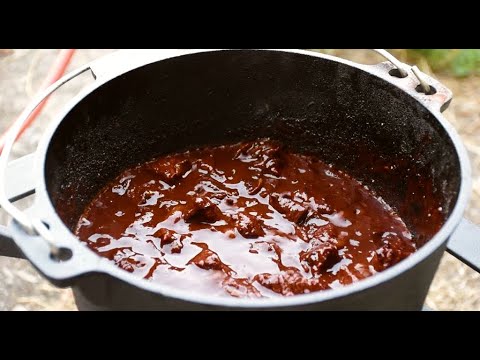
For an unforgettable experience, try making goulash the traditional way in a bogrács, the tripod-hung cast iron cauldron. The open flame and cast iron impart a subtle smokiness that you cannot replicate on a stovetop. This communal style of cooking is a beloved Hungarian tradition, especially during festivals and family gatherings. The method is identical, but the experience is entirely different.
The Cultural Significance of Goulash
Goulash occupies a place in Hungarian culture that few dishes can match. It is the unofficial national dish, a symbol of identity that connects Hungarians to their nomadic roots on the Great Plain. The herdsmen who first cooked gulyás over campfires were the original cowboys of Central Europe. Their simple, portable stew sustained them through harsh winters and long cattle drives. Over the centuries, however, goulash evolved from frontier survival food into a dish celebrated in the grand restaurants of Budapest.
The history of goulash is also the history of paprika in Europe. Peppers arrived in Hungary through Ottoman trade routes in the 16th and 17th centuries. Initially, only peasants used the dried, ground spice. The aristocracy considered it a poor man’s seasoning. That perception changed dramatically in the 19th century when Hungarian cuisine gained international recognition. Paprika became the defining flavor of Hungarian cooking, and goulash became its most famous ambassador. Today, the paprika harvest festivals in Szeged and Kalocsa celebrate this spice as a cornerstone of national heritage.
Beyond Hungary’s borders, goulash has influenced cuisines across Central Europe. Austrian gulasch, Czech guláš, and German gulaschsuppe all descend from the original Hungarian recipe. Each culture adapted it to local tastes, adding sour cream, sauerkraut, or different meats. Nevertheless, the essential character remains: paprika, onions, and slow-simmered meat. Making goulash at home is not just cooking a meal. It is participating in a culinary tradition that spans centuries, borders, and cultures.
Conclusion
This goulash recipe delivers the authentic taste of Hungary through a method that rewards patience and quality ingredients. The keys are straightforward: cook the onions until they dissolve, bloom the paprika off the heat, choose well-marbled beef chuck, and let everything simmer low and slow. Follow these steps, and you will produce a pot of deep red, soul-warming stew that captures the spirit of Hungarian cooking at its finest.
Ready to explore more iconic European comfort food? Browse our European dishes collection, including borscht, moussaka, and coq au vin. Each recipe follows the same philosophy: honor the tradition, explain the technique, and help you bring world-class flavors to your home kitchen.