There’s something magical about Vietnamese coffee. The slow drip of the phin filter, the rich aroma filling your kitchen, and that first sip of intensely flavored coffee - it’s an experience that transports you straight to the bustling streets of Saigon or Hanoi.
Vietnamese drip coffee (cà phê phin) isn’t just another brewing method - it’s a cultural ritual that has been perfected over generations. Unlike espresso or French press, the phin filter creates a uniquely concentrated, aromatic brew that forms the foundation of Vietnam’s beloved coffee culture.
In this comprehensive guide, I’ll show you exactly how to make authentic Vietnamese coffee at home, just like you’d find in the best cafes in Vietnam. Whether you’re a coffee enthusiast or simply curious about this traditional brewing method, you’ll discover all the secrets to brewing the perfect cup.
What is Vietnamese Drip Coffee (Cà Phê Phin)?
Vietnamese drip coffee is made using a small metal filter called a “phin” that sits directly on top of your cup. Unlike other brewing methods, the phin uses gravity and a slow drip process to extract maximum flavor from the coffee grounds, creating an intensely rich and aromatic concentrate.
The phin typically consists of four parts:
- The brewing chamber (body)
- A perforated filter plate
- A press/tamper with holes
- A lid to retain heat
This simple yet effective design has remained virtually unchanged for over a century, proving that sometimes the traditional methods are truly the best.
Why Vietnamese Coffee Tastes Different
If you’ve ever had Vietnamese coffee, you know it tastes distinctly different from your typical cup of joe. Here’s why:
Robusta beans: Vietnam is the world’s largest producer of Robusta coffee beans, which have a stronger, more bitter flavor and higher caffeine content than Arabica beans. This gives Vietnamese coffee its characteristic bold taste and energizing kick.
Dark roast: Vietnamese coffee is typically roasted darker, sometimes with added butter or fish sauce during roasting, creating a unique flavor profile that’s both intense and slightly sweet.
Slow extraction: The phin’s slow drip method (4-5 minutes) allows for thorough extraction, concentrating the coffee’s flavors and oils into a small, powerful serving.

Ingredients for Vietnamese Coffee
For Small Phin (Single Serving):
- 25 grams Vietnamese coffee grounds (about 2-3 tablespoons)
- 80 ml boiling water
- Optional: 2-3 tablespoons sweetened condensed milk
- Optional: Ice cubes
- Optional: Sugar to taste
For Large Phin (4 Servings):
- 100 grams Vietnamese coffee grounds
- 410 ml boiling water
- Condensed milk, ice, and sugar as desired
Equipment Needed:
- Vietnamese coffee filter (phin) - stainless steel or aluminum
- Heat-resistant glass or cup
- Measuring cup or scale
- Kettle for boiling water
How to Make Vietnamese Coffee - Step by Step
Step 1: Prepare Your Phin Filter
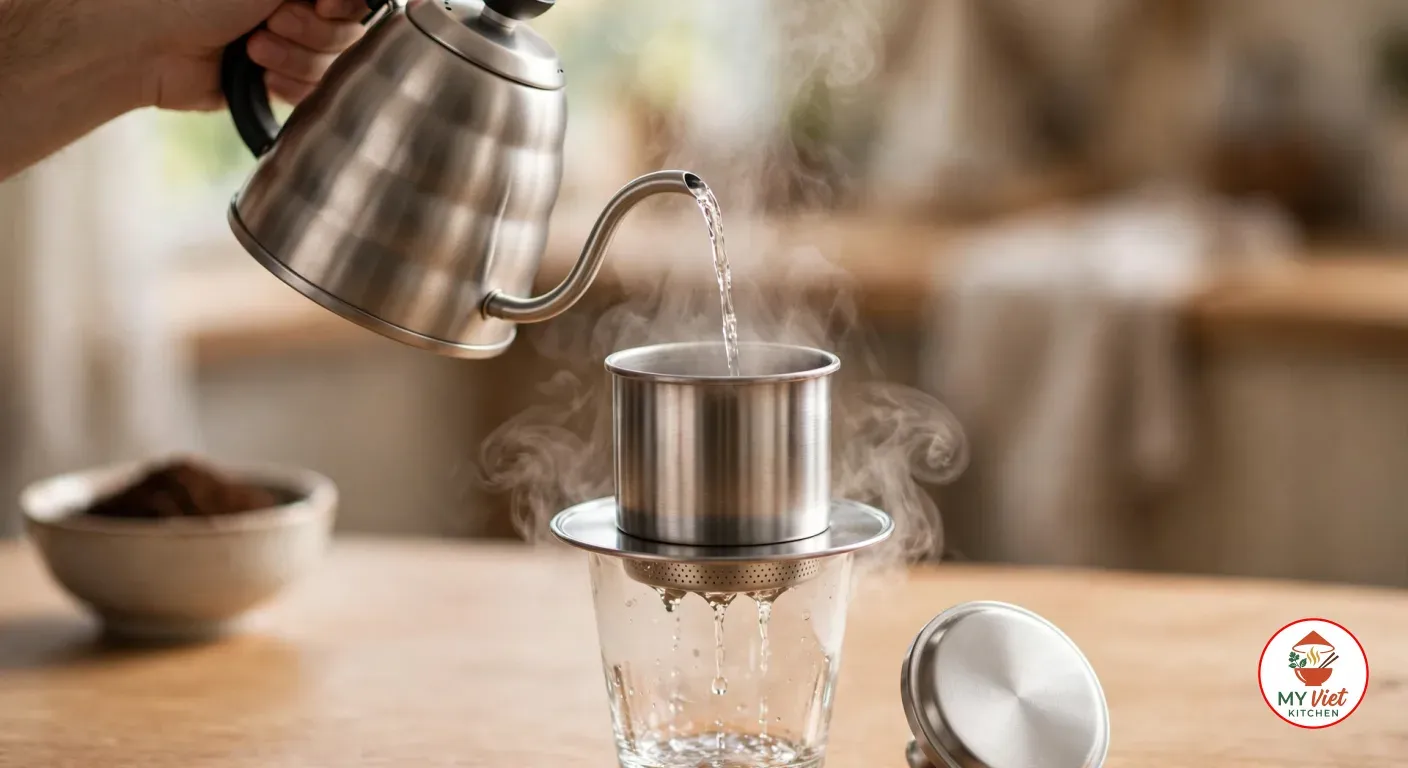
1Start by rinsing your phin filter with hot boiling water. This isn’t just about cleanliness - warming the filter prevents it from absorbing heat from your brewing water, ensuring optimal extraction. It also helps the coffee grounds bloom evenly.
Pour the rinse water out and shake off any excess droplets.
Step 2: Add the Coffee Grounds
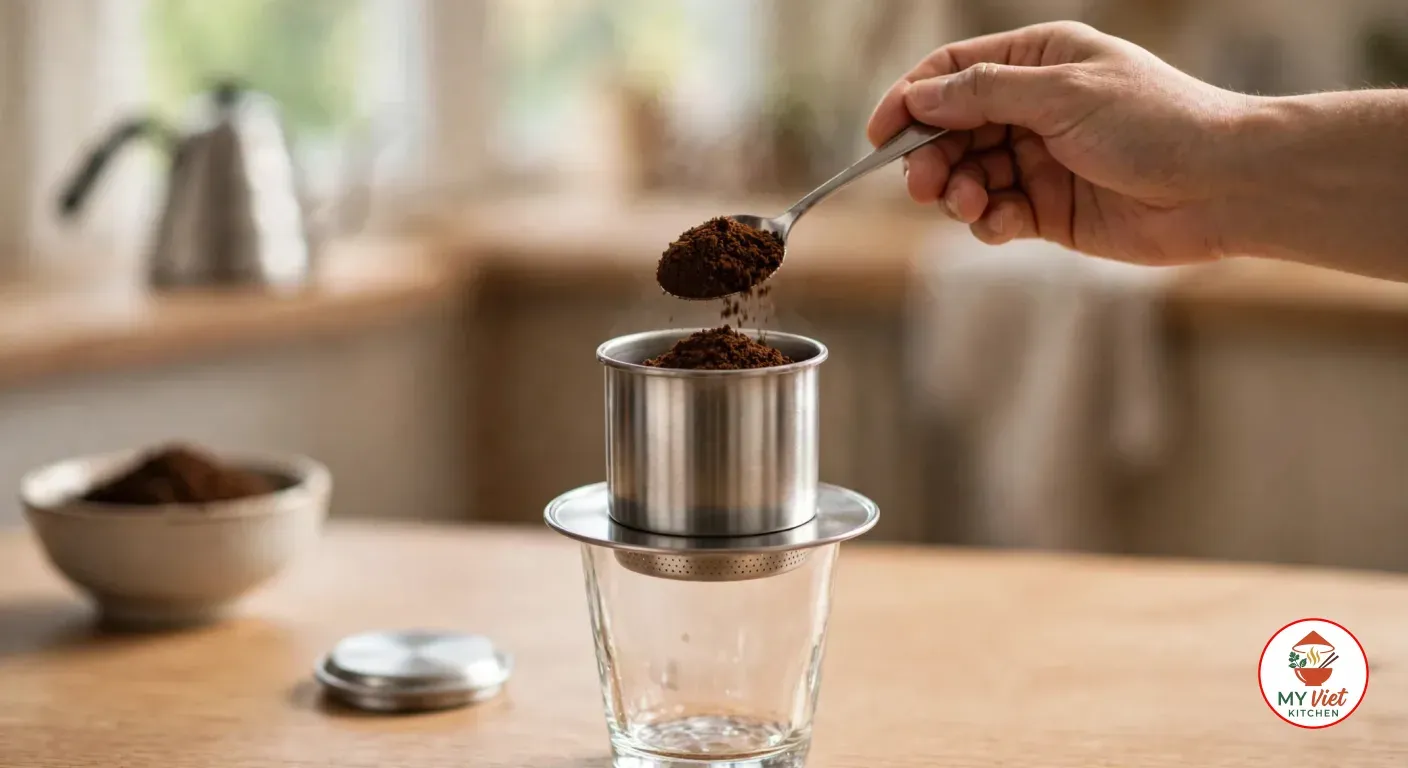
2Measure out 25 grams of Vietnamese coffee grounds (for a small phin). The grind should be medium-coarse - similar to French press grind. Too fine and your coffee will drip too slowly or clog; too coarse and it will drip too fast, resulting in weak coffee.
Place the phin on top of your cup or glass, then add the coffee grounds. Gently shake the phin to level the grounds, but don’t tamp or press them yet.
Step 3: Bloom the Coffee
3This is the secret step that many people skip - but it makes all the difference!
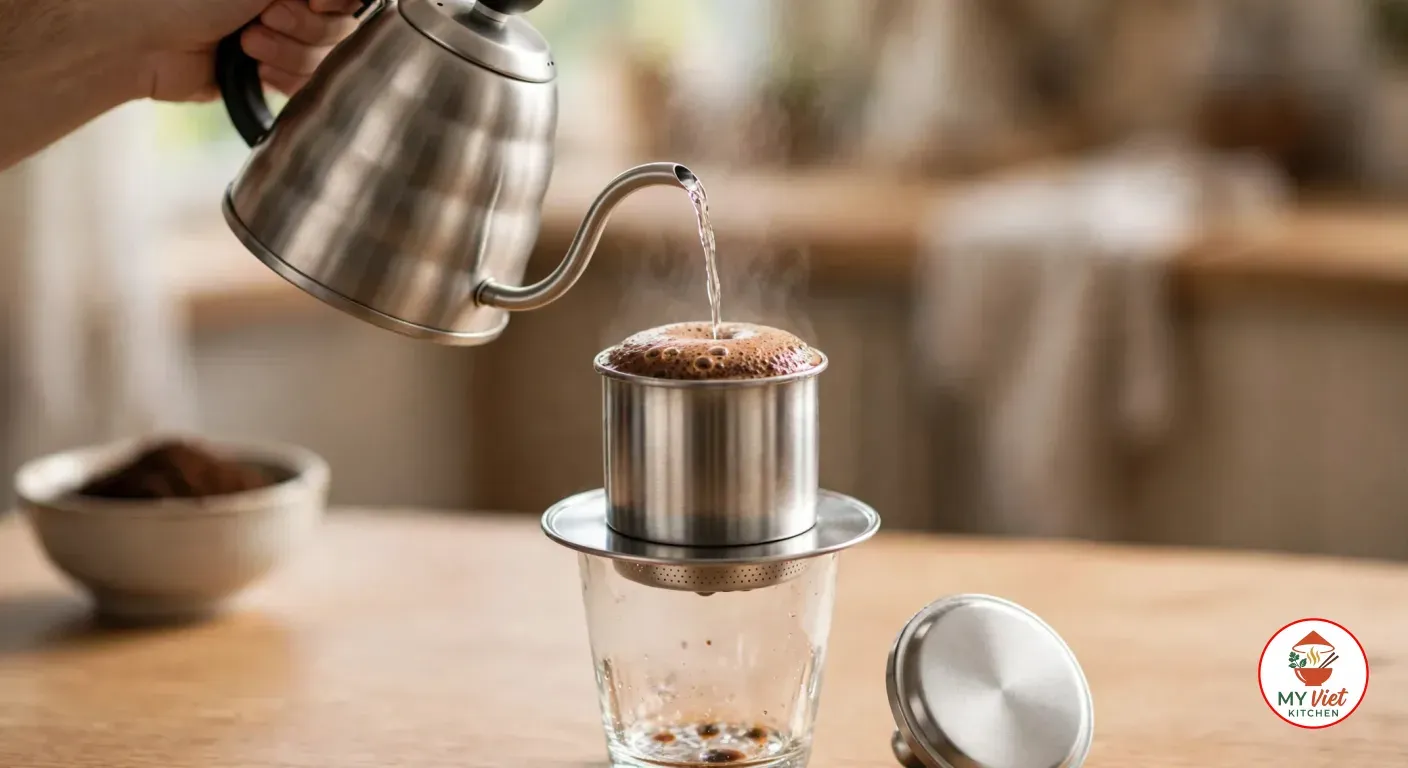
Slowly pour 30 ml of freshly boiled water (just off the boil, around 195-205°F/90-96°C) over the coffee grounds, making sure to wet all the grounds evenly. You’ll see the coffee start to bubble and expand - this is called “blooming.”
Wait 2-3 minutes for the grounds to absorb the water and expand fully. This releases trapped CO2 gases and allows for better extraction in the next step.
Step 4: Press and Add Remaining Water
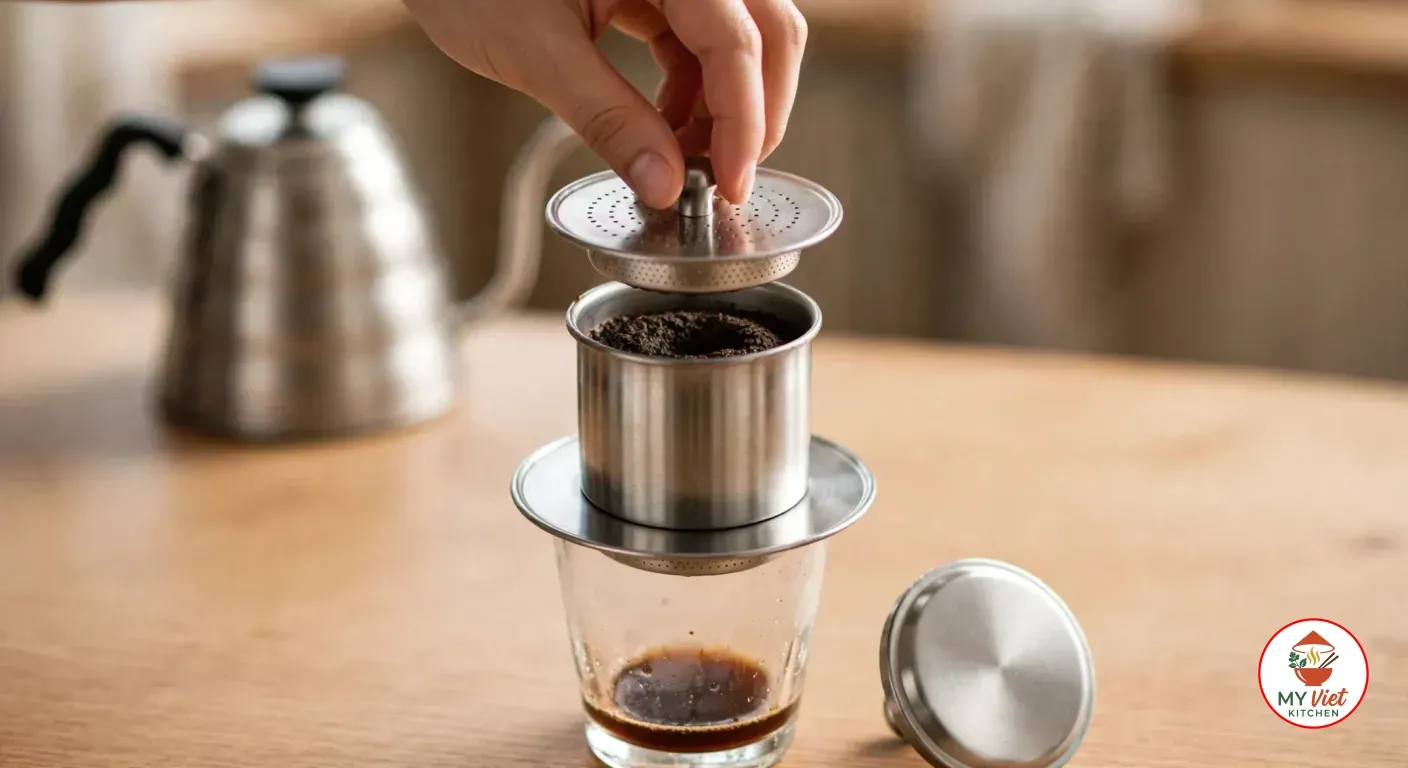
4Once the grounds have bloomed and absorbed the initial water, gently place the filter press on top of the grounds. Don’t press too hard - just enough to make gentle contact.
Now, slowly pour the remaining 50 ml of boiling water into the phin. Place the lid on top to retain heat.
Step 5: Watch the Magic Happen
5After about 1 minute, you’ll see coffee begin to drip into your cup below. The ideal drip rate is about 1 drop per second - if it’s dripping too fast, your coffee may be weak; too slow, and it might be over-extracted and bitter.
When the coffee has nearly finished dripping (you’ll hear a slight change in the sound), press down firmly on the filter press to extract the last remaining coffee. This final press extracts the most concentrated flavors.
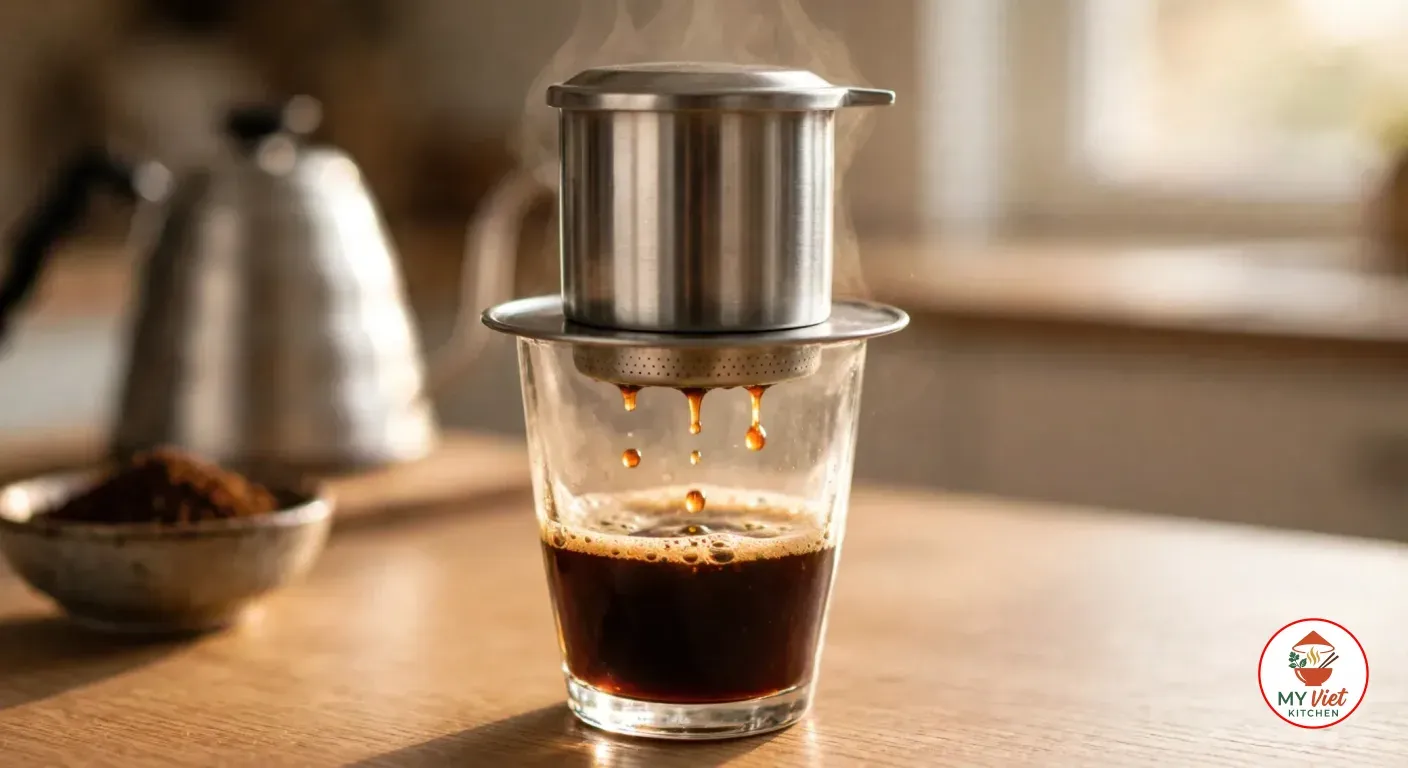
You should end up with about 40-45 ml of rich, dark coffee concentrate - this is your authentic Vietnamese coffee!
Ways to Enjoy Vietnamese Coffee
Cà Phê Đen (Black Coffee)
Drink the concentrated coffee as is, perhaps with a little sugar. This showcases the pure, intense flavor of the coffee.
Cà Phê Sữa Nóng (Hot Coffee with Milk)
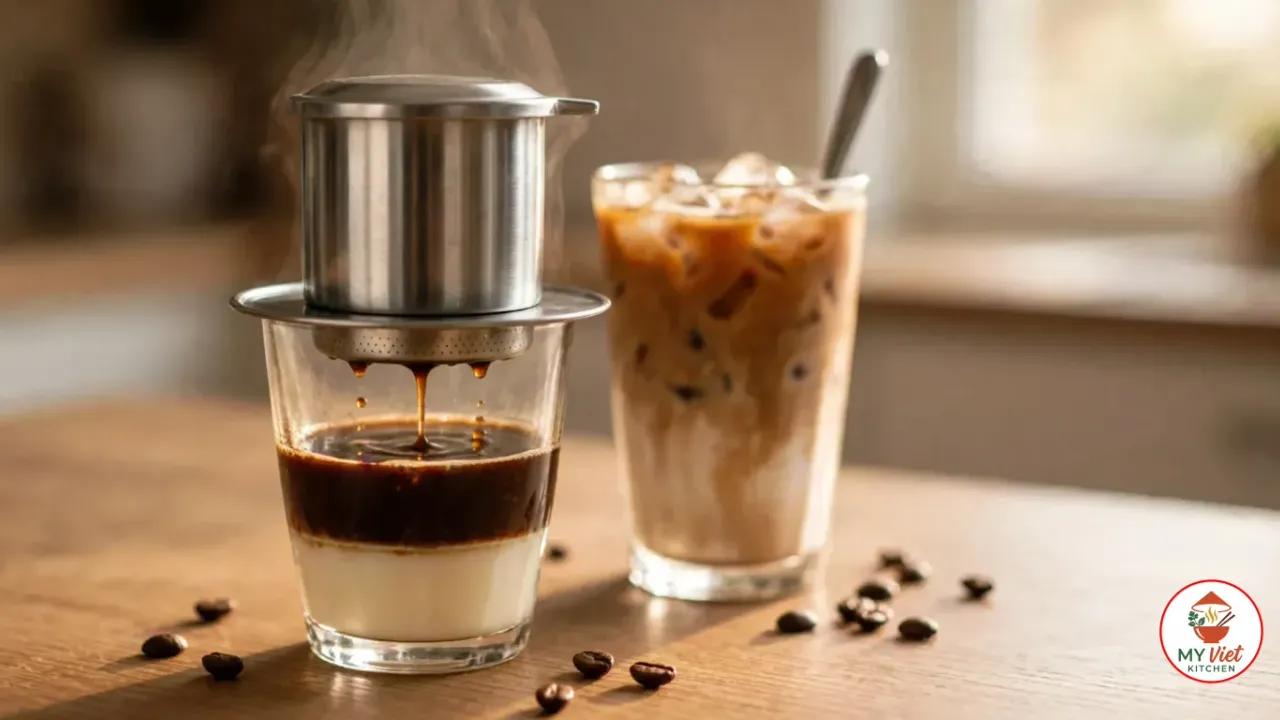
Before brewing, add 2-3 tablespoons of sweetened condensed milk to your cup. Brew the coffee directly into the condensed milk, then stir well. The result is a sweet, creamy, indulgent drink.
Cà Phê Sữa Đá (Iced Coffee with Milk)
This is Vietnam’s most popular coffee drink! Add condensed milk to a glass, brew coffee on top, stir well, then pour over a glass full of ice. Perfect for hot summer days.
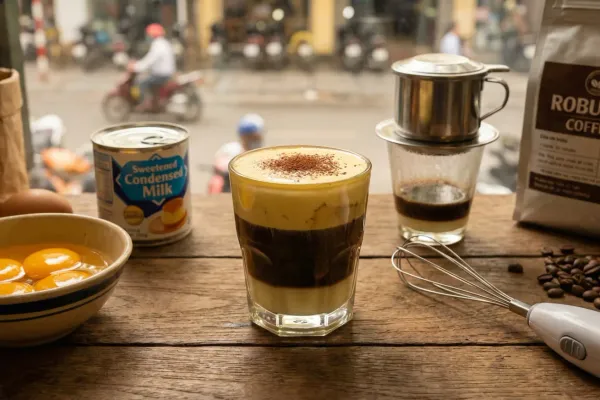
Cà Phê Trứng (Egg Coffee)
A Hanoi specialty where whipped egg yolk and condensed milk create a creamy, custard-like topping for your coffee.
Tips for the Perfect Vietnamese Coffee
Choose Quality Coffee
The coffee quality determines more than 50% of your final cup’s taste. Look for authentic Vietnamese coffee brands like Trung Nguyên, Highlands Coffee, or Café Du Monde (which has chicory, giving it a distinctive flavor). Make sure it’s specifically labeled for phin brewing.
Use the Right Phin
Invest in a quality stainless steel or aluminum phin with evenly distributed holes. The holes should be small enough to prevent grounds from passing through but large enough to allow proper water flow. A well-made phin will last for years.
Water Temperature Matters
Use water that’s just off the boil (195-205°F/90-96°C). Boiling water can scald the coffee and create bitter flavors, while water that’s too cool won’t extract properly.
Don’t Rush the Process
Vietnamese coffee is meant to be savored, starting with the brewing process itself. The slow drip is meditative - use this time to take a break, breathe, and enjoy the anticipation. Rushing by pressing too hard or using too much water defeats the purpose.
Experiment with Blends
Don’t limit yourself to just one type of coffee. Many Vietnamese coffee enthusiasts mix different varieties to create their signature blend. Try combining different roasts or origins to find your perfect flavor profile.
Keep Your Phin Clean
After each use, disassemble your phin completely and wash all parts with hot water. Coffee oils can build up over time and affect the taste of future brews. Avoid using soap, as it can leave residue that affects flavor.
Large Phin Method (For Multiple Servings)
If you’re making coffee for a group or want to prepare multiple servings at once, the large phin method follows the same principles with adjusted quantities:
- Rinse a large phin with hot water
- Add 100 grams of coffee grounds and shake level
- Gently press the filter down
- Pour 160 ml of boiling water for blooming (7-10 minutes)
- Add remaining 250 ml of water and cover
- Wait for coffee to drip, pressing firmly at the end
- Yields 160-200 ml of concentrated coffee
Common Mistakes to Avoid
Pressing Too Hard
Over-compressing the coffee grounds restricts water flow, causing extremely slow dripping and over-extraction, which leads to bitter coffee.
Using the Wrong Grind Size
Pre-ground coffee labeled for drip or espresso won’t work well. You need a medium-coarse grind specifically for phin filters.
Skipping the Bloom
While you can skip this step, you’ll notice a significant difference in flavor. Blooming releases gases and prepares the grounds for optimal extraction.
Not Warming the Phin
A cold phin absorbs heat from your brewing water, lowering the temperature and affecting extraction quality.
The Cultural Significance of Vietnamese Coffee
In Vietnam, coffee isn’t just a beverage - it’s a social experience. Vietnamese people spend hours at sidewalk cafes, sipping slowly and watching the world go by. The slow brewing process encourages conversation and connection, making coffee time a cherished daily ritual.
The French introduced coffee to Vietnam in the 1800s, but the Vietnamese transformed it into something uniquely their own. Today, Vietnam is the world’s second-largest coffee exporter, and their coffee culture continues to influence cafes worldwide.
Frequently Asked Questions
What type of coffee should I use for Vietnamese coffee?
Use medium-coarse ground Vietnamese coffee, preferably Robusta or a Robusta-Arabica blend with a dark roast. Brands like Trung Nguyên, Café Du Monde, or Highlands Coffee work excellently.
Can I use regular coffee grounds?
While you can use any medium-coarse ground coffee, it won’t taste authentically Vietnamese. The unique flavor comes from specific bean varieties, roasting methods, and sometimes added ingredients during roasting.
Why is my coffee dripping too fast or too slow?
Too fast usually means your grind is too coarse or you haven’t pressed the filter down. Too slow means your grind is too fine or you’ve pressed too hard. Adjust accordingly.
Do I need condensed milk?
No, it’s optional! While cà phê sữa (coffee with condensed milk) is popular, many Vietnamese people drink their coffee black (cà phê đen) to appreciate the pure coffee flavor.
How much caffeine is in Vietnamese coffee?
Vietnamese coffee typically has higher caffeine content than regular coffee due to Robusta beans (which contain nearly twice the caffeine of Arabica) and the concentrated brewing method. One serving can have 150-200mg of caffeine.
Can I make Vietnamese coffee without a phin?
While a phin creates the most authentic result, you can approximate it with a French press or pour-over method using a very slow pour rate. However, the flavor and experience won’t be quite the same.
Ready to Experience Authentic Vietnamese Coffee?
Now that you know how to make traditional Vietnamese drip coffee, it’s time to brew your first cup! Remember, the key to perfect cà phê phin is patience - let the slow drip work its magic, and you’ll be rewarded with one of the world’s most distinctive and delicious coffee experiences.
Whether you prefer it black, with condensed milk, or over ice, Vietnamese coffee offers a unique flavor journey that connects you to centuries of coffee culture. So grab your phin, heat some water, and prepare to discover why millions of Vietnamese people start their day with this beloved ritual.
Have you tried making Vietnamese coffee at home? Share your experience in the comments below!