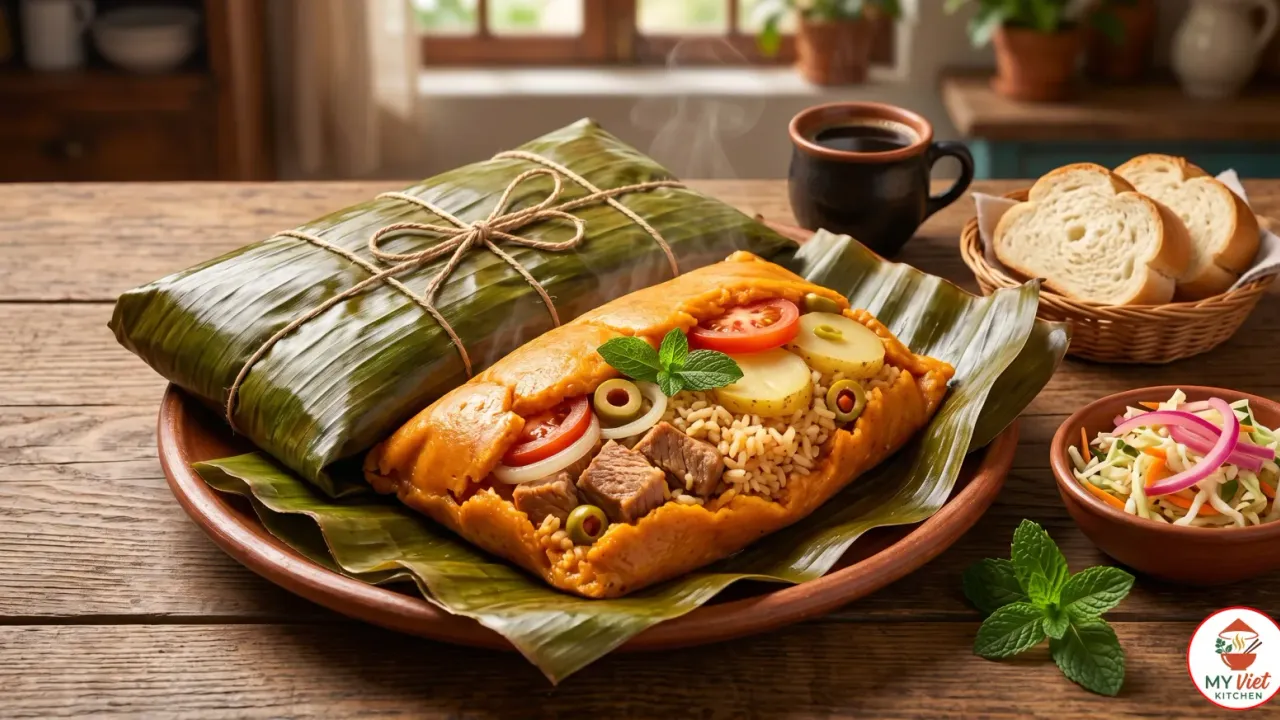
Nacatamal is the crown jewel of Nicaraguan cooking. This massive corn masa parcel comes wrapped in fragrant banana leaves and steamed for hours. Unlike its smaller Mexican tamale cousins, a single nacatamal is a full meal. It holds seasoned pork, rice, potatoes, tomatoes, olives, and fresh mint. In Nicaragua, families spend entire Saturdays preparing these parcels together. As a result, the nacatamal is as much a social ritual as it is a dish. Indeed, few foods in Central American cuisine carry this much history, love, and flavor in one package.
Prep Time: 90 minutes | Cook Time: 3 hours | Servings: 12
Difficulty: Hard | Calories: ~480 per serving
What Makes Nacatamal Special?
The nacatamal stands apart from every other tamale in the Americas due to its sheer size and filling. While Mexican tamales use a single filling in thin masa, the nacatamal stuffs a full dinner into one banana leaf parcel. Pork, rice, potatoes, tomatoes, bell peppers, olives, and herbs all nestle inside rich, lard-based masa dough. As a result, every bite gives you a new mix of flavors. You taste tender meat, creamy starch, bright acid, and earthy corn all at once.
The technique reflects centuries of blending between native and Spanish food ways. Before European contact, people in Central America wrapped corn foods in leaves. Then Spanish settlers brought pork, olives, rice, and citrus. Over time, Nicaraguan cooks wove these new items into their old methods. Because of this fusion, the nacatamal honors both heritages at once. Today, it remains the most important festive food in Nicaraguan culture.
What truly sets the nacatamal apart is the banana leaf. Unlike corn husks, banana leaves are large enough to hold all the filling. They also add a subtle, green scent during steaming. As the nacatamal cooks for three hours, the leaf gives the masa a light floral aroma. No other wrapper can copy this effect. Furthermore, the slow steam lets the pork, the achiote masa, and the fresh vegetables blend into one rich flavor. Simply put, the result is far greater than the sum of its parts.

Choosing the Right Corn Masa
The masa dough is the base of every nacatamal. Its texture, flavor, and richness decide if the final parcel is great or just okay. Therefore, picking the right masa and mixing it well makes all the difference.
- Fresh masa from a tortilleria (best choice): Fresh masa has a sweet, pure corn taste and a moist texture. It spreads easily onto banana leaves. Also, it needs less fat and water to reach the right body. Visit a local tortilleria or Latin market and ask for tamale masa, which is coarser than tortilla masa.
- Masa harina (dried corn flour): Brands like Maseca or Bob’s Red Mill sell dried masa harina. It works well if fresh masa is not available. Just mix it with warm water or broth per the package guide. However, the texture is drier than fresh masa. So you will need more lard and liquid to get a smooth, spreadable dough.
- Pre-mixed tamale masa: Some Latin stores sell masa that already has lard and salt mixed in. This is a handy shortcut. Still, you get less control over fat and seasoning. So taste it first and then adjust the salt and achiote as needed.
Ingredients for Nacatamal
For the Masa Dough:
- 4 pounds (1.8kg) prepared corn masa or fresh masa dough
- 1 cup (240ml) lard or vegetable shortening, softened
- 1/2 cup (120ml) sour orange juice (naranja agria)
- 2 tablespoons achiote paste dissolved in 1/4 cup warm water
- 1 teaspoon salt
For the Pork Filling:
- 2 pounds (900g) boneless pork shoulder, cut into 12 pieces
- 4 cloves garlic, minced
- 1 teaspoon ground cumin
- Salt and black pepper to taste
- Remaining achiote water from masa preparation
For the Filling Vegetables and Garnishes:
- 2 cups (370g) cooked white rice
- 2 medium potatoes, peeled and sliced into rounds
- 2 medium tomatoes, sliced
- 1 large green bell pepper, cut into strips
- 1 large onion, sliced into rings
- 12 pimiento-stuffed green olives
- Fresh mint leaves (yerba buena)
- 12 large banana leaves, cleaned and trimmed
- Kitchen twine or banana leaf strips for tying
Pro tip: Warm the lard slightly before mixing it into the masa. Room-temperature or slightly warm lard incorporates more evenly and creates a smoother, more spreadable dough. Additionally, test your masa by dropping a small ball into a glass of cold water. If it floats, the dough has enough air beaten into it and is ready to use. If it sinks, continue kneading for another few minutes until it passes the float test. This traditional technique ensures your nacatamal masa will be light rather than dense after steaming.
Step-by-Step Instructions
Step 1: Prepare the Banana Leaves
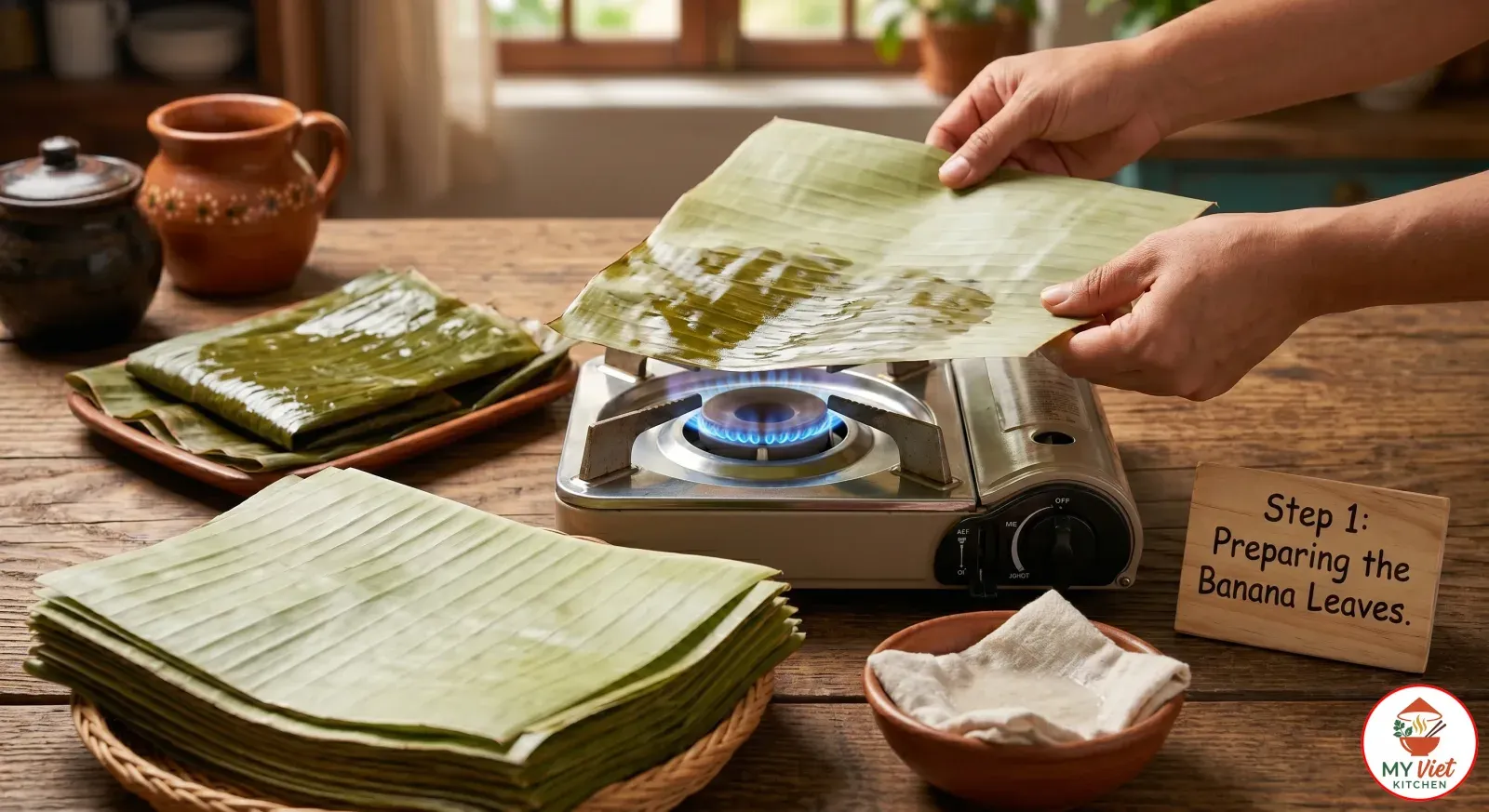
1 Begin by preparing the banana leaves, which serve as both the cooking vessel and the aromatic wrapper. If using frozen leaves, thaw them completely at room temperature. Cut the leaves into large rectangles measuring roughly 14 by 18 inches. Pass each leaf briefly over an open gas flame or hold it in a dry skillet over medium heat for 10 to 15 seconds per side.
The heat turns the leaves from stiff to soft and easy to fold. You will see the color darken and the surface turn glossy. Because of this change, the leaves will not crack when you fold them. After heating, wipe each leaf with a damp cloth. Then stack them and cover with a damp towel to keep them flexible.
Step 2: Season and Marinate the Pork
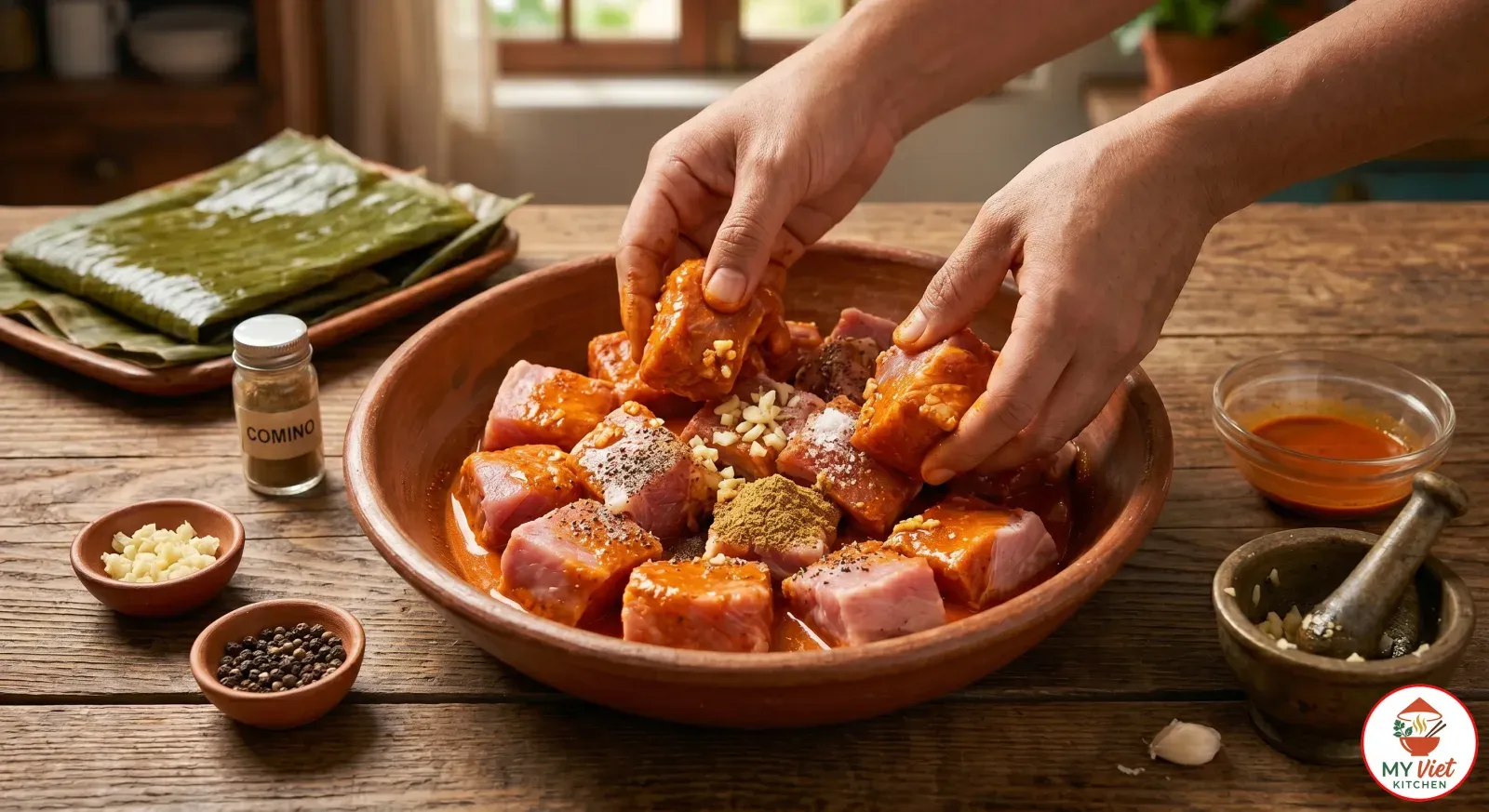
2 Cut the pork shoulder into 12 roughly equal pieces, each about 2 to 3 ounces. Place them in a bowl with the minced garlic, ground cumin, half of the dissolved achiote water, and a generous seasoning of salt and black pepper. Toss the pork until every piece is evenly coated in the vibrant orange marinade.
Cover the bowl and place it in the fridge for at least 30 minutes. For deeper flavor, marinate the pork overnight. The achiote paste does two key things. First, it turns the meat a golden orange color that grows vivid during steaming. Second, it adds a mild, earthy taste with light peppery notes. At the same time, the garlic and cumin soak into the meat and build a savory base. This step is essential for an authentic nacatamal taste.
Step 3: Prepare the Masa Dough
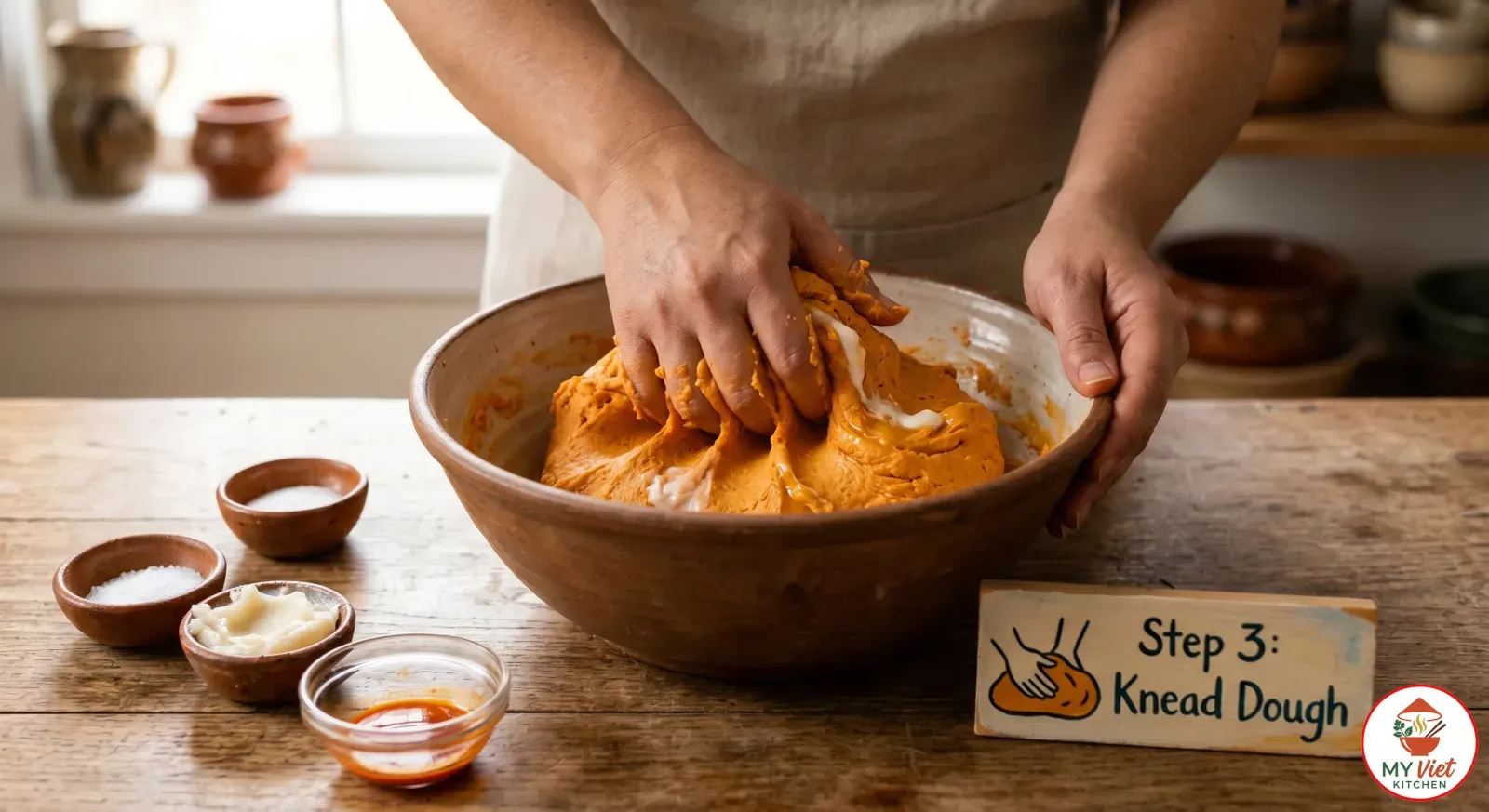
3 Place the corn masa in a large mixing bowl. Add the softened lard, sour orange juice, remaining dissolved achiote water, and salt. Begin kneading the mixture by hand or with a stand mixer fitted with a paddle attachment. Work the dough for 8 to 10 minutes until it becomes smooth, pliable, and slightly sticky.
The lard is key here. It makes the masa tender and light after steaming. Without enough fat, the dough turns dry and crumbly. Meanwhile, the sour orange juice adds a tangy note that cuts through the richness nicely. If the dough feels too dry, add warm water one spoon at a time. If it feels too wet, mix in a bit more dry masa. Ideally, it should look like thick peanut butter — easy to spread but not runny.
Step 4: Assemble the Nacatamales
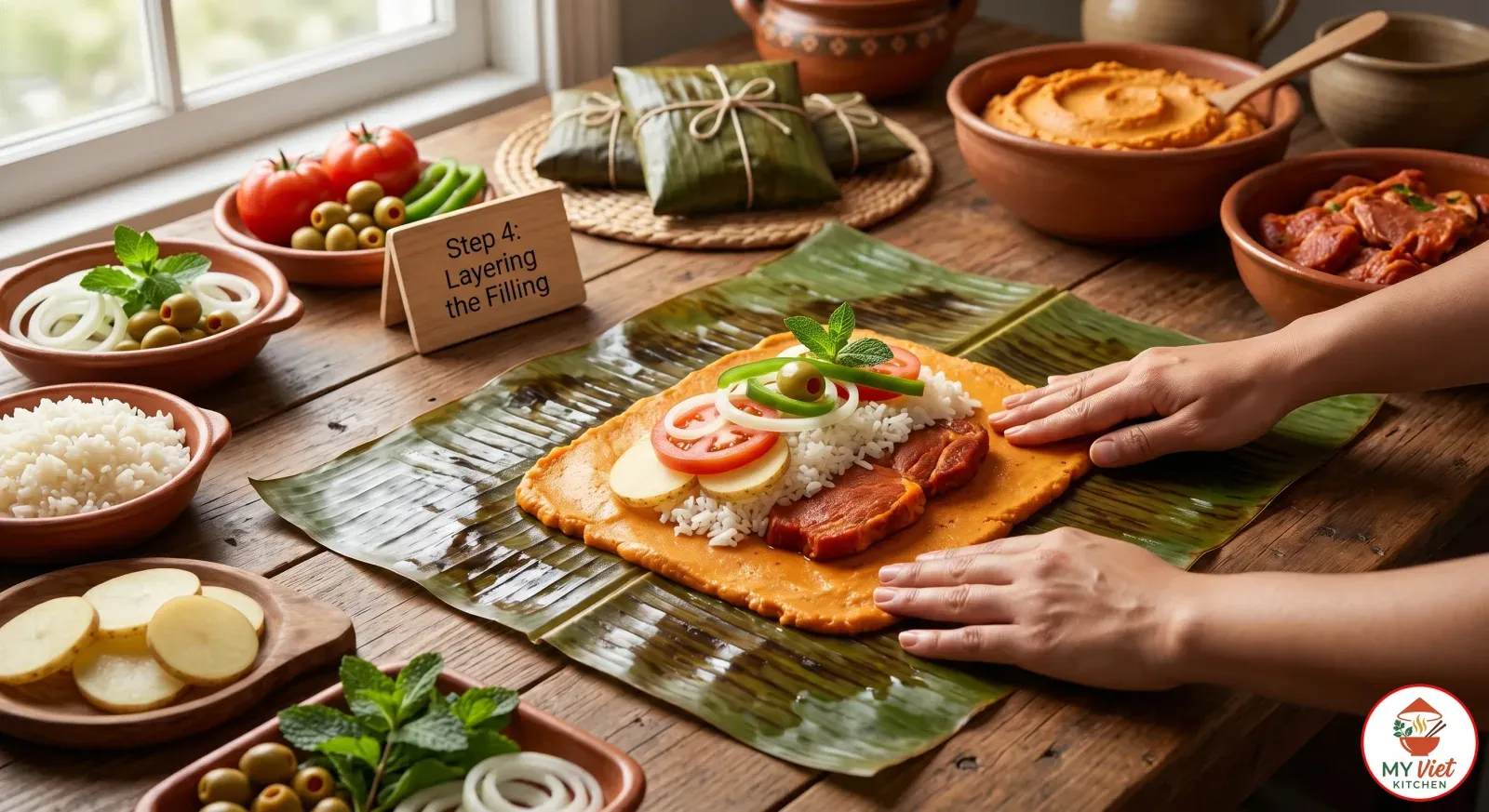
4 Lay a prepared banana leaf on a flat work surface with the smooth, shiny side facing up. Spread approximately one-third cup of masa dough into a rectangle about 6 by 8 inches in the center of the leaf. Leave at least 3 inches of bare leaf on all sides for folding. The masa layer should be about a quarter inch thick — generous enough to enclose the filling but not so thick that it overwhelms it.
Now layer the filling on top of the masa. Place one piece of pork in the center. Then add a spoon of rice, two potato slices, a tomato slice, onion rings, a bell pepper strip, one olive, and a mint leaf. The order matters for even cooking. Next, fold the long sides of the leaf over the filling first. After that, fold the short ends under to form a snug parcel. Tie with kitchen twine in both directions. The parcel should feel firm but not so tight that the masa cannot expand.
Step 5: Steam the Nacatamales
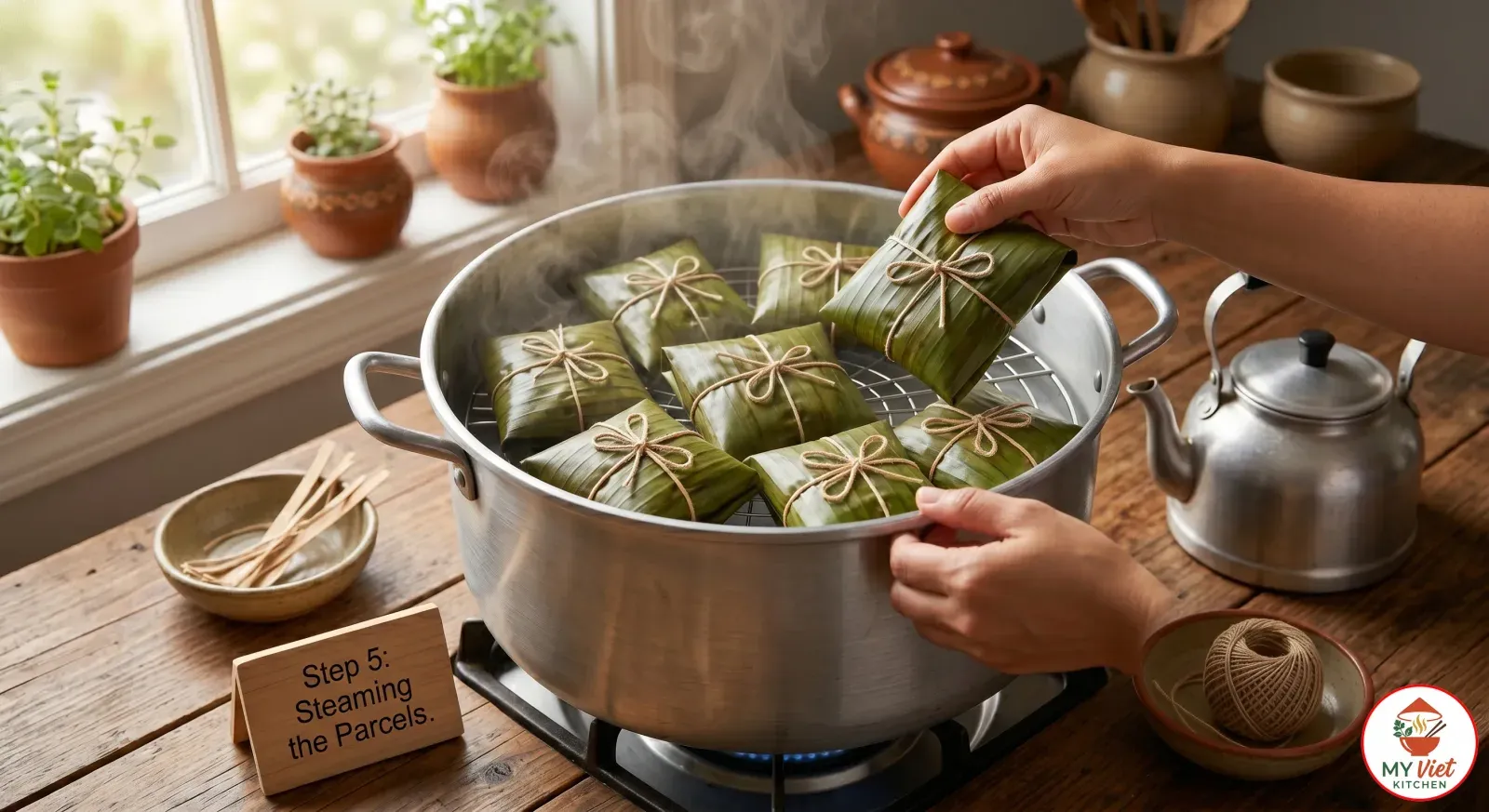
5 Arrange the wrapped nacatamales upright in a large steamer pot, standing them on their folded ends. If you do not own a dedicated tamale steamer, place a wire rack or a bed of crumpled aluminum foil at the bottom of a large stockpot to keep the parcels above the water line. Fill the pot with water to just below the rack or foil level.
Bring the water to a boil, then lower the heat to a steady simmer. Cover the pot tightly. Steam for 3 to 3.5 hours total. Check the water every 45 minutes and add boiling water as needed. Never add cold water, since the sudden chill can cause uneven cooking. To check if they are done, peel back one corner of a nacatamal. If the masa feels firm and pulls away from the leaf cleanly, they are ready.
Step 6: Rest and Serve
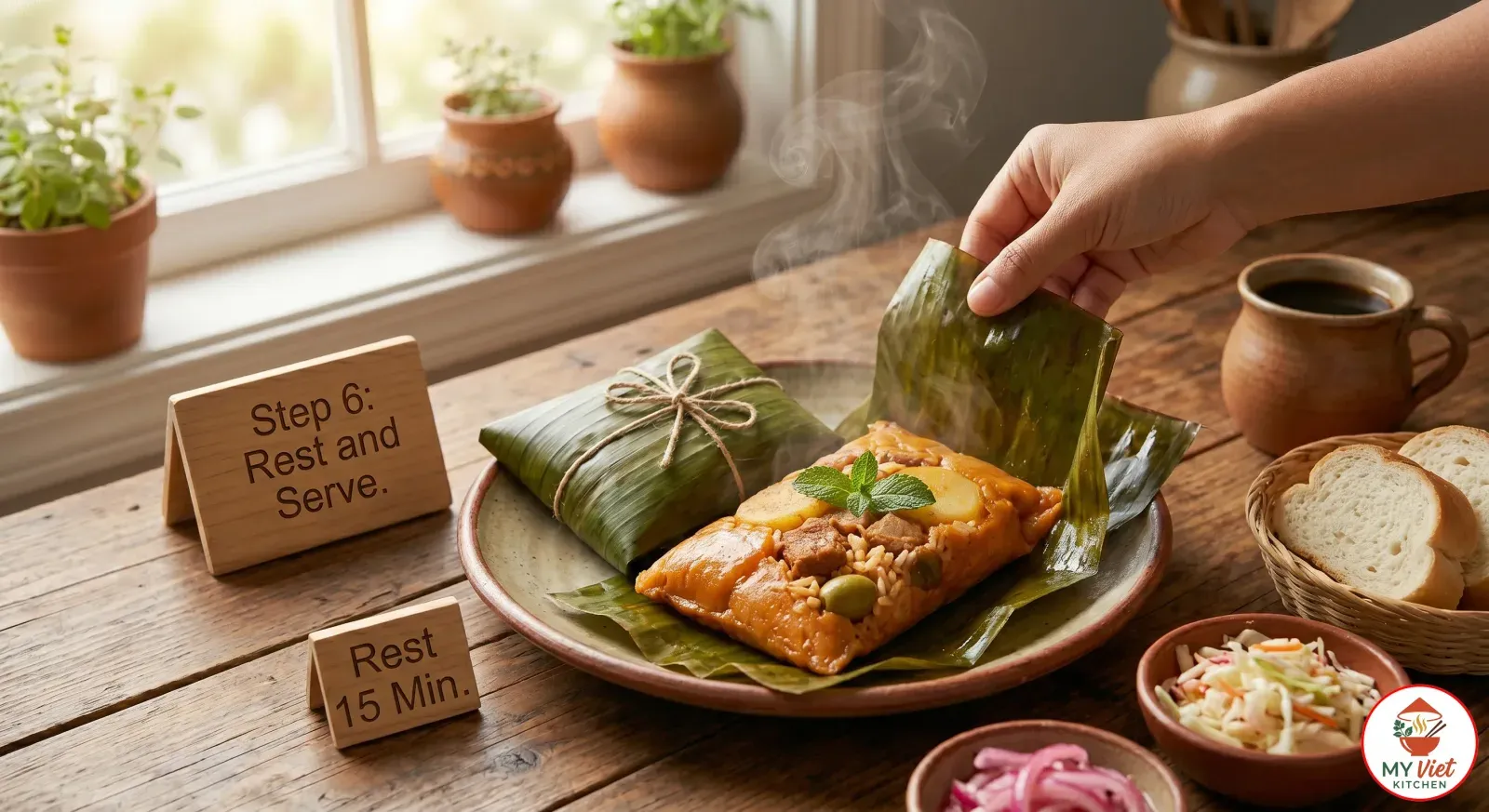
6 Remove the nacatamales from the steamer using tongs and place them on a wire rack or cutting board. Let them rest for 15 minutes before unwrapping. This resting period is crucial because it allows the masa to firm up and set into its final texture. Cutting into a nacatamal too soon results in a soft, crumbly masa that falls apart.
To serve, place each nacatamal on a plate still in its leaf. Let your guests unwrap their own parcel at the table. The burst of hot, fragrant steam is part of the joy. Then offer a drizzle of sour orange juice, pickled red onions, or a lime cabbage slaw on the side. In Nicaragua, people enjoy nacatamales with hot coffee or a glass of cacao. Together, these earthy drinks and the rich parcel form a perfect match.
Expert Tips for Perfect Nacatamal
Beat the Masa Until It Floats
Nicaraguan grandmothers test their masa with a simple trick. Drop a small ball of dough into cold water. If it floats, the masa has enough air and will steam up light and tender. If it sinks, keep kneading. Working the dough traps tiny air pockets in the fat and starch. Then these pockets expand during steaming. They create a soft, pillowy texture rather than a dense block. Also, a stand mixer with a paddle for 8 to 10 minutes beats air in more evenly than hand kneading alone.
Use Enough Lard for Tenderness
Lard is not optional in nacatamal. It coats the starch in the masa and stops it from turning dense. Without enough fat, the dough dries out and crumbles. The classic ratio is one part lard to four parts masa by weight. If you want a lighter result, cut the lard a bit. But never go below half the usual amount. Alternatively, use vegetable shortening, though it lacks the subtle pork flavor. For the best taste, get fresh leaf lard from a butcher shop.
Wrap Tightly but Allow Room to Expand
The banana leaf must be snug but not too tight. If it is too tight, the masa has no room to swell and the parcel may burst. If it is too loose, water seeps in and makes the masa soggy. As a rule, the masa grows about 20 percent during cooking. So fold the leaf firmly, then tie with twine in a cross pattern. Two ties give the right balance of hold and room. This simple step makes a big difference in the final texture.
Nacatamal Compared to Other Latin American Tamales
The tamale tradition spans the entire Americas. Each country has its own take on this ancient corn-based food. The nacatamal is Nicaragua’s proud entry in this family. By comparing it to similar dishes, you can see what makes it so special.
| Dish | Country | Wrapping | Key Characteristics |
|---|---|---|---|
| Nacatamal | Nicaragua | Banana leaf | Large, filled with pork, rice, potatoes, olives, and mint |
| Tamale | Mexico | Corn husk | Smaller, focused on single filling, many regional varieties |
| Hallaca | Venezuela | Banana leaf | Stewed filling with capers, raisins, and olives in corn dough |
| Humita | Argentina | Corn husk | Sweet fresh corn filling, often vegetarian |
| Tamal de Pipian | El Salvador | Banana leaf | Filled with chicken in pumpkin seed sauce |
Serving Suggestions
In Nicaragua, nacatamales are a complete meal on their own. The filling of meat, starch, and vegetables is so hearty that you need very little on the side. Even so, a few smart choices can lift the meal and add nice contrast to the rich parcel.
Traditional Accompaniments:
- Pickled red onions (curtido): The sharp tang of pickled onions cuts through the rich masa and pork. Also, the bright magenta color looks great on the plate. Just soak sliced red onions in lime juice, vinegar, salt, and oregano a few hours before serving.
- Simple cabbage slaw: Shred green cabbage and dress it with lime juice, salt, and a drizzle of oil. This fresh, crunchy side balances the dense nacatamal well.
- Crusty bread (pan simple): A slice of plain white bread is the traditional accompaniment in many Nicaraguan homes. It absorbs the juices released when you unwrap the nacatamal and adds a soft, neutral contrast to the bold flavors.
- Hot sauce or salsa roja: A simple tomato-based hot sauce with chili peppers and garlic adds heat for those who want it. Nacatamal is not traditionally spicy, so the salsa allows each diner to control their own spice level.
Beverage Pairings:
- Nicaraguan coffee: This is the classic pairing. A strong cup of dark roast, black or with sugar, goes well with the earthy masa and savory pork. In addition, the bitter notes cleanse the palate between bites.
- Pinolillo (cacao and corn drink): This Nicaraguan drink blends toasted corn flour, cacao, and cinnamon. It echoes the corn flavor of the nacatamal and adds warm, chocolate notes. Serve it cold or warm based on the season.
- Tona or Victoria beer: These Nicaraguan lagers offer a crisp, cold contrast to the hot nacatamal. The bubbles refresh the palate, and the mild bitter notes pair well with the fatty pork. This is a favorite at weekend meals.
- Horchata de jicaro: This creamy, sweet drink uses jicaro seeds, rice, cinnamon, and sugar. It is rich yet cool. Furthermore, it pairs well with the corn-based nacatamal. The warm spice notes soothe and balance the savory filling.
Storage and Reheating
Refrigerator: Let the cooked nacatamales cool fully in their banana leaf wrappers. Then store them in the fridge for up to 4 days. The leaf acts as a natural shield, keeping the masa moist. In fact, the flavors deepen overnight as spices and pork juices soak deeper into the masa.
Freezer: Nacatamales freeze very well, both cooked and raw. Just add a layer of foil or plastic wrap over the banana leaf before freezing. They keep for up to 3 months. To reheat cooked ones, steam from frozen for 45 to 60 minutes. For uncooked frozen ones, steam about 4 hours with no need to thaw.
Reheating: Steaming is the best way to reheat by far. Place the nacatamal in its leaf in a steamer for 20 to 30 minutes. For a faster option, wrap it in a damp paper towel and microwave for 3 to 4 minutes. Flip it halfway through. However, the microwave can dry the edges of the masa. Avoid the oven entirely, since dry heat makes the masa tough.
Common Mistakes to Avoid
1. Under-kneading the Masa
If you rush the kneading, the nacatamal turns out dense and heavy. The masa needs at least 8 minutes of strong kneading. This mixes in air and spreads the fat evenly. Good masa feels smooth and springy, like soft bread dough. If you are not sure, try the float test from the tips above. Indeed, a few extra minutes of kneading will change the texture of your nacatamal entirely.
2. Not Softening the Banana Leaves
Raw banana leaves are stiff and crack along the veins when folded. Passing them over heat for a few seconds makes them soft. If you skip this, the leaves tear and let water seep in. Then the masa turns gummy and loses its clean corn taste. So always heat the leaves until glossy and bendy before you wrap.
3. Overfilling the Nacatamal
Too much filling stops the leaf from closing right. Gaps let steam and water get in. Furthermore, the masa cannot cook evenly around so many items. So keep the filling in the center and leave a wide border for folding. Each item should be in modest amounts. That way, every bite has a good balance of masa, meat, and vegetables.
4. Adding Cold Water to the Steamer
During the long steam, the water level drops. It is tempting to add cold tap water. But this causes a sudden chill that shocks the masa. As a result, you get zones of raw and overcooked dough in the same parcel. Instead, always keep a kettle of boiling water nearby. Use it to top up the pot and keep the heat steady.
Frequently Asked Questions
What is the difference between nacatamal and a regular tamale?
A nacatamal is much bigger than a Mexican tamale. One parcel can weigh over a pound. It holds pork, rice, potatoes, tomatoes, olives, peppers, and mint — a full meal. In contrast, Mexican tamales are smaller and use corn husks. They usually have just one filling. Nacatamales use banana leaves, which add a green, herbal scent. Also, the masa is richer because it uses lard and sour orange juice for a tangier taste.
Can I make nacatamales ahead of time?
Yes, and in fact, this is the traditional way. Nicaraguan families build them on Saturday evening. Then they steam them on Sunday morning. You can keep raw nacatamales in the fridge for up to 24 hours. Or freeze them for up to 2 months. Steam frozen ones directly, but add 45 to 60 extra minutes. Cooked nacatamales reheat well by steaming for 20 to 30 minutes.
What can I use instead of banana leaves for nacatamal?
Foil is the easiest swap if you lack banana leaves. It seals well and steams the masa nicely. For less sticking, wrap in parchment paper first, then add foil on top. Corn husks work too, but they are small and give a drier result. For the best flavor, buy frozen banana leaves at Latin, Asian, or Caribbean stores. They cost very little and keep in the freezer for months.
What is sour orange juice and where can I find it?
Sour orange, or naranja agria, is a bitter citrus used often in Central American cooking. It has a sharp, tangy taste. Look for it bottled in the Latin aisle or at Latin markets. If you cannot find it, mix equal parts lime juice and orange juice instead. For extra tang, add a splash of white vinegar to the mix. This comes close to the real thing.
How do I know when nacatamales are fully cooked?
After 3 hours, peel back one corner of a nacatamal. The masa should feel firm and pull away from the leaf cleanly. It looks solid and glossy, not wet or soft. If it sticks to the leaf, rewrap it and steam for 20 to 30 more minutes. Then test again. A fully done nacatamal holds its shape when you unwrap it all the way.
Can I make a vegetarian version of nacatamal?
Yes, and they are popular in Nicaragua during Lent. Swap the pork for chayote, carrots, and more potatoes. Black beans or cheese also work well for protein. Use shortening or coconut oil in place of lard. Keep the rice, tomatoes, olives, peppers, and mint for an authentic base. Then season the masa well with achiote and sour orange juice. The steam time stays the same.
Variations and Adaptations
Chicken Nacatamal:
Use boneless chicken thighs in place of pork. Cut them to the same size. Then marinate in the same achiote, garlic, and cumin blend. Chicken cooks faster, so the masa sets the cook time. The taste is lighter than the pork version. This option is popular on weeknights when families want a faster meal.
Nacatamal de Frijoles (Bean Nacatamal):
For a richer meatless take, spread refried black beans on the masa before adding veggies. The beans add protein, cream, and earthy flavor. They also help hold the filling in place. Season the beans with cumin and achiote to match the masa. In Nicaragua, this type is common during Catholic fasts. Serve it with fresh cheese and pickled veggies on the side.
Mini Nacatamales for Parties:
Cut the leaf smaller and reduce the masa and filling to match. Mini nacatamales cook in just 1.5 to 2 hours. They make great finger food for parties. Each guest gets a small parcel to unwrap. Also, this size is perfect for people new to the dish. It feels less daunting than the full-sized version.
Pressure Cooker Nacatamal:
For a faster cook, use an Instant Pot or similar pressure cooker. Set the parcels on the trivet with one cup of water. Cook on high pressure for 45 minutes. Then let it release pressure on its own for 15 minutes. This cuts the cook time from 3 hours to about 1 hour. The texture comes out nearly the same. However, the pot fits fewer parcels, so this works best for small batches.
The Cultural Significance of Nacatamal
Nacatamal holds a sacred place in Nicaraguan life. It is more than food — it is a bond between families across many years. No one makes nacatamales alone. Grandmothers guide the masa. Aunts prep the fillings. Children help tie the parcels. In the kitchen, there is talk, laughter, and the smell of warm banana leaves. Because of this, the nacatamal keeps alive not just cooking skills but family ties as well.
In Nicaragua, nacatamales mean Sunday morning. Families make their own or buy from trusted local vendors. Saturday night is prep time. Sunday is eating time. This rhythm shapes family life week after week. According to Taste Atlas, the nacatamal is one of Nicaragua’s top national dishes, along with gallo pinto and vigoron. It also appears at Christmas, Easter, baptisms, and weddings. Indeed, a Nicaraguan party without nacatamales is hard to imagine. To make this dish is to join a living tradition that reaches back centuries. It links modern homes to the native and colonial roots of Central American food.
Conclusion
Making nacatamal at home takes time, but the reward is huge. The ingredients are easy to find. The method needs patience more than skill. Still, watching simple corn masa and pork turn into a fragrant, layered parcel is deeply satisfying. Each nacatamal you open carries centuries of Nicaraguan tradition. So invite your family into the kitchen. Spread out the banana leaves. Make this dish the way it was always meant to be made — together.
Craving more Central American and Latin American recipes? Explore our growing collection of Latin American dishes for classics like feijoada, apple pie, and BBQ ribs. If you try this nacatamal recipe, leave a rating and share your experience in the comments below.