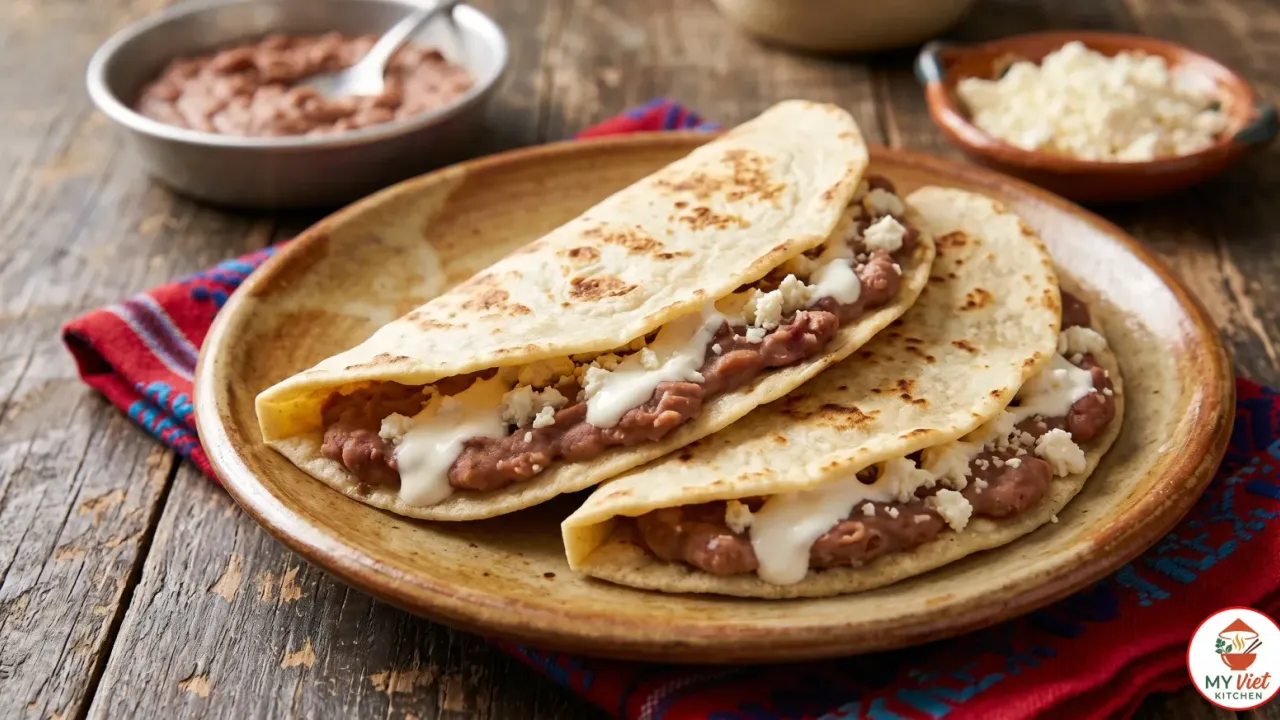
Baleada is the undisputed queen of Honduran street food. This simple creation wraps a thick, soft flour tortilla around creamy refried red beans, tangy crema, and crumbly white cheese. The result is something far greater than the sum of its parts. Walk through any city in Honduras at any hour of the day, and you will find vendors griddling these golden half-moons on flat comals. Every Honduran family has their version. Every neighborhood has a favorite stand. Few dishes carry this much cultural weight while staying so easy to make at home.
Prep Time: 25 minutes | Cook Time: 35 minutes | Servings: 6
Difficulty: Easy | Calories: ~380 per serving
What Makes Baleada Special?
The baleada earns its place in the Honduran national identity not through complexity but through perfection of simplicity. Three core ingredients — beans, cream, and cheese — combine on a single warm tortilla to create a harmony of textures and flavors that no elaborate construction can surpass. The tortilla itself is the first clue that this is something different from an ordinary taco or wrap. It is thicker, softer, and slightly chewy, with a faint richness from the lard or shortening in the dough. Additionally, baking powder gives it a gentle puff on the griddle, creating tiny air pockets that trap steam and keep the surface tender.
What separates a great baleada from a merely good one is the quality of each component. First, the beans must be mashed until creamy yet still textured, not pureed into a bland paste. Next, the crema must carry genuine tanginess that cuts through the richness of the beans. Finally, the cheese should crumble into irregular pieces that melt slightly from the heat of the tortilla. Together, these three elements create a balance of savory depth, dairy richness, and gentle acidity. It is comfort food at its most honest.
Hondurans eat baleadas at every meal. Breakfast baleadas might include scrambled eggs and sliced avocado. At lunch, these versions feature carne asada or grilled chicken. Late-night street vendors serve the classic baleada sencilla — the simple version with just beans, crema, and cheese — to crowds heading home after an evening out. This range is part of what makes the baleada so loved. Furthermore, the base recipe costs almost nothing to prepare. In fact, beans, flour, and a bit of cream feed a family generously. The baleada is proof that the best food in the world does not require expensive ingredients or complicated technique.

Choosing the Right Beans
Beans are the soul of the baleada. The variety you choose and how you prepare them determines whether the filling tastes flat or deeply satisfying. Honduran cooks use red beans, and the type you pick matters more than you might think.
- Red silk beans (frijoles de seda): These are the traditional choice in Honduras. They are small, smooth-skinned, and cook into an exceptionally creamy paste. Their flavor is subtly sweet with an earthy depth. Finding them outside Central America can be hard, but Latin grocery stores may carry them dried or canned.
- Red kidney beans (best widely available choice): These produce excellent refried beans with a rich, full flavor and satisfying texture. They are available everywhere. Cook them until very soft so they mash into a smooth spread. This is the best choice for most home cooks.
- Pinto beans: Common in Mexican-style refried beans. They work in a baleada but produce a milder, lighter-colored filling. The flavor is less robust than red beans. Use pintos only if red beans are unavailable.
Ingredients for Baleada
For the Flour Tortillas:
- 3 cups (375g) all-purpose flour
- 1 teaspoon baking powder
- 1 teaspoon salt
- 3 tablespoons vegetable shortening or lard
- 1 cup (240ml) warm water
For the Refried Beans:
- 2 cups (400g) dried red kidney beans, soaked overnight
- 1 medium onion, quartered
- 3 cloves garlic, smashed
- 2 tablespoons vegetable oil or lard
- Salt and black pepper to taste
For the Filling and Toppings:
- 1 cup (240ml) Honduran crema, Mexican crema, or sour cream
- 1 1/2 cups (180g) queso seco or queso fresco, crumbled
- Optional: scrambled eggs, sliced avocado, pickled red onions, carne asada, or Honduran chorizo
Pro tip: Use lard instead of vegetable shortening in the tortilla dough for the most authentic flavor. Lard produces a softer, more pliable tortilla with a subtle richness that shortening cannot replicate. Additionally, when making the refried beans, save at least one cup of the bean cooking liquid. This starchy liquid is far better than plain water for adjusting the consistency of the beans. It adds body and flavor rather than diluting them.
Step-by-Step Instructions
Step 1: Prepare the Beans
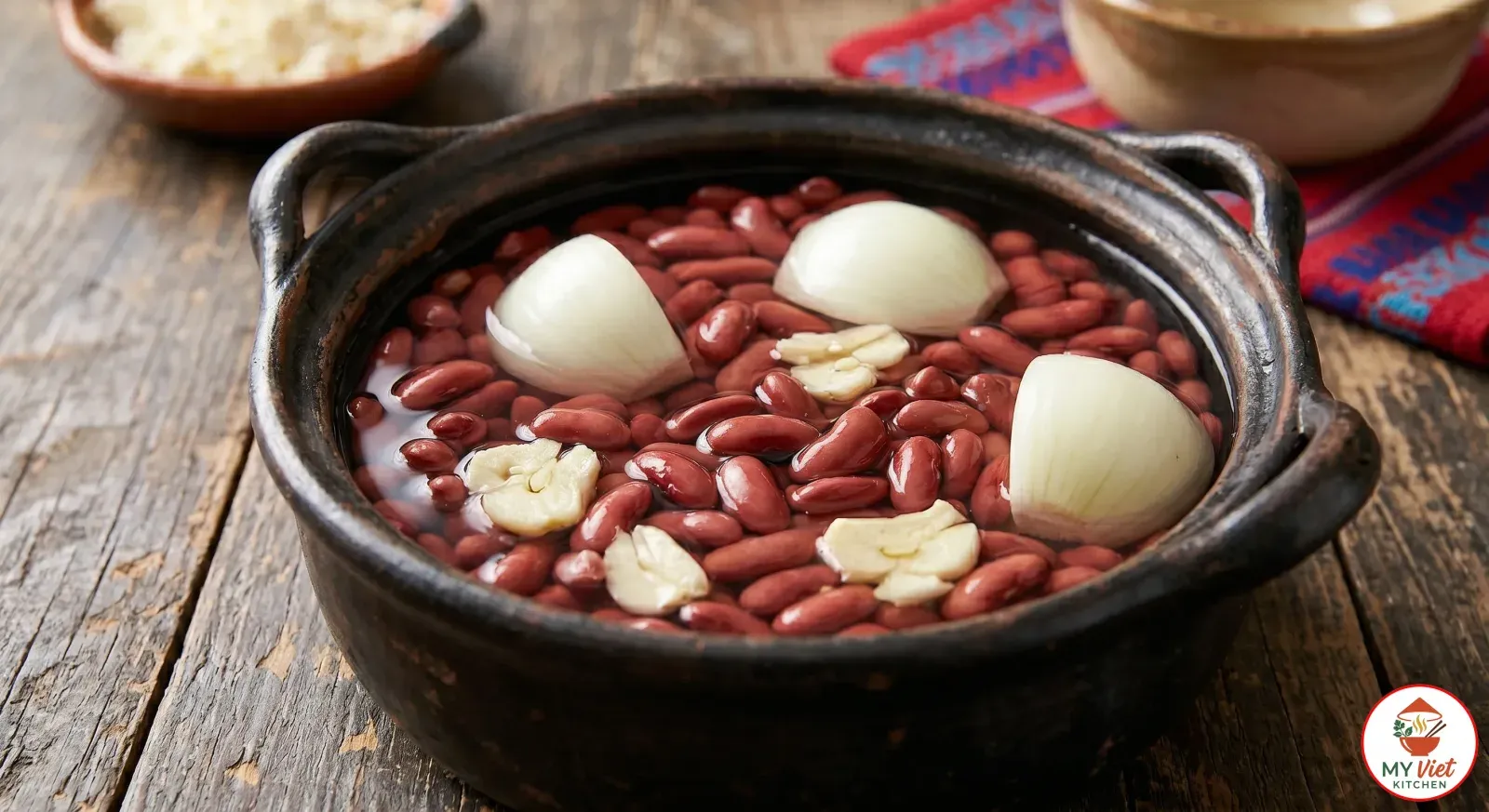
1 Begin by draining and rinsing the soaked red beans under cold running water. Transfer them to a large pot. Add the quartered onion and smashed garlic cloves. Cover everything with fresh water by at least 2 inches. Bring the pot to a boil over high heat, then reduce to a steady simmer.
Cook the beans for 1 to 1.5 hours until they are completely tender and crush easily between your fingers. Generally, the cooking time depends on the age and size of your beans. Older beans take longer. Check the water level periodically and add more hot water if needed to keep the beans submerged. Once tender, drain the beans over a bowl to catch the cooking liquid. You will need about one cup of this liquid later. Discard the onion and garlic pieces.
Step 2: Make the Refried Beans
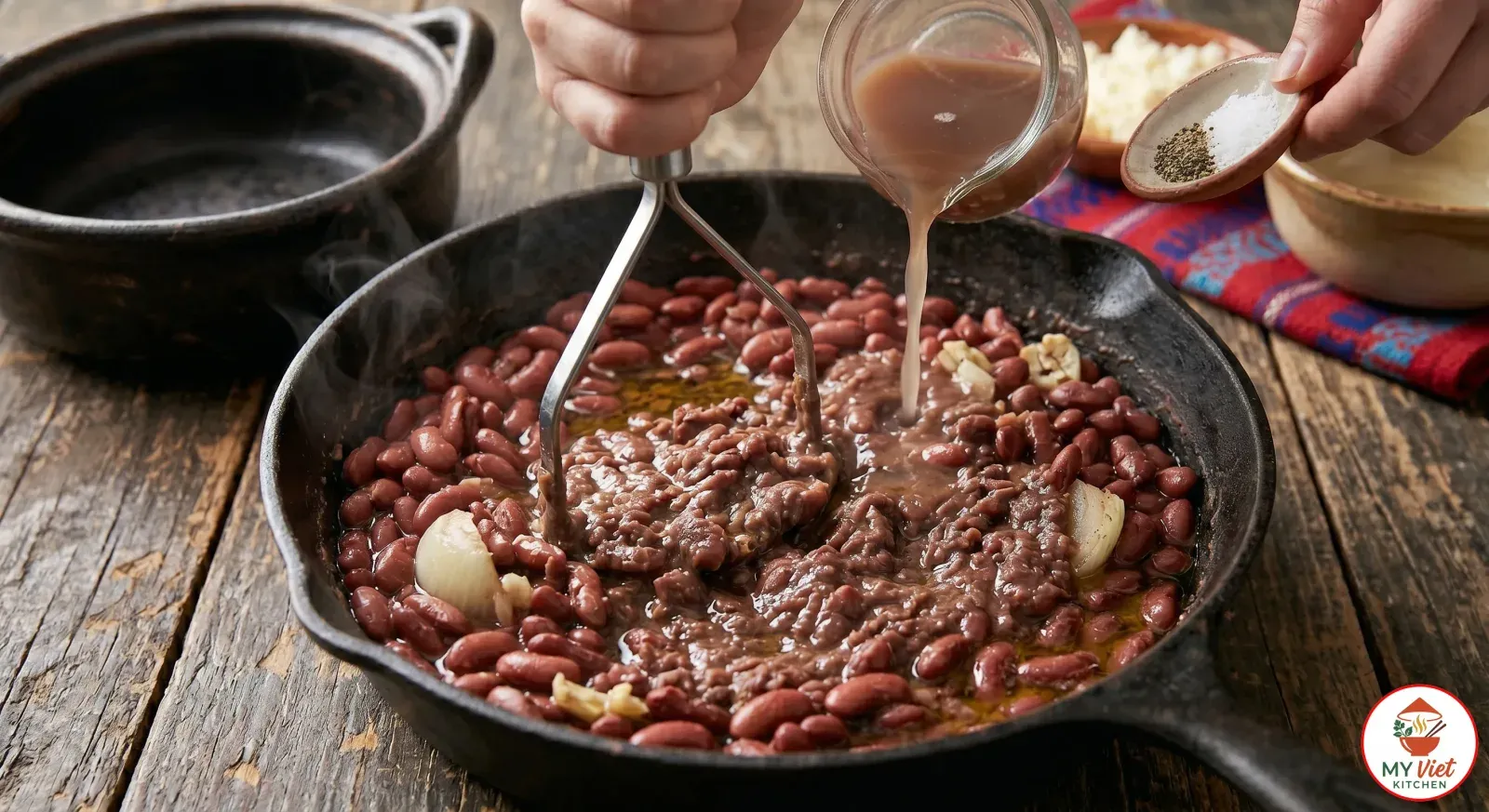
2 Heat the vegetable oil or lard in a large skillet over medium heat. Add the drained cooked beans to the hot fat. Using a potato masher or the back of a sturdy wooden spoon, begin mashing the beans directly in the skillet. Work in firm, steady strokes to break them down.
Stir and mash constantly for 5 to 7 minutes. Eventually, the beans should transform from whole to a thick, creamy paste with some chunks remaining. However, a completely smooth puree is not the goal. Add the saved cooking liquid one spoon at a time until you reach a good, thick spread. Keep in mind that the beans will thicken as they cool. Aim for a texture a bit looser than you want in the final baleada. Season generously with salt and black pepper. The beans carry the main flavor of the whole dish, so they should taste well-salted on their own.
Step 3: Mix the Tortilla Dough
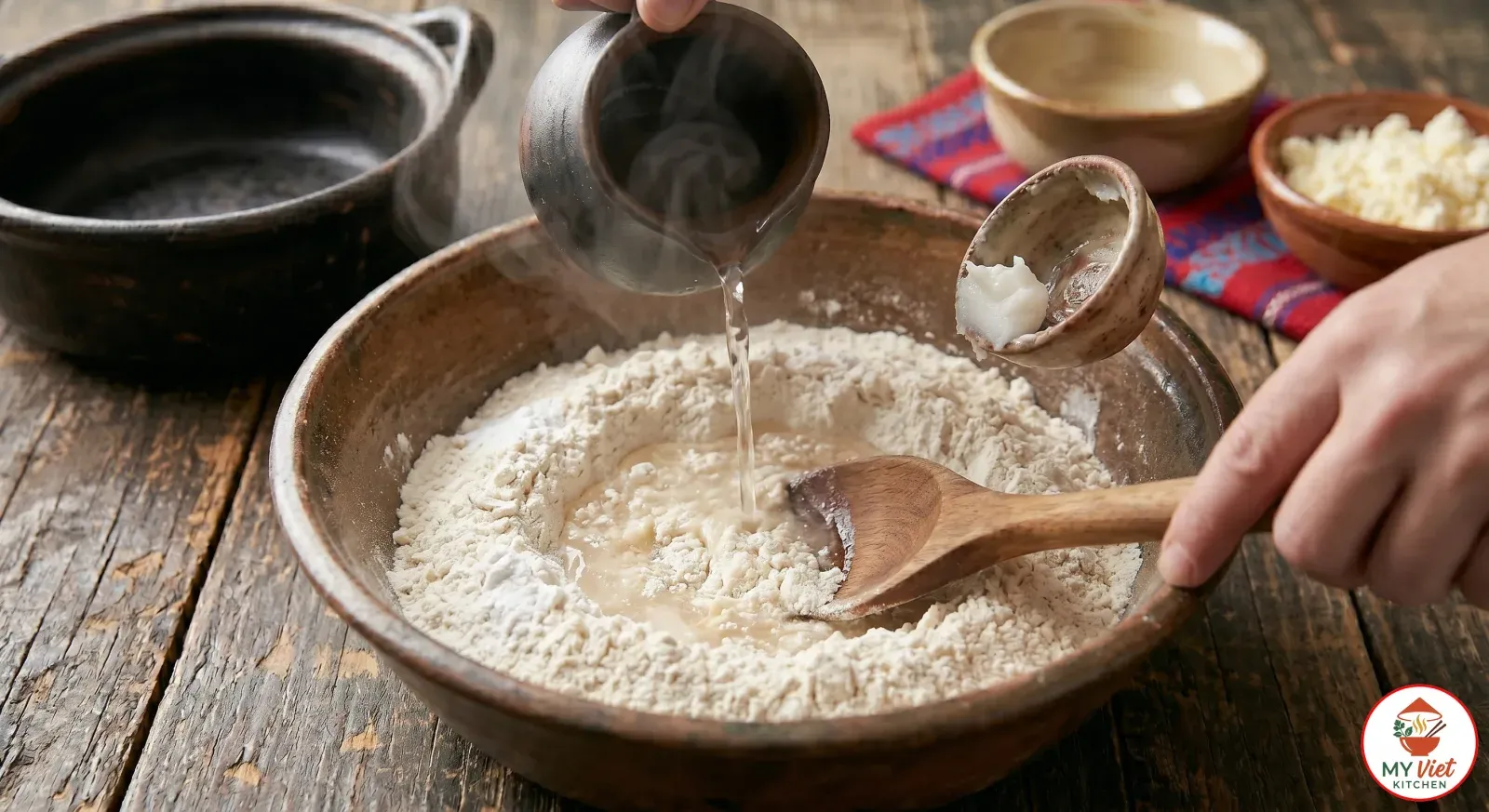
3 In a large mixing bowl, whisk together the all-purpose flour, baking powder, and salt. Add the vegetable shortening or lard. Rub the fat into the flour mixture using your fingertips until it resembles coarse, damp sand. Essentially, this step spreads the fat evenly through the dough, which creates that soft, tender bite.
Pour the warm water in gradually while stirring with a fork or your hand. Once the dough comes together, turn it onto a lightly floured surface. Knead for 3 to 4 minutes until the dough feels smooth, soft, and slightly elastic. It should not be sticky. If it still clings to your hands, add flour one tablespoon at a time. Cover the dough with a damp kitchen towel and let it rest for 15 minutes. This rest lets the gluten relax, so the dough rolls out with ease.
Step 4: Shape and Cook the Tortillas
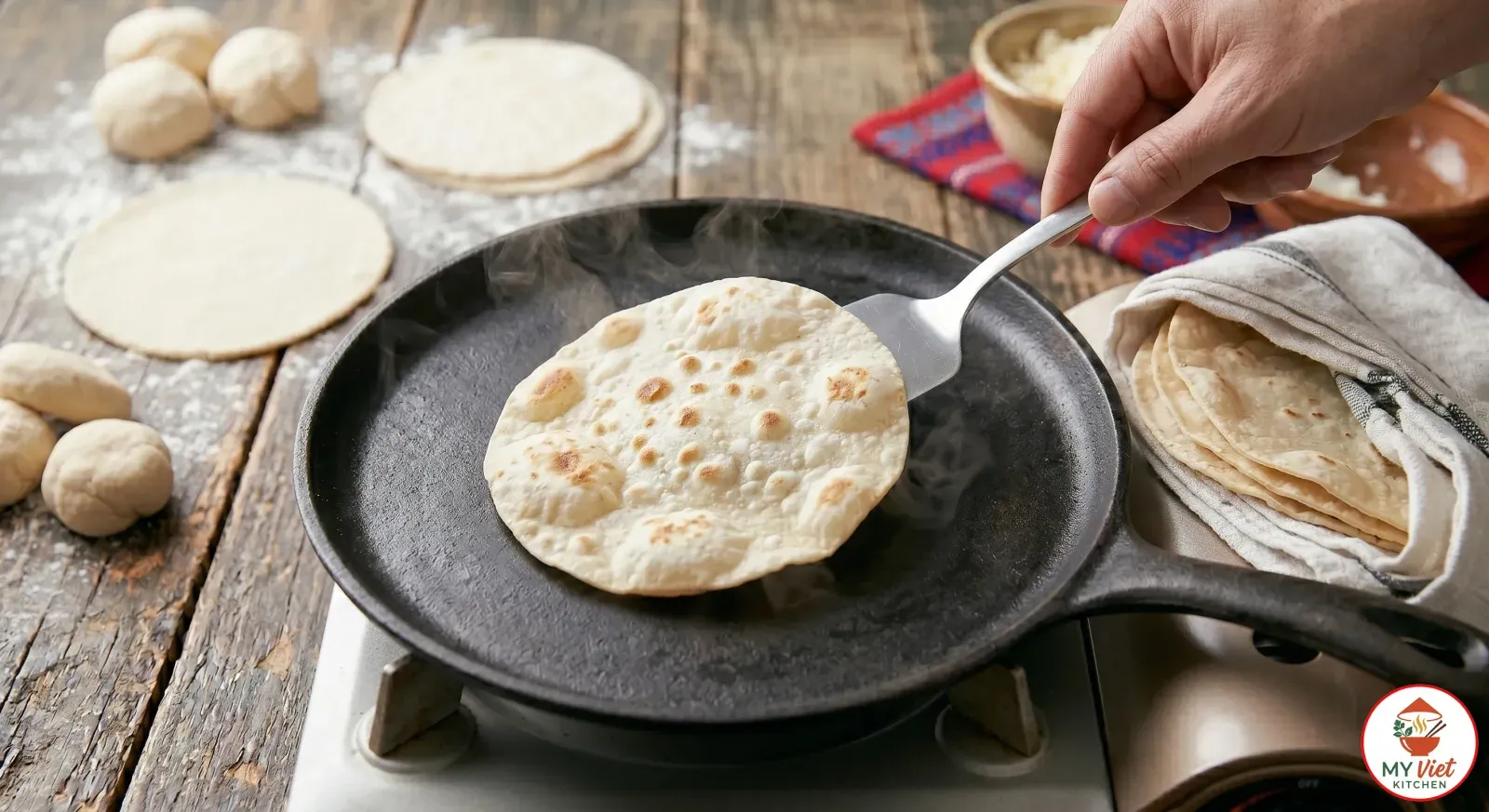
4 Divide the rested dough into 6 equal pieces. Roll each piece into a smooth ball between your palms. On a lightly floured surface, use a rolling pin to flatten each ball into a circle roughly 8 to 9 inches across. Baleada tortillas should be thicker than standard ones — about 3 to 4 millimeters. This extra thickness lets them hold the filling well.
Heat a dry comal, griddle, or cast iron skillet over medium-high heat. Place a tortilla on the hot surface and cook for 1 to 2 minutes. Watch for golden brown spots forming on the underside and small bubbles puffing on the surface. Then flip and cook the other side for another minute. It should be golden with charred spots but still soft and easy to bend. Stack the cooked tortillas inside a folded clean kitchen towel to keep them warm and steamy. The trapped steam keeps them soft for folding.
Step 5: Assemble the Baleada
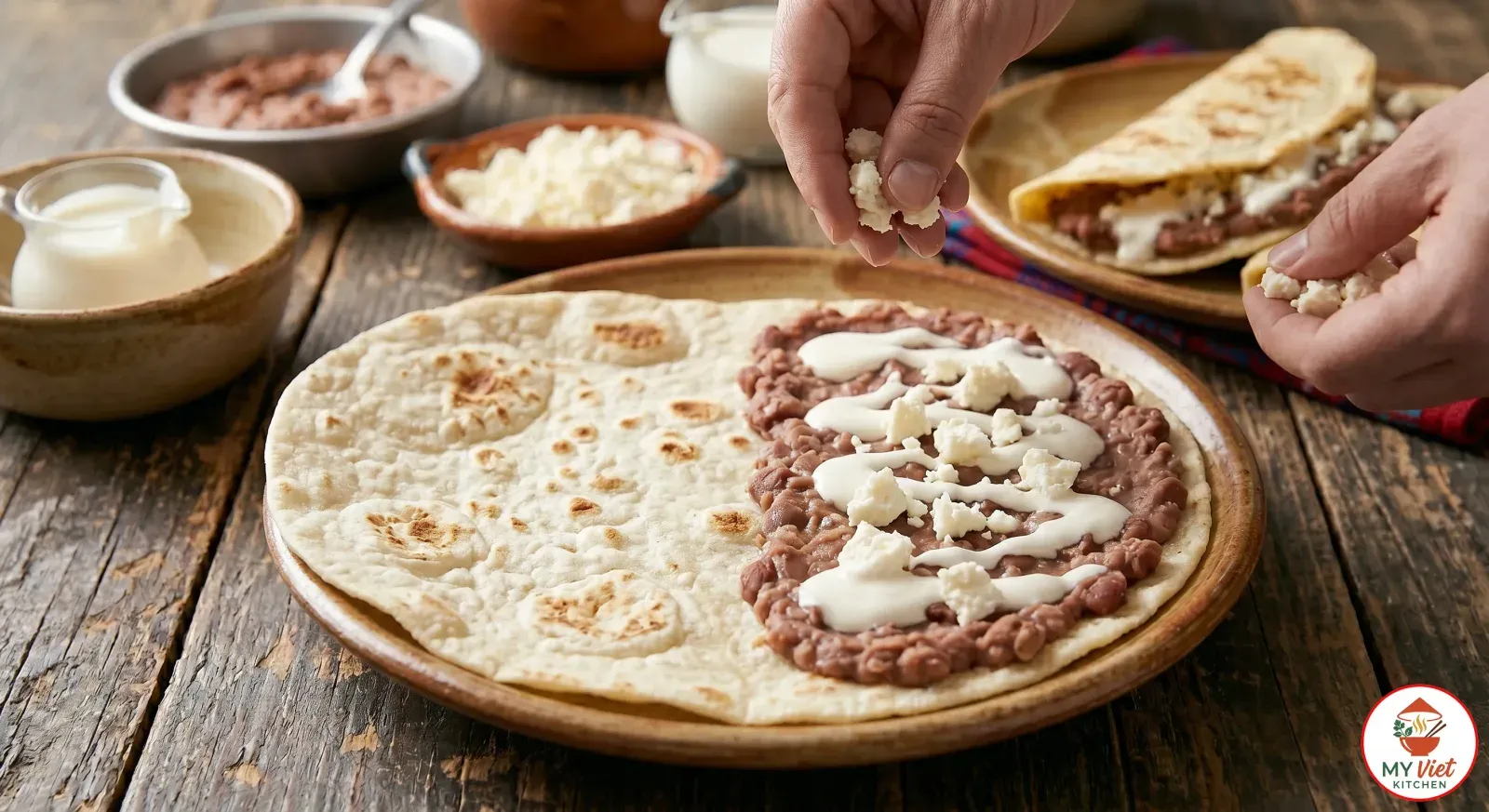
5 Lay a warm tortilla flat on a clean plate. Spread a generous layer of refried beans across one half of the tortilla, leaving a small border at the edge. The bean layer should be thick enough to be the dominant element in every bite. Drizzle a liberal amount of crema over the beans. The crema adds richness and a tangy contrast that balances the earthy beans.
Next, scatter the crumbled queso seco or queso fresco over the crema. Importantly, the cheese should be in rough chunks rather than finely grated, so you get bursts of salty, milky flavor. If adding optional toppings like scrambled eggs, avocado slices, or carne asada, place them on top of the cheese now. Fold the empty half of the tortilla over the filled side to create a half-moon shape. Press gently to seal. Serve immediately while the tortilla is still warm and the cheese begins to soften from the heat.
Expert Tips for Perfect Baleada
Get the Tortilla Thickness Right
The baleada tortilla is not a paper-thin wrap. It needs enough thickness to hold its shape when folded around a generous filling. Roll the dough to about 3 to 4 millimeters — roughly twice the thickness of a standard flour tortilla. If too thin, it tears under the weight of the beans. Conversely, if too thick, it becomes bready and dense. A good tortilla bends with no cracks when you fold it. If yours crack at the fold, they are either too thick or not warm enough. Keep them wrapped in a towel until the moment you fill them.
Season the Beans Boldly
Bland beans produce a bland baleada. After all, the refried beans carry the primary flavor of the entire dish. Taste them after mashing and ask if they could stand on their own as a good bite. If the answer is no, add more salt. Crema and cheese add some flavor, but they cannot save bland beans. For instance, a pinch of ground cumin stirred in at the end adds subtle warmth. Similarly, some Honduran cooks also add a splash of the bean cooking liquid at the very end for an extra layer of starchy, concentrated bean flavor.
Use the Right Cheese
Authentic baleadas use queso seco, a dry, salty, crumbly white cheese produced throughout Honduras. It does not melt fully but softens from the heat of the tortilla. Queso fresco is the best substitute available in most supermarkets. Alternatively, cotija cheese works well if you want a saltier, sharper flavor. Avoid mozzarella, cheddar, or any cheese that melts into a gooey mass. Authentically, the baleada relies on rough bits of cheese that you can taste against the smooth beans. This contrast in texture is key.
Baleada Styles Across Honduras
The baleada adapts to regional tastes and available ingredients across Honduras. While the core trinity of beans, crema, and cheese remains constant, the additions and preparations vary from city to city. The following table shows the most popular styles you will encounter.
| Style | Fillings | Where to Find It | Best For |
|---|---|---|---|
| Baleada Sencilla | Beans, crema, cheese | Everywhere in Honduras | Quick breakfast or snack |
| Baleada con Huevo | Beans, crema, cheese, scrambled eggs | Breakfast street stalls nationwide | Hearty morning meal |
| Baleada con Carne | Beans, crema, cheese, carne asada or chicken | San Pedro Sula, Tegucigalpa | Full lunch or dinner |
| Baleada con Aguacate | Beans, crema, cheese, sliced avocado | La Ceiba, coastal regions | Creamy, rich variation |
| Baleada con Chorizo | Beans, crema, cheese, Honduran chorizo | Western Honduras, Copan region | Spicy, smoky flavor |
Serving Suggestions
The baleada is a complete meal in itself. Still, pairing it with the right accompaniments enhances the experience and creates a more generous spread for sharing. Honduran cooks often serve baleadas with fresh, bright sides that cut through the rich, starchy fill.
The Perfect Accompaniments:
- Curtido (pickled cabbage slaw): This tangy, crunchy slaw cuts through the richness of the beans and crema. Shredded cabbage, carrots, and white vinegar make a bright mix that cleans your palate between bites.
- Sliced ripe plantains (platanos maduros): Pan-fried until caramelized and golden, sweet plantains provide a delightful contrast against the savory baleada. The natural sweetness balances the salt from the beans and cheese.
- Fresh salsa or chimol: A simple Honduran salsa of diced tomatoes, onion, cilantro, and lime juice adds freshness and acidity. Spoon it directly onto the baleada before folding, or serve it alongside as a dip.
- Sliced avocado: Creamy avocado adds richness and healthy fats. It pairs naturally with the beans and crema without competing for attention. A squeeze of lime and a pinch of salt over the slices is all you need.
Beverage Pairings:
- Horchata de morro: This traditional Honduran drink made from jicaro seeds, cacao, cinnamon, and sugar is the classic partner for baleadas. It is creamy, mildly sweet, and nutty. The cool temperature contrasts the warm tortilla beautifully.
- Fresh tamarind juice: Tart and slightly sweet, tamarind juice cleanses the palate between bites of rich baleada. Its acidity mirrors the function of the crema inside the tortilla. Serve it cold over ice.
- Salva Vida or Port Royal beer: These Honduran lagers are light, crisp, and refreshing. The carbonation cuts through the starchy beans. A cold beer with a warm baleada is perhaps the most authentic Honduran casual meal experience.
- Black coffee: Honduran coffee is among the finest in Central America. A strong, unsweetened cup of locally roasted coffee is a traditional breakfast companion for the morning baleada. The bitterness complements the creamy beans and cheese.
Storage and Reheating
Refrigerator: Store the tortillas, beans, and toppings separately for the best results. Cooked tortillas keep in an airtight bag for 2 to 3 days. Refried beans store well in a covered container for up to 5 days. Assembled baleadas do not store well because the tortilla absorbs moisture from the beans and becomes soggy. Always assemble fresh right before eating.
Freezer: Uncooked tortilla dough balls freeze beautifully for up to 2 months. Wrap each ball individually in plastic wrap, then store them together in a freezer bag. Thaw at room temperature for 30 minutes before rolling and cooking. Refried beans also freeze well for up to 3 months in airtight containers. Thaw overnight in the refrigerator and reheat in a skillet with a splash of water.
Reheating: Warm leftover tortillas on a dry skillet over medium heat for 30 seconds per side. Do not use a microwave, as it makes the tortillas rubbery. Reheat the beans in a skillet over medium-low heat, stirring constantly and adding water one tablespoon at a time to restore their creamy consistency. The beans thicken significantly when cold, so expect to add liquid. Assemble the baleada only after both components are fully reheated.
Common Mistakes to Avoid
1. Rolling the Tortillas Too Thin
A baleada tortilla is not a standard flour tortilla. Instead, it needs thickness to support the heavy bean filling without tearing. Rolling the dough too thin produces a tortilla that rips the moment you fold it. Aim for 3 to 4 millimeters — roughly the thickness of a coin stack of three quarters. The slightly thick tortilla also has a satisfying chew that is central to the baleada experience.
2. Using Canned Refried Beans Without Adjusting
Canned refried beans are a convenient shortcut, but they typically taste flat and pasty straight from the can. If you use them, heat them in a skillet with a tablespoon of lard or oil. Add a minced garlic clove, a pinch of cumin, and extra salt. Cook and stir for 5 minutes until the flavor develops. Even so, this quick step only transforms canned beans from generic to acceptable. However, beans cooked from scratch still produce a noticeably superior baleada.
3. Skipping the Dough Rest
After kneading, the gluten in the dough is tight and elastic. Rolling it immediately causes it to spring back stubbornly, producing uneven tortillas. As a result, the 15-minute rest allows the gluten strands to relax. Once rested, the dough becomes much easier to roll into thin, even circles. Skipping this step creates frustration at the rolling stage and inconsistent tortilla thickness. Therefore, always cover the dough with a damp towel during the rest to prevent a dry skin from forming on the surface.
4. Letting the Tortillas Cool Before Filling
A cold baleada tortilla cracks when folded. The warmth and moisture of a freshly cooked tortilla give it the flexibility to fold cleanly around the filling. Always keep your cooked tortillas wrapped in a kitchen towel until you are ready to assemble. Fill and fold each one while it is still warm to the touch. In case a tortilla has cooled, simply return it to the hot skillet for 15 seconds per side to restore its pliability.
Frequently Asked Questions
What is a baleada?
A baleada is the most popular street food in Honduras. It consists of a thick, soft flour tortilla folded in half around refried red beans, tangy crema, and crumbly white cheese. The simplest version with these three fillings is called a baleada sencilla. More elaborate versions add scrambled eggs, avocado, grilled meat, or pickled onions. Hondurans eat baleadas for breakfast, lunch, dinner, and as snacks at any hour. The dish is deeply tied to Honduran national identity and daily life.
What kind of beans are used in baleada?
Traditional baleadas use red silk beans (frijoles de seda), a small, creamy variety native to Central America. Red kidney beans are the most widely available substitute and produce excellent results with a rich flavor and smooth texture. Black beans appear in some regional variations but are not the traditional choice. The beans must cook until very soft and then mash into a thick, creamy paste with some texture remaining. Starting with dried beans rather than canned produces a noticeably better result.
What is the difference between a baleada and a burrito?
Several key differences separate the two. A baleada uses a thicker tortilla that contains baking powder, giving it a slight puffiness. It folds in half rather than rolling into a cylinder. The filling centers on beans, crema, and cheese rather than the rice, meat, and multiple toppings typical of a burrito. Baleadas are smaller and meant as quick, handheld meals. The dough itself tastes different because of the lard and baking powder, producing a chewier, more bread-like texture than a thin burrito wrap.
Can I make baleada tortillas ahead of time?
Yes. Stack cooked tortillas between sheets of parchment paper and store them in an airtight container at room temperature for up to 8 hours, or refrigerate for up to 2 days. Reheat on a dry skillet for 30 seconds per side before filling. The dough itself can also be prepared ahead and refrigerated overnight. Bring it to room temperature for 20 minutes before rolling. Freshly cooked tortillas taste best, but reheated ones still produce a very good baleada.
What is Honduran crema and what can I substitute for it?
Honduran crema, sometimes called mantequilla, is a thick, tangy cultured cream similar to sour cream but thinner and slightly saltier. Mexican crema is the closest substitute and works very well. Sour cream thinned with a tablespoon of milk approximates the texture. Creme fraiche provides a similar tanginess with a richer body. Full-fat plain Greek yogurt is a lighter alternative that still delivers the necessary acidity and creaminess. Avoid low-fat versions, as the richness is essential to the balance of flavors.
Are baleadas gluten-free?
Traditional baleadas are not gluten-free because the tortilla uses wheat flour. You can make a gluten-free version by substituting a blend of cassava flour and tapioca starch in a ratio of 2 parts cassava to 1 part tapioca. The texture will be denser and less elastic, but it produces a serviceable tortilla. Some people wrap the baleada fillings in large corn tortillas, though this changes the dish significantly. The soft, chewy wheat tortilla is central to the authentic baleada experience.
Variations and Adaptations
Baleada con Carne Asada:
Grilled, thinly sliced beef takes the baleada from a simple snack to a substantial meal. Marinate flank steak or skirt steak in lime juice, garlic, cumin, and a splash of Worcestershire sauce for at least 30 minutes. Grill over high heat until charred on the outside but still juicy within. Then slice thinly against the grain and layer the meat over the beans before adding crema and cheese. Indeed, this is the most popular upgraded baleada in urban Honduras.
Breakfast Baleada with Eggs:
Scrambled eggs transform the baleada into a hearty breakfast. Cook the eggs softly so they remain slightly creamy, not dry and rubbery. Most importantly, season them with a pinch of salt and nothing more. Layer the eggs over the beans alongside the crema and cheese. Some vendors add sliced avocado on top. This breakfast baleada is the most common morning meal throughout Honduras, eaten at home and purchased from corner street stalls on the way to work.
Baleada with Chorizo:
Honduran chorizo is a fresh, crumbly pork sausage seasoned with achiote, vinegar, and garlic. Notably, it tastes different from both Mexican and Spanish chorizo. To prepare it, crumble it out of its casing and fry in a dry skillet until cooked through and slightly crispy. The rendered fat from the chorizo adds smoky richness to the beans. Spread the cooked chorizo over the refried bean layer before adding crema and cheese. The spice and fat from the sausage make this one of the most satisfying baleada variations.
Vegetarian Baleada:
The classic baleada sencilla is naturally vegetarian. To make it more substantial without adding meat, include thick slices of ripe avocado, pickled red onions, and roasted vegetables like bell peppers or zucchini. A sprinkle of toasted pepitas adds a pleasant crunch. As a result, the bean, crema, and cheese combination already provides a complete protein. Ultimately, this version proves that the baleada does not need meat to be deeply satisfying and filling.
The Cultural Significance of Baleada
The baleada is more than a meal in Honduras. It is a cultural symbol, a source of national pride, and a daily ritual that connects every level of Honduran society. From rich city blocks in Tegucigalpa to small villages in the western hills, the baleada is the great leveler. Everyone eats it. Likewise, everyone has an opinion about who makes the best one. In fact, debates about bean consistency, tortilla thickness, and the proper amount of crema are as common as conversations about the weather.
The origin of the name remains a subject of folklore. One popular story traces it to a woman in La Ceiba who was shot (baleada means “shot” in Spanish) yet kept selling her filled tortillas. On the other hand, another theory suggests the name comes from the bullet-like speed at which vendors assemble them. Regardless of the true origin, the baleada has evolved from a humble street snack into a dish that Hondurans abroad seek out with fierce nostalgia. According to Taste Atlas, the baleada consistently ranks among the top-rated street foods in all of Latin America. Honduran groups around the world have opened baleada shops that serve as hubs, keeping this food tradition alive far from home. A simple mix of flour, beans, cream, and cheese holds the taste of a whole nation in its fold.
Conclusion
Making baleada at home is one of the most rewarding introductions to Honduran cuisine you can experience in your own kitchen. The technique is forgiving, and the ingredients are affordable and accessible. Yet the result — a warm, soft tortilla cradling creamy beans, tangy crema, and crumbly cheese — delivers joy that far exceeds its simplicity. Master the tortilla dough, nail the bean consistency, and you will have a recipe that your family requests again and again.
Ready to explore more incredible Latin American street food? Browse our collection of Latin American dishes for recipes like pupusas, arepas, and empanadas. If you try this baleada recipe, leave a rating and share your experience in the comments below.