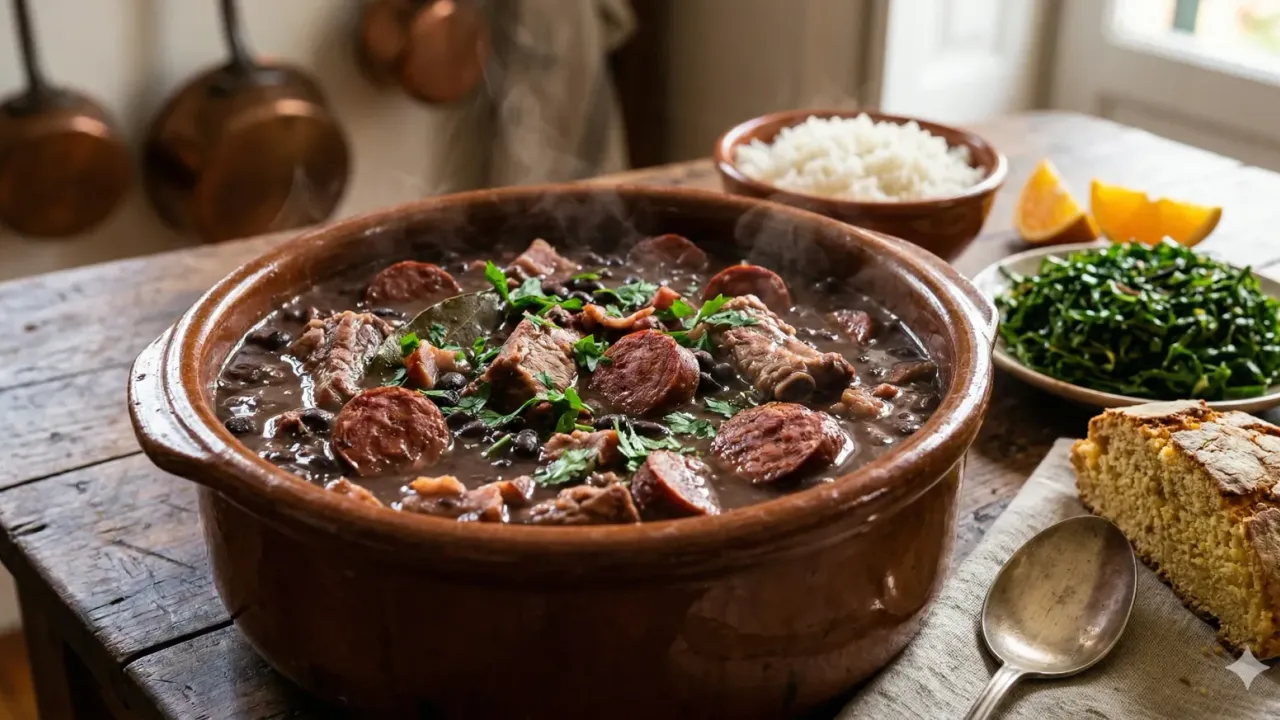
Feijoada is the soul of Portuguese comfort cooking. This slow-simmered stew of black beans, pork ribs, and smoky chourico sausage fills the kitchen with an aroma so rich it feels like a warm embrace. For centuries, Portuguese families have gathered around steaming pots of this hearty bean stew on cold winter afternoons. Every spoonful delivers layers of smoky pork, creamy beans, and deep, earthy spice. Few dishes in European cuisine offer this level of honest, satisfying warmth.
Prep Time: 30 minutes | Cook Time: 2 hours 30 minutes | Servings: 8
Difficulty: Intermediate | Calories: ~520 per serving
What Makes Feijoada Special?
Feijoada belongs to a family of slow-cooked bean stews found across southern Europe. Yet the Portuguese version stands apart for its particular combination of cured and fresh pork. While French cassoulet relies on duck confit and Italian pasta e fagioli stays vegetable-forward, Portuguese feijoada builds its backbone from smoked sausages and bone-in pork. The result is a stew with a depth of flavor that only smoked and cured meats can deliver. Consequently, feijoada tastes both rustic and complex at the same time.
The dish has roots in the peasant cooking traditions of northern Portugal. Resourceful cooks combined dried beans with whatever pork cuts were available. Ears, trotters, ribs, and sausage scraps all went into the pot. Nothing was wasted. Over time, this practical approach became a celebrated culinary tradition. Today, feijoada appears on restaurant menus across Lisbon and Porto. However, the best versions still come from home kitchens where the recipe has passed through generations unchanged.
What truly elevates feijoada is the slow simmer. The beans and meats cook together for over two hours. During that time, the pork collagen breaks down into gelatin. This gelatin enriches the cooking liquid and transforms it into a thick, silky broth that coats every bean. Meanwhile, the fat from the bacon and chourico renders slowly. It carries the smoky paprika flavor deep into the beans. The final stew has a richness that no quick-cooking method can replicate. Patience is the essential ingredient here.

Choosing the Right Pork Cuts
Pork is the heart of feijoada. The specific cuts you choose determine the texture, richness, and smokiness of the finished stew. A good feijoada uses a mix of cured, smoked, and fresh pork for layered complexity. Here is what to look for at the butcher counter.
- Bone-in pork ribs (essential): The bones release collagen during the long simmer, which thickens the broth naturally. Country-style ribs or spare ribs work best. Cut them into 2-inch pieces so they fit the pot and cook evenly. The meat should fall off the bone after two hours of gentle simmering.
- Chourico sausage (essential): This smoked Portuguese sausage is seasoned with garlic and paprika. It provides the signature smoky flavor that defines feijoada. Buy the cured, firm variety sold in links, not the soft fresh kind. Slice it into thick rounds so it holds its shape during cooking. Spanish chorizo is the closest substitute if chourico is unavailable.
- Smoked bacon (highly recommended): Thick-cut slab bacon adds rendered fat that carries flavor into the beans. The smokiness reinforces the chourico. Dice it into chunky pieces rather than thin strips. Pancetta works as an alternative, though it lacks the smoky dimension.
- Pork shoulder or belly (optional for extra richness): Adding a small piece of pork shoulder or belly creates an even richer stew. These fatty cuts break down completely during the long cook. They dissolve into the broth and give it a velvety body. Use about 8 ounces alongside the ribs for maximum effect.
Ingredients for Feijoada
For the Stew Base:
- 1 pound (450g) dried black beans, soaked overnight
- 1 pound (450g) bone-in pork ribs, cut into pieces
- 8 ounces (225g) chourico sausage, sliced into rounds
- 6 ounces (170g) thick-cut smoked bacon, diced
- 6 cups (1.4L) water or pork stock
- 2 bay leaves
For the Aromatic Base:
- 1 large onion, finely diced
- 4 cloves garlic, minced
- 2 tablespoons tomato paste
- 1 teaspoon smoked paprika
- 1/2 teaspoon ground cumin
- 1/4 teaspoon ground cloves
- 2 tablespoons olive oil
- Salt and black pepper to taste
For Serving:
- Cooked white rice
- Braised collard greens (couve)
- Fresh parsley for garnish
Pro tip: Soak the beans in cold water with a pinch of baking soda overnight. The alkaline environment softens the bean skins more effectively and reduces cooking time by up to 30 minutes. Drain and rinse thoroughly before using. Additionally, save any pork bones from other meals in the freezer. Toss them into the feijoada pot for even more collagen and flavor. These small additions make a noticeable difference in the final broth thickness.
Step-by-Step Instructions
Step 1: Soak the Beans
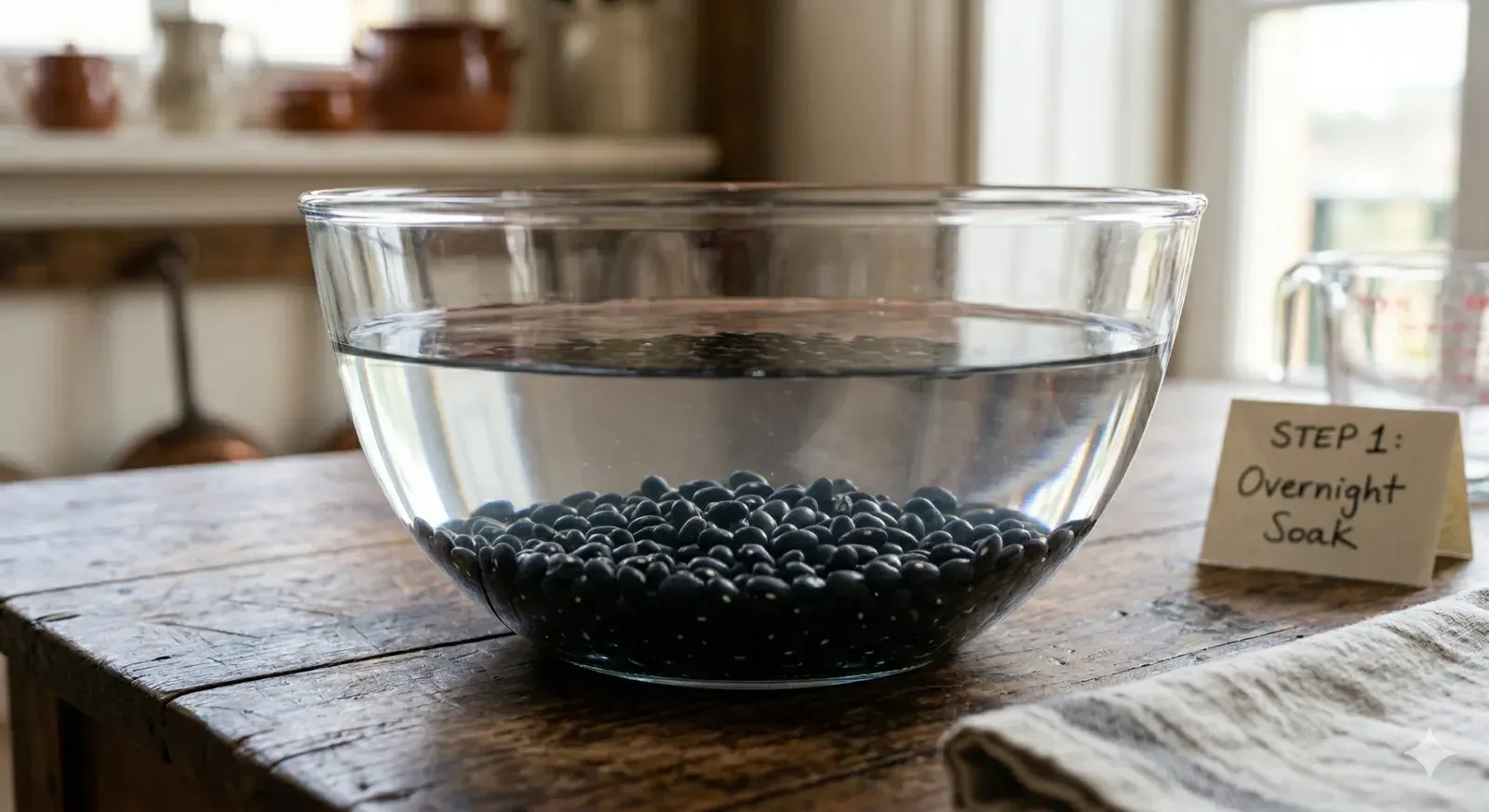
1 Begin the evening before you plan to cook. Place the dried black beans in a large bowl. Cover them with at least 3 inches of cold water. The beans will absorb water and nearly double in size overnight. Allow a minimum of 8 hours for soaking. This step is not optional for dried beans.
Soaking serves two critical purposes. First, it hydrates the beans evenly so they cook at the same rate. Unsoaked beans develop a mushy exterior before the centers become tender. Second, soaking breaks down oligosaccharides, the complex sugars responsible for digestive discomfort. After soaking, drain the beans completely and rinse them under cold running water. Discard any beans that remain hard or discolored. Your beans are now ready for the pot.
Step 2: Brown the Meats
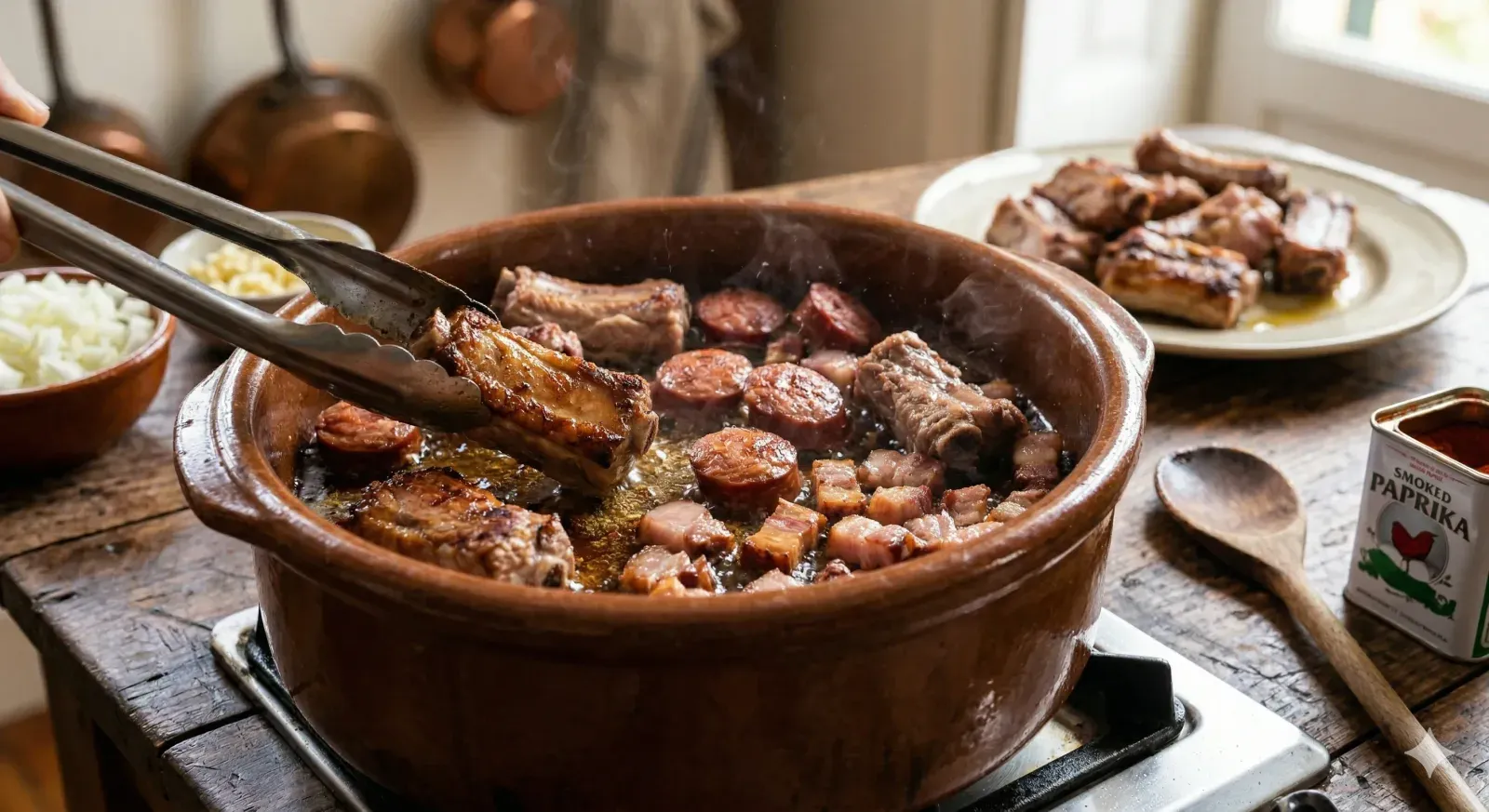
2 Heat the olive oil in a large Dutch oven over medium-high heat. Pat the pork ribs dry with paper towels and season generously with salt and pepper. Sear the ribs in batches, leaving space between pieces. Cook for 3 to 4 minutes per side until a deep golden crust forms. Transfer the browned ribs to a plate and set aside.
In the same pot, add the diced bacon. Cook over medium heat for about 5 minutes until the fat renders and the edges turn crispy. Then add the chourico slices. Stir them into the bacon fat and cook for 2 minutes until lightly browned on each side. The Maillard reaction creates hundreds of new flavor compounds on the meat surfaces during browning. These compounds dissolve into the cooking liquid later and give the stew its deep, complex taste. Skipping this step produces a noticeably flatter flavor.
Step 3: Build the Aromatic Base
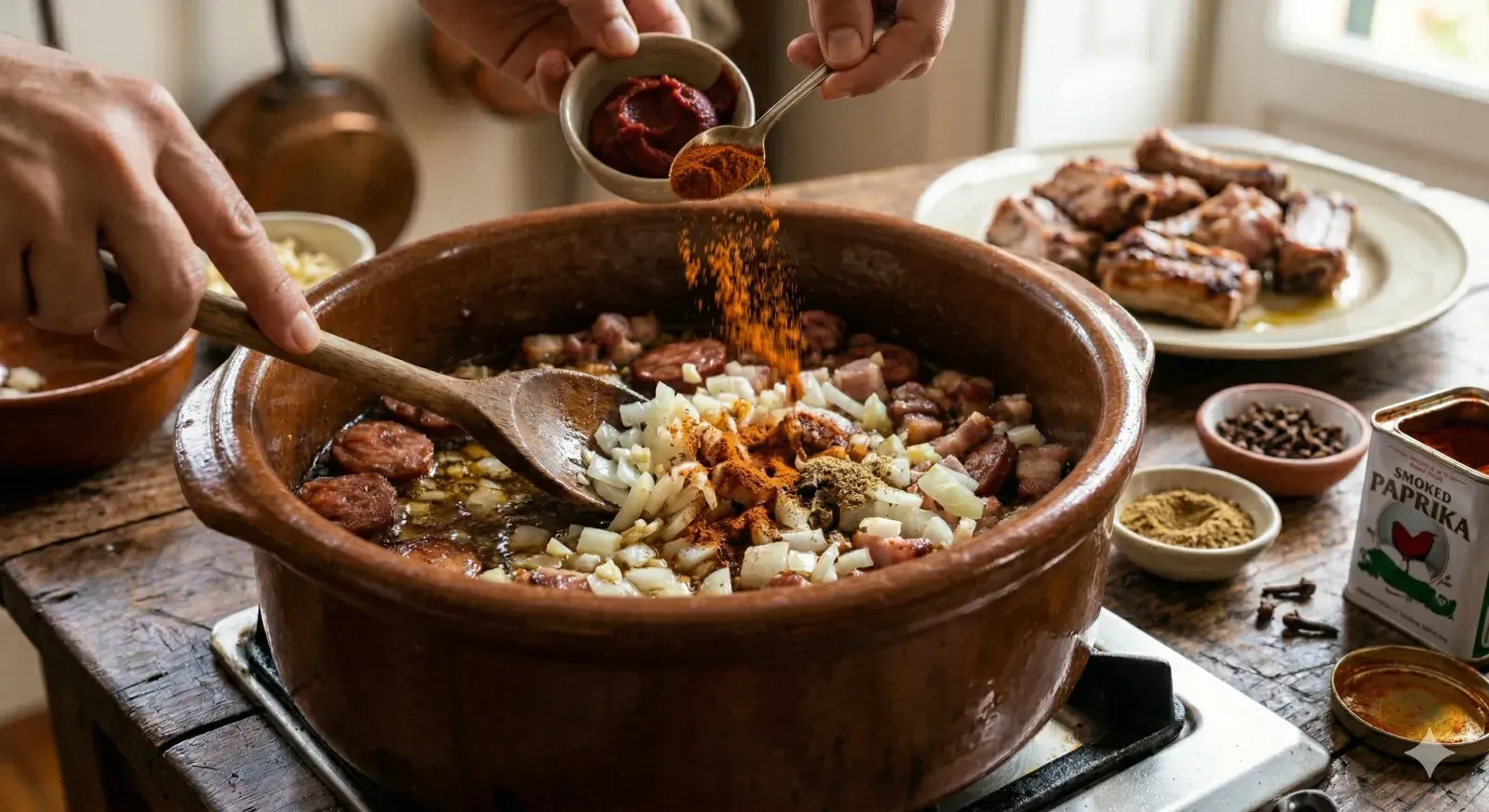
3 Reduce the heat to medium. Add the diced onion to the pot with the rendered pork fat. Cook for 5 to 7 minutes, stirring occasionally, until the onion turns soft and translucent. The onion absorbs the smoky fat and forms the flavor foundation. Next, stir in the minced garlic. Cook for just 1 minute until fragrant. Garlic burns quickly, so keep it moving in the pot.
Now add the tomato paste, smoked paprika, ground cumin, and ground cloves. Stir everything together thoroughly. Cook this mixture for 2 minutes over medium heat. Toasting the spices in fat activates their fat-soluble flavor compounds. The smoked paprika deepens its color and aroma. Meanwhile, the cumin releases its earthy warmth. Additionally, the cloves provide a subtle, sweet spice note that is characteristic of Portuguese cooking. Together, these aromatics create the signature base of an authentic feijoada.
Step 4: Combine and Simmer
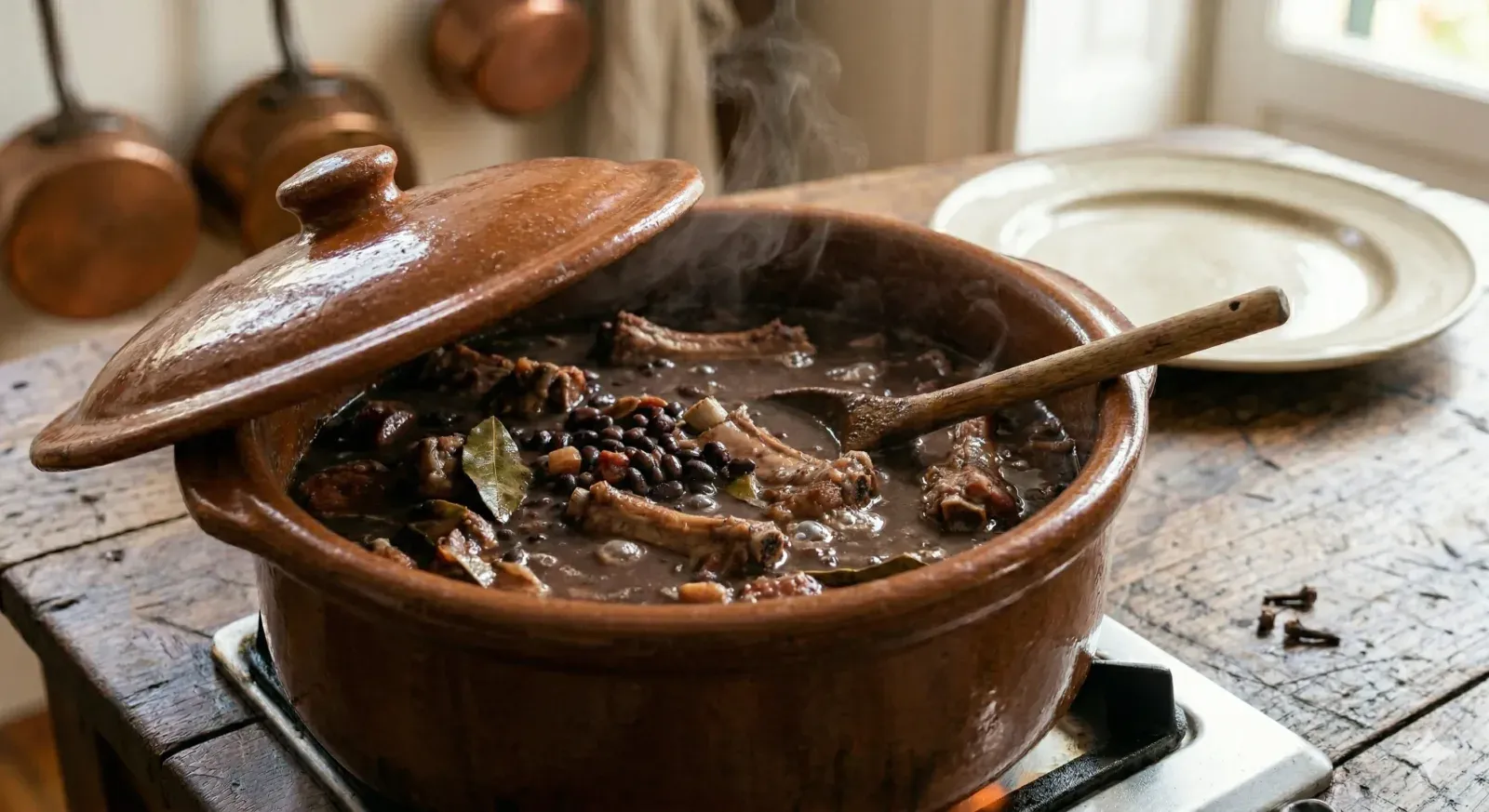
4 Return the seared pork ribs to the pot. Add the drained black beans and bay leaves. Pour in the water or pork stock. The liquid should cover the beans by about 1 inch. Bring everything to a boil over high heat. You will see foam rising to the surface. Skim it off with a spoon for a cleaner broth.
Once boiling, reduce the heat to a gentle simmer. Cover the pot with a lid slightly ajar to allow steam to escape. This slow reduction concentrates the flavors gradually. Cook for 2 to 2.5 hours, stirring every 30 minutes to prevent sticking. The beans should become completely tender, and the pork should fall easily off the bone. As the stew simmers, the liquid transforms from a thin broth into a thick, creamy gravy. Check the water level periodically. Add a splash of hot water if the beans start to peek above the surface.
Step 5: Adjust and Serve
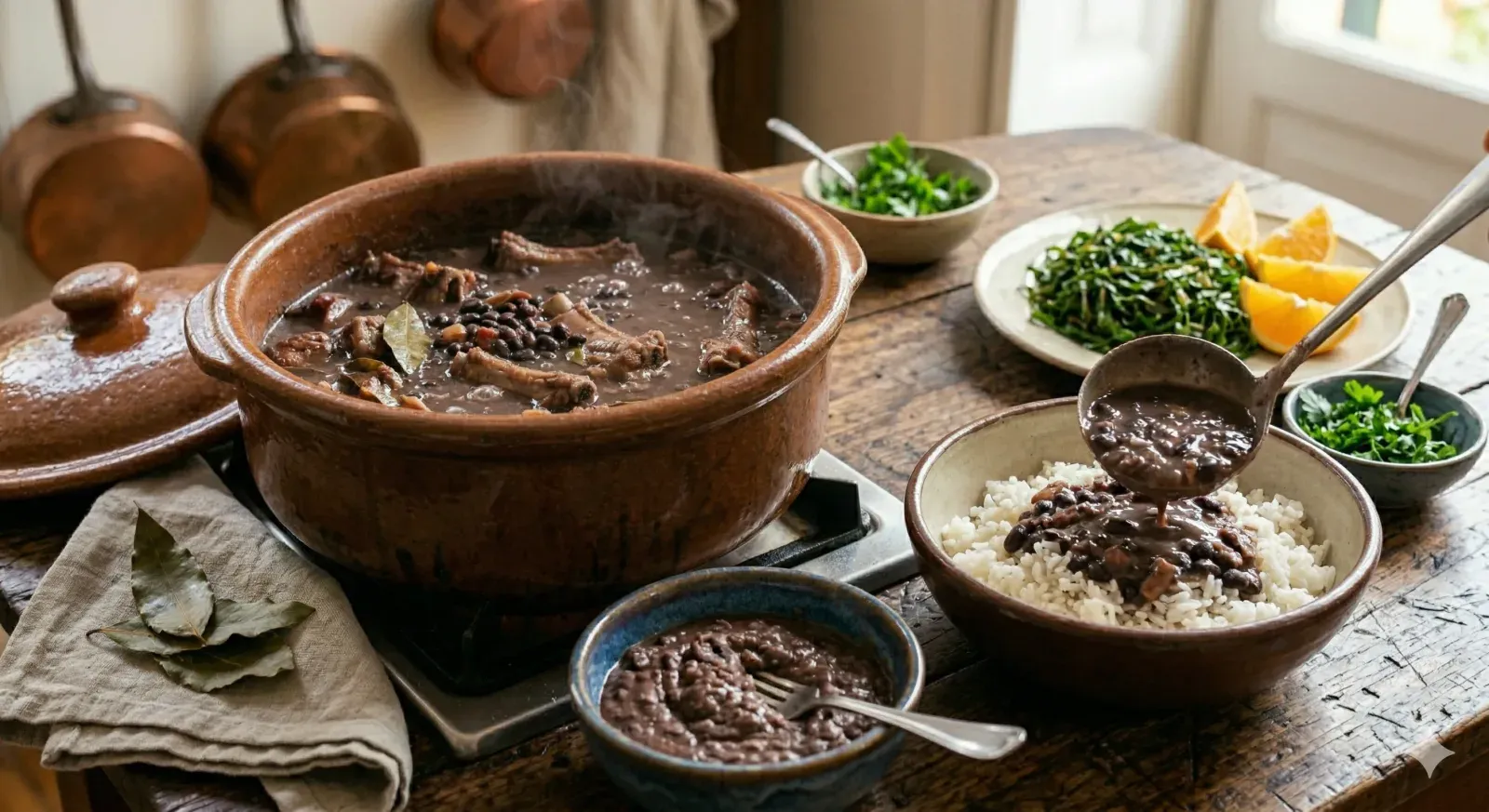
5 Remove the bay leaves from the pot and discard them. Scoop out about one cup of beans using a slotted spoon. Transfer them to a small bowl and mash them with a fork until they form a thick paste. Stir this paste back into the stew. The mashed beans thicken the broth naturally without adding any flour or starch.
Taste the feijoada and season with salt and black pepper as needed. The cured meats contribute significant salt, so taste carefully before adding more. Ladle the stew into deep bowls over a mound of fluffy white rice. Serve braised collard greens alongside the stew. Garnish with a scattering of fresh parsley. The contrast of the dark, rich beans against the white rice is striking. Each bowl should contain a generous mix of beans, pork, and sausage for the full experience.
Expert Tips for Perfect Feijoada
Layer Your Meats for Maximum Depth
The secret to outstanding feijoada is using multiple types of pork. Each cut contributes something different. Ribs provide collagen for body. Bacon delivers rendered fat and smokiness. Chourico adds spiced, cured flavor. Together, these three create a stew with more complexity than any single meat could achieve. Think of it as building a chord rather than playing a single note. Moreover, browning each meat separately before combining them ensures every piece develops its own layer of caramelized flavor.
Control the Simmer Temperature
A gentle simmer is essential. The surface of the liquid should show occasional lazy bubbles, not a rolling boil. High heat toughens the pork and causes the beans to split open, releasing starch too quickly. The result is a gluey, murky stew instead of a clear, rich one. Keep the heat on low and let time do the work. A heavy Dutch oven holds heat evenly and prevents hot spots. If you have trouble maintaining a low simmer on the stovetop, transfer the pot to a 300-degree Fahrenheit oven for the last two hours instead.
Toast Your Spices in Fat
Adding dry spices directly to liquid is a missed opportunity. Fat-soluble flavor compounds in paprika, cumin, and cloves activate more fully when heated in oil or rendered fat. Blooming the spices in the bacon drippings for two minutes before adding liquid releases deeper, more rounded flavors. The paprika turns a richer shade of red. The cumin becomes warmer and less raw. This technique takes almost no extra time but produces a noticeably more flavorful stew. As a result, the aromatic base carries through every bite of the finished feijoada.
Regional Bean Stew Comparison Across Europe
Feijoada belongs to a proud tradition of European bean stews. Each country has adapted the core concept of slow-cooked beans and meat to reflect local ingredients and tastes. The following comparison highlights how different regions approach this universal comfort food.
| Dish | Country | Key Ingredients | Key Characteristics |
|---|---|---|---|
| Feijoada | Portugal | Black beans, pork ribs, chourico, bacon | Smoky, rich, thick gravy, served with rice and greens |
| Cassoulet | France | White beans, duck confit, Toulouse sausage | Baked with a breadcrumb crust, rich and fatty |
| Fabada Asturiana | Spain | Large white beans, morcilla, chorizo | Creamy beans in a saffron-scented broth |
| Pasta e Fagioli | Italy | Borlotti beans, pasta, tomatoes, vegetables | Lighter, broth-based, often vegetarian |
| Bigos | Poland | Sauerkraut, mixed meats, dried mushrooms | Tangy, smoky, fermented flavor profile |
Serving Suggestions
Feijoada is a complete meal in itself. Still, the right accompaniments enhance the experience and provide balance against the rich, smoky stew. Traditional Portuguese sides cut through the heaviness and add contrasting textures and flavors.
Classic Accompaniments:
- Fluffy white rice: This is the essential partner for feijoada. The neutral, starchy rice absorbs the rich bean broth and provides a clean backdrop for the bold flavors. Use long-grain rice cooked with a clove of garlic and a bay leaf for subtle aromatic depth.
- Braised collard greens (couve a mineira): Thinly sliced collard greens quickly sauteed in garlic and olive oil add a fresh, slightly bitter counterpoint to the stew. The vibrant green color brightens the plate. In Portugal, this side is virtually inseparable from feijoada.
- Orange slices: A traditional accompaniment borrowed from the Brazilian tradition. The bright acidity of fresh oranges cuts through the fatty richness of the pork. Serve wedges alongside the bowl for diners to squeeze over their portions.
- Crusty bread: A thick slice of Portuguese cornbread (broa) or rustic sourdough is perfect for soaking up the remaining broth. The bread’s chewy texture contrasts the creamy beans beautifully.
Beverage Pairings:
- Dao red wine: A full-bodied red from the Dao region of Portugal is the classic match. Its firm tannins stand up to the fatty pork, while the dark fruit notes complement the earthy beans. Serve it at a cool room temperature for the best experience.
- Alentejo red wine: These southern Portuguese reds are rich, ripe, and fruit-forward. They pair beautifully with the smoky chourico and slow-cooked pork. Look for blends featuring the Trincadeira or Aragonez grape varieties.
- Super Bock or Sagres beer: For a casual meal, a cold Portuguese lager provides a crisp, refreshing contrast. The carbonation cleanses the palate between bites of rich, fatty stew. This is arguably the most popular pairing in Portugal itself.
- Sparkling water with lemon: A non-alcoholic option that works exceptionally well. The bubbles refresh the palate. The lemon adds a bright acid note that mirrors the function of the orange slices. Keep it simple and cold.
Storage and Reheating
Refrigerator: Allow the feijoada to cool to room temperature before transferring it to an airtight container. Store in the refrigerator for up to 4 to 5 days. The stew thickens considerably as it cools because the pork gelatin solidifies. This is perfectly normal. Simply add a splash of water when reheating to restore the desired consistency. The flavor actually improves after a day in the fridge, as the spices and meats continue to meld.
Freezer: Feijoada freezes exceptionally well. Portion the stew into freezer-safe containers, leaving about an inch of headroom for expansion. Label with the date and freeze for up to 3 months. Thaw overnight in the refrigerator before reheating. Avoid microwaving frozen feijoada directly, as uneven heating can make the beans mushy in spots while leaving the center cold.
Reheating: Warm feijoada gently over medium-low heat on the stovetop. Stir occasionally to prevent sticking on the bottom. Add water or stock one tablespoon at a time until the stew reaches its original saucy consistency. Avoid boiling, as high heat can cause the beans to break apart excessively. The stew should be hot throughout but still holding its texture. Taste and adjust the seasoning after reheating, since cold storage can mute salt and spice levels.
Common Mistakes to Avoid
1. Skipping the Overnight Soak
Unsoaked beans cook unevenly. The outer layers turn mushy long before the centers soften. This creates a stew with an unpleasant mix of overcooked mush and chalky, hard beans. Overnight soaking hydrates the beans uniformly. It also reduces the cooking time by nearly an hour. There is no shortcut that produces the same quality. Plan ahead and soak the beans for at least 8 hours.
2. Not Browning the Meat First
Dropping raw pork directly into the bean liquid is a common shortcut that sacrifices flavor. Browning creates the Maillard reaction, which produces hundreds of complex flavor compounds on the meat surface. These compounds dissolve into the broth during simmering and give the stew its deep, savory backbone. Skipping this step results in a one-dimensional, boiled-tasting feijoada. Always take the extra 10 minutes to brown every piece of meat properly.
3. Boiling Instead of Simmering
High heat causes beans to split open and release excessive starch. The broth becomes cloudy and gluey instead of smooth and rich. Furthermore, boiling toughens the pork instead of making it tender. A gentle simmer between 190 and 200 degrees Fahrenheit is the target. Tiny bubbles should rise lazily to the surface. If the stew starts bubbling vigorously, reduce the heat immediately.
4. Adding Salt Too Early
Salting the beans at the start of cooking can toughen their skins. The salt prevents water from fully penetrating the bean cells, leading to longer cooking times and an uneven texture. Additionally, the cured meats release significant salt as they simmer. Season the feijoada only in the last 30 minutes of cooking after tasting the broth. You may find the cured pork has contributed enough salt on its own.
Frequently Asked Questions
What is the difference between Portuguese feijoada and Brazilian feijoada?
Portuguese feijoada is the original version, typically using white, red, or black beans with cured pork cuts like chourico, morcela, and pork ribs. The broth tends to be lighter, and vegetables like carrots and cabbage often appear. Brazilian feijoada always uses black beans. It includes a wider range of pork parts such as ears, feet, and tail. The Brazilian version is served with farofa (toasted cassava flour), orange slices, and collard greens. Portuguese feijoada is generally a simpler, more rustic stew that stays closer to its peasant origins.
Can I make feijoada without soaking the beans overnight?
Yes, the quick-soak method works as an alternative. Cover the beans with water, bring to a boil for 2 minutes, then remove from heat and let them sit covered for 1 hour. Drain and rinse before using. This reduces the soaking time significantly. However, overnight soaking produces more evenly cooked beans with a creamier interior texture. Canned black beans offer the fastest shortcut, though the flavor will lack the depth that slow-cooked dried beans provide.
What can I substitute for chourico in feijoada?
Spanish chorizo is the closest match, as both are smoked pork sausages seasoned with paprika and garlic. Kielbasa also works well and delivers a similar smoky depth. Andouille sausage provides a spicier alternative for those who enjoy heat. For a milder option, use Italian sweet sausage with an extra teaspoon of smoked paprika. Avoid Mexican chorizo entirely. It is a raw, crumbly sausage with a completely different texture and flavor profile that does not suit this stew.
How do I thicken feijoada if the broth is too thin?
The most traditional method is to remove a cup of cooked beans and mash them into a thick paste. Stir this paste back into the stew. The bean starch thickens the broth naturally and authentically. Alternatively, simmer the stew uncovered for an additional 20 to 30 minutes to reduce the liquid through evaporation. Removing the lid for the final stretch of cooking also concentrates flavors. Avoid flour or cornstarch, as both create a gluey texture that feels inauthentic.
Is feijoada better the next day?
Without question. Feijoada improves dramatically after resting overnight in the refrigerator. The beans absorb more flavor from the pork and spices as the stew cools. The starches continue to thicken the broth into a richer consistency. Many Portuguese families intentionally cook feijoada a full day before serving it. This rest period is not just convenient — it genuinely makes the dish taste better. Reheat gently on the stovetop, adding a small amount of water to loosen the thickened broth.
How long does leftover feijoada last in the fridge?
Properly stored in an airtight container, feijoada keeps for 4 to 5 days in the refrigerator. The high salt content from the cured meats helps preserve it. For longer storage, freeze portions for up to 3 months. Thaw overnight in the refrigerator and reheat slowly on the stovetop. The flavor holds up remarkably well after freezing. Add a splash of water during reheating to restore the original saucy consistency.
Variations and Adaptations
White Bean Feijoada:
Many regions of Portugal traditionally make feijoada with white kidney beans or butter beans instead of black. The white bean version produces a lighter-colored stew with a milder, creamier base. The flavor profile shifts slightly toward the French cassoulet family. Cooking times remain the same. White beans absorb the smoky pork flavor just as effectively. This variation is particularly popular in northern Portugal, where it often includes cabbage and carrots for a heartier winter meal.
Seafood Feijoada:
In coastal Portuguese regions, cooks prepare a seafood version called feijoada de marisco. It replaces the pork with shrimp, clams, and squid. The base uses white beans and a lighter broth flavored with white wine, onion, and tomato. Chourico still appears in some versions for its smoky flavor. The cooking time drops significantly, as seafood requires only minutes rather than hours. This lighter adaptation works beautifully for summer meals.
Slow Cooker Feijoada:
After browning the meats and building the aromatic base on the stovetop, transfer everything to a slow cooker. Add the soaked beans and liquid. Cook on low for 8 to 10 hours or on high for 5 to 6 hours. The slow cooker produces exceptionally tender meat and deeply flavored beans. It is a practical option for busy days. The only drawback is slightly less reduction, so you may need to mash more beans at the end to thicken the broth.
Vegetarian Feijoada:
Replace the pork and sausage with smoked tofu, roasted mushrooms, and a tablespoon of liquid smoke. Use vegetable stock instead of water. Add an extra tablespoon of smoked paprika to compensate for the missing cured meat flavor. Roast the mushrooms until deeply caramelized before adding them to the pot. This version lacks the gelatin-rich body of the original, so stir in a tablespoon of miso paste at the end for umami depth. The result is surprisingly satisfying.
The Cultural Significance of Feijoada
Feijoada holds a special place in Portuguese culinary identity. It represents the resourcefulness of generations of home cooks who transformed humble pantry staples into a dish worthy of celebration. In Portugal, feijoada is associated with family gatherings, winter weekends, and the communal spirit of sharing food from a single large pot. The dish crosses class boundaries. It appears on fine dining menus in Lisbon and on wooden tables in rural farmhouses with equal reverence.
The global spread of feijoada tells the story of Portuguese exploration and colonization. When Portuguese settlers arrived in Brazil, they brought the concept of bean and pork stew with them. Local cooks adapted it with indigenous ingredients and available pork cuts, creating the Brazilian version that is now a national dish. Similar adaptations exist in former Portuguese territories across Africa and Asia. According to Taste Atlas, feijoada remains one of the most influential dishes in the Lusophone culinary world. Each variation reflects its local culture while honoring the Portuguese original. The humble pot of beans and pork connects millions of people across continents through a shared culinary heritage.
Conclusion
Feijoada rewards the patient cook like few other dishes can. The ingredients are straightforward. The technique requires no special skills. Yet the slow transformation of dried beans, humble pork cuts, and simple spices into a deeply flavorful stew is nothing short of remarkable. Every pot of feijoada carries centuries of Portuguese cooking wisdom. Make it once, and you will understand why this bean stew has endured as one of Europe’s great comfort foods.
Ready to explore more hearty European classics? Browse our full collection of European dishes for recipes like cassoulet, bacalhau a bras, and goulash. If you try this feijoada recipe, leave a rating and share your experience in the comments below.