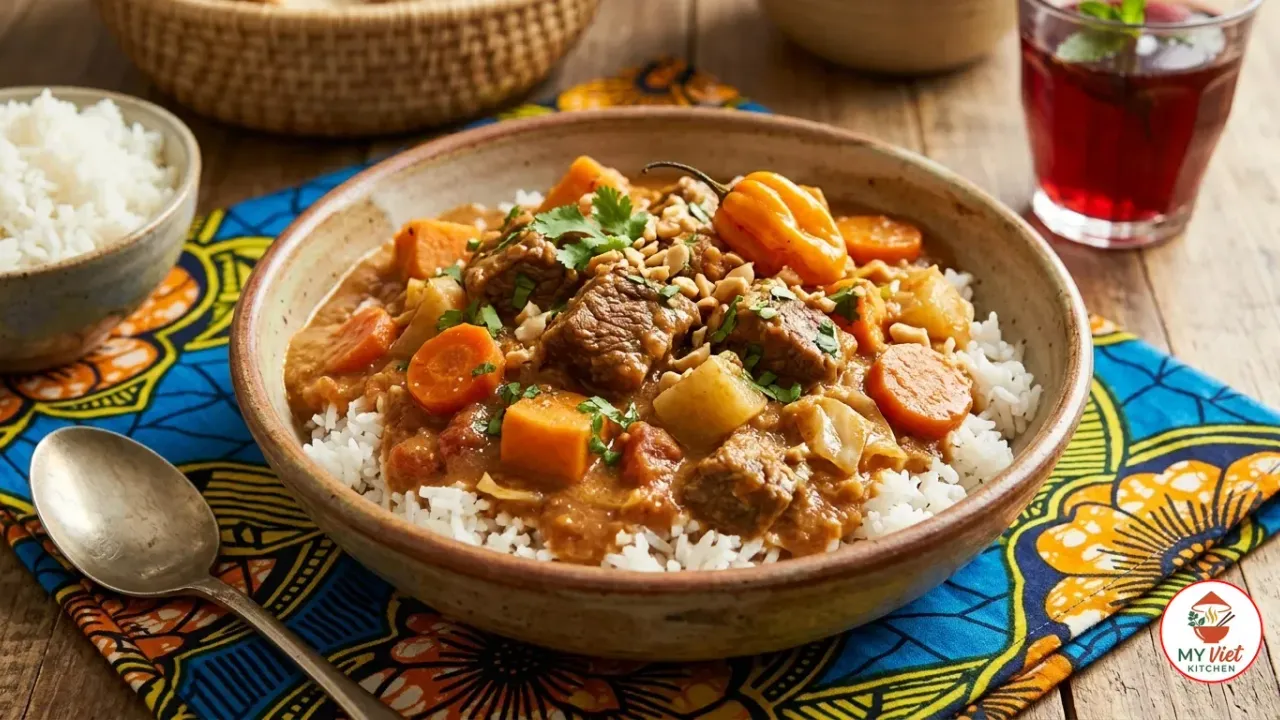
Mafe is Senegal’s beloved peanut butter stew and one of West Africa’s most comforting dishes. This hearty meal features tender chunks of beef simmered slowly in a thick, savory sauce made from natural peanut butter, crushed tomatoes, and aromatic spices. Root vegetables like sweet potato, carrots, and turnip cook alongside the meat until everything turns meltingly soft. Also known as maafe or tigadegena in other parts of West Africa, mafe delivers rich, nutty flavor in every spoonful. This recipe shows you exactly how to make authentic Senegalese mafe at home in about 90 minutes.
Prep Time: 20 minutes | Cook Time: 70 minutes | Servings: 6
Difficulty: Easy | Calories: ~580 per serving
What Makes Mafe Special?
Mafe stands apart from other stews because of its unique peanut butter base. While many cuisines use peanuts as a garnish or side ingredient, Senegalese cooking places peanut butter at the center of the sauce. The peanut butter melts into the tomato broth and creates a creamy, thick coating that clings to every piece of meat and vegetable. As a result, each bite delivers a harmonious blend of nutty richness, tomato acidity, and warm spice.
The dish traces its roots to the Mandinka people of West Africa, who grew peanuts long before they became a global crop. From Senegal, mafe then spread to Mali, Gambia, Guinea, and beyond. According to food historians, each country adapted the recipe to local tastes. For example, the Senegalese version tends to be tomato-heavy with a deep reddish sauce. In contrast, Malian cooks often make a lighter, more peanut-forward version. Regardless of the variation, mafe remains a dish that brings families together.
Beyond its flavor, mafe earns praise for being simple and easy to make. The items you need cost very little and are easy to find. Peanut butter, tomato paste, onions, and root vegetables form the core. Yet the slow simmer turns these humble items into a sauce so rich that it rivals far more costly dishes. Furthermore, mafe is naturally gluten-free. As a result, it is a great choice for people who avoid gluten but still want bold, filling meals.

Choosing the Right Peanut Butter for Mafe
The peanut butter you select shapes the flavor and feel of the entire stew. Not all peanut butters work equally well. So here are the best options for making authentic mafe at home.
- Natural smooth peanut butter (best choice): Look for brands with only peanuts and salt on the label. Natural peanut butter has a pure, roasted flavor that blends seamlessly into the tomato sauce. The oil that separates at the top is actually beneficial because it helps create a smoother, more emulsified sauce during cooking.
- African peanut paste: If you can find this at an African grocery store, it delivers the closest flavor to traditional mafe. African peanut paste is coarsely ground and has a deeper, more intense roasted flavor than commercial peanut butter. It also contains no added oils or sweeteners.
- Freshly ground peanut butter: Many grocery stores now have machines that grind peanuts on the spot. Freshly ground peanut butter tastes bright and nutty. It works beautifully in mafe because it has no additives. Grind it on the smooth setting for the best results in the sauce.
Ingredients for Mafe
Main Ingredients:
- 2 pounds beef chuck, cut into 2-inch cubes
- 1 cup natural peanut butter (smooth, unsweetened)
- 1 can (400g) crushed tomatoes
- 3 tablespoons tomato paste
- 2 tablespoons peanut oil or vegetable oil
- 4 cups beef broth or water
For the Aromatics:
- 1 large onion, finely chopped
- 4 cloves garlic, minced
- 1 tablespoon fresh ginger, grated
- 1 Scotch bonnet pepper, whole
- 2 bay leaves
- 1 teaspoon ground cumin
- 1 teaspoon ground coriander
- Salt and black pepper to taste
For the Vegetables:
- 1 large sweet potato, peeled and cut into chunks
- 2 medium carrots, peeled and cut into thick rounds
- 1 small cabbage, quartered
- 1 medium turnip, peeled and cubed
- Steamed white rice for serving
Pro tip: Avoid sweetened or flavored peanut butter at all costs. The added sugar and hydrogenated oils create a greasy, candy-like sauce instead of the savory, complex flavor that authentic mafe demands. Always check the label and choose a product with only peanuts and salt.
Step-by-Step Instructions
Step 1: Season and Brown the Beef
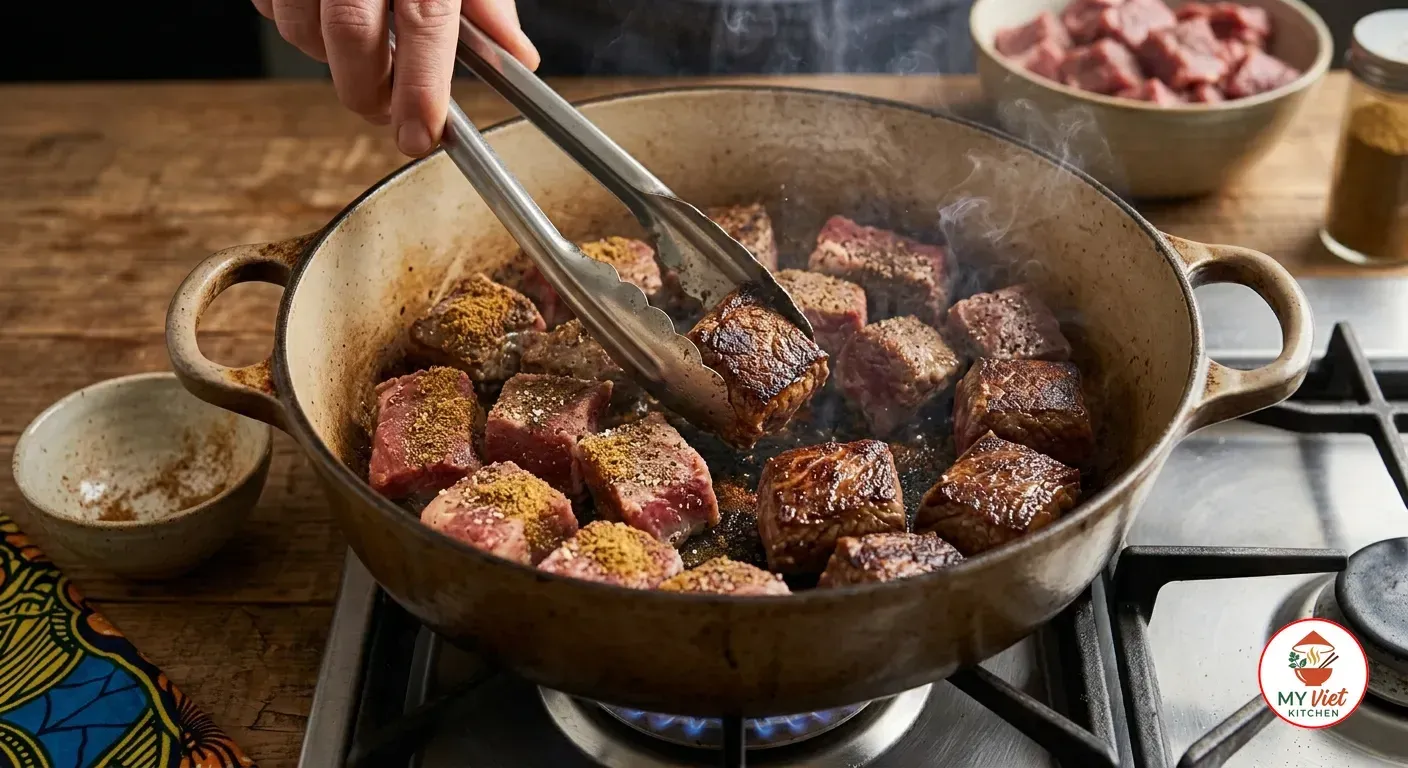
1 Pat the beef cubes dry with paper towels. Season generously with salt, black pepper, ground cumin, and ground coriander. Heat 2 tablespoons of peanut oil in a large, heavy-bottomed pot or Dutch oven over medium-high heat. When the oil shimmers, add the beef in a single layer without crowding the pot.
Brown the beef on all sides for about 6 minutes total. Do not move the pieces too often. Instead, let each side form a deep golden crust before turning. This step triggers the Maillard reaction, which builds rich, savory flavor. Afterwards, remove the beef to a plate and set it aside. Also leave the browned bits on the pot bottom because they hold great flavor.
Step 2: Build the Tomato and Peanut Base
2 In the same pot with the remaining oil and browned bits, add the chopped onion. Cook for 5 minutes over medium heat, stirring occasionally, until the onion softens and turns translucent. Then add the minced garlic and grated ginger. Stir for 1 minute until fragrant.
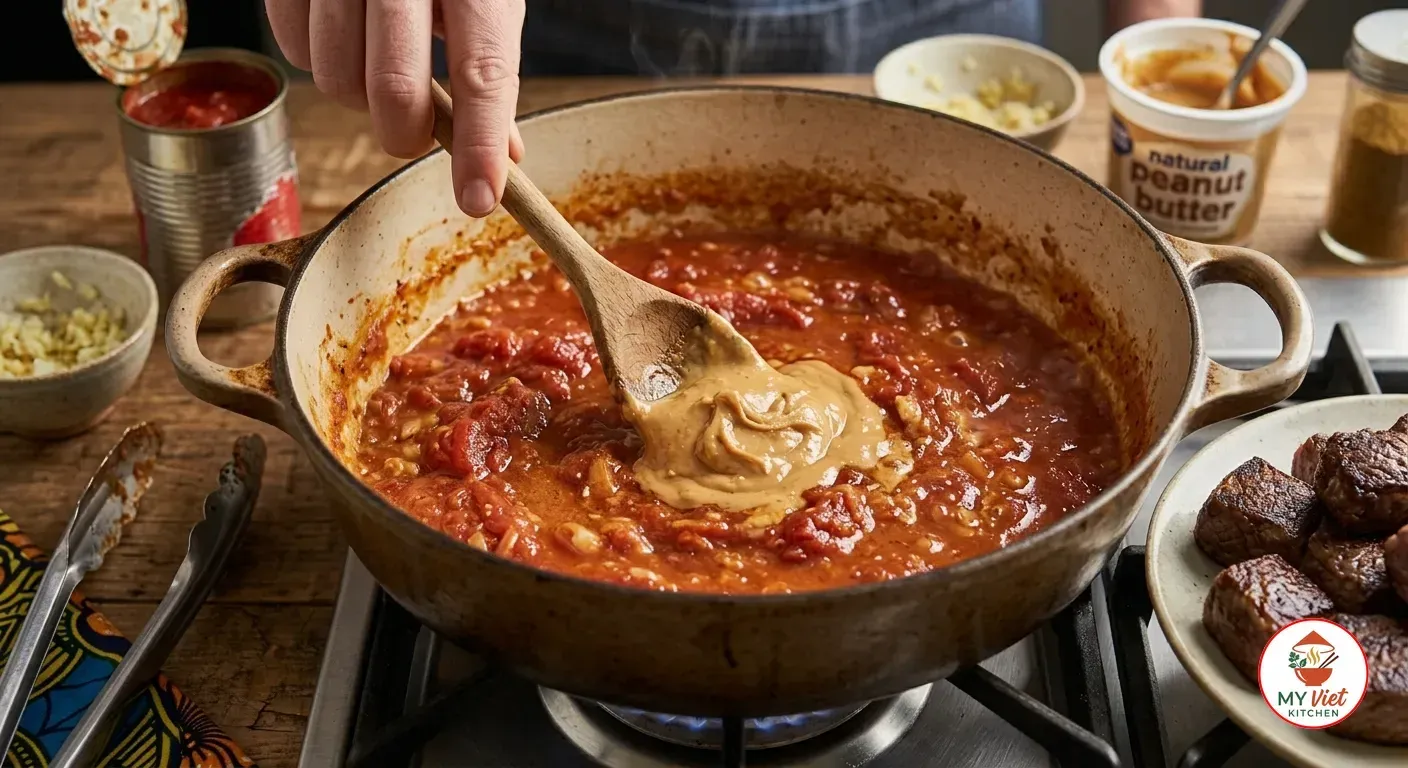
Next, add the tomato paste to the pot. Stir it into the onion mix and cook for 2 minutes. This toasting step brings out the tomato sweetness and removes the raw taste. The paste should darken a bit. After that, pour in the crushed tomatoes and cook for 5 minutes until thick. Then stir in the peanut butter, one large spoonful at a time, whisking until it melts fully into the sauce. Finally, pour in the beef broth and stir until smooth. The sauce should look creamy with a warm, reddish-brown color.
Step 3: Simmer the Beef Until Tender
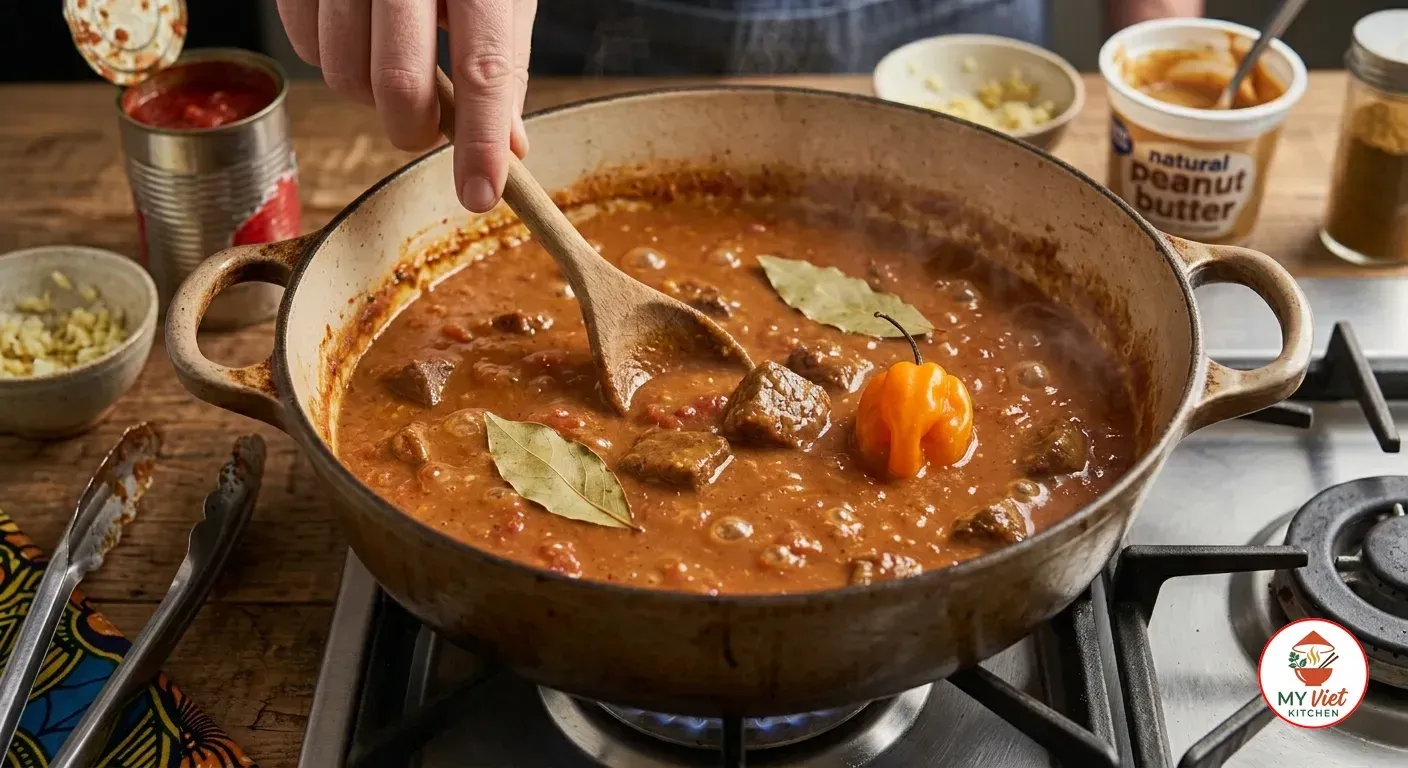
3 Return the browned beef cubes to the pot along with any juices that collected on the plate. Add the bay leaves and drop in the whole Scotch bonnet pepper. Keeping the pepper whole adds gentle heat without making the stew overwhelmingly spicy. If you pierce or break the pepper, the stew will become significantly hotter.
Bring the liquid to a boil over medium-high heat. Then reduce the heat to low and cover the pot tightly. Let the beef simmer for 40 minutes. During this time, the meat soaks up the peanut and tomato flavors while turning fork-tender. Stir every 10 minutes so the thick sauce does not stick. If it looks too thick, add a splash of water or broth. By the end, the beef should pull apart with ease.
Step 4: Add the Vegetables and Finish Cooking
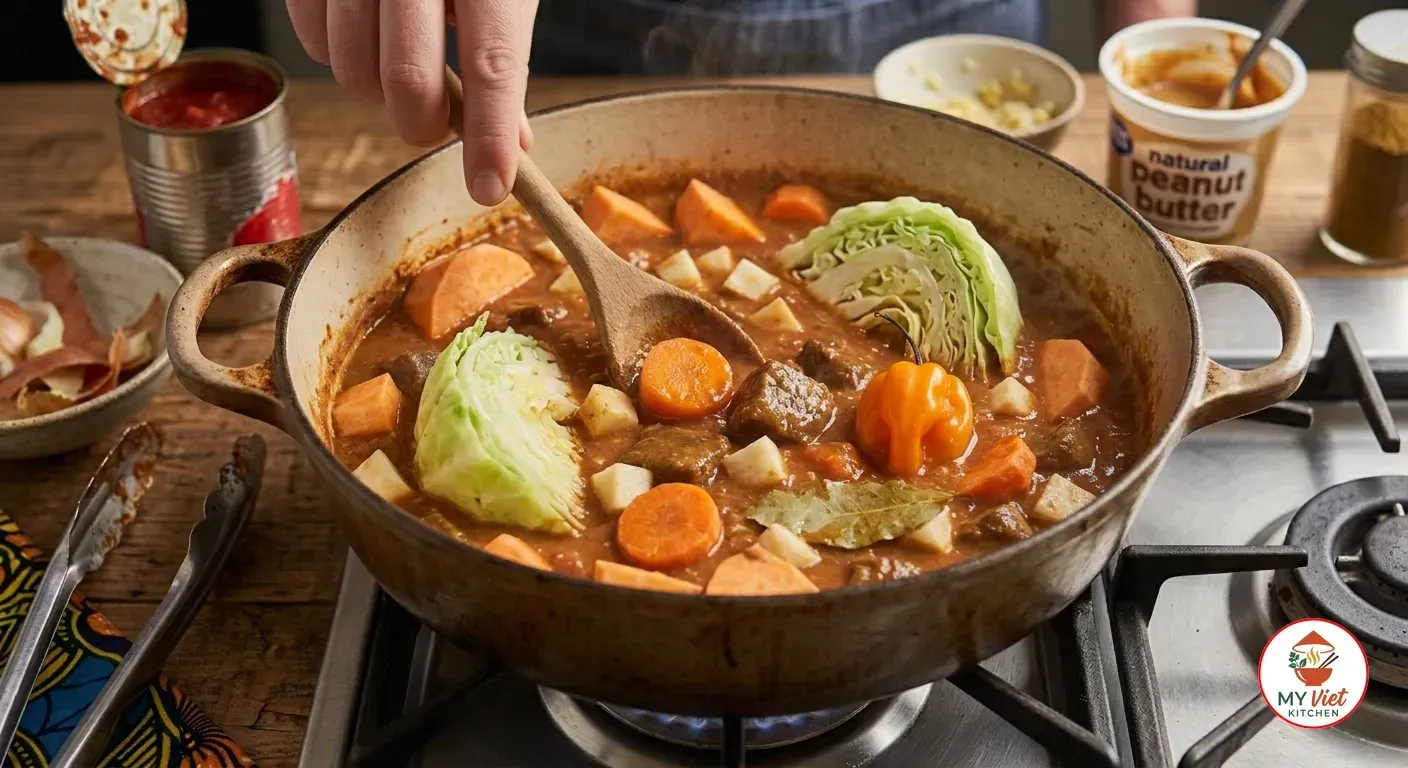
4 After the beef has simmered for 40 minutes, add the sweet potato chunks, carrot rounds, turnip cubes, and cabbage quarters to the pot. Press them gently into the sauce so they are mostly submerged. Stir carefully to avoid breaking up the tender beef.
Cover the pot again and cook for 20 more minutes over low heat. The veggies should feel soft when you poke them with a knife. The sweet potato will start to break down at the edges. This is actually a good thing because it makes the sauce even thicker. Meanwhile, the carrots and turnip hold their shape while soaking up the rich peanut flavor. Before serving, remove the bay leaves and the whole Scotch bonnet. Then taste and adjust the salt and pepper.
Step 5: Serve Over Rice
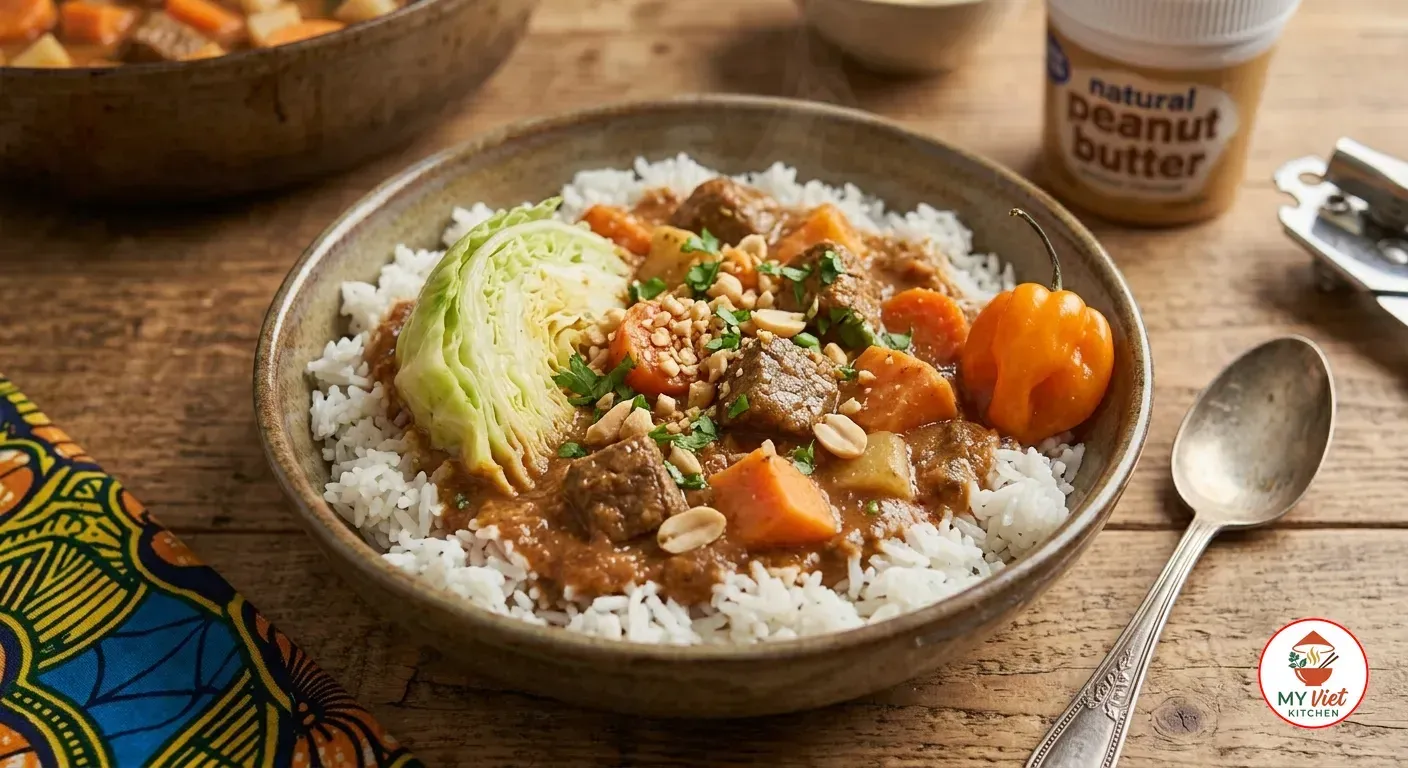
5 Scoop steamed white rice into deep bowls or onto large plates. Ladle generous portions of the mafe stew over the rice, making sure each serving gets several pieces of beef and a good mix of vegetables. The thick peanut sauce should pool around the rice and soak into the grains.
Garnish with fresh cilantro leaves if you like. Then serve right away while the stew is hot. In Senegal, mafe often arrives at the table in a large shared bowl with rice on the side. For those who want extra heat, also offer sliced Scotch bonnet peppers or a chili sauce. Indeed, the contrast between the creamy, nutty sauce and the fluffy white rice is what makes mafe such a deeply satisfying meal.
Expert Tips for Perfect Mafe
Brown the Meat Properly
Above all, browning the beef is the most important step for building deep flavor in mafe. First, pat the meat fully dry before it hits the hot oil. Wet meat steams instead of searing. Then work in batches if your pot cannot hold all the pieces in one layer. Each cube needs direct contact with the hot surface to form a dark, rich crust. This crust adds savory depth that no amount of spice can replace.
Dissolve the Peanut Butter Gradually
Adding all the peanut butter at once creates lumps that are hard to break down. Instead, add it one spoonful at a time into the hot tomato base. Whisk well after each addition until the peanut butter melts fully. This slow process ensures a smooth, creamy sauce with no grainy bits. If you notice lumps forming, simply reduce the heat and stir until they dissolve.
Stir Regularly to Prevent Sticking
The thick peanut sauce can scorch on the pot bottom if left alone. So stir the stew gently every 10 minutes as it cooks. Use a wooden spoon to scrape the bottom and sides. If the sauce gets too thick before the beef is done, add a quarter cup of water or broth at a time. This keeps things just right and prevents burnt peanut flavor from ruining the dish.
Mafe Across West Africa
While mafe originated in Senegal, different countries across West Africa have developed their own versions of this peanut stew. Here is how the dish changes depending on where you eat it.
| Country | Key Differences |
|---|---|
| Senegal (original) | Heavy on tomato paste with a deep reddish sauce. Uses beef or lamb as the primary protein. Sweet potato and cabbage are the most common vegetables. |
| Mali (maafe/tigadegena) | More peanut-forward with less tomato. The sauce is lighter in color and has a stronger roasted nut flavor. Often served with millet instead of rice. |
| Gambia (domoda) | Similar to Senegalese mafe but often uses more chili peppers for extra heat. Chicken is more common than beef in Gambian versions. |
| Guinea | The Guinean version sometimes includes smoked fish alongside the meat for a deeper, more complex umami flavor in the peanut sauce. |
| Ivory Coast | Cooks in this region often add okra to the stew, which creates a thicker, more gelatinous sauce. Palm oil sometimes replaces peanut oil. |
Serving Suggestions
In Senegal, mafe arrives at the table as a main course, typically for lunch or dinner. The stew always comes with a starch that soaks up the thick, creamy peanut sauce. Here are the best ways to complete the meal.
The Perfect Accompaniments:
- Steamed white rice: This is the most traditional pairing for mafe. The plain, fluffy rice absorbs the rich peanut sauce and balances the bold flavors. Use long-grain or jasmine rice for the best results.
- Fonio: This ancient West African grain has a light, nutty taste that complements the peanut sauce beautifully. Fonio is naturally gluten-free and cooks in just 5 minutes. It is becoming easier to find at specialty grocery stores.
- Couscous: Fine couscous is a popular side in Senegal, especially in households with North African influence. The tiny grains soak up the sauce quickly and add a pleasant, fluffy texture.
- Fresh baguette: French bread remains a staple in Senegal due to the country’s colonial history. Tearing off pieces of crusty baguette and dipping them into the thick mafe sauce is a satisfying way to enjoy every last drop.
Beverage Pairings:
- Bissap (hibiscus tea): This tangy, deep red drink is the most popular beverage in Senegal. Served cold with sugar and a touch of mint, bissap cuts through the richness of the peanut sauce and refreshes the palate between bites.
- Ginger juice (gingembre): Freshly pressed ginger juice sweetened with sugar and flavored with lime is a classic Senegalese refreshment. Its sharp, warming character pairs naturally with the nutty, savory flavors of mafe.
- Baobab juice (bouye): Made from baobab fruit powder mixed with water, sugar, and vanilla, this creamy white drink has a tangy, citrusy taste. Baobab juice is rich in vitamin C and offers a unique pairing that complements the earthy peanut flavors.
Storage and Reheating
Refrigerator: Store leftover mafe in a sealed container for up to 4 days. Keep the stew separate from the rice to maintain the best texture. The peanut sauce thickens considerably as it cools, and the flavors actually deepen overnight. Many Senegalese families say that mafe tastes even better the next day.
Freezer: Freeze portions of the stew without the rice for up to 3 months in airtight containers or freezer bags. Thaw overnight in the fridge before reheating. The beef and vegetables hold up well after freezing. Cook fresh rice when you are ready to serve.
Reheating: Warm the stew gently in a covered pot over medium-low heat. Add a splash of water or broth because the thick peanut sauce will have thickened further in the fridge. Stir frequently to prevent sticking. You can also reheat individual portions in the microwave for 2 to 3 minutes, stirring halfway through. The stovetop method gives better results because it heats the sauce more evenly.
Common Mistakes to Avoid
1. Using Sweetened Peanut Butter
Peanut butters loaded with sugar and oils make a sauce that tastes like candy, not a savory stew. The added sugar burns during cooking and clashes with the tomato and spices. So always read the label first. The only items listed should be peanuts and maybe salt. Nothing else belongs in mafe peanut butter.
2. Cooking on Too High Heat
Peanut butter scorches fast when exposed to high heat. A rolling boil makes the sauce stick to the pot and turn bitter. So after bringing the stew to a boil, reduce the heat to low right away. The surface should show small, lazy bubbles rather than big, angry ones. Indeed, patience with low heat gives you a silky, smooth sauce every time.
3. Adding Vegetables Too Early
If you drop all the vegetables in with the beef, they turn mushy before the meat gets tender. The beef needs 40 minutes to reach the right texture. So add the vegetables only during the last 20 minutes. This timing ensures that the sweet potato, carrots, turnip, and cabbage stay tender but still hold their shape in the thick sauce.
Frequently Asked Questions
Can I make mafe ahead of time?
Yes, mafe is a great make-ahead dish. In fact, the flavors get better after a night in the fridge. Cook the stew fully, let it cool, and store it in the fridge. When you are ready to serve, reheat it gently on the stove with a splash of broth. Then cook fresh rice just before serving for the best taste.
What can I use instead of beef?
Chicken, lamb, and goat are all popular choices for mafe across West Africa. For chicken, use bone-in thighs and reduce the simmer time to 30 minutes. Similarly, lamb shoulder works well and adds a slightly gamey richness. For a vegetarian version, replace the meat with firm tofu or extra root veggies and use vegetable broth instead.
How do I make mafe less spicy?
The Scotch bonnet pepper controls the heat. Keeping it whole adds mild, fruity warmth without intense spice. To make the dish even milder, simply leave the pepper out. If you added too much heat by accident, then stir in an extra spoonful of peanut butter. The fat in peanut butter calms capsaicin and tames the burn.
Variations and Adaptations
Chicken Mafe:
Replace the beef with 3 pounds of bone-in chicken thighs or drumsticks. First, brown the chicken pieces, then follow the same process. Next, reduce the simmer time from 40 minutes to 25 minutes before adding veggies. Chicken mafe cooks faster and makes a lighter sauce. Also keep the bones in during cooking because they add richness to the broth.
Fish Mafe:
In coastal areas of Senegal, cooks make mafe with firm white fish like grouper or snapper. First, build the peanut and tomato sauce without any protein. Then add the vegetables and cook until tender. After that, nestle the fish pieces into the sauce for the last 15 minutes. Fish mafe is lighter than beef mafe and has a briny note that pairs well with the peanut sauce.
Vegan Mafe:
Simply skip the meat and double the vegetables. Also add chickpeas or black-eyed peas for protein. Use vegetable broth instead of beef broth. The peanut butter gives enough richness to make the sauce filling without any meat. Include extra sweet potato because it thickens the sauce as it cooks. Vegan mafe is popular across West Africa, especially in areas where meat costs a lot.
The Cultural Significance of Mafe
Mafe holds a special place in Senegalese life as a dish that stands for warmth, welcome, and community. In Senegalese homes, making mafe is often a family affair. Mothers and grandmothers pass down their recipes, each adding small personal touches while keeping the core method alive. Consequently, every family claims to have the best mafe recipe in the area.
The dish also has deep economic meaning. Peanuts are one of Senegal’s most important crops, and mafe puts this national product at the center of the plate. In rural villages, families grow their own peanuts and grind them into paste just for mafe. In other words, the stew links Senegalese farming to Senegalese cooking. It is not just food. It is an expression of the land and its people.
In the Senegalese diaspora, mafe serves as a strong link to home. Indeed, Senegalese communities in Paris, New York, and other cities gather around bowls of mafe to celebrate, welcome new arrivals, and keep traditions alive. The smell of peanut butter and tomato on the stove takes people right back to their family kitchens. For more African dishes, explore our collection of African recipes including Senegalese thieboudienne and West African jollof rice.
Conclusion
Making authentic mafe at home requires just a handful of affordable ingredients and patience with the slow simmer. The key steps are simple: brown the beef properly, toast the tomato paste, dissolve the peanut butter gradually, and add the vegetables at the right time. Master these techniques and you will produce a stew that captures the heart of Senegalese home cooking.
Whether you serve this mafe for a weeknight dinner or a special gathering, the combination of tender beef, creamy peanut sauce, and soft root vegetables creates one of West Africa’s most deeply comforting meals. For more West African and African recipes, explore our growing collection of African dishes including Nigerian egusi soup and Ethiopian doro wat.