Couscous is the crown jewel of North African cuisine, and this couscous recipe shows you how to make it the authentic way at home. These tiny semolina granules are steamed over a fragrant broth of lamb, vegetables, and warm spices until every grain turns impossibly light and fluffy. From Morocco to Tunisia and Algeria, couscous brings families together every Friday and graces every celebration table. This guide walks you through the traditional double-steaming method that produces results no instant version can match.
Prep Time: 30 minutes | Cook Time: 60 minutes | Servings: 6
Difficulty: Medium | Calories: ~380 per serving
What Makes This Couscous Recipe Special?
Couscous is far more than a simple side dish. In North Africa, it is the foundation of an entire meal and a symbol of hospitality, family, and tradition. UNESCO recognized couscous preparation as an Intangible Cultural Heritage in 2020, shared by Morocco, Algeria, Tunisia, and Mauritania. This alone tells you how deeply this dish matters to the people who created it.
What sets authentic couscous apart from the instant versions found in grocery stores is the method. Traditional couscous grains are steamed over a simmering broth, not boiled. The steam rises through the grains and cooks them gently while infusing every particle with the aroma of the spices, vegetables, and meat below. This process produces an incredibly light texture that melts on the tongue. In contrast, instant couscous turns dense and sticky because it absorbs water all at once.
This couscous recipe uses the classic double-steaming method that North African grandmothers have perfected over centuries. The grains go through two separate steaming sessions with a resting and fluffing step in between. Although this takes a bit more time than the instant method, the difference in texture and flavor is remarkable. Once you taste properly steamed couscous, you will never go back to the boiled kind. This couscous recipe captures that authentic technique for you.
Choosing the Right Semolina for Couscous
The quality of your couscous starts with the semolina you choose. Indeed, North African markets sell different grades, and each one produces a different texture. Here are the three main types you should know about for this couscous recipe.
- Medium couscous (best choice): This is the standard size used across Morocco, Algeria, and Tunisia for everyday meals. The grains are about the size of coarse sand and steam evenly. Most North African grocery stores and online shops sell this grade. It is the ideal choice for this couscous recipe.
- Fine couscous: Smaller grains that cook faster and produce a softer, almost porridge-like texture. Tunisians often prefer this finer grade for certain dishes. It requires careful handling because it clumps more easily during steaming.
- Large couscous (maftoul or moghrabieh): These pearl-sized granules are hand-rolled and much larger than regular couscous. They have a chewy texture closer to pasta. While delicious, they require a different cooking method and are not interchangeable with standard couscous.
Ingredients for Couscous
Couscous Grains:
- 2 cups medium couscous (semolina)
- 1 cup cold water (for initial soaking)
- 1/2 cup cold water (for second fluffing)
- 1 tablespoon olive oil
- 2 tablespoons butter
- Pinch of salt
Lamb and Vegetable Broth:
- 1 pound lamb shoulder, cut into large chunks
- 2 large onions, quartered
- 3 medium carrots, peeled and halved
- 2 medium turnips, peeled and quartered
- 3 medium tomatoes, quartered
- 1 tablespoon tomato paste
- 2 tablespoons olive oil
- 8 cups water or beef broth
Spices and Finishing Touches:
- 1 teaspoon ground cumin
- 1 teaspoon ground coriander
- 1 teaspoon ground turmeric
- 1/2 teaspoon ground cinnamon
- 1/2 teaspoon ground ginger
- 1/4 teaspoon cayenne pepper
- 1 teaspoon ras el hanout
- Salt and black pepper to taste
- 2 medium zucchini, cut into large chunks
- 1 can (15 ounces) chickpeas, drained
- Fresh cilantro and flat-leaf parsley
- Harissa paste for serving
Pro tip: The secret to fluffy couscous is patience and gentle handling. Never dump hot water directly onto dry couscous. Instead, add cold water gradually and rake through the grains with your fingers. Working oil and butter between the grains coats each one and prevents clumping. This small technique makes the biggest difference in texture.
Step-by-Step Instructions
Step 1: Prepare the Couscous Grains
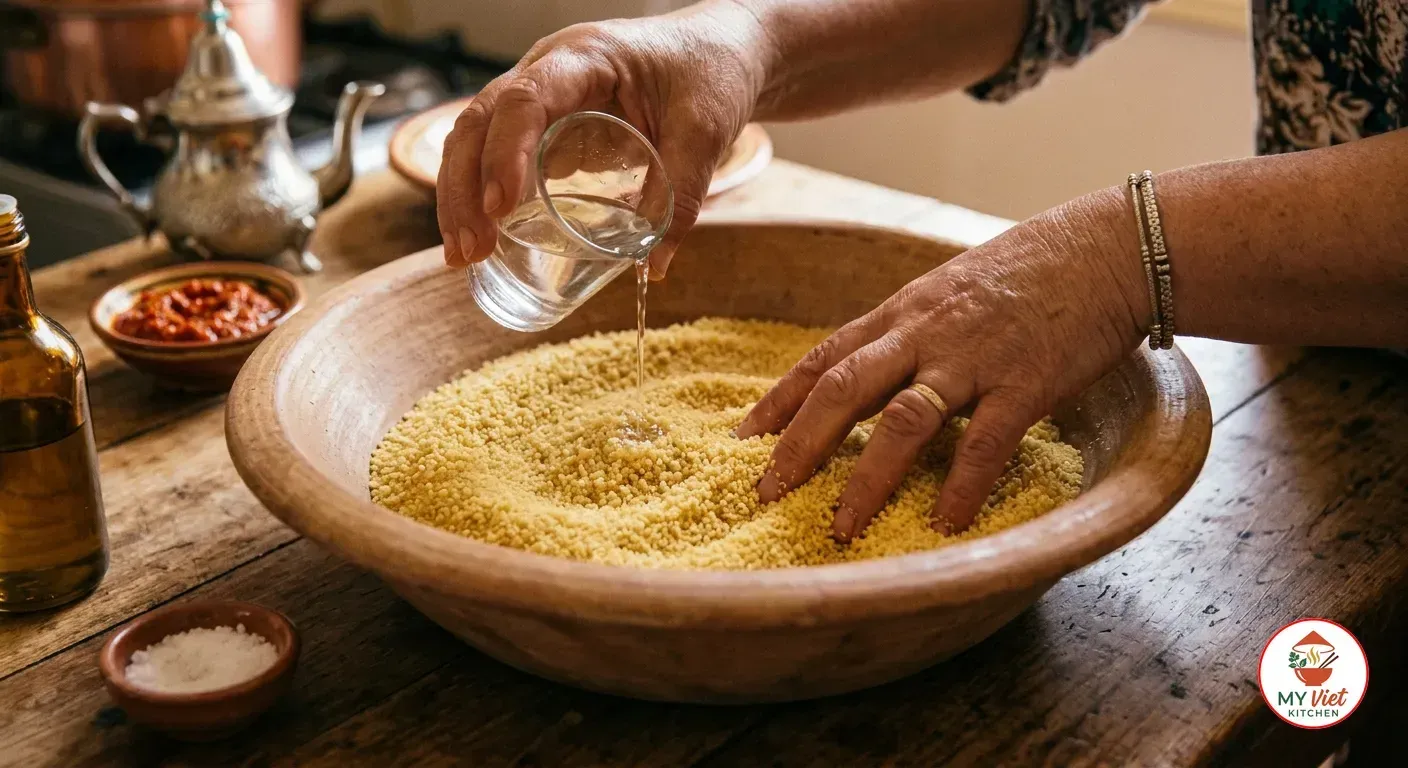
1 Place 2 cups of medium couscous in a large, shallow bowl or a gsaa (the traditional wide wooden dish). Sprinkle 1 cup of cold water evenly over the grains along with a generous pinch of salt. Then use your fingers to rake through the couscous gently, separating any grains that stick together. Let the couscous rest for 10 minutes so the grains absorb the water gradually.
After the resting period, rub the couscous between your palms using a light rolling motion. This step breaks up every clump and ensures each grain stays separate. Then drizzle 1 tablespoon of olive oil over the grains and work it through with your fingers. The oil coats each grain individually, which prevents sticking during steaming. Your couscous should feel loose and sandy at this point.
Step 2: Build the Vegetable and Lamb Broth
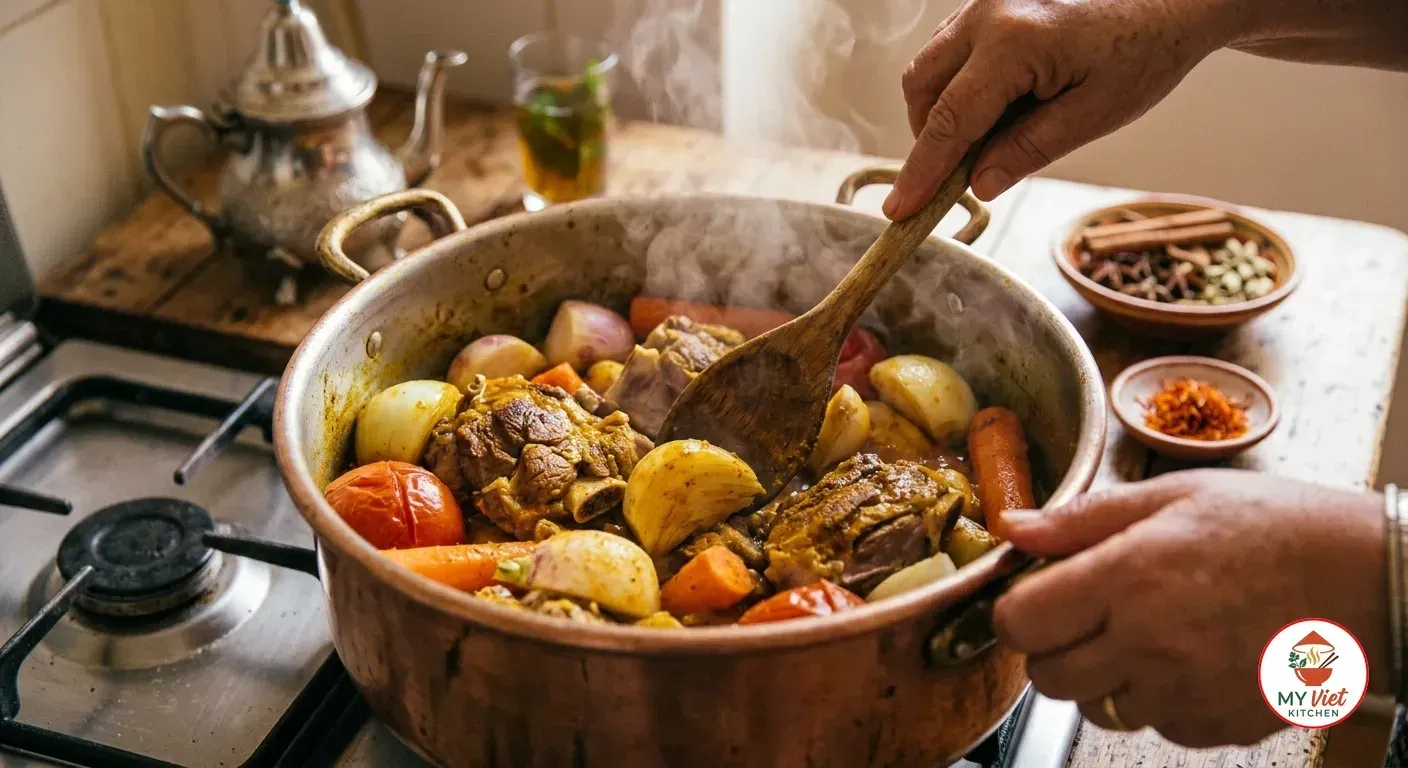
2 Heat 2 tablespoons of olive oil in the bottom pot of a couscoussier or a large stockpot over medium-high heat. Add the lamb chunks and brown them on all sides for about 5 minutes. As a result, the browning creates a deep, meaty base for the entire broth. Next, add the quartered onions, tomato paste, and all the ground spices: cumin, coriander, turmeric, cinnamon, ginger, cayenne, and ras el hanout. Stir for 2 minutes until the spices bloom and become fragrant.
Pour in 8 cups of water or beef broth and bring the liquid to a boil. Then add the carrots, turnips, and tomatoes. Season generously with salt and black pepper. Reduce the heat to a steady simmer and cook for 30 minutes with the lid partially off. The vegetables should begin to soften, and the broth will develop a rich golden color from the turmeric and spices. This aromatic broth is what gives the couscous its distinctive flavor.
Step 3: First Steaming of the Couscous
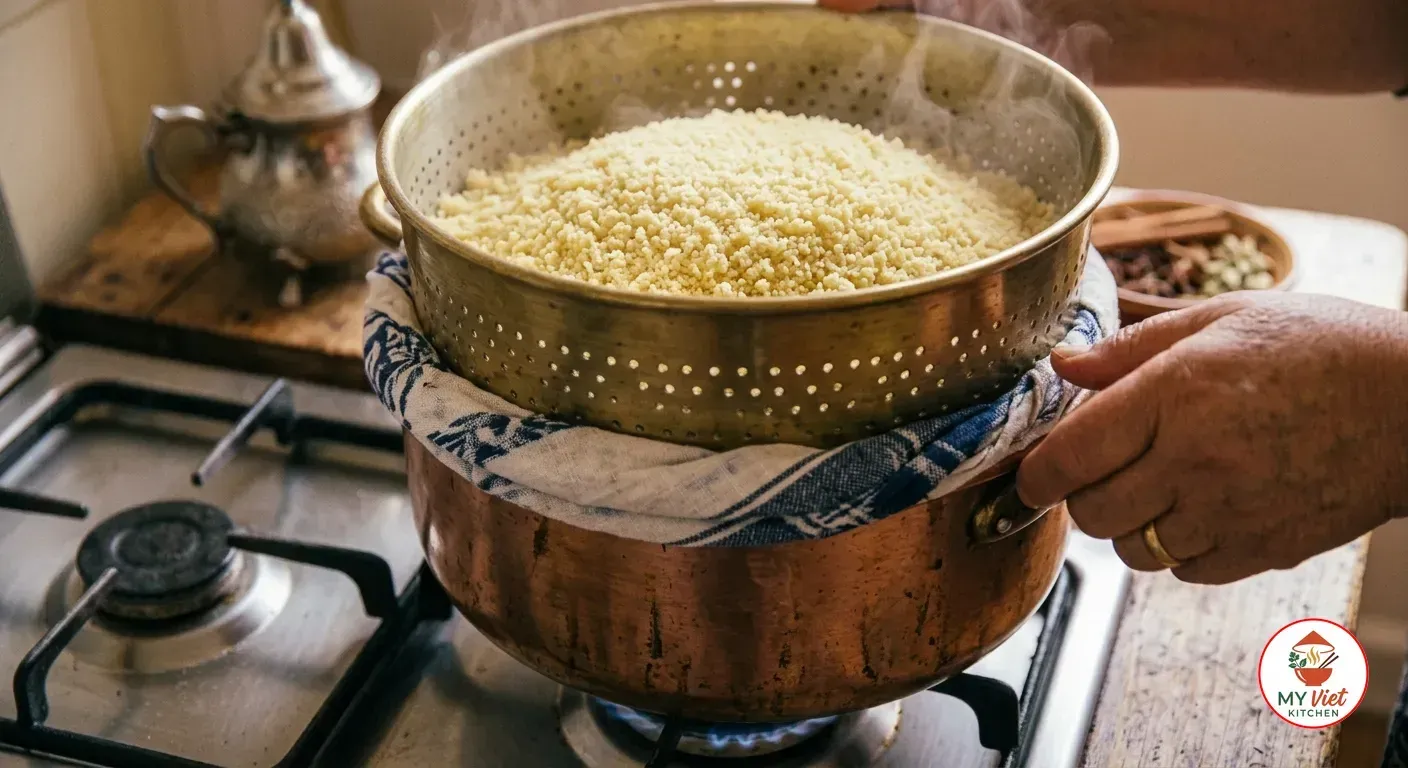
3 Transfer the prepared couscous grains to the steamer basket of the couscoussier or place them in a colander lined with cheesecloth. Set the steamer over the simmering broth. If you see steam escaping from the gap between the pot and the steamer, seal it with a strip of damp cloth or aluminum foil. All the steam should pass through the couscous.
Do not cover the steamer with a lid during this step. Instead, the steam needs to escape from the top while rising through the grains. Steam the couscous for 20 minutes. You will notice the steam starting to pass through the surface of the grains after about 10 minutes. This first steaming partially cooks the couscous and begins the flavor infusion from the broth below. This is the step that makes a traditional couscous recipe so different from the instant method. The kitchen fills with an incredible aroma at this stage.
Step 4: Fluff, Rest, and Second Steaming
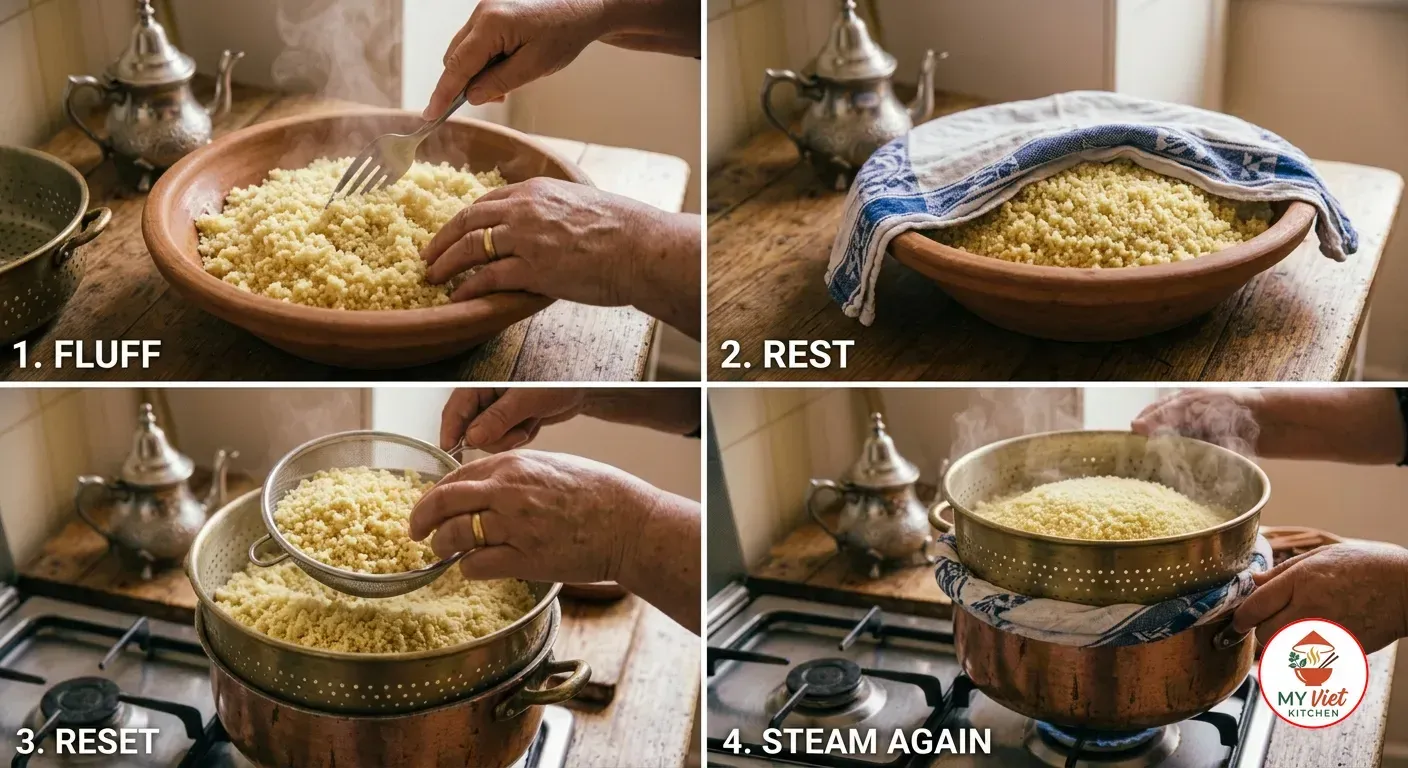
4 Carefully turn the steamed couscous back into the large shallow bowl. Sprinkle half a cup of cold water over the hot grains and immediately rake through them with a fork. The cold water creates a temperature shock that helps separate the grains. Once the couscous cools enough to handle, work through it with your fingers to break up every single clump. Then add the 2 tablespoons of butter and massage it into the grains.
While the couscous rests, add the zucchini chunks and drained chickpeas to the simmering broth pot. These ingredients cook faster than the root vegetables, so they go in during the second half. After 10 minutes of resting, return the couscous to the steamer basket and set it over the broth again. Steam for another 20 minutes. This second steaming finishes the cooking, and the butter creates an incredibly silky texture.
Step 5: Serve the Couscous
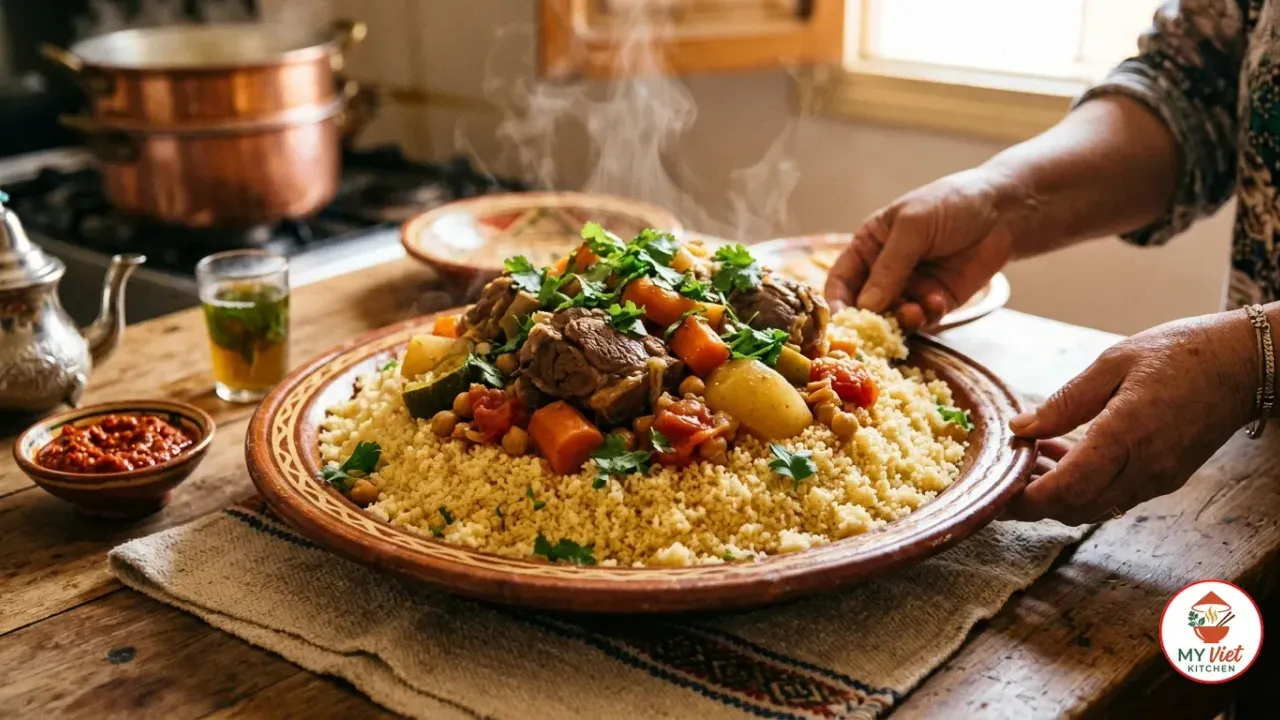
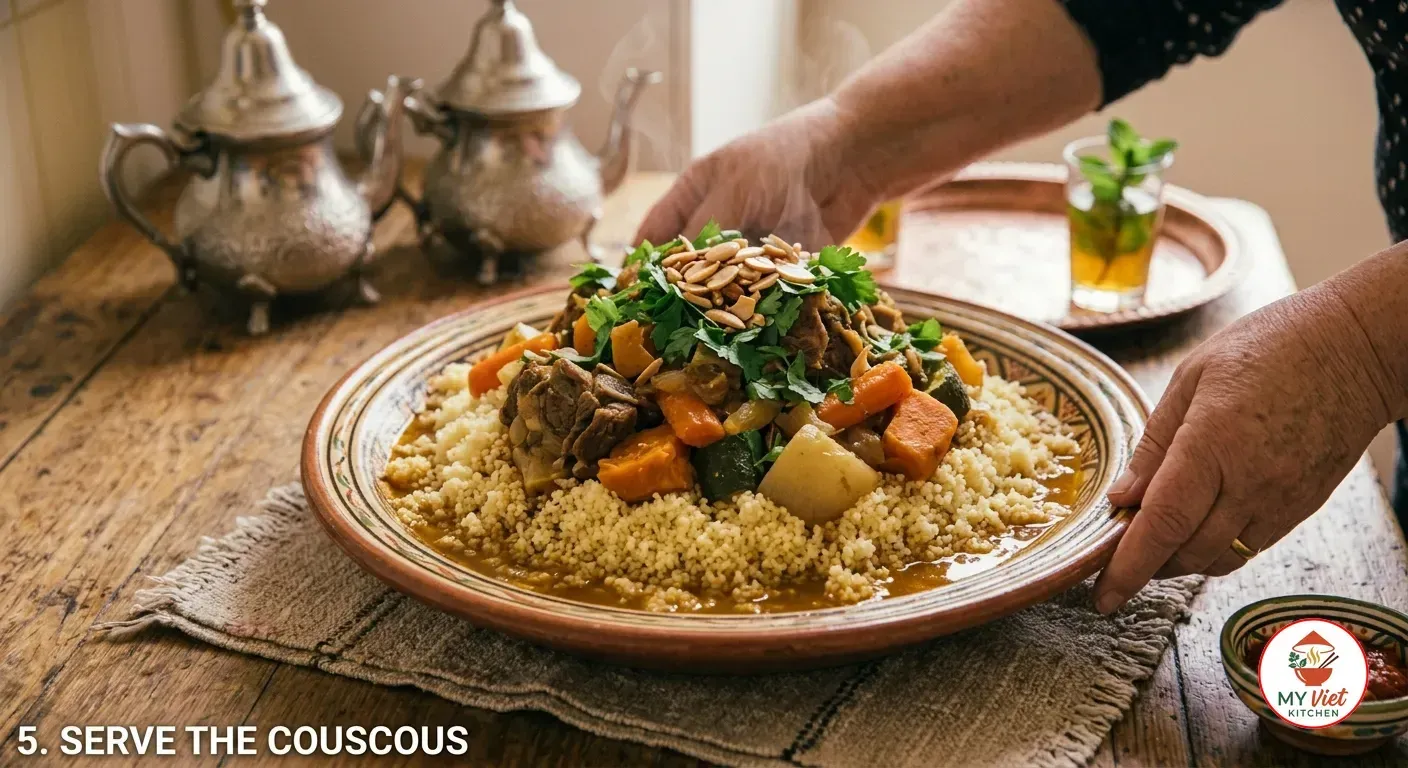
5 Turn the finished couscous onto a large serving platter and fluff it one final time with a fork. Mound the grains into a dome shape in the center of the platter. Use a large spoon to create a well in the top of the dome. Arrange the tender lamb pieces in the well and place the vegetables around the base and sides of the mound.
Ladle the rich broth into a separate serving bowl so each guest can pour as much as they like over their portion. Garnish the platter with fresh cilantro and flat-leaf parsley. Place a small bowl of harissa paste on the table for those who want extra heat. In North Africa, everyone eats from the same platter, scooping couscous with a spoon or by hand. This communal style is part of what makes this couscous recipe so special.
Expert Tips for the Perfect Couscous Recipe
Seal the Gap Between Pot and Steamer
The most important technique in making authentic couscous is ensuring that all the steam passes through the grains rather than escaping from the sides. North African cooks traditionally mix flour and water into a paste and use it to seal the joint between the pot and the steamer basket. A simpler approach is to wrap a damp kitchen towel around the rim. If steam escapes sideways, the couscous cooks unevenly and loses much of its broth-infused flavor.
Never Pack the Couscous Down
When you transfer the couscous to the steamer, let it fall loosely and naturally. Do not press it down or pack it tightly. The steam needs to travel upward through the grains. If the couscous is packed too densely, the steam cannot penetrate evenly, and you end up with some grains overcooked while others remain raw in the center. A light, airy mound steams perfectly every time. Keep this tip in mind when you follow this couscous recipe.
Work in Butter Between Steamings
Adding butter between the first and second steaming is a technique that North African cooks swear by. The fat coats each individual grain and creates a barrier that prevents clumping. It also adds a subtle richness that elevates the entire dish. For the best results, use room-temperature butter and massage it gently into the warm couscous with your fingertips.
Regional Couscous Styles Across North Africa
Every country in North Africa has its own signature couscous style. The base technique remains the same, but the toppings, spices, and accompaniments vary widely. Here is a comparison of the major regional styles.
| Country | Signature Style | Key Ingredients | Distinguishing Feature |
|---|---|---|---|
| Morocco | Seven-vegetable couscous | Lamb, seven seasonal vegetables, tfaya | Sweet caramelized onion and raisin topping |
| Algeria | Couscous with lamb or chicken | Lamb, chickpeas, turnips, broad beans | Generous use of butter and a lighter broth |
| Tunisia | Couscous with fish | Grouper, harissa, potatoes, peppers | Spicier profile with red harissa-based broth |
| Libya | Couscous with bazin influences | Lamb, potatoes, eggs, spicy sauce | Often served with a boiled egg on top |
| Mauritania | Thiéré | Millet couscous, dried meat, vegetables | Uses millet instead of semolina wheat |
Serving Suggestions
In North Africa, couscous is always the centerpiece of the table. The meal revolves around the couscous platter, with everything else playing a supporting role. Traditionally, families gather around a single large dish and eat together. Here are the essential accompaniments for this couscous recipe.
The Perfect Accompaniments:
- Harissa paste: This fiery North African chili paste is the essential condiment for couscous. Mix a spoonful into your broth for a spicy kick, or stir it directly into your portion. Every North African table has harissa within reach.
- Tfaya (caramelized onions with raisins): This sweet Moroccan topping features slow-cooked onions with raisins, cinnamon, and honey. It adds a beautiful sweet contrast that balances the savory broth and spiced meat.
- Lben (buttermilk): A glass of cold, tangy buttermilk is the traditional drink served alongside couscous in Morocco and Algeria. Its cool acidity refreshes the palate between bites of the warm, spiced dish.
- Fresh salad: A simple salad of diced tomatoes, cucumbers, onions, and fresh herbs dressed with lemon juice and olive oil provides a crisp, light counterpoint to the rich couscous.
Beverage Pairings:
- Moroccan mint tea: Sweet, fragrant green tea with fresh spearmint is the quintessential North African beverage. It complements the warm spices in the couscous perfectly and aids digestion after a hearty meal.
- Dry rose wine: A chilled Moroccan or Provencal rose pairs beautifully with the lamb and vegetables. Its light body and crisp acidity do not overpower the delicate couscous grains.
- Sparkling water with lemon: For a non-alcoholic option, cold sparkling water with a squeeze of fresh lemon cleanses the palate between each flavorful bite.
Storage and Reheating
Refrigerator: Store leftover couscous and broth separately in airtight containers for up to 4 days. Keeping them separate prevents the grains from becoming soggy. The broth may develop a layer of fat on top when chilled, and that is perfectly normal. Just skim it off or stir it back in before reheating.
Freezer: Couscous freezes well for up to 3 months. Spread the grains on a baking sheet and freeze them flat before transferring to a freezer bag. This prevents the grains from clumping into a solid block. Freeze the broth with vegetables and meat in a separate container. Thaw everything overnight in the refrigerator before reheating.
Reheating: The best way to reheat couscous is to steam it again briefly over the warmed broth. This restores the fluffy texture beautifully. If you prefer a quicker method, sprinkle a few tablespoons of water or broth over the cold couscous, cover it with a damp paper towel, and microwave for 2 to 3 minutes. Fluff with a fork before serving.
Common Mistakes to Avoid
1. Boiling the Couscous Instead of Steaming
The most common error is treating couscous like pasta by dumping it into boiling water. This method produces heavy, waterlogged grains that clump together into a starchy mass. Authentic couscous must be steamed over a broth so the grains cook gently in the vapor. The steaming method keeps each grain separate and incredibly light. Always follow a proper couscous recipe and steam your grains for the best results.
2. Skipping the Resting Step Between Steamings
The resting and fluffing step between the two steamings is not optional. During this rest, you break up clumps, add butter, and allow the grains to absorb moisture evenly. If you skip this step and steam continuously, the outer grains overcook while the inner ones stay hard. Take the time to spread the couscous out, rake through it, and work in the butter properly.
3. Adding Vegetables Too Early
Different vegetables need different cooking times. For example, root vegetables like carrots and turnips go into the broth first because they take longer to soften. Quick-cooking vegetables like zucchini should only go in during the last 20 minutes. If you add everything at once, the zucchini turns to mush while the turnips stay hard. Stagger your additions for perfectly cooked vegetables in every couscous recipe you make.
4. Using Too Much Water on the Dry Grains
Pouring too much water onto the dry couscous before steaming drowns the grains and creates a sticky, gluey texture. Add water in small amounts and work it through with your fingers. The couscous should feel damp but not wet. However, if you accidentally add too much water, spread the couscous out and let it air dry for a few minutes before steaming.
Frequently Asked Questions
What is the difference between couscous and rice?
Couscous is not a grain but rather tiny granules rolled from semolina wheat and water. Rice is a whole grain that grows in paddies. Couscous has a lighter, fluffier texture when properly steamed and absorbs broth and sauces differently than rice does. In North African cuisine, couscous serves the same foundational role that rice plays in Asian cuisines. It is the starchy base that carries the flavors of the accompanying dishes.
Do I need a couscoussier to make this couscous recipe?
No, you do not need a couscoussier, although it produces the best and most consistent results. A large stockpot with a colander or metal steamer basket set on top works perfectly well. Line the colander with cheesecloth to prevent the small grains from falling through into the broth. Then seal the gap between the pot and the colander with a damp cloth so all the steam rises through the couscous instead of escaping sideways.
Can I make couscous without meat?
Absolutely. Vegetarian couscous is common across North Africa and is just as delicious as the meat version. Simply omit the lamb and build your broth with extra vegetables such as butternut squash, sweet potato, cabbage, and additional chickpeas. Use vegetable broth instead of water for a richer base. The famous Moroccan seven-vegetable couscous is a beloved Friday tradition that contains no meat at all and still delivers incredible depth of flavor.
Why is my couscous clumpy and sticky?
Clumpy couscous happens when the grains absorb too much water at once or when they are not separated between steamings. To fix this, always add water gradually and rake through the grains with your fingertips after each addition. Working olive oil or butter into the couscous between the two steamings coats each grain individually and prevents sticking. The double-steaming method with proper fluffing in between is the key to perfectly fluffy results.
What is ras el hanout?
Ras el hanout is a signature North African spice blend whose name translates to “head of the shop,” meaning the finest spices the seller has to offer. It typically contains cardamom, nutmeg, cinnamon, cloves, black pepper, turmeric, dried rosebuds, and many other ingredients. Every spice merchant has a unique blend, so no two versions taste exactly the same. It adds warm complexity to any couscous recipe and many other North African dishes.
How is traditional couscous different from instant couscous?
Traditional couscous uses raw semolina granules that require multiple rounds of steaming over a flavorful broth. Instant couscous has already been steamed and dried at the factory, so it only needs boiling water and a few minutes to rehydrate. The texture difference is significant. Traditional steamed couscous is airy, light, and individually separated. Instant couscous tends to be denser and stickier. For everyday quick meals, instant couscous is convenient. For a special meal, the traditional method in this couscous recipe delivers far superior results.
Variations and Adaptations
Moroccan Seven-Vegetable Couscous:
This is the most famous version of couscous and uses exactly seven seasonal vegetables. A typical combination includes carrots, turnips, zucchini, cabbage, pumpkin, tomatoes, and onions. Top the finished dish with tfaya, a sweet mixture of caramelized onions, raisins, cinnamon, and honey. This variation works beautifully as a vegetarian main course because the seven vegetables create a complex, satisfying broth on their own.
Tunisian Fish Couscous:
Replace the lamb with a whole firm white fish such as grouper or sea bass. Build the broth with harissa, tomatoes, potatoes, and bell peppers for a spicier, redder sauce. Tunisian cooks add the fish during the last 15 minutes so it stays moist and flaky. This coastal variation tastes lighter than the lamb version and showcases the Mediterranean influence on Tunisian cuisine.
Sweet Couscous (Seffa):
Seffa is a Moroccan dessert couscous tossed with butter, powdered sugar, and cinnamon. Steam the plain couscous without any savory broth. Then toss the hot grains with butter and a generous dusting of powdered sugar. Pile it into a cone shape and decorate with cinnamon lines and toasted almonds. This sweet version often appears at Moroccan weddings and celebrations as a final course.
Chicken and Preserved Lemon Couscous:
Use bone-in chicken thighs instead of lamb and add chopped preserved lemons and green olives to the broth during the last 20 minutes. The preserved lemons add a bright, tangy, slightly bitter note that lifts the entire dish. This variation is popular in Moroccan home cooking and requires less simmering time since chicken cooks faster than lamb.
The Cultural Significance of Couscous
Couscous is far more than food in North Africa. It is a cultural institution, a weekly ritual, and a symbol of family unity that stretches back over a thousand years. In Morocco, Algeria, Tunisia, and Libya, Friday couscous is as sacred as the day itself. Families gather after midday prayers to share a large communal platter of steamed couscous piled high with vegetables and meat. This weekly tradition binds generations together.
In 2020, UNESCO inscribed couscous on its Representative List of the Intangible Cultural Heritage of Humanity. Morocco, Algeria, Tunisia, and Mauritania submitted a joint nomination that recognized the knowledge, rituals, and social practices surrounding couscous preparation. The inscription acknowledged that couscous carries deep meaning beyond nutrition. It represents hospitality, solidarity, and community across North Africa.
The art of making couscous has traditionally passed from mother to daughter through hands-on teaching in the kitchen. North African grandmothers roll their own couscous from scratch using semolina, water, and practiced hands. While many modern cooks buy pre-made couscous, the steaming technique and the communal serving tradition remain unchanged. Whether in a bustling Marrakech riad or a quiet home in Algiers, the sight of a steaming couscous platter still brings people together just as it has for centuries. Explore more of these rich food traditions in our collection of African dishes.
Conclusion
This authentic couscous recipe brings one of North Africa’s most treasured dishes to your kitchen. The key is the double-steaming method: prepare the grains gently, steam them over a fragrant broth, fluff and rest, then steam again. Each step builds flavor and ensures the lightest possible texture. Whether you use lamb, chicken, or vegetables only, the technique remains the same. Once you master it, you unlock a world of variations from Moroccan sweet seffa to Tunisian spicy fish couscous.
Ready to explore more North African and African flavors? Browse our collection of African dishes, including Moroccan tagine, jollof rice, and South African bobotie. Also discover our shakshuka recipe for another beloved North African classic.