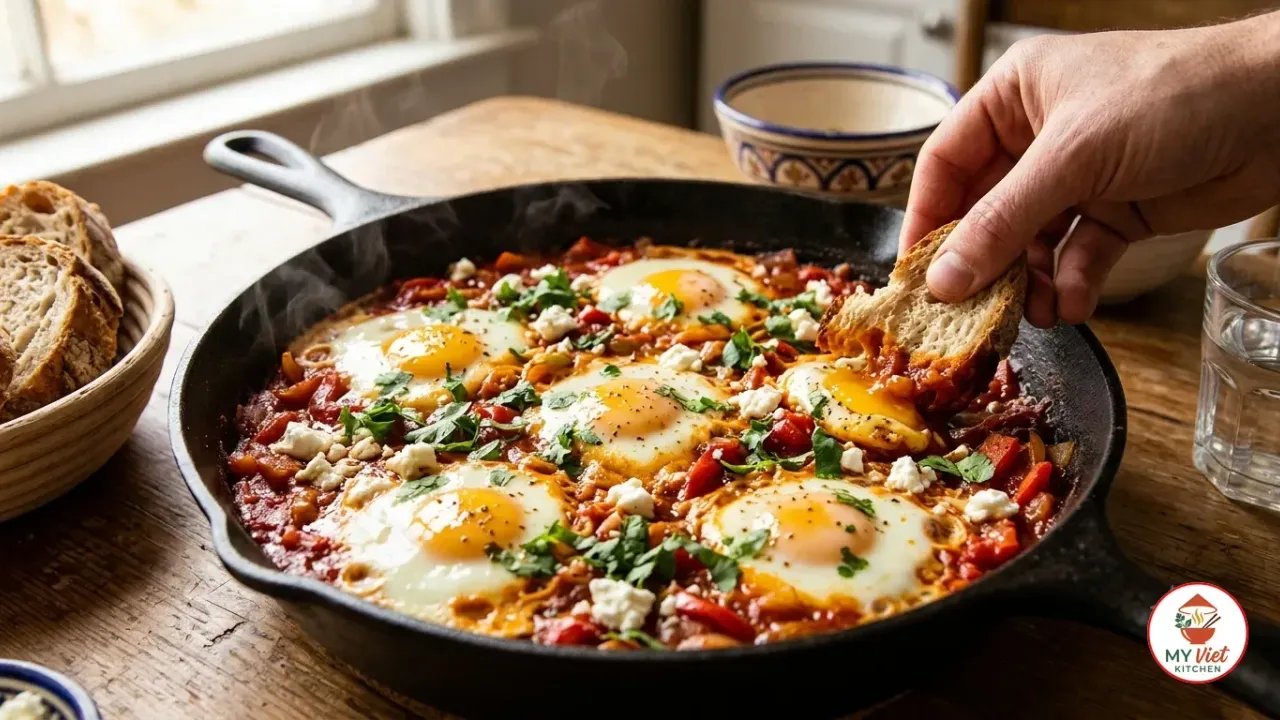
Shakshuka is one of North Africa’s most beloved dishes, a vibrant skillet of eggs gently poached in a thick, spiced tomato and pepper sauce that bubbles away until the whites set and the yolks stay gloriously runny. Originally from Tunisia, this one-pan masterpiece has spread across Morocco, Algeria, Libya, and far beyond. This shakshuka recipe delivers the authentic North African version with cumin, smoked paprika, harissa, and sweet bell peppers, giving you a breakfast, brunch, or dinner that comes together in just 35 minutes.
Prep Time: 10 minutes | Cook Time: 25 minutes | Servings: 4
Difficulty: Easy | Calories: ~280 per serving
What Makes Shakshuka Special?
Shakshuka stands apart from other egg dishes because the eggs cook directly inside the sauce rather than in a separate pan. As a result, this technique lets the whites soak up the spiced tomato flavor while the yolks stay soft and liquid. When you break a yolk with crusty bread, the golden center mixes into the rich red sauce. The result is far more exciting than scrambled eggs or a plain omelet.
The dish traces its roots to Ottoman-era Tunisia, where cooks developed the technique of simmering vegetables in tomato sauce and cracking eggs into the mixture. From there, it traveled west to Morocco and Algeria, then east to Libya and Egypt. Each region shaped the recipe to fit local tastes. Tunisian versions tend to feature harissa and roasted peppers. Moroccan cooks often add preserved lemons and olives. According to food historians, the name comes from the Arabic word for “mixture.” Indeed, that word fits perfectly since the dish is all about how simple items blend in one pan.
Beyond its cultural reach, shakshuka earns praise for how easy it is to make. You need just one skillet, a handful of pantry staples, and about 30 minutes. Moreover, the dish feeds a crowd, looks great on the table, and delivers big flavor with little effort. For that reason, it has become one of the most popular brunch dishes in the world. In North Africa, though, it stays an everyday breakfast eaten with family around a shared pan.

Choosing the Right Tomatoes
The tomato sauce is the base of shakshuka, so the quality of your tomatoes matters more than any other item. A thin, watery sauce leads to bland results. In contrast, a thick, rich base gives the dish its deep, bold body. Here are the best options.
- Canned crushed tomatoes (best choice): Good crushed tomatoes like San Marzano give you the right mix of thickness and flavor right out of the can. They break down fast into a smooth sauce with no extra cooking. Because of this, canned tomatoes give you the same great results all year round.
- Canned whole peeled tomatoes: If you want more texture, use whole peeled tomatoes and crush them by hand in the pan. This gives you a chunkier shakshuka with visible tomato pieces. Many North African cooks prefer this method because it adds a rustic feel to the dish.
- Fresh ripe tomatoes: During summer, use 6 to 8 ripe plum tomatoes. Blanch, peel, and chop them. Fresh tomatoes give a brighter, more lively flavor. However, they let out more water. So you need to simmer the sauce longer to get it thick. Add a spoon of tomato paste to help.
Ingredients for Shakshuka
Main Ingredients:
- 6 large eggs, at room temperature
- 1 can (400g) crushed tomatoes
- 2 medium red bell peppers, diced into small pieces
- 1 large yellow onion, finely diced
- 4 cloves garlic, minced
- 3 tablespoons extra virgin olive oil
For the Spice Blend:
- 1 tablespoon harissa paste (adjust to your heat preference)
- 2 teaspoons ground cumin
- 2 teaspoons smoked paprika
- 1 teaspoon sweet paprika
- 1/2 teaspoon cayenne pepper
- 1 teaspoon sugar
- Salt and freshly ground black pepper to taste
For the Garnish:
- Fresh cilantro or flat-leaf parsley, roughly chopped
- Crumbled feta cheese (optional but highly recommended)
- Crusty bread for serving
Pro tip: Bring your eggs to room temperature before cooking. Cold eggs from the fridge drop the sauce temperature and take longer to cook. As a result, the whites may still be runny when the yolks start to firm up. Room temperature eggs cook more evenly. You get set whites and liquid yolks every time.
Step-by-Step Instructions
Step 1: Cook the Aromatics
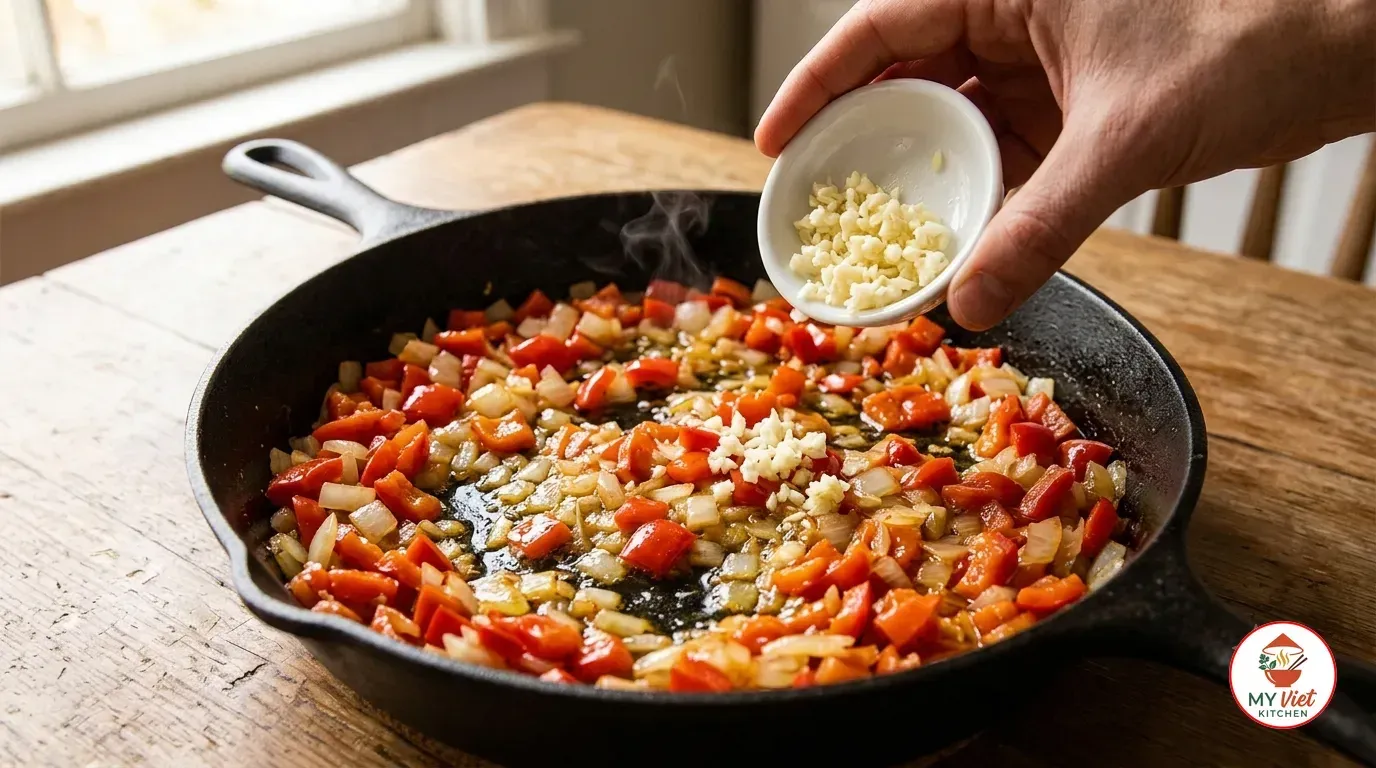
1 Heat 3 tablespoons of olive oil in a large, deep skillet over medium heat. Add the diced onion and cook for about 5 minutes, stirring now and then, until soft. Then add the diced red bell peppers and cook for 4 more minutes. The peppers should soften but still hold their shape a bit.
Next, stir in the minced garlic and cook for just 30 seconds until it smells rich. After all, garlic burns fast over direct heat, so keep it moving in the pan. This base of onion, pepper, and garlic forms the flavor core of the whole dish. Take your time here. Rushing this step means flat flavor later.
Step 2: Build the Spiced Tomato Sauce
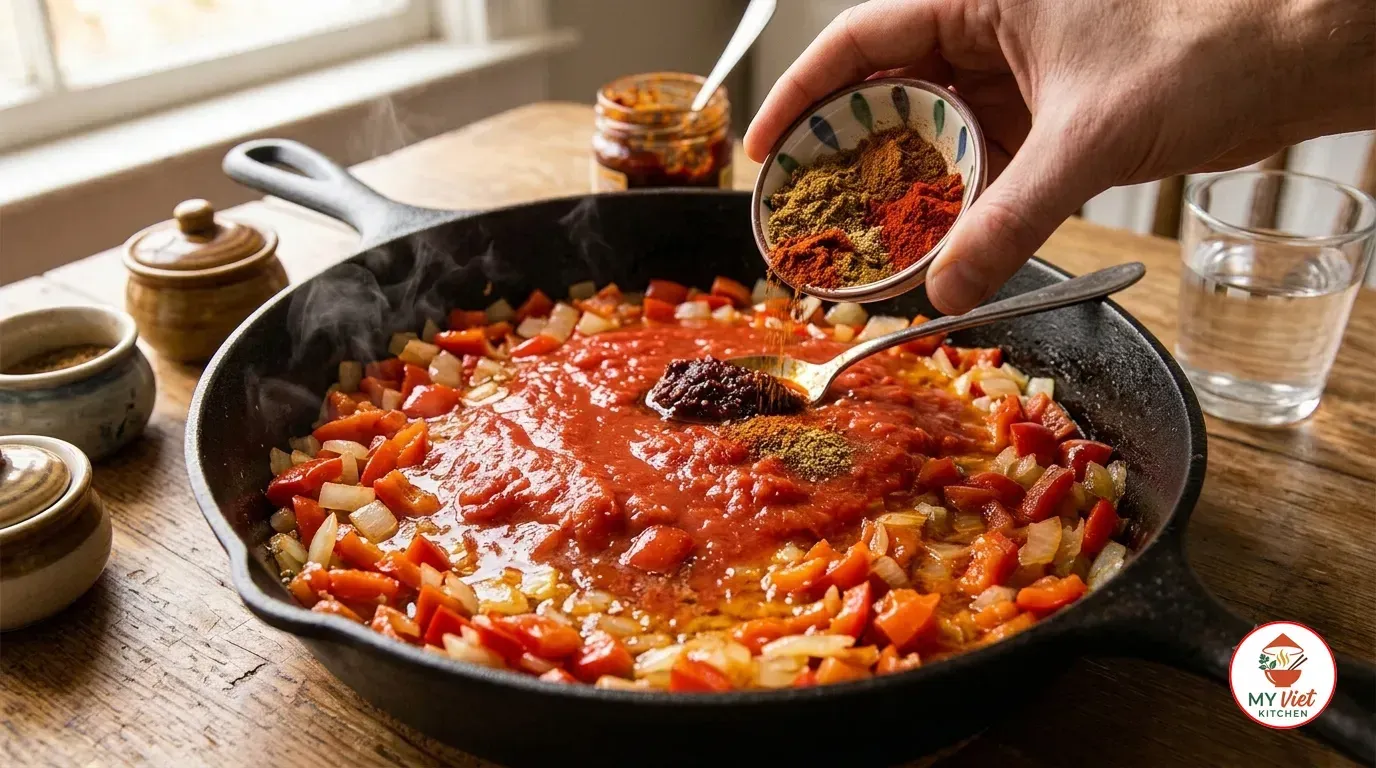
2 Add the cumin, smoked paprika, sweet paprika, and cayenne pepper to the skillet. Stir the spices into the veggies for about 30 seconds. In fact, toasting dry spices in oil wakes up their oils and makes them taste much richer. You should smell the cumin and paprika right away.
Pour in the crushed tomatoes and stir in the harissa paste. Add the sugar. Essentially, it tames the acidity without making the sauce sweet. Season with salt and black pepper. Stir well and bring the sauce to a gentle simmer. Cook for 8 to 10 minutes, stirring now and then, until the sauce gets thick. It should coat the back of a spoon instead of running off.
Step 3: Poach the Eggs in the Sauce
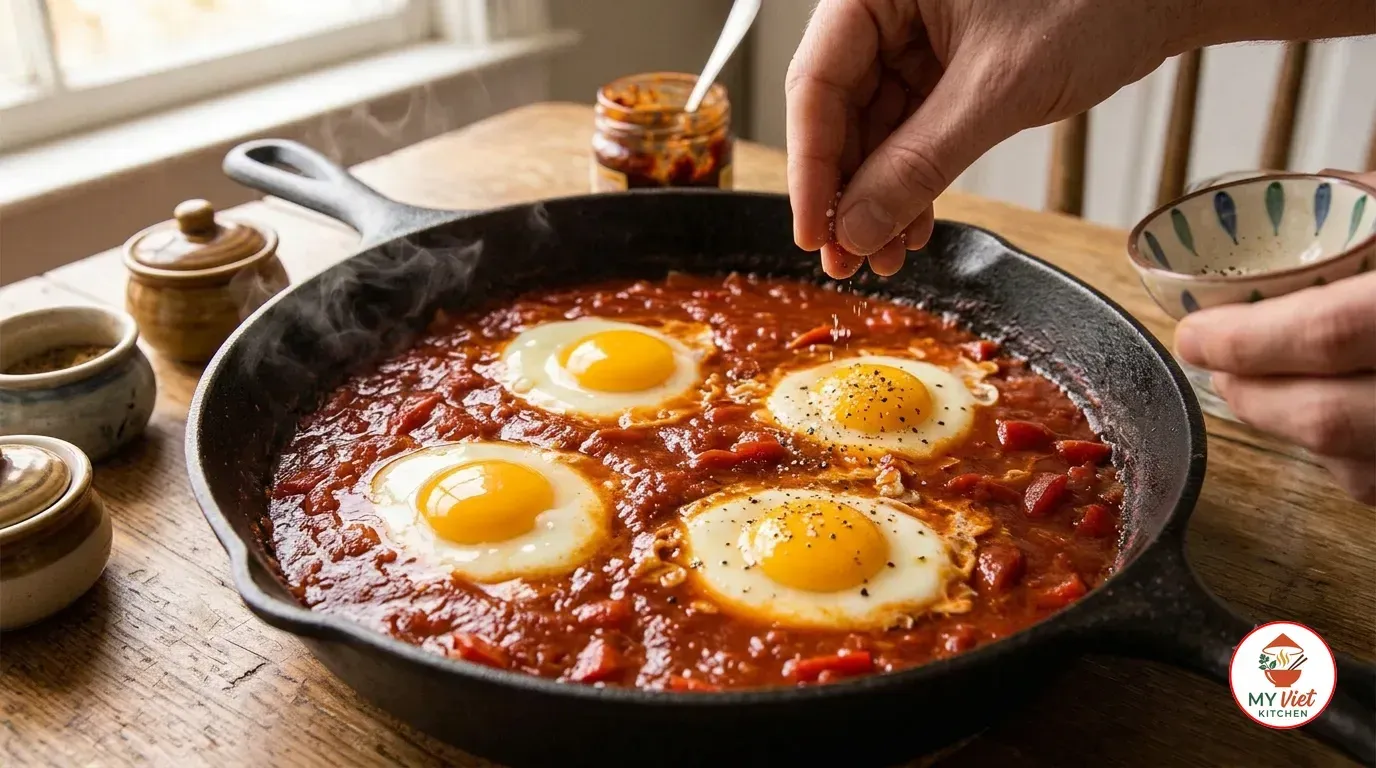
3 Use the back of a spoon to create 6 small wells in the tomato sauce, spacing them evenly around the skillet. Crack one egg into each well, taking care not to break the yolks. Season the tops of the eggs lightly with a pinch of salt and pepper.
Cover the skillet with a lid and turn the heat to medium-low. Let the eggs cook for 5 to 8 minutes based on how runny you want the yolks. At 5 minutes, the whites set while the yolks stay fully liquid. At 7 to 8 minutes, the yolks turn jammy and thick. Therefore, check at the 5-minute mark. Pull the lid off when they look right. The hot sauce keeps cooking the eggs for one more minute off heat.
Step 4: Garnish and Serve
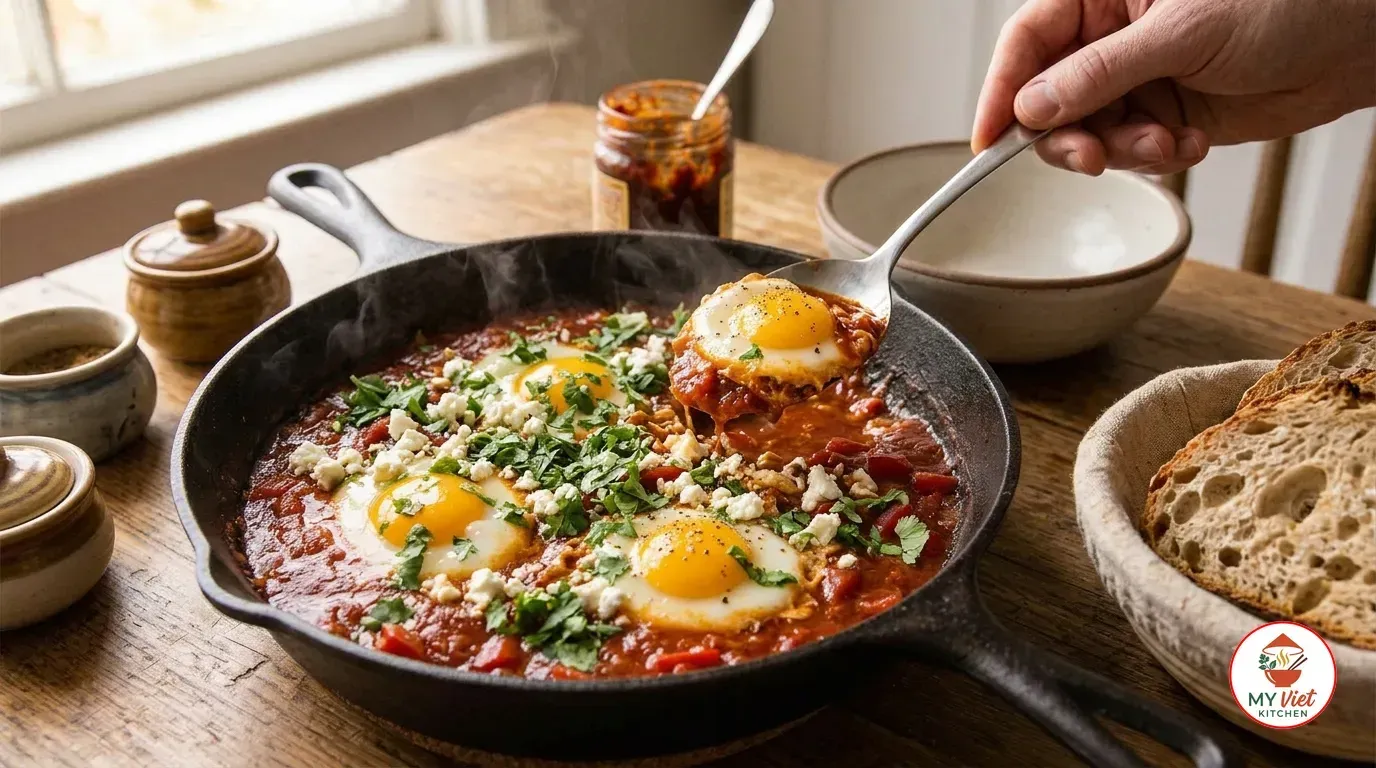
4 Take the skillet off the heat. Scatter a big handful of chopped cilantro or parsley over the top. If you like feta cheese, crumble it across the surface. The salty, tangy feta melts into the hot sauce and adds a creamy contrast to the spiced tomatoes.
Serve right away, straight from the skillet, with crusty bread on the side. Set the pan in the center of the table. Let everyone tear off bread and dip into the sauce. This shared style of eating is exactly how families across North Africa enjoy shakshuka each morning. Break the yolks with your bread, drag it through the sauce, and scoop up peppers and eggs in each bite.
Expert Tips for Perfect Shakshuka
Get the Sauce Thickness Right
The sauce must be thick enough to hold the eggs in place. If it is too thin, the eggs sink to the bottom. Consequently, the whites spread into a flat, rubbery sheet. Simmer the sauce until it clings to the veggies and holds a trail when you drag a spoon through it. A thick sauce cradles each egg like a nest. The whites set in a neat circle around each yolk.
Control the Heat Carefully
High heat during the egg stage makes the whites bubble and toughen before the yolks cook. Instead, medium-low heat with a lid creates soft steam that cooks the eggs evenly. If your stove runs hot, lower the flame a bit more. The eggs should cook quietly in the sauce with no harsh bubbling at the edges.
Toast Your Spices Properly
Adding dry spices straight to liquid mutes their flavor. Instead, toast them in the oil for 30 seconds before the tomatoes go in. This short step frees the oils in cumin and paprika that carry most of the aroma. You will notice a sharp change in smell when the spices hit the hot oil. That burst of scent means the spices have woken up and will bring their full depth to the sauce.
Shakshuka Across North Africa
While shakshuka originated in Tunisia, every North African country has developed its own version. Here is how the dish varies across the region.
| Region | Key Differences |
|---|---|
| Tunisia (original) | Heavy use of harissa, roasted green peppers, sometimes merguez sausage added, served with khobz bread |
| Morocco | Milder spicing, sometimes includes preserved lemons and olives, often seasoned with ras el hanout |
| Algeria | Called chakchouka, frequently includes potatoes and more vegetables, served as a hearty lunch dish |
| Libya | Spicier versions with extra chili, sometimes made with lamb or beef alongside the eggs |
| Egypt | Simpler preparation with fewer spices, often served with ful medames and tahini on the side |
Serving Suggestions
In North Africa, shakshuka comes to the table in the same skillet, still hot and steaming. Everyone sits around and eats from the pan using torn bread as the only tool. This shared way of eating is central to the dish. It turns a simple meal into a group ritual.
The Perfect Accompaniments:
- Crusty bread or khobz: North African flatbread is the traditional partner for shakshuka. Its sturdy texture holds up to the thick tomato sauce without falling apart. Any crusty artisan bread, ciabatta, or sourdough works just as well for scooping and dipping.
- Labneh or thick yogurt: A dollop of tangy labneh on top of the hot shakshuka creates a cooling contrast to the spiced sauce. The creamy acidity balances the heat from the harissa and cayenne beautifully.
- Israeli salad: Finely diced cucumbers, tomatoes, and onions dressed with lemon juice and olive oil provide a fresh, crunchy side that cuts through the richness of the eggs and sauce.
- Olives and pickled vegetables: A small plate of cured olives and pickled turnips adds salty, sour notes that brighten every bite of shakshuka. These are standard table accompaniments across North African breakfast spreads.
Beverage Pairings:
- Mint tea: Sweet, aromatic Moroccan mint tea is the classic North African beverage for breakfast. Its herbal sweetness complements the savory, spicy shakshuka without competing for attention on the palate.
- Fresh orange juice: North Africa produces some of the world’s best oranges, and freshly squeezed juice is a standard breakfast drink. The bright citrus acidity pairs naturally with the rich tomato sauce.
- Turkish coffee: Strong, dark coffee served in small cups offers a bold pairing that stands up to the intense flavors of the spiced eggs. Many North African households serve coffee alongside shakshuka for morning meals.
Storage and Reheating
Refrigerator: Keep leftover sauce (no eggs) in a sealed box for up to 3 days. The spices grow deeper in the fridge, so the sauce often tastes better the next day. Cooked eggs do not reheat well. They turn rubbery. For the best results, save only the sauce and poach fresh eggs when you warm it up.
Freezer: Freeze the sauce base (no eggs) for up to 2 months in a sealed box. Thaw it in the fridge overnight. To serve, heat the sauce in a skillet over medium heat until it simmers. Then crack in fresh eggs and cook as noted above.
Reheating: Warm the sauce in a skillet over medium-low heat. Skip the microwave. It heats unevenly and makes the eggs tough. Once the sauce bubbles, make wells and add fresh eggs. Cover and cook for 5 to 8 minutes. This method gives results as good as a fresh batch.
Common Mistakes to Avoid
1. Using a Thin, Watery Sauce
A sauce that has not reduced enough lets the eggs spread flat and cook unevenly. The whites run across the pan instead of staying around the yolks. Always simmer the sauce for at least 8 minutes after adding the tomatoes. Stir now and then. Wait until it reaches a jammy thickness before you add the eggs. Rushing this step hurts the whole dish.
2. Cooking the Eggs on High Heat
High heat makes egg whites tough fast while the yolks stay cold and raw below. As a consequence, you end up with chalky whites and raw centers. Turn the heat to medium-low after adding the eggs and cover the pan. Gentle steam cooks the eggs evenly from all sides. This gives you the soft, silky texture that defines great shakshuka.
3. Skipping the Spice Toasting Step
Adding cumin and paprika straight to the liquid tomatoes buries their taste. Because of this, ground spices need contact with hot oil to release their aroma. Just 30 seconds of toasting before the tomatoes go in turns flat spices into bold, rich ones. This small step makes a clear difference in the final sauce.
Frequently Asked Questions
What skillet works best for shakshuka?
A cast iron skillet works best for shakshuka. It holds heat well and keeps the sauce hot long after you take it off the stove. A 10 to 12-inch pan gives enough room for 6 eggs. Enameled cast iron also works and cleans up more easily. Avoid nonstick pans here because they do not build the same fond on the bottom that adds depth to the sauce.
Can I add meat to shakshuka?
Yes. In Tunisia, cooks often add sliced merguez sausage to the sauce before the eggs go in. The spicy lamb fat renders into the tomatoes and makes a richer, heartier dish. Ground lamb, chorizo, or pulled chicken also work. Brown the meat first, then build the sauce on top. This turns shakshuka from a light breakfast into a big, filling dinner.
How do I make shakshuka spicier?
Use 2 tablespoons of harissa and add an extra teaspoon of cayenne. You can also toss in a chopped fresh chili with the bell peppers. For smoky heat, stir in a teaspoon of chipotle powder. North African cooks often serve extra harissa on the side so each person can add more heat as they like.
Variations and Adaptations
Green Shakshuka:
Swap out the tomato sauce for sauteed spinach, Swiss chard, green onions, and fresh herbs. Season with cumin, coriander, and lemon juice. Crack the eggs into the greens and cook the same way. Green shakshuka has a lighter, more herby flavor. It works best in spring and summer when fresh greens are at their peak.
Shakshuka with Merguez Sausage:
Slice 4 merguez sausages into rounds and brown them in the skillet before adding the onions. The lamb fat replaces the olive oil and fills the sauce with deep, meaty richness. This version is popular in Tunisia. It turns shakshuka into a full meal that needs nothing more than bread on the side.
Baked Feta Shakshuka:
Place a whole block of feta in the center of the sauce before adding the eggs. Move the skillet to a 375F oven. Bake for 12 to 15 minutes until the eggs set and the feta softens and browns. The oven gives more even heat than the stove. The baked feta melts into the sauce, adding a creamy, tangy richness that lifts the dish to a new level.
The Cultural Significance of Shakshuka
Shakshuka carries deep cultural meaning across North Africa. In Tunisia, where it began, the dish stands for both thrift and community. Families built shakshuka as a way to stretch cheap, simple items into a meal that feeds the whole table. Tomatoes, peppers, eggs, and spices sit in nearly every home pantry. Consequently, that makes shakshuka open to all.
Eating from a shared pan with torn bread bonds family and guests alike. In many Tunisian and Moroccan homes, the morning shakshuka is the first gathering of the day. In other words, the family sits together before work and school pull everyone apart. The dish needs no plates or forks. Just bread and the will to share.
Today, shakshuka has spread far beyond North Africa to become a global brunch hit. Still, its heart stays in the kitchens of Tunisia, Morocco, and Algeria. Even now, grandmothers still argue about how much harissa to add and whether feta belongs in a proper pan. No matter how you make it, shakshuka honors an old tradition of turning humble items into something warm, filling, and shared. For more African dishes, explore our collection of African recipes including Moroccan tagine and Egyptian koshari.
Conclusion
Making real shakshuka at home needs just a good skillet, quality tomatoes, a few spices, and fresh eggs. The method is simple: build a thick, spiced sauce, make wells, crack in the eggs, and let steam do the rest. Get the sauce thickness and heat right, and you will make a dish that looks and tastes like it came from a North African kitchen.
Whether you serve this shakshuka for a lazy weekend brunch or a quick weeknight dinner, the combination of runny yolks, spiced tomato sauce, and crusty bread delivers a deeply satisfying meal every single time. For more North African and African recipes, explore our growing collection of African dishes including North African couscous and Moroccan harira soup.